• Caravan of Greens

    I would say that the best milemarkers for my life, particularly of my taste in food and cuisine, has been my evolving choice of salad greens (and dressings and cheese). Let me explain…

    Once upon a time, there was iceberg lettuce. I ate the lettuce, and I saw that it was good. At least for awhile. A vegetarian for many years, salads were always an important part of my diet, particularly when I was younger and focused on raw foods. So, eating so much salad, I grew to tire of iceberg lettuce and needed more variety. I soon discovered romaine lettuce. I saw that it was better – leafier with more green. It seemed to strike the ultimate balance, and I abandoned iceberg, which, over time, I grew to hate.

    I thought I had found the ultimate lettuce with romaine. Until I discovered loose leafs – red leaf and green leaf lettuce. This variety had the least amount of woodiness – it was all leaf, and I loved it. I was growing up in many ways. Living in New York City offered so many new experiences, and I was discovering the world of taste and texture and saw that not all greens were created equal. My exploration included Boston and Bibb.
    I went wild with greens and occasionally added endive, arugula, or radicchio. Spinach and mushroom salad became popular in New York City restaurants, and I added spinach to my own salad repertoire as well.
    Increasingly sophisticated dressings followed on a parallel track – moving from standard bottled dressings to Newman’s. Soon I began to make my own dressing, inspired by avocado and spinach dressings which I had gotten in vegetarian restaurants. These were thick and creamy dressings made in a blender and were very satisfying – important when salads were often my entire meal. However, I eventually became more tired of the heavy and thick blended dressings and began to dabble in vinaigrette.

    Sometime in the 1980s, mesclun mix (or spring mix) shattered the world of greens and lettuce. This mixture of field greens, originating from Provence, France, was extraordinary, a revolution. The large number of varied greens in this mix are a delight, and it is my choice to this day for salads, as is the case in many good restaurants.

    I have simultaneously seen an evolution in vegetarian cuisine and natural foods, which has historically been defined more by what is NOT than by taste. Some might go as far as to agree with celebrity chef Anthony Bourdain, who said “Vegetarians are the enemy of everything good and decent in the human spirit, and an affront to all I stand for, the pure enjoyment of food” (read the entire quote in Butter and Ice Cream). Ethnic cuisines, on the other hand, have evolved over time to please the palate as much as possible and are not driven by health concerns, as I wrote about in Sundey. Fried foods, cream, cheese, fatty meats, sugary desserts, white flour – all the evils of the natural foodist, vegan or vegetarian. In my early days as vegetarian in New York City, I soon learned that many ethnic cuisines, particularly Asian, Indian, or Middle Eastern, have much better culinary choices than the typical vegetarian or natural food restaurant. So I have generally eschewed vegetarian restaurants in favor of ethnic cuisines. A few restaurateurs have struck out, trying to offer a much finer vegetarian cuisine – places such as Gobo and Caravan of Dreams. From their website:

    Caravan Of Dreams has been providing the East Village and New York City with healthy, flavorful food since 1991. All organic, all vegan, kosher certified, and with extensive live food options, Caravan Of Dreams is the destination for anyone who has ever felt the need to eat better.

    Caravan Of Dreams creates world fusion cuisine, inspired by the plant-based diets of indigenous cultures all over the planet, with particular influence from the Spanish and Mediterranean home of Angel, the restaurant’s founder and owner.
    The ethos of Caravan Of Dreams is to begin with the freshest, healthiest organic ingredients and create a dish that is flavorful, surprising, and delightful. Few restaurants in New York would claim to care so much about nutrition, nor would they have the knowledge base that is Caravan’s greatest asset. We make good food better.

    Caravan Of Dreams also features a full juice and smoothie bar, organic wine and draft beer, and live music nightly.
    Caravan Of Dreams began as the dream project of Angel Moreno, a Spanish expat in New York. Angel saw the restaurant as an opportunity to combine his passions for food, health, music, and community.

    Built plank-by-plank and brick-by-brick by Angel, Caravan Of Dreams opened in late 1991 as the vanguard of a new mode of living and has since become one of the established stalwarts of the East Village scene and a symbol of the Zeitgeist.
    Caravan Of Dreams has come to embody delicious, healthy food, live music-everything from jazz to world to singer-songwriter piano-and a permanent and evolving community dedicated to better living.

    The restaurant now is a home base for that community, a place where Angel and others are reaching out to countless people and developing new ideas for a greater world, that all have at its core the Caravan Of Dreams tenet: around good food and health, music and dance, and friends and family and lovers, lies the wellspring of happiness.

    I had heard of Caravan of Dreams for many years, but only recently, on a friend’s recommendation, I visited for the first time. The ambiance is woodsy, classic old-school, but the cuisine is not – it was decidedly the best vegetarian food I have had in New York City. My friend also introduced me to the owner, Angel Moreno, who was on the premises. Angel was extremely congenial, and I complemented him on his efforts to elevate vegetarian cuisine to a new sophisticated level. The food was pricey but in a class of its own. The night I was there, we even had a celebrity sighting – Ben Stiller and Peter Strauss sat a few tables away. Angel told me that he has had numerous celebrities over the years.

    My tastes in cheese have evolved much, like dressings and greens. I was ecstatic when I discovered French goat cheeses and began adding them to my salads. Much like Caravan of Dreams raised the bar for vegetarian food, I have bettered my salads by using my own balsamic mustard vinaigrette with herbs de Provence, French goat cheese, and mesclun mix. As I look back, as we all do, I see how my life has changed and how many things have improved, such as vegetarian food in the city. Angel has had his Caravan of Dreams while I have watched from a Caravan of Greens 🙂

    Related Posts: Joe’s Dairy, the Movie, Part 1, Watch Out for Moose, Part 1, Quantum Leap, Veggie Pride, Purple, Union Square Greenmarket


  • Pow-Wow

    Where would you go to see an authentic Pow-Wow? Surprisingly, such a thing can be seen right in downtown Manhattan at the Thunderbird American Indian Dancers in concert. The event took place at the Theater for the New City at 155 First Avenue in the East Village. This Pow-Wow, an annual event for the last 36 years, is a celebration of music, dance, and storytelling, with proceeds to benefit a scholarship fund for American Indian students. From their website:

    Thunderbird American Indian Dancers are the oldest resident Native American dance company in New York. The troupe was founded in 1963 by a group of ten Native American men and women, all New Yorkers, who were descended from Mohawk, Hopi, Winnebago and San Blas tribes. Some were in school at the time; all were “first generation,” meaning that their parents had been born on reservations. They founded the troupe to keep alive the traditions, songs and dances they had learned from their parents, and added to their repertoire from other Native Americans living in New York and some who were passing through. Within three or four years, they were traveling throughout the continental U.S., expanding and sharing their repertoire and gleaning new dances on the reservations.

    The juxtaposition of old traditional activities set against a contemporary urban environment is often jarring yet a wonderful opportunity to be catapulted to another time and place. For those with the time, money, and inclination, respite from the city’s stresses can be had by vacationing. However, full immersion in something like an American Indian Pow-Wow can also provide a small holiday for the mind, while at the same time giving a window into another culture.

    This event was recommended to me by a friend, Evan (see here and here), who has participated in this for years. I went with few expectations and was pleasantly surprised. The second half of the show was very dynamic, with continuous dance and musical accompaniment. One piece, the Round Dance, encouraged audience participation. My favorite piece was the Hoop Dance, which I found close to heart (my business makes hoops). It was fascinating to see an example of the adage that there is nothing new under the sun and that hooping (ala the hula hoop) has ancient precursors, relatively unknown, practiced right here in the United States by the American Indian. See my video of highlights of the show below.

    Dig deep, read between the lines, and you will find another way to enjoy what New York City has to offer at an authentic Pow-Wow 🙂


  • Joe’s Dairy, The Movie, Part 2

    (see Part 1 here)

    Vincent and Anthony Campanelli were extremely cordial throughout my initial encounter. I asked if I might be able to film the mozzarella-making process. They only requested that I return on a day less busy, so on Wednesday, February 1, at 11 AM, I came armed with cameras.

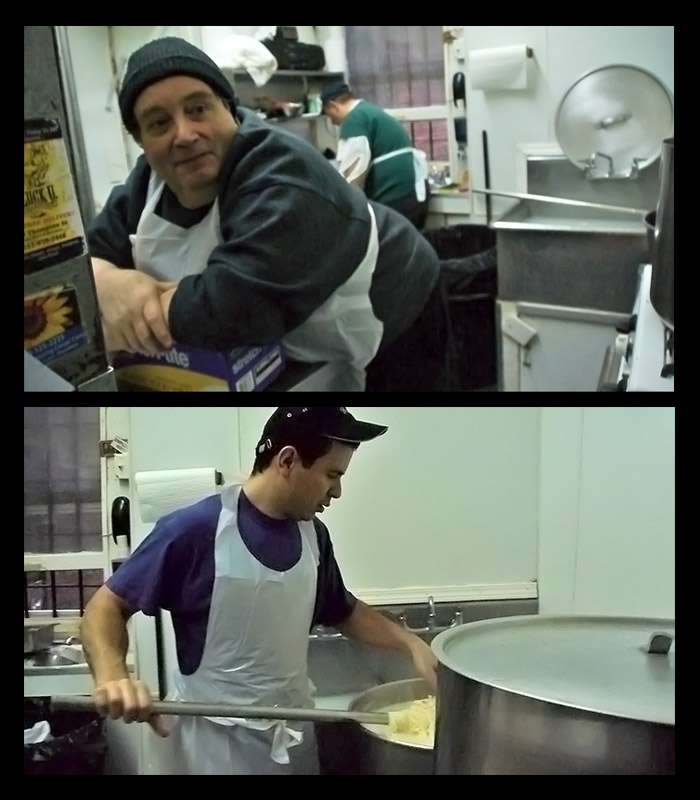
    A moment in the kitchen quickly explained why they do not entertain drive-by shootings. The cooking area is miniscule, with barely enough workspace for two people and the cooking equipment. I was most impressed by their cook, who toils 10 hours per day making only a handful of movements. I told him that he should be sainted for his ability to do this daily for over 5 years.

    Everything is done by hand – very old-school. When I saw the cook drain water by hand, one small pot at a time, I asked why they might not install a small pump. I was told that nothing was going to be modernized in any way. If you’re looking for stability in a world of change, visit Joe’s Dairy.

    Enjoy the Movie 🙂

    Related Posts: At the Door, For Whom the Knell Tolled, Donato, Nativity, Raffetto’s, Secret Society, Vesuvio


  • Joe’s Dairy, The Movie, Part 1

    On September 16, 2008, I wrote a story about Joe’s Dairy, located at 156 Sullivan Street. In this Italian area of the South Village/SoHo, we have Pino’s Prime Meats as well as St. Anthony’s Church (see here and here), both on Sullivan Street facing Joe’s Dairy. Just across Houston Street, there is Raffetto’s, Delmonico’s, and Tiro a Segno. Trattoria Spaghetto lies just a few short blocks away. These are the final vestiges of the Italian neighborhood – places such as Vesuvio and Zito’s Bakery, neighborhood icons, are now closed.

    However, the full experience of Joe’s Dairy – meeting Vincent and Anthony Campanelli, grandpa staking out the front retail area, and the making of mozzarella cheese in that tiny backroom – is something which only video or film can capture.

    I made two additional visits. During the first, on December 15, 2011, I chatted with Vincent and his father. I captured the conversation on video as Vincent shared his views on retailing, the changes in the world, the value of family, and many pearls of wisdom. He is very intolerant of mass merchandising, chain stores – anything not done the old-fashioned way. Joe’s Dairy is an example of the Slow Food movement.

    Today, I will feature my initial conversation with Vincent and grandpa in the front room. I was invited back to see and film the actual making of mozzarella cheese in the tiny back room kitchen. With Part 2 on Monday…

    Related Post: One Short Block


  • At the Door

    Being a butcher has little allure, and today, like most jobs that involve physical labor, there is no appeal for the young, restless, and upwardly mobile. At one time, butcher shops dotted the city, but now, a shop like Pino’s Prime Meat is rare and noteworthy, the subject of articles that bemoan their loss and extol the pluses of getting one’s meats from a skilled, multi-generational specialist, like Pino Cinquemani of Pino’s Meat Market.

    Supermarkets, case-ready meats, the increasing costs of retailing in New York City, and the glamourlessness of the job have all conspired to make the old-fashioned butcher shop a rare commodity. To visit a place like Pino’s is truly an opportunity to step in the past and experience old New York. The shop, located in an Italian area of the South Village, has been in existence since 1904, taken over by Pino in 1990. From an article in Food and Wine Magazine:

    Pino has been carving up sheep, pigs and cattle since he was a teenager in the Sicilian town of Castrofilippo, and you might say that meat is in his blood. When I asked him about his family, this was his answer: “My grandfather was a butcher. My father was a butcher. My brothers are butchers. My brother-in-law. My sister-in-law. My nephew and my other nephew—butchers. My son is a butcher.”

    I had passed by this shop for decades, but, not being a meat eater, I had neither stepped in the door nor met the owner. I recently made a visit, photographing and filming my encounter and recording our conversation. Pino was quite cordial and accommodating. We discussed Italy, my travels there and love of small Italian hill villages, and his home in Sicily:

    I am no judge of meat quality, cuts, or the skill of butchers, but everything I have read about Pino indicates that he is the ne plus ultra in his business. This is old school, where the skill of the trained artisan triumphs over the mass merchants. Here at Pino’s, genuine, authentic European tradition lives on in a small shop in SoHo, encroached by a wave of high-end merchants that have essentially engulfed the entire area, if not the entire borough of Manhattan.

    I have a number of close friends and acquaintances who are vegetarian, as I was for 30 years (I now eat fish). Decisions whether to eat meat or not are highly contentious, and I have stopped debating such subjects long ago. Here, at Pino’s, to understand and appreciate the man and his family tradition, it is perhaps best to leave dietary preferences At the Door 🙂

    Related Posts: Pork and Power, Mystery Meat, Shrine to Beef, Fisherman’s Widow


  • A Narrow Path

    Many years ago, I became entangled in an argument regarding aspects of Christianity with a cousin and his wife in my family’s home in Connecticut. It was Christmas time, and I felt particularly bad to have gotten into a heated debate with family about their faith. I learned that they were born-again Christians. At one point, I expressed my dismay and told them that I was very sorry. However, they said that they were not upset at all but that, to the contrary, they valued the opportunity to defend their faith and that debates of this nature only made them more resolute in their beliefs.

    I only recall one small part of that evening’s conversation – a point where, after a litany of their dos and don’ts, I said to them that following their road appeared to me to be an absurdly narrow path, virtually unwalkable. They were pleased by this comment and concurred, telling me that Christ said exactly that in Matthew 7:13-14 :

    Enter through the narrow gate. For wide is the gate and broad is the road that leads to destruction, and many enter through it. But small is the gate and narrow the road that leads to life, and only a few find it.

    This passage was unbeknownst to me at the time and certainly gave me cause for reflection. After millennia of debate, argument, and discussion, well-schooled Christians, like others who are serious about their faith, are well-armed with answers to the myriad of objections and issues with biblical matters. Religious doctrine is not so easily dismissed as dogma of the unthinking masses.

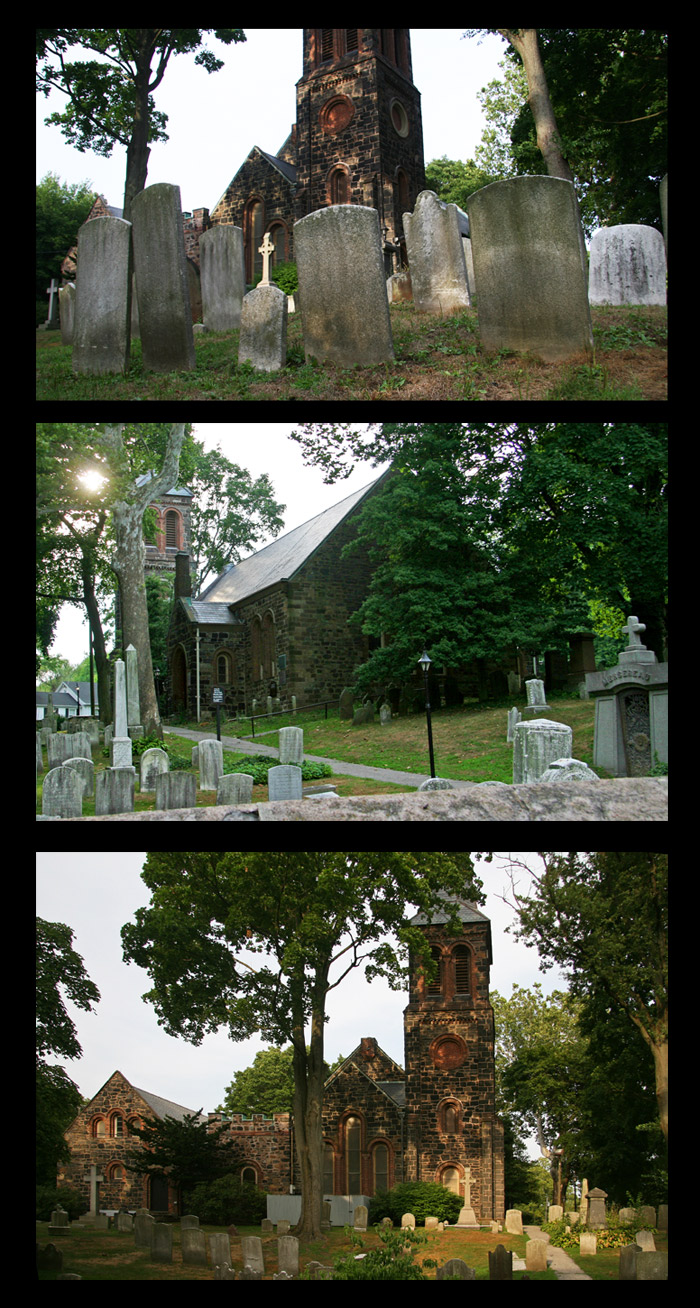
    In 2010, I made a trip through historic Richmond Town in Staten Island. The area is replete with beautiful antique structures in bucolic settings. I featured a number of postings on Staten Island and decided to leave the images of The Church of St. Andrew for a later time. Today I discovered the images in my archives of this 300-year-old church in the Richmond Town section of Staten Island.

    The Church of Saint Andrew was founded in 1708 and chartered by Queen Anne in 1713. The Church  served as a hospital and headquarters for the British soldiers as the New Colonies fought for their freedom. The Rev. Richard Charlton served as the Rector of Saint Andrew’s during this time. He was the maternal grandfather of Elizabeth Ann Bayley Seton, who was the first canonized American Saint of the Roman Catholic Church. Along with her grandparents; her father, brother and sister are buried in our historic cemetery. The Rev. Samuel Seabury was called to be the first Bishop of the Episcopal Church while he was serving as Rector of the Church of Saint Andrew from 1777 until 1780.

    I toured the church property. Everything conspired to persuade me that my cousins were right; as I navigated the sidewalks and walked between the headstones of the departed, indeed it did appear that good things lay along a narrow path 🙂

    Related Posts: Not Under the Gowanus (Part 1, Part 2, and Sorry About That), Green-Wood, Everything Yes, Veneer of Their Lives, Cold Stone, Little Church Around the Corner, St. Mark’s Church-in-the-Bowery


  • Love to Lug

    Do not believe for a moment that New Yorkers do not envy many things about living in the suburbs or countryside. We extol the benefits and wonders of the city ad nauseum, however, the conveniences of suburban living are many, and and it is no wonder that outsiders wonder how and why we put up with city life. And if you want to live here, you had better want to walk and love to lug.

    There is the lugging of laundry. Very few have washer/dryers in their apartments. In larger buildings, there are typically laundry rooms in a common area. In smaller buildings, laundry must be carried to the nearest laundromat – sometimes blocks away.

    Owning a car is a luxury few can afford. Street parking is a nightmare, garage parking an extravagance – $400 per month and up. This means shopping for everything is typically done on foot and requires lugging things home. Public transportation is superb, however, the distances from subway and bus stops to final destination will always require walking, often significant. The subway system is virtually free of elevators; only the occasional escalator relieves the tedium of up and down staircases to reach the bowels of the train system.

    Many smaller buildings, particularly townhouses and tenements, have no elevators, so walking several flights of stairs daily is the norm for millions of New Yorkers. Shopping in the city for those of us living in walkup apartments will add insult to injury – we will be required to walk the streets and walk up flights of stairs while lugging laundry or other necessities of life. However, all the required walking is a forced exercise for city inhabitants, and so what may seem burdensome and tiresome really has health benefits.

    Large chain retailers also have their own difficulty of acquiring adequate space. The challenges and costs are huge, and these large retailers are late comers in the New York City retail landscape. Many of these huge stores occupy architecturally beautiful spaces, almost of necessity since these are the only types of buildings with enough open space to accommodate their needs – places like Home Depot, Trader Joe’s, Kmart, Costco, and Best Buy. Some take creative approaches, like EMS, who acquired a number of contiguous spaces across adjoining buildings. Others, like Hollister or Apple, stage a coup by acquiring an entire building, permitting spectacular interior design.

    For most hardcore New Yorkers, all these things are minor inconveniences for living in the world’s greatest city for those who want to walk and love to lug 🙂

    Related Posts: Unforgiving, Ye Who Enter Here, I Know


  • Not Really

    The one big thing you need to know about cement or concrete is that YOU GOT TO KEEP IT MOVING. My father knew this better than anyone; for most of his adult life, he worked for a construction company that specialized in concrete. All too often, a newbie driver with the company would break down on the road and not realize that his number one priority was to keep that cement drum moving. Invariably he would return a cement truck with a drum full of hardened concrete. This would require either a entire replacement of the drum or a very laborious removal process – chipping the material out with a jack hammer. I did this for a summer job – one of the most unpleasant tasks I have ever known.

    I endured an extreme stoicism growing up, driven by my parents’ hard times, lean circumstances, and real need, not by an effort to impress. My father had ZERO tolerance for complaining about any hardship, and I witnessed a few severe accidents with no expression of pain. He owned a rifle at 10 years old and was taken out of school at 12 to work full time as a wood cutter in subzero temperatures. There were accidents, misfortune, and real adversity to face. Later in life, many anecdotes would be exchanged – small tales of extreme bravado.

    My family had a custom home built in the mid-1960s. For a family with such austere and impoverished roots, this was a tremendous source of pride. After completion, my father decided that a couple of concrete walkways around the house would be a nice touch and an opportunity to use his knowledge of concrete.

    With all the preparations done, it was time to actually pour the concrete. He had been able to borrow a small portable mixer like that in today’s photo. The mixer was chain-driven, and at one point one of his fingers got caught in the drive, tearing off his knuckle. However, the concrete was wet and needed to be kept moving, and an accident was not to deter him. He looked at me and only said four words: “Get me a rag,” with no cry or any visible sign of discomfort, only frustration that his job was now made more difficult.

    My father instilled in me a great respect for power tools, and to me, one of the most frightening is the table saw. A colleague who built a post and beam home in Maine told me that most of the members of the crew who built his home had a finger or part missing. A supplier of wood parts to whom I once recounted these tales concurred, telling me that sadly, these accidents are generally just a function of time. A very large number of those who work in heavy wood manufacturing industries inevitably have a serious accident resulting in the loss of a finger.

    My father had a basement shopped equipped with a table saw. He was extraordinarily careful and methodical with its use, but time caught up with him. On one occasion, he cut the tip of one finger off. He came up from the basement stairs with his hand wrapped in a bloodied shirt and stood silently before my mother. Surmising the seriousness of the accident, she asked in shock and horror, “Are you alright?” To which he answered, with classic New England stoicism, “Not really…”

    Related Posts: The Book With the Hole In It (Part 1 and Part 2), Pure Chocolate, Men of Steel, Never Cut a Board, Men Making Noise, Work


  • Meetings With Remarkable Women, Part 2

    Happy Birthday, Rigel!  (see Part 1 here)

    Meet Rigel Sarjoo, a biology major at NYU.

    When I first met Rigel, she told me that she had always felt that she was born in the wrong time and wished she had lived through the sixties. When I asked if she had seen the film Woodstock, she answered, “Many times.” I quickly learned that her knowledge of music from that period was virtually encyclopedic.

    So, she was drawn, like I was, to Washington Square Park, with its roots in Bohemia and street music. She spent countless hours there, because she felt as I do – that although NYU has much to teach, there is another institution of higher learning: the sidewalk university of New York City.

    But there are many accomplished, talented, and inquisitive young people, and to hear what I have so far written does not explain why she has captured the hearts of so many. Many who have not met Rigel wonder, why all the fanfare over a student?

    I once attended a workshop with a very experienced performer from San Francisco. A lifetime on the streets taught him the keys to success, and to him, the number one most important thing that a performer must have is what he called the L-factor, i.e. the likability factor. He went on to explain – if an audience likes you, they are always on your side and want you to succeed, regardless of how you actually do. This is the secret to Rigel’s popularity. She is, of course, genuine, intelligent, thoughtful, reliable, interesting, and passionate – none of these things are to be dismissed. But above all, she is fundamentally LIKABLE. She is a girl impossible to dislike.

    Rigel is very humble – I learned she had graduated as valedictorian of her high school class. This took an online search to uncover, where I also learned of her many academic and musical achievements. When I told her of my findings, she dismissed graduating first in her class as just lots of work and luck. Is it more luck that within two months as an NYU freshman, she was promoted to sophomore?

    Most find Rigel’s attraction to older people puzzling and even disturbing. I never did. What’s to understand? Rigel values the depth and breadth of knowledge and life experience of older people. She told me she is often asked why she had almost no friends her age. She explains that she has no interest in the types of things most of her roommates or peers occupy their free time with – clubs, bars, parties, and drugs. I agreed that ultimately these are vacuous pursuits. Typically, a criticism of these types of activities falls on deaf ears with young people, but not to a girl with perfect pitch (something else I learned about her musical talents).

    Rigel always listened attentively to me to learn what my life experience had taught me after living in New York City for over four decades. I was encouraged to have deeper conversations with her on many topics. We played guitar together. She sometimes accompanied me on photo excursions for my website. I interviewed her for the upcoming film documentary on the musicians of Washington Square Park.

    She shared my enthusiasm for life itself and my desire, much like Thoreau, to live life to its fullest and experience it with no holds barred. Our friendship deepened as she became privy to virtually everything I knew and everything I liked. She became a loyal reader of New York Daily Photo (as did her 11-year-old brother, Aaron), which flattered me greatly, since my writing is not only my biggest passion but also a distillation of virtually every thought, preference, feeling, idea, anecdote, and experience I have ever had. It is a place where I bare my soul for all to see – a window into my heart and mind.

    In the summer of 2011, Rigel needed a summer job. I was concerned employing a friend but decided to hire her, initially to work on New York Daily Photo. She had never worked a real job before and was terrified to disappoint me, convinced that she would fail and be fired. On her first day, as I went over the work details, her mind froze. She told me that she understood nothing I had said – explanations of HTML coding, managing images, use of Photoshop, posting of stories, FTP for uploading files, etc. Admittedly I threw an absurd amount of information her way, but I had the suspicion that she would rise to the occasion.

    She did. Within a few days, she was doing everything I had asked, and I began to add duties. In time, she was editing videos in Final Cut Pro and filming them as well. I now just throw her tasks, often researching website design, marketing ideas, and software. She continues to work for me part-time and edits my blog daily between classes.

    Rigel has fully embraced the culture of New York City like no student I have ever met. She has befriended a number of musicians in Washington Square Park and now performs regularly with a local band as guitarist and vocalist. She also is involved in the NYU Women’s Choir.

    Today is a special day for Rigel, a rite of passage. It is her birthday. Technically, she is no longer a teenager, as she turns from 19 to 20. In the last 1 1/2 years, she has grown demonstrably, as we who know her best have seen this girl pass into adulthood before our eyes. But to those of us who stood by her side, as parent with child, she will always be Our Little Girl. Happy 20th Birthday, Rigel!

    Related Posts: Myra’s Isle, When Brian Met Sally, Just Like Old Times, Park Night


  • Meetings With Remarkable Women, Part 1

    Our Little Girl

    I once asked a number of friends who is more irritating – a person who thinks he/she is always right and usually is, or a person who thinks he/she is always right and frequently is not? Answer: Find a new friend. Someone who is talented, smart, and NICE. Someone who puts on no airs whatsoever, like Dave, whom I wrote about on July 28, 2010. Or the subject of today’s story.

    On September 25, 2010, I met a girl in Washington Square Park. She, like many of us, was captivated by the music jams that dot the park on a Saturday night. She brandished a harmonica – a welcome but not-so-common instrument. I learned that she was an NYU student. This was unusual – although students utilize the park as their de facto campus and a few do occasionally observe the music and cultural happenings there, they rarely participate and interact with park habitues.
    This is very understandable, as the mix of regulars is as broad a group as imaginable, with many dicey characters – excons and drug addicts are well-blended in any grouping.

    Her unbridled enthusiasm knew no bounds, and in spite of the large age gap between us, we had many common interests. We became friends quickly and socialized regularly, typically meeting in the park. Our conversations never got old. We listened to and played music together. I introduced her to all the park regulars and friends whom I had made over the years. Soon, a number of us took her under our wing, warning her of the dangers and creeps, keeping a watchful eye out for what was essentially an innocent teenager who quickly and willingly became our little girl.

    She took an immediate interest in this blog, which became an important connection between us. We discussed stories, both past and future, and she accompanied me on photo excursions. She became my biggest supporter, eventually to work on the website with me. Her memory of my stories is frightening – virtually photographic.

    However, for most outsiders, her large fan base is very puzzling: Why would 65 adults turn up for a party for a college student? Why would an 18-19-year-old girl be a household name around Washington Square Park? What the hell is so special about a 19-year-old NYU student? And the biggest question EVERYONE asks: why would she practically shun her peers and befriend so many people more than three times her age? The answers are quite simple. In Part 2, you will learn the answers and meet this Remarkable Woman 🙂

    Related Posts: Myra’s Isle, When Brian Met Sally, Just Like Old Times, Park Night


  • It’s Time to Start


    It was late night in Key West, and I was strolling along Duval Street, the main thoroughfare. Here, like in New York City, bars close at 4 AM. However, unlike New York City, selling alcohol and drinking is allowed on the streets. Kiosks dot Duval Street, where blended drinks can be had, made right on the spot. Late-night revelers spill into the streets from the bars, many of them infamous like Sloppy Joe’s.

    However, I do not drink, so my attention was drawn to other kiosks, particularly ones selling snorkeling day trips to the Great Florida Reef – the world’s 3rd largest and only barrier reef in the continental United States. The reef extends 170 miles and is located a few miles offshore, just a short trip away from the chain of island keys themselves.

    This wonderment is very alien to a New Yorker, and visiting the reef seemed like one of the best things to do in the Florida Keys – exploring the marine environment. Price competition was cutthroat for excursions to the reef – good news for the consumer. My companion and I chose and reserved space on a spanking clean catamaran for only $27. The fee included round trip fare to the reef, snorkeling equipment rental, instruction on the use of the equipment, and an unlimited open bar (alcohol only on the return trip).

    And so we arrived to the dock the next day and boarded ship for what was one of the most memorable explorations of the natural world I have ever known. We were given our snorkeling and safety equipment, provided a lesson, arrived at our destination, and moored near the reef for several hours. We jumped into the clean, clear aquamarine ocean – a virtual aquarium brimming with sealife of every description.

    On the return trip, the bar was open for alcoholic drinks, and I was not pleased with two of our travel companions – young guys, frat boy types. It was early afternoon, and they appeared to already be poised for the business of serious drinking. It is one of my personal irritants – people who feel that alcohol is a NECESSARY condition for fun and that parties, outings, and socializing without alcohol is boring, as are people who do not share their love.
    It was only 4:30 PM, and the dialogue went something like this:

    Boy 1: I’m going to the bar. Do you want anything?
    Boy 2: What time is it?
    Boy 1: 4:30.
    Boy 2: Sure. It’s time to start.

    Time to start drinking, that is. Those are the words that ring in my head to this day, often when I see excessive drinking or bars. I see a guy on a catamaran making a smug, confident statement that the serious and necessary business of getting drunk was a job to be done without question and that apparently, 4:30 PM was the beginning of the work shift, when responsible workers know that It’s Time To Start 🙂

    Related Posts: Sober Kids in India, SantaCon, Surly Santas, Oktoberfest New York, McSorley’s


  • Foolish World of the Fiscally Frivolous

    There is nothing more irritating for some men than the occasion when they feel the need to buy their girlfriends flowers. This obligatory event may be a minuscule effort yet looms larger than anything conceivable. And then there is the terror of Valentine’s Day, where a last-minute purchase in New York City is tantamount to lunacy.

    Adding insult to injury is the perception of wastefulness – buying something whimsically that is decorative and perishable is antithetical to the nature of the practical man. Flowers are a waning asset, so why invest?

    However, having established that everything should not always be reduced to the Very Practical and that whether wasteful or not, there is reason on occasion to the cry, Let’s Have a Parade, the prudent man sees the merit of the flower, the message it will send, and the profound effect it will have on his better half.

    Ironically, the very nature of a gift of flowers being fiscally frivolous is one of the keys to their appeal. Symbols of life and beauty, flowers make a woman feel special and beautiful, particularly when done spontaneously and not for any special occasion.

    In New York City, flowers can feel out of character in a world of steel and concrete that is fast-paced and where utility often rules. After all, the streets of New York do not evoke images of the Monet’s Gardens at Giverny, Boboli Gardens of Florence, or the gardens of Versailles. However, not to be outdone, New York City does have its own spectacular displays and like many good things here, they just have to be sought out. The Brooklyn Botanic Garden (see here and here) and the Conservatory Garden are worthwhile visits for anyone who favors nature’s floral extravagance. There are numerous other smaller and lesser known gardens, such as St. Lukes, which, for those in the know, provide respite from the city.

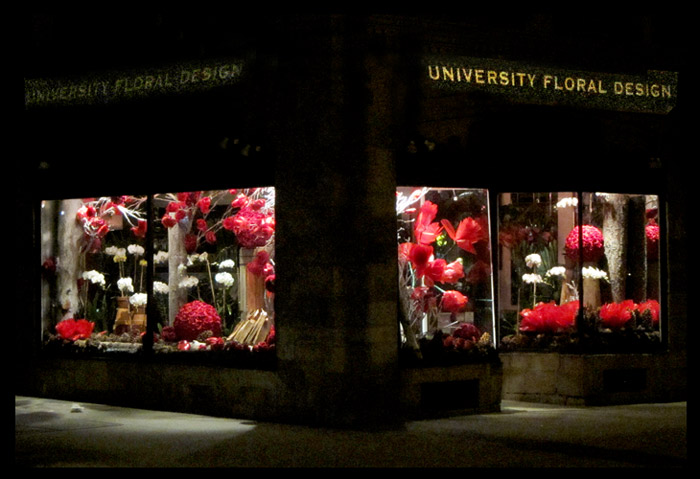
    There are also numerous flower shops throughout the city. University Floral Design, a Village landmark and neighborhood icon, is family owned and operated since 1928 with daily delivery of fresh Dutch flowers. It’s not that long a walk or that big an effort to go through the doors of a flower shop like that at 51 University Place and enter a world guaranteed to soften even those who see it as the Foolish World of the Fiscally Frivolous 🙂

    Related Posts: Joe Plourde, La Vie En Rose


  • A Remarkable Couple, Part 2

    Bitter Greens (see Part 1 here)

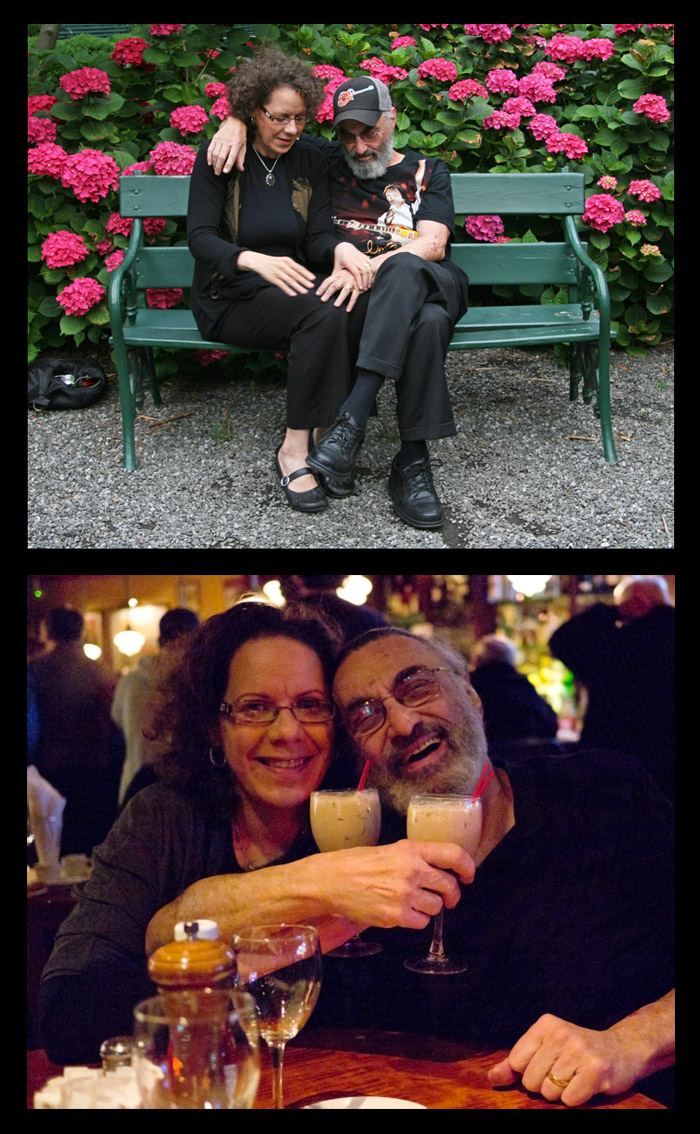
    One of our party had fallen a little ill and had been moved into the bedroom. So, when it came time to read my tribute, the entire party moved into the bedroom. The warmth and intimacy had a huge impact on the party goers; we were now sharing the couple’s inner sanctum – their own bedroom – and to use Hellen’s words, the event became a love fest.

    I was decidedly preaching to the choir. Regardless of Harvey’s eccentricities or habits, this unusual man was surrounded by friends – people who understood him, accepted him, and loved him for who he was. Hellen, of course, was a no-brainer, as she could easily win the Miss Congeniality award. So here is what I wrote and read aloud to our group of friends on the 4th wedding anniversary of Hellen and Harvey on 11/11/11:

    BITTER GREENS

    This party is not only a celebration of Hellen and Harvey’s 4-year anniversary. It is also a celebration of friendships and the value they are in our lives. What is a life if not shared?

    When I first met Hellen after knowing Harvey for some time, I was perplexed how a woman so kind and gentle could tolerate what appeared to me to be the wild man of Borneo. In a very short time, I nicknamed her Saint Helen, which appeared to flatter her and please her greatly. Harvey even adopted the phrase and did on occasion use it among friends.

    I explained to her my reason for the title – that any woman that could tolerate Harvey was certainly a saint. In fact, her ability to be with him clearly qualified as a step towards canonization. In the years I have known Hellen, I have never heard her curse, raise her voice, or see her angry. Remarkable and a model for those who aspire to sainthood.

    Hellen is one of the most giving people I have met. Many times in the last 4 years, I have called their home distraught. She always asked if I wanted to come over and always added, “We’re here for you.” Hellen is loved by all who meet her.

    Harvey, on the other hand, is an acquired taste. Years ago, I had an employee who was a recluse and very difficult, yet we shared many views and interests. We often engaged in deep conversations, sometimes leading to debates. On one instance, I used the phrase “acquired taste.” She was militant in her opinion that such a thing did not exist, telling me that acquired taste to her was synonymous with shoving something down one’s throat. She averred that she knew all her likes and dislikes from an early age. I found that absurd and extremely narrow. We argued, and I cited bitter greens as an example of what is an acquired taste for most people. I argued that something can be truly disliked and, in time, come to be appreciated and even loved. That tastes can EVOLVE AND CHANGE. Some of the best things in life come to be appreciated over time. She was not persuaded, and I finally let it drop.

    But I hold steadfast to my belief and my life experience has given me ample evidence. Proof sits here beside me: Harvey Osgood. It is no secret that Harvey is not well liked by some, even shunned. Particularly by individuals who are like those who purport to dislike bitter greens but have not tasted them. But here is what I have learned.

    Along with Hellen, Harvey is one of the greatest supporters and champions of friends and friends’ interests and work that I have ever met. Harvey is very generous in spirit – anyone who would loan Avi Colon $1000 is either certifiably insane or the most generous person alive. And Harvey is brilliant. Beyond his academic achievements in the sciences and engineering, he has the most extraordinary facility to see, understand, interpret, and articulate the nuances of human psychology and interpersonal relationships that I have ever known. He invariably offers unique and provocative insights. I have often told him that he should have become a psychiatrist.

    When I was first a vegetarian, I virtually lived on salads. I became bored with a diet of ordinary greens, so I experimented with every ingredient I could find, even bitter greens like chicory, radicchio, and endive. I grew to love them. To those bored with the ordinary and mediocre, I suggest they acquaint themselves with Harvey Osgood and sample a more exotic diet. Soon, you will learn to love him as I have, much as one learns to love bitter greens.

    I have admired Hellen and Harvey’s mantra regarding transparency and openness. Only they would be comfortable with the brutally honest words I have written. I would never write or read such a thing to anyone else on an anniversary, much less title this Bitter Greens. However, I know they understand such words come from a place of deeply rooted love and understanding.

    But I preach to the choir – the close friends of Harvey and Hellen gathered here all know that what I speak of is true. Congratulations, Hellen and Harvey, on your 4th anniversary. Know that you are an extraordinary example to us all of what a couple joined together can be. You have shown us that an atheist and a Christian can love and lie peaceably together with mutual respect.

    Related Posts: Related Posts: Ice Cream Sandwiches, Myra’s Isle, War Against Disservice (Part 1 and Part 2), When Brian Met Sally


  • A Remarkable Couple, Part 1

    To say that Hellen and Harvey Osgood are an unconventional couple is an understatement. Here, we have an officer of the New York City Atheists (Harvey) married to a devout Christian (Hellen). Both are native New Yorkers – Harvey is Jewish, born in Brooklyn, and Hellen is Danish and Jamaican, born in Manhattan. Harvey has a master’s degree in engineering and worked for decades for the MTA. Both gifted from childhood, Harvey attended the highly regarded Stuyvesant High School while Hellen was accepted to Bronx Science (she chose not to attend). Hellen’s educational background is multifaceted, at one time training as a nurse. She is currently a project manager at the MTA, where she met Harvey.

    Although their achievements are many, I am not writing this to feature bullet points on a curriculum vitae. Hellen and Harvey are remarkable as human beings. There are many things that come to mind regarding the couple, but for anyone who has been married or in a committed relationship, one of the most incredible thing that stands out in the marriage between Hellen and Harvey is that they don’t fight. Harvey told me that one of the first things Hellen asked him when they met was about his approach to conflict resolution. Anyone who has had relationship and/or marriage experience can easily understand why Harvey was so impressed with this first question.

    Harvey has the mind of an engineer and is very analytical. Although trained in the hard sciences,  he is also a master of understanding the dynamics of interpersonal relationships. He has formulated many unique philosophies and views, such as his concept of the necessary trinity of elements which good relationships are built on: love, trust, and mutual respect. His personal philosophies are typically deep and nuanced.

    Hellen is one of the most generous people I have ever known. She is non-confrontational, yet intolerant of nonsense. They share a love of being together and meet each other’s needs extremely well. Personal time and space apart is not something which they desire. At any given moment, Harvey can tell you precisely how many weeks and days they have been together, which he is frequently apt to do.

    They recently celebrated their 4-year wedding anniversary. I pondered what I might give the well-heeled couple. I decided to write a toast, which I read aloud at their anniversary party. On Monday, I will publish the text of the offering here, along with a video of my reading (see Part 2 here). Then you will meet Hellen and Harvey and learn why I entitled my toast not Sweet Dreams, but Bitter Greens…

    Related Posts: Ice Cream Sandwiches, Myra’s Isle, War Against Disservice (Part 1 and Part 2), When Brian Met Sally


  • Good That’s Olde Too

    At one time, modern high-rise buildings were marketed as “luxury.” The apartments were sterile and devoid of character, with the most boring cookie-cutter layouts imaginable. They sported only the basic modcons, nothing luxurious at all. In New York City, luxury really just meant the absence of squalor. Not roach– or rat-infested, not a tenement, not a railroad flat, not dilapidated, not in a ghetto. In short, luxury was about what a place was NOT.

    As I have written in numerous stories, in New York, like anywhere else, old or new is not necessarily better or worse. However, there are many wonderful features in old homes and apartment buildings, things now rarely seen. In New York City prewar apartments, higher ceilings, larger room sizes, and more generous floor plans all hearken back to a time when the human experience was valued above maximizing usable space. By today’s standards, the common elements of prewar construction, if seen in modern construction, are now considered to be luxury.

    Love of the old abounds here, with good reason. There are many neighborhoods where one will find a historic uniformity: row houses in Park Slope, Brooklyn Heights, Carroll Gardens, Greenwich Village, et. al. The aesthetic charm in these areas where there are blocks of antique homes is what makes the areas so well-known and highly coveted. The architectural charm and bucolic nature of the tree lined streets makes these neighborhoods some of the finest living experiences in the five boroughs.

    But new can be great too. A family member just completed a McMansion custom home. The home took 38 months to complete, and I was privy to seeing it go up step by step and in detail what went into its construction. The owner, like myself, is involved in manufacturing and was very particular about every element. The quality of construction, appliances, and materials I see in that house is unsurpassed, new or old.

    And everything WORKS. The modern heating, plumbing, and electrical systems far exceed the typically primitive systems seen in old construction. Where is the quality in age-old single pane glass windows with poor insulation and leaks? My landlord recently replaced my French windows after decades. The new windows with low-e glass, etc. are air tight and a joy compared to the old construction. I have lived with steam heat in New York City for over 40 years and can say nothing good about it other than it supplies heat.

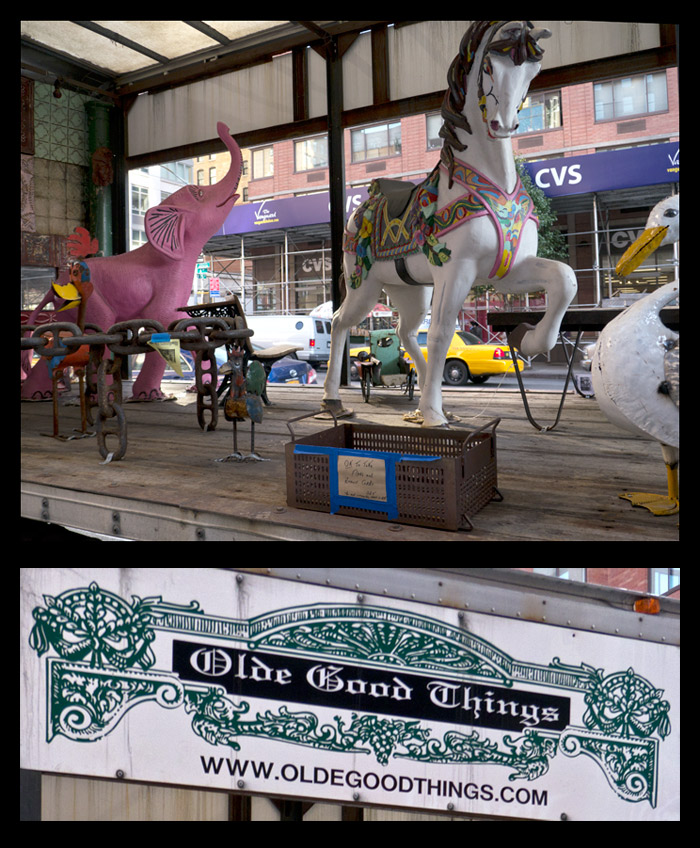
    Recently, I passed a truck on 6th Avenue with a sign: Olde Good Things. The company has a number of retail locations and a warehouse. I don’t know if the business name is an acknowledgement that there are olde bad things too.

    In homes and furnishings, there is a romance with the old. But when someone says they love old houses, old places, and old furniture, good is implied. Good is what ultimately counts, and if you’re predisposed to days gone by and lucky, you can find Good That’s Olde Too 🙂

    Related Posts: Old New York Part 2, Old New York Part 1


  • dinamic_sidebar 4 none

©2026 New York Daily Photo Entries (RSS) and Comments (RSS)  Raindrops Theme