• Cozy

    I’ve lived with steam heat all of my life in New York City, and although the silent or near silent central heating systems of new homes (such as forced air) is vastly superior, the sound of steam on a cold winter’s day gives comfort. I’m like a Pavlovian dog – I have been conditioned to the sound of steam and its association with warmth. Anyone who has been without heat for days knows how the sound of steam rising is literally music to the ears.

    If you wonder why I say that modern systems are vastly superior, take a look at my photo and story, The Dark Ages, here. Steam heat output is controlled in a very primitive manner, with no thermostats to regulate temperature. Often, apartments or offices are blistering hot. Turning off the system is not recommended or not possible, requiring windows to be opened mid-winter. Valves often do not work properly or leak, and radiators bang.

    Most buildings in New York have their own boilers and provide their own steam. However, Con Edison, New York City’s local utility, has the world’s largest district heating system, and provides steam to 100,000 commercial and residential customers in Manhattan, from the Battery to 96th Street. Customers include the Empire State Building, Rockefeller Center, the Metropolitan Museum of Art, and the United Nations. Hospitals, such as St. Vincent, make use of steam for sterilization procedures.

    Steam is produced at five generating plants – three in Manhattan, one in Queens and one in Brooklyn. Water is boiled under high pressure to 1000 degrees F and is delivered at 358 degrees through a 105 mile system of pipes. Read more here.

    Regardless of safeguards, there is inherent risk in such as system. There have been numerous steam pipe explosions in the city with fatalities and spewing debris, including asbestos, into the air. There has been controversy and talk regarding the feasibility of maintaining such a system.

    One of most often asked questions is about the nature of steam rising from the streets of New York City. This steam is typically not from leaks, but from water making contact with the steam pipes and vaporizing. The steam is often vented through cones to prevent it from diminishing visibility for motorists.

    For now, in mid-winter, the sound of steam is always good news to my ears and only spells one word – cozy 🙂

    About the photo: This Con Ed repair truck and crew were located on Grand Street, coincidentally in front of John Jovino Gun Shop.

  • Welcoming Committee


    There is no doubt that the ambiance of shops in New York City will not often be like that of the small rural or suburban town. Places where you are spoken to on a first named basis, your preferences are remembered, the owner is on hand, expertise looms large, and people really go the extra mile.

    However, I said not often, not nonexistent – I have featured many of these mom and pop establishments in this website over the last four years. You will find this type of place more often in the neighborhood shops in the outer boroughs where, with a few visits, you are treated like a valued regular. I seek them out – the extra level of humanity makes New York City so much more livable.

    Do you want that treatment as soon as you walk in the door? Head to the Mandolin Brothers at 629 Forest Avenue in Staten Island.
    The accolades for this place, from amateurs and music stars to major media, border on the unbelievable. Things like: “One of the best guitar shops in the world,” from The Boston Globe.

    I visited here recently because I had been hearing about the place for years. It was immediately clear on entering what all the fuss was about. Walking through the door, I had an experience of the welcoming committee. The shop was extremely well staffed with friendly, knowledgeable sales people at every turn. I was encouraged to hang my coat and peruse and sample the wares by the owner himself, Stan Jay, who started the shop in 1971. The inventory is amazing, and the roster of customers reads like a who’s who of music. Read more about them at their website here.

    You will find attentive staff at some of the chain stores with, however, two major differences – sales pressure and lack of expertise.
    From the Mandolin Brothers website:

    Widely known as one of the largest dealers in the world of vintage and new American fretted instruments, we are frequently recommended by Gibson Guitar Corp., Nashville, TN, when they receive inquiries about vintage and used instruments, and also by Martin, Fender, Guild, Gretsch, National, Taylor, Dobro, PRS and many other manufacturers …. We are recommended by many local music stores around the country and by manufacturers, libraries, museums, magazines, search engines and newspaper columnists. In business since 1971, we service the needs of over 225,000 players and collectors of American fretted instruments all over the globe.

    Visiting Mandolin Brothers’ showroom is like no other retail store experience you have ever had. It’s as comfortable as being home, if your home were stocked with many hundreds of exceedingly high quality, original condition fretted instruments. Your questions are answered accurately and completely — our greatest goal is to educate our customers to the differences between brands, models, styles, woods and appointments, so that they can make up their own minds based on having the information required to do so.

    We treat every customer like a friend of the company.

    It’s all true. Like moving to a small town and getting the welcoming committee 🙂


  • Down on His Luck


    I was not a regular watcher of the popular Western TV series Bonanza, but recently, while surfing TV, I stopped to watch a portion of an episode. I was curious as an adult to see the quality of the writing and acting. In this particular episode, the father, Ben Cartwright, was admonishing a son for being critical of a man who was “down on his luck.”

    Growing up in a family where excuses were rarely tolerated and in a society where taking responsibility for your own life and avoiding victim and entitlement mentality are mantras and truisms, the admonition in that show gave me pause for reflection and has precipitated a rethinking of human misfortune. Certainly many individuals can do more for themselves, and cheaters exist. But sometimes, there are mitigating circumstances, and there is such a thing as bad luck. Without really knowing the details behind an individual’s descent into the streets, it is unfair to make blanket condemnations.

    In New York City, with frequent exposure to the homeless and disadvantaged, it is easy to become inured with their plight. If you read stories of the homeless, some of the life circumstances that led to where they are do give reason for thought. I have become more acutely aware of my good fortune.
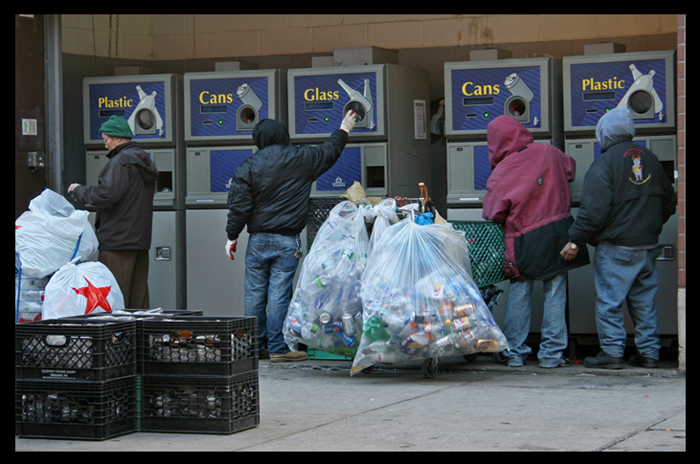
    The can collection center in the photo is located in Harlem at 144th Street and 8th Avenue (Frederick Douglass Boulevard) at the rear of a Pathmark supermarket. This was a no-nonsense group of men working in frigid 14 degree weather with focus and fervor.

    I was never drawn into the survival reality TV shows – no matter what “hardships” are meted out, there are no real serious consequences. For a real glimpse of survival, try the can redemption center, where there is no helicopter waiting to deliver a pizza as a reward for the winner. Surely there must be at least one man there who is Down on His Luck


  • Kings and Castles

    On October 28, 2009, in Content is King, I wrote regarding a common phenomenon in New York City: how you can’t judge a place by its outward appearance. However, great places are not always shabby. Here, as elsewhere, packaging does not always deceive, and sometimes you can judge a book by its cover.

    Quality is never easy to assess, especially at a time when marketing and packaging have reached new zeniths. Many consumers are disappointed by expensive yet inferior products that are riding on the coattails of company legacy. There are merchants who do strive to keep a consistency between product quality, packaging, imaging, and retail store environments. Apple, with its award-winning stores in Manhattan, is a good example.

    When I was young, I had a morbid fear of hospitals. They were gloomy, scary places, where impending doom seemed to hang over everything. Information was shrouded in mystery and secrecy, and the prognosis never seemed good. Certainly, hospitals are environments that are defined by caring for those with a medical problem, but they do not have to be shrines to hopelessness and malaise.

    Hospitals are changing dramatically in technology, facilities, and care. Of course, these are not places where everyone is jumping for joy, but they are places where there is much more expertise, knowledge, effective treatment, and hope, and you can feel a difference from the days of old.

    Even robotics have entered the world of medicine. At the Methodist Hospital in Houston, Texas, robots are not only used to perform surgery, they are also being used to make visits to patients and allow doctors to monitor them remotely.

    NewYork-Presbyterian is a university hospital with two medical centers affiliated with Ivy League universities: Columbia University Medical Center and the Cornell University Weill Medical Center (shown in the photo), which is located on the Upper East Side of Manhattan. NewYork-Presbyterian Hospital is the second oldest in the United States and one of the most comprehensive university hospitals in the world, with leading specialists in every field of medicine. It is ranked as 6th best in the country by US News and World Report. Admission to the medical school is one of the most competitive in the world. The acceptance rate is only 100 positions from nearly 6,000 applicants.

    In Content is King, I told of a conversation with a physician at Gouverneur Hospital discussing NewYork-Presbyterian Hospital, where he also worked. We agreed that it was like a country club in comparison. The atmosphere goes a long way to creating as positive an environment as can be reasonably expected.

    The hospital is a member of The Planetree Alliance, an organization of hospitals in the United States. The nonprofit group, founded in 1978, is oriented to improved patient care. It’s great that content is king, and it’s even better when the castle is well-designed 🙂


  • White by Design 2

    The beauty of a new fallen snow is very short-lived in the city – this photo was taken as I was writing this, and already, most has melted. Nature doles out its pleasures when it sees fit, and in New York City, nature’s bounty is often tempered. With a warm infrastructure and the masses walking, white snow soon becomes brown mush and/or melts away. There is little land or surfaces where snow can rest untouched.

    On November 17, 2009, I wrote White By Design. That was, however, design by men and women. For the natural version, I invite you to enjoy this view from my window. Contrast it with the same vista taken in the autumn on October 29, 2009, when I wrote Wood, Glass, Brass and Trees. Catch, if you can, nature’s White by Design in New York City, because it is beautiful but fleeting 🙂

    For more White By Design, go here.

    More seasons: Signs of Summer, Enchanted April


  • Head for the Hills

    He was a little ungainly and awkward, like Basil Fawlty, John Cleese’s character in Fawlty Towers. But, unlike Basil, who, though incompetent, is basically harmless, my innkeeper had a slightly uncomfortably mysterious side, like Norman Bates of Alfred Hitchcock’s film Psycho.

    The inn, in Southern New England, was perched on a hilltop and had extraordinary views. Most local residents were not even aware that the place existed or that access to this hilltop with such exceptional vistas was possible, much less that an inn was perched atop the mountain. The place was atmospheric and had been hand-built in stone by the owner’s parents with a wonderful flagstone terrace.

    I was compelled to book a room there. I just love the mountains. The innkeeper appeared to be the only one present, and at night, he disappeared to some unseen cottage on the property, or so he said. There were only two rooms in the inn, and on my stay, only my room was occupied. The place was musty. Books were everywhere. At night it was pitch black everywhere and, though intrigued to explore, with my imagination running wild, I decided it best to stay in my room.

    I spoke at length with the innkeeper on one occasion about hill or mountain lovers, and he put it quite succinctly – there are hill people and valley people. If this is how humanity is divided, then I must be a hill person. I do love a mountain drive – the more precipitous, the better. If a Michelin map to a European country I am traveling in indicates a difficult and dangerous road, that’s the road I prefer.
    The hilltop perch is what first drew me to the Tibetan retreat on Lighthouse Hill in Staten Island. Very few visit this remarkable place, and, like my hilltop inn in New England, it is virtually unknown. See additional photos here.

    The Jacques Marchais Museum of Tibetan Art was founded in 1945 and officially opened in 1947 by Jacques Marchais (the professional name used by Jacqueline Klauber), a collector and expert in Tibetan art who acquired the largest collection in the Western world. She never visited Tibet during her lifetime and sadly passed away the year following its opening.

    The rustic complex of fieldstone buildings was designed by Marchais – the architecture, gardens, fish pond, and terraces resemble a Tibetan Buddhist mountain monastery, or gompah. You will also find sculptures on the grounds, as well as bright-hued prayer flags. It was the first Himalayan-style structure to be built in the United States and the first museum in the world devoted exclusively to Tibetan art. The Dalai Lama himself paid a visit in 1991. In addition to the museum’s display of art and objects, there are classes and special programs. My first visit was for a Tibetan festival.

    Of course, the love of mountains as a building site is far from being my exclusive passion – Lighthouse Hill, along with nearby Todt Hill, has some of the most opulent homes on Staten Island. The preference of hills and valleys is replayed around the world by the well-heeled. Some will live in the valleys or by the ocean, while others, with a penchant for drama, danger, and vistas, will head for the hills 🙂


  • Time Travel

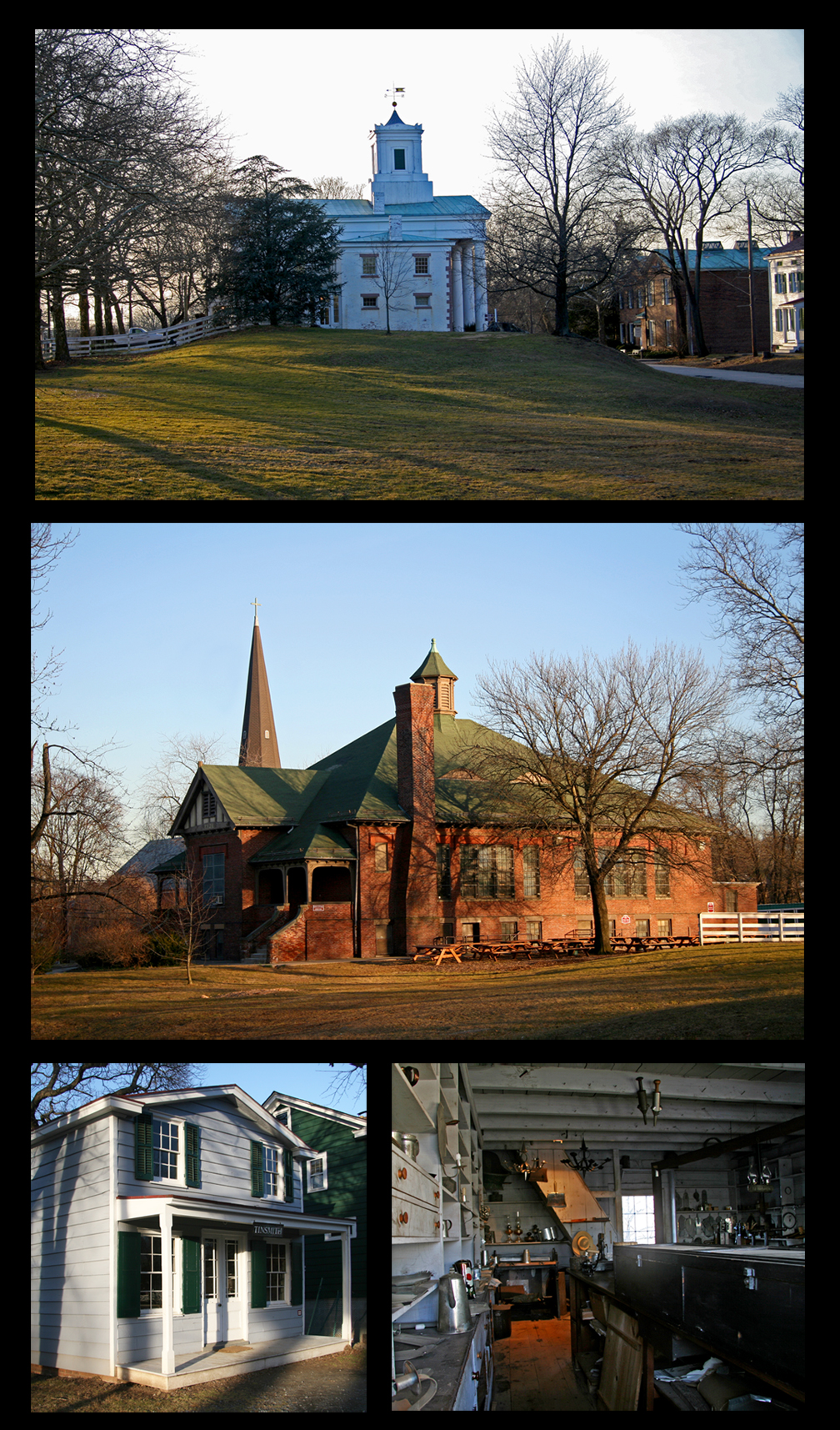
    If I asked if you thought this was colonial New England or the South, of course you would know it was a trick question; this is a website that features New York City exclusively. Nonetheless, it is a shocking set of images to imagine within the five boroughs of New York City, and I hope that, like me, you are scratching your head in amazement and wondering where this could be.

    For daily readers of this site, you may guess that we are in Staten Island – we just crossed the Verrazano Bridge yesterday. And you are correct.

    My real mission here involved a number of destinations, but Historic Richmond Town was unknown to me and was a complete surprise, suggested by a native when I asked if there were any historic areas. I expected to find a nice home or two – some small pocket or enclave.

    I had no idea that Historic Richmond Town (established in 1958) is one of America’s living history museums, like those found in Colonial Williamsburg or Old Sturbridge Village in Massachusetts, where my family visited when I was young. Richmond Town was the former county seat and commercial center of Richmond County (Staten Island).

    The concept of a living history museum goes back to open-air museums that appeared in Scandinavia in the late 19th century. The first was King Oscar II’s collection near Oslo in Norway, opened in 1881. The American style focuses more on lifestyle and generally depicts various trades and activities of the period recreated.

    Historic Richmond Town dates back over 300 years to the 1600s, very old by USA standards. There are 27 buildings in the 25-acre village on a 100-acre site. Some structures are original to the village, while others have been moved from other locations on the island. There are many styles of buildings here, including outstanding examples of Dutch Colonial and Greek revival architecture.

    There are many exhibits that can be seen in Historic Richmond Town – blacksmithing, tinsmithing, basketmaking, coopering, weaving, candlemaking, spinning, etc. There is the oldest standing elementary school in the United States. Here you will find a Dutch Colonial farmhouse, established in 1740, and the Print Shop, established in 1821. Historic Richmond Town houses one of the oldest operating printing presses in America. See their website here.

    When I visited, none of the buildings were open or exhibits operational. When the weather gets warmer and the growth greener, I plan to do a more thorough visit. I’ve always loved Time Travel 🙂


  • Secede


    There are a number of reasons why it has been nearly 4 years and I have not yet featured anything from the borough of Staten Island. It is far and inconvenient, and perhaps I was a little lazy. The photo explains another reason. The current fare going to Staten Island across the Verrazano Narrows Bridge is $11 one way (it is free on the return trip). That two-digit fare is just frightening. The bridge can be spectacular, however. See my posting on it here and an additional photo gallery here.

    Staten Island can be reached via a number of ways. By auto, there are 4 bridges: three from New Jersey and the Verrazano from Brooklyn. There are buses via Brooklyn (and from Manhattan). Access from Manhattan can be had via the Staten Island Ferry (the fare is now free). I have taken the ferry many times, most often just for the vistas, which I highly recommend.

    Staten Island is decidedly suburban in feel compared to the other boroughs, and it is the only borough without a subway system connected to the other boroughs – it is serviced by a fairly extensive bus system. But for real exploration of the hinterlands, it is best to have your own wheels.

    Staten Island has had an interest in secession from the city for some time, and in 1993, Staten Islanders actually voted to secede from New York City. Implementation was blocked in the New York State Assembly. In 2009, a new bill was introduced by state senator Andrew J. Lanza from Staten Island.
    New York City itself has dabbled with the idea of seceding from New York State. The issue of inequitable distribution of revenues back from the State is one of the primary motivations for these secession efforts. For Staten Island, the drama could well be called “If at first you don’t secede.”

    For the time being, Staten Island is still part of New York City, and there are a number of very worthwhile things to see in this borough, as well as a few big surprises. You will see that here this week 🙂

    Toll Note: Those using the E-Z Pass system get a discounted rate of $9.14, and Staten Island residents pay $5.48. There was some outrage in 2009 when the toll was raised, of course, but as we all know, you can’t fight City Hall or secede 🙂


  • Fit-ty Fi

    I enjoyed Wayne’s World on Saturday Night Live the first times I saw it (for those not familiar with the sketch series, see here). A friend at the time was incredulous that I would find such juvenile humor entertaining. But she missed the point entirely.
    The brilliance of the numerous skits was the accuracy of how they captured the sophomoric humor and thinking of many high school boys. The simple inane things that would be incredibly funny to them. Of course, not every high school student finds the types of anecdotes on the show entertaining. Many are not ridden with an unsophisticated sense of humor. Unfortunately, I was not immune to the plague.

    At the time I was enrolled in the university, we frequented the same all-night deli near our dormitory. There was one particular cashier who had a very distinctive accent and, in a characteristic fashion, would drop the “v” sound in five to become “fi” and drop the “f” sound in “fifty” to become “fit-ty.” So we lived for purchases that had 5 or 50 in the total.

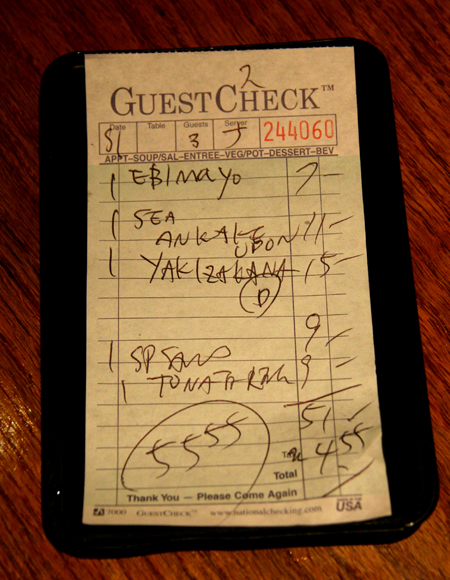
    Of course, a dream total was anything that ended in 55, becoming our beloved “fit-ty fi” – a total of $1.55, for example, was enough cause for jubilation. It had the feel of roulette: place our bets (items) on the counter, wait for the wheel to stop spinning, and see if our numbers came up. We won a single 5 or 50 often – the perfect game for impetuous youth. We were realists, and we never aspired for a dream total such as $5.55 – the odds here were quite poor, and we rarely spent that much. Better to hope for a 5, 50, or 55.

    It has been a very long time since this even entered my mind, and I am proud to state that my sense of humor has become more sophisticated. But recently, at dinner, the total was so stunning that I could not help but think that this was the ne plus ultra of my youthful dreams. The unattainable. A total so perfect, we dared not think or speak it, less we live in perpetual disappointment and frustration. I had to recount this tale, of course, to my fellow dinner companions so they could fully appreciate the miracle that lay before us – a bill for $55.55 🙂


  • Finger Painting


    I never really liked finger painting, but between K-12 in the public school system where I grew up, that was my first and only exposure to art. At the time I entered university in New York City, I had neither seen even one work of art nor was exposed to any form of classical music or opera. Music class in grade school consisted of mass embarrassment and faces buried in songbooks, with a handful singing and the rest lip-syncing.

    There were some art electives in high school, but not many boys are going to take an art class when the sciences are championed above all else and defended on the basis of utility. Of course, preparing for the future is sensible, but somewhere in the education of an American student, shouldn’t there be some exposure to the fine arts, if only that it is part of what makes an educated person in a civilized world?

    My first exposures to art in galleries and museums of New York City were not good. I did not understand what I was seeing or what art was. The explanations, interpretations, and definitions were more vexing than my initial frustration, so I became defensive, seeing the world of fine art as one of impostors and charlatans. The fact that many artists are iconoclastic made matters worse – the lack of definitions and ways to measure art made it seem all the more whimsical and arbitrary to anyone inclined to numbers.

    New York City has been a mecca for art and artists of every type for eons, and in time, a reasonable person begins to look at art seriously. Only the most obstinate can live in this city and maintain a militant anti-art posture for long.

    In the last decade, over 250 galleries have moved to Chelsea. Only vestiges remain in neighborhoods such as SoHo. The more recent exodus has been out of Manhattan entirely to areas such as Williamsburg and Red Hook in Brooklyn.

    The gallery in the photo is located at 501 West 23rd Street at Tenth Avenue and was the work of architects G. Phillip Smith and Douglas Thompson. The building was a work in progress over ten years, starting with a vacant lot. The design was inspired by the projecting balconies and walled courtyards Cairo houses of the 17th century. The exterior of the structure was built from sheets of cold-rolled steel and glass – the interior uses timber framing, stucco and fiberglass. See the New York Times article here.

    The building houses Jim Kempner Fine Art, which specializes in contemporary art in all media and has shown world renowned artists since its opening in 1997. The courtyard currently features the sculptural work The Survival of Sirena (seen in the photo) by Carole Feuerman, part of her exhibition Swimmers, Bathers, Nudes. I’m just really happy I can enjoy art in New York City and no longer have to do finger painting 🙂


  • Diamonds and Rust

    Perhaps real estate brokers confuse platitudes with beatitudes when they often tell a client, “There are only three things to know about real estate – location, location, location.” * This adage (or some variant) has become more of an irritant than a balm to the property hunter. If you are inclined to retort, tell them of the Hotel Earle on Washington Square.

    The Washington Square area has been one of the most desirable residential neighborhoods in New York City since the early 1800s, yet the Hotel Earle at 103 Waverly Place (at the corner of MacDougal Street) was in serious decline in the 1960s and early 1970s, with a reputation as a very seedy boarding house. No one I knew at that time had even set foot in the place. It took not years, but decades, to become the respectable place that it is now.

    The Paul family purchased the hotel in 1973 and progressively made improvements to the Art Deco-style 150-room hotel. In 1986, the name was changed to the current Washington Square Hotel. In 1992, Judy Paul opened North Square Restaurant, a first-class New York bistro at the hotel. From the Hotel’s press release in 2008:

    The Washington Square hotel was built in 1902 as a residential hotel named the Hotel Earle after its first owner, Earl S. L’Amoureux. The hotel occupied a single, 8 story, red brick building on Waverly Place, in the heart of affluent Greenwich Village, now an historic landmark district. In 1908, L’Amoureux built an identical, connecting building to create a grand apartment hotel, complete with reading rooms, restaurant, and banquet facilities. Four years later he added a ninth floor and, in 1917 he acquired an adjoining three story building, bringing the hotel to McDougal Street, at the northwest corner of picturesque Washington Square.

    Once a staid, affluent community, (as depicted in Henry James’ Washington Square and The Heiress), Greenwich Village was becoming the center of New York’s Bohemian counterculture; reflected by the Beat generation who gravitated to the coffee houses and jazz clubs. The once grand hotel was allowed to deteriorate into a shabby apartment hotel, making it an attractive address for struggling artists, actors, writers and musicians.

    Ernest Hemingway, Dylan Thomas, Joan Baez, Bob Dylan, Barbra Streisand, Bill Cosby, Phyllis Diller, Bo Diddley, P.G. Wodehouse, and the Rolling Stones are among the celebrities who have stayed at the hotel. Patricia Highsmith used the hotel as inspiration for her short story “Notes From a Respectable Cockroach.” Joan Baez stayed in room 305, with Bob Dylan, in the early 60s. In her love song, “Diamonds and Rust,” Baez says, “Now you’re smiling out the window of that crummy hotel over Washington Square.” John and Michelle Phillips of the Mamas and the Papas stayed at the Earle during a visit to New York City (which prompted them to write “California Dreamin'”). Norah Jones worked there previously as a waitress.

    Many former inhabitants of the olde Earle have seen both diamonds and rust…

    For the etymology of the phrase “location, location, location” as regards real estate, see the article here in the New York Times by wordsmith William Safire.


  • The Lomo Look

    I do believe that there can be great value in de-emphasizing the tools in many endeavors. Technology has advanced so far that in many fields, it is very easy to get lost in the tools of the trade. In photography, particularly, the number of devices and accoutrement is extraordinary, and many photographers do become obsessed with the gadgetry.


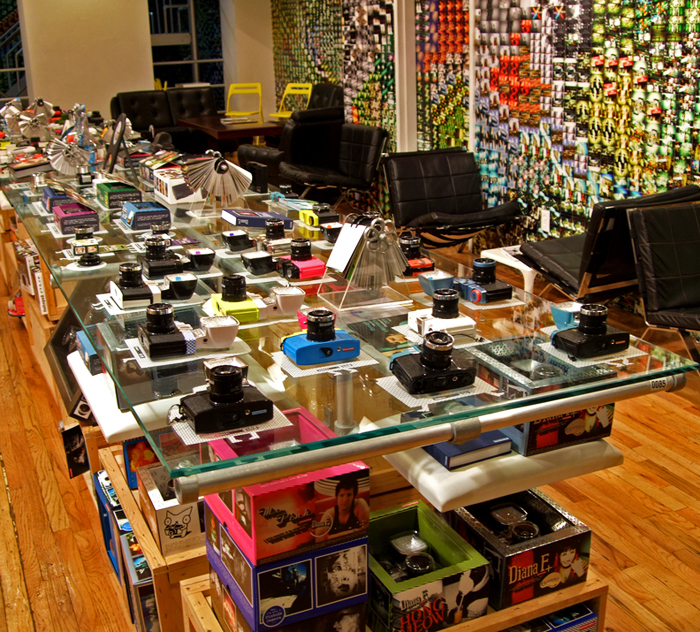
    There are numerous cameras in the “toy” camera category which have found favor with members of the photographic community and students. They typically were inexpensive plastic cameras, many produced as novelties, which often produce strange and unpredictable results. Some cameras in this class will even display evidence of light leaks. Many, like the Holga, Diana, and Lomo, have developed cult followings, owing to these photographic effects. The Diana was originally produced in the 1960s in Hong Kong and was a predecessor to the Holga, which was made in China (first appearing in Hong Kong in 1982).

    In 1991, two Austrian marketing students discovered the LOMO LC-A, a camera introduced in 1984 by a state-run optics company in St. Petersburg, Russia. They became enchanted with the photographic results of the Lomo camera, which will show any combination of bright colors with somewhat garish, contrasty images, often with blurring and vignetting.

    Use of low fidelity toy cameras can be a very useful exercise in learning to focus on the art of photography, training the eye, and playing down the technology. There is no question that good work can be produced using low tech camera equipment and conversely that poor work can be done with top equipment. Some award-winning photos were created using Lomos and other cameras of this class.

    However, the bottom line with this type of camera is that you give up a lot of control. Using it becomes an exercise in working with (or around) the camera’s “flaws.” If you are interested in controlling depth of field for portraiture, shooting in very low light with high ISO, achieving sharpness with high quality lenses, exposure compensation, white balance, etc., these types of cameras will show their limitations. However, the lack of control is not only their weakness but also the appeal of these cameras. The fact there is a very distinctive Holga or Lomo “look” is a result of these cameras’ anomalies or limitations.

    Lomography is the trademark of Lomographische AG, founded by the two Austrian students, who, in early 1995, negotiated exclusive distribution of the Lomo LC-A. Lomography also distributes a number of low cost analogue cameras, such as the Diana and the Holga.

    The photo is from their new shop located at 41 West 8th Street. Lomography has 20 retail store/galleries worldwide – the New York City shop is currently the only location in the United States. The shop sells cameras, film, accessories, and books. It will be introducing on-site film processing. They offer classes, workshops, and meetings each month. The store also features North America’s largest LomoWall, with 35,000 Lomographs on display. If you visit, you can see the equipment, as well as examples of the photography, and decide for yourself what you think of the Lomo Look 🙂


  • Orchards and Tenements

    I have written about many merchants located on the Lower East Side, but I have not focused on Orchard Street, the central artery of the neighborhood running one way for eight blocks between Division and Houston Streets. The street is named for the dirt road that once connected the house of Lt. Gov. James De Lancey with the orchard on his 340-acre farm.

    The neighborhood was first settled in the mid-1800s, was known as Kleindeutschland (Little Germany), and later became a Jewish enclave.
    The street, lined with low-rise tenement buildings with exterior fire escapes, typical of the area, has more recently been best known as a discount shopping district. Blue laws (repealed in the 1970s) prohibited Sunday shopping nearly everywhere in New York City, but, owing to the predominantly Jewish population, Orchard Street was given an exemption since they were closed on Saturday for the Sabbath, giving them a virtual monopoly for Sunday shoppers.

    Some shops are still closed on Saturday. On Sunday, the street is closed to vehicular traffic between Delancey and Houston Streets, transforming the blocks into a pedestrian mall. There is still a bustle of activity, with shops specializing in clothing, shoes, leather goods, fabrics, jewelry, and luggage, intermingled with newer shops, restaurants, boutiques, and bars.

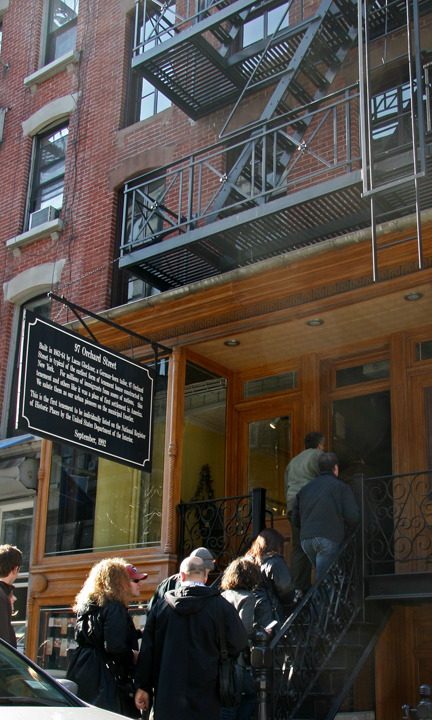
    Orchard Street is home to a very unique dwelling. The building located at 97 Orchard, built in 1863, was boarded up in 1935 and unoccupied thereafter. In 1988,  it became part of the Lower East Side Tenement Museum. This building is a virtual time capsule and a must-see – it is an opportunity to see the city living conditions of a century ago virtually intact.

    Orchard Street and the Lower East Side has been an area in transition, with numerous new trendy shops and upscale residences. Some have argued, however, that this has not been a classic case of gentrification, with older businesses being displaced; the area has been in decline for some time, and the newer merchants have been welcomed, even by many older residents.

    The Tenement Museum is conveniently located next door to the superb il Laboratorio del Gelato (95 Orchard). See you there 🙂

    Related Posts: Crossing Delancey, Go for a ride?, Sunshine Makes You Happy, Economy Candy, Eldridge Street, Doughnuts, Yonah Schimmel, teany, Pickles, Vegan Chic, Bluestockings, Colossal Misbehavior, il Laboratorio del Gelato, Fusion Arts Museum, Arlene’s Grocery, Footprints.

    Photo Note: The archival black and white photo shows Orchard at Rivington Street, circa 1915.


  • Togetherlessness

    This scene in a restaurant is far from unique to New York City, but what particularly struck me was the absolute resoluteness and immediacy with which these two women wielded their phones after sitting down. One immediately began texting,  the other speaking on her cell phone. They continued through the entire meal without saying a word to each other.

    Reading through numerous articles and online forums, I was actually surprised to see what appears to be an overwhelming majority who find the use of cell phones at dinner (at home or in a restaurant) rude and unacceptable, including younger people. The reasons cited were many, but most felt that eating is a social activity. Some also made the point that pulling out a cell phone during dinner makes a statement of relative importance – an insult to those who are physically there. Others, however, stated that among teenagers particularly, texting and phoning maintains a continuity of contact with their social circles. The whole phenomenon has created quite a furor, with many individuals seeking counseling.

    A lot has been written since the rise of the Internet and cell phones about the nature of electronic communication technologies and whether they are tools that isolate people or bring them together. Like any other tools, they can be used or abused. There are many individuals who, for any number of reasons, have a limited social circle, and communication technology has allowed them to make new acquaintances. For some, it is difficult, if not impossible, to have much live social contact with others, perhaps due to health issues or living in a remote geographical location. For others, communication with existing friends and family is broadened beyond the time they are able to spend together physically. One could also argue that in aggregate, all the new methods of communication – texting, calling via cell phone, instant messaging, emailing, video calling, voip – have increased communication.

    Personally, I try to limit cell phone conversations at dinner to receiving calls that are extremely important or where the caller would be difficult to contact. Like most things, this is a matter of degree and circumstance. People have answered landline phones during dinner for decades. In the case of these two women, they are both involved simultaneously and look quite happy sharing time together doing something they both enjoy. I’m sure the debate will rage on – whether what we have here is rude, antisocial, or perhaps a new form of social behavior: togetherlessness 🙂


  • Because I’m the Best, Part 2

    (see Part 1 here)
    Jim Murnak is originally from Pittsburgh, PA. His interest in leather goes back to when he was 13, working with Tandy leather kits. Some university, including studies in advertising at SVA, led to his work as an art director at Ogilvy and Mather. After a large employee layoff, Jim began his career as a leather craftsman. A retail shop on Sullivan Street was followed by a number of loft spaces, where he manufactured and sold to the trade.

    I occasionally dropped in on Jim in the 1970s at a number of his Manhattan locations. On one visit, I was stunned at the level to which he had advanced, taking on products which were really unheard of for a self-taught artisan. I watched him build leather-covered wood attache cases – Jim was constructing the wood frames, covering them with leather, and installing brass hardware and locks.

    At the time, there were a small number of leather artisans in New York City. Most knew each other, and it was clear to all of us that Jim had reached the pinnacle of success, selling to the top retailers in the city – Bloomingdales, Crouch and Fitzgerald, and Abercrombie and Fitch – at the time, the most expensive retailer of goods in the city (Jim told me that Chinese imports essentially killed this business for USA manufacturers).

    On another occasion, I found him lining handbags – standard for high-quality finished goods, but an unthinkable “waste” of leather for those of us making leather products by hand. When I questioned him about what appeared to me to be rather indulgent, he said that he was not making hippie stuff and that his clients demanded this type of product finish.

    Tracking him down was a simple find online. He has since settled in the Dumbo neighborhood of Brooklyn, where he has been for many years and where I caught with him recently. He was congenial and welcoming as always and permitted photos and a follow-up phone interview.

    I was not surprised to see that he had found a few new high-end niche markets: custom manufacturing gun holsters, pool cue cases, and archery quivers. A passion and experience in an activity will always give an equipment manufacturer the inside knowledge and edge needed – Jim’s father was a professional pool player, and Jim has had serious interests in pool and in target archery.

    Unfortunately, Jim also acquired an insider’s guide to handguns after being held up at gunpoint in the subway in the 1990s. After obtaining a gun and permit, Jim found the quality of holsters to be sub-par and began to make them. He can custom craft a holster for nearly any handgun using one of his forms. He has also worked in Cordura nylon for some years making police training suits. Jim does business as Fist, Inc. – see his website here.

    In the 1970s, there were a handful of suppliers to the leather craft trade in Manhattan, including Great Jones Leather. It is here that one day I ran across Jim, who had come in for a pack of industrial razor blades. The salesman, who was also a leather craftsman, appeared to be stunned that someone else knew his secret for precision cutting. “Wow,” he said, “I use razor blades too. Why do you?”
    To which Jim replied, quite confidently and as a statement of fact, “Because I’m the best.”


  • dinamic_sidebar 4 none

©2026 New York Daily Photo Entries (RSS) and Comments (RSS)  Raindrops Theme