• Fantastic Windows

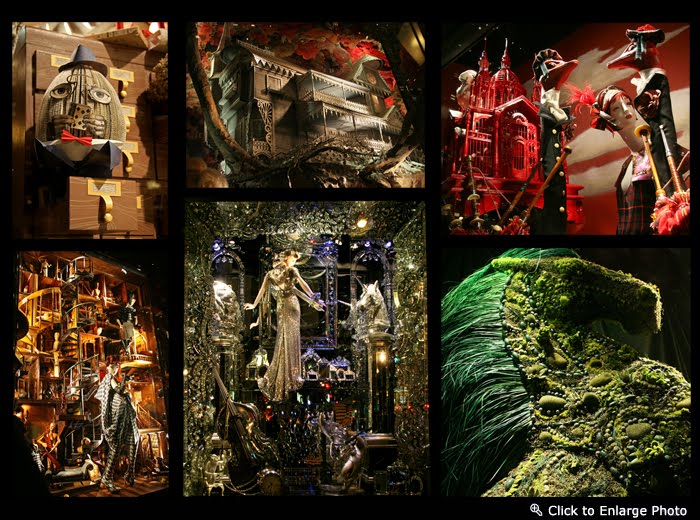
    On a recent second excursion to the Upper East Side to see more holiday windows, my travels took me back to 5th Avenue, across the street from Bergdorf Goodman’s main store, where their men’s store is located. These window displays were drawing the attention of passersby, virtually all of whom were compelled to stop and look with focused and studied attention. And for a good reason. Twelve windows are being used to feature these meticulously crafted, very detailed figures, which were used in the film The Fantastic Mr. Fox, adapted from the work of Roald Dahl. See my gallery of photos here.

    The windows were a collaboration between 20th Century Fox and the Bergdorf design team. From the press release:

    The holiday windows at Bergdorf Goodman, one of New York City’s premier seasonal delights, will feature the sets from Wes Anderson’s film, “Fantastic Mr. Fox,” based on the children’s classic by Roald Dahl. The windows will debut on the evening of November 10th. David Hoey, Bergdorf Goodman’s Senior Director of Visual Presentation partnered with the film’s production team to adapt sets from the stop motion animation film for the windows. They will include the character puppets made by the UK’s acclaimed puppet makers, Ian MacKinnon and Peter Saunders. This collaboration marks Bergdorf Goodman’s first-ever partnership with a major film production for its holiday windows. The twelve windows of Bergdorf Goodman Men’s Store located on Fifth Avenue and along 58th Street will feature the “Fantastic Mr. Fox” sets through January 4, 2010…

    Mackinnon and Saunders was founded in 1992 and has since been responsible for some of the finest stop-motion puppets in the world – see their website here. Their award-winning work has been used in film and television, with the likes of Tim Burton on Corpse Bride.

    Peter Saunders worked as a puppet maker on Jim Henson’s live action movie The Dark Crystal. Subsequently, he learned to adapt and miniaturize animatronic techniques, which enabled him to create highly sophisticated stop-motion puppets.

    The display will be up until January 4. There is still time to view these Fantastic Windows 🙂


  • Shifting Gears

    At one time, I was just fascinated with learning to drive a manual transmission. My first inquiry into the subject was while riding in a car with a 4-speed manual transmission. When I asked the driver what I could learn as a passenger, she said that one of the keys was to work a gear, never lug it. Many neophytes, nervous about when to shift, will often shift too early, lugging and dragging the motor.

    Some people say that they love four seasons and that they would not want to live in a climate which has little variation in temperature. I was never completely convinced, suspecting that these may be individuals who suffer the ability to admit that California is just a nicer place to live. I have known numerous people who have moved west or south and have expressed no desire to move back to the Northeast.

    On the other hand, strongly delineated seasons do require shifting gears, and the change in weather conditions can be enervating – watching snow fall, drinking cider in Union Square in the autumn, awaiting spring’s new blooms, and summer’s outdoor activities. The difficulty, however, is getting through winter. I do not look forward to this season, and like many, my mind turns to tropical dreams when the cold hits. Rather than embrace the season, I resist it.

    My business has brought me in contact with thousands of people from around the world, and I often indulge in conversations with those from remote locales. I once spoke with a woman who lived in the interior of Maine, where winters are harsh and long. This was of particular interest, since my family is from northern Maine and moved long ago to southern New England with no regrets.

    I asked her how she could survive an environment where snow can fall in September and not melt until May, where sub-zero temperatures can run weeks and vehicles need battery heaters to start. She said that the secret was working on indoor projects. A good strategy if this is not just busy work to pass the time and survive mentally.

    Even in New York City, with all its distractions and easy access to places, the winter, with its occasional blizzard, does impose its will. Some will, of course, don the proper apparel and frolic in the snow, but for most, the winter means additional time indoors and a more shut-in lifestyle and degree of reflection and introspection.

    So as we shift gears into winter, perhaps we can heed the advice of a woman from the depths of Maine and a driver teaching how to drive a with a stick shift – always work a gear, never lug it🙂

    Related Posts: First Snow, First Flakes, Winter Walks, Small Gestures


  • Not Good At All

    I am extremely distracted today. Rather than feign holiday cheer and give a Christmas story with photos of holiday windows (of which I have many), I have decided it best to tell my tale of woe.
    It was not a good morning at all. My Macbook Pro desperately needed more storage, so I made the decision to replace the internal hard drive. This is not considered a user-replaceable item by Apple, but thousands have done it, and complete kits and online tutorials are available.

    On December 11, 2007, I wrote Foolish Crash. I would say that today’s event is far from foolish – my drive was completely cloned and backed up. This alone was a nine-hour procedure. To replace the drive itself, I worked with a kit purchased from an Apple Macintosh vendor who has been in business for years. Instructions in their online video were followed meticulously. I even drew a layout on paper indicating the location of every screw removed.
    However, at one point, a cable needed to be removed from the motherboard. When attempting to reinstall the cable, it would not reconnect.

    On close examination, I noticed some extremely tiny objects which appeared to be debris. On much closer examination, I noticed that these were, in fact, minuscule pins which were pulled out when the cable was removed. You can see the pins along with the socket showing the spots for the missing pins.

    During the writing of this article, I have made calls to the best Mac repair specialists in New York City. The news, as you might expect, is not good at all…


  • Bergdorf Windows 2009

    One of the best places you can be in the world at Christmas time is New York City. There are endless things to do and see – the Nutcracker, the tree and gardens at Rockefeller Center, the Christmas Spectacular at Radio City Music Hall. Sometimes the best things in life are free, such as the window displays around town, particularly the Fifth Avenue flagship icons: Bergdorf Goodman, Lord and Taylor, Tiffany’s, and Saks. Just a stone’s throw away are Barney’s, Bloomingdales, and Macy’s. And although the draw is the window displays themselves, don’t miss the interiors of the large retailers – it’s a good chance to get out of the cold and see the spectacular work done inside the shops.

    The concept of the holiday window display goes back to 1870 with Macy’s. The ne plus ultra has to go to Bergdorf Goodman, who have won design awards for their work. Their window displays are a year-round endeavor headed by David Hoey, Director of Visual Presentation. The windows have three exposures: 57th Street, Fifth Avenue, and 58th Street. The theme this year is Curiouser and Curiouser, inspired by the works of Lewis Carroll, author of Alice in Wonderland and Through the Looking Glass. The detail work and artistry is phenomenal – it is a must-see. See my gallery of the windows.


  • Manhattan Island

    One of my favorite t-shirts was designed with a tropical motif, including palm trees blended with a New York City skyline. Below it were the words Manhattan Island. Perfect. I love the tropics, islands, and New York City. The shirt is long gone, but the spirit of Manhattan Island remains.

    However, there is always a price to pay for the island experience, and that is getting on and off, by bridge, tunnel, boat, or for those who can afford it, by plane. One of my favorite places in the Northeast is Cape Cod, including Martha’s Vineyard and Nantucket. But the bridge to Cape Cod can be horrific during summer weekends, and smart travelers who drive there plan their vacation around bridge traffic.

    Manhattan has limited entrance and egress from the west (via New Jersey): the Holland Tunnel, the Lincoln Tunnel, and the George Washington Bridge. The choices are further limited by destination in the city and place of origin. The GW Bridge is located at the northernmost tip of Manhattan and is not typically used coming into midtown Manhattan unless one is coming from a northern point. For most others, the Holland or Lincoln Tunnel is the only option.

    At some point in a New Yorker’s life, he/she will see and experience something that looks much like what we see in today’s photo – waiting at the entrance to the Lincoln Tunnel.
    Manhattan is an island. Four of the five boroughs of New York City are islands or part of islands – only the Bronx is on the mainland. Tunnels and bridges are a way of life here. Smooth sailing requires experience and strategy. A journey made easily without getting caught in traffic is a source of personal pride and justifiable bragging rights. People who drive into and around New York City become strategic planners, or they will, over time, slowly lose their minds.

    The Lincoln Tunnel was designed by Ole Singstad and consists of three tubes – the first built between 1934 and 1937, the second completed in 1945, and the third in 1957. The approach roadway makes a full circle coming in, so the traffic congestion is a surprise for the motorist as he or she comes around the final bend. One of the busiest tunnels in the world, it sees approximately 120,000 vehicles per day. The XBL (exclusive bus lane) concept was one of the first.

    They only thing missing for me is the tropical climate and palm trees. But better off without them – imagine the traffic trying to get into a tropical Manhattan Island 🙂


  • Pork and Power

    When I was in high school, I was steeped in things which were perhaps considered nerdy – the math club, chess club, German club, and the classic game Wff’n Proof. I associated with friends of like mind, but I also had a friend who was very mechanically inclined and who was pursuing trade school. He brought a mechanical mind to our relationship, which always gave me profound appreciation for craftsmanship and a good mechanic. There is often tremendous ingenuity and creativity in people like this, which often goes unseen and unappreciated by outsiders.
    My friend had motorcycles. And a friend.

    This friend, however, was large, fair to say quite obese. His presence was very imposing. I spent no time with him at all – his world was much more singular and focused. I knew he would also be going to trade school, so, knowing nothing about that world and stretching a bit for conversation on my introduction, I asked what his “major” would be. He answered with only one word: Power.

    I ponder the meaning of that to this day – I assume he meant Power Mechanics. But somehow the very nature of the subject begs for one word, and I will always remember the power of his answer.

    Many of the best shops in New York City are equally well-focused, managed by people who have a narrow niche and do it superbly well. Frequently they are family-owned and often multigenerational. At their best, you cannot compete with them. I have written here of many of them – places like Rafetto, Eileen’s Cheesecake, Economy Candy, Faerman’s Cash Register, McNulty’s, Vesuvio (now gone), the Doughnut Plant, or Cones. But as consumers, we are eating, not competing, and we are the winners in any wars or contests.

    Faicco’s Italian Specialties at 260 Bleecker Street (previously Faicco’s Pork Store) has been a landmark in Greenwich Village for over 100 years. This block, Bleecker Street between 6th and 7th Avenues, is a smorgasbord of great, legendary, and iconic shops. Faicco’s was opened in 1900 on Thompson Street by Edward Faicco. In 1940, the shop moved to its current location on Bleecker Street. The current owner is Eddie Faicco, the great-grandson of the original owner. They have no website or menu online, but review sites praise it to no end, so if you are looking for a butcher or Italian specialties, sausages, and the like, it comes highly recommended as one of the best in New York City.

    Although I am not a meat eater and will likely never know Faicco’s sopressata, I have to show respect for a job done well, whether with pork or power…


  • Bendel

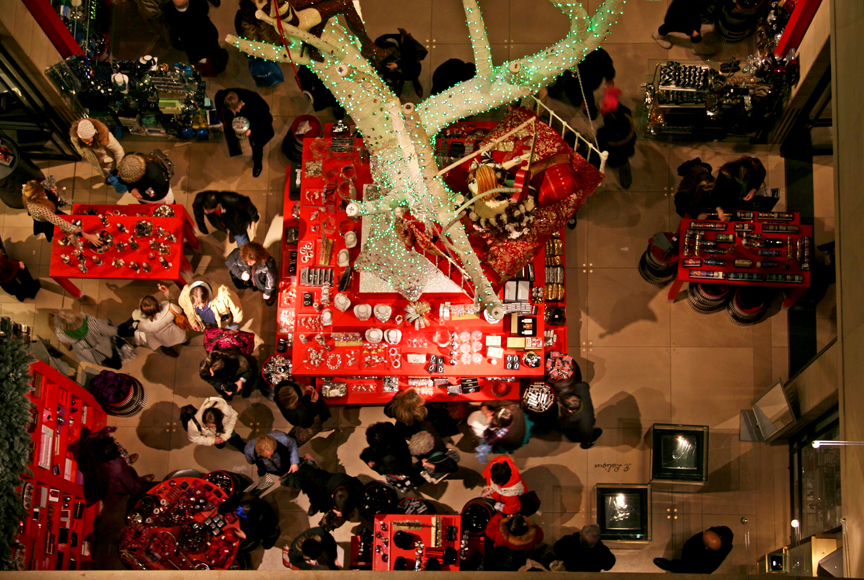
    Bendel’s has been one of New York City’s upscale retailers for over 100 years. In December 2008, I did a photo shoot of their windows at Christmas time.

    Bendel’s was established in 1895 by Henri Bendel, a milliner. They were originally located at 10 West 57th Street and moved to their current location at 712 Fifth Avenue near 56th Street in 1990. The store occupies two landmark buildings, the Rizzoli Building (712 Fifth Avenue) and Coty Building (714 Fifth Avenue), along with a new five-story building. Lalique windows were discovered during the restoration. The store has four stories, a lower level and an atrium with balconies. See the view from the top down here.

    However, even quality products and a legacy cannot stop changes in consumer habits or a poor economy. In 2009, Bendel’s decided to stop selling clothing. According to the New York Times:

    Several employees briefed on the plans said on Thursday that they were told that Bendel had decided to eliminate the fashion departments because there was no sign of a turnaround in the sale of high-ticket items, but that beauty and gift products were selling well and typically with much higher margins. About 8 percent of the employees will be laid off, including sales clerks and executives in its buying office, these people said. About 250 people work at Bendel.

    Luxury stores like Neiman Marcus, Saks Fifth Avenue and Barneys New York have all eliminated hundreds of jobs and scaled back their orders from designers in reaction to the economy. Sales of $1,000 dresses and cashmere sweaters began to plummet last October.

    Bendel’s, famous for its “store of store” shops and signature brown-and-white striped shopping bags, hatboxes, and matching line of cosmetics bags, will focus more on branding and merchandising. They have been opening stores nationwide since 2004 and currently have 10 locations, many in upscale shopping malls.

    I have never shopped at Bendel, but it is rather saddening to see a historic company go in this direction. In 1986, the store was sold to Limited Brands. What worries me most is that at the rate of change we are seeing in stores here, New York City’s merchants will become less unique every day. As one reader commented recently, it is the amalgam of all things in New York City that makes it unique. I hope he is right and that we do not just become the biggest mall in America…

    Note: Henri Bendel has a special significance to me – the reason will be revealed in a future story, if I can get the interview and photo opportunity with a particular individual. Look for Because I’m the Best.


  • SantaCon


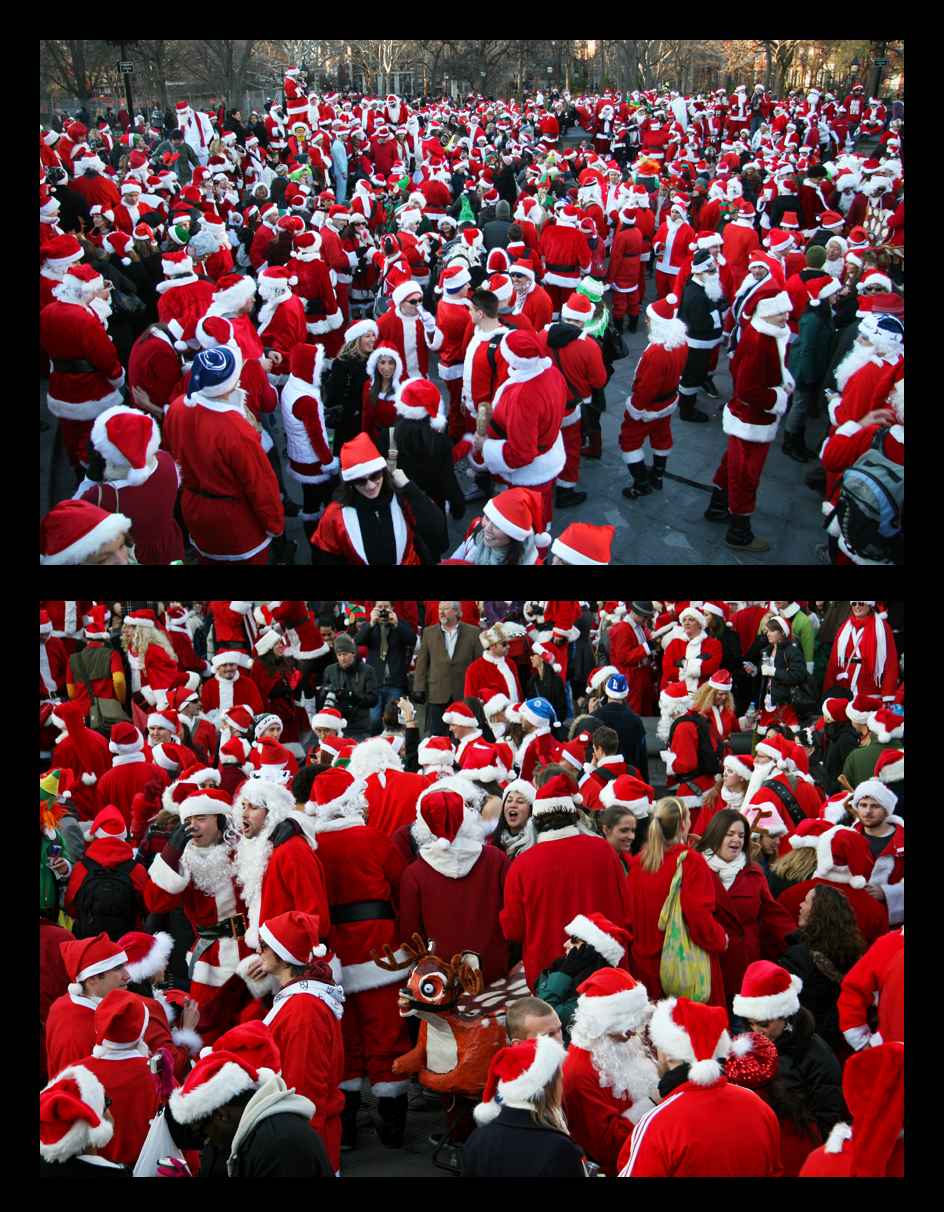
    It was red Santas as far as the eye could see, and fair to say that this was not a typical sight at Christmas time. This was the 2009 annual SantaCon in New York City, and some say this humongous gathering of Santas in Washington Square Park may be the event’s largest. See my gallery of photos here.

    If you were in the city on Sunday, December 12, you may have run across groups of Santas roaming the streets. Washington Square Park was one of the stops on the convention, a flash mob of sorts which includes meandering the streets and spreading yuletime cheer. Creative costuming is encouraged, as well as gift giving.

    There is a debaucherous tone to the event, through intent and their own admission. There are naughty Christmas carols and other mischievousness. However, four rules are to be observed:

    Don’t mess with kids.
    Don’t mess with cops.
    Don’t mess with security.
    Don’t mess with Santa.

    There are no organizers, and revelers need to be connected for the whereabouts. The NYC SantaCon website does give starting locations and times.

    The event started in 1994, sponsored by The San Francisco Cacophony Society, which held the first Santarchy. The original inspiration came from an earlier SF adventure club called the Suicide Club. The Founder and Avatar of the Suicide Club, Gary Warne, decided to organize a non-political, purely surreal Santa prank event after reading a Mother Jones article about a Danish political group dressing as Santas and mobbing a Copenhagen department store just before Christmas. Read the history here. The event is celebrated in cities worldwide – New York City has been involved since 1998.

    According to the SantaCon website, the event is a convention, not a bar crawl. There is a lot of non-alcoholic celebratory activity. But libations are encouraged, and by late evening, the streets of the Village start looking more like a Santarchy 🙂


  • Agony and Ecstasy

    This is the view of Manhattan while traveling on the BQE. If you examine a map of Brooklyn and Queens carefully, you will find that there are not really a great number of highways, particularly in light of the fact that there are nearly 5 million residents between the two boroughs combined. For the highways that do exist, of course, that means TRAFFIC.

    I have written before of the fear and anxiety that many have of driving in and around New York City. The Brooklyn-Queens Expressway justifies those fears – it is everything you don’t want in a highway. It is not pretty, it has sharp curves, it’s dangerous to drive on, it’s confusing, there are no shoulders or places to stop, and for most of the roadway, the speed limit is 45 mph – if you’re lucky. It divides, connects to, and blends with other highways, bridges, and tunnels. You had better know what you are doing, or you may be going where you don’t want to go and/or miss where you intended to go.

    The construction of this highway dates back to 1937 with the Brooklyn-Queens Connecting Roadway. The highway is 11.7 miles long – extending from the Brooklyn Battery Tunnel in Brooklyn to the Grand Central Parkway in Queens. It was built to accommodate both commercial and non-commercial traffic and was intended not only to relieve congestion on local streets but also to aid industry and business by shortening transportation time between the boroughs.

    The project was fully completed in 1964 under the helm of controversial urban planning czar Robert Moses (1888–1981), chairman of the Triborough Bridge and Tunnel Authority.
    In the 1980s, the roadway was under construction. For long time residents, the BQE has had a history of agony. But there are pleasures in riding the BQE, such as the vistas of Manhattan, by day or night. The nicest stretch is driving north under the cantilevered section of the expressway, which forms the Brooklyn Heights Promenade above. Here, the views of Manhattan are magnificent, both from the highway and from the esplanade above. Perhaps it is a bit of a stretch of road, but can we call the experience agony and ecstasy?

    Photo Note: This image was taken traveling south on the BQE in the central section near the Long Island Expressway. Looking west in the evening light, you can make out the outlines of the Empire State, Chrysler, and Citicorp Buildings.


  • Pull Ahead

    Sooner or later, a visitor or resident of New York City, regardless of whether he/she owns a car or not, will most likely have to deal with one of the least favorite activities here: parking. Visitors unfamiliar with the situation should be ready for sticker shock.

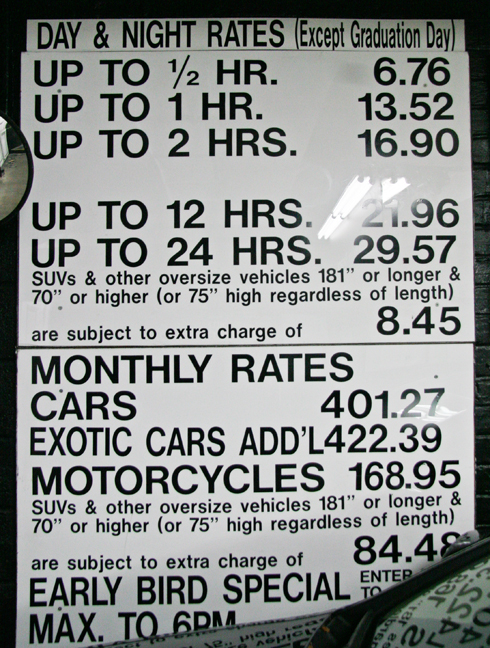
    A careful and resourceful individual can shop most any commodity or service in this city and find a broad range of pricing. However, anything requiring the rental of SPACE is going to cost you dearly here – there is only so much to go around. The garage in today’s photo is $400 per month, with an additional $422 per month for exotic cars. See the rate sign here.

    One fascinating development is automated parking garages. Manhattan’s first is in Chinatown, at 123 Baxter Street. Here, beneath 24 condos, are 74 parking spots in an automated garage. The system is the work of AutoMotion Parking Systems, an American subsidiary of Stolzer Parkhaus of Strassburg, Germany, which has built 28 automated garages in 11 countries since their first in 1996 in Kronach, Germany. Benefits include reduced cost due to reduction of personnel and more efficient packing of autos. See the New York Times article here.

    The wildest twist on parking is a German company, CarLoft (carloft.de), which is building an apartment tower in Berlin that permits residents to park their cars on their balconies. Similar ideas are brewing Manhattan. From the New York Times article:

    A German company, CarLoft (carloft.de), is building an apartment tower in Berlin that lets residents park their cars on their balconies. A New York architect, Annabelle Selldorf, has offered a similar vision for a Manhattan building with elevators that would let tenants drive their cars into garages next to their high-rise apartments.

    There are many other recent developments in the city to reduce cost, increase efficiency, and provide consumers with more information. There are Zipcars for short-term rentals, Internet sites to find parking spots, websites for comparison shopping, and competitive bidding for monthly garage space.
    Some may argue for elimination or drastic reduction of cars altogether. Within city limits and nearby suburbs, the subway or train system is the best method of travel.

    One problem lies with travel to areas outside New York City with no public transportation at all, which is quite common in the United States, even in parts of the Northeast with a high population density. For example, I grew up in Bristol, Connecticut, with a population over 60,000 (the eleventh largest city in the state), but there is no public transportation. Getting there will require car travel at some point in the journey.

    Rail travel is much more deeply implemented in many developed countries outside the US. Here, buses are, by default, the public transportation of choice for many destinations. The Chinatown bus revolution, led by Fung Wah, has brought pricing to much more attractive levels.

    Personally, I always thought a good online rideshare/carpool system would be useful for trips out of the city, not just for commuting to work. There are so many people who travel alone by car – it seems such a waste of resources. My online searches, however, yield few promising results. I think there is a critical mass at work here – without a substantial number involved, there just isn’t enough momentum to make it viable. The websites I found had a serious dearth of rides offered or wanted. Safety with unknown passengers is a big issue here – perhaps one of the biggest impasses.

    There are many problems with automobiles, parking, congestion, and public transportation. There are also many proposed solutions. I hope for successful implementation in the near future, so we can truly Pull Ahead 🙂


  • Worth Seeing Again


    A good friend and colleague, well-known for his indulgence in the performing arts, will typically see multiple performances of the same show. I questioned him once about this, and his response was, “Anything worth seeing once is worth seeing again.” He is the dream patron of the arts.

    To some extent, our rituals and customs follow the same logic, and Christmas is perhaps one of the best examples of lavish ritual in this country. New York City is renowned for its Christmas displays and ornamentation, which draws people from around the world to see the tree at Rockefeller Center, the store window displays at Macy’s and along Fifth Avenue, and performances such as the Christmas Spectacular at Radio City Music Hall.

    I have featured many of the window displays yearly on this website. Some, such as those at Bergdorf Goodman, are extraordinary design works and are a must see if you are in the city at this time of year.

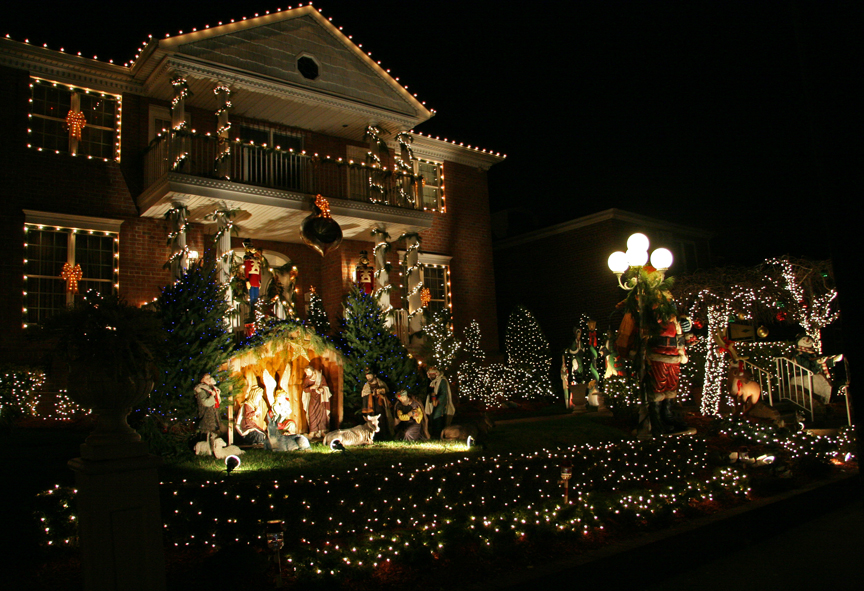
    One of the most lavish displays of Christmas lights is the annual extravaganza in Dyker Heights, Brooklyn. See the article and gallery of photos from 2006 here. The luxury homes, many of which cold be considered min-mansions, are decked like no other neighborhood at Yule time. See my gallery of photos here.

    I have not made it a plan to visit the neighborhood every year at Christmas, but it has turned out that way. I frequent Bay Ridge regularly to visit my favorite restaurant, First Oasis, and it is only a short jaunt by car to Dyker Heights. The lighting displays are typically up from after Thanksgiving until the New Year, affording over one month of opportunity.

    The start of the over-the-top tradition is generally credited to Lucy Spata. The Spatas’ residence is located at 1152 84th Street. This block, 84th Street between 11th and 12th Avenue, is the epicenter of the displays, with the homes of the Polizzottos (Toyland) (1145 84th St.), the Rizzutos (1062 84th St.), the Lambrones (8304 12th Ave.), and Jerry Bonanno.

    Donations are collected for various charities such as St. Anthony’s and the American Cancer Society.
    For those without the means or inclination to go out on their own, Brooklyn native Tony Muia now offers a Christmas Lights & Cannoli Tour, leaving from Union Square every weekend in December. Perhaps I’ll go back – after all, anything worth seeing once is worth seeing again 🙂

    Note: Our patron of the arts, loosely quoted at the beginning of this story, is Hovey Burgess. During the writing of this article, I called to verify the actual language of his statement. He pointed out that his sentiment is that anything worth seeing once is worth seeing repeatedly – i.e. again and again.


  • Childhood’s End

    There are innumerable things that children misjudge, misunderstand, misstate, and misinterpret, often with humorous or hilarious results. If you have never seen Kids Say the Darndest Things, hosted by Art Linkletter, I would highly recommend viewing this classic TV show which ran 27 years. On it, Linkletter interviewed more than 23,000 children from all strata of society with some of the most outrageously funny yet innocent commentaries on countless subjects.

    However, this worldly naivete is not the exclusive domain of children. I knew a young boy who grew up outside the city and had a very sheltered youth, with no exposure to many things so common in the city. Coming to New York City was a profound culture shock in many ways. He was unfamiliar with things such as bagels, delis, Yiddish, con artists, greasy spoons, subways, and skyscrapers. Virtually everything was foreign.

    There are many things in business done the same way for good reason or due to custom, usually for both. Some of the reasons are easy to guess, others are not so easy, and others could perhaps have a number of reasonable explanations. And the lack of life experience and imaginative mind of a child can improvise some crazy explanations.

    Eating in restaurants was a rarity for my family and consisted of the occasional fast food place or, once in a while, a trip all the way to the famed Chicken Coop in Hartford, CT. Growing up out of the city, I never once was privy to seeing a restaurant after closing, so when I first arrived in New York City, the night time ritual of chairs being inverted and left on table tops was quite new to me and puzzling.

    It may or may not have occurred to me that these chairs were placed this way for cleaning, but I had never witnessed such an event. And what really puzzled me was why they would be left like this all night long. With the naivete and wild imagination of a child, I mused that there was another reason, finally concluding that it must be to keep something from crawling up the legs of the chairs, making their way to the table tops.That had to be rats or mice. Most restaurant tables had center pedestals, so without the use of chairs, mice or rats would need to crawl upside down under the table top to complete their journey to the top itself. I was satisfied with this explanation for some time until I finally witnessed floor mopping.

    Although I am still no stranger to foolishness, that was perhaps the last foolish thing that I believed with childlike naiveté. It ended as part of my ongoing education in the university of life known as New York City. When I see chair legs upright on tables at night in the darkened light, I can’t help but think of childhood’s end…


  • Babies

    I once asked a friend living in California, transplanted from upstate New York and who had traveled extensively, whether he found that the perception of weather was a relative thing – i.e. did Californians appreciate their mild weather, or did they adjust and reset their thermostats? He answered that it was absolutely relative. He found that those living in California for some time became babies in regards to weather – a slight chill was as daunting to them as a cold Arctic blast was to us in the Northeast.

    I have long claimed that one of the things I like about living in New York City is that the winter does not affect our lifestyles as greatly as it does our suburban and country brethren. That philosophy was tested this weekend when winter finally hit. Until then, New York City has not yet felt the slap of winter’s hand.

    I confess that I had become quite accustomed to our pleasantly warm and very tolerable autumn. I was a bit of a baby this weekend, not wanting to go outside any more than someone living in Maine.  Perhaps less so, because those environments do not tolerate babies.

    Peering out my window, it is bleak, dreary, windy, and cold. People are wearing down coats, hoods, gloves, and scarves. There is no stroll or whimsy in their gait but rather a sense of purpose and direction. In fact, because New York is such a walking environment, something I have long championed and loved, it makes it all the more difficult to brave and acclimate to the onset of winter. Nearly everyone here does substantial walking, even in the winter season – I walk nearly one mile to work daily, irrespective of the season or weather. Even those taking the subways daily must walk both to and from the stations to their destination. There are no autos to shield the wind, garage door openers, or heated seats.

    Winter has not officially started yet, and I certainly cannot stay indoors until the start of spring. I don’t want to be slapped going outside – I prefer the caress of blankets, the sizzle of steam, and the cozy atmosphere of home. But I have some work to do. I need to go out there and demonstrate how this city is just as robust, dynamic, and fun to explore in the winter as any other time. And it wouldn’t hurt to stop being a baby 🙂


  • Gotham City

    It is harder and harder to find products and shops unique to New York City or any other. The architecture of the city itself, of course, cannot be duplicated.

    But as I endeavor to ferret out things unique about this city, I am often surprised when it comes to merchandise and food. The influences have become a two-way street. Many of the products once exclusive to this city are often available in the suburbs or countryside. And New York City has seen the influx of stores which are now part of the national landscape. Places such as Whole Foods Natural Market are no longer the exclusive domain of the urban dweller. A quick search online will show how many of their stores are now located in the suburbs. I am careful to boast about any services, products, or restaurants that we might have in this city – all too often, the response I get is that “we have that too.”

    The world really is becoming smaller. The Internet and electronic media have leveled the playing field for nearly everything and everyone. New products, information, music, film, and TV no longer take years to seep out from cultural centers in a slow migration. People are instantly informed of anything. I have met people across the world who watch HBO regularly and are familiar with programs such as Sex and the City.

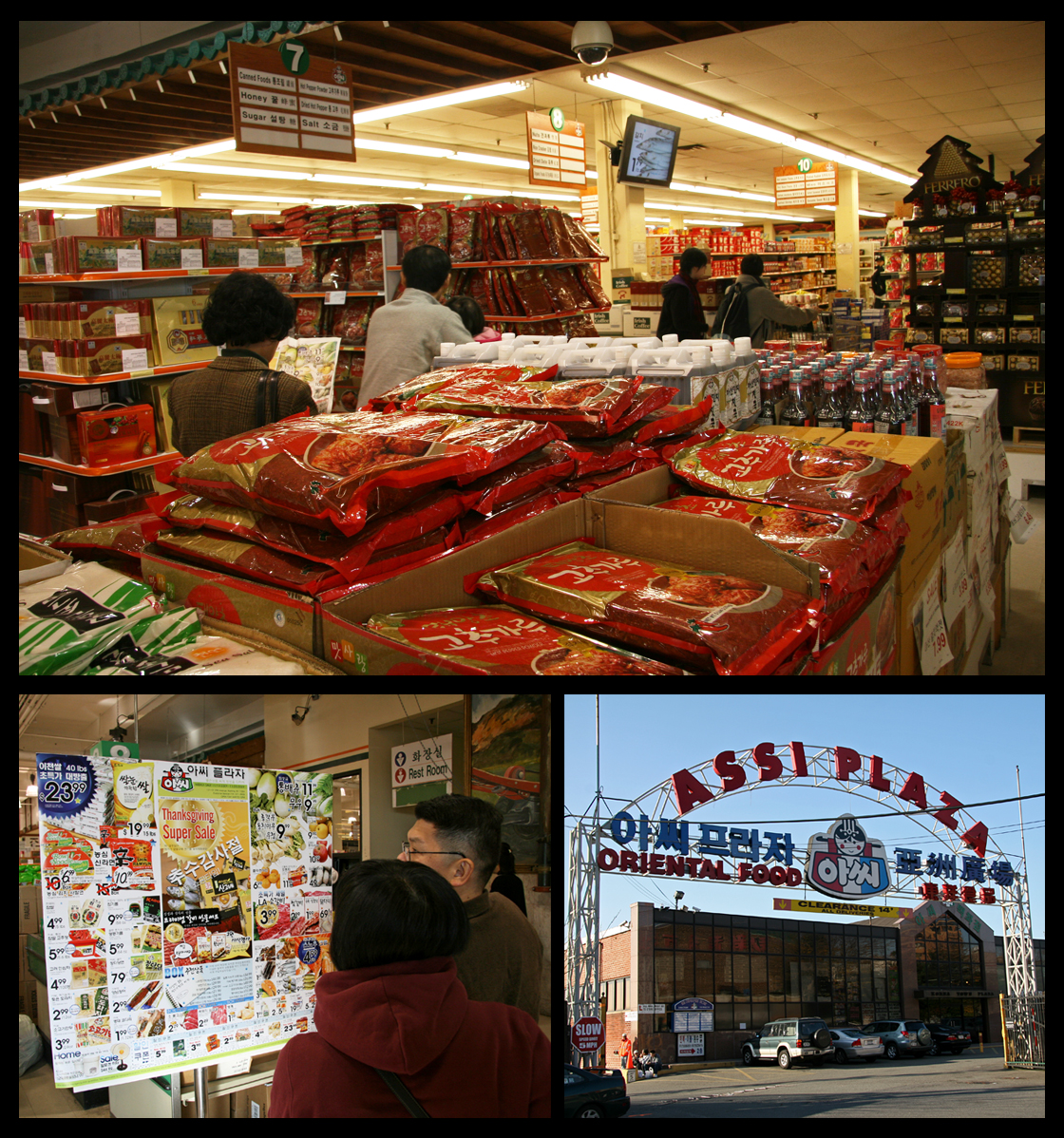
    I thought that this enormous Korean supermarket in Flushing, Queens, Assi Plaza, most certainly had to be something exclusive to New York City or perhaps a city in California. Flushing has a large Korean population, estimated at 10%. However, visiting the Lotte Assi Plaza website shows 13 stores nationwide, with the company having been established in Maryland in 1976. Of course, overall, this is not to say that neighborhoods like Flushing, or even Assi Plaza, are going to be an everyday experience for the average American, but this is everyday life for someone living in the city.

    When you narrow the focus, that’s where New York City shines brightest. But it is still quite a challenge to find food products and restaurants that are very special and unique to this city. Even looking at a very specific ethnic group such as the Korean Americans, I was surprised to find a list of over 200 Korean supermarkets in the United States, not all of them in large cities.

    But I will continue to narrow the focus as tightly as necessary and, in that light, illuminate the unique things I find that either loom large or hide in the cracks and crevices of Gotham City…


  • Help From My Friends

    Wouldn’t you like a stadium or sports complex named after you or your company? Perhaps your immediate thoughts are, “At what cost?” In the case of Citi Field, the answer is $400 million dollars – $20 million dollars per year over 20 years. That’s a lot of money, but nothing to worry about with a little help from your friends – the U.S. Taxpayers in the form of a $45 billion dollar bailout.
    This is what prompted New York City Council members James S. Oddo and Vincent Ignizio to propose that the new park be named Citi/Taxpayer Field. The cheeky remark was circulated and commented online.

    The naming deal was made in 2006. However, by 2008, with the banking/economic crisis in full swing, Citigroup was in dire trouble as a result of heavy exposure to troubled debts in sub-prime mortgages. A government rescue ensued.

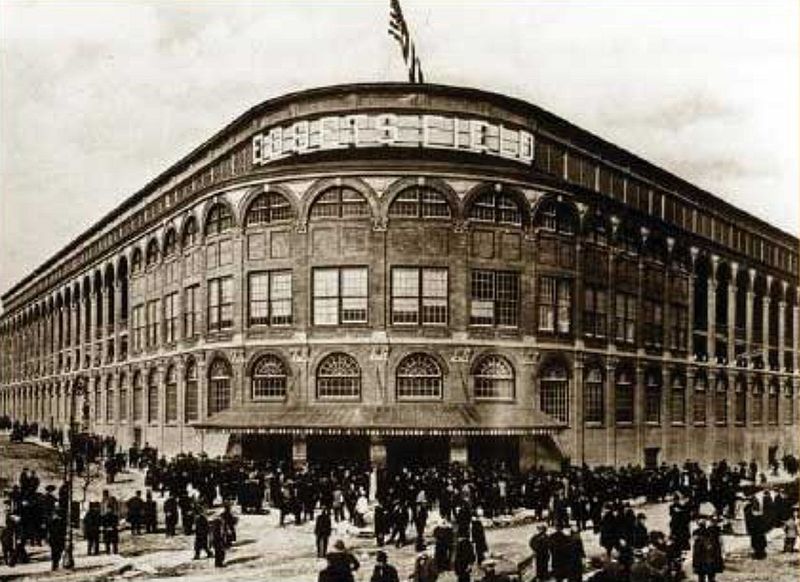
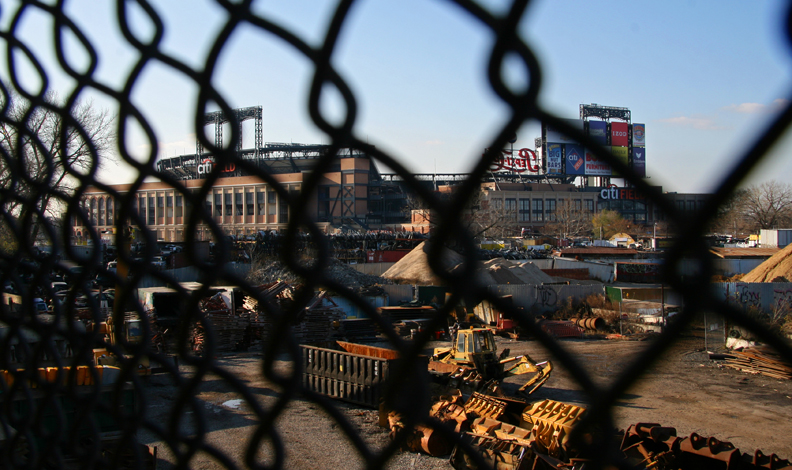
    Citi Field in Flushing Meadows–Corona Park was completed in 2009, built as a replacement for neighboring Shea Stadium as a new home for the New York Mets. It was designed by Populous and featured elements of the legendary Ebbets Field (1913-1960), located in Flatbush, Brooklyn, and home to the Brooklyn Dodgers. You can see the design influence here in the photo of the exterior entrance to Ebbets Field. See Citi Field here, as viewed from the Roosevelt Bridge overlooking Willets Point.

    Shea Stadium was built in 1964 (dismantled in 2008), funded primarily by the 1964 World’s Fair. It was used as a multi-purpose arena and had numerous rock groups and events. Pope John Paul II made an appearance there in October 1979. Perhaps its most legendary claim was the Beatles’ opening of their 1965 North American tour. Two years later, in 1967, the Beatles wrote With a Little Help from My Friends. Apparently someone from Citi was listening and later took their advice 🙂


  • dinamic_sidebar 4 none

©2026 New York Daily Photo Entries (RSS) and Comments (RSS)  Raindrops Theme