• Silent Rave Part 2

    (See Part 1 here)

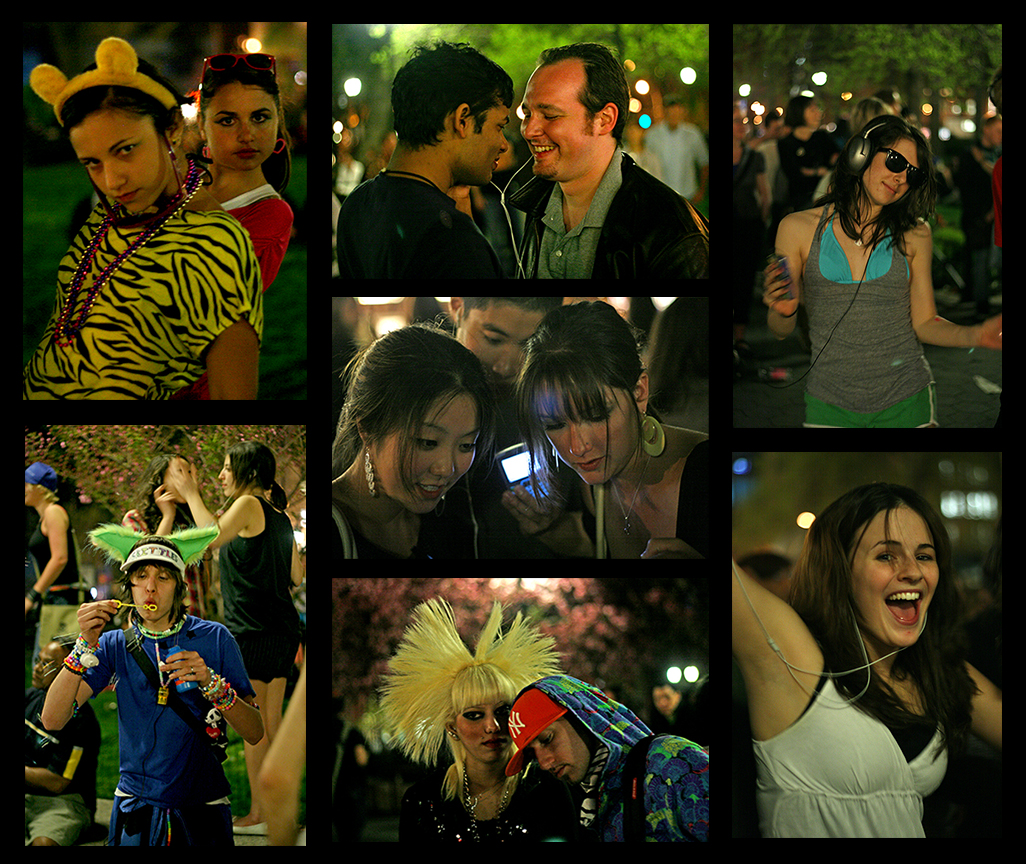
    This is Part 2 of the Silent Rave I attended on Friday night. This type of event can also be described as a silent disco, silent party, or mobile clubbing. The concept of silent discos goes back to the 1990s. Some of these may take place as a flash mob – see my posting on the recent Pillow fight in Union Square for more about flash mobs.

    Friday’s silent rave was organized by Jonnie Wesson, an 18-year-old exchange student from Britain, attending the Packer Collegiate Institute in Brooklyn. Silent raves are popular in London and Europe – large-scale silent discos with thousands of participants have taken place in the U.K.

    “The basic premise is that a hundred or a thousand or a few thousand people all turn up in a public place, turn on their own headphones, and dance,” says Wesson. “It’s always fantastic and weird to see thousands of people dancing silently. It’s always in a public space, but it’s not meant to cause disruption, but only because it’s the last place you’d expect that sort of thing.”

    The rave at Union Square was organized by Wesson through a Facebook site. It was scheduled to start at 6:17 PM. “It’s a random time that fits in with the ethos of the flash mob.”
  • Silent Rave

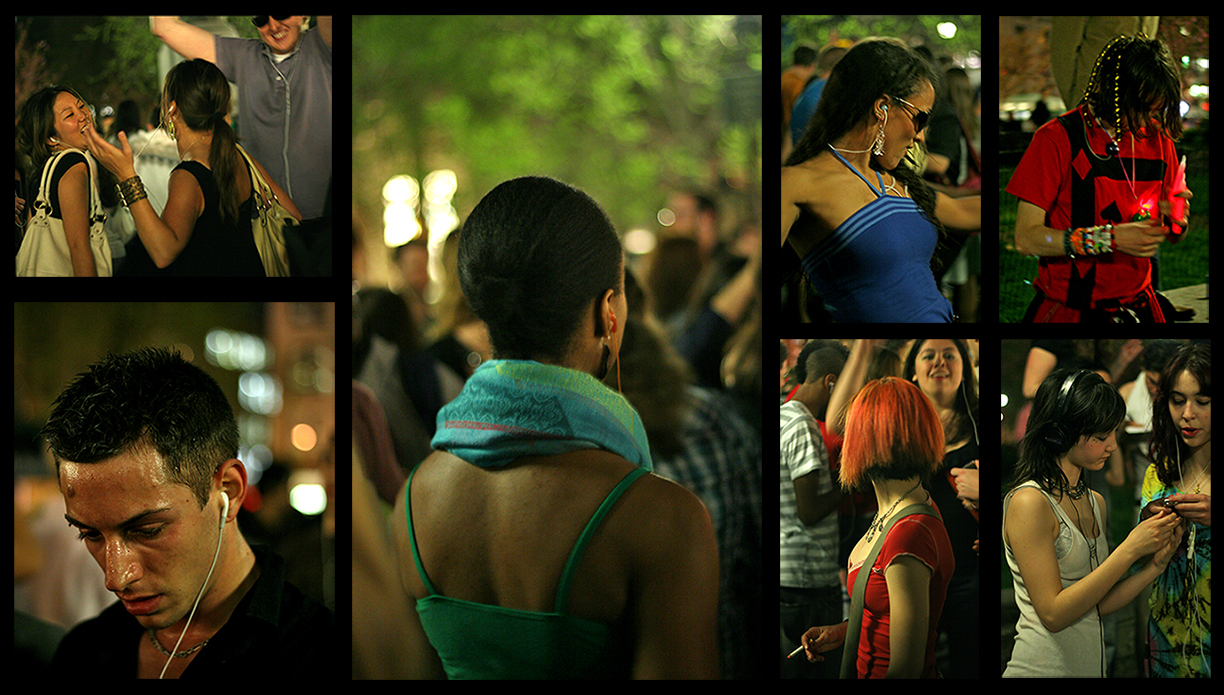
    At dinner on Friday night, two friends informed me that there was to be a silent rave in Union Square Park. So, with camera in tow, we walked to Union Square, where activities were already in progress. Hundreds of people were gyrating, each to their own music provided by their own portable music players, primarily iPods. Some were sharing sounds. I was immediately recruited by someone who introduced himself as Fong. He said they were in desparate need of a photographer to cover the event for something he was putting together – what exactly, I don’t know. Conversation was harried and facts were murky – I never really got the specifics.

    But we followed each other around, targeting good photo ops – Fong getting dancers to sign waivers while I shot undulating bodies in very low light, the ultimate photographic challenge, at least in the city. Fun was had by all – Fong and I appeared to be the only ones stressed, trying to capture the photos and names of moving targets.
    The event could be seen loosely as a flash mob, something I wrote about in my article on the recent Pillow Fight. And calling it a rave was even a looser description without the presence of sex, drugs (Ecstasy), or a club environment. But who’s looking at definitions and grammar – this was about music and dancing 🙂

    See Part 2 here.

    Note: For my gallery of photos from the Silent Rave, go here to my Flickr site.


  • Co-op

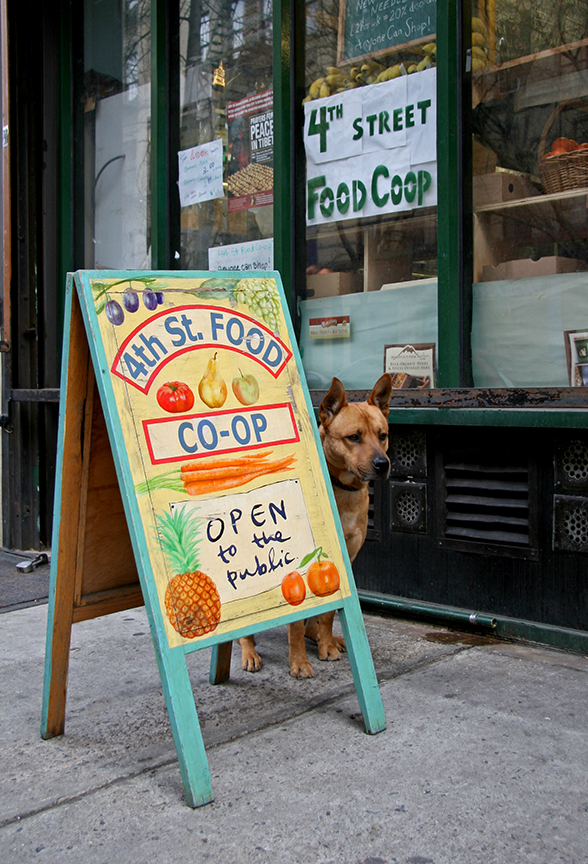
    Many may not be familiar with the concept of the food co-op. The 1960s and early 1970s saw a boom of popularity in the idea. The 4th Street Food Co-op at 58 E.4th Street in the East Village is the last surviving in Manhattan and one of only two in NYC (the other is well-known in Brooklyn).

    The original concept is one of a cooperatively owned food store. I was surprised to learn that food co-ops go back to 19th century England and the cooperative principles set by the Rochdale Society of Equitable Pioneers in Rochdale, England, in 1844.
    The 4th Street Food Co-op is structured to allow for working and non-working members to get products at a discount – typically, non-members can shop at a higher price. The motive is to be essentially a not-for-profit corporation.

    I see two problems with the food co-op for this generation.
    First, the food co-op is run by members, and members are ideally working there. Most individuals these days have too many interests and other priorities to invest time in this manner for a small discount on food. People want convenience, not more work and obligation. Non-working memberships are a way of dealing with this.

    Secondly, I hate to be cynical, but I think that people’s willingness to be politically correct and embrace causes does not include giving up most of the comforts that we have become accustomed to. Scaling them back somewhat, but that’s it. In regards to the food co-op, people want a much broader selection of goods in a boutique environment, such as the rage that is Whole Foods Market, a wildfire spreading across the land. Higher prices, but they are not daunted – the checkout lines are huge. Everyone wants their iPod and toys. All of these manufactured goods have an environmental impact. We may give up the SUV, but not the car…


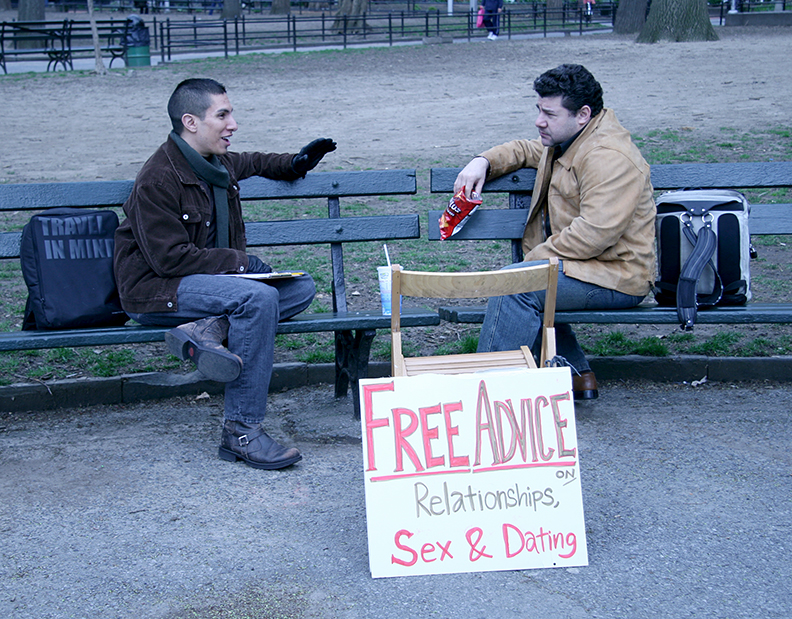
  • Free Advice

    Many years ago, I had an idea to sell advice on the streets on New York City for $1. I proposed this to two friends, and they really liked the idea. Both had experience in therapy. We all had diverse backgrounds and strengths. Most importantly, we felt that we also shared a lot of life experience. And it would be fun.
    I thought it was a novel idea – I was a little disappointed when I found out that three women had done it years before and had written a book about it. Amy Alkon, Marlowe Minnic, and Caroline Johnson were three ad agency people who started giving free advice on the streets of SoHo in 1988 and published a book, Free Advice, in 1996.
    We plied our trade a few times. It was a lot of fun – we wanted to do more but never did.

    So when a friend and I were strolling through the park and came across this fellow, I was quite startled to see him doing the same thing. For free.
    Now when I did this with my two friends, we had long discussions about charging money or doing it for free. Our feelings were that people take things more seriously when they have to pay for it – it’s about commitment. And the seller takes it more seriously too – we did. The dollar transaction made a difference. We only did it a few times and planned to again but never did.

    We were surprised to see how young this guy was and wondered how qualified he would be to advise on issues like relationships. I was going to try him out but didn’t get the chance. Let’s hope that in this case you don’t get what you pay for, but that the best things in life are free 🙂


  • Flamboyant

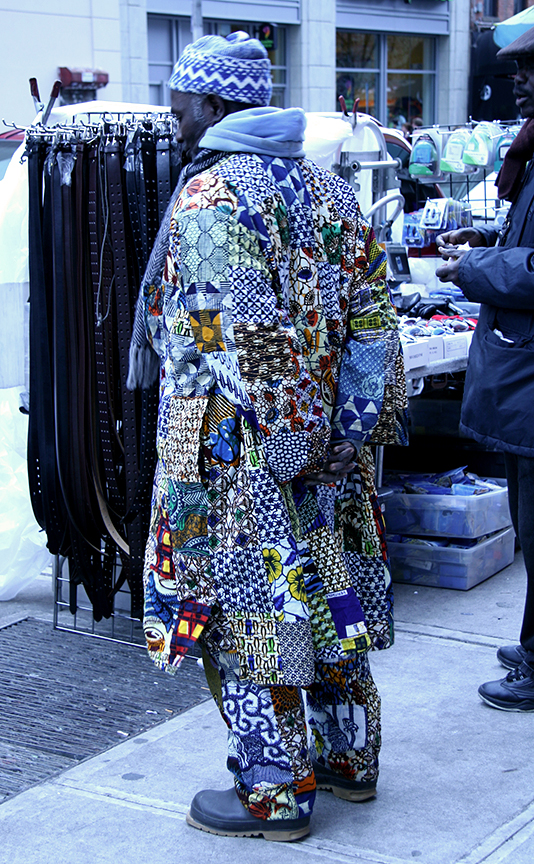
    I was really stunned at the colors on this man’s patchwork clothing. I spoke with him and learned that he was from Senegal – there are many Senegalese street vendors in the city.
    There is a group of Mouride warriors known as the Baye Fall who roam the hot and dusty interior of Senegal “singing, proselytizing, and begging.” They dress in patchwork clothing and wear dreads. I don’t know if this man had some connection to this group or whether the dress is derivative in some way. A little investigation, I’m sure, would answer that question…

    New York city is large enough and diverse enough to allow all manner of the unusual. Ethnic groups with traditional dress or body art can be comfortable here – their appearance will not draw much attention in a city of sensory overload, a continuous impact of colors, sights, and sounds. If you have read this blog, you know I frequently have stated that many things get overlooked, like the dessert truck in my neighborhood (see here), and then there are the eccentrics, the extreme, the fringe, and the flamboyant. This is one of the few places where they could survive and be happy. I have done a number of postings on a spectrum of colorful characters, many of whom are personal favorites of mine and readers of this site. See the links below for more of the flamboyant…

    Related Postings: Spike, Fashion Forward, Out There, Narcissism Gone Wild


  • Bon Appetit

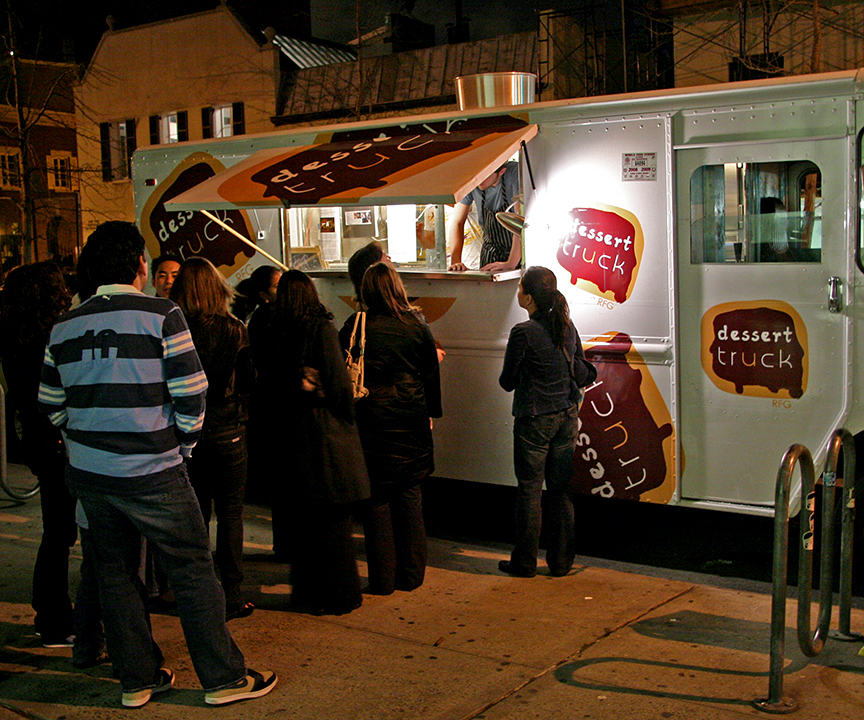
    THIS is New York at its best. I have often felt that NYC is a place where the extraordinary is common and the ordinary is uncommon. And, of course, the extraordinary is what makes it great to live here and why visitors love it. Sometimes it feels like there’s something extraordinary to be discovered around every corner. Like the Dessert Truck on the street selling gourmet pastries – for $5 each. No need to go into an expensive restaurant and sit down. What could be better? I was completely unaware of this until a few days ago, when two friends introduced me to it. Amazingly, it is only a few blocks from my home, yet I never really noticed it. They are located at 8th Street and University Place and are open 6 nights per week.

    The desserts are awesome – they are made by Jerome Chang, a former pastry chef at Le Cirque and grad of the French Culinary Institute. He is partnered with Chris Chen, a Columbia business school grad. “One night, we randomly made the caramelized banana sandwich with sea salt — no recipe,” Mr. Chen said. “It turned out to be amazing, and both of us thought that this was something we could sell on the street.” You can find things like molten chocolate cake with liquid ganache center and sea salt, roasted pistachios, and “a hint of olive oil”; apples and cinnamon with cranberries in a crisp, puff pastry with streusel and whipped cream, chocolate bread pudding; and crème brûlée made with Madagascar vanilla beans and freshly burned sugar.

    You can read all about them here at their website – there are photos of the desserts, press articles, menu, hours, etc. Bon appetit…

    Relate Posting: Street Cuisine


  • Parfumerie

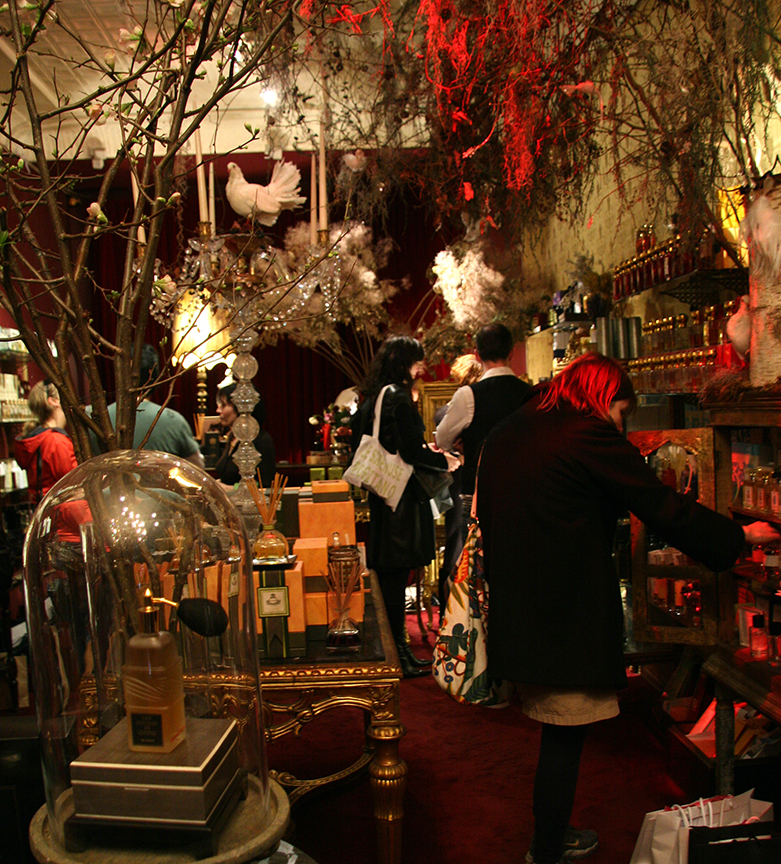
    Do you want to travel to a 19th-century Parisian boudoir? Then make a trip to Aedes de Venustas at 9 Christopher Street in the West Village. This parfumerie is the brainchild of Karl Bradl and Robert Gerstner, two Germans previously in the international freight business. Perfume was just a hobby for them – the business was an outgrowth of that (you can read the story here).

    I will not mince words – this is one of the most beautifully appointed shops I have been to in New York, with violet walls, gilded furniture, huge arrangements of fresh flowers, velvet chairs, and birds fabricated from feathers. Everything works together. To step inside is to be transported in time and space and leave the city behind. The atmosphere is incredibly calming.

    But let us not forget that, first and foremost, this is a specialty fragrance boutique. The owners have introduced various lines and have some of the finest perfumes in the city. The world of fragrance covers a wide spectrum, from the large commercial lines and household names to the smaller. There are a large number of independent perfume makers now, and many of the finer ones are represented at this shop. There are also blogs which specialize in the field.

    I had been to Aedes a couple of times before, but on Sunday, I went with a friend to Sniffapalooza, a NYC event with perfume passionatas from around the world. The event spans several days at a number of locations with manufacturers as well as others in the industry attending. Although I have no real connections with the fragrance world and was a privileged guest, it was just nice to be in an environment where quality and doing things well defined everything…


  • Delivery

    There is a saying – let the music speak for itself. This makes sense, except that you need to hear it, which you can’t do here. And, of course, there are different languages, and the music may not speak to you. But for me, these guys are some of the best jazz musicians I have heard on the street. It’s such a treat to run across talent like this on the streets of New York City. Many street musicians are superb. Music is very competitive, and they work the streets for a number of reasons: sole source of income, part-time source, exposure, or just fun.

    The variety of musicians you find on the street can be just remarkable. I have run across Manhattan or Juilliard School grads and students, professionals playing cello, a traveling one-man band, punk rock concerts, rock festivals, swing musicians, blues slide guitar players, a Chicago brass band, a bluegrass reunion – it’s a menagerie out there. A number of us spend evenings in Washington Square Park listening to singing circles – on a good night, hundreds of spectators may congregate and participate in the choruses.

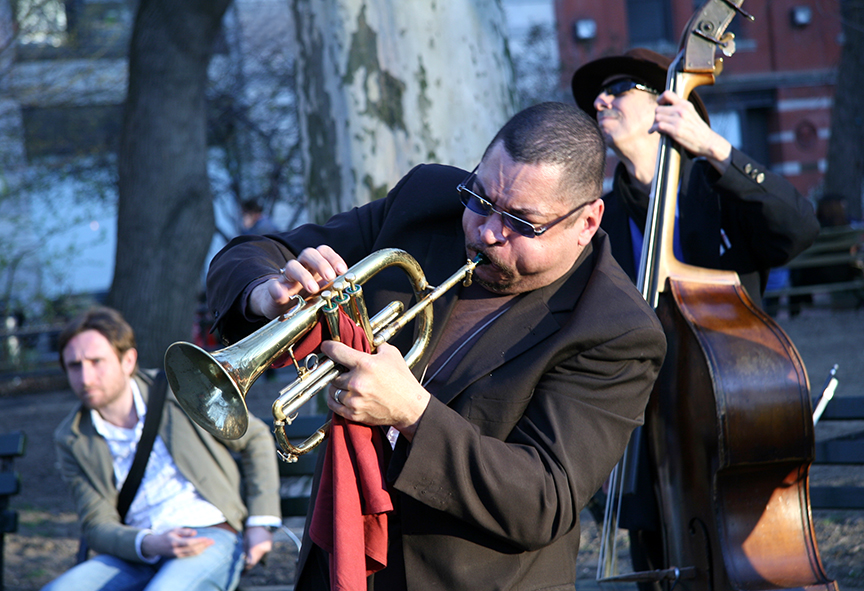
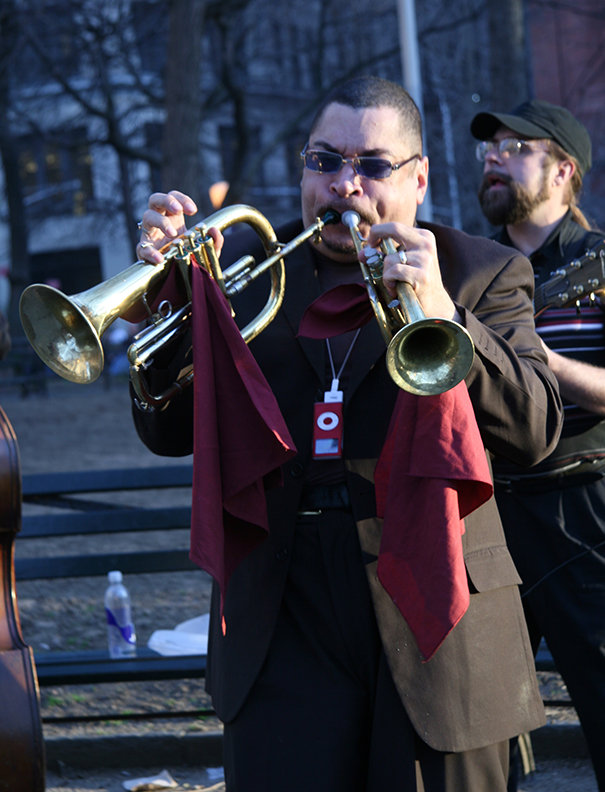
    The trumpet player, Rasheed Richard Howard, is superb. And he can play two trumpets at one time. He is part of a group called NuQ-Leus.
    This photo was taken when they were doing Georgia, a favorite with such a great melody (if you haven’t heard Ray Charles do Georgia, you must).

    Rasheed really delivers, which is good since New Yorkers are spoiled and quite used to delivery 🙂


  • Sunshine Makes You Happy

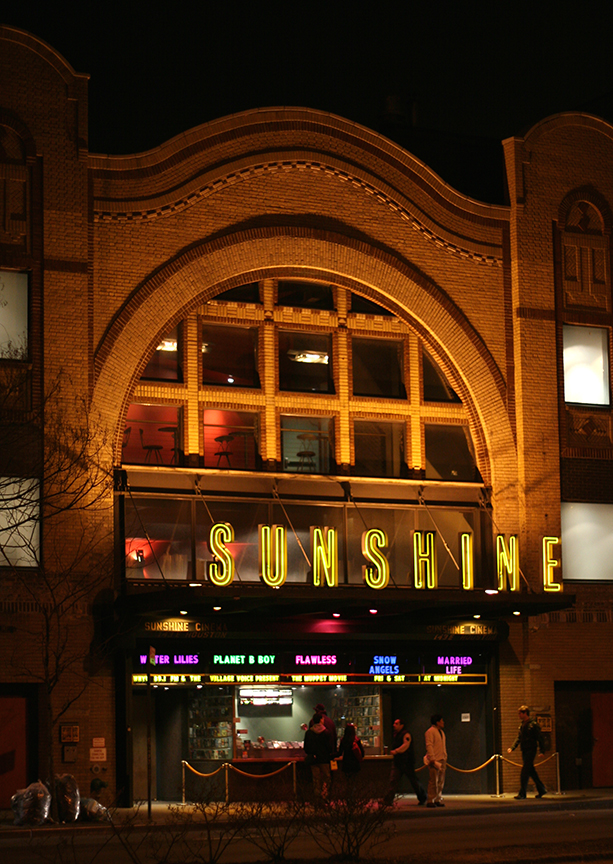
    Here is where New York really shines: the arts, particularly ones that need brick and mortar establishments, like live music, opera, theater, art, and indie or art films. Art house films on the big screen are things you can’t squeeze down the internet pike. And you need a big audience to support a place like Sunshine Cinema.

    Located in the now fashionable Lower East Side at 145 East Houston Street, Sunshine is one of a handful of premiere houses featuring art films, along with Angelika, Quad Cinema, Film Forum, IFC, Village East, and Lincoln Plaza.

    Rather than rewrite history, here it is from Landmark Theatre’s website:

    “Built in 1898, the Sunshine Cinema building was formerly the Houston Hippodrome motion picture theatre and a Yiddish vaudeville house but for over 50 years it had been shuttered serving as a hardware warehouse. Landmark has restored the theatre back to its artistic roots and now offers the art-house film lover five brand new state-of-the-art screens dedicated to first-run independent and foreign film as well as non-traditional studio programming. The Sunshine Cinema has exceptional presentation and amenities including stadium seating, Dolby Digital Surround EX sound and gourmet concessions. The theatre also offers attractions such as a Japanese rock garden and a viewing bridge that offers breathtaking city views from the third story spectacular glass annex. The restoration was a team effort—floor plans by TK Architects and interior design by architects Tony Pleskow and Tom Rael of Pleskow + Rael.”

    I have been to Sunshine and can heartily recommend it. It is also in an interesting neighborhood with plenty of things to do. You can’t miss it – with its beautiful facade, especially when lit at night, it’s like a beacon letting you know that if you like film, Sunshine will make you happy…


  • Weather Means Whether

    Posted on by Brian Dubé

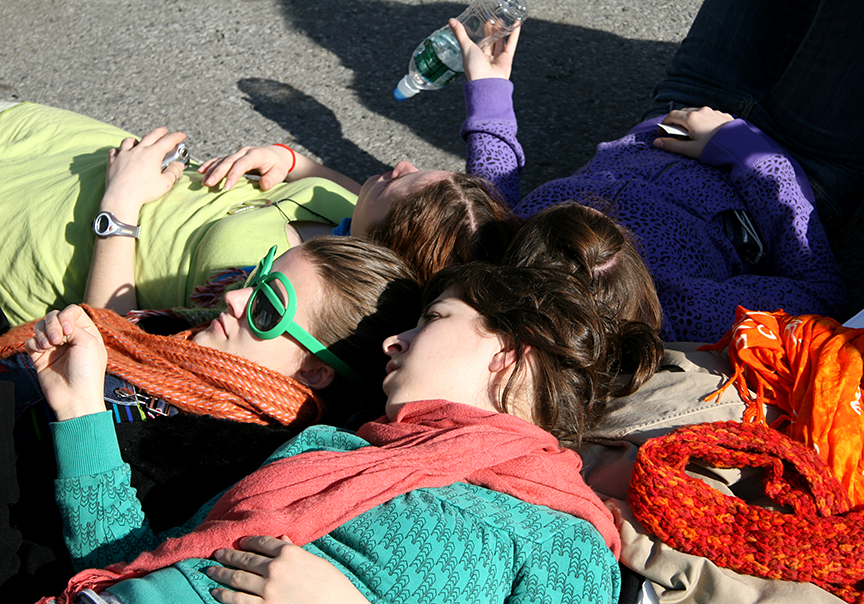
    What is as refreshing as a spring day? The attitude of a visitor excited by the city. And what surpasses that? The unbridled enthusiasm of youth. So what do you have when you mix the two? Girls resting on the ground, preparing for their next outburst.

    These girls were from Montreal – I asked because it appeared obvious that they were from out of town (or new university students). How can you tell an out-of-towner? New Yorkers, even young ones, don’t usually lie on asphalt. We know the types of things that go on down there and are not going to frolic in the residue. Sitting on the ground under duress is one thing, but lying on the pavement is another.
    But these women know as well as I do that clothes and people can be washed; I am just too rigid to take their lead. Their abandon is refreshing too.

    In my memory, I feel there is a day in the spring where you feel that the tide has finally turned and spring has sprung. It may be a little cool, but there is something about that day that speaks to you and whispers, this is the day. I thought that day had arrived several times this year, my hopes only to be dashed by a subsequently cold day. My heat is blasting as I write this.

    I once had a close friend, since passed away, who grew up on the East Coast and moved to the West Coast. He was an adventurer, extremely well-traveled to all corners of the earth. We were speaking of this very thing and how the weather and seasons here was so much more unpredictable in NYC compared to California. I scoffed at the term “temperate” zone. His comment was, “The East Coast has weather, the West Coast has climate.”

    So whether this year has been more unpredictable or my ruminations are wishful thinking with my memory clouded by impatience for warm weather, I do not know. But I do know that in New York, weather means whether…

    Posted on by Brian Dubé

  • Unguent

    Posted on by Brian Dubé

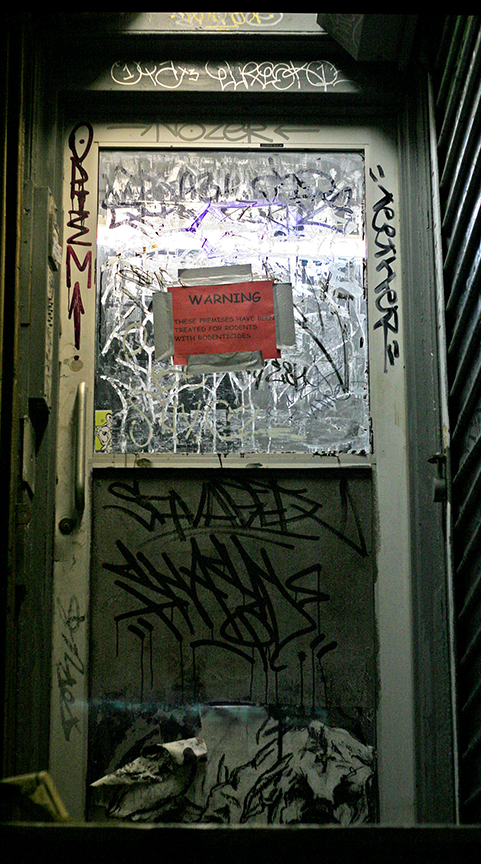
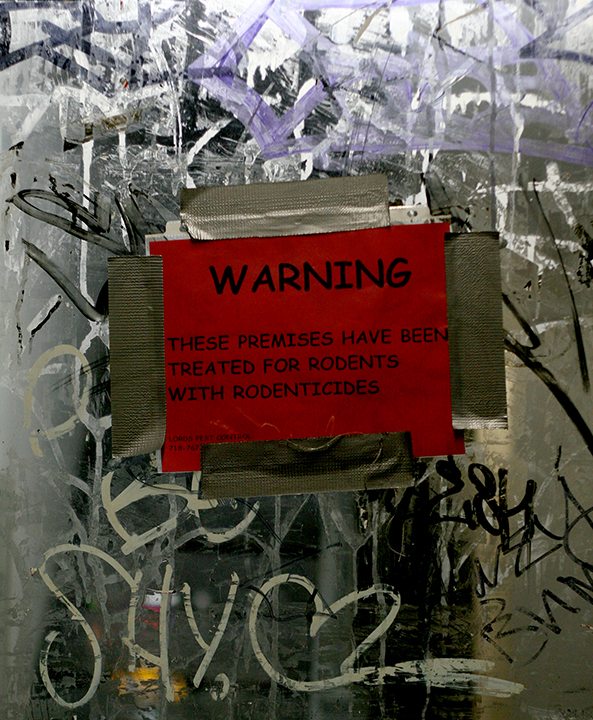
    This is New York too. While strolling in the Lower East Side on Orchard Street on Saturday night, I happened upon this doorway. It had the edge department well covered: graffiti, garbage, poorly lit, a bare fluorescent bulb, heavy duty roll gates with padlocks, and a sign warning of rodents and rodenticides fastened with duct tape. See closeup here.

    Does this affect desirability of the neighborhood? Not at all. Of course, real estate prices will not be quite as high as, say, an apartment on the Gold Coast – 5th Avenue in the 70s with Central Park views. There is a large demographic that would prefer the Lower East Side to the Upper East Side, SoHo, Tribeca, or the Upper West Side, for a time.

    There’s certainly no debating the fact the the Lower East Side and the East Village are two of the most exciting neighborhoods in the city with the widest range of restaurants, bars, theaters, and music clubs. And I am sure most residents are content to live out their entire lives there. Unless big money is at hand or added to the equation. Then, for many, the residence becomes a passing fancy, a fad, a toy to be discarded, or a place one has outgrown, followed by a move uptown or out of town. The charms of duct tape and rodenticide give way to those of the Dakota, Beresford, or San Remo. And edge is only a taxi or limo ride away.

    Take the Silk Building, above the former Tower Records at 4th Street and Broadway. The penthouse apartment has been a revolving door for the affluent – it has seen Keith Richards, Cher, and Britney Spears. There are a handful of extraordinary buildings downtown, like the Police Building, and many of the well-heeled do remain downtown, but they are few. Once a image statement has been made, most leave. After all, this really is a neighborhood that caters more to the young and restless than the established and rested.
    Money is like an unguent, and when applied liberally, it usually is absorbed readily with predictable effects. It doesn’t appear that one has to rub the salve that hard or long to take off most edges 🙂

    Related Postings: Vegan Chic, Bluestockings, Unkindest Cut, Rats R Us, Rats Gone Wild, The Dark Ages, Wildlife Control

    Posted on by Brian Dubé

  • Influences

    Posted on by Brian Dubé


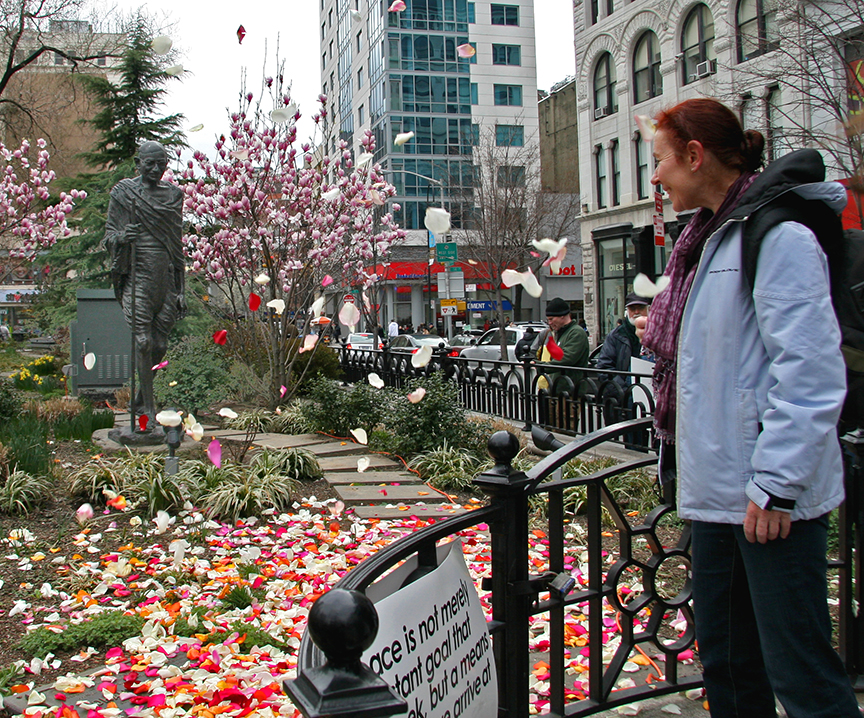
    Union Square can always be depended on as a locus for political activism. Saturday afternoon was the Be the Change walk – the initiation of a month-long tribute to Mohandas K. Gandhi. The walk started in four different locations and ended in Union Square near the Gandhi statue, where a number of speakers were present for the commemoration, including composer Philip Glass, author Mark Kurlansky, and author/activist Reverend Osagyefo Uhuru Sekou. There was also a traditional flower petal ceremony. The Iraq War was, of course, foremost in the minds of the participants, many of whom carried large signs with quotes from Gandhi: Outer peace is useless without inner peace and An eye for an eye makes the whole world blind.

    Gandhi is generally seen as a pioneer in the use of civil disobedience on a wide political scale, both in South Africa and India. Along with King, many others have credited Gandhi as being a major influence: Albert Einstein (who exchanged letters with him), anti-apartheid political activist and former President of South Africa Nelson Mandela, and former U.S. Vice-President and environmentalist Al Gore.

    This walk also coincided with the assassination of Martin Luther King (April 4th, 1968). In 1999, Time Magazine named King as one of the Children of Gandhi and spiritual heirs to non-violence.

    Influences trickle down and are transformed, adapted, and built upon for time, place, and use. Even those who are extraordinarily creative or provided seminal roles have had influences – one of Gandhi’s was the classic essay, Civil Disobedience, by Henry David Thoreau, first published in 1849. But that’s another story…

    Related Postings: Union Square, Vintage Mural, Reverend Billy, Picture New York, Flora, Gentleman Peeler, Luna Park Cafe, Metronome, Union Square Greenmarket, One-Man Band

    Posted on by Brian Dubé

  • Key Privileges

    Posted on by Brian Dubé

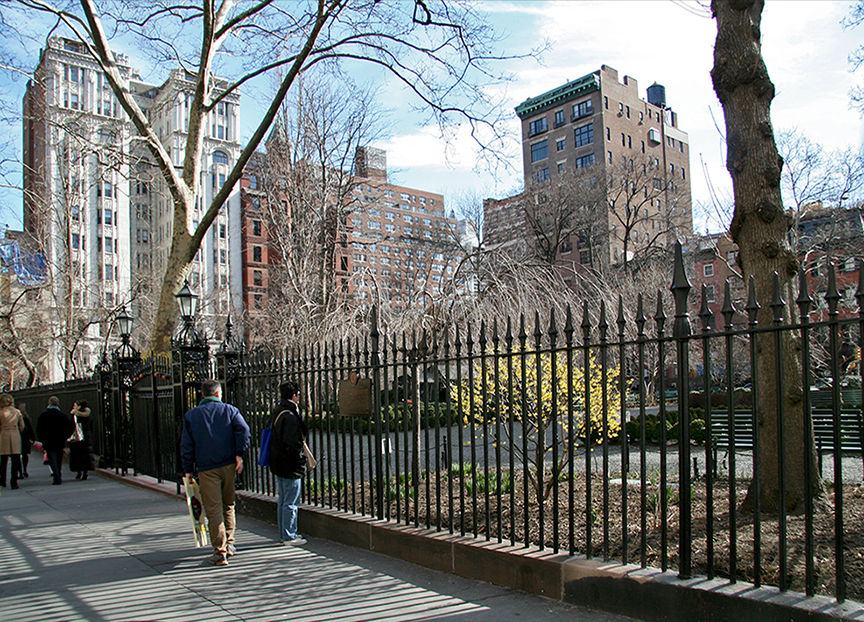
    Unless you stay at the Gramercy Park Hotel or are extremely well-connected, this is as close as you will get to enjoying Gramercy Park, from this side of the fence. Well-known to city residents, Gramercy Park is the only private park in the city. To gain access, one must have a key – these are available only to residents in the buildings surrounding the square, who own the park in common. Although NYC has its share of money and exclusivity, private outdoor space is an anomaly in the city, and the park’s privacy comes as a surprise to many.

    Originally, this park was swampland. The name Gramercy is from the Dutch ”krom moerasje,”for ”little crooked knife.” In 1831, Samuel Bulkley Ruggles bought and drained the land and divided into 108 lots. The park occupied 42 of the lots, and homes were built on the remaining 66 (these are the buildings which have keys to the park.) This area was located unfashionably north at the time, so Ruggles built a private park to attract residents and buy properties.

    The square is surrounded with magnificent row houses and prewar buildings. The immediate area is rather quiet, with only a few business establishments such as O’Henrys. The neighborhood, known as Gramercy, is surrounded by tree-lined streets. Not far away, however, is the bustling Union Square, as well as the Village to the south.

    But I do not pine for access, and neither should you. There are many extraordinary parks in the city – Central Park, Prospect Park, Washington Square Park (under construction), Union Square, the Conservatory Garden, Brooklyn and N.Y. Botanic Gardens, Van Cortlandt, Riverside, Carl Schurz, City Hall, et. al. These urban oases dot the city, and the privilege of entry requires no key…

    Posted on by Brian Dubé

  • Different Bummer

    Posted on by Brian Dubé

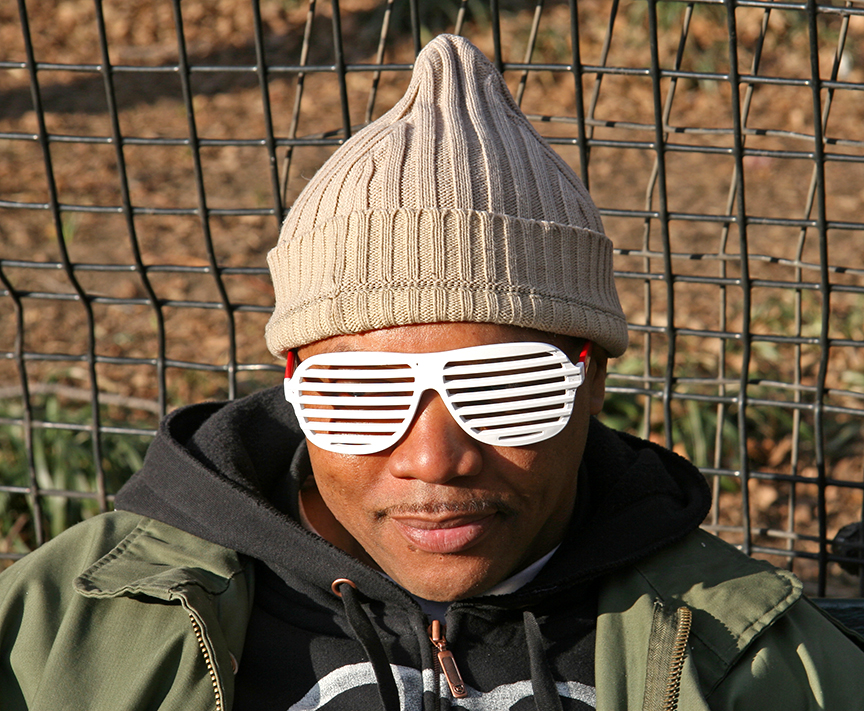
    Some march to the beat of a different drummer. Some don’t like marching or don’t have anything worth marching for – they prefer sitting. Perhaps they can’t afford a drum or don’t like drumming. So they sit on a park bench with white plastic glasses with slits and smile.

    This was the posting’s start BEFORE I tried to find some small morsel of info about these glasses to round out this tale. I did know that sunglasses like these were used by the Eskimo and Arctic explorers (where glass was either unavailable or impractical). Living in the Arctic, the Inuit soon discovered that they could develop snow blindness (Niphablepsia), a type of keratitis, and over longer periods, cataracts. And these glasses did have a period of popularity in the 1960s.

    Surprise. Apparently these glasses were all the rage in 2007, popularized by rap star Kanye West in his Stronger music video. Kanye markets them as Stronger Shades. Generically they are known as shutter shades – you can find sites online, such as shuttershades.blogspot.com, shuttershadesonline.com, shutter-shades.us, strongerhsades.com, etc.

    So my whole story – how this person was striking out in his own small, humble way (hence the phrase a different bummer) by donning a forgotten, cheap piece of kitsch from the 1960s (perhaps because this is all he could find) – was turned upside down. The real story is quite the contrary, as he sports the latest, (nearly) hottest trend, inspired by a major rap artist. Then again, perhaps the virulent adaptation by so many of whatever is currently fashionable is, in its own way, a different bummer…

    Posted on by Brian Dubé

  • Lone Voice

    Posted on by Brian Dubé

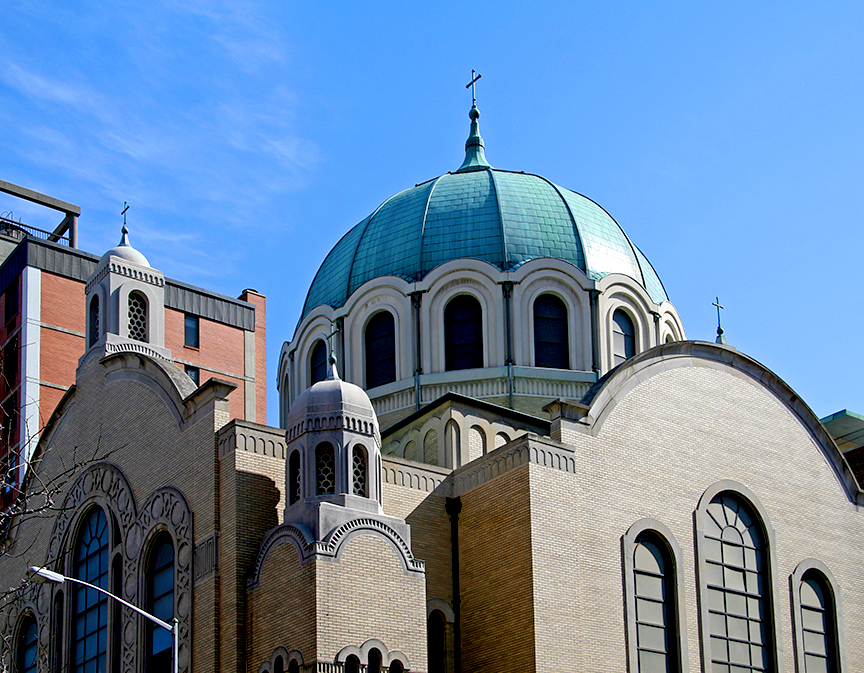
    I was surprised to learn that this structure is actually quite new – construction dates back only 30 years to 1978. This is St. George’s Ukrainian Catholic Church at 20 East 7th Street at the corner of Taras Shevchenko Place. The Byzantine church with its large dome, designed by Apollinaire Osadca, is a landmark in this area of the East Village, which has a large Ukrainian community. The church stands out particularly in contrast to the surrounding low-rise, tenement buildings. It replaces an earlier church (read the history here).

    A neighboring project across the street has been quite controversial: the short two-story Hewitt Memorial Building, belonging to Cooper Union, has been torn down and is being replaced with a 9-story building (equal in height to a 16-story residential building) to be completed in 2009, in time for their 150th anniverary. The new building is the NYC debut of architect Thom Mayne, a Pritzker Prize laureate and a principal of the Los Angeles firm Morphosis. There has been some community acceptance owing to the new building’s transparent features permitting light and views. Cooper Union (and others) have recently been involved in a number of building projects in the area – this is not the first recent neighborhood controversy.

    People resist change, and opposition to new construction is the norm, unless the thing being torn down is absolutely egregious and the replacement is very much in keeping with surrounding architecture. Otherwise, in NYC, get ready for a community battle. I’m not saying that all new construction is good; to the contrary, I am a devout preservationist and love historic architecture. However, new construction is a reality anywhere. It’s the design process and site considerations that make it such a thorny, contentious matter.

    I recall a recent community meeting where there was heated debate over a large-scale project. An older, calm, and reasonable gentleman stood up and stated that he was a 50-year resident of the neighborhood and, of course, had seen this type of opposition repeatedly with a consistent outcome: people eventually warm up to the new construction and make it their own. He thought that the newly proposed project had been well-designed and should be embraced. But he was a lone voice…

    Street Note: Taras Shevchenko Place is only one block long, between 6th and 7th Streets. Originally it was named Hall Street and then Hall Place. Ukrainian residents got the street renamed in 1978. Taras Shevchenko (1814-1861) was a Ukrainian poet, artist, and nationalist.

    Posted on by Brian Dubé


  • dinamic_sidebar 4 none

©2026 New York Daily Photo Entries (RSS) and Comments (RSS)  Raindrops Theme