• The Grey Dog

    Posted on by Brian Dubé

    When you step inside The Grey Dog, your first reaction may be to step out. This place will most likely be teeming with people, have a line for for placing orders, few (if any) tables available, and loud. Why should you stay and why would I recommend it? Because the food is very good. And once you’ve settled in, the mayhem recedes as you focus on your meal. You start thinking this place is not that bad once you staked out your territory. What was annoying starts feeling like exuberant festiveness. Everyone seems happy and life is good.

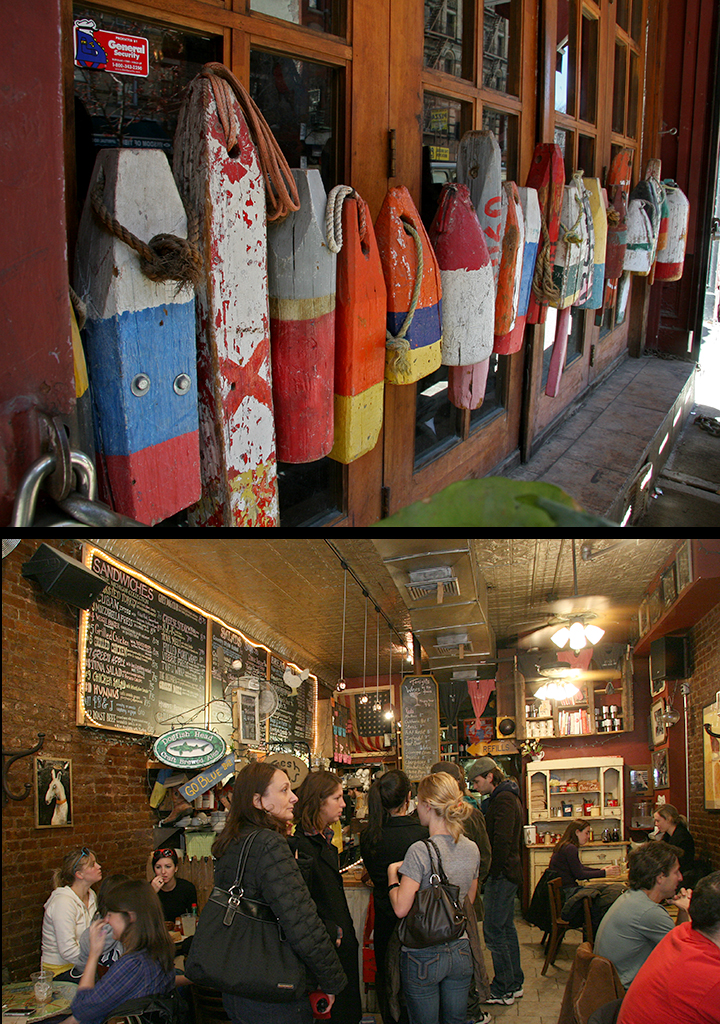
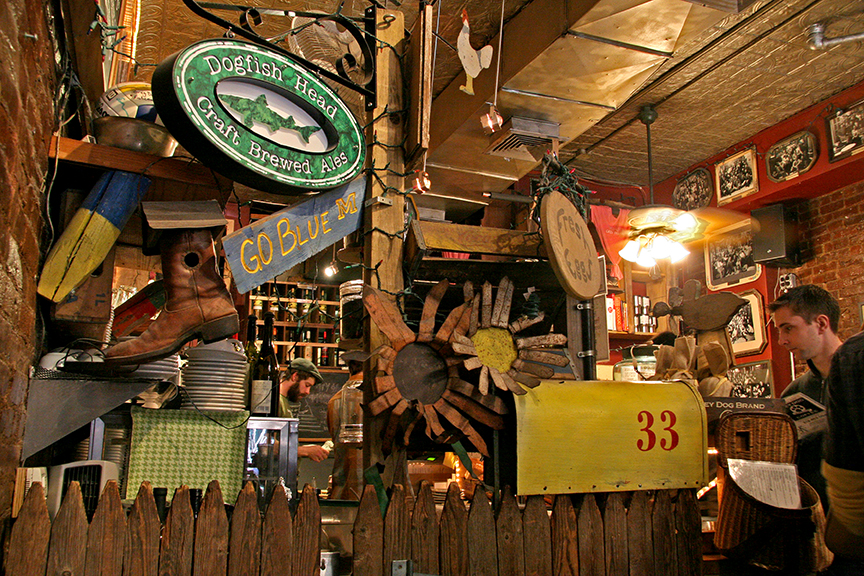
    Finding casual places to eat with no table service and good food is not easy anywhere. The Grey Dog is technically a coffeehouse, and they are known for their coffee. However, the food menu is quite extensive – ideal for breakfast, brunch, or lunch, but I have had dinner here as well. The prices may appear a tad high for the type of place, but the portions are large, typically with sides, and made with high-quality ingredients. The atmosphere is cozy, woodsy, New England with nautical accents – oars above the windows and a row of buoys outdoors below the front window. More photos here. When the weather is warm, the front windows are open, and a table there is quite pleasant. A wooden bench outdoors provides a place for customers as well as passersby to rest or eat, as well as a good spot for dog spotting.

    Don’t be daunted by the lines – they move more quickly than expected. Place your order at the counter, grab a table, and when your order is ready, someone will come out, call your name, and deliver your food. And through some miracle, you always seem to get a seat…

    NOTE: The Grey Dog was created in 1996. It was named after Moose and Goose, the owners’ two labrador retrievers – one white, the other black. The location in the photo is the original at 33 Carmine Street in the Village (Update 1/17/12: Now closed). A second location recently opened at 90 University Place.
    Posted on by Brian Dubé

  • Street Revival

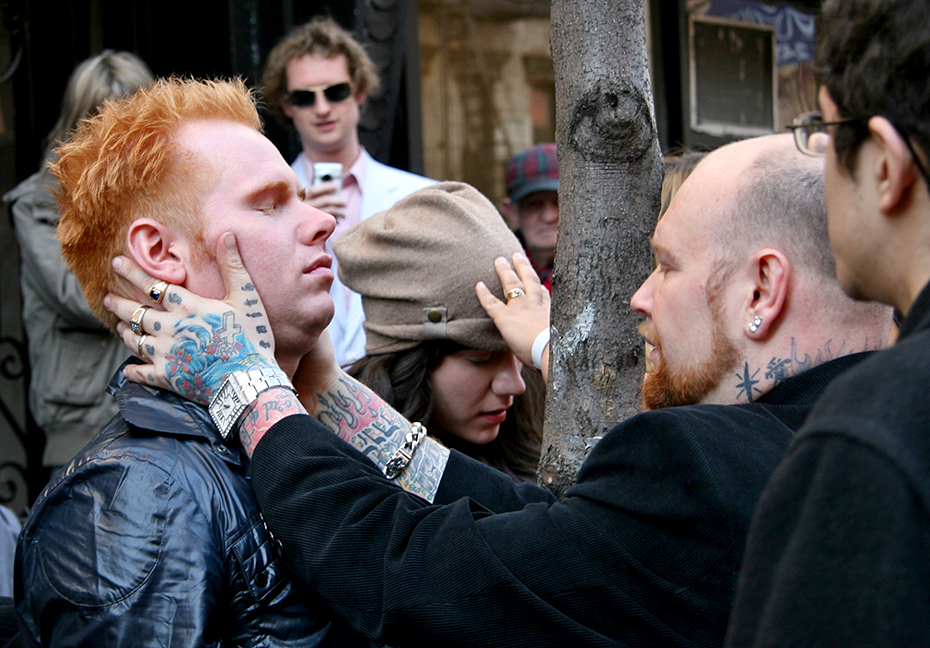
    I’ve never seen anything like this on the streets of New York. I was taking a leisurely Sunday afternoon stroll along East 7th Street heading towards Tompkins Square Park when I noticed a line of people on the sidewalk. The block is quiet, and this was a rather unusual time for a long line – I saw no retailers that may be running a promo with a celebrity tie-in. So I asked and was told that there was a minister who would be coming out of an overcrowded church basement to administer healings and blessings on the streets. People were being moved forward to the edge of the sidewalk, facing the street and leaving space behind them (I incorrectly assumed to allow room for pedestrian traffic). So we all stood and waited in front of City Light Church (beneath St. Mary’s Orthodox Church at 121 East 7th Street).

    Out came our greatly anticipated minister, and we could see that this was no ordinary minister. He was heavily tattooed and adorned with jewelry, earrings, and piercings. He was having individual conversations, holding heads in his hands, pushing or blowing lightly, and down they went, being supported and guided to the sidewalk by assistants behind them.

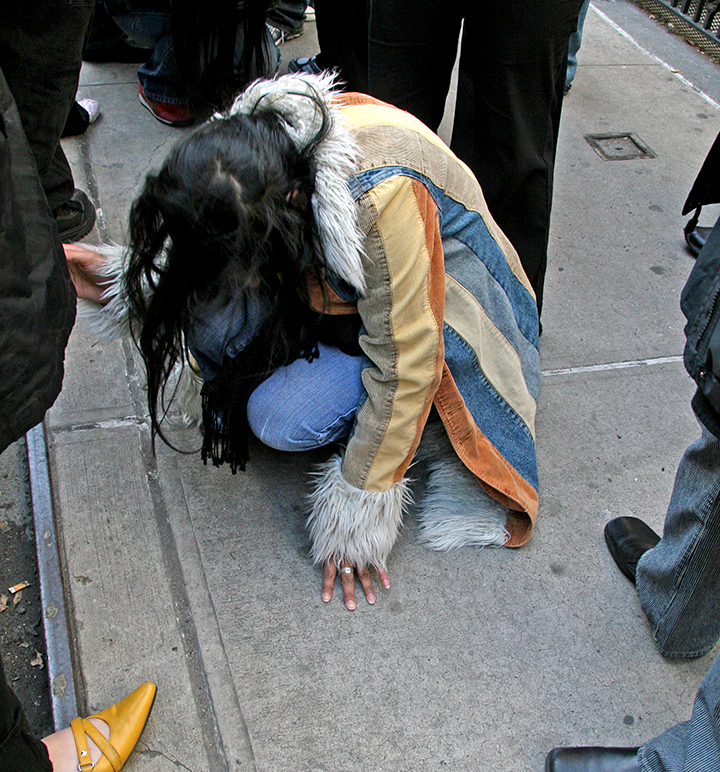
    Some were trembling before he came to them, and many remained lying down on the sidewalk as he moved to the next in line. One woman was crouched down for several minutes – I got down next to her and noted that she truly looked ill and was unable to get hold of herself.

    This is Todd Bentley, a 32-year-old man who heard the voice of God in his former drug dealer’s trailer and was saved from a life of drug abuse (he overdosed three times) and prison. A new revivalist with edge. He is based in British Columbia, Canada, where he heads Freshfire Ministries. Judging from his website, he is a busy man – constantly touring. He has crusaded in over 55 countries and heads an orphanage in Uganda.

    There are many new ministries, addressing various groups and demographics. The Christian theology is being repackaged and delivered via contemporary vehicles, themes, and messengers. Joel Osteen is another example, playing to a large arena in Texas.

    I made no judgements on the goings on in this event except to say that something was definitely happening to these people. Of course, I’m a little naive – revivalist meetings have been going on for some time, but a direct experience is new to me. I was invited to step into the end of the line – I only regret that I didn’t to see for myself…


  • Ephemera

    I remember reading a review of the TV comedy series Seinfeld which criticized it for focusing on the insignificant and inconsequential, the characters indulging and obsessing over things of no import. I think the reviewer missed the point and apparently didn’t see the self-referential classic episode explaining the raison d’etre, where characters Jerry and George propose a new show about nothing. With more disposable income and free time, it’s not surprising to see indulgences at many levels. The obsession by many with minutiae and ephemera is quite real and preoccupies much of our daily lives.

    Retailers abound in new York City that cater to every whim, fancy, and serious interest imaginable. The native population and tourist traffic is large enough to support specialty merchants, of which I have featured many on this site: Barbie in Furs, The Evolution Store, Scrap Yard, Economy Candy, Agent Provocateur, You’re Not in Kansas, Ten Ren Tea, Eileen’s Cheesecake, Myers of Keswick, Zoomies, Murray’s Cheese, John Jovino Gun Shop, Pink Pussy Cat Boutique, Canal Rubber, Botanica, Kiehl’s, Pearl Paint, Pearl River Mart, Taschen, Matt Umanov, Bleecker Bobs, Peanut Butter & Co., Patel Brothers, The Strand, Seize sur Vingt, ABC, Mooshoes, Vilebrequin, and Girl Props.

    The photo was taken in Fish’s Eddy (named after a small town upstate New York) on lower Fifth Avenue. The display of porcelain hand molds was very striking – I’ve never seen this many together. These molds are used for rubber glove manufacture – they are dipped in a liquid latex and removed. Once dried, the latex is stripped off, and voila – a latex glove. I read that these molds are quite common in antique shops and are used around the home as a decorative item. With a little imagination, I’m sure many uses can be found – the sign below them assures us that they are “handy for just about anything.” Or perhaps this is a display which sells things for nothing 🙂


  • Rhyme and Reason

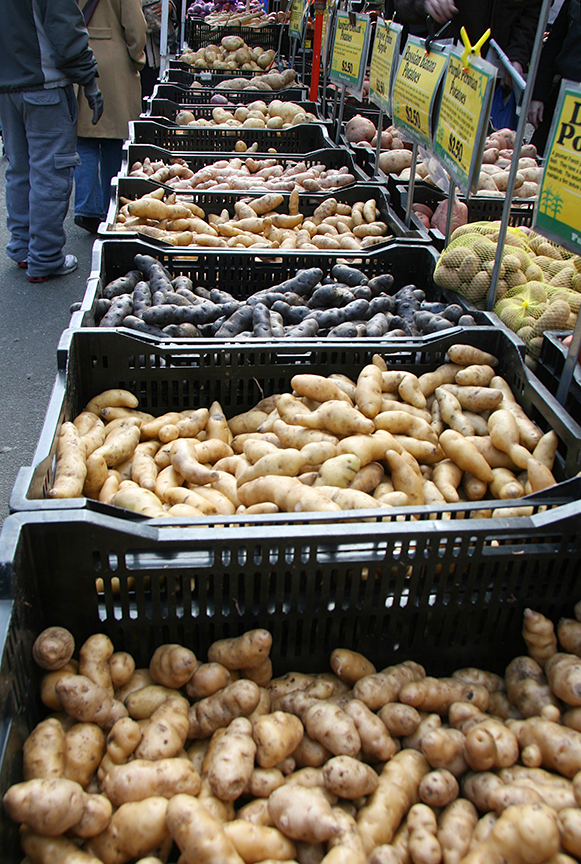
    Here we have the need for differentiation rearing its head again. Heirloom vegetables have been around for eons, but there has been no real need to promote them until the marketplace became very crowded with competing products. I wrote about the consumer and vendor sides of this in Where’s the Special and Claims and Hooks.

    Last year, I was introduced for the first time to heirloom tomatoes and was impressed (see here). On a recent trip to the Union Square Greenmarket, I ran across this array of heirloom potatoes. I had never really considered a world of heirloom vegetables beyond tomatoes, but there are many: beans, corn, cucumbers, lettuce, spinach, radish, melons, potatoes, okra, peppers, peas, squash, pumpkins, squash, tomatoes, and watermelons.

    As with any heirloom vegetable, there are many cultivars. A number of them can be seen in the photo with names like Purple Peruvian, Russian Banana, Rose Finn, LaRatte, etc.
    I have not tried any of these, but I plan to. With the plethora of food and product options out there, I think it only makes sense to judge on merit and on a case-by-case basis – some trends are great, while others are just a marketing spin.

    Regarding the title of this posting: It once occurred to me that there was something quite curious about potatoes and tomatoes; they only had each other as good word rhymes and they were also both members of the nightshade family (plant family Solanaceae which includes potato, tomato, peppers, eggplant, and tobacco. It also includes some poisonous plants). At one time, many years ago, a friend who was into Macrobiotics told me that the reason they avoid nightshades is because they are extremely yin. Many years later, a friend told me that the reason her mother, who had arthritis, avoided nightshades was because the alkaloids (primarily solanine) aggravate the condition. However, I’m still intrigued about the connections via rhyme and reason…


  • Seven Deadly Sins

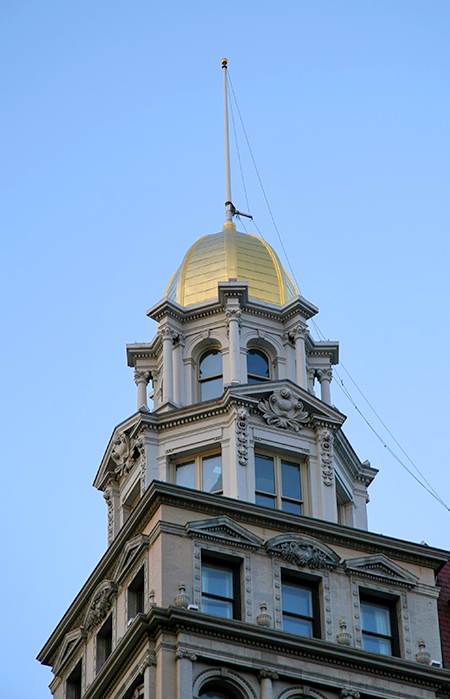
    New York City is an ideal place to commit any or all of the seven deadly sins – temptation looms around every corner. In learning about this cupola and its conversion to residential use, I have to admit that I have committed at least one: envy (which I have been guilty of before).

    This building’s rooftop dome is one spot where it would be easy to commit all seven sins in one place (perhaps with the exception of sloth – I can’t imagine the occupants being particularly slothful. Perhaps if a rich child inherits the place.)
    There are many of these magnificent, grand Beaux-Arts buildings around town with cupolas, and there is a growing trend to develop and occupy the small handful of these domes available. See my posting here on the Police Building, a dramatic structure with an enormous dome (also converted to residential use).

    The photo is of the two-story, octagonal, gold-leaf cupola atop the Sohmer Piano Building at 170 Fifth Avenue in the Flatiron/Chelsea District. Designed by Robert Maynicke and built in 1896 by developer Henry Korn, the 13-story landmark Beaux-Arts building was once a piano showroom. After residential conversion, the cupola was was purchased in 2001 by Gregory C. Carr, former chairman of Prodigy.

    In reviewing the seven deadly sins, it occurred to me that the optimal way to commit them would be to split them up – some before and some after acquisition of a dome home. Before, we have Envy and Wrath. After hitting the Lotto and buying said property, one can envision a den of sin for indulgence in the pursuits of Pride, Gluttony, Lust, and at the end of a “hard” day, Sloth. That leaves Greed, a sin easily committed anytime – before, after, or throughout. Your choice 🙂

    NOTE: For your reference, the seven deadly sins in Latin are:
    Luxuria (Lust), Gula (Gluttony), Avaritia (Greed), Acedia (Sloth), Ira (Wrath), Invidia (Envy), Superbia (Pride). Each sin has an opposite among the seven holy virtues; in parallel order, they are chastity, abstinence, temperance, diligence, patience, kindness, and humility.


  • Pillow Fight

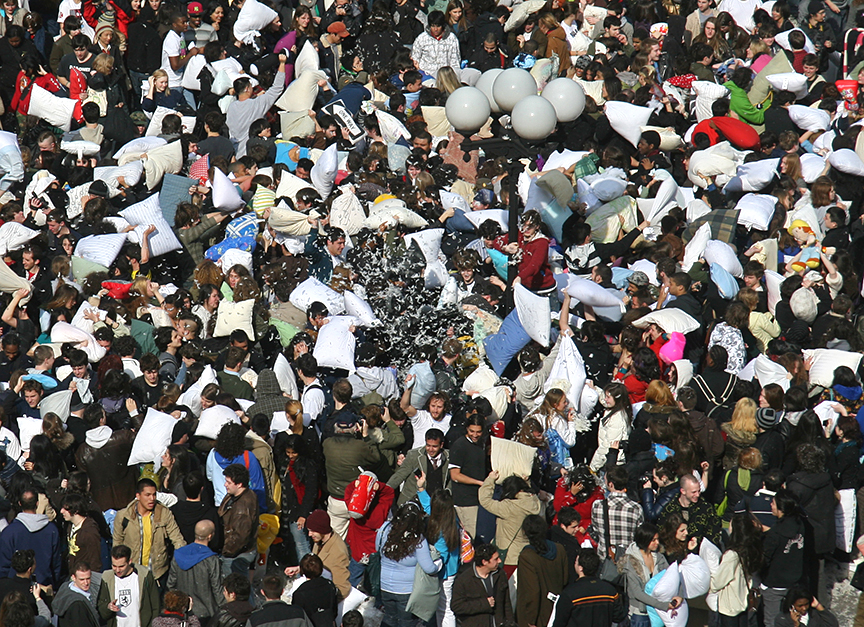
    At first, I noticed tiny white lint-like material on people’s coats and in the air. As I strolled south through Union Square, coats were more heavily covered in what turned out to be small white feathers. It was clear that something serious was afoot, and soon the source was revealed: a massive pillow fight. Pillows of all colors were flailing about, with the pavement deep in feathers and stuffing. More photos here.

    But this was more than just a pillow fight. Saturday, March 22, 2008, was New York City’s participation in the International Pillow Fight Day, organized by newmindspace. Newmindpace, founded by Toronto art students Kevin Bracken and Lori Kufner in 2005, organizes free, monthly events in cities throughout North America (bubble battle NYC, capture the flag, light saber battle…).

    There may not be an overarching reason for this pillow fight, but there was plenty behind its origin. The annual event appears to have evolved from the pillow fight flash mob, although the official website warns: “We must begin with a simple request: please do not call your pillow fight a “flash mob”. Massive pillow fights predate flash mobs by at least a decade, and calling it a “flash mob” cheapens your event: it brings to mind images of anonymous, mindless zombies, assembling in public briefly to bewilder passersby and disperse, having never milked the sweetest benefits of a free public gathering. Pillow fights are not flash mobs.”

    A flash mob is a specific form of smart mob, a group of people who assemble suddenly in a public place, do something unusual for a brief period of time, then quickly disperse (the term flash mob derives from flash crowd – a term coined in a 1973 story called Flash Crowd by science fiction writer Larry Niven.) A smart mob is a form of self-structuring social organization through technology-mediated, intelligent, emergent behavior.
    The concept was introduced by Howard Rheingold in his book Smart Mobs: The Power of Many. This was written about in 2002 in a New York Times article by Clive Thompson: The Year in Ideas; Smart Mobs. “In Smart Mobs: The Next Social Revolution (Perseus; 288 pages) he describes how large, geographically dispersed groups connected only by thin threads of communications technology — cell phones, text messaging, two-way pagers, e-mail, websites — can be drawn together at a moment’s notice like schools of fish to perform some collective action.”

    Gnutella networks (like Limewire) are decentralized/anarchic examples of some of the most powerful smart mobs.
    Teenage “thumb tribes” are often cited as the origins of smart mobs, from oyayubizoku in Japanese, which means “clan of the thumbs” or “thumb tribe.” In Tokyo, teenagers would assemble seemingly spontaneously, using text messaging on cell phones to organize.

    In working on this article, I came across the site www.wordspy.com. It is a good source if you would like to learn more about terms such as smart mobs, flash mobs, thumb tribes, flash campaign, flash crowd, crowdsourcing, culture jamming, swarm logic, microblogging, and lifestreaming. If you’re not familiar with microblogging, check out Twitter.

    Note: See the article on the origins of the first Flash Mob in 2003 in Fibreculture .


  • frEAkSTER

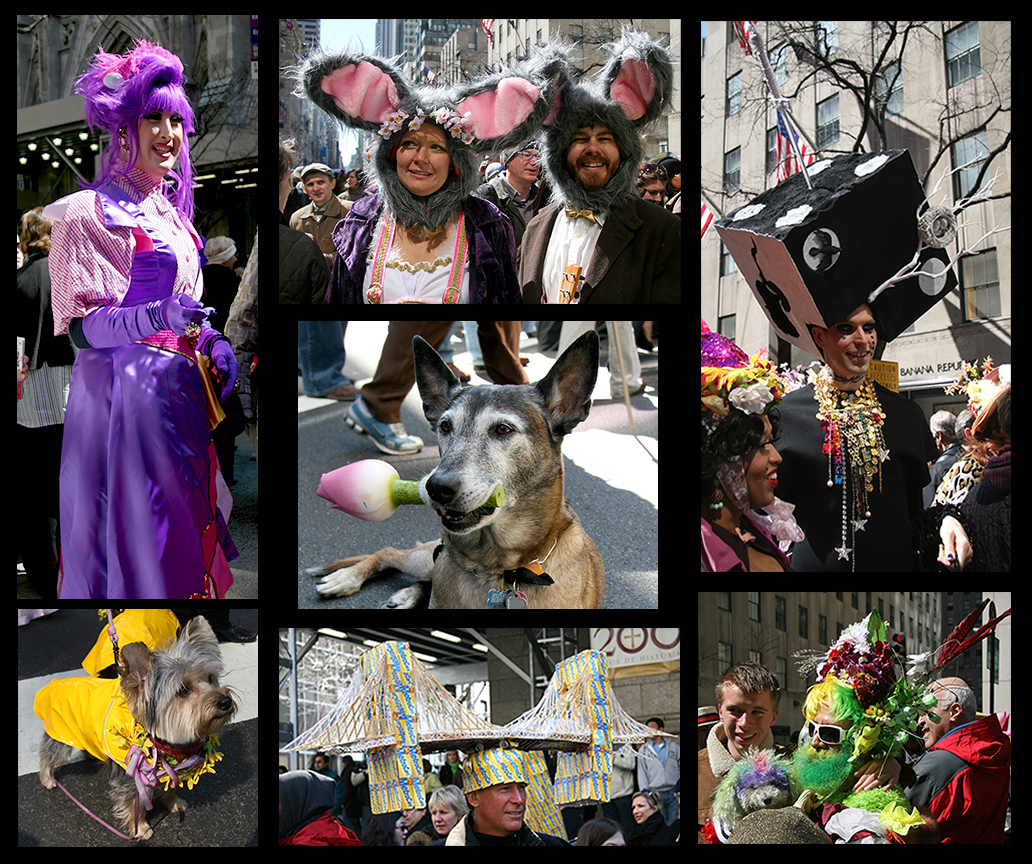
    What do you get when you mix the freakish, unusual, unconventional, and inappropriate with the beautiful, elegant, and traditional Easter wear? Why, a New York-style Easter Parade, of course. If you have any event in this city, you had better expect anyone to show up. There was no shortage of drag queens, transvestites, eccentrics, or the macabre – at various moments, I felt like I was at the Village Halloween Parade. In fact, the person at the lower right in the photo appears regularly at every parade, including the Halloween Parade and the Coney Island Mermaid Parade. It was quite a juxtaposition, with St. Patrick’s Cathedral as backdrop. I’m sure that many of the themes and wardrobes were not sanctioned by the Roman Catholic Church.

    This is my third year at the NYC Easter Parade, and I have featured the more unusual participants in the main photo. For a series of photos from the parade of the beautiful and floral, please go here.
    The parade itself is more of a gathering, with the epicenter at 50th Street in front of St. Patrick’s Cathedral. There are no barricades or precession. It is quite casual and relaxed. The turnout this year appeared to be somewhat smaller, likely due to the chilly (but sunny) weather. Dogs were well represented (also dressed for the occasion), as well as children, families, themed ensembles, and street performers. Here and there you could spot the occasional modest bonnet…

    Related Postings: Easter Parade 2006, Easter Parade 2007, Spring Madness, Peeps, Mermaid Parade 2006, Mermaid Parade 2006 – Part 2, Mermaid Parade 2007, Mermaid Parade 2007 Part 2, Halloween Parade 2006 Preview, Halloween Parade 2006, Halloween Parade 2007 Preview, Halloween Parade 2007, Halloween Parade 2007 Part 2


  • Gotta Get Out

    Many things are different about NYC – some obvious, some not so obvious. One of them is LIFESTYLE, like eating and entertaining. There is an entire population here who eats out every meal, virtually every meal, or most meals. The 17,000 plus restaurants in Manhattan alone make this easy.

    Another huge difference is entertaining. City dwellers typically have substantially less space than suburbanites. Even those with assets are frequently “trapped” by good deals – under market, rent-stabilized apartments. The stratospheric costs of real estate creates an environment of much less mobility; it’s not uncommon for people to stay in places for decades, some only to move if they leave the city entirely.

    So with small places and no outdoor space, soon we have cabin fever and we gotta get OUT – just OUT, anywhere. Plus, what if someone were to call on a nice afternoon and find you IN. Or perhaps ask you tomorrow, what did you do yesterday?

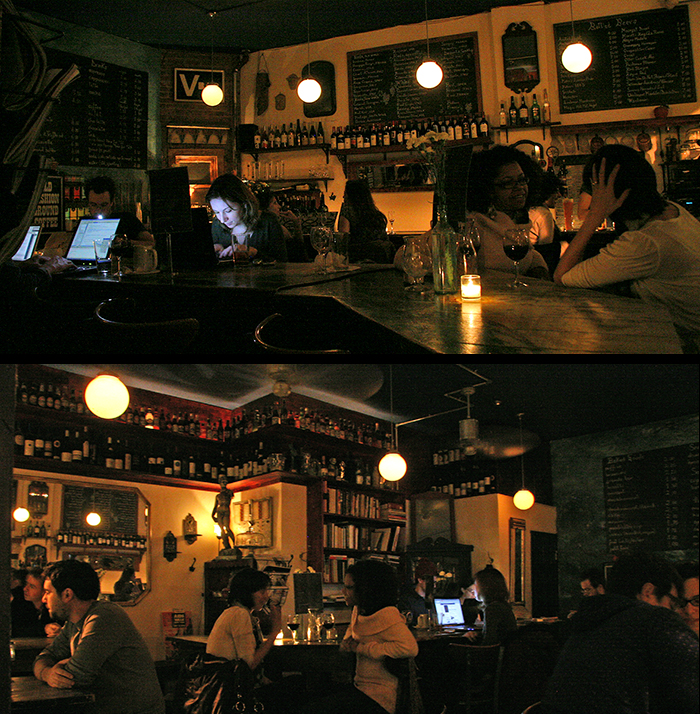
    But where to go? How about a bar, once a den of alcohol and cigarettes with people crying in their beer. Things have changed. With smoking gone, healthier habits (a person can now enter a bar and with no guilt, actually with pride, request a soy chai latte), a new generation, laptops, and WI-FI, many bars are no longer the same. They have become living rooms for many.

    VBar & Cafe, opened in 2000, typifies the new era and is one of the nicest neighborhood bars I have been in. Located at 225 Sullivan Street in the Village, it’s atmospheric, dark, woodsy, and has a nice library, music, free WI-FI, light food, and nice people (however, it can get crowded and noisy at busy times). It is also pleasant by day – nice for a light lunch, some work, socializing, or a place to take a break. Virtually every customer review I have read extols its virtues, with “hidden gem” as the constant refrain. So if you want a great bar/cafe, or perhaps if you just gotta get out, try this hidden gem…


  • Color Brigade

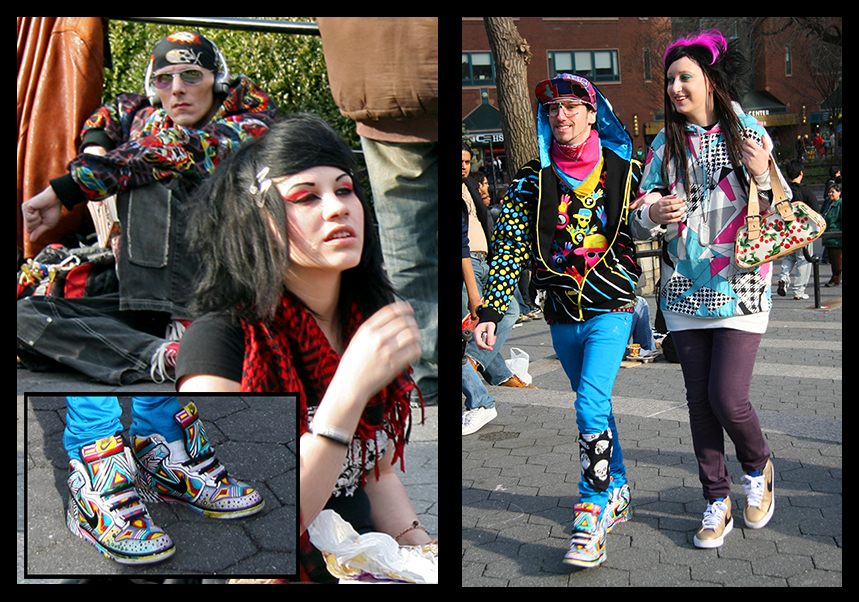
    Today is the first day of spring. I find our collection of individuals and their wears appropriately festive and uplifting. New York City’s populace comes in an extraordinary spectrum of colors, both skin and fabric. I came across this group in Union Square Park. When I arrived, the fellow in blue pants was being interviewed and filmed – it appeared to be an unplanned event. As I watched, the group grew in size – they became quite animated as a new member of the color brigade arrived (woman with the bag). It appeared that the level of self-adornment and outlandish dress was de rigeur; I would be curious to know if their social circle includes anyone dressed more conventionally.

    I have done a number of postings featuring various captures of local color: the outrageous Fashion Forward, People of Color, Narcissism Gone Wild, Snake Charmer, Superheroes, Circus Amok, and the more subdued Wood Nymph

    Of course, nothing tops the parades: Halloween Parade 06, Halloween Parade 07 Part 1, Halloween Parade 07 Part 2, Easter Parade 06, Easter Parade 07, The Dance Parade, and the Hispanic Day Parade

    Note: You have to love those shoes…

    SPRING TIP: This Sunday is the annual Easter Parade, which takes place on Fifth Avenue in the 50s. I have been there two years in a row. The parade is more of a gathering (no barricades or marching). I highly recommend it; it is one of the most underrated events in the city. The event goes way beyond Easter bonnets – there is even some full costuming…


  • 23 Skidoo

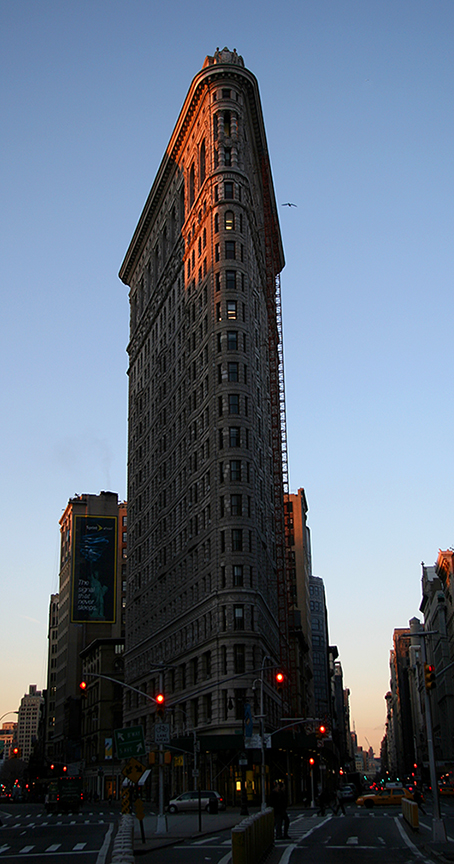
    When you have a structure that is a huge NYC icon, a National Historic Landmark, and is internationally recognizable, you have both a responsibility and a serious challenge. After all, not only has the Flatiron Building been photographed by millions, but the roster also includes some of the country’s most prestigious photographers, such as Alfred Stieglitz, Edward Steichen, and Berenice Abbott. The beautiful photos of Steichen and Stieglitz have done much to immortalize the Flatiron.
    This is why I have waited over two years to do a photo and piece on the Flatiron – it needs to have justice done. The perfect opportunity presented itself last Thursday, the day I photographed Ashley Alexandra Dupre’s residence on 25th Street after the Spitzer scandal.

    Being out before dawn in the neighborhood gave me an opportunity to swing around the corner and capture the building at sunrise on a magnificent, clear day. I felt like a serious photographer that morning, having chosen the conditions and made a pilgrimage at the appropriate hour. With little traffic, I was able to position myself anywhere with ease, including the middle of the streets. See a second photo here.

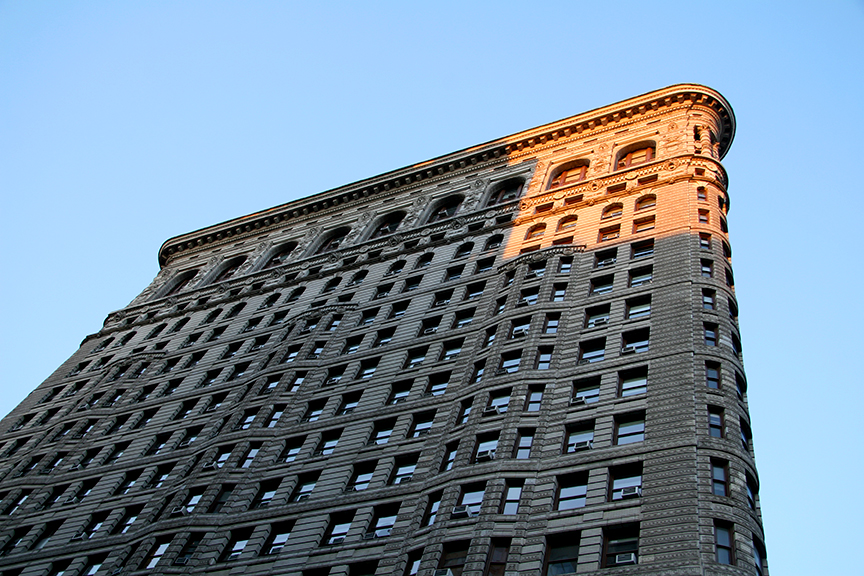
    The building owes its name to the triangular plot of land upon which it sits, which was called the Flatiron block. Contrary to urban mythology, this name predates the building’s construction. It was officially the Fuller Building, but from the beginning, it became popularly known as the Flatiron. One of the city’s oldest existing skyscrapers (22 stories, 285 feet tall), it was built in 1902, designed by Chicago architect Daniel Burnham in the Beaux-Arts style. The exterior is a rusticated limestone with glazed terra-cotta.

    On its own island block, it is circumscribed by 23rd Street, Broadway, Fifth Avenue, and 22nd Street, diagonally across Madison Square Park. The area neighboring it is known as the Flatiron District.

    Trivia Note: One of the competing stories for the origin of the expression “23 skidoo” is due to the wind tunnel effect generated by the siting of the building. In the early 20th century, men would gather on 23rd Street trying to get glimpses of women with their dresses being blown up by gusts of wind. The police would give them the “23 skidoo” to remove them from the area…


  • Shrine to Kitsch

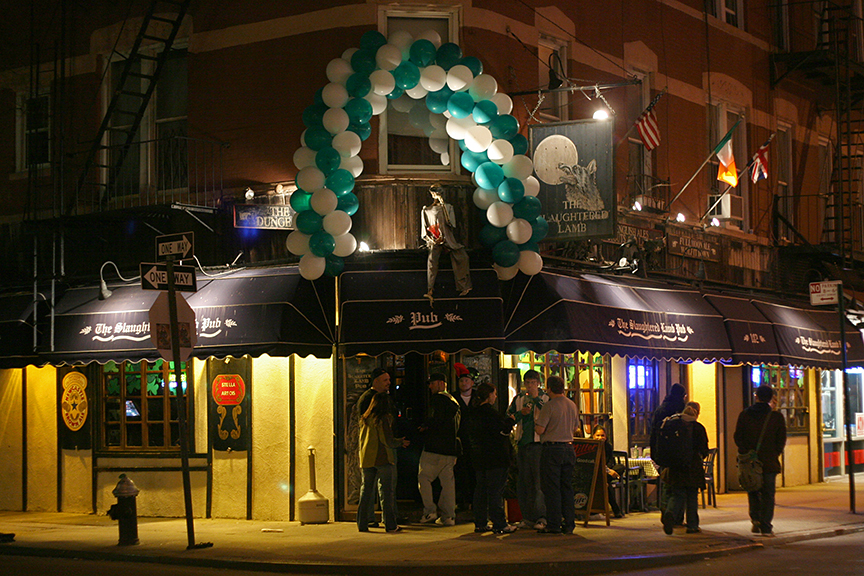
    Although New York City is not thought of as a locale for themed restaurants, we still do have our share, particularly in neighborhoods that see heavy tourist traffic. Uptown, we have places like the Hard Rock Cafe, Planet Hollywood, and the Harley-Davidson Cafe. In the Village, we have Jekyll and Hyde Pub and the Slaughtered Lamb. A horror-themed bar/restaurant is something you would expect in Disney World or Las Vegas, not in Manhattan.

    Being that it was St. Patrick’s Day, I felt some obligation to at least see if anything was blog-worthy. There was the Empire State Building in green, but I decided that some drunken revelry would be be a better capture. So, armed with cameras, my photographer friend and I took a short stroll down West 4th Street, which has a number of bars, restaurants, and adult shops like the Pink Pussy Cat Boutique. The Slaughtered Lamb, like most other bars, was in full swing, sporting the requisite green motif with people spilling into the street. The pub appears to be the haunt of primarily students and tourists. Inside, one can see various horror/gothic displays, such as a glass case with a werewolf biting a woman’s neck. The basement is a dungeon, where pool and darts are played.

    The Slaughtered Lamb was inspired by the British pub of the same name in the film American Werewolf in London. The owner, Donald R. Finley, graduated from Columbia University in 1986 with an MBA before forming Eerie Entertainment and opening his various establishments, which include Jack the Ripper, Jekyll and Hyde Pub, and his uptown extravaganza in a 5-story building, the Jekyll and Hyde Club.

    What’s absolutely amazing about places like this is the range of opinions about them. I spent the morning reading patron reviews that ranged from one to five stars. The most commonly used negatives were kitschy and tacky. Yet many loved the atmosphere, food, decor, and service, while others hated all the same things and saw it as a shrine to kitsch…


  • Second Anniversary

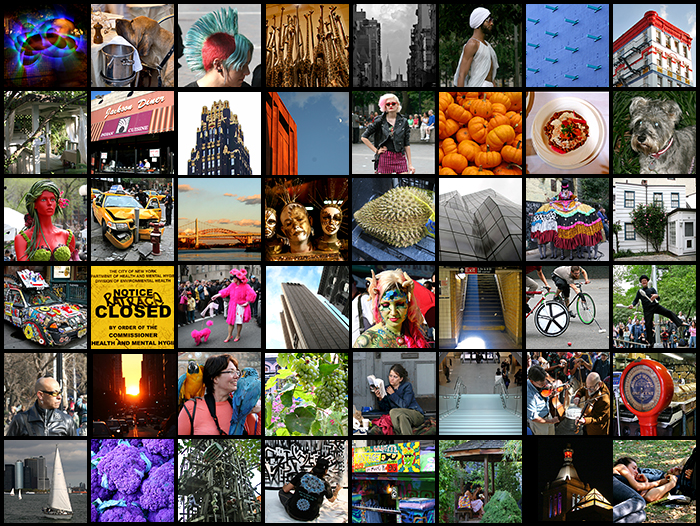
    NAVIGATION NOTE: Each of the 48 images below are linked to the original posting.

    This is the second anniversary of New York Daily Photo – 700 postings and thousands of photos! I have put together a collage of 48 photos from the past year, featuring many favorite postings of mine and of visitors to this site. I have tried to span as wide a spectrum in the photo as I have on this website – street life, parades, architecture, food, vistas, art, nature, the unusual, the hidden, and the whimsical. I appreciate the thousands of visitors and the positive feedback you have given me.


  • Kristen

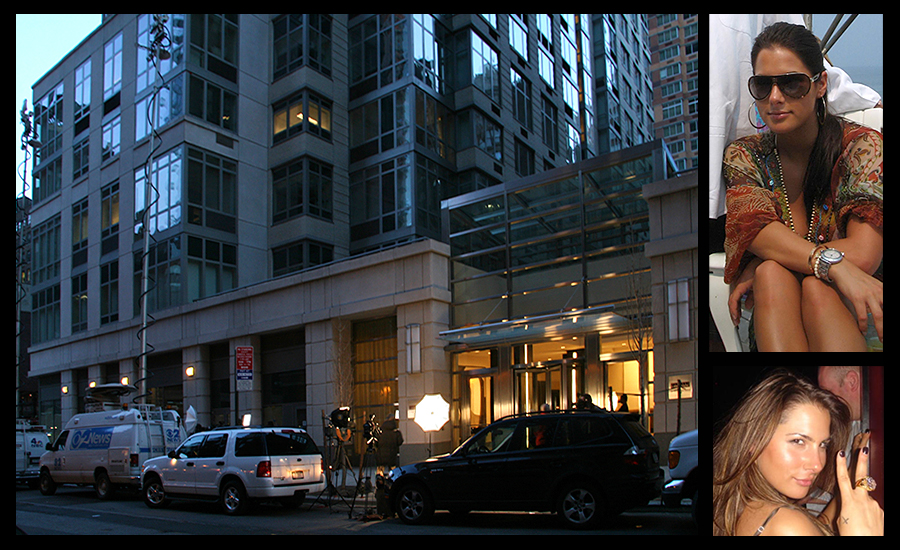
    UPDATE: As more unfolds, the media reports that Kristen, an aspiring singer from New Jersey who moved to NYC to pursue a music career, comes from a family of privilege. She left after wrecking a Porsche, given to her by her stepfather. After millions of hits, her MySpace page has been taken down, but you can see the photos here. Her song, What We Want, has sold hundreds of thousands of copies in the last few days via download.

    Was she worth $1000 per hour and losing the Governorship of New York State? I weighed many options for this posting, but the story of New York State Governor Eliot Spitzer and his liaisons with prostitute Kristen is so huge that it seemed futile to do anything else. This is an international story – front page news in TV, newspapers, and online publications everywhere. It dominates the conversations and minds of many. However, the real fascination is now with Kristen – who is this woman and what does she look like?

    So at 6 AM, armed with a camera in the darkness of early morning, I decided to make a pilgrimage to Kristen’s apartment building on West 25th Street and at least witness the scene. The news crews, cameras, and vehicles were everywhere, having staked out the building for days, hoping to get a glimpse and perhaps a statement from Kristen.

    By now, everyone knows of Spitzer’s trysts with Kristen through the prostitution ring Emperors Club VIP, where he was known as Client 9. The details of the scandal and Kristen were broken by the New York Times.
    The papers and TV are just flooded today with images, factoids, and catch phrases – $1000 per hour, $80,000 spent, Spitzer’s wife and family, the Mayflower Hotel, federal wiretaps, resignation, our new Governor David Paterson, the Mann Act, etc. Wikipedia even has separate entries for the prostitution scandal, Kristen, and the Emperors Club VIP. This is also very much a NYC story, with both the Governor and Kristen having apartments in Manhattan – the Governor on the Upper East Side on Fifth Avenue and Kristen in the Flatiron District.

    Photos from Kristen’s Myspace site were revealed yesterday in the New York Times and are now appearing everywhere. Kristen, neé Ashley R. Youmans, changed her name to Ashley Rae Maika DiPietro in 2006. She now refers to herself as Ashley Alexandra Dupré.

    I have decided to let this posting run through Saturday. I hope that by that time, this entire affair will be more settled and less distracting. Then I will resume new postings.

    NOTE: Sunday is the two-year anniversary of New York Daily Photo. I will have a special posting for this occasion – see you then!


  • A Second Look

    There are many perks in doing a website like this, such as discovering things I never knew and learning new things about those I was familiar with. The most exciting are the big surprises – unexpected stories behind things which appear to be rather ordinary. In a city absolutely saturated with people and things, looking over and overlooking are standard fare.

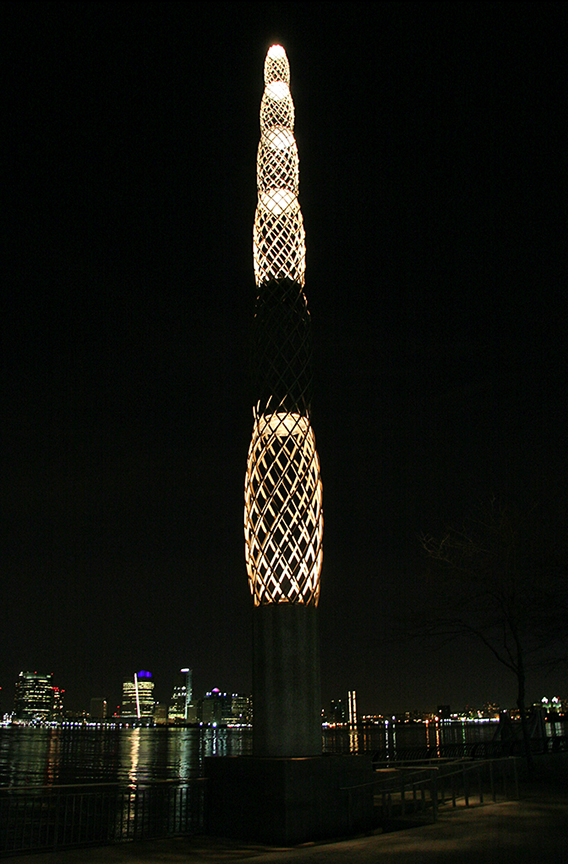
    When I ran across this striking sculptural light form at North Cove Yacht Harbor behind the World Financial Center, I assumed that it was just an above average ornamental light. I thought it would be difficult to identify this sculpture and glean any information about it and its creator. Not at all. This piece and its mate in granite, entitled North Cove Pylons, was created by renowned sculptor Martin Puryear. Read this article in Sculpture Magazine about the work. Puryear has all the makings, training, education, experience, and accolades of a major artist, with feature articles (The New Yorker) a MacArthur grant, and major museum shows such as the 30-year retrospective of his work at the Museum of Modern Art (here is a YouTube video of the exhibit).

    Puryear, who is African American, studied native crafts while serving in the Peace Corps in Sierra Leone, and later studied woodwork and design at the Swedish Royal Academy of Art. On his return to the US, he studied at Yale University, where he received an MFA in sculpture.

    I am finding that works of public art in NYC which I assume are perhaps whimsical, casually placed, and/or created by unknown individuals are often by major artists and go relatively unappreciated.
    So take a second look at the obvious. Or come here and let me do it for you 🙂

    Related Postings: Koons Balloons, Asaf and Yo’ah, Sky Mirror, Sfera con Sfera, Knotted Gun, 11 Spring Street, Sylvette, Night in Bloom, Subway Art, Sink or Swim


  • East of East

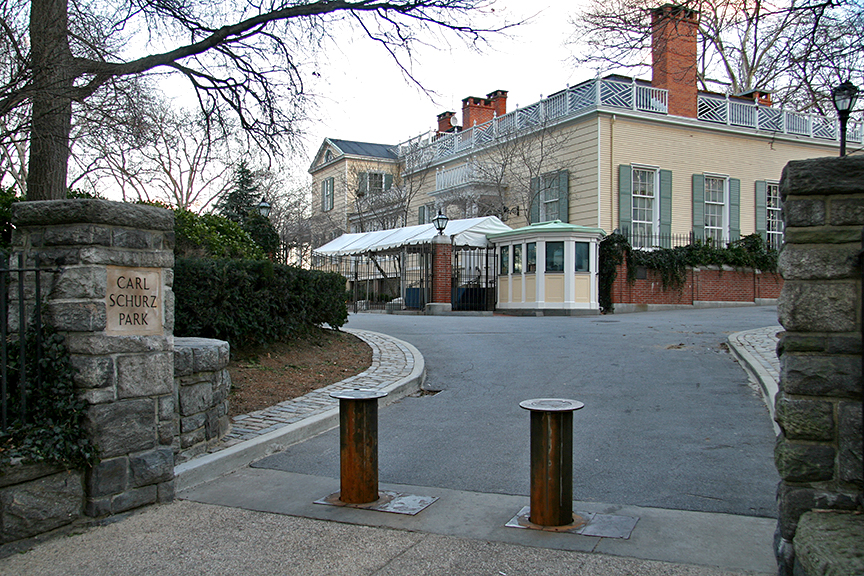
    At one time, Gracie Mansion and Carl Schurz Park were stops on my whirlwind tours of NYC for friends, visitors, and family. I always strove to include places that were both interesting, scenic, and off the beaten path.
    Carl Schurz Park and Gracie Mansion are probably some of the least-visited landmarks in the city; many NYC residents have never been there. One reason is the location – easternmost on the Upper East Side and quite far from the nearest subway (the Lexington Avenue line is one km away). It is certainly a planned destination – there is little of note in the nearby Yorkville neighborhood.

    The elegant Federal-style wood frame dwelling was built in 1799 by a prosperous New York merchant named Archibald Gracie. The country house, overlooking a bend in the East River, was five miles north of the city at the time. A number of historical twists and turns later, the city acquired the property (1896), and in 1942 it became the official residence of the mayor of New York City. Parks Commissioner Robert Moses convinced city authorities to designate it as the official residence of the Mayor, and in 1942, Fiorello H. La Guardia moved in. Read a short history here.

    Mayor Bloomberg has chosen not to live at Gracie Mansion, preferring his residence at 17 E. 79th Street (see here). The mansion is now used for meetings and events. In 2002, the interior and exterior was restored with increased accessibility to the public and city agencies.
    Carl Schurz Park overlooks the East River. One special feature is the esplanade, officially the John Finley Walk, which flanks the park and affords beautiful vistas of the river, Hell’s Gate, Roosevelt Island, Ward’s Island, and several bridges, including the elegant Ward’s Island Bridge, which I recently featured. I was surprised to learn that tours are available by appointment one day per week (Wednesdays). It is a very worthwhile excursion to tour such a unique property, so beautifully sited…

    Geography Note: If you examine a map of Manhattan, you will notice that between 23rd and 53rd Streets, First Avenue is the easternmost north-south thoroughfare. As the island becomes wider heading north, you have the addition of Sutton Place/York Ave. Then, at 79th Street extending to 90th, going further east yet, East End Avenue. Carl Schurz Park, and Gracie Mansion lie east of East End Avenue.


  • dinamic_sidebar 4 none

©2026 New York Daily Photo Entries (RSS) and Comments (RSS)  Raindrops Theme