• Better When

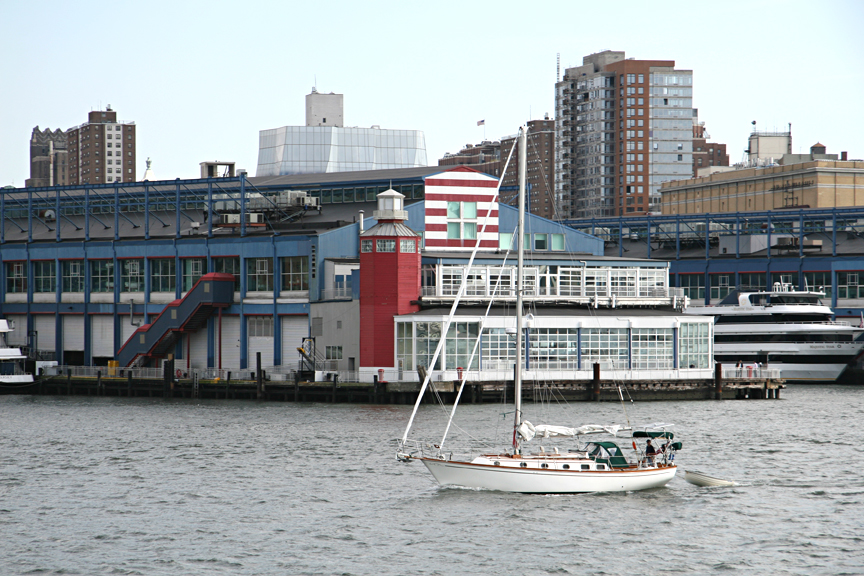
    I’m very surprised that I can find nothing written online or offline about this exquisite little building at 176 MacDougal Street in the Village. It sits at the corner of MacDougal Street and MacDougal Alley (click here). It is unusual in that much of it is unattached on four sides, atypical of small buildings like this in Manhattan. Coupled with its white-painted exterior, the building has a very free feeling to it. The detailing and window boxes gives it a European, perhaps Parisian, flavor. The retail space has gone through a number of incarnations over the years; currently, it is a laundromat. At one time, there was a restaurant called Shakespeare’s here.

    Along 8th Street, there were numerous bookstores; the one at the corner of MacDougal is where Bob Dylan was introduced to Allen Ginsberg in 1964. I was told that Robert Joffrey of the Joffrey Ballet lived atop the building in the photo, but today I have learned that it was next door at 180 MacDougal. Across the street was Capezio, a renowned maker of dance shoes. The Joffrey Ballet company was around the corner on 6th Avenue. The neighborhood had the type of places that gave the Village its Bohemian, artsy, iconoclastic character.

    But all this nostalgia with remembrances, reveries, and reminiscing reminds me of a great article in the New York Times which had a profound impact on me. It was written in 2001 by Jill Eisenstadt, a Brooklynite who recounts her parent’s telling (ad nauseum) of how everything was better back when – seltzer, candy stores, cafeterias, stickball, stoopball, the trolley, mickeys, egg creams, Ebbets field, and the Dodgers. I will leave you with the final few sentences of that article:

    “Years from now, I’ll probably tell my grandchildren about the old neighborhood. How merchants let me run up a tab if I was short on cash, how the pediatrician offered to make a house call in an emergency, how the baker made me promise to bring the babies in for their first cookies, how we all helped each other shovel the one snowfall of 1999. But when they ask what a shovel is, I hope I’ll tell them the truth. That a shovel is a heavy tool. That nostalgia is a heavy comfort. That I don’t really miss Brooklyn way back when. What I miss is being young. That everything is probably a lot better now.”

    Related Postings: Left Bank, New York; MacDougal Alley; Re-Creation; Washington Mews

  • Marilyn

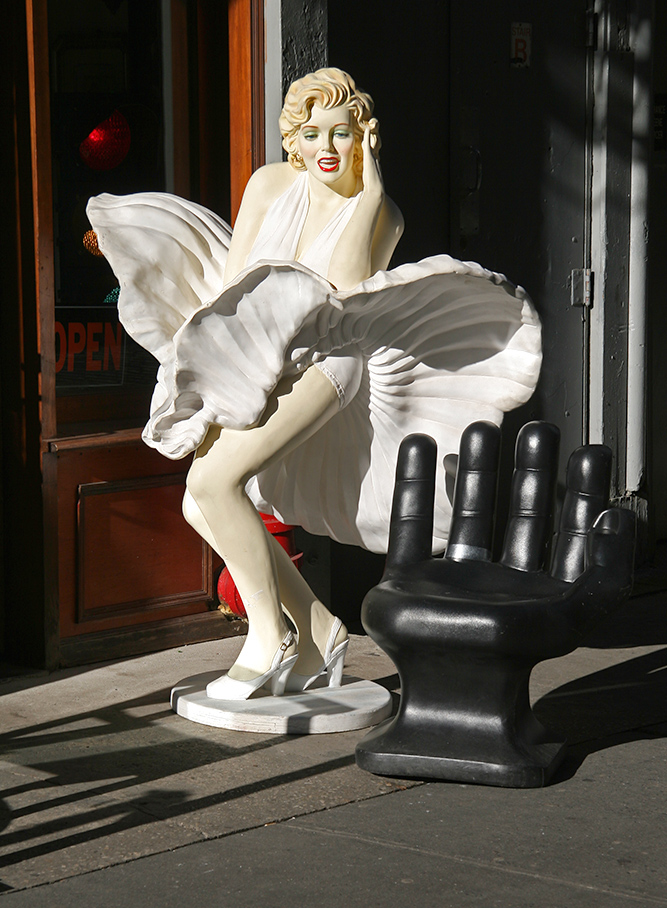
    I can’t imagine anyone not familiar with this iconic image of one the most influential figures in popular culture of the 20th century. This is, of course, Marilyn Monroe with her dress being blown up over a NYC subway grate at the SW corner of Lexington Avenue and 52nd Street in the film The Seven Year Itch. As she feels the cool air wafting upwards, she says, “Isn’t it delicious?”

    There was much controversy over this scene and the dialogue – some original material was cut. In the original footage, Marilyn’s dress was blown up over her waist; this is the image which we are all familiar with and was used in print ads (or in sculptures like the one in the photo). For the film, however, the scene was reshot on a sound stage. The new footage was much tamer, with her dress barely above her knees. The original footage (shot on location) was also deemed unusable due to the enormous background noise by the crowd during filming. The scene even precipitated an argument between Marilyn and her husband at the time, Joe DiMaggio (who was on the set during filming), which reportedly led to their separation and divorce.

    When I grew up, Marilyn Monroe was synonymous with the ultimate in beauty and sexiness. It was also a time where durability was a much larger component of quality and fame. Momentum could build, creating enormous larger than life icons like Elvis, Marilyn, or the Beatles. Many feel that we will never again see this type of thing again. Today, everything feels so temporal and transient. In fact, in many ways, this fleeting from here to the next best thing is something looked on positively. Warhol’s fifteen minutes of fame is starting to look like a long, successful career…

    Photo Note: The photo was taken outside SoHo Treasures at 123 Mercer Street.


  • Foolish Crash

    There are different types of crashes: the type which I photographed and posted on this site on May 4, 2007 (Yellow Fever), and the type you see in the photo – a computer hard drive crash.

    And why was there a crash? Because there are different types of fools: the type seen in the Middle Ages who were extremely clever and entertaining, often employed in the royal court and featured in many Shakespearean plays, and the type who, though computer savvy, when tired and things aren’t working properly, start reconfiguring cables of their computer system with reckless abandon.

    And, of course, there are different consequences to such behavior, some rather benign and others quite dire, like a hard drive crash (made worse by not having made proper backups of ALL their work, losing some things forever).

    Lastly, there are different types of people, and they react variously to such occurrences. There are some who take things in stride and others whom it would be advised not to be around when such things happen. And this is why today, you don’t get a wonderful, insightful photo and story on some fascinating, perhaps obscure, part of our wonderful city, but rather a photo of the inside of my G4 Mac when I was replacing its main drive…

    Photo note: For those of you who find today’s photo uninteresting, trust that you would much prefer this photo to one of your author and the state he was in when this occurred and it became clear that the damage was irreparable 🙂


  • Surly Santas

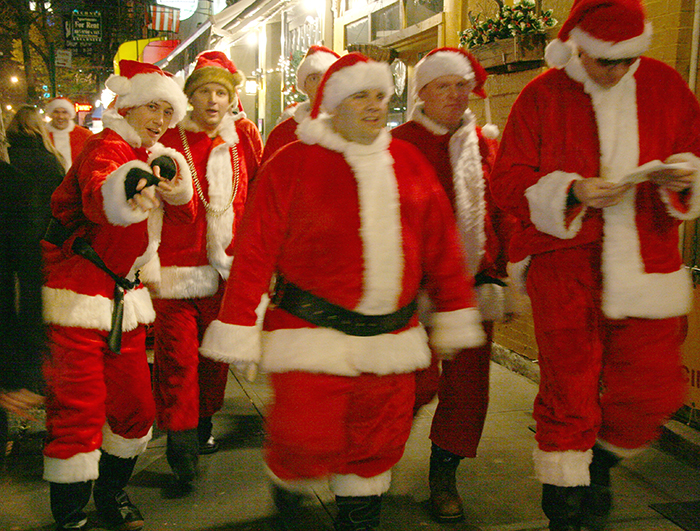
    While walking in the Village with a friend and arriving at the intersection of MacDougal and Bleecker Streets, we were unexpectedly besieged by a gang of Santas. I would say group, however, their demeanor and ensuing conversation with a panhandler gave them more of a rude, frat boys feel than the benevolent, generous spirit we associate with Santa. The conversation between one of the Santas and the panhandler went something like this:

    Panhandler: “Oh good – Santas, Christmas Spirit. Can you spare a quarter?”
    Santa: “Get it together brother.”
    Panhandler: “You get it together!”

    We assumed these guys were in costume and not individuals who actually work as Santas somewhere; that would be a little disheartening. I think one would expect the dialog to be more courteous even coming from someone who is not Santa. Was this Christmas spirit, New York Style, or was this Santa perhaps more progressive in his thinking? That he felt that giving in this type of circumstance was, in the parlance of the modern psychotherapeutic community, being an enabler? Like the old saying, “Give a man a fish, and you feed him for a day. Teach a man to fish, and you feed him for life.”

    In researching this saying, I came across some variations:
    Teach a man to fish and he learns to covet your boat.
    Give a man a fish and he’ll eat for a day. Give a man a fishing rod and he’ll break it in two for firewood – or exchange it for a fish.
    Give a man a fish, and he’ll wonder what you want from him.
    Build a man a fire, and he’s warm for a day. Set a man on fire, and he’s warm for the rest of his life.
    Give a man a crab and it will pinch his fingers. Teach a man to crab and he’ll complain about being pinched.
    Give a man a boil and he’ll just get sore. Teach a man to boil and he’ll be able to make his own tea.
    Give a man a slide and he’ll want a microscope. Teach a man to slide and he’ll want a playground.
    Teach a man to fish, and you introduce another competitor into the overcrowded fishing
    industry. Give a man a fish, and you stimulate demand for your product.
    Give a man a fly and he’ll think you’re an idiot. Teach a man to fly and he’ll end by looking down on you.
    Give a man a fish and he’ll have dinner. Teach a man to fish and he’ll be late for dinner.
    Teach him to fish and he’ll sit in a boat drinking beer all day.

    Credit for these quotes and more humor can be found at the site Halfbakery.com


  • Soup Kiosk

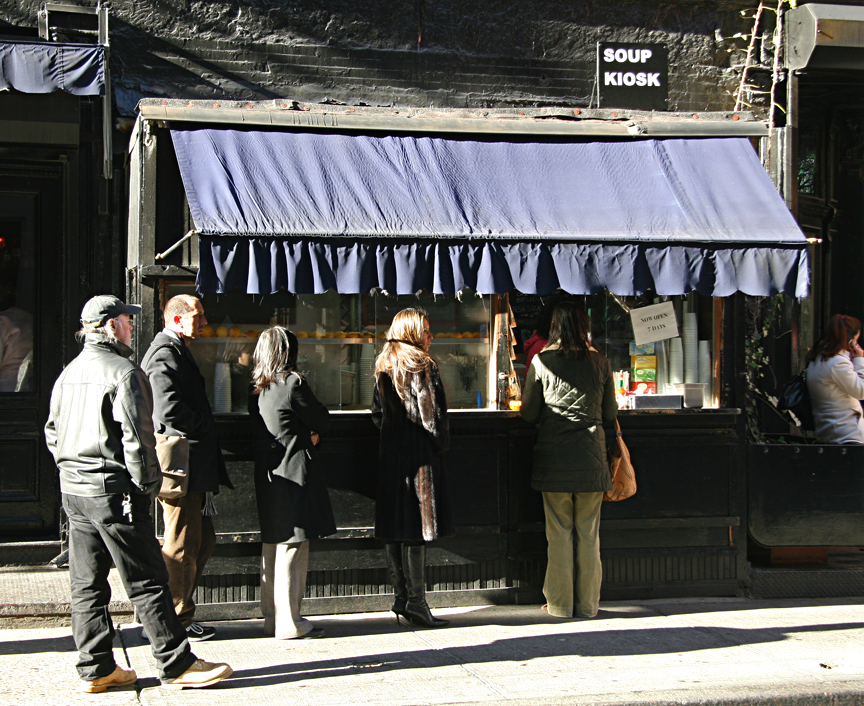
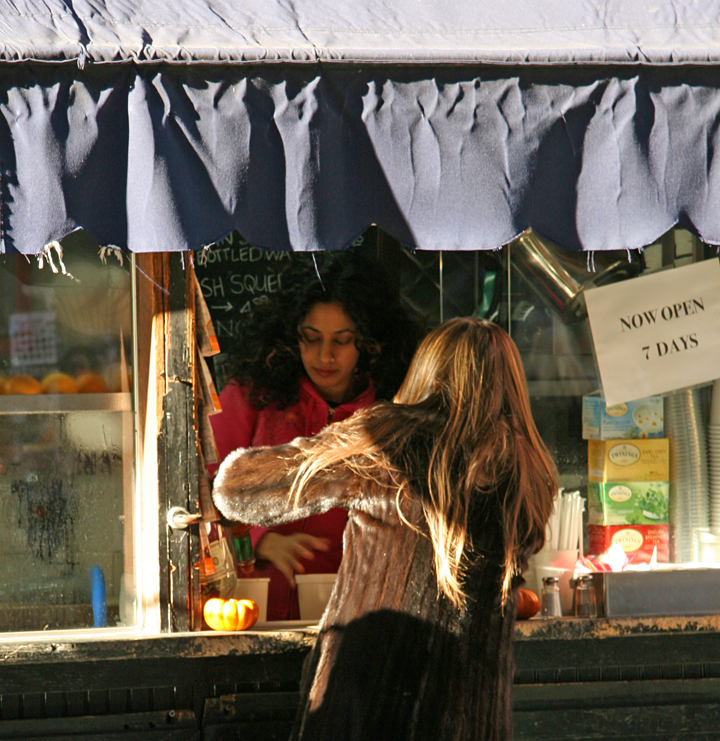
    What’s better than soup on a cold winter’s day? Not much, as you can see by the line at the Soup Kiosk, which adjoins and is associated with the historic Fanelli Cafe at 94 Prince Street in SoHo. As we tire of the same choices for lunch, street food becomes a good choice – fast, inexpensive (relatively), and often fresh, home-cooked, and delicious. My first thoughts when I became acquainted with this place were of the classic Seinfeld skit “The Soup Nazi.” This notion was quickly quelled after sampling the food and pleasant manner of Eunique, who works the kiosk (see here). The kiosk offers a range of several soups, chili (including vegetarian), and beverages.

    Having soup as a meal brings back memories of the Campbell Soup Company slogans “Never Underestimate the Power of Soup” and “Mmmm mmm good.” The power of soup was apparent when even Andy Warhol could not limit the fame of his art piece, Campbell’s Soup Cans, to 15 minutes. When Campbell’s was inducted into the Marketing Hall of Fame in 1994, the judges said, “Campbell’s has transcended the soup category to become a symbol of American hearth, home and values.” I think these associations are a credit to soup itself as much as it is to Campbell’s, although they are to be applauded for promoting a healthy meal concept.

    Apparently in the early years of the company’s history, soup was not popular here in the USA as it was in Europe. I know it’s heretical to drag in Campbell’s canned, condensed soups in a piece about the merits of fresh, homemade soup. But just thinking about soup conjures up a whole world of memories – comfort food nonpareil, a wholesome and for many, a simpler life…

    See these related postings: Speedy Gonzalez, NY Dosas


  • The Woolworth Building

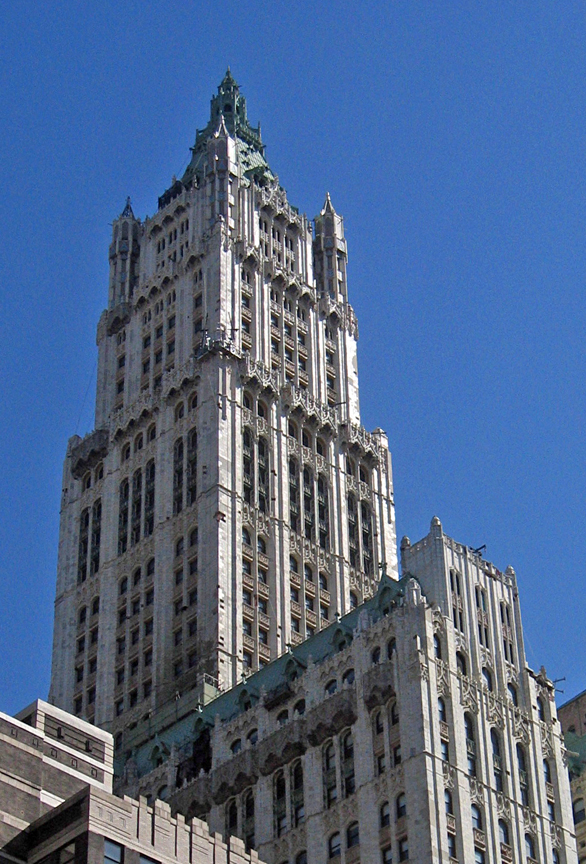
    The Woolworth Building, at 233 Broadway, is a personal favorite of mine – my business was located down the block on Park Place for 10 years, so I saw this building daily. The Gothic structure, with spires, arches, flying buttresses, and gargoyles, was designed by Cass Gilbert and built in 1913 for $13 million in cash by Frank Woolworth as his corporate headquarters (until their bankruptcy in 1997) for his chain of five and dime stores. At 792 feet, it was the tallest building in the world and remained so until 1930.

    One of the stellar attractions is the spectacular lobby. I have visited numerous times. However, as I have written several times before, here we have another case of heavily restricted access to a landmark building subsequent to 9/11. Prior to that event, guards were accustomed to visitors and welcomed them. At night, when it was quiet and the guards were not busy, showing interest in the lobby resulted in what amounted to a free personal tour, with a history of the construction of the building and explanation of the architectural and sculptural elements. They were always eager to point out the all the features of the magnificent vaulted lobby with blue and gold glass mosaics, murals, marble, and the sculptured caricatures, including Woolworth counting his nickels and dimes, Cass Gilbert holding a model of the building, and the structural engineer Gunvald Aus. Its exterior is also outstanding with limestone, granite, terra-cotta, and its signature pyramidal copper spire, now with a green patina.

    When first built, it was referred to as a Cathedral of Commerce, an appropriate description for this National Historic Landmark. Today, it is impossible to access the interior unless you have specific business in the building. So for now, I only have photos of the exterior to share with you…


  • Chelsea Piers

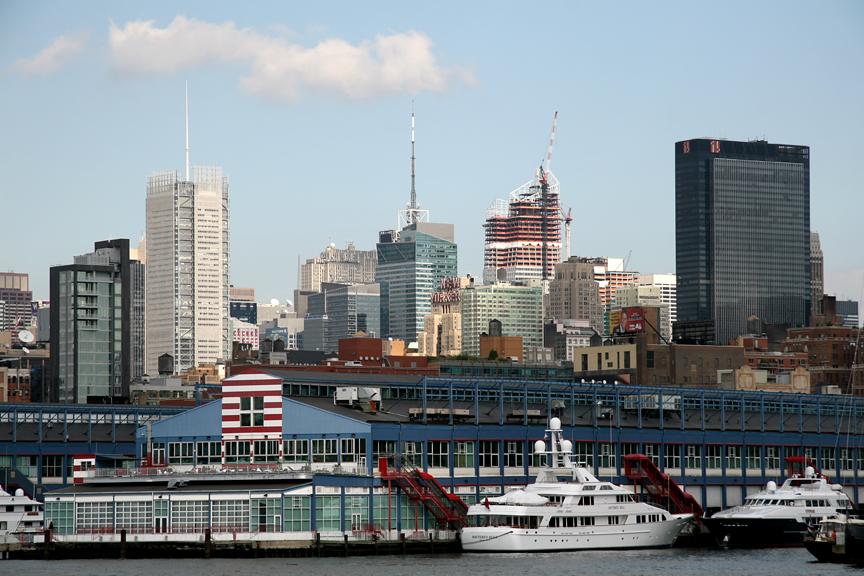
    The Chelsea Piers have a long history with many twists and turns, much of it paralleling the other NYC waterfront piers which saw their heyday, a sordid decline, and then an unexpected and greatly welcomed renaissance. In the early 20th century, the Chelsea Piers saw all of the trans-Atlantic luxury cruise liners, including the Titanic and Lusitania. In 1935, the luxury liner piers moved north and the Chelsea Piers became a cargo terminal. In the 1980s, there were plans for a new West Side Highway (Westway), which called for demolition of the piers. The Westway project never went through, and the piers survived. The new piers, designed by Warren and Wetmore (which also designed Grand Central Terminal), began construction in 1994.

    The huge, 28-acre complex of 4 piers between 17th and 23rd Streets in Manhattan are a sports-oriented facility with several venues: The Field House – soccer, basketball, gymnastics, baseball, dance and rock climbing; Golf Club – a four-tiered, year-round outdoor driving range; Sky Rink – twin indoor ice-skating rinks with hockey, general & figure skating, school; Sports Center Health Club; The Spa; a Bowling center; and the BlueStreak Sports Training facility. Click here for the Chelsea Piers website. There is onsite parking and restaurants. A nice plus is that the center is located along the Hudson River Greenway…

    Photo Note: the photo shows the vista looking towards midtown. Click here for a second photo with a view of Gehry’s IAC building.


  • Brutal

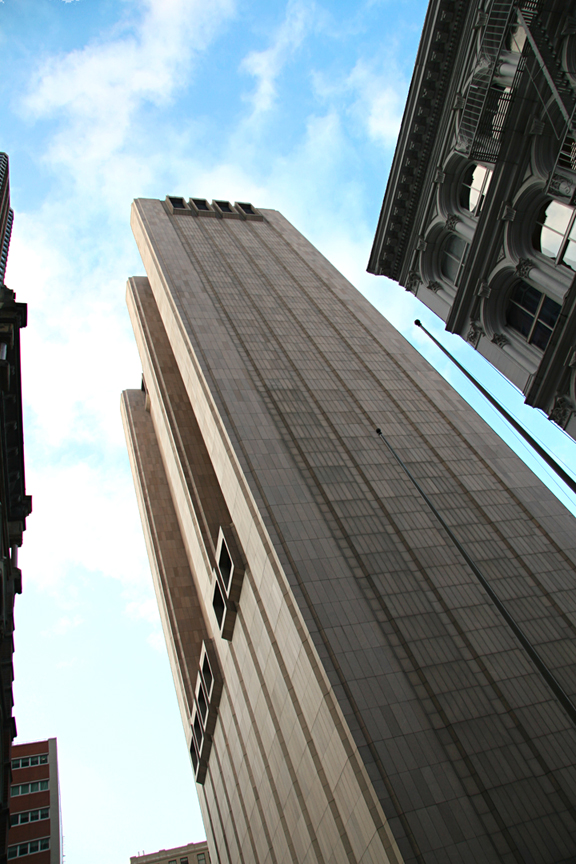
    Even the plain becomes interesting when it is extremely plain, and nothing beats the AT&T Long Lines Building at 33 Thomas Street for a bleak, monolithic structure. 550 feet with no windows. I have been fascinated by this building for over 20 years but never made a serious effort to learn anything about it until writing this article, when I decided to get to the bottom of it all. What’s going on in there? Plenty, just no people.

    The structure was designed by John Carl Warnecke and completed in 1974 as a telephone switching hub for AT&T, now used primarily by AT&T and Verizon. The floors are 18 feet tall – nearly double the height of a standard commercial building – so technically the building is only 29 stories. The exterior walls are made from concrete panels clad with pink-colored Swedish granite. The vertical protrusions are shafts which house the elevators, stairs, and ductwork. There are large, rectangular ventilation holes at the 10th and 29th floors. It is considered one of the most secure buildings in the US and was designed to resist a nuclear blast and be self-sufficient for up to two weeks.

    My understanding is that the building is essentially humanless, barring the occasional technician. On September 17, 1991, human error and power equipment failure resulted in the disabling of the central office switch. Over 5 million calls were blocked, and FAA phone lines were also interrupted, disrupting air traffic control to 398 airports serving most of the northeastern US. In researching for this posting, I saw the architectural style of this building categorized as both International Style II and Brutalism (French béton brut, or “raw concrete”).

    Don’t try to get any consensus as to its appearance – even critics are divided. Architecture critics for the NY Times, Paul Goldberger and Herbert Muschamp, both seem to like it. Goldberger says, “This is the only one of the several windowless equipment buildings the phone company has built that makes any sense architecturally – it is sheathed in a warm and handsome granite, and though it looks more like a mammoth piece of equipment than a conventional building, it, in fact, blends into its surroundings more gracefully than does any other skyscraper in this area.” Muschamp says, “The pink granite tower is forbidding, and it obstructs the river view I would enjoy if the building were demolished. But who cares? Obstructed views are part of what makes New York democratic. And Warnecke’s building starkly frames my view of midtown as if it were a sheer Grand Canyon wall: a neat special effect.” On the other hand, in one survey of architects and critics for the Ugliest Buildings in New York City, the building received the distinction of coming in 6th place…


  • Anomalies

    Global Warming Controversy has its own article in Wikipedia, with separate articles on Global Warming, Attribution of recent climate change, Politics of global warming, Climate change denial, Scientific opinion on climate change, Adaptation to global warming, Effects of global warming, Mitigation of global warming, Kyoto Protocol, Economics of global warming, Low-carbon economy, Global climate model, Ocean acidification, Global dimming, and Ozone depletion.
    The current article on the controversy is dozens of pages long and has 216 references. The subject is overwhelming – I did not have time to make a career of the subject or distill even a reasonable overview of global warming. I have gleaned that at this point, although there still may be debate on causes and effects, most scientists do agree that there is a warming, surprisingly of only 1.33 degrees F over the last 100 years (of course, it is known that even a small sustained change will cause problems.)

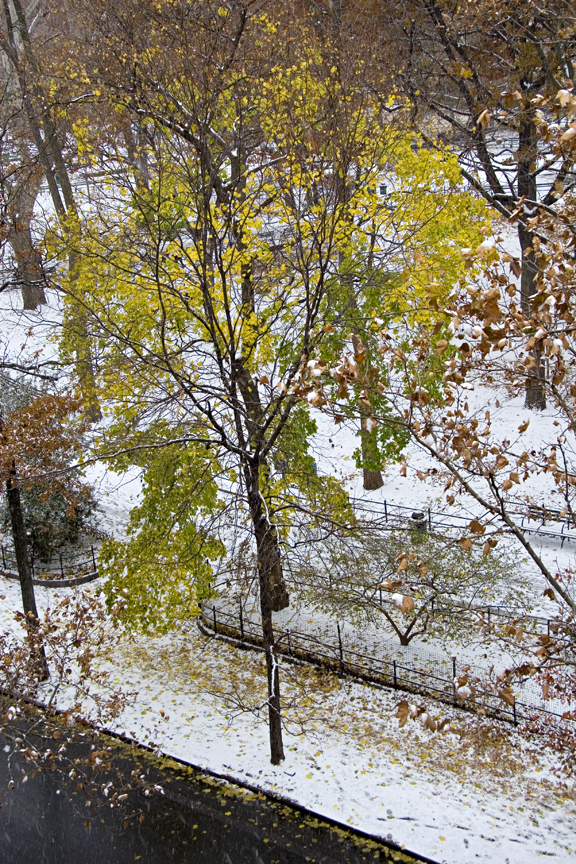
    I recall winters here in the city with cold snaps in the single digits lasting for days, but my sense that there has been a very substantial increase in temperatures must be due to selective memory. I’m assured that one must account for natural variations with anomalies and aberrations. This first snow on Sunday seemed peculiar – everywhere I went, I saw a slurry of green leaves and snow mixed together on the sidewalks. And I thought that this vista of a tree with bright yellow leaves in December with snow falling was also unusual, but maybe it’s usually this way or just an anomaly…


  • Signature

    Apart from this photoblog, I also do a moderate amount of photography for my business, shooting all of the various products we manufacture and sell. We were very pleased with the dramatic variety of effects we got recently with a shoot, so I thought I would share five of the photos (out of 35). I revealed the unique nature of my business in a previous post (click here and note the 4th comment). This is also how I have the privilege of knowing high-wire artist and juggler Philippe Petit, who has been featured twice (see other related postings below).

    LEDs have become cheaper and brighter over the years, which has resulted in the proliferation of all types of illuminated items in a myriad of product categories, including toys, shoes, clothing, ornaments, etc. Juggling is no different, and the performance aspect is really driving the interest in illuminated products. Companies like mine are endeavoring to offer everything possible in an illuminated version. People just love illuminated props, and the simplest routines elicit oohs and aahs from an audience – jugglers get a lot of mileage from their skill set when using illuminated juggling equipment.

    The photos are of me juggling three clubs in the dark with our color changing model. In this LED variant, the hue slowly cycles through the color spectrum. So, in a figurative and literal sense, this really is my signature…

    Related Postings: Artiste Extraordinaire, Spinning, Fire and Drums, Spiegelworld, Titans


  • Our Lady of Pompei

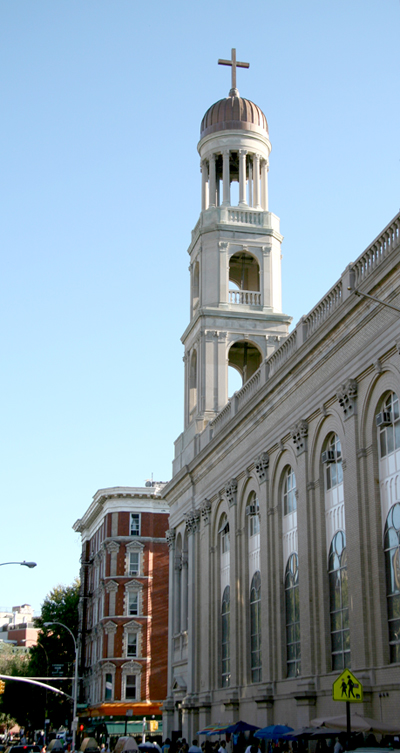
    This was looking like an average story of a nice-looking church. Until I read that this church was named after the Basilica of Our Lady of the Most Holy Rosary of Pompeii in Italy, which was founded by a former Satanist – Bartolo Longo (1841-1926). Read his story here. He was later beatified on October 26, 1980 by Pope John Paul II, who referred to him as the “Apostle of the Rosary.”

    The church in the photo (built in 1928), Our Lady of Pompeii, is located on the corner of Carmine and Bleecker Streets in the Village. It has very high visibility from nearby 6th Avenue and is a landmark in the area. I have shown it as viewed from behind (to the west) along Bleecker Street. Its construction was organized by Father Antonio Demo (born 1870 in Lazzaretto di Bassano, Italy, died in 1936 in New York City) to replace a former church where he was pastor.

    In an interesting side note, the former church is where St. Frances Xavier Cambrini worshipped and taught – she was the first American citizen to be canonised. The church was built in 1928 in Italian-Renaissance style with an interior graced by marble columns, frescoes, and murals. This area of the South Village still shows signs and remnants of its Italian heritage – the shops along Bleecker Street between 6th and 7th Avenues are a good example. Between 1880 and 1920, more than 50,000 Italian immigrants settled here. Father Demo’s legacy continued with the naming of the triangular plot across the street from the church: Father Demo Square


  • Danger and Caution

    The rules to Capture the Flag are incredibly simple (in theory): the goal is to capture the opponent’s flag, located at their team’s base, and bring it back to your team’s base. Yet to watch this game played in the city is to witness something bordering an anarchistic mêlée. Some players are running everywhere (nearly crashing into onlookers), and others are standing for no reason I can fathom. Some are chatting with the enemy, sometimes in jail, boundaries seem ill-defined or not at all, and the score is not announced.

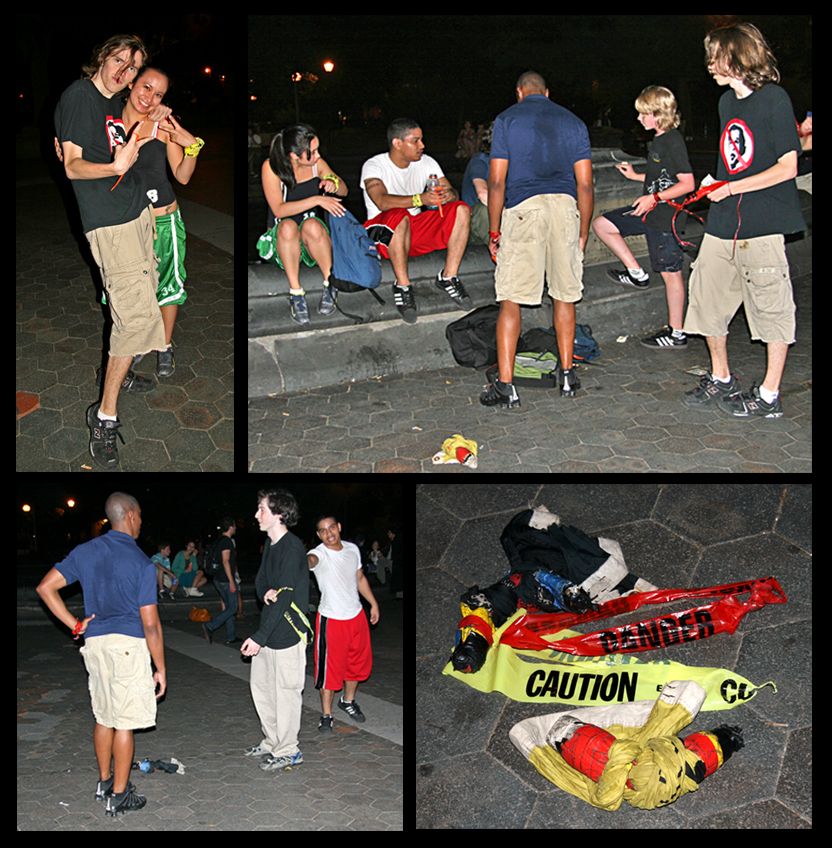
    The members of the two teams – Danger and Caution – wear identifying plastic strips around their wrists. The flags are knotted rags, as seen in the photo. Thinking this was a new geek creation unique to the city, I was surprised to learn that this is an old game – I actually found reference to it in a Boy Scout manual from 1947 and that Robert Kennedy Jr. had been known to have 100 person games at his property in Mt. Kisco, NY. There are versions which incorporate areas of neighborhoods in Brooklyn.

    The photos show the game as played by NYU students in the evenings in Washington Square Park. Capture the flag is part of a trend in urban gaming, with others like Pacmanhattan and manhunt. I’ve discussed the game with a professor at NYU (with a PhD in physics) who frequents the park, has observed the game, and also is confused while watching. He agrees that it is only fully understandable by the young and wild spirited 🙂

    Photo Note: The photos are from from August 30, 2007. I intended to coordinate with the group of players and do a more extensive shooting with a flash system, but it never happened.


  • Housing Stock

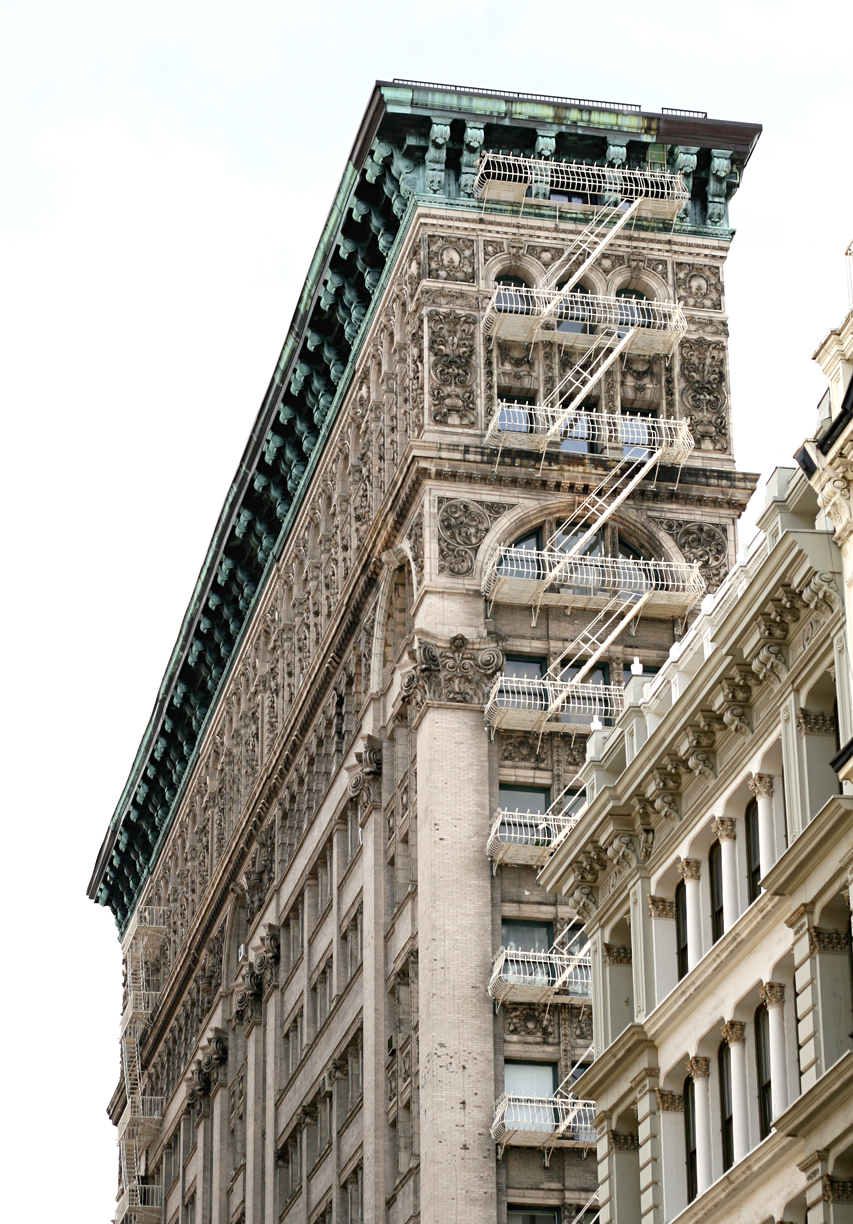
    This magnificent building at 451 Broome Street in the SoHo Historic District caught the eyes of a couple of photographer friends and myself on a recent walk. I could find no details on this building specifically. Amazing, since in another locale, something of this quality would be worthy of group tours. But SoHo is packed with quality structures, so a building has to really stand out in an extraordinary way architecturally or historically to make itself known.

    SoHo is bounded by Houston Street to the north, Lafayette Street to the east, Canal Street to the south, and Varick Street to the west. Like much of the city in the 1960s-70s, this industrial neighborhood was in decline and was discovered and populated by artists who found upper story floors (which became known as lofts) with their enormous spaces, large windows, and cheap rents to be very desirable. Most of the use of these spaces for living was technically illegal, however, the state of the neighborhood caused these violations to be overlooked.

    SoHo has also been known as the Cast Iron District – the ornate facades of many of these 19th-century buildings are done in cast iron. Like Tribeca and DUMBO, the quality of housing stock ultimately determines the degree of gentrification a place will attain. We see this all over the world with places like the Marais in Paris or Providence, Rhode Island, which is seeing a renaissance, driven by its old factory buildings. Contrast this with neighborhoods like Williamsburg, Brooklyn, or the East Village – they certainly have been gentrified, but I do not believe you will ever see these neighborhoods approach the level of SoHo, with Madison and Fifth Avenue retailers such as Louis Vuitton, Cartier, and Coach. Here, we had a centrally located neighborhood with beautiful architecture and cobbled streets. It was just a matter of time…

    Related postings: Bleecker Tower, Scholastic Building, Bayard Condict, The Wall, Jersey Girls, Stephanie, Hoopmobile, Gourmet Garage, Alidoro


  • First Oasis Restaurant

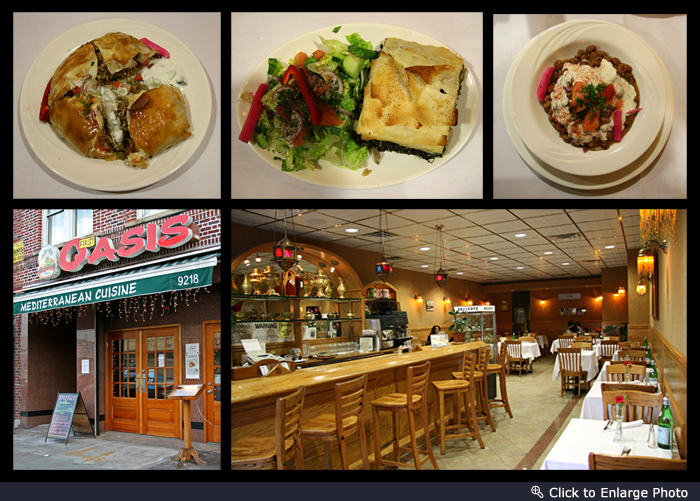
    On February 19, 2007, I posted on one of my favorite dishes – Ful Mudammas – made by First Oasis Restaurant at 9218 Fourth Avenue in Bay Ridge, Brooklyn, where I travel to get it. The owner/chef, Said Albahari from Syria, previously owned Magic Carpet Restaurant on Carmine Street in Manhattan for over 20 years, where I was a regular customer from its early days. At the time, I was a strict vegetarian. Middle Eastern and Indian cuisine quickly became favorites; both have some extremely good vegetable dishes. I have generally found vegetarian fare from an ethnic restaurant to be much tastier than meals from vegetarian restaurants, where the food is driven more by the dietary restrictions. Ethnic restaurants, on the other hand, have a real culinary tradition behind them, with a creative use of spices, condiments, and unique preparations.

    However, even in NYC, authentic Middle Eastern food is not that common. The cuisine is perhaps a little too exotic for the average American palate. A perusal of Middle Eastern restaurant listings shows mostly falafel/shawarma type places. Many of the better places are found in the outer boroughs, where there are neighborhoods with concentrations of various ethnic groups and their attendant restaurants. One of my favorite meals is Ouzi, shown in the photo upper left. This is absolutely delicious, with raisins, nuts, vegetables, and rice in a phylo pastry dough, served with a yogurt sauce (meat and vegetarian versions are available). Moustache in Manhattan also serves ouzi.

    First Oasis is very authentic, with an extensive menu of Middle Eastern specialties such as kebabs, mussaka, kebbeh, labneh, hummus, baba ghanuj, stuffed grape leaves, tabuleh, seafood, traditional desserts (halavah, baloza, baklawa, ladyfinger), and beverages (tamarind). The owner takes his cooking seriously – dishes are made from scratch. The food is excellent and inexpensive. Highly recommended…

    Interesting Note: I discussed the dearth of Ouzi and Ful with the chef from Olive Tree Cafe. His feeling was that customers were too unfamiliar with these dishes and would not order them. In the case of Ful, the cooks made in regularly for themselves in the kitchen.

    Interesting Anecdote: During one of my last meals I had in Magic Carpet in the Village before it closed, I was accompanied by Sarah Jessica Parker (of Sex in the City fame) at a nearby table. According to the staff, she was a regular, getting deliveries frequently (she lived around the corner). One of her last comments during the meal was enthusiastic: “This food is delicious.”

    Photo Note: At the top from left to right: Vegetable Ouzi, Spinach Pie, Ful Mudammas.


  • Black Friday 2007

    Today is Black Friday. Everyone knows that the day after Thanksgiving is considered the commencement of the Christmas shopping season and is one of the busiest shopping days of the year. The most common explanation for the origin of the term Black Friday is that it is the start of profitability of many businesses, putting them in the black (an accounting term hearkening back to when accountants used red ink for loss and black for profits). In actuality, many businesses do rely on holiday sales to show a profit for the entire year. An older origin of the term is an implied comparison to stress and chaos of other black days such as Black Tuesday, the day of the 1929 stock market crash.

    It’s remarkable that holiday shopping has taken on such epic proportions – frenetic shoppers fueled by desperate retailers. I once remember hearing a remark that shopping is what Americans do best. So shop ’till you drop 🙂

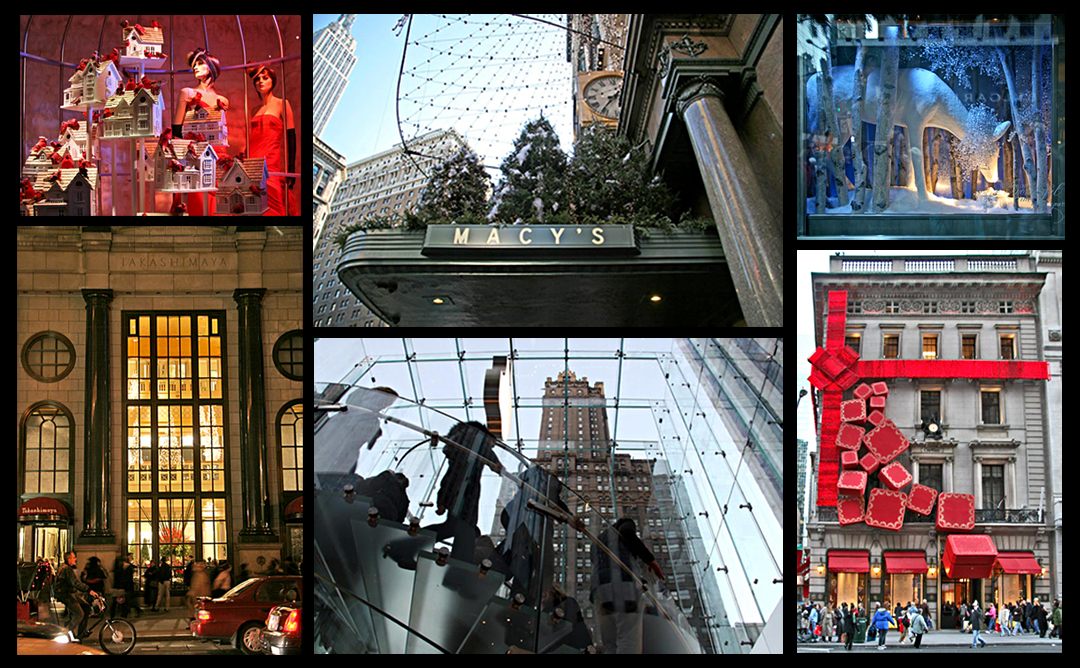
    Photo Note: I have assembled a collage of photos of the major retailers I have featured on this site since its inception (March 2006). The photos are listed clockwise starting at the upper left. (click on any to go to that posting and it photos): Saks, Macys, Tiffany’s, Takashimaya, Apple and Sherry, Cartier


  • dinamic_sidebar 4 none

©2026 New York Daily Photo Entries (RSS) and Comments (RSS)  Raindrops Theme