• Magic Mountain

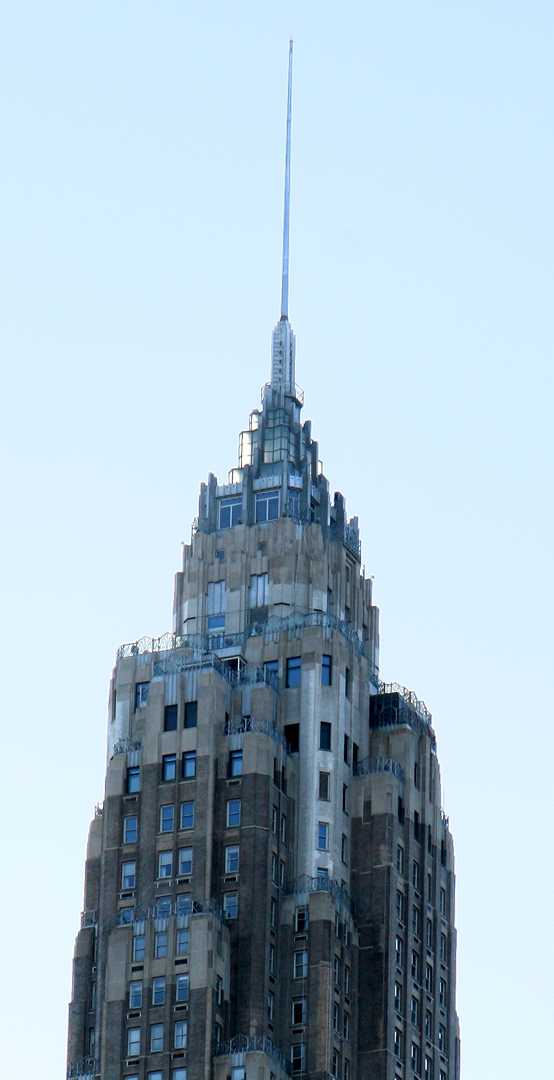
    The American International Building is located in the financial district at 70 Pine Street. At a quick glance, one might mistake it for something like the Empire State Building. This beautiful structure with its Gothic spire abounds with art deco details, yet is relatively unknown – surprising, isn’t it?

    One of the reasons is that it is difficult to really see from the canyons of the densely packed buildings in this area of Manhattan. The building is best appreciated from afar, as in this photo, which I took from the South Street Seaport area. It is famous for its motif of a snow-capped mountain – the base of the building is clad in granite while the upper portion, clad in limestone, becomes lighter in color until one reaches the very top, where it is white. There are limestone replicas of the building carved on the central columns at the entrances. The area is also not generally frequented by visitors or residents except for Ground Zero, South Street, and the ferries to Staten Island, the Statue of Liberty, and Ellis Island – destinations which are typically visited and left without exploring the neighborhood. Admittedly, it’s essentially a business district (dead on weekends) and will primarily appeal to architecture fans. The building itself was built for the Cities Service Company in 1930-32, the same time period of the construction of the Chrysler and Empire State buildings. At 952 feet, it was the tallest building downtown until the construction of the World Trade Center towers in the early 1970s. Since 9/11, it is again the tallest building downtown, the fifth tallest in NYC, and 14th in the US.

    The building has been used in many films, such as Spider-Man, The Gangs of New York, and Independence Day. The building is now owned by an insurance company – the American International Group. At one time, it was known as the 60 Wall Tower; there was a bridge at the 15th floor connecting it to a building at 60 Wall St (demolished when City Services vacated) – you can see lighter bricks where this bridge once was. There is an observatory at the top, unfortunately now closed to the general public but open to executives at lunch. Now that’s a nice perk…
  • Marathon

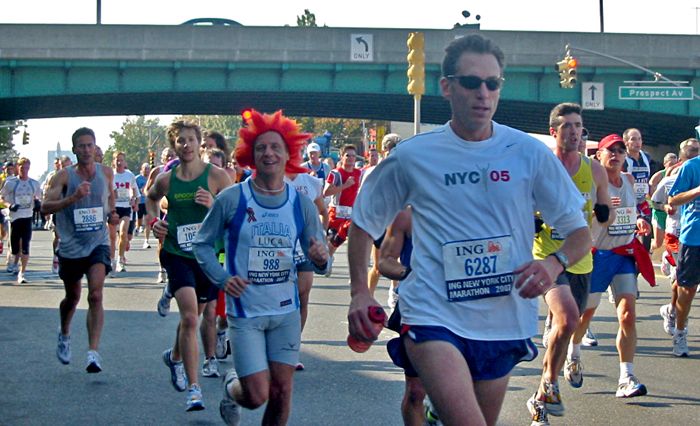
    Today is the New York City Marathon, a race which has become the largest in the world, with 38,000 running, and one of the most prestigious. It’s amazing to see such an event in NYC – the race takes place in all five boroughs with major arteries closed off for the runners and 2 million spectators. The race starts in Staten Island at the base of the Verrazano Bridge, continues over the bridge, through Brooklyn into Queens, over the Queensboro Bridge into Manhattan, up First Avenue, entering the Bronx briefly, then back into Manhattan down Fifth Avenue, finishing in Central Park.

    I am watching the finish of the men’s and women’s divisions as I write this. Paula Radlciffe of Britain won the woman’s – she has never lost a marathon. The men’s has been won by Martin Lel of Kenya…

    Photo note: This photo is courtesy of Lucy, who originally started the blog with me in March 2006. She ventured out this morning to 4th Avenue in Brooklyn.


  • Village Halloween Parade 2007 # 2


    Make sure to click on the photo to enlarge!


  • Village Halloween Parade 2007

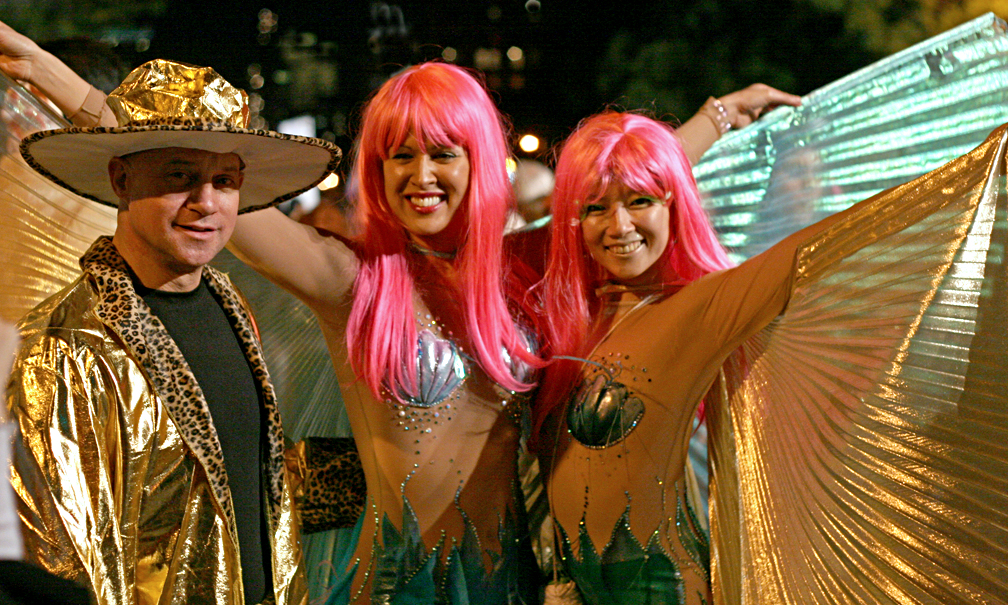
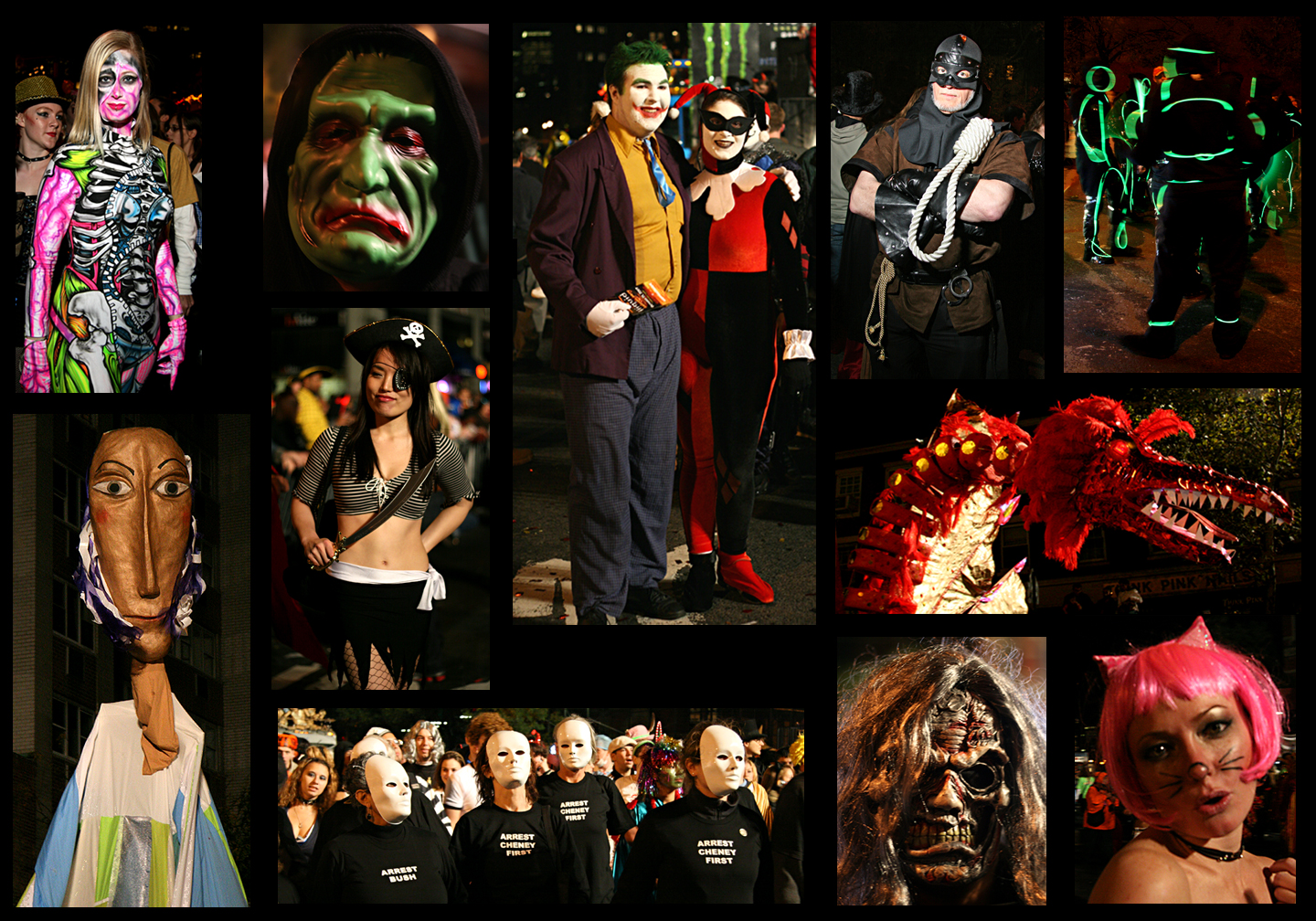
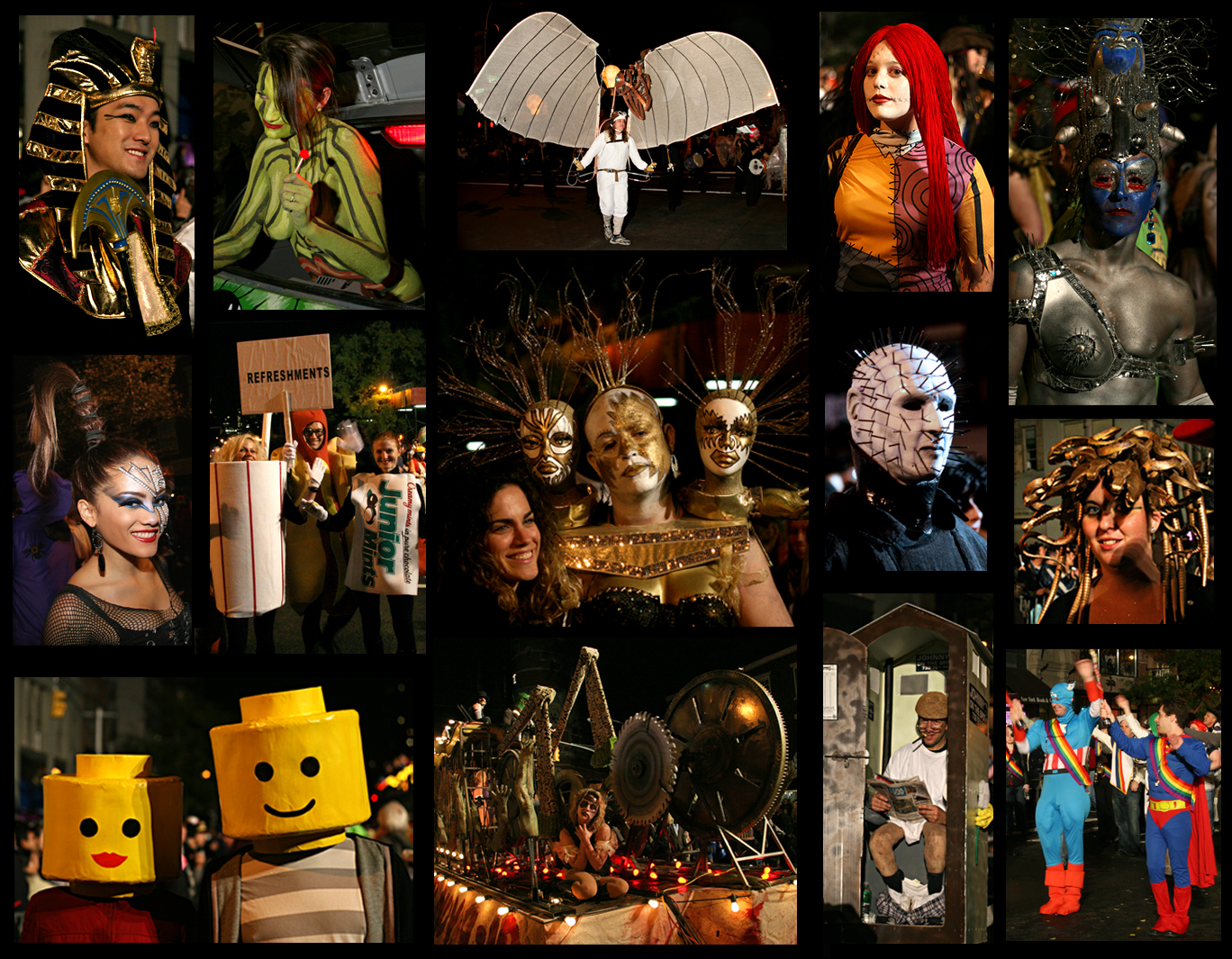
    I’ve chosen a small, somewhat representative collection of photos from the Village Halloween Parade (click on the photo to enlarge). The whole experience was overwhelming, with an estimated 2 million people attending! I will be putting up a gallery of over 200 photos from the parade in the next few days. Check back on this posting, and I will update with a link to the gallery. Many of the parade details, history, attendance, etc. were covered in detail in last year’s posting with a photo gallery. Click here for that posting and click here for the gallery of photos


  • Village Parade 2007 Preview

    Last night, I attended the annual Village Halloween Parade. The weather was perfect and the turnout was phenomenal. The number of attendees (1 million) and congestion is unimaginable, and going in as a photographer with a press pass (as I did) or as a marcher is the only way I would consider it at this point. I have spectated from the barricades many years before – streets are blocked off and pedestrians are directed, restricted, and hoarded, with the spectators piled many persons deep. It’s hard to get decent viewing without getting there 1.5 hours in advance for a front row position against the barricades. In the next couple of days, I will post again on the parade, featuring photos and posting a collection of the best on a supplementary site as I did last year. But first, I have to sift through the 540 photos I took…


  • Jack Be Little


    ‘Tis that time of year. Halloween, apple pickin’, school’s started, sun sets early, days are getting shorter, crisp air, holidays are coming, and everyone is moving a little more quickly. There are more things to do, less time to do them, and it’s getting a little too chilly to relax a la summer anyway. Tonight is the the annual Village Halloween Parade – one of the biggest parades in the country, with 1 million attending. I will be photographing the event and putting up the images on this site for the next couple of days. And don’t forget to change your clocks this weekend – set them back one hour on Sunday morning (November 4th this year) at 2 AM…

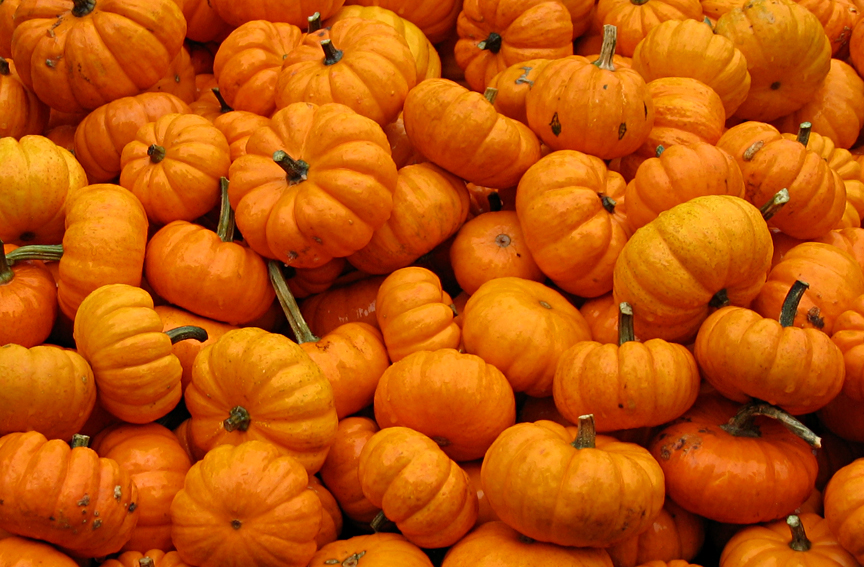
    Regarding the photo (taken in Union Square): I learned today that the small squash-like fruit in the photo is not a gourd (as I had thought) but a miniature pumpkin – a variety known as Jack Be Little. They can be used for decoration or eating. They are perfect for stuffing and I understand quite delicious. The skin is edible if boiled for 5 minutes before baking.

    Postings related to Union Square: Heirloom Tomatoes, Union Square Greenmarket, Republic, Vintage Mural, One-Man Band, Luna Park Cafe, Gentleman Peeler, Flora, Zeckendorf, Reverend Billy, W Hotel, Towers, Metronome


  • Esperanto

    Geography matters. If one looks at a map of Manhattan, you will see that from 125th Street down to 23rd Street, it is essentially a rectangle, with First Avenue being the easternmost North-South Avenue. South of 14th Street, the island bulges on the east side. Here you have the Lower East Side and Alphabet City – Avenues A, B, C, & D.
    This area is one that is furthest from subway lines in the city. It is nearly a mile from Avenue C and the nearest station at Astor Place or 2nd Avenue. I believe that this frontier land location has been one factor in its later gentrification. The area has a rich ethnic history, occupied by the German, Polish, and most recently the Latin community (Avenue C has been given the name Losaida, meaning Lower East Side in Spanish).

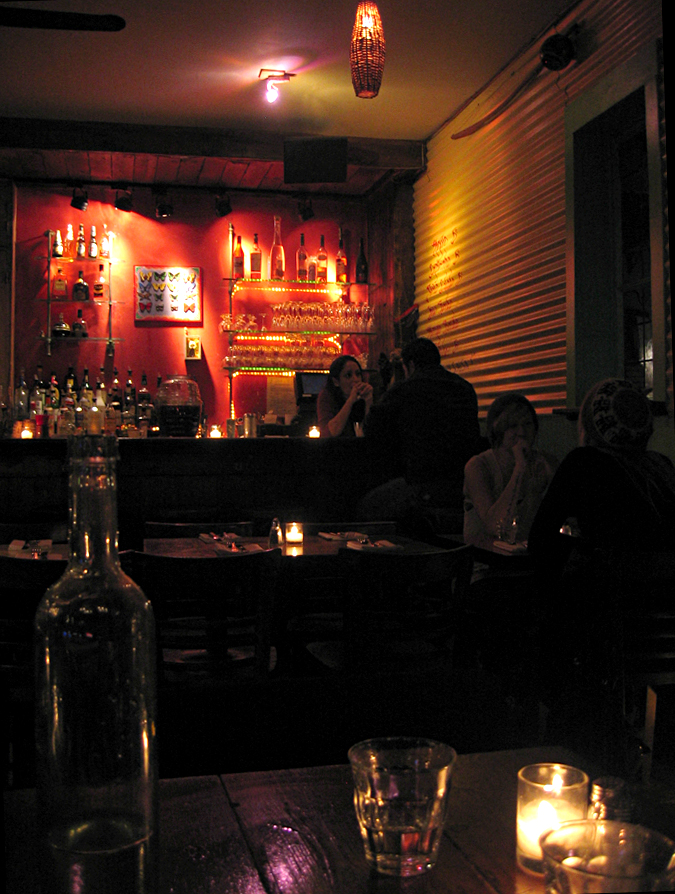
    In my recent explorations of the community gardens in the area, I discovered a real gem of a restaurant at 145 Avenue C and 9th Street: Esperanto. In warm weather, their French-style doors are open, and there is al fresco sidewalk dining – beautiful, since a large community garden faces each exposure. The food is pan-Latin, with Brazilian and Cuban drinks. There are two rooms with a warm, dark atmosphere. The main room (in the photo) has burnt-orange walls, tiled floors, and a bar. The other room is painted in turquoise. The food is excellent and very well priced. There are prix fixe dinners and brunches. Some have complained about the wait staff being inattentive, but I found it acceptable. Highly recommended…

    Related Postings (click any link): Shangri-La, La Plaza Cultural Garden, Albert’s Garden, Devil’s Playground, Howl!, Vegan Chic, Bluestockings


  • The Dark Ages

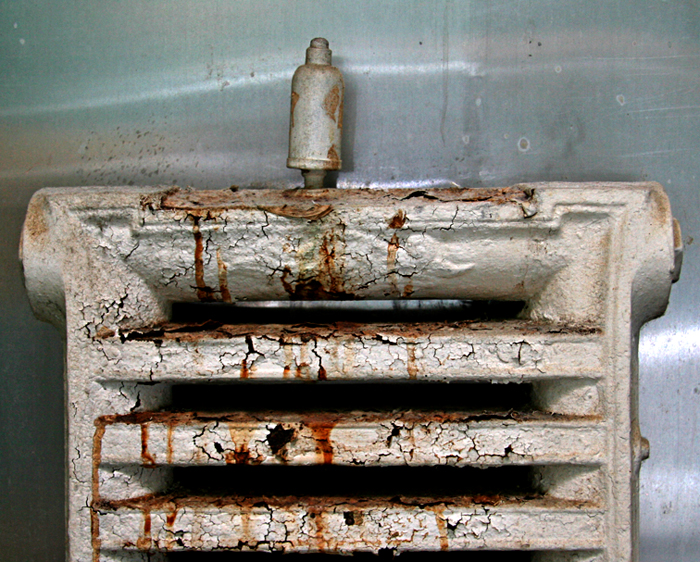
    This is the time of year when conversation in NYC frequently turns to heating. Ironically, in 2007, in the largest city in the United States where wealth abounds, people paying thousands of dollars per month in rent are still frequently concerned with getting adequate heat. During the heating season (October 1 through May 31), the City Housing Maintenance Code and State Multiple Dwelling Law requires the following:

    *Between 6 a.m. and 10 p.m., heat must register at least 68 degrees Fahrenheit when the outside temperature falls below 55 degrees;
    *Between 10 p.m. and 6 a.m., heat must register at least 55 degrees Fahrenheit when the outside temperature falls below 40 degrees.

    Do you see the problem here? Firstly, most people not from the arctic tundra find these minimum requirements much too low – 55 degrees inside after 10 PM? Fortunately, most tenants get much more than this. Secondly, these indoor temperatures are actually not measured. Boilers typically have basic settings – on and off (based on outdoor temperature); high, medium, low, etc. Unlike a private home where a thermostat regulates indoor temperature, no such mechanism exists in a multi-unit apartment building. So, there is either too much heat or too little. Many run too hot. Add to this that it is generally not a good idea to turn steam systems on and off (in the apartment) and that the shutoff valves frequently malfunction anyway, and it is not uncommon for New Yorkers to open windows in mid-winter. Thirdly, landlords are always looking to cut costs, but in NYC, rent control and rent stabilization laws exacerbate the situation. With rental income regulated (nearly 1 million apartments in NYC are still rent regulated), landlords are much more inclined to hold back services, repairs, and upgrades.

    So, with rats gone wild, dogs (and horses) relieving themselves in the streets, all the city’s trash put out on the streets on pickup days, the homeless living on the streets year round, drafts through old windows, and not enough heat, New York can, at times, feel like the Dark Ages…

    Related Postings: Wildlife Control, Stephanie, Dead to the World, Garbage a la Mode


  • Fall Out Against the War

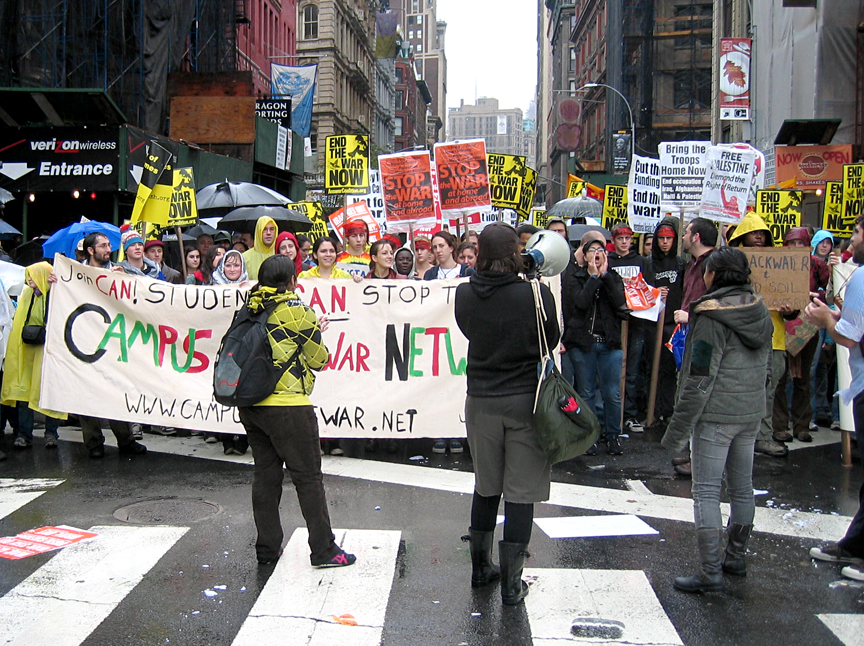
    Yesterday NYC participated in a national mobilization against the the war and occupation in Iraq: Fall Out Against the War. New York was one of 11 cities involved in the event, initiated by United for Peace and Justice. An estimated 45,000 stood up to the rain and marched and rallied for peace, led by Iraq veterans, veterans of other wars, military families, union members, and students. Demonstrators assembled south of 23rd street and marched down Broadway to Foley Square, culminating in a Peace and Justice Fair. A rally with speakers was held at Union Square, where a stage was set up – an appropriate location, as this park has a long history of public protests and demonstrations.

    I do believe that the sentiment against the war has been growing, due to a lack of timetable or clear exit strategy, 3,800 Americans dead, and hundreds of billions spent with our international reputation damaged. For much of the populace who do not engage in nuanced political analysis, the mere length and cost of this occupation are reason enough to want out; the scenario is reminiscent of the Vietnam War, where public opposition became so great (and a clear win doubtful) that continuing became untenable. Many who initially supported the war have reversed their positions and vocalized such, including notables such as Christopher Hitchens…

    Related Postings: Picture New York, Reverend Billy, Union Square


  • Kristal Palace

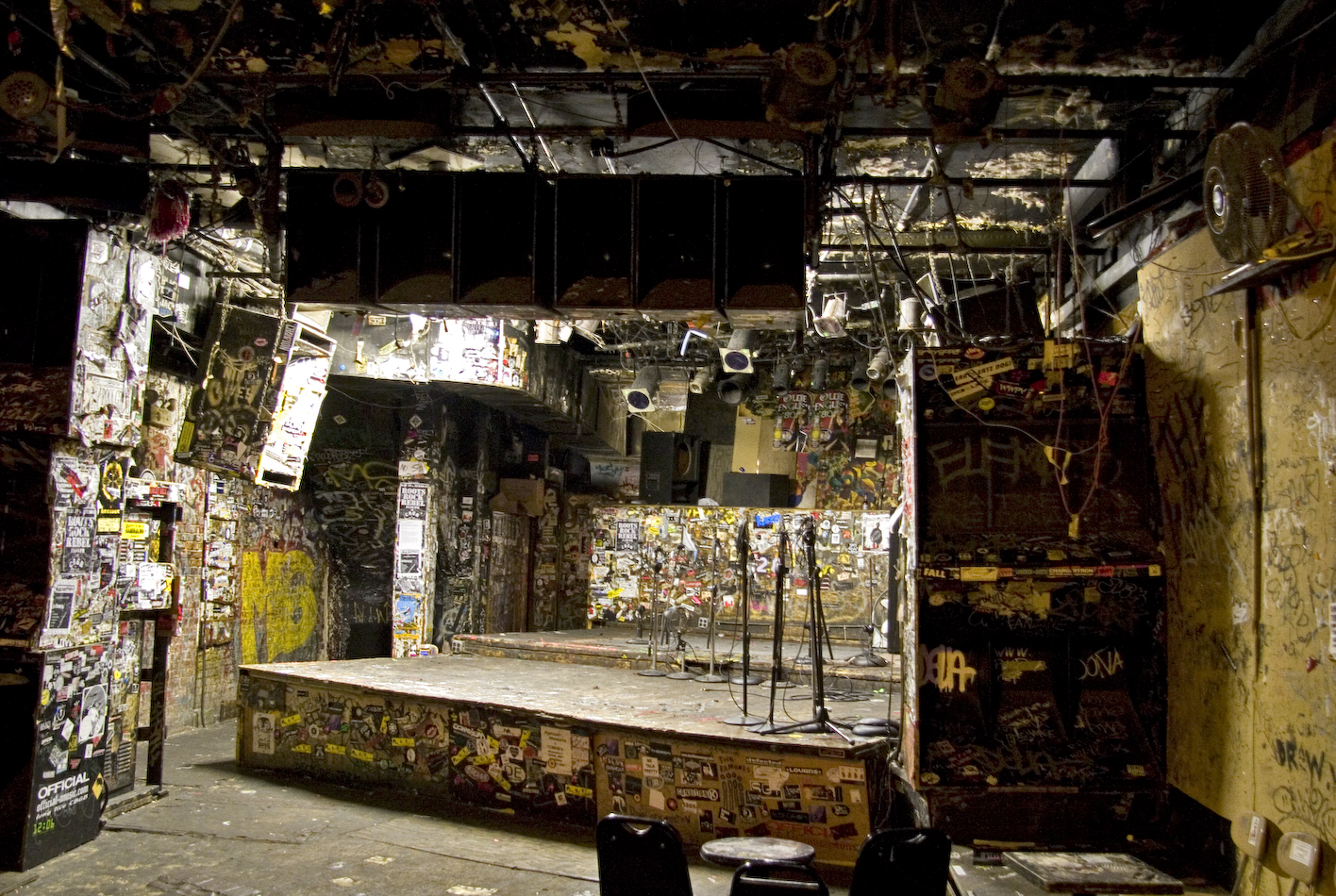
    Last summer, I asked a photographer friend to accompany me on a final pilgrimage to CBGB, knowing it was to close in October of that year. So, on a hot August Sunday afternoon with the city deserted, we headed with our cameras to 315 Bowery and home of the legendary rock club. We were pleasantly surprised with our reception – the person attending welcomed us with open arms, saying that the owner, Hilly Kristal, had always supported and encouraged photographers. So rather than having to whine, beg, or sneak around taking harried photos surreptitiously, we were able to indulge and take our time.

    We toured and photographed the entire place – the bar, the stage, the green rooms, the sound room, and the infamous downstairs bathrooms. I never released all the images, so today I am showing a photo of the main stage. The club was a true dive bar – graffitied with stickers and posters, peeling paint, etc. I have done three other postings on the club – if you are interested, see the list below. The most recent posting of June 16, 2007 was concerning the ongoing state of the club in limbo after its closing, with Kristal saying that he intended to move the entire place to Las Vegas. On August 28th of this year, Kristal died at 75 of lung cancer…

    Previous postings on CBGB: CBGB, Gotta Go?, Limbo


  • Loaded

    It occurred to me looking at this photo that NYC is really loaded – not just with money but also with icons. It explains why New Yorkers can be quite cynical – everywhere we look, there are spectacular vistas, frequently with MULTIPLE icons.

    In this shot alone (taken from DUMBO, Brooklyn) we have the Brooklyn Bridge, the Municipal Building, the Empire State Building, and last (and least), the Verizon Building. And there were numerous other notables in view but not framed by this photo (South Street Seaport, the Financial District, the Woolworth Building, and the Manhattan and Williamsburg Bridges). When leaving my office daily, I see the Chrysler Building framed by Grace Church looking north (click here) and the Woolworth Building to the south. Walking home through SOHO’s historic cast iron district, I see the Empire State Building framed by Washington Square Arch (click here). Only Paris comes to mind with such a plethora of notable places and things that are household names.

    There are numerous activities, industries, businesses, and services that NYC stands out as a center for – publishing, advertising, finance, music, dance, theater, film, law, fine arts, architecture, parks, street life, fashion, retailers, and dining (there are over 17,000 restaurants in Manhattan alone). We are used to superlatives – biggest, most, best. As far as being loaded in the classic money sense, we’ve got that too, of course. I remember being stunned by an article in the Wall Street Journal that gave the number of 10 figure annual bonuses in the city…


  • Abingdon Square

    I would not say that Abingdon Square is a “must see,” nor would I recommend going out of one’s way to visit. There is an interesting article from 1885 in the New York Times bemoaning its condition:

    “AN ODD BREATHING SPOT; ABINGDON-SQUARE AS IT WAS AND AS IT NOW APPEARS. ONCE THE CENTRE OF WEALTH AND FASHION, BUT NOW GIVEN OVER TO NEGLECT AND DECAY. Among the old-fashioned winding streets which cross each other at all possible angles in the old Ninth Ward is the queerest little square of which New-York can boast. Abingdon-square is the name of this odd little spot. There is a strange dead yet alive look about Abingdon-square which reminds one of a dying tree which, struggling against its fate, still sends forth at some points green shoots.”

    The rest of the article paints an equally grim view of this square – it has vastly improved since that time. I do find, however that the park/square does not have a particularly strong identity, kind of wallowing in an indistinct obscurity. The park was established in 1831 and was part of Peter Warren’s 300-acre estate. His eldest daughter, Charlotte, married Willoughby Bertie, the Fourth Earl of Abingdon, and a share of the Warren estate was part of her dowry. Her portion included the land that came to be known as Abingdon Square (the name was preserved because the Earl and his wife had sympathized with the American patriots, and he had argued in Parliament against British policy in the colonies).

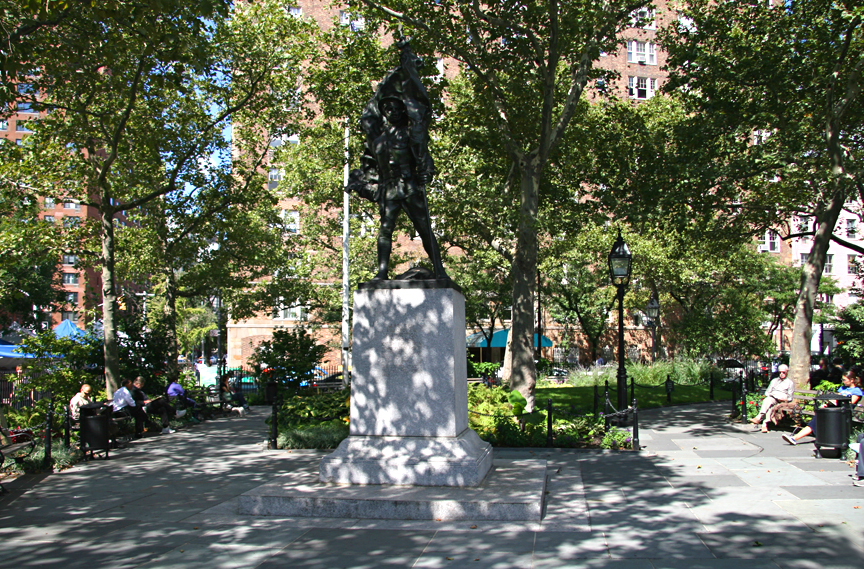
    The bronze sculpture, Abingdon Square Memorial (also known as the Abingdon Doughboy), was dedicated in 1921 in memory of local men who fought in World War I – twenty thousand spectators attended. From 1988 to 1989, the park underwent a restoration. There is also a greenmarket on Saturdays. This small spot of green in the West Village, bounded by several thoroughfares yet set apart, is a perfect spot to relax, read, and people watch…


  • Bridge Cafe

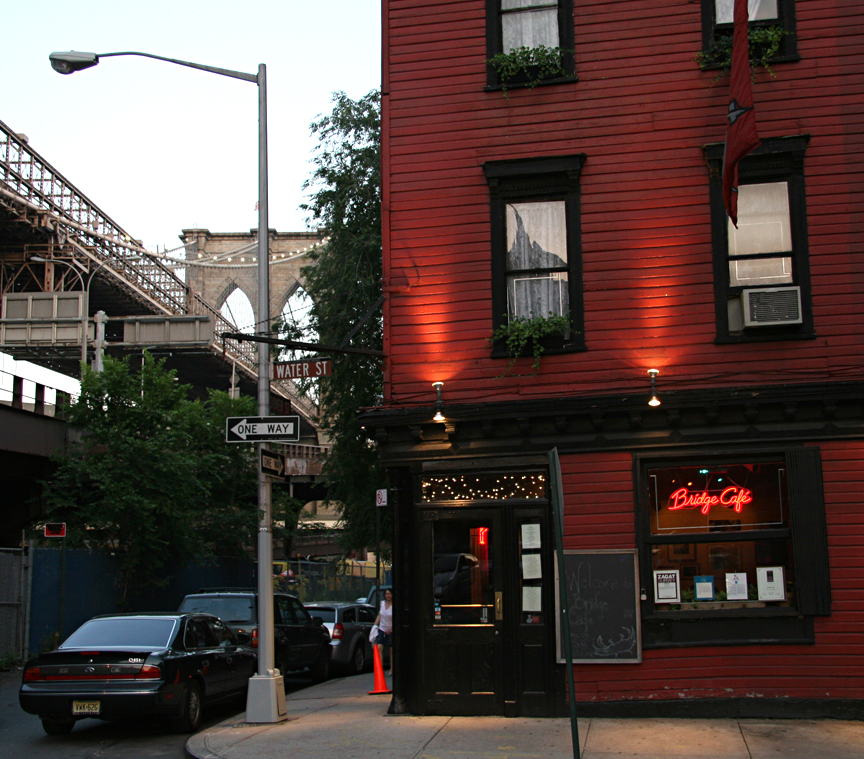
    Many New Yorkers avoid the South Street Seaport area (barring an occasional visit for a performance like that of Spiegelworld), seeing the area as too touristy. This is a legitimate complaint, but there are also good reasons to visit this neighborhood. Once one gets away from the beaten path of Fulton Street, you quickly start to appreciate the charms of this area, the oldest area of the city. The buildings are beautifully restored, streets are cobbled, and there are a number of establishments worth patronizing, such as museums, restaurants, bookstores, and galleries.

    The Bridge Cafe, at 279 Water Street, is one of those places. The restaurant, at the end of Water Street and the corner of Dover Street, is virtually under the Brooklyn Bridge, housed in a wood-frame building erected in 1794 (click here for photo). This historic gem is believed to be the oldest business in NYC and the oldest drinking establishment. In 1847, Henry Williams opened a porter house in this section of Water Street, known for its saloons and brothels. The cuisine is eclectic New American. I have not eaten there, but reviews appear to be consistently good – I intend to to soon…

    Notes: At the time the place was built, before land-fill projects expanded the area of Lower Manhattan, the East River actually came right up to the building.
    When Ed Koch was mayor, he met here twice weekly at a private table.

    Related Postings. Click on any link: Belle de Jour, South Street Seaport, Dead to the World, Fishbridge Garden, Jet Ski


  • Metropolitan Club

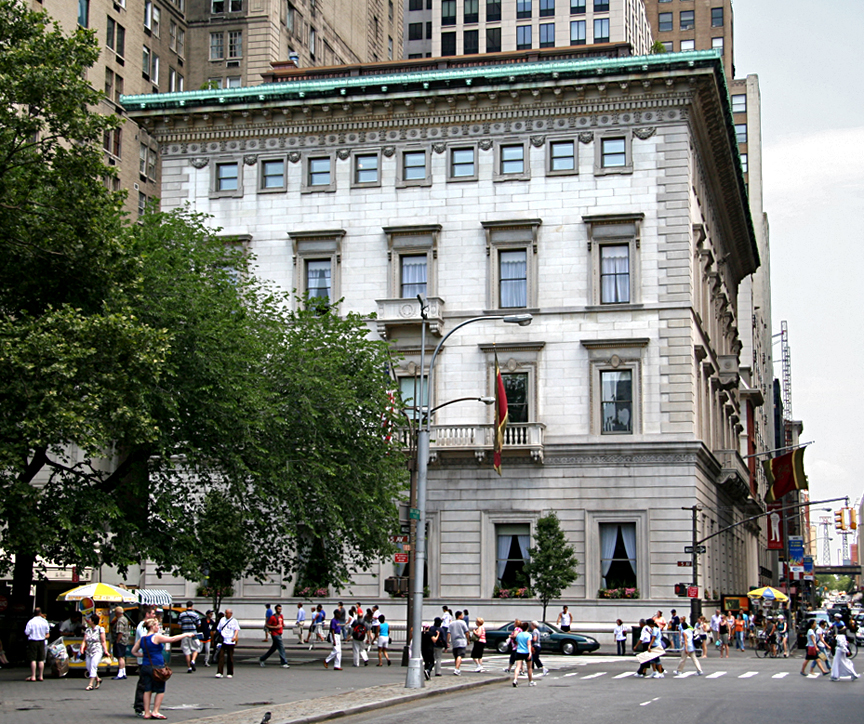
    What perhaps is most remarkable about the Metropolitan Club (like the Harmonie Club across the street) is how unknown it is to most visitors and residents, particularly given its prominent location – one of the finest in all the city –  at 60th Street and Fifth Avenue overlooking Central Park, as well as its prestigious neighbors. It abuts the Pierre Hotel, with the Sherry Netherland to the south, and sits across from Grand Army Plaza and the Plaza Hotel. One block south, we have the Apple store with its huge glass cube, and from there, the familiar, iconic Fifth Avenue flagship retail institutions: Bergdorf, Tiffany, Cartier, etc.

    The private club was organized by J.P. Morgan for his coterie of friends unable to gain admittance to other private clubs. The 1893 building is a McKim, Mead and White extravaganza with the feel of an Italian palazzo. I have not been inside, but I understand that the interior is quite grand, with Corinthian columns, scarlet carpeting, and a two-story marble hall with a double staircase. The entrance, at 1 East 60th Street, is colonnaded with a carriage entrance and courtyard (click here for photo)…

    Related Links: The Sherry, Apple and Sherry, Harmonie Club, Lotos Club


  • Tower of Toys

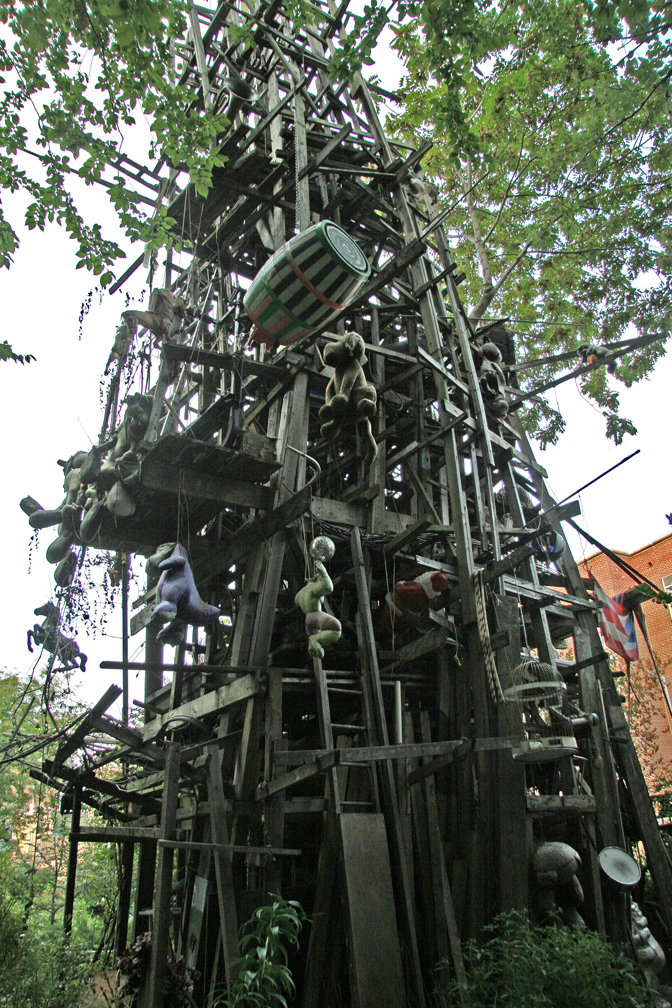
    The Tower of Toys has been well-known to habitues of the East Village and even to some from outside this country – buses of Japanese tourists would occasionally visit. Click here for more photos. This structure is the creation of Eddie Boros, an extraordinarily eccentric character who lived his entire life on 5th Street, around the corner from where this tower is located in the Sixth Street & Avenue B Garden. He was the son of Hungarian immigrants, a house painter and a seamstress. Boros served in the Army during the Korean War, but he was such an adamant pacifist that he was put on a detail planting trees.

    In 1985, Boros began carving large wood sculptures in the middle of this garden, but this was met with opposition from other garden members. He was told to confine his work to one 4′ x 8′ plot, but eventually, this expanded to several plots. Boros, with a passion for reuse of discarded things, decorated his 65-foot tower (which he named My Baby) with items scavenged from the neighborhood. Boros was known for climbing to the top of the tower and beating a drum or blowing a horn. The tower appeared for a time in the opening shots for the television show NYPD Blue. A 1/2 scale version also appeared in the musical RENT. His structure was always controversial and a bone of contention with other members of the garden. It will be interesting to see what the future has in store now that Boros has passed away…

    NOTE: Boros died April 27,2007 at the age of 74 while recuperating after having both legs amputated above the knee.


  • dinamic_sidebar 4 none

©2026 New York Daily Photo Entries (RSS) and Comments (RSS)  Raindrops Theme