• Steve McCurry

    Yesterday I attended the Photoplus International Conference & Expo – the big annual 3-day photo show held at the Jacob Javits Center. There are hundreds of booths with vendors of all types – photography equipment, printers, computers, software, services, books, etc. Of course new camera equipment is the big draw for most attendees, and Nikon and Canon were prominently positioned, showing new, exciting products, typically unveiled at trade shows. This is also a good place for one’s education, with numerous seminars running simultaneously on all days.

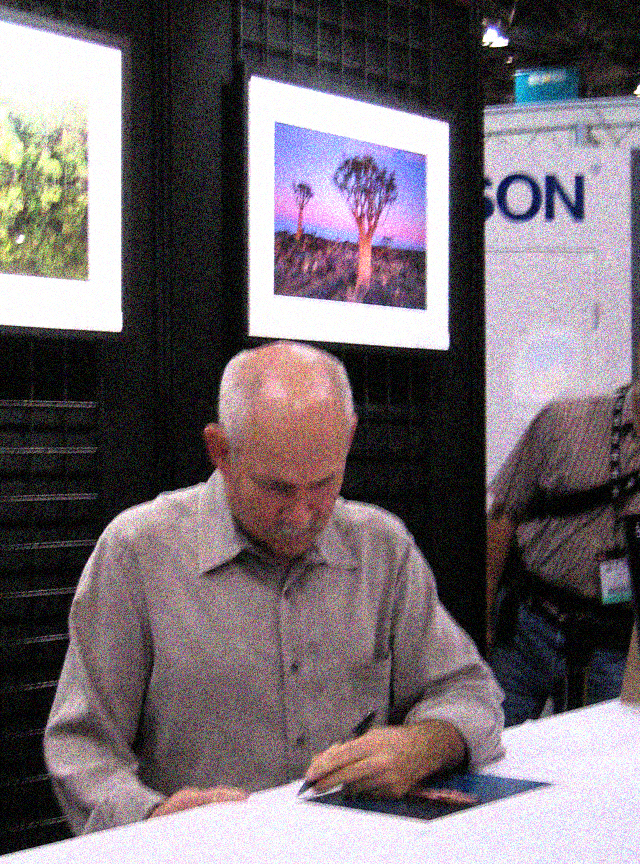
    One really inspiring aspect of the show was a gallery set up by Epson, featuring some of the world’s finest photographers with their work printed on the latest high-end color printers. The photographers themselves were on hand, signing free copies of a selected photo. The signings were scheduled at appointed times throughout the day. The lines were quite manageable, so I decided to wait to meet Steve McCurry and get my own signed photo. McCurry is an award-winning photojournalist most well-known for his photograph Afghan Girl, which originally appeared on the cover of the June 1985 edition of National Geographic magazine – named as “the most recognized photograph” in the history of the magazine.

    I have been a fan of Steve’s ever since I saw the documentary on his search to find this girl, an Afghan refugee, whom he had previously photographed. Her identity remained unknown for over 15 years until Steve and a National Geographic team located her in 2002 – Sharbat Gula. If you are unfamiliar with Steve’s exquisite work, I highly recommend you check out his website. Sharbat is photo number 17 in his Afghanistan gallery…
  • Moving Stuff

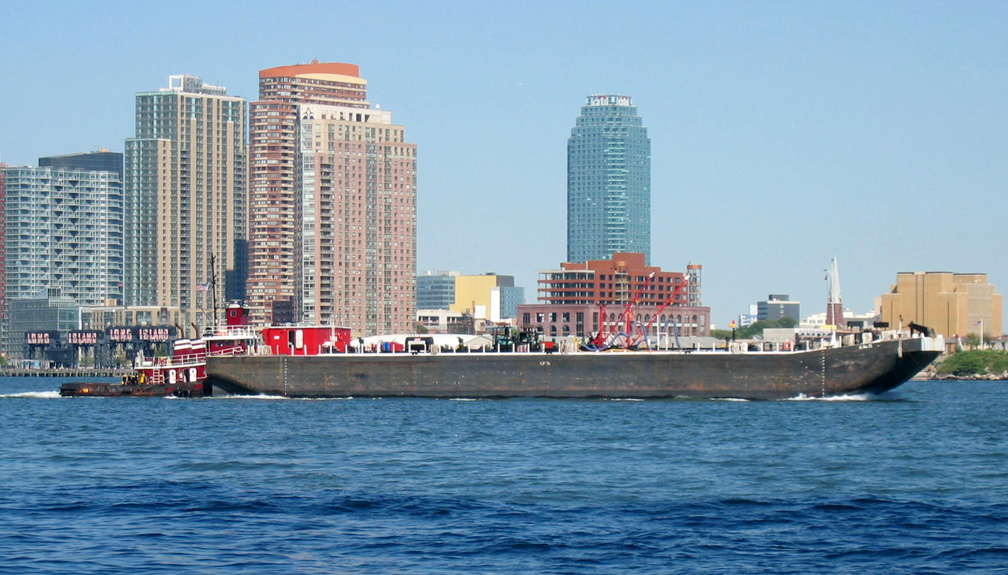
    New York is a very large city, and being large means having a lot of stuff to move around. Much of this goes on behind the scenes – moving people via subways and tunnels, and moving things such as water, sewage, garbage, electricity, gas, steam, and freight via their own subterranean or superterranean systems. The amount and numbers of things moved in the city is staggering, e.g. 24 million pounds of garbage per day, 2.6 million tons of air freight per year, or 1.3 billion gallons of sewage per day. It’s rather hard to believe that transports of this magnitude are even possible and that the systems needed for them continue to work day after day, with very infrequent major failures or breakdowns.

    If you like reading about this kind of thing, there is a wonderful book I was given as a gift: The Works: Anatomy of a City by Kate Ashler, which goes into all of these systems and features NYC throughout as its example. The waterways of the city are extremely busy, and tugboats pushing barges are a common sight (like these in the East River), along with other maritime activities. When you get a chance, head for the water and look around…

    Related Postings: Working Harbor, Big Allis, Jet Ski, Hollyhock, The Water Club, Manhattan Island, Cruising


  • Economy Candy

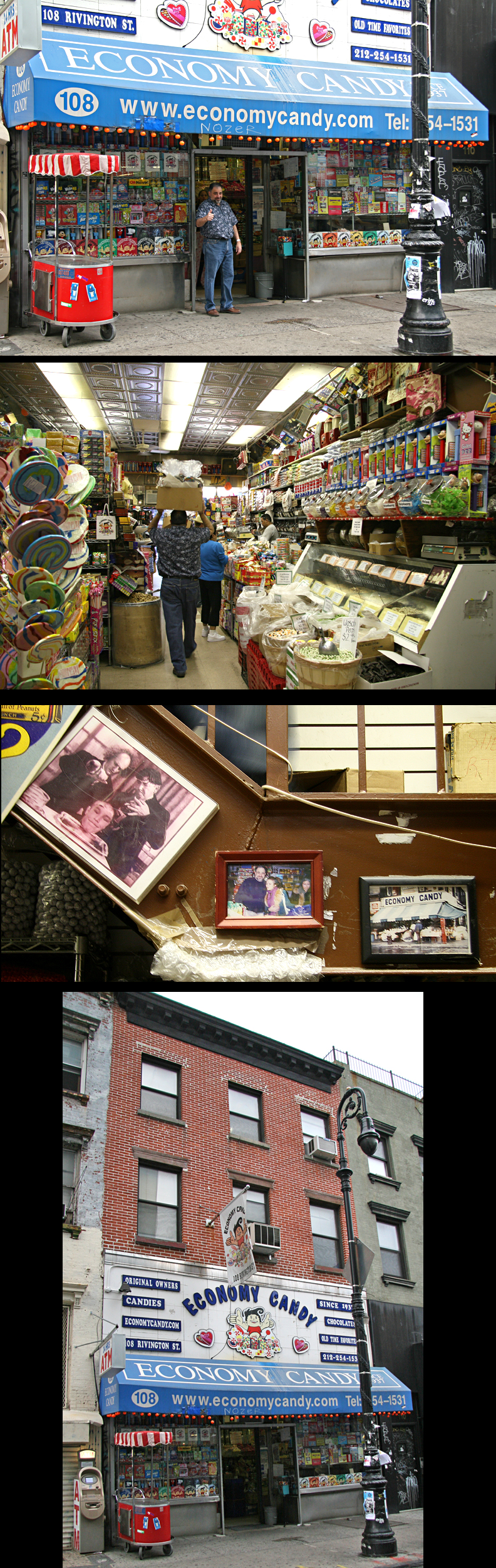
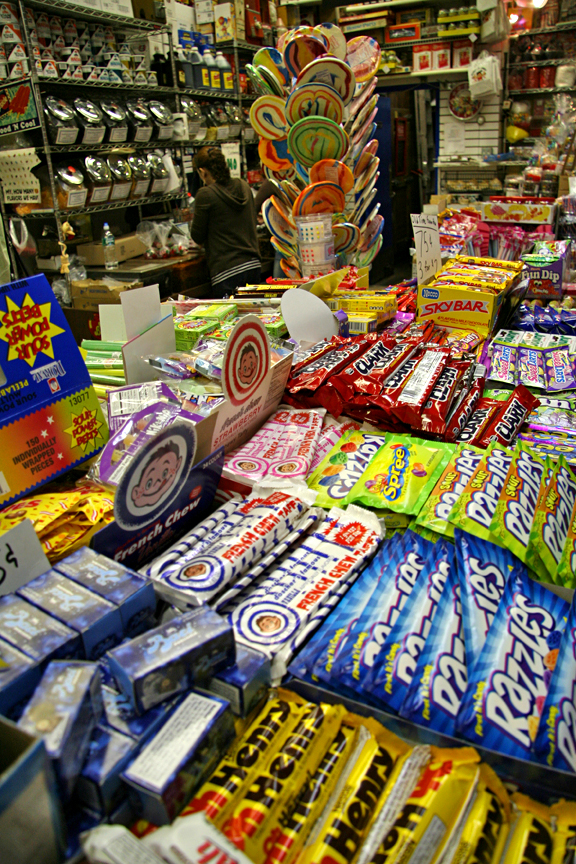
    Feeling a dearth of candy in our office yesterday and being a nice warm autumn day for a walk, two of us decided to make a pilgrimage to Economy Candy at 108 Rivington Street on the Lower East Side. The family-owned business occupies an entire 3-story building (click here for more photos), the ground floor for retail and the upper floors for custom packages and managing their online business.

    Jerry Cohen runs the store with his wife Ilene and son Mitchell. One if Jerry’s smartest moves was buying the building they’re in – good insurance against the rapidly escalating rents in NYC. I had the good fortune of meeting Jerry and his wife – they were extremely friendly and accommodating. The visit was an experience of classic old New York City. From their website:

    “When Jerry Cohen’s father opened Economy Candy in 1937, it was a typical corner candy store of its day. Bulk bins full of colorful hard candies enticed youngsters with their panorama of choices. Guys could buy their dolls a heart-shaped box of chocolates when they had trouble expressing themselves in words. Barrels in the back yielded a geography lesson of nuts from around the world. The hard times of the Depression were easing up, the grim specter of war-to-come wasn’t yet hovering over American shores, and television was a scientific marvel that was unlikely to have any practical commercial application.”

    They have built a reputation on pricing and selection (they have hundreds of kinds of chocolates, candies, nuts, dried fruits, halvah, and sugar-free candy), but what is particularly enticing to me are the nostalgia favorites. Nearly all the candies of my childhood are there, products that are virtually impossible to find anywhere else and certainly not all in one place. Skybars, Squirrel Nut Zippers, candy cigarettes, candy buttons, Nik-L-Nip, Necco Wafers, Chuckles, Charleston Chew, Jolly Ranchers, Good and Plenty, Smores, Jaw Busters, Milk Duds, Bit-O-Honey, Sugar Daddy, Pez, wax lips, and the controversial Chocolate Babies. Hey, do you want to make your own authentic New York Egg Cream? They have Fox’s U-Bet chocolate syrup by the gallon…


  • Cold Stone

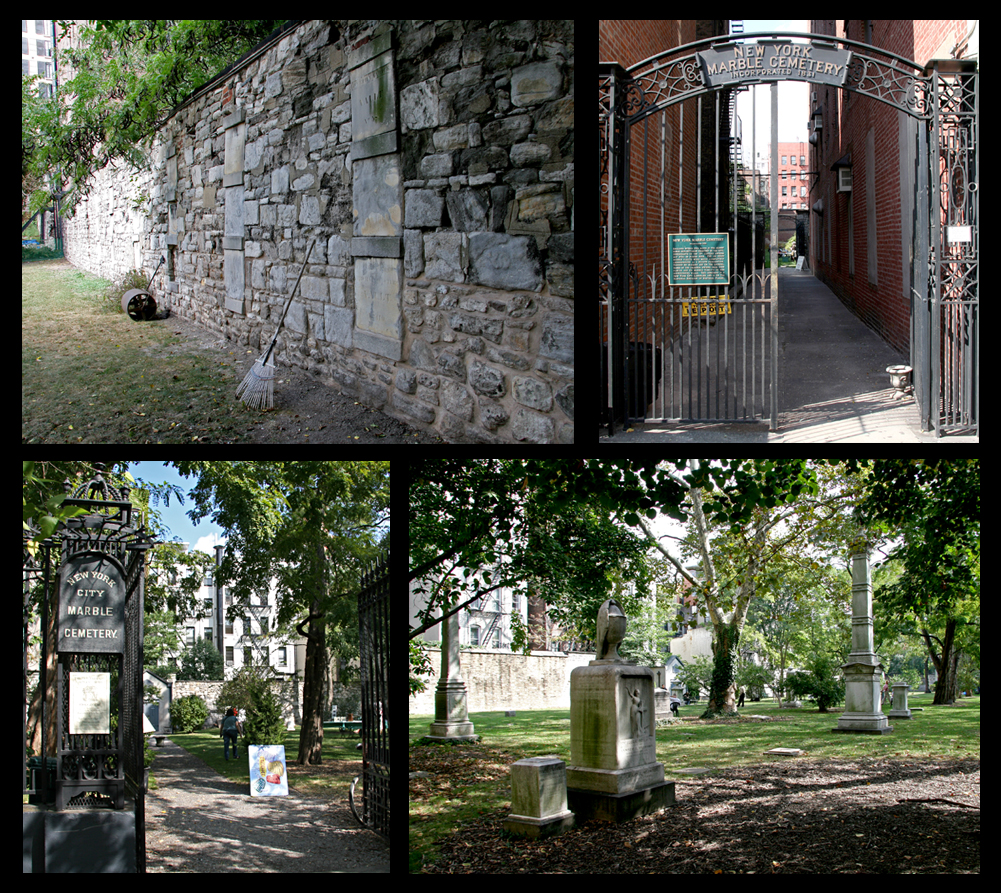
    I’ve walked the East Village for decades but was completely unfamiliar with these cemeteries until recently, when I visited as part of Open House New York. The New York Marble Cemetery (1830) and the New York City Marble Cemetery (1831) are the two oldest non-sectarian burial grounds in NYC. The older of the two, the New York Marble Cemetery, is very easy to miss. The entrance/walkway is a narrow alley between two buildings on 2nd Avenue (at what was once known as 41½ Second Avenue), with two iron gates leading to a unique secret garden cemetery. No gravestones were placed on the ground; instead, marble plaques set into the cemetery’s long north and south walls give the names of the families interred nearby. All burials are in 156 below-ground vaults made of solid white Tuckahoe marble. In response to fears about yellow fever outbreaks, legislation had outlawed earth graves, so marble vaults the size of small rooms were built ten feet underground in the excavated interior of the block bounded by 2nd Ave, 2nd Street, 3rd Street, and the Bowery. Access to the 156 family vaults is by the removal of stone slabs set below the grade of the lawn. Approximately 2,060 people are buried there. Most of the interments took place between 1830 and 1870; the last was in 1937.

    This cemetery was initially so popular that a second, the New York City Marble Cemetery, was opened around the corner on 2nd Street (bottom two photos). There are many similarities between these two independent cemeteries (such as the underground vaults), but this one may be readily seen through a handsome iron fence with gate, extending along its south side on East Second Street between First and Second Avenues. It is surrounded by a high brick wall and by houses and tenements on three sides. Also, there are a few large grave stones. What’s interesting about these cemeteries is that at the time of their establishment, the area was anticipated to develop into a fashionable district. In fact, quite the opposite happened, with the area becoming dominated with tenements and the cemeteries neglected. Eventually they gained landmark status and the neighborhood finally improved. But that’s another story…


  • Performance Z-A

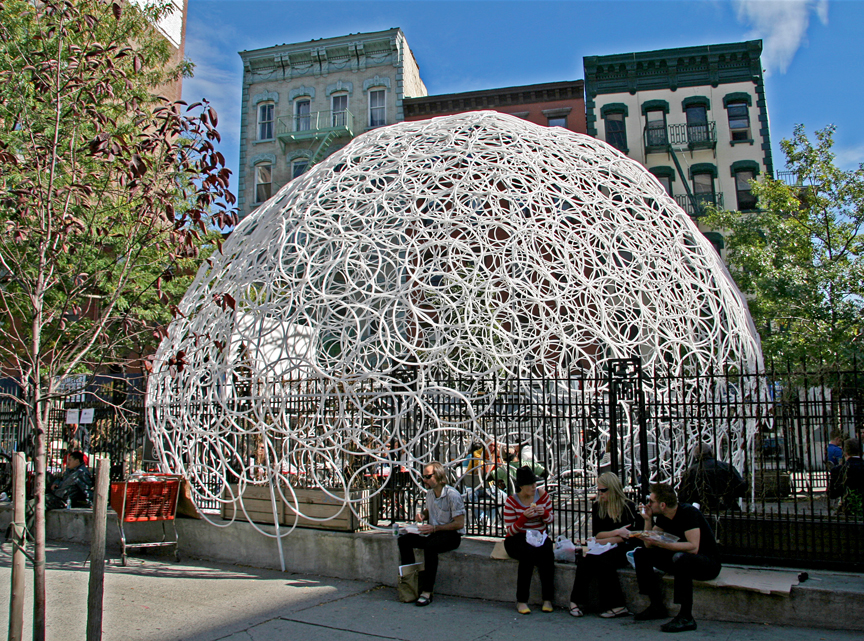
    I assumed the Ring Dome Pavilion installed at Lieutenant Petrosino Square was just a whimsical piece of public art. Not so. This structure provided a setting for Performance Z-A: a Pavilion and 26 Days of Events at Storefront (Update: 1/19/12: Link no longer works), a series of 26 evening events, performances, concerts, and screenings to celebrate the Storefront’s 25th anniversary. The Storefront for Art and Architecture is located in a unique triangular ground-level micro space at 97 Kenmare Street in the Little Italy/SOHO area. Click here to learn about them.

    The pavilion itself was designed by Korean architect Minsuk Cho of Mass Studies in Seoul and is made of 1,000 off-the-shelf plastic hoops attached with plastic ties, supported by a thin steel structure. The hoops were fitted with electroluminescent wire. Here is a video of the installation at Youtube. Although the month-long event itself has passed, I would recommend a visit anytime to the Storefront. It’s an amazing little space you won’t forget…

    Note: Lieutenant Petrosino Square is a tiny, triangular “pocket” park located between Cleveland Place, Kenmare Street, and Lafayette Street. It adjoins the renowned Eileen’s Cheesecake.


  • Consumption

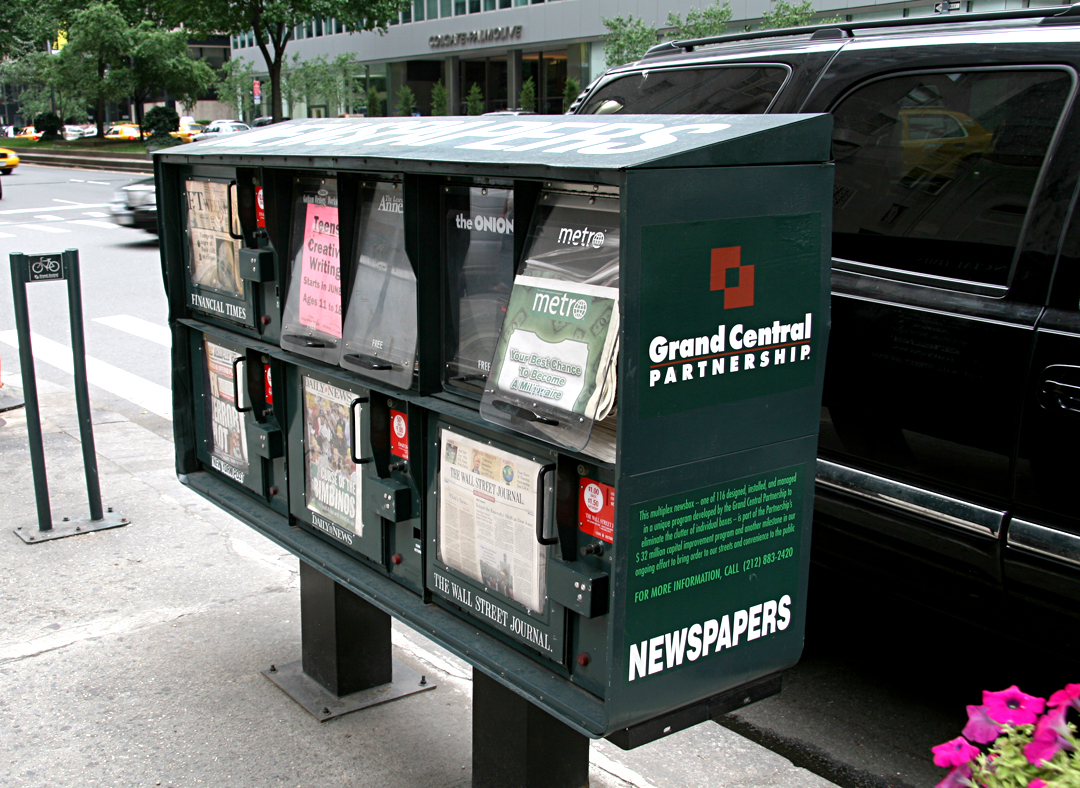
    A friend called this morning to let me know that today is Blog Action Day, where participating bloggers do a posting on an environmental issue. This is good timing, since I have wanted to do something on the clutter of newsboxes in the city. These boxes are typically extremely unattractive (with disparate sizes and colors) and poorly maintained, filthy, stickered, and broken, with some even being used as trash receptacles. I intended to show two sets of boxes: a hideous strip and the much more attractive approach as seen here on Park Avenue (here is an article indicating that this may be a trend). I intended to call the posting “Solution,” which it is at some level. But I am rethinking my position. It may be a solution if there is no reduction of production and distribution of this type of literature, but perhaps we need to reevaluate the need for materials like this to be printed at all.

    The three Rs of waste management, reduce, reuse, and recycle, form a hierarchical pyramid, with the most favored option at the top – reduction – and recycling at the bottom. Some studies have already shown that recycling is a net energy loss. Unfortunately, the three Rs are applied selectively – consumption is built into the fabric of American culture, with shopping and malls as recreation. Reduction is not seriously looked at by most citizens. No one really wants to make sacrifices on the consumption side. Activists such as Reverend Billy, with his stop shopping message, and organizations such as Burning Man are lone voices, frequently seen as fringe elements of society. With the Internet, electronic media, and portable devices such as the iPhone, laptops, and ereaders, we are at an optimal place in time to really reduce printed materials and move towards the elusive paperless office, predicted as far back as 1975 (in an article in Business Week). Unfortunately, technology has given us the ability to create more paper documents, and the amount has been growing.

    I am more of a stick than a carrot person, so I believe there will need to be penalties, sanctions, and legislation for us to break our consumptive habits and for effective change to begin. I understand that a society needs an economic engine and that commerce is a necessary component, but we need to achieve some balance with appropriate consumption before we are buried in trash…


  • Bomb Factory

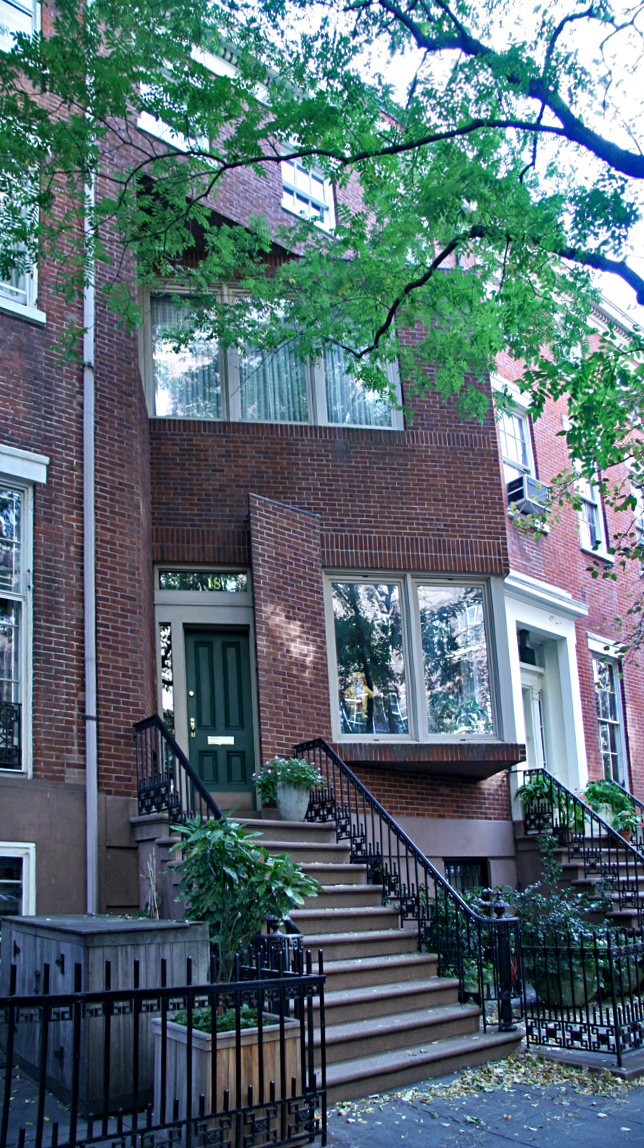
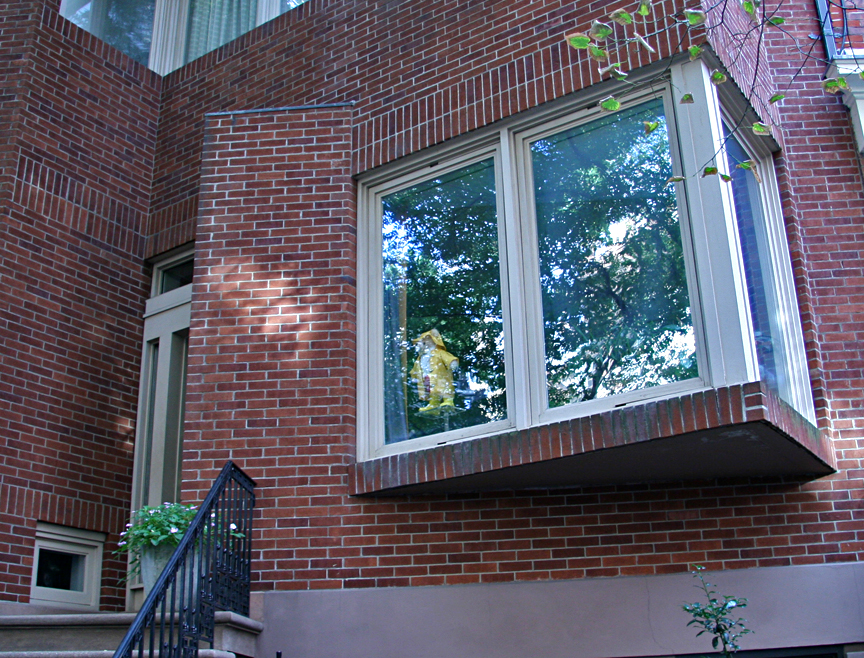
    On March 6, 1970, a townhouse at 18 West 11th Street exploded, leaving the entire building destroyed and damaging the neighboring building at number 16, where Dustin Hoffman was resident. An accidental detonation had occurred in a subbasement bomb factory run by members of the Weathermen. Weatherman (or the Weathermen and later the Weather Underground Organization) was a small group of radicals formerly from the SDS (Students for a Democratic Society).

    This group was very extreme, calling for the revolutionary overthrow of the U.S. Government using violent means. The bombs had been intended to be used at Columbia University. The explosion killed three members and sent Cathy Wilkerson and Kathy Boudin running into the street naked (Wilkerson’s family owned the building and were away on vacation). An F.B.I. report said that ”had all the explosives detonated, the explosion would have leveled everything on both sides of the street.”

    The building, built in the 1840’s by Henry Brevoort Jr., was once owned by Charles Merrill, a founder of Merrill Lynch & Company. His son, the poet James Merrill, was born there. James wrote a poem after the incident entitled 18 West 11th Street. There are too many details in this amazing story to go into here, so I highly recommend this article by Mel Gussow from the New York Times in 2000.  The lot sat vacant for nearly a decade before a replacement house, designed by Hugh Hardy, was built in 1978. As you can see from the photo, the modern design was quite a departure from the 19th-century row houses around it. The new design, with its angular facade jutting out, was controversial and took some effort to finally pass the landmarks commission. Very radical…

    Note: There is a Paddington Bear which the current residents keep in the picture window. His attire is changed according to the weather. Click here for photo.


  • Purple

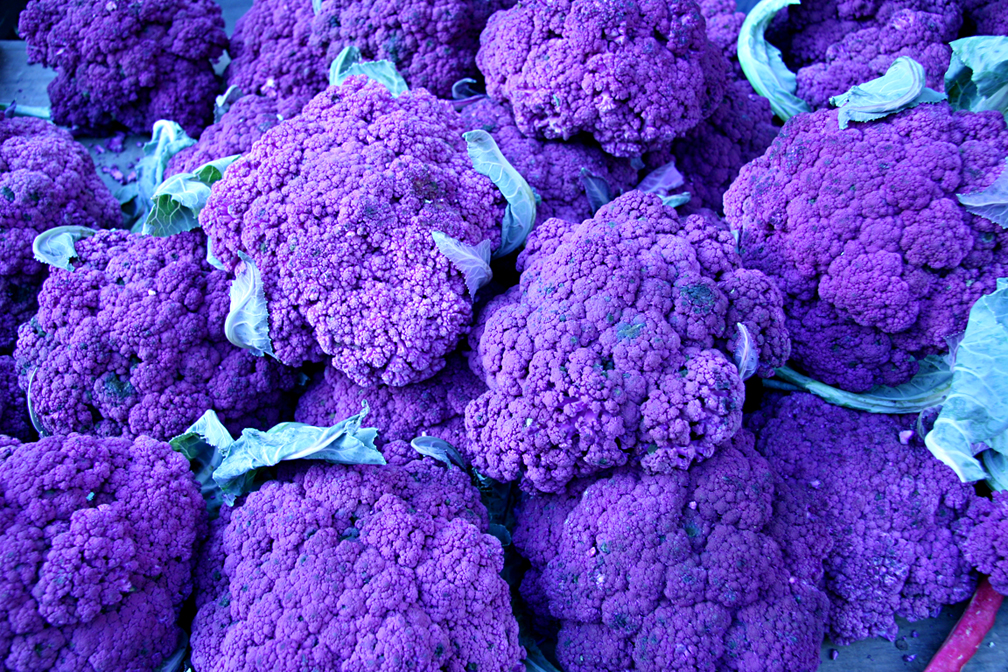
    Here we go again. It’s Sunday morning, so I thought I’d do a nice “easy” posting with a compelling photo. In fact, I was worried – how much can you say (or should you say) about purple cauliflower without being boring? But this blog has a history of being didactic, so leaving this photo to speak for itself was out of the question. Hence, I thought a little bit of research would be appropriate. However, as frequently is the case, I found a world – the world of purple foods and cauliflower in particular, with lots of articles and sites (purplecauliflower.com is registered). I learned that cabbage, brussel sprouts, kale, broccoli, and collard greens are actually all the same species, Brassica Oleracea, but are of different cultivar groups.

    The whole concept of cultivars is fascinating and relatively new to me. If you want to delve into this, click here. I am astounded to have found a site which lists 100 varieties of cauliflower! The purple color, by the way, is not dye but rather due to anthocyanins, the largest group of water-soluble pigments in the plant kingdom, and are responsible for the blue, red, and purple color of many fruits, vegetables, grains, flowers, and leaves. In recent years, studies have suggested that anthocyanins serve as valuable diet antioxidants. However, because they are water soluble, I have read of problems cooking and losing the color.

    About the photo: I discovered this table of purple cauliflower while strolling through the Union Square Greenmarket with a friend. I had no intention of doing any photography, since I have posted numerous times regarding Union Square: the park itself, the Greenmarket, the Gandhi sculpture, restaurants, and the architecture/buildings in the immediate area. But when we happened upon this display, we were so awed by the color that I felt compelled to shoot and share…

    Postings related to Union Square: Heirloom Tomatoes, Republic, Vintage Mural, One-Man Band, Luna Park Cafe, Gentleman Peeler, Flora, Zeckendorf, Reverend Billy, W Hotel, Towers, Metronome, Union Square


  • Devil’s Playground

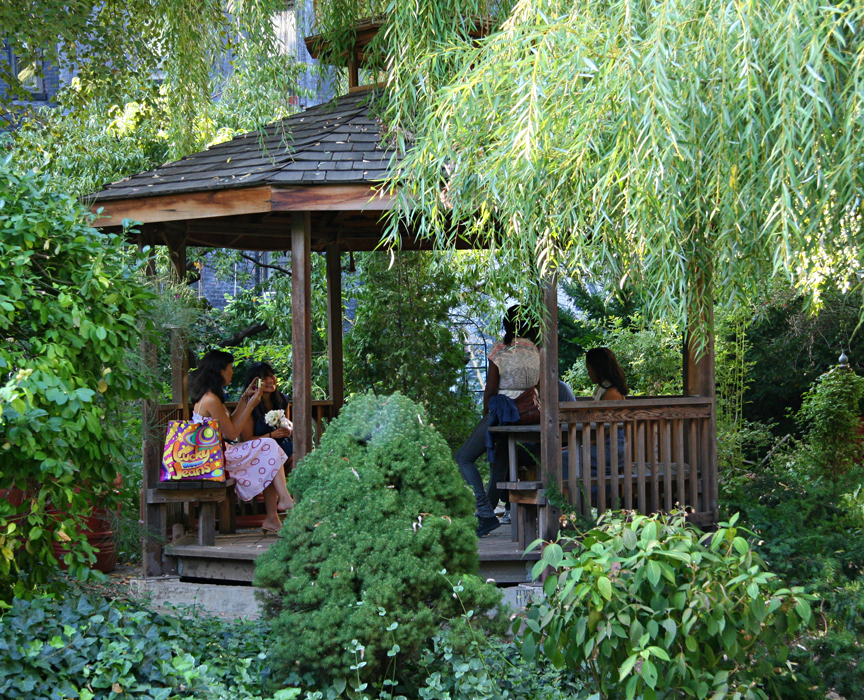
    It’s obvious that I’m not getting out of the city enough or taking enough time off. Hence my obsession with community gardens, parks, and other greenery. In this photo, I show a pleasant scene with people in a gazebo in La Plaza Cultural Garden. As atypical as it may be, I’m sure you can see through the thinly disguised veil to hide my true motivation: another garden shot. Sorry.

    Of course, only a New Yorker would feel a need to justify an “indulgence” in nature at the expense of all the exciting cultural things one should be doing. In the world of film, such indulgences are fodder for award-winners or box office smash hits: men living with bears, trekking after penguins, or living in the wild ala Thoreau. And then there is the busy busy ethic, a defining characteristic of our culture and particularly one of a place like New York, an ethic that basically says any and all busyness is good and is sufficient to justify one’s existence. And relaxing is at least a venial sin. By this definition, a gazebo could be seen as the devil’s playground…


  • Brooding

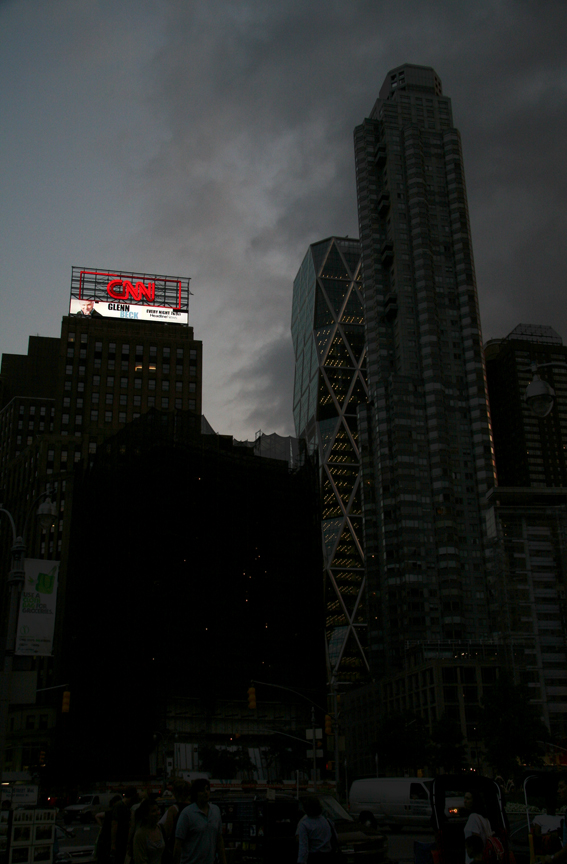
    It’s easy to ignore what little there is left of the natural world when in NYC. Sometimes. But we still have weather, and like everywhere else, weather sets the mood. Here, we have a storm threatening as seen from Columbus Circle, looking south – it really felt like Batman’s Gotham City. The building with the triangular windows is our friend, the Hearst Tower. The tall, thin tower is Central Park Place, a residential condominium built in 1988 by Davis Brody & Associates. The hulking, shrouded building barely visible in the center is the controversial 2 Columbus Circle by Edward Durell Stone from 1964, sometimes referred to as the Lollipop Building (Ada Louise Huxtable, then architecture critic of The New York Times, said it resembled “a die-cut Venetian palazzo on lollipops”). The building is to be occupied by the Museum of Arts and Design in 2008. Click here for this story.

    New York is a city of stark contrasts, and the relatively unpredictable nature of the climate in the Northeast (as opposed to the Southwest, e.g.) just adds one more variable to the mix. There’s nothing like a brooding NYC day to remind us that in spite of our abilities to create technologies and shape the world, we are still fundamentally powerless in the hands of Mother Nature…


  • Beacon Of Hope

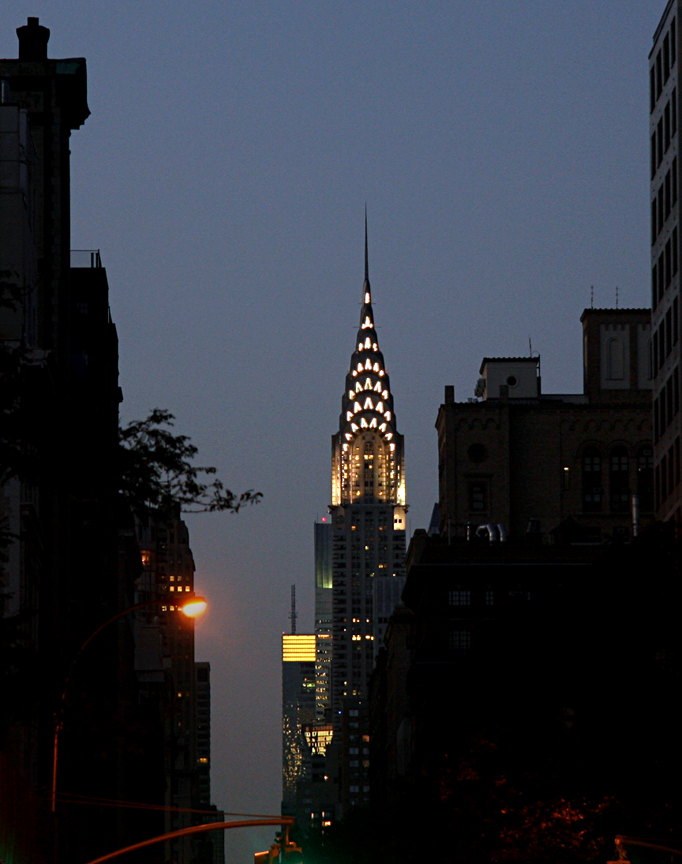
    I never tire of seeing the Chrysler Building, particularly in the evening when lit. I have posted numerous times on various aspects of the building, such as the gargoyles, elevators, lobby, murals, entrance, and the Trylon Towers. Since 9/11, most large office buildings have increased security, and in the case of the Chrysler Building (and Woolworth Building), they are off-limits entirely, unless one has specific business in the building.

    During Open House New York 2006, I was able to get into the lobby and stairwells and photograph at my leisure. For me, the Chrysler Building is many things: assurance that there is some permanence in a world of change, a link to old New York, a beautiful art deco masterpiece, a metaphor for our aspirations, dreams, and hopes with its gleaming stainless steel spire reaching upwards, and a reliable NYC icon, letting me know at a glance, without any doubt, of where I am…

    Chrysler Building Posts: Crown Jewel, Gargoyles, Stairwell, Back in Time, Mural, Going Up, Trylon Towers, Contrast


  • Building Gone Wild

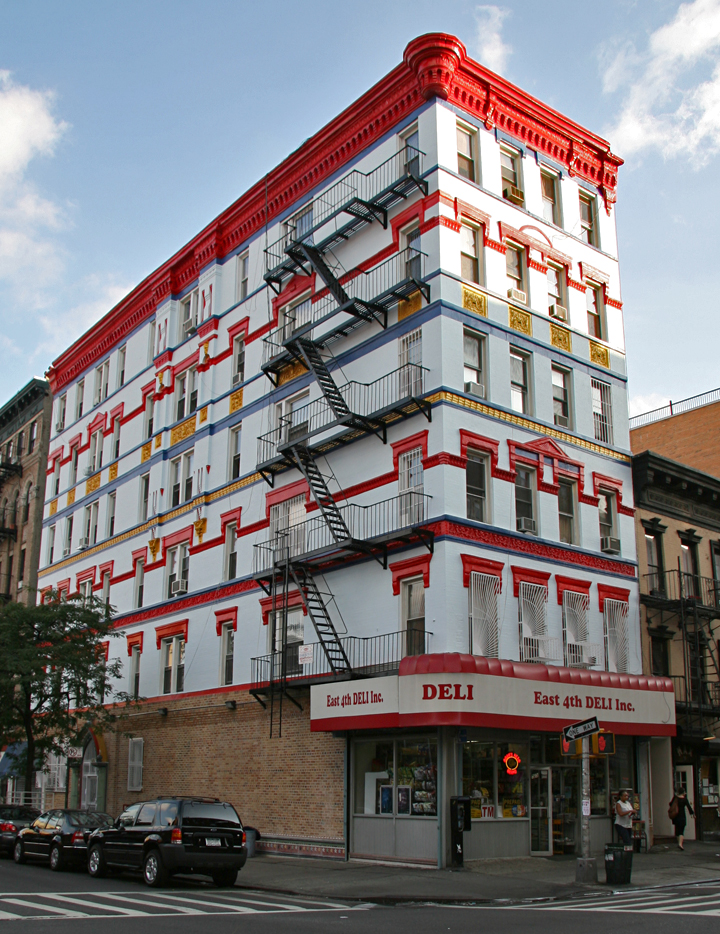
    The building in this photo, located at 246 East 4th Street at Avenue B in the East Village, is a mystery. The raison d’etre for the super bright colors, the history, the architecture with its friezes and exterior sculptures, etc. are unknown to me. The red, blue, gold, and white painted structure stands out dramatically from anything around it and screams for attention. There are virtually no references to it online. I did find two residents in a phone directory who are doing business from the building.

    I also found a reference to “Otnoob,” which appears to have a retail canopy (all I could find about the word “Otnoob” is a World of Warcraft character – a human, rogue). If you are interested in finding this place, the East 4th Deli at 53 Avenue B is located in the same building, but I don’t think you will miss it 🙂


  • Nap

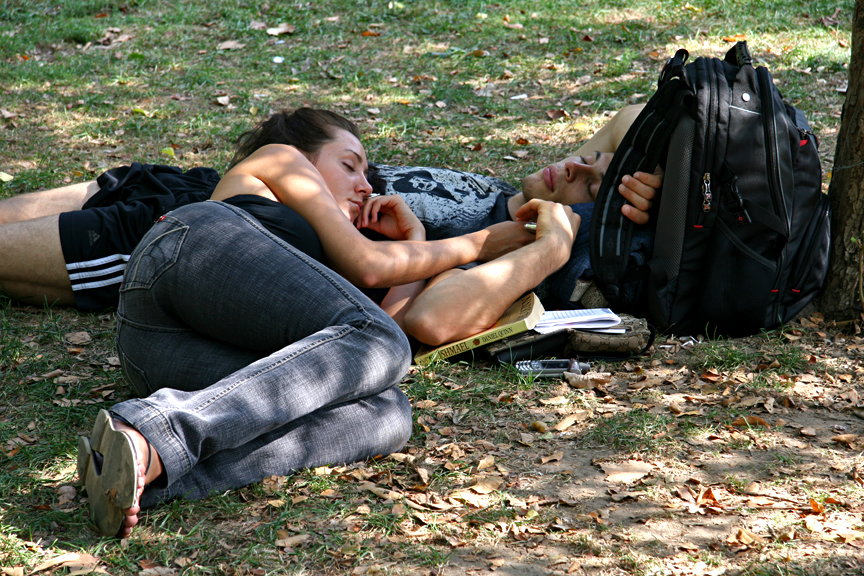
    There was something so incredibly relaxing about this couple. Perhaps it was their ability to sleep outdoors with the trust and self-assurance it requires. Or perhaps the bliss of youth, where the burdens and baggage of life have not yet accumulated. The gentleness of their embrace. Maybe the dappled light on a beautiful afternoon with the gift of an atypically warm day.

    Many people have problems sleeping, and taking a nap in a public place is probably inconceivable to them. The U.S. Department of Health reports that approximately 60 million Americans suffer from insomnia each year. The problem increases as one ages. So, for those of you who have no problem sleeping, celebrate and take a nap outdoors on a sunny day. Be careful, though – there are local ordinances against sleeping in public places (with some controversy) which are sometimes enforced…

    Note about naps: There are individuals who have experimented with polyphasic sleeping, an alternate sleeping pattern where the total number of hours slept in a day is substantially reduced by taking short naps at regular intervals (in lieu of sleeping a typical single session). In a popular variant, the Uberman’s Sleep Schedule, one takes six naps of 20–25 minutes each four hours apart throughout the day. Polyphasic sleep was most extensively studied by Dr. Claudio Stampi.

    Photo Note: The book being read? Ishmael by Daniel Quinn. Plot: A Socratic dialogue between and narrator Alan Lomax and a telepathic gorilla (Ishmael). Sounds interesting.

    RELATED POSTINGS: Dead to the World, The Art of Kissing, PDA, War and Peace, Signs of Summer, Extreme Camping, Caravan of Dreams, Aspiration, Stephanie


  • Oktoberfest New York

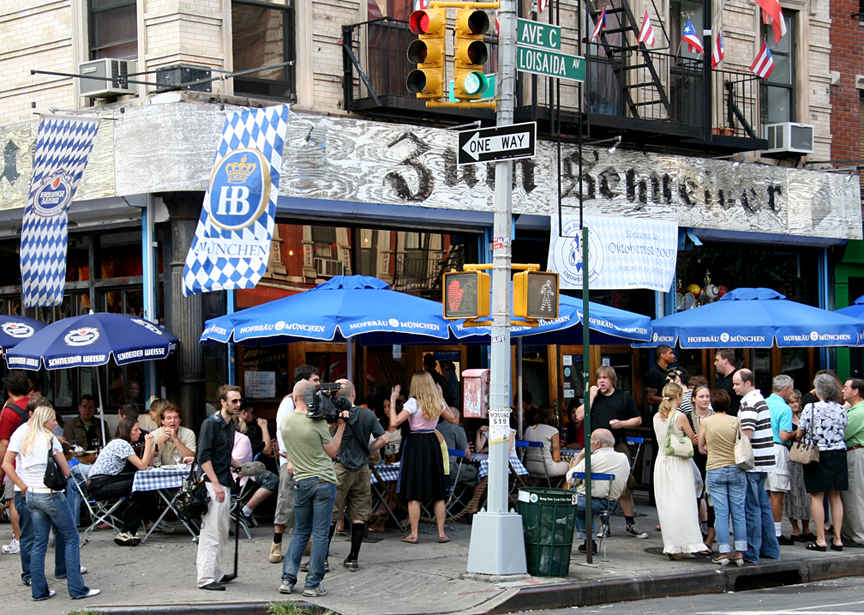
    Until yesterday, I did not realize that there was a place in Manhattan where one could have a serious, authentic Oktoberfest celebration. While strolling down Avenue C in the East Village, a friend and I stumbled upon Zum Schneider Restaurant and Biergarten. Festivities were under way, with people spilling out on to the streets, a film crew on the scene, an oompah band musician with his trombone, Schneider Weisse umbrellas, Hofbräu München flags, and, of course, plenty of beer drinking.

    Oktoberfest dates back to 1810, in honor of the Bavarian Crown Prince Ludwig’s marriage to Princess Therese von Sachsen-Hildburghausen. It takes place in Munich (Bavaria) Germany and is the largest fair in the world, with 6 million people attending. The festival lasts over two weeks, ending in October. Fourteen main beer tents are set up, each associated with a different brewery – some hold nearly 10,000 people (click here for more info).

    Zum Schneider was opened in 2000 by Bavarian Sylvester Schneider, who missed summers in the beergarden of his native land (click here for website). So if you’re looking for a Bavarian indoor Biergarten or Oktoberfest in NYC, this looks like the place to be. Neighborhood residents, however, have not been so pleased, but a settlement was reached


  • Cruising

    Depending on where one lives and where and how one travels and commutes, one can experience Manhattan as a maritime community or simply as one of the most exciting and culturally rich cities in the world. In a city like San Francisco or Portland, Maine, with hills and vistas, one is constantly reminded of the sea. In Manhattan, it is easy to become immersed in all that is here without a hint of its island nature. In recent years, the city’s waterfront has become progressively more and more reconstructed and utilized in ways that are sometimes very surprising, even to residents.

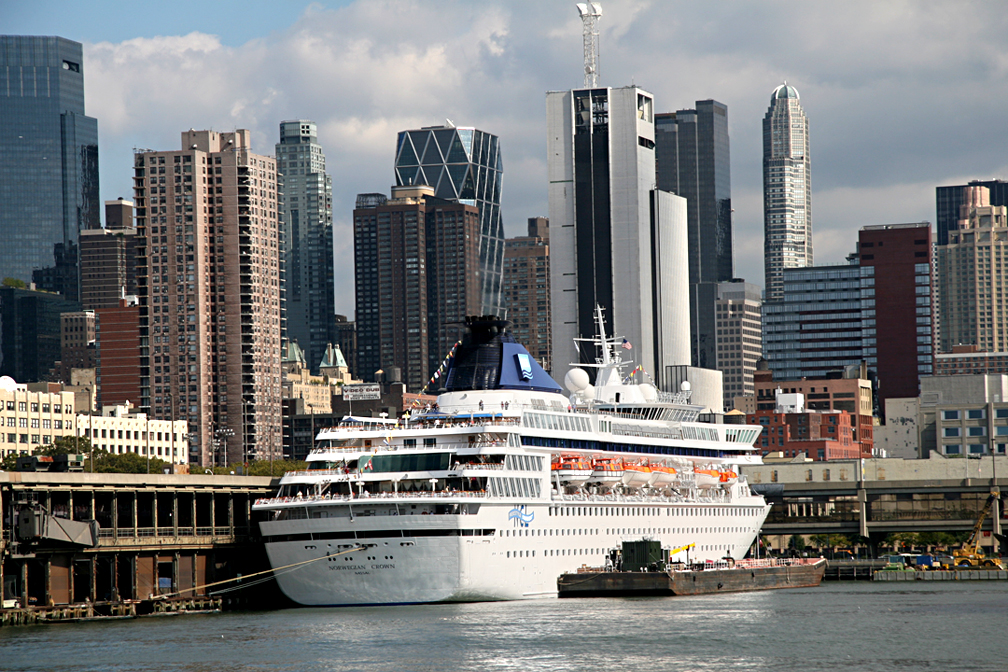
    I have posted on a number waterfront establishments, residences, and activities: Manhattan Island, kayaking in the Hudson River, the Water Club, the River Cafe (Brooklyn), Bargemusic (Brooklyn), the Frying Pan, the 79th Street Boat Basin, Christopher Street Pier, Battery Park City & promenade, art fest in DUMBO, Meier World, Coney Island and The Shore (with the Iceberg Athletic Club and the Coney Island Polar Bear Club), and the wonderful Mermaid Parade (also here). NYC also has a very active cruise ship business at the New York Passenger Ship Terminal (on the Hudson River at Piers 88, 90, 92, and 94 at 46-54th street). The city sees 1,000,000 passengers yearly. The cruise ship terminal is currently undergoing a $150 million renovation. In 2006, the Brooklyn Cruise Terminal opened at Pier 12 in the Red Hook area in Brooklyn.

    Notes about the photo: The glass building at the far left is the Time Warner Center. The articulated building in the center with triangular windows is the Hearst Tower.


  • dinamic_sidebar 4 none

©2026 New York Daily Photo Entries (RSS) and Comments (RSS)  Raindrops Theme