• Bluegrass Reunion

    We have bluegrass here in NYC, too. In fact, it appears that bluegrass and country are making a comeback in the city with a number of venues featuring it, such as the Baggot Inn, the Parkside Lounge, Barbes, Freddys and Hank’s Saloon in Brooklyn, the Rodeo Bar, Joe’s Pub, The Ear Inn, etc. It may come as a surprise that country and bluegrass would have a following in the city, but frequently, people seek out antidotes to the stresses and complexity of living in such an intense urban environment. Music can be a great release, and complete immersion in a genre like bluegrass, where the lyrics hearken back to a simpler time, can really have a therapeutic effect. Country and bluegrass have had an image stigma , but in many ways, things don’t change that much as far as interpersonal relationships, and perhaps this is why these music genres, with their stories and lyrics, still resonate and find an audience, even among the “sophisticated.”

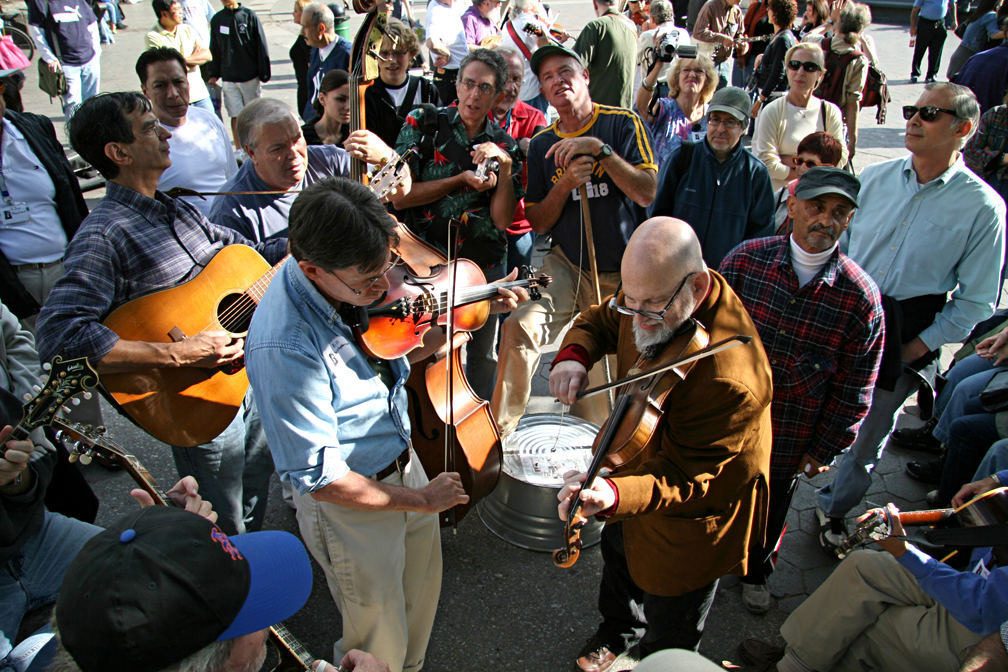
    The event in the photo was the annual Bluegrass Reunion in Washington Square Park, which was organized by Jeannie (see website here) and draws hundreds, some coming from afar. It’s a true reunion, too; some of the participants have not seen each other for years. The music and weather was great, with numerous little jam sessions happening spontaneously. There were music world luminaries such as Izzy Young and Art D’Lugoff. There were guitars, mandolins, fiddles, double basses, banjos, washtub basses, and the amazing Bob Gurland playing mouth trumpet…
  • Urban Bike Polo

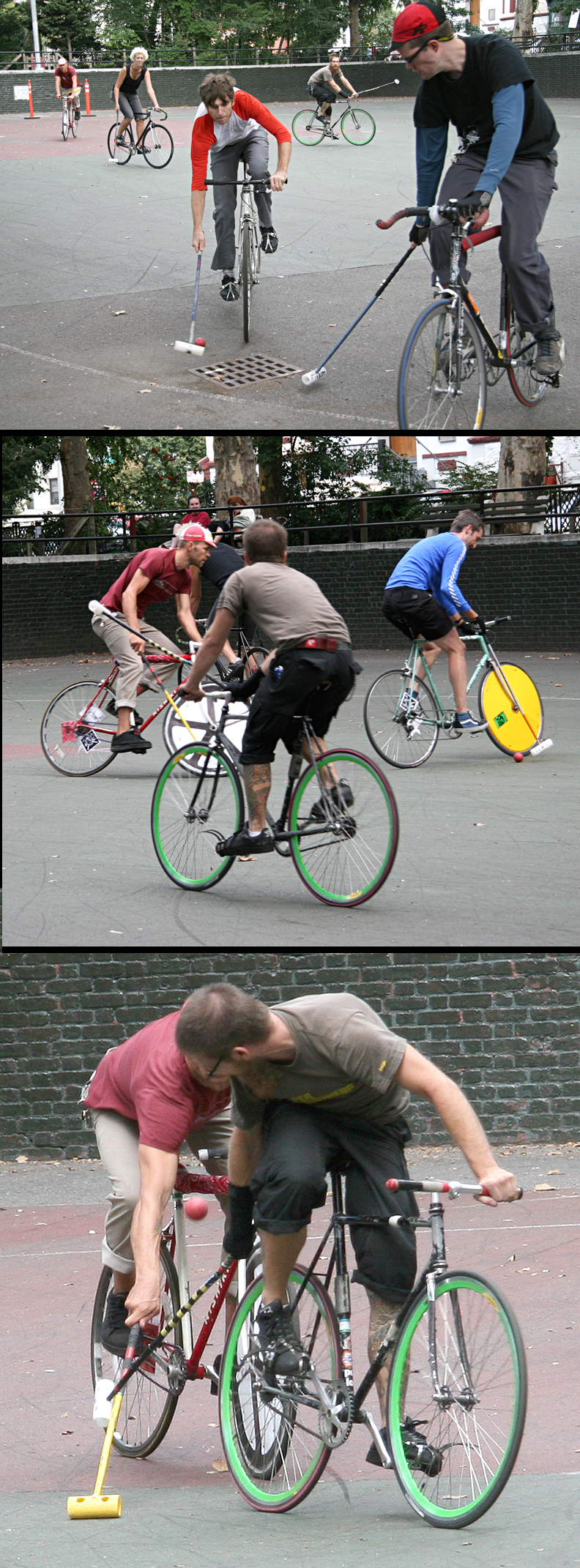
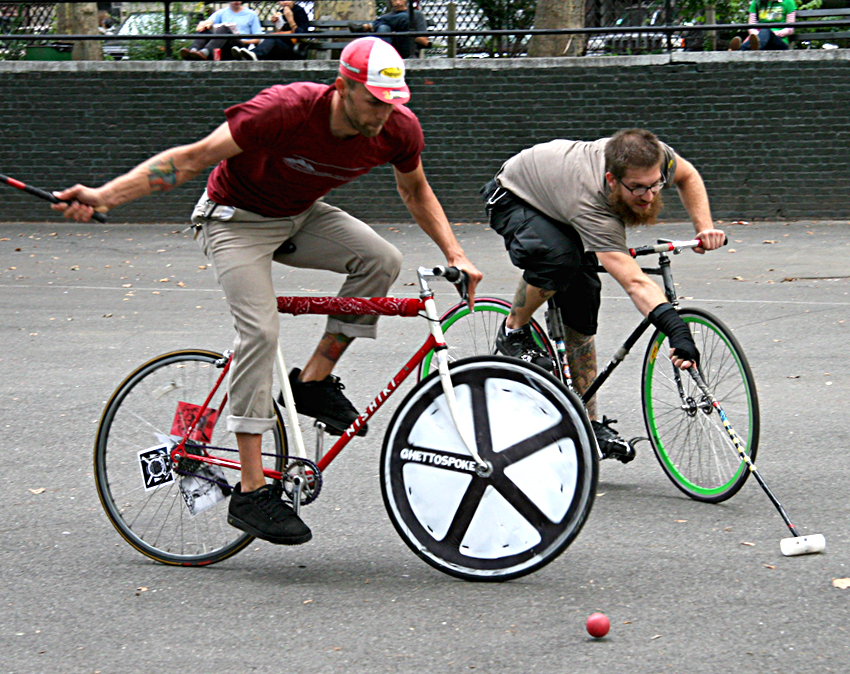
    I really thought I was witnessing something relatively new, probably developed in NYC. An urban-styled twist on a classic sport. But as it turns out, Bike Polo, Cycle Polo, or Bicycle Polo has been around since the late 1800s. It was invented in Ireland in 1891 by Richard J. Mecredy and was played as early as 1900 by the British army and the Indian Maharajas. It is a relatively formalized sport, played on a court (typically grass) with various rules and regulations governing play and equipment. This is the sober, suburban version (click here for the American Bicycle Polo Association). The game I ran across (shown in the photo) was in the Sara D. Roosevelt Park in the Lower East Side (click here for more photos).

    What we are seeing here is Urban Bike Polo, a much rougher variation with fewer rules and equipment which has evolved for the urban environment, with traffic cones for goal posts, street hockey balls, plastic mallets, and most often track bikes (fixed gear). It’s bike messenger-style meets polo. And as I read further, I found, of course, that there is a world associated with this activity – websites, newspaper and magazine articles, equipment vendors, teams, clubs, championships, and hundreds of videos on YouTube, including one taken with a malletcam (video camera installed in a mallet) (update 1/19/12: Video is private). One NYC team is appropriately named the Ratkillers. Makes me feel like where have I been and why was I the last to know?


  • Myers of Keswick

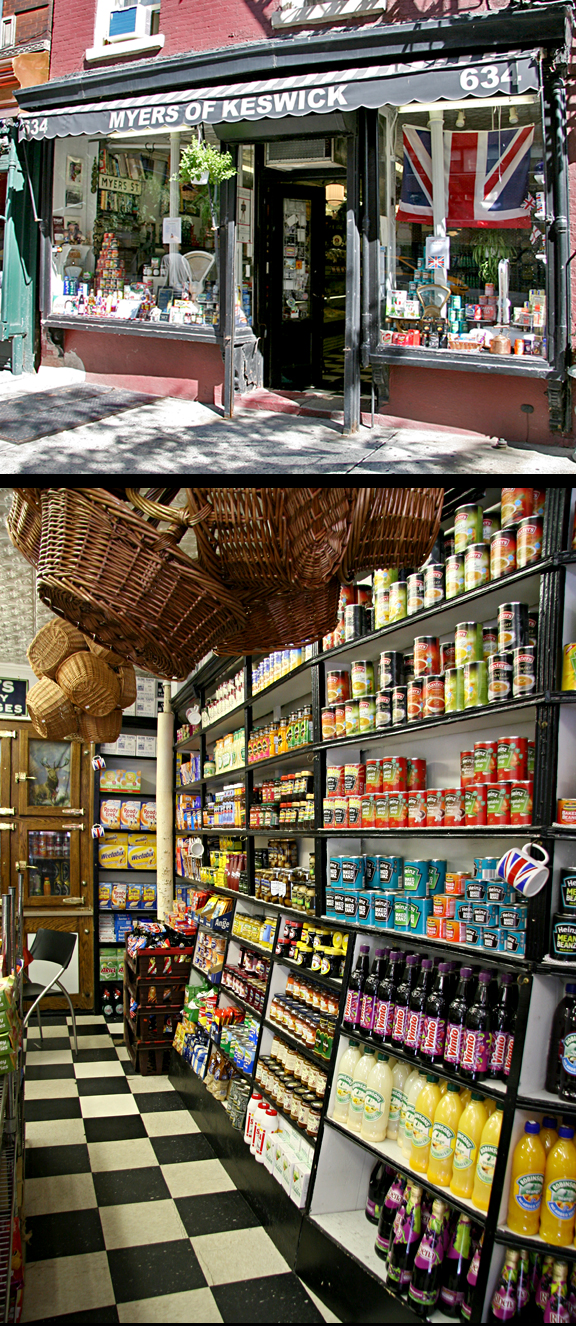
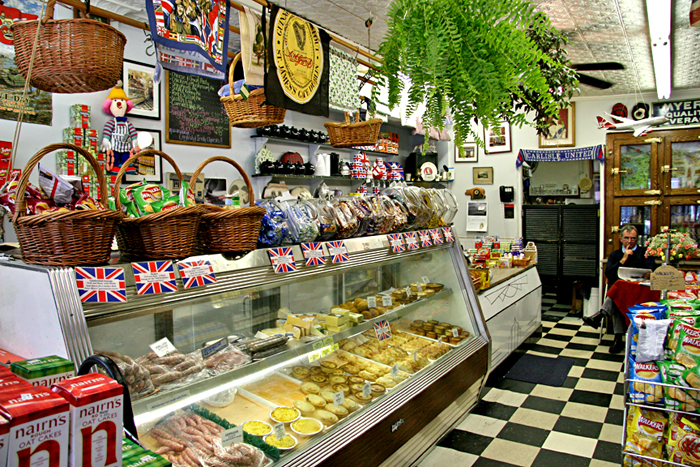
    There are an estimated 100,000 Brits in New York City (and 250,000 in the Tri-state area – New York, New Jersey, and Connecticut). And, like any ethnic or cultural group, someone has to cater to their culinary needs. Peter Myers, of Keswick in the Lake district of England, came to the United States in 1972. On July 4th, 1985, Peter and his wife Irene, opened Myers of Keswick. You can read the entire story here at the shop’s website.

    This small, quaint shop is located at 634 Hudson Street in the West Village – the ambiance is one of a country store. Click here for more photos. British cuisine and foods do not have a large following, so it was not surprising to learn from Peter that nearly all of the store’s clientele is of British ancestry. Many make a pilgrimage, coming from as far away as New Hampshire or Virginia to stock up on goods. Myers offers an array of fresh goods (butter and cheese), including authentic homemade classics such as savory pies and sausages (for which they are well known) – Peter is a third-generation sausage maker. They also stock an array of British staples – packaged items such as beans, crisps, cereals, biscuits, soups, jams & marmalades, drinks, teas, sweets, and the infamous Marmite, that substance deemed to be virtually inedible by all but the Brits.

    I am frequently turned down when asking about taking photos, even of commercial or retail establishments, where they stand to gain more exposure. Peter, on the other hand, in stereotypical British style, was quite accommodating – in fact, a little surprised I even asked. That’s him in the rear of the photo…


  • Mr. Moon

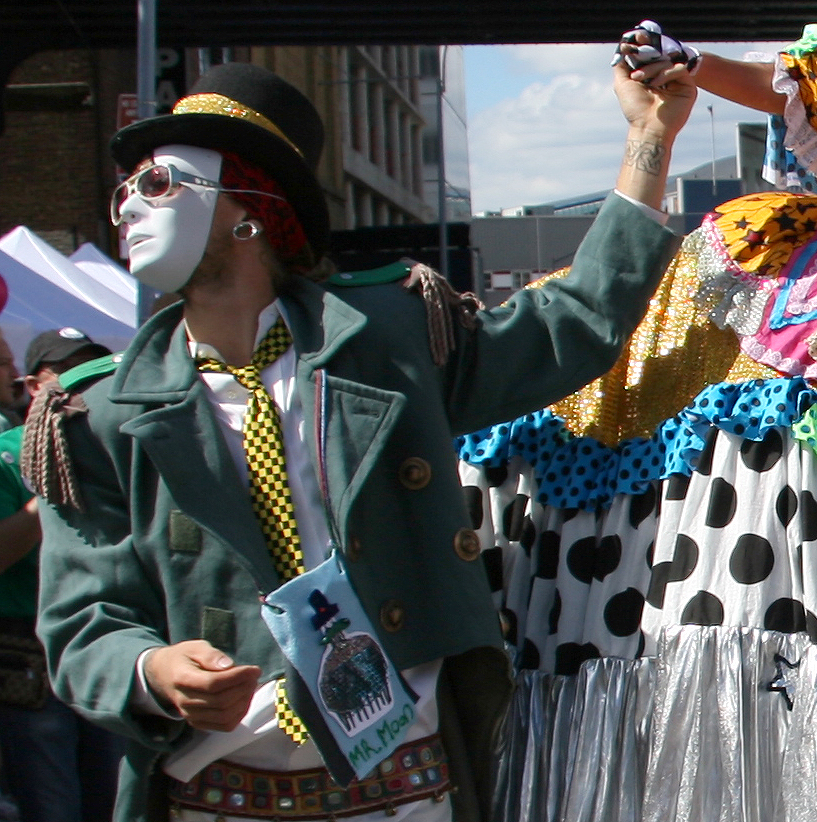
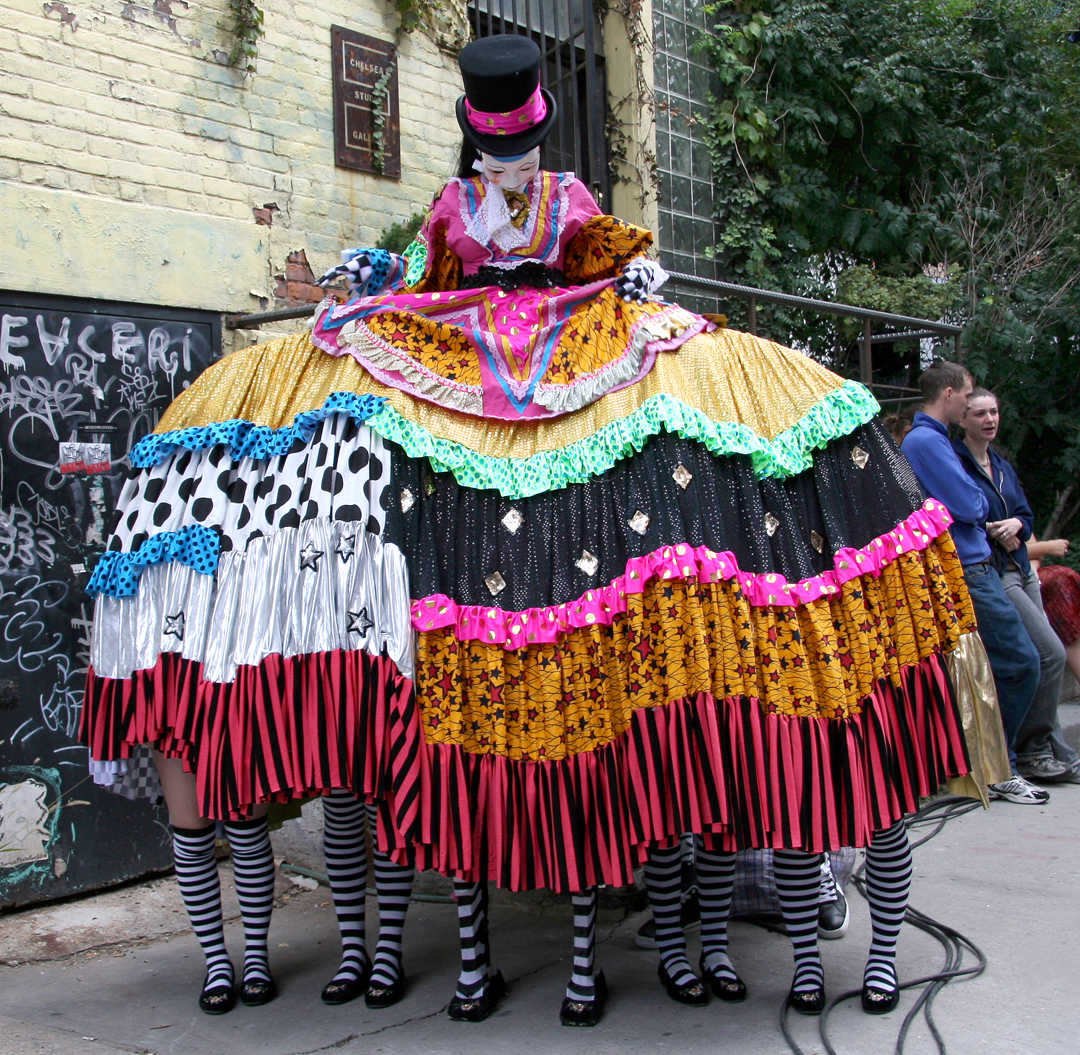
    I had no idea what the inspiration for this was. Unfortunately, I did not get the opportunity to ask; the character and guide were quite busy adjusting the wardrobe and negotiating a slow, careful, coordinated promenade down the block and through the crowd at the recent Kitchen Highline Block Party. Click here for more photos. This was the visual tour de force of the day, with oohs and ahs and cameras snapping. I tried to ascertain whether this beauty is a character of literature, myth, fable, children’s story, opera, ballet, traditional ethnic figure, or is he/she just an original creation? Note that the person who is visible walks on stilts.

    Then, on close examination of the photos I took, I noticed a paper-cutout drawing hanging around the neck of the companion. Enlarging the photo shows what appears to be a multi-limbed character, with the title “Mr. Moon” clearly labeled below it. Click here for the evidence. But is Mr. Moon the main character or guide? An online search reveals a number of characters named Mr. Moon (including a children’s book called Pink Magic). But I don’t find a mention of a multi-legged character. Any suggestions?


  • Pickles

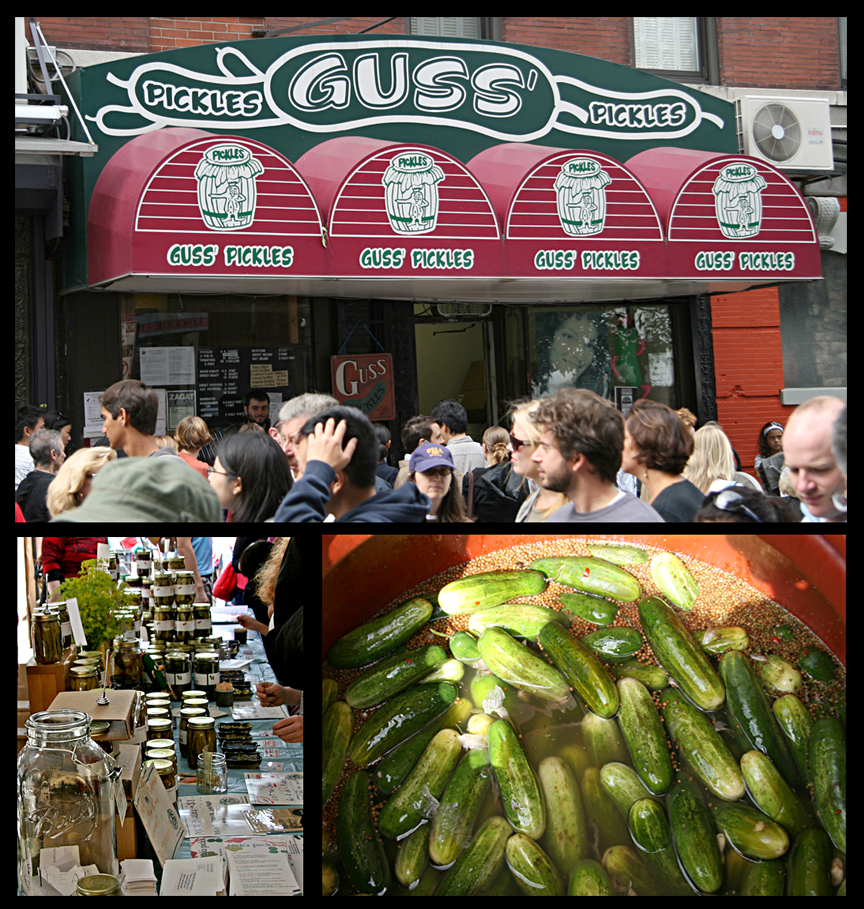
    Sunday was the 7th annual New York City International Pickle Day. I’m not sure we need such a day, but apparently picklers feel that they need equal time, and NYC was pickle country at one time. The festival, co-sponsored by the NY Food Museum and the Lower East Side Business Improvement District (LES BID), was held on Orchard Street between Broome and Grand Streets on the Lower East Side, on the same block as famous pickle vendor Guss’ Pickles (update: In 2010, Guss’ Pickles moved to Borough Park, Brooklyn.). There were pickling demonstrations, children’s activities, tours, exhibits, music, book signings, and, of course, pickles and pickled products for sale and as free samples.

    And Guss’ Pickles? Well, that’s a whole other story and controversy. A hundred years ago, NYC had 200 pickle shops, with half of them in the Lower East Side. Now, virtually all are gone but Guss’ Pickles, founded by Polish immigrant Izzy (Isidor) Guss in 1910. Through a number of twists and turns, there are two companies battling in court over ownership of the name Guss’. Read about the twisted tale here


  • Block Party

    What’s nice about a block party in NYC, as opposed to a typical street fair, is the down-home neighborhood feel and its non-commercial nature. When I lived in Chelsea in my first apartment in the city while in college, I was fortunate to have been on a block that was not only beautiful, with its row of brownstones, but also had a wonderful neighborhood spirit. Like old NYC of film and days gone by. We knew many of our neighbors – stoop sitting and socializing was the norm. It was a nice segue from the country to the city for someone new. The block I lived on was closed on Saturdays during the summer for activities planned by the residents. I don’t see block parties like this in Manhattan anymore – I’m not sure how often they happen (a friend tells me that they are still quite common in Brooklyn). These parties are typically held at a time and place where disruption of traffic will be minimal, such as in Chelsea very far west (West 19th Street between 10th and 11th Avenues, in this case).

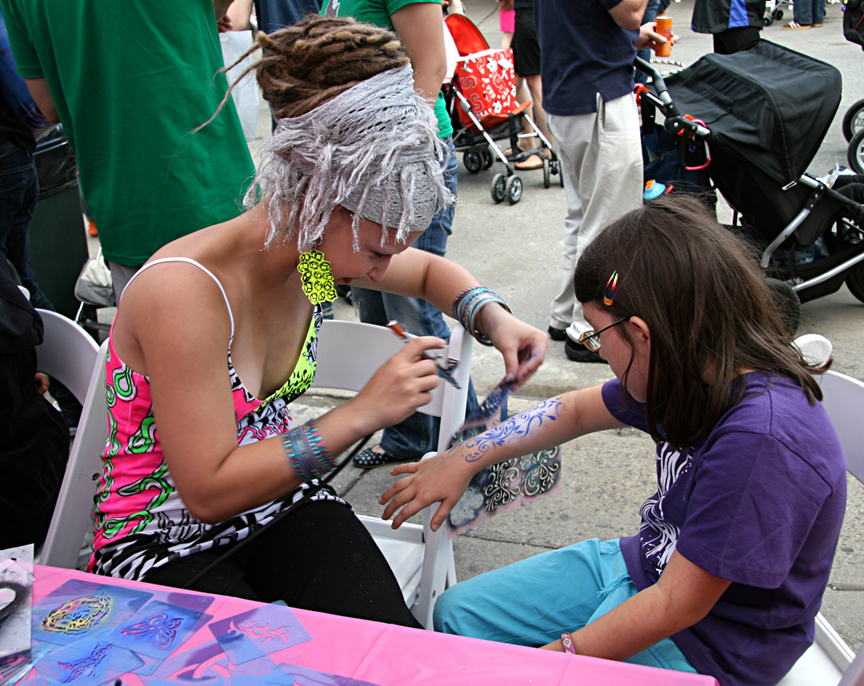
    The Kitchen Highline Block Party (shown in the photo) was produced by the Kitchen (an interdisciplinary art space located on the same block as the party) in collaboration with Friends of the High Line (click here to lean more about the High Line project). There was an entertaining mix of live music, DJs, and other artist-led activities and performances. Hula-hoopers, food, a reptile petting zoo, face painting…


  • Governors Island

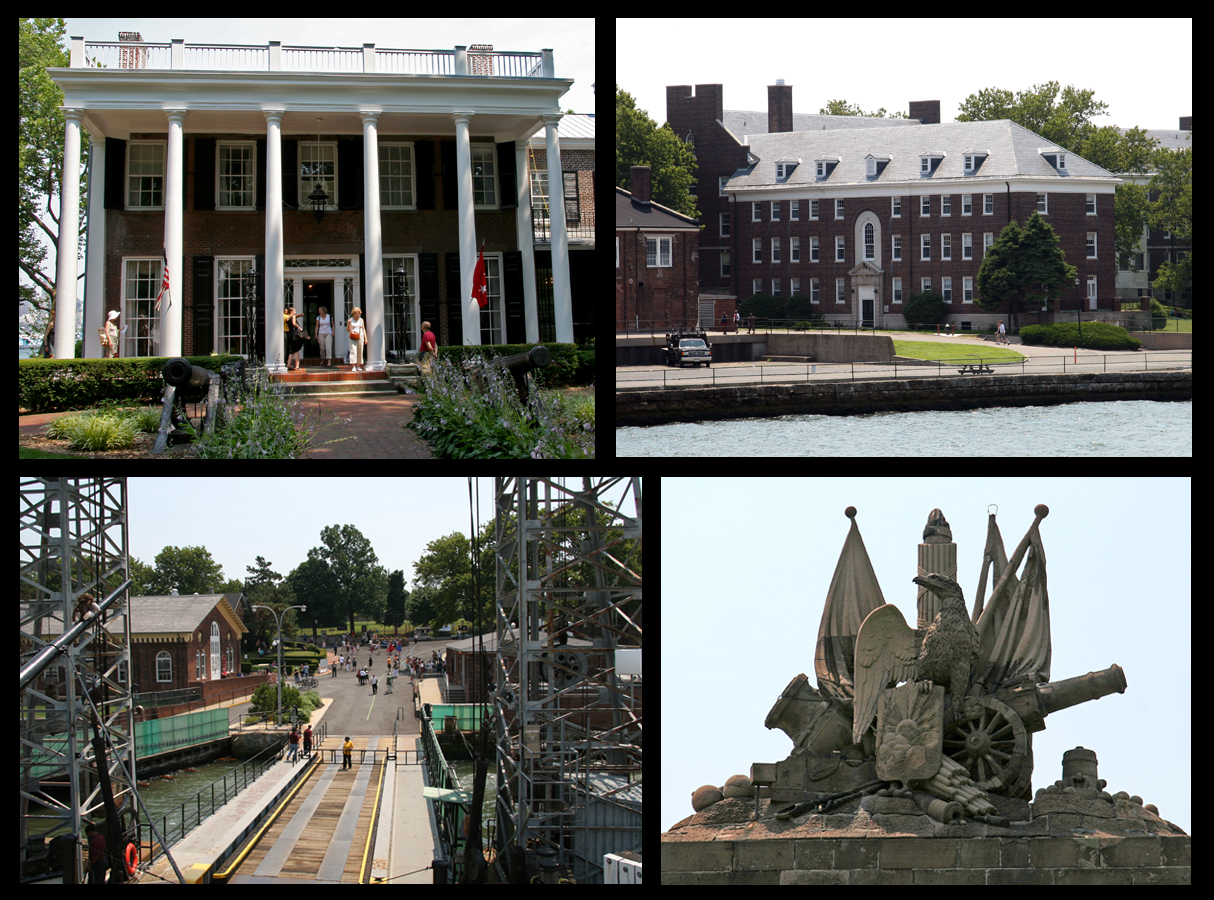
    Shrouded in mystery to most New Yorkers, Governor’s Island has only been opened to the public recently. Since 2003, visitors are permitted during the summer season (by a free ferry). This strategically-placed small island of 172 acres (20% the size of Central Park) in the New York Bay is only 1/2 mile from Manhattan and half that from the Brooklyn waterfront. The island has played a large role in the history of New York; Governor’s Island was the landing place of the first settlers (from the Netherlands) of the tri-state region in 1624 and has been recognized as the birthplace of New York State. First named by the Dutch explorer Adriaen Block, it was called Noten Eylant. In 1664, the English captured New Amsterdam, renaming it New York. The island switched hands between the British and the Dutch over the next 10 years until the British regained exclusive control for the “benefit and accommodation of His Majesty’s Governors,” hence the name. From 1783 to 1966, the island served as a U.S. Army post and from 1966 to 1996 as a major U.S. Coast Guard installation.

    There are over 200 buildings, featuring late 18th- and early 19th-century fortifications, pre-Civil War arsenal buildings, and Victorian and Romanesque Revival housing, as well as early 20th-century neo-classical architecture. Five buildings within the Historic District, including Fort Jay and Castle Williams, are individually listed in the National Register of Historic Places. This plot of prime real estate is a huge asset, with its unique location and spectacular vistas. Yet it lay fallow for years. In January 2001, President Clinton designated 22 acres of the Island, including the two great forts, as the Governors Island National Monument. 92 acres, or about half of the island, is historic district. In 2003, the federal government sold the island to NYC for $1. In 2006, a more proactive position was taken regarding development. Competitive proposals have been made for development, with announcements soon…


  • The Water Club

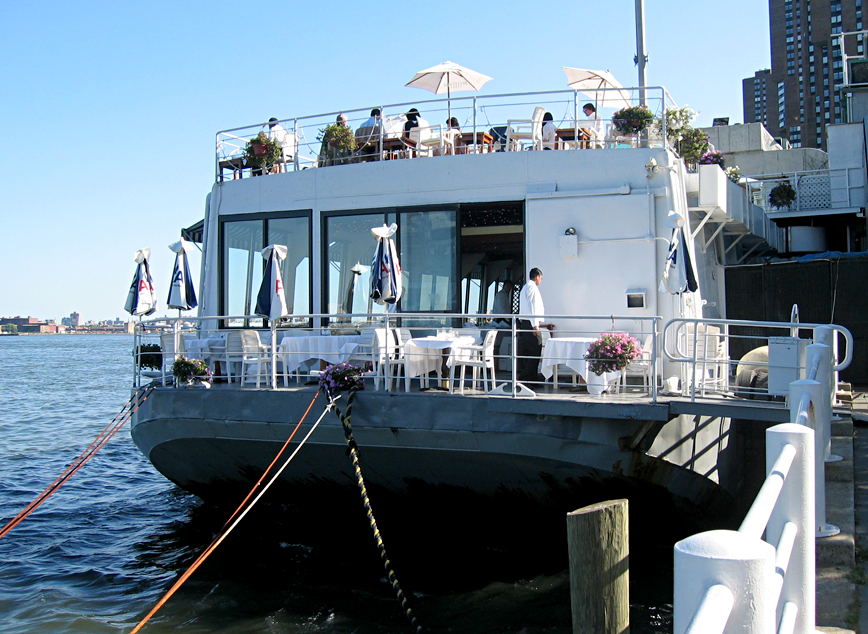
    Manhattan is an island, yet it’s only recently that the waterfront is really beginning to be developed and utilized. It is surprising, given that space is at such a premium, that this huge asset has languished for so long. Now we have things such as the immensely popular Hudson River Park. There have been some earlier forays into waterfront usage: Bargemusic, South Street Seaport, the Intrepid Museum, the 79th Street Boat Basin, Christopher Street Pier, the New York Kayak Club, Battery Park City & promenade, and Chelsea Piers. Restaurants have also entered the fray, with places like the River Cafe, Hudson River Cafe, Harbour Lights, World Yacht, and the Water Club, shown in today’s photo.

    The Water Club is located at East 30th Street in the East River on a moored, renovated barge. In addition to their nautically themed dining room, there is seasonal outdoor dining at the Crow’s Nest, located on the upper deck. Obviously the big draw here are the spectacular vistas from its East River location, with river views from every table. I have not eaten there, however, my understanding is that the food is good, with Kevin Reilly as executive chef. Kevin Reilly (formerly of Union Square Cafe and Zoe) has designed menus for other eating establishments, such as Bamn (click here for a post about this new automat). For more information about menus, etc., click here for their website


  • Theater for the New City

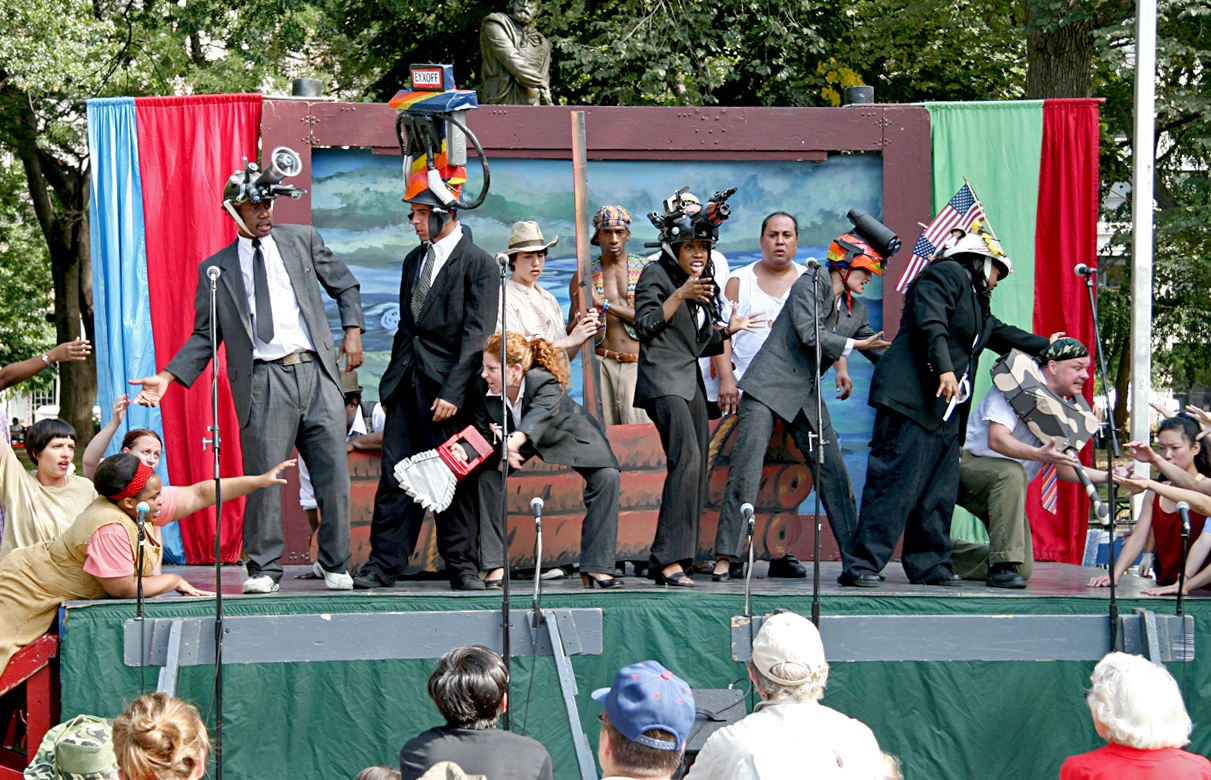
    As a long-time resident of NYC, I am ashamed to admit that I have never been to a performance of Theater for the New City. That still holds true, because even though I did take photographs for this posting, it was at the tail end of a free performance in the park of Buckle Up. TNC is a leading Off-Off Broadway theater known for its avant-garde, experimental work, radical political plays, and widespread community service (click here for their website). In reading about the company, I have become very impressed with their accomplishments – they have won the Pulitzer Prize for Drama and over 40 OBIE Awards for excellence in every theatrical discipline. Nobel Prize winner Gao Xinjian’s first play in America was performed at TNC in 1997.

    The company produces 30-40 premieres of new American plays each year. Many influential theater artists of the last quarter century have found TNC’s Resident Theater Program instrumental to their careers, among them Sam Shepard and Academy Award Winners Tim Robbins and Adrien Brody. Theater for the New City was founded in 1971 by Crystal Field, George Bartenieff, Theo Barnes, and Lawrence Kornfeld. TNC also founded the Village Halloween Parade with puppeteer Ralph Lee (which broke off to form its own organization in 1973); they still hold the annual Village Halloween Costume Ball…


  • Howl!

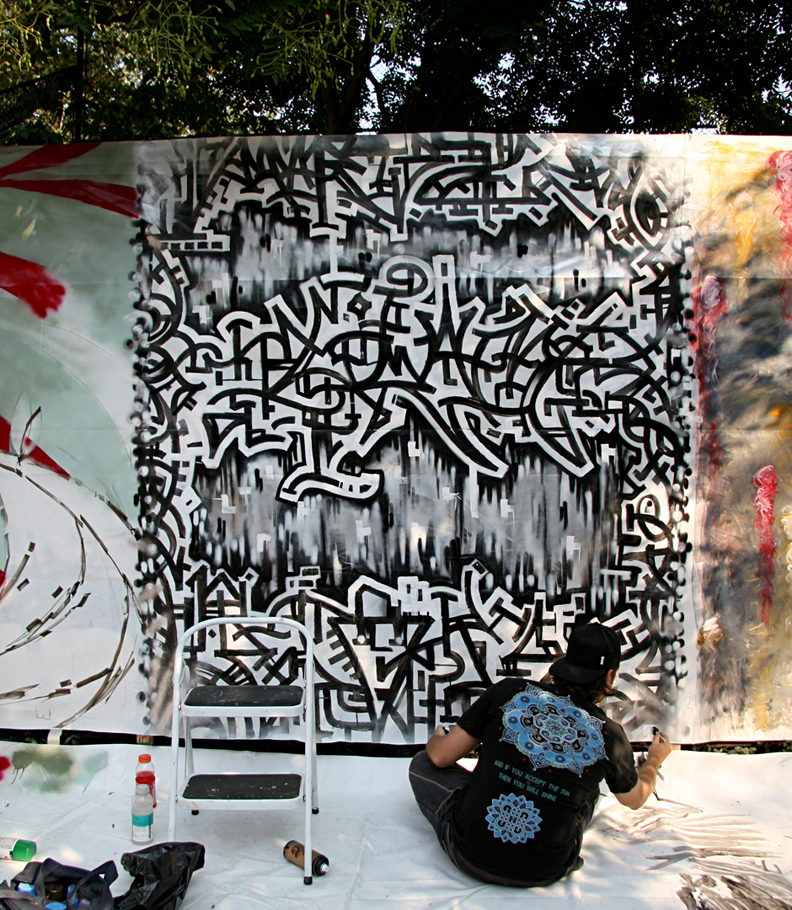
    Howl! is a five-day event which takes place in the East Village (click here for more photos). The name Howl is taken from a poem by Allen Ginsberg, written in 1955 in Berkeley and considered one of the seminal works of the Beat generation. In its fifth year (it was not held in 2006), this art festival is the signature event sponsored by FEVA, the Federation of East Village Artists. For three years, Howl! hosted the legendary dragfest Wigstock.

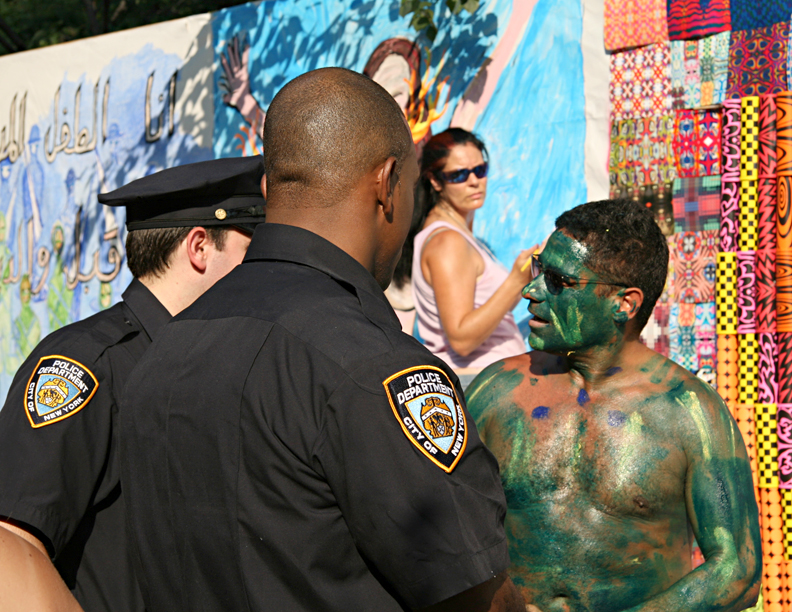
    Howl! is comprised of numerous events in a variety of venues in Tompkins Square Park and in the surrounding neighborhood, with the major activities on Saturday and Sunday in the park. There is a poetry festival (with a reading of Howl, of course), a book expo, musical performances on two stages (Moby was one of the performers), and Art Around the Park (shown in the photo): “ART AROUND THE PARK is a live-action event featuring over 140 artists from the East Village and beyond transforming an eight foot high, 900 feet long canvas into a riotous explosion of color and creativity.”

    A myriad of neighborhood establishments participate: bars, cafes, clubs (such as ABC No Rio and the Bowery Poetry Club), galleries, community gardens, theaters, a museum (Fusion Arts), and places difficult to categorize, such as Bluestockings. The day was calm, however, there was a little altercation with a guy reported to have splattered people with paint (click here)…


  • 911

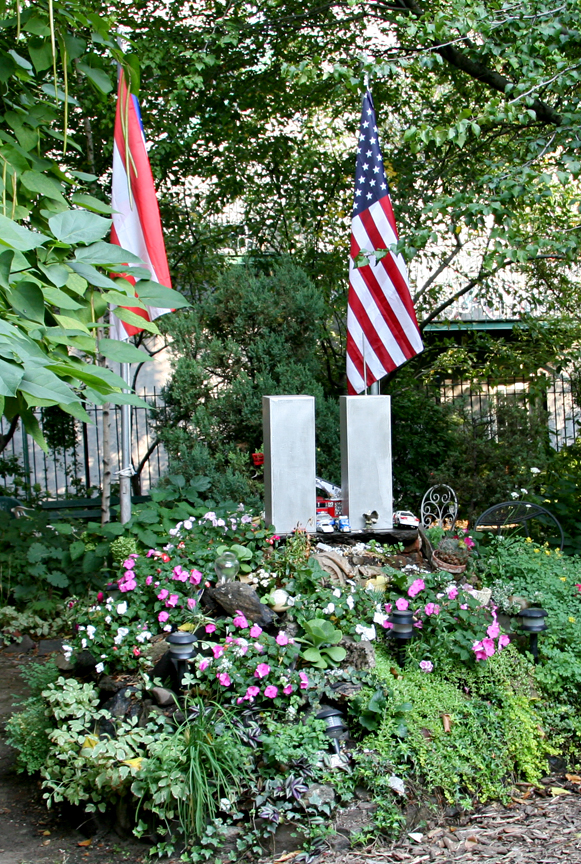
    I came across this memorial with a friend in the 9th Street Community Gardens on Avenue C. We liked the simple, homemade assemblage. It makes a thoughtful statement without fanfare. Today, I let the photo speak for itself.


  • Heirloom Tomatoes

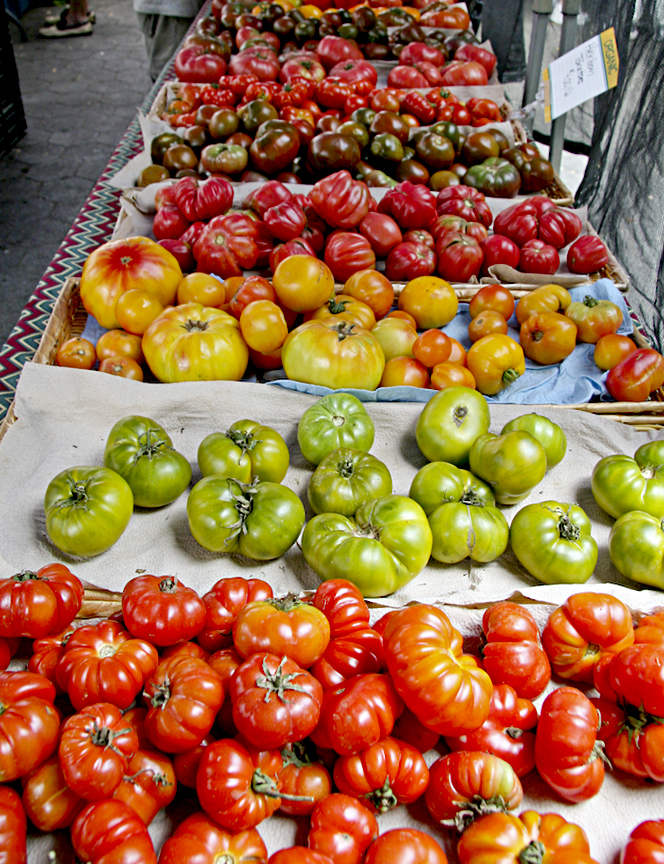
    A photographer friend, Bill, and I routinely visit the farmers market at Union Square (see Union Square, Flora, Union Square Greenmarket, Luna Park Cafe, Metronome, and the fascinating story of Joe Ades – Genteleman Peeler). Bill has done a tremendous amount of fine work photographing fruit (click here). He has spoken of heirloom tomatoes often, yet I only first tried them recently at the Union Square Cafe, where they make an amazing Heirloom salad appetizer.

    Subsequently, on a visit to the farmer’s market at Tompkins Square, I finally purchased my first heirloom tomato and ate it. Heirloom tomatoes are hugely popular in the city right now, and this trend is for good reason. You only have to taste one to see how much flavor we have lost to the products of agribusiness and modern commercial farming.

    The definition of heirloom tomatoes varies somewhat. Some use age of seed strain (50 to 100 years or older), while others may use pre-World War II as a demarcation point. But in the most literal sense, heirloom tomatoes are ones where the cultivar has been nurtured and handed down from generation to generation. It is also generally agreed that they are open-pollinated and with no genetically modified organisms used. There are hundreds of varieties, with names like Mortgage Lifter, Green Grape, Cherokee Purple, Green Zebra, Black Krim, Brandywine, White Wonder, Amish Paste, Stupice, etc. (click here for a sample list).

    If you have not had an heirloom tomato before, I highly recommend that you get yourself to a good farmer’s market as soon as possible and buy at least one. No need to prepare it, just eat it like any fruit, with reckless abandon – watch the juice running down your arm…

    Note about the photo: This was taken yesterday at the farmer’s market (Norwich Meadows Farms stand) at Tompkins Square Park while attending the Howl festival, the subject of another posting this week.


  • Belle de Jour

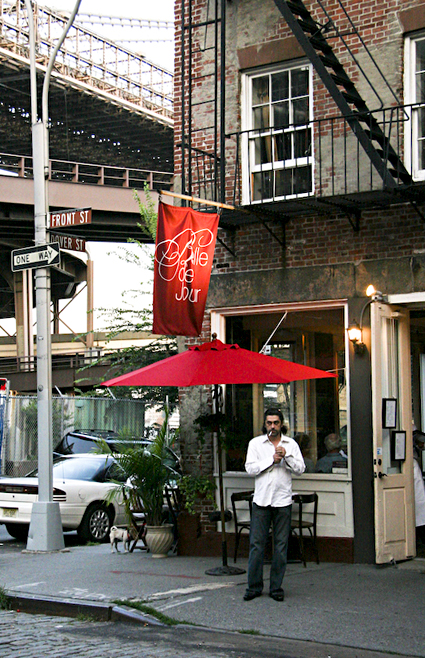
    When I stumbled on this place with a friend, we loved the the whole image – a quaint French restaurant in an obscure location under the Brooklyn Bridge and with what we romanticized to be the defiant, cigarette-smoking Frenchman with attitude out in front. We did not eat here, but my reading of reviews and their website this morning tells me that this place could be a real find.

    The chef, Ovidiu Pastae, previously owned Au Coin du Feu (by the fireplace) in Vence, France and a SoHo sibling by the same name at 222 Lafayette (now closed). His newest restaurant, Belle de Jour Bistro (Update 1/19/12: Website down), opened in April of 2007. It is named after the 1967 French classic film “Belle de Jour,” directed by Luis Bruneul and starring Catherine Deneuve.

    The bistro’s building, located at 259 Front Street in the South Street Seaport area, was a flour mill built in 1809 and designed by Robert Mills, one of the first professional architects in the United States. Working primarily in the Baltimore-Washington area in the neoclassical style, Mills is most well-known for designing the Washington Monument (along with the Department of Treasury and other federal buildings). After locating an article with a photo of Ovidiu (Update 1/19/12: Link no longer works), I am now thinking that the man I caught in my photo may be Ovidiu himself…


  • Zeckendorf

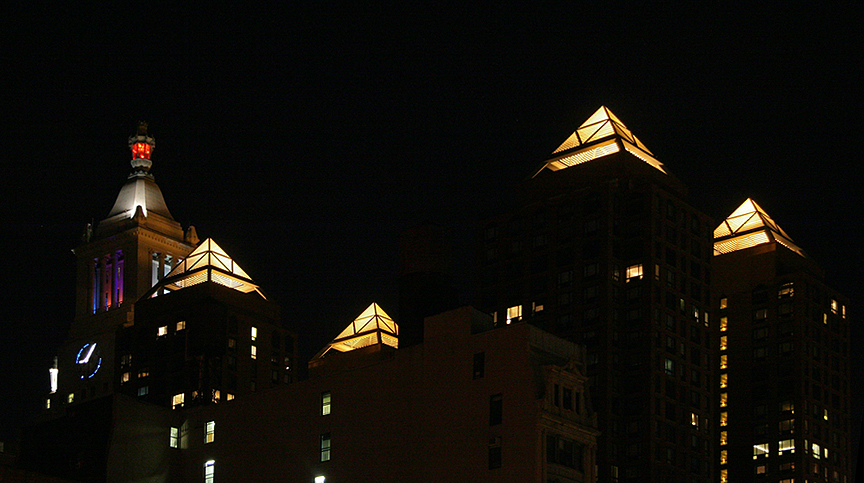
    Real estate developers, along with architects, define the look of a city, and the empire and legacy of William Zeckendorf Sr. (1905-1976), his son William Jr., and grandsons Arthur and William Lie continue to endure and impact New York. These are the Zeckendorf condominiums (read about them here) at One Irving Place, as seen from Union Square in the evening with the Con Ed tower. I have photographed these towers before for this website, but I have not shown all four in one photo. Real estate developers are typically not seen in a very positive light by the average citizen; rather, they are resented by many for their wealth and the power they have over the primary assets of a city – the land and buildings themselves. However, they are absolutely necessary to the city’s infrastructure, growth, and reconstruction, and when there is a good design aesthetic and sensitivity to appropriate architecture, they can be a force for the good.

    William Zeckendorf, Sr. is considered one of America’s foremost developers and has worked with architects I.M. Pei and Le Corbusier. He is credited with projects which were seminal in the redevelopment of troubled areas, such as these towers in Union Square and the Columbia at 96th Street on the Upper West Side. His most notable transaction was taking an option on 17 acres along the East River to build a dream city. Unable to exercise his option, and seeing the city about to lose the United Nations because it was unable to find a location for it, Zeckendorf called Mayor William O’Dwyer, who persuaded Rockefeller to buy the land for $8.5 million and then donate it to the U.N. In 1965, his company Webb & Knapp collapsed and went into bankruptcy. The family business was rebuilt with William Jr. at the helm.

    Style and personality also play a factor in the public’s view of a real estate mogul. Donald Trump, for example, is seen by many as a pompous, arrogant, egotistical media hound with a celebrity lifestyle surrounded by supermodels. Combine that with buildings known for their veneer, and one could understand why architecture critic Paul Goldberger once referred to his work as the “triumph of image over substance”…


  • Knotted Gun

    The United Nations is one of those places perhaps visited once (at best) by residents and perhaps not at all by the independent visitor not on a tour. I vaguely remember visiting and touring long ago as part of a high school trip before I lived in the city. The image of the United Nations itself has become somewhat tarnished as time passes, with various issues and problems – enforcement of Security Council resolutions, bureaucratic inefficiency, etc. – leaving even less reason to find itself on the visitor’s list. But it is still worth a visit.

    The large complex is unusually spacious for NYC and abuts the East River. In addition to the vistas and various buildings (which can be toured), there are gardens and outdoor sculptures. The work shown in the photo of a 45-caliber revolver with its barrel knotted is titled Non-Violence and is frequently referred to as the “knotted gun.” It was created by Swedish sculptor Carl FredrikReutersward in 1980. A cast metal version was gifted by Luxembourg to the United Nations in 1988. The piece makes an immediate impression, with its message quite clear. The inspiration for the piece was the death of John Lennon, a friend of the sculptor’s…


  • dinamic_sidebar 4 none

©2026 New York Daily Photo Entries (RSS) and Comments (RSS)  Raindrops Theme