• La Esquina

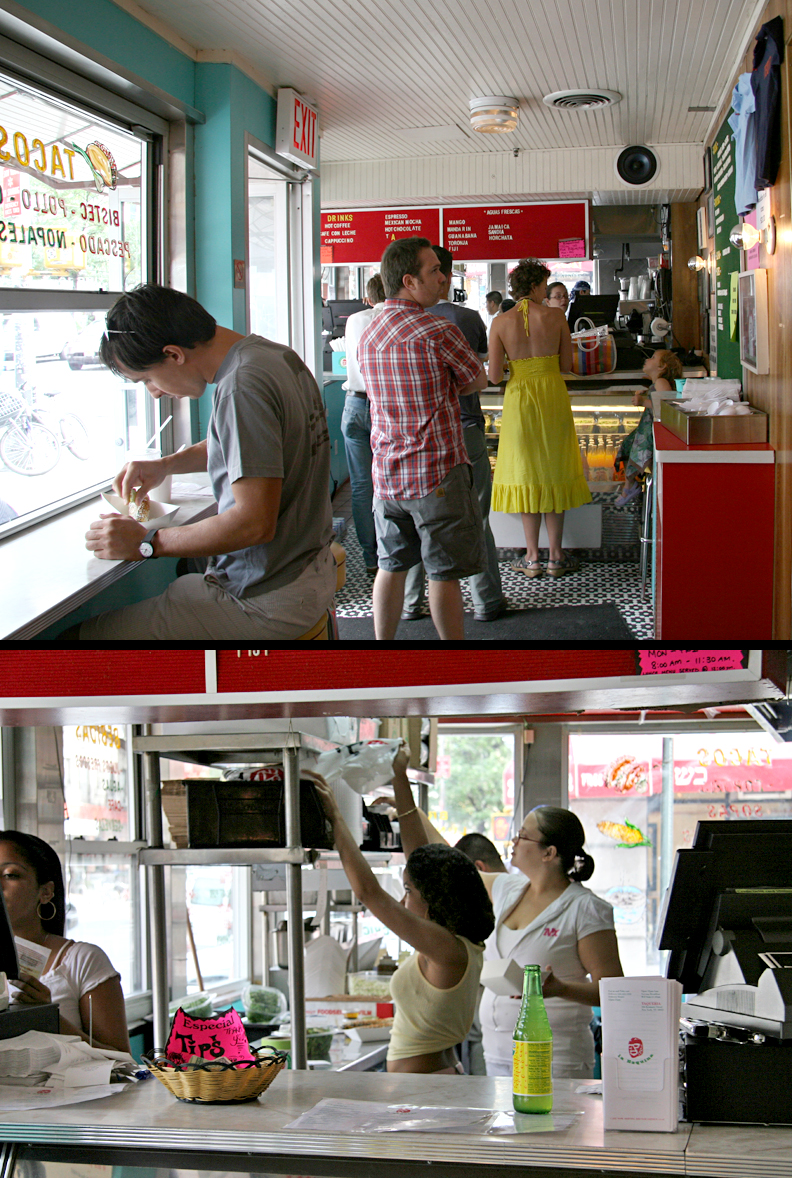
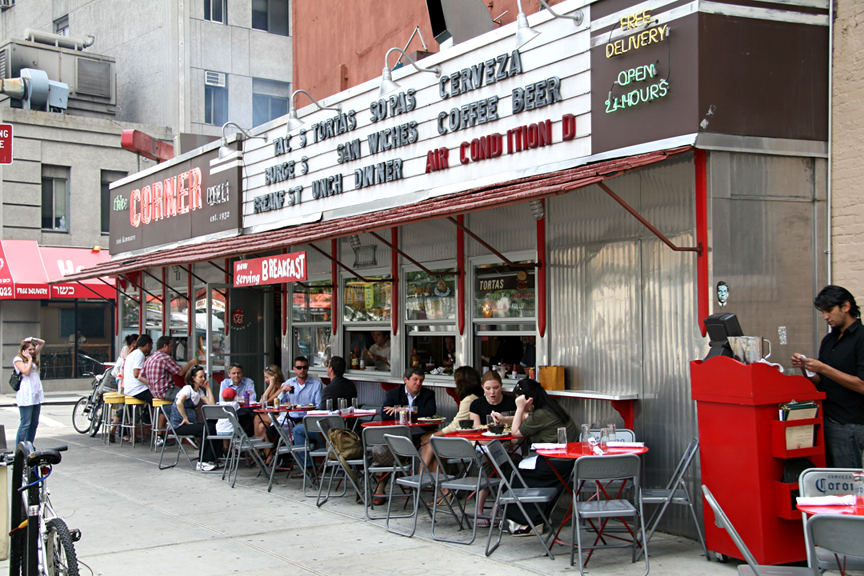
    Here’s a place steeped in buzz, controversy, stories, and articles. 106 Kenmare was the home of the Corner Deli, a mom-and-pop operation since 1932, set up in a tiny, wedge-shaped diner in a neighborhood now known as NoLita. Click here for a look inside. The place was purchased by partners Serge Becker (Lure Fishbar, Area, B Bar, Joe’s Pub), architect Derek Sanders, Cordell Lochin, and restaurateur James Gersten. It is now home to La Esquina, both a street-level Tacqueria (with a menu developed by Café Habana founder Richard Ampudia) and a restaurant located underground. The restaurant downstairs is where the controversy lies, some even calling the Tacqueria a front for the restaurant. The entrance is a door marked “Employees Only” leading via a convoluted route past a kitchen downstairs to a subterranean dining room with a unique decor (I have not been there).

    Bouncers, lists – the scene is reminiscent of the nightclub days of the 1980s with their “exclusive” admittance policies (Studio 54, Mudd Club, et al.). But I am intrigued and will investigate getting into the restaurant. When I first visited the Tacqueria soon after it opened in 2005, the place was insanely packed. Lines and chaos prevailed. Since then, things have calmed down, and getting a meal there is now a much more civilized affair. Our office gets lunch there regularly, and it has become a favorite. You can take out or eat outdoors at the small tables…
  • Hollyhock

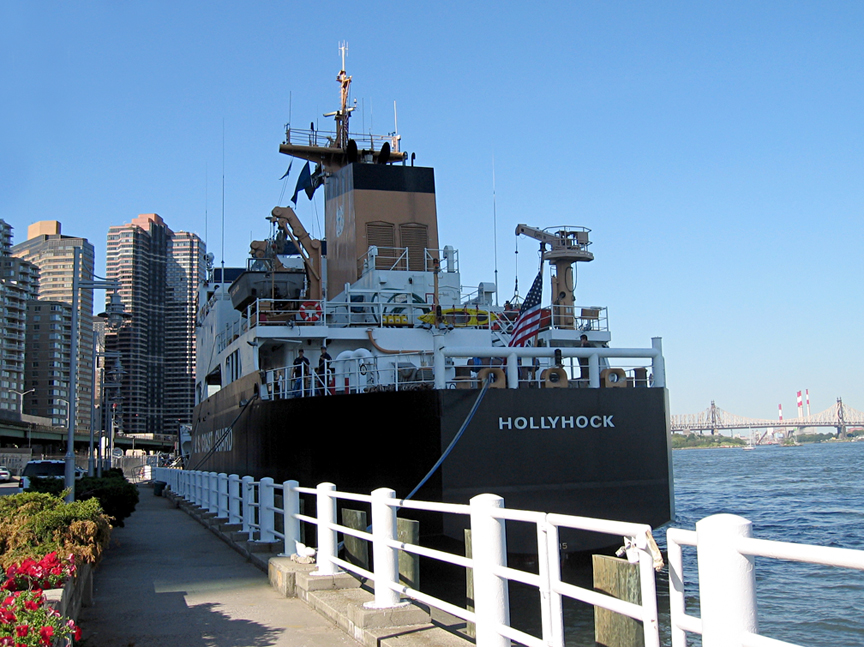
    As I have written before, it is easy in Manhattan to forget that this is an island. Which means that we are surrounded by water. So with the glorious weather we have had, I mounted my bicycle and, armed with a camera, made a short pilgrimage to the East River to see what I could see. To my surprise, I came across an enormous vessel – a U.S. Coast Guard cutter ship named Hollyhock, docked for a few days just north of the Water Club (a waterside restaurant), who permitted them to dock in their waters. Military force personnel always seem very happy to engage in conversation with civilians. According to a crew member with whom I spoke, the Hollyhock was on patrol and had traveled from its home base in Port Huron, Michigan via the St. Lawrence Seaway to NYC. Click here for a photo of two crew members examining my New York Daily Photo business card.

    In reading about the ship, I came across things like, “The Hollyhock is a 225-foot Juniper-class seagoing buoy tender that was launched January 25, 2003 in Marinette, Wisconsin.” Clarification was needed, so I read that “the Seagoing Buoy Tender is a class of U.S. Coast Guard Cutter originally designed to service aids to navigation, throughout the waters of the United States, and wherever U.S. shipping interests require.” Perhaps not the type of thing that excites most readers, but this ship does represent the latest in shipbuilding, propulsion, and ship control technology, allowing it to use a smaller crew. “A dynamic positioning system can hold the vessel within a 10-meter circle using GPS technology, allowing the crew to service and position navigation buoys more efficiently than before in 30-knot winds and 8-foot seas.”


  • Carnival Day

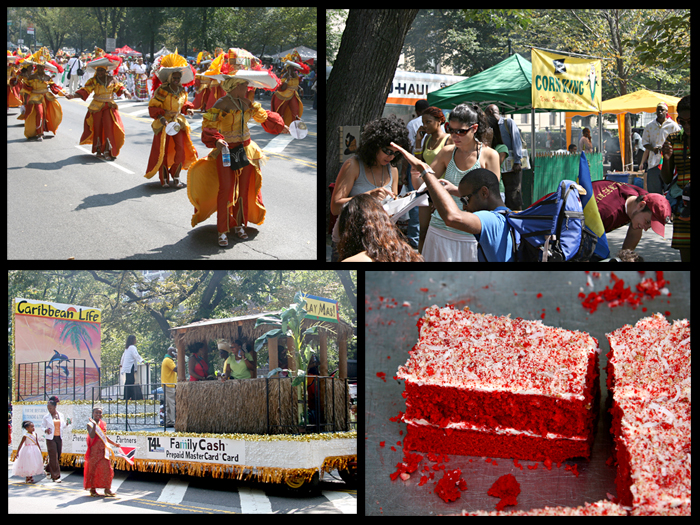
    According to the West Indian American Day Carnival Association website, this is the largest summer festival in the United States, with over 2 million attending. Brooklyn has a huge West Indian population, so it not surprising that the Caribbean carnival takes place there. Now it in its 40th year, the event culminates on Labor Day with a parade along 15 blocks of Eastern Parkway from Utica Ave. to Grand Army Plaza (read about the parade’s history here). There are a series of events leading up to the Labor Day extravaganza, such as Dimanche Gras, which features a costume competition.

    This festival/carnival is about food, music, costumes, and the parade. There’s lots of food on both sides of Eastern Parkway for the entire length of the parade route, with barbecuing and tell-tale smoke everywhere. Eastern Parkway is a beautiful, wide, tree-lined boulevard (also home to the Brooklyn Museum). The food is authentic West Indian cuisine, spanning the range represented by the various island nations, with specialties such as jerk chicken, oxtail, macaroni pie, fried flying fish, curry goat, roti, callaloo, souse, salt fish, fried bake, and coconut bread. The music was very loud, from the parade floats, vendors, and the spectators. The festival officially runs from 8AM to 6 PM. Unfortunately, I did not stay long enough to see the best costumes, judging from last year’s photos.

    Note: that’s red velvet cake in the lower right photo…


  • Parrots

    Tropical birds and other exotic animals are occasionally sighted in NYC, and with such a large, varied population, one will even catch some outrageous scenes, like the guy who has a large snake, macaw, and small alligator (click here) or a huge spectacular Albino Burmese Python slithering on the ground in Central Park (click here). I also saw two magnificent macaws on Earth Day earlier this year.

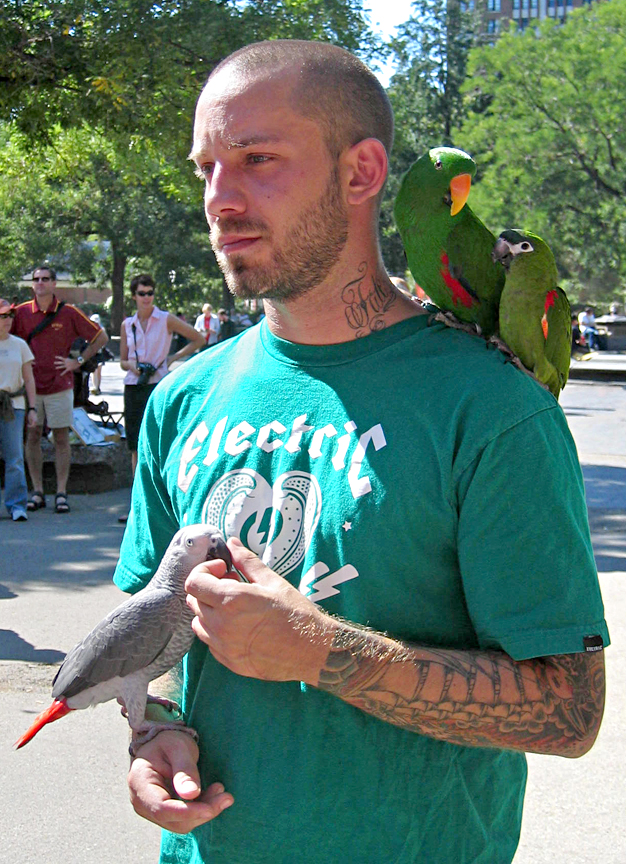
    The person in today’s photo was an audience member (as was I) attending a free performance by Circus Amok (see previous posting here). The birds were extremely charming and got their share of attention – no surprise in light of their cute antics and the brightly colored plumage of tropical birds. The gray bird is a Congo African Grey Parrot. The larger of the two on the owner’s shoulder is a an Eclectus Parrot; the smaller is a Hans Mini Macaw (owned by his girlfriend).

    As enticing as these birds are, the point here is not to promote the ownership of exotic animals. The entire subject is controversial, not only with issues of birds being taken from the wild but also with domestically raised birds – some individuals have concerns with keeping birds in cages or other confined environments. Also, of course, comes the responsibility and commitment – birds can form bonds with their owners, and they can be destructive and need training. And then there is a very different kind of bird


  • Verizon

    You won’t find this in any tour books. In fact, I doubt that you would find this in any books at all. There is also virtually nothing online. There is very little reason for most visitors or NYC residents to be in this immediate area across from 1 Police Plaza, circumscribed by various thoroughfares and ramps for the Brooklyn Bridge and FDR Drive. The streets around it are relatively unknown, even to residents: Pearl Street, Madison Street, Avenue of the Finest, and St. James Place. Why would I want to blog this and bore you, the reader?

    For one, the hulking monolith at 375 Pearl Street, built in 1976 by Rose, Beaton, & Rose, has always intrigued me. And it has achieved a few distinctions – I have seen it on lists of the ugliest buildings in Manhattan. The huge, illuminated Verizon logo with its swoosh, visible for miles around from Brooklyn, parts of Manhattan, and other eastern approaches, is a point of contention with many who liken it to an enormous billboard that ruins views. The sign was installed in 2002, replacing the old bell logo from Bell Atlantic. Verizon was formed in 2000, the product of various mergers and acquisitions with GTE, Bell, and NYNEX. Efforts have been made to have the sign removed, but apparently it complies with the law. Frequently described as windowless, the building does appear to be so. However, closer examination reveals that the distinctive, dark vertical striations along its facade are actually created by columns of glass windows. The building was designed to be a switching hub, but there was difficulty in bringing the lines into the building, so it is used for administrative functions. For the wordsmiths among readers, Verizon is a portmanteau of the words veritas (the Roman goddess of truth) and horizon


  • Summer of Drugs

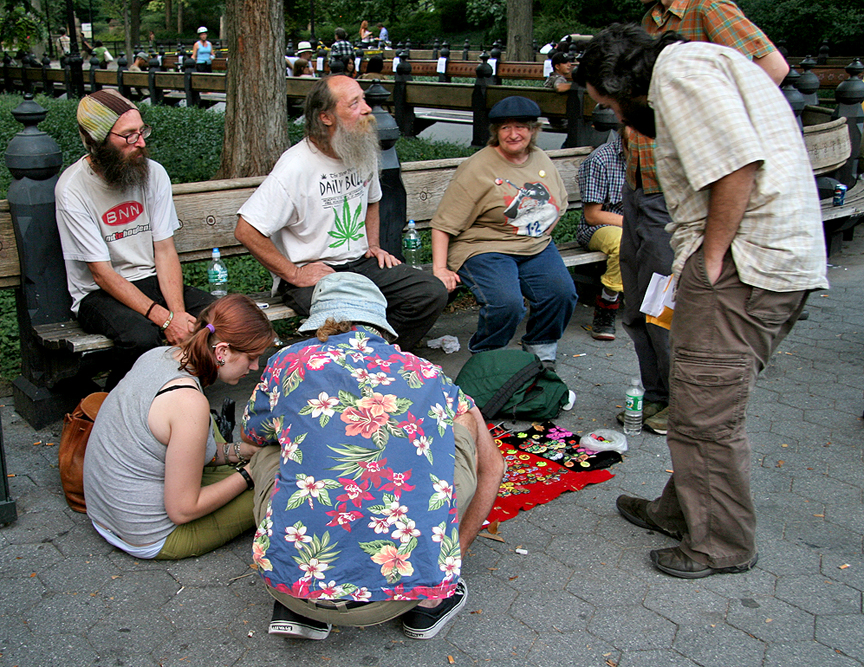
    This year is the 40th anniversary of the Be-In and Summer of Love, which was centered in San Francisco in 1967. Yesterday’s event, Be-In Central Park, was held from 2 – 7:30 PM at the Bandshell and sponsored by the Yippie Museum (click here for previous post). This is the second commemoration of the Be-In in NYC this year (click here for the previous event in Washington Square Park). Live bands were present. I arrived at 6:45 PM to the last band and a very small group – I hope the turnout was better at midday. I found the situation quite sad and depressing. Many of the participants appeared to be hippies, burnouts, drug addicts, marginalized, counter-cultural, or political activists. I don’t think this motley, unkempt group are very good role models for the future. When it comes to advocacy (one recalls Timothy Leary’s “turn on, tune in, and drop out”) I think it is reasonable to judge the message by its messenger(s), and in this case, regardless of how one defines success, I think the drug message has to be called into question.

    Although good things did spring from movements of the 1960s, drugs turned out to be an extremely destructive path, and those who continued to embrace them either paid for it with their lives or are seriously damaged and disadvantaged by their continued use. Drugs were a large component of the hippie movement and the original Be-In (some say it really was the summer of drugs). Underground chemist Owsley Stanley produced and provided massive amounts of his White Lightning LSD specially for the 1967 event. Many of the icons of this generation died from drug related causes, musicians and non-musicians – Jimi Hendrix, Abbie Hoffman, Jerry Garcia, Janis Joplin, Jim Morrison, et al. I think David Crosby’s comment is quite apropos: “Our generation was right about civil rights; we were right about Vietnam; we were right about poverty. Unfortunately, we were wrong about drugs.”


  • South Street Seaport

    The South Street Seaport historic district in lower Manhattan is NYC’s offering as a real tourist area, resembling other marketplaces such as the Harborplace of Baltimore, Faneuil Hall Marketplace in Boston, Market East in Philadelphia, Pennsylvania, 6th Street Marketplace in Richmond, Virginia, Portside Festival Marketplace in Toledo, Ohio, and Bayside Marketplace in Miami, Florida. The cloned look of the aforementioned is not a coincidence. They were all done by the Rouse Company, a pioneer in the development of shopping malls and marketplaces since 1956. Although substantial efforts have been made to restore South Street to its original condition and feeling of its past, Pier 17, adjoining Fulton Street and the Fulton Market Building, really defines the area as a tourist-oriented shopping district. Pier 17 itself was converted into a 3-story enclosed mall with shops and a food court.

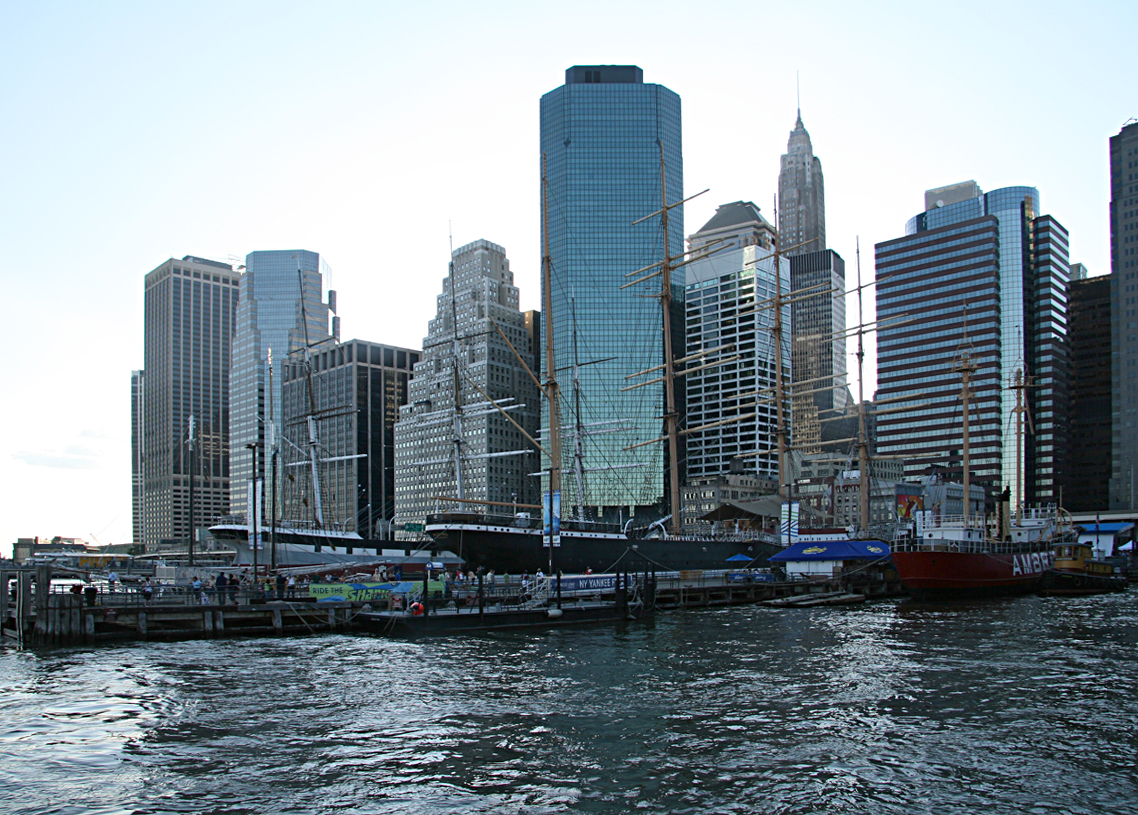
    However, for those willing to eschew the commercial, it is easy to find much to enjoy in this area. To start with, the vistas alone are reason enough to visit, as one can see in the photo, taken from one of the wraparound outdoor decks at Pier 17. Also, the maritime past really can be felt just strolling through the area. The area has streets of restored buildings, most notably Schermerhorn Row and numerous galleries and moored ships. At Pier 16, seen in the photo, one can find a number of ships, some permanently moored and available for boarding: the Peking (1911), Wavertree (1885), and Ambrose (1908). The Peking and Wavertree are two of the largest masted ships in existence. The training vessels the Pioneer (1885), Lettie G. Howard (1893), and W.O. Decker (1930) offer sail training, public sails, and charter opportunities. The South Street Seaport Museum (207 Front Street) was established in 1967. Start on Front Street: 207 (Visitors’ Center), 209 (Museum Charts and Book Store), 211 (Print Shop), and 213-215 (the Seaport Gallery)…


  • La Rentrée

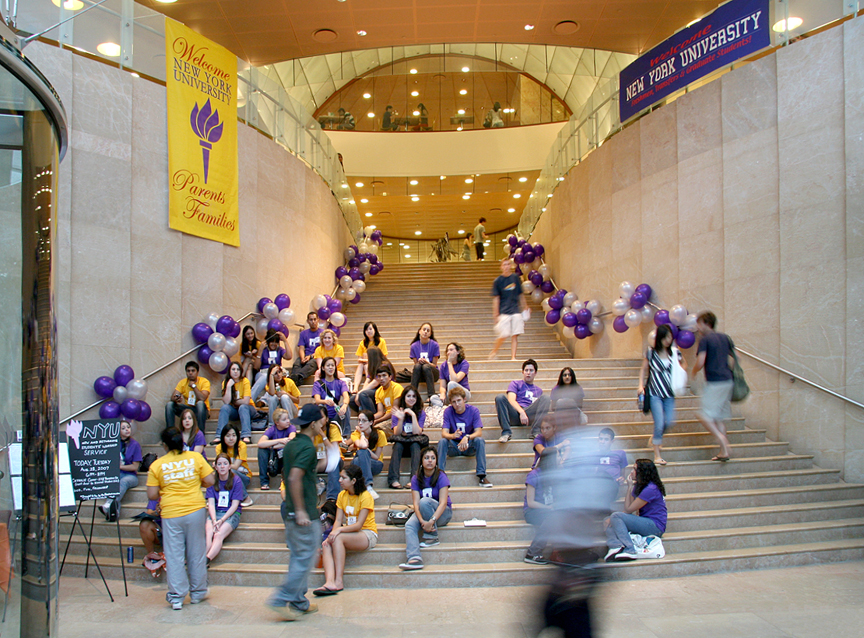
    That back-to-school feeling is in the air, and one can certainly see and feel it at NYU, the country’s largest private university with over 40,000 students (click on any of the six links for previous postings involving NYU: Grad Alley, Cloud Appreciation, Light on Bobst, Waterworld, Offerings, and A Tale of Two Colors). New students and their parents are being welcomed and oriented. There’s the unloading of belongings from cars in front of dormitories. For most of us, regardless of age or whether one is a student or has children, this time of year brings back feelings of getting back to business – summer and summer vacations are over. Labor Day is seen here as summer’s last hurrah.

    In France, where education is a national fever, this time of year is referred to as La Rentrée, “a phrase which alludes to the end of vacations, the return to normal discipline, and a certain obligation to demonstrate that everybody still means business” (from the expatica website) (click here to read more about this French phenomenon). The first day of school is actually referred to as “J” (for “jour”); there is a countdown of days before school, which starts at J-10 (ten days before).

    Of course, there as here, feeling about school’s start is mixed – a time of celebration or one of dread. In NYC, the weather has cooled, the sun is setting earlier, and the march towards fall semester is unmistakable…

    Note: The photo was taken at NYU’s Helen and Martin Kimmel Center for University Life.


  • Rats Gone Wild

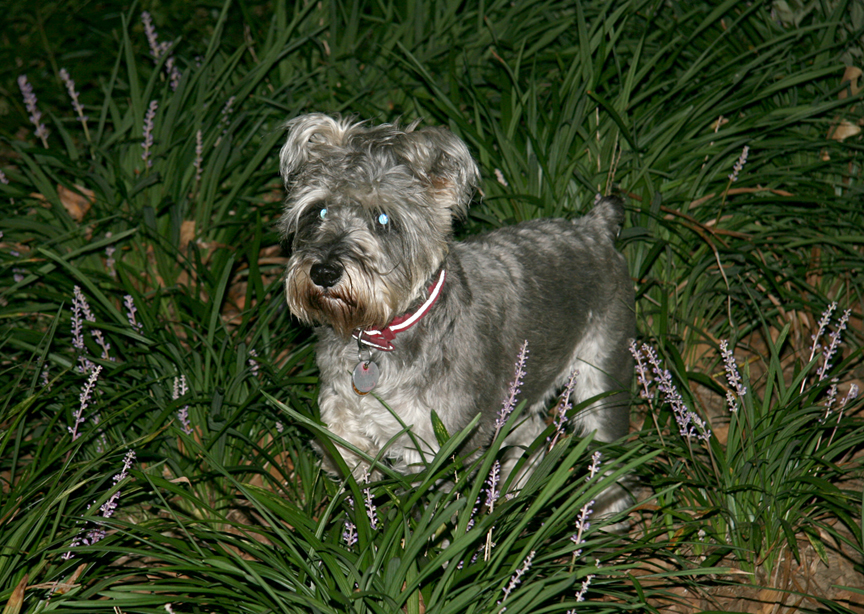
    Meet Oscar at work. Oscar is a Miniature Schnauzer who lives in the Village. Unfortunately, we have a quite visible rat population in Washington Square Park, particularly at night. They are frequently seen even out in the open, near people, away from bushes, skittering about. The numbers of rats fluctuates, largely depending on the Parks Department’s efforts at baiting and picking up trash, which is a big attraction to rats. Trash pickup is never adequate, as I wrote in Garbage a la Mode. Oscar goes crazy when set loose in the shrubbery of the park – he has caught and killed as many as 10-20 rats in one evening. He will chase them, dig for them, track them around trash cans – he is relentless, tireless, and tenacious in ferreting them out. However, rats are quite astute and can hear him coming. His owner, Andrea, has at times experimented by removing his tags. He then becomes a formidable stealth ratter and his success rate soars.

    Schnauzers were originally bred in Germany in the 1800s as “ratters” to keep down the vermin around farms. Miniature Schnauzers are the result of crossbreeding of the Standard Schnauzer to produce a smaller version that could live more easily as a house pet but still hunt vermin. This breed is the 10th most popular in the United States and is well-suited to city apartment living.

    Imagine Oscar at the Karni Mata temple in Deshnoke, Rajasthan, India, where rats are worshipped and 20,000 or so run loose. The temple pays tribute to the rat goddess, Karni Mata. Click here for an extensive article. I don’t really recommend it, but if you have the stomach for it, see a video here


  • The Watchtower

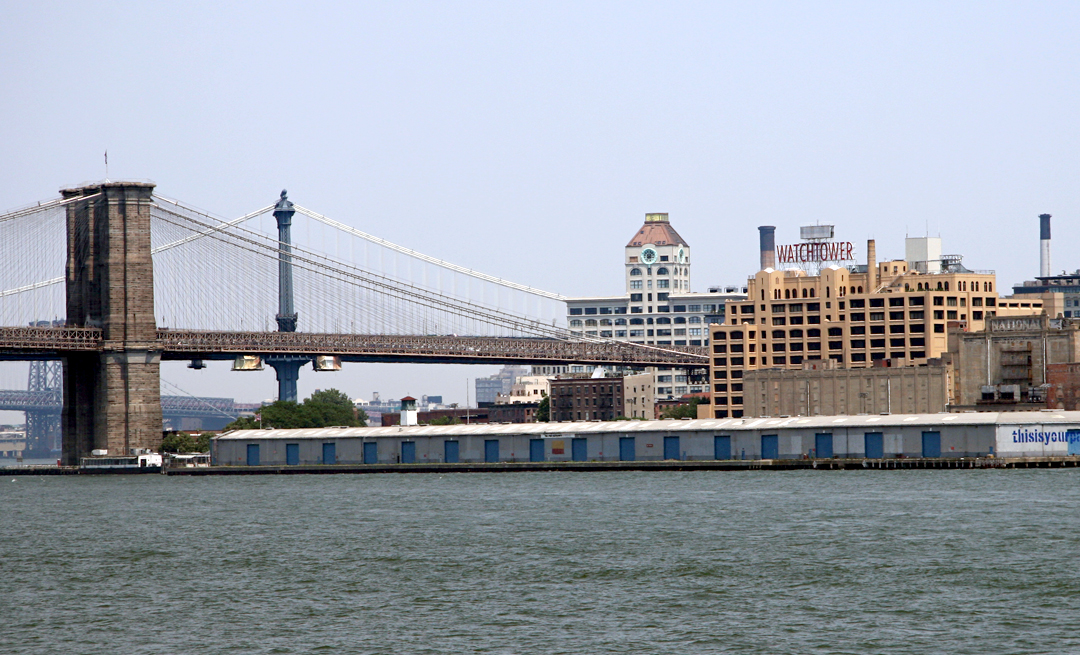
    The Watchtower sign on the Brooklyn waterfront is a site that nearly every New Yorker has seen – it’s visible from many vantage points. And most of us know that this is headquarters for the Jehovah’s Witnesses and their publication, Watchtower Magazine. The term Watchtower is a shortened version of the official name of the corporate entity in use by the religious organization and publishing division: The Watchtower Bible and Tract Society. The offices at 25 Columbia Street (where the sign is located) is not only the New York bethel but also world headquarters. The corporate entity is one of the 40 largest companies in NYC, with annual revenues of nearly 1 billion dollars.

    New Yorkers have also heard over the years that the religious organization owns much property in Brooklyn Heights – the subject of much controversy and covered in many articles over the years. As it turns out, this is true; they have been in the neighborhood since 1909 and own 18 properties there. They also own 12 properties in nearby Dumbo (click here). In 2004, they started divesting and selling off properties (they are selling 6 of the 18), including the Standish Arms Hotel on Columbia Heights and 360 Furman St., a former Bible-shipping facility (sold for $205 million) and being developed into luxury condos, One Brooklyn Bridge Park. The printing business has been consolidated to their Walkill, New York, facility. Click here for a photo tour through the properties, showing their printing facilities, residences (members live in a number of corporate owned buildings), the laundry building, etc.

    The religious beliefs of Jehovah’s Witnesses are quite a unique departure from mainstream Christianity. Only 144,000 will be chosen for immortal life. The wicked will be destroyed; the rest of mankind will live in earthly paradise during the Millennium…


  • Charlie Parker Jazz Fest

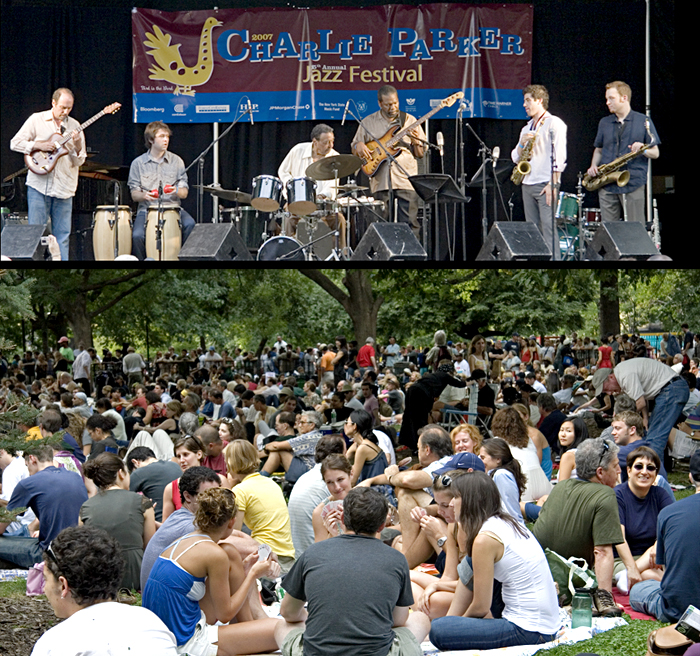
    The 15th annual Charlie Parker Jazz Festival took place this weekend on Saturday, August 25 at Marcus Garvey Park in Harlem and Sunday, August 26 at Tompkins Square Park in the East Village, in the neighborhoods where Parker lived and worked. There is, of course, a plethora of information online and offline about renowned jazz saxophonist Charlie Parker (1920 – 1955) (click here for his official website). From the website of City Parks Foundation who sponsored the festival: “The festival assembles some of the finest musicians in the world who reflect on Parker’s musical individuality and genius, to promote appreciation for this highly influential and world-renowned artist.”

    I attended part of the concert at Tompkins Square Park. I’m not particularly familiar with the jazz world, but I have it on good authority that the performers who celebrated this event were indeed world-class: Chico Hamilton, Todd Williams, and Maurice Brown. Abbey Lincoln was scheduled but unable to perform, and a surprise visit was made by Cassandra Wilson, who sang in her place. The afternoon concerts were well-attended, with an estimated 5000 at Tompkins Square Park. The thunderstorms which were predicted never came to pass; the day cleared and the afternoon’s weather became quite nice. Many took to the lawns and spread out to relax. There’s nothing like an outdoor summer concert in perfect weather. This was a nice way for jazz fans to usher out the summer…


  • Dead to the World

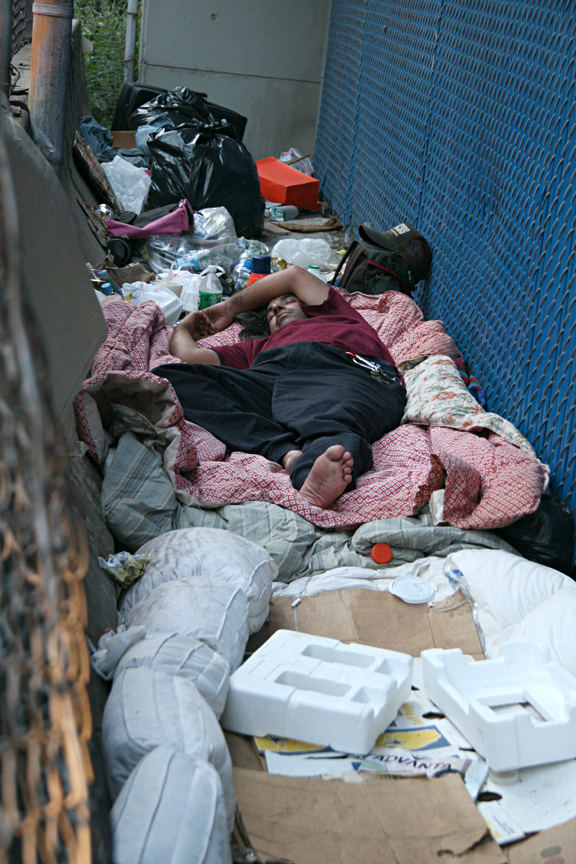
    No he’s not dead, just dead to the world, an old expression my mother used to characterize someone so deeply asleep that they really were oblivious to anything or anyone around them. I spotted this homeless man in the South Street Seaport area at the end of Water Street where it intersects Dover Street, essentially under the Brooklyn Bridge. His cozy-looking residence was a narrow space wedged between a chain link fence on the Dover Street side and a wall between abutments under a bridge ramp. Click here for a map of the exact location.

    I have done a number of postings involving the homeless: The Art of Kissing, Homeless Art Scene, Extreme Camping, Caravan of Dreams, Aspiration, and most recently, Stephanie. It’s amazing to reflect on the horrific problems some people have with insomnia and how this man can sleep so comfortably outdoors, in the city, under a bridge, across from a busy cafe, in broad daylight, and in plain view, while being photographed…


  • Audubon Center

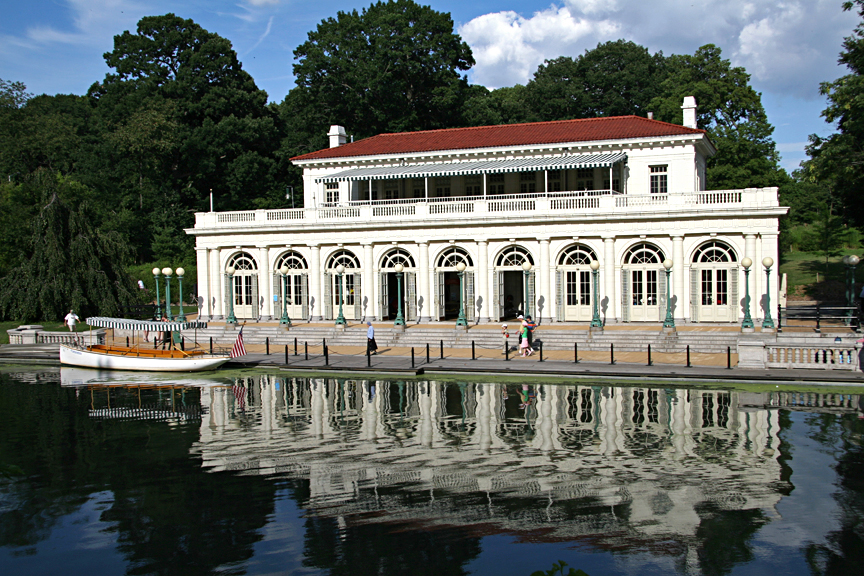
    Famed landscape architects Olmsted and Vaux, who designed Prospect Park in Brooklyn where this building is located, built the original Boathouse in 1876 as a rustic canopied structure on piers straddling the north end of the Lullwater. In 1905, it was replaced with the current Beaux-Arts structure seen in the photo. Its design was inspired by the lower story of Sansovino’s Library of St. Mark, built in 16th-century Venice. The white matte-glazed terra cotta facade is adorned with Tuscan columns capped with a balustrade. The building was relocated to the Lullwater’s eastern edge to provide a vantage point for sunset views over the water.

    Targeted for demolition in the 1960s, the building was saved through community protest. The City of New York granted it landmark status in 1968, and it was added to the National Register of Historic Places in 1972. The building underwent a four-year, five million-dollar renovation and opened as the nation’s first urban Audubon Center on April 26, 2002, the birthdate of both John James Audubon and Frederick Law Olmsted. The center is the first of 1,000 nature education facilities to be built across the country by the year 2020, with a goal of reaching one in four schoolchildren nationwide…


  • Grapes

    I enjoy finding those bucolic settings, atypical of the big city. Spots of country in New York City. They do exist – places such as the Garden at St. Lukes, the bend in Commerce Street (where the Cherry Lane Theater and 39 & 41 Commerce are), that amazing house at 121 Charles Street, Time Landscape, the many community gardens in the city, the beaches or waterways, and, of course, the more well-known: Central Park, Prospect Park, and the Brooklyn Botanic Garden, where one can find many spots where there is virtually no sense being in the city, such as the Ramble in Central Park.

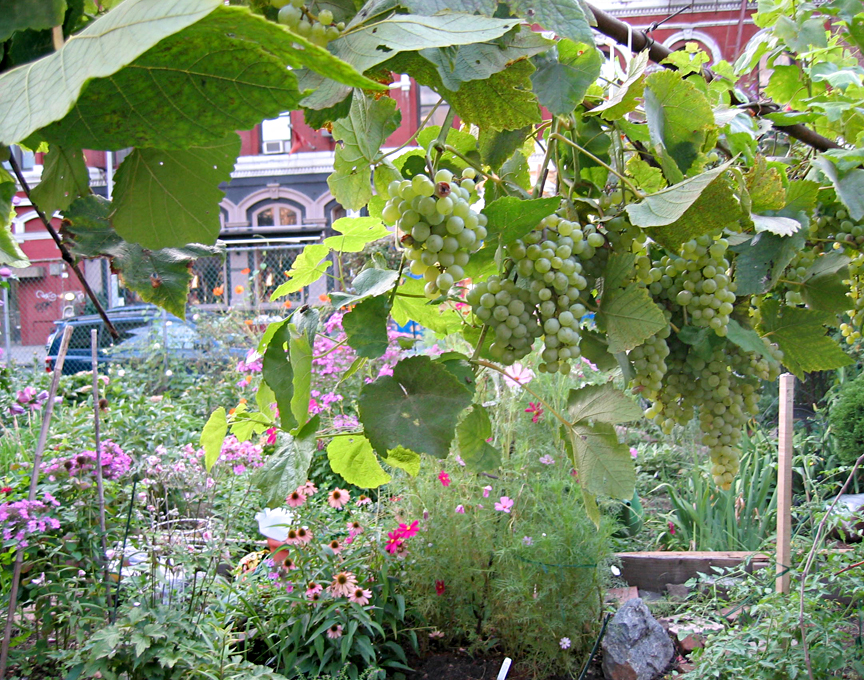
    Last night, while walking with a friend, we were surprised to find these grapes growing in the LaGuardia Corner Gardens, a community garden established over 25 years ago at the corner of LaGuardia Place and Bleecker Street (open at various times to the public). According to the garden caretakers, this is the first season for grapes there. They were not sure of the variety, but I did sample some, and they were very good. I once had a conversation with a friend who commented on similar meanderings of mine and responded, “You need to get a country house.” A valid point, but one doesn’t always want to deal with travel, traffic, costs, etc. for respite. The process can be more stressful than it’s worth, especially for a short break. So for now, when I want to get away for just a little while, I find those spots of country, and when I emerge, all the city’s amenities, conveniences, and culture are right there…


  • Gehry in Gotham

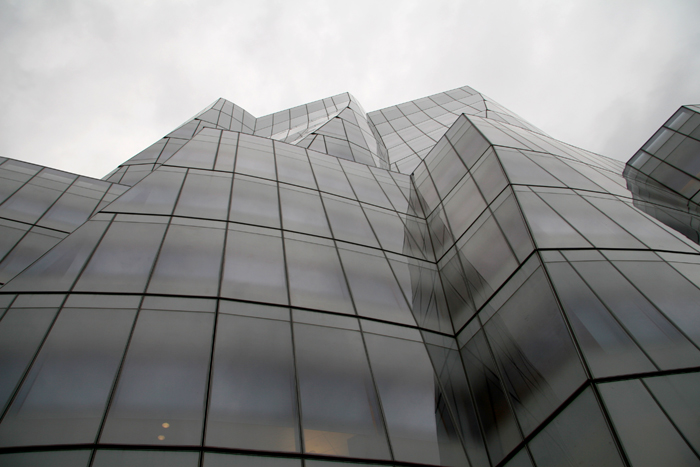
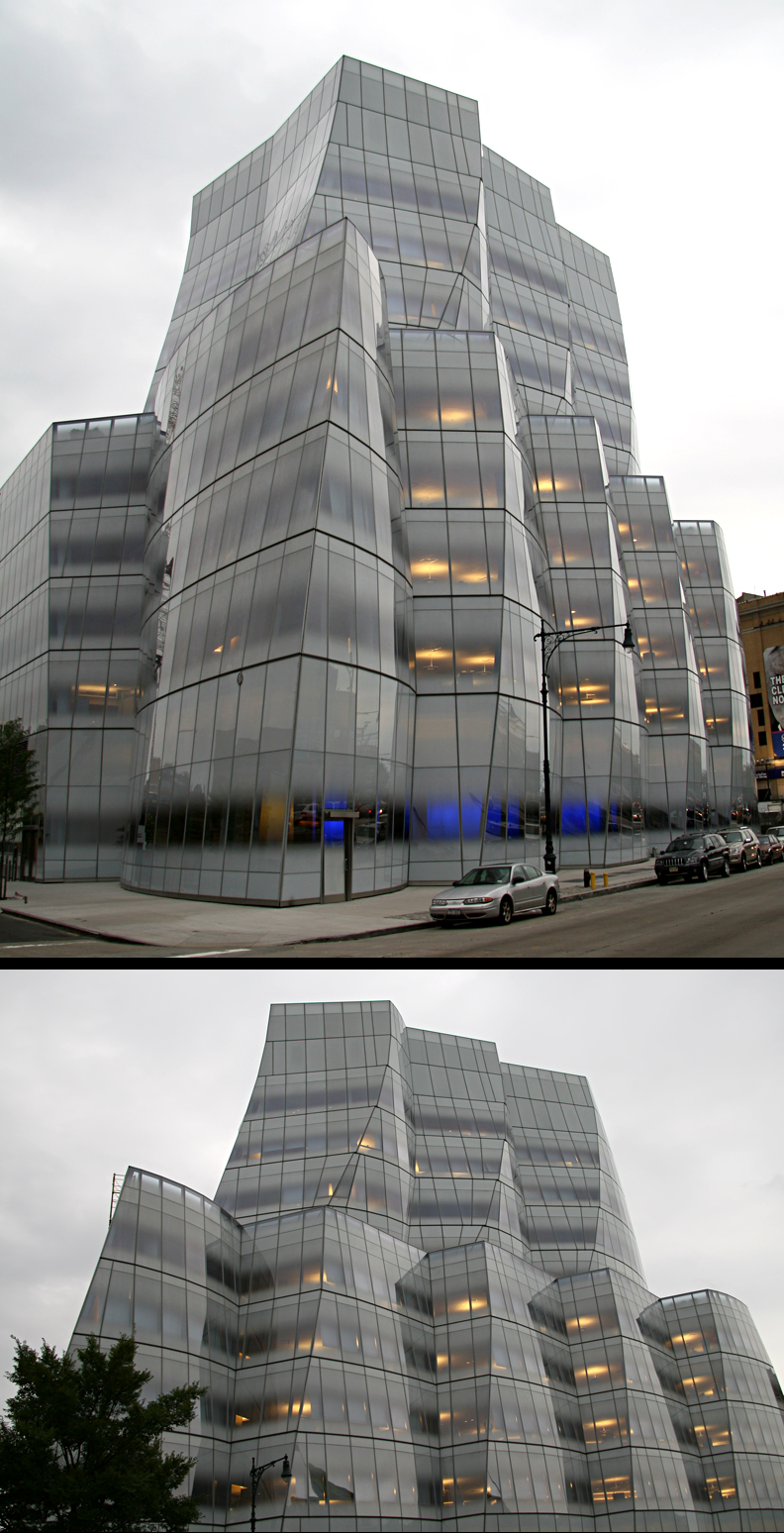
    Gehry is an internationally known starchitect and this is his first (long awaited) commission in NYC (click here for photos of the entire building. A quick review of his work will immediately tell you what all the controversy is about (such as the concert hall for Disney or this Dancing House). The recently completed IAC building shown in the photo is located in Chelsea at 19th Street and 11th Avenue and serves as world headquarters for the media and internet empire of Barry Diller. This work is rather tame by comparison to Gehry’s other work, typically very sculptural and characterized by warped, curved surfaces. His most well known work is the Guggenheim Museum in Bilbao, Spain.

    In spite of the critics, many do feel that works like Gehry’s are much needed in NYC, which has been plagued by essentially very conservative, bland, and utilitarian office buildings. I have written of a handful of other “starchitects” and their works in the city: Richard Meier and his residential towers in the West Village, David Rockwell and his renovation work at the W Hotel Union Square and at the Carlton, Philip Johnson and his Urban Glass House, and Charles Gwathmey and his 21-story glass residential condo at Astor Place. There are new projects by Santiago Calatrava and Jean Nouvel…


  • dinamic_sidebar 4 none

©2026 New York Daily Photo Entries (RSS) and Comments (RSS)  Raindrops Theme