• Category Archives Scenic NYC
  • True North

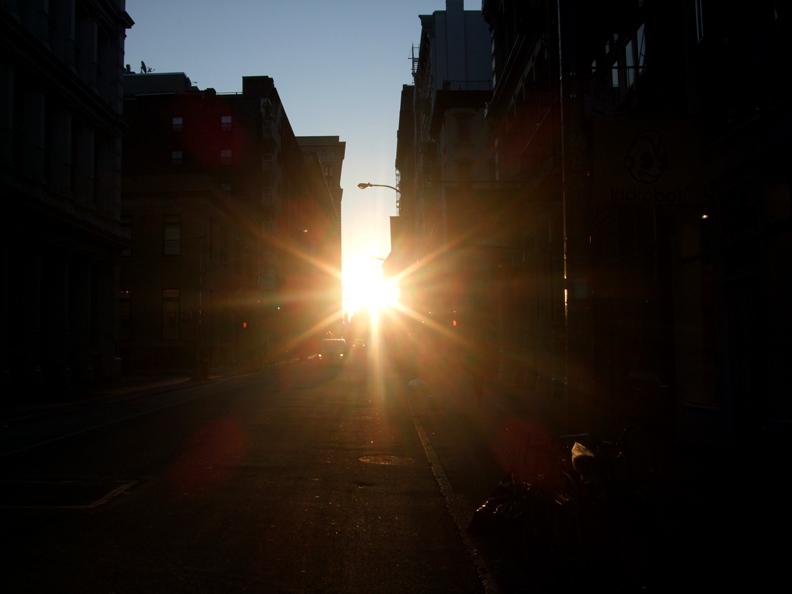
    I am usually up before sunrise, but I am not typically on the streets until somewhat later. With sunrise even earlier much of the year than it is mid-winter, I rarely see a site like that which I witnessed heading east on Prince Street Saturday morning at 7:47 AM.

    Something few New Yorkers know is the angle at which Manhattan deviates from north-south (or that it deviates much at all). New Yorkers believe Manhattan’s avenues run north-south and crosstown streets run East-West, but there is only a casual relationship between true north and the avenues. It is extremely useful, however, to think of orientation in Manhattan in that way.

    With the establishment of the Commissioners’ Plan of 1811, which established an orthogonal grid north of 14th, avenues were run parallel to the long axis of Manhattan, not actually north-south. The deviation from true north is significant: 29 degrees to be exact (read the New York Times article here). This, however, does not prevent seeing sights such as that in the photo. One of the most interesting phenomena in the city is the occurrence of Manhattanhenge, a biannual occurrence where the setting sun aligns with the crosstown streets of Manhattan’s main grid. On these days, the sun fully illuminates every cross street from river to river during the last fifteen minutes of daylight, with the setting sun’s center exactly on the street’s center line. I saw this for the first time on May 28, 2007 (see my photos and article here).

    If you are familiar with View of the World from Ninth Avenue, you know how extraordinarily ethnocentric New Yorkers are. How important is magnetic north really? Perhaps what we have is 29 degrees of irrelevance and we should more correctly say that magnetic north deviates from Manhattan’s center line which, as every New Yorker knows, points true north. 🙂

  • Circuitous, Sinuous and Serpentine

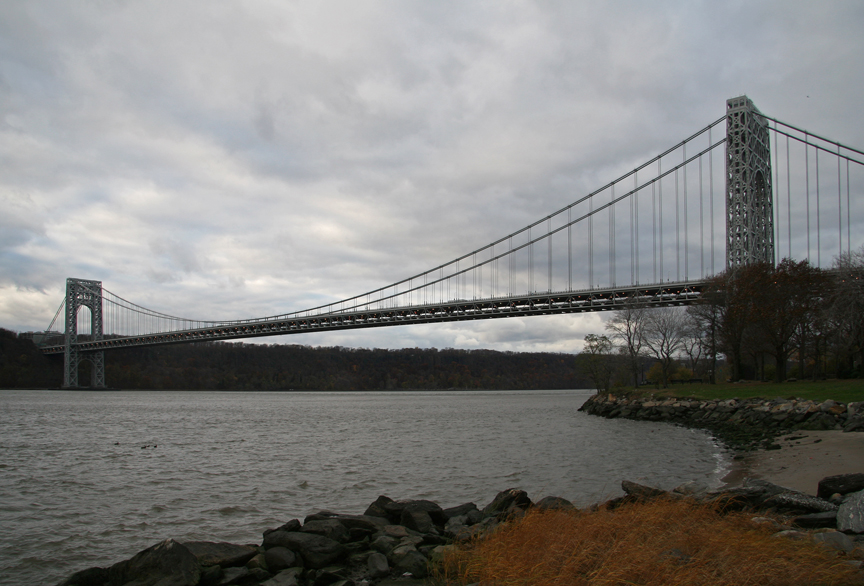
    There is a often repeated quote (1947) by French architect Le Corbusier extolling the George Washington Bridge as the most beautiful in the world. I can’t say whether I agree – I have not seen that many of the world’s bridges – but I certainly find it beautiful. The open steelwork is very distinctive – I recommend seeing it at night with the spectacular illumination created by Domingo Gonzalez Associates, for which an Award of Excellence was won.

    The GW is one of the most important bridges in the city. It is the only bridge spanning the Hudson River in New York City, connecting Washington Heights in Manhattan with Fort Lee, New Jersey. The Harlem and East Rivers are spanned by over a dozen bridges. Manhattan is an island, and its means of egress and ingress are crucial lifelines.

    The George Washington Bridge was built during a busy period in New York City’s history, with completion of the Empire State Building the same year (1931), the Lincoln Tunnel in 1934, the Holland Tunnel in 1927, and the Chrysler Building in 1930. The chief engineer was Othmar Ammann, with Cass Gilbert as architect. When it opened, it had the longest span in the world; it is now the 4th longest suspension bridge in the USA and 16th in the world. The bridge is the world’s busiest. Read more about the bridge here.

    Taking decent photography of a bridge does require being on foot. It is quite difficult to get a good photo while driving an automobile from a moving vehicle – I have tried. So I recently made a pilgrimage to the Washington Heights neighborhood of Manhattan specifically to photograph the bridge. It was windy and cold, but the cloudy, overcast day did make for nice photographic conditions. The bridge has a pedestrian walkway – I walked to the halfway point, which afforded some great vistas of the Hudson River and the city.

    But to get photos of the bridge requires getting off the bridge and finding a good vantage point. Waterfront park land on the Hudson River shoreline was clearly visible from the bridge, but no signage was present to find the way down. So I took a gamble on a path which appeared that it might lead to the water. The path went through various environments punctuated with litter, graffiti, and broken lights.

    The walkway turned out to be one of the most circuitous, sinuous, and serpentine. The investment did eventually paid off. It is here where I discovered the beach which I wrote about on November 17, 2008 (see here)  and where photos of the bridge were taken. It also justified use of words such as circuitous, sinuous, and serpentine 🙂


  • Enigma

    The butt of many comedic jokes is the cliched man who is afraid to ask for directions or information. I am not that type of man – perhaps lax at times to ask if it is inconvenient to find someone. I certainly value the process of discovery and doing things for oneself, but how far does one want to go to learn things which are already known? How many wheels do you really want to reinvent?

    The building in the center of the photo with the distinctive top has been an enigma for some time. I have an older photo which I wanted to use previously on this website, however, I tired of trying to identify it using online searches and printed references in my library. I resigned myself to a future trip where I would just visit the building itself rather than ferret out its name via GPS or triangulation.

    So I forgot about it until my recent jaunt to the Plaza Hotel, when I saw it haunting me in the distance once more while chatting with the doorman, who had worked there for two decades. This type of person can be a great source of information in the city – seasoned doormen and older taxi drivers have the luxury of meeting thousands of individuals from all walks of life over years of time. They also become acquainted with the details of places and things, with nuggets of info and insider gossip. So as I walked away, it occurred to me that a quick jog back to the doorman and a quick query might easily settle the identity of this building. And it did.

    The Four Seasons Hotel at 51 E. 57th Street was completed in 1993 and designed by world-renowned architect I.M. Pei and Frank Williams. Pei’s resume includes projects such as the glass pyramid at the Louvre museum in Paris. This 54-story building is the city’s tallest hotel. It is clad in French sandstone and capped with the spectacular Ty Warner penthouse, a nine-room suite with 25-foot ceilings and cantilevered glass balconies, which occupies the entire top floor with wraparound 360-degree views of the city. Amenities include a butler, fabrics woven from platinum and gold, a personal trainer, and a private chauffeur with a Rolls Royce Phantom.

    The lobby has marble floors and a soaring, back lit translucent onyx ceiling. If you are in the neighborhood, drop in for a peek…


  • The Unexpected

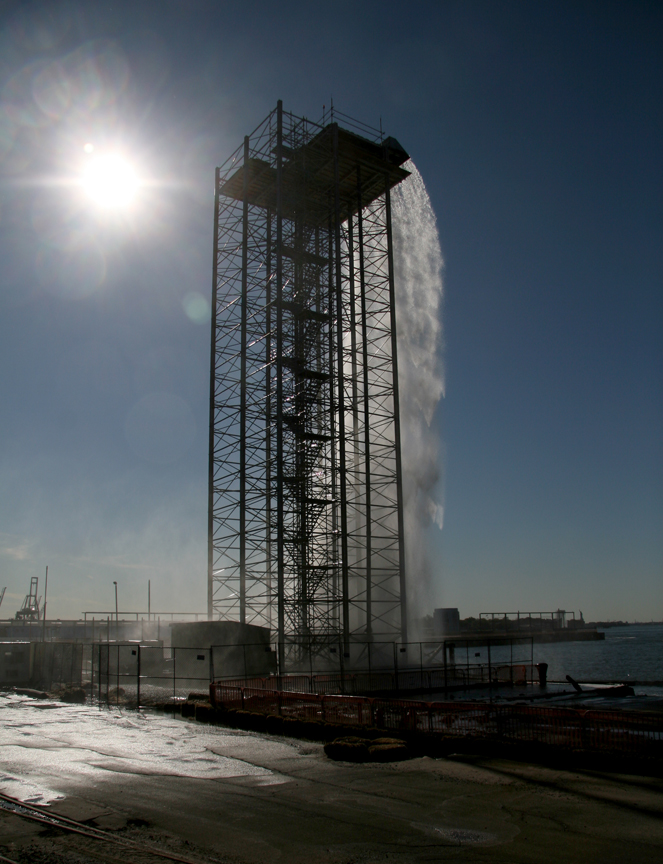
    You do expect the unexpected in New York City, but when I overheard a conversation about waterfalls which were built and installed in the NYC waterways, I was quite astounded.

    On my recent excursion to Coney Island, we took the back roads and ran across a pair of these waterfalls unexpectedly. I had completely forgotten about their existence. The lighting conditions were awful – shooting into direct sunlight in the afternoon is generally a photographic taboo, but duty called, and I was fortunate that one of these photos actually added to the drama of the situation.

    The setting for this waterfall was the Brooklyn waterfront; with the metal framework, the entire scene had a very industrial tone. Not a touch of humanity or dramatic nature one would expect from a waterfall. I did not dwell there long – my compatriots were waiting in a car as I jockeyed into the best position for this photo op.

    This is one of four waterfalls along the East River ranging from 90 to 120 feet tall – a $15.5 million art installation by artist Olafur Eliasson. New York City Waterfalls was done in collaboration with the Public Art Fund. They are on from 7AM to 10PM and are illuminated after sunset. You can read more about them at the official website here (update: no longer works; ran until October 13, 2008) – there is video as well as photos of the falls, with an interview with the artist. When visiting or living in this city, the unexpected will happen, and it’s more fun when you are not expecting it…


  • Tired of Life?

    “Why, Sir, you find no man, at all intellectual, who is willing to leave London. No, Sir, when a man is tired of London, he is tired of life; for there is in London all that life can afford.” — Samuel Johnson

    Now that’s a strong assertion, but I think many New Yorkers feel the same way. Certainly there are things that one would not find here, but for most city dwellers, those things are either of no interest or are compromises they are willing to make. And there are ways to satisfy many exurban or country experiences here. Want a walk through rustling leaves in the autumn? Take a stroll through Central Park’s Ramble.

    Yearning for the beach? There is always Brighton or Rockaway. Aquatic nature? Try the Jamaica Bay wildlife refuge. Of course, Central Park is not Vermont, and Rockaway is not Cape Cod. And for those requiring extreme sports and dramatic natural landscapes, perhaps they are best living out west. For we have no real mountains to scale, only buildings.

    But for those of us who want to be immersed in culture and a soup of human diversity and intellectual stimulation, living out of the city is untenable.
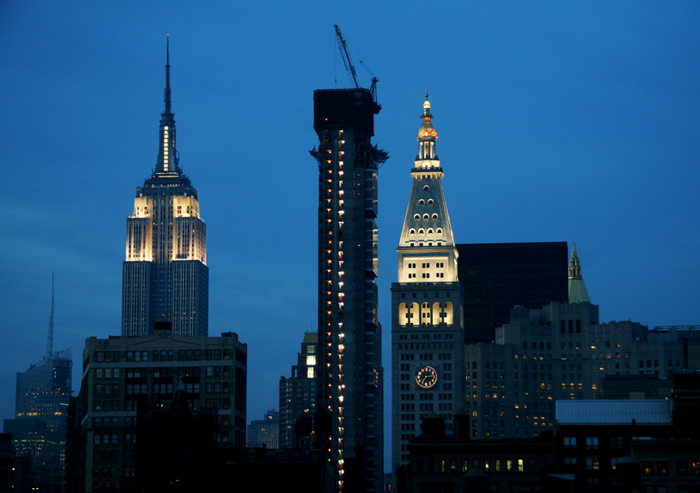
    I was reminded of the Johnson quote while enjoying the vista in the photo and realizing I had seen this same panorama so many times but did not tire of it. For if I tire of this grouping of Manhattan icons, so beautifully lit at dusk on a late summer’s eve, perhaps I have tired of life itself…


  • Mother Nature

    Posted on by Brian Dubé

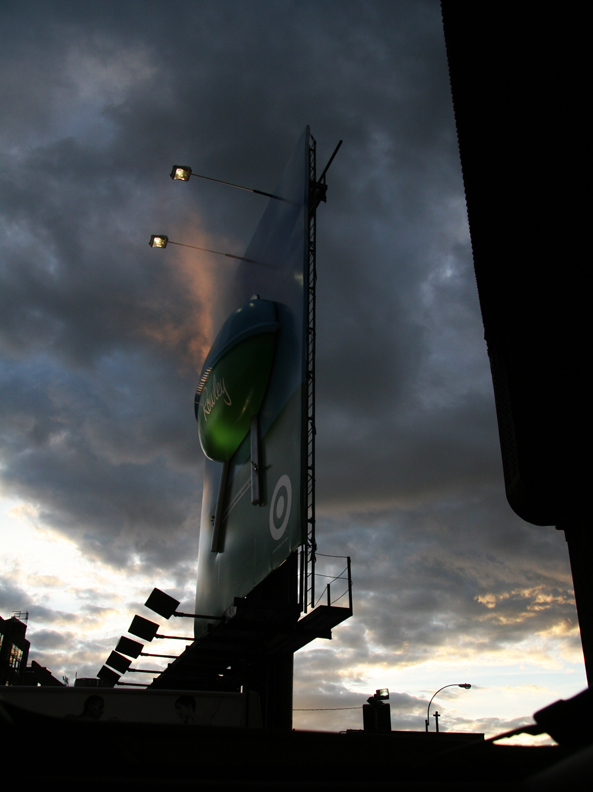
    I have had this photo for some time but knew nothing of the advertiser – Rowley. But the setting was so dramatic that I thought I would share it anyway. After all, we can let things speak for themselves on occasion, can’t we?

    This illuminated billboard was located on the West Side Highway in Chelsea, a neighborhood in the West 20s, abutting the Hudson River and the highway. Chelsea has become somewhat of an art district, as there has been a migration of galleries from areas such as SoHo due to extraordinarily high rents.

    I am not a fan of billboards. I find that they are typically a blight on the landscape. But there can be beauty, particularly dramatic beauty, at times with industrial and commercial subjects. Smokestacks, oil refineries, bridges, power plants, and power lines can all show a striking profile when the lighting conditions are right. I have written of this before in my posting Hell’s Gate.

    I don’t think I want to champion this type of display or give encouragement for more signage and billboards. And I think the credit here goes to Mother Nature, not Rowley…

    Posted on by Brian Dubé

  • Cooperation

    Posted on by Brian Dubé

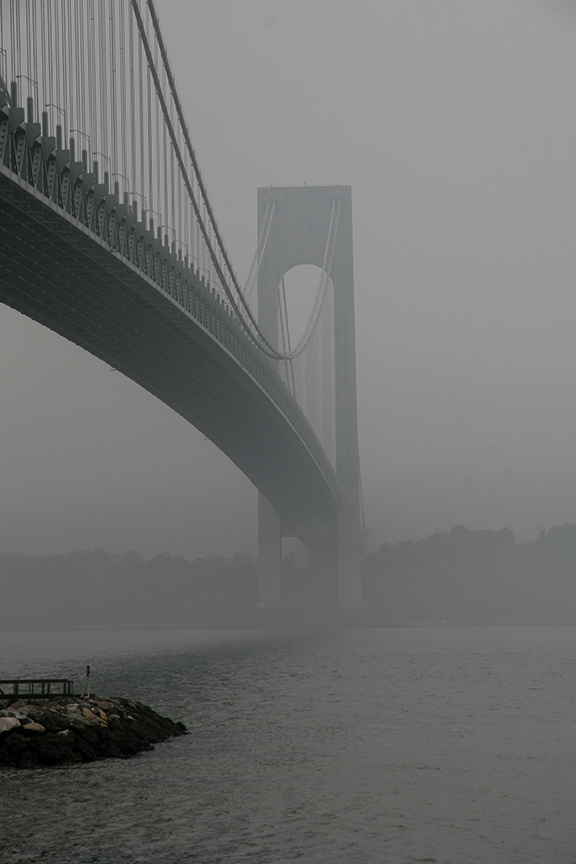
    What an easy and enjoyable thing photography can be when the subject cooperates. I have been planning to do a posting on the Verrazano Bridge for some time, but this requires a special trip and is quite some distance from my home in Manhattan. And one must find a good vantage point, negotiating around the Belt Parkway (a major highway with some limited parking) and the many other thoroughfares: 4th Avenue, Shore Road, Route 278 to the bridge, and a cloverleaf of highway ramps.

    However, I could not have picked a better day. A heavy fog had settled in, just occluding the more distant tower. See here for a series of photos.

    The Verrazano-Narrows Bridge is a relatively modern bridge, only completed in 1964. I have always found its lines rather clean and elegant. The bridge is omnipresent in the NYC skyline and is visible from every borough of the city. It connects Brooklyn and Staten Island. Although controversial during its construction, it is a lifeline, providing a roadway not only to Staten Island but also a connection between New Jersey, Brooklyn, and Long Island.

    At the time of its construction, it was the longest suspension bridge in the world (4,260 feet (1,298 m) and held that position until 1981. It still remains the longest suspension bridge in the United States. You can read more about it here.

    Every opportunity and subject element presented itself – a cargo ship, sailboats, fishermen, jellyfish in tidal pools, rocky outcroppings, a cruise ship, and, of course, fog. Everything just working together in a paradigm of cooperation…

    Posted on by Brian Dubé

  • When Worlds Collide

    Posted on by Brian Dubé

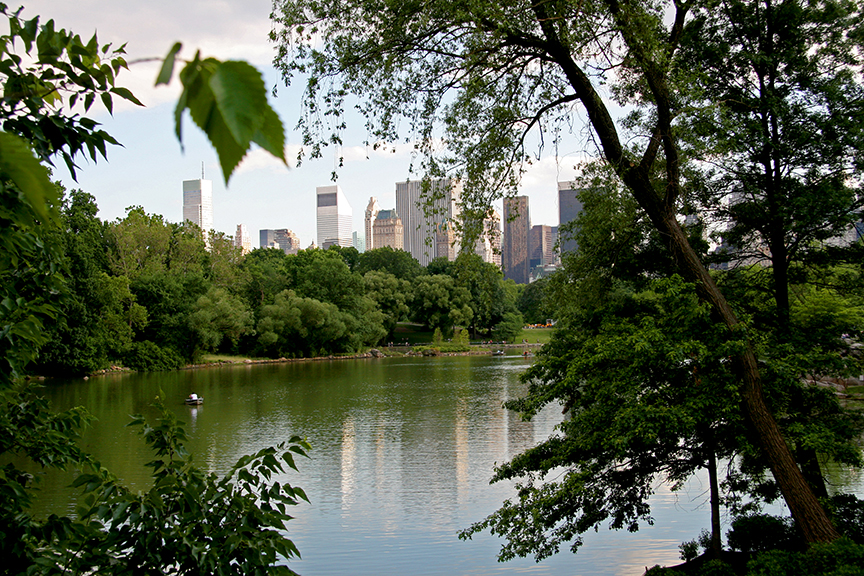
    There are things one never tires of, and for me, Central Park is one of them. What is there to get tired of in this idyllic urban oasis? I place it at the pinnacle of any must-see list for visitors.
    Given the lack of outdoor space for city residents, parks take on a much greater significance – they effectively become our backyards and recreational playgrounds. So the reason for my bias is obvious.

    I can easily be accused of being a one-man campaign for Central Park and taking every visitor I have known there for an obligatory visit. This landmark was designed by Frederick Law Olmstead and Calvert Vaux and was completed in 1873. The landscaping and architectural elements are exquisite. As I wrote in my article on the conservatory water, on a perfect day, I feel like I have been transported to Seurat’s Sunday Afternoon on the Island of La Grande Jatte.

    This 843-acre wonderland is remarkable for many reasons, including its myriad of different environments and areas set aside for a variety of uses (see the list of articles and photos I have done in related listings below). There are extensive walking/running tracks, two ice-skating rinks, tennis courts, the Central Park Zoo, the Central Park Conservatory Garden, a wildlife sanctuary, the Ramble, a 106-acre/billion gallon reservoir (with an encircling running track), ponds, the Lake, a Conservatory for model boats, the Delacorte Theater (which hosts “Shakespeare in the Park”), Belvedere Castle, the Swedish Cottage Marionette Theatre, and the historic Carousel. There are numerous major and minor grassy areas, some used for sports, some are set aside as quiet areas, and there are a number of enclosed playgrounds for children.

    From many vantage points in the park, the city’s skyline is visible – the juxtaposition of the urban landscape and the bucolic is a potent reminder of where you are and how fortunate we are to have both worlds…

    Related Postings: Conservatory Water, Kerbs Boathouse, Bethesda Fountain, The Beresford, Not So Kleine, Belvedere Castle, Red Panda, Feeding at the Zoo, Albino Burmese Python, The Boathouse Restaurant, Alice, Strawberry Fields, The Bow Bridge, The Dakota, Central Park Mall, Going Tribal, Vivid View

    Posted on by Brian Dubé

  • Belvedere Castle

    Posted on by Brian Dubé

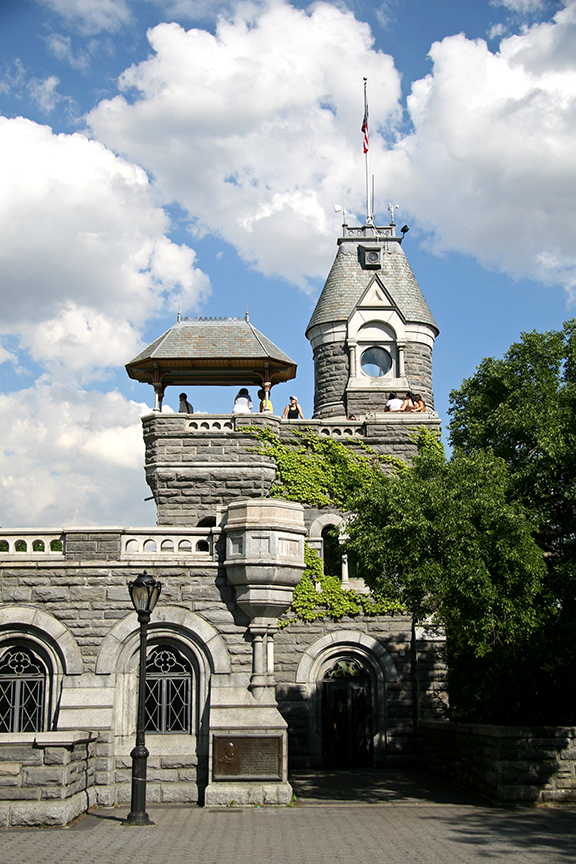
    Yes, we do have castles too, albeit small ones. This is not one of the most well-known or often visited spots in the city, but given good weather, I would put Central Park and Belvedere Castle on a must-do list. The castle, built from Manhattan schist, is in a secluded area near the Ramble. Two narrow staircases each bring you to an observatory level. There are excellent vistas, greenery, the Shakespeare Garden, the Duck Pond, and the Great Lawn. For those of you interested in the Castle’s history and purpose, read this description from the official Central Park website:

    In 1867, Central Park designer and architect Calvert Vaux (1824-1895) created an observation tower atop Vista Rock to overlook the old reservoir that is now the Great Lawn. The Gothic-style Castle was designed as a landmark for the pedestrian park visitor. The castle’s United States flag could be seen from the Mall, drawing the walkers down to Bethesda Terrace, over Bow Bridge, and through the Ramble to the castle itself.
    The original plans for the building included another elaborate two-story structure on the site of today’s pavilion, but financial concerns halted construction and left the castle in its present state. Portions of the castle are made from the same type of schist as the Vista Rock, creating the illusion of a castle rising out of the park itself. Its light colored stone trim is made of granite quarried from Quincy, Massachusetts. Its roofs are made of colored slate from Vermont, Virginia, and New York.
    Belvedere Castle was once an open-air structure, with no doors or windows. This changed in 1919 when the United States Weather Bureau moved the Central Park Observatory to the castle. Until that time, weather measurements were taken from the Arsenal at Fifth Avenue and 64th Street where Dr. Daniel Draper founded a meteorological observatory in 1869. The Weather Bureau took over the operation in 1911, and moved it here eight years later, enclosing the castle and altering the turret’s shape to accommodate their scientific instruments.
    In the early 1960s, the Weather Bureau replaced the lab with automated instruments and closed the castle offices. The empty building was left to deteriorate until 1983, when the Central Park Conservancy replaced the original turret, rebuilt the pavilions, and converted the castle into a visitor’s center. The Henry Luce Nature Observatory in the castle, created in 1996, provides interactive nature exhibits inside the castle as well as bird-watching kits, which can be used throughout the park.

    Note: Belvedere is an architectural term from the Italian “beautiful view”, referring to any architectural structure sited to take advantage of such a view.

    Posted on by Brian Dubé

  • Tribute

    Posted on by Brian Dubé

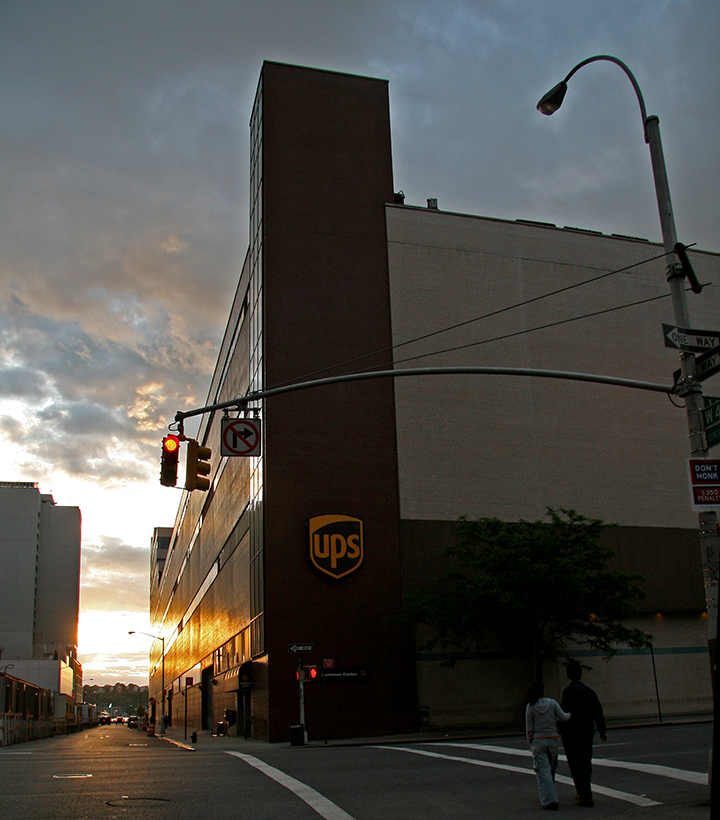
    The beauty of doing a posting on a building like this is that there is no competition. And little to say. Little to read. No real history. No links. No fascinating tidbits.

    This virtually windowless, monolithic, hulking behemoth quietly sits at 601 West 43rd Street, relatively unnoticed by most, with perhaps the exception of those whose business takes them there. It is the main headquarters for UPS (United Parcel Service). It occupies a full city block from 43rd to 44th Street and from 11th to 12th Avenues. With the exception of the Jacob Javits Center or excursions to Hudson River waterfront attractions, visitors rarely make it to or through here. This area of Eleventh Avenue is populated with auto dealers and other commercial businesses.

    And yet, I find the extremely mundane to be fascinating in its ability to be so. The focus is typically on the glamorous, exciting, chic, trendy, stylish, beautiful, dramatic, dynamic, sensational, and spectacular.
    This is a tribute to the ordinary, mundane, unprepossessing, unremarkable, unexciting, and nondescript…

    Posted on by Brian Dubé

  • Underscore

    Posted on by Brian Dubé

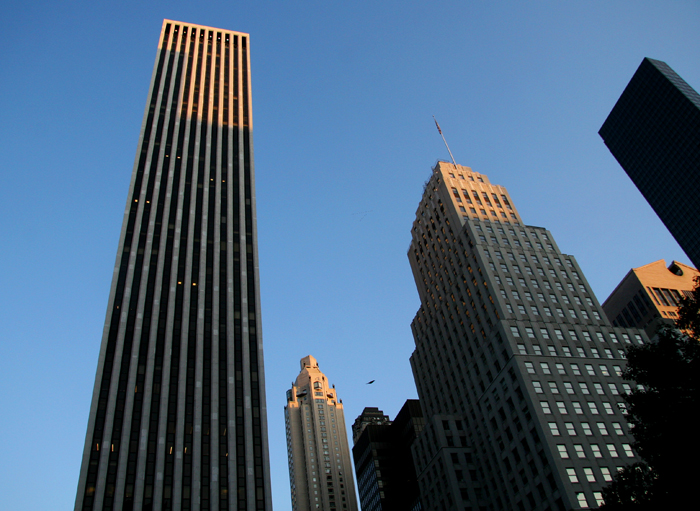
    You could spend your life just admiring and learning about NYC architecture. Before moving to this city, I had essentially no knowledge or appreciation of buildings. But architecture is one of the greatest things about New York, and to not make an effort to really learn about the great structures here is to miss out on one of this city’s greatest assets. On nearly any block or at every turn, there is something of merit – row houses, skyscrapers, art deco masterpieces.

    Evening light is the best time for photography, and when you have a building which is readily enhanced by yellow-orange hues, you have the ideal subject. See here for another magnificent example.
    When I photographed this from the west side of Manhattan, I had no idea what this building was or its exact location, so ferreting out this information based on visuals and a guess at location is always challenging.

    The building in the photo, One Worldwide Plaza, turns out to be somewhat more than the average skyscraper. It was built in 1989 on the site of a former (the third) incarnation of Madison Square Garden. Designed by David Childs of Skidmore, Owings and Merrill, it is a part of a three-building complex with mixed commercial and residential use. It is one of the worlds tallest buildings, at 49 stories, 778 feet (238 m). You can read more about it here.

    In spite of all this, it is easy to not notice, and most will pass it by. So even here, with this beautiful tall building, its brick exterior and copper roof, all bathed in golden light – just to assure it will be noticed, it still needs an underscore…

    Related Posts: Hell’s Gate, Sink or Swim, Evening Arch

    Posted on by Brian Dubé

  • Privileges

    Posted on by Brian Dubé

    I am fortunate to have friends with an extraordinary view of the city and was able to capture a series of photos in the evening sunset light.

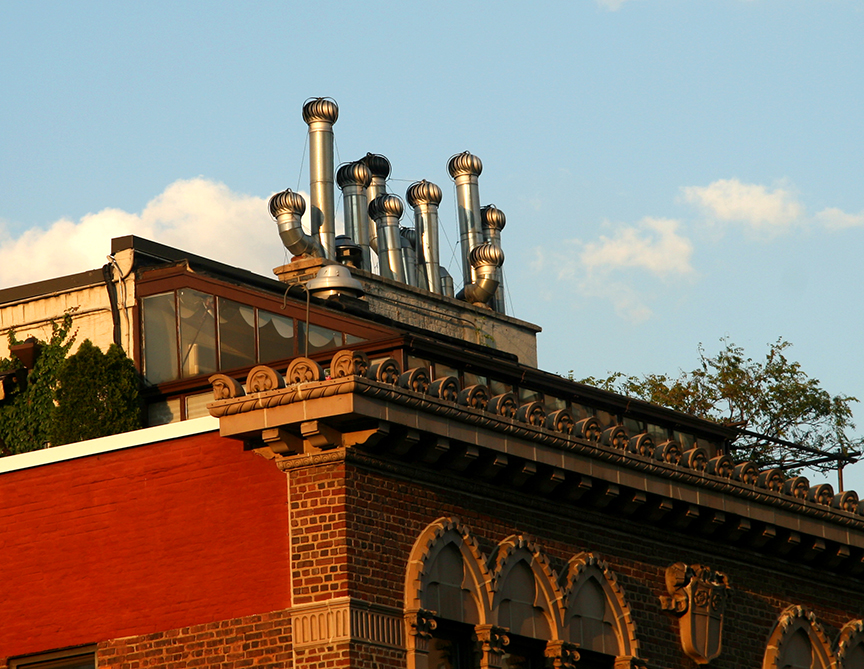
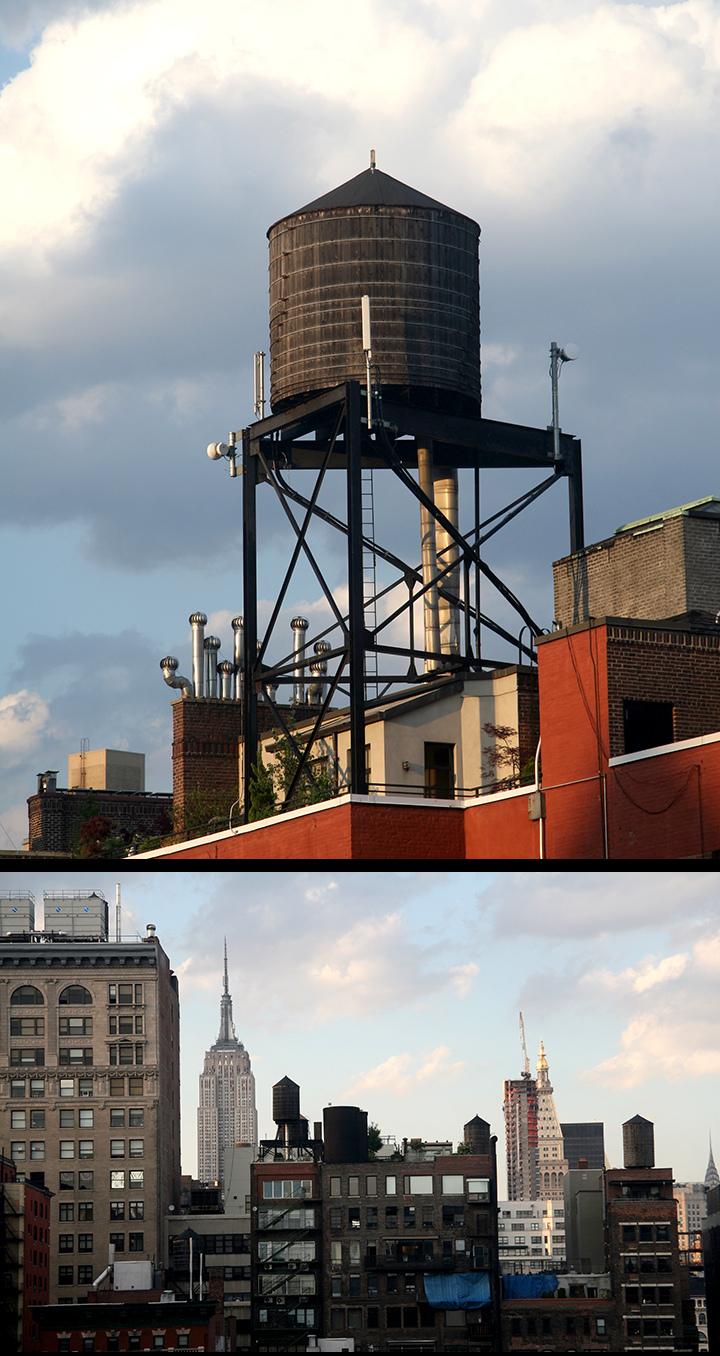
    These rooftop turbine ventilators make a very visual accent on the city’s skyline. They can be seen everywhere in New York, along with the ubiquitous water tanks, which I have previously posted on.

    In this photo, the ventilators are directly above what appears to be a penthouse apartment with a terrace. It may come as a surprise, but there are a number of people in Manhattan who have garden space and actually use landscaping services. These gardens are typically hidden from view – either at ground level in the rear of buildings or annexed to top floor apartments. Of course, a substantial premium is paid for this type of privilege, as is for air and views.

    As I have written here before, I find many of the structural and functional elements of buildings to be attractive, and they offer a myriad of opportunities for photography. These ventilators evoke a number of images for me: people, minarets, chessmen, chef hats. Peering out over the city from above, craning their necks for perhaps a better view or a breath of fresh air…

    Posted on by Brian Dubé

  • Wake Up Call

    Posted on by Brian Dubé

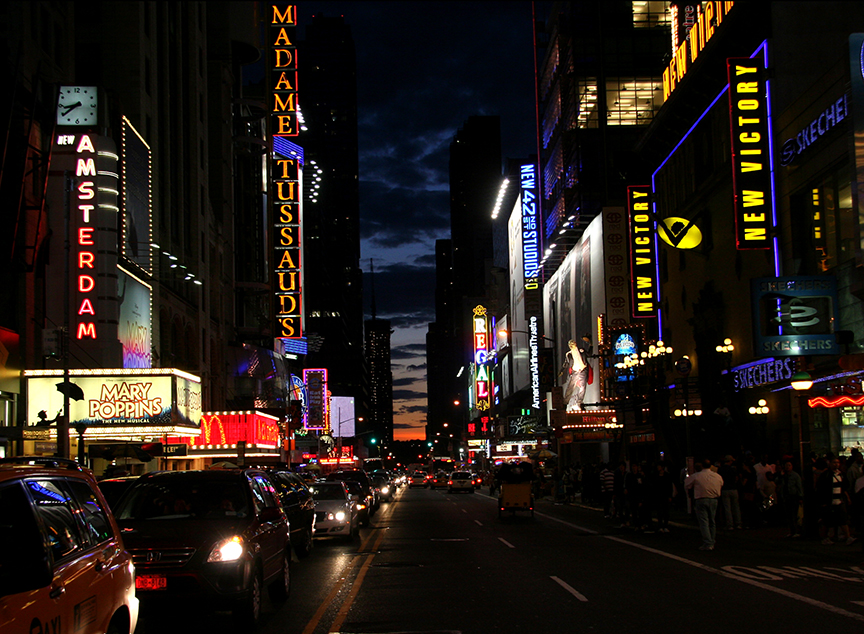
    Wow is all I could say as I stood at Times Square looking west along 42nd Street into one of the most amazing sunsets I have seen. This stretch of 42nd Street is already quite dramatic at dusk or at night. But this sunset was remarkable, with the heavily stratified clouds and beautiful color gradation of orange to deep blue. One could have easily seen the sky as part of the artificial spectacle. Drama added to drama. Perfect for a world that knows no bounds when it comes to sensory overload. It really looked like Batman’s Gotham City.

    One can easily live a lifetime in New York City without hardly a hint of the natural world. With the exception of the sky, occasional tree, squirrels, and birds, we live in a place that is almost entirely man-made. Some are fortunate and have park, river, or garden views. But for most, this is a life of concrete, stone, brick, steel, and glass. We look to other things – culture, business, restaurants, architecture, and human interaction.

    Some seek out nature in the city. It is can be found in promenades, parks, gardens, and waterways. And occasionally, when you least expect it, it slaps you in the face. A wake up call to nature…

    Posted on by Brian Dubé

  • Mesmerized

    Posted on by Brian Dubé

    When I was a young boy, I couldn’t stay away from fire – there is some allure for boys. Playing with fire was not a metaphor but rather a real activity. We got matches, we tried rubbing sticks, and we lit grass clumps from mowed lawns with magnifying glasses. And I became a Boy Scout – one of the benefits was that it legitimized using fire – what’s camping without a campfire? We were just mesmerized by fire and flames.

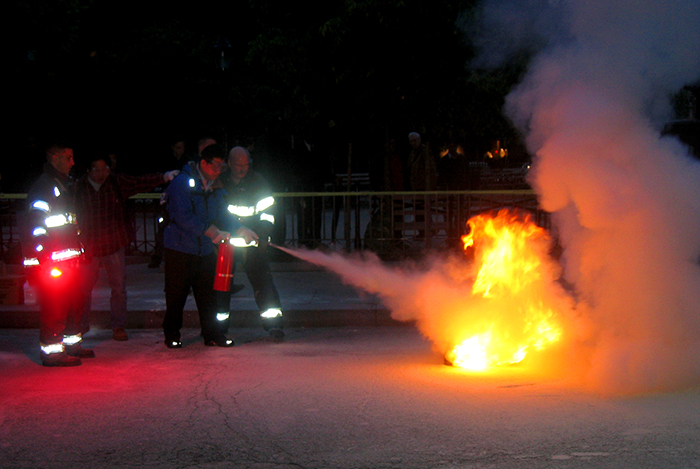
    The photo was taken on Carmine Street in the Village. It was a practice session involving members of CERT, or Community Emergency Response Team – a group of neighborhood and community-based volunteers who undergo an intensive, 11-week training program in disaster preparedness and basic response skills. Volunteers took turns putting out a small fire. The billowing flames in the evening light was quite a spectacle.
    But, regardless of the merits of the program, everyone observing was drawn by the mesmerizing effect of those flames.

    Whenever I see firemen, I always feel that somewhere in there is a little boy who never outgrew his interest in fire and just transmuted it into a profession. Good for all concerned, n’est-ce pas?

    Posted on by Brian Dubé

  • 23 Skidoo

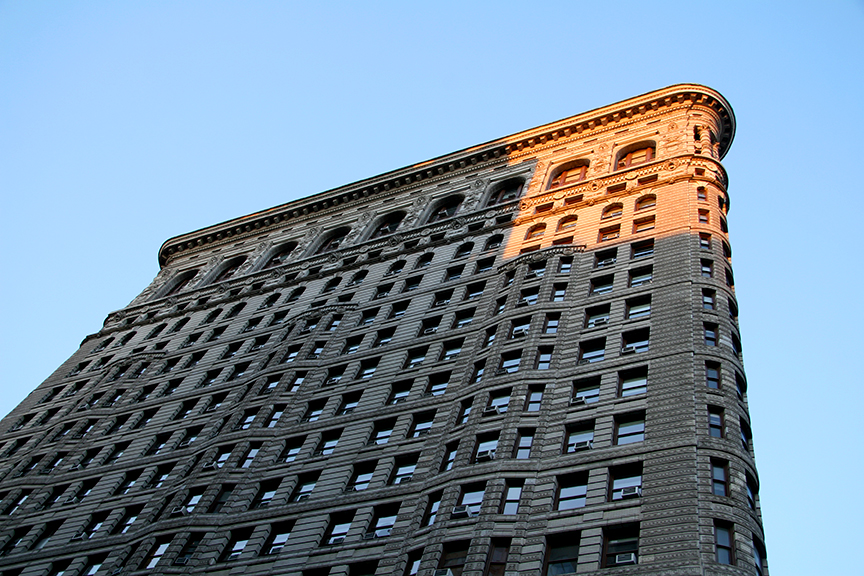
    When you have a structure that is a huge NYC icon, a National Historic Landmark, and is internationally recognizable, you have both a responsibility and a serious challenge. After all, not only has the Flatiron Building been photographed by millions, but the roster also includes some of the country’s most prestigious photographers, such as Alfred Stieglitz, Edward Steichen, and Berenice Abbott. The beautiful photos of Steichen and Stieglitz have done much to immortalize the Flatiron.
    This is why I have waited over two years to do a photo and piece on the Flatiron – it needs to have justice done. The perfect opportunity presented itself last Thursday, the day I photographed Ashley Alexandra Dupre’s residence on 25th Street after the Spitzer scandal.

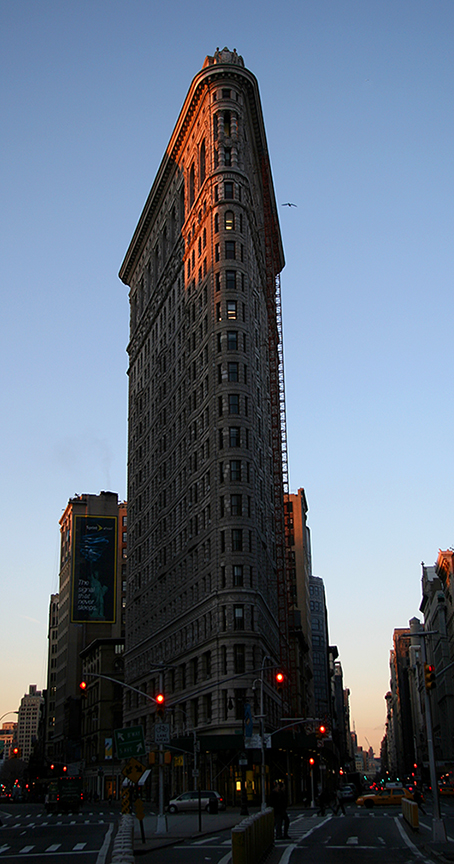
    Being out before dawn in the neighborhood gave me an opportunity to swing around the corner and capture the building at sunrise on a magnificent, clear day. I felt like a serious photographer that morning, having chosen the conditions and made a pilgrimage at the appropriate hour. With little traffic, I was able to position myself anywhere with ease, including the middle of the streets. See a second photo here.

    The building owes its name to the triangular plot of land upon which it sits, which was called the Flatiron block. Contrary to urban mythology, this name predates the building’s construction. It was officially the Fuller Building, but from the beginning, it became popularly known as the Flatiron. One of the city’s oldest existing skyscrapers (22 stories, 285 feet tall), it was built in 1902, designed by Chicago architect Daniel Burnham in the Beaux-Arts style. The exterior is a rusticated limestone with glazed terra-cotta.

    On its own island block, it is circumscribed by 23rd Street, Broadway, Fifth Avenue, and 22nd Street, diagonally across Madison Square Park. The area neighboring it is known as the Flatiron District.

    Trivia Note: One of the competing stories for the origin of the expression “23 skidoo” is due to the wind tunnel effect generated by the siting of the building. In the early 20th century, men would gather on 23rd Street trying to get glimpses of women with their dresses being blown up by gusts of wind. The police would give them the “23 skidoo” to remove them from the area…


  • dinamic_sidebar 4 none

©2026 New York Daily Photo Entries (RSS) and Comments (RSS)  Raindrops Theme