• Category Archives Only in New York
  • Penny’s from Heaven

    Posted on by Brian Dubé


    I have seen people get in very long lines at trade shows for free things, not even knowing what was being given away. I have seen people fight like wild animals over a few free T-shirts thrown to audience members. I have seen people who have money eat food that is virtually inedible because it is free.

    I have seen street vendors very frustrated with me as I show resistance to a purchase as they keep lowering the price with no effect. They just don’t seem to understand – if I really don’t want it, cheap will not change my desire.

    Free or cheap, particularly for entertainment, is not a big incentive for me. In New York City, there are so many cheap and free options for performances that a person who values their time at all has to be selective. However, as I wrote in Free Lunch, values do exist, and there is quality to be found in New York City for free or cheap in places like Under St. Marks (see story here). However, I had not yet been to Penny’s Open Mic until last night, when I went to a show for the first time.

    Penny’s Open Mic was started in 2007 by Penny Pollak and collaborators Milazzo and Marsha Brown. Penny is an actress, writer ,and performer. See more about her here and the venue here.
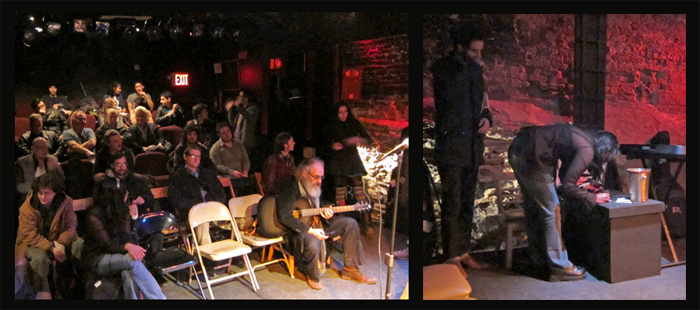
    Every Tuesday night, at 9PM, performers of every ilk show up at this tiny underground theater – musicians, singers, actors, poets, dancers, comedians, monologists. They sign up to perform, and their names are dropped in a bucket – 30 are chosen at random to determine who will perform and the order of performing. They are given 7 minutes to showcase before a live audience. Penny acts as emcee and timekeeper. A large number of the audience members are performers themselves, so the atmosphere is one of camaraderie and support.

    The talent and level of experience varies, as would be expected. I found last night’s performance outstanding. The live band and accompanying guitar are very strong elements. It was clear that many of the acts I saw had been fine tuned over a long period of time. Pieces from Frigid New York were done.

    It is critical that venues like this exist for budding/aspiring performers or for the more seasoned to showcase new material. The admission charge is only $3. The focus is on performing, not business. Downstairs at 94 St. Marks Place, on Tuesday nights, the Curse of Trade has not attached to this enterprise and, as both audiences and performers concur, Penny’s from Heaven 🙂
    Posted on by Brian Dubé

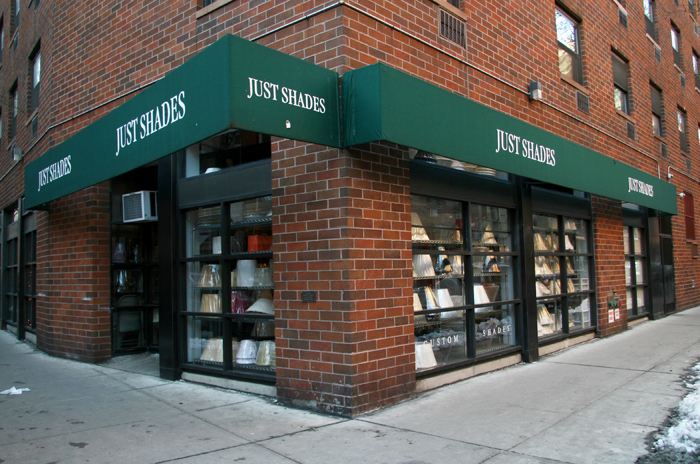
  • Just Shades


    If you want the flavor of New York City, I recommend watching Late Night with David Letterman. Here you will get comedy with an edge and a blend of the New Yorker’s classic traits – smug indifference, elitism, cynicism, skepticism, sarcasm, and impatience, applied to any and all topics, like the world of specialization, which we see more and more in all sectors of life whether business, occupation, or recreation.

    In retail, however, this is an extremely risky proposition. With a large product mix, a retailer can shift gears, i.e. inventory, as trends and consumer demands change. But to have a brick and mortar shop that specializes in a specific product leaves one at tremendous risk – a change in the tastes of the consumer and you are finished. A highly specialized retailer will typically require a very large population to keep a physical shop afloat financially selling one product. New York City offers the best opportunity for success.

    For every specialty survivor, I have seen a hundred casualties, like the gelati craze of the 1980s. We now have a wave of Red Mango and Pinkberry shops seemingly everywhere. Although they may offer a higher quality product, it is reminiscent of TCBY in New York. Now, there is only one left in Manhattan. One has to deal with not only the fickleness of the consumer, but also that of the New Yorker who has their own particular taste.

    The specialty shop sells only one product line, like Canal Rubber. The real specialty shop sells only one product – The Doughnut Plant, Kossar’s Bialys, H&H Bagel. But food shops or chains specializing in one product are common. Hard goods much less so. This is the world that surprises. Like Bari pizza ovens. Perhaps the quintessential poster child for real specialization in New York City retail is Just Shades, which, along with Just Bulbs, were the subjects of a brilliant, classic David Letterman skit in 1983. In it, Letterman starts by visiting Just Bulbs, where he persists in asking a salesclerk if they carry anything other than bulbs. Here are excerpts of Letterman’s brand of torture:

    Letterman: Besides bulbs, what do you have here?
    Clerk: Nothing.
    Letterman: How about shades? Could you get shades here?
    Clerk: NO, we are Just Bulbs. If you want shades, maybe you go in a place called Just Shades.

    Then we cut away to a downtown retailer, Just Shades, where Letterman pursues the same relentless questioning with a little old lady:

    Letterman: What is the name of this store?
    Clerk: Just Shades.
    Letterman: And what can you get in here?
    Clerk: What can you get in here? Only shades. That’s why our name is Just Shades.
    Letterman: But seriously, what can you get besides shades here?

    Letterman was able to poke some fun at the expense of extreme specialization, and for that, you need a New Yorker, New York, and a place like Just Shades 🙂


  • Pecking for Pita

    On April 27, 2010, I wrote Tired of Crumbs about the plight of many street performers and other independent artists. However, for many other members of the animal kingdom, crumbs are more than a metaphor, and living off the discards of others is literally the means of survival. In a city with as large a population as New York, the amount of refuse disposed is enormous, affording life support for many.

    A lover of Middle Eastern food, I was pleased to have the good fortune to run into Damascus Bakery while strolling through the Vinegar Hill neighborhood of Brooklyn. It was Sunday, so the business operation was closed, however, just outside the factory, there were a large number of pigeons busy atop dumpsters covered with heavy tarps. They seemed particularly industrious, and I had suspicions as to what was going on. Lifting up a corner of one tarp revealed exactly what I expected – the dumpster was entirely filled with pita bread, all polybagged, which I assume had been disposed of for a good reason.

    The pigeons were undaunted by the tarp and had successfully pecked holes through it and the plastic bags holding the pita. Perhaps not as dramatic as the Hawk Fest I witnessed on my window ledge in 2007, but nonetheless, this was a food fest.

    Damascus Bakeries is a 3rd generation business, currently run by Edward Mafoud, grandson of Hassan Halaby, who started the business on Atlantic Avenue in 1930 and introduced Syrian bread, aka pita, to America. In addition to a variety of flavors and sizes of pita, the bakery also produces Lavash Wraps, Panini, and Roll Ups. I hope to visit and tour their factory in the future.

    In New York City there are many means of survival. At the corner of Gold and Water Streets in Brooklyn, for these pigeons, it’s Pecking for Pita 🙂


  • The Perfect Gift

    In 1978, High Tech: The Industrial Style and Source Book for The Home, written by design journalists Joan Kron and Suzanne Slesin, was published. This and White By Design were two hardcover coffee table books that I frequently saw in bookstores and promised myself I would buy but never did. The raison d’etre of the Hi Tech design movement is seen as an evolution of the scientific and technical advances of the 1970s and abundance of high-tech devices in common use, leading to the appropriation of industrial and technical products in the home. The book was seminal and influential in use of the term Hi Tech – read more about it here.

    As a manufacturer for many decades, I found the use of the Hi Tech products in the home to be appealing for other reasons as well – the generally superior construction and cleaner, simpler design of industrial or commercial products. Those who use products in a commercial environment typically value function over form and durability over anything else. The foolishness of saving a few dollars purchasing equipment quickly becomes apparent when having to stop the wheels of production. Someone in business simply needs products that work well and reliably. And although aesthetics does not typically drive the design of commercial equipment, it does evolve towards the simplest form and construction that does the job properly. Often, this design becomes iconic and attractive from a minimalist perspective. One example is the bullet styled garbage can in stainless steel.

    Industrial elements have other appeals. Around New York City, in the outer fringes and edges, one will often find photo shoots with fashion models superimposed over gritty or industrial urban backdrops. The juxtaposition of the very disparate elements is quite effective in making the subject stand out.

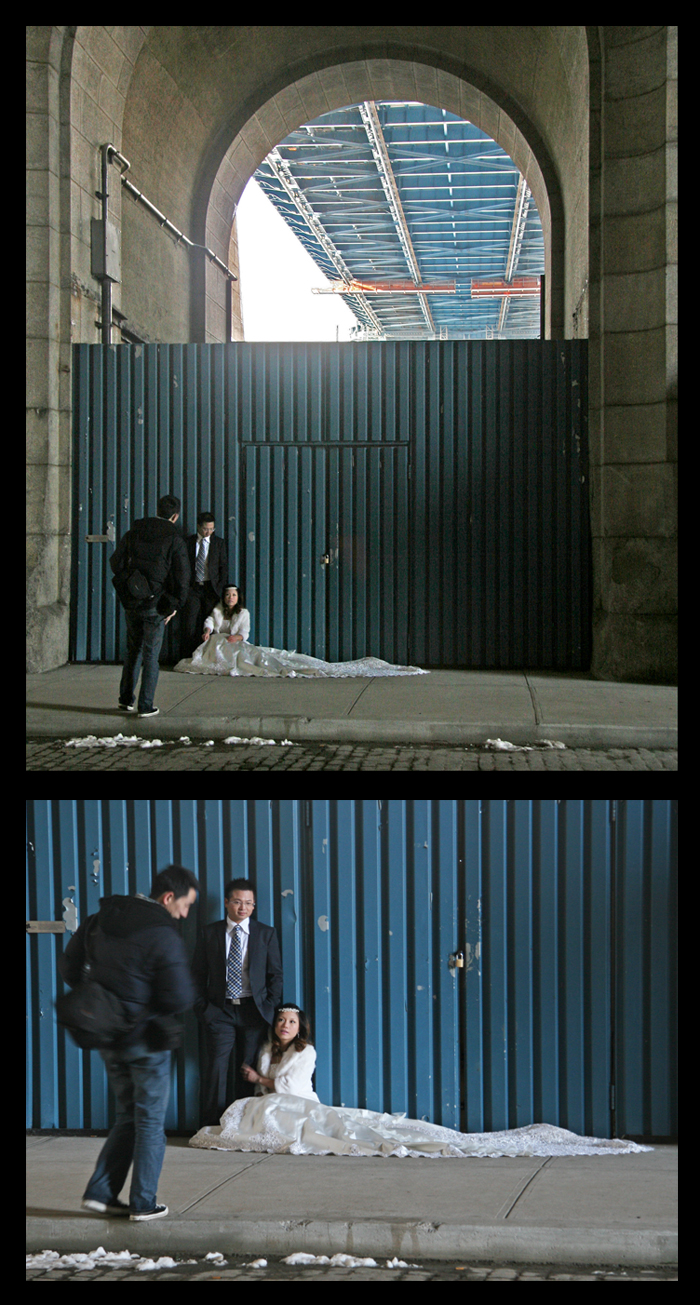
    All this considered, I was stunned to see the couple in today’s photos under the Manhattan Bridge on a freezing cold January day. The wedding is still a rather traditional affair, and this was an extremely radical departure from the ever popular New York City locales used for wedding photo shoots, such as Central Park on a beautiful spring or summer day.

    I wish I was friends with this couple because I have such the perfect wedding gift that I really think they would love: a set of two books – Hi Tech and White by Design 🙂

    Note: For more White by Design, go here and here.


  • Juxtaposition

    There are some neighborhoods that the visitor to New York City will likely never see and residents outside those neighborhoods will likely never visit either. Brownsville, East New York, Bedford-Stuyvesant, and Bushwick are among them. These places often serve as bragging rights for those who grew up there. Surrounded by these neighborhoods is Broadway Junction.

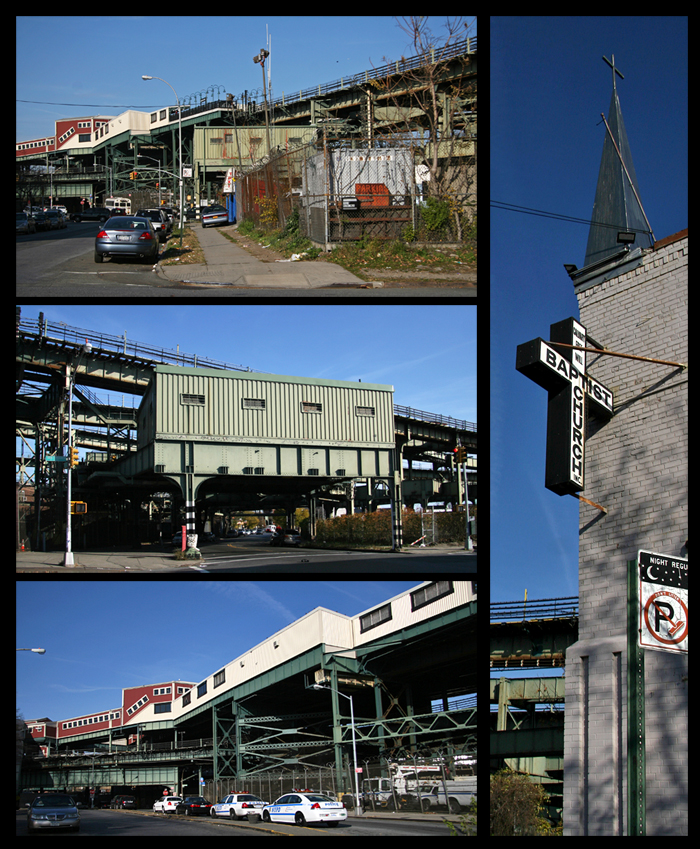
    I was literally stopped in my tracks – the tracks of a confluence of trains and a massive, hodgepodge conglomeration of structures with every disparate element imaginable – different colors and materials embellished with chain link fences crowned with barbed razor wire.
    This is Broadway Junction, where East New York Avenue, Broadway, Jamaica Avenue, Fulton Street, and Interboro Parkway pass, along with subway stations for the A, C, J, L, Z, and the Long Island Railroad.

    Nearby, at 1520 Herkimer Street, I happened across the Calvary Free Will Baptist Church. A perfect addition to the ultimate juxtaposition…


  • The Dark Side

    One of the biggest problems with the Internet is cut and paste journalism. The ease of which information can be copied and recycled is unprecedented, whether it be general information, reviews, press releases, or buzz. In the case of online news content, as in print media, there is always competition to cover any new event, product, service, or retailer. But with online content, the ease and temptation is just too great.

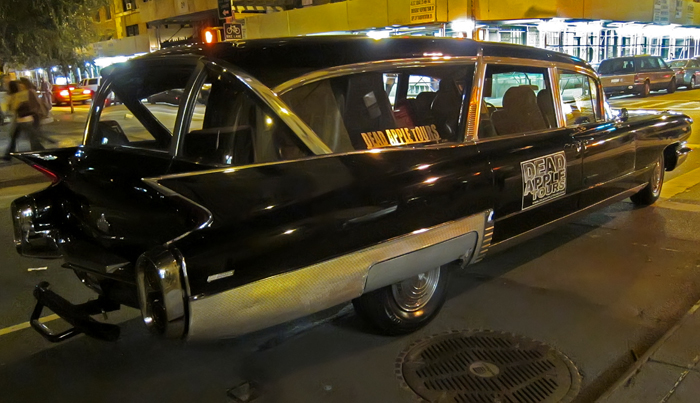
    Dead Apple Tours is certainly a clever concept. Started in 2010 by Drew Raphael, the 2-hour tour of the macabre is conducted from a 1960 Cadillac Crown Royale hearse (at $45 per person). From their website: Witness the final address of Heath Ledger, Keith Haring, Sid Vicious, “Crazy Joe” Gallo, Thomas Paine, and more. Learn the dark secrets of iconic landmarks: Empire State Building, Washington Square Park, and the Brooklyn Bridge.

    In going through pages of early reviews, however, apparently none of the reviewers in the major media had actually taken the tour or availed themselves of reviewers who had. All of the reviews appeared to essentially parrot back the buzz and tour information provided by the tour operator.

    The most useful reviews were those at Yelp.com, by three individuals who took the tour and reported their experiences:

    The narrative descriptions of dead locations were read from a book by our guide in a flat monotone, with all the enthusiasm of an MTA announcement.

    Many times we drove up to an approximate area but not to the actual site of the morbid event.

    A nice touch would be to drop people off at the train station at the end of the tour, at Fulton Street. The 3 stranded tourists had to ask us for direction to the train in the dark.

    There are a staggering number of things to do in New York City, and before spending time and money doing any of them, I would highly recommend looking at the reviews or talking to those who have actually been there and done that. Filtering the reviews and reading them closely is an important part of the process to ascertain why a review is actually positive or negative and relevant to you or not.

    If someone is marketing the dead, it’s fair to examine not only the light side but also the dark side of the dark side 🙂 🙁


  • Blessing of the Animals

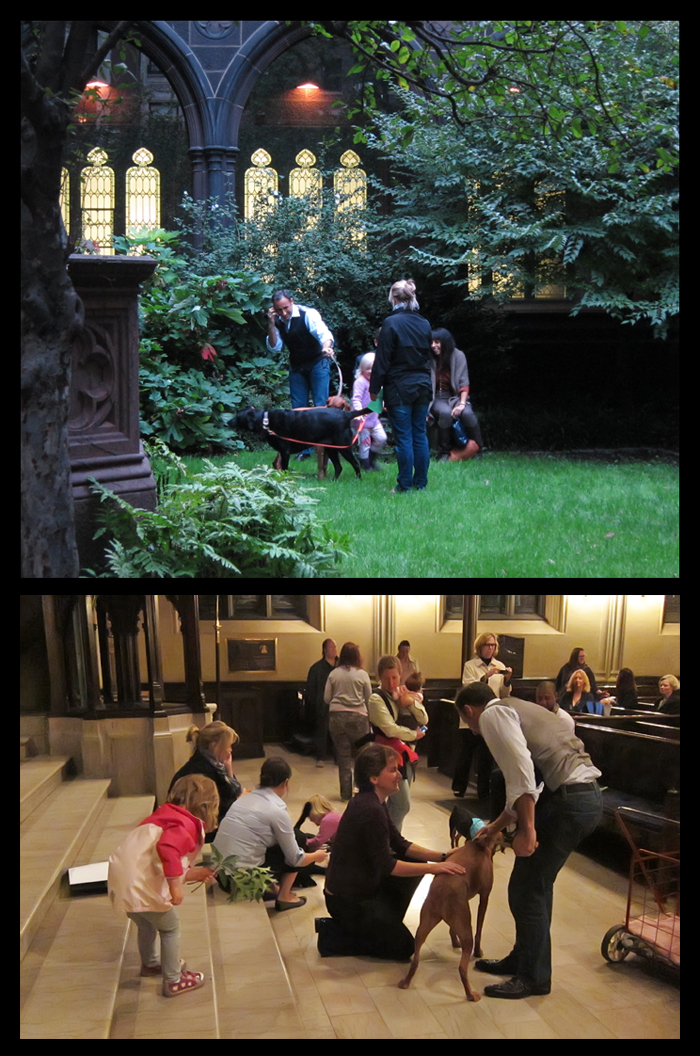
    Where would you expect to see llamas, cows, pigs, turtles, snakes, iguanas, horses, rabbits, goats, geese, donkeys, raptors, sheep, ferrets, dogs, and cats walking or being carried down the center aisle of a Gothic cathedral? At St. John the Divine’s annual Blessing of the Animals. Unfortunately, I missed this grand daddy celebration – I only became aware of it after its occurrence, when told by a friend who correctly assumed that this would be something I would not miss and would share with readers here.

    When New Yorkers decide to embrace something, they pull out all the stops, for an over-the-top, quintessential, nonpareil event. The huge population of the city in tandem with a no-holds barred spirit virtually guarantees this. The old adage applies to New Yorkers quite well – If you’re going to do something, you might as well do it right.

    Blessing of the Animals honors St. Francis of Assisi, patron saint of animals. This is celebrated by many Catholic and Episcopalian churches on the Sunday on or about his feast day, October 4th. Legend has it that St. Francis spoke to birds, tamed a wolf that was terrorizing a small village, and on his deathbed, thanked his donkey for carrying and helping him throughout his life, and his donkey wept.

    St. John the Divine has been celebrating Blessing of the Animals since 1985. The highlight is the procession of the animals, with as many as 4,000 creatures making the journey down the aisle with their owners for a ritual blessing. Every imaginable species is represented. One year, an 8,000 pound elephant from Ringling Brothers Circus made the walk.

    I did discover, however, that a local church, the First Presbyterian at 12th Street and Fifth Avenue, was conducting a ceremony on Wednesday the 6th, affording me the opportunity to attend a ceremony for the first time. It was quite a surprise to see our furry friends sharing the pews. The number attending was much smaller, of course, than St. John’s extravaganza, but for those attending with their beloved pets, blessings do not come in sizes 🙂


  • Urban Night Climbers


    Texte alternatif
    For a full night climbing experience, click and play audio link to accompany your reading.

    Many years ago, in a conversation with a customer, the subject somehow turned to my childhood love of tree climbing. My customer was VERY pleased to hear this, and encouraged me to rekindle this interest, embrace some trees, or perhaps even join him and his friends in their nocturnal sojourns. He was a night climber. Of buildings.

    New York City is a city that never sleeps. We are known for our night clubs, night life, and night people – but night climbers of buildings? I was not aware that there was an underground fraternity of those who practice buildering, aka urban climbing, stegophily, or structuring.

    The press has covered the various climbing spectaculars of the city – Philippe Petit’s legendary walk between the world trade towers on August 7, 1974. George Willig, a mountain-climber from Queens, New York, United States, climbed the South Tower of the World Trade Center on May 26, 1977. Alain Robert is a French rock and urban climber who in 1994 scaled the Empire State Building and on June 5, 2008, climbed the New York Times Building (later that day, Renaldo Clarke also climbed the building). Dan Goodwin, using suction cups and a camming device, climbed the North Tower of the World Trade Center on May 30, 1983.

    But recreational buildering goes back much further than might be expected, at least to Victorian times in England, where students had been climbing the architecture of Cambridge University. Geoffrey Winthrop Young was roof climbing there in the 1890s and published The Roof Climber’s Guide to Trinity in 1900. In 1937, The Night Climbers of Cambridge was written (under the pseudonym Whipplesnaith) about the nocturnal climbing on the town buildings and colleges of Cambridge, England in the 1930s.

    In the United States, two men, George Polley and Harry Gardiner, both nicknamed the Human Fly, pioneered buildering as early as 1905. In 1920, George Polley climbed 30 floors of the Woolworth building before being arrested. Not much, however, is written about current recreational nighttime buildering in New York City, for obvious reasons. In 2008, the New York Times published an article with a little on the activity.

    Apart from legality or prudence, I do understand the lure of urban climbing. Much as the alpine areas of the world are magnets for rock climbers, the buildings and skyscrapers of New York City provide the same challenges and draw in masonry, steel, and glass. Perhaps I may yet get to witness the activities of these urban night climbers…

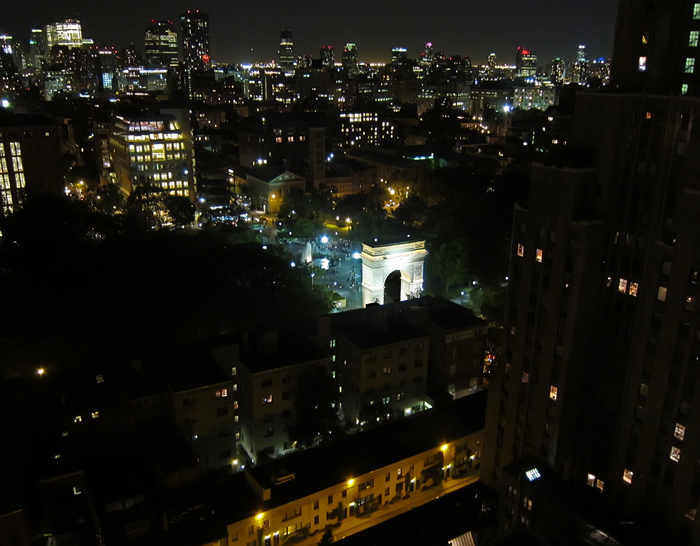
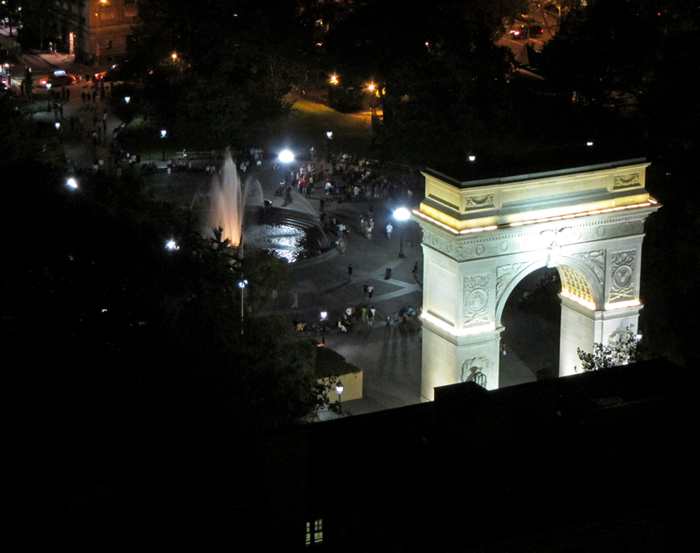
    Photo Note: I was recently privy to access to one of the very few rooftops in the Village affording a direct view of Washington Square Park. The building and friends kind enough to invite me to share the view, will, in the spirit of buildering, remain a secret 🙂


  • Goin’ To Lourdes


    Annie Hall: Oh, you see an analyst?
    Alvy Singer: Yeah, just for fifteen years.
    Annie Hall: Fifteen years?
    Alvy Singer: Yeah, I’m gonna give him one more year, and then I’m goin’ to Lourdes.

    This dialogue, from Woody Allen’s film Annie Hall (with Woody playing Alvy Singer), demonstrates the iconic status of the shrine at Lourdes, France, in the Pyrenees. Lourdes has become synonymous with miracles.

    Growing up as a Roman Catholic, Lourdes has always fascinated me. What is most intriguing is the purported healing properties of the water. An estimated 200 million people have visited Sanctuary of Our Lady in Lourdes since 1860. Currently, about 6 million yearly make the pilgrimage. The church has recognized 67 miraculous healings.

    One should be careful to dismiss these as self-delusional or write this off as a case of the Catholic Church’s self-promotion. The claims for miraculous healings actually are put through quite rigorous testing before a Lourdes Medical Bureau, comprised of doctors. Those claims standing up to preliminary examination are referred to the International Lourdes Medical Committee, an international panel of medical experts in various disciplines (not all Roman Catholic, the panel is open to any denomination). Only a handful of claims make it this far, and the entire process takes 5-12 years, ensuring that the cure is permanent. The church itself gives the final approval.

    The Roman Catholic church is actually reluctant and extremely careful to acknowledge miracles or grant sainthood – the repercussions of fraudulent claims would certainly come back to haunt them. See a New York Times article here. The conditions to qualify as a genuine miracle are:

    The original diagnosis must be verified and confirmed beyond doubt
    The diagnosis must be regarded as “incurable” with current means (although ongoing treatments do not disqualify the cure)
    The cure must happen in association with a visit to Lourdes, typically while in Lourdes or in the vicinity of the shrine itself (neither drinking nor bathing in the water is required)
    The cure must be immediate (rapid resolution of symptoms and signs of the illness)
    The cure must be complete (no residual impairment or deficit)
    The cure must be permanent (with no recurrence)

    The waters of Lourdes are available right here in New York City at the Church of Notre Dame, located at 114th Street and Morningside Drive, near Columbia University, with which it has been associated since 1988. The first administrator of the church was Fr. Maurice Reynauld. While in France in 1913, Reynauld affiliated the Church of Notre Dame with the Sanctuary of Our Lady in Lourdes. A special arrangement was made for Lourdes water to be sent directly from the shrine in France to the Church of Notre Dame in New York City. Since that time, water from the Lourdes shrine has been continuously available at the church in New York.

    I am very curious about the whole thing. I’ve been to California. One day, I’m goin’ to Lourdes


  • On The Road

    If you are not familiar with what I do for a livelihood, click here before reading this story. Also see the related links at the bottom.


    Note: Please click and play the audio link to accompany your reading of this remarkable tale.


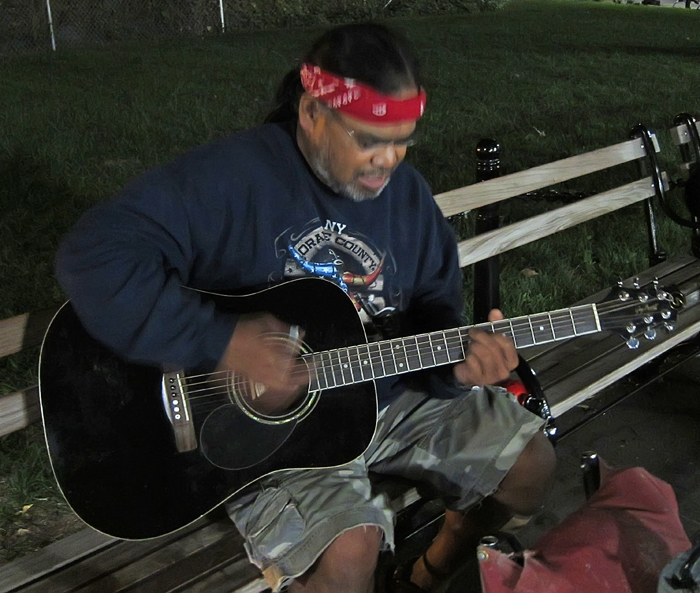
    In a typical evening ritual, I circumnavigated the central plaza of Washington Square Park looking for a music jam. I had a number of choices, but I was drawn to this particular man who I had never seen before. He looked like a man passing through.

    His voice was very good, his playing style confident and his repertoire quite extensive. The more I listened, the more I liked him, so I decided to make a commitment and sit down. I took a few photos.

    Between songs, a number of friends and I learned a few things about him – he was a native Alaskan on the road. A broken G string offered the opportunity to dig deeper.
    He seemed extremely accommodating, and as we spoke, I took out paper and pen and began making notes about the details of his life. I slowly began to feel that there is a good story here. But nothing as good as what was to come.

    At one point, I told him that I hoped he did not mind, but he was going to be the subject of the next day’s story. He appeared pleased, and I was also, so now with a green light, I filled in the details of his life.

    Gaby Lampkey is 54 years old and was born in Juneau, Alaska, to a Filipino father and a Tlingit mother* who busied herself raising nine children. Gaby is a member of the Raven Tribe, Seagull Clan. His family moved to Los Angeles when he was young. He served in the Coast Guard for 6 years, where he worked as a captain’s cook, and was married for 13 years and has two girls.

    Gaby has been on the road for 10 years, with no real home, living by his wits and sleeping wherever he can (he plans to move into the Manhattan hostel on the Upper West Side). His income of tribal dividends is supplemented by work as a street musician playing guitar. We spoke of hobos and trains, which was not his preferred mode of travel – he is an itinerant hitchhiker. Gaby described himself more as a traveling hippie, a participant in the annual Rainbow Gatherings and a recent attendee of the 41st anniversary of Woodstock, where he performed. He said he was an avid reader and read everything he could get his hands on, including the sides of iodine bottles.

    In a very surprising shift, he said he was a juggler and spoke of how juggling changed his life with anecdotes. I acknowledged his experiences, only half hearing them, my mind intoxicated with the possibility of the obvious connection. If this was going were I think it was, it would be as astonishing as Walid Soroor .

    But play your cards slowly, I thought – don’t reveal them now, go for the knockout punch.

    I have a hard time keeping a secret or containing my enthusiasm, but while Gaby spoke, I contained myself and very casually reached into my bag for a stack of business cards.
    I handed him one and asked him if he had heard of the company. He immediately responded, yes indeed, and that Brian Dubé was the person that made him his first set of juggling clubs.

    He recounted how, for most things in Juneau, he had to order from a catalog. He had poured over the Dubé Juggling Equipment catalog as a boy and ordered his first set of juggling clubs. He also told me, that unlike most other products that did not live up to catalog imagery, when his new clubs arrived, they were just like those pictured, and he worshipped those objects which he kept in his room. I was beaming.

    You have him now, I thought, no need to belabor this any longer. Deliver the one-two punch.

    I asked offhandedly if he knew Brian Dubé. He answered that he had never met Brian personally. I said, “Yes you have, you have been talking to him for the last two hours.”

    Gaby and a handful of friends around me who were privy to this conversation were just stunned and burst into a virtual applause. This was a connection just too amazing to believe, and we spent quite some time exchanging more notes, anecdotes, mutual friends, and acquaintances. I expect to see him again and give a copy of this story. Only in New York with a fortuitous set of circumstances and an intersection in time and space with a man who is on the road

    *The Tlingits are a matrilineal indigenous people from the Pacific Northwest Coast. You can read more about the Tlingits here.

    UPDATE: For an update on Gaby’s life, go here.

    Related Posts: Supercute!, Signature, Juggle This, Spinning, Artiste Extraordinaire, Fish and Ponds


  • Picnic Anyone?

    In the early days of the Windows operating system, when it was making heavy inroads into the graphical interface market, Apple devotees began to find themselves in a very defensive posture. A typical response was that Windows was built over MS-DOS and that the Windows user experience and computing suffered for it. 

    I recall an Apple Computer salesman once arguing for the superiority of the Macintosh interface over Windows by saying that you can dress a gorilla in a tuxedo, but underneath, you still had a gorilla. Salesmen love these clever little general quips – they sound good, avoid the specifics, and minimize arguments. 

    During that same time, I was evaluating Apple vs PC/Windows and was discussing this with an acquaintance who was very experienced in both platforms. I suggested something which I had heard in defense of the economy of a PC running Windows over the premium charged by Apple: anything you can do with an Apple computer you can do on a PC. He immediately retorted: Yes, and you can also do it with pencil and paper

    Although his response was an exaggeration, he did make a good point for the value of aesthetics/design over utility. This debate still rages on, with many seeing the purchase of Apple computers as foolishly overpaying for an unnecessary luxury and Apple users more than happy to pay a premium for what they feel is a superior user experience and industrial design. 

    I can’t imagine a much better example of utility over aesthetic than what I saw recently on Muldoon Avenue in Staten Island: a metal table with chairs, unshaded, roadside, in the blistering heat in front of a NYC Department of Sanitation garage near the Fresh Kills landfill. The immediate surroundings are shown in the lower two photos. A online map street view shows this lawn as empty, so it appears this is a recent addition. Perfect for Labor Day weekend. Picnic, anyone?


  • Supercute!


    My first formal exposure to cuteness was an introduction to the website cuteoverload.com by a friend. The mere mention of the website by name, and I knew this had to be successful. I was immediately very irritated or, better said, jealous that I had not thought of it first.
    Kittens, bunnies, snorgling, puppies, and the whole panoply of obvious and non-obvious subjects qualifying as cute populate the blog, which receives over 40,000 visits per day.

    Some may bristle at cuteness, particularly in New York, a city that prides itself on being a center for sophistication and edge, with many self-appointed curators. But cuteness lovers will not be dissuaded, and even in New York City, lovers and embracers of the cute, cuddly, and adorable abound. And what does one do when hyper cuteness becomes deliberate and, in a way, with a splash of self-mockery, redefines what is edgy?

    When a colleague who does the social networking for my business discovered and brought to my attention the indie-pop band Supercute!, I was much more favorable to their brand of cuteness, as was everyone in our office. Was it that they redefined and remarketed cuteness in a novel way, or was it that I recognized the marketing potential of Supercute! for a product we all they were manufacturing, hoops?* Both.

    Learning also that Supercute! were residents of New York City, I immediately asked a staff member to contact them, acting out fantasies of the agent and power broker finding and signing the unknown talent and sleeping giant. Laughable in the age of the Internet, and also since these girls already had presence online and an active career with accolades from the public and press.

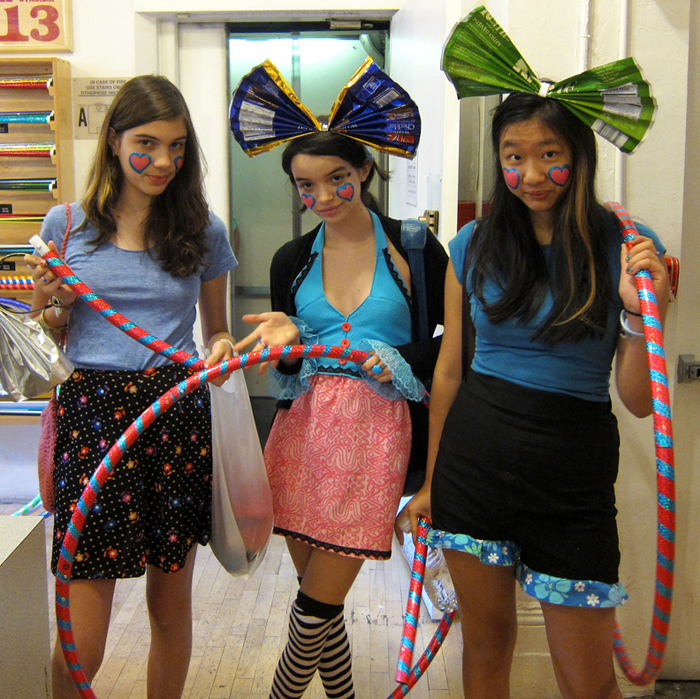
    Supercute! (Rachel Trachtenburg, June Lei, and Julia Cumming) was easily approachable, and a meeting was set up to discuss the possibilities of a mutually beneficial relationship, particularly with their hula hoop song.
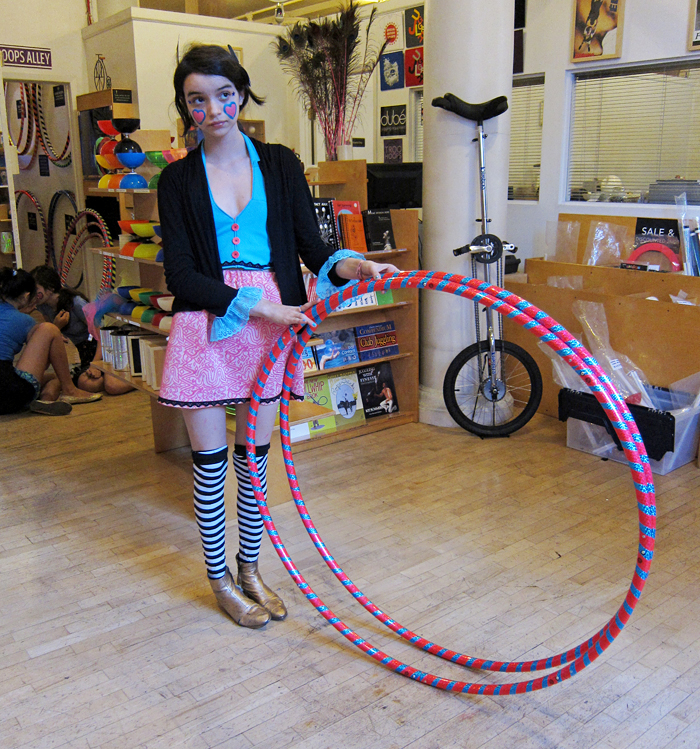
    Seeing them arrive in costume and character was a big and fun surprise. They were accompanied by Rachel’s mother, Tina, and June’s father and photographer, John Lei. The photo was from a recent visit, where we customized a set of hoops for the girls in their signature colors of pink and blue. Always the charmers, the girls arrived again in costume. While waiting for their hoops to be made, the girls busied themselves primping up in our showroom for a performance in a variety show that evening at the Bowery Poetry Club (see photo here).

    Supercute! was formed in 2009 by Rachel Trachtenburg, who has been performing since the age of six with her mother, Tina Piña, and father, Jason, as the Trachtenburg Family Slideshow Players. These girls are getting invaluable guidance from their parents’ professional careers and experience in a world where success is neither easy nor durable, even if you are Supercute! 🙂

    *You can find our website here and here with posts about what I do here: Signature, Juggle This, Spinning, Artiste Extraordinaire, Fish and Ponds


  • Sittin’ on Top of the World

    Manhattan has a coordinated traffic signal system. Avenues run north/south and are generally one way, like the majority of crosstown streets. These avenues have traffic lights that are timed progressively so that traffic can move without stopping. In theory. The lights move in a wave – a green wave of about 5 lights traveling below speed limit, sandwiched between red lights behind and in front of this green wave. Driving these avenues is urban surfing – wait for a wave, catch the wave, ride the wave as long as possible, and don’t get caught in the soup. I have often ridden a wave like this for miles down an avenue.

    On other major avenues that are two way, such as Park Avenue, Central Park West, and 11th and 12th Avenues, lights are timed to change simultaneously. This means that the faster you go, the more lights you can make before stopping.

    I drove a taxi in college, as did nearly all of my best friends. On one occasion, the wildest driver of the bunch asked me how many blocks I could make on Park Avenue. I believe he said he could make somewhere in the vicinity of 27 blocks. Without going through the mathematics, I can assure you – that is some fast driving on city streets, somewhere in the neighborhood of at least 60 miles per hour. Unfortunately, a few of us took this as a challenge, later comparing results. Fortunately, there were no fatalities in this short-lived reckless contest.
    The speed limit in Manhattan is 30 mph. Traveling at 60 plus miles per hour on crowded city streets is lunacy. The reason for high auto insurance for those under 25 is abundantly clear.

    Today’s photo was taken looking north from the last Park Avenue mall. The small park extends from 96th to 97th streets, where the Metro North train tracks emerge from underground to travel on an elevated trestle along Park Avenue. Looking at this now, I realize that I could have challenged my college friend to see if, in French Connection style*, he could outrun a commuter train.

    I, however, will keep away from all temptation that Park Avenue may offer, opting instead for First or Second Avenue with the gentle waves of the progressive lights, where, with good conditions, I can catch a wave and ride it all the way. That thrill makes me feel like the ultimate Beach Boy, because in New York City, if you can catch a wave and ride it all the way, you feel like you’re really sittin’ on top of the world* 🙂

    *The French Connection (1971) has what many consider of the greatest car chase scenes ever filmed. The chase was between a hitman on an out-of-control train on an elevated section of a subway line in Bensonhurst, Brooklyn, and a police officer in a car on the streets below the train. Most of the chase sequence was real and filmed without permission from the city of New York. It includes an accidental car crash, which was left in the film.

    *From the Beach Boys song Catch a Wave, with the refrain: “Catch a wave and you’re sittin’ on top of the world.”


  • Pockets of Joy

    Unless you are a saint, someone who has achieved nirvana, satori, or samadhi, or perhaps one of those individuals who is blessed as an eternal optimist, emotional life is an up and down affair. Life is good, but not always that good.
    For those of us mere mortals, it is more reasonable not to expect a life of constant euphoria and bliss, even in New York City, which has so much to offer, but rather, to look for pockets of joy in a less than perfect world.

    One of the unique things about New York, which I have never experienced anywhere else, is that no matter what your interests, passions, ethnicity, color, creed, or education, if you look, you can find others of a similar persuasion. Immerse yourself with these people, and you may find one of New York City’s many pockets of joy.

    For those who love music, this is an easy task. Head to Washington Square Park, and often you will find numerous groups playing at the same time – make the rounds and sample the goods. The New York Times has recently done two articles on the activities here.

    As of late, the park has been invaded by a large group of drummers. Although the experience is rather entrancing to the participant and has added musical variety, it has, however, made the rest of the central plaza difficult for other musicians to play and be heard, such as regulars like Joe Budnick or guitar virtuoso Scott Samuels. Regular street performers add to the din. Hence, splinter groups form on the lawns, on pathways, or tucked away in the folds of foliage. The musical entertainment seeker is well advised to circulate a bit, as I did on Saturday.

    A great number of musicians here are professional, some playing in the park for unstructured musical fun, others looking to play or rehearse outdoors on a beautiful day.
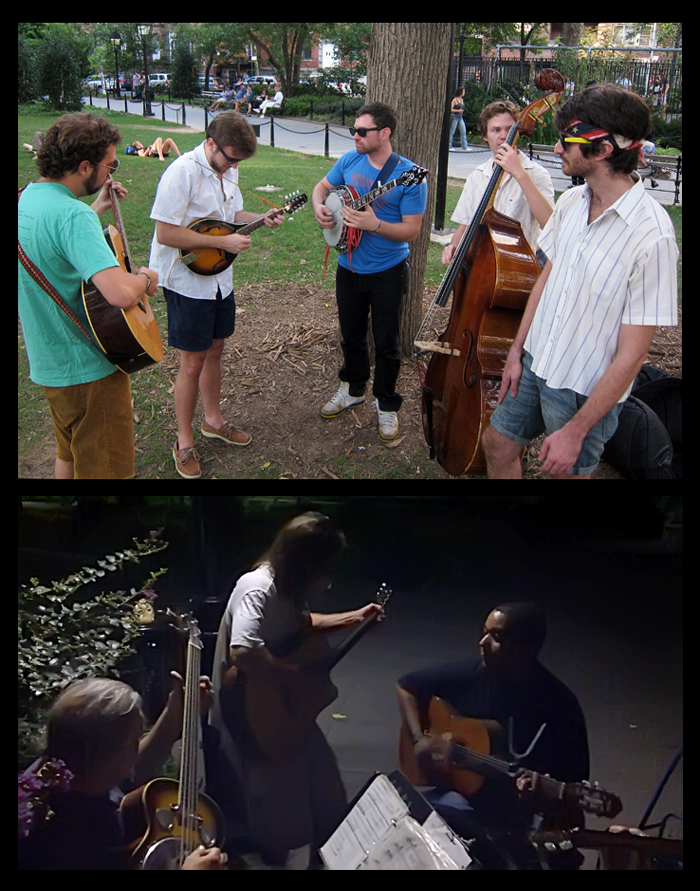
    Some form spontaneous groupings, some play together regularly, and yet others have established bands and work together professionally outside the park. The latter was the case with a bluegrass group, the Bella Boys, whom I encountered on one of the lawns, away from the central plaza hubbub. These boys were quite bella, and their command of repertoire was astounding to me, as was the familiarity of several members with numerous instruments. At various junctures, the mandolin, banjo, and guitar were passed around like musical chairs. I learned that one of the members was leaving for Europe for four months, so I had fortuitously run into them on their last get together for quite some time.

    Later that night, I ran across another grouping (Sage, Peter, Jimmy, and Joe – bottom photo), which included regulars I have known for some time. The singer, Sage, has a masterful, trained, and natural voice, and his occasional forays into the park are always a welcome addition to any group (Sage plays a dozen instruments and has a collection of 100). I had the good sense to record video of these events:

    At one point during the bluegrass jam, I noticed the hair on my arms standing up – a clear sign that life was indeed good and that I had found one of the city’s many pockets of joy 🙂

    Related Music Posts: Sieve of Darwin, Music Speaks for Itself, Sounds of Summer, Police Riot Concert, Bluegrass Reunion, The Conductor


  • With Impunity

    There are apt metaphors for New York City – readers here know that I am particularly fond of the city as a Jungle (as I wrote in Jungle Lovers). However, there are metaphors, and I do believe there is a lawlessness here that makes this city feel at times like the Wild West.

    I recall in the 1970s being told by a friend that he had been mugged in the West Village for $20. He subsequently saw the perpetrator some days later in the East Village and yelled, “Hey, you owe me 20 bucks.” I don’t recall if my friend was reimbursed, but in less enlightened times, that man would be behind bars very quickly.

    In Washington Square Park, e.g., the police know the drug dealers well, and the dealers know that the police know who they are. They often chat. And they conduct business with impunity. Why? There are a number of reasons, including the fact that the drug sellers know the law and have established a system of steerers, touts, lookouts, and actual dealers, enabling them to work in a way that makes arrests difficult. Also, prisons are overcrowded, and there is community opposition to new facilities. Often, drug dealers who are arrested are back on the streets in a day or two.

    Here, home of the ACLU, police officers must be careful of what they do and how they do it. They know they may face harsh retribution for improper procedures and actions. I have spoken to officers who have said that they feel that their hands are tied and they are often disinclined to make arrests.

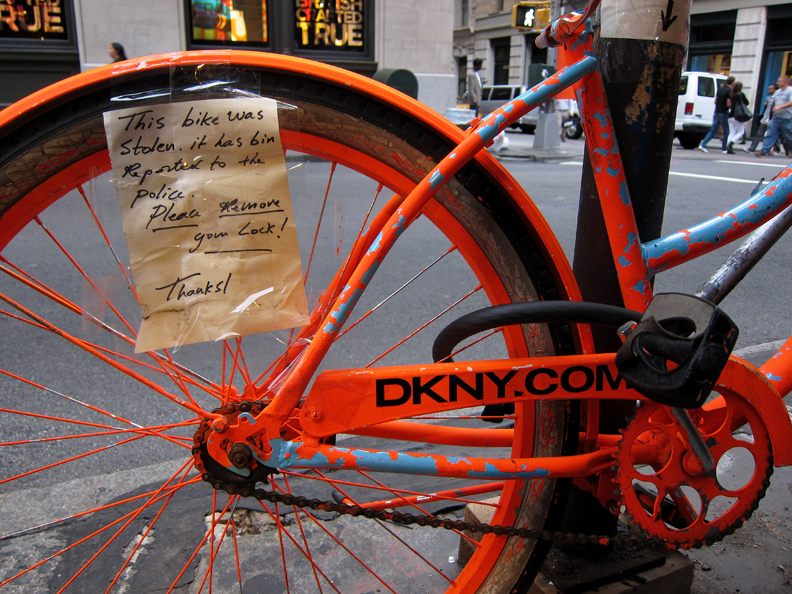
    The New York City criminal is very street smart, savvy, and crafty, and uses all this as a weapon to ply his trade. Thieves know what to do and how to do it. And they steal flagrantly and event flaunt their wares. The bike in the photo was found on Spring Street in SoHo. These orange DKNY bikes were originally part of a promotion, which I wrote about in Orange You Glad. Apparently, the new owner of the bike feels comfortable flaunting his new acquisition on Spring Street. Be glad it is not your bike, because in the Wild West, cowboys often steal with impunity 🙂


  • dinamic_sidebar 4 none

©2026 New York Daily Photo Entries (RSS) and Comments (RSS)  Raindrops Theme