• Category Archives Homes and ‘Hoods
  • Brooklyn Heights

    Posted on by Brian Dubé


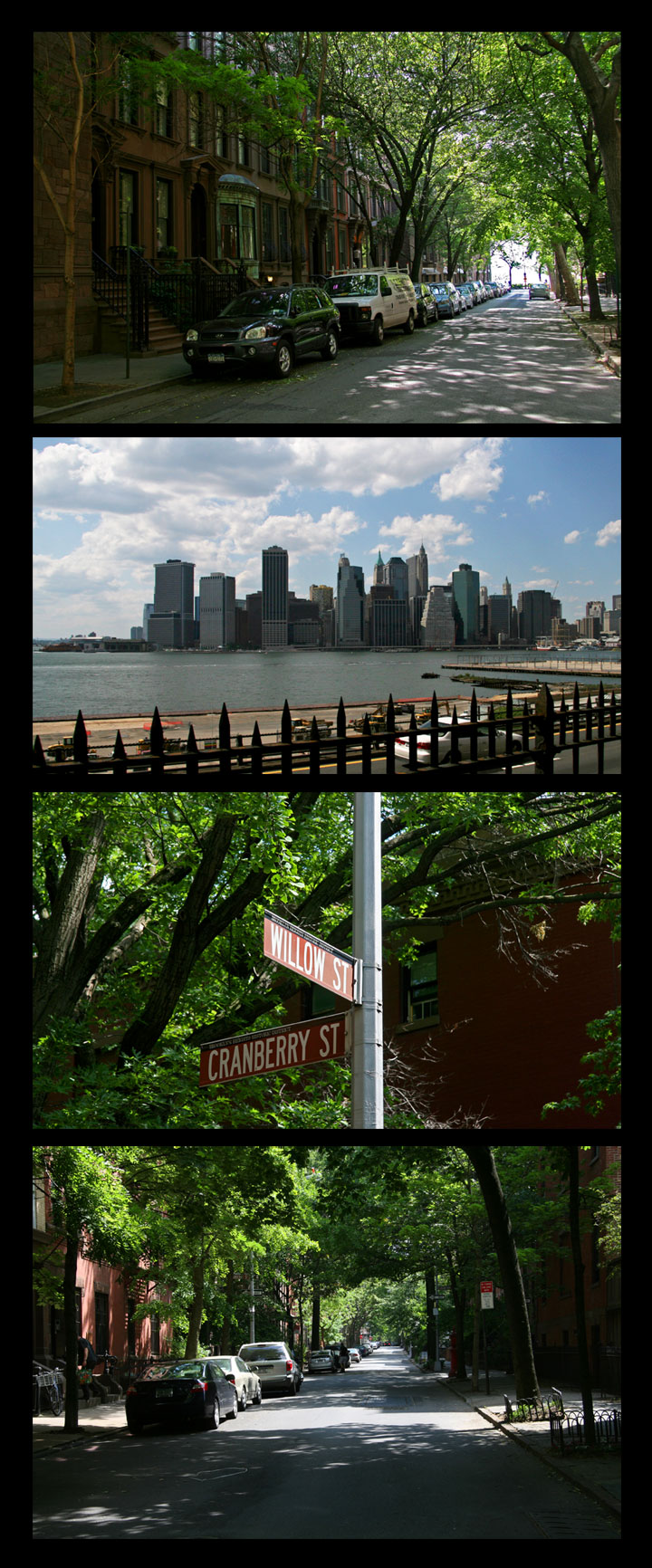
    What is more inviting than a neighborhood with street names like Orange, Pineapple, Cranberry, Willow, Poplar, Grace Court, Garden Place, and Love Lane? Brooklyn Heights is truly a special enclave, buffered from the world on 4 sides by the Brooklyn Bridge to the North, Cadman Plaza to the East, Atlantic Avenue to the South and the promenade/esplanade abutting the East River to the West. The promenade is a huge feature here, one which has brought me back many times. Flanking the entire length of the neighborhood, it affords magnificent views of Manhattan, the East River, the Statue of Liberty, the Brooklyn Bridge, and the Manhattan Bridge. Both daytime and nighttime views are worth a trip. See more photos here.

    This is New York City’s first historic district, established in 1965 as a product of opposition to a Robert Moses plan to run the Brooklyn Queens Expressway through the center of the neighborhood. The rerouting of the expressway to the Western edge of the neighborhood (which sits on a bluff), permitted the building of the esplanade. The neighborhood has virtually no tall buildings and is characterized by blocks of row houses of Federal, Greek Revival, Gothic Revival, Italianate brownstones, and some mansions.

    Brooklyn Heights has also been known for its stable of renowned writers who have lived there: Truman Capote, Norman Mailer, Hart Crane, Andrea Dworkin, Arthur Miller, Walt Whitman, and Thomas Wolfe.
    Genteel, pristine, picturesque, bucolic, charming – hard to imagine that this area was considered somewhat unsafe and undesirable at one time.

    There is essentially no through traffic in the neighborhood, so it is extremely quiet and peaceful. Street scenes as shown in my photos typify day to day life here. And yet, it is an incredibly convenient location – one subway stop from Manhattan and with immediate access to bridges or the expressway. As you have most likely guessed, inexpensive is not one of the features here 🙂

    Posted on by Brian Dubé

  • Sheepshead Bay

    Posted on by Brian Dubé


    The problem is simple – I have spent too much time looking for the Manhattan in Brooklyn. My travels there have focused on neighborhoods such as Park Slope or Brooklyn Heights – historic enclaves with row houses most similar to those in Manhattan.

    One will often hear a Brooklynite use the phrase “going into the city,” one of the prime examples of a city which is Manhattan-centric. In many ways, Manhattan does drive the city as an economic engine and is a mecca for culture and the arts. It is the center of the financial world and of many other industries for which New York City is known. However, Manhattan is not the only place on earth, with Brooklyn playing second fiddle – an attitude many Manhattanites share, as I did for most of my life here.

    Welcome to Sheepshead Bay, both a neighborhood and a bay separating the mainland of Brooklyn from the peninsula Manhattan Beach (see my previous article here). Sheepshead Bay is named for the sheepshead, an edible fish once found in the bay. Read more about the neighborhood here.

    On my recent excursion to the area, I crossed the footbridge (Ocean Beach Bridge) which spans the bay and connects Manhattan Beach to Sheepshead Bay’s commercial strip, Emmons Avenue. It is here that I also found Stella Maris, the last fishing and tackle shop in the area. The bridge is a must do – it affords great vistas of the bay, both neighborhoods, and the maritime activities. See my gallery of photos here.

    I think differently now. Brooklyn is steeped in character and history. Brooklyn has its own style and attitude. I am disappointed that I didn’t take better advantage of Brooklyn and really explore it when I was younger and had a few good friends there.
    But I am doing makeup work, busy discovering the neighborhoods of Brooklyn and learning things every Brooklynite always knew: Brooklyn is its own world.

    Posted on by Brian Dubé

  • Manhattan Beach

    Posted on by Brian Dubé

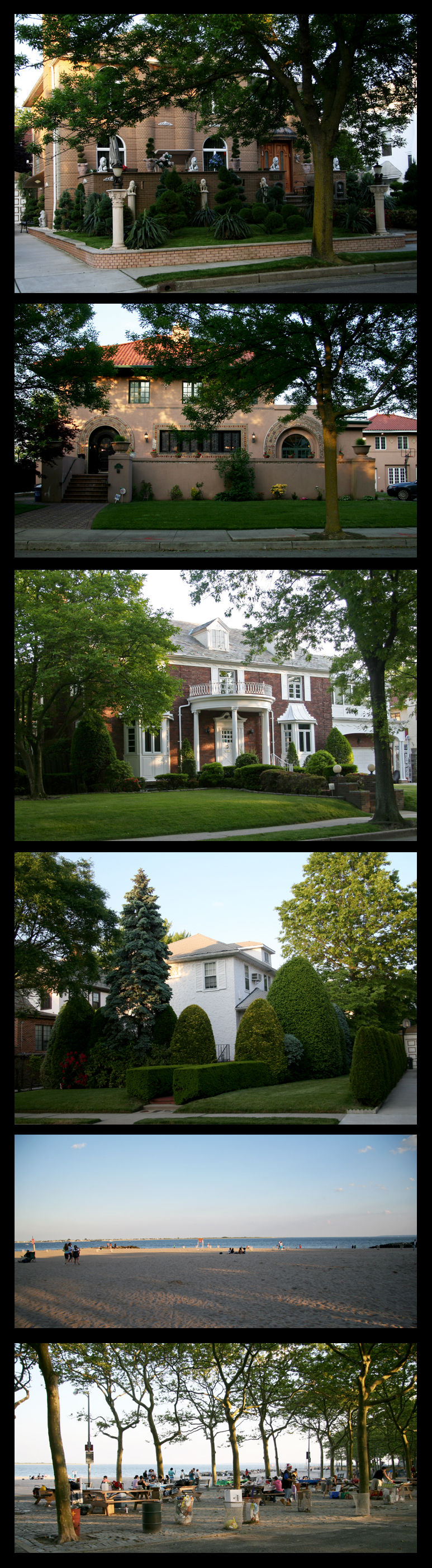
    This is New York City, not colonial Virginia. I was astounded on my recent excursion to the Manhattan Beach section of Brooklyn, which I had never really explored. This stately home is typical of many of the large residences in the area, mostly detached single-family homes with lawns and garages, some even with swimming pools. See my gallery of photos here. The environment feels more suburban than urban – atypical of New York City and unlike most of Brooklyn itself.

    Surrounded by water on three sides, the neighborhood is very much an enclave and one of the most expensive in New York City. Many residents are Jewish and/or Russian immigrants. There is very little shopping in the neighborhood, and on weekends and holidays during the summer season (May 15 to Sept. 15), parking is prohibited on nearly all Manhattan Beach streets, owing to the attraction of the beach. I found the expanse of rocky beach reminiscent of the Maine coast, certainly not typical of New York.

    Manhattan Beach Park offers a baseball field, playgrounds, tennis courts, basketball and handball courts, picnic areas, and rest rooms. Snacks are available from concession stands and pushcarts.
    Another very unique aspect of the neighborhood is that Kingsborough Community College, with a 70-acre campus and their own private beach, occupies the easternmost tip of the peninsula. The school, established in 1963, is part of the City University of New York (CUNY) system and has 30,000 students.

    I recommend a visit of the area, perhaps with Sheepshead Bay as a base for your explorations (subject of a future post). A footbridge crosses the bay, providing nice vistas and a connection to Manhattan Beach…

    Posted on by Brian Dubé

  • Salad Bowl

    Posted on by Brian Dubé

    Some argue that the view of America and even New York City as a melting pot is largely a myth and an outmoded idea. Immigrants do not settle across the country or the city in a uniformly distributed way. What we have would be better described as cultural pluralism and multiculturalism, and that a salad bowl is a better analogy than a melting pot.

    New York City is remarkably diverse, but on close examination, a walk through the many neighborhoods of this city will reveal segregation based on ethnicity and social class/income. Remove students and visitors from the equation, and you will find some areas quite homogeneous as far as actual residents.

    I leave it to you to sort out the details and make judgements regarding melting pots, salad bowls, demographics, and the census. If you want to see the best New York City (and some say the world) has to offer as far as ethnic diversity is concerned, head to Jackson Heights, Queens. I wrote a number of articles about this area in 2007 – see the links at the bottom of this article.

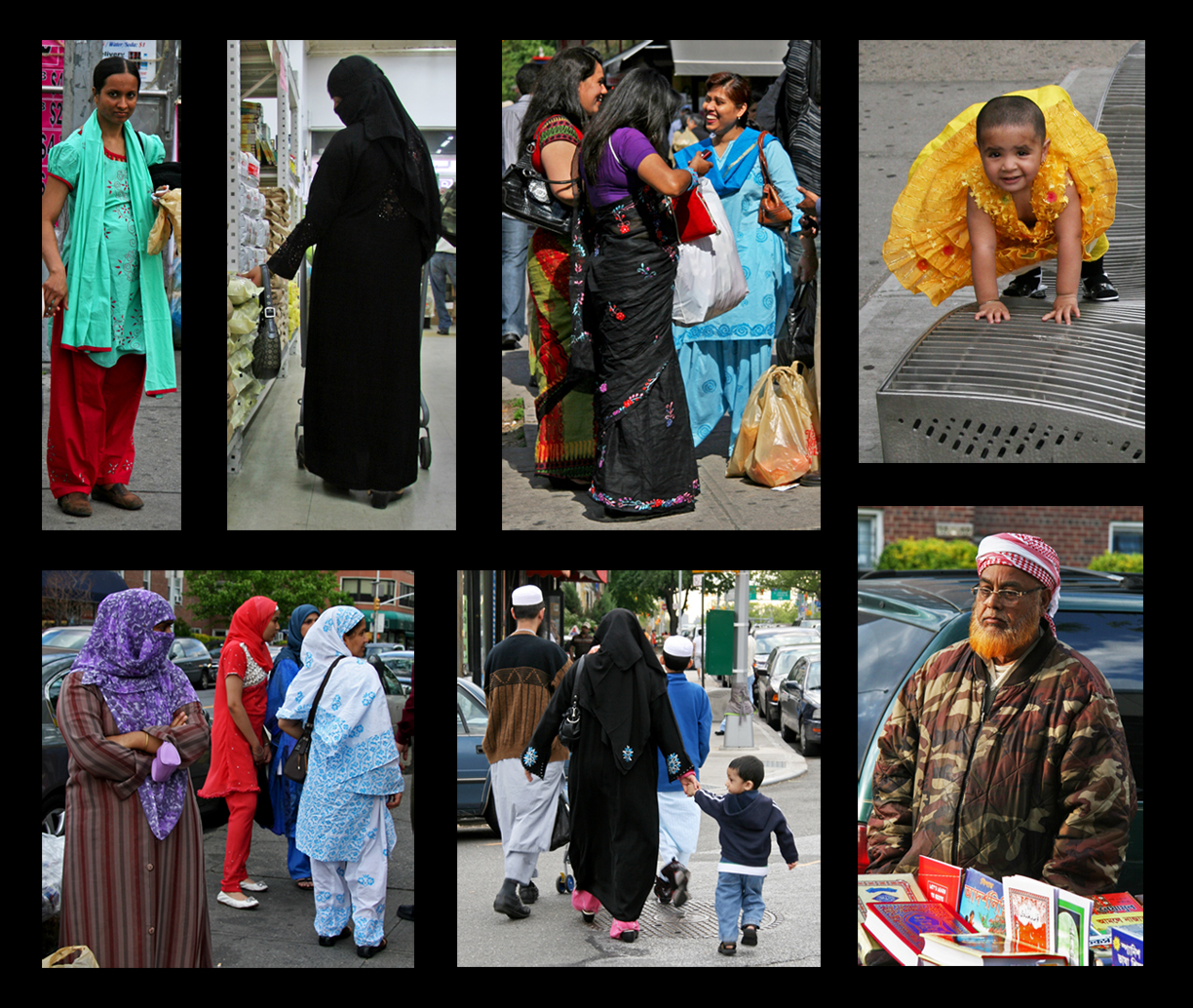
    The most striking thing about a visit to this neighborhood is the extraordinary numbers of people who are wearing traditional non-western dress. Turbans, Saris, Burqas, and other unusual dress dominate the streets and shops, which themselves are a menagerie of merchants featuring products and foods catering to these varied cultural groups. Food alone is enough of a reason to visit Jackson Heights.

    As I worked on the numerous photos for today’s collage, I found myself battling and attempting to crop out one thing in many of the photos. The common and unifying element in this multi-cultural extravaganza? The universal constant appears not to be the speed of light but rather an item to carry ingredients of a salad bowl – the ubiquitous plastic shopping bag…

    Related Postings: Jackson Diner, Jackson Heights, Indian Gold, The Patel Brothers

    Posted on by Brian Dubé

  • Itsy Bitsy

    In the time I have lived in this city, I have looked off and on at many real estate properties for sale, both apartments and small buildings. In these travels I have been privy to see many places, most of which were only available for tiny windows of time in decades.

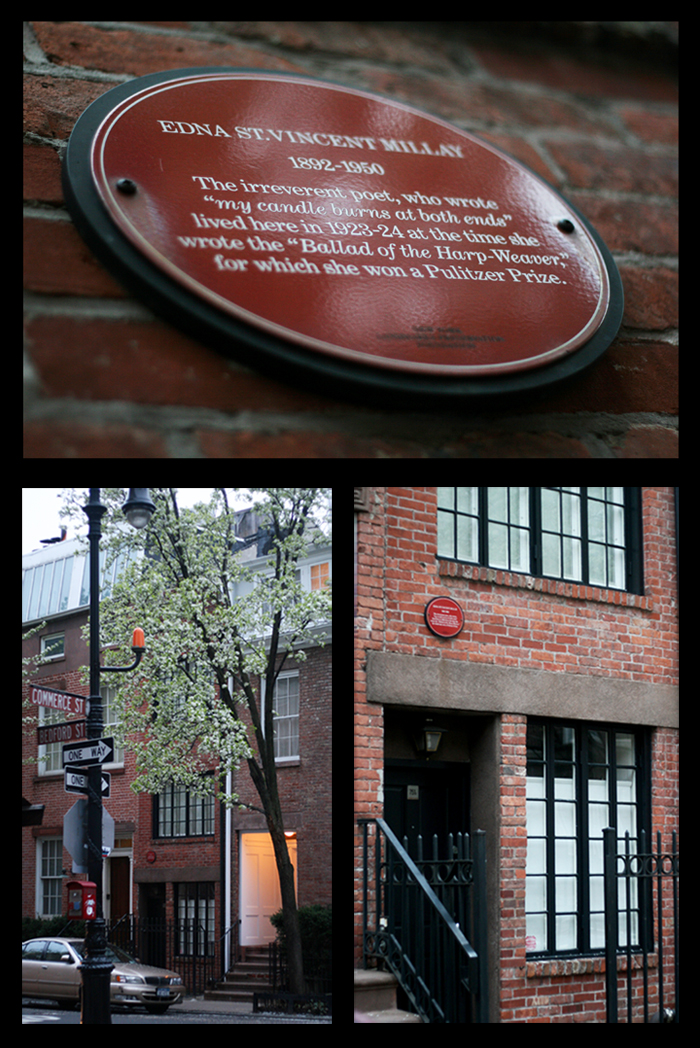
    One of them was 75 1/2 Bedford Street, known as the “Narrowest House in the Village” (or alternately, the narrowest in New York City). The three-story building with its stepped gable roof line was built in 1873, squeezed into a carriage between the neighboring buildings. Its most well-known occupant was Edna St. Vincent Millay, who lived there from 1923 to 1924 – it has often been referred to as the Edna St. Vincent Millay building. Other past occupants include anthropologist Margaret Mead, actor John Barrymore, and cartoonist William Steig. The property has had an interesting cast of occupants and owners – read about it here in Christopher Gray’s article in the New York Times.

    This property is so often written of and included in tours and books that I have left it on the back burner until today. But it is a worthy candidate for this website, and if you have not seen it, you should, sitting as it does in one of the most charming areas in the entire city, around the bend from one of my favorite spots: Commerce Street (an ironic name for one of the quietest streets in the city).

    The building sports a plaque, one of many in this neighborhood, proclaiming its historic heritage. These plaques or medallions are always a worthwhile read, even for the seasoned New Yorker. The former residents of these homes are frequently household names, as are many of the historic facts.

    There are places whose charm, quaintness, and uniqueness do not supersede their problems, and this is one of them. Unique in its size, its width of 9 1/2 feet is the fact always included in even the shortest descriptions. However, being the narrowest building in New York City is not a desirable feature for living, and in fact this property was on the market at one time for a decade before someone could see it as a habitable place. It was at this time that I visited it, and my memory of it is of a horrid, squalid place that was an absolute mess and so claustrophobic as to be uninhabitable. I had been warned by the broker but still expected a place that, with vision, had potential.

    There are several peculiarly proportioned, scaled, and shaped properties in New York. Wedges, slivers, and itsy bitsy places. See the following links for some of them: SkinnyBite, Vilequebrin, 121 Charles, Bomb Factory, 23 Skidoo, Seven Deadly Sins, Tongues and Flames


  • Gorillas and Cookies

    NYU is seen by many Greenwich Village residents as the neighborhood 800-pound gorilla. Every real estate move it makes is highly contentious and seen by opponents as the act of an avaricious behemoth whose appetite for properties is never sated. Perhaps a new variant of an old joke might be, “What real estate does an 800-pound gorilla buy?” “Whatever it wants.”

    New York University is located in Manhattan and is fully integrated into the fabric of the city. Unlike a rural University with land, in order to expand, NYU acquires many real estate properties and demolishes them. To purchase prime properties which are located in the heart of its campus, NYU must compete and throw its weight around.

    When renovating properties it already owns, it still runs into problems. Some of NYU’s properties lie within the Greenwich Village Historic District, so it has regulations to conform to. Others not protected by the landmark district still lie in a neighborhood very sensitive to architectural change and rife with community activists and preservationists.

    In 2001, NYU demolished the brick house where Edgar Allen Poe last lived in 1844-45 for expansion of the law school. This was met with huge community opposition, but efforts to preserve the home were derailed. Read about it here.

    The building in the photo is of 22 Washington Square North, previous home of the NYU admissions office, where 37,026 applications were processed in 2008, the largest number of any private university in the United States. The place is being entirely gutted and will be used by the NYU law school as a research facility. I was amazed at the extent of work – the entire interior has been completed removed – only the shell remained. Note the sky which can be seen from the front entrance. This property (along with #19) is part of one of the finest rows of Greek Revival townhouses in the United States and is located on Washington Square Park, one of the most desirable locations in New York City. The location is also important because the park is NYU’s de facto campus.

    Recently, NYU has made plans to demolish the four buildings and theater which housed the Provincetown Playhouse at 133-139 MacDougal Street. The redevelopment of the playhouse will be the first time that planning will be done with support of the Community Task Force on NYU Development. Hopes are that this new approach will bring harmony between NYU and Village neighbors. Perhaps NYU can upgrade its image from the 800-pound Gorilla to that of Sesame Street’s Cookie Monster:)

    Related Postings: Washington Square North, Lights, Camera, Action!, Evening Arch, Washington Mews, MacDougal Alley, Left Bank New York


  • Queens West

    Posted on by Brian Dubé

    I was shocked when I discovered this unfamiliar area of Queens with new buildings sprouting everywhere, Gantry Plaza State Park, waterfront vistas of the Manhattan skyline, and the 59th Street Bridge. When investigating the neighborhood behind the photos from my excursion, I was equally surprised to learn of the scale of this huge development going on in my back yard, unbeknownst to me. See my series of photos here.

    This area, now being called Queens West, is essentially the Hunters Point neighborhood of Long Island City, Queens. A large number of high-rise residential buildings are planned (map here). The building in the photo is the Powerhouse. Ground was broken in 1994 for this 74-acre commercial and residential development. Read all the details at the Queens West website here. You can also read the 1994 New York Times article by architecture critic Herbert Muschamp.
    Citylights was the first completed structure in 1998, a 43-story, 522-apartment building designed by renowned architect Cesar Pelli.

    There are so many elements to the success of a redeveloped area – location, transportation, views, housing, and building stock. Architecture critics analyze these elements along with the merits and demerits of the architecture of the buildings built or proposed.

    DUMBO, Brooklyn is a great example of a neighborhood that had all the right elements just waiting to be discovered: one subway stop from Manhattan, views of Manhattan and the bridges, cobbled streets, and great industrial buildings.

    The difference with Queens West, like Battery Park City to which it has been compared, is that all the residential and commercial structures are to be newly built which, like most urban planning, is a highly contentious and risky proposition. With an area like DUMBO, with the architecture already existent, there were no unknowns. People started moving there because they liked what they saw. In the case of Queens West, developers have to create what they hope will be successful, and everyone has a different vision of what that should be. Many planned neighborhoods and cities, even with large budgets and great minds, have been controversial, like Brasilia. Creating an entire environment en masse, rather than a place developing organically, is a great challenge. I hope Queens West is a success. The site is spectacular – I suggest you visit if you can…

    Posted on by Brian Dubé

  • traPt

    Posted on by Brian Dubé

    Pratt Institute is considered one of the finest art schools in the United States, known for its programs in architecture, art, fashion, photography, design, illustration, interior design, and digital arts. Unlike NYU or Hunter College in Manhattan, whose campuses are essentially the city of New York, Pratt is cloistered – the campus is completely closed and gated. Add to this its location in Clinton Hill, Brooklyn, which at one time was one of the most dangerous neighborhoods in the city, and you can appreciate how clever I thought a student’s T-shirt was that he was brandishing some years ago. It read “traPt” – an anagram of the word Pratt which was indicative of how some students have felt. Nearby Myrtle Avenue was nicknamed Murder Avenue in the 1990s.

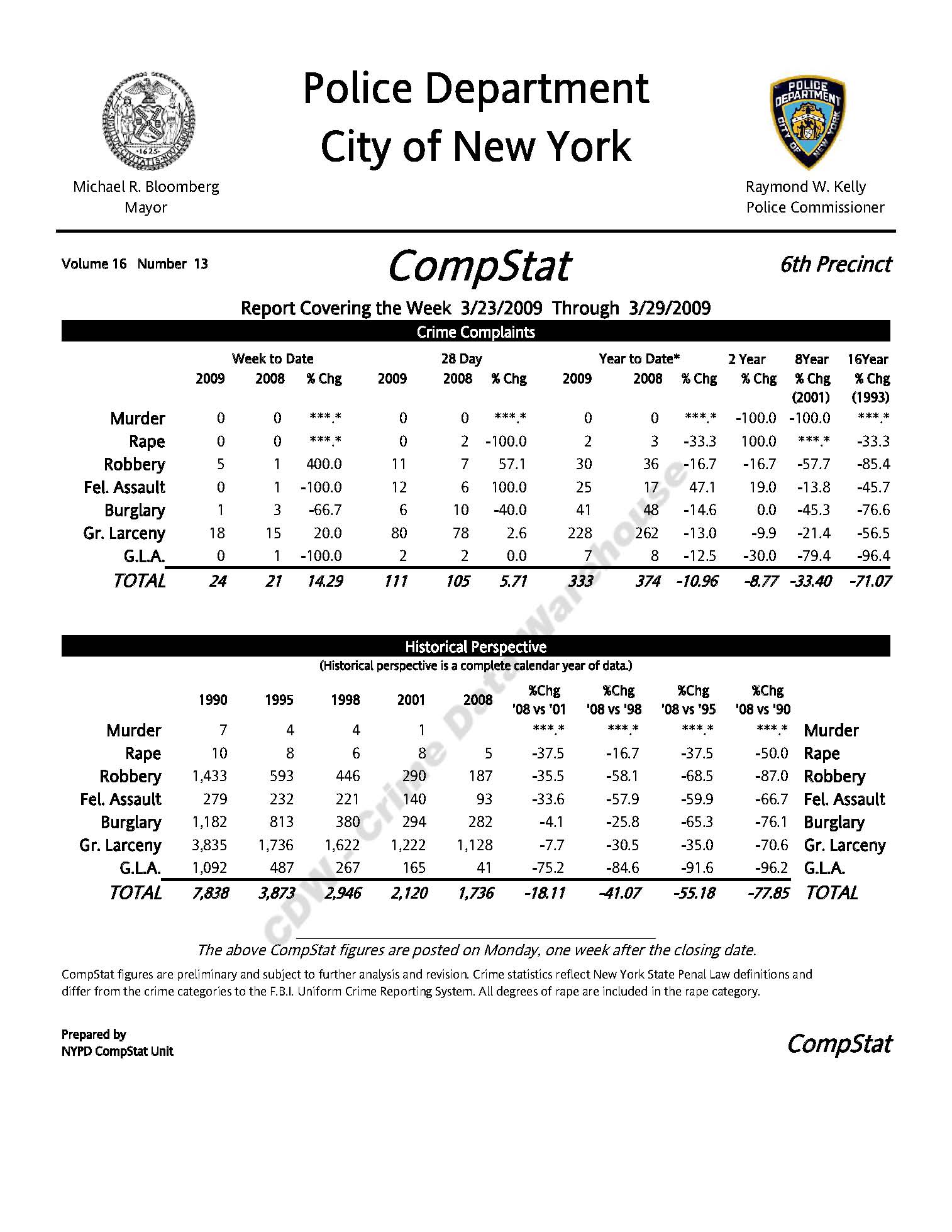
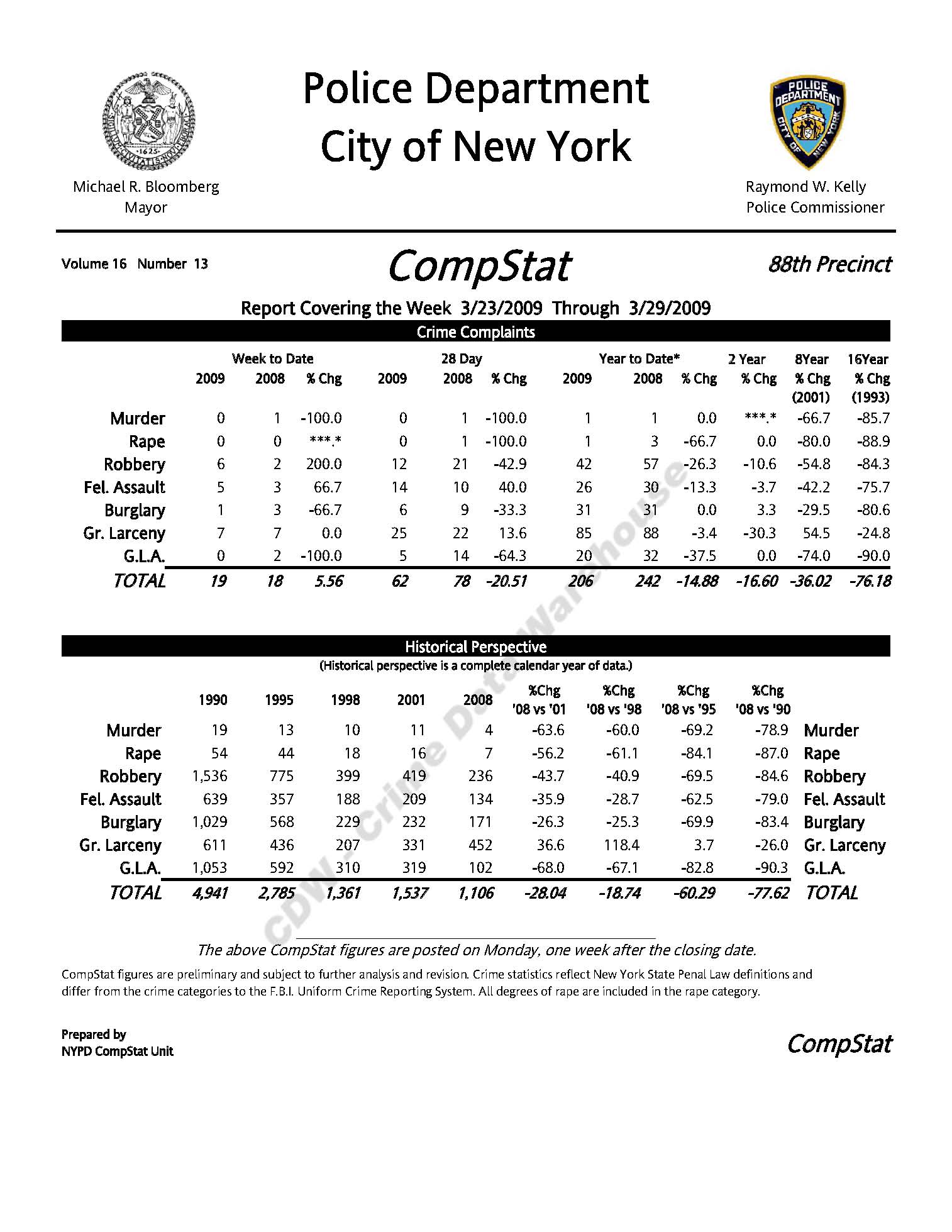
    Certainly the neighborhood has gentrified significantly over the years and has benefited by a tremendous reduction of crime city-wide, attributed to the NYPD’s Compstat program and an increase in the numbers of police officers in NYC, starting in 1990. I was curious about the actual crime statistics in the neighborhood, so rather than rely on perceptions or anecdotal evidence, I decided to go right to the source – the NYPD website – and look at the Compstat statistics for the 88th precinct, which covers Pratt Institute. I compared it to the 6th precinct in Greenwich Village, home of NYU. I expected to see a much greater disparity but was surprised to see that the crime statistics were not that disparate. You can see them here: the 6th Precinct and the 88th Precinct.

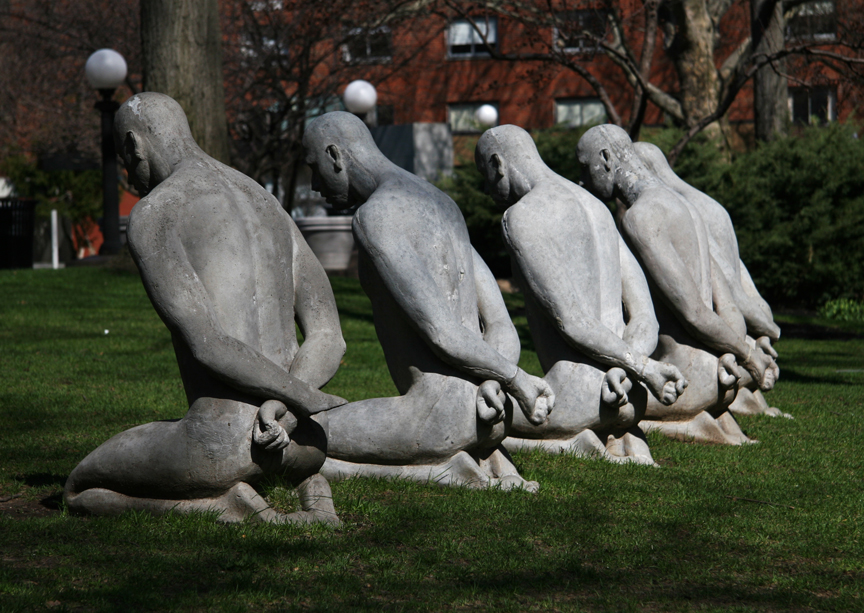
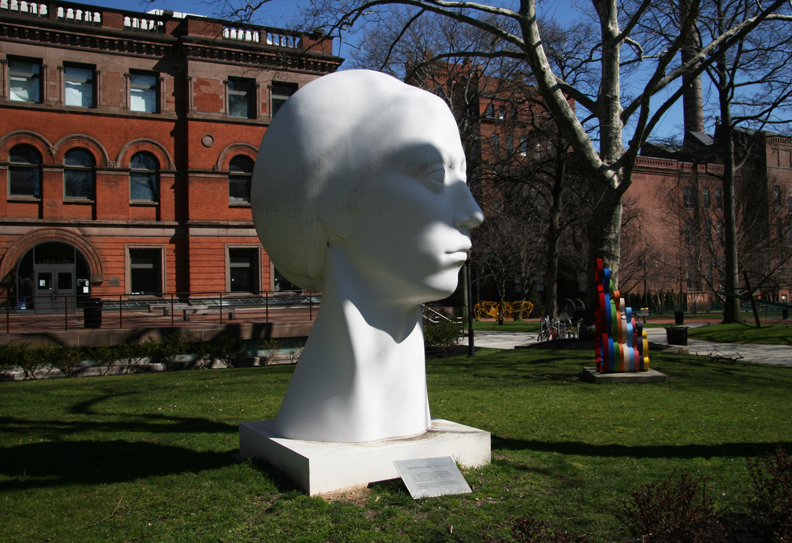
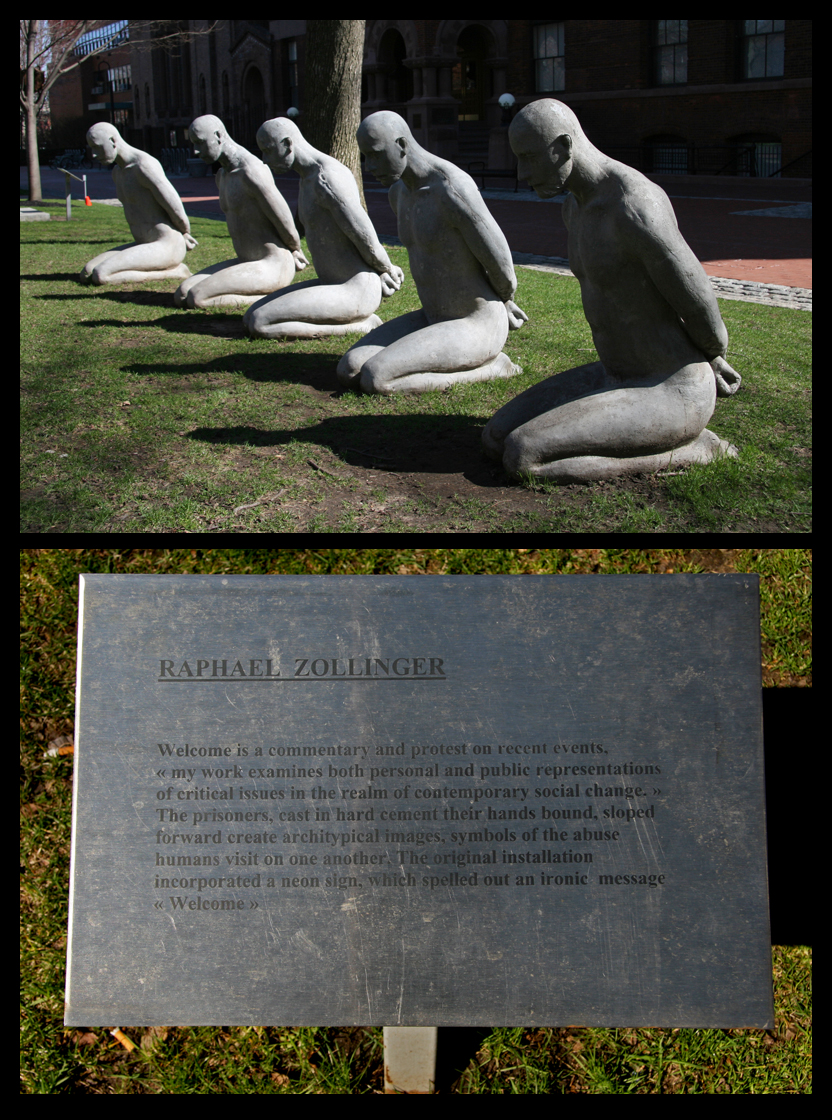
    The atmosphere of a real university campus is quite special in New York City, and Pratt is graced with 25 acres, which includes a sculpture garden featuring a variety of works. The work in the photo, Welcome II by alumni Raphale Zollinger, is one of the most arresting, along with Philip Grausman’s large idealized white female fiberglass head, Leucantha. Welcome II’s 5 naked prisoners are cast in concrete. See front view and read the the plaque here.

    An ironic work for such a beautiful garden – perhaps relics of feeling traPt…

    Posted on by Brian Dubé

  • Times Are A-Changin’

    Posted on by Brian Dubé

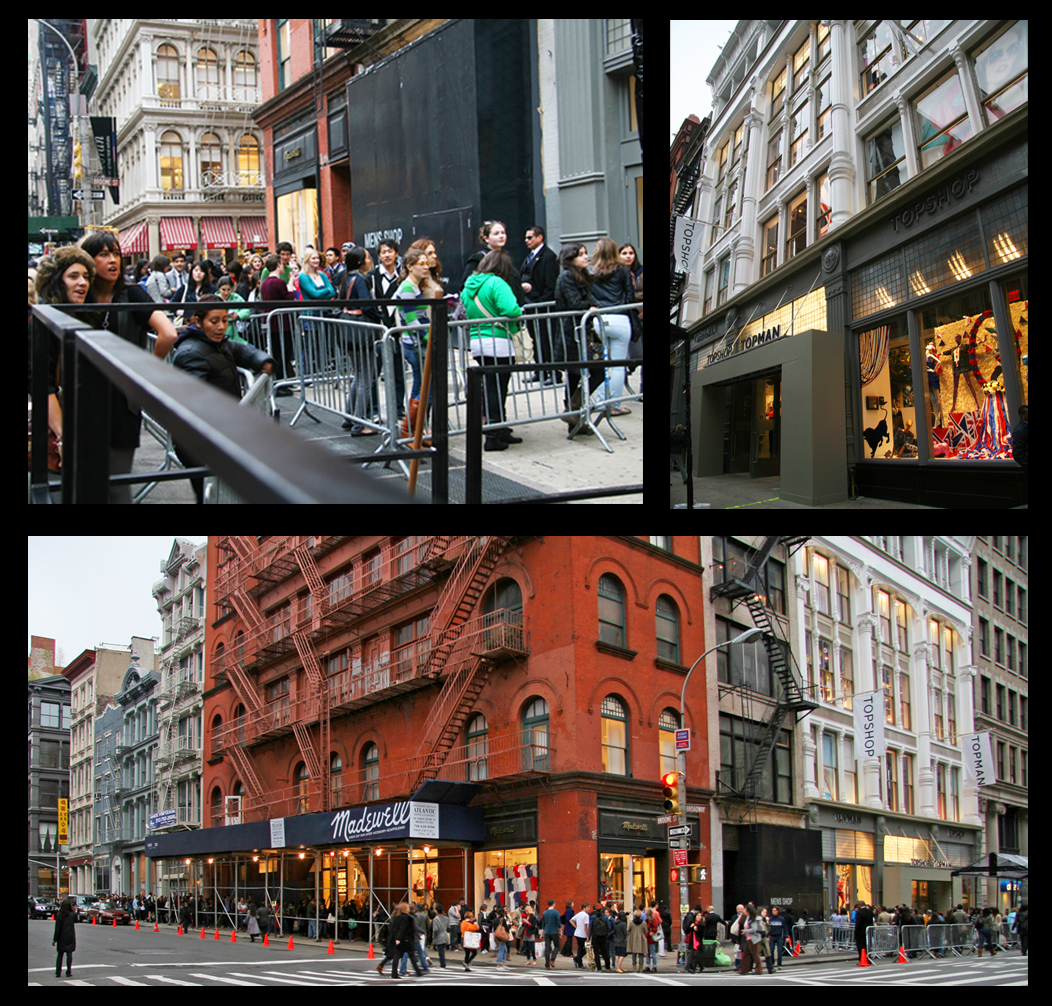
    Yes, in NYC, stores openings are occasionally media events. Topshop, a British-based clothing chain of over 100 stores, opened its first US store yesterday at 478 Broadway (south of Broome Street) in SoHo. What we have here is where buzz meets the American passion for shopping. The awaited opening was covered by every local media group. For over a week before the opening, a pink Topshop van had been busy giving out free tote bags which included gift cards worth up to $500.

    Model Kate Moss, Jennifer Lopez, and Marc Anthony were at the ribbon cutting on Thursday, April 2, as was owner Sir Philip and Lady Green. Kate Moss, who has been doing a fashion collection with Topshop since 2006, will be introducing her spring line with the opening of the SoHo store. I arrived in the evening. A tented press area with seating had been installed. Evidence was still on hand of a media event, with network TV, professional video cameras, photographers, and security. Customers were being corralled through gates. Lines wrapped around three sides of a block – Broadway, Broome, and Crosby Streets.

    Topshop’s flagship store is on Oxford Street in London and is the world’s largest fashion store – 90,000 square feet on four floors with as many as 30,000 visitors per day. The New York City store occupies 25,000 square feet on four floors.

    The store is only two blocks from Canal Street, which is remarkable since Broadway is decidedly rougher the closer one gets to Canal and historically has been rather downscale and most immune to gentrification. The arrival of Topman, with Citibank flanking one side, a new J. Crew coming soon on the other side, and Bloomingdales less than one block away, certainly heralds a new age for this immediate area, extending the boundaries of SoHo chic and stamping out the last vestiges of industry along these blocks of Broadway just north of Canal.

    Canal Street and the area around it has been known for many things: industrial supplies such as Space Surplus Metals (gone), Canal Rubber, Industrial Plastics (gone), and Tunnel Machinery (gone); Chinatown and the Manhattan Bridge going East, the Holland Tunnel, and discount shops with fake designer products. Adjectives such as cheap, tawdry, seedy, and dirty would all apply. But the times they are a-changin’…

    Posted on by Brian Dubé

  • Worlds Unfolding

    When I tell customers or vendors on the phone that my office is on Broadway, lights go on in their heads, literally. They frequently follow up with a question in order to establish if it is that Broadway. I assure them it is that Broadway, but not that part of Broadway (i.e. the Theater District).

    Broadway is the longest street in Manhattan, going from the most southern tip of Manhattan at Bowling Green all the way to to the northernmost neighborhood of Inwood. It then crosses Spuyten Duyvil Creek via the Broadway Bridge, continuing into the Bronx, keeping its signature name. And in that course of 12 miles, you will find some extraordinary variety of architecture and neighborhoods.

    But you don’t need the longest street in New York City to find that kind of change. What is remarkable about Manhattan is the change in character over the shortest distances, without crossing the proverbial railroad tracks. So when it comes to knowing the nature of a street in New York City, you need to know much more than what street; you need to know where on that street.

    Take MacDougal Street, which is only six blocks long. At one end, near 8th Street, you have a quiet block intersecting charming MacDougal Alley. One beautiful home, which I wrote about in Better When, stands there. The is also the location of the controversial Christian Science building. This photo was seen used recently in the New York Times (see here).

    The next block abuts Washington Square Park with a number of tall prewar buildings. Two blocks further and you have one of the dirtiest, most touristy, and most tacky streets in New York City. This is the block where I recently featured Shawarma.

    The very next block becomes very residential, lined by landmark buildings on one side and a number of well-known Italian businesses – Cafe Dante and their restaurant, Villa Marconi, and Tiro A Segno, the private club with a rifle range – on the other side. At the corner is the location of the recently closed landmark cafe Le Figaro.

    Cross Houston on the next block, and we are in SoHo and find a handful of French-inspired cafes and restaurants. This is the block that during Bastille Day is closed for festivities, including the construction of impromptu Petanque courts with competitions. See my posting here.

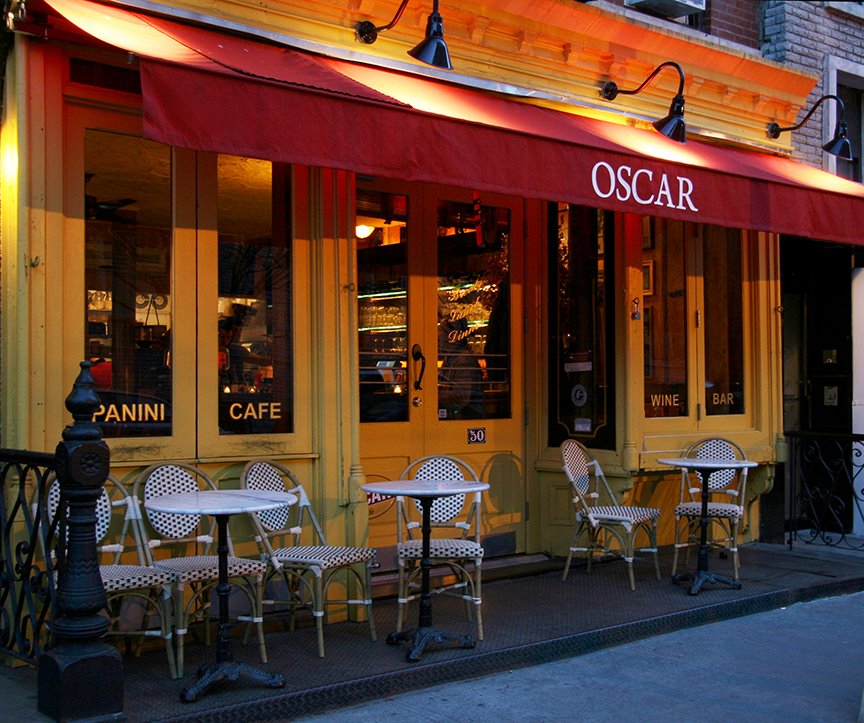
    And this is the block where I took today’s photo of absolutely one of the loveliest Parisian style cafe/bistros in the city – Oscar. Everything is so pristine and well appointed. The colors chosen for their exterior was complemented by the setting sun – it exudes the character of an authentic French cafe. You have to look hard to find this kind of place in such a bucolic setting.

    Rapidly changing landscapes all over the brief distance of one kilometer. This is one of the greatest things about New York City – different worlds unfolding as you walk…


  • 11101

    If you want the full spectrum of contrasts, head for Long Island City. Here you have a borough with an industrial history and the buildings to prove it. This is the westernmost neighborhood in Queens, flanking the East River, so the area affords some of the best views of the Manhattan skyline along with the 59th Street Bridge, which connects it with Manhattan. There are historic districts with beautiful row houses/brownstones. The Citicorp Building stands at 658 feet – the tallest building in Queens and outside Manhattan. On the waterfront, a former dock facility was converted to Gantry Crane State Park. Large-scale residential conversions and developments have been undergone, such as a building which formerly housed the Eagle Electric Manufacturing Company and in areas of LIC such as Hunter’s Point.

    Long Island City was formerly its own city, created in 1870, and became part of the City of Greater New York in 1898. The area has gentrified, and many of the factories have been converted to other uses. The former Silvercup Bakery, whose iconic sign can be seen from many vantage points, is now Silvercup Studios. This studio has been used to film many well-known music videos, commercials, films, and television series such as the Sopranos, Sex and the City, Gangs of New York, and 30 Rock.

    Artists have been resettling to LIC for many years. Art organizations as well as independent artists are located in the neighborhood. P.S. 1 Contemporary Art and Sculpture Center is located here. Isamu Noguchi converted a photo-engraving factory into a workshop, now a museum dedicated to his work. 5 Pointz: The Institute of Higher Burnin‘, is an artists’ residence in a converted warehouse. Graffiti is allowed there – the structure is a living collage of graffiti.

    The largest fortune cookie factory in the United States, Wonton Foods, is in LIC. Donald Lau writes the fortunes. For a fascinating anecdote about this company and good fortune, see Fun with Numbers below.

    Fun with Numbers: I found the zipcode for Long Island City, 11101, very interesting for a number of reasons. The number is a string of ones and zeros only, making it binary. In decimal, this is 29, which when totaling the digits becomes 11. Stripping out the zero in the zipcode, we have 1111. Numerologists believe that events linked to the time 11:11 appear more often than chance or coincidence. In May 2005, Wonton Foods printed a series of lucky numbers. Five our of six of these coincided with the winning numbers in a Powerball drawing. Because of the large numbers of cookies printed, 110 people (binary again) won approximately 100,000 each.* And my own zipcode? – 10011. 🙂

    *According to an article in the the New Yorker: “Lottery officials suspected a scam until they traced the sequence to a fortune printed with the digits “22-28-32-33-39-40” and Donald Lau’s prediction: ‘All the preparation you’ve done will finally be paying off.’ “


  • Venice, New York

    I do try to limit my use of superlatives, lest I diminish their effectiveness through overuse or I run out of words to properly characterize the next greater thing. However, I am quite happy to take a few words from my superlatives bank account and spend them on Broad Channel, Queens. Because this is the most extraordinary neighborhood I have visited to date.

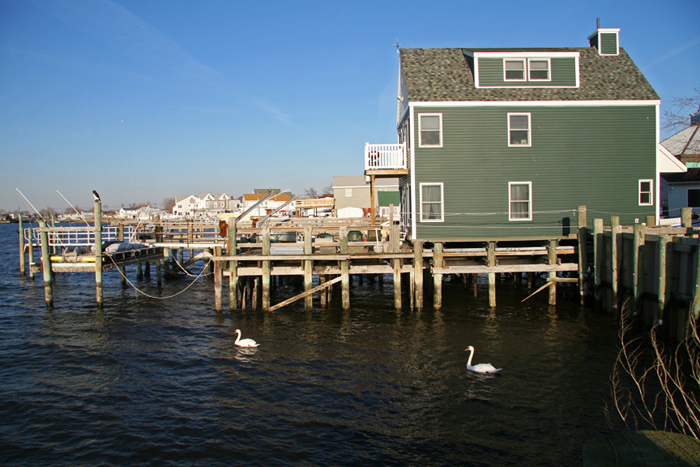
    A tour through this tiny enclave is truly a vacation to another time and place. As can be easily seen from today’s photo, Broad Channel is a maritime community. It is located on the only inhabited island in Jamaica Bay.
    The island was initially settled by the Lenape Indians. In the 1600s, a community was established by the Dutch. It was part of the Town of Jamaica and, in 1898, became part of New York City. In 1915, the city leased the island to the Broad Channel Corporation, which in turn leased properties to residents. It filed bankruptcy in 1939. Between that time and 1982, the city of New York took over. In 1982, properties were made available for sale to residents by the city for the first time.

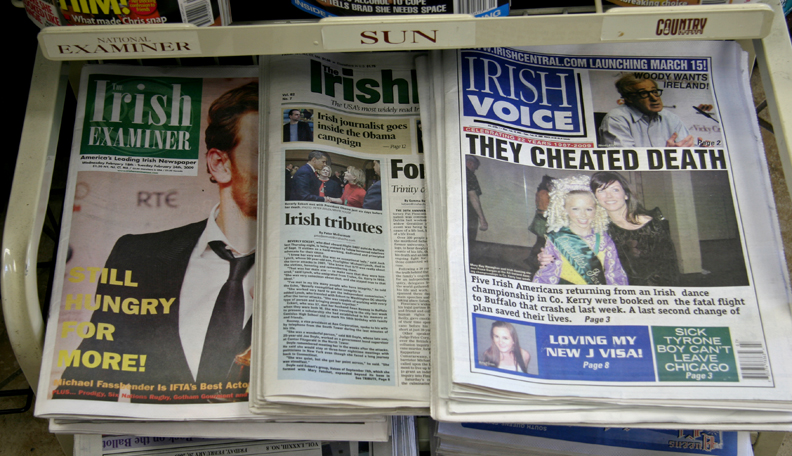
    I made a visit to the local grocery store and immediately made the acquaintance of two residents, one being Art McCarthy of over 50 years. I learned that the town is only 20 blocks long and 4 wide, cut in half by Cross Bay Boulevard, which is connected to land by two bridges: the Cross Bay Veterans Memorial Bridge to mainland Queens to the north and the Joseph P. Addabbo Memorial Bridge to the Rockaway Peninsula, with the Atlantic Ocean to the south. The population numbers approximately 3,000 with 1000 homes. I was told that the island was about 60% Irish. A quick glance at the newsstand confirmed this: three Irish newspapers were prominently displayed.

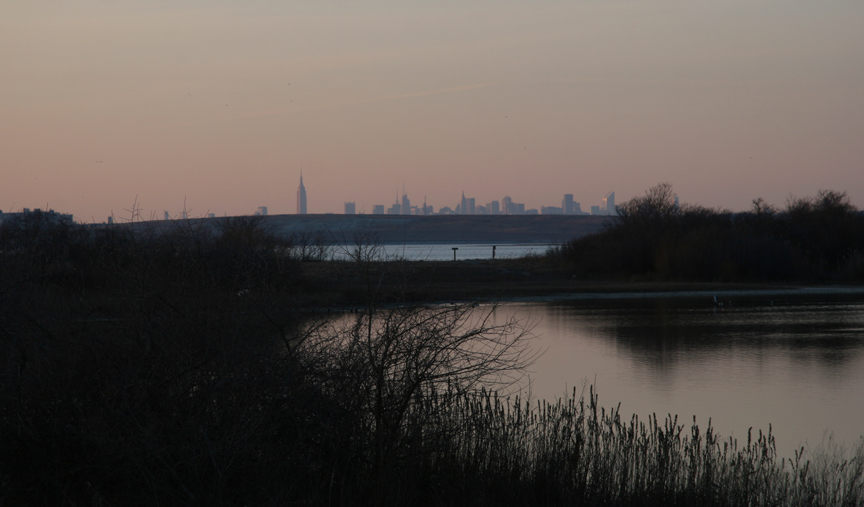
    Often referred to as the Venice of New York, dead end streets are separated by canals, and many residents have boats moored at their houses. Fishing, clamming, and other aquatic activities are the draw here. The weather was rather cold and windy, so my explorations were made by car with an occasional foray out for photos. The vistas were beautiful and reminiscent of my times in Cape Cod. The view west from town provides distant vistas of Manhattan, framed by the wildlife refuge and other islands of the Gateway Recreational Area and Jamaica Bay.

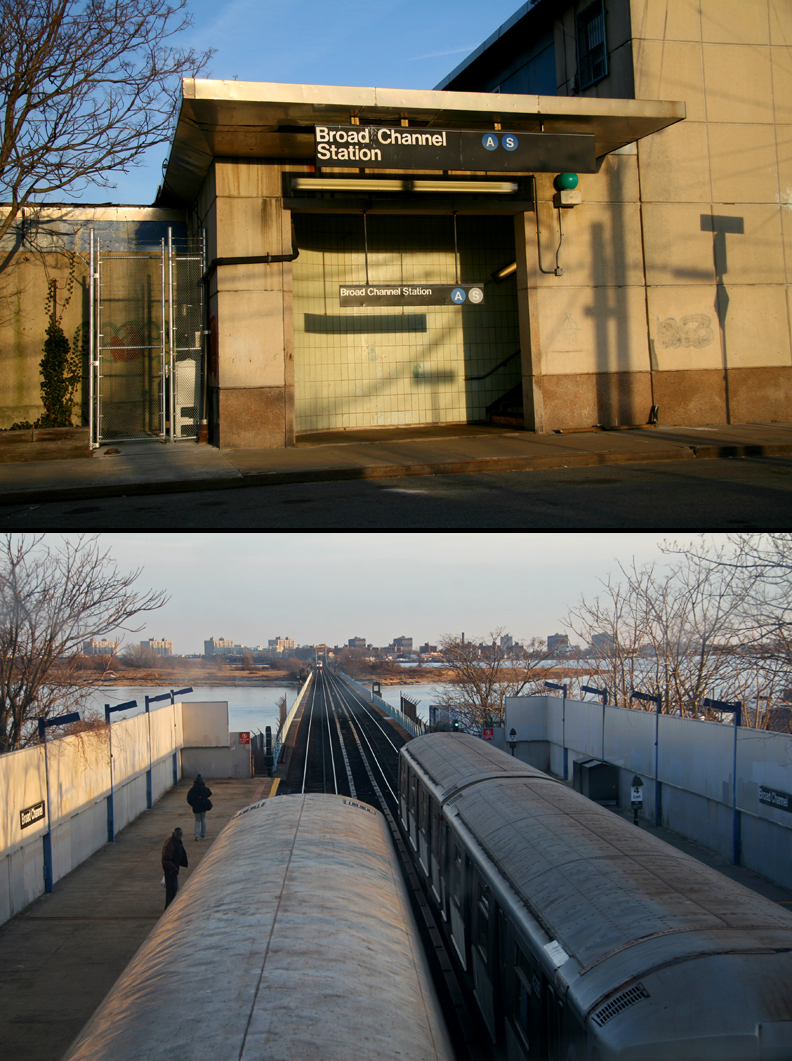
    A surprising feature of this community is its accessibility. It is an hour from Manhattan, and it can be reached by subway – the A train, which travels across the bay to Rockaway, makes a stop right in Broad Channel (see photos here).

    Broad Channel is certainly no secret among seekers of the the lesser known places of New York City. You will find it listed online and in books featuring hidden New York, forgotten New York, other islands of New York, nooks and crannies of New York, etc. The New York Times has run a number of articles on the enclave. Broad Channel is a natural target – the type of place people and media love to discover and talk or write about.

    Perhaps the most extraordinary thing is that the community is located within National Park land: the Jamaica Bay Wildlife Refuge, which can be accessed by foot from the town. But that’s another story…


  • Continental Divide

    Most likely you have never been to Corona, Queens, and most likely you will never visit either. You will not read of any gentrification movements there or of an exodus of disenfranchised Manhattan artists discovering the neighborhood. This is a working-class neighborhood – at one time predominantly Italian and now 75% Hispanic. Like many area of Queens, the neighborhood has a broad ethnic diversity – Mexicans, Dominicans, Bolivians, Ecuadorians, Colombians, Guatemalans, Peruvians, Asians, Pakistanis, and Italians.

    I say you will likely not travel there because the rivers of this city that separate the boroughs are in many ways like the Great Wall of China. A body of water can be a big cultural divide – it separates countries, states, cities, and, in New York City, the boroughs.

    The rivers of New York City are also a tremendous mental impasse. With the exception of commuters, most will rarely cross one even if the distance and travel time is short. Central Park seems nearer to a downtown Manhattan resident than a closer destination in Brooklyn. So there must be a very good reason to leave your borough, and visiting Corona will not usually be a good reason.

    Each borough, and even each neighborhood, is a world unto itself, and many find little reason to leave it except for work. The population density of New York City supports an incredible range of services in a small area. Many Manhattan residents get much of what they need in walking distance of their home – a great luxury and convenience. Step out of your apartment, and there is a universe of goods and services a short stroll away. This is true to a lesser extent in the boroughs, where you have larger tracts of residential housing without commercial establishments. However, every neighborhood is like a small town, and its center typically has its own set of services.

    Many of the neighborhoods in the outer boroughs are dominated by one or more ethnic groups; traveling to these lesser known neighborhoods can be culture shock. There are signs in other languages, unfamiliar foods, and unusual dress. The pace is slower. And here, extravagance is out of place. Money is real and careful husbandry the rule.

    So, with a sudden break from our frigid weather and temperatures in the 50s, Sunday seemed the perfect time to sample the goods without waiting until summer. I am sure I was the only person who drove from Manhattan to Queens to sample Italian ices at the Lemon Ice King of Corona (which is open all year). The ices have been made by Pete Benfaremo for 58 years at the same location.

    It was chillier than expected, and a friend and I found ourselves alone when we arrived at the Lemon Ice King at 108th Street and 52nd Avenue. I felt a little awkward and foolish. The clerk apparently did not share my enthusiasm or spirit of adventure.
    There were few patrons, and I did not know that there was no indoor space for customers. So, after choosing our flavors from a selection of 20 plus flavors at the street counter, we ate our ices standing on a blustery side street while seeking as much sunshine and as little wind as possible. See here for a peek inside.

    And did the ices live up to their legendary status? Honestly, we both found them too sweet, virtually killing the flavors. But perhaps I will try again on a warm summer’s eve and when I am in the mood to travel across a continental divide…


  • A Deeper Look

    There is a body of water separating four miles of Brooklyn and Queens called Newtown Creek. Never heard of it? Join the ranks of most New Yorkers who also are unfamiliar with this important waterway.
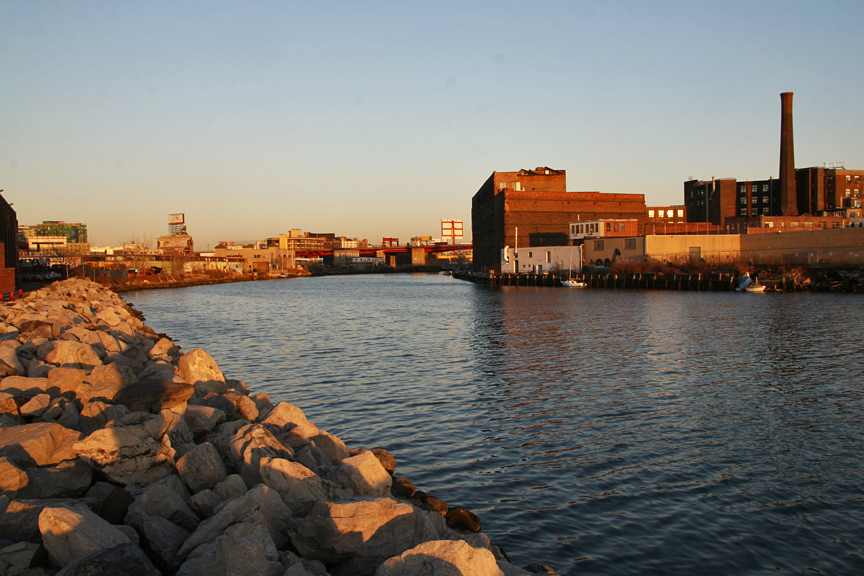
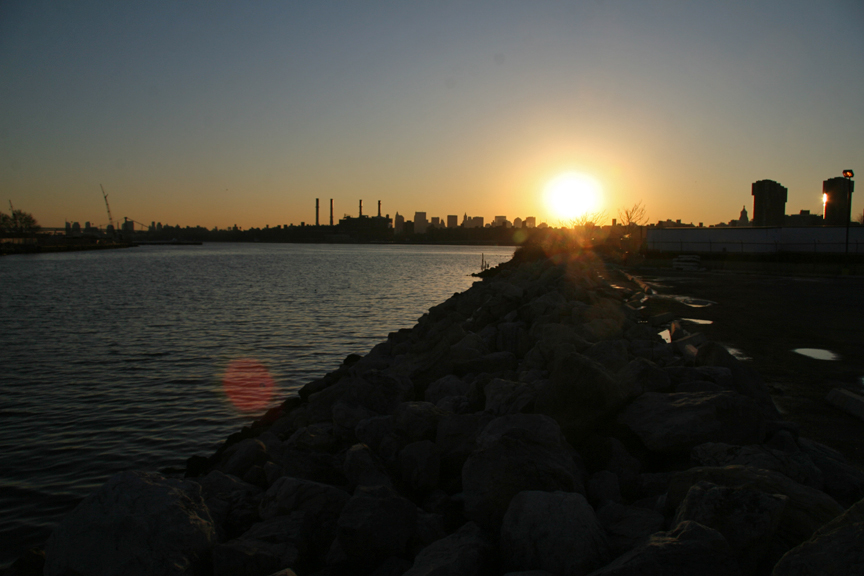
    The Dutch acquired the creek from the local Mespat tribe in 1614. It was named for New Town (Nieuwe Stad), the name of the Dutch and British settlement in what is now Elmhurst, Queens. From the Queens side, I found a rocky outcropping. At the right place, (ignoring the jangle of industry), at the right time in the orange glow of sunset, I found it quite beautiful and I could imagine myself somewhere on the coast of Maine. See second photo here.

    However, with a deeper look, one can understand why there would not be a land rush to the banks of Newtown Creek. This is one of the most polluted bodies of water in North America and is the oldest continuous industrial area in the United States.
    Newtown Creek had the country’s first kerosene refinery (1854) and first modern oil refinery (1867). At the end of the 19th century, Rockefeller had over 100 distilleries on both sides of Newtown Creek. The history of industry here is long (read more about it here at the Newton Creek Alliance website).

    There is no natural freshwater flow into the creek; all the historic tributaries were covered over in its 400-year history of industrialization. Read what the Newtown Creek Alliance has to say about this body of water:

    “Every year Newtown Creek receives 14,000 million gallons of combined sewage overflow, a mixture of rainwater runoff, raw domestic sewage, and industrial wastewater that overwhelms treatment plants every time it rains. There are also discharges from numerous permitted and unpermitted pollution sources. The creek is mostly stagnant, meaning all the pollutants that have entered the creek over the past two centuries have never left.”

    The bridges which pass over the creek are equally unattractive – the Kosciuszko Bridge, the Pulaski Bridge, and the J. J. Byrne Memorial Bridge. Newtown Creek is not readily visible from these bridges, and there is also limited access to the creek, so there it sits, mired in pollutants and obscurity.

    People love waterfront property, so it is remarkable how much of New York City’s water frontage is and has been so undesirable – Coney Island, the Gowanus Canal, Newtown Creek, the Brooklyn waterfront, and the piers along the Hudson River on the west side of Manhattan. But every dog has its day, and it is hard to imagine that one day this waterway will be desirable, lined with footpaths, residential buildings, cafes, etc. When that day will come, in 5 years or 50, I do not know. Climbing out of the sewer can be a slow process…


  • Horrible and Miserable

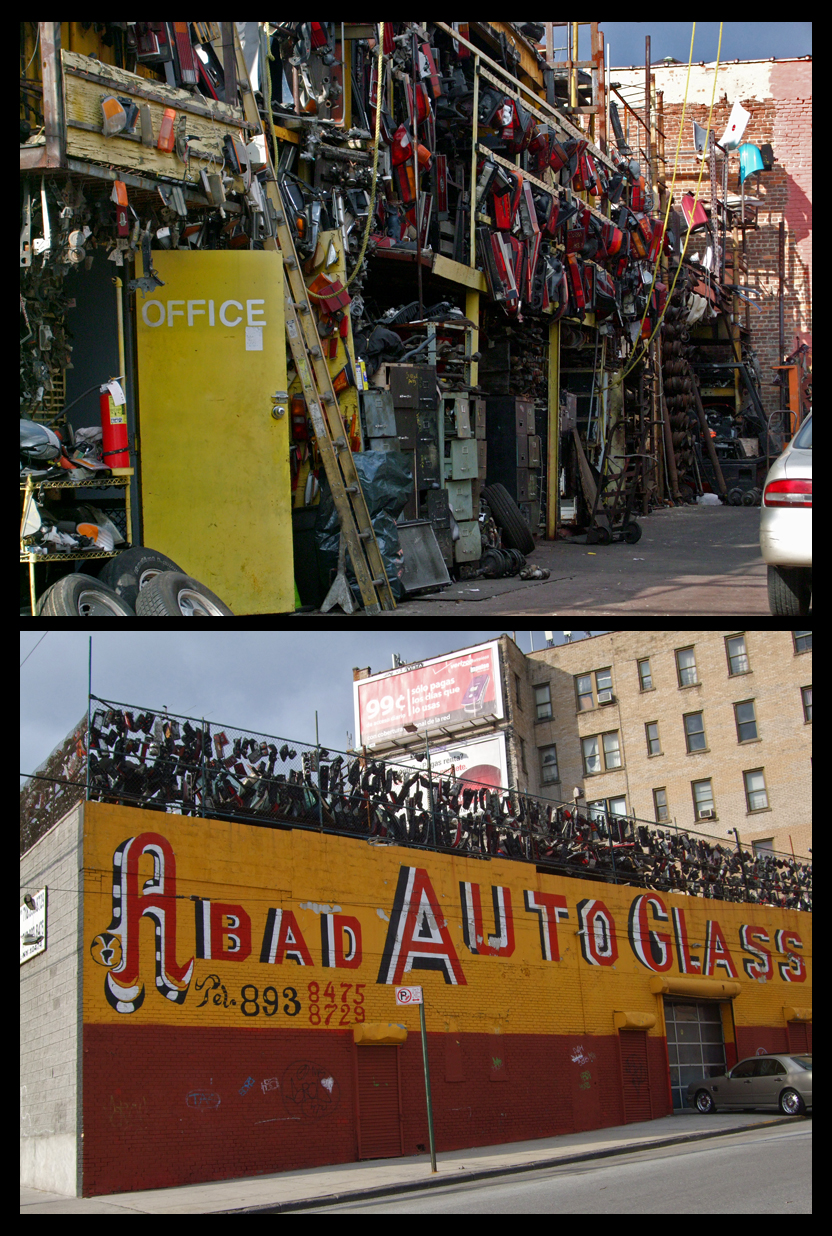
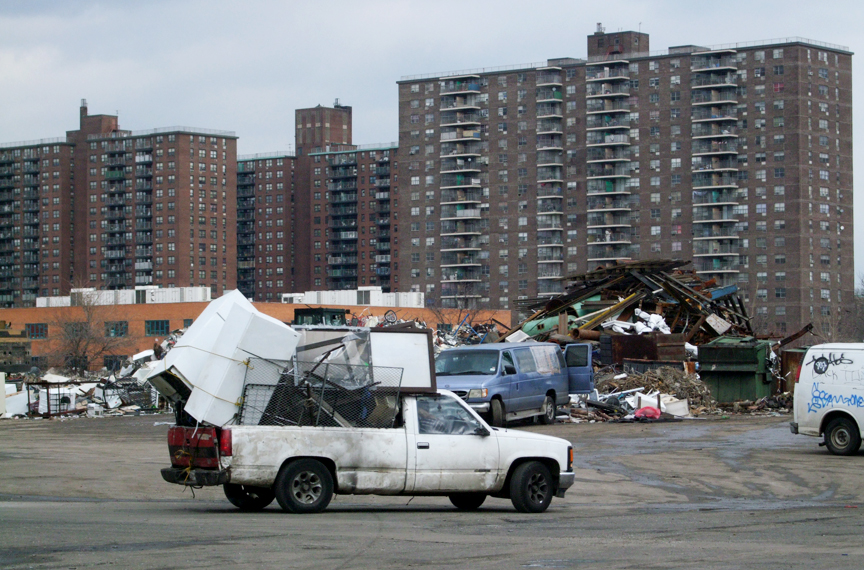
    Hunt’s Point is not the first place that visitors or photographers want to go. And that’s fine with me – no crowds, no competition. It has the most extraordinary conglomeration of commercial establishments I have ever seen. In an article in the New York Times entitled Motor City, the area is referred as a “grease monkey mecca, with almost 200 junkyards, garages, and used auto parts shops packed into a couple of square miles.” Subsequent to the article, a resident sent a letter, quite offended, stating that there was an “explosion of vibrant artist and performance communities and theaters, as well as a bustling community that works hard to improve Hunts Point’s quality of life.”

    There may in fact be one, but any pioneering activities certainly misrepresent the situation. I can’t say that I combed every square meter of the place, but I did cover some ground, and this is one of the most blighted looking areas I have ever seen (however, I haven’t been to Camden, New Jersey, yet). See another photo here.

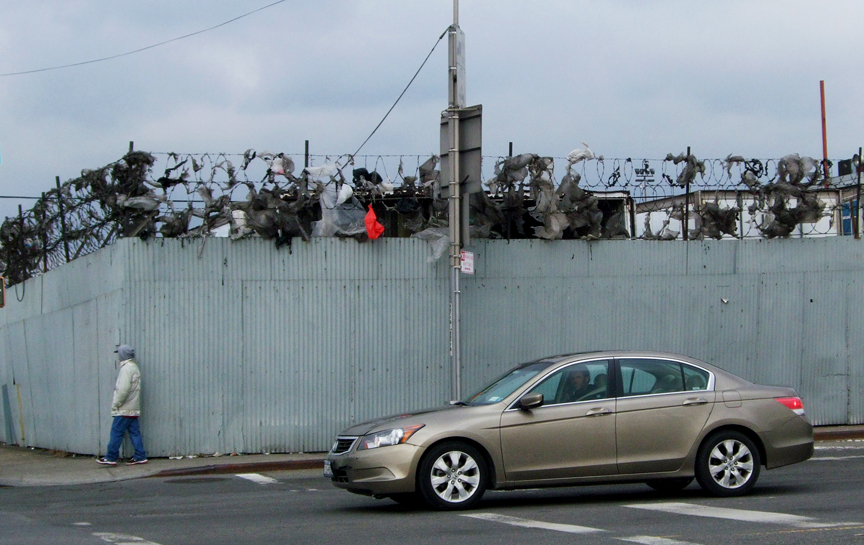
    Its very extreme nature is what makes it such a photographer’s paradise. Everything it does have is bigger and better – junkyards, used auto parts dealers, garages, prostitution, and the Hunt’s Point Terminal Market. And garbage bags (it is unfortunate that I did my article on plastic bags before I visited here – I was awed by a collection ensnared by barbed wire).

    I’m not a Luddite or the type to romanticize the edgy – I don’t prefer vinyl over CD’s or a Holga or Lomo camera over my digital. I don’t mind a clean neighborhood or renovation. I would prefer an afternoon in the Tuillierie Gardens of Paris over a stroll through Greenpoint, Brooklyn. But I do have a fascination with the very dull, mundane, boring, nondescript, or, if I am lucky, the really horrible. I have posted on many subjects of this nature, in some cases even a place or building for which there is no reason to give a second glance. Why? Because these subjects force you to look and be aware, to find something of interest. I do love the the glorious, wonderful, beautiful, and magnificent – so easy to enjoy. It’s the horrible that is a challenge to appreciate.

    I am reminded of a passage in Annie Hall where Woody Allen says that life is divided into the horrible and the miserable and you should be thankful that you’re only miserable. Perhaps that’s one of the things I like about Hunt’s Point – it makes me happy that I am only miserable 🙂

    Related Postings: Tribute, Travesty in Travertine, Secrets of Ozone, Mary Celeste


  • dinamic_sidebar 4 none

©2026 New York Daily Photo Entries (RSS) and Comments (RSS)  Raindrops Theme