• Myra’s Isle

    Posted on by Brian Dubé


    As regular readers well know, I am a habitué of Washington Square Park, my front and back yard. Here, I have met many remarkable people, some of whom have been featured on the website. It has, for a number of us who live in the neighborhood, become a veritable social club.

    However, this environment is certainly not for the average palate, and admittedly, as is often the case in New York City, one must tolerate a spectrum of people – the violent, hostile, drug addicts and dealers, crusties, homeless, and every manner of misfit, social outcast, and criminal known to humankind. Any park regular will by necessity, at least occasionally, encounter, or should I say be accosted by, very unsavory individuals, particularly late at night, which will certainly remove any doubt that werewolves, zombies, or vampires do in fact exist.

    Building a social life in such an environment tests one’s ability to maintain a balance, giving all the benefit of the doubt – being polite and respectful yet cautious. It is a harsh educational experience – one of the many courses for those attending New York’s Sidewalk University. The trials and tribulations of being homeless are clearly illuminated – I have learned what this really means on a day to day basis.

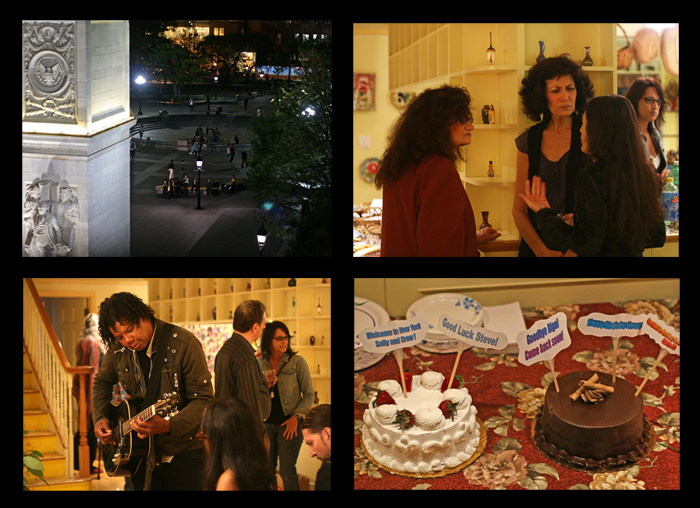
    Some time ago, I had a conversation about these matters with Myra, a neighborhood resident, who owns an apartment with one of the finest locations I have ever seen in the Village – a four-bedroom corner duplex penthouse that fronts both Fifth Avenue and Washington Square North with a private 1,400 square foot outdoor roof deck and additional terraces in front. You can virtually touch the Washington Square arch from nearly every window and space. At night, the illuminated monument is absolutely stunning.

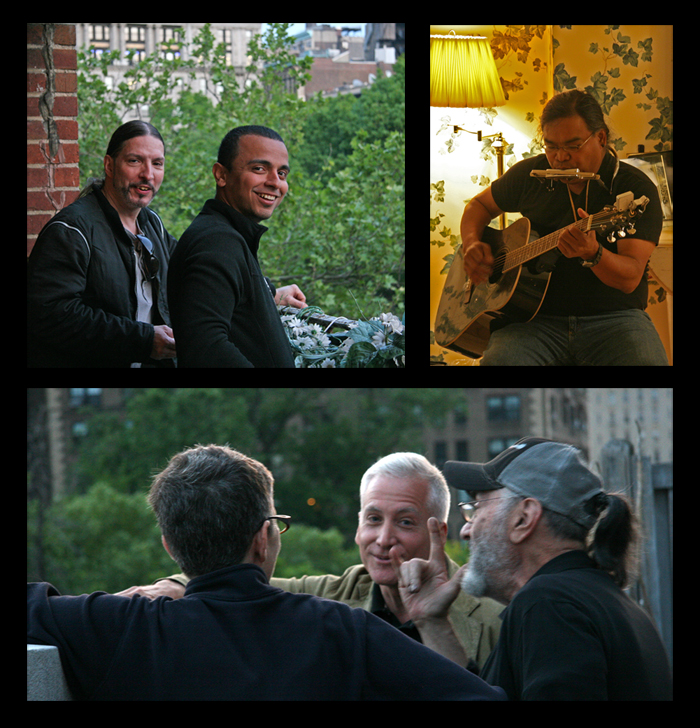
    Myra is well aware of the privileged residence she has. In fact, she expressed her desire to share it more with others. This, in tandem with conversations about taking our park social group indoors from time to time, led Myra to graciously offer her place as venue for a party. The conversation was recently further explored with another local resident, Hellen. Our mutual enthusiasms knew no bounds, and in short order, a three person party planning committee was formed.

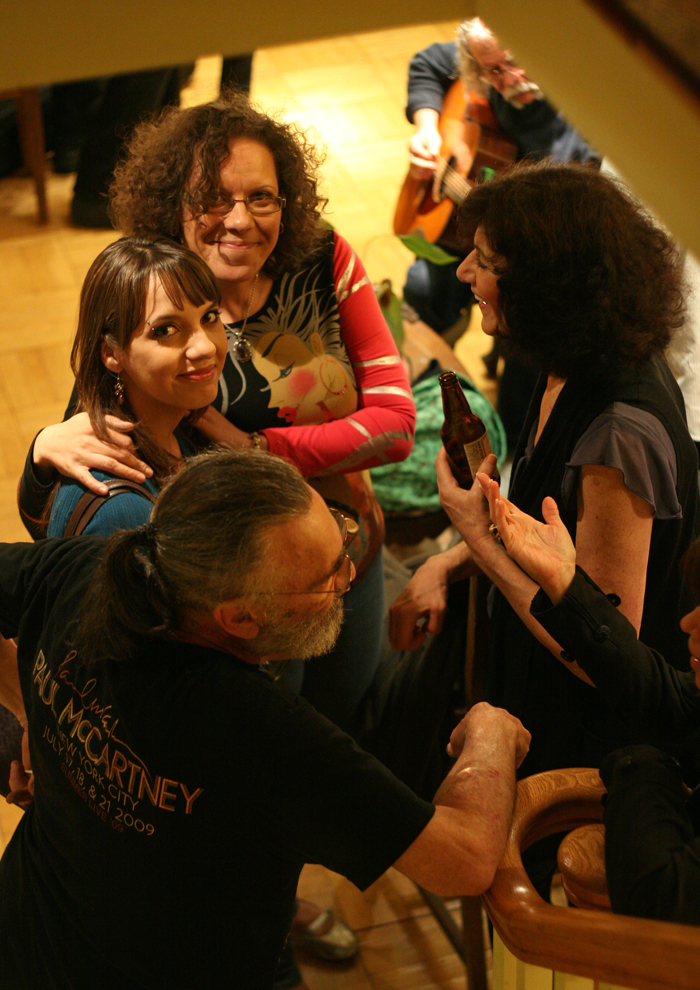
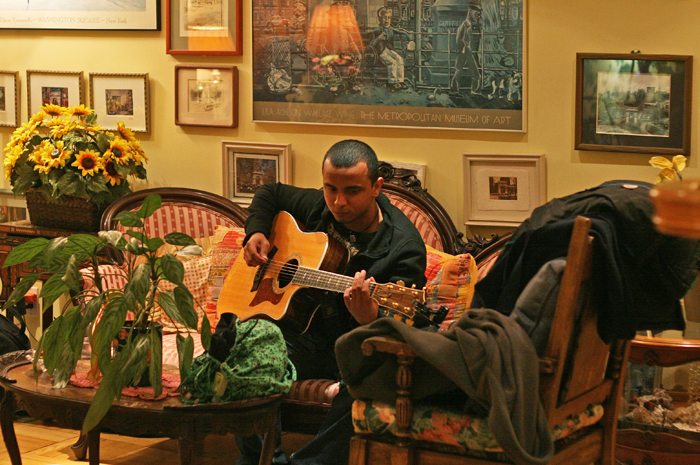
    A spreadsheet was created to manage the names and RSVPs. As any party planner will attest, managing the number of invitees becomes a big challenge – there is no end to who should rightfully be invited, and soon our party list numbered 47. Individuals of every imaginable background were in attendance with a heavy representation of musicians, important to all those attending. Music is one of the best loved features of the park’s culture.

    Initially, the party was to wish a friend farewell who was leaving for the summer – an NYU student who has befriended our group, particularly the musicians (herself a guitarist and singer). Coincidentally, this was also the birthday for Harvey, Hellen’s husband, and a celebration for Steve, who had just started a new job. Remarkably, Sally, with whom I had a chance encounter in 2010, was coming to New York the very same weekend with her family. It was also the first time I had ever actually planned and co-hosted a party, a cause for celebration in its own right. Hellen provided celebratory tags and placed them on dessert cakes for this amazing serendipitous occurrence of five events.

    Among the attendees whom I have written about previously were: Sally Darling, Gaby Lampkey, Ferris Butler (see here and here), Susan Goren, and Sage. George Vellonakis, a noted landscape architect responsible for the park redesign, was also aboard. Ferris was accompanied by Beverly Ross, singer-songwriter responsible for the hit song “Lollipop.”

    Unbeknownst to us, George brought a friend, Tina Louise, an actress who is best known for her role as the movie star Ginger on the TV series Gilligan’s Island – quite appropriate to round out our own cast of characters. We now had a professor (Steve), Mary, a millionaire and his wife, a movie star (the real Ginger), and even a Tiny Louise. Two members of our party planning group certainly qualified as skipper and mate and did their very best to make our group of 47 castaways in self-exile very happy and comfortable in Myra’s Isle 🙂

    Go here for more footage from this party.

    Related Posts: Curse of the Mouth Trumpet, Impossible, On the Road, The Bathroom Closes in 20 Minutes, Pockets of Joy, Just Like Old Times, DaveThe Conductor, Sounds of Summer, Park Night
    Posted on by Brian Dubé

  • Uptown

    Posted on by Brian Dubé

    The territory north of 14th Street truly is a world apart. There is much behind the downtown mantra, I never go north of 14th Street. There is a stoic pride and conviction that virtually anything one needs can be found downtown and it is not far from the truth.

    I cannot speak for other downtown residents, but I go north for specific purposes and so infrequently that going uptown is like a small vacation. I literally feel like a tourist. I walk a neighborhood, often craning my neck and standing in wonderment at the massive stone, steel and glass edifices built on the island’s bedrock of Manhattan schist.

    The advent of the Internet had greatly facilitated price shopping for most products and services, including New York City hotels. Since that time, my family has been able to snag deals at the Waldorf Astoria Hotel, which has become their residence of choice when visiting the city. I enjoy traveling and visiting the hotel during their occasional stays.

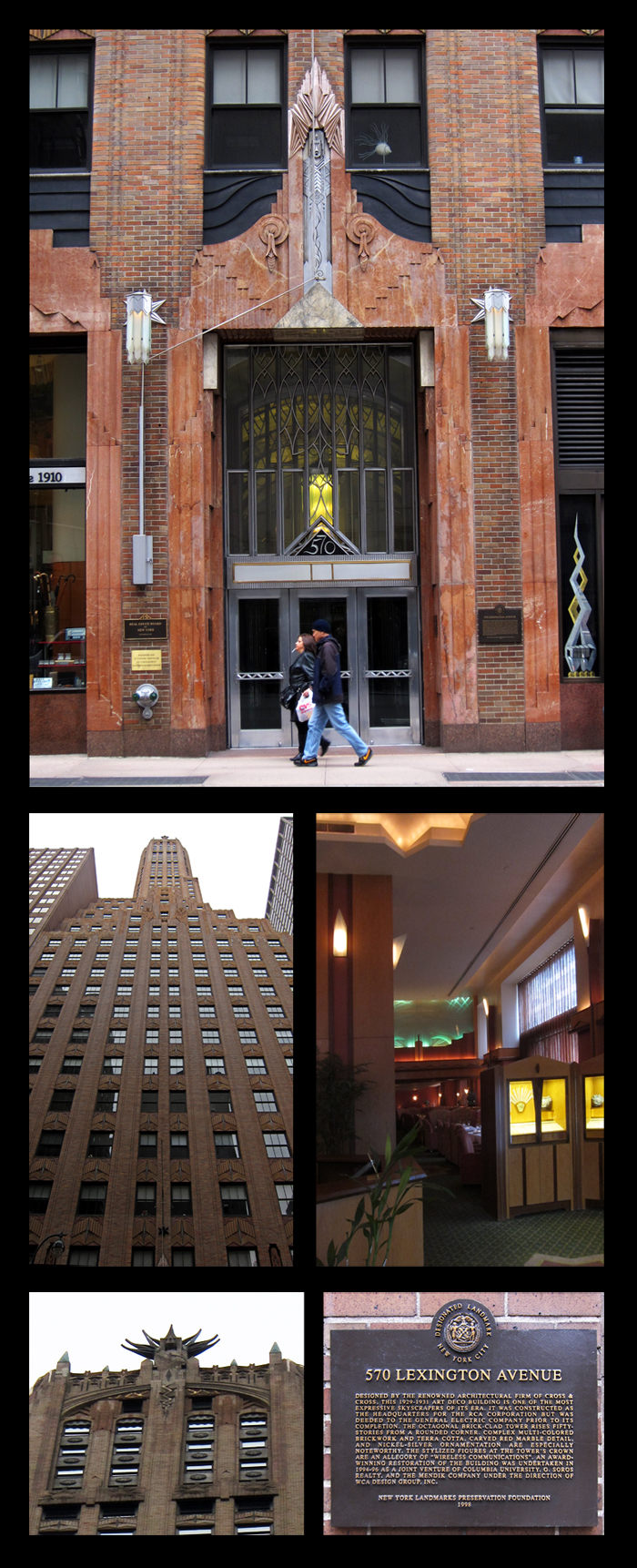
    Next door to the Waldorf Astoria Hotel is the General Electric Building. The building is sometimes referred to as 570 Lexington Avenue to avoid confusion with the GE Building built later at 30 Rockefeller Plaza. The 50-story, 640 foot Art Deco masterpiece was designed in 1931 by John W. Cross of Cross and Cross. Unable to lease the building profitably, in 1993, GE donated the building to Columbia University, gaining a $40 million tax deduction. Find more on the building here.

    The base contains elaborate masonry, figural sculpture. On the corner above the main entrance, a conspicuous corner clock with the curvy GE logo and a pair of silver disembodied forearms. On August 25, 2006, I featured the lobby of the building – you can see it here.
    Christopher Gray of the New York Times describes the building as a “suave fantasy of polished marble and modern metals.”

    Its signature crown of lacy radio-wave figures is a well-known midtown landmark, but the decoration of the lower floors is just as startling. Here a shrouded mechanistic figure huddles in a modernistic cloister, there an armored fist grabs an electric bolt. The entire facade is of a lightly variegated orange brick, which plays to St. Bartholomew’s Church next to it on the Park Avenue corner.
    See my photos of the church here.

    When I visit the area, I am never able to resist stepping into Mr. K’s restaurant, an upscale Chinese establishment located at 570 Lex. The plush banquette seating, the lush art deco interior, soft lighting all seem so befitting of the building it is in. For a little vacation, I just take the 6 train. Uptown.

    Related Posts: The Last to Know, A Bottle of Schweppes, Cello Class, Ice Skating in October, The Plaza, Stamp of Approval, When Worlds Collide, 23 Skidoo, The Sherry, Saks Fifth Avenue, St. Patrick’s Cathedral, Life at Night, Met Life Tower, St. Patrick’s from the Rock, ESB Straight Up

    Posted on by Brian Dubé

  • Work White Magic

    Posted on by Brian Dubé

    It is Memorial Day weekend, and in New York City that means many things – residents leaving and visitors arriving during what is also Fleet Week, where the streets are abrim with sailors in uniform, particularly in Greenwich Village, which for many is party central. That means lots of sailors looking for fun and lots of civilians looking for Men in Uniform. The allure is obvious and evidence is everywhere.

    For those looking for a quick tryst, there are both the streets of New York and now, the Internet, with a new world of options, a virtual smorgasbord.
    Grindr, a gay cruising iPhone app, ranks prospects based on proximity.

    Some sailors and those desiring them whether male, female, straight or gay, use the Close Encounters section of Craigslist for their brief time on shore leave.

    Sexual encounters via Craigslist may be better called personal permutations, because if you are going to meet someone this way, you need to know what you want from a menu of 21 categories: w4m m4m m4w w4w t4m m4t mw4mw mw4w mw4m w4mw m4mw w4ww m4mm mm4m ww4w ww4m mm4w m4ww w4mm t4mw mw4t.

    This may look rather daunting until you know the simple code: w- woman, m- man, t-tranny. A pair of letters together means a couple, straight or gay. So, we go from the basic m4w (man for woman) to the more exotic like mw4mw (straight couple for straight couple) or ww4m (lesbian couple for man).

    Of course there are also logistics to work out – I was always curious about where sexual encounters with sailors might take place because although I witnessed a number of PDAs (see story here), I am sure these couples would be more than happy to oblige to take their meetings private and Get a Room. Since sailors cannot bring these women back to the ship, the classic line of the one-night stand, Your place or mine? becomes something more like Your place or thine? A hotel would be a pricey option. Some city residents have offered their apartments as a patriotic gesture to these men in service.

    I am sure being a sailor is a trying lifestyle. The sexual frustration of men (and women*) at sea has resulted in innumerable troubles and solutions. I was fascinated to learn of Dames de Voyage, which date back to the 17th century. These fornicatory antecedents to the modern day party doll, were made of sewn cloth or old clothes and used by French and Spanish sailors while at sea.

    But now we have Craigslist or for those who prefer the more traditional approach, the streets of New York City, where sailors have only to stand and let their uniforms work white magic 🙂

    *Nearly 20% of active-duty members of the Navy are women.

    Related Posts: Respect, Fleet Week 2009

    Posted on by Brian Dubé

  • Old New York, Part 2

    Posted on by Brian Dubé

    (see Part 1 here)
    The good news is that Greenwich Village is extraordinarily unique. The bad news is that if you want a piece of its history, good luck. The housing stock is very limited. And if you are like I am and attracted to row houses, the selection of available units is even more limited. Over the decades, I have from time to time looked at apartments to buy but rarely found anything I really liked, and if I did, the cost was extremely high.

    I am forever asked why I am a renter and have not purchased a home after living in New York for over 40 years. The market in New York City is very different from anywhere else. There are over 2 million apartments for rent in the city with 65% rent regulated in some way. These regulations provide for below market rents and are a strong disincentive to move. The longer you remain in a regulated apartment, the greater the spread between your rent and the open market non-regulated places becomes – it is not uncommon for the difference to be 100% or more.

    This anomaly in pricing just exacerbates the problem – tenants never move with a resultant lesser supply and higher prices for the free market apartments, whether rentals or purchases. If you are fortunate enough to rent an apartment in an historic building, it is unlikely you will ever find a place like it at any price, for rent or sale. In my own building, 3 out of four residents have lived in their apartments for over 30 years. Often, rentals in regulated apartments are no more than the cost of maintenance fees on a similar unit for sale. So why buy? Many analyses have been done demonstrating that in New York City, it can be more prudent to rent than to buy.

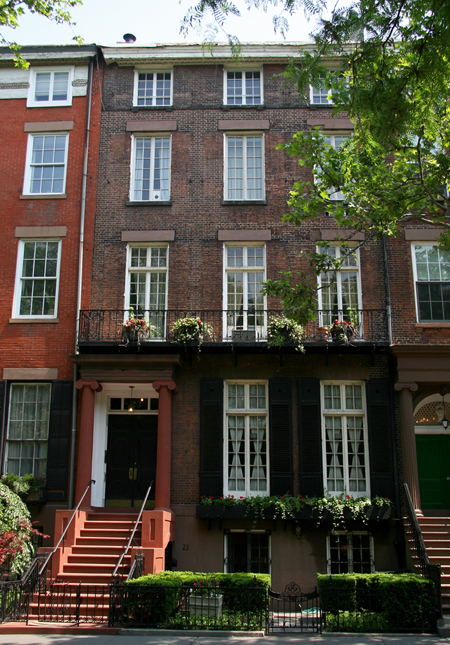
    The 1830 Greek Revival townhouse at 23 Washington Square North has not been available for sale for half a century. It can be yours, however, the asking price is $25 million dollars. The size is 8,528 square feet or a cost of $2,931 per square foot. There are only 7 apartments on 5 floors. Do the math and you will see the problem – if this building were converted to units for sale, the cost per apartment including carrying charges would be stratospheric. Many buildings like this will often sell to one individual who will convert it to a single family home.

    The rentals in this property illustrate what happens in this marketplace. A one bedroom was asking $4,775/month with the penthouse for $8,900 in 2010 and $12,500 per month in 2011. If you would like to get the flavor of what a parlor floor can look like in this type of historic building, see my photos here on the interior of number 24 next door, which one reader described as “real estate porn.”

    By day or night, looking out or peering in, the extraordinary historic charm is available in this rare window of opportunity to own a piece of old New York’s Washington Square. Spare $25 million anyone?

    Other Related Posts: The Feeling Passes, Overused and Abused, Bomb Factory, Left Bank New York

    Posted on by Brian Dubé

  • Old New York, Part 1

    Posted on by Brian Dubé


    There are things you can’t have in New York City. Many things. You can’t watch the sunrise from a mountain top, hear the wind blow through alpine forests, or see the black of night. Much of what nature giveth, New York City taketh away.

    The sound levels are very different here. I spoke to a friend recently from the suburbs who spent a night down the block – on the very same street where I live with the identical exposure. He said he could not sleep at all with the noise of constant traffic. The sounds of the city are only a familiar song to me – I sleep easily without window shades drawn and with all the city’s ambient light and noise.

    Here and there one can find tiny corners, places, culs de sac, alleys, parks, beaches, lakes, rivers – little pieces of the other world, the world outside cities. These special and often little known places in New York City provide magic carpets, that for brief moments can provide transport to a quieter, gentler city. I have shared these places with you over the years in this website.

    I do love the city – the energy, vibrancy, and stimulation are extraordinary. But the problem is that you can’t turn it off. So for those times when I need respite and do not have the opportunity or inclination to leave the city, I seek solace in those special spots that hearken to a time gone by or a world apart.

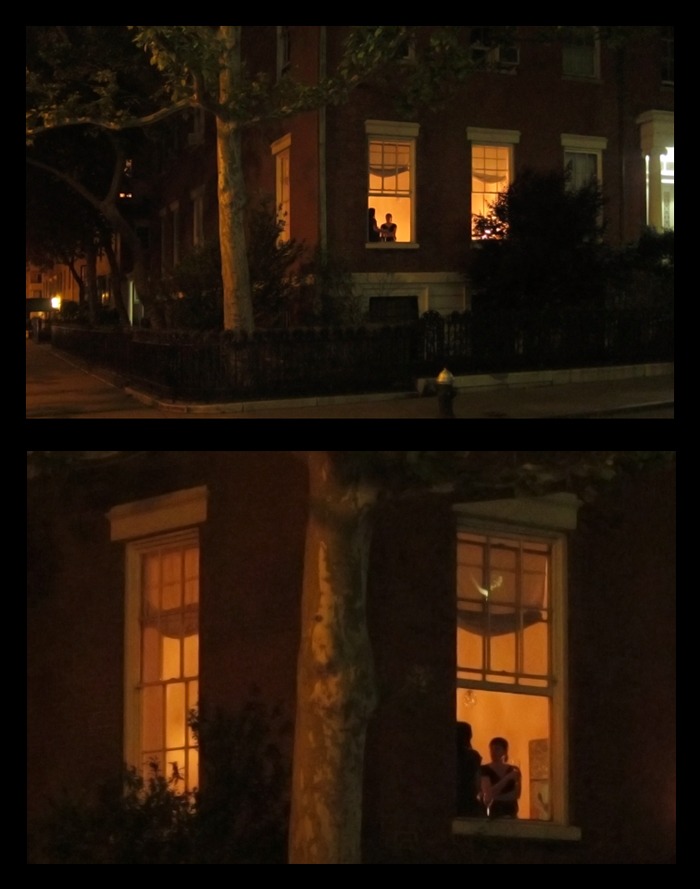
    The Greek Revival houses of Washington Square North evoke the gentility of a bygone age. Here, at the corner of Washington Square North and Fifth Avenue is a row house where I have often seen windows open, lights on and a handful of people milling about. This is the world of Henry James, 1881, setting for his novel Washington Square.

    A couple relaxes with glasses of wine, one resting on the sill, complemented by the exquisite air of warm evening, which has, after a long wet and cool spring, arrived at last. There’s a canopy of trees overhead and the yellow-orange glow of lamps. Everything is soft. Pause on this corner with me and enjoy the soul of old New York…

    Note: If you want a piece of Old New York at Washington Square, see Part 2.

    Posted on by Brian Dubé

  • Float Master, Part 2

    Posted on by Brian Dubé

    Anything Can Happen (See Part 1 here)

    If you want to explore what New York City has to offer, you will have to mingle among the people. Unfortunately, this means all the people, regardless of income, hygiene, scrupulousness, or sanity. Unless you make an extraordinary effort at insulation, you will encounter the broadest range of haves and have-nots imaginable on the streets, in the subways, shops, restaurants, parks, and festivals.

    In just the last five years authoring this website, I have encountered: a woman with a rat resting on her shoulder under her matted dreads, a man who pushes the limits of gender and fashion, a woman who eats bugs for a living at the Coney Island Sideshow, Walid Soroor – an Afghani Rock Star, an Alaskan Tlingit Indian musician on the road for 10 years, women who wear rooster feathers as fashion, Jenn – a very gothic woman whose circle of family and friends are subway conductors, Dr. Robert Gurland – a Professorial superstar, Will Galison – an unassuming guitar player who I later learned is legendary with an entire wikipedia entry of credits, Ferris Butler – a man who redefines quirky and is likely the inspiration for the film Ferris Bueller’s Day Off, a man wearing militaristic regalia with a solitary spike of hair, a tattooed and pierced ex-marine sporting plaid shorts who at one time was pursuing a masters in theology, an Albino Burmese Python slithering on the street, Water Sprites, an Urban Wood Nymph and an older man so grotesquely tattooed and pierced that I could not bring myself to photograph him.

    On one occasion, I stopped to talk to a homeless man who was collecting bottles, acknowledging how his task of collection and redemption appeared to be rather exhausting. Angrily, he replied, “Don’t patronize me.” Gotcha. I was guilty as charged. Here, beware of the homeless, who are often educated, intelligent, astute, sometimes insane, and/or angry and frustrated.

    A peaceful afternoon in the park or strolling the streets, may or may not be peaceful. If you play chess at the various parks, expect every manner of kibitzing and trash talk. Or, as I once witnessed, someone drawing a gun and firing it at someone previously involved in a drug deal to even the score, with only a momentary break in playing the game – see Chess Monsters here.

    If you are going to street perform in New York City, you had better be prepared for every manner of intrusion and disruption, including but not limited to verbal abuse, physical assault, or being upstaged by a lunatic. During the breakdancing show (see Part 1 here), a man from the crowd became very animated by the music and performers. I have no idea why he was wearing a full-length white fur in the middle of April, nor why nearly every article of his wardrobe was white. As he began to dance, the audience egged him on, and with little encouragement, he did his best at an impromptu performance:

    Although some may see the display as an effort to upstage, John Rich and his posse looked on in amusement, realizing that this was just another day in New York City, where, Float Master or not, Anything Can Happen 🙂

    Related Posts: Ferris Butler Part 1, Professor Gurland Part 1, Gaby Lampkey Part 2, Jenn Kabacinski Part 1, Birds of a Feather Tied Together Part 1, Fashion Forward

    Posted on by Brian Dubé

  • Float Master, Part 1

    Posted on by Brian Dubé

    No Smoking


    I recall the first time someone referred to one of my products as “bad.” Initially insulted, I later was informed that bad meant good. However, I just could not fully accept that a word could mean the same as its opposite. It took some years before I saw and heard enough examples to really get it – intonation and context is critically important to conveying this meaning. To this day, it is used sparingly and only a certain type of good seems to be bad. It was one of my first forays into urban slang in New York City, the capital of urban culture.

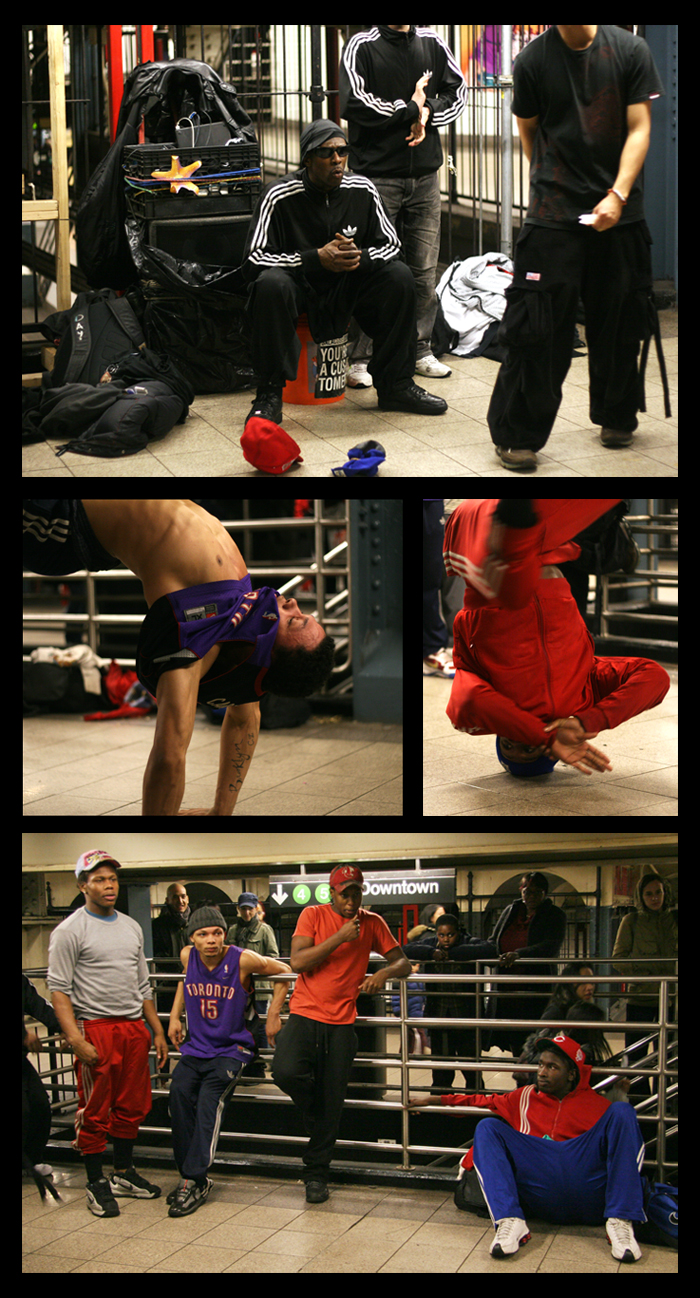
    I never stop to see anything resembling b-boying, aka breakdancing. Born in the Bronx and Harlem, it has been done to death on the streets of New York for decades, often by those moderately skilled and certainly eclipsed by serious gymnasts or acrobatic performers. However, the group which meets regularly at the Union Square subway station main platform on Saturdays, is something else. I decided to stop and bring myself up to date on the hardest of the hardcore – acrobatic hip-hop dancers working on concrete in the New York City subway system, risking fines.

    This group’s leader is “Float Master” John Rich, born in East Harlem where he still lives. He is 46 years old and has been dancing since the age of eight. John has done gigs worldwide and a commercial for Puma. At this time, he prefers working New York City. Although most street performers barely survive or just supplement their incomes, never underestimate what a savvy top street performer can earn in this city – John makes as much as several hundred dollars on a good day and earns a living dancing on the streets, supplemented with occasional party jobs. He is currently attending New York institute of Technology, working towards a bachelor’s degree in computer science.

    I was impressed by John’s act, the finale of the show, with his skilled dancing and signature routine – manipulation of a lit cigarette with his mouth. At one point, John inverts the cigarette, completely enveloping it and proceeds to blow smoke in tune with his movements. It is best understood live (John’s routine is at the end of the clip):

    The skill level of the various acts was extraordinary. A standard has been set and only a fool with poor skills would enter the fray.

    No brand of New York City street activity would be authentic without attitude and John Rich has plenty of that – cool, confident and exuding that smugness that nothing impresses a New Yorker. Certainly not a group of young men defiant enough to risk ticketing or feature a routine with cigarette smoking in the subway system, often with the police watching. Depending on the size of the audience the performance attracts and any other number of variables, the group is often ticketed and shut down, whereupon they take their show elsewhere.

    I met John at the end of the show. He was quite personable, excited that I would be featuring him here and quite amused when I told him that I would be calling the story No Smoking. But after reviewing the photos and video, I recalled how this particular show was punctuated by a surprise impromptu visitor. In Part 2, you will meet the bizarre man who apparently thought that he too, was a Float Master

    Related Posts: Tired of Crumbs, Makes Me Stronger

    Posted on by Brian Dubé

  • Crooks and Perverts

    Posted on by Brian Dubé


    On November 17, 1973, during a televised question and answer session with the press, President Richard Nixon said:

    People have got to know whether or not their President is a crook. Well, I’m not a crook. I’ve earned everything I’ve got.

    Crook is a bit outdated, the kind of word you may have heard around my home during my childhood, along with other words like floozy, gallivanting, tramp and shindig. Today, a crook seems rather benign, perhaps someone prone to petty crimes like swindling a customer or shoplifting.

    In a world of alternative lifestyles and extreme behaviors, pervert is also much less meaningful than it once was, bordering on the quaint.

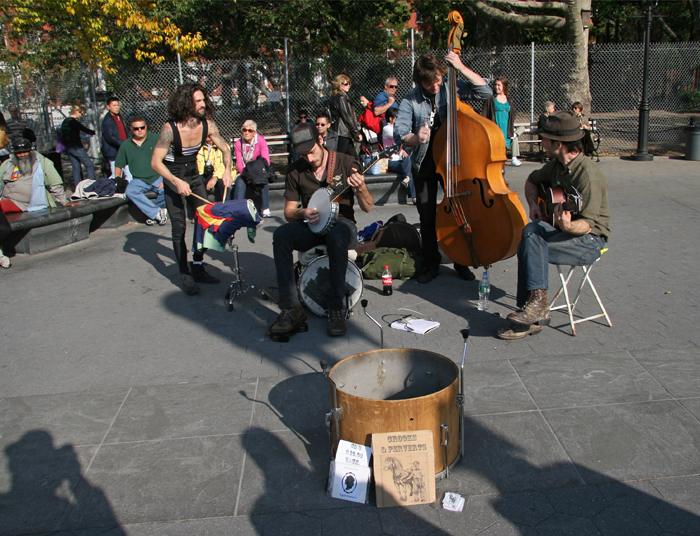
    Coming up with a good name for a music group is difficult – akin to finding a catchy dotcom not yet registered. There are inanimate objects – The Doors, The Cars and Rolling Stones; insects – The Beatles, The Crickets, The Hornets, Iron Butterfly, Adam Ant, Hungry Locust, Spiders from Mars; automobiles – R.E.O.Speedwagon, The Cadillacs, The BelAirs, Fleetwood Mac; animals – The Monkees, The Animals, The Byrds, The Eagles, The Turtles, Stone Ponies, The Black Crowes. The categories, single word names and simple phrases are endless, including the vulgar, irreverent, angry, defiant, lovely, ironic and nonsensical – The Sex Pistols, Led Zeppelin, Leftöver Crack, Pavement, Mötley Crüe, et. al.

    When I first heard Crooks and Perverts play, they immediately exuded a feeling of authenticity. When I spoke to them, I learned that their members are from Georgia. They have a unique blend of authentic southern roots, rough country boys with an urban sensibility and musical sophistication – I recently saw them in Matt Umanov Guitars sampling the wares.

    However, regardless of changing times and mores, I would still be wary of anyone who calls themselves a crook or pervert 🙂

    Note: Crooks and Perverts are now based in Bedford-Stuyvesant, Brooklyn, and can be seen playing the streets of New York City. You can find their website here with music samples, videos, etc.

    Related Posts: The Real Peel, Tired of Crumbs, Street Poet, Makes Me Stronger, Famine and Feast, Sieve, Street Magic

    Posted on by Brian Dubé

  • One Word 2

    Posted on by Brian Dubé


    Perhaps one of the most prescient pieces of business advice ever given in a film, and certainly one of the most enduring lines in film history, is that which is said to Dustin Hoffman in The Graduate. In this scene, Ben is chatting with a few women at his college graduation party, when Mr. McGuire comes to take Ben outdoors for a serious private talk:

    Mr. McGuire (to Ben): Come with me for a minute. I want to talk to you. Excuse us Joanne.

    [Mr. McGuire takes Ben to the back yard of the house to the pool area.]

    Mr. McGuire: I just want to say on word to you, just one word.

    Ben: Yes, sir.

    Mr. McGuire: Are you listening?

    Ben: Yes I am.

    Mr. McGuire: Plastics.

    Ben: Exactly how do you mean?

    Mr. McGuire: There’s a great future in plastics. Think about it. Will you think about it?

    Ben: Yes, I will.

    Mr. McGuire: Shhh … ’nuff said. That’s a deal.

    The word plastics has never had a positive connotation, always tainted in some way. At the time of the film in the 1967, there was a sense that plastics were part of the space age. However, it was also commonly used to mean fake, phony or artificial and hated by many, as author Norman Mailer said in an interview: “Plastic is the excrement of oil.” Although not really a scathing work, Mailer endorsed the book Plastic: The Making of a Synthetic Century.

    Today, specific plastics are promoted for their strength, performance and/or special properties in particular applications – polymers such as Lexan, Delrin, Kevlar, Teflon, Cordura Nylon, Gore-Tex, Viton, silicone, polyurethane, etc. However, when used generally, the word plastics brings up images of a world mired in plastic bags, bottles and other waste.

    In today’s photo, we have a solution to plastics recycling as well as rain gear, occasionally seen among the homeless in New York City. This man had crafted a very extensive wardrobe that appears to be extremely well suited for a day of predicted rain during a very wet spring. His possessions were neatly packed in bags, also made from plastic. Whether seen as a cultural metaphor, an icon of evil by Mr. Mailer, a promising future by Mr. McGuire or used as an impromptu raincoat, all agree on the importance of One Word 🙂

    Related Posts: We Don’t Do Windows, Released From Captivity, One Word, Rosenwach Wood Tanks, Caught, Canal Rubber

    Posted on by Brian Dubé

  • Electronics, Not Acid

    Posted on by Brian Dubé


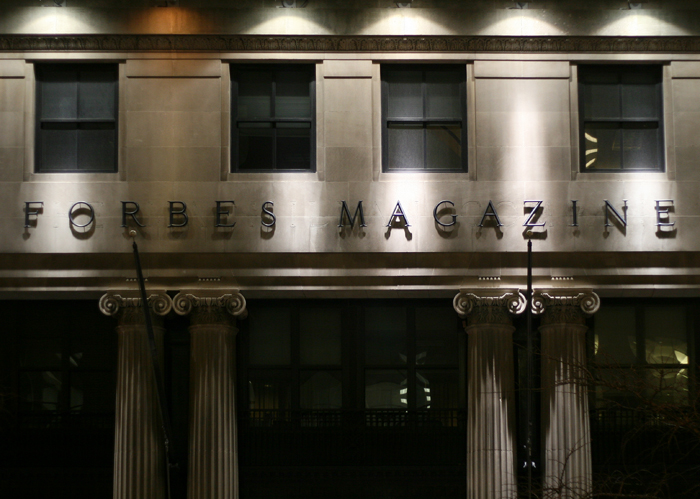
    If you would like to see hard evidence of the decline/death of print media, take a walk to 60 Fifth Avenue and see the historic 12 story, 122,000 square foot shrine to publishing. The large limestone edifice has always intrigued me. It is so prominent on lower Fifth Avenue and its Greenwich Village location between 12th and 13th Streets always seemed such an unlikely location for corporate headquarters for Forbes, most well-known for its flagship business magazine of the same name.

    The structure was built in 1924 for book publisher Macmillan & Co. It was designed by architectural firms Carrere & Hastings, responsible for so many New York City icons such as the New York Public Library and the Frick Museum. Forbes took occupancy of the building in 1962 when Macmillan moved uptown.

    The American Institute of Architects is not, however, so enamored with the structure:

    For four decades, Macmillan conducted its publishing in this pompous limestone cube whose boring surfaces are embellished here and there with echoes of Rome’s glories.

    In 2007, during a much headier real estate market, Forbes nearly sold the building for $120 million ($140 million listing price) to Renta, a Spanish real estate company. By 2010, the market had declined substantially and the property was sold to NYU for a reputed $55 million. NYU will not occupy the building immediately – Forbes has a five-year lease-back agreement.

    The sale did meet with community opposition as does every NYU property purchase. On April 16, 2009, in Gorilla and Cookies, I wrote:

    NYU is seen by many Greenwich Village residents as the neighborhood 800-pound gorilla. Every real estate move it makes is highly contentious and seen by opponents as the act of an avaricious behemoth whose appetite for properties is never sated. Perhaps a new variant of an old joke might be: “What real estate does an 800-pound gorilla buy?” “Whatever it wants.”

    Limestone is commonly used as a building material, including libraries as well as the Forbes building. However, it is partially soluble. We worry that the acid in rain damages limestone and that the acid in wood pulp destroys the paper in books and magazines. We never saw the future and that the real enemy of print media and the limestone structures that house them would be electronics, not acid…

    Posted on by Brian Dubé

  • Harder to Keep Full

    Posted on by Brian Dubé


    In the 1980s I used to frequent the Comedy Cellar on MacDougal Street regularly, sometimes more than once a week. What drew me there was New York City comic Gilbert Gottfried. His work and style are very New York-centric. I have found that many non-New Yorkers do not really enjoy his humor.*

    One bit he did regularly in his comedy routine was about plankton. Gilbert would tell how some comedians may do a joke or two about plankton, but that he did a full routine on the subject. He then launched into a rant about how he knew that someone in the audience would say that they knew a place in Brooklyn that had good plankton. Gilbert would then point out that yes, they did have it, but it was not fresh, but frozen.

    This material is brilliant because it illustrates exactly how the true New Yorker thinks and speaks – a smug confidence and security that New York City has everything with many choices, even in areas that are extremely narrow and specialized. And we are picky. Good, special, unique places are accumulated like feathers in one’s cap. The sentiment concerning security in knowing that all is here was echoed by Woody Allen. I wrote about this on December 24, 2007 in Being There:

    It reminds me of a Woody Allen comment about why he needs to live in NYC – that there’s a restaurant in Chinatown where he can get a certain favorite dish at four o’clock in the morning. Not that he ever has or will go there at that time. It’s just knowing it’s there.

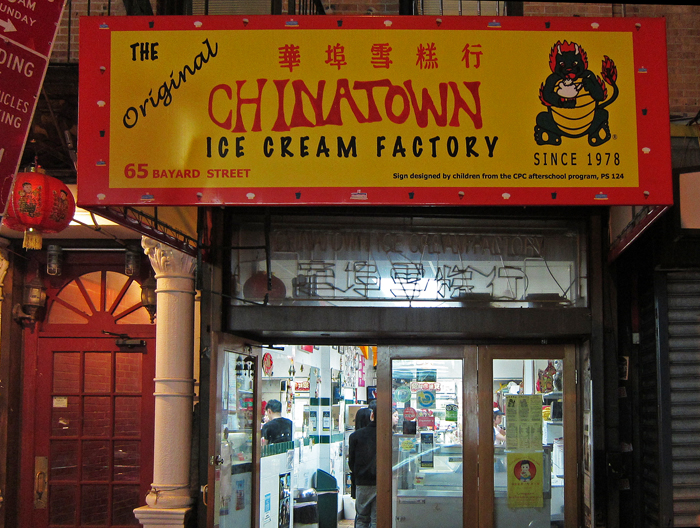
    The Original Chinatown Ice Cream Factory at 65 Bayard Street has been in business since 1978 and is run by the Reid family. Though heavily touristed, as one might expect given its Chinatown location, many still love the range of exotic range of ice cream flavors including avocado, banana, tangerine, black sesame, almond cookie, pandan, green tea, ginger, peanut butter and jelly with sorbets such as lychee, strawberry shortcake, taro, longan, zen butter and mango-papaya. There are naysayers, as always, but reviews are typically good with the feeling that everyone should visit at least once.

    As business ideas are copied, appropriated worldwide and even imported into our city, those places that are unique to New York are becoming fewer and fewer. Many a New Yorker is like a proud warrior, collecting feathers as he or she can for a cap that is becoming harder to keep full …

    *I was saddened to hear about Gilbert’s news scandal regarding jokes he has made, distributed on his Twitter feed about the Japanese tsunami. Known for his voice as the Aflac duck, Gottfried has been fired by Aflac. He has since apologized.

    Posted on by Brian Dubé

  • Teleportation

    Posted on by Brian Dubé


    In New York City, people are driven – it’s the classic work hard, play hard. Regardless of how incongruous it may appear, with ease, ingenuity or great difficulty, you will find city residents participating in the most unlikely activities imaginable, using variants or adaptions as needed.

    No mountains to climb? Then scale buildings instead (see Urban Night Climbers here). In New York you can find cross-country ski during blizzards, windsurfing, tennis, golf, farming, gardening, birding, fishing, biking, swimming, kayaking, canoeing, sledding, jet skiing, sailing, horseback riding, hiking, camping, wind sailing and the flying of radio controlled jets. Of course, whether the big leagues or amateur, the major sports are found here too – football, basketball, baseball, softball and soccer.

    And surfing.

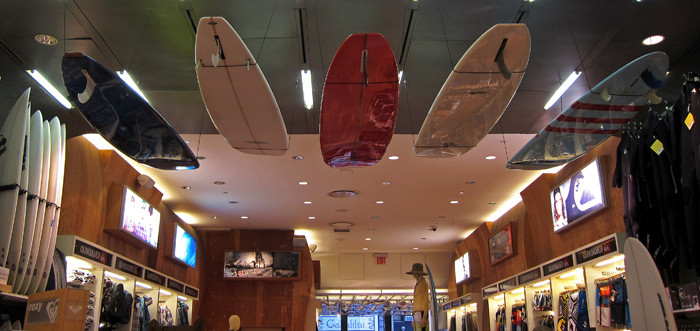
    While in Quiksilver* on Broadway in SoHo with friends from out of town, displays of full size surfboards really surprised them, particularly when they learned that they were not just decorative but that those in racks were actually for sale. I further explained that these were not only sold for those who may travel outside New York to surfing destinations but if you wanted to go ocean surfing, the real thing was available within city limits at Rockaway Beach, Queens.

    Rockaway Beach faces the Atlantic Ocean and is the largest urban beach in the United States. There is a surf community and surf shops. Perhaps the most remarkable, the stretch of beach is directly accessible by subway. In the 1970s, I had a short-lived romance with surfing, influenced by a love of the tropics, the California dream, the Beach Boys, and images of what appeared to be one way to commune with nature and one of the most exhilirating activities.

    I quickly learned that surfing required more skill than I had imagined and more effort than I was willing to expend. To make matters worse, because of storage limitations, I purchased a short board, which I subsequently learned was not the board of choice for beginners. I was told that a very long board, essentially a big boat, made learning much easier. I “surfed” a few of the beaches on Long Island as well as Rockaway Beach.

    In Rockaway, the train is elevated. On return from one outing, I boarded the A train in beach attire and my board. At the start of my ride back, my appearance was not particularly startling, given the proximity to the beach. However, as I approached Manhattan, the closer I got, the more bizarre and inexplicable my appearance was – evidenced by the type and increasing number of stares. At the point I reached Wall Street in a train car during rush hour packed with businessmen in 3-piece suits, I am sure the sight of a surfer in flip-flops and shorts with a wet board dripping on the A train floor looked like nothing short of a teleportation…

    *Quiksilver is based in Huntington Beach, California, and is one of the world’s largest manufacturers of surfwear and other boardsport-related equipment. There is an extensive clothing line and a number of stores can be found in Manhattan.

    Posted on by Brian Dubé

  • Good Connections

    Posted on by Brian Dubé


    Connections was a BBC TV series hosted by British science historian James Burke. I enjoyed many episodes of this tour de force, each show exploring a nearly mind numbing web of interconnections, driving history and innovation in what the program called an “Alternative View of Change.”

    The prospect of living in New York City for many is intimidating. Apart from the costs, many feel that a person can get easily lost and devoured by a large monster, leaving no traces. There are countermeasures, such as making connections, which make the difference between feeling like an outsider versus an insider or a bystander versus participant. Friends and family are key, like anywhere else, to a quality life. Connections with colleagues, coworkers, business owners, etc. also aid to make New York feel like home and not the cold, impersonal place that visitors or observers may perceive.

    If one is fortunate to have relationships with accomplished individuals, they can provide the personal connections to people and things that make New York City the great place that it is for advancement and pursuit of dreams and goals difficult to achieve elsewhere.

    Those obsessed with brushing against the powerful, hoping mere proximity will bestow fame and fortune, will find any real benefits to these pursuits to be illusory. But when kept in proper perspective and for those with skills who can truly make use of opportunities, connections to the talent pool of New York City can be instrumental in success. It’s not just the cliched who you know, but what you do with the privileges granted by who you know.

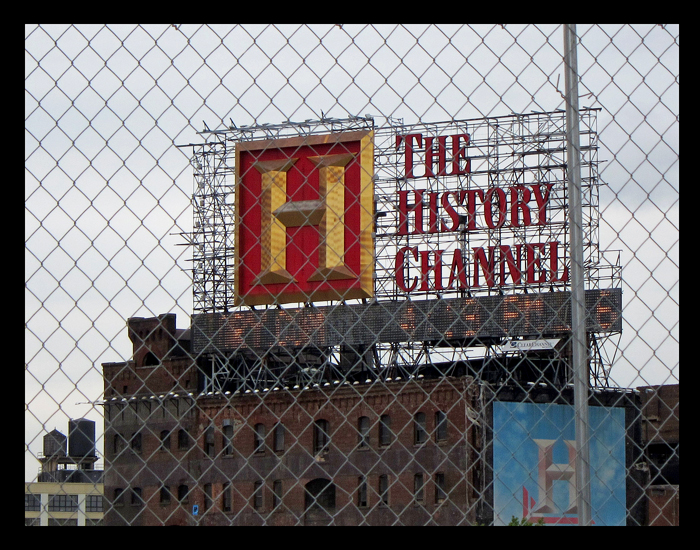
    In the 1980s I was introduced to an exceptional graphic artist, Michael Samuel, whom I hired to do freelance illustration. On one visit to his office, I asked to see his portfolio of work – I was impressed to see the History Channel logo, something he designed while at William Snyder Associates, who used to work with legendary CBS television designer Lou Dorfsman.
    The concept was something heraldic, royal and classic but not specific. I have seen this logo and billboard for years on my many trips out of the city. Every time I pass by via the Willis Avenue Bridge, I think of Michael, his exacting work, and how lucky I was to have someone with his expertise working for my small business. He says about this logo:

    One of the highlights of my career is this logo for The History Channel. Developed with William Snyder Design, this remains one of my favorites. Computer memory was so limited that each facet had to be saved in a different file. A relatively unknown station in it’s infancy, this cable channel has become famous for their interesting and diverse programming. The 60 foot, 3-D, glowing billboard at the end of the Triborough Bridge in the Bronx doesn’t hurt either.

    Be not deceived, however, because in this city, talent is often found in the least likely places – like a man’s artwork displayed on the roof of a building in the Bronx and most often viewed from a bridge or behind a chain link fence. I wish you good connections 🙂

    Posted on by Brian Dubé

  • Boxing Al Fresco

    Posted on by Brian Dubé


    Once upon a time, I became intrigued with biofeedback for stress management. My interest in biofeedback was something that dated back to my college years, when many were experimenting with a number of modalities of biofeedback and equipment. Many types of body control were documented. Later, some styles were adopted by the medical profession for a variety of conditions.

    A well-known psychiatrist located on the Upper East Side had provided a testimonial on a stress management book. I contacted his office. He was expensive, but this was to be a limited number of sessions, training under his guidance, in his office and with his equipment. I was told that insurance would cover the program (it did not).
    The sessions became ones of psychotherapy – I never did get to train at all on his equipment. When I confronted him about this, he said that there was no value to biofeedback training if my behavior and mental processes were just to undo the relaxation I achieved. True, but was not what what I had…and I saw this would become a long extremely expensive process with no end in sight, so I quit after a short number of sessions.

    However, I must admit that I have never met a person who could read me so quickly and thoroughly. I was like a pane of glass to him and he was in my head. He made a number of observations that I remember clearly to this day. I told him of my interest in cello and that I was taking classes with a woman who was an alumna of the Juilliard School. Proud that I had the privilege to study with someone like her, his response surprised me. Bad, he said. “Why?” I said. “Because you turn everything into a job.” He knew that learning to play cello was a serious commitment and would do little to bring me pleasure, only to add another burred to my life. He was right. I quit the cello after six months, telling my teacher that dragging my cello out at night to practice was feeling like a job. She heartily agreed that this was not good at all and she encouraged me to quit.

    My doctor suggested instead that if I wanted to learn music as a hobby, that I try something much less demanding, like a recorder, where I would not be dragged into a hobby that was like study at a music conservatory. He also demanded that I take a Saturday and squander the entire day away, i.e. waste time frivolously. He knew my temperament all too well, that I always had a hidden agenda and only felt good if I could justify my activities as “productive.”

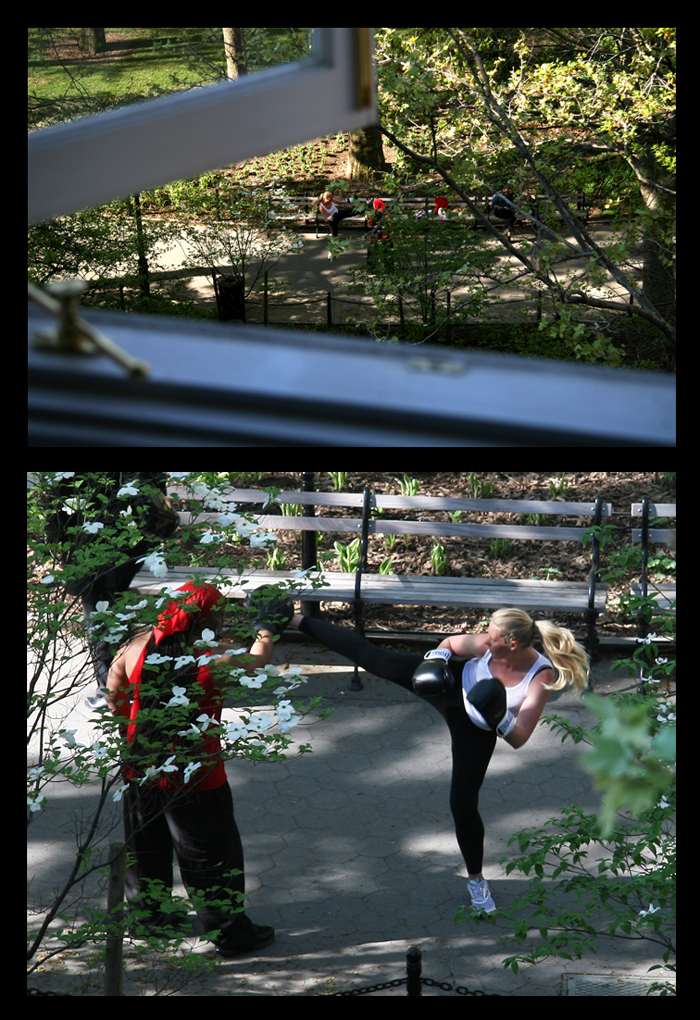
    Recently, in the early morning, while writing near an open window facing the park, I heard a very peculiar slapping type of sound. It was unique to me and I could not guess what was going on. Getting up and looking out through the foliage of spring, I saw a woman sparring with her trainer in the raking early morning light.

    I could not help but reflect on how so many residents of New York City were overachievers with schedules packed with activities, whether cultural, interpersonal, hobbies, classes, training, meetings, business functions, gallery openings, theaters, clubs, bars, festivals, etc. To ask them to do something is like a request to be penciled into the appointment book of the CEO of a Fortune 500 company.

    I fully realize that this woman may in fact be a well balanced person. Being physical is great for mental and physical health. She may not be overextended. Or perhaps she is a neurotic New Yorker, type A personality, choking with activities and entrenched with the busy busy ethic. Or, perhaps she is a young woman, freshly arrived straight from the corn fields of Kansas, just enjoying a little boxing al fresco.

    Posted on by Brian Dubé

  • Grace Under Fire

    Posted on by Brian Dubé

    Once privileges are given, they are soon seen as rights – taking them away will not be well received. This scenario is common in New York City, such as in quality of life campaigns when circumstances beg for attention and there is a broader and stricter enforcement of existing laws. This, of course, invariably precipitates public outcry, particularly from those who are more politically active and vigilant concerning civil rights.

    Recently, there was a small show of force and ticketing of street performers in Washington Square Park. This is an extremely contentious issue for a number of reasons, particularly since the area has a history of musical performance, one of the dominant reasons many visit this area. The Village has been known as a center for artists and musicians for a century. Apart from the rights to free speech and expression, however, there are nuances of other laws coming into play regarding busking, solicitation, noise, public disturbance and unlawful assembly.

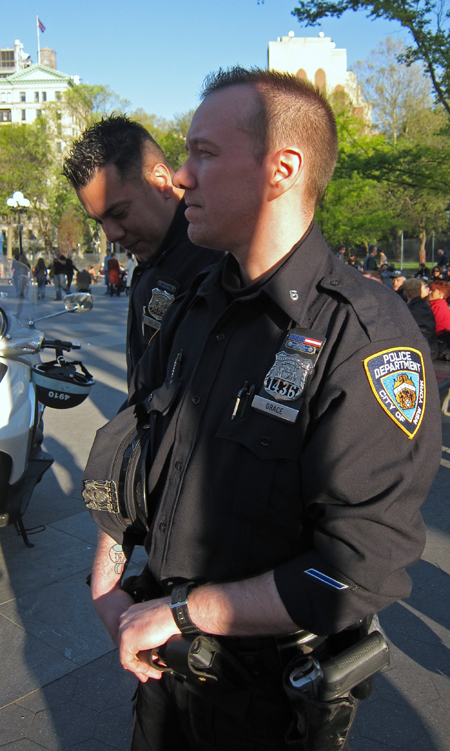
    Shutting down and ticketing performers was met with hostile reaction ranging from anger to outrage. After the recent sweep, the park personnel who had done the ticketing were nowhere to be found – a smart and understandable move. Two officers were on hand however, Alberto Alicea (photo rear) and Tom Grace of the 6th Precinct. The flurry of fury was constant, with a crowd of individuals venting and fuming. Being on the receiving end of a barrage of angry music lovers requires composure because hell hath no fury like an artist warned.

    As is the case with many police actions and the law, most citizens are inadequately informed, misinformed or just too angry to have thought the situation through. I knew I was not dealing with the typical “cop” as I first approached the group where Tom was at work explaining a broad number of concepts including exigent circumstance in United States law.

    I was extremely impressed not only with Tom’s composure and patience, but with his knowledge of the fine details of the law, its intent and interpretation. In addition to his understanding of the academic side of the law, he has a good working knowledge as to its application and the use of common sense and discretion. I spoke with Tom’s partner, Alberto Alicea, during these goings on. Al assured me that Tom’s intellect and talents at interpretation and explanation of the law were well known. Tom told me he loved to read and also informed me that policemen were now required to have at least 60 university credits to become an officer. Born in New Jersey, Tom now lives in Brooklyn and has been on the police force for 8 years.

    He was the perfect spokesperson to have on hand after an event of this nature. I saw one individual after another arrive angry and leave unwillingly satisfied. Tom’s approach was not one of debate, but of discussion with calm and clear explanation of the law, the circumstances and police response, always addressing the individual’s questions directly.

    Being an officer in the New York Police Department is not an easy challenge. Here we have every variant of lawbreaker imaginable, from the innocent tourist committing a minor infraction to seasoned criminals and scam artists who have as good a working knowledge of the law as the police themselves and are often able to ply their trade and evade arrest. Disrespect and defiance is common. I have spent hours conversing with police officers in Washington Square Park. Bicycling in the park is common but a violation, which is clearly stated on numerous signs. Officers typically ask riders to dismount and walk their bikes. Responses vary from polite complicity to open hostile remarks.

    Tom quickly volunteered that he saw a police uniform as clothing, behind which were a broad range of individuals like that seen in the population at large. He was not a man to defend the actions or character of any man in uniform and acknowledged that laws are often improperly or unevenly applied.

    In the case of the ticketing of the street performers by park officers, many felt that quotas may have been a factor and that many performers were unfairly and unjustly targeted in the action. A few may have been overly zealous and aggressive in their solicitation. Others, however, performed as they always had and were exercising their rights, not enjoying privilege. I’m glad I did not have to defend the actions of the park personnel. To stand amongst an angry mob takes composure and guts. By guts, I mean Grace under Fire 🙂

    Note: Some comments for this posting were lost due to a blogger outage.

    Posted on by Brian Dubé


  • dinamic_sidebar 4 none

©2026 New York Daily Photo Entries (RSS) and Comments (RSS)  Raindrops Theme