• Train of Thought

    Posted on by Brian Dubé

    New Yorkers can become obsessed in the minutiae of this city. Where and why else would you find a nine-page article on the typeface used in subway: “The (Mostly) True Story of Helvetica and the New York City Subway” (see story here)? The use of Helvetica is now the official typeface for the New York Subway system, but only recently. In 1966, the subway’s design group, Unimark International, headed by Milanese graphic designer Massimo Vignelli, originally chose Standard (aka Akzidenz Grotesk) as the official typeface. Helvetica later crept into the system for technical reasons.

    To any curious individual riding a New York City subway, it does not take much time at all before they will begin to wonder about the letter and number designations for the numerous lines. Are they all used? Which are, which are not, and why?
    As one might expect, many have gone into great depth of study over these questions. However, I was shocked to learn that every letter and number in use in the NYC subway system has its own individual Wikipedia page. A separate page discusses unused New York City subway service labels. Currently, 17 letters of the alphabet are being used, and nine letters are not in use: H I K O P T U X Y.

    How technical or nerdy do you want to be? By making a distinction that some of the unused letters do appear on the flipdots/rollsigns of the R32/R38 subway cars or the side signs of the R44/R46 cars (they may not be officially used, but they could be displayed and may occasionally be by accident)?

    Recently, on a trip back from Brooklyn, in a fortuitous moment, I saw the F and G trains pass by (albeit in reverse alphabetical sequence). So I have begun to wonder, what is the longest string of trains one could see in alphabetical sequence without riding?
    The West 4th Street station services the A, B, C, D, E, and F. One could, with a fair amount of stair sprinting, see and photograph all six trains in letter sequence. Or try to ride all the New York City trains in letter and/or number sequence. A noble mission for Sesame Street, perhaps, but my ride on this train of thought ends with the F and G 🙂

    Posted on by Brian Dubé

  • Lowriders and High Riders

    Posted on by Brian Dubé

    When friends of mine once returned from the Southwest, I was astounded to first learn about Lowriders – vehicles outfitted, some with all manner of hydraulics, to be lowered as much as possible. There are High Riders too. But why would anyone go through all the work to do such things?

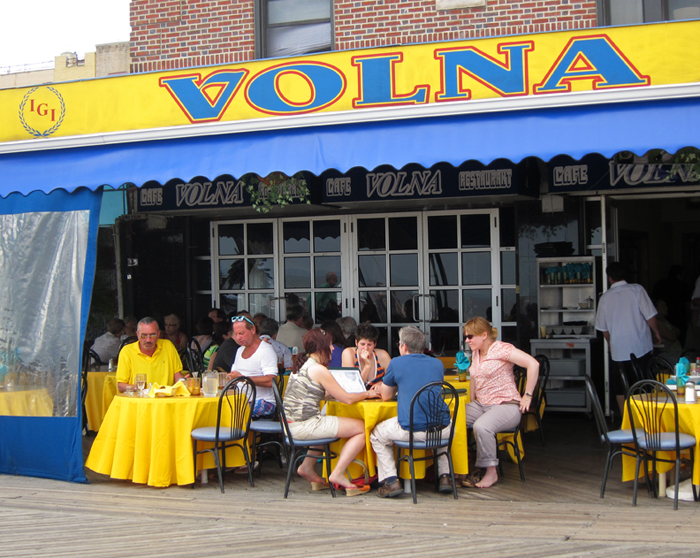
    There are many profound mysteries yet to be solved, but on Sunday, my questions were rather mundane. Why were these particular men together? Were they all widowers? What were they chatting about – women, the sorry state of the world, how things used to be better, or how the mores of youth have declined? Why was there one rebel who wore shorts and sported khaki instead of pants and the requisite gray and white?

    Other mysteries abound, particularly, why do so many old men wear their pants so high? Online forums give a myriad of intriguing and plausible reasons with no consensus. The best answer seems to be that the men shrink in old age but continue to wear the same size pants, necessitating that they hike them up to fit. Others cite osteoporosis and the decline of hips, increasing waistlines, and diminishing buttocks. Of course, these men may rightly retort, why are so many wearing their pants absurdly low? Is there something more inherently fashionable about Lowriders than High Riders?

    Amidst all the glam and glitter, the presence of many ordinary things can be easily overlooked in New York City, such as poverty and the aged. Examining the demographics of New York City in the census report reveals how atypical the city population is from the country at large in many respects. In race and ethnicity, 44% of New York City is white (75% in the USA), 27% black (12% US), 10% Asian (3.6% US), and 27% Hispanic (12% US).

    Other statistics, however, show little variation from the United States population – particularly age. About 12% of both New York City (and the United States) is over 65 years of age. That’s a lot of older people – about one million people.

    Many New Yorkers, like myself, have never had a desire to live in Florida. One can never be sure of how the future will unfold and how desires might change, but I also do not aspire to retiring in Miami Beach. Fortunately, if I want to see retired old men congregating near the ocean, I only need to make a trip to the Brighton Beach boardwalk. And if there comes a day when I want to wear my pants real low or I have to hike my pants up, I know I can do it right here 🙂

    Posted on by Brian Dubé

  • Yellow By Design

    Posted on by Brian Dubé


    Yellow, along with red, is typically a color used to draw attention. The high visibility properties are utilized in warning signs, highway construction vehicles, school buses, and the New York City taxicab.
    However, once outside the world of safety, caution, and signage, bright yellow is not so often seen. Among automobiles, it is one of the least popular colors and is sure to draw attention.

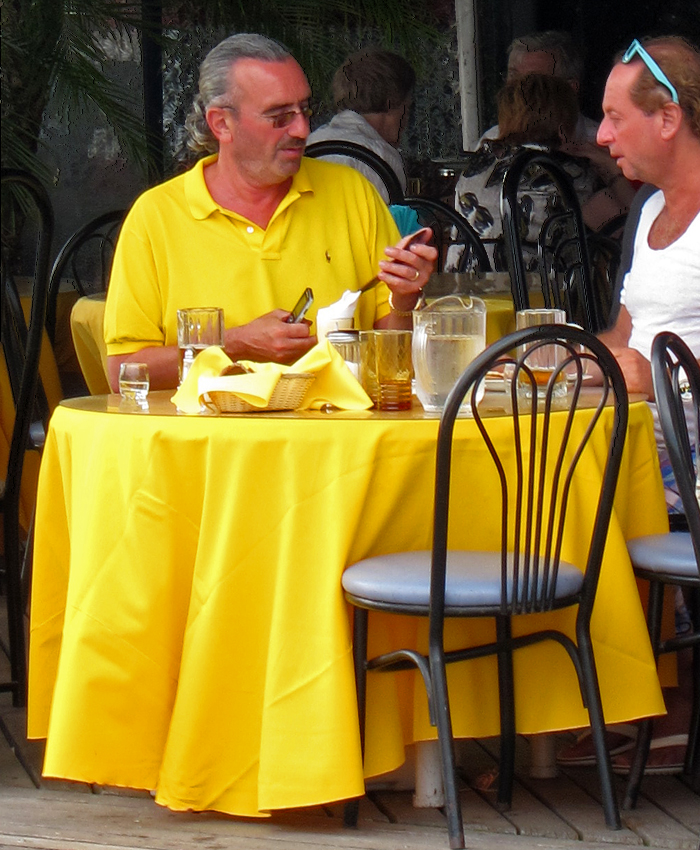
    While strolling on the boardwalk in Brighton Beach, Brooklyn, the amazing assemblage of yellow in today’s photo just jumped out – a diner with a bright yellow Polo shirt, a near perfect match with the solid bright yellow table covering, a yellow cloth in the bread basket, a bright yellow sign color, and a muted yellow apartment building in the rear.

    The color yellow’s use for taxis has a bit of a muddied history. It is frequently attributed to John Hertz, founder of Chicago’s Yellow Cab Co. in 1915. Hertz reputedly chose yellow on the basis of a University of Chicago survey, which found the color highest in visibility. This may have been the case, however, yellow cabs were already in use in the United States and attributed to Albert Rockwell.

    I was astonished to learn today that Albert Rockwell, founder and General Manager of the New Departure Manufacturing Co. of Bristol, Connecticut, was also a director and major stockholder of Yellow Taxicab Company, incorporated in 1912 by Bristol Engineering, a subsidiary of New Departure. I grew up in Bristol and had many relatives who worked for New Departure – a major employer in the town. Had I lived in the early 1900s, perhaps I too could have staked my claim for the choice of color of the New York City taxicab and become a contributor in the world of yellow by design 🙂

    Related Colorful Postings: Coleur du Jour, That’s Quite a Briefcase, Who See the Red?, A Colorful Life, Building Gone Wild, White By Design, Tale of Two Colors, Color Brigade, Eye Candy, White By Design 2

    Posted on by Brian Dubé

  • Asbestos Sticks

    Posted on by Brian Dubé

    I have seen this sign innumerable times, as have millions of New Yorkers, while traveling on the F Train from Brooklyn. I am usually lost in thought, transfixed by the vista of the skeletal structure superimposed over the Manhattan skyline.

    There is much more story behind this sign, however, than one might expect. Kentile Floors was founded in 1898 by Arthur Kennedy, with factories in Queens and Long Island, before they built this plant on 2nd Avenue and 9th Street along the Gowanus Canal in Brooklyn. At one time, the 8-story sign was illuminated in neon. From the Municipal Arts Society of New York website:

    In the post war period, Kentile’s business boomed as Americans expanded into newly-constructed suburban homes. Ads from the 1950s in national magazines such as Popular Science and Life marketed Kentile flooring to the American suburban housewife and encouraged them to save money by installing their own flooring. In these ads, typical housewives, like “Mrs. Richard Lansing” and “Mrs. William A. Loock, Jr.,” demonstrate how they easily installed Kentile flooring with the help of only the instruction booklet.

    The Kentile factory in Gowanus employed over 400 people at its peak in the 1960s. However, many of the company’s floor tiles included asbestos, and this led to the company’s eventual demise. Kentile originally celebrated its vinyl asbestos tiles, bragging that they “won’t scuff” and were “greaseproof” and “a dream to clean.” Growing research on the carcinogenic dangers of asbestos resulted in Kentile phasing out the use of the material by 1986, but this did not stop asbestos lawsuits from financially ruining the company. Kentile filed for bankruptcy in 1992 and ceased all business operations a few years later. Today, the Kentile building is occupied by several different manufacturing businesses, and the sign remains a beloved part of Brooklyn’s industrial heritage.

    New York City’s industrial past has not been immune to the type of problems that have plagued many companies in the United States. Asbestos has not been kind to many a company’s finances or its workers’ health. New York is often seen as a place where big money and slick lawyers can get someone or a corporate entity out of anything. But whether it is fibers in lungs or lawsuits from the injured, asbestos sticks…

    Related Post: Unkindest Etch of All 

    Posted on by Brian Dubé

  • Old Can Be Good Too

    Posted on by Brian Dubé

    I used to have a client who would call regularly and ask excitedly, “What’s new? What’s hot?” It was irritating – what’s wrong with the same old thing if it is good? I certainly produce new products, but as a manufacturer, just maintaining the quality of a product line is a full-time job. Often I am dealing with the one last supplier in the United States of a part or raw material – when they are gone, my hand will be forced to buy an import, often of inferior quality. Admittedly, with the rate of technological change, it is questionable whether one even wants a product which will last.

    Imagine guiding friends or family through New York City and nothing is familiar. Every retailer or restaurant is new, soon to be replaced by something newer. When asked about one of these merchants, you have to respond that you are not actually sure who they are and you have never been inside. But no worry, because they will be replaced soon by something newer.

    I am not a luddite at all – I love new technology and am certainly not averse to the new and improved. However, by and large, humans are creatures of habit, and the man or woman is rare who does not at least find some comfort from time to time in the old and reliable.

    Certainly not every merchant of high quality and integrity is a legacy business. Many of the businesses I have sought out and featured in my writings are newer – places such as Cones or the Doughnut Plant come to mind. I have also found a handful of older mainstays, part of New York City’s disappearing act. We are in a climate where many legendary brands have degraded over time and are selling on name alone. New or old is never a guarantee of quality, in New York City or elsewhere.

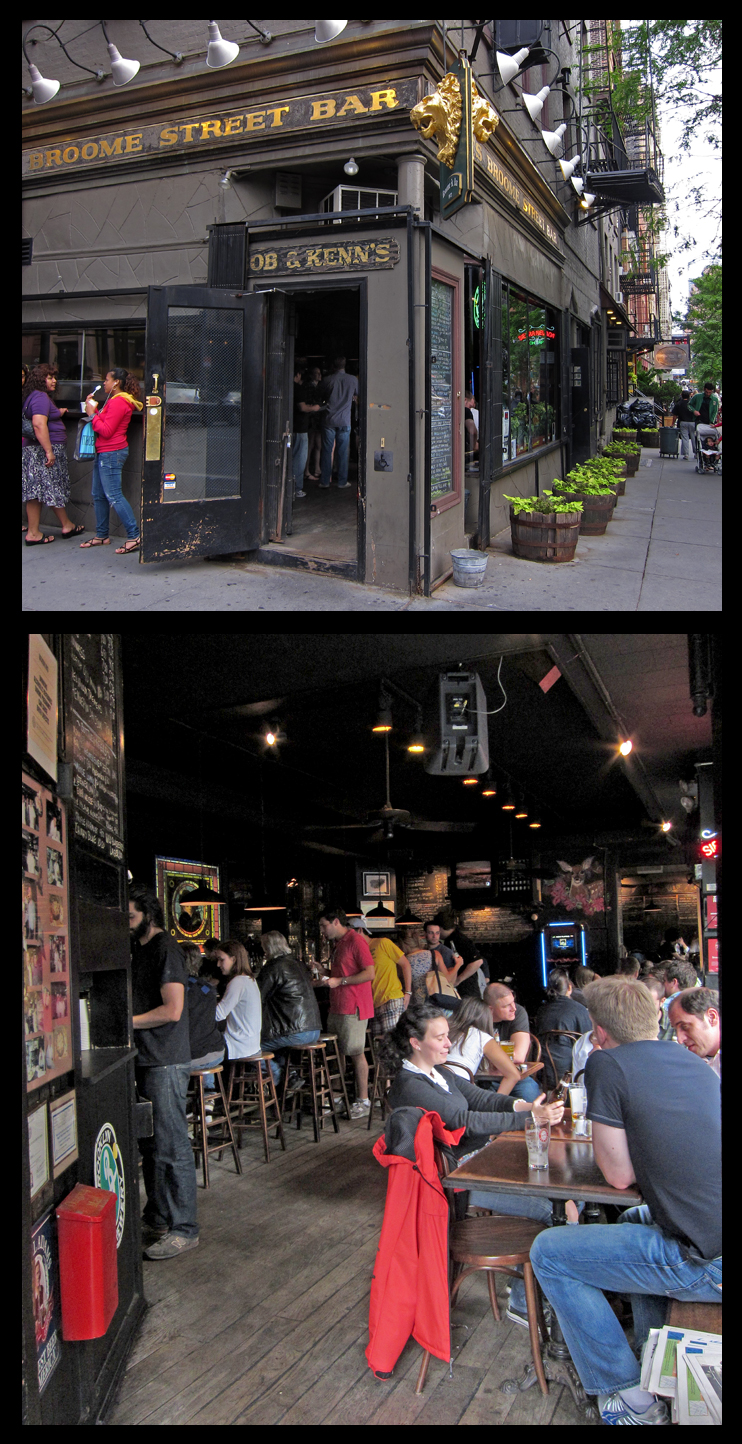
    Everything said, I cannot promise that a visit to the Broome Street Bar will be everything you want – much of your experience depends on your expectations. But, when you are lucky enough to find a legacy business that still has a decent reputation and pleasant ambiance, it is comforting to know that sometimes, old can be good too 🙂

    About the bar: Bob & Kenn’s Broome Street Bar has been a SoHo fixture since 1972, when opened by brothers Bob and Kenn Reisdorff. The bar/restaurant is located in the heart of SoHo at the corner of Broome Street and West Broadway in a historic 1825 building. See more photos here.
    The space has a checkered past – a house of prostitution in the 1940s, and a previous owner who murdered a customer having an affair with his girlfriend and, in turn, was murdered by the victim’s brother. Read about the bar’s history here.

    Posted on by Brian Dubé

  • The Feeling Passes

    Posted on by Brian Dubé

    “Whenever I feel like exercise, I lie down until the feeling passes.” ~ Robert M. Hutchins

    I feel similarly about moving out of the city. I have entertained the notion as often as the couch potato thinks of all the benefits of exercise but somehow hopes to achieve results without exercise. I hope to have the benefits of a home in the country or suburbs (a big unattached home, yard, parking, basement, lots of storage, washer, dryer…), but without giving up any of the things the city has to offer.

    My quest for utopia has known no bounds. Fantasy haunts my travels – I have entertained living in every beautiful travel destination: the hilltop villages of France and Italy, the coast of Maine, the mountain towns of Colorado, the towns of New Mexico and Arizona, the isles of the Caribbean, Key West, Cape Cod, Martha’s Vineyard, Nantucket, Vermont, the Connecticut countryside, Eugene, Oregon, and nearly everywhere in California.

    Closer to home, I have toyed with areas such as Manhattan Beach, the hills of Staten Island, and other enclaves in the outer boroughs of New York City. Of course, many of these areas have had a much stronger allure than others.

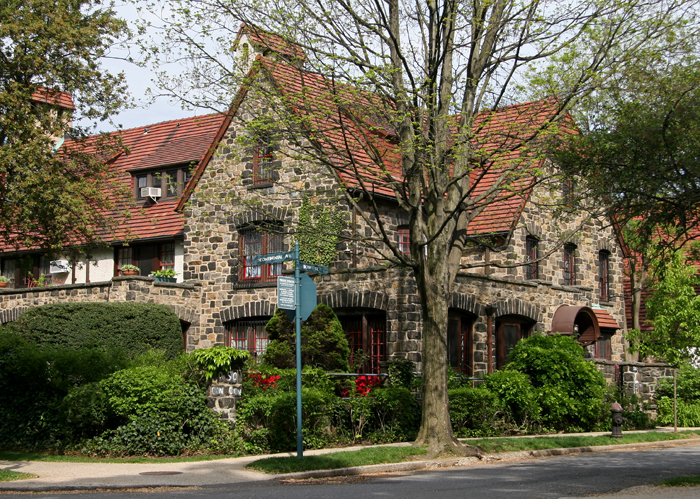
    I have discovered a new fantasy home: Forest Hills Gardens. This Queens neighborhood, founded in 1909, consists of about 800 homes, townhouses, and apartment buildings, mostly in Tudor, Brick Tudor, or Georgian style. I recently made my first voyage there. See my photo gallery here.

    Forest Hills Gardens is one of America’s oldest planned communities and is the leading example of the Garden City movement, an urban planning concept founded in 1898 in the UK by Sir Ebenezer Howard, popular at the time in England and Germany. Garden cities were intended to be planned, self-contained communities surrounded by greenbelts, containing carefully balanced areas of residences, industry, and agriculture. How could I have missed this actual experiment in utopian urban design, sitting right in my own backyard?

    The neighborhood’s parklike setting was commissioned by the Russell Sage Foundation and designed by Frederick Law Olmsted, Jr., son of noted landscape architect Frederick Law Olmsted, who designed Central Park.
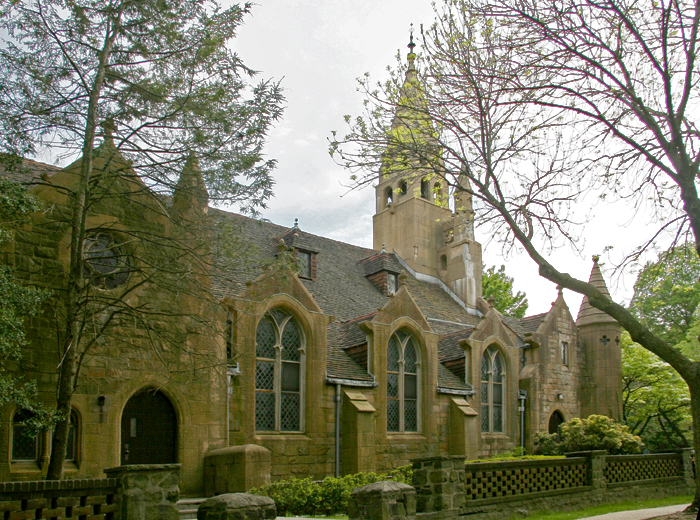
    The community’s central square abuts the Forest Hills railroad station. A theme of towers, half-timbered Tudors, brickwork, red-tile roofs, large chimneys, and off-white stucco walls is found throughout the 142-acre neighborhood. Exterior changes must be approved by a property owners’ association.

    I was very impressed with this extraordinary place. No worry that it is a late discovery – it is also one of the most exclusive and expensive areas in New York City.

    I have been very fortunate to live in Greenwich Village for most of my adult life. This is also an extraordinary neighborhood with many historic buildings and a bucolic charm. And I have learned the remedy for the obsessed, unrelenting fantasy mover. Whenever I feel like moving, I lie down until the feeling passes 🙂

    Posted on by Brian Dubé

  • All of These Pleasures

    Posted on by Brian Dubé

    In the film The Producers, which is set in New York City, Leo Bloom (Gene Wilder), an innocent accountant, is lured by Max Bialystock (Zero Mostel) into a fraudulent money making scheme. In one scene, Max tempts Leo atop the Empire State Building, enumerating all the wonderful things money can buy in New York City which are laid out before them, whispering over his shoulder, “All of these pleasures can be yours.”
    And, for most, one of these pleasures will be a decent home.

    Conversations in New York City are dominated by apartments and jobs. The cost of an apartment, rental or purchase, is the most difficult financial hurdle to living in this city, particularly for new transplants.
    You will hear and read that prices are up or, on occasion, down slightly. Then up. Average prices, median prices. This year over last. This quarter over same quarter last year, etc., etc.

    Let me simplify. No matter what you read or hear, prices are still high. Very high. Even if prices plunged, they would still be very high. In spite of the economic malaise, apartments in New York City are fetching big numbers. Prices of Manhattan apartments have risen in 2010 over the same period in 2009 – the average one-bedroom is now $1.3 million dollars, typically with a maintenance of over $1000 per month.
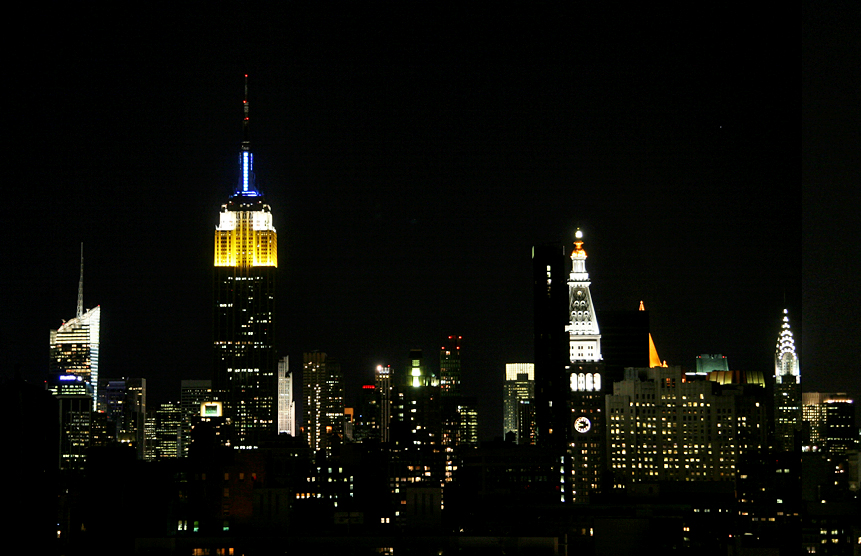
    For that money, you get one privilege and only one: to live in New York City in a habitable place. However, views like those in the photos are far from typical, and for that you will pay a premium. Prices in high-rises typically increase as you move up to higher floors with better views.

    The vista in the photo is looking north from the rooftop of the Brevoort East at University Place and 9th Street in the Village. Friends who live in the building (and have virtually an identical view on a lower floor) gave me roof access recently. Atop the roof, looking out at the spectacular view in the brisk clear night time air, I could feel Max Bialystock at my shoulder whispering, If you have the money, all of these pleasures can be yours 🙂

    Posted on by Brian Dubé

  • Respect 2

    Posted on by Brian Dubé

    Visiting the battleships during Fleet Week in New York City is enormously popular, and in previous years, I have made spontaneous visits on Memorial Day. This is a big mistake – docking of the ships at the city’s piers is a well-known event, and if you intend to board one, it behooves you to plan ahead and go early.

    Lines are long, often resulting in cutoffs for boarding that day. To date, I had never been successful boarding any of the ships during Fleet Week.

    So, early Saturday morning, I headed to Pier 88 at West 46th Street. There were no lines at all, and I breezed through the entry cue area and boarded the USS Iwo Jima.

    Tourists were allowed to board virtually all the various craft – tanks, amphibious vehicles, and aircraft. On the flight deck, children were busy in cockpits. Part of one deck was set aside for displays of weaponry – little boys, big boys, and men were all busy engaged and engrossed handling the various guns. A bit unnerving – guns are not toys, and war is not a video game. Soldiers know this, and all was well supervised by the Marines on board.

    This ship is, of course, enormous, and as always, the sailors are extremely accommodating, patient, and untiring, happy to answer any and all questions. I am sure many of the same questions are asked repeatedly throughout their duty with the service.

    The city is awash with sailors during Fleet Week, who are very approachable either on the streets or aboard the ships.

    What has always stricken me is the respect military persons always show a complete stranger when approached and addressed. The dialog always conveys a sense of subordination, with you as a figure of authority. Responses are often appended with “yes, Sir,” something I rarely experience.

    Although I do not relish or live in a world so predicated on chains of command and authority, I must admit that the respect paid is a very welcome thing indeed in a place like New York where, although not the norm, there is always plenty of rudeness to go around…

    Related Posts: Fleet Week 2009, Kearsarge, Men in Uniform, Fleet Week (2006), Post-9/11 World

    Posted on by Brian Dubé

  • Obsession Will Pass

    Posted on by Brian Dubé

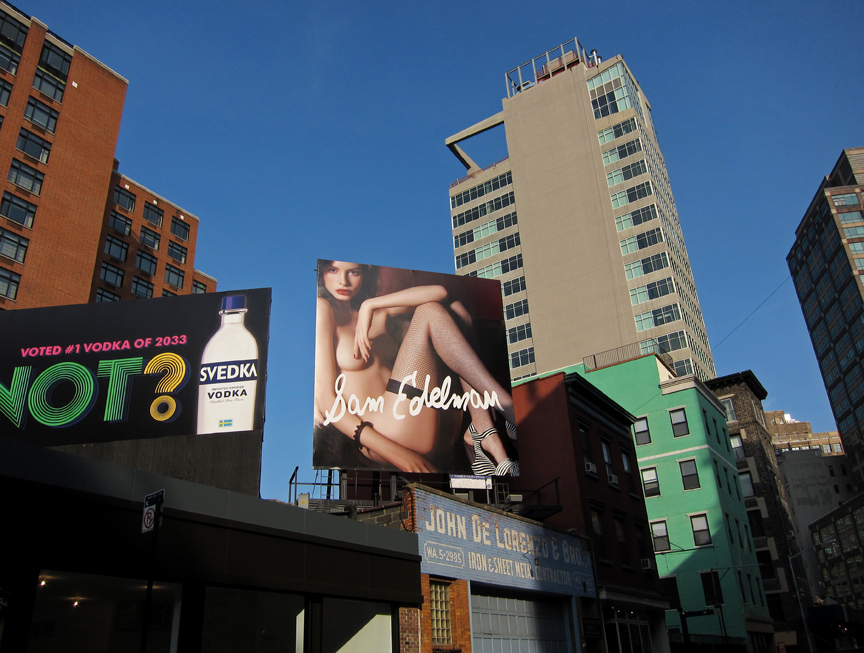
    I do not recall my specific needs, but some years ago, I visited John De Lorenzo & Brothers at 43 Grand Street in SoHo. The iron and sheet metal company, formed in 1907 and closed in 2008, had been recommended to me for welding. I never imagined that at some future date, the rooftop would support a huge billboard of a nude model (nearly nude with a strategically placed index finger). See more photos here and here.

    The ad is for Katrice wedge sandals by designer Sam Edelman, modeled by Charlotte Kemp Muhl. The 22-year-old model/singer is signed with top agency Elite Model Management and has appeared in many national ad campaigns. She is currently the girlfriend of Sean Lennon. Together they have formed the company Chimera Music.

    In America, there is an enormous amount of attention paid to exposure of the female breast. Laws govern very special anatomical limits – the requirement of pasties to cover nipples in bars, etc. However, unbeknownst to many, in 1992, women in New York State won the right to go topless anywhere a man is permitted: The People &c., Respondent, v. Ramona Santorelli and Mary Lou Schloss, Appellants, et al., Defendants. Many are unaware of this ruling, including police officers – quizzing them will get varied and interesting responses.

    The amount to which female breasts are exposed in public is like a societal time marker – as time passes, we move towards more exposure, with the nipple being the final and ultimate revelation. While some see this as a sign of a society in decline, others, particularly in Europe, see American views regarding the topless woman as being quite Victorian and concern to be over zealous. I am not sure what will happen if nudity becomes very common in advertising and television – whether society will implode or the obsession will pass 🙂

    Posted on by Brian Dubé

  • No Problema

    Posted on by Brian Dubé

    I was in the south of France at the Nice airport at the car rental booth. The agent, knowing our travel plans (to northern Italy and back), asked with a concerned look if we wanted contents insurance (for theft of auto contents). When I asked why, he said, “You’re going to Italy, you know.” Aha – I see. We had not even left the airport, and national rivalry was in full swing.

    Years later, on a subsequent trip with my family, we stopped to have lunch at an amazing spot right on the beach in Menton, southeastern France, near the Italian border. Many of our waiters were Italian.

    Regular readers know I love France, however, I readily admit that the French can be a little particular – one must know how to act and how to handle them. This is why, when we asked to move two tables together, we asked rather timidly. We were surprised to hear the response No Problema.

    I also noticed this phrase emblazoned across the front of a road map of Italy – apparently this was a virtual national motto. I am convinced that this was Italian national pride, with the added twist of posturing against the tourist experience with the persnickety French, where, for some visitors, everything seems to be a problem. I heard the refrain No Problema many times on that trip to Italy.

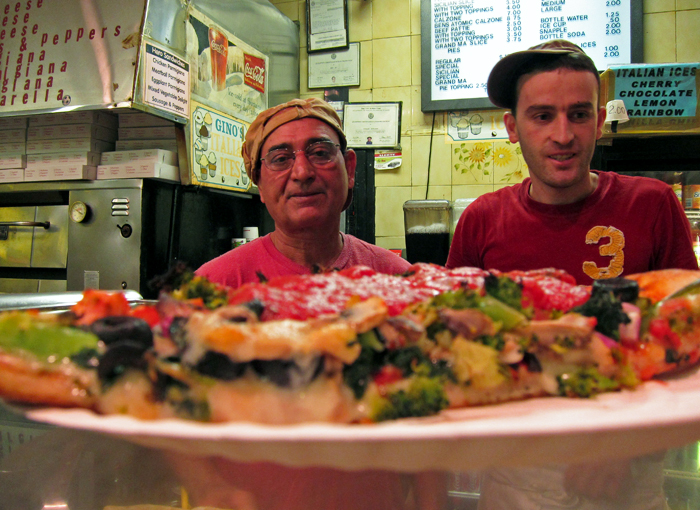
    Last night, three of us decided to go for some quick pizza. However, our choice of where to go was constrained by one of our group, who had two dogs. So it was decided to give Ben’s Pizza a try – this place, much like Nathan’s of Coney Island, has a look and feel of a Klein bottle, with no identifiable inside or outside. Perfect for a motley crew with dogs in tow.

    Now I had never eaten at Ben’s at this location – the place always frightened me. Let’s just say that cleanliness is not one of its hallmarks, and I always found the place extraordinarily unattractive and unappealing.
    Our order for slices was a mess. One of our party was unfamiliar with the choices, many changes were made, misunderstandings clarified, etc. The situation was trying for anyone in retail, particularly in New York City, where customer volume is heavy and patience can wear thin.

    However, this man (photo center) was unflustered by any of it and seemed to have the patience of a saint. Remarkable for a place in a touristy location like this. And at every juncture, whenever I apologized, I imagine you have guessed his response already: No problema!

    Ben’s Pizza is located at 123 MacDougal Street on the corner of West 3rd Street and has been in business since 1966. There is a second location in SoHo at 177 Spring Street. The pizza itself? The reviews differ wildly. Our slices were better than expected.

    Posted on by Brian Dubé

  • Watch the World

    Posted on by Brian Dubé

    On January 12, 2010, I wrote of my first apartment in New York City in Diner Be Aware of the Diner. Living on West 22nd Street in historic Chelsea was a unique privilege, one which I grew to appreciate more and more in hindsight. This was truly a case of you don’t know what you’ve got ’till its gone.

    One of the great pleasures of my short time there was sitting on the stoop on a summer evening with friends and chatting amongst ourselves, with passersby and with neighbors. We had no idea that we were reenacting an historic activity, something New Yorkers have done in many neighborhoods across five boroughs for ages.

    I frequently sit on the stoop of my current residence, a townhouse in Greenwich Village (see Being Trumps Doing here). Unfortunately, my neighbors rarely do the same.

    Stoop sitting still exists in some neighborhoods. In many, however, they have become resting spots for loiterers, visitors, and drug users. Many buildings have installed wrought iron gates as a deterrent. Even though these gates are not locked, most nonresidents will avoid opening a gate.

    The benefits of stoop sitting are many. It provides entertainment, socializing, becoming acquainted with neighbors, crime watch for improved safety, and some fresh air. I have met celebrity chef Mario Batali on a number of occasions taking a break and stoop sitting across from his restaurant, Babbo, on Waverly Place.

    Stoop sitting in New York City was common by the early 19th century. New York City is a place where one finds a lot of running and chasing of people, places, and things. But the savvy urban dweller or visitor will find that much can be seen and learned and people met by just staying in one place (see Taste here). Like the café habitués of Europe have found, people watching is a pleasurable activity unto itself. Find a spot on a park bench or stoop and watch the world go by 🙂

    Photo Note: The stoop on the left is on Washington Square North, as viewed from my stoop (see it here). The stoop on the right is my first NYC apartment residence, located at 431 West 22nd Street. I believe the building may have remained a rental, accounting for its poorly maintained condition – such a pity.

    Posted on by Brian Dubé

  • Wallflowers are Welcome

    Posted on by Brian Dubé


    For many, the school dance was something to look forward to. Here was an event, sanctioned by both the school and parents, that permitted physical expression and, better yet, a place where kids were encouraged to approach those of the opposite sex.

    Unfortunately, if there was hope that a school dance would help the wallflower or introvert break out, it usually did not. Their plight was made more painful as they watched longingly from the sidelines, isolated and on display for all to see.

    However, even for the extroverts, make no mistake. If a boy was serious about a girl, enormous courage was needed to ask her to dance – the implications of public rejection loomed large. Of course, there were a small number of men, brazen and thick-skinned, for whom apparently public rejection meant nothing. I see men (or should I say land sharks) like this today, who have no fear whatsoever approaching women in any environment, making their pitch, for all to hear and see. But for most, the rejection monster raised its head at the thought of approaching the woman of your desire and asking her to dance.

    Women had and still have a very sensible solution – dance alone or in groups with other women. If a man has the courage to pry one away, she will, if interested, most likely oblige. This ups the ante, of course, for a man interested in a woman – he must now face the prospect of group rejection and humiliation. Only the seasoned land shark with thick skin is willing to swim in these waters.

    Times have changed. School dances are now faced with more provocative, sexually suggestive dancing, aka grinding. Some schools have even cancelled dances entirely. Others have resorted to a variety of rules and enforcement – see New York Times articles on the phenomenon here and here.

    Irrespective of time or culture, there is no question that most dancing has a sexual element. Generations of parents have struggled, attempting to control the impulses of youth, at sea in an ocean of hormones. But in the anything goes environment of New York City, the gyrating, writhing, and provocative dress found in the annual Dance Parade are really quite tame. And the performances in the ensuing Dance Fest held in Tompkins Square Park are an international smorgasbord of dance styles and traditions, with 161 participating organizations. The Dance Parade & Festival is both a venue for unstructured fun as well as a myriad of serious dancers and performers. See my gallery of photos here.

    I’m sure many will be pleased to know that in the Dance Parade, where spectators and dancers can both be found in great number, Wallflowers are Welcome 🙂

    Related Posts: Dance Parade, Dance Parade 2009

    Posted on by Brian Dubé

  • Catch Em If You Can

    Posted on by Brian Dubé


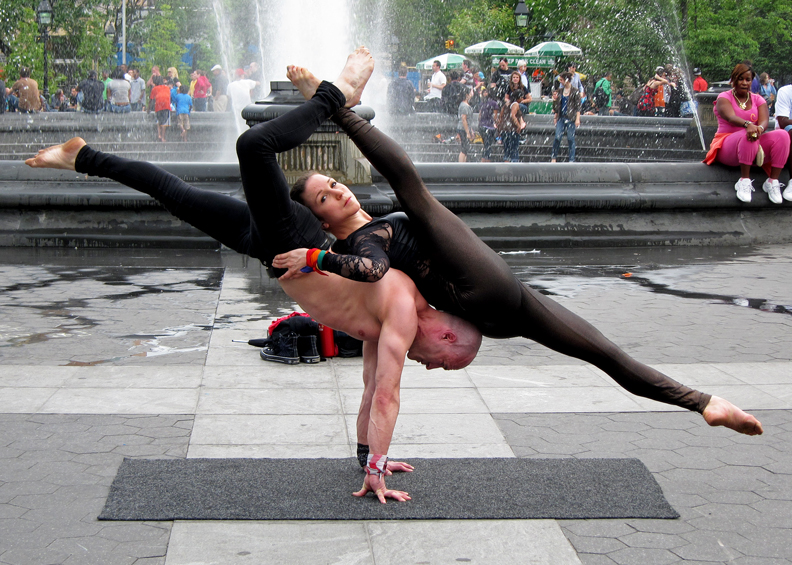
    When you happen upon a hand balancing act on the street and are reminded of the Alexis Brothers* from Cirque du Soleil, you know you are seeing world-class professional talent. I have done many stories on street performers, particularly in Washington Square Park, including a recent one on street acrobats. In the interest of variety of subject and setting, I try to limit posts on a particular topic.

    However, watching the duo in the park on Sunday afternoon, shown in today’s photo, it was immediately apparent that this was not your average street show. The display of strength, skill, movement, and presentation was remarkable in this hand balancing act with Rudi Macaggi and Lea McGowan. The audience was transfixed.

    Rudi is a third-generation entertainer and acrobat from Milan, Italy, who has traveled the globe, performing on stage since the age of 7. He has worked venues in Las Vegas and Atlantic City and has had national television appearances on Penn and Teller’s Sin City Spectacular and The Tonight show with Jay Leno. In 2006, Rudi won first place in the Crazy Caliber category of the TV show America’s Got Talent.

    Rudi’s one-man show has been seen around New York City at clubs such as the Slipper Room and the Box (both in the Lower East Side). The Acromedian does a one and a half-hour show – an amalgam of visual comedy, hand balancing, acrobatics, story telling, and standup, peppered with his famous quip, “I like you.”

    His street show featured his hand balancing routine with Lea along with a number of stunts, such as doing a one-armed handstand while dribbling a basketball, as well as his finale of a back somersault landing in a one-armed handstand. Always on the move, catch ’em if you can 🙂

    *Note: If you have never seen the hand balancing act of brothers Marco and Paulo Lorador, who performed in Cirque du Soleil’s shows Saltimbanco and Mystère, you can see a video from their act here.

    Posted on by Brian Dubé

  • Trapped in Paradise

    Posted on by Brian Dubé


    Heaven may not be what you hoped for if you are unable to relax, let go, and appreciate the seraphim and cherubim. Otherwise, you may find yourself like Woody Allen in a taxi in Manhattan – “You look so beautiful I can hardly keep my eye on the meter.”
    I felt very conflicted sitting in the Conservatory Garden – I had an loose agenda for the day, but sitting in this garden just made it nearly impossible to entertain leaving. I was truly trapped in paradise.

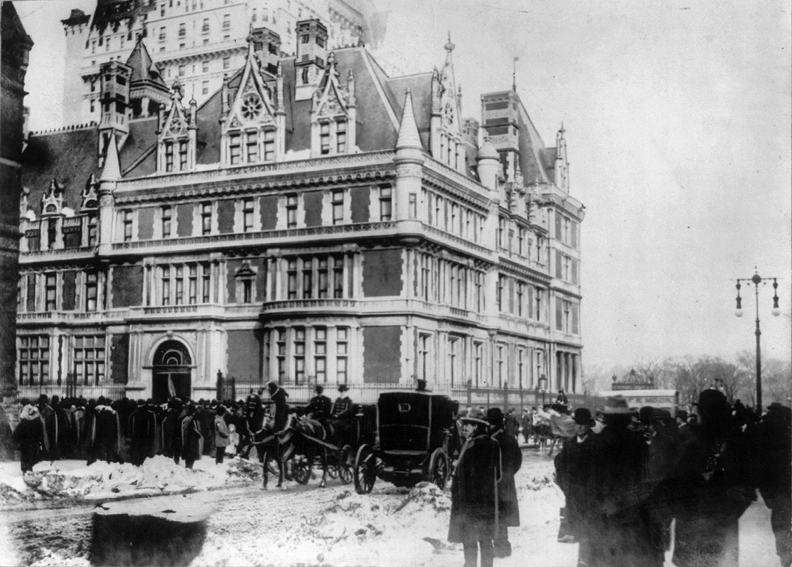
    This is one of New York City’s “secrets” – few will make it this far north on Fifth Avenue. The formal garden was designed by Gilmore D. Clarke, the landscape architect for Robert Moses. The main entrance is through the Vanderbilt Gate at Fifth Avenue and 104th Street. The gate once served as an entrance to the chateau of Cornelius Vanderbilt II, the grandest of the Fifth Avenue mansions (see photo here). It stood at 58th Street and Fifth Avenue near the Plaza Hotel. It was demolished in 1927. The gardens are divided into 3 styles – French, Italian, and English. From the Central Park website:

    Conservatory Garden began as a large, E-shaped greenhouse, or conservatory in 1898. It featured an indoor winter garden of exotic tropical plants and outdoor decorative Victorian flowerbeds. In 1937, the deteriorating structure was demolished and this six-acre formal garden was designed in its place.The Central Park Conservancy began its restoration of the area in 1981, starting with the Garden’s fountains.

    Conservatory Garden is divided into three distinct styles – French, Italian, and English.The northern French-style garden features an ellipse of meandering boxwood and pansies, and showcases spectacular seasonal displays of tulips in spring and chrysanthemums in autumn. In the center is the charming Three Dancing Maidens fountain by German sculptor Walter Schott.The central Italian garden features a wisteria pergola, a large lawn surrounded by clipped hedges of yews, a 12-foot-high jet fountain, and two exquisite allées of pink and white crabapple trees. On the walkway under the wisteria pergola are medallions inscribed with the names of the original thirteen states. The Italian garden serves as a backdrop for hundreds of wedding photography sessions.

    I hope you visit. I’m sure you will enjoy being trapped in paradise 🙂

    Posted on by Brian Dubé

  • The Cable Building

    Posted on by Brian Dubé


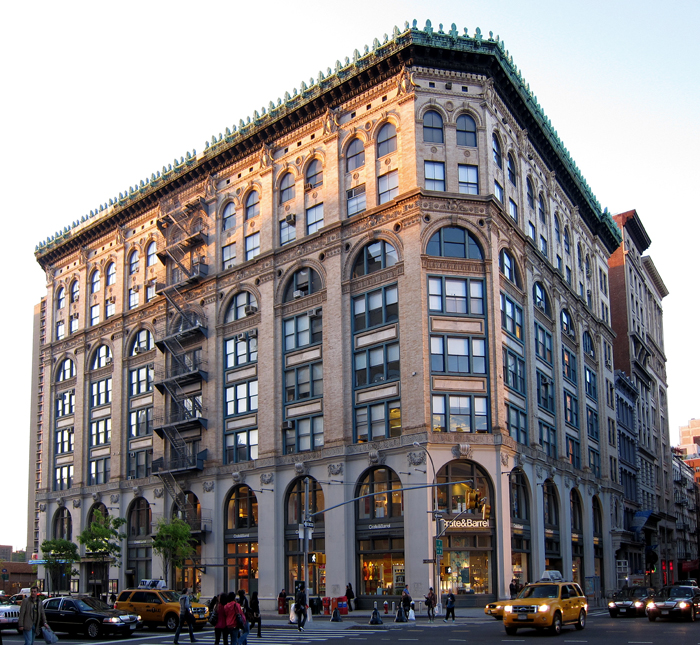
    I hated the Cable Building. It was gray and grim, as were the spaces and long hallways ringing the interior atrium. Everything about it was unappealing to me, even its location at 611 Broadway and Houston Streets, now a prime shopping district.

    But when I needed commercial space, my conversations with brokers invariably led to the Cable Building, where, any day of the week, small spaces were readily available at reasonable rents. The mention of “611 Broadway” made me cringe. The idea of traveling through the building’s long serpentine corridors for use of water and a shared bathroom was very unappealing to me. The only real way of securing these amenities en suite was to rent an entire floor of a building, which I finally did.

    Much as someone who has to work through a childhood fear of dogs, it has taken me decades to shake off my feelings about the Cable Building. All so ironic – anyone visiting today would be incredulous that I would reject or have misgivings about this historic structure.

    One of the most difficult things to communicate to those who have no experience of New York City prior to 1980 is how rough a state this city was in. SoHo was a no man’s land, the East Village uninhabitable. Everyone I know had personal experience with being mugged/robbed. Car alarms provided music. Graffiti-painted subway cars were the norm. Glass shards on the street from auto break-ins would be a daily sighting.

    Running a business in New York City has all the typical expenses – salaries, insurances, holiday and vacation pay, staffing, etc. Operating in New York does, however, present things which make it even more onerous – high rents, problems parking or standing for delivery vehicles or visiting customers, freight which will have to be taken to its destination by elevator – generally only retail stores can afford ground floor space. At one time, ground floor industrial was common. No longer.

    When possible, working from home, sans employees, solves many of these problems. I did this for many years. But time came, as it does for many, that working from home was no longer viable – there were just too many activities inappropriate in a residential building for a business of my nature – receiving supplies, shipping goods, and seeing customers meant excessive traffic and noise. So I was forced to shop for commercial space.

    Moving was not the worst prospect – working at home is not the dream life many think it is. Yes, there is no commuting, but working alone every day takes its toll for anyone with any modicum of social needs. I have met some who are happy to work alone. The question is whether you can do this on a full-time basis.

    One big problem in looking for space is that I had been severely spoiled by working at home. The ambiance of a residential building and the amenities of a home, i.e. a kitchen and private bathroom, are all very different in a commercial building. I needed small space and a building that permitted light industrial use – this is a challenge anywhere, including the suburbs.

    My office is only two blocks away from the Cable Building, and I often visit Crate and Barrel on the second floor, as much to enjoy its beautiful space and views as to peruse the merchandise.

    Try as I may, there’s no getting away. My fate seems to be intertwined with the Cable Building 🙂

    Note about the building: The Cable building was built in 1893 and designed by McKim, Mead & White. Its name hearkens back to its brief history (less than 10 years) as a power plant for a new cable car system in Manhattan, extending from Bowling Green to 36th Street. The basement, 40 feet below street level, houses enormous steam engines, boilers, and winding wheels. Read Christopher Gray’s Streetscapes article from the New York Times here.

    Posted on by Brian Dubé


  • dinamic_sidebar 4 none

©2026 New York Daily Photo Entries (RSS) and Comments (RSS)  Raindrops Theme