• Remembering

    Imagine being 13 and not having seen much of the world at all.
    Imagine also living at a time when technology was on the cusp of the truly fantastic – with mainframe computers, transistors and integrated circuits, the Moog synthesizer designed by Robert Moog, and the A-11 aircraft, capable of sustained flight of 2000 mph being announced. And the biggest technological achievement of our time, as promised by JFK during his 1960 presidential campaign, was soon to come: we were going to the moon, literally.

    1964 was also the year of the British Invasion, with the arrival of the Beatles in the USA. In the world of civil rights, Malcolm X announced his break with the Nation of Islam, the formation of a black nationalist organization, and met Martin Luther King, who won the Nobel Peace Prize. President Lyndon Johnson signed the Civil Rights Act of 1964 into law, abolishing racial segregation in the United States. The Vietnam War was heating up and we saw the first demonstrations. Feminism and the sexual revolution were in full swing, and the Vatican condemned the birth control pill.

    So it was in this time that my family took our first trip to New York City to visit the 1964 World’s Fair. I remember only a little from that trip, but what I do remember was something that was truly fantastic, a spectacle larger and grander than I ever imagined possible. The exhibits were amazing and way ahead of their time. The audio-animatronics used by Disney are still in use today – Disney’s It’s a Small World was unveiled at the Pepsi pavilion. IBM displayed handwriting recognition. General Electric sponsored Progressland, where the audience was seated and revolved around an auditorium with numerous audio-animatronic presentations of the progress of electricity in the home. The General Motors Futurama had visitors moving on seats through an exhibition of the world of the future. The entire fairground was as large as a small city. Fountains were everywhere – it was true pageantry.

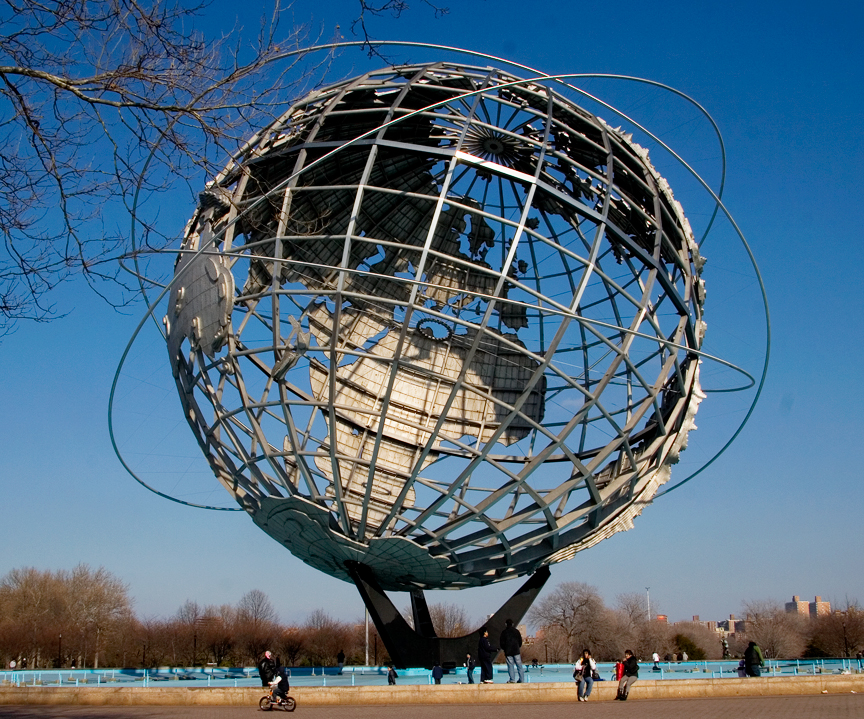
    The most memorable icon for this fair was the Unisphere, which is still standing in Flushing Meadows-Corona Park, the site of the fair (and the previous 1939-40 fair). The theme was Peace Through Understanding, and the Unisphere represented global interdependence. Built to celebrate the beginning of the space age, it was dedicated to “Man’s Achievements on a Shrinking Globe in an Expanding Universe.”
    The Unisphere was built in type 305L stainless steel by the US Steel Corporation and erected on the same structural foundation that supported the 1939/1940 New York World’s Fair’s Perisphere. At 12 stories (140 feet), it remains the world’s largest globe and has become one of the few permanent remaining structures from the fair and an unofficial symbol for Queens.

    I am sorry that those of you unable to attend will have to imagine and that I have the privilege of remembering …

    Note about the fair: The 1964 World’s Fair was actually mired in controversy. In order to be profitable, the fair organizers, headed by Robert Moses, decided that the fair would need to run for two 6 month seasons (1964 & 1965). However, the rules of the BIE (Bureau of International Expositions), headquartered in Paris, stated that an international world’s fair run for one six-month period only and only one exposition per 10-year period in a host country. The USA did not meet these requirements, and a visit by Moses to Paris was not successful. Moses made his disdain for the organization’s decision public. The BIE retaliated by requesting member nation’s not participate. Hence, the roster of participants was primarily smaller nations and a large number of industrial firms.

  • Maps and Models

    I have always loved maps and architectural models. As a child, I built a bird feeder modeled after my family’s home. My crude rendering was applauded by all who saw it, as would be expected when your primary reviewers are family members. As an adult, maps have always been my number one priority before traveling to any destination, and I have collected them for years. I love the color-coded Michelin maps in three different scales.

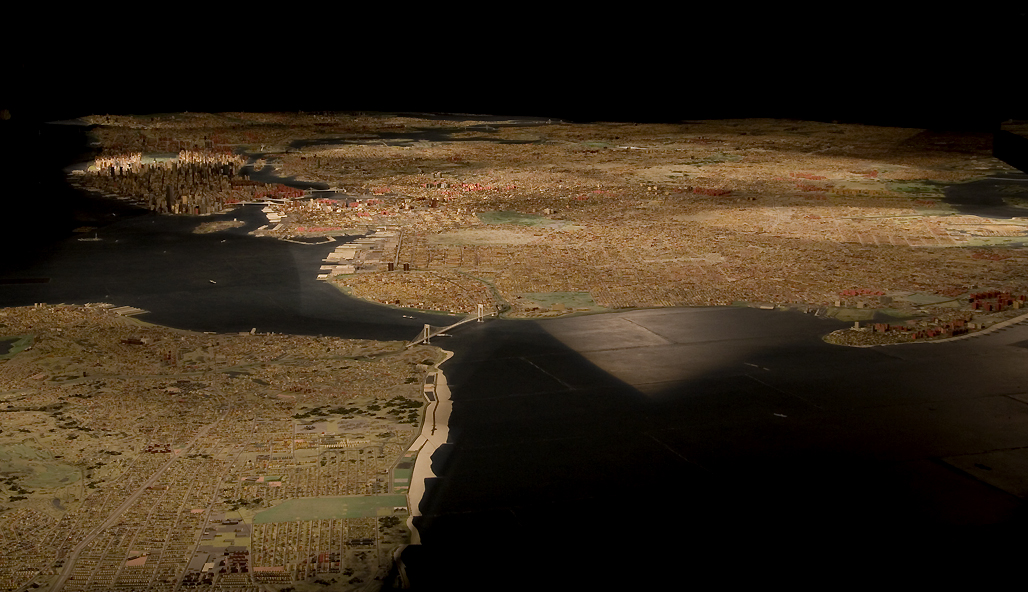
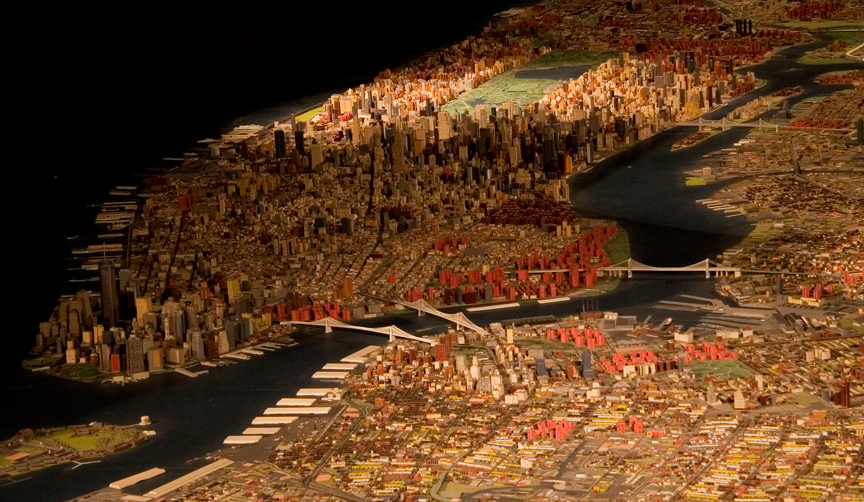
    So the Panorama of the City of New York, housed at the Queens Museum of Art, is particularly special for me, with a map and model all rolled into one. This scale model (1″ = 100 feet) of the five boroughs of New York is one of the most remarkable and little known exhibits in the entire city. See second photo here. A passion for maps and models, however, is not necessary to fall in love with this creation. Museum visitors soon become mesmerized, picking out their homes, favorite spots, landmarks, or perhaps just show off their orienteering skills to companions.

    The Panorama was commissioned by Robert Moses for the 1964 World’s Fair. This 9,335-square foot architectural model is the world’s largest model of a city. It includes every single building constructed before 1992* in all five boroughs – a total of 895,000 individual structures. During the Fair, the Panorama was one of the most popular attractions, with an average of 1,400 visitors per day. The original exhibit was designed to give a simulated helicopter ride over the city – visitors traveled the periphery of the model in fake helicopter cars for a 9-minute tour while listening to a narration by the newscaster Lowell Thomas.

    From the Queens Museum website:

    “The Panorama was built by a team of 100 people working for the great architectural model makers Raymond Lester Associates in the three years before the opening of the 1964 World’s Fair. In planning the model, Lester Associates referred to aerial photographs, insurance maps, and a range of other City material; the Panorama had to be accurate, indeed the initial contract demanded less than one percent margin of error between reality and the model.”

    The museum building was originally built to house the New York City Pavilion at the 1939 World’s Fair and is the only structure surviving from that fair. Between 1946 to 1950, it was home to the General Assembly of the newly formed United Nations (in 1950, it moved to its current home in Manhattan). The model has been part of the permanent exhibit since the Queens Museum opened in 1972.

    You should see this magnificent model in person. Admission to the Queens Museum is only $5 and a subway ride away – why not take a ride and see for yourself?

    *Model and Museum note: The model was updated in 1992 with over 60,000 structures modified (the original Twin Towers of the World Trade Center, however, still remain). A recent new upgrade includes lighting for audiovisual presentation. For information about the museum, directions, hours, and exhibits, see their website here.


  • Continental Divide

    Most likely you have never been to Corona, Queens, and most likely you will never visit either. You will not read of any gentrification movements there or of an exodus of disenfranchised Manhattan artists discovering the neighborhood. This is a working-class neighborhood – at one time predominantly Italian and now 75% Hispanic. Like many area of Queens, the neighborhood has a broad ethnic diversity – Mexicans, Dominicans, Bolivians, Ecuadorians, Colombians, Guatemalans, Peruvians, Asians, Pakistanis, and Italians.

    I say you will likely not travel there because the rivers of this city that separate the boroughs are in many ways like the Great Wall of China. A body of water can be a big cultural divide – it separates countries, states, cities, and, in New York City, the boroughs.

    The rivers of New York City are also a tremendous mental impasse. With the exception of commuters, most will rarely cross one even if the distance and travel time is short. Central Park seems nearer to a downtown Manhattan resident than a closer destination in Brooklyn. So there must be a very good reason to leave your borough, and visiting Corona will not usually be a good reason.

    Each borough, and even each neighborhood, is a world unto itself, and many find little reason to leave it except for work. The population density of New York City supports an incredible range of services in a small area. Many Manhattan residents get much of what they need in walking distance of their home – a great luxury and convenience. Step out of your apartment, and there is a universe of goods and services a short stroll away. This is true to a lesser extent in the boroughs, where you have larger tracts of residential housing without commercial establishments. However, every neighborhood is like a small town, and its center typically has its own set of services.

    Many of the neighborhoods in the outer boroughs are dominated by one or more ethnic groups; traveling to these lesser known neighborhoods can be culture shock. There are signs in other languages, unfamiliar foods, and unusual dress. The pace is slower. And here, extravagance is out of place. Money is real and careful husbandry the rule.

    So, with a sudden break from our frigid weather and temperatures in the 50s, Sunday seemed the perfect time to sample the goods without waiting until summer. I am sure I was the only person who drove from Manhattan to Queens to sample Italian ices at the Lemon Ice King of Corona (which is open all year). The ices have been made by Pete Benfaremo for 58 years at the same location.

    It was chillier than expected, and a friend and I found ourselves alone when we arrived at the Lemon Ice King at 108th Street and 52nd Avenue. I felt a little awkward and foolish. The clerk apparently did not share my enthusiasm or spirit of adventure.
    There were few patrons, and I did not know that there was no indoor space for customers. So, after choosing our flavors from a selection of 20 plus flavors at the street counter, we ate our ices standing on a blustery side street while seeking as much sunshine and as little wind as possible. See here for a peek inside.

    And did the ices live up to their legendary status? Honestly, we both found them too sweet, virtually killing the flavors. But perhaps I will try again on a warm summer’s eve and when I am in the mood to travel across a continental divide…


  • The Core Club

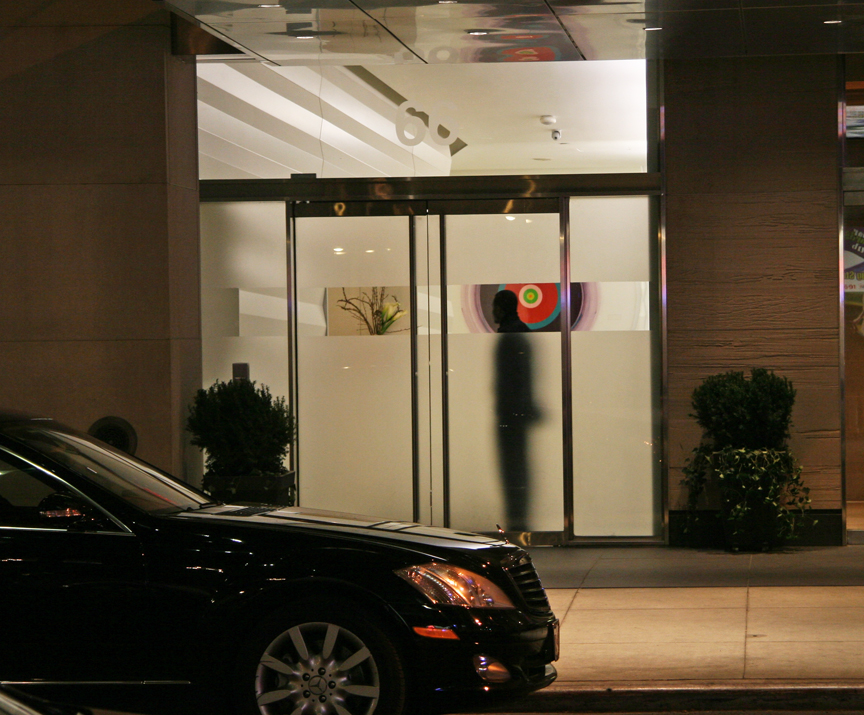
    What will $72,000 get you? The first year’s membership at the Core Club ($60,000 initiation fee), but only if you’re invited. I was asked recently if I had photos of the Core Club, so I decided to investigate. The club was started in 2005 by Jennie Saunders and is located in the first five floors at 66 East 55th Street. The sleek building, Park Avenue Place, is a luxury condominium in Manhattan’s Upper East Side, designed by Kohn Pedersen Fox. Original investors gave $100,000 each, with an understanding that this would be paid back at some time.
    I did enter the reception area with its Damien Hirst spin painting and was greeted with a polite welcome. I was not permitted a tour or photos of the inside, of course.

    I have tired of “exclusive” clubs in this city. This is not the green of jealousy raising its head here. In the 1980s, I was privy to entry of many music clubs that had a policy of exclusion and selection. Throngs would gather outside these clubs, hoping to be selected for the privilege of entry. Studio 54, Xenon, the Mud Club, Area, Palladium, Peppermint Lounge, Danceteria, et al. At the time, I had a coworker who was well connected, and I was frequently put on the guest list. Often, I entered a club with huge numbers outside clamoring to get in, only to find a dance floor virtually devoid of people. Boring. The illusion of extreme importance was the thing being sold to cultivate an urgency and lust for entry.

    Now I am sure that the Core Club is not as vacuous a cultural experience as a night at Studio 54, but I question how many real movers and shakers want to hobnob in a private club. The Core Club did reel in some big names initially: John McEnroe, Richard Meier, Vernon Jordan, Steve Schwarzman, Bruce Wasserstein, and Teddy Forstmann. There is a library compiled by a veteran of the Paris Revue. The place also features a screening room, gym, and restaurant headed by Tom Colicchio. But aren’t people in this social strata already well connected and busy, with a rich social and cultural life? I could see a place like this of interest to a member of the nouveau riche who is early in the image game and needs affirmation that he/she is someone or has arrived.

    My feelings were confirmed this morning as I read an article from November 2008. Apparently the club is having difficulty in repaying the initial seed money. Numbers were not what they anticipated. Memberships were given at reduced prices to attract certain individuals…


  • Jump for Joy

    One area where a huge city like New York can fall down is service. We have lip service, of course – the beatitudes and platitudes recited by employees as instructed by policy manuals from the corporate office. But I mean real service, where the salesperson puts him or herself on the other side of the counter, sees another human who has a need, and, within reason, does what is required to satisfy that need without attitude.

    I often find myself in a retail store looking for a salesperson, eventually to find a number of them congregated for what appears to be happy hour. Any effort to intrude is seen as an annoyance, taking them away from what appears to be more important matters to render service begrudgingly. A customer starts to feel guilty for disturbing the sales staff.

    One can find good service in New York City, but it is just not like the experience of being in a very small town, where it feels like politeness and great service are universal. You have a sense that it is assumed that this is the normal human condition. I yearn for these signs of humanity in New York City, and when I find them, I jump for joy.

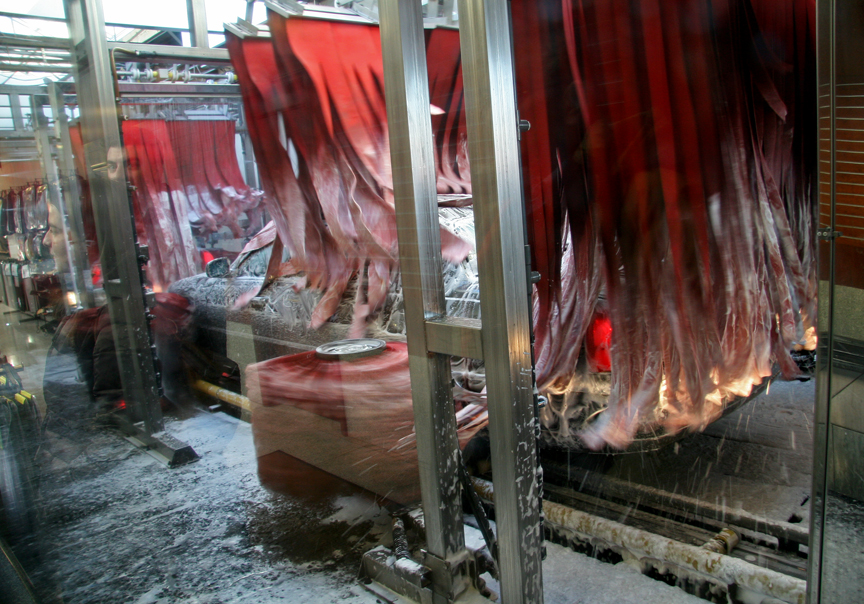
    Saturday I jumped for joy at the LMC Car Wash & Lube at 36-21 21st Street in Long Island City. The first thing I noticed was how clean this place was, particularly in light of traveling many blocks on a very blighted stretch of road. My car was in dire need of a was. Like many, the inconvenience of a few minutes and a few dollars usually seems too much to bear, spoiled as I am with the extraordinary conveniences of the modern world.

    At LMC, after prep work, the car goes through its wash and dry cycles unoccupied – customers get to watch the entire process from behind the glass wall of their retail shop, which is stocked with all manner of auto supplies and accouterments. There were bottles of many hued liquids with the afternoon sun shining through them. Everything was in its place with a place for everything. Tidy, clean, and efficient, with good service and entertainment – watching your car get scrubbed clean is so much fun. All of this may be the standard for retail establishments outside the city, but in New York, people will tolerate some very rough edges.

    Perhaps many would consider my exuberance over a car wash to border on lunacy, and maybe it is. Call it what you may, but when I find a place like LMC, I want to jump for joy…


  • New Yorkers Gone Wild


    I’ve written before about how New York City not only tolerates the unconventional but also embraces, nurtures, and even encourages it. Iconoclasm is celebrated here. I had a high school English teacher who was personally frustrated with the ostracism for thinking differently in a small town. He encouraged us to attend university in a large city and move from the provincial small town environment.

    One day, he announced that although it was required to have the local paper in the classroom, we would not be reading it – we would be reading the New York Times. The local paper, he said, would remain stacked in the corner and was suitable for training your cat. A bit harsh and disrespectful of local talent, but it was the Dead Poet Society of my youth. I shared his frustrations, and his advice had an influence on my decision to move to New York City.

    I think things have changed much since that time. Electronic media, styles, and popular culture are much more quickly adopted across the globe. However, at a core level, most people really don’t like the offbeat or unusual, excepting for some, perhaps, a period of wild youth and rebellion. Take a look at some of the captures I have gotten in the last three years.

    First, we have André. I called this posting Out There, because he really is. In this second photo, Fashion Forward, he poses for me with an unusual dresser. I have subsequently met André on numerous occasions and have learned that he has done quite a bit of fashion work – he has graced the cover of French Vogue and has his own Wikipedia page. Spike is a character who could easily be subject to hostility in another environment. Here, we have a man who travels with an exotic bird, boa, and small alligator .

    Women who dress provocatively will always get some looks, but I can’t imagine the reaction in a small town to women dressed like some whom I photographed. Take a look at Narcissism Gone Wild, the Water Sprites, this urban Wood Nymph, topless women in a Dyke March, the bearded lady who founded Circus Amok, and a group of metal fans in Piercing Al Fresco.

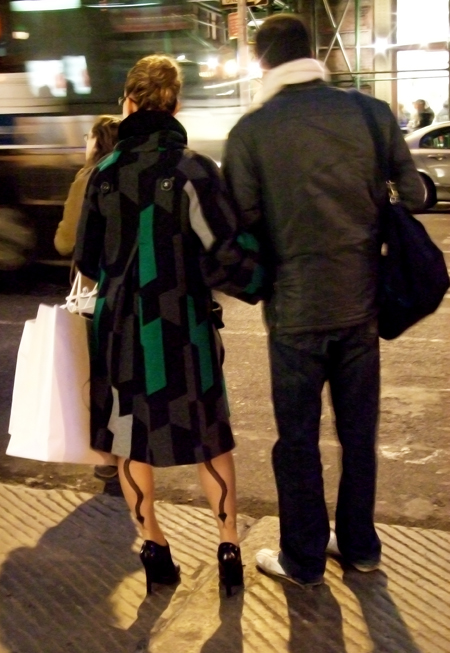
    I had to hustle to capture the woman in today’s photo. I loved the geometrically designed coat as well as the snakes on her legs, which I assumed were tattoos, not printed hose. I never got a chance to ask her or give her my card – I imagine she likely would have posed as would any New Yorker Gone Wild…

    Related Postings:  Spring Madness, The Dance Parade, Twelve Tribes, Penny Farthing, Homeless Art, Superheroes


  • A Deeper Look

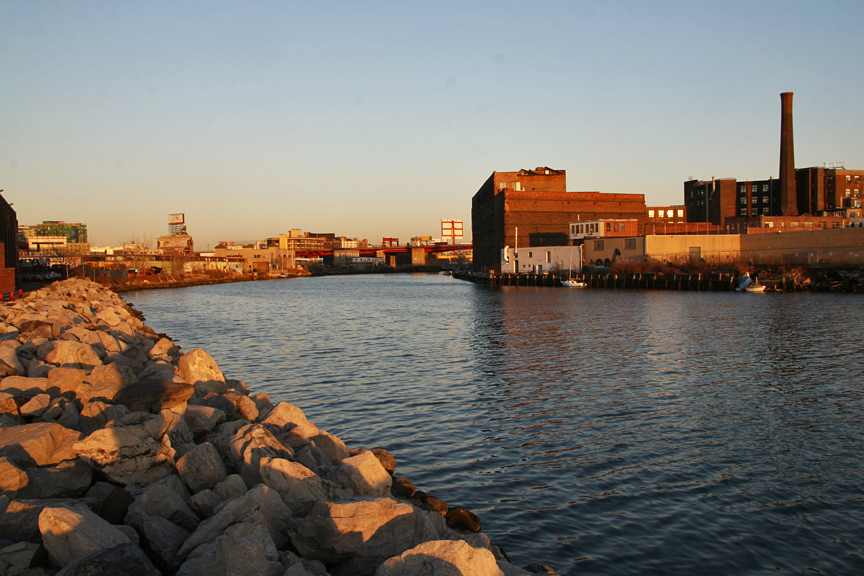
    There is a body of water separating four miles of Brooklyn and Queens called Newtown Creek. Never heard of it? Join the ranks of most New Yorkers who also are unfamiliar with this important waterway.
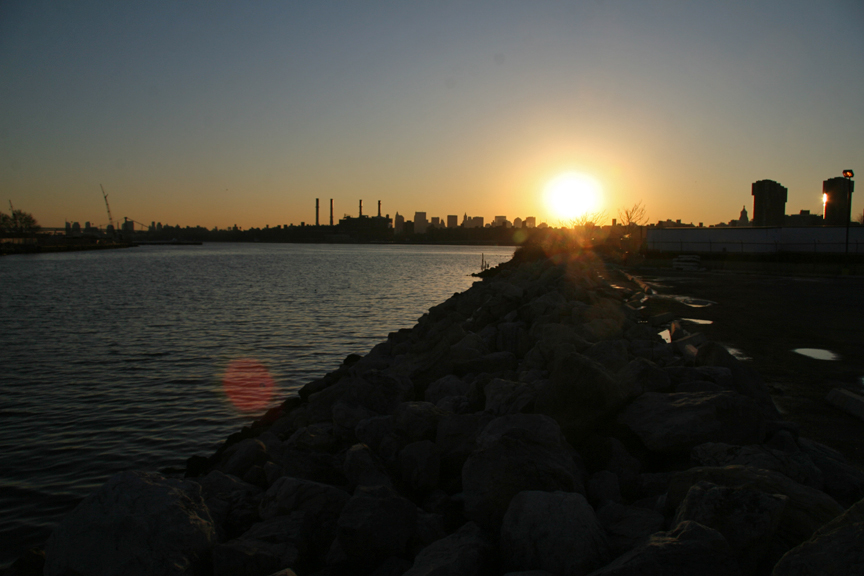
    The Dutch acquired the creek from the local Mespat tribe in 1614. It was named for New Town (Nieuwe Stad), the name of the Dutch and British settlement in what is now Elmhurst, Queens. From the Queens side, I found a rocky outcropping. At the right place, (ignoring the jangle of industry), at the right time in the orange glow of sunset, I found it quite beautiful and I could imagine myself somewhere on the coast of Maine. See second photo here.

    However, with a deeper look, one can understand why there would not be a land rush to the banks of Newtown Creek. This is one of the most polluted bodies of water in North America and is the oldest continuous industrial area in the United States.
    Newtown Creek had the country’s first kerosene refinery (1854) and first modern oil refinery (1867). At the end of the 19th century, Rockefeller had over 100 distilleries on both sides of Newtown Creek. The history of industry here is long (read more about it here at the Newton Creek Alliance website).

    There is no natural freshwater flow into the creek; all the historic tributaries were covered over in its 400-year history of industrialization. Read what the Newtown Creek Alliance has to say about this body of water:

    “Every year Newtown Creek receives 14,000 million gallons of combined sewage overflow, a mixture of rainwater runoff, raw domestic sewage, and industrial wastewater that overwhelms treatment plants every time it rains. There are also discharges from numerous permitted and unpermitted pollution sources. The creek is mostly stagnant, meaning all the pollutants that have entered the creek over the past two centuries have never left.”

    The bridges which pass over the creek are equally unattractive – the Kosciuszko Bridge, the Pulaski Bridge, and the J. J. Byrne Memorial Bridge. Newtown Creek is not readily visible from these bridges, and there is also limited access to the creek, so there it sits, mired in pollutants and obscurity.

    People love waterfront property, so it is remarkable how much of New York City’s water frontage is and has been so undesirable – Coney Island, the Gowanus Canal, Newtown Creek, the Brooklyn waterfront, and the piers along the Hudson River on the west side of Manhattan. But every dog has its day, and it is hard to imagine that one day this waterway will be desirable, lined with footpaths, residential buildings, cafes, etc. When that day will come, in 5 years or 50, I do not know. Climbing out of the sewer can be a slow process…


  • Click of a Mouse

    I am always surveying and scanning for photo opportunities and stories as I travel this city. While driving across 57th Street on Sunday, my eye caught Steinway Hall at 109 West 57th Street. Looking more closely, it appeared that even though it was Sunday, there might be activity. My companion was unfamiliar with the building, so I now had a dual motive. However, as every student of the murder mystery knows, there must not only be motive but also opportunity. So the thought of us both investigating was purely academic, as the prospect of finding a legal parking spot at 57th Street and 6th Avenue is all but impossible.

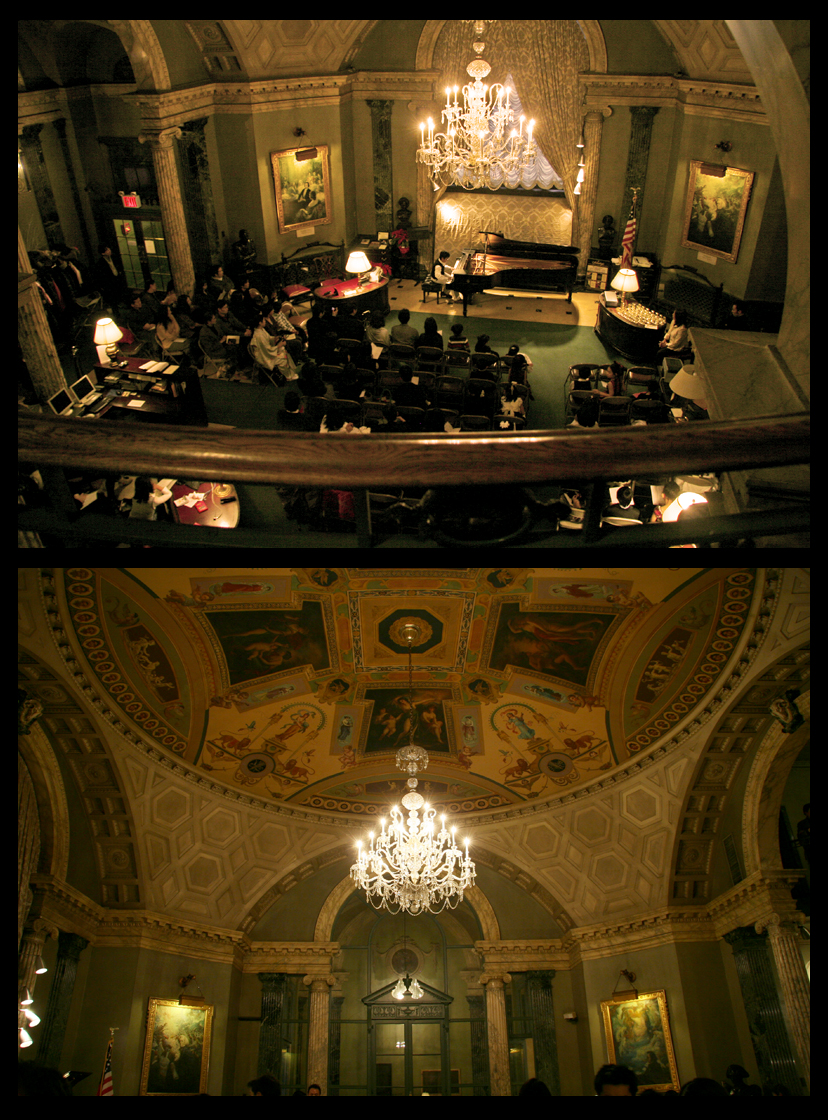
    I intended to make a quick jog across the street, leaving my friend to mind the car while I investigated. Forces were with us, however – there was a legal spot right across from Steinway Hall. I made a quick trip across the street alone and found a performance being held on the ground floor. A sign indicated that entry was allowed during breaks, so I ran back to my car, fetched my fellow traveler, and returned with perfect timing between music pieces, to enter the Steinway Hall rotunda. A flight of stairs took us to a balcony for an excellent view of the performers and audience. Various individuals were taking both photos and videos, so I snapped away (see here for some additional photos of this magnificent room).

    I learned that the Greenwich International Conservatory of Music had scheduled a recital on December 19, 2008 which had been cancelled due to snow and rescheduled for February 1, 2009. The director told me that Sunday performances were not typical here. Apparently I was being gifted with a fortuitous string of events to see this so easily.

    The place was abuzz with virtuosic children and their attentive, beaming parents. I have played some music off and on both as a child and an adult, and I am awed by the enormous talent and work needed by classical musicians to hone their craft. The competition is absolutely fierce, the standards are impossibly high and the nuances extraordinary.

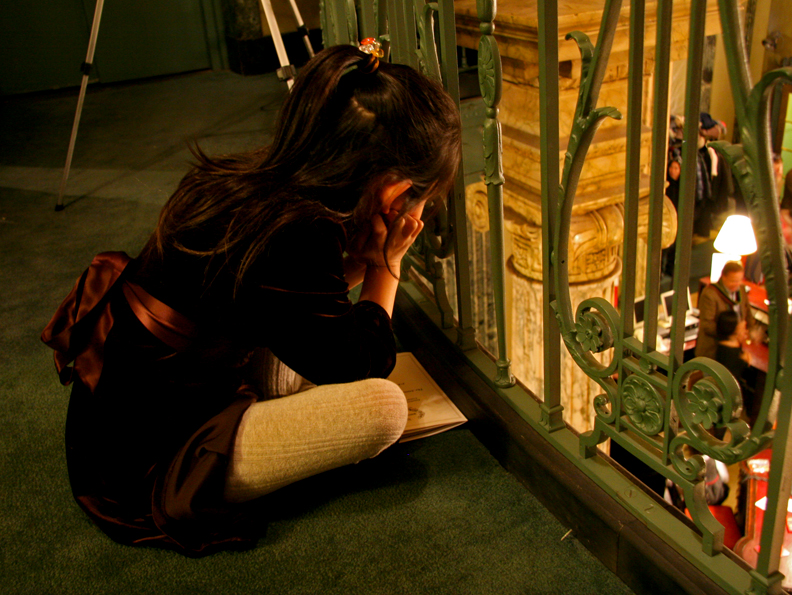
    I only began listening to classical music very late in life – the genre was completely unknown to me growing up – so I am both surprised and pleased to see young children listening and observing so attentively, as did this young girl in today’s photo. The program had 39 student performers with a repertoire that included works by Mozart, Tchaikovsky, Bach, Beethoven, Fauré, Schubert, Smetana, and, of course, Chopin.

    Very few will join the ranks of professional musicians, but no matter. The focus and discipline learned will go far in any endeavor. Most importantly, children will learn that not all good things are subject to immediate gratification or can be had with the click of a mouse…

    Note: Steinway & Sons is one of the most remarkable businesses and fascinating stories in the history of New York City. Steinway pianos are still being made in their factory in Queens. I will do a story on them at a later time.


  • Horrible and Miserable

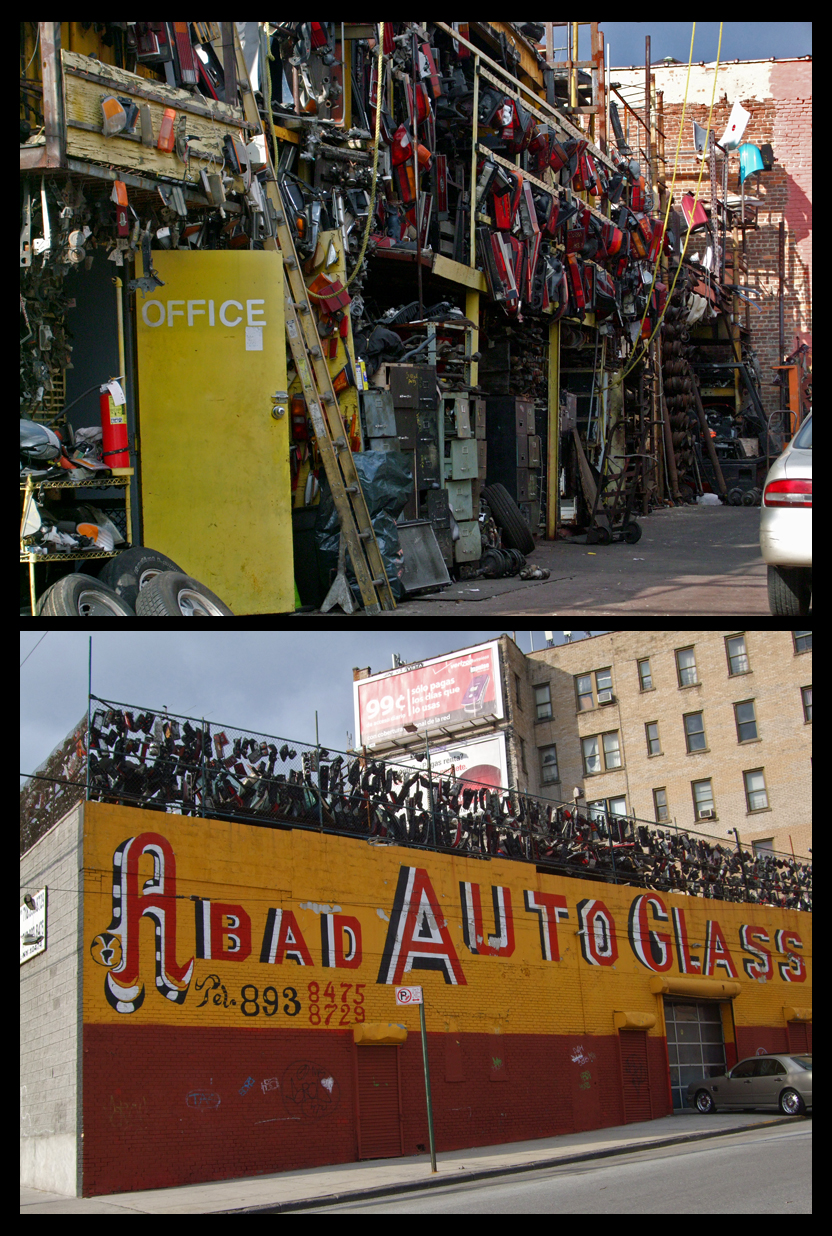
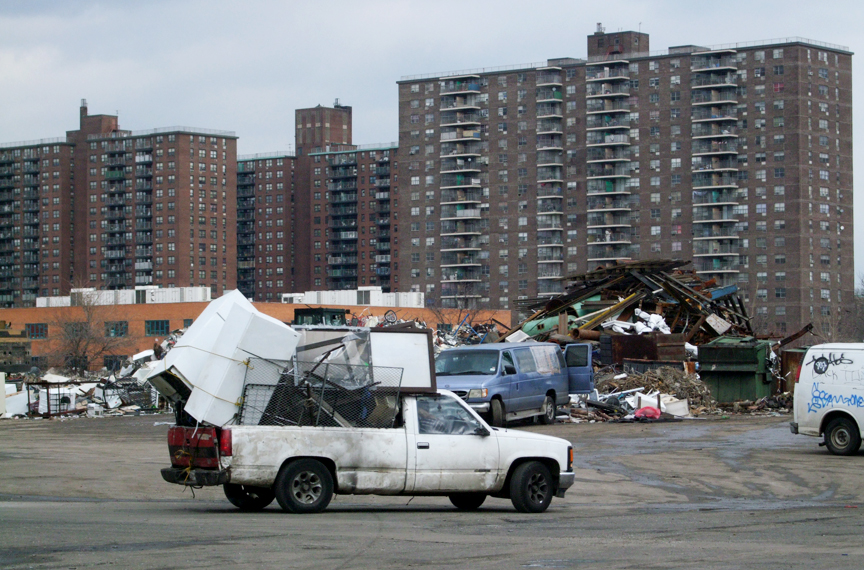
    Hunt’s Point is not the first place that visitors or photographers want to go. And that’s fine with me – no crowds, no competition. It has the most extraordinary conglomeration of commercial establishments I have ever seen. In an article in the New York Times entitled Motor City, the area is referred as a “grease monkey mecca, with almost 200 junkyards, garages, and used auto parts shops packed into a couple of square miles.” Subsequent to the article, a resident sent a letter, quite offended, stating that there was an “explosion of vibrant artist and performance communities and theaters, as well as a bustling community that works hard to improve Hunts Point’s quality of life.”

    There may in fact be one, but any pioneering activities certainly misrepresent the situation. I can’t say that I combed every square meter of the place, but I did cover some ground, and this is one of the most blighted looking areas I have ever seen (however, I haven’t been to Camden, New Jersey, yet). See another photo here.

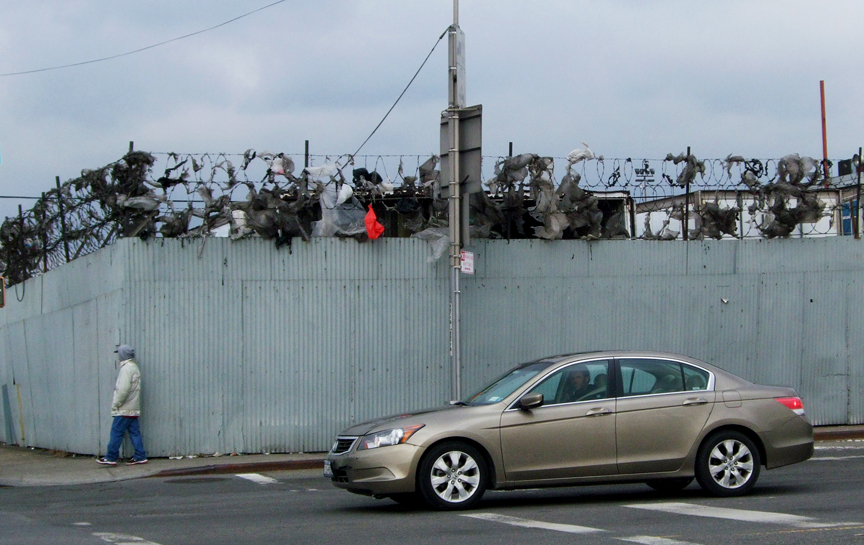
    Its very extreme nature is what makes it such a photographer’s paradise. Everything it does have is bigger and better – junkyards, used auto parts dealers, garages, prostitution, and the Hunt’s Point Terminal Market. And garbage bags (it is unfortunate that I did my article on plastic bags before I visited here – I was awed by a collection ensnared by barbed wire).

    I’m not a Luddite or the type to romanticize the edgy – I don’t prefer vinyl over CD’s or a Holga or Lomo camera over my digital. I don’t mind a clean neighborhood or renovation. I would prefer an afternoon in the Tuillierie Gardens of Paris over a stroll through Greenpoint, Brooklyn. But I do have a fascination with the very dull, mundane, boring, nondescript, or, if I am lucky, the really horrible. I have posted on many subjects of this nature, in some cases even a place or building for which there is no reason to give a second glance. Why? Because these subjects force you to look and be aware, to find something of interest. I do love the the glorious, wonderful, beautiful, and magnificent – so easy to enjoy. It’s the horrible that is a challenge to appreciate.

    I am reminded of a passage in Annie Hall where Woody Allen says that life is divided into the horrible and the miserable and you should be thankful that you’re only miserable. Perhaps that’s one of the things I like about Hunt’s Point – it makes me happy that I am only miserable 🙂

    Related Postings: Tribute, Travesty in Travertine, Secrets of Ozone, Mary Celeste


  • No MSG

    At one time in New York City, MSG and its avoidance were big dining concerns. In April 1968, Robert Ho Man Kwok wrote a letter to the New England Journal of Medicine and coined the term “Chinese restaurant syndrome.”
    In 1969, an article appeared in Science Magazine which linked the syndrome to MSG. Many symptoms were attributed to the Chinese Restaurant Syndrome, such as numbness, chest pain, headache, nausea, rapid heartbeat, drowsiness, and weakness. The whole issue is extremely contentious – glutamate is an amino acid which occurs naturally in many foods. Scientists are divided, and no definitive studies have linked MSG specifically with these symptoms.

    In NYC, we have the largest Chinatown in the USA, and Chinese food has been one of New York City’s most popular cuisines. So, understandably, amid all this, concern for MSG reached a fever pitch particularly when eating Chinese food – consumers were worried and waiters were interrogated about the presence of MSG in meals. Restaurants responded, and soon the phrase “No MSG” appeared on Chinese restaurant windows and menus everywhere, a counterpoint to the ubiquitous “No Radio” in automobile windows on the streets (see my story here).

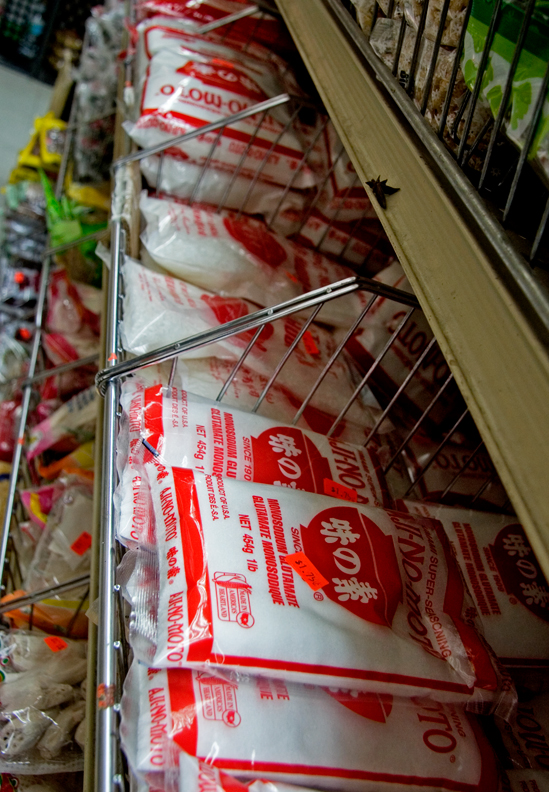
    But there is an unbridled audacity here in New York City, and even with heightened sensitivity to many issues, many will act in opposition to prevailing attitudes and practices. I once saw a woman in a vegetarian restaurant wearing a full-length fur. So I should not have been surprised that even after 4 decades of anti-MSG sentiment, I would walk into a store in Chinatown in 2009 and find a virtual MSG section. This store is apparently completely unfazed by any concerns about MSG. It was not a small inventory of a branded version like Accent or a few containers hidden discreetly.

    No, here at Tan Tin Hung at 121 Bowery, you could find a long shelf of the white powder in clear plastic bags with generic type in bright red prominently displayed in the first aisle. There were variants in granular size and bag weights. You can buy it by the pound here.
    This is America, and although it is getting more difficult to poison ourselves and others, we still have the right to have headaches if we want 🙂


  • No Frills

    You wake up one morning, and something or somethings are different, like the morning of 9/11. I’ve been through recessions, but not like this one. I recently spoke to one of the suppliers for my business – Quebecor World, the second largest printer in the world. Sales were down 35% in 2008, and they owe $735 million on revolving credit. We have a wave of bankruptcies – Circuit City closing 155 stores, Sharper Image, Linens ‘n Things, etc. These are household names and really big numbers are involved – stores closing, percentage of sales down, money owed.

    Certainly the media does not help, and I don’t want to add fuel to the fire. But you make assumptions. Like the assumption that National Wholesale Liquidators would be there forever. I thought bankruptcy lawyers and discount retailers were supposed to be the survivors in a faltering economy.
    But the New York Times reported in November 2008 that National Wholesale Liquidators was filing for bankruptcy and closing nearly all their stores. So I was shocked this week to find closing signs with announcements of a 90% off sale. Now these kinds of discounts are frequently touted but rarely to be seen, but the 90% off was real – $2.99 items selling for 29 cents. It was a real fire sale, by the time I got there, nearly an entire store was stripped clean. See the interior here – amazing.

    This store served the needs of many. Everyone I know had been in at one time or another to purchase something from the inventory of 120,000 items. They carried many brand name closeouts. Food could be found, along with hardware, electronics, housewares, clothing, paper goods, etc.
    There was no charm in this store or ambiance whatsoever. In fact, a spokesman for the company said:

    “Contrary to most chains, the store pays no attention to presentation, or to customer expectations, but only to what can be bought on the world market most cheaply. ‘We buy closeouts, end runs, overruns, imports,’ [chain spokesman] Pidgeon said. “When someone makes 5,000 cases too many of a product, we buy it. Those cases end up in piles on the concrete sales floor.”

    Yet somehow the complete lack of charm was their charm. No chills, no thrills, no frills…

    About the Company: National Wholesale Liquidators is based in Hempstead, New York. It was founded in 1984 by Eva Rosen and remained a family-owned business (Carl, Eva, and their children). The company had over 50 stores in 12 states with nearly 2000 employees. Reasons for closing were a cut in their credit line ($15 million cut by General Electric) and declining consumer sales.


  • Itching and …

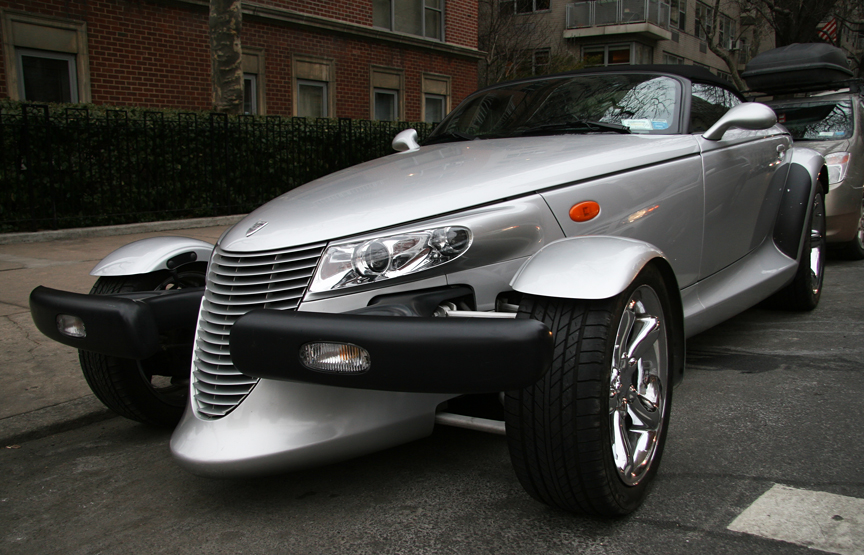
    Two things about this car parked in the streets of Manhattan stand out: it really looks out of place, and it is so pristine.

    There are many unique considerations about owning an automobile in New York as opposed to owning one outside the city. They generally are used less frequently by owners, so the occasions to flaunt them are fewer, and there is no opportunity to display them in your driveway in front of your McMansion. They are often street parked – either on an occasional or permanent day-to-day basis – so they are vulnerable to whomever and whatever. They are much more expensive to maintain here, with parking that runs several hundred dollars per month as well as high insurance costs. And except for the extremely wealthy who may have drivers, a car will still only meet some of your travel needs – trains, buses, taxis, and walking will still be the staple transportation diet around town for residents even with cars. Most will use their automobiles to leave the city. Hence, for most, automobiles in New York City take on a much more utilitarian role – a car here is really a luxury, an indulgence, and a sports car even more so. So a sight like this Plymouth Prowler will turn heads (read more about this car here). When I took this photo, I waited for a group of tourists to finish their photo opportunity.

    When you park a car like this on the streets of New York City, like it or not, you are taking a risk and making a statement. There are chances of dents and dings from parkers and pedestrians. Auto theft. Vandalism. Park a Lamborghini on the streets of New York City, and you are saying you have money to burn.

    And then there is something that I have seen before and is difficult to erase from my mind. That surface is so smooth and shiny, it’s just itching. I don’t want to say it or even think it, but everyone knows what every itch is saying and what Mom always told you not to do – scratch it…

    Photo Note: Cars make a great photo subject – it’s hard to go wrong with a gleaming vehicle like this. I have done a number of postings related to cars and bikes: Hoopmobile, Who See the Red, Machine, Extreme Cadillac


  • T?t

    One of the unique advantages of being in a very large melting pot such as New York City are the cultural events and celebrations. Today is the lunar new year – T?t for the Vietnamese and Chinese New Year.
    Yesterday, on the eve of the lunar new year, an annual parade was held in Chinatown, but I opted for the Lunar New Year celebration and Flower Market at the Brooklyn Botanic Garden to experience a broader range of Asian cultures, particularly Vietnamese. DVL Dance Vietnam was doing a presentation in the Palm House, however, an enormous line had formed well in advance, and no seats were available.

    All events were indoors, and most of the programs were family-oriented. My understanding was that T?t is an enormous celebration in Vietnam – the largest of the year with preparations weeks in advance. You can read more about it here.

    Lunar New Year celebrations are spread out over a period of time here – calendars show activities for at least another week. Today there is a Firecracker Ceremony & Cultural Festival in Chinatown. Sunday, February 1st is the annual Chinatown Parade. Saturday, January 31, 2009 is the Lunar New Year Parade. There are many more activities this week.

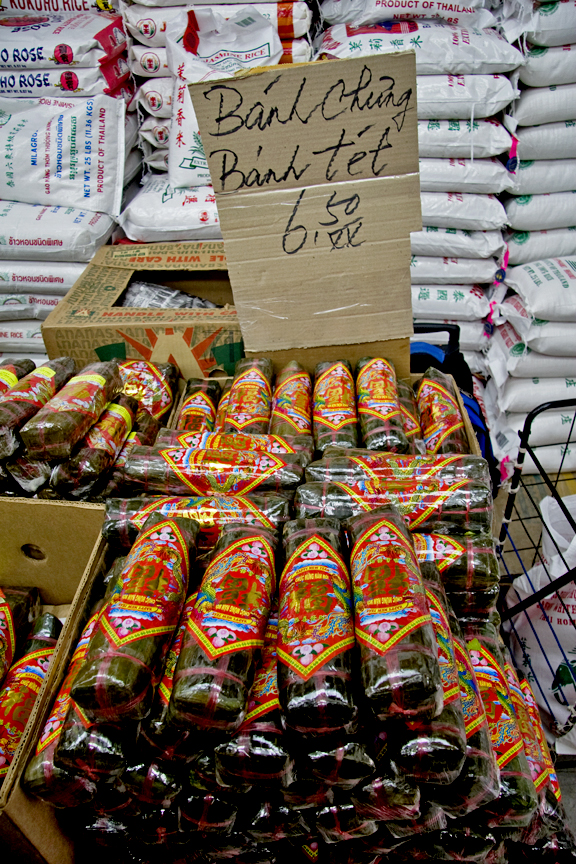
    I also took a trip to Tan Tin Hung, 121 Bowery in Chinatown, which carries the largest range of Vietnamese groceries in the city. Prominently placed right at the entryway was Banh T?t and Banh Chung. These are Vietnamese cakes with sticky rice wrapped in banana leaves (Banh Chung is wrapped in dong leaves), eaten during the Vietnamese Lunar New Year. The sign in magic marker on cardboard in Vietnamese was a badge of authenticity…


  • Acquired Taste

    New Yorkers can be extremely ethnocentric. I have frequently had discussions about popularity of the arts in the United States, and many believe, for example, that opera is very popular in America. If you stood in Lincoln Center on a night where Placido Domingo, Jose Carreras, and Luciano Pavarotti were singing and tickets were nowhere to be found, of course it appears that opera is very popular. If you go to the Metropolitan Museum of Art on a nice weekend day, it appears that the masses are interested in fine art.

    But the reality is that fine arts, classical music, ballet, and opera are haute cuisines and that many, such as opera, are consumed by a very small, rarefied, older, well-heeled audience or students. These facts escape many New Yorkers who only see the world through very special glasses. Travel through America and you will find how few have ever attended an opera or even know who Puccini is.

    Admittedly, these fine arts are not a necessity, but like any form of education or culture, they greatly improve a person. They are not practical. Unfortunately, most things in this country fall to a common denominator – that which can be quantified or used as a tool to do something that can be quantified. So the sciences are always favored over the arts, which are routinely cut from school programs. I say this as someone who saw himself as strictly a science and math person when younger – the last thing I expected in life was that I would be doing photography or writing.

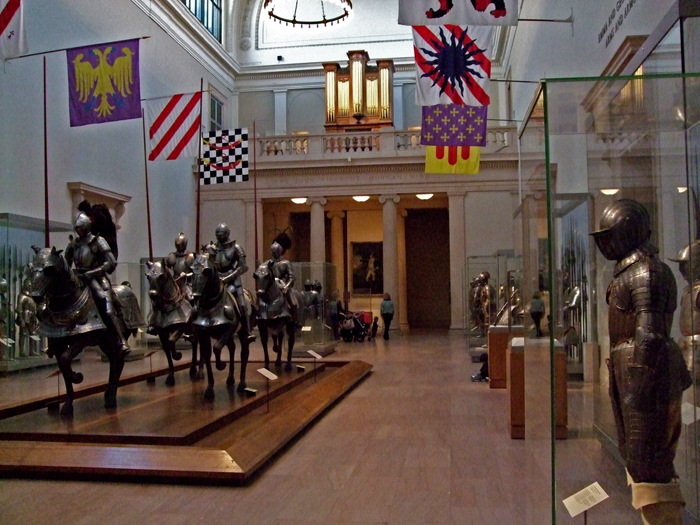
    Like it or not, to get most people interested in the arts, you need a hook, and for most, a little drama will serve as that hook. Something large, incredibly ornate, or very expensive usually provides the drama needed. So to take someone to the Metropolitan Museum of Art who has no particular love of art, my first choices are the Egyptian wing and medieval armor (seen in the photo). People understand armor, and most are fascinated by weaponry and other accoutrement of the world. The large imposing figures on horseback are very compelling. With some luck, this experience may served as an appetizer, possibly leading to larger meals of art later on.

    Now many would say, why force feed a person with these things? If something is not immediately satisfying, why bother? Because I believe that art, like many finer things, is an acquired taste. Appreciation and love comes with exposure over time. The full depth and breadth of Beethoven’s work can not be instantly appreciated, which is difficult for many to understand in a world of immediate gratification. But the pleasure which one can derive from something more sophisticated can be great. For most people, if they look back over their lives, they see incremental improvements in taste and standards, with no desire to go back. Enjoying finer things and haute cuisine are not snobbery for its own sake, just a different perspective of those with an acquired taste…


  • Shrine to Beef

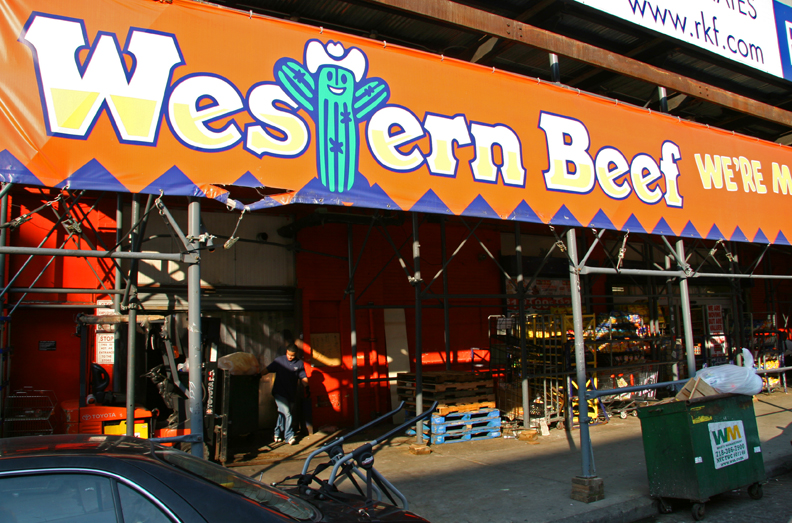
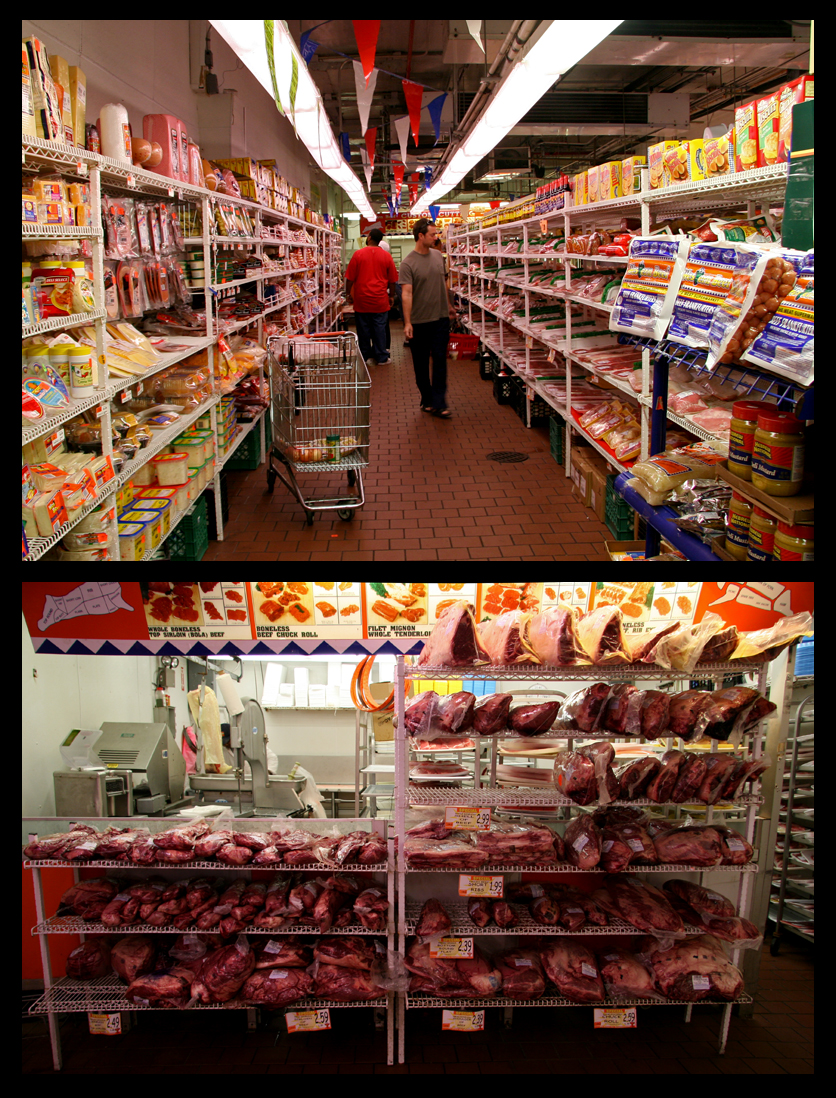
    In reviewing my photo archives, I came across a series of images that astounds me now as much as the day I took them. Why astounded? Because in Manhattan, the last thing I ever imagined was a place that, for all intents and purposes, looks like a shrine to beef (see photos inside here). Even the outdoor signage and name seemed like it belonged in Texas or Michigan. I never posted the photos because at the time I found them too rough and was looking to a future opportunity to photograph the store in a more flattering light. In retrospect, a silly consideration – after all, this is the reality of the place and its environment. It would be difficult to photograph this place in a way that exudes bucolic charm or is more polished.

    Perhaps I have lived too insular an existence, but New York City, particularly Manhattan, always seemed to be a city of fruits, vegetables, whole grains, and fish. Of course I know that meat is eaten here – virtually every menu in the city has meat. But a store like this seems so out of place. We do have a gun shop and shooting ranges like that in the private club Tiro A Segno, but this is not the place where many mingle with members of the National Rifle Association.

    Western Beef has 21 stores in the five boroughs. This place sells all types of meat along with many other grocery items. Since the time this photo was taken (2006), the store has moved from 403a West 14th Street in the meat packing district, shown in the photo, to 16th Street. According to their website, “Western Beef, Inc. establishes supermarkets primarily in inner-city neighborhoods abandoned by many other supermarket chains.” This was certainly true of the area at one time – on a stroll through the meatpacking district, one would see trucks, sides of beef hanging from hooks, entrails being packed into drums, and prostitutes at night. The area was defined by beef at every business level – wholesalers, distributors, retailers, and restaurants such as Old Homestead.

    However, now the area is très chic, with fashion boutiques, hotels, the Diane von Furstenberg complex, and a new Apple Store. As the meat packing district becomes completely gentrified, we should consider opening a museum to preserve the history of the area, perhaps calling it Shrine to Beef 🙂

    Related Posts: Meatup, Old Homestead, Pastis


  • dinamic_sidebar 4 none

©2026 New York Daily Photo Entries (RSS) and Comments (RSS)  Raindrops Theme