• "Who See the Red"

    Historically, online netiquette has viewed the use of ALL CAPS as shouting and therefore discouraged its use, at least when used for entire sentences or longer – a phrase or word can be used for emphasis.
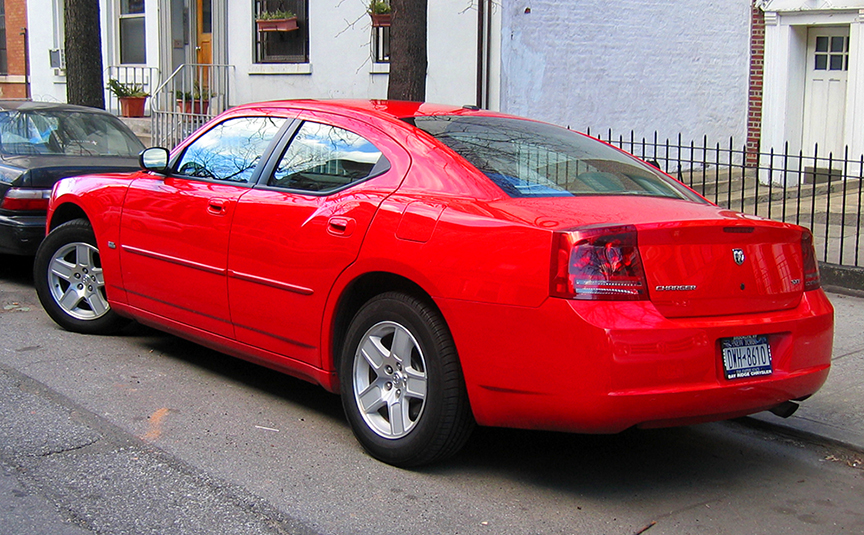
    I find the color red to be a visual analogue. This red Charger, on a bleak, overcast day, really shouted out as I walked by. My first reaction was, “Wow”! My second was, “Is this blog worthy”? My answer was, “Sure, just figure out how to spin it.” After all, we’re in an election year, when the art of the spin is at its zenith.

    Red is a primary color and is the longest wavelength the eye can see (anything longer is infrared.) Its associations and symbolism are staggering. It has represented energy; emotions including anger, passion; love; courage, sacrifice, and blood (which is why so many national flags use red); warning, danger, emergency (e.g. stop signs); sin and lust (e.g. the Scarlet Letter, the red-light districts of prostitution and brothels, Satan’s wardrobe); beauty (red roses); the sun and warmth; red ink, or being in the red. In various cultures, red plays a prominent role, such as in China, where its use and associations are myriad.

    A person that owns and drives a red car is certainly making a statement, and whatever that statement is, it’s not about modesty or discretion. There is a commonly held belief that red cars are involved in more accidents and that drivers of red cars get more speeding tickets. Whether this is an urban myth or not is debated, but the belief certainly speaks to the perception of the red car owner by others.

    So what does this have to do with NYC? I’m surprised that red is not the official color of New York or used more. After all, what city could better be thought of as one that SHOUTS money, power, biggest, and best. According to the patter of the con men playing three-card monte on the street, red can even make you money (good luck trying to win): ” Who see the red? You win my game, I don’t complain. Red’ll put you ahead, black’ll set you back. Who see the red?”
  • Connections

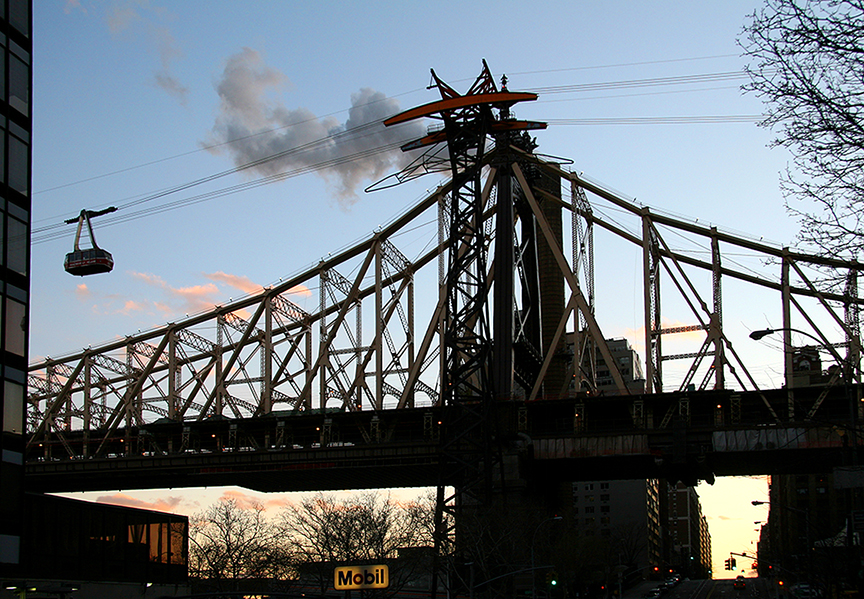
    Bridges are typically very important structures, always providing that essential connection between here and there, but I can’t imagine any place where they are more critical than in Manhattan, an island in a city of islands ( 4 out of 5 boroughs are islands or on islands – only the Bronx is on the mainland). Our survival is absolutely dependent on bridges and tunnels. Perhaps this is one of the many reasons why bridges are so iconic here: we have many, they are well-known, and they are lifelines. Anything so essential that is simultaneously well-designed takes on an additional beauty – that classic weave of form and function. Add to the equation the vistas and lights at night, and you have a formula for the romantic.

    The intricate steelwork of the cantilevered Queensboro Bridge (formerly the 59th Street Bridge) has an attractive quality. It was designed by Gustav Lindenthal in collaboration with Leffert L. Buck and Henry Hornbostel and completed in 1909. You can read about its history and construction here. It is an NYC icon – one of the most recognizable bridges in the city. Some of my feelings about the bridge, however, are tarnished by my initial experience of it during its decades of neglect (it went through a renovation in 1987). In those early years, I saw it primarily from a utilitarian perspective: to get in and out of Manhattan and to afford vistas of the city and the river. It was more a symbol of what it could provide than a thing of beauty.

    If you want to see a true love affair with new York City, I highly recommend Manhattan by Woody Allen. Its opening montage of city images set to Gershwin’s Rhapsody in Blue is wonderful, culminating with a fireworks display with NYC as backdrop (you can see the intro clip here). There is a scene in the film, used in posters for the film, of Woody and Diane Keaton sitting on a bench with a view of the Queensboro Bridge  click here).
    This image, enmeshed with Gershwin, is one of my strongest connections to the bridge…

    Note about the film: Be forewarned, however. Woody plays a 42-year-old who is dating a 17-year old high school girl. A little disturbing, almost foreshadowing his real life involvement with Soon-Yi Previn. Art predicts life again…

    Note about the photo: This photo was taken on East End Avenue looking south.


  • Trump SoHo

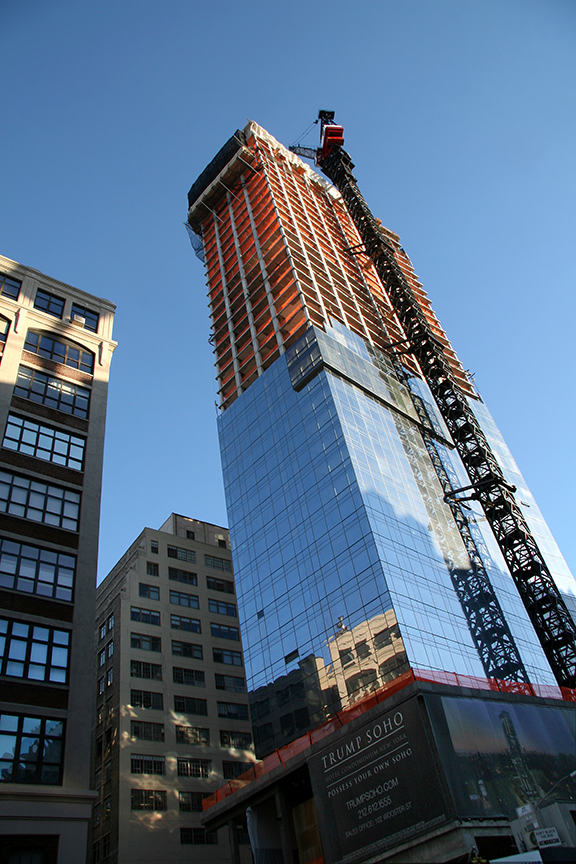
    Everything Donald Trump does has to be bigger in some way. And, of course, being a real estate developer, this means bigger buildings, and in NYC, that means zoning, neighborhoods, and controversy.
    When I heard that a 42-story condominium hotel was being built in SoHo, I was surprised to hear that such a project passed all the hurdles and community opposition. So, armed with a camera, I decided to see the project and setting for myself – always a good idea, since many stories are spun and important details left out.

    The first thing I discovered was that this building was not located in central SOHO near the historic district with its lowrise cast iron buildings. It was on the corner of Spring and Varick Streets, where we have a strip of rather ungainly, hulking behemoth buildings in the printing district on a transit road to the Holland Tunnel. There are, however, shorter buildings and a school nearby on Spring, and the building does tower above anything in lower Manhattan, apart from the financial district. Many community members consider it an absolutely egregious sin, another one of Donald’s cheap and shiny buildings, foisted on the neighborhood by the devil himself. Personally, I would have preferred it at least somewhat shorter. But if it wasn’t too tall, too shiny, inappropriate, or irritating in some way, we wouldn’t know it was a Trump property, would we?

    Afterthought: I sometimes wonder whether we really dislike Donald; he provides an endless source of entertainment. The King of Glitz is, in some ways, much like some aspects of NYC – shouting its prominence for all to be heard…

    On a more somber note, a building worker was killed in an accident on January 14, 2008. You can read the story in the New York Times here.


  • Hell’s Gate

    If you are driving in New Jersey on the Turnpike through the industrial corridor, passing through towns like Carteret, Rahway, and Elizabeth, you will see (and smell) many oil refineries. To most travelers, these are hideous. But if you are traveling at night, everything about them can become strangely beautiful because it’s so extremely different (I’m reminded of Paul Theroux’s fascination with travel in Northern Ireland because of its extreme nature). You have a really bleak landscape with no sign of humans, networks of lights, tall dark silhouettes of towers, and huge flames shooting into the night sky. It is surreal, like a fairy tale world.

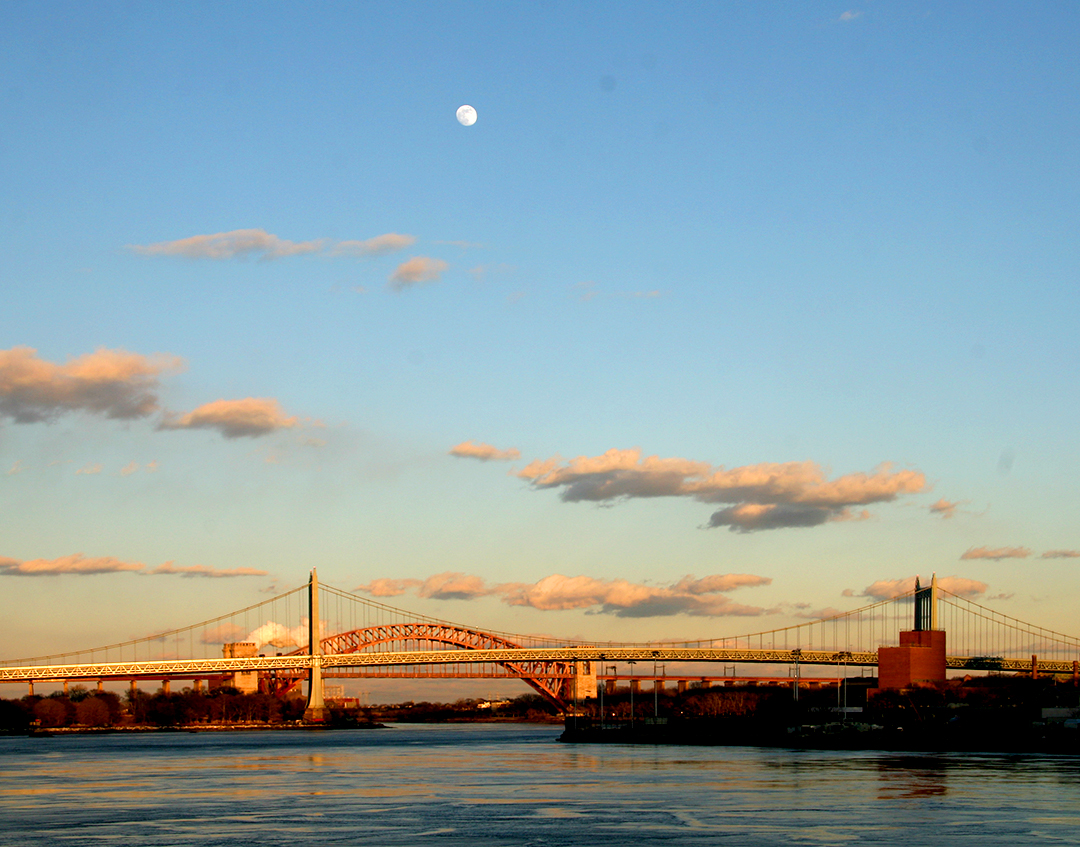
    The subject of today’s photo is certainly more readily likable, but I find it does share some things with the aforementioned landscapes (certainly, elements in this photo are not inherently beautiful, like the smokestacks from Con Edison’s power plant). To really like this vista, one does have to find beauty in the industrial or structural. Like the Eiffel Tower, designed by an engineer, it is loved by some and hated by many.

    The bridge in the foreground is the Triborough, and behind it is the Hell Gate Bridge (formerly the New York Connecting Railroad Bridge), a steel arch railroad bridge spanning Queens and Wards/Randalls Islands. In the foreground, you have the East River looking north (from Manhattan) as it splits around the islands.

    I found the scene beautiful – bridges, the river, golden evening light, clouds, and the moon. It’s about picking your battles and the right vantage point at the right time. For some there is beauty in these vistas; others have abandoned all hope, for they are at Hell’s Gate…


  • Botánica

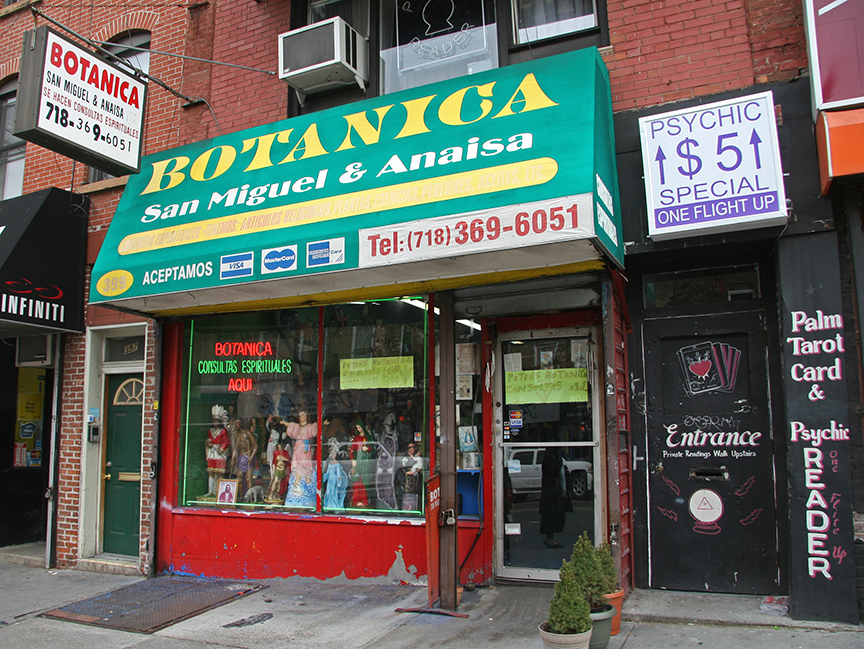
    I have been seeing Botánica shops as long as I have been in NYC but had never given them any serious attention or gone inside one. Many of them have closed due to the escalating rents, so I took the opportunity to actually enter one for the first time – Botanica San Miguel & Anaisa at 399 5th Avenue in Park Slope, Brooklyn – and speak to the owner, who was from the Dominican Republic.

    There was a cloud of smoke in the shop and distinct odors emanating from the myriad of natural aromatic items. The place was an amalgam of products and literature of numerous disparate spiritual and folk practices – they also provide spiritual consultation and readings. These shops are typically found in Hispanic countries and neighborhoods and can be found throughout New York City. The word botánica means botany in Spanish – the stores are well-supplied with medicinal herbs as well as oils, incense, perfumes, scented sprays, and elixirs.

    I was told by the owner that the core beliefs are Roman Catholic and that implements of the religion could be found, such as rosary beads, holy water, and statuary and images of saints (such as the popular Virgin of Guadalupe). However, many Botánica go far beyond Catholicism, as this shop did, and have products for a variety of spiritual practices such as candomblé, curanderismo, espiritismo, macumba, and santeria. There are also supplies and books for alternative folk medicine and magical articles such as amulets. Candles dominated the shop, with shelf upon shelf in a variety of colors and purposes. There were things for nearly every need – healing remedies for various conditions or products for love, money, or warding off bad weather (such as hurricanes). I even saw Buddhist and Hindu candles…


  • Meatup

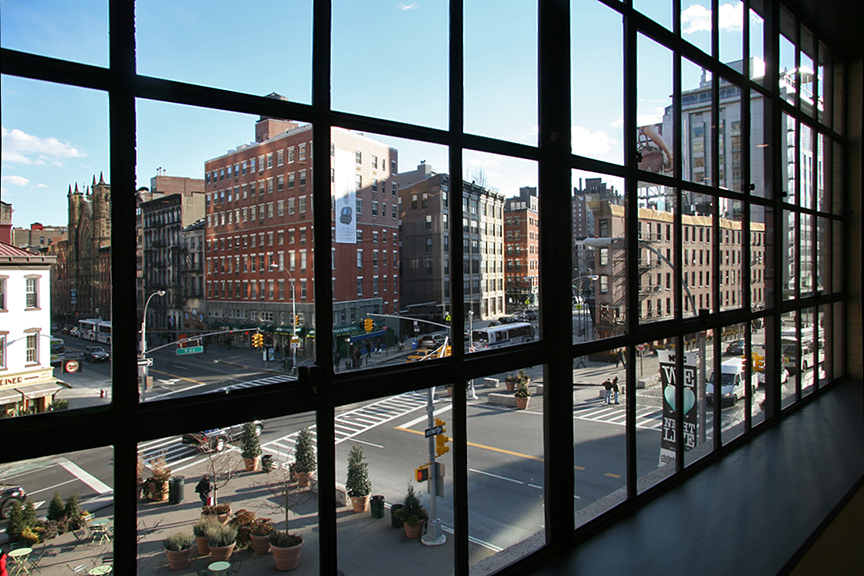
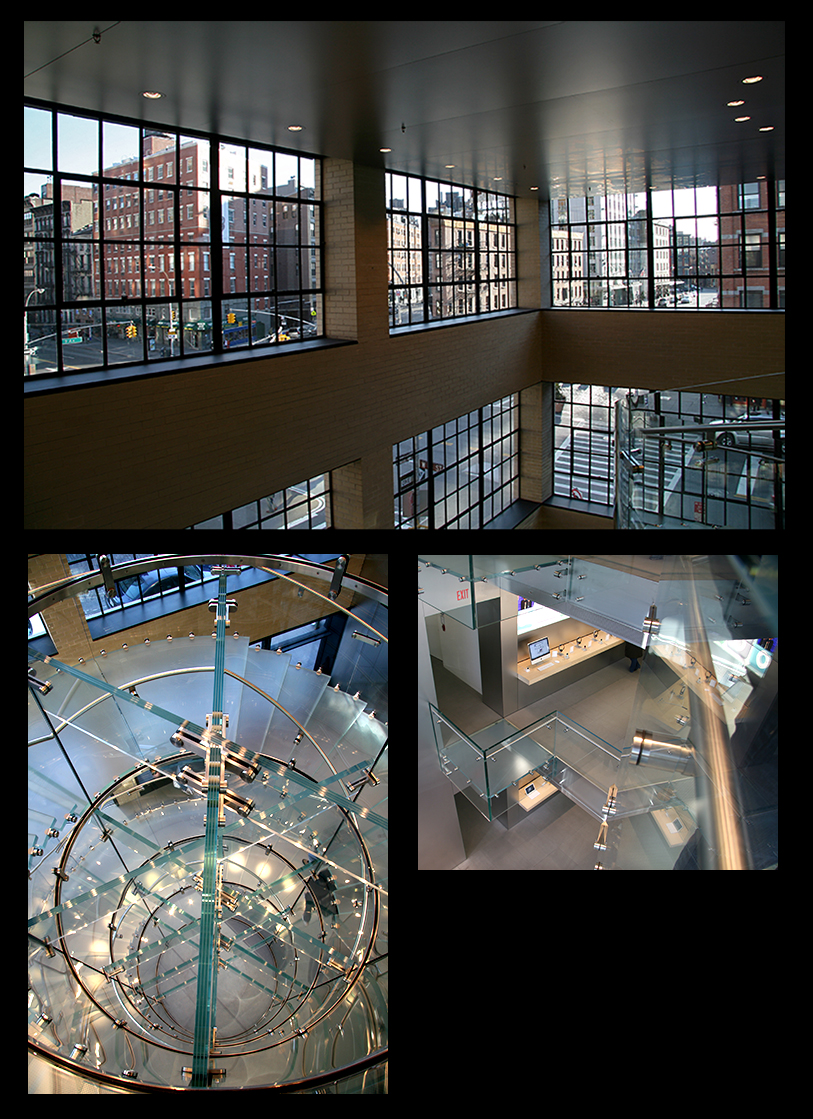
    In the two years I have done this blog, I have yet to do a posting on the Meatpacking District per se (I will in the future). I brushed the area with my posting on the Old Homestead Steakhouse. Today’s photo is taken from the new Apple Store on 14th Street and 9th Avenue in the heart of the meatpacking district, a surprising choice for a retail store of this type. Click here for more photos. The area has been gentrified but is primarily restaurants and clothing boutiques.

    Intrigued after hearing that this new store is their 2nd largest (after one in Chicago), a friend and I decided to make the pilgrimage in the frigid cold. The 4-story store was a buzz of activity, as are all the NYC Apple stores. If you want to witness the cult that is Apple, visit one of their stores. One of their keys to success has been the evangelism on the part of the users – a phenomenon described in the Macintosh Way by Guy Kawasaki, one of the original Apple employees responsible for marketing of the Macintosh in 1984.

    Today’s title is more than an obvious play on the phrase “meet up.” It seems that everything nowadays needs to be branded or organized to have legitimacy, whether it’s storytelling, beekeeping, or walking. So why not organize groups under one umbrella? In 2002, Meetup.com (Meetup) was formed by Scott Heiferman, Matt Meeker, and Peter Kamali.

    The primary inspiration was the book Bowling Alone, by Harvard sociologist Robert Putnam, about the decline of community in America. The founders knew that people were spending more and more time in front of their computers, DVD players, and TVs and losing personal connections. So the organization was formed to get people to reconnect in their own communities. There are millions of members worldwide, thousands of topics, and hundreds of thousands of local groups. Although there is an online site – meetup.com – the primary function is to facilitate the offline meetings.

    In high school, I used to belong to numerous clubs. The same fundamental elements were operative – people meeting in the flesh to share a common interest or activity…


  • Hank Williams New York Style

    I grew up listening to country music, something that as an young adult was a source of embarrassment and not a fact that I relished talking about. There was been a thread of music snobbery regarding country music, frequently characterized as hillbilly music and the songs stereotyped as simplistic tales of misery, sadness, loss, alcoholism, and infidelity.

    Now we have a country renaissance, and it is being embraced by academics and music aficionados of all types. And, like all things American, it is being marketed, packaged, branded, and oversold. Of course, sex sells here too, and good looks are becoming a large component of the current wave, with performers like Faith Hill, Shania Twain, Tim McGraw, Cowboy Junkies, and the Dixie Chicks.

    Fortunately, there is a good side to all this. When things get overblown, some fans start digging into the stable of musicians of the past, leading to a resurgence of interest in many of the seminal artists of the genre. This brings us to Hank Williams, my favorite country musician, who is being hailed as an American icon and one of the most influential songwriters of the twentieth century. PBS ran a documentary on Hank as part of their American Masters series. His premature death at age 29 has contributed to his mythic status. Who would have imagined that in 2008 we would have a celebration of Hank’s music at a major concert hall in New York City?

    If you can leave any biases or preconceived ideas aside, I think you may find, like many others, that the music of Hank Williams can be quite soulful, with beautiful melodies and powerful lyrics. I leave you with the lyrics of my favorite song of his, I’m So Lonesome I Could Cry, generally considered his number one hit, which has been called the perfect country song. It certainly is one of the saddest:

    Hear that lonesome whippoorwill
    He sounds too blue to fly.
    The midnight train is whining low
    I’m so lonesome I could cry.

    I’ve never seen a night so long
    When time goes crawling by.
    The moon just went behind a cloud
    To hide its face and cry.

    Did you ever see a robin weep
    When leaves begin to die.
    That means he’s lost the will to live
    I’m so lonesome I could cry.

    The silence of a falling star
    Lights up a purple sky.
    And as I wonder where you are
    I’m so lonesome I could cry.

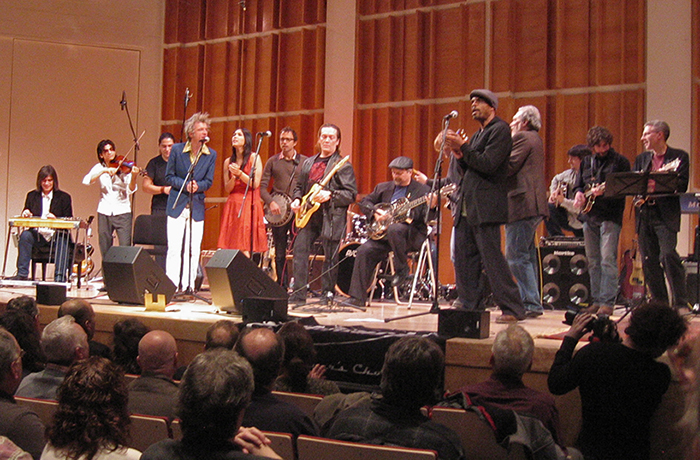
    About the photo: This concert, held at the Merkin Concert Hall at Kaufman Center, was the first in a series of four (as part of the 2008 New York Guitar Festival) entitled Blue Country Heart. Concert number one featured the music of Hank Williams. A number of guitar heavyweights were on hand, including GE Smith (former Saturday Night Live bandleader), Jorma Kaukonen (founding member of Jefferson Airplane), Chocolate Genius (Marc Anthony Thompson), Toby Walker, and Larry Campbell, with the evening hosted by public radio’s John Schaefer.


  • Dead Moths

    Regular readers have by now observed my escapist preoccupations. Someone who knew me well once remarked, regarding my urban searches for the bucolic, that what I needed was a place in the country. This may or may not be true; the conversation reminds me of a dialogue between Alvy Singer (Woody Allen) and a friend, Robin (Janet Margolin), in a scene from Annie Hall:

    ROBIN: I’m too tense. I need a Valium. My analyst says I should live in the country and not in New York.
    ALVY: The country makes me nervous. You got crickets and it-it’s quiet…there’s no place to walk after dinner, and…there’s the screens with the dead moths behind them, and…uh, yuh got the – the Manson family possibly…

    So, indulge me as I ferret out the natural in NYC without the dead moths. I’m not sure how these urban oases are perceived by a visitor with ready access to nature – a quaint novelty or perhaps a display of horticultural ingenuity. For city dwellers, these spots are well-liked and heavily used.
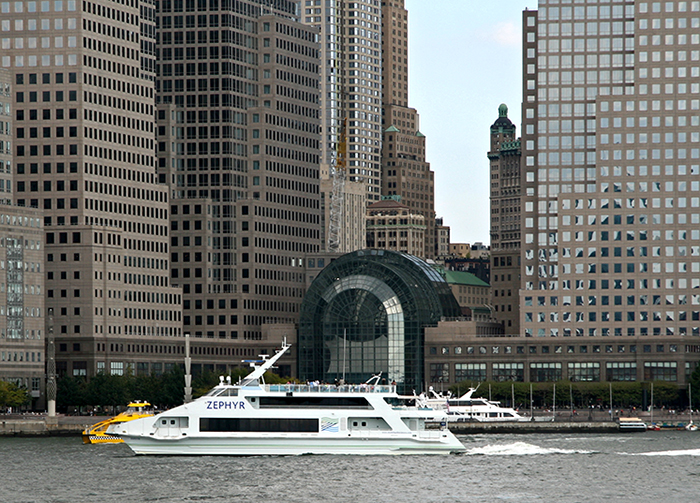
    The photo, taken in the Autumn of 2007, shows the rear of the Winter Garden Atrium as seen from the Hudson River with the North Cove Yacht harbor. The atrium, wedged between 2 and 3 World Financial Center buildings, is a 10-story glass vaulted structure designed by Cesar Pelli, completed in 1988 and rebuilt in 2002 after 9/11. Read my previous posting about the Winter Garden here. I love palm trees, and the atrium has many, so it’s one of my (semi) tropical oases in the city. But the real deal and my favorite is in Brooklyn


  • Ground Zero

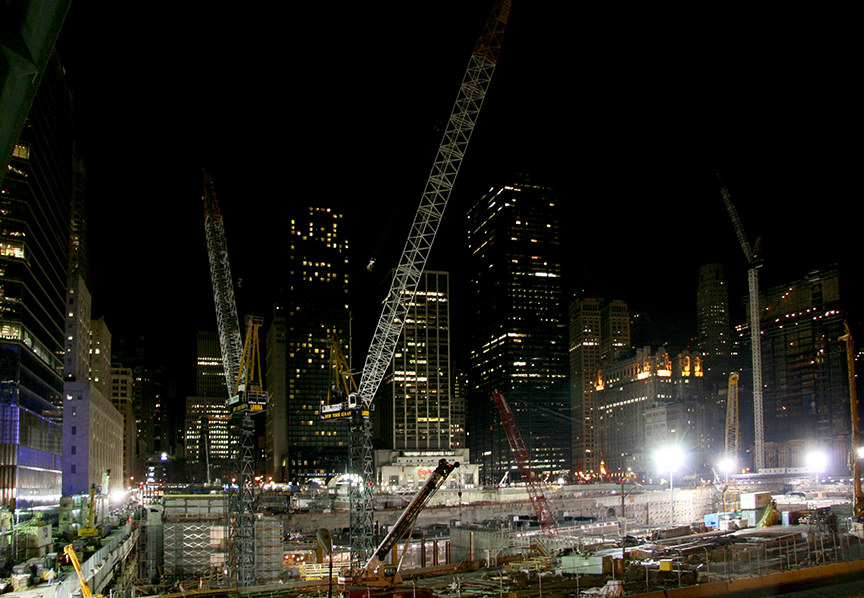
    People always ask me about progress at the site of the former World Trade Center, so here is Ground Zero in its current state. Mired in controversy since day one, the project is finally underway – steel should be rising above street level this year, 2008, seven years after 9/11, with occupancy anticipated in 2011. One tower or two?, Taller than the World Trade center?, How tall?, How much a part should the memorial play?, and Freedom Tower? are among the questions which dragged the process down. Of course, the design itself, won by Daniel Liebskind, has been the largest struggle. I originally saw the design competition presentations at the World Financial Center and went to a number of presentations. There were several extremely innovative designs by some of the top firms – I remember one design which called for floors of interior gardens.

    However, there have been many individuals and organizations with various controlling interests in this process: Port Authority of New York and New Jersey, who own the right to develop the site, the Lower Manhattan Development Corporation, who ran the design competition, Larry Silverstein, who had signed a 99-year lease for the World Trade Center site in July 2001, and architects Daniel Liebskind and David Childs. The original plans by Daniel Liebskind saw many changes, and now, David Childs (one of Silverstein’s favored architects) is in charge of the Freedom Tower’s design.

    In its final incarnation, the tower will rise from a cubic base with tapered chambered edges, forming a tall antiprism with eight isosceles triangles, which form a perfect octagon at its center. It will be capped with an illuminated spire containing an antenna. The total height will be 1776 feet (marking the year of the signing of the American Declaration of Independence).

    The name of the building itself has come into severe criticism. A number of articles have said the design is defined more by fear than by freedom; some have called it the Fear Tower. Understandably, many of the structural design considerations have been built around possible future terrorist attacks. In an article entitled Medieval Modern: Design Strikes a Defensive Posture by Nicolai Ouroussoff, architecture critic for the NY Times, Nicolai says, “The most chilling example of the new medievalism is New York’s Freedom Tower, which was once touted as a symbol of enlightenment. Designed by David Childs of Skidmore, Owings & Merrill, it rests on a 20-story, windowless fortified concrete base decorated in prismatic glass panels in a grotesque attempt to disguise its underlying paranoia.”


  • Koons Balloons

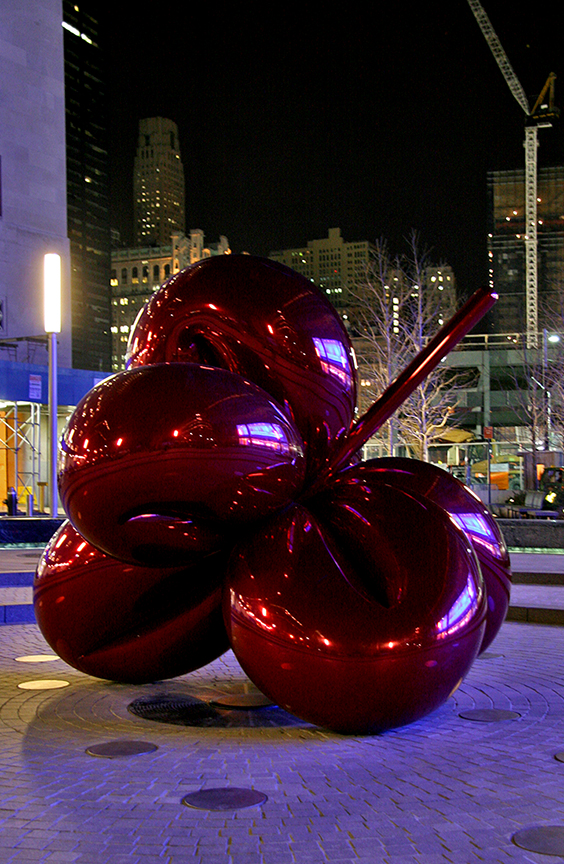
    On May 23, 2006, the new 7 World Trade Center was completed. The developer, Larry A. Silverstein, presided over the ceremonies (which included a free, two-hour concert featuring Lou Reed and Suzanne Vega) and unveiled this sculpture: Balloon Flower (Red) by internationally acclaimed artist Jeff Koons. It sits in a fountain in a small triangular plaza outside 7 WTC, bounded by Greenwich Street, Vesey Street, and West Broadway. The park, designed by landscape architect Ken Smith (surrounded by azaleas, boxwood, and sweet gum trees), overlooks Ground Zero (seen in the background of the photo), where the Freedom Tower is being built.

    Koons has done a number of balloon animal-inspired sculptures. In fact, the one shown in the night photo is identical to three others: a blue version at Marlene-Dietrich-Platz in Berlin, Germany, a silver one in the Max Hetzler gallery, and Balloon Flower (Magenta) at the home of Cindy and Howard Rachofsky in Dallas Texas. Although the 9-foot sculpture is made from stainless steel, the red color and balloon motif gives the work a light, playful feel, intentional on the part of Koons as a counterpoint to the somber nature of the setting…

    Interesting note: For a time, Koons was married to Hungarian-born, Italian porn star Ilona Staller (stage name Cicciolina). She served a term in the Italian parliament (1987-1992), the first hardcore porn star in the world to be elected to a democratic parliament. During their marriage, Koons made a controversial series of paintings, photos, and sculptures entitled Made in Heaven, showing the couple in explicit sexual positions.


  • Time Machine

    If you have read the Time Machine by H.G. Wells or seen the movie adaptation, you may recall a recurring part of the story: George watching the change of women’s fashion on a mannequin in the window of a dress shop across the street as he travels through time. He finds the whimsy of change and cycles of fashion amusing.

    Living in NYC is just like this. In the 1980s, we had numerous small indoor roller skating rinks during the height of disco. There was a gelati craze for a brief time, with the opening of numerous gelateria. Many of these were beautifully designed, and the products in the places I visited were excellent. Yet they have all closed. We also saw Steve’s ice cream, known for their customized mix-ins – customers enjoyed the theater of the mixing. One of the best ice creams I have had was Custard Beach, with locations in the Village and World Financial Center, now closed.

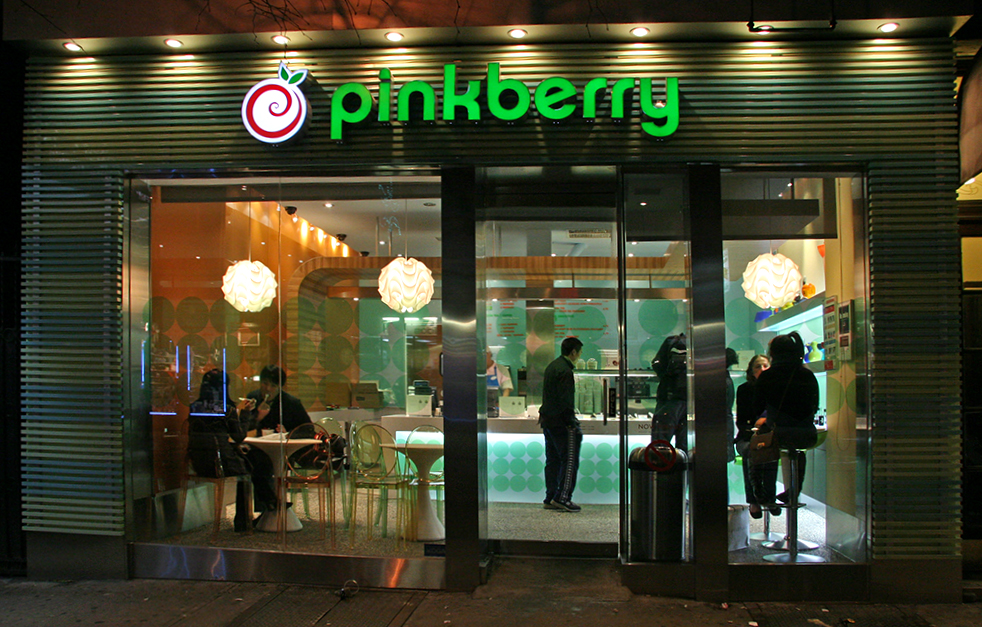
    Now we have a frozen yogurt/desert revival, with Pinkberry and Red Mango across the street from each other on Bleecker Street and Yolato around the corner (update: Pinkberry on Bleecker Street has since closed.).
    Pinkberry, based in Los Angeles, was started in 2005 by South Koreans Hyekyung (Shelly) Hwang and partner Young Lee. It is already a roaring success  with a cult following and tales of parking congestion at the original West Hollywood store (read the story here). The product is an upscale, healthy frozen desert in just two flavors (original and green tea). It is low-cal, low-sugar, and nonfat, with a distinct tang. Fresh cut fruit toppings are available.

    Pinkberry’s interior appears to be part of a trend towards an Asian-styled, clinical, futuristic store design. Partner Young Lee has appointed the stores with Philippe Starck furniture and Le Klint plastic hanging lamps from Design Within Reach. I expect to see Teletubbies in the line. There is controversy surrounding Pinkberry and how it closely resembles Red Mango, a Korean frozen yogurt chain with 150 stores. And, of course, the phenomenon has spawned competitors: BerryLine, Yo Berry, Kiwiberri, Snowberry, Roseberry, Berri Good, Limelite, etc. Only a time machine will tell the future of this craze…


  • XYZ

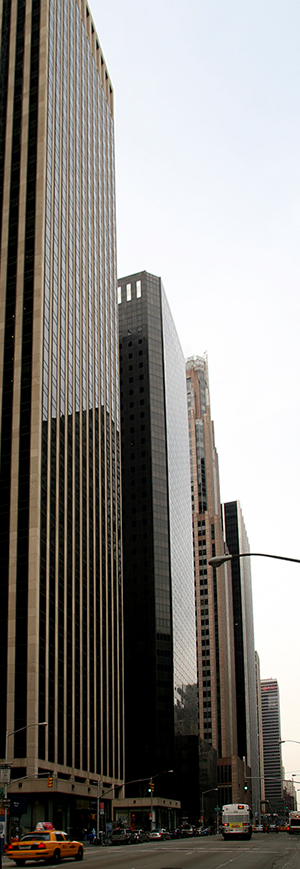
    When I first moved to NYC and was absolutely busting with enthusiasm for the city, this strip along 6th Avenue was a must-stop on my whirlwind auto tour for visitors. I was a one man marketing campaign (at a time where New York was not seen very favorably), and showing off this strip of skyscrapers extending as far as the eye could see really did inspire. For me, it just screamed big, best, and all the other superlatives I associated with the city. I would park somewhere along 6th Avenue in the 40s on the EAST side of the avenue and command my passengers to get out and witness the evidence first hand that NYC was the best.

    Here, we have a long, unified grouping of 40-50 story skyscrapers – some of the tallest in the city, many with eponymous names like McGraw Hill, Exxon, Celanese, Time-Life, the Stevens Tower, Americas Tower, 1155 Avenue of the Americas (the black granite building in the foreground designed by Emery Roth), et. al. Many of these were built in the 1960s and 70s, and the names no longer apply – the original tenants have relocated. Some were annexes to Rockefeller Center, leveraging the cache of that complex. McGraw Hill, Exxon, and Celanese (not clearly visible in this photo which starts at 43rd Street) were known as the XYZ buildings. In 1981, Paul Goldberger wrote: “For a long time, I thought that nothing could be worse than the “XYZ” buildings on the Avenue of the Americas, the massive Exxon, McGraw-Hill and Celanese skyscrapers that comprise the western expansion of Rockefeller Center, so named by their planners because of their nearly identical design. The three boxy towers are banal in the extreme, with huge and generally useless plazas dulling the street life in front and straight tops flattening out the skyline up above.”

    Nostalgia aside, I must agree with most architecture critics that these buildings and their plazas are rather cold, lifeless, and joyless. The AIA Guide to NYC says,  “They are sorry neighbors to their parent buildings.” They perhaps best serve as a lesson illustrating how serious a responsibility architecture really is. Buildings become a semi-permanent legacy – designs should not be based on whim or the fashion trend of the moment…


  • Wax

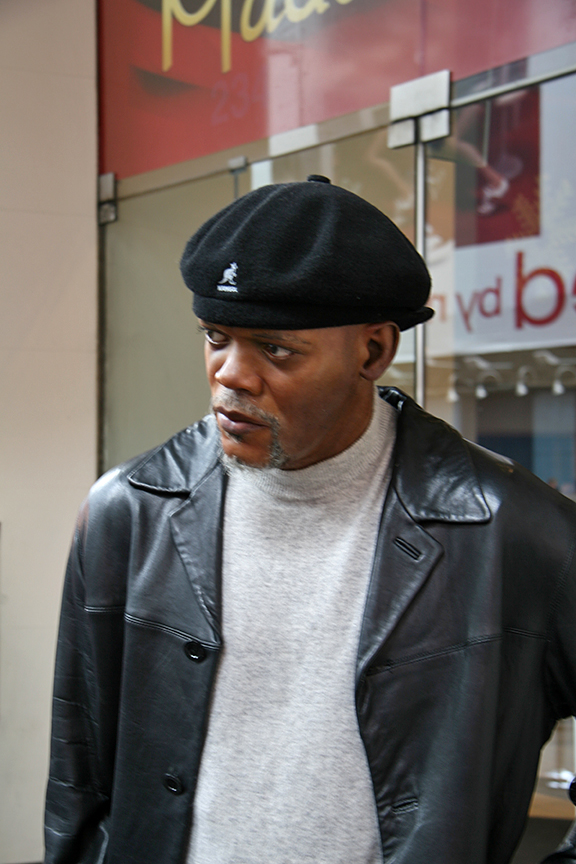
    I have previously voiced my feelings concerning those things which may be viewed by many as too touristy and that, in many cases, such as the Empire State building, offer much of value and warrant a visit. However, in the case of Madame Tussaud’s Wax Museum, I am guilty of not following my own advice and have never visited. In my defense, wax museums in the United States do have a poor reputation, and it is not so unreasonable to avoid them. And, of course, there is also the issue of artistic snobbery – that something merely representational is not worthy of serious consideration, even if it has been done with meticulous accuracy and the results are astonishingly real. This wax figure of Samuel L. Jackson was on 42nd Street outside the museum, a lure to get passersby to go in. It certainly was remarkably lifelike. In reading about these figures and the work, I was impressed at the level of artisanship, and the story of Madame Tussaud was equally fascinating.

    Marie Tussaud (1761 – 1850) was born Marie Grosholtz in Strasbourg, France. She learned her craft from Dr. Philippe Curtius, a physician who was skilled in wax modelling, which he used to illustrate anatomy. Marie lived for a time at Versailles. Suspected of possible royalist sympathies, she was actually in prison awaiting execution with her head shaved. She was saved by her sculpting talents and was employed to make death masks of those executed by guillotine, including Marie Antoinette, Marat, and Robespierre. A traveling showman (with the collection of wax figures left to her by Curtius), she finally settled in London and had her first permanent exhibition on Baker Street in 1835. Read the history here at the Tussaud Museum website.

    The New York incarnation of the famed London museum occupies a five-story building in the Times Square area on the exact site of Hubert’s Dime Museum and Heckler’s Trained Flea Circus (another amazing story). The roster of wax figures reads like a who’s who in themed environments. The figures are created at substantial cost and time, taking months for creation. Celebrities and notables typically pose for a few hours, and likenesses are then created from hundreds of intricate measurements along with photographs. Faces are made from 30-piece plaster molds; hair is inserted strand by strand. I think it’s worth a visit…


  • Big Boom Theory

    Having been in manufacturing most of my life and dealing with hundreds of trade suppliers, I can assure you of one thing: If you want to get things done without losing your mind, you had better know what things are called. And as the world becomes more specialized, this applies to most things – medicine, food, technology, or stationery. If you walk into a real lumber yard in NYC, look right, and call things by the popular, proper colloquial name used in the trade, you will garner respect and perhaps get decent service. Otherwise, you will be seen as the typical do-it-yourselfer, even a nuisance. Depending on the mood of the salesperson, you will be given the simplest thing to get you out of the store and not necessarily the best or correct item for the job. This is not to mention the difficulty in attempting to get what you want by using a combination of sketches, descriptions, hand gestures, and other sad, inaccurate, and ineffective ways of trying to communicate your needs. It’s like being a contractor in France and not speaking the language.

    Today’s photo shows how drywall (or sheetrock) is delivered to a high-rise building through a window opening (windows are frequently removed) by using a drywall boom truck (other variations of articulated lifts and their names include: cherry pickers, bucket trucks, boom lifts, basket cranes, scissor lifts, etc.). This method of delivery is a huge improvement over unloading sheets from a truck by hand a few at a time, carrying them into a freight elevator and then off into the job site.

    So perhaps your exercise machine is broken and you need a Delrin wire rope pulley with plain bronze bearings. Or you’re assembling a piece of furniture, a screw is missing, and what you actually need is a flange button, socket cap screw with hex drive in plain steel with a black oxide finish – oh, and you’ll need to know the size and pitch (such as 1/4-20). Of course, one solution is a sample – if you have one and can carry it – but if you want to rent a boom truck, it’s just best to know what it’s called…

    Photo Note: The location was a new residential condo development at 151 Wooster Street in SoHo.


  • ICP

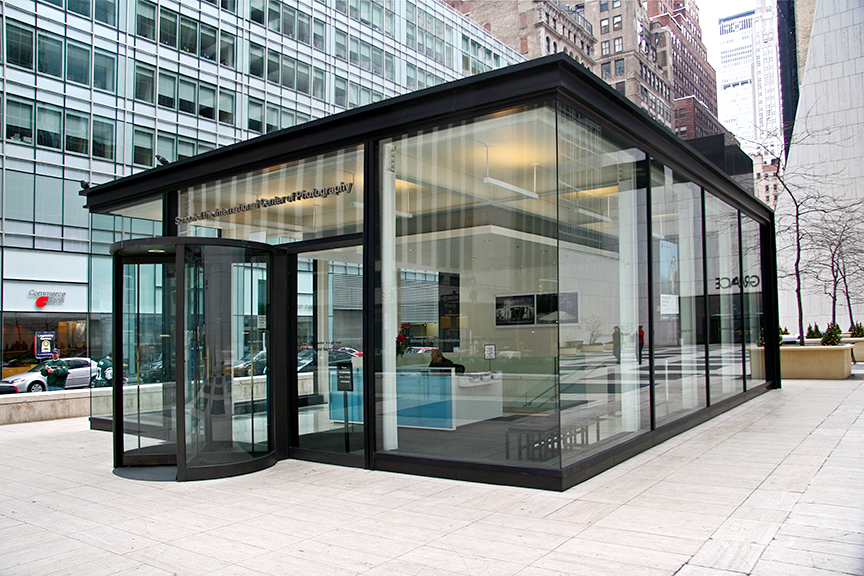
    In yesterday’s post, I featured the controversial W.R. Grace Building. Equally criticized is the rather stark Grace Plaza at the rear of the building with an entrance at 1114 Avenue of the Americas. It is here that in 1974, ICP (International School of Photography) expanded their school, creating a minicampus beneath the plaza. The glass pavilion in the photo (designed by the firm Gensler) serves as the school’s entrance – it houses a small gallery, stairway, and lift to the underground facility.
    The 27,000 square foot space features classrooms, black-and-white and color lab spaces, digital labs with resources for multimedia, digital photography, video editing, and production, a professional shooting studio, a library, student lounge, and exhibition gallery. ICP serves more than 5,000 students each year, offering 400 courses in a curriculum that ranges from darkroom classes to certificate and master’s degree programs. The school has a continuing education program, which is popular for individuals who want to obtain quality instruction in photography without having to matriculate in a full-time university program.

    ICP was founded in 1974 by Cornell Capa (brother of acclaimed war photographer Robert Capa) in the historic Willard Straight House on Fifth Avenue’s Museum Mile. In 1999, the headquarters building at 1130 Fifth Avenue was sold. They moved to 1133 Avenue of the Americas (across from the school) with 17,000 square feet of gallery space (designed by Gwathmey Siegel & Associates Architects), archives of more than 100,000 photos, and a store and cafe. Many feel that the small glass pavilion has done much for the bleak plaza – it certainly provides a much needed focal point…


  • dinamic_sidebar 4 none

©2026 New York Daily Photo Entries (RSS) and Comments (RSS)  Raindrops Theme