• Piercing Al Fresco

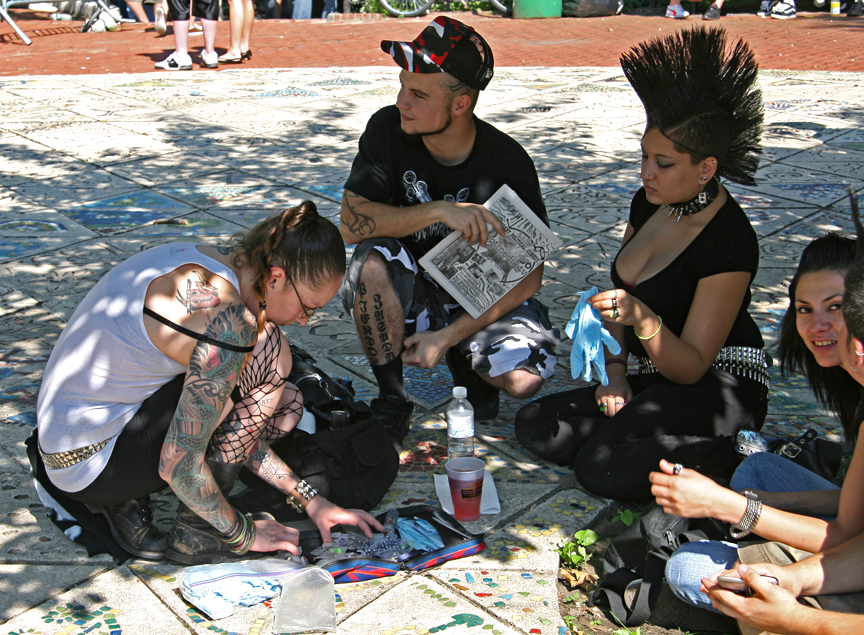
    This photo is a footnote to yesterday’s posting about the Police Riot Concert held in Washington Square Park. Click here for a photo collection. When I told people, young and old, that I had photographed piercings being done outdoors on the ground, everyone had the same reaction: “Outdoors, on the ground?” But I found it in keeping with the defiant spirit of the event. After all, I am not sure that prudence, propriety, and proper procedure apply to attendees of a punk rock concert. At first glance, I was not sure why these people were sitting on the ground looking looking at something, but closer examination revealed the object of interest to be a small zippered case opened to display body piercing jewelry and disposable rubber gloves (and, I imagine, the piercing tools themselves). Actually, it appeared that the piercer was operating as professionally as she could under the circumstances.

    Body piercing, of course, has a long history and large subculture. It’s a world unto itself, with many facets: the jewelry, the procedure and tools (sterilization, autoclaves, needles, cannula, scalpelling, dermal punching), healing and cleaning, allergic reactions, scarring, keloids, infections both bacterial and viral, where to pierce, etc. Click here for a good overview


  • Police Riot Concert

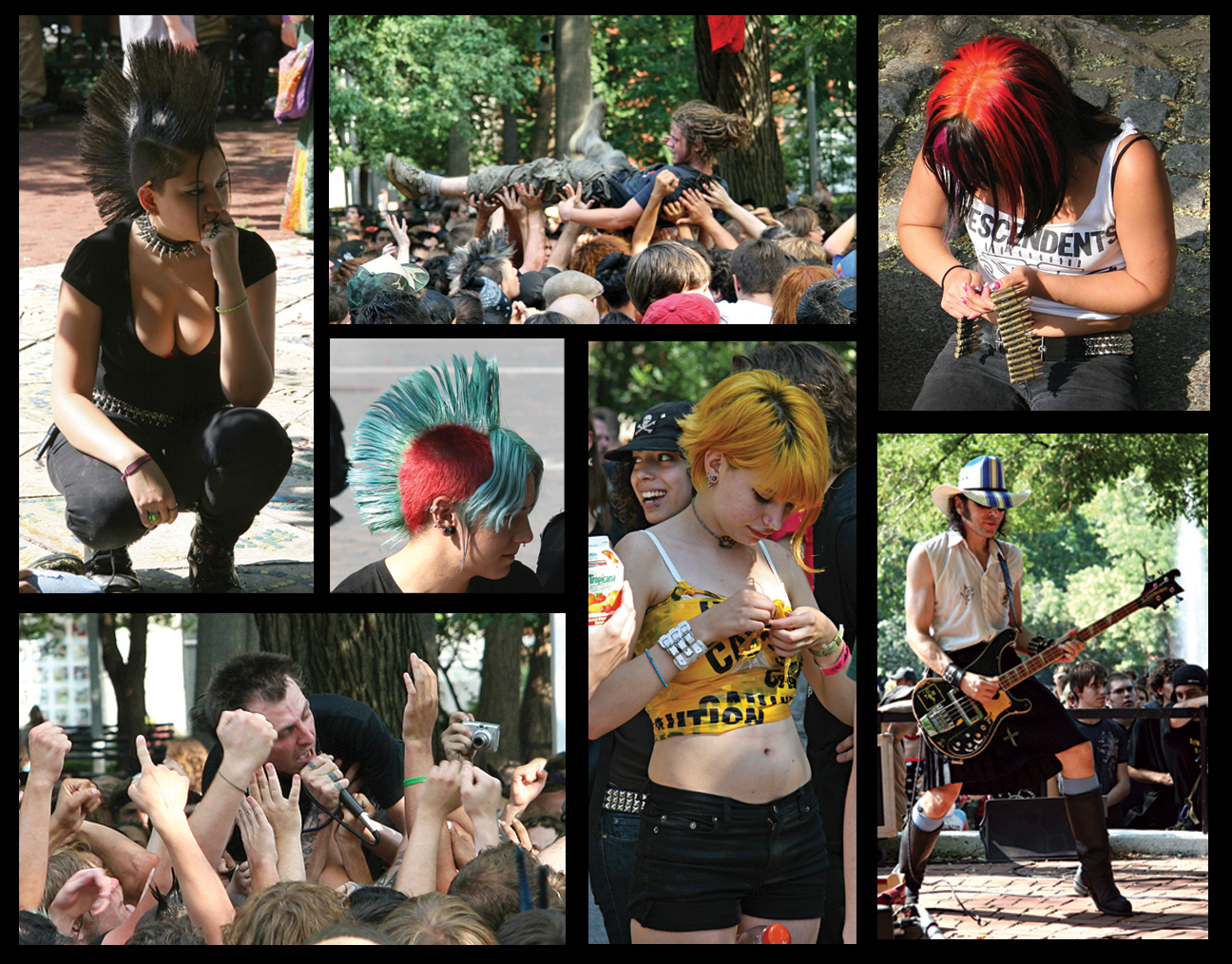
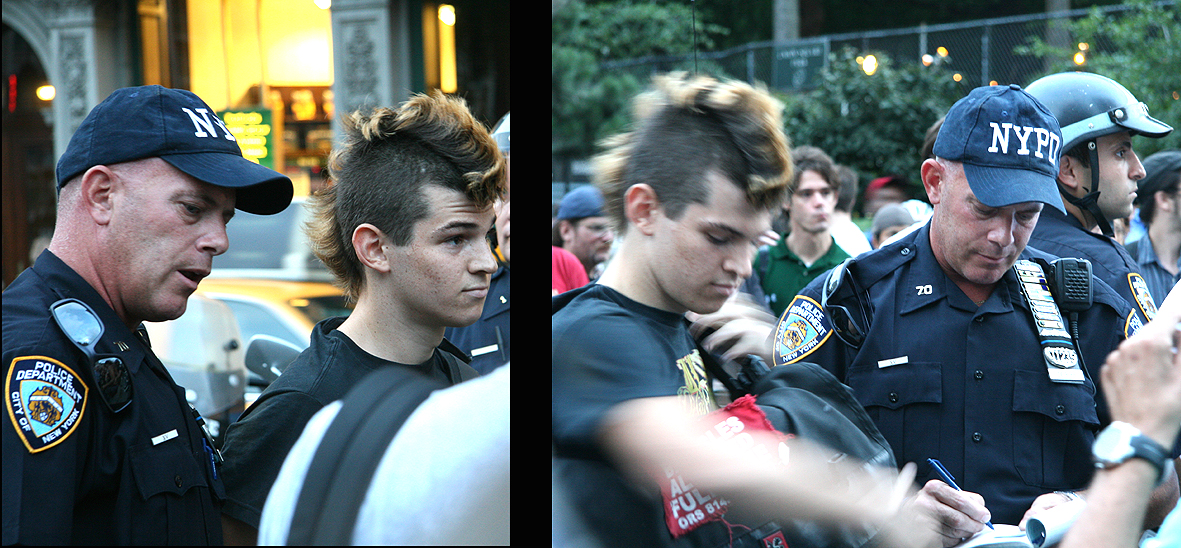
    This was an event that really caught me by surprise. No one I met was aware that it was to be held, apart from the many music fans. The annual Police Riot concert is typically held in Tompkins Square Park in the East Village, but this year, the concert was rescheduled for Washington Square. The concert, which featured Leftöver Crack (a group that has been been banned from several NYC venues), commemorated the 19th anniversary of the police riots of August 6-7, 1988 in Tompkins Square Park.

    The park at that time had essentially been taken over by drug dealers, skinheads, and squatting homeless. The riot, which occurred on the day of a rally, protesting a recently enacted curfew, was seen as largely police-incited as a result of mishandling on their part. Many complaints of police brutality were made, along with public condemnations (such as in the New York Times) against the police department and the commissioner, Benjamin Ward.

    In addition to Leftöver Crack, the groups who performed were False Prophets, World Inferno Friendship Society, Planned Collapse, and Witch Hunt. There were guest speakers, such as Norman Siegel (former ACLU director). Event-appropriate books and magazines were being sold.
    The concert was essentially punk rock, however, more specifically, there were elements of ska, hardcore, crust punk, and metal. The music was LOUD, of course, and spontaneous moshing occurred with stage diving. This event was a superb photo opportunity – the Mohawks, hair colors, clothing, piercings, mosh pits, and stage diving made great subjects in a perfect clear day’s afternoon light.  Click here for a photo set of the concert…


  • Spalding Gray

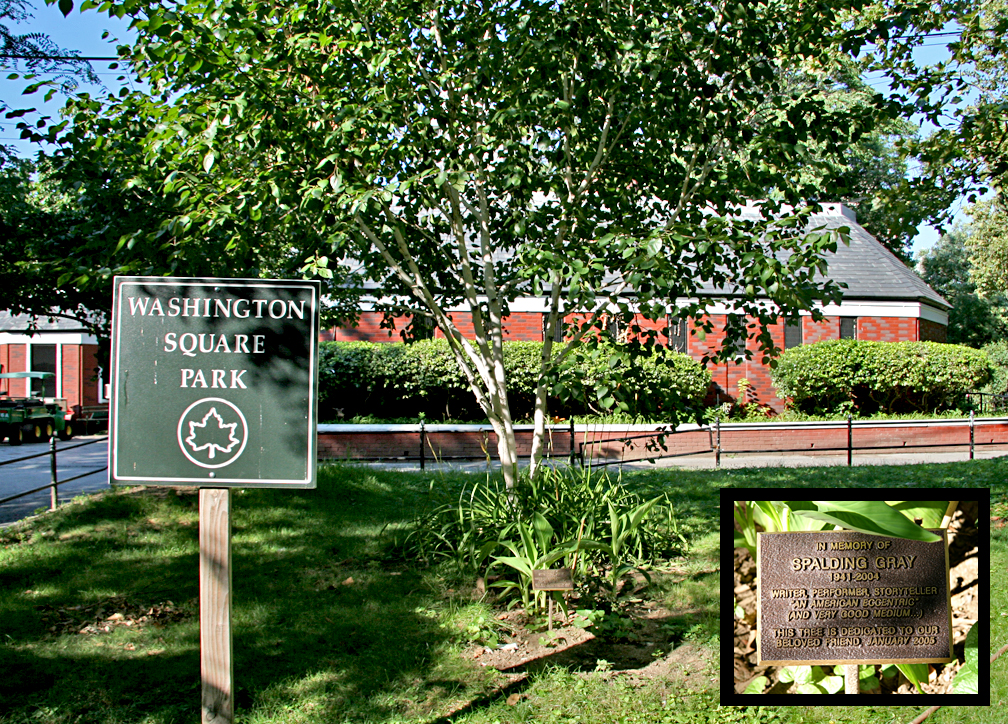
    This tree and plaque in Washington Square Park is a relatively unknown memorial to Spalding Gray (1941-2004). If you are unfamiliar with Spalding and his work, I suggest you go to his website here. Spalding was an award-winning monologist par excellence, although his work and life were certainly controversial. Gray wrote 18 monologues and appeared in many films. He is most well-known for Swimming to Cambodia, the filming of one of his monologues based on his experiences in Southeast Asia while working in a small acting role in the film The Killing Fields. In January 2004, he was reported missing (read the article here). In March 2004, Spalding’s body was found in the East River. It is believed his death was a suicide and that he jumped into the river from the Staten Island Ferry. He had threatened to do this in a note to his wife in 2003 (click here for the entire story). He had previously attempted suicide in 2002, and his mother had also committed suicide. Spalding moved to NYC in 1967 and lived in the Village.

    In 1988, the New York Times ran an article where they asked 12 well-known New Yorkers where they would go to show a visitor the real new York. In it, Gray said:

    “And then there’s Washington Square Park. I go there every day. It’s a little carnival: the fire-breathing guy, the guy sitting on a little stool, giving out free advice. It’s distinctively New York, not a Parisian thing, or a San Francisco thing. What I figured out in L.A. is, they’ve got lots of nature, like birds and trees, but no human nature. Here it’s like a dance, everyone very aware of their own body space. The other night, I saw four people on a specially made bicycle for four. They had a generator that was lighting up four huge spheres, light bulbs on their heads, as they rode up Second Avenue. It takes a lot to catch an eye in New York, but they did, and I said, you know New York always redeems itself.”


  • Red Panda

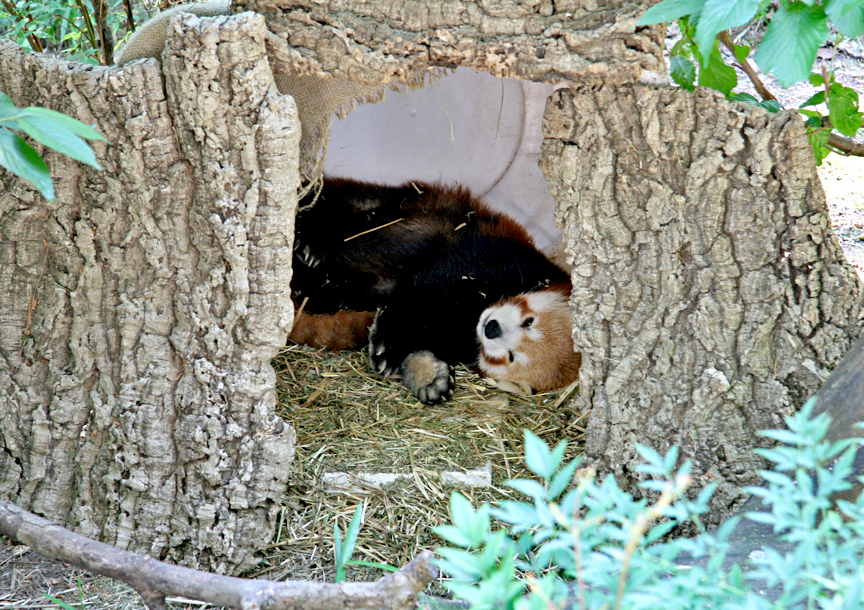
    This word was new to me – crepuscular – pertaining to twilight. In the case of an animal, it means that it is active at twilight (dawn and dusk), as opposed to diurnal or nocturnal. The Red Panda in the photo is from the Central Park Zoo and an example of a mammal that is crepuscular. This perhaps explains not only his relaxed state in the photo but also the reason that these fellows are difficult to spot moving around at the zoo habitat during exhibit hours.

    Red pandas tend to be solitary, and their habitat is the Himalayan foothills of southwestern China, Tibet, northern Myanmar, and Nepal in temperate forests at elevations of 4,900 to 13,000 feet. They are an endangered species and part of the Species Survival Plan – the Central Park Zoo has produced three cubs, a difficult feat in captivity. Their diet is almost entirely bamboo, which is extremely high in indigestible fiber, making it difficult for red pandas to extract the nutrients they need. They need to eat large quantities of bamboo and spend long hours foraging. Their low-energy diet does not lend itself to an active lifestyle, so they spend most of their time eating and sleeping (in tree branches or tree caves) – they may sleep half the day. I think this lifestyle would appeal to many…

    NOTE: A friend informed me that the term crepuscular has also been used to describe works of artists, such as Albert Pinkham Ryder, Arthur Dove, and Winslow Homer, who depicted subjects with the light characteristic at that time of day.


  • Lunch Limbo

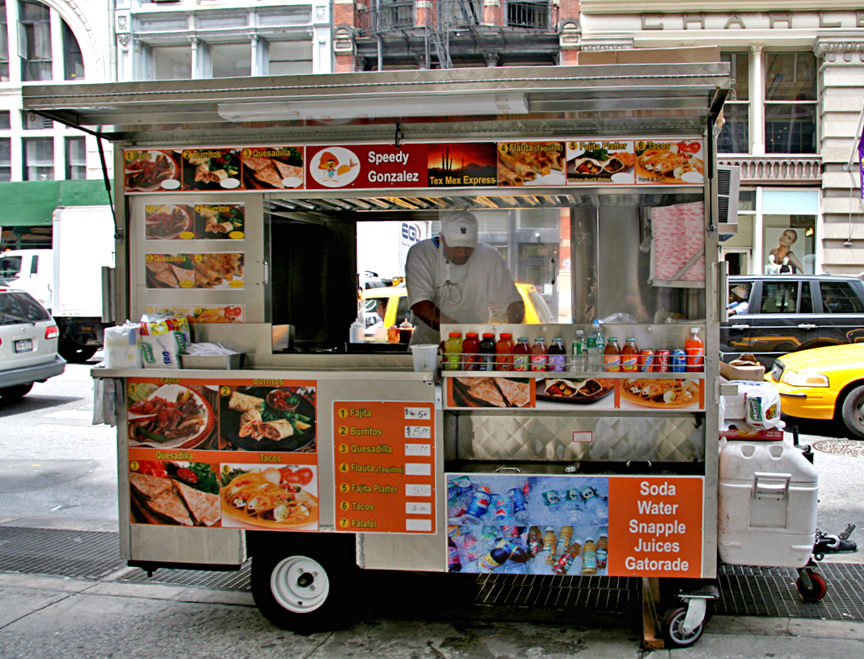
    This is a trend for which I have been waiting a long time: better street food vendors. Hot dog and pretzel carts don’t do the job anymore, certainly not for lunch. Most people I know of buy most of their lunches out. The plethora of options and convenience of delis and other takeout venues in NYC wears down one’s resistance, and soon the idea of bringing lunch to work becomes a charming notion and dim memory. But we get spoiled here, and soon even the absolutely incredible selection of foods in a deli or green grocer is not enough – we still feel that there is “nothing to eat,” and one graduates to small takeout restaurants. But the best of these become quite expensive on a regular basis (sandwiches at $8-$10), and one is left in lunch limbo – what to eat. What we really want is a prepared, cooked MEAL that is excellent and inexpensive. Enter the high-quality street food vendor, where $5 will go a long way. I wrote of this already in my story about NY Dosas, a Vendy Award-winning Sri Lankan food cart on Washington Square South.

    But now we have a new problem: lines (I understand that NY Dosas gets as many as 60 people waiting in line). New Yorkers are suckers for “the best,” and there are always many willing to wait in line to get that special thing, best thing, get something first (iPhone, Harry Potter book), blah blah blah. We tried Calexico yesterday, a Vendy Award finalist. We had been trying for some time, but unless you phone them in advance by 11:45 AM (they have a cellphone) or get there by noon, you’re looking at huge lines. The food was good, but I’m not sure it was worth strategic planning in our office for a week to score a meal without waiting for an hour…

    NOTE: The cart in the photo is Speedy Gonzalez, specializing in TexMex and is located on Broadway in SoHo – good food, no lines (the last time I was there).


  • Picture New York

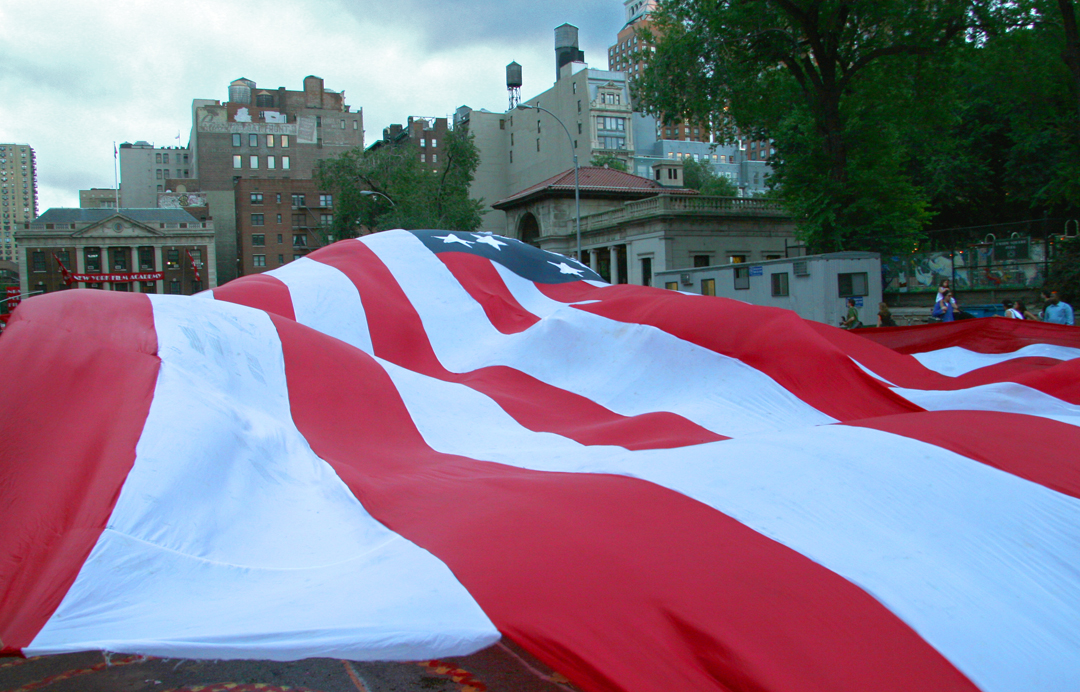
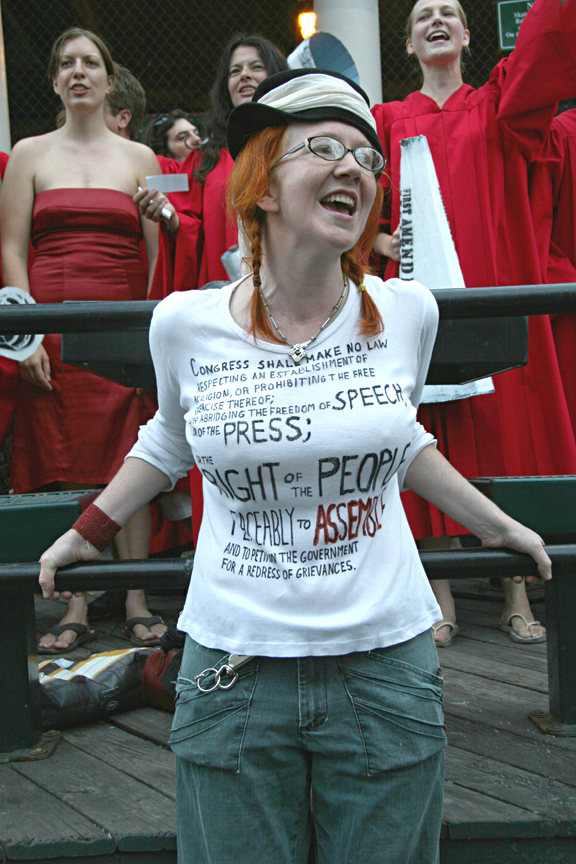
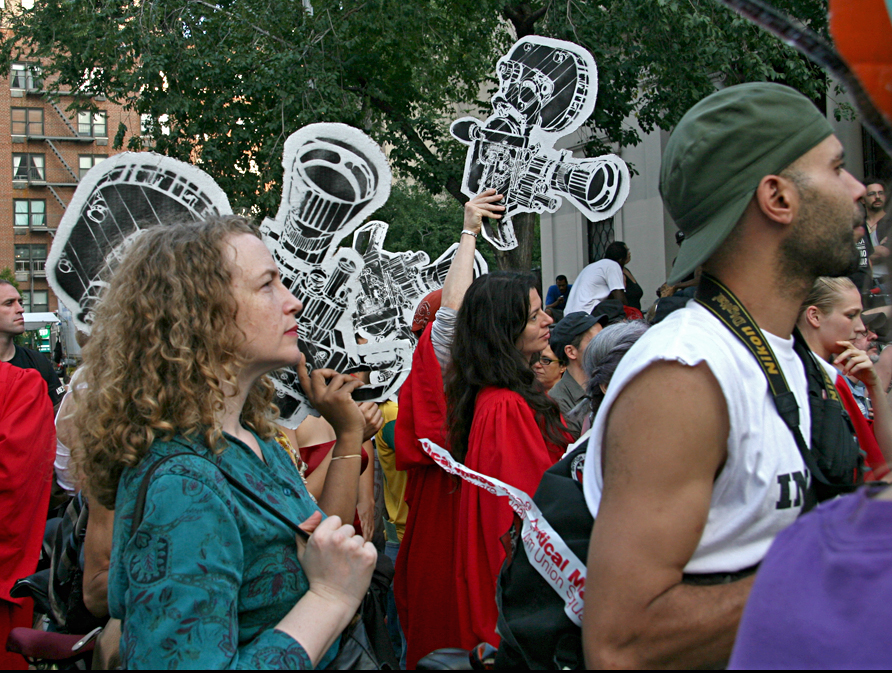
    This photo is from the demonstration in Union Square on Friday, July 27, which was sponsored by Picture New York, accompanied by the Rude Mechanical Orchestra, Critical Mass bike riders, and Reverend Billy and his Stop Shopping Gospel Choir. Click here for a photo of a demonstrator who was brandishing quite the T-shirt.

    As I wrote in the posting on Reverend Billy, there is pending legislation proposed by the Mayor’s Office of Theater, Film, and Broadcasting that would require a permit for photography and videography in New York City. Permits and $1 million in liability insurance would be needed for a group of two or more people who want to use a camera in a single public location for more than 30 minutes, as well as for a group of five or more people who would be using a tripod for more than ten minutes. According to a New York Times article, although officials have indicated that the rules are not intended to apply to amateurs or tourists, there is nothing in the proposed ruling that specifically exempts them. The fear is that this could lead to discriminatory enforcement.

    Many demonstrators were brandishing cardboard props modeled after a 16-millimeter Bolex camera (see here). And in an interesting sidebar, this guy was arrested for riding his bike on the flag (click here). NOTE: The city is accepting public feedback until August 3…


  • Radio City

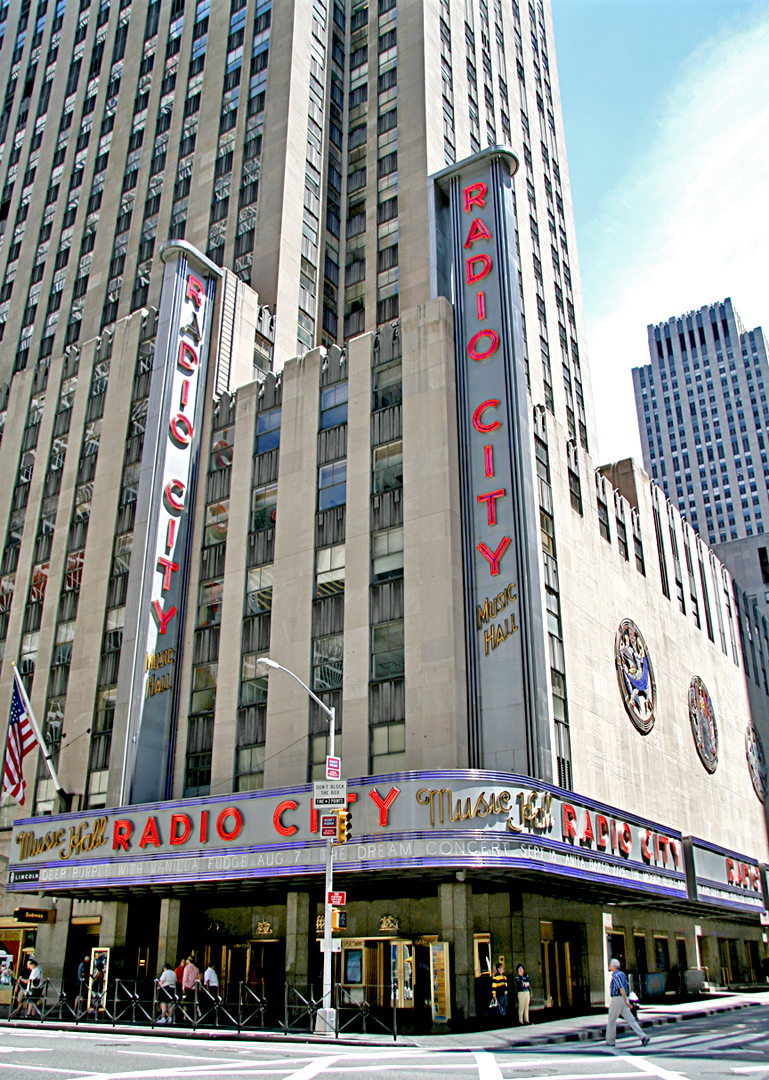
    This is Radio City Music Hall, one of NYC’s best known attractions, top tourist destinations, and part of the Rockefeller Center complex. It has a roster of film debuts and a history of stage shows with luminaries such as Frank Sinatra, Ella Fitzgerald, Linda Ronstadt, Bill Cosby, Liberace, Sammy Davis, Jr., Count Basie, Itzhak Perlman, Ray Charles, B.B. King, et al.

    The music hall was created by John D.Rockefeller, Jr., impresario Samuel “Roxy” Rothafel, and RCA chairman David Sarnoff (the name “Radio City” is from RCA – Radio Corporation of America). Radio City opened in December 1932. The structure was designed by architect Edward Durell Stone, with the spectacular interior by Donald Deskey, winner of the design competition at that time. Deskey was a pioneer in industrial and packaging design with an impressive list of credits, including the Joy detergent bottle (1950), Cheer detergent box (1951), window displays at Saks Fifth Avenue, and exhibits at the New York World’s Fair in 1939.

    The interior, designated as a historic landmark in 1979, is an Art Deco masterpiece with one of the largest stages in the world. Ceilings reach 84 feet. The Great Stage, framed by a huge proscenium arch that measures 60 feet high and 100 feet wide, is an engineering marvel with a system of hydraulic elevators. The Mighty Wurlitzer pipe organ houses its pipes in 11 different rooms. With “The Progress of Man” as Deskey’s general theme, he created a stunning tribute to human achievement in art, science, and industry. He made art an integral part of the design, engaging fine artists to create murals, wall coverings, and sculpture; textile designers to develop draperies and carpets; and craftsmen to make ceramics, wood panels, and chandeliers. All manner of precious materials (including marble and gold foil) and industrial materials were used. In 1999, the facility underwent a massive $70 million dollar restoration. The music hall is home to the renowned Rockettes, a precision dance team, virtually synonymous with the theater itself, along with the annual Radio City Christmas Spectacular, a tradition in NYC since 1933. It’s impossible to give a real sense of this magnificent space in writing – I suggest you visit at least once in your life…


  • Sisterhood

    Posted on by Brian Dubé

    New York City is one large film set. The streets, parks, and other outdoor settings are used, as well as studios such as Silvercup. At any given time, there are dozens of films, commercials, TV shows, and music videos, not to mention amateur or student productions (NYU has one of the best film schools in the country). The mayor’s office of film has a website of current productions (I don’t always find it complete, however).

    Last fall, I did two postings on the filming of I Am Legend, the largest film production I have seen in the city, running over two weeks (click here for the first posting and here for the second). This week alone, there have been two motion pictures filming in Washington Square Park, a popular venue for filming owing to its attractive environs (the row houses on the north side, e.g.) and iconic and recognizable elements, such as the Washington Square Arch. That Sunday night, a car crash was being filmed – this was scheduled for 2-3 AM, after the park’s closing. Generally, the film crews are cooperative and accommodating to the community and those around the sets.

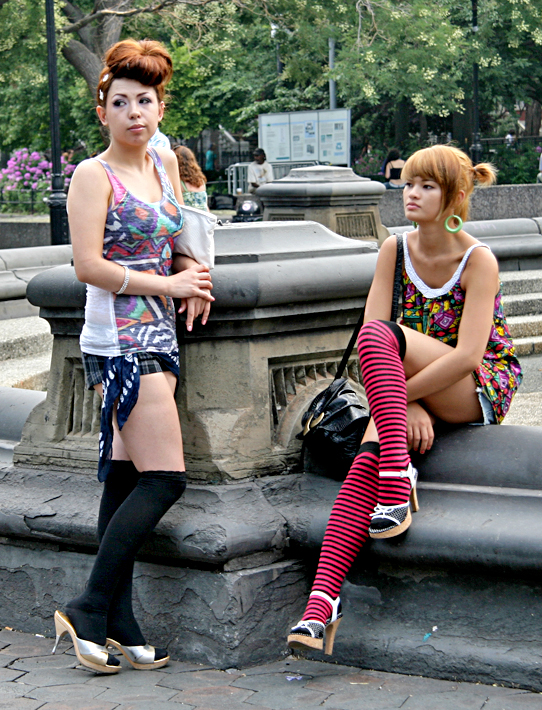
    Yesterday morning, I happened across another film being made. During a break in the filming, passersby were allowed to resume walking in the shooting areas, so I was able to snag a few photos. I was surprised to learn that this was a major motion picture – The Sisterhood of the Traveling Pants, Part 2. I never saw part one and am not familiar with any of the original actors. I am not sure who the two women in the photo are and whether they are major or minor characters…

    Posted on by Brian Dubé

  • Window Washer

    Posted on by Brian Dubé

    Unfortunately, I do not have a photo of a window washer on a skyscraper, but you get the idea. This is window washing in NYC – a job that has a lot of perks but is not for the faint of heart.

    I have learned a number of things about window washing. It is dangerous. It’s a good job for voyeurs. Stories and cliches abound about the things window washers see, propositions from the wife home alone, and the access washers have to the homes of the wealthy. There are various ways to access windows, such as scaffolding, window hooks, and belts, as seen in the photo. Some windows are accessed strictly by walking on a ledge with no safety equipment, just holding on with one’s hands – this is how the windows of my office are cleaned.

    The squeegee is the tool of choice – most nonprofessionals are inclined to use paper towels or rags, which just moves the dirt around. The squeegee goes back to the squilgee of the middle ages used by fishermen to clean boat decks. The modern single-bladed version of today was invented by Italian immigrant and window washer Ettore Steccone in 1936. It continues to be manufactured and is the choice of pros. The composition of the rubber is still a closely guarded secret and apparently continues to give the Ettore the edge over the competition. The future of window washers, however, does not look that bright. Many innovations in windows have made washing easier, such as telescopic and water fed poles. Most new windows tilt in a way that they can be cleaned from the inside. And then there are windows made from self-cleaning glass developed by Pilkington of the UK and also made by PPG, Asahi Glass Co., and Saint Gobain. The glass is manufactured with a special titanium dioxide photocatalytic coating – dirt is broken down by UV light and washed away by the rain…

    Posted on by Brian Dubé

  • Mayberry, NYC

    Posted on by Brian Dubé

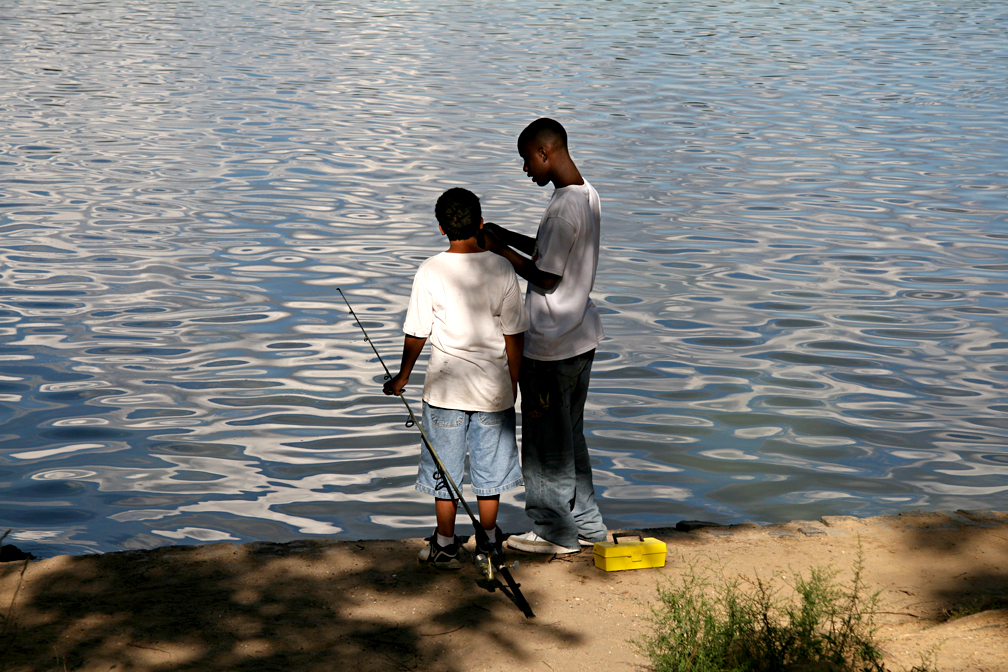
    This was the perfect summer image: two young boys standing lakeside preparing to fish in dappled late afternoon light. The scene made me feel like I was in the archetypal small town – transported to Mayberry. A Saturday or Sunday afternoon in the park is the perfect respite from the hustle and concrete of the big city – the Tuileries gardens of Paris, Hyde Park in London, or Sheep Meadow in Central Park.

    For many, fishing is relaxing and a way to connect with the outdoors. Fishing in New York City is not as uncommon as one might think. As I wrote in a previous posting about the shore of NYC, 4 of the 5 boroughs are islands or part of islands – there are over 500 miles of shoreline along rivers and an ocean. The waterways surrounding New York have become much cleaner, so there is quite a bit of fishing in the various waterways around the boroughs and in the various lakes in the larger parks, such as Central Park and Prospect Park (Brooklyn), where this photo was taken. Yes, some of the fish can be eaten, but there are health advisories regarding recommended species and number eaten on a weekly or monthly basis. And my understanding is that fresh water fishing is catch and release only. Enjoy your Sunday – sorry, no treatises today, I think I’m going to take it easy 🙂

    Posted on by Brian Dubé

  • Reverend Billy

    Posted on by Brian Dubé

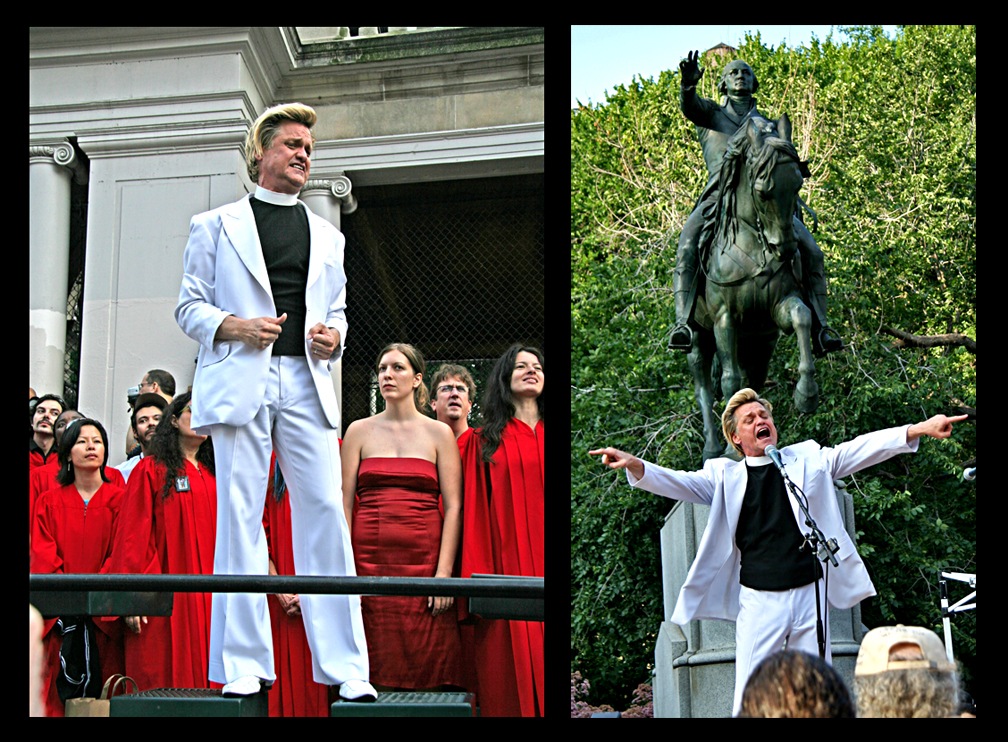
    This was yesterday’s First Amendment Fest at Union Square, fueled by a number of current issues such as pending legislation regarding restriction of photography and videography in New York (click here for article) and issues regarding Critical Mass bike rides. When I first ran into Reverend Billy, with his bleached blond bouffant hairdo, white suit, and fully robed choir, in a park several years ago, I assumed that I was witnessing another religious group proselytizing on a much larger scale. We see many groups in NYC – fundamentalist Christians, Mennonites, Jews for Jesus, etc. However, as the entertainment component became greater, I realized I was watching a performance, albeit a very convincing, revival-styled one. Reverend Billy (aka Bill Talen) and the Church of Stop Shopping is an activist group, working internationally and using guerrilla theater to get their anti-consumerist messages across, warning against the “Shopocalypse.” They have had numerous targets over the years: Nike, Disney, Starbucks, and Victoria’s Secret. Ironically, Reverend Billy was recently arrested for harassment for reciting the first amendment (click here for the AP article).

    Bill Talen was born in Minnesota in 1950 and brought up in a Dutch Calvinist tradition. After graduating from Franconia College, Talen moved to San Francisco, where he earned a reputation as an actor and performer. Moving to NYC in 1994, Talen became an artist in residence at St. Clement’s Church, where he developed his character as Reverend Billy in collaboration with Reverend Sidney Lanier. Talen cites Elaine Pagels, Lenny Bruce, and Andy Kaufman as major influences. The depth and breadth of his philosophy, organization, mission, past actions, etc. are too great to go into here – I would direct you to their website for perusal. He is the subject of a new documentary (produced by Morgan Spurlock of Super Size Me fame) entitled What Would Jesus Buy? Reverend Billy can be frequently be seen at St. Mark’s Church and other NYC venues – try to catch him live…

    Posted on by Brian Dubé

  • Full Moon

    Posted on by Brian Dubé

    With all the goings on and distractions of being in the city, why look up? Because sometimes you are rewarded with spectacular natural occurrences, like this moon. Although this was not a vista unique to New York City, seeing such a phenomenon in an urban setting always magnifies the experience. And frequently, the imposition of the moon in the right setting provides a nice counterpoint to various city structures, like this one.

    In various conversations over the years, I have been surprised to learn that many people are unaware that apart from moving through phases, the moon rises and sets daily like the sun, with its own timetable (there is one day each month with no moonrise and one with no moonset). Of course, due to atmospheric conditions, times when the moon is out during bright daylight, etc. the moon is not always as readily and consistently visible as the sun. Click here for a lunar calendar customizable for your location. Here, you will be able to see the times of the moonrise, moonset, sunrise, sunset, and the moon phase. I learned today that a full moon or new moon occurs when the earth, moon, and sun are in approximately a straight line – this conjunction is called a syzygy. I also learned that the full moon rises at sunset, sets at sunrise, and hence is visible all night…

    Posted on by Brian Dubé

  • Density and Intensity

    Posted on by Brian Dubé

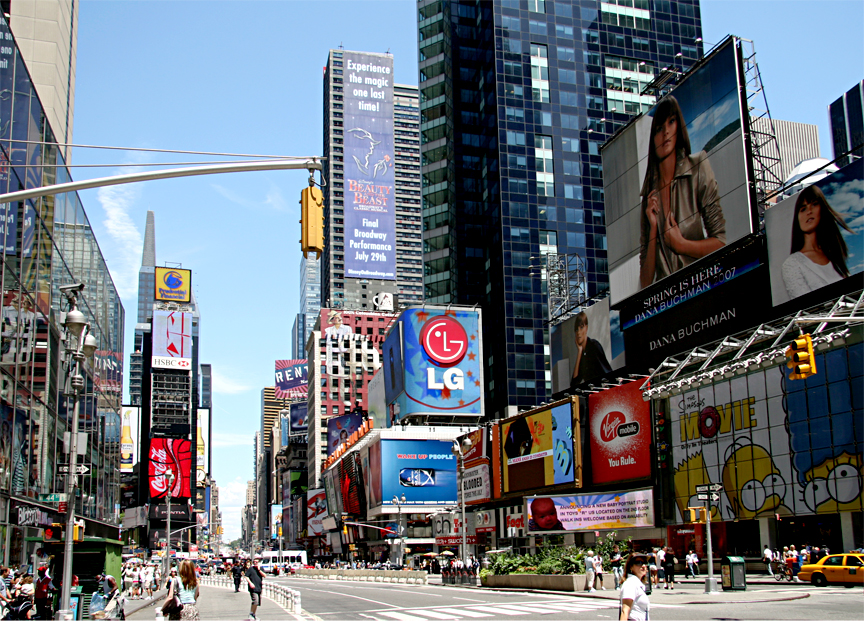
    This is Times Square, where 7th Avenue intersects Broadway. No area better symbolizes urban density and intensity in NYC and this country – it is an international icon. The Times Square neighborhood is generally defined as the area in the 40s, north of 42nd Street, between 6th and 8th Avenues. The area was named Times Square in 1904 after the New York Times erected a building and established operations there (this building is now known as One Times Square and is where the ball is dropped on New Year’s Eve). The area is also known as the theater district, home of Broadway theaters and hotels – a constant that has kept the area alive.

    Seasoned New Yorkers know, however, that for most of its recent history, Times Square was quite a seedy and dangerous neighborhood in decline, known for its sex shops, porn theaters, crime, drug dealers, and disreputable retailers. Efforts at major rehabilitation began in the 1990s. Most agree that the area has improved, although many feel that it has been too “Disneyfied.” Animated and illuminated signs/ads, neon, and lights have always been a mainstay here, and today this has further intensified with the addition of more sophisticated and brighter LED signage – the area now rivals Las Vegas as far as visual impact. In the future, I plan to do some photography at night – the best time to see the area. Until then, I recommend visiting. Make special notice of the spectacular seven-story illuminated NASDAQ sign at 43rd Street – don’t worry, you can’t miss it 🙂

    Posted on by Brian Dubé

  • Bayard Condict Building

    Posted on by Brian Dubé

    Please click here for more photos, since one photo does not do this building justice. With the plethora of street life, retailers, and other distractions in the Village, it is easy for the casual visitor or resident to miss this magnificent building. But it has not been missed by architects, architecture students, critics, or lovers of fine structures. The 13-story Bayard-Condict Bulding at 65 Bleecker Street has been designated both an official city landmark and a National Historic Landmark.

    This was renowned visionary Chicago architect Louis Sullivan’s only work in New York City. Sullivan (1856-1924), father of the skyscraper and Modernism, was trained at MIT and the École des Beaux Arts in Paris. He was the leading designer of the Chicago school and employer and teacher of Frank Lloyd Wright. He is credited with coining the term “form follows function.” This is interesting, since the ornate nature of this building shows how Sullivan was not dogmatic about his design ideas. Note the the terra cotta facade and spectacular ornamental elements and friezes under the cornices. At the time of its construction in 1898, the structure was considered very advanced – a very large percentage of the building wall is glass window. The building definitely deserves a good look if you are in the neighborhood…

    Posted on by Brian Dubé

  • The Funny Store

    Posted on by Brian Dubé

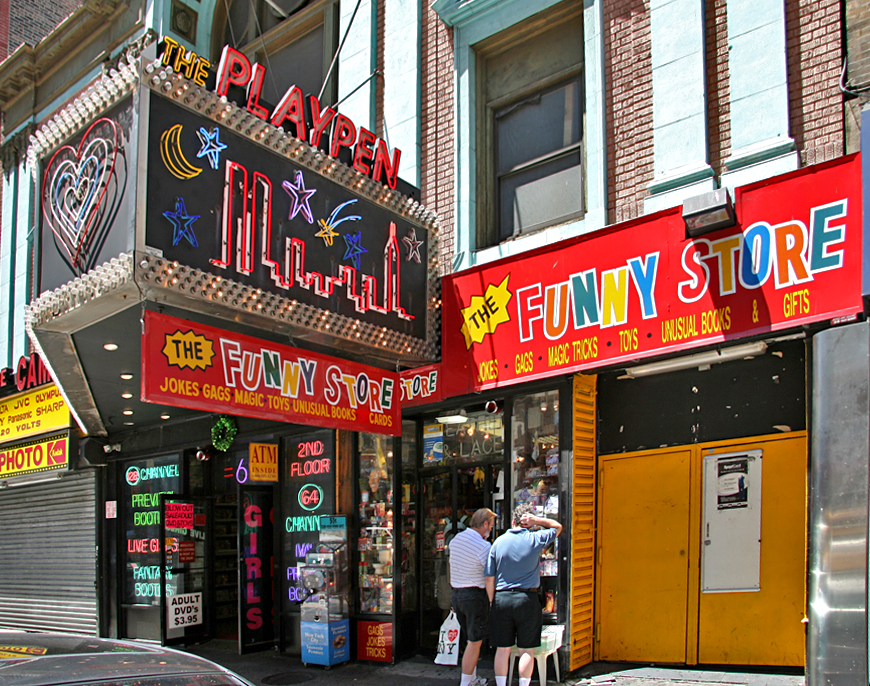
    This is a story recently reported by the New York Times, the Daily News, and other local media. The Funny Store, a novelty shop which has been in business in the Times Square area for 50 years, is closing on July 31, with a new residential development of luxury condominiums going up in its place. The shop was originally opened by brothers Irving, Mike, and Lou Tannen (of Tannen’s Magic fame). The current owner, Arnold Martin, has had the store since 2004. It has been frequented by many celebrities and has been a favorite of the Letterman show. The Funny Store sells gags, jokes, magic tricks, games, and novelties, with all the classics such as hand buzzers, rubber chickens, whoopee cushions, and their most popular item – fake dog excrement.

    Why, you may ask, is the story of a tiny novelty shop important? After all, this is not an essential service, and these products can be had online. It’s not the closing of this particular store but rather that this appears to be a typical scenario of the day and a harbinger of times to come. The changing landscape of NYC is one that many fear, with a future of chain stores and luxury residences and services catering to the well-heeled. The small independent store is becoming an endangered species, along with many niche business operations. Entire districts have disappeared and industries have left the city. What makes NYC the interesting place it is and gives it character are the unique retailers, businesses, restaurants, cultural attractions, and the people that make them up – the things you don’t find outside the city. Catch them while you can…

    Posted on by Brian Dubé


  • dinamic_sidebar 4 none

©2026 New York Daily Photo Entries (RSS) and Comments (RSS)  Raindrops Theme