• NYC 777 YouTube Meetup

    Posted on by Brian Dubé

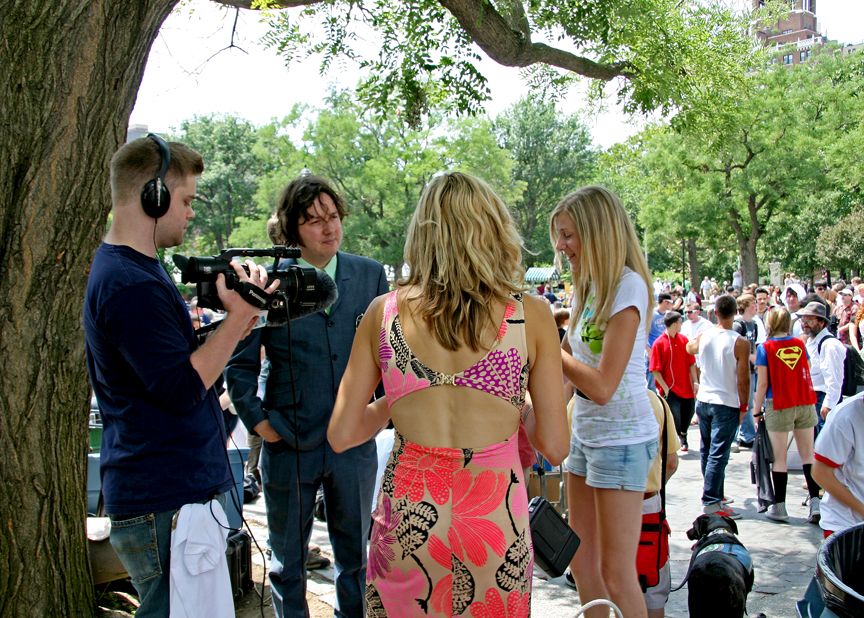
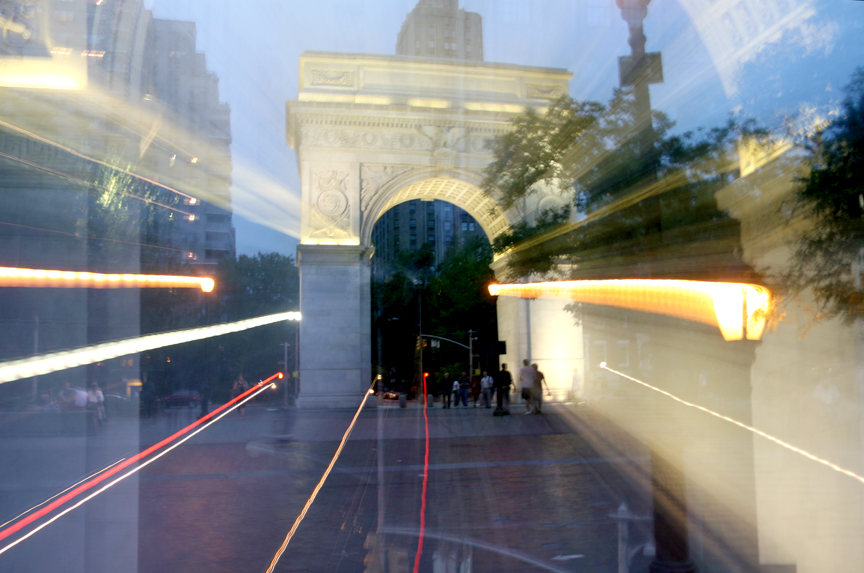
    Yesterday was 7/7/07, and there were numerous events scheduled to tie into what many saw as a propitious numerological date. At the very least, 777 certainly is a catchy tag. This gathering was the NYC 777 YouTube Meetup in Washington Square Park (click here for more photos). Here was another huge event which I had no knowledge of until I walked into it (I live neighboring the park), yet it apparently had been planned for months. According to the YouTube meetup website (now closed), the entire event actually spanned 5 days, with various parties and meetups in clubs and bars. As of today, I have found no mainstream press coverage – the only media I saw there was filming by MTV. The meetup had a cultish feel, not dissimilar to a Trekkie or SciFi convention. There was a lot of interviewing going on, with filming, photography, and interviewing. But there also was a lot of connecting of YouTube celebs, many meeting in the flesh for the first time, with names like happyslip, davidjr, abbegirl, thehill88, foureyedmonsters, ghostwise, brookers, kimeepower, lionsgrrr, etc.

    One of the main attractions was to be a performance by EepyBird, the brainchild of Fritz Grobe (professional juggler and performance artist) and Stephen Voltz (a lawyer). These two have a number of videos on YouTube and their own website, featuring their displays of Mentos and Diet Coke geysers, with an estimated twenty millions views webwide (one of their most viewed is the original Experiment 137, with one hundred jets going off in less than three minutes). Two-liter Diet Coke bottles are fitted with nozzles containing Mentos. When combined, a chemical reaction takes place, with geysers reaching heights of over 20 feet. Unfortunately, EepyBird’s permit only specified assembly and not their geyser display, so they were shut down. They appear to be parlaying their online success with an appearance on Letterman, Coca Cola’s use of Experiment 214 for three months on their website, talks with the Discovery Channel and History Channel about a science show, and a recent Emmy nomination…
    Posted on by Brian Dubé

  • Rain Forest

    Posted on by Brian Dubé

    This is the Tropical Zone at the Central Park Zoo, my second posting on this zoo (click here for the first posting, featuring the penguin habitat) It is located in the heart of Manhattan and sees 4 million visitors annually. As I previously wrote, the trend in zoos (and botanic gardens, such as the Brooklyn Botanic Garden) is towards habitats, and such is also the case with the Central Park Zoo, which underwent a complete rehab in 1988.

    The zoo is divided into three climactic zones: a Polar Zone, a Temperate Territory, and a Tropical Zone (interestingly, the Tropical Zone is referred to as the Rain Forest on their official map). The tropical habitat houses a variety of animals in a jungle environment; there are numerous birds, monkeys, snakes, frogs, lizards, and toads.

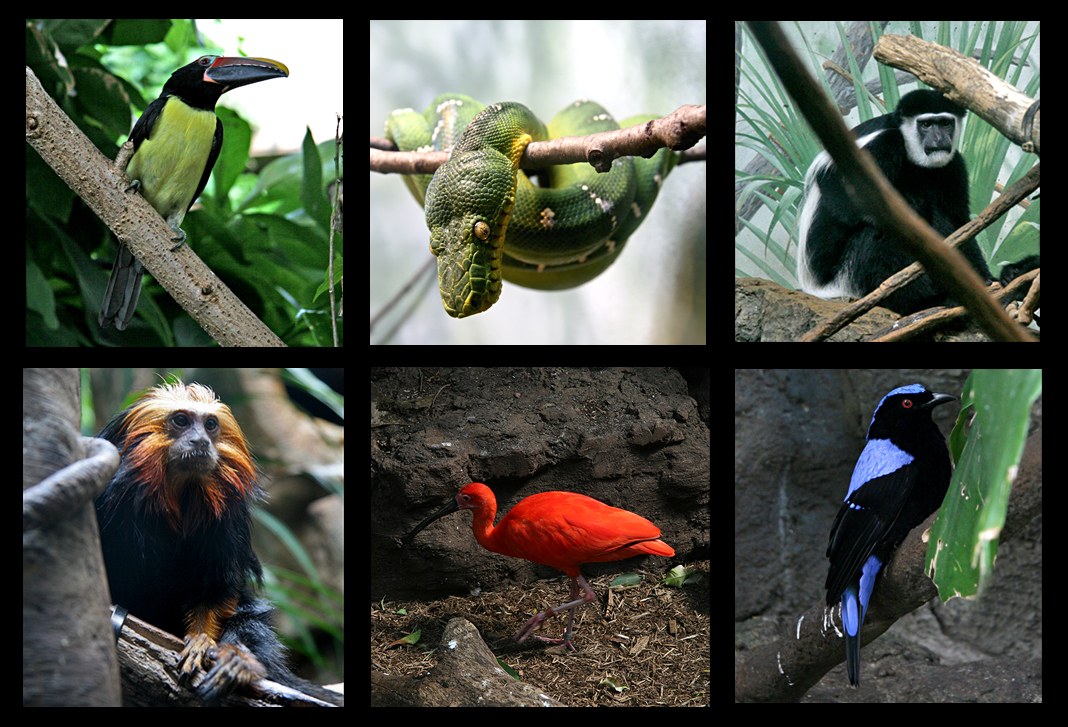
    In the photo collage, starting upper right going clockwise, we have a Toucanet, Emerald Tree Boa, Colobus Monkey, Tamarin, Scarlet Ibis, and a Fairy Bluebird. One of the outstanding aspects of the tropics is the fantastic, bright colors of the native birds. The spectacular plumage is a draw for observers, photographers, and, I imagine, for those who purchase these birds as pets…

    Posted on by Brian Dubé

  • Arch Rebels

    Posted on by Brian Dubé

    The Washington Square Arch is one of my favorite subjects, and I have tried not to overuse it. However, I already have done at least 7 postings where all or part of the arch appears in the photo. Apart from the obvious – that it is one of just a handful of monuments in the city – it has gone through a recent restoration and is beautifully illuminated at night. This is is also the neighborhood where I live, so I see it numerous times daily. I have always been obsessed with monuments; as a child, my obsession was the Washington Monument. There is a small doorway in the west pier of the arch. Behind it is an interior stairwell there which ascends to the top, where there is a vacant chamber, and from there a trapdoor to the rooftop.

    One of the most often told stories is that of a snowy night in 1916, when artists Marcel Duchamp and John Sloan, along with 4 others (Gertrude Drick, Forrest Mann, Betty Turner, and Charles Ellis of the Provincetown Playhouse) snuck up to the top of the arch with Chinese lanterns, food, drink, balloons, and cap pistols. There, in a night of revelry, they read a declaration proclaiming the “free and independent republic of Washington Square.” They fired the toy pistols, let the balloons loose, and spent the night eating and drinking while a crowd gathered below. I have not done a posting on the arch per se because someday, somehow, in honor of those rebels, I will get inside and to the top. And when I do, there will be a proper posting and history with plenty of photos – inside, outside, staircase, chambers, rooftop with views – and you will see them here…

    More on the Washington Square Arch: Jeopardy, Nested Embraces, Cello, Singing Bowls, Evening Arch, One Fifth Avenue, Music for 9 Basses and 1 Cello

    Posted on by Brian Dubé

  • Nice and Olds

    Posted on by Brian Dubé

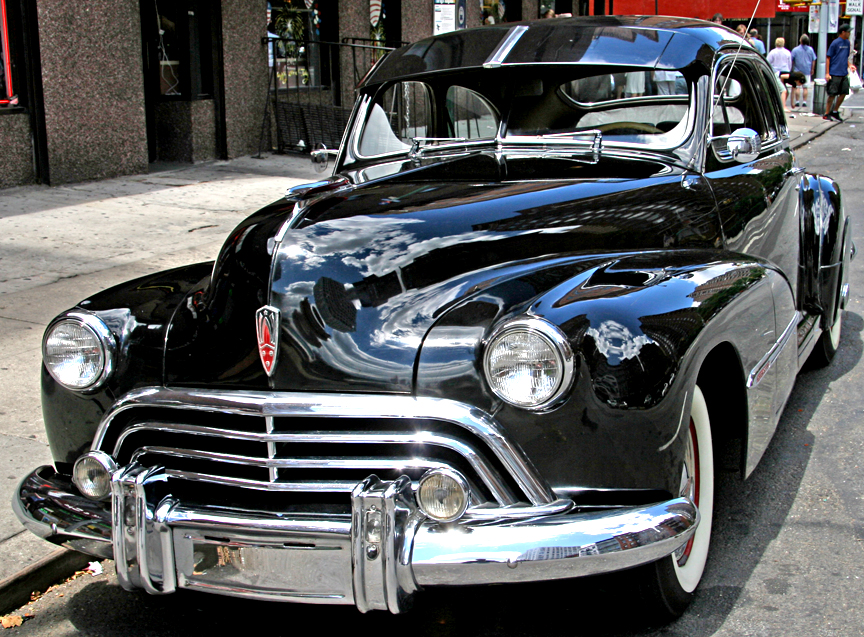
    Here’s a new twist. While walking up to B&H Photo with a photographer friend, we came upon this antique 1947 Oldsmobile on 9th Avenue. The owner, Brian Atkins, was taking photos of passersby (for a small charge) who wanted to pose with the vehicle. In conversation with him, we agreed that cars make great subjects for photography. I recently shot a number of autos in an antique car show I happened upon in Connecticut, but I have not posted them here since they were not in NYC.

    I am not a car enthusiast, but I love the chrome, sweeping curves, shiny lustrous finish, reflections, interiors, and overall design work of many of these classic American icons. The beauty of the designs of these antique autos is not strictly a romantic passion for all things past. Many antique automobiles were some of the finest examples of industrial design. Raymond Loewy (1893-1986), for example, was probably the greatest and well-known industrial designer of the 20th century. His prolific career involved a long relationship with the U.S. automaker Studebaker. If you are not familiar with Loewy and his work, I would highly recommend some reading about him and his work – you’ll be amazed. He was responsible for everything from the Hoover logo to NASA Skylab interior…

    Posted on by Brian Dubé

  • Two for One

    Posted on by Brian Dubé

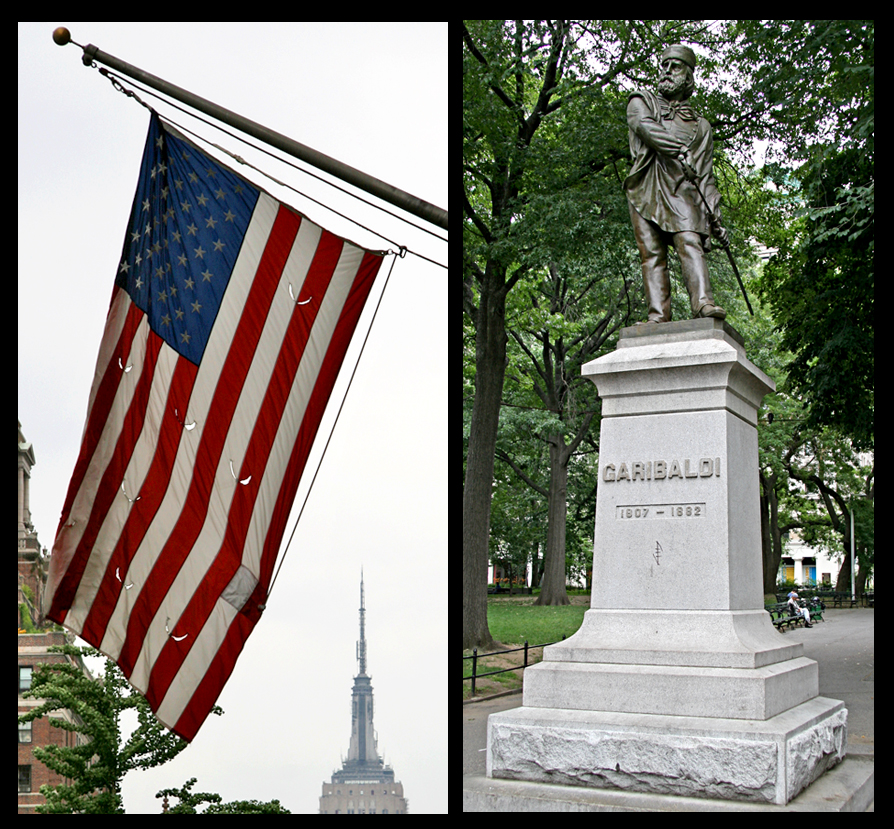
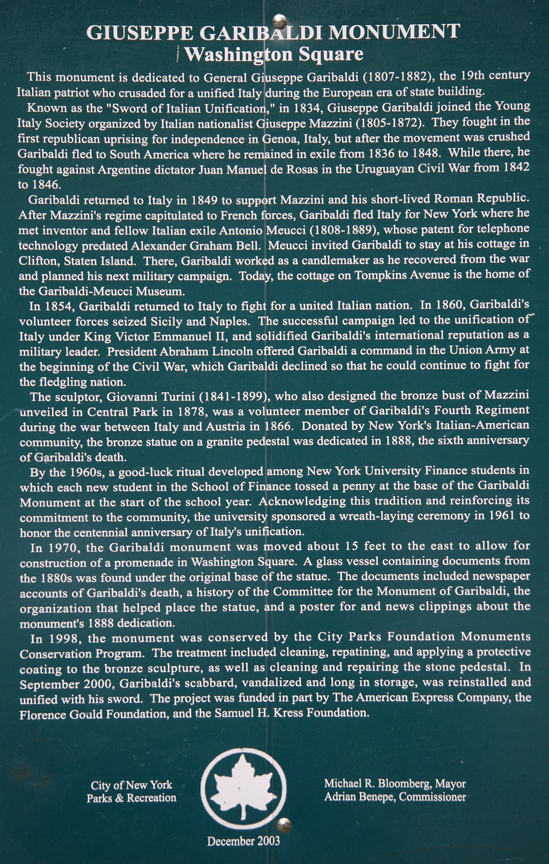
    Today is not only Independence Day but also the 200th birthday of Giuseppe Garibaldi – he was born in Nice (Nizza) on July 4, 1807. The statue shown in the photo sits in Washington Square Park. Last night, there was a celebratory concert, and today there is singing of Italian songs during the day.

    Garibaldi was a military leader who is credited with unifying Italy. He was exiled from Italy a number of times; from 1850 to 1853, he lived in Staten Island, New York. The sculptor of the bronze statue, Giovanni Turini, was a volunteer member of Garibaldi’s Fourth Regiment. It was donated by the Italian-American community in 1888, six years after Garibaldi’s death. Click here for a photo I took of the plaque by the statue; it gives a brief bio of Garibaldi and information regarding the statue itself.

    Tonight, of course, we have the annual fireworks sponsored by Macy’s at 9:20 PM. There are many viewing areas – the prime area is the FDR Drive, which is closed to vehicles from 14th to 42nd Street. Of course, there are many other viewing areas – Roosevelt Island, Long Island City (Queens), Liberty Park, NJ, South Street Seaport, Brooklyn, and the Circle Line. And I understand that tickets are available for viewing from the Empire State Building for 150 people at $175 each…

    Posted on by Brian Dubé

  • Paris in New York

    Posted on by Brian Dubé

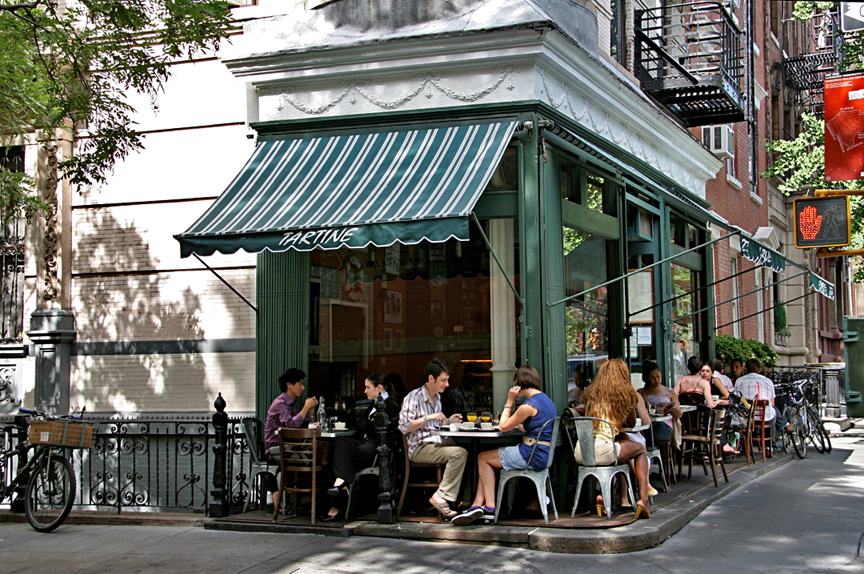
    One customer review complained of 1) a long wait, 2) a grossly small restaurant with people bumping into your chair every time they pass, 3) a rude and poorly trained staff with major attitude, and 4) a bus boy who thinks it’s okay to sweep and stack tables right beside you while you’re still eating. They take no credit cards, no reservations, have no liquor license (BYO), and yet they wait in line. Why? Many just love this place. NYC is a city of extremes, and this includes restaurant experiences and opinions. Tartine was started by Thierry Rorchard and Jean-Francois Bernard, two chefs who had worked several decades in large French restaurants.

    This wonderful small French bistro at 253 West 11th Street on the corner of 4th Street is probably in the most bucolic area of town – the West Village between 7th and 8th Avenues. I have written before of this neighborhood in 39 & 41 Commerce, Cherry Lane Theater, 17 Grove Street, and 121 Charles Street. Here, you will find the charm of being in the Latin Quarter of Paris. The stretch of West 4th Street from 7th to 8th has a number of restaurants discreetly hidden; these blocks are decidedly non-commercial, in part due to the Landmarks Preservation Commission, which has strict guidelines. I love al fresco dining, but I find most streets in Manhattan much too busy. Tree-lined West 4th street is the perfect place for a summer brunch. Be prepared to wait in line…

    Posted on by Brian Dubé

  • Alidoro

    Posted on by Brian Dubé

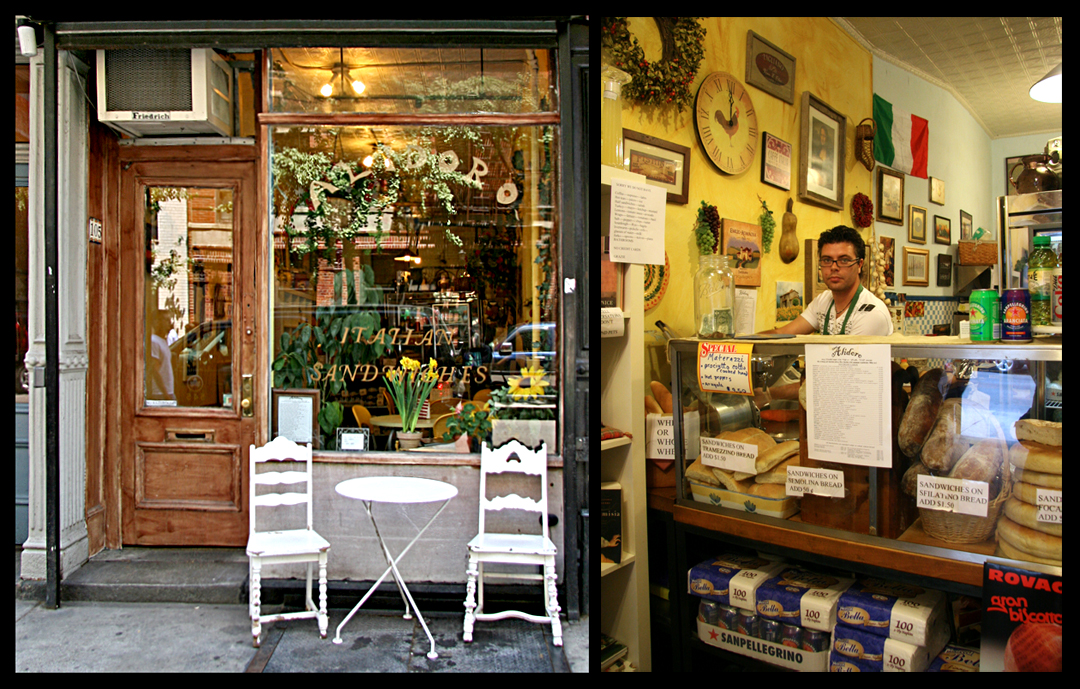
    Do you want to know a real NYC secret? Alidoro. This tiny sandwich shop at 105 Sullivan Street is one of the best in NYC. I was introduced to it in 1991 by an Italian friend and neighborhood resident. There is an area of the South Village and neighboring SoHo which has a number of Italian residents and businesses, such as Rafetto’s, Vesuvio Bakery, Villa Moscioni, Tiro A Segno, Joe’s Dairy, Faicco’s Pork, etc. This sandwich shop was originally opened in 1986 as Melampo Imported Foods by Alessandro Gualandi, a native of Florence, who had a reputation as one of the most difficult shop owners around (some said grouchy, others said temperamental artiste). You wouldn’t dare ask for any changes or modifications – all of his sandwiches were ordered by name (Julie, Pinocchio, Arzibubo, Geppetto, etc.). I was reprimanded for asking for a little mustard – subsequently, I would take my sandwich back to my office and make adjustments there. Click here for a short review about the old shop and its owner.

    In 2001, the business was taken over by Walter Momente, a trained chef from Italy. A few changes have been made, like the addition of small tables, which is great since the only place to sit previously was a playground nearby. And the new owner has a sunny disposition. But the sandwiches and quality are the same. There are 40 sandwiches to choose from (menu here), each on their own fresh Italian loaf (white or whole wheat) with options for sfilatino, tramezzino, focaccia, or semolina bread. All the best ingredients are used: sopressata, prosciutto, salami, olive paste, mozzarella, marinated peppers, arugula, bel paese, sun dried tomatoes, salami, and their signature dressing. The sandwiches are large enough that for many, half is a meal. Another thing hasn’t changed: call ahead or get there before 12:30, otherwise there are lines out into the street…

    Posted on by Brian Dubé

  • Harmonie Club

    Posted on by Brian Dubé

    Private clubs can really be private. Click here for the Harmonie Club’s website and you will see what I mean – no information of any sort, other than a few small photos and drawings. Read as I may and try as I did, I have no interior photos for you, no detailed history, no fascinating stories, and no idea about membership requirements. I have no idea what goes on there, who the members are, or what the dues are. In fact, until recently, they were so private that they did not want members who were open about their Jewishness. There was a book published in 1977, The Harmonie Club: One Hundred and Twenty-Five Years, 1852-1977 – a dealer’s description of the book says, “What is most interesting is that the words “Jew” and “Jewish” do not appear in this history.”

    The Harmonie Club is the second oldest private club in NYC. It was founded in 1852 as the Gesellschaft Harmonie by six German/Jewish immigrants (unable to gain admittance to the Union Club) for the purpose of “mutually beneficial social entertainment, occasional singing entertainments, lectures, etc.” The Harmonie distinguished itself from other all-men’s clubs by allowing women at dinner since its founding. Many of the members of the Harmonie Club were powerful Jewish families of the time, as chronicled in Our Crowd by Stephen Birmingham. The club building, a renaissance palace designed by McKim, Mead and White in 1906, is located at 4 W. 60th Street – just steps from Fifth Avenue, Grand Army Plaza, and Central Park. This location is probably the prime location in Manhattan. In 2001, prior to his campaign for mayor, Michael Bloomberg resigned from four private clubs, including the Harmonie Club. His reason was lack of diversity in membership. Not one of the 1200 members at the club was black…

    Posted on by Brian Dubé

  • Whoopi Too

    Posted on by Brian Dubé

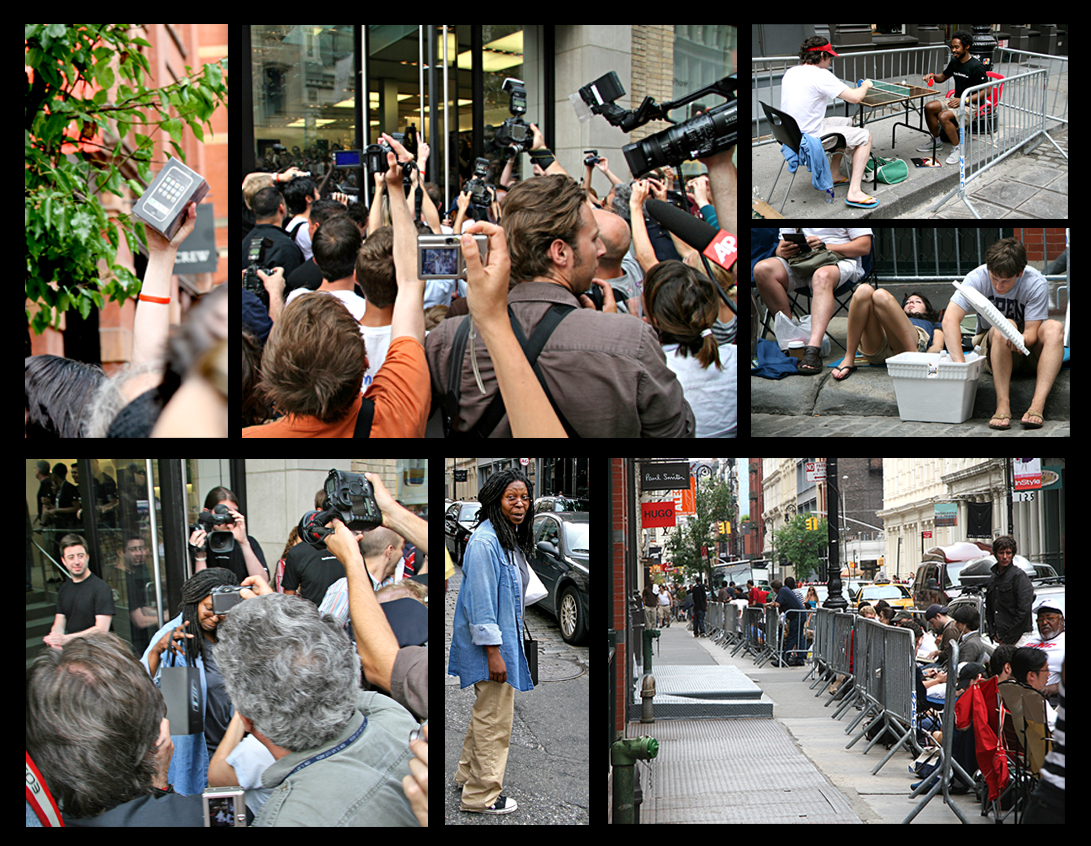
    Yes, that’s Whoopi Goldberg (two photos bottom left) getting her highly coveted iPhone a few minutes after the release of the new, heavily promoted device at the Apple Store in SoHo at 6 PM, Friday, June 29th. People had camped out in line around the block outside the store as early as Tuesday. Some had paid others as much as $150 to wait in line for them. This scenario was played out in Apple stores around the country. Two guys had set up a ping-pong table to pass the time (upper right photo). There was cheering when UPS made their delivery in the morning. All manner of press was there, with reporters doing interviews. The whole scene was sheer lunacy, since iPhones were readily available just hours later with no lines whatsoever. Apple employees assured me that there was adequate inventory; an estimated 2,000 phones were delivered to this location alone. Also, the phones were simultaneously released at AT&T stores, where, I understand, the lines there were negligible.

    Apple’s ability to inspire a cult following and religious zeal among their customers (as documented by Guy Kawasaki in The Macintosh Way) and their ability to create buzz and hype for a product is remarkable. An iPhone search on Google brings 96 million hits. The actual product has received very favorable reviews. David Pogue, in an article from the New York Times, The iPhone Matches Most of Its Hype, refers to the product as “amazing.” He also reports that over 11,000 articles have been written on the iPhone in just the six months. I’ll find out how good this product really is this weekend with some hands-on time – a friend purchased one last night when we visited the Apple Store at 10:30 PM…

    Posted on by Brian Dubé

  • Bloomberg

    Posted on by Brian Dubé

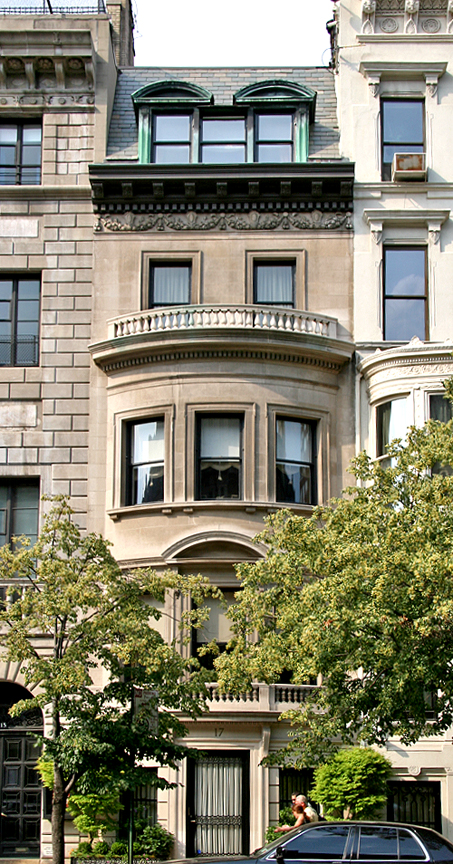
    This is the residence of Michael Bloomberg, mayor of NYC. Elected in 2001 and for a second term in 2005, Bloomberg opted to live in his Manhattan residence rather than Gracie Mansion (the official Mayoral residence since 1942, when Robert Moses paved the way for Fiorello LaGuardia to become Gracie Mansion’s first resident). The 5-story, 7,500-square-foot townhouse at 17 East 79th St. was built in 1889 and purchased by Bloomberg in 1986 for $3.5 million – ($17 million today). Don’t be deceived by the understated elegance of this building – these small townhouses and limestone mansions between Fifth and Madison on the Upper East Side are among the most coveted properties in NYC in one of the most desirable neighborhoods in the world. This is super prime real estate.

    Bloomberg has been a unique office holder, not coming from the world of politics. With a B.S. in electrical engineering from Johns Hopkins and a Harvard MBA, he certainly had the intellectual acumen and academic achievement for his forays into the business world using his background in technology, after his stint at Salomon Brothers. A self-made billionaire from a humble background, Bloomberg is in various Forbes’ lists as one of the world’s richest men, with homes around the world. His Bermuda home has billionaire Ross Perot and Italian Prime Minister Silvio Berlusconi as neighbors. He has a 20-acre farm in North Salem, NY, a Victorian townhouse in London, and a condominium in Vail, Colorado. He is a private pilot with a fleet of aircraft at his disposal. Yet, ever to be practical and demonstrate that at some level he is still one of us plain folk, he continues to take the subway every morning to City Hall (albeit with bodyguards) and list his address and phone number in the white pages (yes, I checked)…

    Posted on by Brian Dubé

  • Light on Bobst

    Posted on by Brian Dubé

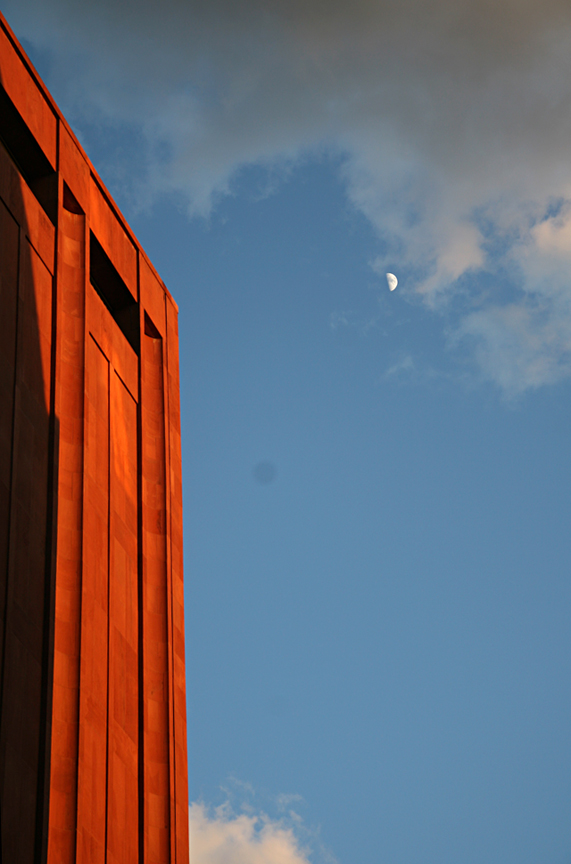
    My recent interest in the evening and night sky prompted this photo. It is remarkable how out of touch with the natural world city dwellers can be – there is a serious dearth of knowledge in subjects like plants, animals, insects, astronomy, etc. Recently, I have noticed some very brightly lit heavenly bodies, however, I was not able to find anyone who knew what these objects were (by studying some online star maps, I was able to confirm my suspicion that Venus was one of them). The photo was taken at sunset of the Bobst Library, which houses over 3 million volumes and is one of the largest academic libraries in the US.

    This massive red sandstone edifice on Washington Square South was designed by Philip Johnson for NYU (New York University) and was completed in 1972. It has been steeped in controversy since its construction:
    1) To begin with, there were substantial delays in its construction.
    2) There has been much criticism of its bulky, monolithic form and how it towers over Washington Square Park. The work of Johnson himself has been the subject of much criticism.
    3) The library was named after Elmer Holmes Bobst, who made a $6 million dollar contribution. There was embarrassment for the University, however, when it was learned that Bobst was a Nixon supporter, had been accused of a corrupt contribution to Nixon, and made antisemitic remarks.
    4) In 2003, Bobst made big news with two suicides in one month – students jumped from the open-air catwalks to the marble floor below.
    5) Steven Stanzak, an NYU student unable to afford his housing costs, became homeless and took up residence in the basement of the Bobst Library for eight months from 2003-2004…

    Posted on by Brian Dubé

  • Mermaid Parade 2007 Part 2

    Posted on by Brian Dubé

    (see Part 1 here for more photos)

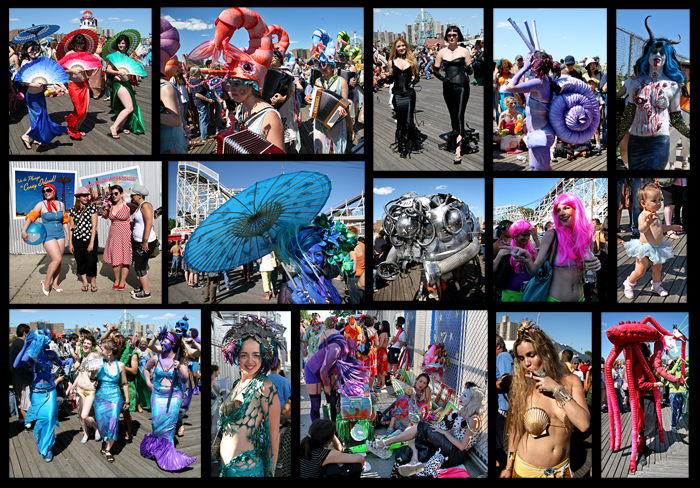
    This is part two of the 2007 Mermaid Parade in Coney Island. Please click on the photo for an enlarged, detailed view. This collage represents a small number of the 300+ photos I took at the parade. I endeavored to show the diversity of costumes that were present. As you can see, the themes of art parades in NYC are not policed, and many of the costumes certainly go beyond what one would expect in a Mermaid Parade: hula hoopers, goth garb, ghoulish characters, alien invasions, geishas, visual puns (like the Seapranos), Coney Island postcard groups, and creative assemblages. Of course, there were mermaids, anemones, nautiluses, brassieres from shells, seahorses, lobsters, and a myriad of other sea creatures. The creativity was overwhelming and tough to absorb and process with the volume and speed at which these remarkable displays passed by the spectators. Trying to get decent photos in this intense environment was a challenge. If you check back here in a day or so, I should have a link for more photos of the parade on my Flickr site

    Posted on by Brian Dubé

  • Mermaid Parade 2007

    Posted on by Brian Dubé

    This has become my favorite parade – it’s on the boardwalk, at the beach (yet reachable by subway), in NYC, beautiful mermaids, blue everywhere, Astroland with the Cyclone and Wonderwheel as backdrop, manageable in size, imaginative creative costumes, and a spirited atmosphere. Add a sunny day with blue skies and what’s not to like? It’s surprising how many have still not heard of the Mermaid Parade in Coney Island, celebrating its 25th anniversary in 2007. Click here and here for my postings of the 2006 parade.

    Founded in 1983 by Coney Island USA, the not-for-profit arts organization that also produces the Coney Island Circus Sideshow, the Mermaid Parade pays homage to Coney Island’s forgotten Mardi Gras, which lasted from 1903 to 1954. The Mermaid Parade celebrates the sand, the sea, the salty air, and the beginning of summer, as well as the history and mythology of Coney Island, Coney Island pride, and artistic self-expression. The Parade is characterized by participants dressed in hand-made costumes as Mermaids, Neptunes, various sea creatures, the occasional wandering lighthouse, Coney Island post card, or amusement ride, as well as antique cars, marching bands, drill teams, and the odd yacht pulled on flatbed. Each year, a different celebrity King Neptune and Queen Mermaid rule over the proceedings, riding in the Parade and assisting in the opening of the Ocean for the summer swimming season by marching down the Beach from the Boardwalk, cutting through Ribbons representing the seasons, and tossing fruit into the Atlantic to appease the Sea Gods. In the past, David Byrne, Queen Latifah, Ron Kuby, Curtis Sliwa, Moby, and David Johansen have presided over the assembled masses. Click here for their official website.

    Even though I set aside the day to see the event, I still missed many of the events: floats and autos on Surf Avenue, the costume judging, and the Mermaid Parade Ball. Tomorrow I will post a collection of the best photos of the hundreds I took in Part 2

    Posted on by Brian Dubé

  • Pride March

    Posted on by Brian Dubé

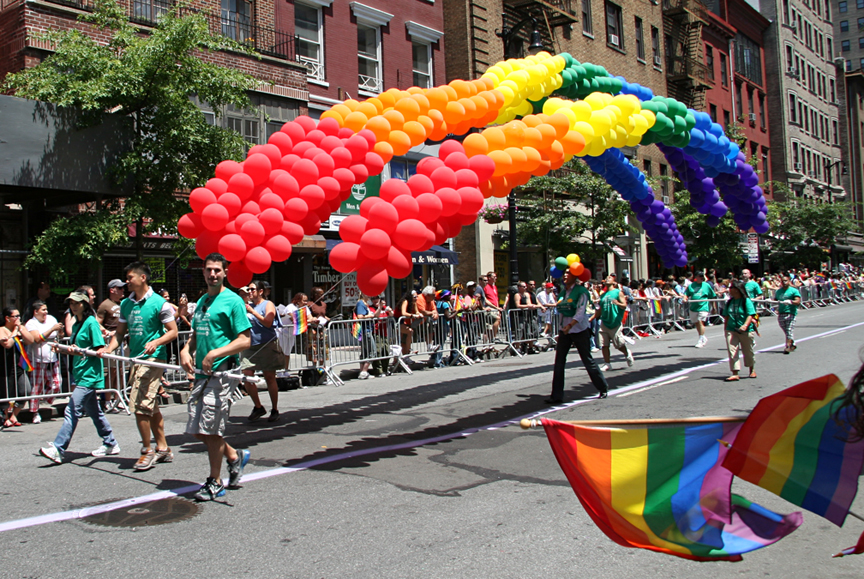
    This weekend was one of parades and marches; on Saturday, we had the Mermaid Parade in Coney Island and the Dyke March, and on Sunday, we had the 2007 NYC LGBT Pride march. The gay pride march in NYC, produced by Heritage of Pride, is the big kahuna – marchers included mayor Michael Bloomberg and City Council Speaker Christine Quinn, one of the nation’s most prominent openly gay elected officials. Religious groups led the parade this year, with a float from Dignity, a gay Catholic group, Rabbi Sharon Kleinbaum, who heads the world’s largest gay synagogue, Reverend Troy Perry of the Metropolitan Community Church, and a Buddhist group. A big issue at hand locally and nationally is the issue of gay marriage, so there was cause for marchers to celebrate the recent passing of a bill in the New York State Assembly legalizing same-sex marriage – Govenor Eliot Spitzer supports the bill, although it is unlikely to pass the Republican-controlled state Senate.

    Tens of thousands attended the march, which started at 52nd Street, proceeded down Fifth Avenue turning west along 8th Street, and finished in the West Village. Spectators lined the route. At this point in time, after 38 years, the march has become an institution, and in spite of the usual coterie of exhibitionists – dancers in bikini briefs, drag queens, Dykes on Bikes – and their voyeurs, the march is no longer the controversial event it once was…

    Posted on by Brian Dubé

  • Dyke March

    Posted on by Brian Dubé

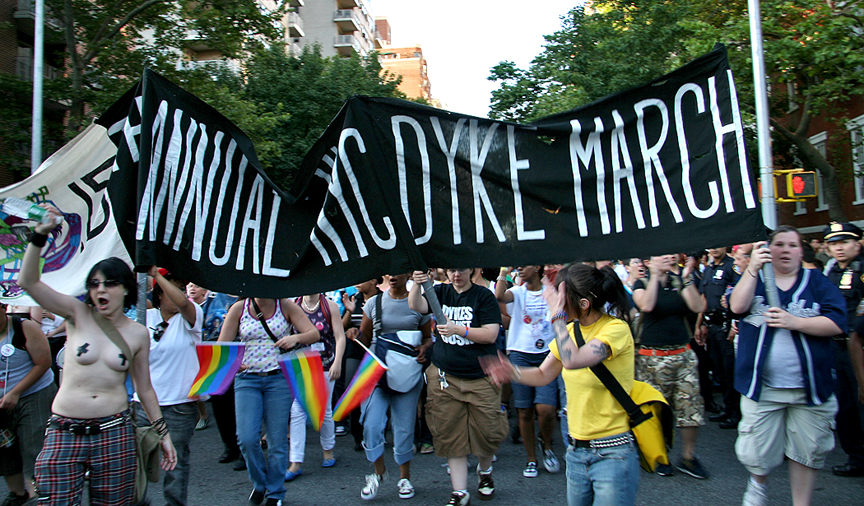
    This is Gay Pride Week (June 17-24, 2007), an international phenomenon now taking place in 140 cities around the world. Manhattan’s own celebration includes parades, marches, festivals, rallies, dances, and parties. Yesterday was the 15th Annual New York City Dyke March, taking place the day before the big Gay Parade (today). The Dyke March has been growing in size, which is particularly interesting, given that even in NYC, the lesbian community is still a relatively invisible group, particularly in comparison to the gay men’s community, which has made large gains in the last 40 years with visibility and approval in many spheres and sectors (the TV program Queer Eye for the Straight Guy, e.g.).

    Much of the populace now sees various sexual orientations as just part of the human condition – a percentage of the population has been gay/lesbian since the dawn of time and will continue to be so regardless of of any efforts to eradicate these groups. I believe that one of greatest problems facing full acceptance of the gay community is the continuing position of the various churches that view homosexuality negatively. Social mores in this country still trickle down from religious doctrine owing to a history largely as a Judeo-Christian society rather than secular…

    Posted on by Brian Dubé


  • dinamic_sidebar 4 none

©2026 New York Daily Photo Entries (RSS) and Comments (RSS)  Raindrops Theme