• Bleecker Tower

    Posted on by Brian Dubé

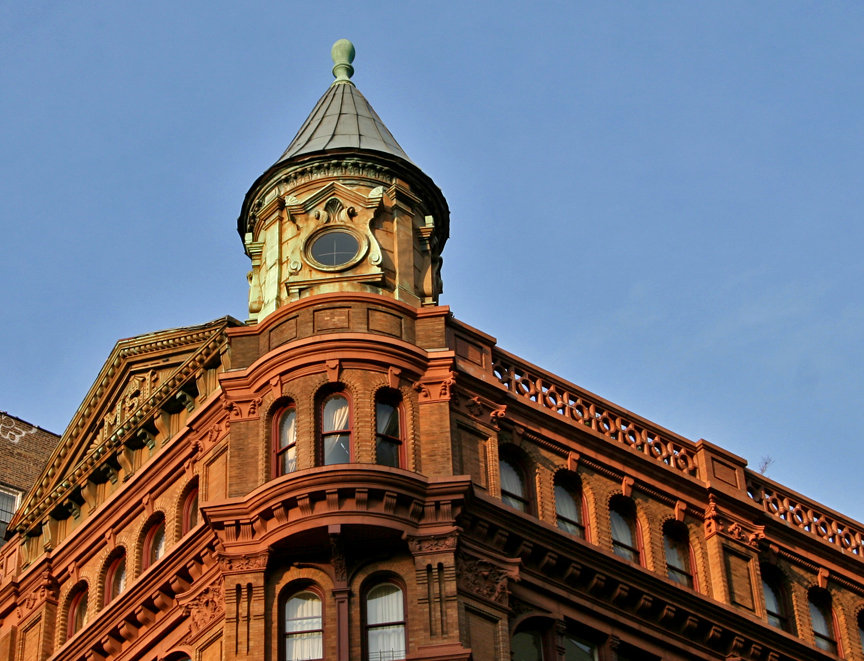
    It’s hard to imagine that this area of lower Broadway, part of what now is called NoHo (north of Houston), was pioneering ground in the early 1980s. The area was dominated by industrial businesses – leather distributors like Marap Leather, who occupied an entire building at 678 Broadway, or Commercial Plastics at 630 Broadway. In 1980, Unique Clothing Warehouse opened at 718 Broadway at Waverly Place (president Richard Wolland closed it and filed bankruptcy in 1991 with over $2 million in debt), beginning a wave of transition. In 1983, Tower Records opened at 4th Street and Broadway (recently closed). A few months later, the elegant Blue Willow restaurant opened at 644 Broadway in the building shown in the photo. Click here for more photos.

    This rock-cut brownstone, terra-cotta, and brick structure was built in 1889 for the Manhattan Savings Institution (hence the monogram “MSI” at the top) and designed by Stephen D. Hatch. The building was in serious disrepair after years of neglect, and in 1987, there was a complete restoration and conversion to residential loft apartments (known as the Bleecker Tower), already fetching millions of dollars in the late 1990s. It is alternately called the Atrium Building (not to be confused with The Atrium at 160 Bleecker), after clothing retailer Atrium, who now occupies the ground floor. When safe to do so in NYC, remember to look up…
    Posted on by Brian Dubé

  • Aspiration

    Posted on by Brian Dubé

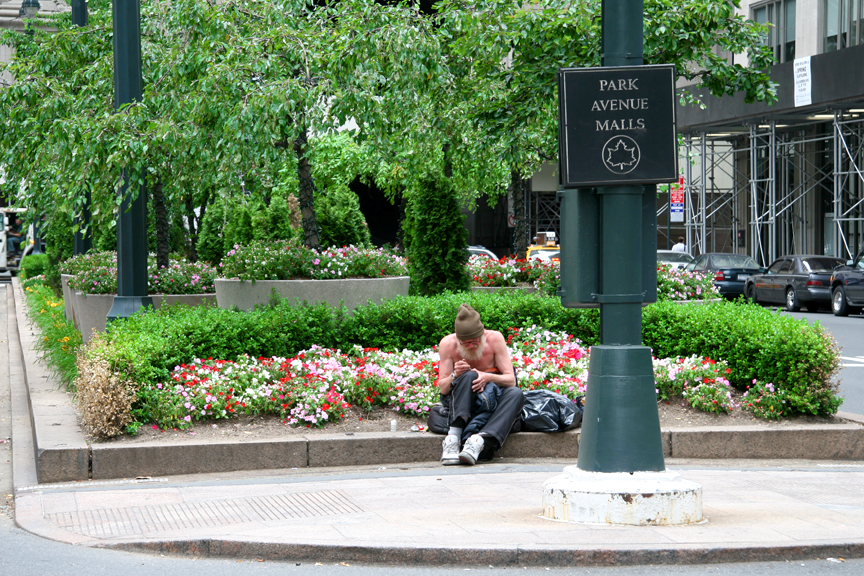
    Here, we have the Park Avenue Malls, a central 2.5 mile-long median (broken by cross streets) extending from 46th Street (at the Helmsley Building, 230 Park Avenue) to 96th Street, where the Metro-North railroad tracks surface to run above ground (they run under Park Avenue from Grand Central to 96th Street). The Fund for Park Avenue, a private organization, is responsible for the plantings and maintenance of the Park Avenue Malls. In the spring, tulips are planted – these flower along with the cherry trees. In the summer, when the tulips have faded, wax begonias are planted. According to Margaret Ternes, chairman of the Fund for Park Avenue, wax begonias are chosen for their hardiness. Their waxy leaves retard pollution, and begonias can stand the hot sun – they do not require the type of watering many flowers do, such as impatiens (there is no automatic watering system for the Malls).

    I was surprised to see a homeless person on the Mall, a rather uncommon and unexpected occurrence. More surprising was to see him cleaning his nails. Many aspire to live on the highly coveted Park Avenue. Some find unconventional ways of getting there, like Joe Ades, gentleman peeler. But there are necessary conditions for living here, such as wealth and many personal habits which would be highly recommended if one were to associate with high society. I would guess that good grooming is one of them…

    Posted on by Brian Dubé

  • Book Country

    Posted on by Brian Dubé

    New York is book country. This is not only an accurate metaphor but also the name of a major street fair which was held annually for several years along Fifth Avenue. New York City is widely perceived as the center of publishing in the United States, home to numerous major publishers of books, newspapers, magazines, and electronic media, with all the service providers – editors, literary agents, graphics, advertising, etc. We also have a huge number of bookstores, with many renowned independents such as the Strand, Gotham Book Mart, Shakespeare & Company, St. Mark’s Bookshop, Three Lives & Company, Labyrinth Books, and Bluestockings (the book superstore chains have had a serious impact, and the number of independents is fast declining. Time will tell whether this trend threatens the American literary future as many predict). Book signings and readings are also a big part of the NYC literary landscape, although signing tours of major authors mean that these events are not so unique to New York itself.

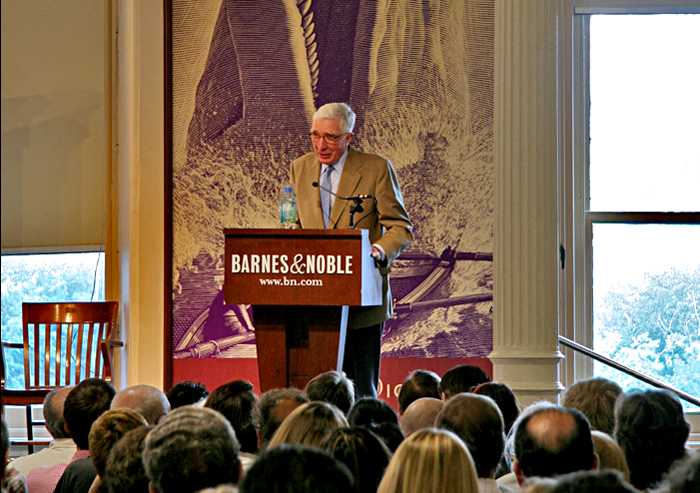
    33 Last night at the Barnes and Noble superstore at 17th Street on Union Square, John Updike was doing a reading from a new book (Terrorist) with signed copies available. The event was well attended. Updike is a renowned novelist, poet, literary critic, and essayist who has won numerous literary awards: PEN/Faulkner Award, National Book Award, National Book Critics Circle Award (twice), and the Pulitzer Prize (twice). His writing credits are many (read about him here)…

    Posted on by Brian Dubé

  • Parasol

    Posted on by Brian Dubé

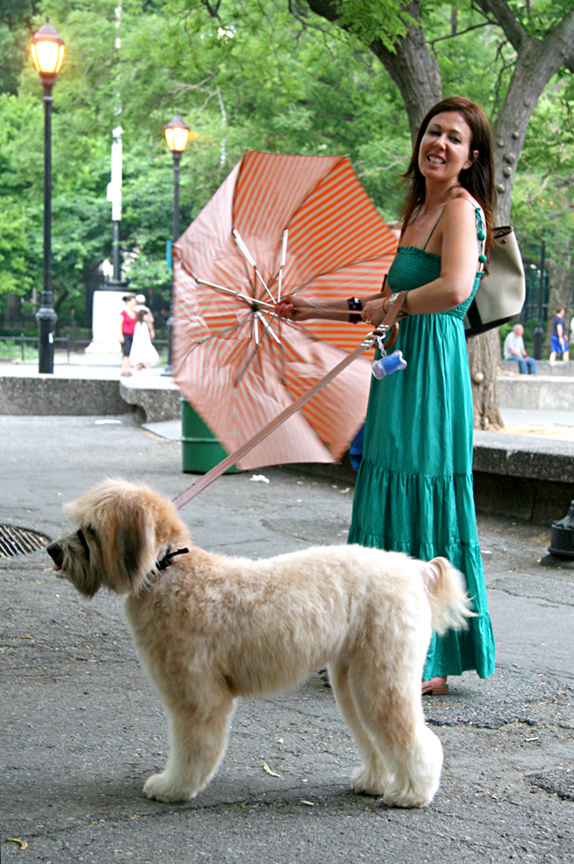
    In order to make this photo and story work, I wanted to make a case for the resurgence of the parasol. Perhaps a little spin on the facts. Certainly the use of parasols makes the utmost sense, since avoidance of the sun is now of paramount importance with ozone depletion, skin cancer, sunburn, and freckling. Plus, hats don’t shield enough and can lead to the dreaded hat hair. And then there is the sun-shunning goth crowd. So in a way, I’m surprised that parasols aren’t HUGE, since they can also be a fashion statement. I did uncover an article in 2005 from the Village Voice that proclaimed the parasol’s emergence from the 1920s, citing two shops in the city that are seeing a renewed interest: Rain or Shine and Brella Bar (Update 1/30/12: Now closed).

    The collapsible umbrella/parasol is of Chinese origin, dating back nearly 2000 years. They are still produced in large numbers with a variety of colors, patterns, and materials, so Asian product stores such as Pearl River are great places to go for selection and pricing. I do occasionally see more women with parasols on sunny, hot, or hazy days. (BTW, the dog in the photo is a Wheaten Terrier). In 2001, there was a photo that rocked the world: personal assistant Fonzworth Bentley holding an umbrella over P. Diddy’s head in Saint Tropez. Perhaps the male parasol is not too far away…

    Posted on by Brian Dubé

  • St. Bart’s

    Posted on by Brian Dubé

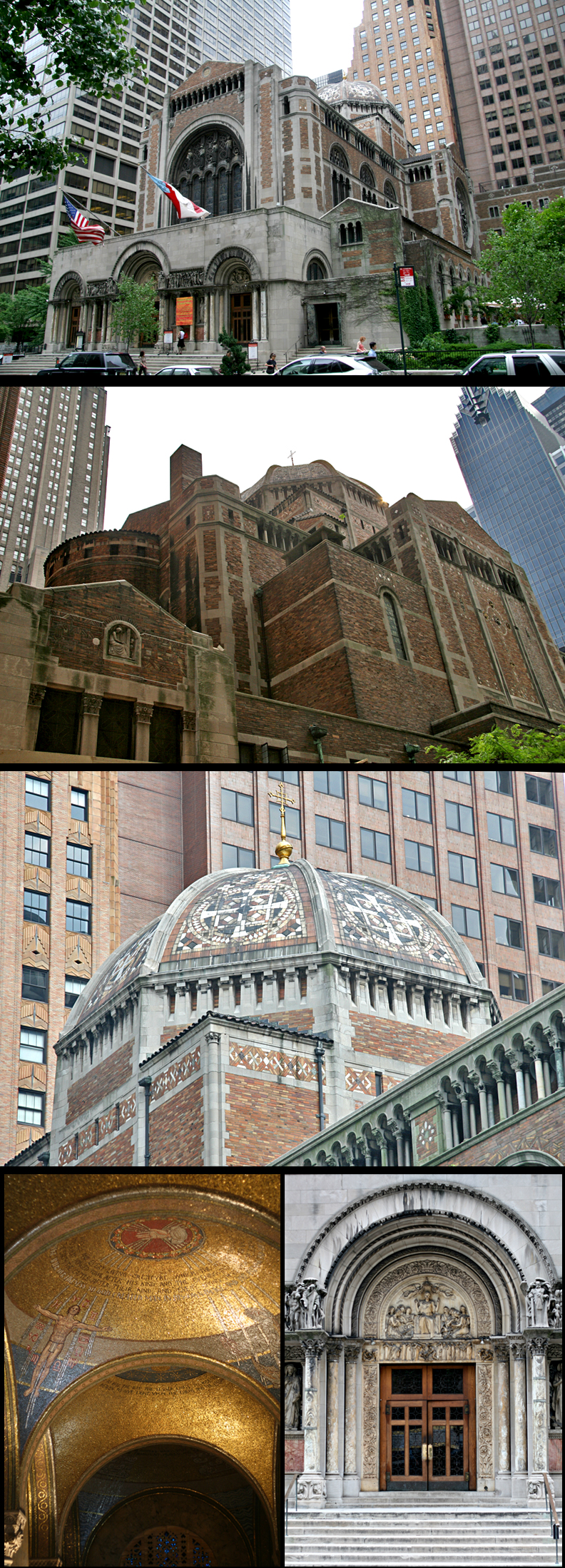
    One of the unique features about St. Bartholomew’s Episcopal Church at 50th Street and Park Avenue, with its signature dome and cross, is the contrast with the surrounding architecture. Click here for more photos. Although this could be said of many churches, urban and rural, the dramatic difference in scale between this landmark limestone and brick structure and the surrounding monolithic buildings on Park Avenue (such as the 570 foot GE/RCA building behind it and the Waldorf Astoria Hotel to its right) draws attention immediately.

    This is actually the third location for the congregation. It started in 1835 in a plain church in the then-fashionable Bowery area; in 1872, their growth and funds permitted them to build a new church at Madison and 44th. Designed by James Renwick, the architect of St. Patrick’s Cathedral, the building was later embellished with a triple portal by Stanford White. In 1918, they moved to their current location at 50th Street and Park Avenue. A new structure was designed by Bertram Goodhue to harmonize with the Romanesque Revival triple portal entrance, which was relocated from the Madison Avenue church. Over time, the interior was decorated in the Byzantine style, with major mosaics in the narthex and over the high altar. In 1981, a real estate developer offered a plan to build an office tower on the site of the adjacent community house, ensuring a financial endowment for the church. Conflict developed within the parish and between the church and the city over air rights and the landmark status of the building; the case went to the Supreme Court. In 1991, the landmark law was upheld.

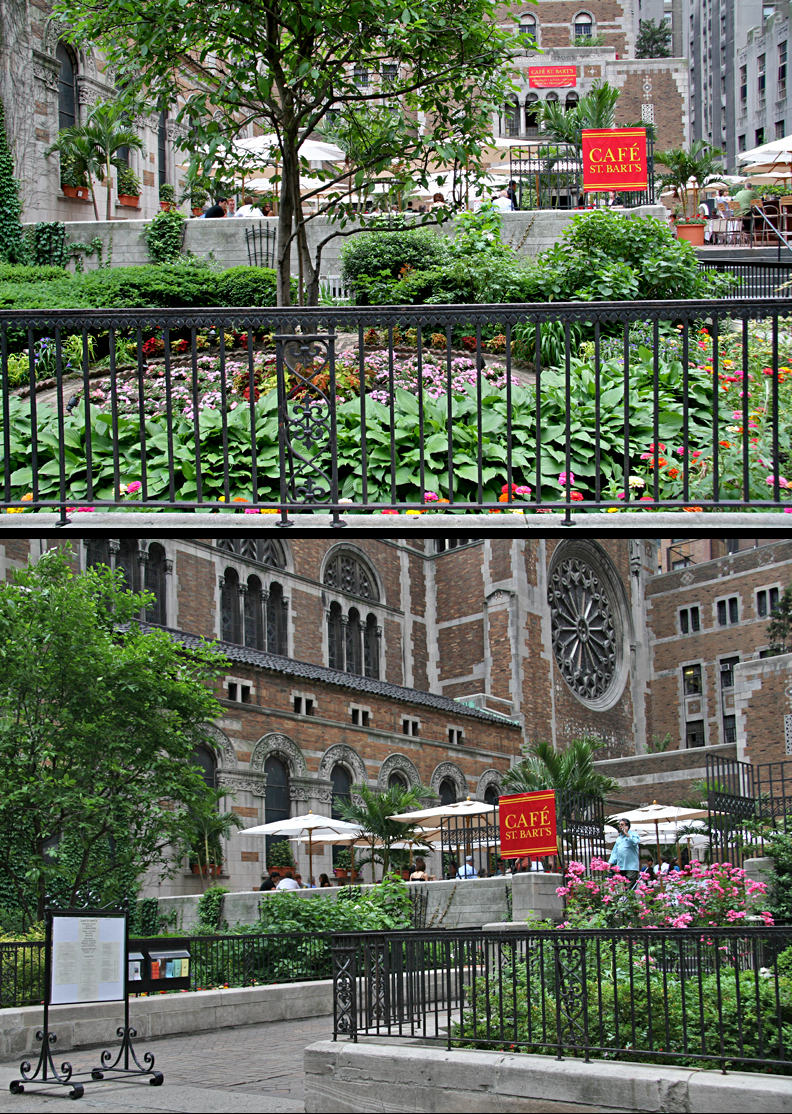
    The church is renowned for its pipe organ, one of the largest in the world and played by the famous conductor Leopold Stokowski. The popular and successful Café St. Bart’s with its outdoor terrace can be seen here. The church provides many community services, including a public music series and summer festival, a homeless shelter, and a soup kitchen…

    Posted on by Brian Dubé

  • Babbo at Last

    Posted on by Brian Dubé

    In one of my earliest posts on March 23, 2006, I wrote of Babbo, the restaurant of celebrity chef Mario Batali, and my pending reservation for April 22 of that year for myself and family (who were coming in from out of state). Unfortunately, that and two other reservations were canceled for a variety of unavoidable circumstances, including a hurricane and a blizzard. So it was with great anticipation that last night, my family, a friend, and I finally did get to eat at the famed establishment. One of the hallmarks of a good restaurant is service, of course, and our waiter immediately put us at ease by anticipating questions regarding menu structure and options regarding antipasti, primi, and secondi. He translated any problematic menu item words and proposed a number of sharing ideas, along with specific recommendations.

    We found Babbo a fun place, not stuffy in the least, which can frequently be the case with restaurants of this caliber. The place was packed, even at 6PM – normally a quiet time at such an early hour for NYC weekend dining. The food was excellent with many exotic touches (see their menu here). In addition to the waiter, our table was serviced by a large crew of individuals who made serving and busing a very quick and painless process. We give the food and service a very high rating. Click here for a New York Times review. And no, we did not see Mario. However, I have met him twice before – sitting on the steps of a townhouse across the street on a summer evening, taking a break from the kitchen with a glass of wine, chatting…

    Posted on by Brian Dubé

  • Wild Crash

    Posted on by Brian Dubé

    On Thursday night, while strolling near Washington Square Park in the Village, I observed rerouting of traffic and a helicopter hovering overhead – not typical at all. Suspecting a serious crime scene, I walked towards Eighth Street and University Place to find a taped off intersection with a badly crumpled bicycle, smashed cars, police vehicles, ambulances, and television equipment and crew.

    A stolen van had lost control while being pursued by police (driving an undercover car disguised as a taxi). The van made a hard right at the intersection, hitting a vehicle, a bicyclist, and parked cars, and nearly careening into a glass-enclosed dining area in the front of the Dallas BBQ restaurant. Apparently the scene in the restaurant was pandemonium – people seeing the oncoming van, afraid it was going to collide, began running, with plates and food flying and the restaurant shaking. There was flying glass from the collision, injuring one pedestrian. The good news? A bystander, Sherwin Caton, chased and tackled the driver as he was trying to escape. And, amazingly, there were only minor injuries…

    Posted on by Brian Dubé

  • Etched in Stone

    Posted on by Brian Dubé

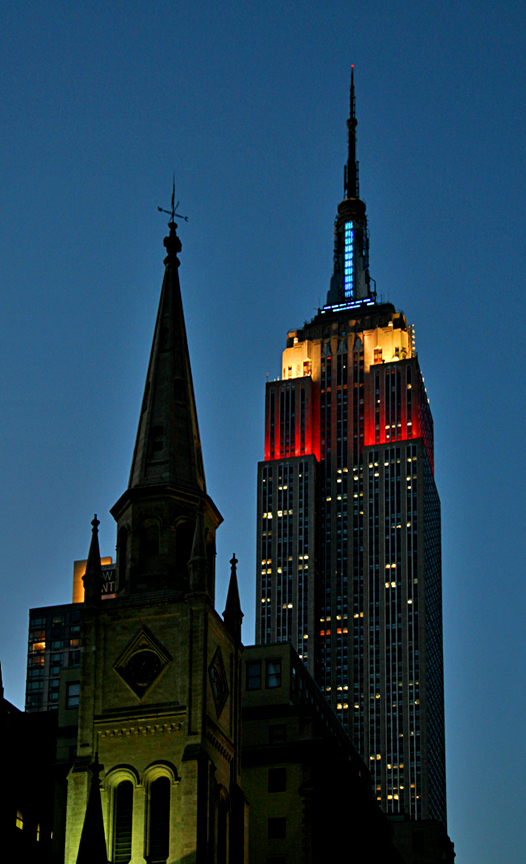
    One of the great things in the city is to happen upon a juxtaposition of architecturally and/or historically important structures. It is surprising that we can still be awed and not jaded, even when exposed daily to vistas and landmarks. I think most New Yorkers still really do appreciate the things they see daily, such as crossing a bridge by car or subway. I always enjoy being in a part of town I do not frequent; it gives me that sense of newness one has as a visitor.

    This photo was taken on Fifth Avenue. In the background, we have, of course, the Empire State Building, clad in Indiana limestone and granite. In the foreground, at 29th Street and Fifth, you have the Marble Collegiate Church, a Romanesque/Gothic building constructed from white marble, a contemporary of Grace and Trinity churches (the term collegiate refers to the practice of churches sharing ministers as colleagues). Apart from having such a prime address with photo op potential, this church has a very interesting history. Marble Collegiate Church is the oldest Protestant organization in North America. The congregation was founded as the Collegiate Reformed Protestant Dutch Church in 1628; the building dates to 1854. Read about it here. The church is perhaps best known for pastor of 52 years, Norman Vincent Peale, the highly influential author of 46 books, including the bestseller The Power of Positive Thinking. Granite, limestone, marble – I love stone. And some things are just etched in it…

    Posted on by Brian Dubé

  • Manhattanhenge

    Posted on by Brian Dubé

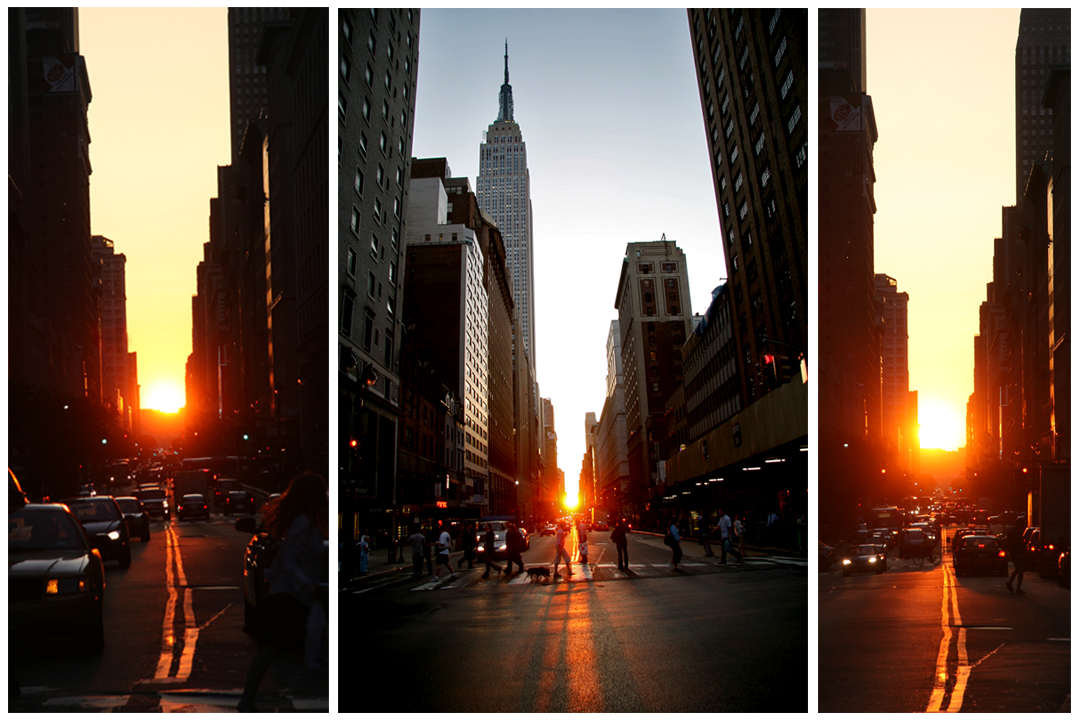
    Depending on your source, either yesterday or today is Manhattanhenge, a biannual occurrence where the setting sun aligns with the east-west streets of Manhattan’s main street grid (14th Street and farther north). Manhattan has two such days, generally cited as May 28th and July 12th, with some small yearly variation (there are also two days when the effect can be seen at sunrise: December 5 and January 8).

    The term Manhattanhenge was coined in 2002 by Neil deGrasse Tyson, an astrophysicist at the American Museum of Natural History, and is based on an analogous occurrence at Stonehenge, where, on the summer solstice, the sun rises in perfect alignment with several of the stones. On the Manhattanhenge days, the sun fully illuminates every cross street on the grid during the last fifteen minutes of daylight. The sun’s center sets exactly on the street’s center line, with the sun 50% above/below the horizon. The effect can be seen from river to river (and from Queens). The effect is good for a day or so on either side.

    Many people question the idea that this effect takes place simultaneously at every crosstown street in the grid, regardless of location. This may be counter intuitive, but it is true. The sun’s distance from the Earth at 93 million miles, in comparison to the length of the city’s grid of only a few miles, means that the sun’s rays are essentially parallel once reaching the earth – the deviation from parallel is too small to make a perceptible difference. Also note that Manhattan is rotated 29 degrees from geographic north. If the island’s grid was perfectly aligned with geographic north, Manhattanhenge would occur on the spring and autumn equinoxes.

    Viewing recommendations and photo notes: You still have time to see this effect in the next day or so. Recommended viewing is as far east as possible. However, keep in mind that many streets do not go clear through or have obstructions on the west side, the slight hilliness of the city may limit the view from First Avenue, and the actual horizon cannot be seen due to various buildings on the skyline in New Jersey. Queens or Roosevelt Island would also be good viewing areas. The photos were taken at 34th Street and Park Avenue – there was a fairly good crowd for the event. We dodged traffic, standing in the center of the street between changing lights.

    Posted on by Brian Dubé

  • Minefield

    Posted on by Brian Dubé

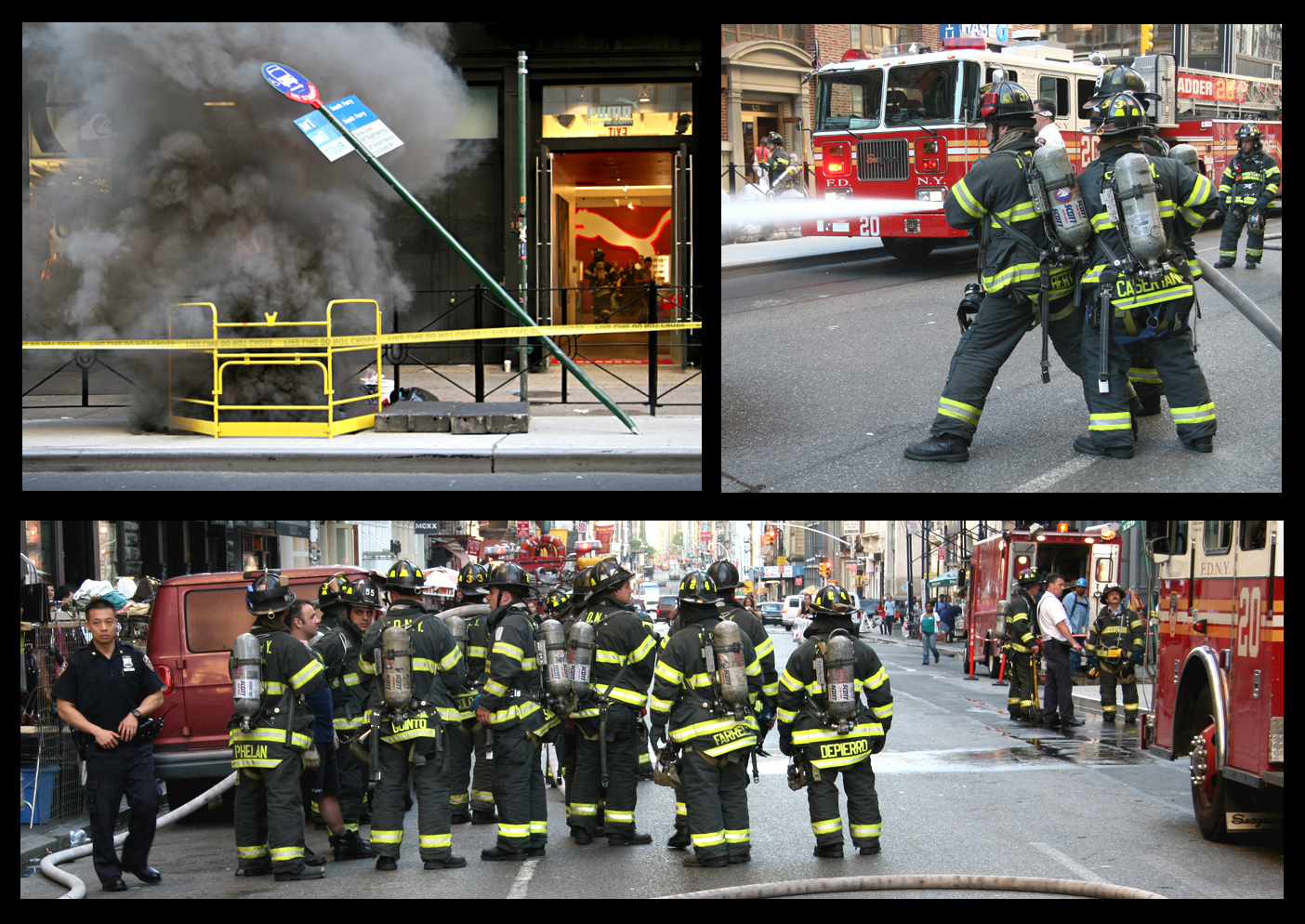
    This is the second time recently that I have witnessed explosions and fire from manholes. I am learning that this is not an uncommon occurrence. The incident in the photo appeared to be an electrical fire – there were intermittent sparks shooting up and large and small explosions with billowing black smoke. The fire department was on the scene promptly and took care of the situation handily and professionally without any drama or fanfare.

    There are a variety of reasons these things happen. On January 31, 2000, sparks, explosions, smoke, or fire occurred in more than 200 manholes across NYC. Corrosion from salt used in the winter to melt snow and ice on the streets was the cause. Corrosion of wires has also caused manhole covers to become “live”; in 2004, while walking her dogs in the East Village, Jodie Lane was electrocuted as she stepped on a manhole cover which had short circuited from contact with wiring. Click here for story. The same year, a skateboarder fell on a manhole cover which was so hot (she heard sizzling), she was branded with permanent scars! Click here for photo and story.

    In 1999, a carriage horse was electrocuted. Although the East Village death was an isolated incident, hundreds of pet owners or their pets have been jolted by stray voltage in metal covers. The city has 260,000 manhole covers. Be careful – it’s a minefield out there…

    Posted on by Brian Dubé

  • Narcissism Gone Wild

    Posted on by Brian Dubé

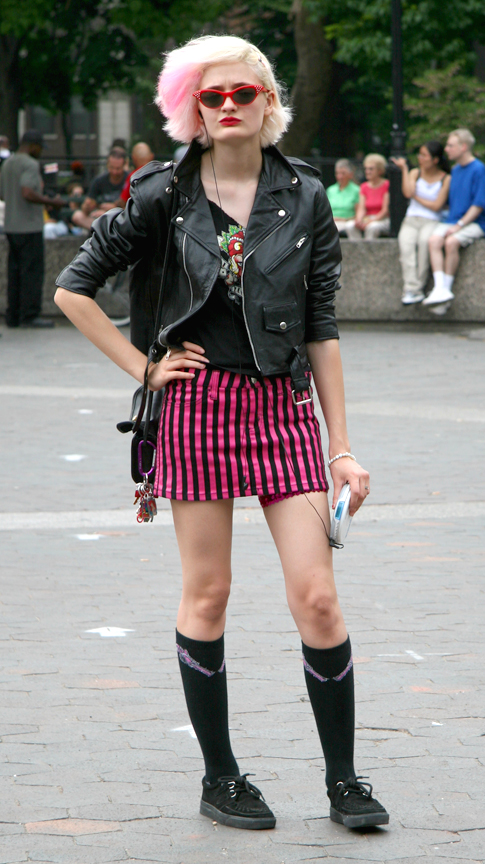
    If there appears to be a fashion or commercial shoot going on here, there is not, neither by me nor by anyone else. This woman definitely gets the day’s prize for color and style meets attitude. I’ve noticed when photographing human subjects that many of the most flamboyant are the least perturbed by photographers (click here). Whereas taking candid shots typically requires some finessing, with subjects like this, I have discovered that most will try to act unaware yet virtually pose when they know that they are being photographed.

    Upon reflection, this may seem like what one might expect – that anyone dressed and posturing like this has to be somewhat exhibitionistic and would enjoy being the object of attention and the subject of photography. However, with people, I have learned to make no assumptions. As I have said in Caravan of Dreams, some individuals get upset or even hostile and threatening, particularly the homeless. I would prefer getting permission from a subject, but this would generally ruin the composition of most street photography involving subjects – either losing the moment or encouraging a less natural posed shot. And then there is the issue that taking photographs in public is a right, with certain exceptions and caveats…

    Posted on by Brian Dubé

  • Federal Hall

    Posted on by Brian Dubé

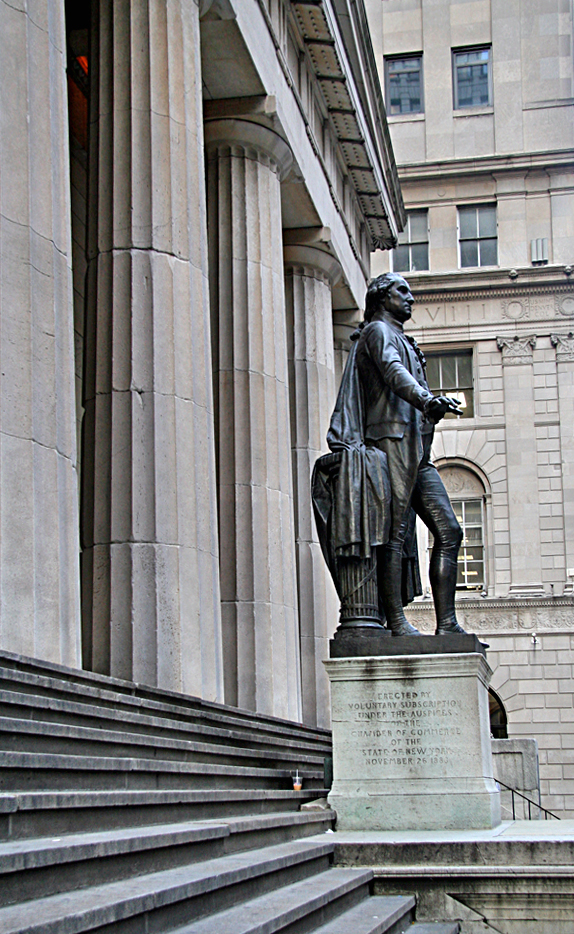
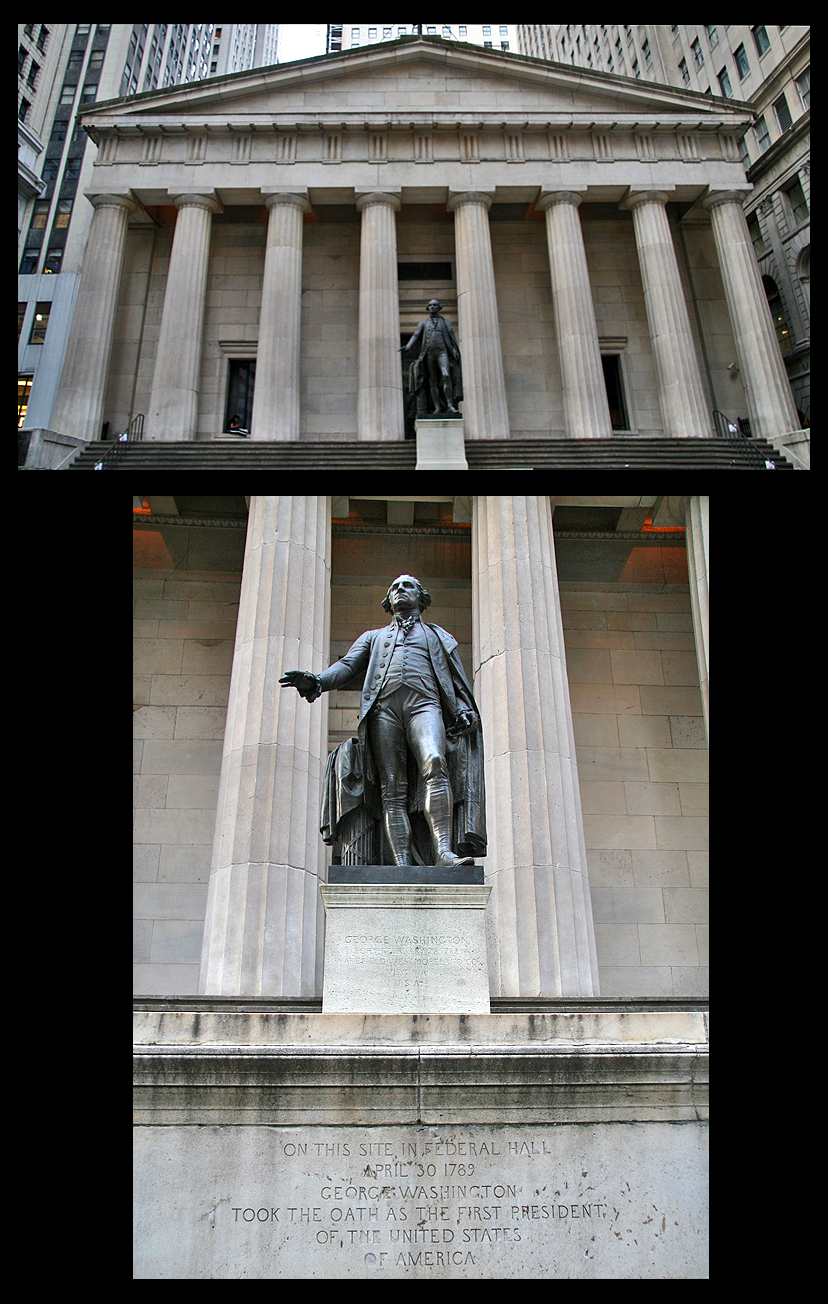
    Overshadowed by the New York Stock Exchange across the street, and with all there is to do and see in NYC, Federal Hall at 26 Wall Street is easily overlooked. This beautiful, Doric-columned Greek revival structure with a simplified Parthenon facade is carved from marble; inside is a rotunda. Click here for more photos.

    National monuments are more often the agenda of Washington D.C. visitors than NYC ones, but this is definitely worth a visit. It actually is one of the most important buildings in U.S. history and just completed a renovation in November 2006 (it had been closed since 2004). The site has played a part in American government for over 300 years. 26 Wall Street was the location of New York’s City Hall, built in 1700. After the American Revolution, the Continental Congress met at City Hall. When the Constitution was ratified in 1788, New York remained the national capital. Pierre L’Enfant was commissioned to remodel City Hall for the new federal government, when it was renamed as Federal Hall.. The First Congress met in the new Federal Hall and wrote the Bill of Rights. George Washington was inaugurated here as President on April 30, 1789. When the capital moved to Philadelphia in 1790, the building again housed city government until 1812, at which time Federal Hall was demolished.

    The building that stands here now was built in 1842 as the country’s first Customs House. It was designed by Alexander Jackson Davis, one of the most important architects of his generation, who worked in the classical style. His was the winning entry in an 1833 competition. In 1862, Customs moved to 55 Wall Street, and the building became the U. S. Sub-Treasury. Millions of dollars of gold and silver were kept in the basement vaults until the Federal Reserve Bank replaced the Sub-Treasury system in 1920. The building is now run by the National Park Service and serves as a museum and memorial to the first President and the beginnings of the United States of America…

    Posted on by Brian Dubé

  • Municipal Building

    Posted on by Brian Dubé

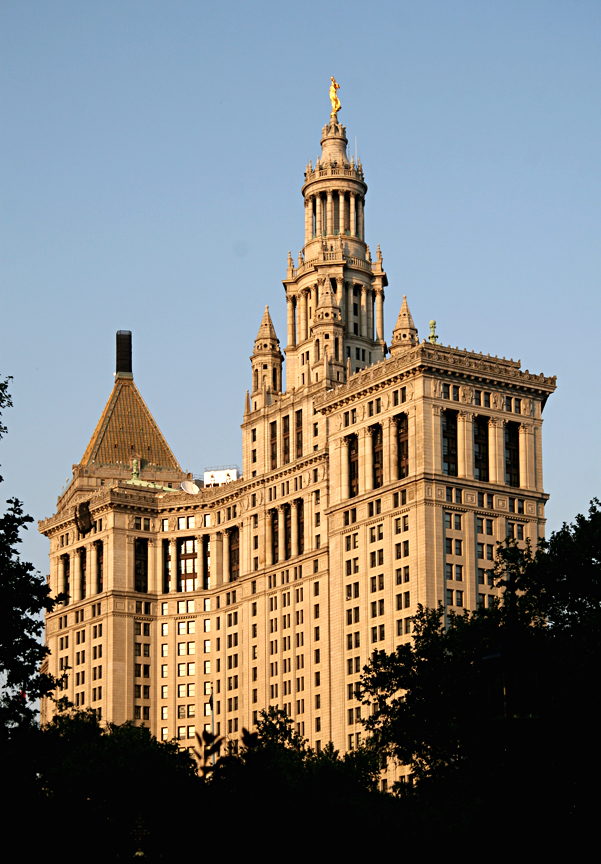
    This almost looks a little like Italy bathed in this afternoon light, doesn’t it? Not a total fantasy – architecturally, the Municipal Building’s design uses Imperial Roman, Italian Renaissance, and Classical styles.

    By 1884, New York City had surpassed the limited physical space in City Hall; many of its agencies were scattered throughout the city in various rented offices. Plans were made for a large civic building to accommodate the various city agencies, with four design competitions between 1888 and 1907. Twelve architectural firms submitted plans for the new building in the final competition, and the winning submission was from the firm of McKim, Mead and White, internationally renowned and the largest architectural firm in the world at the time. Construction started in 1909 (when NYC already included five boroughs and a population of 4.5 million) and was finished in 1914-15. It stands at 40 stories, 580 feet (177m).

    This building is of major architectural significance in NYC and was highly influential – Moscow University’s main building and other buildings in the Soviet Union were styled after it. The statue over the central tower is the heroic figure “Civic Fame” by Adolph Weinman in copper, 20 feet high, poised on a large copper ball (it’s the second largest statue in the city after the Statue of Liberty). A crown with five crenelations represents the five boroughs of the city, as do the five cupolas of the building. The Manhattan Municipal Building houses thirteen agencies – more than 28,000 New Yorkers get married here each year. It’s also where you can file for divorce – so convenient 🙂

    Posted on by Brian Dubé

  • Pearl River Mart

    Posted on by Brian Dubé

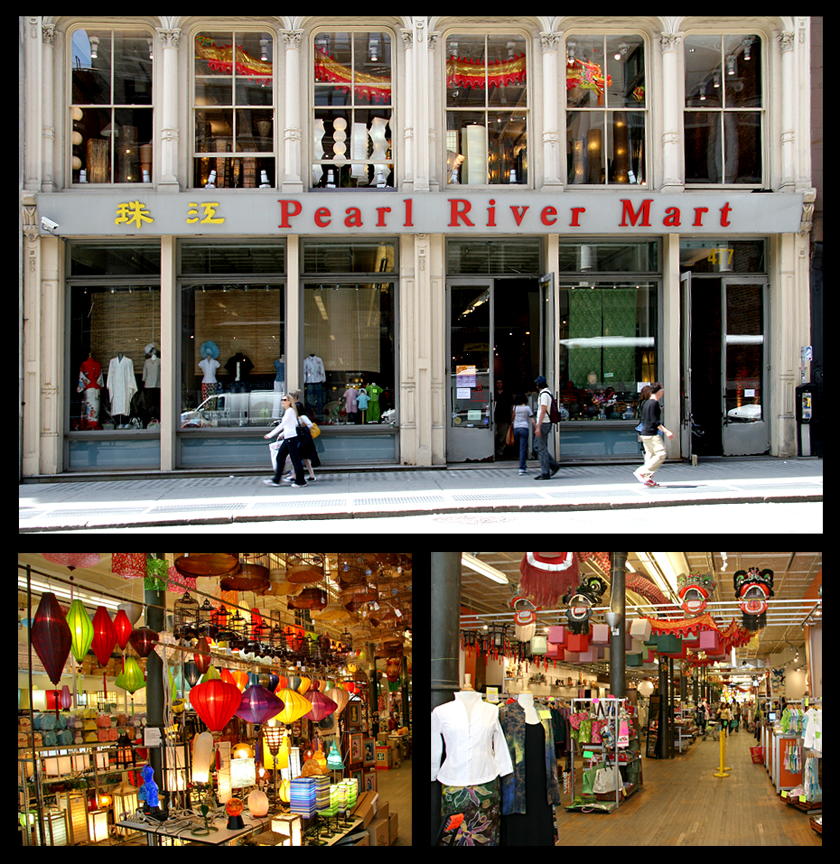
    In 1971, a 20-year-old trade embargo against China was lifted as a result of President Richard Nixon’s normalization of relations with China. One vendor had already imported goods into Manhattan via Hong Kong in anticipation of this. The day after the lifting of the embargo, Ming-Yi Chen, who was born in China, grew up in Taiwan, and came to the United States in 1965, had started selling an entire line of mainland Chinese goods at his shop (then called Chinese Native Products, Ltd.) at 22 Catherine Street. At the time, the sign was only in Chinese, brandishing the characters Shih-Sin, meaning “four virtues.” In 1977, they moved to Elizabeth Street. But its move in 1987 to a 15,000-square-foot loft space on the second and third floors on Canal Street and Broadway (at 277 Broadway) is where Pearl River Mart became known as THE Chinese department store (in a dismal location). Now, Pearl River has a new home: a full floor at 477 Broadway in the trendier SoHo, just north of its previous Chinatown location.

    Pearl has thousands of items, nearly everything imaginable: clothes, satin slippers, birdcages, paper parasols, lamps, cookware, food items, sushi sets, bamboo rice steamers, teapots, kimono-style robes, herbal remedies, live bamboo plants, windowshades, toys, furniture, Buddha statues, and more. This is one of those lesser-known NYC icons – single-location, family-owned, and a unique product line – a true mecca for all things Asian. Pearl is also known for their pricing, and although the hardcore Chinatown aficionados will tell you that they are not the cheapest anymore (it’s a badge of honor in the city to be in the know), I think you should check it out…

    Posted on by Brian Dubé

  • Gourmet Garage

    Posted on by Brian Dubé

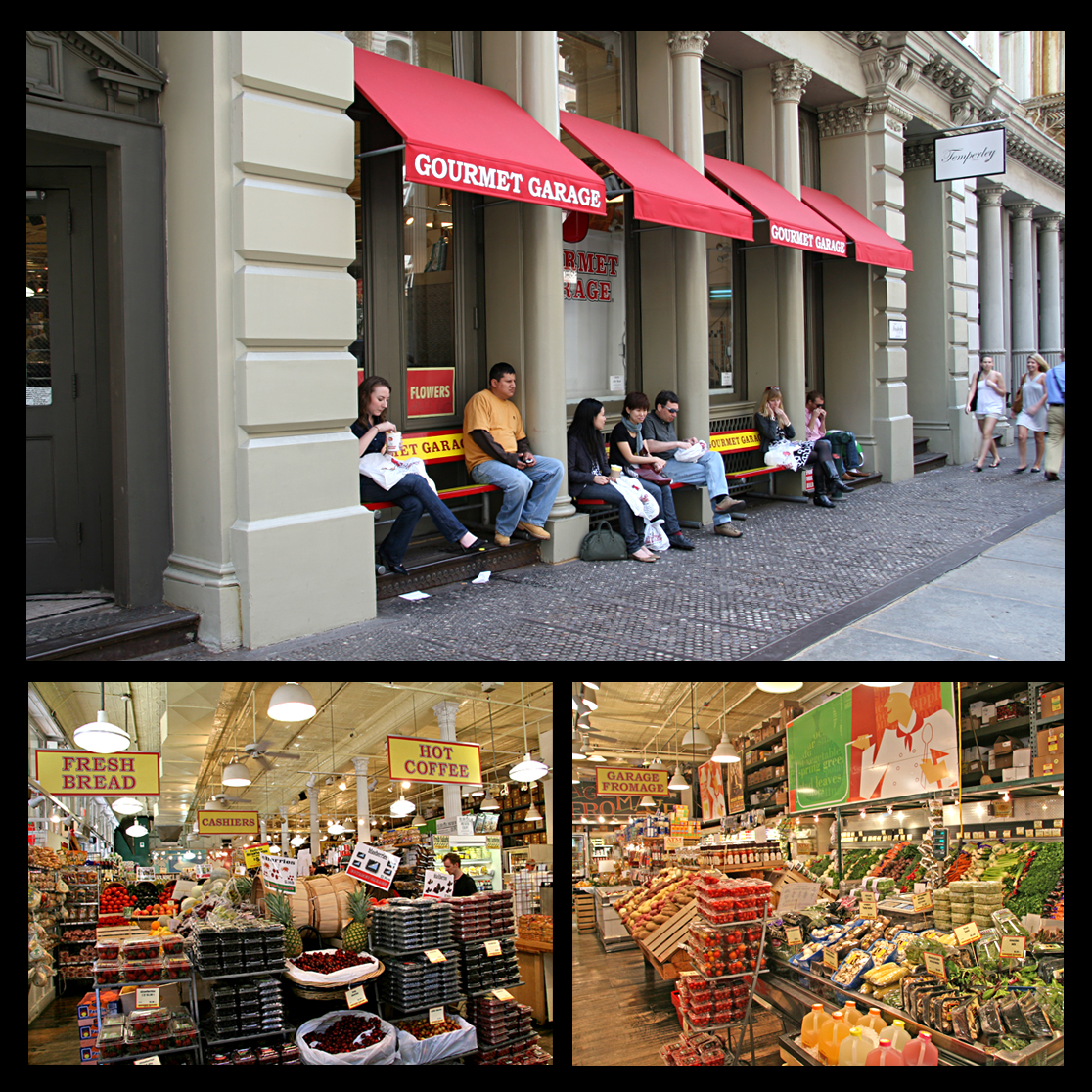
    This is Gourmet Garage at 453 Broome Street, certainly no secret with city residents. When they opened in 1992 at 47 Wooster, the concept was quite radical: gourmet foods in a no-frills SoHo garage environment. In 1981, Andy Arons and his former college roommate, Walter Martin, started Flying Foods, a specialty-foods importing business. It was sold to Kraft foods in 1987 for $8 million. Arons got back into the business in 1992, starting Gourmet Garage with partners John Gottfried and Edwin Visser. Gottfried had owned Metropolitan Agribusiness since 1978, which was a supplier to fine restaurants in the city, and Visser had also been in the food business. The concept was to continue the wholesale business to restaurants in the morning and then sell to the general public at the same prices.

    Goumet Garage positioned themselves perfectly, at a time when SoHo was really starting to get pricey. Gourmet food emporium Dean and DeLuca was well established but felt more like a museum than a real place to food shop. This sentiment was articulated by Gottfried: “The previous approach was to sell this stuff like jewelry. We sell it like produce.” And, “The lesson of the ’90s is that people don’t want to change their life style. They just want to pay less for it.” It was exciting when it first opened – getting gourmet goods in a garage setting with wholesale pricing. Today, of course, the place is decidedly less garage-like (with 5 locations, including one on Park Avenue), but still a very enjoyable place to shop, with a wonderful down-to-earth atmosphere, great food, and good prices…

    Posted on by Brian Dubé


  • dinamic_sidebar 4 none

©2026 New York Daily Photo Entries (RSS) and Comments (RSS)  Raindrops Theme