• Pearl Paint

    Posted on by Brian Dubé

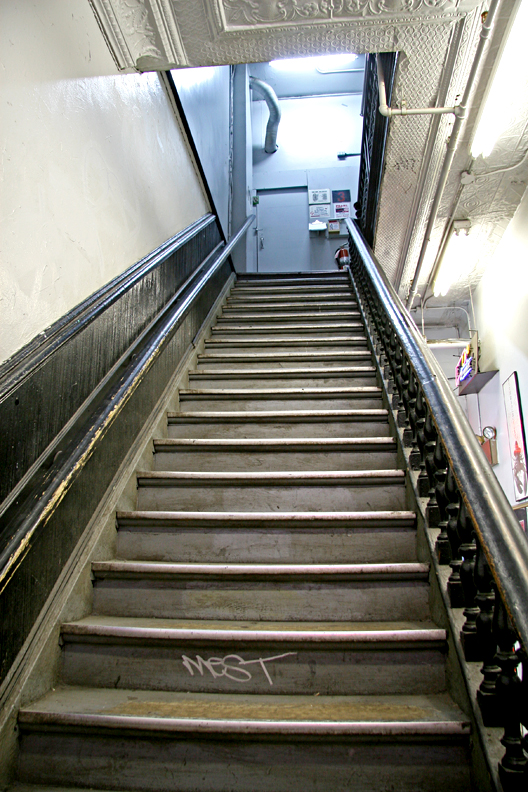
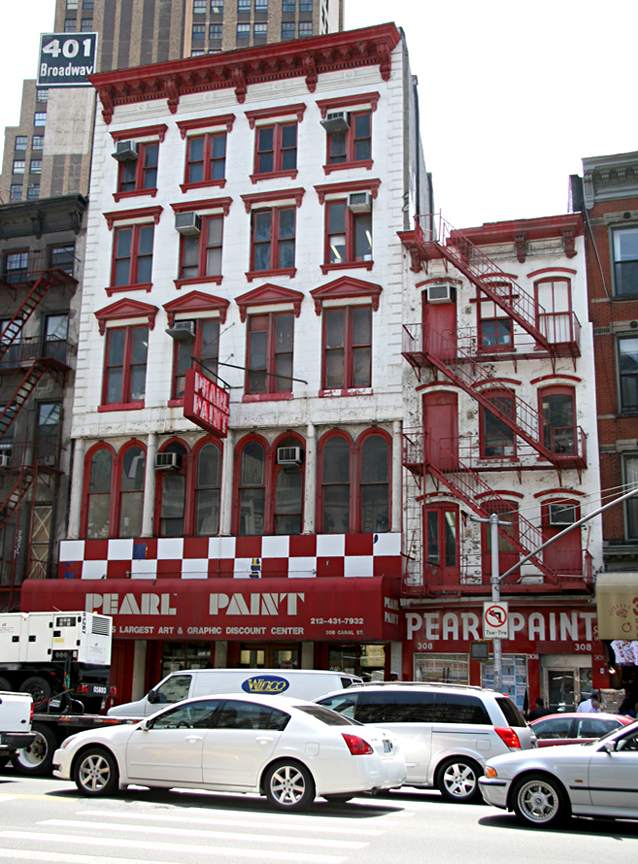
    Does this look chaotic and rather unappealing? Perhaps a less-than-ideal photo subject or setting? It is. This is Pearl Paint on Canal Street. For those of you who are not familiar with Canal Street, let’s just say it’s not for those looking for the bucolic setting of 121 Charles Street, 39 & 41 Commerce Street, or the Boat Pond in Central Park, but it is home to some of NYC’s shopping emporiums, both present and past (mostly past; sadly, fixtures such as Canal Hardware and Industrial Plastics have closed).

    Pearl Paint is NYC’s largest art store – the mecca for art supplies in the city. Their website claims to be the first and largest discount art supply house. Plausible, since they started as a regular paint store on Chambers Street and have been in business since 1933. As SoHo/Tribeca became a haven for artists, Pearl responded by getting into art supplies. They have 5 floors across two adjoining buildings and 3 additional store fronts: The Craft Center, Frame Shop, and Home Decorating Center on Lispenard Street (which can be accessed through the rear exit of the main store).

    Pearl now has over 20 stores in 10 states. Their flagship store at 308 Canal Street is the ultimate in classic New York Style – a little disheveled and a little rough around the edges. Most take the dreary, creaky stairs up and down the five floors – the elevator in the rear is probably unknown to most and painfully slow anyway. No glitz here, just the real deal. These guys have everything…
    Posted on by Brian Dubé

  • 121 Charles

    Posted on by Brian Dubé

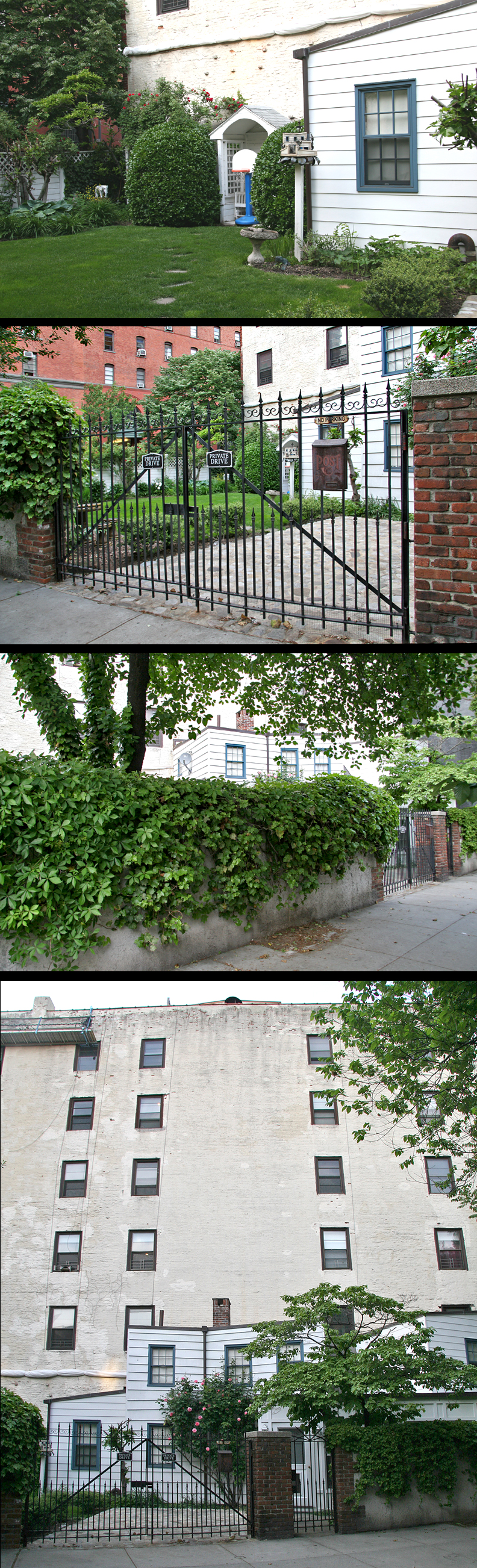
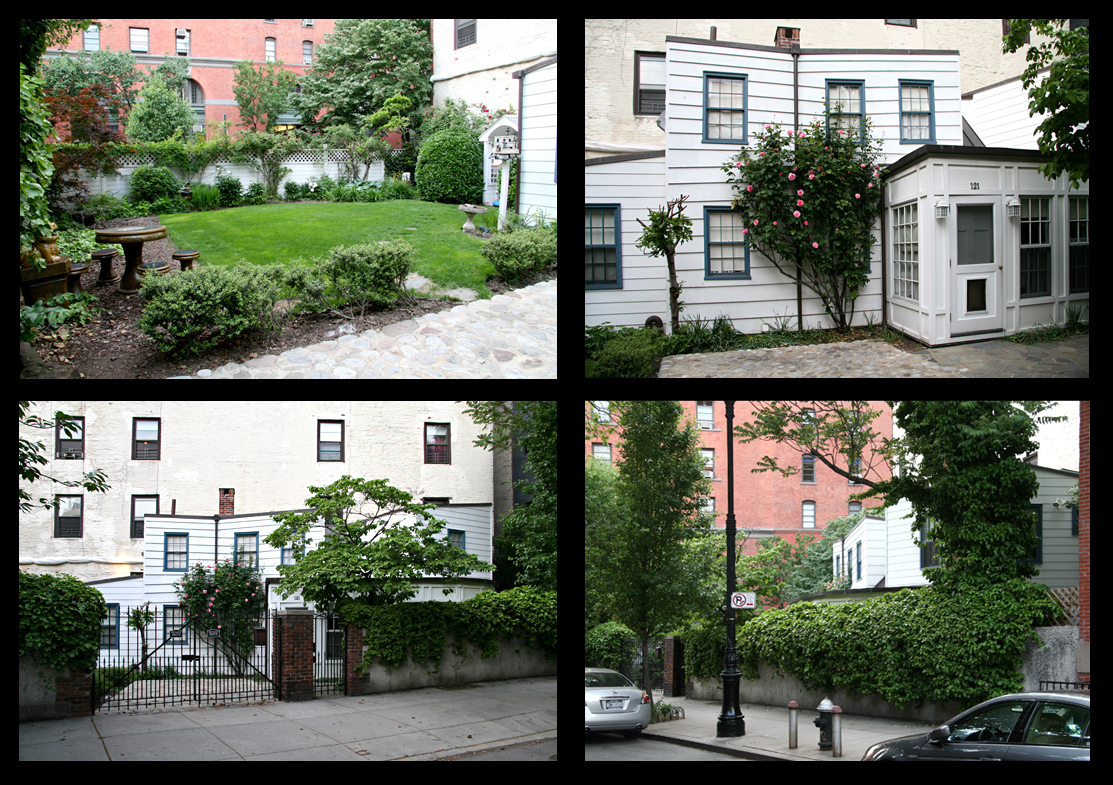
    I have been virtually obsessed with this place and was looking forward to posting photos and the story behind one of the most amazing properties in the entire city. Here, we have a 200-year-old farmhouse on its own piece of land, with a yard and driveway, the six-room wood-frame house stuck against a neighboring brick building. Click here for more photos. The first time I encountered this tiny house at 121 Charles Street, I couldn’t believe it. An anomaly and a time warp in a bucolic setting. There is little information on this place, so I had to dig.

    This house was originally on a rear lot at 71st and York Ave. The exact date of its origin is unknown. The house was occupied in the 1940s by Margaret Wise Brown,  author of ”Goodnight Moon.” In 1960, it was occupied by Swedish-born Mr. and Mrs. Sven Bernhard, who, after extensive renovations, won ownership in 1966. However, the land was owned by the Roman Catholic Archdiocese of New York, who intended to demolish the house for the building of a new Mary Manning Walsh Home for the Aged. Wanting to keep the home, the Bernhards decided to move the entire house intact. With the help of architect William C. Shopsin, they located a vacant 3600-square foot lot on Charles Street.

    On March 5, 1967, the entire house was moved five miles (at a cost of $6500) from its Upper East Side location down Second Avenue and across 14th Street to its new home in the West Village, with the Bernhards following by car. In 1988, Suri Bieler and her husband Eliot Brodsky began a restoration of the property with architect George Boyle. A room for their 7-year-old, Jack Brodsky, was added. You won’t find anything like this in Manhattan, trust me. I understand that it’s not for sale…

    Posted on by Brian Dubé

  • Sheridan

    Posted on by Brian Dubé

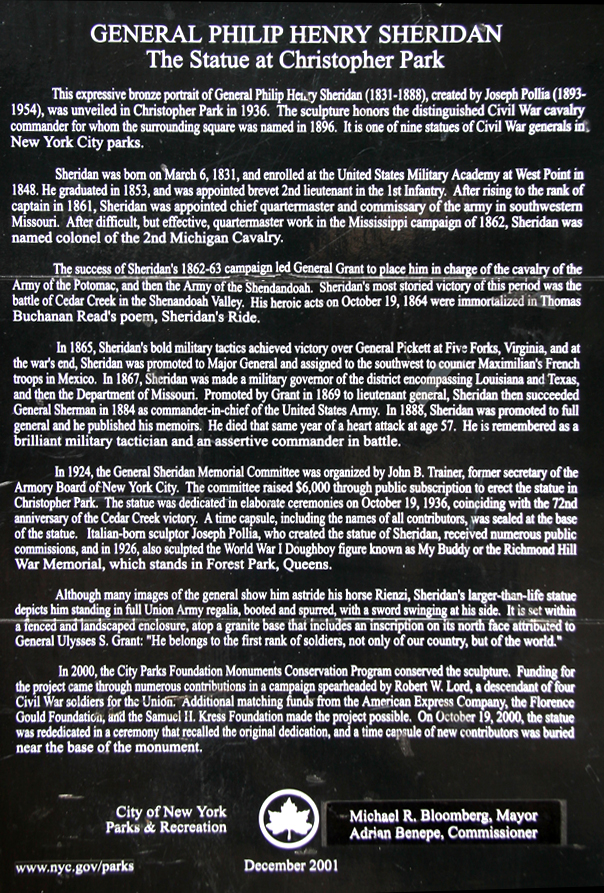
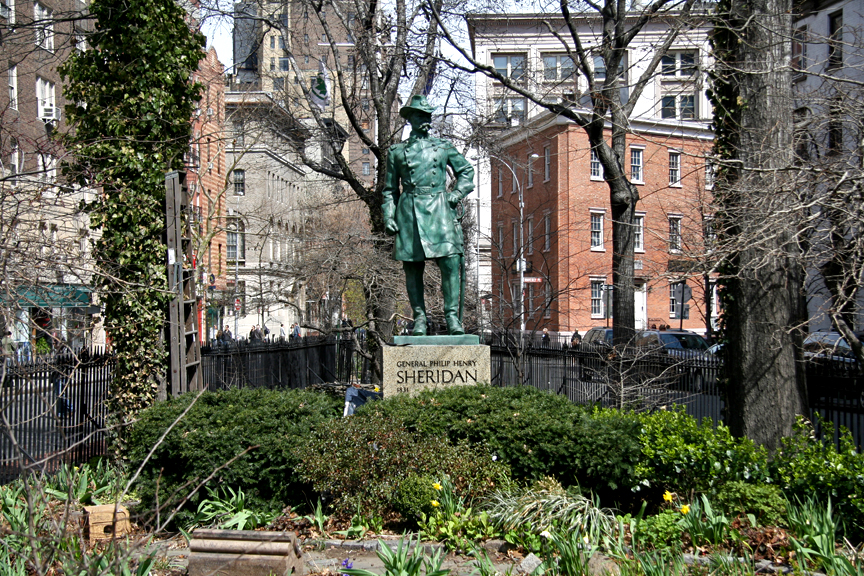
    I am not a Civil War or military buff, but I have been going by this statue of General Philip Henry Sheridan (1831-1888) and the park it is in for decades, and I should really know more about him. This man, who rose from near obscurity to the highest rank in the military (Major General) very quickly, is a controversial figure, especially when viewed from our own time. A Civil War cavalry commander, Sheridan graduated from West Point and went on to a myriad of military achievements – Cedar Creek in Shenandoah, Appomattox, etc.

    In my readings for this post this morning, I found it very interesting to compare writings about him with information on the plaque in the park (click here). A quote from General Ulysses S. Grant appears on the pedestal: “He belongs to the first rank of soldiers, not only of our country, but of the world.” Grant ranked him with Napoleon and Frederick the Great. The plaque describes him as a “brilliant military tactician.”

    However, he has also been described as a brutal, violent, and very prejudiced man. After the Civil War, Sheridan became commander of the Army of the West and led the campaign against the Indians of the Great Plains, seen by some as near-genocidal and thereby tainting Sheridan’s reputation. The pejorative “The only good Indian is a dead Indian” is a common variant on a quote attributed to Sheridan during his encounter with Comanche Chief Tosawi during the Indian Wars in 1869. “Me Toch-a-way, me good Indian.” Sheridan reportedly smirked and replied, “The only good Indians I ever saw were dead.” The bronze statue was created by Italian Sculptor Joseph Pollia in 1936.

    Note: This statue is actually in Christopher Park, often mistaken for Sheridan Square, which is around the corner, previously a traffic island which was converted into a beautiful viewing garden in 1982. It is interesting to note that Sheridan was only 5 feet 5 inches tall. Abraham Lincoln once described him as “a brown, chunky little chap, with a long body, short legs, not enough neck to hang him, and such long arms that if his ankles itch he can scratch them without stooping.”

    Posted on by Brian Dubé

  • Artiste Extraordinaire

    Posted on by Brian Dubé

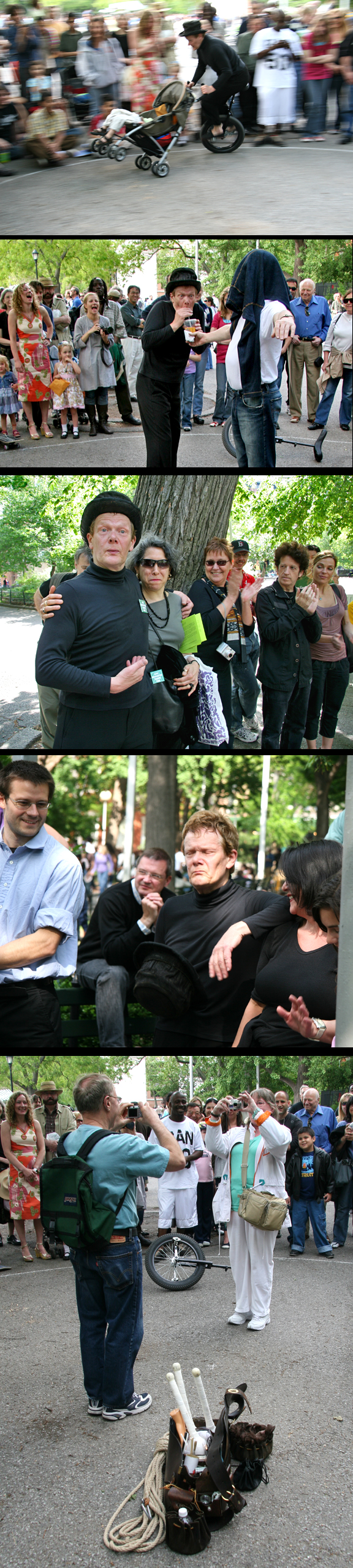
    First, I must confess that the subject of this post, Philippe Petit, is a long-time acquaintance, so this may not be totally objective. For those who do not know him, Philippe’s accomplishments are many: tight-rope walker, unicyclist, magician, juggler, pantomime artist, pickpocket, and the earliest modern-day street juggler in Paris in 1968. But he is best known for his walk between the World Trade Center towers on August 7, 1974. This walk, done without permission, was planned over a period of six years; he made over 200 visits, posing variously as architect, construction worker, and tourist. Many have asked how well he “made” it across, but he didn’t just make it – he did eight crossings over a period of 45 minutes. He has been working the streets of NYC since the 1970s, particularly Sheridan Square and Washington Square Park, where, for years, he was a regular on Sunday afternoons.

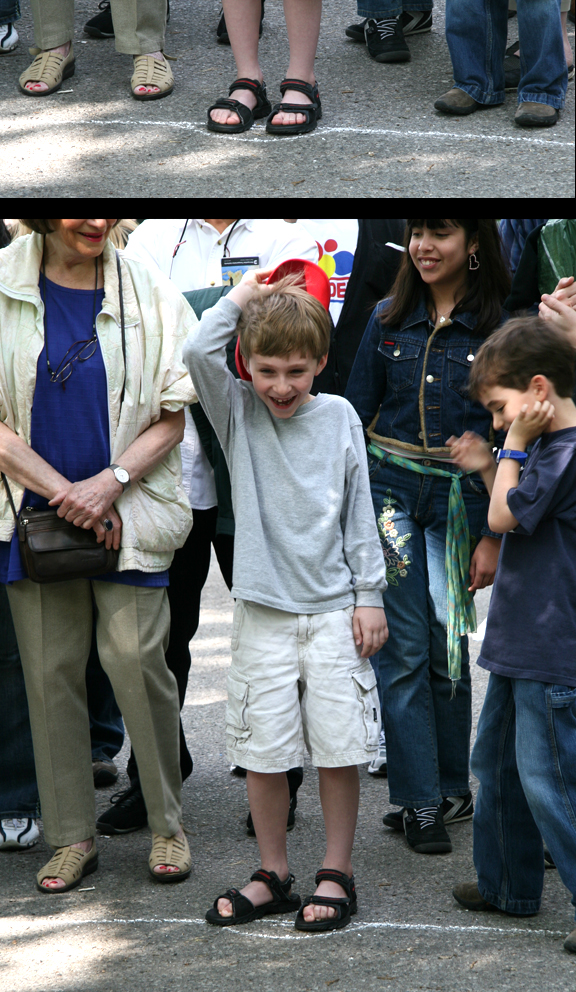
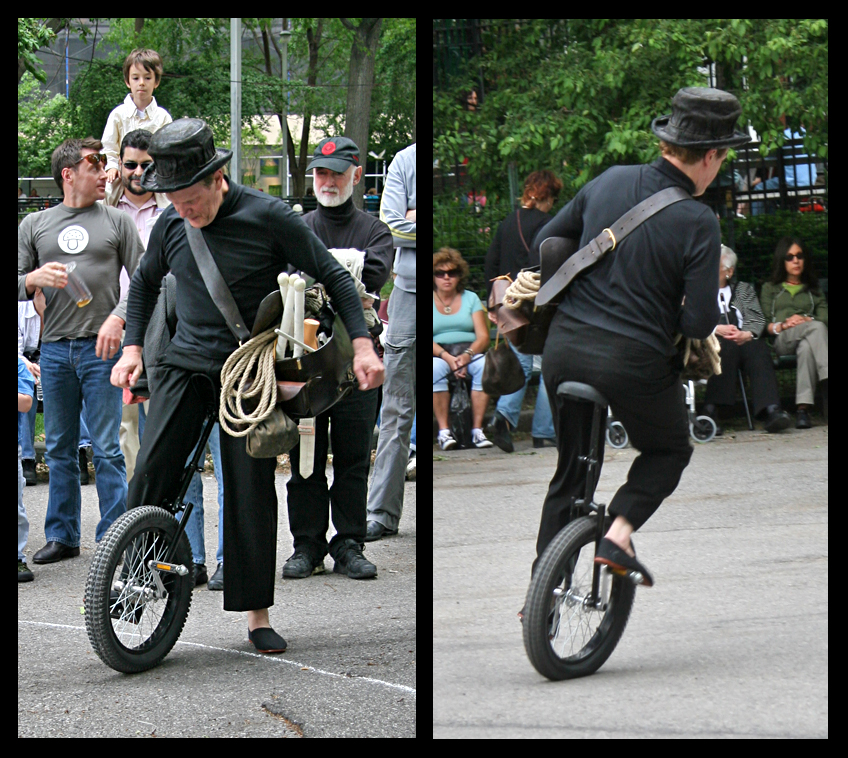
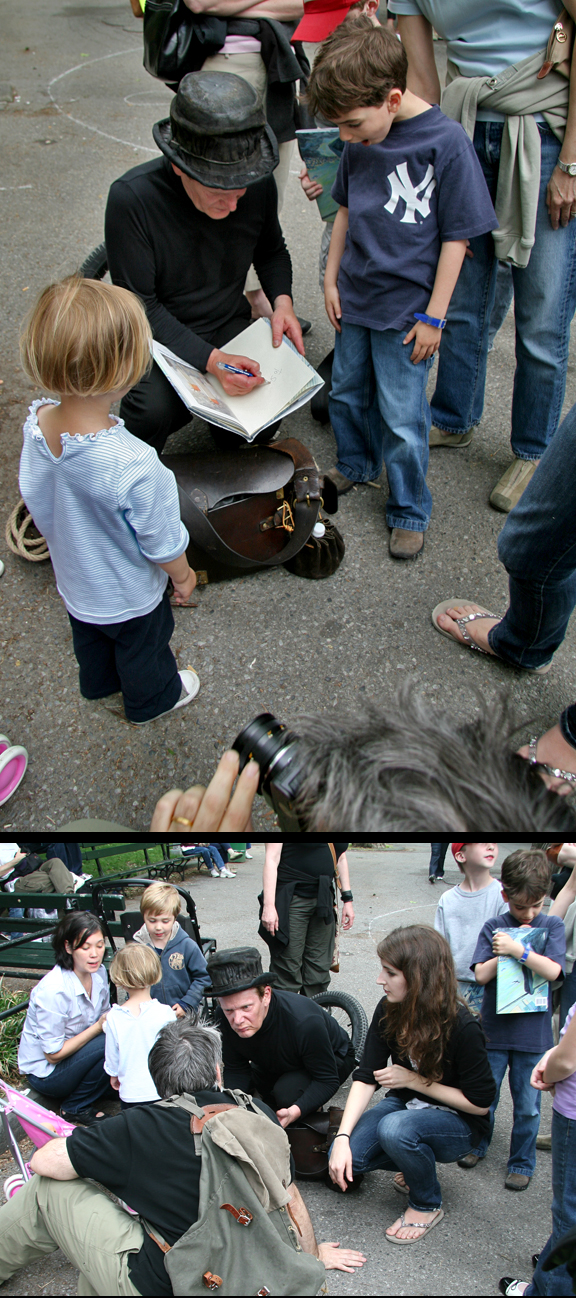
    Philippe’s ability to gather and hold a crowd is legendary, as is his tenaciousness – he has been arrested for street performing over 500 times. His show, which is completely silent and frequently punctuated with gags and bits involving the audience, features ball juggling, hat manipulation, unicycling, and club juggling on a slack rope, supported between a tree and lamppost. He creates his performance space by outlining a chalk circle – no one is allowed to step inside. The occasional violator is dealt with cleverly and handily. His show completed, Philippe packs his tools ritualistically and rides off on his unicycle. Only to return for meeting, greeting and the obligatory book signing. Philippe has authored six books. To Reach the Clouds is a wonderful work, telling the story of his twin towers walk. I also recommend episode eight of the Ric Burns documentary, New York – The Center of the World (Part 8), where Philippe is interviewed and “is the spiritual heart of the film,” according to Burns.
    Philippe has done a number of commemorative street performances since 9/11 in Washington Square. This performance was to call awareness to the proposed (and controversial) renovation of the park. When asked why he does what he does: “When I see three oranges, I juggle; when I see two towers, I walk.”

    Posted on by Brian Dubé

  • Dance Parade

    Posted on by Brian Dubé

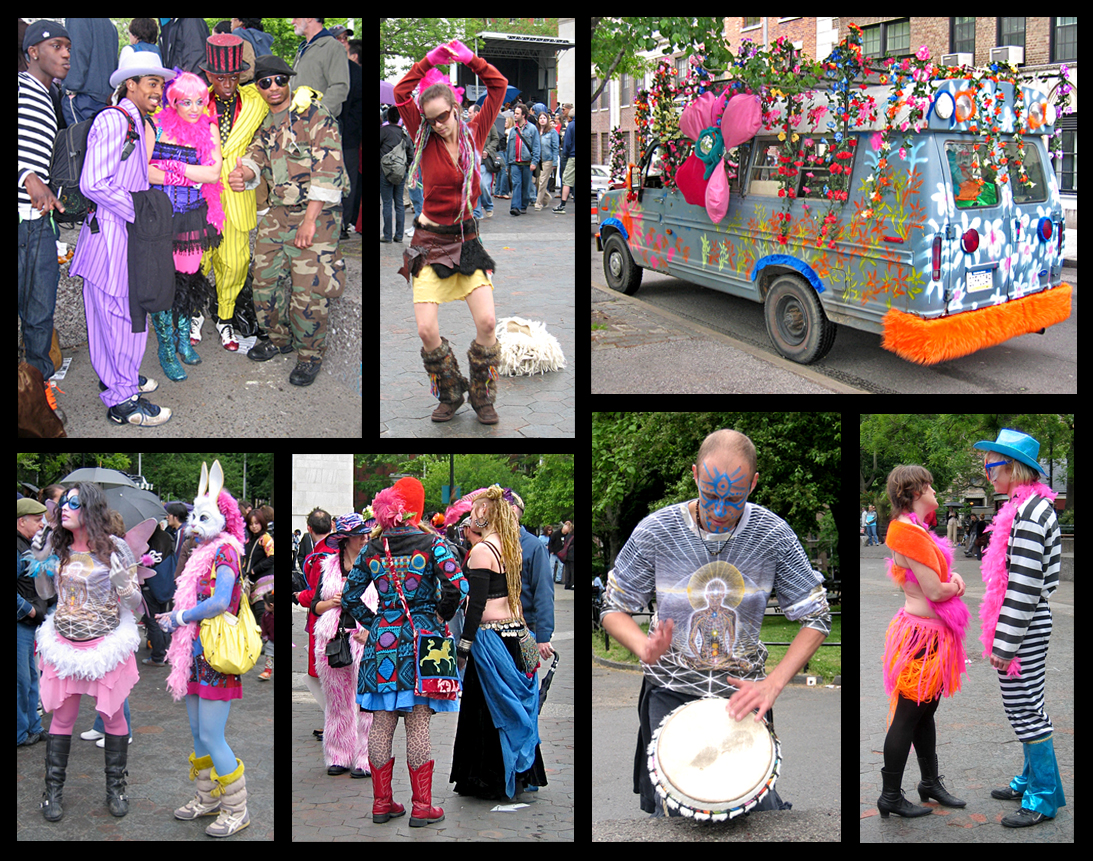
    The 2007 Dance Parade caught me (and many others) off guard – I had no idea that this event was being held when I ran into it. I would deem it a tremendous success, given that it was a first annual event, with cold weather and rain, which did not deter dancers or observers. The parade worked its way from 32nd Street down Broadway and Fifth Avenue to end in Washington Square Park. The floats turned off towards Sixth Avenue – dancers remained in the park, where a stage was set up. Several hours of dancing ensued, both on and off stage – a DJ provided music.

    The raison d’etre for the parade, you may ask? From Dance Parade’s vision statement: “To celebrate diversity as ‘One Parade with Many Cultures.’ 49 genres are represented.” Click here for a list and more info on their website. Although the parade was not a protest, there was also a political agenda for some: change or repeal of the city’s cabaret law dating back to 1926 (enacted to restrict public lewdness and interracial mingling) – any venue where 3 or more people are dancing and food or drink is served requires a cabaret license. The law has been more aggressively enforced since the 1990s, where it has used to combat quality-of-life complaints and troublesome clubs. Difficult to obtain, only 69 establishments have cabaret licenses in Manhattan.

    Attendance along the parade route was light, but turnout in the park was huge, where participants along with gawkers filled the park plaza. Judging by this year’s revelry, I think this parade will become very successful in the years to come…

    Posted on by Brian Dubé

  • Desert Pavilion

    Posted on by Brian Dubé

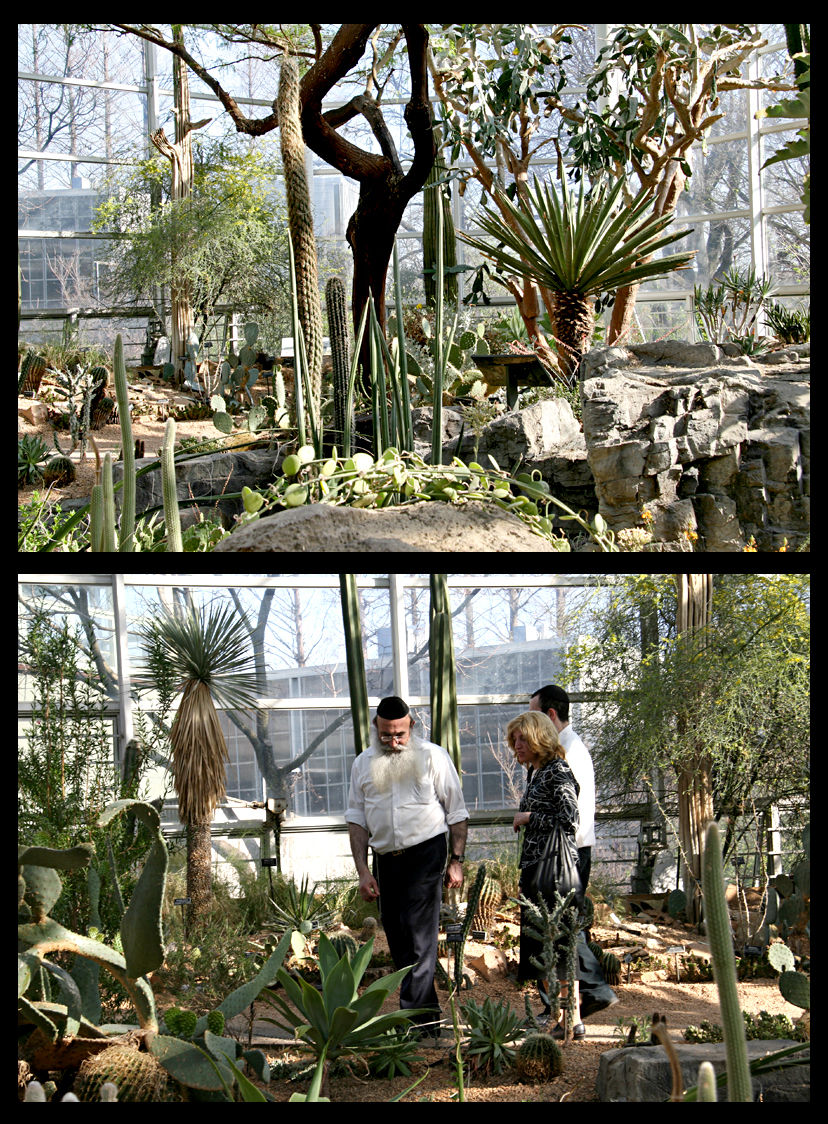
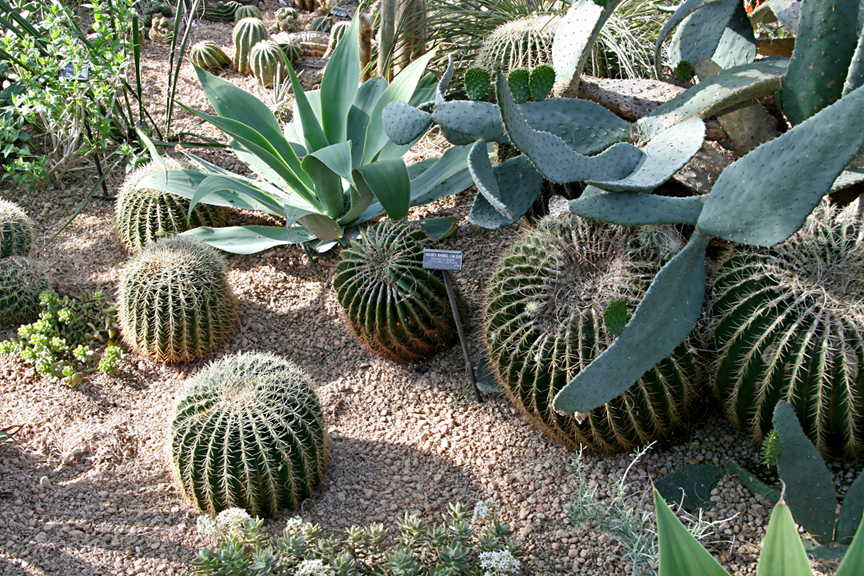
    This is the second of the three pavilions in the Steinhardt Conservatory at the Brooklyn Botanic Garden. Click here for more photos; click here for the posting on the Tropical Pavilion. A desert environment is one of the most surprising to the uninitiated. Someone I once knew who was a naturalist traveler made an interesting remark about the desert: many see it as a lifeless, barren void, when in actuality, the desert is teeming with life, both flora and fauna. He also made a comment (with which others have concurred) that one of the most beautiful sites is the desert at springtime, when everything is in bloom. The Desert Pavilion has a selection of plants from around the world.

    From the Botanic Garden site:

    “The Desert Pavilion houses plants from arid regions in both the Old and New World. The New World cacti, located on the left side of the room, are from the American Southwest, Mexico, Peru, Bolivia, and Chile. The Old World succulents on the right side of the pavilion are from South Africa, Namibia, Madagascar, the Canary Islands, and North Africa. Shrubs, trees, and wildflowers from these regions are included in the display to illustrate the diversity of desert plant life. Special exhibits include a glassed-in display of lithops (or “living stones”) and information on succulent survival strategies, convergent evolution, and the Sonoran and African deserts.”

    So, until you have the opportunity to travel to deserts far and wide, take a journey through the garden’s pavilion right in the heart of the city…

    Posted on by Brian Dubé

  • Just Passing Through

    Posted on by Brian Dubé

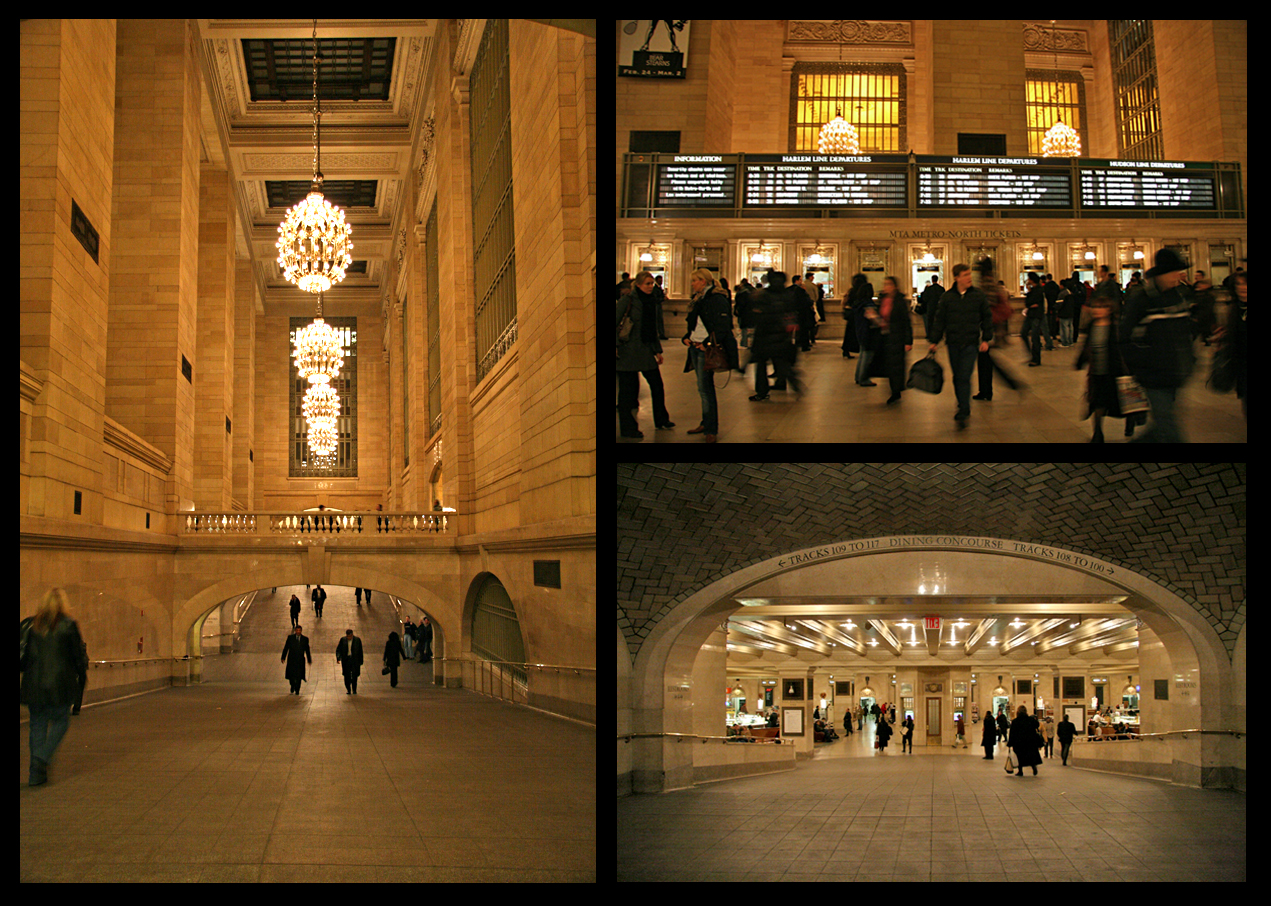
    I have done 3 previous posts on Grand Central specifically: the main concourse, the exterior rooftop sculpture, and the famous clock, along with a post on the Oyster Bar. This posting shows other areas of the station. On the left is one of the passageways – magnificent and Grand, isn’t it? – befitting of its name. The upper right shows the main concourse facing the timetables. And on the lower right is a photo in the subterranean depths leading to the train tracks themselves.

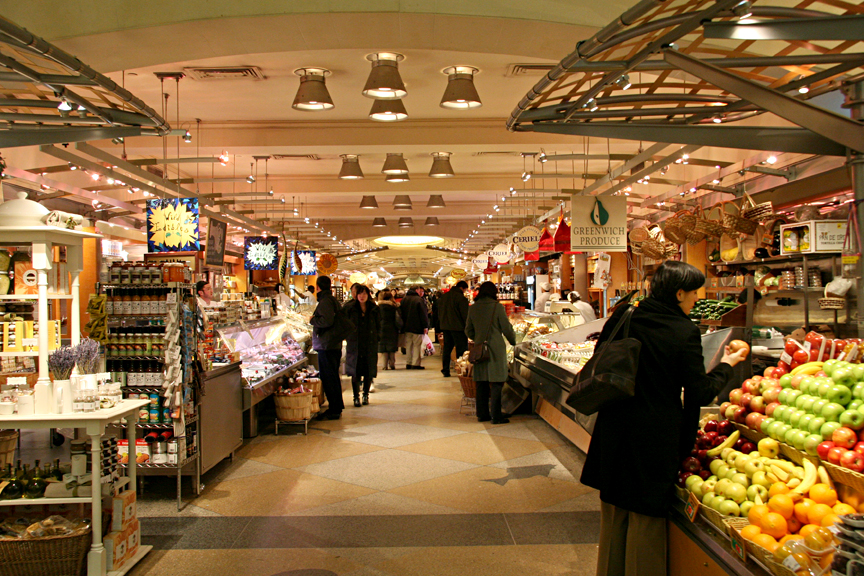
    At the east end of the terminal, there is also a wonderful food market, which I only recently discovered: The Grand Central Market, a gourmet European-style food hall. Several of the city’s premier food shops are vendors here (such as Murray’s Cheese) (see here). All told, Grand Central is a world unto itself, with restaurants, shops, and a myriad of environments. I love this place, an edifice in stone, iconic NYC – a constant in a world of change. In a way, this station is a metaphor for life itself – we’re just passing through…

    Posted on by Brian Dubé

  • West Side Community Garden

    Posted on by Brian Dubé

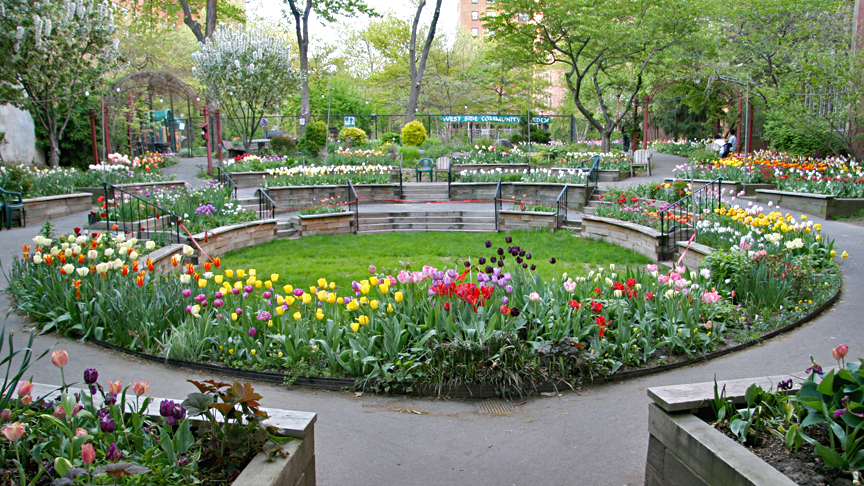
    This is the West Side Community Garden, which spans between 89th and 90th Streets between Amsterdam and Columbus Avenues on the Upper West Side of Manhattan and is one of the largest public gardens in the city. Click here for more photos. These blocks are home to an array of institutions: Ballet Hispanico, Stephen Gaynor School, Claremont Riding Stables (recently closed), and St. Gregory the Great School.

    During the 1970s, half the block facing Columbus Avenue was razed for new buildings. Inadequate funds led to an abandoned plot. By the time real estate developers were ready to build, the space had been transformed into a garden by local residents (many community gardens in the city have started this way). The community was aided in saving this space by Community Board 7, the Trust for Public Land, private fundraising, and developer Jerome Kretchmer, who included the garden in his development plan. “How could a green open space not be a good amenity?” Kretchmer asks. “I get my money’s worth a hundred times a year.”

    The garden officially opened to the public in 1988. There is a vegetable garden area with over 100 individual, private plots where vegetables can be grown and harvested. As would be expected for such a privilege in the city, there is a waiting list for vacant plots. Of course, the primary focus is flowers; each spring, the garden is home to over 300 varieties of tulips, daffodils, hyacinths, and roses. Students of St. Gregory the Great School are responsible for the planting and maintaining of two plots. Gardens and parks are not only beautiful in their own rights but also in juxtaposition to urban structures, providing necessary respite and sanctuary…

    Posted on by Brian Dubé

  • The Cage

    Posted on by Brian Dubé

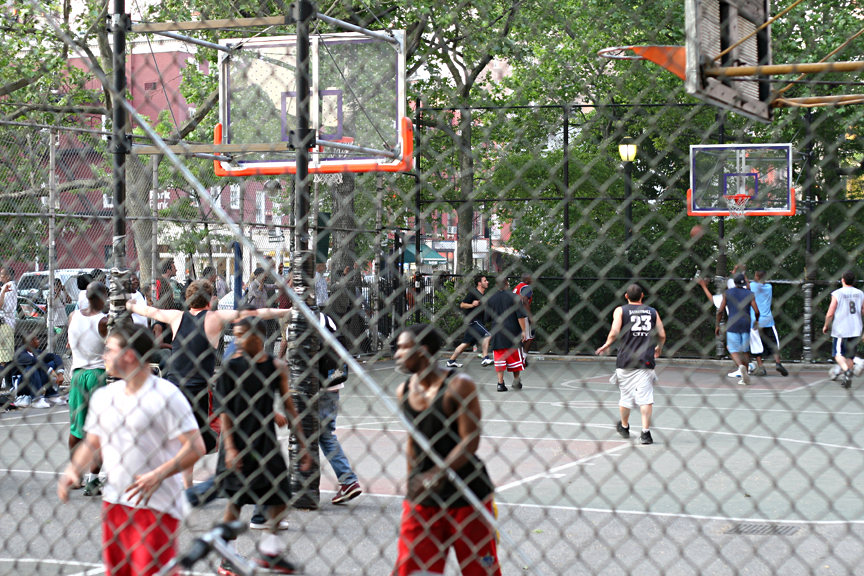
    This may not look like much, but this ramshackle affair is one of the world’s most well-known streetball courts, with some of the finest players in the country. Officially the West 4th Street Courts, it is commonly known as the Cage. It is sandwiched between the entrance to the West 4th Street subway station (one of the city’s largest), Avenue of the Americas a.k.a. 6th Ave. (one of the city’s busiest streets), West 3rd and 4th Streets, playgrounds, and handball courts. There is no seating for spectators – onlookers press up against the fence, dodging pedestrian traffic and jockeying for good viewing. The court is smaller than regulation size, so the the action is faster, with lots of tough, physical play (“banging”), sometimes resembling urban wrestling more than basketball. The entire court is surrounded by a 20-foot-high chain-link fence – hence the term cage (cage configurations are not unusual in many large cities). Many professional players have cut their teeth here; scouts are frequently on site prospecting for talent.

    The West 4th Street League that plays there was founded in 1977 by Kenny Graham, a limousine driver. There is a summer tournament, drawing 100,000 visitors from around the world. Prior to 1935, the area was vacant land; from 1935 to 1953 it was a small city park with swings, slides, and a bocce court. In 1953, it was taken over by the parks department, and in the 1950s, it was paved and basketball hoops were added.

    I am not a sports or basketball fan, but the fast games with constant action are quintessential NYC. And the banter between players is some of the best sarcasm and comedy I have heard. The Cage has been featured in films and TV commercials. A book was written: Inside the Cage: A Season at West 4th Street’s Legendary Tournament. Do you want a slice of real, classic NYC – gritty, harsh, fast, in-your-face? Visit the the Cage, watch a game, and listen

    Posted on by Brian Dubé

  • Tale of Two Colors

    Posted on by Brian Dubé

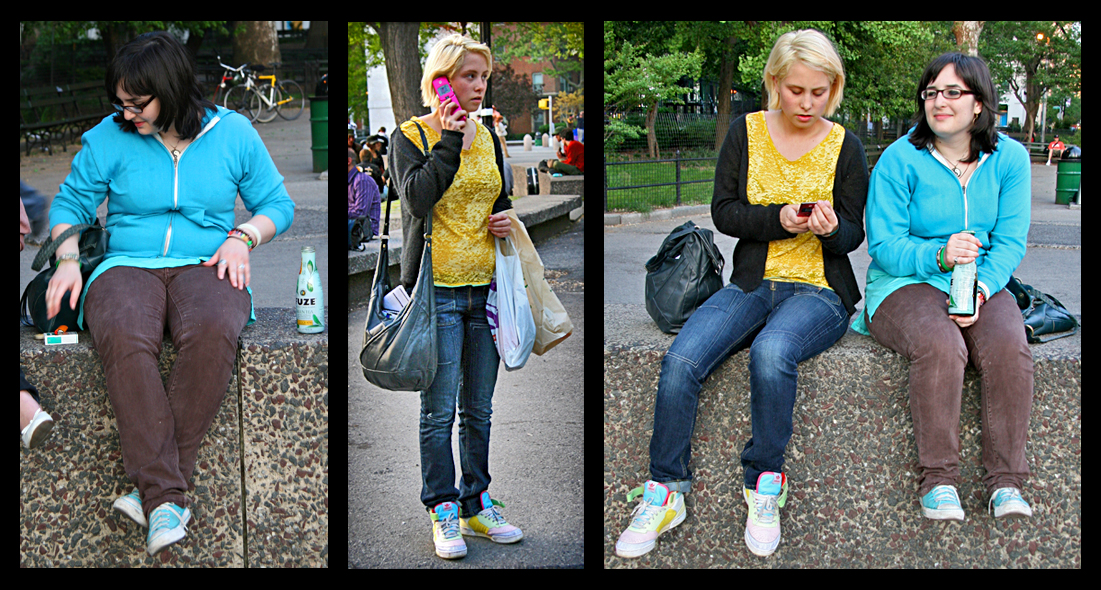
    Yesterday evening, a friend pointed out a young woman (Anna) who was remarkably immersed in shades of blue/turquoise/aqua – aqua shirt, turquoise sweatshirt, blue sneakers, light blue/aqua beverage container, and blue-green on her cigarette pack. Her friend also had her own blue-green accents and beverage. While deciding whether or not this was a blog-worthy event (I am a big fan of turquoise & aqua, so objectivity was a problem), to our amazement, along came a yellow-themed woman (Rachael) – golden blond hair, yellow shirt, and yellow accented sneakers which also had blue accents matching Anna’s (not to mention a hot pink phone and matching trim on her sneaker tongues).

    This color event was too unique to pass up – I asked if they would mind posing together, and they obliged. Anna and Rachael are both NYU students. Hoping to get the shade descriptions right, I spent a little time this morning reviewing the differences between turquoise, aqua, aquamarine, teal, peacock, cyan, cerulean, and azure…

    Posted on by Brian Dubé

  • Marijuana March

    Posted on by Brian Dubé

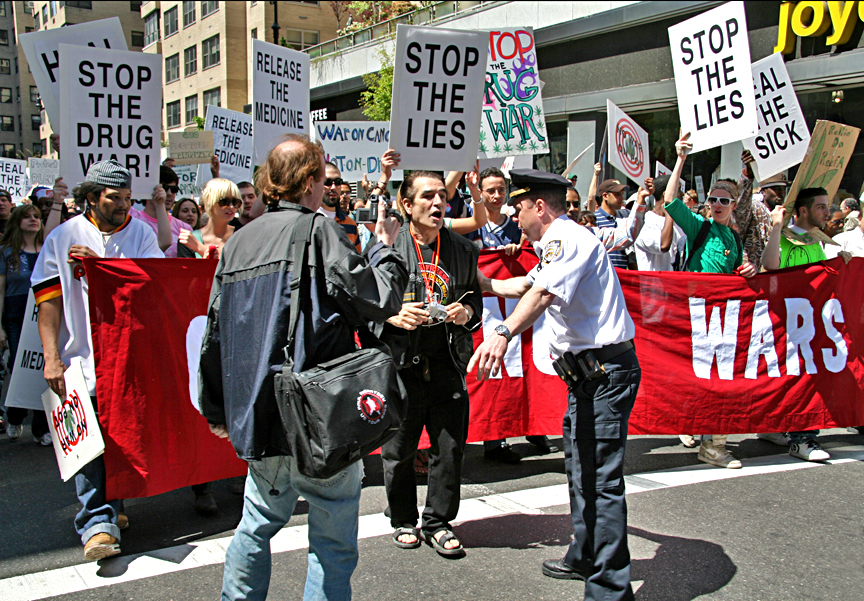
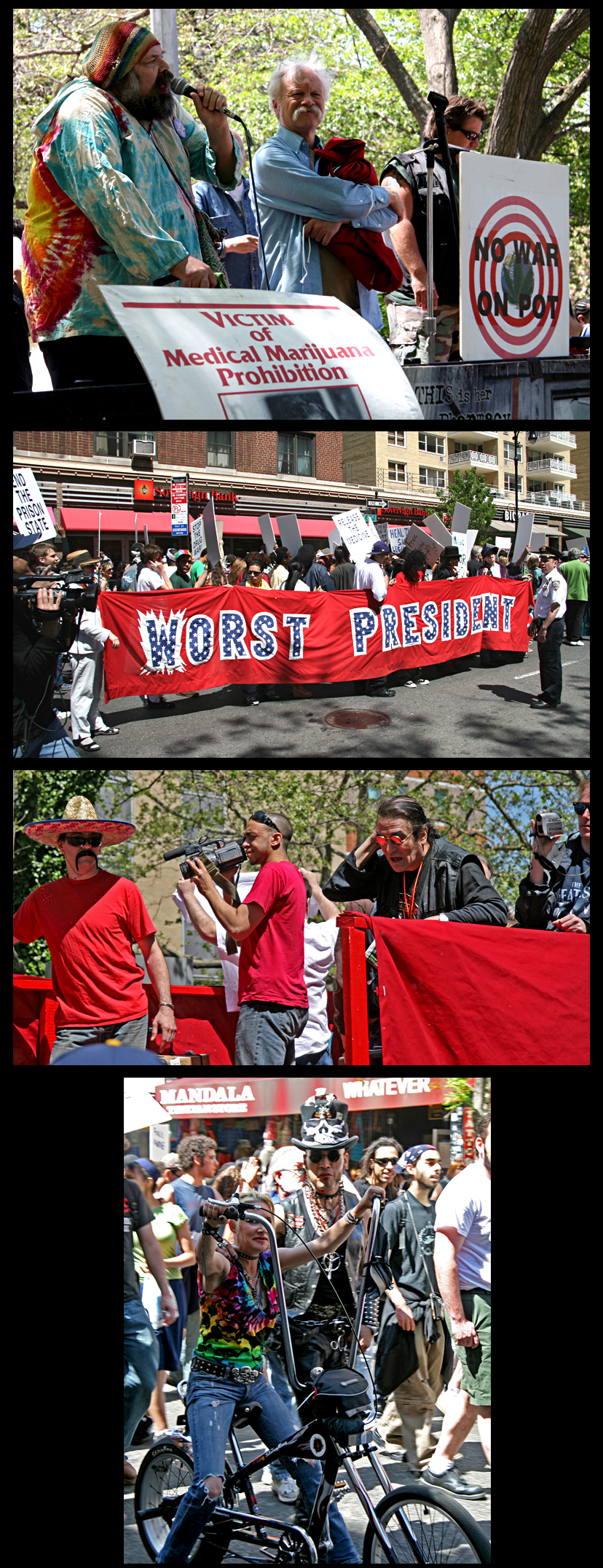
    This photo is from the New York City Worldwide Marijuana March, an annual event held on the first Saturday of May (click here for more photos). It is NYC’s celebration of a worldwide event called the Global Marijuana March or Million Marijuana March, now with 232 cities involved. Each city has its own spin, which involves marches, festivals, rallies, concerts, speakers, and information tables. The event, which has been going on for 40 years in NYC, is a celebration of marijuana culture with an aim to legalize cannabis for all uses – recreation, medicine, fuel, etc. Various groups are involved in the organization of the march, such as NORML, Cannabis Culture, and Cures-Not-Wars, one of the most interesting groups.

    Cures-Not-Wars is making efforts to legalize the use of ibogaine, a hallucinogen of African origin which is reputedly very effective in treating opiate addiction. Ibogaine is administered in many countries as an experimental drug. In other countries, such as the United States, it is a controlled substance, along with other psychedelics. Cures-Not-Wars is headed by Dana Beal, former Yippie, out of 9 Bleecker Street, the former home of the Yipster Times and now a museum.

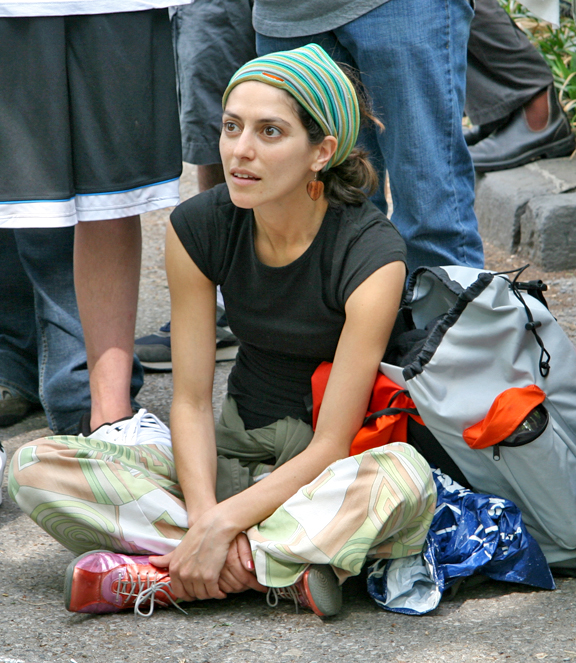
    The figure at the center of the photo is, appropriately, David Peel, a musician and activist who is perhaps best known for his first album, Have a Marijuana, produced in 1968 with his group The Lower East Side. The parade has the feel of a sixties rally with a benign tone. The police appeared quite easy going and tolerant of the event. After all, how much of a serious danger can marijuana activists really be 🙂

    Posted on by Brian Dubé

  • Chains

    Posted on by Brian Dubé

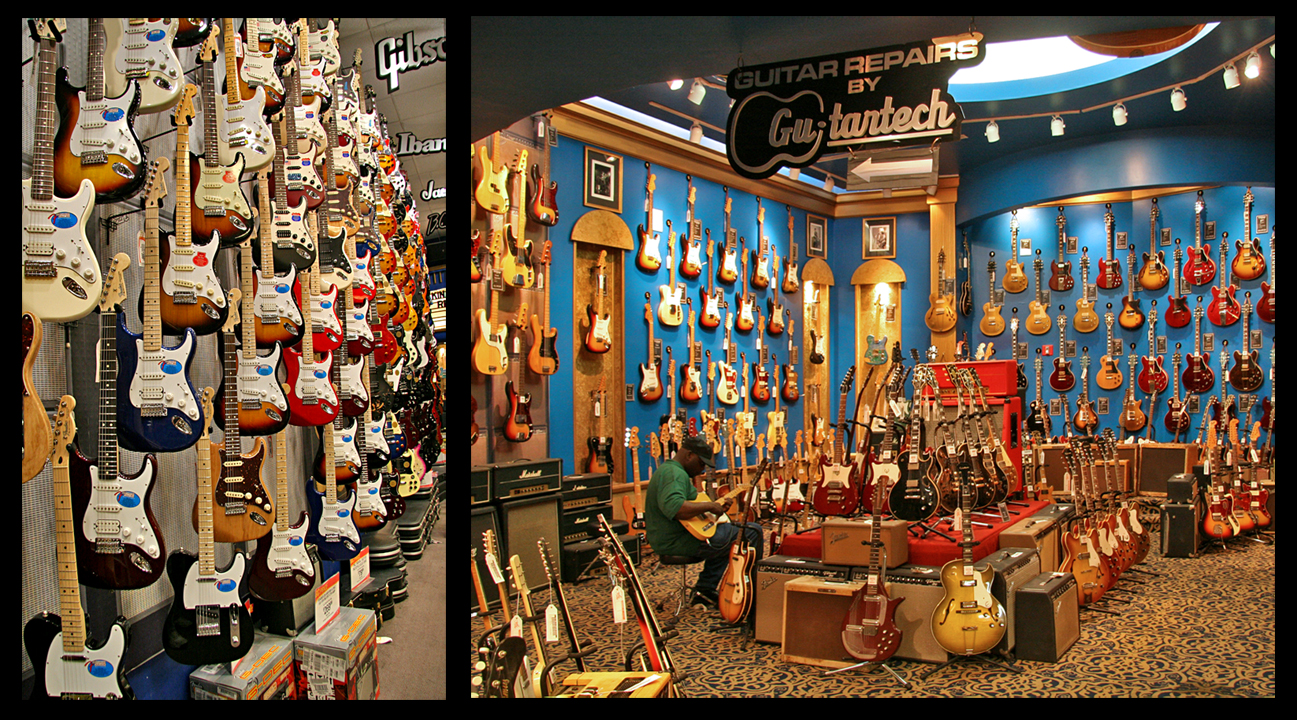
    What is seen in NYC as an encroachment by mass merchandisers and corporate chains is often seen out of the city as an asset. Frequently, the small independent store is not an option, so consumers are more appreciative just to have access to the merchandise. Many of the largest chains (including some of the “big box” operations) are now moving into the city, even in Manhattan, where space is at a premium, e.g. Whole Foods, Best Buy, Home Depot, Starbucks, and Guitar Center (shown in the photo). Many of these large merchandisers were started as small independents by individuals passionate about their field and not with intentions of rolling out nationally. Although they have paid their dues, this does not justify the type of overly aggressive tactics alleged to be used by places such as Walmart and Starbucks, who are seen by some as purveyors of evil.

    The internet has had a substantial impact on most businesses selling a product, but many products are still best seen in person. Musical instruments are a prime example – unless they know exactly what they want, musicians need to do a hands-on evaluation. In the case of Barnes and Noble or Guitar Center, I personally do not see these particular chains with such foreboding as others because 1) reading a book or playing a musical instrument are activities requiring time, patience, and active participation. There are no shortcuts – these merchants can only pander so much to instant gratification. 2) I would much prefer to see a Barnes and Noble or Guitar Center over a fast-food chain.

    The biggest loss is with the knowledge of the staffing, which generally just can’t compete with a long-time employee or owner of a small mom-and-pop operation. Many consumers feel conflicted about these large chains – although we dislike the concept (with “crass commercialism” and the “dumbing down of society” being popular refrains), in reality, they often provide broader selection, lower pricing, and longer hours (not to mention more space for reading or playing instruments), which most consumers now want. After all, if you need to replace an A string on a Sunday night, where else are you going to go?

    Posted on by Brian Dubé

  • Garbage a la Mode

    Posted on by Brian Dubé

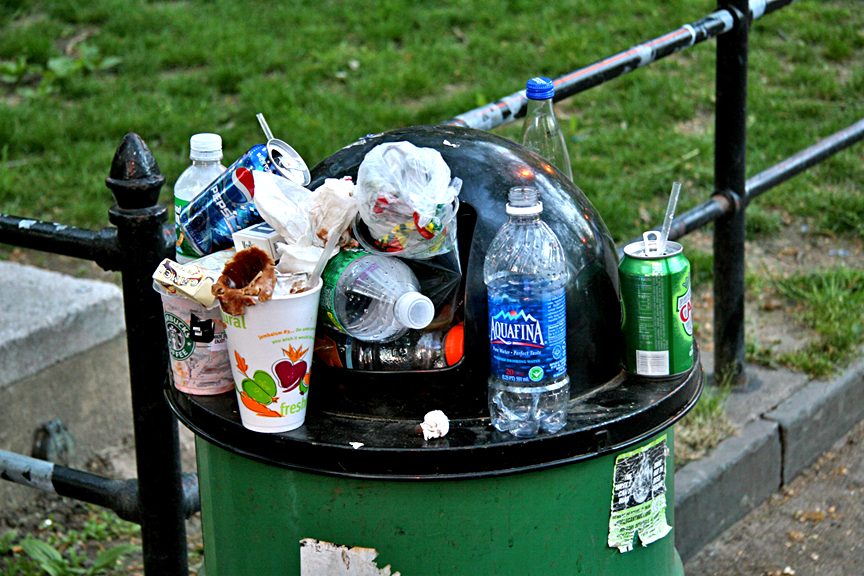
    I’m only disappointed that I didn’t get a photo that better represents the level at which the trash situation gets in NYC. In this photo, one can see that efforts have at least been made to place trash in a proper (but over filled) receptacle by perching it around the rim a la mode. Frequently trash is also piled around the base, loose and in bags. This is a typical scenario in most heavily trafficked areas, particularly where there is no private group providing additional services. What? you may ask. Yes, that is correct. In spite of our heavy tax load and cost of living in New York, private organizations have been formed to properly manage and provide better services for many things which are the responsibility of local government and for which we pay taxes. Like picking up the garbage, which is not done frequently enough in many areas.

    Groups like the SOHO Alliance, the Fund for Park Avenue, and the Central Park Conservancy provide a level of services resulting in a standard of living more acceptable to residents. A similar scenario is seen in the apartment rental market, where repairs are often better done by the tenant at his/her own expense rather than by the landlord. Waiting for those responsible to do their job is frequently a formula for frustration – taking things into ones own hands is sometimes the only sensible recourse. No NYC trash statistics or tutorial today – perhaps another time…

    Posted on by Brian Dubé

  • Tropical Pavilion

    Posted on by Brian Dubé

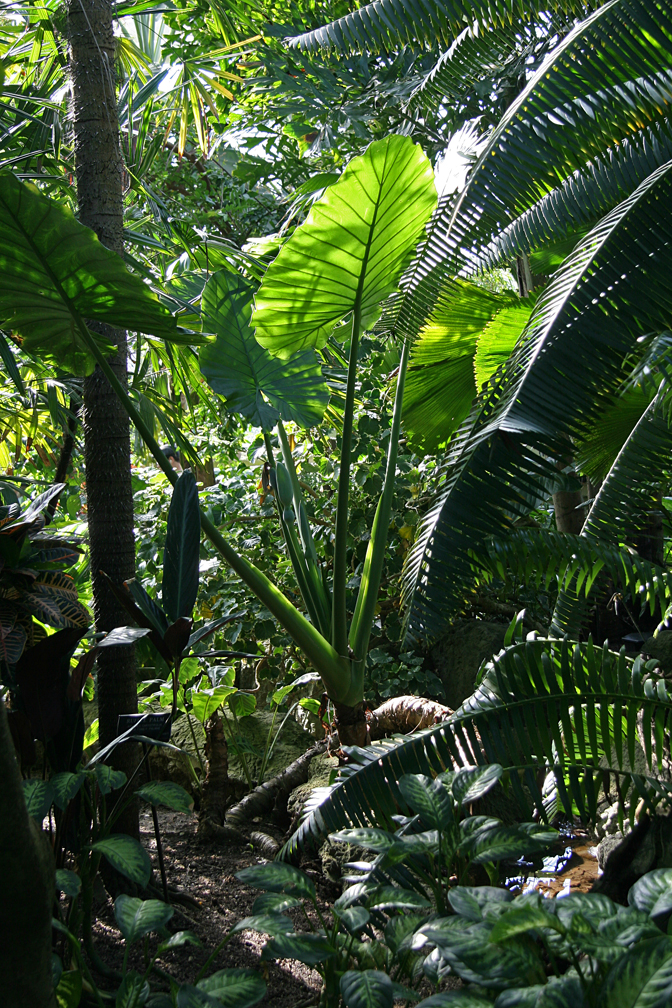
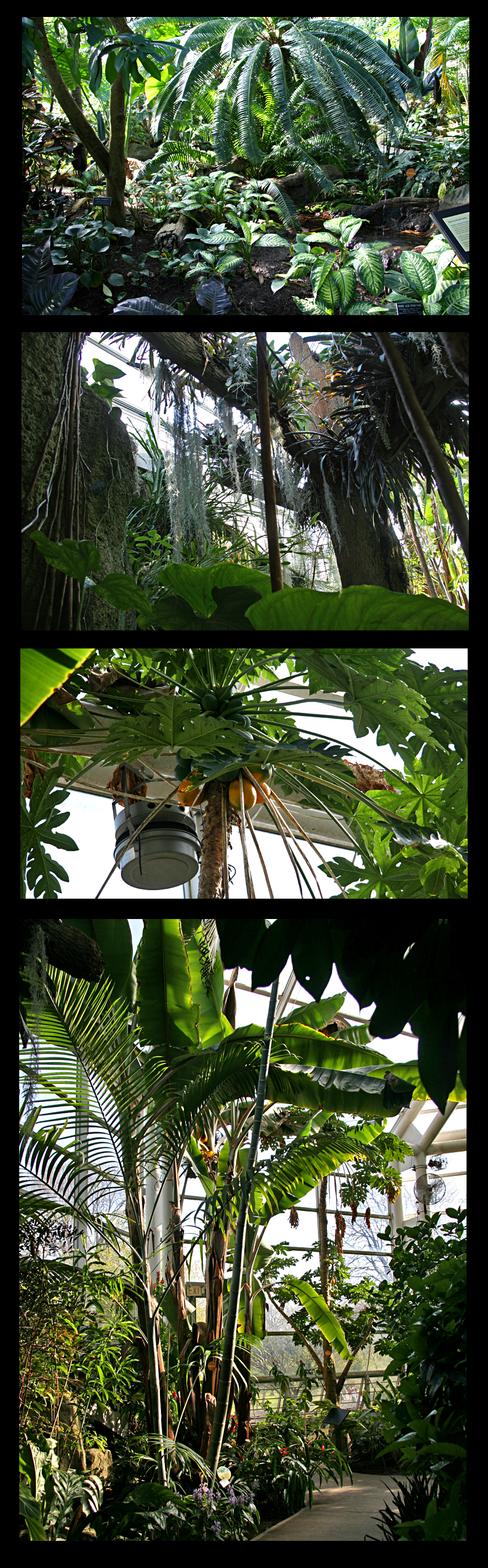
    Yes, this is NYC too. The photos for this posting were all taken in the Tropical Pavilion in the Steinhardt Conservatory at the Brooklyn Botanic Garden, which was founded in 1910. Brooklyn Botanic is a world unto itself, one of NYC’s (and the country’s) premier urban oases – 52 acres with over 10,000 different kinds of plants in a variety of outdoor and indoor environments – gardens, walks, esplanades, and conservatories. The Steindhardt Conservatory (built in 1988 to replace buildings from 1917) is a complex of greenhouses in realistic environments that simulate a range of global habitats – Desert, Warm Temperate, and Tropical pavilions, along with a Bonsai Museum (the largest collection in the US – a must see), the Trail of Evolution exhibit, and an Aquatic House.

    The Tropical Pavilion, the largest of the conservatories, soars to a height of 65 feet to accommodate the tallest trees. It recreates a tropical forest, including waterfalls and streams, representing the primary tropical regions of the world: the Amazon basin, the African rainforest, and tropical eastern Asia. Plantings are arranged to represent the categories of fragrance, food, medicine, and industry, along with ornamental plants. Here, you can find mango, banana, breadfruit, coffee, cola, vanilla, cinnamon, chocolate, papaya, star fruit, latex, and mahogany – it’s amazing to see tropical fruits actually growing in the middle of New York City! I would recommend a visit any time of year, although a steamy August day would perhaps not be the best choice for the Tropical Pavilion.  Try a dreary winter day and be transported to another world…

    Posted on by Brian Dubé

  • Grad Alley

    Posted on by Brian Dubé

    Welcome to Grad Alley, the commencement eve celebration (Wednesday evening) of New York University – the world’s largest private university, with 40,000 students. A carnival-type atmosphere is created along West 4th Street, La Guardia Place, and the NYU plazas. There is free food, entertainment, a live D.J., and their own fireworks display. As I write this on Thursday morning, the commencement ceremonies are taking place in Washington Square Park, the “campus” for NYU.

    Grad Alley was absolutely packed.  NYU is for the student who wants to attend a large school, be in an urban environment, and take advantage of everything a city like New York has to offer. This is a factor in the strong standing of many of their departments/schools, which can draw from its NYC environment – e.g. law, film, & business. NYU is the polar opposite of the small school in the country, where a bucolic setting, small student body, and intimate contacts are the hallmarks. At times, NYU can feel a bit overwhelming and impersonal. Personally, I like it, but it’s not for the faint of heart – there is no hand holding here…

    Posted on by Brian Dubé


  • dinamic_sidebar 4 none

©2026 New York Daily Photo Entries (RSS) and Comments (RSS)  Raindrops Theme