• Category Archives Only in New York
  • Martin Luther King, Jr.

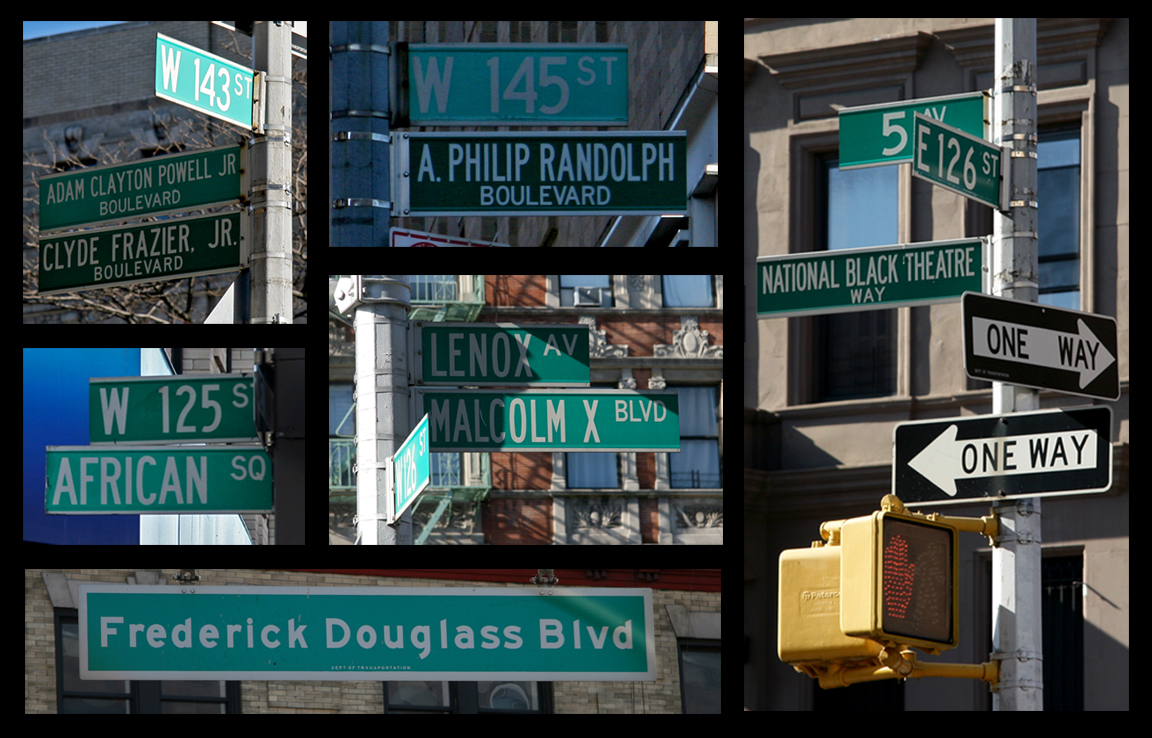
    If you travel through Harlem and observe the street signs, you will notice a number with dual names – an older and more familiar on top and a newer below. The city renames streets for a variety of reasons. Subsequent to 9/11, many streets were renamed to honor those firefighters and police officers who lost their lives in service to the city during that tragedy.

    Other streets are renamed for groups or individuals who are honored for their lifetime accomplishments. This can be most readily seen in Harlem, where many major thoroughfares have been renamed to honor prominent black Americans. These names include major black activists and entertainers. On my recent excursion to the neighborhood, I caught some of the heavyweights and photographed the signs.

    On December 29, 2008, Mayor Bloomberg signed legislations renaming 49 streets and public places in the five boroughs. Some of the prominent blacks include James Brown, Drs. Kenneth and Mamie Phipps Clark, Zora Neale Hurston, Samuel J. Battle, Ella Baker, Charles Hamilton Houston, Billie Holiday, Paul Robeson, Count Basie, A. Philip Randolph, Susan Smith McKinney-Steward, Shirley Chisholm, and Marcus Garvey.

    There is one glaring omission in today’s photo collage. While traveling down 125th Street, Harlem’s main crosstown street, I was distracted while observing all the people, places, and things, and neglected to look up and photograph a street sign conamed with a man virtually synonymous with African-American civil rights: Martin Luther King, Jr.


  • Kings and Castles

    On October 28, 2009, in Content is King, I wrote regarding a common phenomenon in New York City: how you can’t judge a place by its outward appearance. However, great places are not always shabby. Here, as elsewhere, packaging does not always deceive, and sometimes you can judge a book by its cover.

    Quality is never easy to assess, especially at a time when marketing and packaging have reached new zeniths. Many consumers are disappointed by expensive yet inferior products that are riding on the coattails of company legacy. There are merchants who do strive to keep a consistency between product quality, packaging, imaging, and retail store environments. Apple, with its award-winning stores in Manhattan, is a good example.

    When I was young, I had a morbid fear of hospitals. They were gloomy, scary places, where impending doom seemed to hang over everything. Information was shrouded in mystery and secrecy, and the prognosis never seemed good. Certainly, hospitals are environments that are defined by caring for those with a medical problem, but they do not have to be shrines to hopelessness and malaise.

    Hospitals are changing dramatically in technology, facilities, and care. Of course, these are not places where everyone is jumping for joy, but they are places where there is much more expertise, knowledge, effective treatment, and hope, and you can feel a difference from the days of old.

    Even robotics have entered the world of medicine. At the Methodist Hospital in Houston, Texas, robots are not only used to perform surgery, they are also being used to make visits to patients and allow doctors to monitor them remotely.

    NewYork-Presbyterian is a university hospital with two medical centers affiliated with Ivy League universities: Columbia University Medical Center and the Cornell University Weill Medical Center (shown in the photo), which is located on the Upper East Side of Manhattan. NewYork-Presbyterian Hospital is the second oldest in the United States and one of the most comprehensive university hospitals in the world, with leading specialists in every field of medicine. It is ranked as 6th best in the country by US News and World Report. Admission to the medical school is one of the most competitive in the world. The acceptance rate is only 100 positions from nearly 6,000 applicants.

    In Content is King, I told of a conversation with a physician at Gouverneur Hospital discussing NewYork-Presbyterian Hospital, where he also worked. We agreed that it was like a country club in comparison. The atmosphere goes a long way to creating as positive an environment as can be reasonably expected.

    The hospital is a member of The Planetree Alliance, an organization of hospitals in the United States. The nonprofit group, founded in 1978, is oriented to improved patient care. It’s great that content is king, and it’s even better when the castle is well-designed 🙂


  • Food Bubbles

    We are in what the online publication Slate calls a Cupcake Bubble, which they predict will soon be followed by a crash. I wrote about cupcakery Magnolia Bakery in September 2009, but I was not aware of the true breadth of this craze – that it is a national and international phenomenon.

    Numerous articles have been written going back several years. There is a cupcake blog, Martha Stewart has a cupcake book, and shops are everywhere: Sprinkles Cupcakes (international chain) based in California, Toot Sweet Cupcakes in Austin, Texas, Lovely Confections in Denver. Crumbs has two dozen locations, with 18 in the New York metro area. Also in New York, there is Sweet Revenge, Babycakes, and Sugar Sweet Sunshine. In Washington, D.C., there is Georgetown Cupcake, Red Velvet, and Hello Cupcake.

    This is not the first time that a food fad with shops specializing in one product has taken New York City by storm. In the 1980s, gelaterias sprouted up everywhere and all closed in a short time. Recently, we have seen a similar thing with frozen yogurt shops such as Pinkberry and Red Mango.

    A recent New York Times blog posting discussed the sustainability of cupcakes as a business and was accompanied by 99 comments. After reading these comments and several other articles, I see that the numerous debates boil down to a few issues: 1) Can all these cupcakeries make it? 2) Is a cupcake worth $3-$4? 3) Why are they so fashionable at a time when health consciousness is at a zenith? And, of course, 4) Who has the best cupcakes? In New York City alone, there are many cupcake shops.

    Many find the confections much too sweet or just not healthy, while others see it as a small guilty pleasure and comfort food, perfect for such times. Some people see buying them at these prices as foolish, particularly in an economic downturn, and others add that the entire restaurant business is built on paying for convenience and that most things made at home cost a fraction of what is charged for the ready-made equivalent. Business experts have entered the debate, with most showing how this is a flawed business model. A few, however, do not agree. And there are many analogies – and critiques of these analogies – made with places such as Starbucks, Krispy Kreme, and Dunkin Donuts.

    Cupcake bakers have used several business approaches – cupcake shops, online selling, wholesale distribution, trucks, kiosks, or any combination of sales avenues.
    The Cupcake Stop is a mobile gourmet cupcake shop in a truck which frequents different locations in Manhattan on different days of the week. It is run by Lev Ekster, and the cupcakes are baked by Manal Mady in Brooklyn. If you just want a small confection, they also offer mini cupcakes for $1 each, as does Baked by Melissa, who sells from a street kiosk on Spring Street in SoHo. Buying a tray of minis in an assortment of flavors is a common solution to the flavor selection dilemma.

    I love the street vending of food and mobile trucks, such as the Dessert Truck or NY Dosas. Making foods available on the street is perfect for the visitor or native New Yorker on the run. Personally, I find cupcakes to be a little too sweet, so an occasional tasting goes a long way…


  • Jungle Lovers

    “What is New York City like?” I asked. My guidance counselor put his hands behind his head with elbows spread wide, leaned back, and with great deliberateness and the authority of a worldly, street-smart, experienced man, answered, “Have you heard of the concrete jungle, kid? Because that’s what it’s like. Between 23rd Street and 59th Street. It’s a jungle. A concrete jungle.”

    With that and some college catalogs, I was supposed to make an informed decision about the merits of attending university in New York City, a decision that would shape my entire life.

    I am not sure if his depiction of midtown Manhattan was intended as a deterrent, a strong warning, or just meant to impress me with his knowledge of this city, but we all know that if you tell a child not to do something, he/she will just be spurred on to do it. I was.

    At 18, a jungle is just what I wanted. After all, I had read numerous African adventure books and even took out a book in Swahili in high school, in the event that I found myself in equatorial Africa. If I couldn’t have vines, monkeys in trees, and tropical birds, then concrete would do fine. And, like the jungle, New York City would be an adventure. That is what I wanted most.

    A jungle is a great, even if overused, metaphor for New York City. It has a density of growth and, at times and places, can appear nearly impenetrable. Scary to some, and exciting to those who like a sense of adventure and the unexpected.

    If you want to truly enjoy NYC, then treat it like a jungle. Just walk with your eyes open. Don’t be afraid to interact with strangers, and you will meet some incredible people. There are many treasure maps, both online and offline, to New York City. Use them, of course, but also cut a swath and blaze your own paths. Enjoy the adventure. Happy New Year, jungle lovers 🙂


  • What numba Kissena?

    I have previously written here of my experience as a New York City taxi driver when I was a university student. Nothing beats cab driving for a crash course in New York City and learning about its geography, boroughs, and people. There are many taxi cab stories which I have exchanged with others. In the course of driving nights, a driver will inevitably run across some outrageous situations. This has been the subject of the film documentary Night on Earth and the TV series Taxicab Confessions.

    I was introduced to driving by a college friend, an interloper into our university lives who was a native New Yorker and a few years older than we were. He was not a student, and to us at that time, he was a man of the world. He introduced me to many things in New York City, such as Wo Hop, the legendary Chinese restaurant at 17 Mott Street.

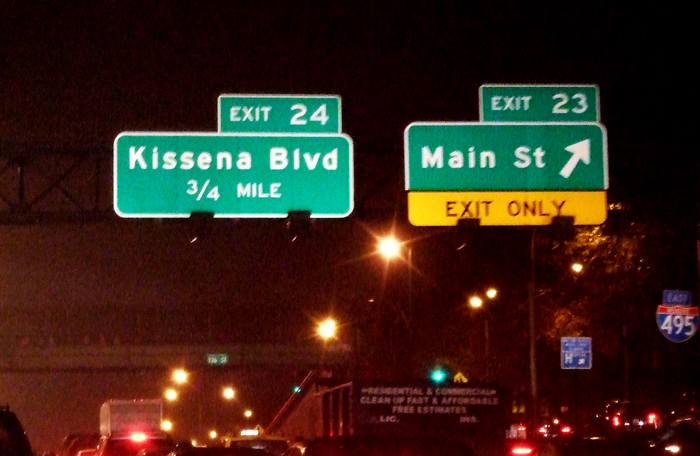
    I was new here and very naive and innocent. I was wide-eyed and easily impressed. On one particular night while driving a taxi, I was lost in Queens, looking for a particular address on Kissena Blvd. I was tired, it was dark, and the print on my borough map was getting too small and painful to decipher. An older driver was standing outside his cab – if I recall, he was eating a sandwich. He looked seasoned, so I asked, “Do you know where Kissena Blvd is?’
    To which he replied in classic New Yorkese, “What numba Kissena?”

    Wow. Can you imagine? This man did not only know the location of Kissena Blvd, but apparently, he was able to give specific directions to a particular address based on its street number alone! This seemed to be an incredible feat to me at the time, like some brilliant memory act using mnemonic devices. Or perhaps he was a savant with special abilities to know everything about street addresses.

    In hindsight, however, nothing of the sort is necessary. In fact, Kissena Blvd uses the block numbering system common to Queens and developed in 1911 by Charles U. Powell, a chief engineer in the topographical bureau, who modeled it after the Philadelphia grid system. There is a method to the madness or what the New York Times referred to as the “vexing vortex of the Queens street system.”

    Plan or no plan, however, the system is still vexing. Any number may exist as an avenue, road, place, lane, street, drive, or any combination. Even Queens residents are often helpless and resort to just asking for directions. If they are lucky, they get someone who is a street savant and can retort with something like “What numba Kissena?” 🙂

    Related Posts: New Yawk Style, Sea of Yellow


  • Misfits

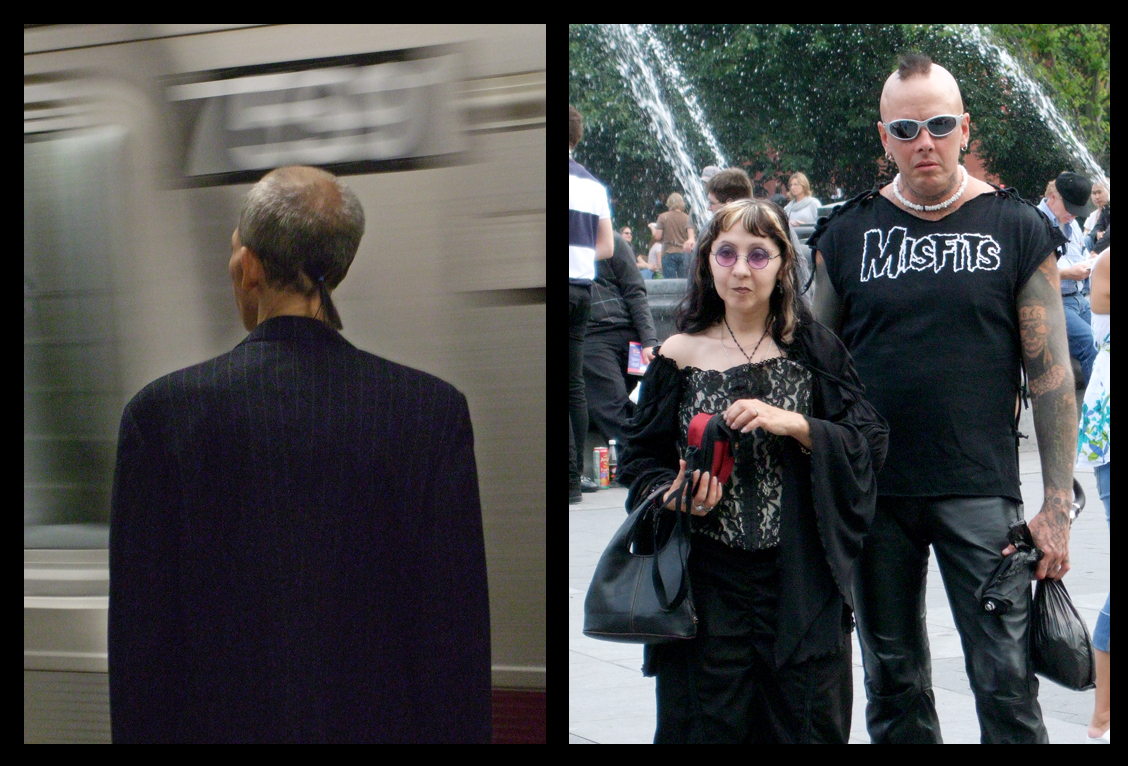
    It is safe to say that in a wired world, sights of individuals like those in the photo are no longer unusual. It is also a reasonable assumption that in many places, even outside urban areas or college towns, people like these can be found in the flesh.

    But I would guess that businessmen in pinstripe suits do not often wear their hair like our subway rider in the photo and that tattooed individuals brandishing mohawks do not usually walk the streets with a t-shirt reading “Misfits.” I imagine that the word is embraced for its dictionary meaning and not just for the punk rock band of that name.

    I have avoided using the word misfit in this blog for a number of reasons, one of which is that the word generally has a somewhat derogatory connotation. But, assuming social misfits exist, New York City is certainly a place to find them. This is an environment where virtually anyone with any manner of dress or lifestyle can feel quite at home. In fact, it is questionable whether the word misfit is really applicable in a city where such a large number of nonconformists exist and where one is often not very far from another.

    A trip to Tompkins Square Park can easily make the societal conformist feel like an outcast or misfit.
    In the case of the individuals in the photo, there is a strong element of exhibitionism. However, I have met many individuals here who, by any reasonable definition, really are social misfits, with extreme and very self-indulgent lifestyles, the nature of which may not be apparent to the outsider at all.

    Such a large number of misfits should come as no surprise in a country which has seen such a upsurge in the radical individualism of youth since the 1960s. The US Army has had to market with campaigns such as “Be all that you can be” and “Army of One.” This is, of course, rather ironic, since the Army never has been and never can be a place for individualism. But the ad campaigns do reveal how systemic and important individualism really is in this country.

    In a society without strong cultural scripting and where individualism and self empowerment are constantly trumpeted to be such laudable personal goals, we must accept the consequences. Here, in a city where there is such a a melange of iconoclasts and misfits, many live unaware of how outside the normal constructs of society they really are. Others are quite aware and proud enough to identify themselves with a t-shirt…

    Related Postings: Out There, Spike, Narcissism Gone Wild, Water Sprites, Wood Nymph, Spring Madness, The Dance Parade, Dyke March, Twelve Tribes, Penny Farthing, Homeless Art, Superheroes, Snake Charmer, Circus Amok, Fashion Forward, Piercing Al Fresco


  • Comic Relief

    There have been numerous television shows which are virtually synonymous with New York City and have achieved legendary iconic status. Many open with recognizable shots of the city. Some, like the Letterman show, even have images of Manhattan as a backdrop to the set.

    New York City has hosted The Tonight Show (with Steve Allen, Jack Paar, Johnny Carson), the Ed Sullivan Show, The Cosby Show, Sex and the City, Law and Order, The Late Show with David Letterman, Seinfeld, The Daily Show, Live with Regis and Kelly, and Saturday Night Live. These shows were not only produced and filmed here but also had New York City as part of its motif.

    Saturday Night Live is a New York City-based sketch comedy show that began in 1975, with Lorne Michaels initially as writer/producer and now as executive producer. It achieved such wide cult status that the 3 letter acronym, SNL, soon replaced the name of the show in conversation and became widely adopted. Watching the program, singly or in groups, became de rigeuer for young people. I recall the regular Saturday night ritual. Excusing oneself from a social gathering to make it home to watch SNL was quite socially acceptable. In fact, it spoke highly of one’s love and dedication to an important part of New York City.

    Many of the cast members launched careers in comedy and film after working on the show: Eddie Murphy, Dan Ackroyd, Bill Murray, John Belushi, Gilda Radner, Chevy Chase, Julia Louis-Dreyfus, Chris Rock, Chris Farley, David Spade, Mike Myers, Dana Carvey, et al.
    Some of the show’s popular sketches also inspired films such as the The Blues Brothers and Wayne’s World.

    The show’s allure has drawn celebrities, who both host the show (starting the opening monologue) and perform in sketches with the cast. The show also features a musical guest. The list of those who have appeared on the show reads like a who’s who of the entertainment world, with hundreds of names. The show has had cameo appearances of political figures such as Barack Obama, George W. Bush, Al Gore, Hillary Clinton, and NYC Mayor Rudy Giuliani.

    In the early years of the program, New York was troubled, and SNL put a welcome and much needed positive spin on a city mired in financial woes and crime. Then, as now, SNL has provided necessary comic relief 🙂

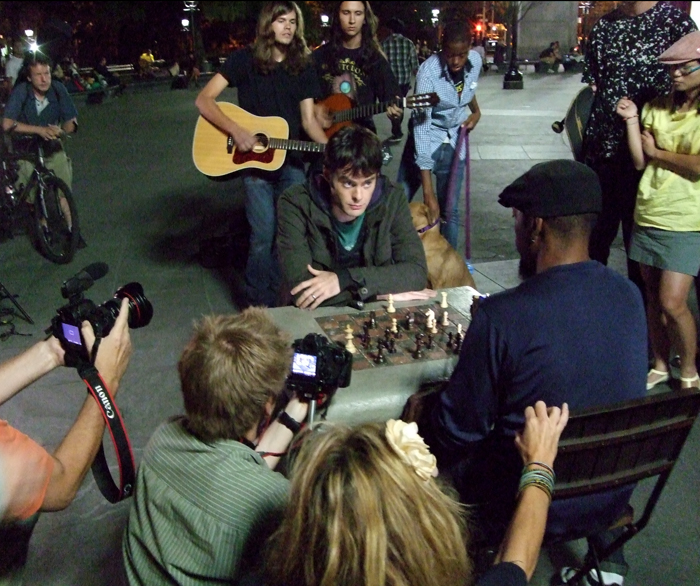
    About the Photo: Tuesday evening in Washington Square Park, a chess table (resembling those in the chess area of the park) was set up in the fountain plaza for filming of what will be used as an opener in the upcoming SNL season. Bill Hader was the star on the set. Hader is an American actor, comedian, writer, producer, and cast member of SNL since 2005. He has won both Emmy and Peabody awards and has appeared in over 20 films. So it was very surprising that the filming was being done with so little fanfare. A small audience gathered around the subjects with no interference from the film crew – their only admonition was “no flash photography.”


  • i’m lovin’ it

    I thought I had a very special photo opportunity when I caught this squirrel enjoying a french fry. Upon reflection, however, it occurred to me that this my observation might not be a particularly unique phenomenon, New York City or otherwise. A little searching turned up other photos on Flickr and videos on YouTube.

    Everything about this city conspires to make it a haven for scavengers. The population density along with the waste so conveniently available makes it a veritable smorgasbord for those creatures who find the city hospitable. It is estimated that there are more rats than people in New York.

    Squirrels are a curious phenomenon. As rodents, they share a family (technically an Order) with rats and mice but are looked at more fondly. They scavenge but yet are still fed, watched, and even doted over. The attraction is understandable; they are not as furtive in their behavior, and they don’t slink through the darkness of subways. And they are arguably much more attractive than other rodents – many would say beautiful. I’m not sure why, but I see many visitors to the city stop and interact with squirrels with a look of extreme fascination. I’m not sure whether it is the relative rarity of squirrels in their home locale or perhaps the emboldened character of a city squirrel and how easily and closely they can be approached.

    I’ve looked over the list of slogans used by McDonalds over the years, beginning in 1961, to see what might be an adequate caption for this photo if the golden arches were to use it for their advertising. How about their 2003 slogan based on Justin Timberlake’s song: “i’m lovin’ it” ?


  • New Yawk Style

    I enjoy observing New Yorkers I see in public who make a strong presence, whether brash, eccentric, or unusual in some way. However, drawing conclusions based on a few pieces of information can be dangerous – see my posting on Walid Soroor and Facts and Fiction.

    There is a New York style and a New Yawk accent. This has been depicted in numerous characters of film and television. John Travolta in Saturday Night Fever is classic New York attitude and accent (in this case Brooklyn Italian), as are others such as Fran Drescher (Queens) or journalist Jimmy Breslin.
    The classic New York style is characterized by someone who is confident, tough, blase, brave, street smart, and aggressive. Fierce borough pride. Regardless of gentrification or any other talk of improving conditions and reduction of crime, New York City is still a rough place. For a woman (or a man) who makes her/his way here, working, traveling the trains, and walking the streets requires a certain intestinal fortitude and stoicism just learning to navigate and survive.

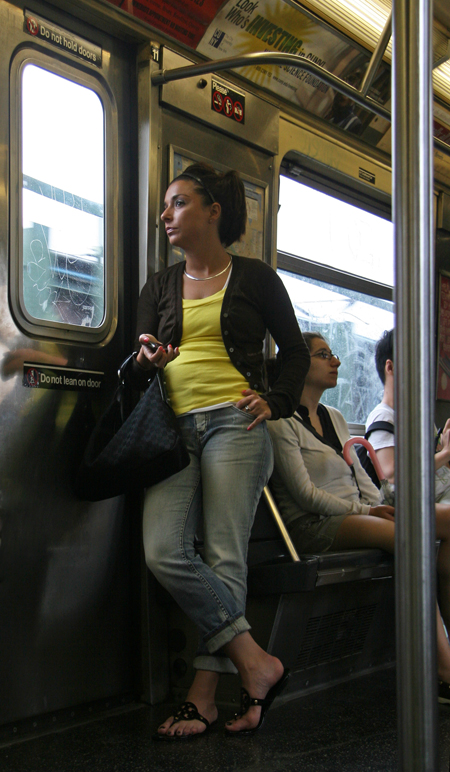
    On my trip to the Coney Island Mermaid Parade, this woman and her friend caught my eye. She had a dash of all the classic elements of New Yawk style – her posture and attitude on the train speaks volumes. A real New Yawker’s gotta have chutzpah…

    Note about the New Yawk accent: Also known as Brooklynese or New Yorkese, the accent consists of dropping r’s (fatha for father), adding oi (like the classic Toidy Toid for Thirty Third), adding r’s where they don’t belong (erster for oyster), pronouncing “th” like “d” or “t” (through as trew or the as da). From the New York Times: “Tawk to a young New Yawkuh dese days and de foist ting you may notice is dat he aw she don’t tawk like dis no maw.”
    Many say the accent, along with Yiddishisms (such as shlemiel or oy vey), is disappearing. Others say it is moving to the suburbs of New Jersey and Long Island. Some believe that NYC police officers are keeping it alive as a badge of honor.

    Related Postings: Out There, Spike, Narcissism Gone Wild, Superheroes, Snake Charmer, Circus Amok, Fashion Forward, Piercing Al Fresco


  • Mermaid Parade 2009

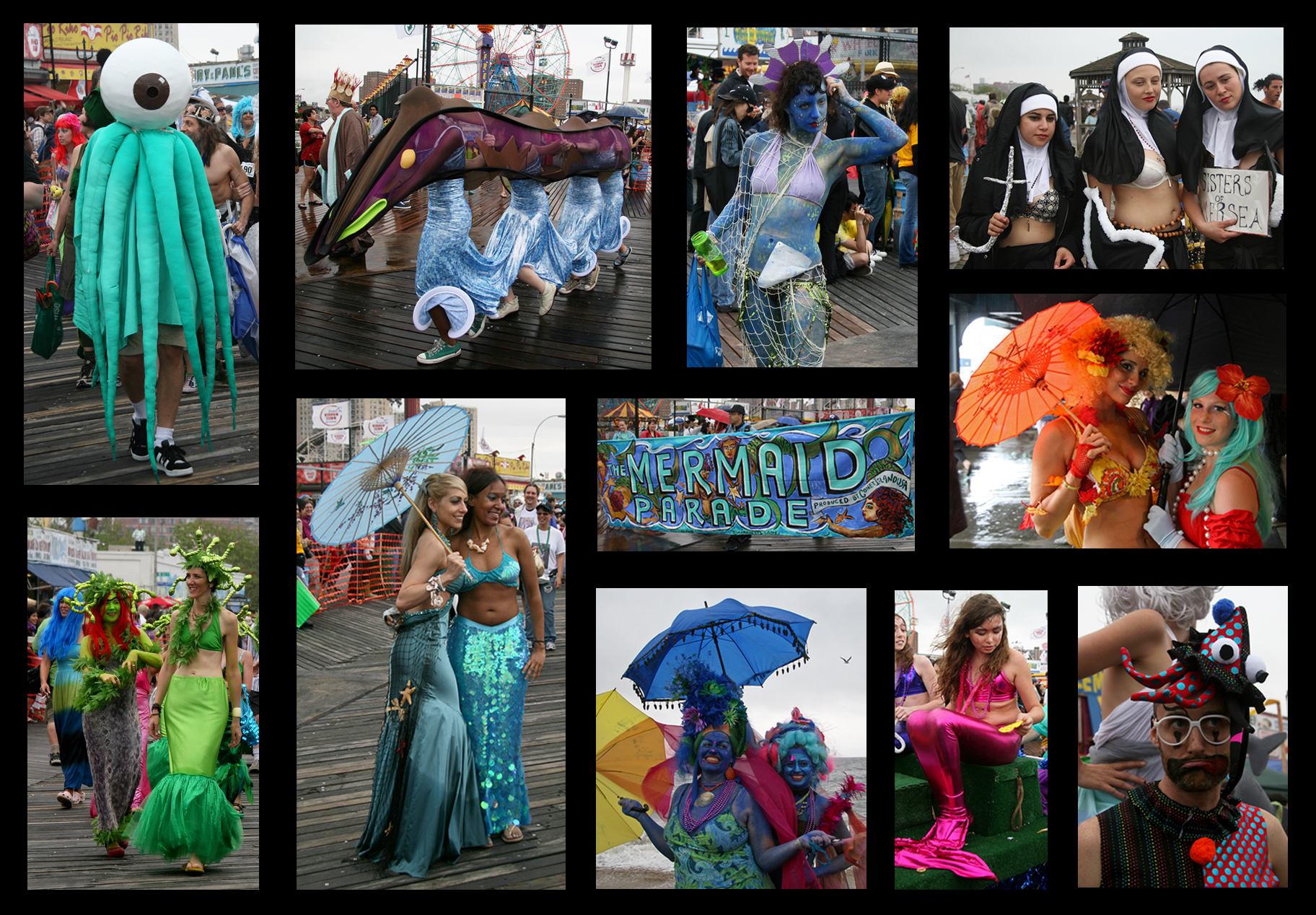
    This is the 2009 annual Coney Island Mermaid Parade. The weather was chilly and rainy, but the turnout was good and fun was had by all. This annual parade is one of the most enjoyable in New York City. The parade route includes the Coney Island boardwalk. The Atlantic Ocean is a wonderful locale to view the creative costuming with a mermaid and start of summer theme. See the full gallery of photos here.

    Photo Note: Make sure to click on photo to enlarge for detailed view!

    Related Posts: Mermaid Parade 2006, Mermaid Parade 2007


  • Summer

    I have attended the annual Coney Island Mermaid Parade in 2006 and 2007, but I would always miss the start of summer ritual. This is easy to miss, given all of the festivities and the lack of itemized agenda. The Mermaid Parade, this year on Saturday, June 20, is a celebration ushering in the summer season.

    The ribbon cutting ceremony is an unannounced event occurring after the parade’s completion. I always assumed it took place first. Wandering in the parade’s aftermath along 10th street (abutting the Cyclone), I fortuitously bumped into the small procession headed to the beach led by Harvey Keitel playing King Neptune (seen in the center of the photo), Queen Mermaid, bearers of fruit, a small entourage of followers, photographers, and security. Excited by my good fortune, I quickly joined the party.

    Four ribbons, each symbolizing a season, are set up and cut in sequence – Autumn, Winter, Spring, and Summer. The final cutting of the Summer ribbon starts the season. Baskets of fruit are thrown into the ocean to appease the gods. A mechanical thermometer was placed in the ocean showing a rise in temperature of 110 degrees. The hearty members in the crowd entered the ocean, a particularly daunting task this year – Saturday’s weather was uncooperative, cool, and raining on and off all day. The previous two years were bright and sunny. From a photographer’s perspective, however, cloudy days actually provide better lighting conditions – harsh shadows are greatly reduced and colors really pop.

    But the Parade and festivities for this event march on, rain or shine – neither summer solstice nor Mermaids are not daunted by a little rain 🙂

    NOTE: Tomorrow I will feature the parade itself with a full gallery of photos and video.

    Related Posts: Mermaid Parade 2006, Mermaid Parade 2007


  • Walid Soroor

    Three men sat at a table next to us at the Delhi Heights restaurant in Jackson Heights, Queens. One of them had a very mysterious aura, a near sinister smile, and an unusual confidence. His face had a strength of character that was not typical at all. But we were in one of the most ethnically diverse neighborhoods in the world, so it was not strictly an ethnic issue. This neighborhood is populated with an array of cultures and colors, but there was something about his presence that signaled something different.

    I asked my photographer friend, whose back was facing the subject, to steal a glance. He did and confirmed my sentiments. The situation begged for a photo, but photographing people in public is tricky and, at point blank range in a restaurant without permission, is not appropriate. It is at best met with tolerance, at worst met with unknown consequences. It is not public space, and restaurant owners want the privacy of their customers respected.
    My imagination had already created wild scenarios of who this might be and what he did. When he stepped out of the restaurant, I pondered my options and decided on a strategy to involve his friends.

    I got up, approached their table, told one of them that I found the man who stepped out extremely interesting looking, and asked whether he thought his friend would be amenable to having a photo taken upon his return. His response was that he would ask. And my instincts were right. The mystery man was actually a singing superstar in Afghanistan. Upon his return, a short conversation ensued in a language foreign to me, but the smiles needed no translation, and it was clear that permission had been granted. No surprise, now knowing that this man spends his life in front of the public and cameras.

    He was quite gracious, and conversation traveled across tables as I shot. He complimented my camera.  I responded that my friend was armed with a much better tool: a Nikon D3. He noted that it is the man behind the camera, not the camera itself, that made a good photo. He was familiar with our photo equipment and said he was also a videographer.

    Still, there were some pieces of this puzzle yet to be explained. Why the odd smile – almost a sinister grimace? I overheard him say that he had just gotten dental work done – he spoke of getting a perfect job, $8000 worth of work. Local anesthesia and numbness would explain his unusual facial expressions. However, this was itself puzzling. Who gets that much dental work done on the road away from home?

    I was told that a dentist at his performance was so pleased with his performance that he offered to do extensive work at no charge. He would be returning to New York for completion of the work. We exchanged email addresses and names. His name? Walid Soroor. A immediate search when I arrived home confirmed what I had been told. Walid’s brother, Waheed Soroor, has a full page entry in Wikipedia where Walid is cited. YouTube has numerous videos of Walid performing internationally. His companion, who negotiated on my behalf, is acclaimed tabla artist Qais Ulfat. The third member of the group was their manager, completing a real life entourage – see here.

    All the pieces of the puzzle had now come together. I reflected on how I was not only guilty of poor detective work but also had once again misjudged a book by its cover. Another lesson about the surprises behind the faces of New York, this one brought to you courtesy of Qais Ulfat and Walid Soroor 🙂

    Related Postings: Jackson Diner, Jackson Heights, Indian Gold, The Patel Brothers, Only In New York


  • Eye Candy

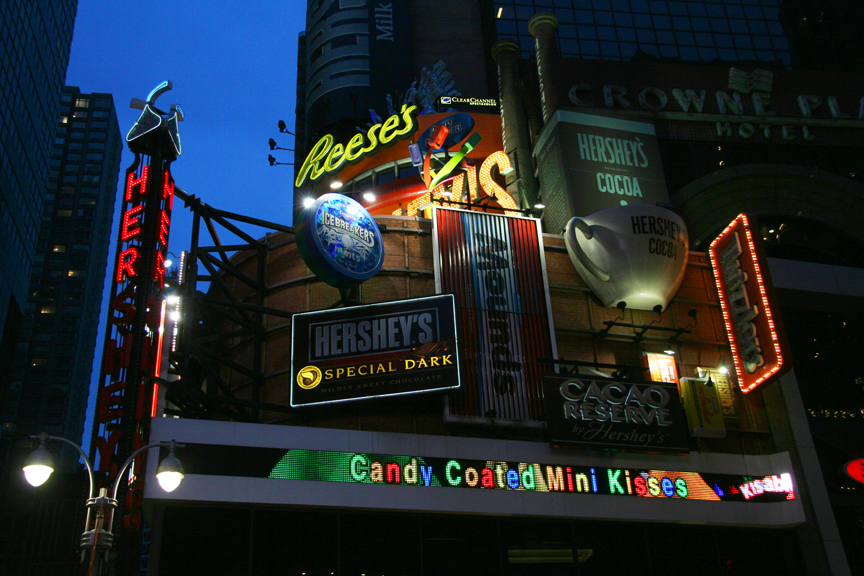
    Business moves in mysterious ways, and there come times when forces seem to point one way. Right now, for many retailers, the merchandising road is pointing to Times Square, an area beleaguered and blighted for eons, improving in fits and starts, but always drawn back to some variant, displaying elements of its historic sleazy character. Rents are high, and even well-heeled retailers during its recent improvement phase have closed, such as the Disney and Warner Brothers stores.

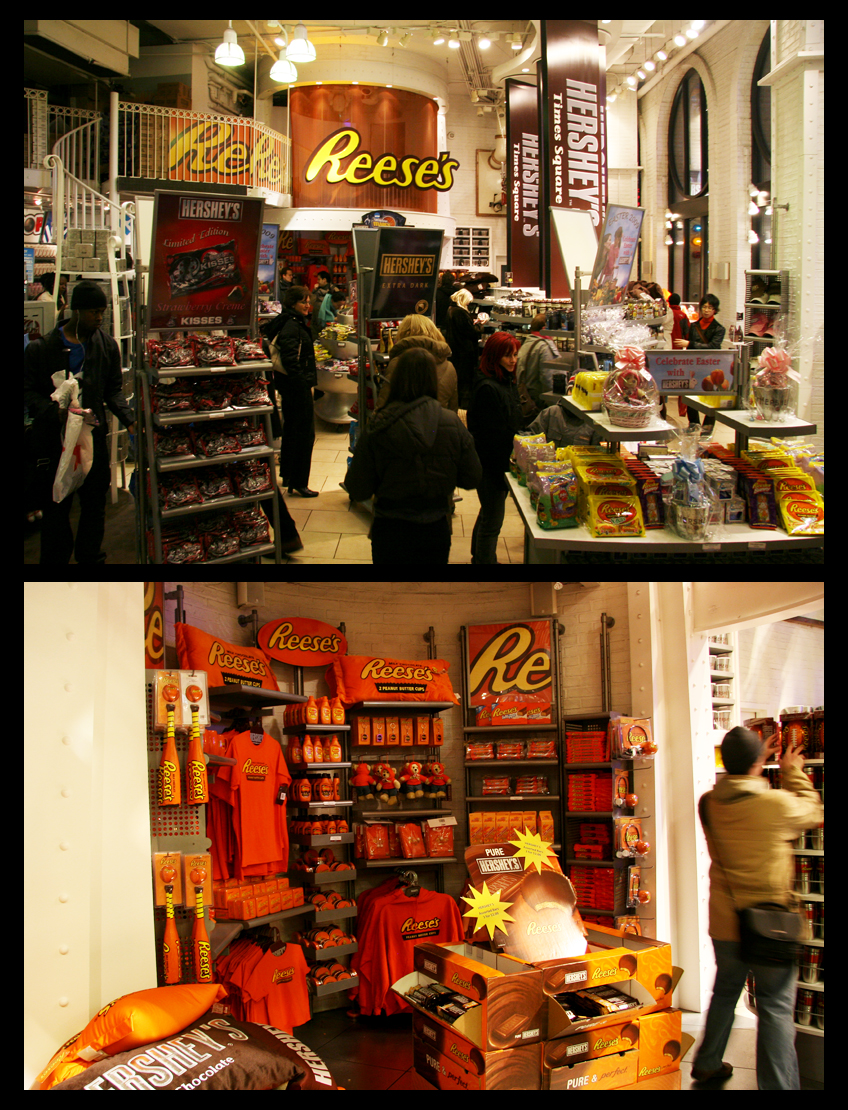
    I have written about the M&Ms Store at Times Square (see Branding Gone Wild and Let’s Have a Parade). Literally across the street at 48th and Broadway is competitor Hershey, with its own shrine to chocolate. This store is a much bigger experience on the outside – many visitors have been nonplussed by the inside. But the small one-floor interior space is certainly a place to get your Hershey’s chocolate fix and sample their extensive line. See my photos of the interior here. Unlike the much larger themed M&Ms store, however, it is not a total immersion experience or world.

    The thing to see here is the exterior, purportedly the largest permanent fixture ever built in Times Square. From their opening press release from October 28, 2002:

    HERSHEY’S spectacular — towering 215 ft. tall and 60 ft. wide, making it the largest permanent fixture ever constructed in Times Square — features a whimsical version of the original HERSHEY’S chocolate factory, complete with smokestacks, just like the one in Milton Hershey’s hometown, Hershey, PA. Thanks to 34 dimensional props, four steam machines, over 4,000 chasing lights, 30 programmable gel lights, 56 neon channel letters, 14 front-lit signs, and just about every other major signage technique utilized today, the chocolate factory spectacular will:

    Feature an over-sized HERSHEY(R)’S milk chocolate bar
    Light up a pyramid of HERSHEY(R)’S KISSES(R) with colors that change with the seasons
    Showcase a JOLLY RANCHER(R) candy wind sculpture
    Spout steam from the HERSHEY(R)’S cocoa cup
    Spin BREATH SAVERS(R) mints above the sidewalks of New York

    The Hershey Company is no longer just the chocolate company of Milton Snavely Hershey, who in 1907 created the Hershey’s Kiss. Read their history here. They now manufacture a myriad of chocolate and non-chocolate confections, including Reese’s, Milk Duds, Kit Kat, Krackel, Rolo, Skor, Cadbury’s, Almond Joy, Mounds, O’Henry, Mr. Goodbar, York Peppermint Pattie, Jolly Rancher, PayDay, Ice Breakers, Good and Plenty, and Twizzlers.

    I would not make the store a travel destination, but if you are visiting Times Square, take a look above you at 1593 Broadway at what (like the M&M’s display across the street) is literally Eye Candy…


  • Absolutely

    I was recently at the Barnes and Noble Bookstore at 8th Street and 6th Avenue on the second floor, some minutes before closing. A woman, somewhat harried, was looking for a book – something along the lines of “How to Talk to a Republican.” She was apparently involved with one and was distressed about the prospects. Standing next to her was Whoopi Goldberg, to whom she asked rather frantically, “Can I date a Republican?”

    One of the greatest pleasures of being in this city are the talents and surprises lurking around corners. I try to make no assumptions about people based on appearance. Talent comes in many flavors here; there are the occasional obviously well-known figures, some who just look the part, and others who travel incognito. See my story Only in New York.

    I recently stopped into the Guitar Center on 14th Street with a friend who was unfamiliar with the place. My tour included a room I had never entered which was filled with DJ gear. Three Latino men were playing with a CD player with a pressure-sensitive scratch disc interfaced with an iMac. The equipment allows the manipulation of digital media as one would manipulate vinyl LPs. Fascinated, I watched them test the gear. I took some overhead “hail Marys”* and got a few acceptable photos.

    They appeared to be friendly, so I introduced myself with a New York Daily Photo business card. I learned that two were professional DJs, Juan and Albert. Juan Pablo was from Cuenca, Ecuador. I told him I would feature them on this website. As I wandered the store, Albert caught up with me to give me his card.

    And Whoopi’s response to “Can I date a Republican?” She answered, without hesitation or equivocation, “Absolutely!”

    *Hail Marys are photos taken blind, without using the viewfinder, typically overhead. The term “hail Mary” is used owing to the idea a prayer is needed to get a good photo.

    Related Postings: Crime Scene, Delivery, Ziggy Plays, Singing Bowls


  • Light and Lights

    One of the best locations to enjoy vistas of Manhattan and the surrounding waterways is from the promenade in Brooklyn Heights. Here you will find postcard views of lower Manhattan, South Street Seaport, the Brooklyn Bridge, the East River, and many of New York City’s iconic landmarks – the American International Building, the Empire State building, the Chrysler Building, the New York Life Insurance Building, and the Met Life Tower.

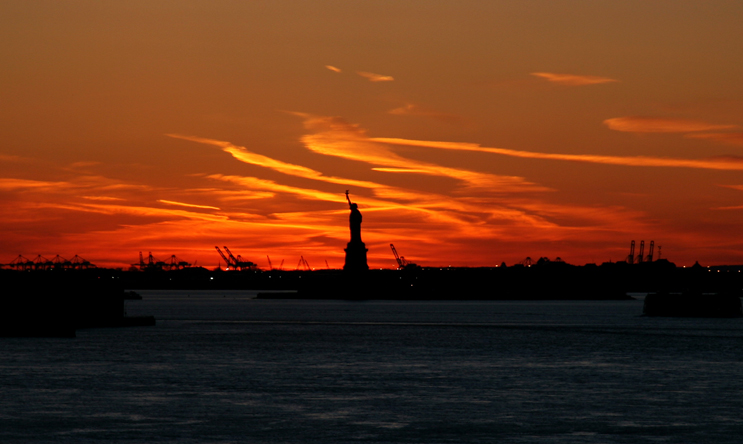
    An added bonus is that the promenade faces west, and that means sunsets. This is the time I would recommend visiting; during the evening, you have the best light and the gradual darkness coming over the city with a menagerie of lights. If you are fortunate, you will be rewarded with a sunset like this one – brilliant orange-red with streaks of yellow, all back lighting our Lady of Liberty. But I sell you no longer – I think the image speaks for itself…

    Note: If you look closely at this panorama, you will notice the silhouettes of container cranes, eerie and surreal. I have written before of the attractiveness that can be found in industrial landscapes in Hell’s Gate.


  • dinamic_sidebar 4 none

©2026 New York Daily Photo Entries (RSS) and Comments (RSS)  Raindrops Theme