• Category Archives Food and Restaurants
  • Do The Right Thing

    It was very big news. So big, that my best friend called during the workday specifically to tell me. And what was this news? That he had eaten in a very nice restaurant the night before in South Carolina, a small mistake was made with his order, and he was not charged for the entire meal.

    In a small town, businesses live on repeat customers, and bad news travels quickly. But here, in New York City, with an endless flow of visitors, or shall we say unknowing victims, a restaurant can survive with poor service. On April 29, 2011, I wrote War Against Disservice (see Part 2 here), about a restaurant experience that was so bad to me, that it is still fresh in my mind years later. My friend’s story about his experience in South Carolina was quite remarkably serendipitous as it came on the heels of an experience I had just days before.

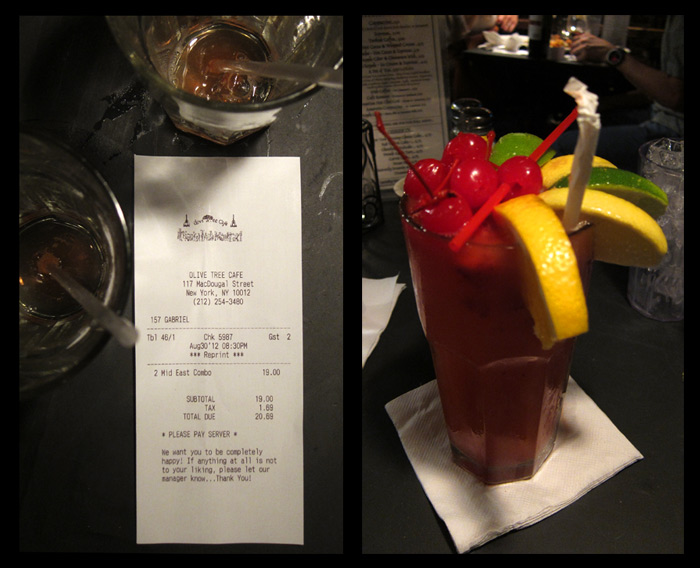
    The Setup: I was in Olive Tree Cafe with a friend. We needed no menu – we typically order the same things, which includes one of my favorite drinks – Passion Punch. We order this virgin, i.e. no alcohol. The drink is made by the bartender or sometimes the waiter, depending on the bartender’s workload. The drink is full of fresh fruit and maraschino cherries. It is extra wonderful is Gerald is our waiter. We placed our order for food and drinks as soon as we were given the menu.

    Round one: The drinks arrive. On this occasion, however, the Passion Punch was particularly sad, with nearly no fruit at all, only the juices. I am one who rarely complains in a restaurant or sends things back, as is my dining companion. However, in this case, our expectations and disappointment both being great, we did call over the waiter and, as politely as we could, pointed out the dearth of fresh fruits. The waiter apologized and promptly took the drinks away.

    Round Two: He returned shortly with drinks that looked wonderful. However, one sip and I noticed there was a problem. He had mistakenly made the replacement drinks with alcohol. We were reluctant to complain again, but we had no choice if we were to have beverages – neither of us drink alcohol (in fact, my companion is technically a minor who cannot be served legally). The waiter, now very concerned at his bigger mistake, removed the drinks from our table.

    Round Three: Our new drinks were everything we had ever expected and more. They were virtual meals with so many maraschino cherries we could barely finish them. But there was an even more pleasant end to the meal.

    The manager, who must have been informed of the ordeal by the waiter, came over to our table personally to apologize and ask if everything was now to our liking. I was thoroughly impressed – Olive Tree is a busy place with lots of tourists. This type of extra consideration came unexpected. But there was more.

    I speculated that there was an extremely remote possibility that we could be comped for the drinks. Unlikely, because one, we were in New York City and two, replacing drinks for three rounds without any hesitation from the waiter was certainly adequate compensation for their mistakes. Our check arrived. I was stunned. I had big news of my own and had to share it here. The drinks were nowhere on the bill.

    I asked for the manager again to thank him personally. He assured me that their job was to serve their customers properly and that we should not pay for mistakes made. I photographed the check and told him the good deed would be the subject of a story for all to read and which I had already titled in my mind. I wish that more restaurants would follow the example of that place in South Carolina and Olive Tree Cafe and when there is a mistake with an order, just Do the Right Thing 🙂


    Related Posts: War Against Disservice, War Against Disservice Part 2

    More from the Olive Tree Cafe: Just Another Loud Mouth, All About Skin Tone (Part 1 and Part 2), Nice Camel Sweater, Timbuktu, Guam, and Siberia, Random Acts of Consideration

  • Humanity Comes in Small Bites

    New York City is much loved by many. However, it is no paradise, and the slings and arrows can easily outweigh the pleasures. I cannot speak to the experience of living full-time anywhere else, but this is no heaven and unless a masochist, the resident is best to lower their expectations for bliss and look for Pockets of Joy and Small Gestures, not Eden. Random Acts of Consideration will stand out and become noteworthy events, set against Acts of Rudeness. Here, acts of humanity come in small bites, not large meals.

    Yesterday was Labor Day and for many New Yorkers, the last hurrah of the summer season. The desire to get away is great, and much of the city is peculiarly quiet. For those who have not made the mass exodus, it is an opportune time to indulge in the luxury of leisure with a minimum of neurotic energy. I opted for a day with no agenda, perhaps atypical of the city denizen who seems eternally driven to some purposeful activity.

    So it was, that I found myself exploring the city by car with my girlfriend, much as I did as a child with family on the classic Sunday afternoon drive. Our ride took us to the Upper East Side, originally with a mind to visit Central Park. The threat of rain, however, became a deterrent to any out of car strolling, so we agreed that we would spend the afternoon exclusively riding around. I zigzagged the cross streets of the neighborhood, primarily those blocks between 5th and Madison Avenues, often referred to in real estate parlance as the “park blocks,” owing to their abutting Central Park. It is here, along with 5th Avenue itself, that one will find some of the world’s finest residential buildings. I particularly love the limestone mansions and the gracious elegant pre-war apartment buildings. Here, peering into the occasional window, one will often find beautiful cinched drapes as window treatment, not the more common unadorned window or vinyl roller shades.

    I dream of the luxury behind those windows – tall ceilings, plaster moldings, ornamental crown moldings, foyers and spacious rooms lit by chandeliers. Architectural details and roomy comfort define these places, and to have the privilege of living in such a home is to enjoy being in what feels like a refuge from the city and a veritable fortress from its ills. Although the stereotypical snooty resident of the Upper East Side would indicate that this neighborhood is likely not my style, I remain fascinated and desirous of a place that is quiet and free of so much of the tacky, touristy shops and crowds that one must tolerate in the Village, where I have lived for over 4 decades.

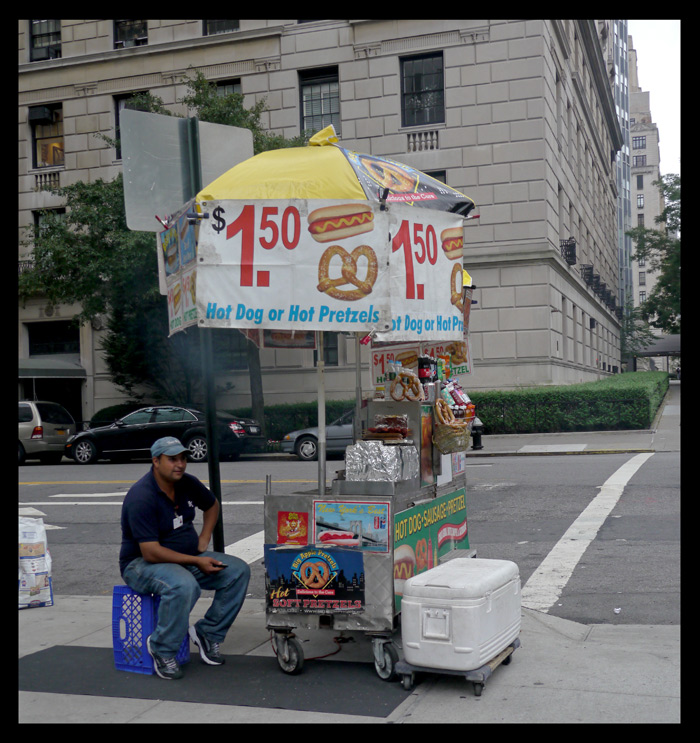
    As we drove, my girlfriend, who herself prefers a diet of small bites and snacks over large meals, expressed her desire for a pretzel. The classic New York City street pretzel is to be found in carts everywhere, and as we turned the corner at 86th Street and 5th Avenue, my girlfriend pointed out a cart boldly advertising $1.50 pretzels. I left her in my vehicle in front of a fire hydrant – this is legal for standing in New York City and typically the only free spots available in most areas of the city.

    As I approached the food cart, there was a small altercation. Apparently a member of a group of individuals was bargaining the vendor from $1.50 to $1 for a bottle of spring water, claiming they had only the single dollar between all of them. The vendor acquiesced. I empathized with him and I told him that it seemed to be an impossibility that an entire group of well-dressed people would not have an additional 50 cents between them. We both agreed that is was just a typical negotiating ploy. The vendor, however, told me that business was painfully slow and that he took what he could get. I purchased a pretzel and immediately noticed how warm and soft it felt – unusually fresh for a street pretzel these days. My girlfriend confirmed, and went further to say that it was perhaps one of the best pretzels she had ever had. I concurred.

    As I drove away, I reflected on the entire experience – Mohammed’s generosity and kind manner in spite of the rude and aggressive disposition of his previous customers. Although not a momentous event, it seemed worthy of a story. I circled the block, parked again, and I approached the vendor, who I learned was Mohammed Hussien Abdelmohsen and hailed from Egypt. I took a photo, gave him my card, and informed him I would be doing a story. I told him that in the course of the time to circle the block, the story title had already made itself very quickly obvious because here, in New York City, whether it be acts of kindness or well-made pretzels, Humanity Comes in Small Bites 🙂


  • A Place for Cappuccino

    Posted on by Brian Dubé

    I am one of few inhabitants of planet earth that has never had a cup of coffee. How and why such a thing could be is as much a mystery to me as to anyone else, So, my enjoyment of coffee and all its seemingly endless variants, has been vicarious. I do, however, love a good cafe, and New York City, could arguably be the epitome of cafe society in the United States. I have had ample opportunity over the decades to accompany many a coffee lover to the numerous cafes of the city.

    In the late 1970s and early 1980s, my sister and her husband made frequent trips from their home in Connecticut to the city. My brother-in-law had what could be fairly said to be a serious coffee addiction, and there was no better place to fuel such a habit. At that time, not so very long ago, there were no Starbucks and in Connecticut, and there were no cafes either. Something like cappuccino was a real specialty, a rarely found beverage, perhaps available in the best of Italian restaurants, virtually nonexistent where they lived in central Connecticut. Their returns home were always wrought with sadness, knowing full well that they were returning to the cultural and cappuccino black hole of the burbs.

    Even gourmet beans, now a commodity nearly everywhere, were much harder to find out of the city – my sister and her husband would purchase ground coffee from specialty merchants such as Gillies in the Village and transport them back home. Visits to New York for my sister and her husband were pilgrimages to the mecca of cuisines, and their days here were punctuated by coffee stops. On one visit, we made a visit to Caffe Reggio, which I had learned was New York City’s oldest cafe and located on MacDougal Street, only a few blocks from my home. I recall that we were very disappointed with the desserts. To most neighborhood residents, this block of MacDougal is to be avoided, owing to its very trashy character, over crowding, and plethora of poor quality food establishments. It is perhaps the most touristy block in the Village. I learned my lesson, never to return to Caffe Reggio.

    Last night, three of us were caught in a rain storm on MacDougal Street with neither umbrellas nor any interest in going home. Our ritualistic nightly Washington Square Park stroll appeared to be rained out. We stood under a shop canopy and began looking at indoor options. My companion pointed out Caffe Reggio, which loomed large conveniently right across the street. I was very averse to visiting, but, given few other nearby options, gave way.

    The lure of this cafe is obvious. Apart from its location, one step inside and one can feel old world charm literally exuding from the walls.This is the Village’s (and the city’s) oldest cafe, established in 1927. In a short time, I unwillingly succumbed to its ambiance.  The lighting was superb for photography and even served my point and shoot camera well.

    Reading online and the cafe’s literature, I learned a number of startling things about Caffe Reggio. The walls are covered with an array of artwork, some of which dates back to the Italian Renaissance period. Among the works is a dramatic 16th century painting from the school of Caravaggio. There are antique benches, all of which can be sat upon, and one of which belonged to the Medici family bearing the Florentine family crest.

    The centerpiece, however, and Reggio’s claim to fame and pièce de résistance, is a magnificent espresso machine made in 1902 and used for years to make cappuccino.  Its ornate chrome and bronze exterior houses an impressive marriage of engineering and design. Cappuccino first became popular in Italy at the beginning of the last century, and soon after was introduced in America by the original owner of Caffe Reggio, Domenico Parisi. This explains the meaning of the store signage and motto “Original Cappuccino,” which I have seen for decades, yet the meaning of which I never really pondered. For most visitors, its history is of no interest and remains unknown. It’s somewhere to get out of the rain, an historic fixture in New York’s cafe society, and, of course, A Place for Cappuccino 🙂

    More cafes: Tangerine Dream, When Your Name is Mud, Gotta Get Out, Think Coffee, Olive Tree Cafe

    Posted on by Brian Dubé

  • There Was Cream

    Posted on by Brian Dubé

    If you’re looking for that small, quaint, authentic, great place known only to neighborhood regulars in New York City, most likely you are not going to find it. The nature of communication as well as print and electronic media makes it nearly certain that such a place would be discovered quickly both by patrons. And, savvy owners/management will learn all too quickly about the value of buzz and will market and promote it to near death. Or at least develop an attitude and arrogance, fueled by the lines to get in.

    This is the unfortunate reality. Nonetheless, I, like many, do seek out the “secret” New York and the special places that may have at least some of the old world charm that many of us love. Places at least not overrun by tourists. Admittedly, most of these quests are driven more by nostalgia and the belief that things were Better When.
    In a world of instant gratification and a city of endless eateries, snacking on the go, particularly ice cream, has become the norm. There are numerous high-quality artisanal makers of ice cream in New York City, many of whom I have written about – Cones, Van Leeuwen Ice Cream Truck, Amorino, etc. Most business is takeout or from trucks.

    Old-fashioned ice cream parlors are another matter altogether. Here, a number of factors conspire against their survival – trends, competition, a more mobile populace, escalating rents and costs, and high-quality packaged products available at stores everywhere.

    Most searches to find old and authentic business establishments will take you out of Manhattan into the outer boroughs. A recent journey to Brooklyn for a birthday celebration led me to search for an after-dinner dessert place. Ironically, unbeknownst to me or my dinner companions, the place I located online, Anopoli Ice Cream Parlor and Family Restaurant at 6290 Third Avenue, turned out to be the very same place they had frequented 40 years before, around the corner from where they had lived in Bay Ridge. It was quite the walk down Memory Lane for them – I love expeditions with NYC natives to the places of their youth. It’s a window to a world gone by.

    Anopoli was not just a restaurant or cafe, it was an old-fashioned ice cream parlor, which suited all of us quite fine – after all, who does not like ice cream? Searching for an old-fashioned ice cream parlor in New York City is nearly an exercise in futility – nearly all have disappeared. Only a handful survive in all five boroughs (including Eddie’s in Forest Hills, Queens), and this is one of them.

    As a topping, the owner, Manny, was on hand. Manny Saviolakis took over the place with his father Steve in 1995. Anopoli celebrates 115 years in business in 2012 – the business still has some elements of the original decor. Anopoli has not succumbed to the ill effects of being a living legend or enjoying iconic status. The atmosphere is decidedly casual and old-school. The prices and portion sizes are a great value, particularly by Manhattan standards. The service was good, and we were not rushed – unlike a trendy place, where one feels a tremendous pressure to vacate and make room for the masses of patrons waiting to get in. Here, I chatted with Manny and our waitress, who was a family friend.

    It was a very pleasant way to spend an evening. Everywhere you looked, whether frozen, whipped, or as wall decor, There Was Cream 🙂

    Related Posts: When Your Name is Mud, il Laboratorio del Gelato

    Posted on by Brian Dubé

  • The Show Must Go On

    Posted on by Brian Dubé

    Chapter 1

    It’s Friday evening at the workday’s end. A coworker, Rigel Sarjoo, and I decide to have dinner. However, her time is limited – she also moonlights as a singer with a local band and must leave Manhattan by subway at 7:30PM for a show in Brooklyn. It is 6:30 PM, and we have exactly one hour to get to walk to a restaurant, eat, and pay our bill. We both were thinking the same two options – the newly discovered Meatball Shop, recommended by mutual friend Bill Shatto, or the old standby, Saigon Grill (now Saigon Market). They are both in the Village, but some distance apart. Here’s the dilemma: Saigon Grill is very good with lightning-fast service. However, we LOVE Meatball, but it is typically PACKED and it is Friday night. But it is also Memorial Day weekend – which means it may be dead. We take our chances with our first choice.

    Chapter 2
    It’s a long walk in the warm, humid weather – about one mile and we are nearly sprinting. Nothing worse than summer heat and humidity in the city. Meatball rarely has no wait. This is a big risk and we agree if they are too crowded that we will try Thali, a micro-restaurant nearby, saving us from a long walk to Saigon Grill. Thali is a new Indian restaurant located in a tiny space, formerly the home of another Indian restaurant. They specialize in Thali – a selection of different food items, served in small bowls on a round tray. It’s a great way to sample a variety of Indian dishes. We have eaten at the new incarnation once. It’s the backup plan.

    Chapter 3
    We arrive at Meatball. It’s MAYHEM as usual, with at least a 30 minute wait. I tell the hostess to forget it, and we leave. We walk a few doors down Greenwich Avenue, arrive at Thali, and the door is open. There is no A/C, and it is hot inside. Forget it. We are off to Saigon Grill, where we both agree we should have gone in the first place. It has the fastest service I have ever had in a restaurant in New York City. I have seen entire dinners served before friends have returned from the bathroom after ordering. We need that speed now, because it will be 7PM by the time we arrive.

    Chapter 4
    It’s another long hike to Saigon Grill. It’s 7PM, and now we have only 30 minutes. But we are greeted and taken to be seated immediately. There is A/C, the place is spacious, and there are numerous empty tables. This is why Saigon Grill is an old reliable. They never fail us for large groups or when in a hurry.

    Chapter 5
    As we are about to sit down, we hear our names being called. Our mutual friends Harvey and Hellen Osgood and Myra Smolev are eating nearby. We are, of course, invited to sit with them. The five of us cram around a table for four. No problem. It’s a nice follow up to a long hike in the heat and a series of restaurant disappointments. Dinner with friends. We are, however, still in a rush. Time is fleeting. My coworker and I do not need menus – we both know what we want and order immediately. Within a few minutes, our meals arrive. Friendly banter dominates the meal. It occurs to me now that all four of my dinner companions have been the subject of stories for this website.

    Chapter 6
    Our check has been ordered, received and the bill paid. It is 7:30PM on the dot. Rigel makes the rounds getting her good luck hugs and leaves for her show in Brooklyn. She should make it on time. It was a job well done, if not a bit harrowing.  My cell phone rings – I miss the call. It’s a number I do not recognize. I decide to return the call anyway. It is Kyle Petersen, a freelance worker who handles all of our social networking. He is a professional juggler and unicyclist. There is an emergency.

    Chapter 7
    He is scheduled to go on stage at 8PM at the Bowery Poetry Club. However, he is missing two silicone handsticks that he must have for a juggling routine in his show. There is nowhere that these can be had except at my shop, conveniently only a few blocks from the club. He is there now on the street – can I come down right now and open my shop and get him two handsticks?

    Chapter 8
    Oh man, I REALLY don’t want to do this now. I just left work 60 minutes ago. After all the running and sweating that I did, I do not want to go back to my office. It will take me 15 minutes to get there if I really hustle and leave instantly. But it’s his show, and it would be unconscionable for me to refuse. I tell my friends of the dilemma, my intentions, and the challenge in getting there in time. But there is good news.

    Chapter 9
    Myra conveniently happens to have her bicycle chained outside the restaurant and offers it to me! After that, I can ride it to her apartment building and just hand it to her doorman. No fuss. And she lives steps from my home, near Washington Square Park. We leave the restaurant and she unbolts her bike. However, a problem remains: I have a very heavy bag and a DSLR camera with no bag for it, and it’s not the best idea to bike with an unprotected camera. Hellen immediately offers to take both to her apartment, also one block away. I can pick both items up on my return. Excellent. Now every detail has been taken care of and I ride off, heading towards Broadway. I have owned and ridden bikes in NYC for my entire life here, and I love bike riding in Manhattan. This lemon is turning to lemonade. The ride to 520 Broadway in SoHo from Saigon Market is a breeze by bike. And fun. I am there in minutes.

    Chapter 10
    I arrive at my office. Kyle is nowhere to be seen outside. He is, however, inside the lobby. Perfect. He is shocked at how fast I made it. I tell him of my luck regarding Myra’s bike. He is fully dressed for his performance and ready for stage with a headphone mic on. This is like the NYC of moviedom. I hand him the bike. I take the elevator to the 3rd floor, unlock the door, disarm the security system, grab two black handsticks, rearm the security system, and run out the exit door and down 3 flights of stairs – all in one big sweeping motion. Kyle is nothing short of ELATED. He assures me: “You’re the man!” Thanks to the bike, it is only 7:45PM, and Kyle has a full 15 minutes to show time. We have seconds to burn.

    Chapter 11
    One more thing, Kyle, before you go. Give me a few SECONDS and pose for a photo with that bike because this evening’s events make one hell of a story. I snap a couple of shots, and he is off and running to the Bowery Poetry Club. My job is complete. I bike back towards the Village, arrive at Myra’s residence, hand the bike to her doorman, and walk two blocks to Hellen and Harvey’s. A quick elevator ride to the 11th floor, and I retrieve my camera and bag. Mission accomplished – it’s time for a stroll in the park and then home.

    Chapter 12
    By the next morning, I have nearly forgotten the episode. I examine my cellphone and find that my text memory is full. After deleting a few messages, I receive a text which had been sent by Kyle at 10:32 PM the evening before, apparently after his show. It proclaims: “Smash success. You saved my life.”

    Postscript

    It was a real New York City adventure, replete with frenetic rushing, two performers who have showtime pressures, turned away at a restaurant so trendy and crowded that patrons were waiting in the streets, a serendipitous meeting of friends, the fortuitous availability and offering of a bicycle, the helping hands of others, and someone who literally goes the extra mile – on Broadway. It’s what goes on behind the scenes in New York City when we say The Show Must Go On.

    Posted on by Brian Dubé

  • No Safety in Eggs or Toast

    Posted on by Brian Dubé

    Those who read these pages regularly know that I have just about given up on diners. Regardless of how little I want, what I want, or how much I am willing to settle, they always seem to be a disappointment. One would think that choosing the very simple, such as eggs, would be safe. But, alas, I have learned that even in New York City, whether diner, cafe, or restaurant, there is often no comfort in comfort food, and there is no safety in eggs or toast.
    In one story, Greasy Spoon, I tell of my inability to even finish the toast – that meal was in the old Waverly Diner (before its recent renovation). I love the Waverly for what it represents historically in the Village. I just wish the food would match up. The cafe typically offers better food, and that is where I had most recent experience with eggs.

    Recently, at Salerno Service Station in East Williamsburg, Brooklyn, it was suggested by the manager that I might want to relax and catch breakfast nearby at the Willburg Cafe while waiting for my car to be serviced. I arrived at the Cafe at 7:50AM on a Saturday, and it appeared that it might not even be open. It was, however – just empty. The place was quiet and comfy, and I settled in near a window. A customer here and there began to filter in.

    The menu looked good, however, I decided to go with the least risky – an omelet with an English muffin and potatoes. I was quite pleased – they were some of the best presented and best prepared eggs I have ever had. Online reviews of the Willburg Cafe run the gamut. Some claim it was better when, while others say they had poor service. I cannot speak to that. It was my first visit, and I was the first customer. My waitress was prompt and attentive. How this place would be when crowded, I have no idea. But I will visit the Willburg Cafe again. Because here, at 623 Grand Street, there is a place that is winning the war in a world where there is No Safety in Eggs or Toast 🙂

    More diner stories: Nice Man on Death Row, Levis, Film and Corn, Diner Be Aware of the Diner, Joe Jr’s

    Posted on by Brian Dubé

  • Caps and Floss, Part 2

    Posted on by Brian Dubé

    (see Part 1 here)

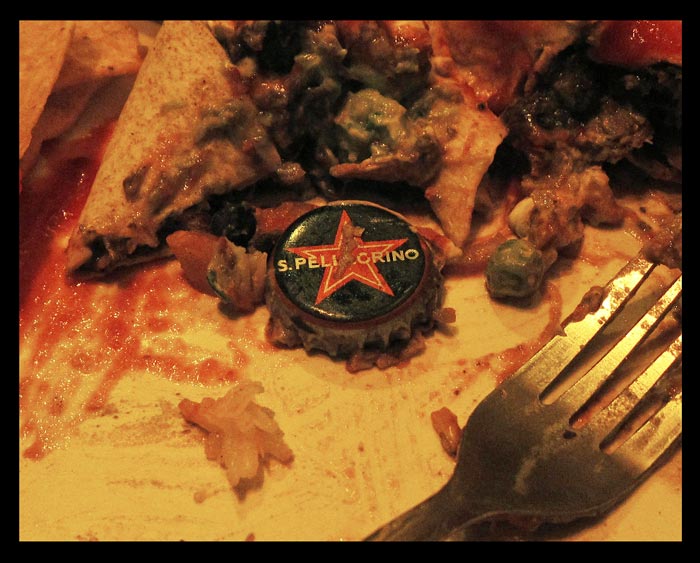
    I am somewhat cautious while eating, but no one expects a metal bottle cap in their entree. I bit down reasonably hard on that San Pellegrino cap. After extracting the culprit, cursory examination of my teeth with my tongue appeared to indicate that all was well. I discussed with my dining companion what we thought the staff’s reaction might be. Our waitress had known me over 15 years – I assumed that, at the least, I would not be charged for my meal.

    I called her over, showed her exhibit A, and she was mortified. She immediately swept the dish away and said that of course, the entree was coming off the check. As I left, more apologies followed me out the door. It was a good story and laughable incident really. Or so I thought.

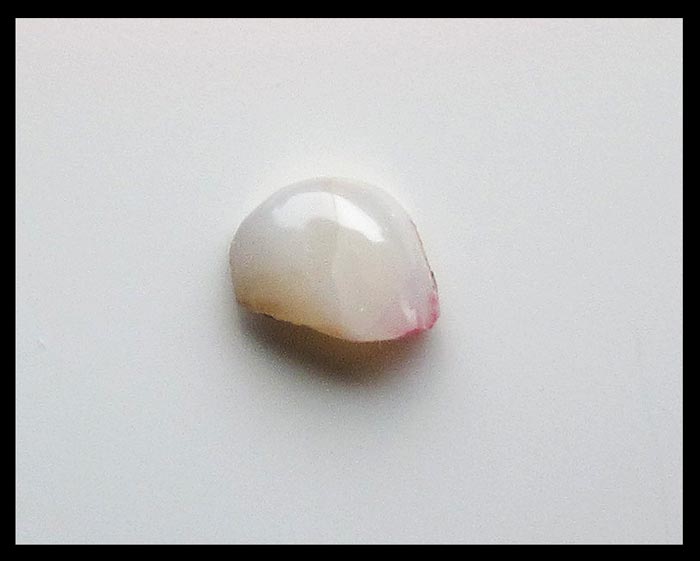
    However, soon after, while eating at home, I felt a small hard object in my mouth. My heart sank as it appeared to be a piece of tooth. A quick run of my tongue along the area where I had bit into the bottle cap quickly confirmed my worst fear: a piece of a tooth, which must have cracked against the metal cap, had now broken off. Unfortunately, I have enough experience to know that this will likely mean a crown (cap) and possibly more. I used to have anxiety over dental procedures – particularly doing crowns, root canals, etc. However, my only anxiety now, apart from losing natural teeth, is the time and cost of doing such things. Modern dentistry should be relatively painless, except for the impact on your pocketbook.

    I visited the restaurant the next day, telling the waitress of my misfortune and that, unfortunately, it looked like we were talking MONEY. I asked if she thought the owner had insurance to cover such a thing. We exchanged numbers, she said she would contact the owner, and a few days later, the owner called. We discussed the incident. He contacted his insurance broker, who also called to arrange a meeting. I told him I had a dental appointment scheduled and suggested that we touch base after that. He agreed.

    So, tomorrow morning I am off to the dentist to learn what the fate of my tooth will be. Beware the frequent restaurant goer in New York City – the more often you eat out, the more likely it is that you may find undesirable items in your food or drinks. I hope after these tales that you continue to see your meals as treasure hunts, not minefields, and that you find more pleasant ingredients than Caps and Floss 🙂

    Posted on by Brian Dubé

  • Caps and Floss

    Part 1: The Good News 

    Anyone living in New York City for over 40 years, as I have, will have experienced many slings and arrows of outrageous fortune. And here, in these pages, I endeavor to bring you not only the slings and arrows, but those which are truly outrageous.

    For many New Yorkers, as well as visitors, one of the greatest things about the city are its restaurants. I have met many who eat all of our meals out. This would seem to be a tremendous luxury, but it need not be. The range of prices in the thousands of eating establishments here provides ample opportunity to find meals at virtually any price imaginable.

    Over the thousands of times I have eaten in NYC restaurants, it would be expected to have had unpleasant experiences, but nothing tops a story told to me by a close friend, Leslie, and her visit to a popular restaurant with her husband, Michael. In her tale, not only was the initial offense outrageous, but the response of the management was as well.

    Finding things in one’s food, such as hair, is never pleasant, and in a restaurant, there is the added element that it is someone ELSE’S stuff in your food, only made worse if one’s imagination runs wild as to its source. So how would you like to find DENTAL FLOSS in a glass of drinking water? I will let Leslie tell the story in her own words:

    When we asked to see the manager, he came over and sat down quite casually at our table like we were friends (had never met him before), leaning back in the chair like he owned the place, and asked what was the problem. Michael asked him to look at the glass of water he had received from the busboy. The manager looked at it, saw the dental floss, stuck his hand in the water, pulled out the floss and threw it on the floor…lightly saying, “Well, we don’t have to look at that anymore.” If I remember correctly, he did not remove the glass. I suppose he apologized, and then left without offering anything. He seemed quite unconcerned about the seriousness of the entire situation. Between that and another time a few months later, I believe, when Michael’s knee stuck to the wall because of someone’s left over blob of jam, he refused to ever go back!

    For years, I have relished the opportunity to use Leslie’s story to amplify my own, if and when something like this might happen to me. I did not exactly wish such an occurrence, however, I now see misfortune as an opportunity to tell a story and make lemonade from a sour experience. And fate befell me on Friday, April 20th.

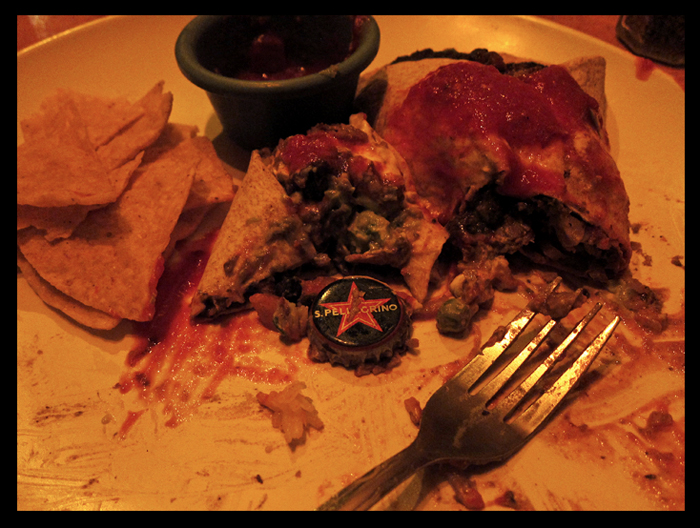
    I was eating in a local haunt that I have frequented for decades. I have wearied of much of the food there and, like many places, I have narrowed my choices to just a few items. There, I typically order their Mexican entrees, specifically the enchiladas. However, I was to learn that an enchilada is the perfect vehicle for delivering an unwanted gift – what better food item then a corn tortilla rolled around a filling to entomb a surprise? And surprise it was when I bit into something large and hard. As I spit it out, nothing prepared me for the sight of a METAL BOTTLE CAP. It was no comfort that someone had selected a finer bottle of water, San Pellegrino.

    But what I have recounted so far is the Good News. I was soon to learn that this would not be my last unpleasant encounter with Caps and Floss

    See Part 2 here.


  • A Love/Hate Thing

    Posted on by Brian Dubé

    A mass-marketed candy such as Peeps is certainly not anything that is special to New York City. But, nonetheless, they can be found here, primarily in chain stores, such as Duane Reade.

    Looking back on my first postings for this website is interesting. I was fascinated with Peeps, perplexed by the amazing durability of their appeal for nearly 60 years. After hunting for Peeps, not realizing that they were readily available at every Duane Reade, I found them at Dylan’s Candy Bar on the Upper East Side and did a story, Peeps, on April 16, 2006.

    What more appropriately named company, Just Born, Inc., and town, Bethlehem (Pennsylvania), for the manufacture of an Easter candy. However, Just Born, Inc. has its roots in New York City. The founder, Sam Born, was a candy maker from Russia who emigrated to the U.S. via Brooklyn in 1910. In 1923, Born opened a small candy-making and retail store in Brooklyn, New York. He marketed the freshness of his line of daily-made candy with a sign that declared, “Just Born.” In 1932, they moved operations to an empty printing factory in Bethlehem, PA, and in 1953, Just Born acquired the Rodda Candy Company of Lancaster, PA. Although Rodda was best known for its jelly beans, it also made a small line of marshmallow products, which included a popular Easter Peep that was made by laboriously hand-squeezing marshmallow through pastry tubes.

    Inspired by David Letterman’s nightly Top Ten lists, I have written two lists: the top ten reasons New Yorkers love and hate Peeps.


    Top Ten Reasons New Yorkers Love Peeps

    10. Even in New York City, where else will you find blue or pink food?

    9. There’s a diversity of skin colors

    8. You can buy Peeps at Duane Reade

    7. You don’t need to cook Peeps

    6. There are still inexpensive things to be found in New York City

    5. Peeps are nonfat

    4. Peeps are the perfect food to eat while walking

    3. You can celebrate Easter without a trip to St. Patrick’s

    2. In New York City, we got the little stuff too

    1. If left in your car, no one will break in to steal your Peeps


    Top Ten Reasons New Yorkers Hate Peeps

    10. Peeps are not vegan

    9. Peeps are not edgy

    8. You can’t really serve Peeps in a $1.5 million dollar condo

    7. You can buy Peeps at Duane Reade

    6. New Yorkers don’t eat food that comes in blue or pink

    5. You don’t have to wait in line for Peeps

    4. Peeps are not kosher

    3. Peeps are not artisanal

    2. Peeps are not made “somewhere in Brooklyn”

    1. Peeps don’t come in black


    Like New York City itself, Peeps are a Love/Hate thing 🙂

    Posted on by Brian Dubé

  • Fruits of Their Labor

    One of the many benefits of living in New York City is the introduction of products from various ethnic groups. Often, these are the hard core, authentic foods and devices that are actually used by another culture transported by immigrants. The world of fruit is very exotic in the city, with things rarely seen outside the city, such as dragon fruit or Durian.

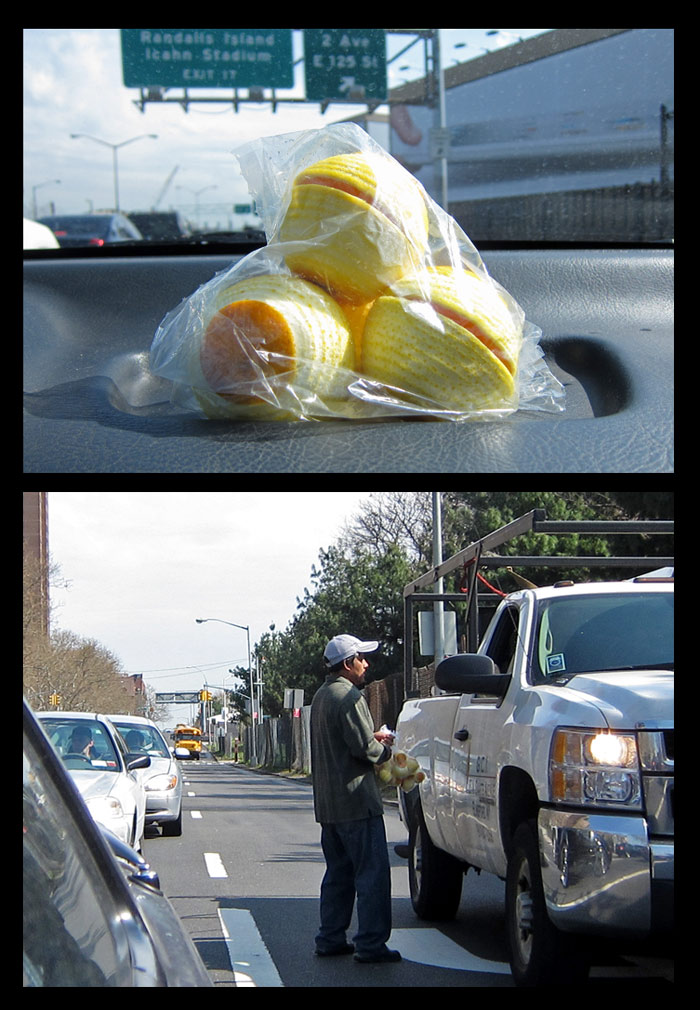
    I first saw the type of orange peeling machine in the photo for the first time in the West Indies – simple, ingenious, and so much faster than hand peeling. Also, when peeled this way, removing only the outer peel and leaving the white portion of the rind (the pericarp or albedo), an orange can be eaten more conveniently, like an apple. It is said that the white portion of an orange contains as much vitamin C as the flesh. Perhaps the slightly bitter quality of the white and the American penchant for all things sweet prevents more people from eating oranges this way.

    Recently, while in the Bronx returning from a business meeting, I found myself in slow moving traffic. In New York City, this means captive audience and opportunity. And where there is opportunity, there are always opportunists. Typically in this scenario you will find flower vendors, however, in this case I was hungry and lucky – a vendor on foot was selling machine peeled oranges. Two dollars for a bag of four. I was a happy camper with a snack that managed to ameliorate the drab crossing of the nondescript Third Avenue Bridge.

    Some may feel that our foot vendor is nothing but an opportunist, but perhaps he can also be seen as a necessary and central figure in the fantasmagorical world of New York City, where the Sirens of Convenience not only draw us in, but here, they also provide us with the Fruits of Their Labor 🙂


  • Not Just Meatballs

    What’s the formula for restaurant success? Get just about everything just about right. Do it well enough, and not only will they come, but they will also go out of their way. You will become a destination, allowing you to even dispense with one of the cliched elements of success: location.

    Here at The Meatball Shop, the restaurant is abuzz. There are lines. Why? Take a unique concept, one of America’s comfort foods, bring it to the next level, and spin it every way it can be spun. Provide an extensive menu so that there is something for everyone (there are numerous vegetarian options, including delicious vegan meatball dishes). Put thought into every offering, even including lemonade (we had rhubarb lemonade). Keep ’em coming back with numerous specials in every category every night (even the lemonade keeps changing).

    Give ’em good pricing and value. Make it FUN (albeit a little noisy and with a menu selection check system resembling an SAT test). And don’t forget a very well put together decor and homey ambiance that makes you want to relax. Tin ceilings, good lighting, antique photos, wainscoting – all working towards an old-timey atmosphere befitting comfort foods.  Even the bathroom had an equally nice decor and flowers. If you can, offer desserts so yummy you make ’em want to go for broke and throw diet to the wind for one night – here it is, homemade ice cream sandwiches like at Mud, but customized with six choices each of cookie and ice cream.

    How do you do create such a successful place? For street cred, start with two New Yorkers who have credentials to spare and are clearly overqualified for the job. Apply these extraordinary talents and passion to a simple food item, and voila – you have what the co-owners, Daniel Holzman and Michael Chernow, like to call “best place on earth.” From their website:

    Daniel Holzman’s cooking career started at age 15 at LeBernardin in NYC. He attended the Culinary Institute of America with a full scholarship from the James Beard Foundation. Prior to graduation, Daniel accepted a position at the Paladin in New York City for Chef Jean Louis Paladin, working alongside such culinary notables as Wylie Dufresne and Sam Mason. Six months later Jean Louis asked Daniel if he would be willing to fill a vacancy at his flagship restaurant Napa in the Rio Hotel in Las Vegas. Accepting the offer, Daniel began a 10-year culinary journey through some of Los Angeles and San Francisco’s finest restaurants including The Campton Place, The Fifth Floor, Aqua and Jardinière.
    In 2004 Daniel began his first management job as chef of the California organic bistro, Axe, in Venice, Los Angeles. After one year at Axe, Daniel became Executive Chef at the Inn of the Seventh Ray, a 250 seat restaurant in the Topanga hills known for its romantic outdoor setting and lavish weddings. Daniel remained at the Inn until 2007 when he moved to San Francisco to open SPQR, a rustic Roman Osteria, as Co-owner and Executive chef. Within 3 months of the opening SPQR received 3½ out of 4 stars from Michael Bauer in The San Francisco Chronicle, a rating usually reserved for far fancier restaurants.

    Michael Chernow began his professional restaurant career in 1996 behind the bar of the popular nightclub, Life, on Bleecker Street in NewYork City. Learning from the ground up, Michael quickly worked his way through the ranks becoming the youngest bartender on staff. After 2 years working in both Life in New York and in its East Hampton sister club, The Tavern, Michael signed on to open Woo Lae Oak on Mercer St. in New York City.
    In 2001 Michael made the move to Los Angeles where he worked at Woo Lae Oak’s original location on La Cienega Blvd. Returning to New York, he opened Punch and Judy, a wine bar on Clinton Street. In 2002 Frank Prizanzano offered Michael a position behind the bar of his eponymous flagship restaurant Frank on Second Avenue.For the past 7 years Michael has been managing the bar at Frank where he has a large, loyal following. In 2007 Michael enrolled in French Culinary Institute, graduated with honors, and was awarded an Associates Degree in both culinary arts and restaurant management in 2008.

    It’s another good example of a New York City establishment where, if you look beneath the veneer, you will find more than buzz, spin, and hype. This is a place where, under the skin, content is king and it’s Not Just Meatballs 🙂

    More West Village restaurants: French Roast (Heard It Through the Grapevine), Doma Café (Tangerine Dream), Cones, Magnolia Bakery, John’s Pizzeria (Roots of Pizza), The Waverly Inn and Garden (Buzz and Bling), Le Gigot (Nuance), Lassi (Skinny), Tartine (Paris in New York), Chocolate Bar


  • Happy Birthday

    There are microcosms of New York City that outsiders and even residents will likely never see. Most of these are cultural, revolving around ethnic enclaves. It is even possible to find cock-fighting within the five boroughs.

    Perhaps more than any other place in the United States, New York City’s tremendous diversity and tolerance allows for strong ethnic tradition expressed through food, dress, activities, music, festivals, and religious practice. Jackson Heights, Queens, is considered to be the most ethnically diverse neighborhood in the world. Not only can vastly different groups coexist, but those with very distinctive dress and traditions can also easily thrive here unfettered and without fear of ostracism. Hasidic Jews, Islamic women, Indian women in saris – the list is endless in a city where, on any given day, it would be easy to think that one had happened upon an annual multicultural parade.

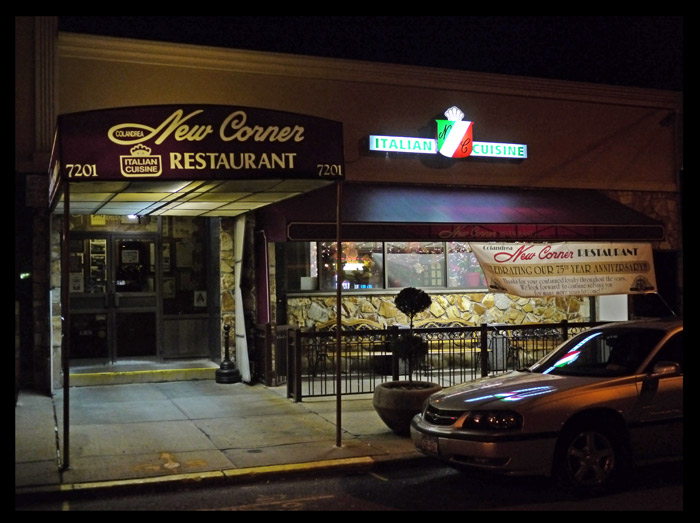
    One of the biggest elements in any cultural milieu is, of course, food, and there is no more accessible window into the life of an ethnic group than restaurants catering to that group. Recently, I visited the New Corner restaurant in Bay Ridge, Brooklyn, with a friend, born and raised in Bay Ridge. This was a nostalgia event for her and a curiosity for me to eat in a place that felt like the exclusive territory of Italian Americans from Brooklyn. There was a very local crowd of patrons.

    The restaurant has huge dining rooms, very conducive to large groups. The night I ate there, we were virtually besieged with one birthday celebration after another. The Colandrea New Corner Restaurant was celebrating its 75th year. Appropriately, the perfect place for a Happy Birthday 🙂

    Related Posts: Brighton Beach, Vlissingen, Other Worlds, Sahadi’s


  • Lobster House

    Posted on by Brian Dubé

    We were headed to Bar Harbor, Maine. I was a vegetarian at the time, and I had been forewarned by my travel companion, who was not, that there was a lobster place and we would be stopping. She had eaten there once before, and there was no way we were crossing the Trenton Bridge to Mt. Desert Island without a stop for lobster and steamers.

    She had told me that apart from the obvious – that they were on the coast of Maine, where lobster is world-famous – they also had a unique way of cooking the lobster, which she had found superior to any other method: boiled in fresh, clean seawater over a wood fire. They also avoided fried foods, a tasty, albeit unhealthy, way that most roadside shacks cook their seafood. I never did taste that lobster or clams…

    I, like so many, do love coastal and island destinations. One of my favorite destinations out of New York City is Cape Cod and the neighboring islands of Martha’s Vineyard and Nantucket. With seagulls cawing and flying overhead, a maritime air and distinctive grasses and trees along with the telltale sandy soil, the presence of the ocean makes itself known everywhere you go.

    And as with most oceanside locales, with the beach comes seafood, often fresh, local seafood. For those who eat fish, informal roadside clam shacks are one of the great joys of vacationing near the ocean.
    At the Cape, there are large visitor, local, and year-round communities, so clam shacks and seafood restaurants are ubiquitous. One of my strongest memories is Menemsha, a fishing village at the southwestern tip of Martha’s Vineyard. Fishing boats moor just steps from seafood eateries for the freshest seafood imaginable, eaten on the spot, sitting wherever one can, even atop lobster traps.

    In New York City, one will certainly need to set the bar lower and travel some to recreate the clam shack experience. A flavor of this kind of place can be found in places such as the beach communities of Brooklyn, Queens, and City Island, many with local fishermen. In 2009, I located the Stella Maris fishing tackle shop in Sheepshead Bay.

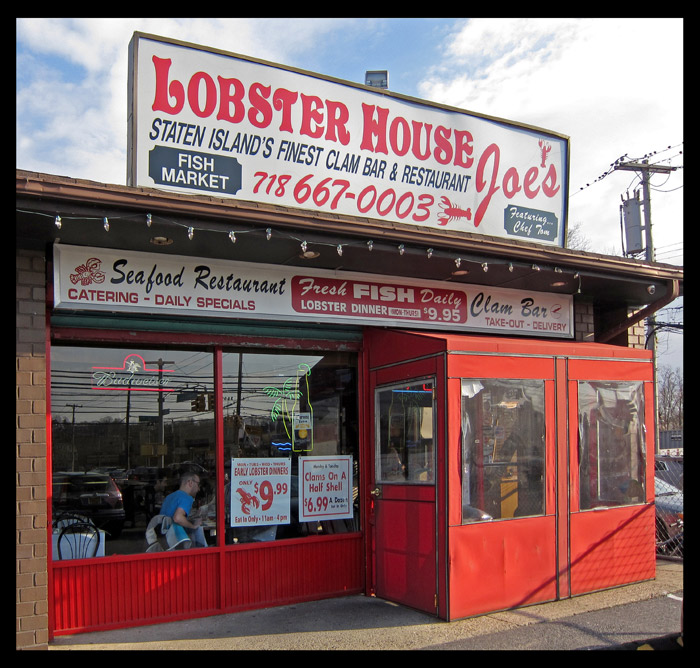
    I had traveled by Joe’s Lobster House in today’s photo a number of times while touring Staten Island. A bit put off by its location on Hylan Boulevard, a busy thoroughfare, I waited until recently before stepping in. It has the plain, down-to-basics, no frills decor of the classic clam shack. Fish is sold, along with sit-down restaurant service. Reviews are generally quite favorable, and I’ll have to go back a few times and try a variety of dishes to judge it fairly. It’s not the Trenton Bridge Lobster Pound on the Maine coast, a shack in Cape Cod, or Menemsha Harbor in Martha’s Vineyard. It’s New York City, and it is a Lobster House 🙂

    Posted on by Brian Dubé

  • That’s Giove

    I love a challenge, particularly when told that something can’t be done or there are no good restaurants in Staten Island. Admittedly, Staten Island feels more like the suburban New Jersey than a borough of New York City, primarily because it does not lend itself to walking. It’s the borough that many residents and former residents love to hate.

    There are, however, many good things to be found there, and I have featured a number of places of interest from the borough over the years writing for this website: Todt Hill, Richmond Town, St. Luke’s Cemetery, South Beach, and one of the most remarkable places in the five boroughs – the Tibetan Museum.

    So, when a friend who is a Staten Island resident recently insisted that we must journey to Brooklyn or Manhattan for good food, I rose to the occasion on a search mission for good food in the borough.

    I had heard from another resident about Denino’s. This was my first “discovery” and was hugely successful in impressing said friend that there is more gastronomically in Staten Island than meets the eye. More recently, however, I was not in the mood to traverse across half the island for a second visit to Denino’s, and I relished the challenge to find another pizzeria of merit.

    An online search quickly returned a brand new and well-reviewed establishment only a few blocks away. We were quite hungry, it was late, and some persuasion was necessary to convince my friend that it was worth the culinary risk when we had already found fabulous pizza at Denino’s. I played the ultimate trump card: my authority based on my previous discovery. I said, TRUST ME. After all, this is the man that found you Denino’s. I won the hand, and off we were to New Dorp Lane, where I was pleasantly surprised with a brand new, immaculate sit-down pizzeria with a beautiful open kitchen and wood burning oven.

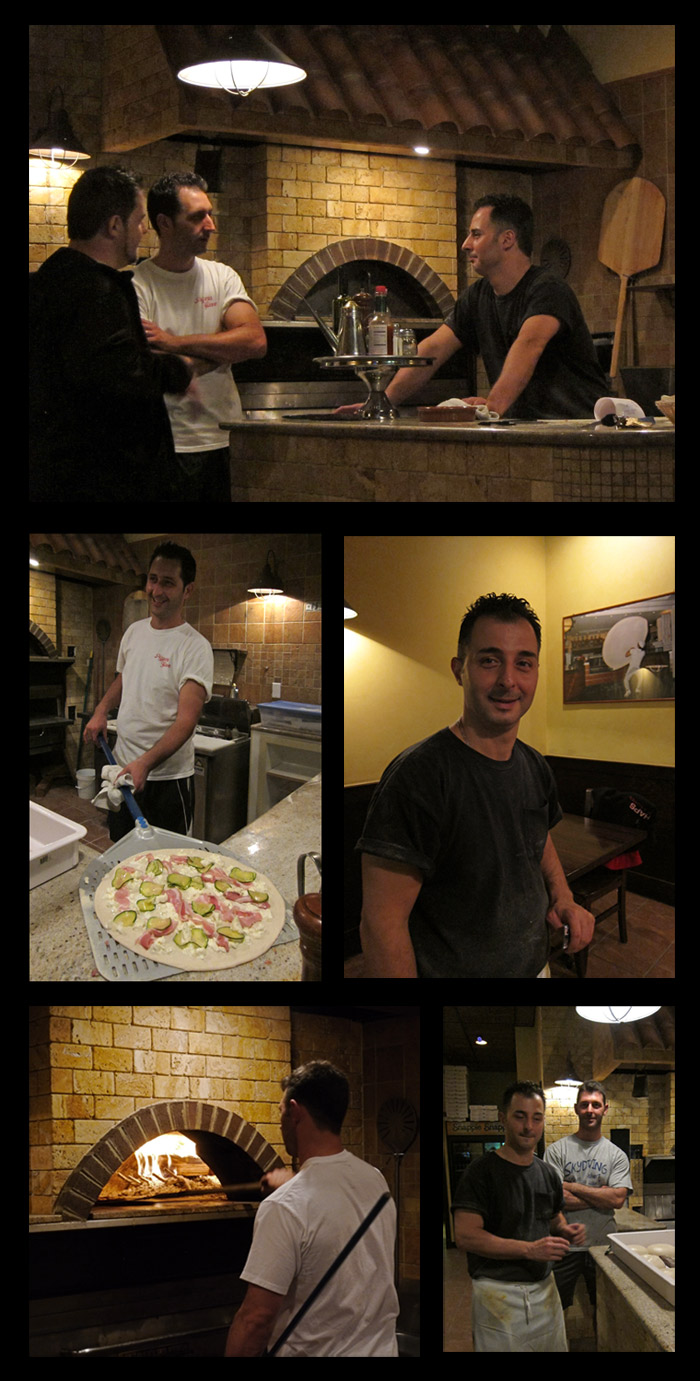
    It was a Kodak moment – within minutes of arriving, one of the pizza makers was spinning dough in the air. Immediately fascinated by his manipulations, I introduced myself and learned that Giorgio Giove was a thirteen-time CHAMPION pizza acrobat (three-time world champion) who was featured on the Food Network in a Throwdown with Bobby Flay. I also learned that Pizzeria Giove was a family-owned business, and I had the privilege of meeting all three brothers my first visit: Franco, Marco, and Giorgio.

    For the longest time, the popular mantra of pizza lovers is THIN CRUST, and you will find one of the thinnest, crunchiest crusts I have had. This is artisanal pizza. The Giove brothers hail from Italy, where pizza making is a family tradition – Giorgio’s father and grandfather were both pizza makers.

    After just a handful of visits, we are already being treated like family. Great food and service. When the slice hits your eye like a good pizza pie, that’s Giove 🙂

    Want more on pizza? Check out my take on the Best Pizza in New York.


  • Essen or Fressen

    It was sometime in the 1990s, and my best friend was my CPA, doing all my business and personal accounting and tax preparation. At one particular meeting, he looked over some numbers, virtually as Zero Mostel did in the Producers, seeing the possibility for greed. My friend observed that for a particular deduction, there was an opportunity to “double dip,” i.e. take the deduction twice.
    The lure of saving money at tax time is a strong motivator, and knowing my friend was very aggressive tax-wise, I asked whether we should do such a thing. He replied with something that neither of us recall exactly but I remember as an English translation of a Yiddish saying: pigs eat and hogs choke. What I am sure about is what he intended: take the deduction once as the law provides, not twice.

    I called my CPA friend and other Jewish friends this morning, and there is no such Yiddishism. The only Yiddish phrase that appears to possibly apply is Tiere fressen, Mensche essen (animals eat, people eat). In German, fressen and essen both mean “to eat,” but fressen is used for animals. In connection with people, fressen is considered derogatory. In Yiddish, however, it means nothing more than enthusiastic overeating. Nonetheless, pigs eat and hogs choke is what often comes to my mind whenever there is opportunity for greed, and such an opportunity presented itself on February 3rd.

    Three of us ate at a local cafe in the Village. Service there has declined – foods are out of stock, things are forgotten, mistakes are made, free WiFi has been eliminated, laptops banned, etc. We love the convenience and live music, so we continue to go.
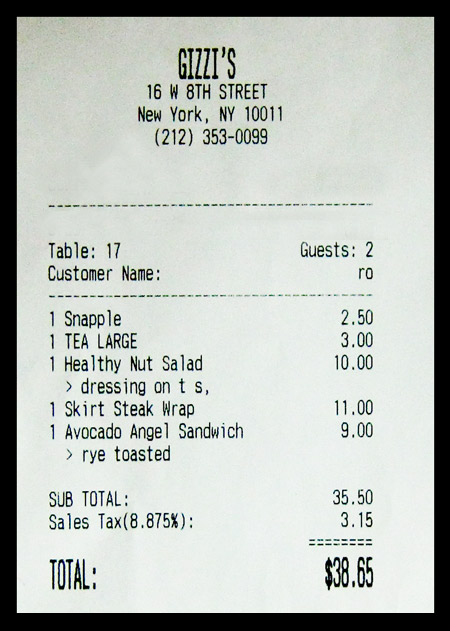
    On February 3rd, I ate dinner there with two friends. Our first disappointment was that they were out of both foccacia and ciabatta bread for the sandwich we chose. It’s not that I am a snob and require these breads, but at $9 for a sandwich, it would be nice for the cafe to have the gourmet breads which they advertise. But alas, this is Gizzi’s, which is forever out of something. When we received the check, there were two errors. One, a large tea had been paid for previously, so $3 should be removed from the bill. However, we had ordered two slices of cherry pie at $4.50 each, which the waiter forgot to add.

    So, this check offered some interesting options. We had three choices:

    1) ESSEN: Ask to accurately correct it – take the tea off and add the slices of pie – pay an additional $6.00 (+ $9.00 – $3.00)
    2) Pay the bill as is – save $6.00 (+ $3.00 – $9.00)
    3) FRESSEN: Ask that the $3 for the tea be removed AND not mention that the two slices of pie – save $12.00 by double dipping (-$3.00 – $9.00)

    The dilemma was furthered compounded by the poor service and lack of breads, making it easy to justify short changing the cafe. So, presented with styles of eating and bill paying, what’s your style? Essen or Fressen?

    Related Posts: The Way You Like It, War Against Disservice (Part 1 and Part 2), Take It, Toches ahfen tish!, Fit-ty Fi, Pick Two


  • dinamic_sidebar 4 none

©2026 New York Daily Photo Entries (RSS) and Comments (RSS)  Raindrops Theme