web analytics

  • Category Archives Slings and Arrows of NYC
  • Homeowners Too

    The big city, particularly New York City, conjures up images of shysters, swindlers, scammers, and hucksters. Growing up in New England, there was a particular aversion to New York, as opposed to let’s say, the more genteel society of Boston. New York was seen as a place defined by glamour, glitz, and money – like Las Vegas, but with more style, character, and culture.

    A visit to New York City came with forewarnings from family and friends. Watch this and watch that, they said. Don’t do this and don’t go there. Be careful. In the 1970s, such admonitions were certainly prudent, however, being young and brazen, I heeded none of it, and luckily, I was never a victim of anything very serious.

    There is truth to all of this. A big city where tourism is strong means lots of naive, innocent prey and a nice thick jungle for hunters to get lost in after scalping their victims.

    Hurricane Sandy unleashed another storm in its aftermath – a flurry of flim-flam men. And a disaster of this magnitude is a big magnet for thieves – victims of the storm now had to contend with crooks not only from New York, but from out of town as well. Of course, opportunists in the wake of a disaster are nothing new. The day after 9-11, vendors were selling T-shirts in Chinatown: I Survived 9-11. Others were selling memorabilia at Ground Zero. Heinous and unconscionable. Fortunately, our mayor at the time was no-nonsense Rudy Giuliani, who decreed in seconds that such offenses would be SQUASHED immediately.

    As regular readers of this website know, I have been closely involved with cleanup and rehab of a friend’s home in Staten Island. One of the most crucial steps in the aftermath of a flooded home is mold remediation and abatement. To be done properly, this is a long and technical process, best left to professionals. The home must be dried, using commercial dryers. There are chemical treatments and HEPA vacuuming. Mold left in walls can come back with a vengance. Many homeowners hasty to rebuild after Hurricane Sandy found themselves ripping newly installed walls open, only to find mold which required proper cleanup and additional construction.

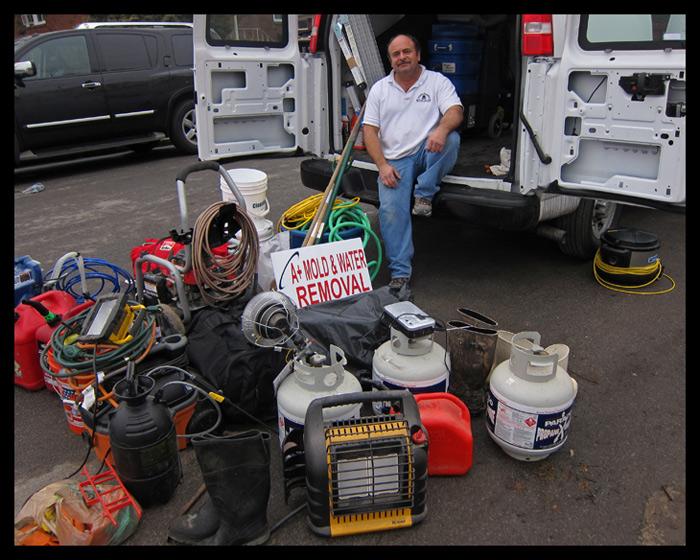
    But where to find someone reputable and honest in the sea of offerings in Sandy’s aftermath? I spoke to numerous established local businesses specializing in mold remediation. I also turned to Craigslist, where we found our final choice. In retrospect, Craigslist was perhaps not the wisest source for such a serious project, however, good fortune was with us, and we found one of the most thorough and scrupulous individuals I have ever worked with – Art Hull.

    Art, like many who worked for victims of the storm, was from out of town – in this case, Ohio. Art was extremely knowledgeable and technical – more so than the many other local contractors we interviewed. He had previously worked in the Biotech industry in California and was well versed in mold and microbes. But what set him apart from the typical New Yorker was his level of service and honesty. He always went the extra mile and then some. He and his assistant spent over 3 weeks in a small home, never rushing the process or a procedure. Phone calls, of which there were many, were typically 30 minutes long, with every detail thoroughly gone over. He gave many extras – checking the roof, checking the attic, replacing the subfloor, checking this and checking that, often traveling and shopping for things needed that were not part of our contractual agreement. To this day, I still call Art in Ohio for advice on various aspects of the home rehab project.

    All told, it was clear from the start that Art was not a native New Yorker. He started the job with a small deposit, willing to wait for an insurance settlement – in our case, he was only paid 4 months after his work was completed. Sadly, many of his other clients became greedy after insurance settlements and have contested his charges for work completed as per contract. Poor Art, now back in Ohio, has had to resort to expensive NYC legal counsel and is still attempting to collect his fees for many large jobs completed some time ago. I was very disappointed to find that the spirit of the swindler was alive and well, not just on the streets of the city, but like Sandy’s sewage, had permeated the walls of Homeowners Too :(


  • No Pane at All

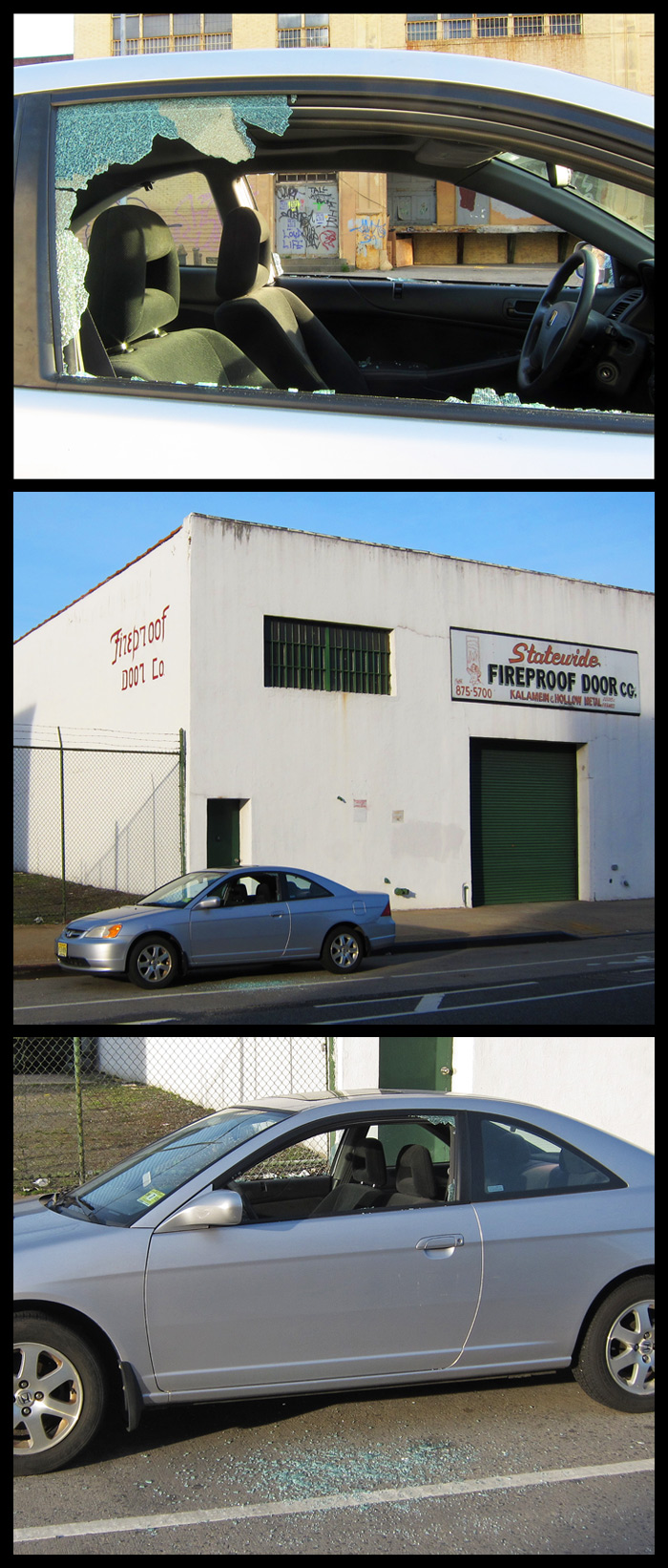
    On July 29, 2009, I wrote Urban Coral Atoll about auto break-ins on the streets of New York City, with the telltale signs of shards of glass on the street. Yesterday, however, while exploring Gowanus, Brooklyn, I spotted a break-in where detective work was unnecessary. The car itself was still parked at the scene of the crime. Not one but TWO windows were completely smashed in broad daylight on a beautiful, sunny spring day.
    The auto was parked in front of Statewide Fireproof Door at 131 3rd Street – a moderately busy through street, even on a Sunday. The license plates were from New Jersey. The out-of-towners had yet to return and find themselves a nice cleaning job along with a breezy ride home and a repair job. And to learn the hard way, as every New Yorker knows, that to a thief, performing a Glass Act is No Pane at All :)


  • Self-Service, Part 2

    Does It Have to Be Pirelli?

    It was 1984 and my first trip to Europe. I arrived in Frankfurt, Germany. I was examining everything carefully, to see if in fact the attention to detail, precision, and quality was in keeping with the country’s mythic standards. It appeared to be. The airport was slick as could be and my eye was drawn to the flooring – a studded rubber material. I had seen its application in small areas in New York City, like elevator floors, but never such a large area as an entire airport. The reason was simple – this was Pirelli rubber tile, and it was rather expensive at the time to cover such a large area. But this was Germany, where the standard for manufacture was very high and, often, cost was not the dominant factor in choosing materials or methods – quality was. I subsequently learned that Pirelli tile had a tremendous reputation for durability. It was guaranteed for 10 years, even in high-traffic applications. Now, I really wanted to use it somehow, but where?

    In 1991, I moved my business to its current location in SoHo. Here, I wanted to create a badly needed showroom, which I did not have at my previous older location. I wanted the quality of materials going into the showroom to reflect the quality of our product line. I hired my best friend, a cabinetmaker, to do all the woodwork. We used baltic birch plywood for cabinetry. I insisted on solid brass screws to assemble – softer and more prone to stripping, my friend relented, seeing that I was steadfast in my obsession.

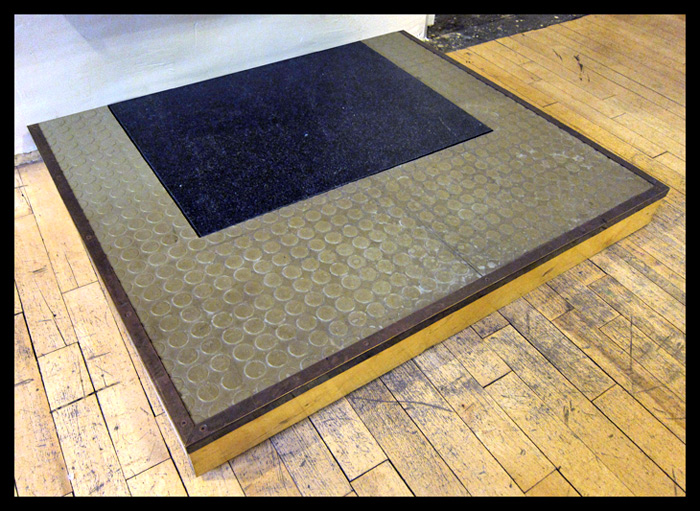
    I needed an area for ball bouncing. The bouncing of balls is a subset of the juggling world, and to test balls properly, a hard, even surface is needed. A wood floor does not typically have the uniformity or mass for best performance – stone does. So, my carpenter and I decided to design a station specifically for bouncing of silicone rubber balls. I researched for weeks, even calling graveyards in New England, to get an affordable price for a small slab of solid granite 4 inches thick. I also needed a good surface on the wood platform for standing. At last, I had an excuse to use Pirelli tile – it seemed perfect.

    Procuring a small number of these tiles, however, was not easy. Vendors in the city were selling by the box, and I only needed a handful of loose tiles. I found a dealer who said that he could provide such, however, once there, it was clear that I was going to be persuaded to buy tiles the salesman wanted to sell, not the Pirelli I had traveled to buy. It became the classic scene of self-service I had seen so many times, common in the world of sales with upselliing, cross-selling, and bait-and-switch.

    I was, however, a bit older and wiser since my Juki ordeal, and I was prepared with the proper response to the question I knew was coming. The salesman, frustrated that he did not have the selection of tiles I wanted, asked, “Does it have to be Pirelli?” To which I answered smugly, “No. It does not have to be Pirelli. But that’s what I want.” It was an effective silencing of a New York City salesman. I purchased a small number of gray tiles.

    My carpenter and I completed the ball bouncing platform, trimming the edges with solid brass rails. My carpenter, knowing me quite well, indulged my every whim, no matter how “unnecessary.” He knew better now that I should never be questioned why I needed baltic birch or brass screws. I was paying him, and it was his job to service the customer. When I had returned to the showroom and told him the ordeal it had been to get the particular tiles I wanted, he knew not to ask, Does It Have to be Pirelli? :)

    Related Posts: Do the Right Thing 2, Do the Right Thing, War Against Disservice, Released from Captivity


  • Self-Service, Part 1

    Does It Have to be a Juki?

    You know the scene, I am sure. You are in a store and can’t find something. You look for a salesperson. Finally, you find a GROUP of sales people, deeply engaged in conversation. Perhaps one of them even sees you and that you clearly need help. Apparently, however, their conversation is more important than helping you.

    It’s a form of customer service perhaps better called SELF SERVICE, but not the type of self-service that many of us like, where money can be saved and the check out process expedited. This type of self-service is self-serving.
    This type of self-service plays out in many ways, but the underlying operative is always the same – placing the needs of the business or salesperson ahead of the customer. Selling you what they have, even if it is something you don’t want or need. Upselling.

    In New York City, purchasing goods from suppliers to the trade often has its own flavor – one that I hate the taste of. It’s quite simple and goes something like this:
    You enter a business establishment knowing exactly what you want. It may be goods you have purchased for years. However, asking for what you want is followed by a question, something like – what are you making? This may seem extra helpful, trying to understand your needs, etc. But it’s not. Their question is really code for: How can I sell this person something I have rather than what they want. Infuriating if you know what you need. If you persist and are singular in your demand, a vendor will often resort to the more direct: Does it have to be ______ ?

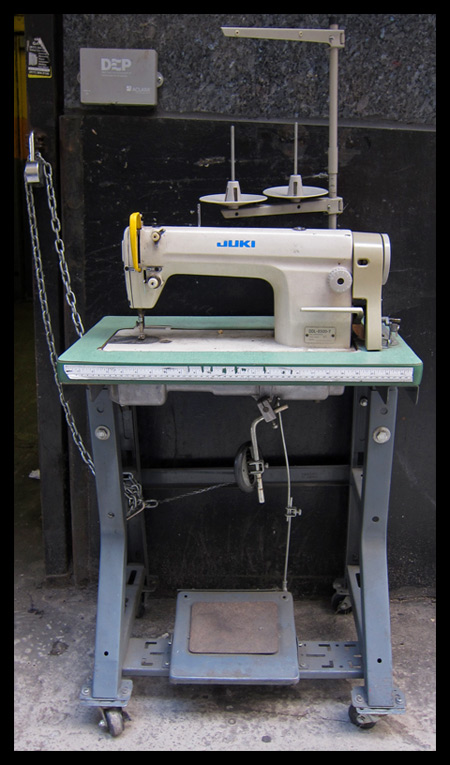
    In the 1980s, I was shopping for a commercial sewing machine. Every sewing factory I had been in was filled with Juki sewing machines – the industrial workhorse of the garment industry. Everyone I spoke to said that the Juki was the machine to get. So, I went to the sewing machine district – two city blocks in Manhattan (25th and 26th Street between 6th and 7th avenues) known for its innumerable dealers of industrial sewing machine dealers, parts suppliers, and service establishments. I recall an exchange with one dealer who apparently was frustrated with my insistence on Juki, which he either did not have or perhaps he did have but had something else he chose to unload on me. I should have seen his response coming when I asked for a Juki: “Does it have to be a Juki?” he said in a thick New York accent.
    Had I been more experienced, wiser, and BLUNT, I would have told him, “No. It does not HAVE to be a Juki. But that is what I want. I’m the customer. Are you here to serve me or yourself?” I did remain steadfast and found a Juki. I never used it much and sold it some years later.

    Recently, while purchasing goods on 39th Street in the Garment District, I spotted the machine in today’s photo. So perfect, a Juki sitting alone on the street beckoning me. “Come on,” it was saying. “Take a photo. You already have the story.” Yes, I had no choice. Because there was a second part to the story too, one that does not end with Does it Have to Be a Juki? :)

    Related Posts: Do the Right Thing 2, Do the Right Thing, War Against Disservice


  • I’ll Take Care of You

    Have you been in a restaurant where any special request, no matter how small, is met with hesitation or a negative? And where it is particularly irritating because you know that your request can be easily met? Don’t you already have plenty to do and worry about? When you are a customer of a service establishment, shouldn’t they shoulder the burden, troubles, and responsibilities? Why should you feel uneasy or worried that your needs and requests will go unmet and worse, that you may have to help solve the problem that you are paying them for? In short, why should you be doing their job?
    Early Saturday morning, I lay awake in bed and reflected on the unpleasant chore of going to have my car inspected. In New York City, something as simple as inspecting your automobile can be very troublesome. Often an appointment in advance is necessary, there are long waiting periods, or a service station is out of inspection stickers. Many times I have spent hours trying to get my car inspected, only to return home defeated, having to try again another day.
    I called Salerno Service Station and asked for Ryan, the general manager – a man who had forever changed my attitude towards the auto repair business and led me to write an extensive two-part story – Jacked. It was Ryan who had answered the phone. I asked if they could do an auto inspection that morning. He said, Don’t worry. Just come in. I’ll take care of you. That is when it hit me hard. He had given me the key to ultimate customer service when he said I’ll take care of you. It was the reason why Salerno had hundreds of five star reviews online.

    HE HAD SHIFTED THE RESPONSIBILITY FROM ME TO THEM. All of the responsibility. Completely. 100%.

    That was the key, because in that way and only that way can a customer fully relax while the service provider does their job. Even with good customer service, there is often a nagging worry that something may go wrong. In auto repair, so many things can and do go wrong – a bigger problem will be discovered, a part will be unavailable, there will be no time today for the repair, the cost will be too great, you will be cheated or lied to, you will be sold something you do not need, etc. But with great customer service, at a place like Salerno Service Station,  you will be insulated from any hassles servicing your car because they are taking care of you. You can relax. Like my first visit when I was told by Ryan to go have a nice breakfast at the Willburg Cafe while he took care of my muffler job.
    It is like the days of old, when people spoke of being in the doctor’s care. There was great comfort in those words because it meant that someone competent was going to take care of you. People love to be taken care of. This complete taking over of responsibility from the customer or patient is characteristic of the Italian culture and their approach to service. Now I saw how it was at the core of the No Problema attitude that I wrote about.

    Over many decades of owning a car in the city, I have grown to despise the auto inspection ordeal. However, now, for the first time in my life, in the hands of Ryan and the Avallone family, Mario and Salvatore, I actually looked forward to this year’s inspection. In a harsh environment like New York City where comforts have to be actively sought out, there are no sweeter words than I’ll Take Care of You :)


  • Arson

    On August 30, 2011, I confessed to starting a fire as a young boy. I had been playing with a friend in a vacant lot across from my home. My friend encouraged and cajoled me to make those flames grow until the fire was beyond our control. We ran, lest we get implicated. I was terrified of the consequences of both the fire itself and, as we liked to say at the time, “getting killed” by my parents.
    A firetruck appeared, and I watched the small blaze get extinguished from the porch of my home with my unsuspecting mother. It was my first and last involvement with setting fires and was a lesson learned, fortunately at no one’s expense, less a few minutes’ time of a handful of firefighters.
    In my business, I manufacture and sell fire props to performers. Unlike my boyish recklessness, however, the professionals I have known, such as Chris Flambeaux, take fire seriously and understand the dangers and responsibilities. They are accountable and answer to fire marshals and theater regulations.

    Yesterday evening, at 7:49PM, I was called by one of my staff. An enormous fire was in progress only a short distance from our office. It was not clear that the fire would pose any danger to the building where my business was located, so, I made my way back to my office’s neighborhood. A fire had been started at 41 Spring Street in NoLita. From the New York Times:

    After arguing with the mother of his child, a man set a fire in the second-floor hallway of his Manhattan apartment building on Thursday night, igniting a rapidly spreading, five-alarm blaze that killed one person and injured at least nine, the authorities said.

    It took nearly 200 firefighters two and a half hours to bring the fire under control, fire officials said; the building has a Pinkberry shop on the ground floor and apartments above.
    “We had an extraordinary amount of fire,” said James Esposito, chief of operations for the Fire Department. It burned upward to the roof, destroying the interior staircases, so firefighters had to use fire escapes and ladders.

    “It was an extremely intense operation,” Chief Esposito said. “The fire encompassed all the walls, all the floors,” he said. “We have a partial collapse inside the building right now. It’s essentially destroyed.”

    The 45-year old suspect was arrested and is now in custody. Arson.


  • Closed Forever

    Change is typically incremental, even radical change. But often, there is that moment or day that PUNCTUATES a transformation. An unmistakable, inarguable sign that times have changed by technology. I saw the long, slow shift from vinyl to CD. And one day, the change was complete – the vinyl section in Tower Records was closed completely, supplanted by music CDs.
    Recently in my business, we made the decision to give away our entire inventory of VHS tapes. The decision to divorce ourselves completely, even from viewing legacy video tapes, was also made. We will be uninstalling our video monitor and VHS tape player. DVDs are threatened as well. We recently converted all of our video media to electronic form and uploaded them to a touch screen computer. This showroom kiosk now replaces monitor, VHS tape player, and DVD player.

    The future of printed books is unclear. Ebooks have been heralded for eons, but print continues to live on. The adoption of electronic books over print is a much greater hurdle – unlike video, where the form of delivery media is not so consequential, print is tactile and the difference between paper and electronic imaging is still huge for most individuals. Ultimately, I believe technology will force its hand as costs, storage, and distribution of electronic media win easily over paper.
    Bookstores have closed here and there. At one time, 8th Street in Greenwich Village was a virtual mecca for book lovers, with numerous bookstores, befitting its literary and bohemian roots. Many have anguished over the encroachment of the large chains into New York City, particularly Barnes and Noble. Personally, although I understand the sentiment, I always welcome a bookstore. I also have a sentimental attachment to Barnes and Noble, as I wrote about in World of Waiting.

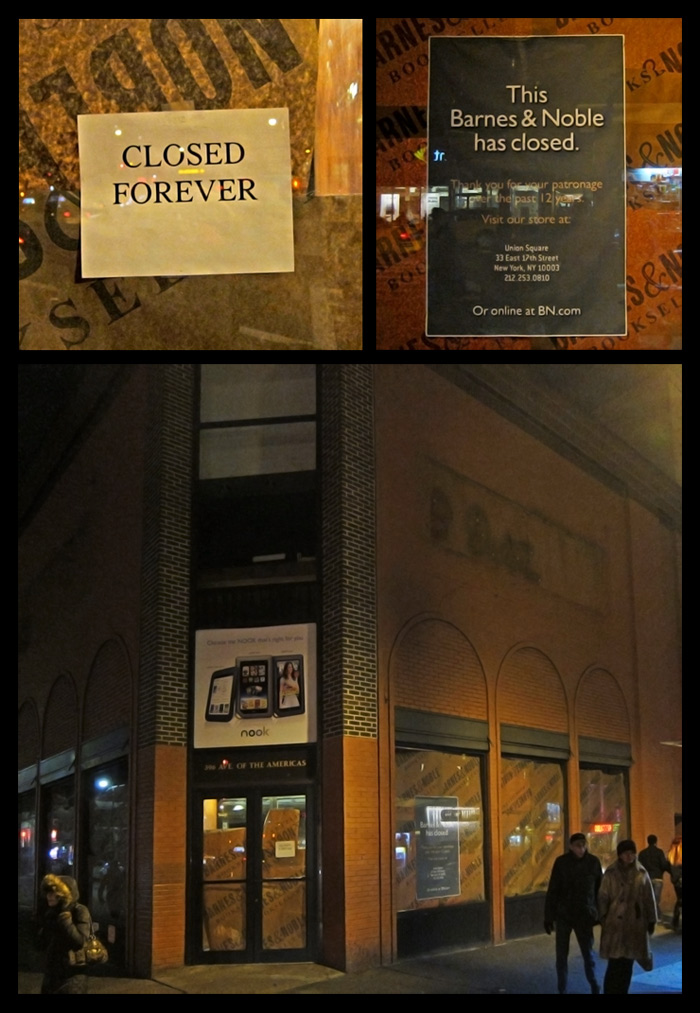
    It had been announced that the Barnes and Noble at 8th Street and 6th Avenue would close. The store is an anchor for the block – it occupies the corner and the entire two-story structure. It has had numerous incarnations. In the 1960s-70s, it was a popular late night watering hole and home to Nathan’s and an Orange Julius. I paid little mind to the store closing announcement, as many things can be said and stays of execution are common in business. However, last night en route home, the death knell tolled again. The windows were papered and a sign on the door said it all. Closed Forever.


  • No Sense of Urgency

    It was the 1980s, and my business was going through growing pains. I was forever frustrated with employees who were often too lackadaisical – they just didn’t share my view of the importance of tasks and the need to get things done promptly. On one occasion when I was especially frustrated, I turned to a friend to vent. I chose this friend because she was of similar mind and temperament – someone who was very driven, efficient, and strove to get things done right and quickly. She could cut to the chase in any matter and was very intolerant of those who did not share her worldview. I was struggling for the right words when, understanding my sentiments, she interjected and articulated my feelings exactly, using the phrase that I had been searching for in vain. “They have no sense of urgency,” she said. Ahh, that was it. A phrase I would never forget and use often – no sense of urgency.

    In the time of crisis, adrenaline flows and people rise to the occasion. Support is everywhere to be found as many of those unscathed empathize with the plight of victims. Unfortunately, crisis does not change people, and the sense of urgency, largely driven by extreme circumstances, soon fades as people lose steam over time. With those further removed, such as government agencies, concern seems to take the form of rhetoric, news bites, posturing, and paperwork, as evidenced by the anger of victims in any of these events at the slowness and ineffectiveness of government response. In the days and weeks immediately after Hurricane Sandy, I experienced a broad range of responses by neighbors, sanitation, fire and police departments, city agencies, insurance companies, adjusters, contractors, and volunteer groups.

    The NYC Rapid Repairs program has been far from rapid. The group only visited my friend’s home in Staten Island one month after the hurricane. Paperwork was filed on site, and we were assured that work would be completed by “the holidays.” We only received a call letting us know that the crews would be in my friend’s neighborhood on January 13th to discuss the beginning of work. Needless to say, most Staten Island and Brooklyn residents have taken repairs into their own hands, rather than suffer the torture of delays and broken promises. This is why, ultimately, my friend whose house I have assisted in rebuilding has resorted to volunteer groups such as All Hands, who was the only group (other than private contractors) that responded in a timely manner and was willing to take on a large cleanup.

    Yesterday, I drove through one of the worst hit areas on Staten Island, New Dorp Beach, which still looks and feels like a war zone. Police vehicles are everywhere, patrolling the neighborhood. Many homes remain unoccupied, with red, green, and yellow placards taped to their home by the Department of Buildings, identifying their occupancy status. Some homes appear to have been largely renovated while others still await repairs. And there are those which are beyond repair.

    It has been over eight weeks since the hurricane, yet I saw people still shoveling debris. The work of rebuilding is far from over. There is however, a general malaise and despondency hanging in the air. Spirits have been beaten down. Volunteer groups and aid vehicles have largely left the area. Understandably, as time passes, the attention of outsiders is directed elsewhere as the entire disaster is largely seen as “over.” However, things are far from over, and rebuilding will go on for some time to come. The damage wrought by Hurricane Sandy is still at hand, along with the same need for verve and work. But sadly, there is No Sense of Urgency


  • Flies or No Flies

    It takes a lot to raise the eyebrows of a New Yorker. However, in 2007, I wrote Rats R Us about one of the most outrageous displays of rats gone wild in New York City and how it caught the attention of residents and even made national news. New Yorkers stood outside a Taco Bell/KFC in Greenwich Village and watched rats cavorting on the floors and tables while local news media sent reporters to the location and filmed the incident – you can see the video here. I featured a photo of the closure notice by the Department of Health which had a myriad of humorous comments scrawled over it by passersby. It was a classic New York response – a blend of sarcasm with a super tolerant attitude of the slings and arrows of the gritty side to this city.
    On December 11, to the surprise and chagrin of many, John’s Pizzeria was closed by the Department of Health. Here is the report from the DOH website:

    Violation points: 45
    Sanitary Violations

    1) Raw, cooked or prepared food is adulterated, contaminated, cross-contaminated, or not discarded in accordance with HACCP plan.

    2) Evidence of mice or live mice present in facility’s food and/or non-food areas.

    3) Filth flies or food/refuse/sewage-associated (FRSA) flies present in facility’s food and/or non-food areas. Filth flies include house flies, little house flies, blow flies, bottle flies and flesh flies. Food/refuse/sewage-associated flies include fruit flies, drain flies and Phorid flies.

    4) Facility not vermin proof. Harborage or conditions conducive to attracting vermin to the premises and/or allowing vermin to exist.

    5) Pesticide use not in accordance with label or applicable laws. Prohibited chemical used/stored. Open bait station used.

    I was not particularly shocked. Irrespective of the quality of their pizza, John’s is far from the paradigm of cleanliness. The place is quite run down, and attention to detail never appeared to be the order of the day. It’s a money machine that swallows patrons daily who wait in long lines to get in. It is nationally known and on the “must do” list of many visitors to the city who care nothing about how the place looks or manages its food and premises. With such a deluge of patrons, who has time or need to worry about vermin, flies, or proper food handling? I am sure it will reopen soon and, undaunted, New Yorkers will line up again, Flies or No Flies :)

    Another recently closed pizzeria: Ray’s (Not Enough Dough)


  • Floating Pool Lady


    In October 2012, I made an excursion to the South Bronx to visit the Vernon C. Bain floating prison. My confidence in photographing the facility was rather foolhardy, as I wrote about in Crossing Over. On that particular excursion, I explored the immediate area, driven by my interest in seeing the enigmatic North Brother Island, which sits in the East River and is generally off-limits to visitation. From studying maps, it appeared that one of the best potential viewing locations of the island would be from nearby Barretto Point Park, a place I had never visited nor heard of. A big feature here is the Floating Pool Lady, a seven-lane, 25 meter pool on a barge. I had the luxury of driving to the park and pool, so my visit was relatively blissful and the park a surprising jewel in a daunting land. Accounts of those who have taken public transportation (the nearest subway is over one mile away), however, sound rather harrowing. Here are excerpts from one woman’s account of the journey:
     

    My friend and I decided not to be put off by others’ fear of the Bronx or derision of public pools as being “ghetto.”
    We surfaced to a dirty street full of no-name discount businesses. No big deal – it looked just like North Williamsburg or something, and there were plenty of people going about their daily business. Walking East, we went under the Bruckner Expressway, and suddenly it was like the post-apocalypse. The pockmarked streets got super wide and empty, and there was not another human being around. There was a four-way intersection with no lights or stop signs. Random trucks and low-riding cars with lights creepily on slowed, honked, and stared.One dude screamed, “Goin’ to the POOL???”
    At an intersection where there were apartment buildings, hope was restored. But then we took a right onto Tiffany, and then it was all junkyards, auto shops, and warehouses with broken (or bulleted? Seriously…) windows. Here, the catcalls from groups of men, whether they looked like kind grandfathers or teenage thugs, became worse. A couple times, they followed us , making sucking noises, clapping their hands, and shouting. Staring at the stains on the ground, I wondered if they were blood or rust as a montage of every mafia and gangster movie I had ever seen ran through my head. In a moment of hilarity, we saw a wholesome looking “Baby Spinach and Arugula” truck  up on a curb…with a shattered windshield. For the first time in my life, my heart palpitated with fear in broad daylight (and I’ve walked alone in rough and poverty-stricken areas all around the world before.)
    The last 100-yard stretch was permeated with an incredible stench of trash and opened up to a tiny little park with a ribboned gazebo. Someone was actually having a wedding reception there, and there were women and children frolicking in fountains. So weird.
    As we walked towards the boat, a young girl with a park shirt on screeched “HEY! Over HERE!” We walked to the entrance, where she was standing with a woman who asked us if we were wearing bathingsuits. “Show me your bottoms,” she commanded.
    The locker room was spotless. One freezing cold spigot in the showers spurted water endlessly. I asked a guard if it was possible to shut the water off. “It’s just running,” she said with indifference.
    A ramp led us to a blue 82′ x 52′ rectangle of 4-foot deep water filled with tattooed men in wifebeaters and exultant children. I asked how they’d all gotten there, and they’d done The Walk, too. There was no other way.
    And my friend had her breasts touched by the 12-year old fatty perv. But no matter; we did what we came to do. We saw that the pool existed, and that some locals can get there.
    Hey, this is a great, well managed pool, but if you have a vagina, pack a crowbar and some thugs to get to it. I worry about what the people in the East Bronx (especially women and children) have to go through to get to their local pool. As for me, having a choice in the matter, I will probably never come here again.

     
    As for me and the friend that accompanied me, by driving and visiting off-season, we found our journey uneventful and the park quiet and serene. The pool was closed, so I have neither direct experience with swimming there nor tales of public pool horrors. Men were fishing on the adjoining pier and children were playing on nearby beach.  The sirens of North Brother lured me in the distance. It was a perfect day and a beautiful spot in one of the most unlikely spots in the entire five boroughs of New York City  - the South Bronx, a neighborhood more known for urban decay and crime than anything else (two vendors I use in my business are located there and actually park their vehicles INSIDE their factory facilities, which have no windows).

    Like so many of life’s arenas, it is often true that there is nothing new under the sun. I was surprised to learn that the floating baths and pools in New York City waters date back to the 1800s (shown in the collage of vintage photos). You may need a bit of nerve to get there, but here, in the South Bronx, behind a chained link fence, on a barge with views of Rikers Island (prison), you can have a swim in the Floating Pool Lady :)

    Another NYC pool: Page or McCarren


  • Road to Salvation

    I grew up in New England, where self-reliance reigned supreme. In that environment, “neither a lender nor a borrower be” defined the attitude towards assistance. Help was a four-letter word and asking for help showed a weakness of character. Charity and philanthropy were at best necessary evils and a sense of entitlement was a despicable character trait. No one deserved anything, excepting perhaps the right to work. Do-it-yourself was not some trendy moniker, appropriated by Maker Magazine. DIY, was a necessary condition in a world driven by hard times, lean circumstances, and real need. In a harsh, rural, sparsely populated environment, embracing such an extreme view of self-reliance makes sense and is arguably necessary for survival.

    Recently, however, I have learned a poignant lesson on the nature of HELP. Today marks one month since Hurricane Sandy ravaged New York City. For the last four weeks, I have helped a friend in Staten Island, one of the worst hit areas. The borough is literally a disaster that will take an untold time to restore. Many will be digging out and repairing for months or years to come – some will never see their homes in its former state. In the house I have worked in, nearly every task necessary on the road to recovery has required a team effort. In our case, clearing a basement with belongings drenched with seawater and sewage was a mammoth job, inconceivable for one or two people. We could find no one really willing and able to do the job, even as work for hire.

    We were nearly at wit’s end until meeting Leticia Remauro at the volunteer table in Miller Field in Staten Island. Leticia, I was to learn later, is chair of Community Board 1 for that borough. When I told her of our cleaning dilemma, she wrote out her cell phone number as well as that of Jeremey Horan (a volunteer) on a card and handed it to me, telling me with the utmost confidence that Jeremy would handle any work that needed to be done. But Jeremey was associated with not just any volunteer group, of which there are numerous, typically loosely banded as a response to a crisis. No, the group who finally and thoroughly cleared the basement was All Hands Volunteers, a non-profit group doing work worldwide, and Jeremey was Director of Operation. There is too much good to be said about this group of men and women who are undaunted by any task, regardless of how unpleasant it may be, and, with energy that can only be described as indefatigable, apply themselves and carry through these thankless jobs to completion. Members come from all walks of life, most typically with day jobs, often driving in on weekends from out of state, just to help. I was privileged to meet Travis Gibson, US Field Operations, who personally came to inspect the project. Travis is one of a few full-time staff with the organization.

    The response and value of government or insurance agencies has been anywhere from useless to disgraceful (apart from The Department of Sanitation, who has done a tremendous job), when viewed from the perspective of URGENT NEED at the time of crisis. With tens of thousands rendered homeless, bureaucratic process with forms and applications does virtually NOTHING to address many of the immediate needs of those hit by a monumental catastrophe. Many with enough cash pay out of pocket, hoping to be reimbursed by insurance. Everyone else must rely on wits, resourcefulness, and volunteers to see themselves through. It was only seeing the situation first hand that I quickly learned the value of Help. Volunteerism has been the saving grace in Staten Island after Hurricane Sandy.

    In my case, All Hands Volunteers not only cleared any and all debris, but also volunteered to completely gut the interior of the home, a process that only takes one team about two days – ripping out carpeting, floors, and walls and removing appliances and furniture. It was astonishing to see them work. Without All Hands Volunteers, we truly would have been at a loss. The entire experience is harrowing owing to time pressure – every day that a home that has been flooded sits idle, mold continues to grow and makes the restoration process worse.

    And so it was how Leticia Remauro and All Hands Volunteers taught me that HELP is not just a desperate plea while drowning nor a four-letter word, but, in time of catastrophic need, Help is The Road to Salvation :)


  • War Rations

    New York City is noted worldwide for its cuisine. It is, arguably, perhaps one of its strongest suits, with tens of thousands of restaurants in the five boroughs, spanning the gamut from fast food to haute cuisine. You can enjoy a great falafel from Mamoun’s for $2.50 or spend $100 per person or more at places like Babbo. In all cases, you will at least be provided with light, seating, and a temperature controlled environment, unless you opt for al fresco dining, which is not typically seen near the beginning of December. Unless you are working outdoors with no other options – like gutting a house on Staten Island in the wake of Hurricane Sandy, which is where I found myself this past weekend.

    Saturday, I ordered Chinese for delivery for a work crew of 10 which we ate truck side (bottom photo), my first experience with “tailgating”, sans the grill, coolers, tables, or summer weather. Sunday, a work crew member opened two cases of MREs – my first ever experience with war rations. MREs (Meals Ready-to-Eat) are self-heating emergency meals. Ours were A Pack, made by AmeriQual group, the largest provider of MREs to the U.S. Military. Each meal pack comes in 6 varieties and includes an entrée with a self-heating unit, side dishes, beverage mix, condiment, utensil, and towelette.

    The crew was a stoic bunch and enjoyed their rations sitting on the ground in Tyvek suits soiled with every manner of dirt and sewage.  There were no complaints, just perhaps a bit of impatience as we struggled to open the various foil packs, read the instructions for heating, and tried to execute them, while standing in the cold. I was far from my home in Manhattan in many ways, where it was business as usual with shopping and eating out. This was not Shake Shack nor dining New York style. We were only a public bus ride away, yet some of Staten Island is still a disaster zone, where for some, today’s lunch is War Rations


  • Unfettered not Defeathered

    On my last visit to Staten Island in the wake of Hurricane Sandy, I was stunned to see a flock of wild turkeys crossing Hylan Boulevard, one of the busiest thoroughfares in the entire borough. Such a sight would not perhaps raise an eyebrow in rural America, but the last thing one expects in New York City is a flock of turkeys crossing a busy street in a heavily populated area midday.

    Virtually every news source has covered this story and reading about the birds, apparently they are not loved by neighborhood residents who find them a menace. The birds are very aggressive with a myriad of tales and complaints. Articles with titles such as: Turkeys Terrify Staten Island Residents Trap Woman in Car; Scourge of Staten Island: Turkeys terrorize residents as they roam neighborhood; Staten Island’s wild turkeys flourish despite Sandy’s woes; Wild Turkeys Get a Taste of Domesticity; Much to a Borough’s Chagrin, Staten Island Locals Fear Wild Turkeys!; Wild Turkeys Push Staten Island Homeowners to the Breaking Point, et. al.

    Estimates of the turkeys numbers range in the hundreds. Officials say that the turkeys are not indigenous to the island. It is thought that the presence of wild turkeys in Staten Island dates back to 1999, when nine turkeys were released onto the grounds of the South Beach Psychiatric Center by a local resident who had held them in captivity.

    As to dealing with the menace, The New York Times says:

    The state has rejected efforts to transfer the flocks to more rural counties, where turkeys normally forage — but where the Staten Island flocks, officials fear, might not adjust well after acclimating to a human habitat. The Staten Island turkeys cannot be hunted, either, because they are protected with prescribed seasons and areas, none of which are within the city limits.

    At this time of year, many Staten Island residents think like Allan Barnhardt: “I have the perfect spot for these turkeys. Right between my mashed potatoes and cranberry sauce.” However, hunting turkeys is illegal in New York City, and so, the birds, like many a New Yorker, walk through the city streets with attitude and a touch of arrogance. They’re not going to be on anyone’s plate this Thanksgiving. For now, the turkeys of Staten Island go Unfettered not Defeathered :)

    More wild and unexpected animals in NYC: That Should Cover It, Lost in that Wool, Bronx Zoo, Warm and Fuzzy, Parrots, Rain Forest, Horsing Around, Albino Burmese Python


  • Shabby is Not Chic


    It was high school gym class, and a classmate, looking to validate his negative assessment of my mode of dress with our gym teacher who stood nearby, pointed out to him how absurd I looked with my T-shirt tucked into my gym shorts. The teacher, rather than side with my classmate, defended me, saying that I looked neat and that my classmate might want to see me as an example of someone to emulate, not deride. It was a small triumph.

    Growing up, I was tidy and neat, always preferring the well-kept, the organized, pristine, the newly made. Over time, I have grown to appreciate old world charm and antiques, even if they are less than “perfect.” I have come to know many artists, who typically prefer the unmeasured, unmanicured, unkempt – flaws that in some way give things character.
    My exploration of this alternate universe reached its pinnacle when I was introduced to the decorative world of Rachel Ashwell by a friend. I was impressed with the ambiance of the store and wrote Off-White By Design. I began to investigate Rachel’s world of Shabby Chic as well as French country decor. I even had employees from the Ashwell team come to my home and make a proposal for a badly needed redecoration of my apartment.

    However, I never went through with their plan. Their solution seemed quite pricey and honestly, the old neat and tidy man came out – I found many of the articles just too rough, poorly made, and overpriced. I guess one could say that I ultimately just found the look too shabby, or at least did not want to pay good money for that which I did not find particularly chic.

    Recently, I found myself in the very same home of the friend who introduced me to Rachel Ashwell. I was helping sift and sort through her possessions in her residence in Staten Island, which had been flooded in Hurricane Sandy. The entire experience has been unpleasant. While in her living room, I was stunned when I came across a badly damaged, water-soaked copy of the classic Shabby Chic by Rachel Ashwell. There it sat on the water logged carpet, the ultimate in irony – the modern day bible for the celebration of all things shabby, sitting amidst rubble soaked in seawater with traces of sewage.

    In the showrooms of SoHo and the homes of the well-healed, the deliberate selection and placement of the aged and worn may in fact be charming. But here, in Staten Island, amidst the wholesale damage left by Sandy, at least for now, Shabby is Not Chic :(

    A similar scene: Kind Of


  • A Special Serendipitous Meeting

    In the Wake of Hurricane Sandy


    Many of us who live in lower Manhattan and lost power during Hurricane Sandy, found ourselves leaving our neighborhoods and heading uptown, where there was power. Many stores and restaurants were open, and in some locations, it was business as usual – one would barely notice evidence of a major power blackout. Many photos were taken and articles written about this bizarre bifurcation in Manhattan – in parts of the Village, one needed a flashlight to walk, yet midtown was all aglow and abuzz.

    Two days after the hurricane, while on a journey midtown to a pharmacy, I spotted none other than Hovey Burgess.* He too found the blackout conditions quite depressing and was wandering in a world of light to pass time and brighten his day.
    Hovey is one of my very earliest customers, going back to the very inception of my business in 1975. He often came to my home (where I ran my business for the first 6 years) with his wife Judy to pick up juggling equipment. Hovey is one of the greatest supporters of his fellow artists and suppliers I have ever met. When I have called him over the years to tell him of some new prop or publication as a point of information, I would often find him at the shop immediately to peruse and purchase. Money was never a consideration – purchasing new juggling-related equipment or books, or attending juggling- or circus-related shows of merit, was always his number one priority. He is well known to often attend numerous performances of the same show. He is the quintessential patron of the arts and, if possible, he is someone that, ideally, you want to have interested in what you do. He was one of my earliest customers and advisors. I owe him a great deal.
    And so, that is why it was no ordinary occurrence -  it was a Special Serendipitous Meeting :)

    *Note about Hovey: For those who do not know him, Hovey is a circus aficionado, performer, juggler, and educator. For over 30 years, Hovey has taught circus arts at NYU’s Tisch School of the Arts. He is the author of the book Circus Techniques. Hovey has a B.A. in Theatre Arts from Pasadena Playhouse College of Theatre Arts.

    His skills and work includes clowning, juggling, equilibristic and trapeze work with Circo Dell’Arte, Clyde Beatty-Cole Brothers Circus, Electric Circus, Patterson Brothers Circus, and Toledo Zoo Wild Animal Show. He is a former President of the International Jugglers Association.

    He taught at American Conservatory Theatre, Juilliard, National Theatre School of Canada, Ringling Brothers and Barnum and Bailey Clown College, and Sarah Lawrence College. He was circus choreographer for Robert Altman’s Popeye (Paramount). Hovey is currently a member of Circus Flora, based in St. Louis. In 1999, he was inducted into the People’s Hall of Fame, which honors living cultural treasures and is housed at the Museum of the City of New York.

    More on Hurricane Sandy: Yesterday’s Muddy Pants, Seeing Scenes Rarely Seen


  • dinamic_sidebar 4 none

©2013 New York Daily Photo Entries (RSS) and Comments (RSS)  Raindrops Theme