• Category Archives Natural NYC
  • Guessing Game

    I like guessing games.

    I have had an idea stewing for some time – an experiment of sorts, inspired by an article I read in the 1980s. The author of the article put forth a provocative hypothesis regarding writing, which I have thought about for years and discussed recently with a writer friend and regular reader of this website. Your answers to the last question at the end of this posting will test this hypothesis.

    Today there is something completely unique about the writing of this story, unlike any other since the inception of this blog in 2006.

    This idea, however, preceded any photos taken, and I have not been able to fathom in the least what image to use in conjunction with this idea.

    Appropriately (for a guessing game), I had the image of a butterfly of unknown species archived since August 1, 2010. The butterfly lighted on the pants of a friend in the park. Deprived as we are in New York City of such a rare occurrence of nature, the event became a paparazzi photo op, with the snapping of cameras and jockeying for turns at shooting.

    Recently, I showed this image to my photographer friend Bill Shatto, who identified it immediately (Bill’s specialty is the macro photography of insects – you can see his work here). Strangely enough, in a bizarre twist, the name of this butterfly is perfectly suited to this Guessing Game.

    So, if you like guessing games:
    1) What is the name of this butterfly?
    2) What is unique about the writing of this story?
    Afterthought: It occurred to me after completing this that not only is the identity of the person in the photo also not revealed, but I also don’t recall who it was. Layers of mystery.

    Answers: There were some very interesting analyses. Yes, it was the first time that I asked a question. But the real difference was that this posting was inspired by an article I read by an individual who claimed he could tell the difference between something written on a computer using a word processor versus something written without, the idea being that the need for more careful and thoughtful composition before committing to typewriter or pen/pencil would make itself obvious in the finished product.

    My story was written completely using pencil and paper. There was no editing of any sort on a computer, only the final transcription. I am not sure if I see an apparent difference myself.

    The butterfly is a Question Mark – common to urban parks, and named because of the silver markings under its wings, a curved line and a dot, resembling a question mark. See here.

  • Water 4 Dogs

    One of the problems with dogs in New York City is using the word dog in the same sentence as problem. I have done that twice in the first sentence, so I imagine that I am in trouble already with dog owners.

    Lest I be characterized as a dog hater, which is in the same realm as child haters, I do like dogs. New York City has 1.4 million dogs, which, I think it’s fair to say, poses numerous problems and difficulties, the issues of toiletry being one of the biggest to non-owners.

    In 1978, New York City, under Mayor Koch’s administration, passed Health Law 1310, the first enforced “poop scoop law” in the country. Prior to that time, the city streets were a virtual minefield of animal waste, and a walk on the sidewalks or in the streets necessitated constant vigilance and agility, or you had to be prepared for the unpleasant task of shoe cleanup.

    The city is not particularly hospitable to living creatures, be they plants or animals, dogs included. Days alone at home in small apartments and leash laws do little for their psychological well being. Dogs need off-the-leash time, and now parks have hours and specific locations for this activity. Many parks have also provided dog runs which include toilets.

    New York is a city of work-arounds, accommodation, innovation, adaptation, and resourcefulness. Dogs need drinking water, and in this summer’s heat wave, the need is often dire. Owners prepare and respond to this need in a variety of ways, often carrying water. Others, caught unprepared, often enter retail shops and ask for a cup. Recently, I have noticed the frequency of a preemptive solution: many shop owners providing a bowl on the street with a sign like that in the photo, Water 4 Dogs 🙂

    Other Dog Postings: a la Chien, Wolf Dog, Dog Run, Dog Dating, Robin Kovary Run for Small Dogs, Pet Pride Parade, Spring Madness


  • We Read at Night

    Posted on by Brian Dubé

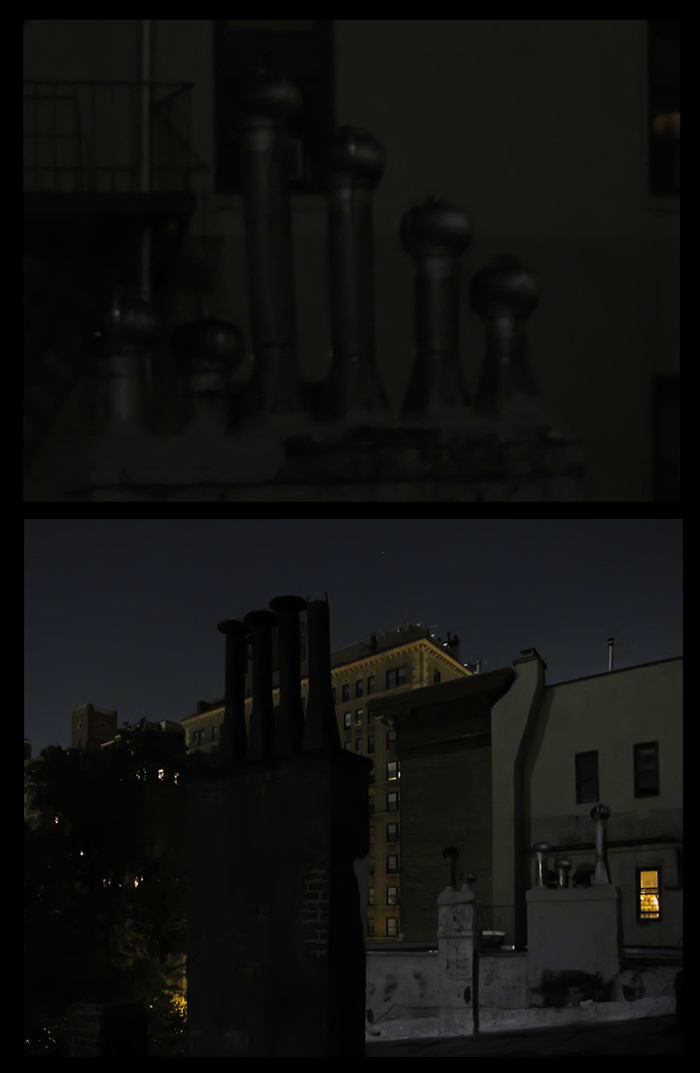
    I have been to some of those places so dark at night that you can not see your own hand. I don’t like those places. I will confess that after living in New York City most of my life, I am somewhat afraid of the dark because I don’t really know what it is anymore. A case of Fear of the Unknown.

    I have read about the health benefits of sleeping in total darkness. I am sure it is healthier, but I find greater comfort with light. I can sleep in well-lit rooms, a bedroom at night without shades drawn, at the beach, or on park benches during the day. It’s much easier to see anyone sneaking up on you, and vampires hate the light.

    Although there are conveniences of living in a place where it is well lit at night, this plethora of illumination is light pollution, and it is a well-documented problem worldwide, particularly in urban areas like New York City. The Dark-Sky Association (IDA) defines light pollution as any adverse effect of artificial light, including sky glow, glare, light trespass, light clutter, decreased visibility at night, and energy waste.

    Links have been found between light pollution and cancer, increase in blood pressure, alertness, and mood. Sleep and circadian disruption, along with melatonin suppression, may have long-term health risks. In a larger sphere, ecosystems are disrupted. On March 26th, 2009, I wrote of the effect on our fine feathered friends in Birds Sing at Night.

    We grow accustomed to the everlasting light of the city. In most areas, it is easy to read at any hour of the night in the parks or on the streets. Bill Hayes, a writer for the New York Times, in a piece called “Insomniac City,” describes a phenomenon he discovered – people who took to the parks on summer nights to read all manner of printed materials – books, newspapers, novels, and poetry.

    On summer trips when I have vacationed in rural areas, I found a flashlight a necessary tool to carry at night. In the city, I use my flashlight during the day to find that lost item that has rolled under a desk and rarely to illuminate my way at night.

    In a city that never sleeps, and where everything is illuminated, birds sing and we read at night…

    Posted on by Brian Dubé

  • Back to Our Main Feature

    Posted on by Brian Dubé

    Please understand that I, like most New Yorkers, do love Mother Nature, but the gifts nature bestows and the power she wields often feel secondary in a city like New York.

    Additionally, unlike California, the Rocky Mountains, the Pacific Northwest, the coast of Maine, Florida, or the southwest, where someone might move for quality of life and nature’s bounty, people live in New York City for culture, work, and all the things and opportunities that are man-made.

    Often, nature feels like a corporate perk or, at times, even like an irritant, standing between us and what we want. This is a city on the move, and nothing will stop a New Yorker from getting what he or she wants. Or at least trying until his or her tank is clearly empty.

    Most New York City residents use a combination of walking and public transportation to get around town. Few of us do more to adapt to changing seasons or weather than change wardrobe – this is one of many reasons why the impact of nature is mitigated. We typically do not shovel snow, salt our own walkways, put on snow tires, rake leaves, mow lawns, water the grass, or clean gutters – all the activities that connect humans with nature.

    Unfortunately, New York City is not ideally suited for those who want a comfortable ride in a roomy vehicle. That’s OK – not everyone is a driven Type A or has the need to be. There are many days when I question the prudence of the self-inflicted wounds from voluntary immersion in America’s biggest rat race.

    Last night, there was a brief lightning storm dramatic enough to make many of us look up and say wow. But unlike our country brethren, who may spend a pleasant evening watching shooting stars, we rarely indulge these natural phenomenon for very long. Glancing up to the sky, seeing a spectacular display of lightning complemented by a waxing moon, we acknowledge when nature has spoken. Yes, like any great commercial, we hear you, but now, back to our main feature 🙂

    Posted on by Brian Dubé

  • Miracle Garden

    Posted on by Brian Dubé

    In the 1960s and 1970s, the East Village was one of the most dangerous neighborhoods in Manhattan. Even the most brazen college student, carousing with reckless abandon, would think twice before strolling the East Village. Being mugged, even in broad daylight, was not fanciful paranoia; it was reality. I always traveled with at least one other person.

    On one occasion, a very aggressive panhandler, to whom we refused to give money, became extremely menacing, wielding a baseball bat and threatening us. This incident occurred at a pizza parlor on 3rd Avenue and St. Marks Place, a major intersection. Only by begging the shop employee for refuge were we spared a possible battering.

    Alphabet City was truly a no-mans land. The neighborhood was filled with drug addicts – there are only a few ways of feeding a drug habit. Unable to keep a job, most turn to theft or prostitution. For the male heroin or crack addict, a source of income comes down to robbing for money or stealing goods and fencing them. Many Village residents have had their bike stolen, only to see it being sold on the streets of the East Village. Rather than provoke an incident and risk the opportunity of getting it back (by calling the police), some have even resorted to buying their own bicycle back.

    So, in one way, it is surprising to see so many beautiful oases in the form of community gardens in the East Village. On the other hand, it is not surprising at all. This area has had a history of homesteading, squatting, and community takeover of buildings and empty lots. The neighborhood was extraordinarily blighted and largely abandoned by the city. Without the passion, grassroots efforts, and activism of community members, it is doubtful that this neighborhood would have been inhabitable at all. Even with all the gentrification over decades, the East Village still has a decided grittiness.

    Miracle Garden is located at 194-196 East 3rd Street between Avenues A and B. It was founded in 1983. According to New York Songlines, this urban garden was built on the site of a former crack house. What better name than Miracle Garden?

    Note: I have written about and photographed some extraordinary community gardens. See the related links: Shangri-La, Devil’s Playground, La Plaza Cultural Garden, Grapes, Stay Lean Stay Hungry, Urban Oasis, Alberts Garden, West Side Community Garden, Bird Country, Hua Mei Bird Garden, Paraiso

    Posted on by Brian Dubé

  • Everything No

    Posted on by Brian Dubé

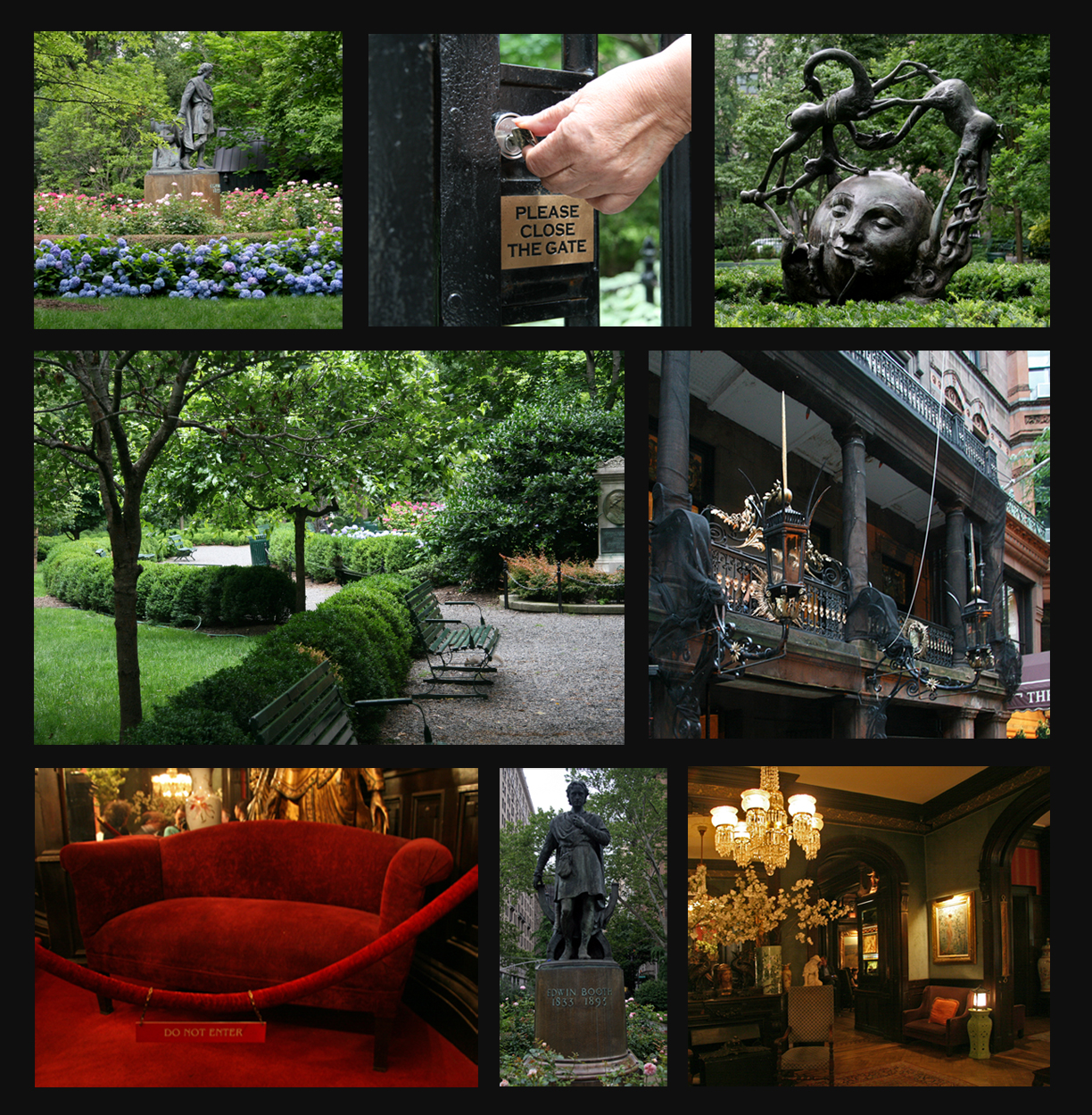
    On April 4, 2008, I wrote Key Privileges, about Gramercy Park – the city’s exclusive private enclave and Manhattan’s only private park. Read the story of the park here. That visit was like that of virtually all New York City residents and visitors – from the outside.

    Recently, a friend, a regular reader of this website and Gramercy neighborhood resident who lives just off the park, let me know that she was in possession of a rare and highly coveted article – a key to Gramercy Park. The key was loaned to her by a friend who was away for a short time, so time was fleeting, and so was my window of opportunity. A number of us were invited for the outing, so we decided to meet at an opening at the National Arts Club on Gramercy Park South.

    The convenient location on the park and a short immersion into the club’s historic structure made it the perfect launching point for our excursion into the park. The National Arts Club, which also abuts the Players Club, is housed in one of New York’s finest mansions, both a designated New York Landmark and a National Historic Landmark. The building, located at 15 Gramercy Park South, is worthy of a visit itself.

    I made a big ceremonial event about the unveiling of the key and the opening of the park gate. Gramercy Park requires a key both to enter and leave. Once inside, we toured the park, spent some time enjoying the extraordinary bucolic ambiance, and alighted on a number of benches for some friendly chatting. See my gallery of photos here.

    All of our group was in agreement, however, that although the park’s landscaping and natural beauty was quite exquisite, the park itself, with its list of don’ts, was rather boring. In fact, the park is not heavily used.
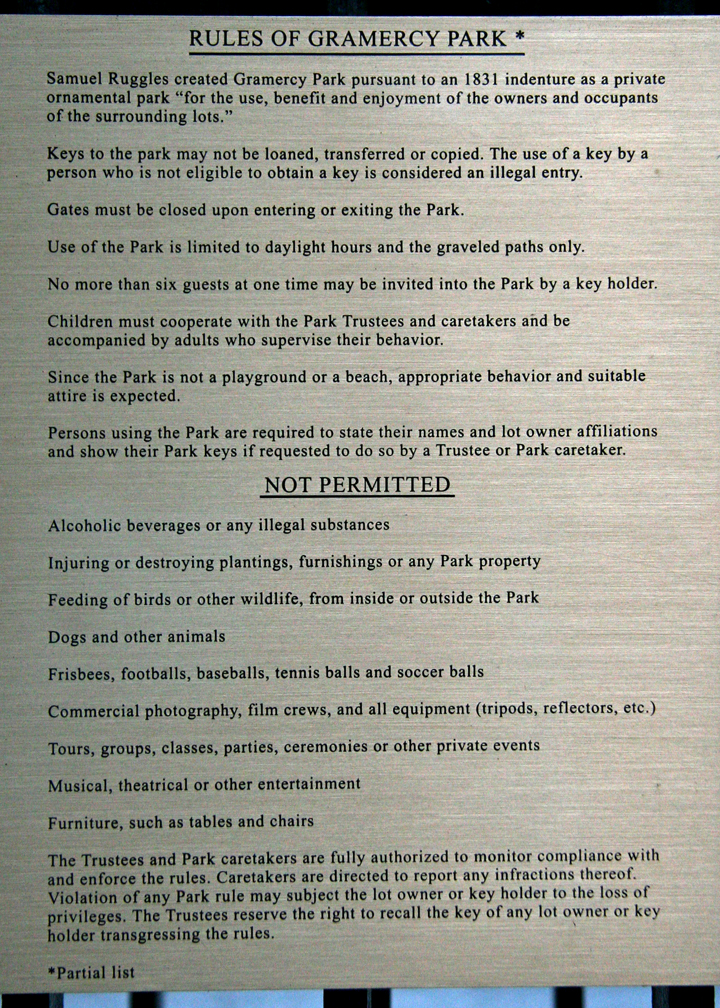
    The list of rules is quite long (see them here). After reading them on our way out and observing a nearby “Please No Pets” sign, one of our group was prompted to comment, “Everything no.” A recent immigrant to the USA, we found her outside perspective and slightly broken English to be a charming, succinct, and not altogether inaccurate characterization of the environment. Smiling, I felt compelled to respond, “Yes, everything no…”

    Posted on by Brian Dubé

  • Explorin’ Part 1

    Posted on by Brian Dubé

    We learned to travel through the forest canopy ala Tarzan (sans vines) by climbing atop young saplings and swinging side to side, gaining enough movement to grab a neighboring tree and cross over. We crossed swamps, jumping from one tufted outcropping to another. We fell from trees and into swamps too.
    We found snakes under hot rocks – we learned that they loved to bask in the heat of the summer sun. We found newts, tadpoles, turtles, and salamanders. We marveled at nature’s iridescence in the damsel fly. We believed in the dangers of a dragon fly sewing your eyes shut, as well as other myths, not knowing they were myths at all.

    My summer days were filled with exploring, from sunup to sundown, until my mother’s call brought me back from the wild. More correctly, I should say explorin’, because that is precisely what we called it – the lack of a “g” conferring a certain sense of casual authority of the experienced adventurer. “Explorin'” was always the answer to the daily “Whataya want to do?”

    Later, I read the wonderful tales of African adventure by Jean Pierre HalletCongo Kitabu and Animal Kitabu. Although my native habitat was not Africa and no real treasures were ever found, it mattered not in the least.
    We made primitive toys and weapons. With crudely fashioned bows that rarely worked, we stalked the woods like Robin Hood. We made kites that would not fly from salvaged fabric and twigs. A string, stick, and small hook was enough to spend a day fishing lost items from below the steps of a basement hatchway. We rolled down hills in reclaimed appliance boxes. There was no particular agenda or mission when explorin’ – just the joy of looking. And we loved the woods best of all.

    These days, although I have yet to travel to the Amazon or Congo, I find New York City serves as a fine place for any Jungle Lover with a hankerin’ for explorin’. There are plenty of woods, beaches, alleys, rivers, lakes, bays, wildlife, and backroads.

    On Saturday, armed with that childhood spirit of explorin’ and on the recommendation of a coworker, I set out to explore a most bizarre place, the result of a strange twist in New York City history. Tomorrow, I will show you what I found on the other side of those dunes in Part 2 of Explorin’…

    Posted on by Brian Dubé

  • Trapped in Paradise

    Posted on by Brian Dubé


    Heaven may not be what you hoped for if you are unable to relax, let go, and appreciate the seraphim and cherubim. Otherwise, you may find yourself like Woody Allen in a taxi in Manhattan – “You look so beautiful I can hardly keep my eye on the meter.”
    I felt very conflicted sitting in the Conservatory Garden – I had an loose agenda for the day, but sitting in this garden just made it nearly impossible to entertain leaving. I was truly trapped in paradise.

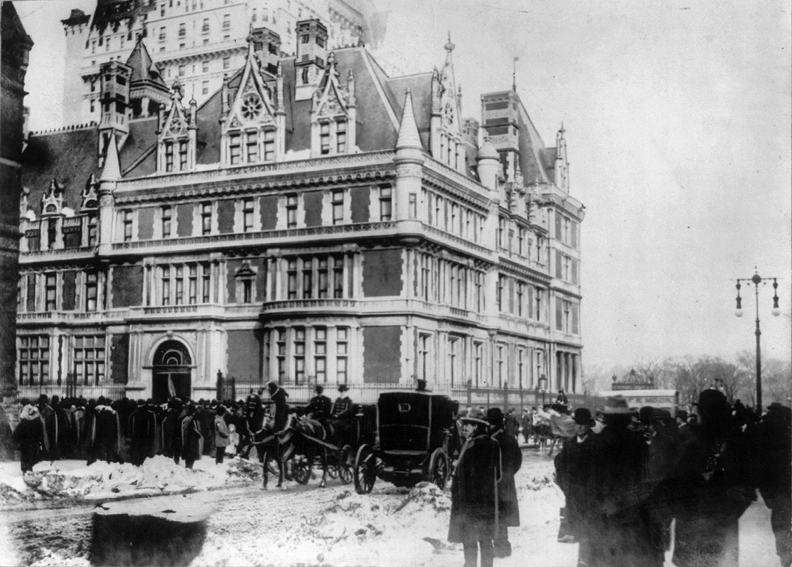
    This is one of New York City’s “secrets” – few will make it this far north on Fifth Avenue. The formal garden was designed by Gilmore D. Clarke, the landscape architect for Robert Moses. The main entrance is through the Vanderbilt Gate at Fifth Avenue and 104th Street. The gate once served as an entrance to the chateau of Cornelius Vanderbilt II, the grandest of the Fifth Avenue mansions (see photo here). It stood at 58th Street and Fifth Avenue near the Plaza Hotel. It was demolished in 1927. The gardens are divided into 3 styles – French, Italian, and English. From the Central Park website:

    Conservatory Garden began as a large, E-shaped greenhouse, or conservatory in 1898. It featured an indoor winter garden of exotic tropical plants and outdoor decorative Victorian flowerbeds. In 1937, the deteriorating structure was demolished and this six-acre formal garden was designed in its place.The Central Park Conservancy began its restoration of the area in 1981, starting with the Garden’s fountains.

    Conservatory Garden is divided into three distinct styles – French, Italian, and English.The northern French-style garden features an ellipse of meandering boxwood and pansies, and showcases spectacular seasonal displays of tulips in spring and chrysanthemums in autumn. In the center is the charming Three Dancing Maidens fountain by German sculptor Walter Schott.The central Italian garden features a wisteria pergola, a large lawn surrounded by clipped hedges of yews, a 12-foot-high jet fountain, and two exquisite allées of pink and white crabapple trees. On the walkway under the wisteria pergola are medallions inscribed with the names of the original thirteen states. The Italian garden serves as a backdrop for hundreds of wedding photography sessions.

    I hope you visit. I’m sure you will enjoy being trapped in paradise 🙂

    Posted on by Brian Dubé

  • White by Desire

    Posted on by Brian Dubé

    I can’t say that New Yorkers have an exclusive on making impractical choices, but examples do abound that give evidence that it is at least a worthy contender in any competition for foolish choices. Trends and fads drive residents of this city as much as anywhere else, where it often seems that displays of extreme lack of sensibility is its own form of rebellion.

    And what better way for some to display that defiance by sporting a large dog with roots from a climate completely antithetical to that of New York City? Breeds inappropriate in any number of ways for city life, or ones requiring extreme maintenance.

    I recall the 1980s, when the Shar Pei, with its heavily wrinkled skin, was all the rage. Rapid breeding resulted in many health problems, such as allergy-induced skin problems. Many required eye surgery, with some owners seeking the skills of a eye surgeon for people. I rarely see the Shar Pei here any longer. Akitas were also quite popular at one time. Now I often see the Shiba Inu, a small hunting dog from Japan with a cute, foxlike appearance.

    On Sunday, I met Sofie, a beautiful, cheerful, friendly Samoyed – a breed originating from Siberia that is a nomadic reindeer herder. They have a dense double coat, which means lots of hair shedding. They are very youthful, energetic dogs with a desire to pull sleds and a love of the cold. Perfect for the Manhattan apartment resident, n’est-ce pas?

    Their cheerful nature and beautiful white coat, for many, outweigh any practical considerations. The breed’s ear-to-ear smile has given the Samoyed its alternate name, “smiling sammy.”

    In fairness, after speaking to the owner, I found that Sofie is very well cared for. It is possible to keep a dog like this healthy and happy in a New York City apartment with work, and many pet owners are ready, willing, and able to do whatever is necessary.

    Samoyeds are extremely well-insulated. Sofie actually loves sleeping in the snow. In their native environment, Samoyeds kept their owners warm at night by sleeping on top of them. The dog’s owner told me that once it begins to get warm at all, she runs her air conditioning 24/7.

    I was surprised to learn that early Samoyeds also came in black – white has become dominant due to popularity. If not for the constant care and responsibility, I could easily fall for the cheerful charm of the Samoyed. I, like many others, do love that white color, and the Samoyed that we see today, more than White by Design, is White by Desire 🙂

    Note: For lovers of white, see my stories White by Design, White by Design 2, and White by Design 3.

    Posted on by Brian Dubé

  • Quite Refreshing, Really

    Posted on by Brian Dubé

    I am not sure that I buy the idea that “opposites attract,” a phrase often used to defend the pairing of individuals who go together like salt on a wound. On the other hand, I once had a conversation with a friend which I will never forget.

    This individual was very meticulous in his work – he was known for precision in both his practice routines and performance. I also understood that he was very tidy in his personal life. He had lived in a number of places and was a recent transplant to New York City, a place that did not seem very fitting to his temperament.
    One evening, standing in the vestibule of my apartment building, we did some catching up, and he told me why he had moved to the city – for a woman. We exchanged notes about relationships and the difficulties in people accommodating each others styles. The subject quickly turned to living habits and neatness. Knowing this man’s style, I was assured that his girlfriend was like himself.

    However, I was shocked to learn that she was nothing of the kind. She was, in fact, an absolute mess, disorganized, and forgetful. I asked him how he could possibly tolerate living with a woman like that, and his answer was just riveting – “I find it quite refreshing, really.”

    This had a profound effect on me, and subsequent to that conversation, I noticed how being around someone who was easier about the minutiae of life could often be liberating. This is not always successful, of course. I am reminded of the film The Way We Were, where the ability of two very different people (Robert Redford and Barbra Streisand) to get along is painfully tested and results in a parting of ways. In the end, Redford explains that his decision to separate is due to their different styles.

    Having the ability to let go is of tremendous value in a place like New York City. This is not the most hospitable environment for control freaks or perfectionists who want things just so. The city is built on diversity – the beautiful and ugly, the noisy and serene, the rough and polished, planned and spontaneous events. Anyone hoping for a pristine environment conforming to his or her wishes, obsessions, or compulsions is in for a trying time and neuroses. You will be tested at every turn. Give a little, and whether you are looking at violet Veronicas or in the subway, you might find the city’s diversity quite refreshing, really 🙂

    Confession: Today’s posting demonstrates only a half step to full abandon. At one time, I would have felt compelled to know the exact species of plant in this photo, which I do not. However, I did not feel comfortable letting the photo stand on its own without identifying the flowers, so I did email today’s image to a friend and regular reader of this blog to at least get the genus – Veronica, aka Speedwell. The bed of flowers is located in Washington Square Park.

    Posted on by Brian Dubé

  • Lost in that Wool

    Posted on by Brian Dubé

    Please click to play the waltz, Lost in the Lonesome Pines, to accompany your reading.
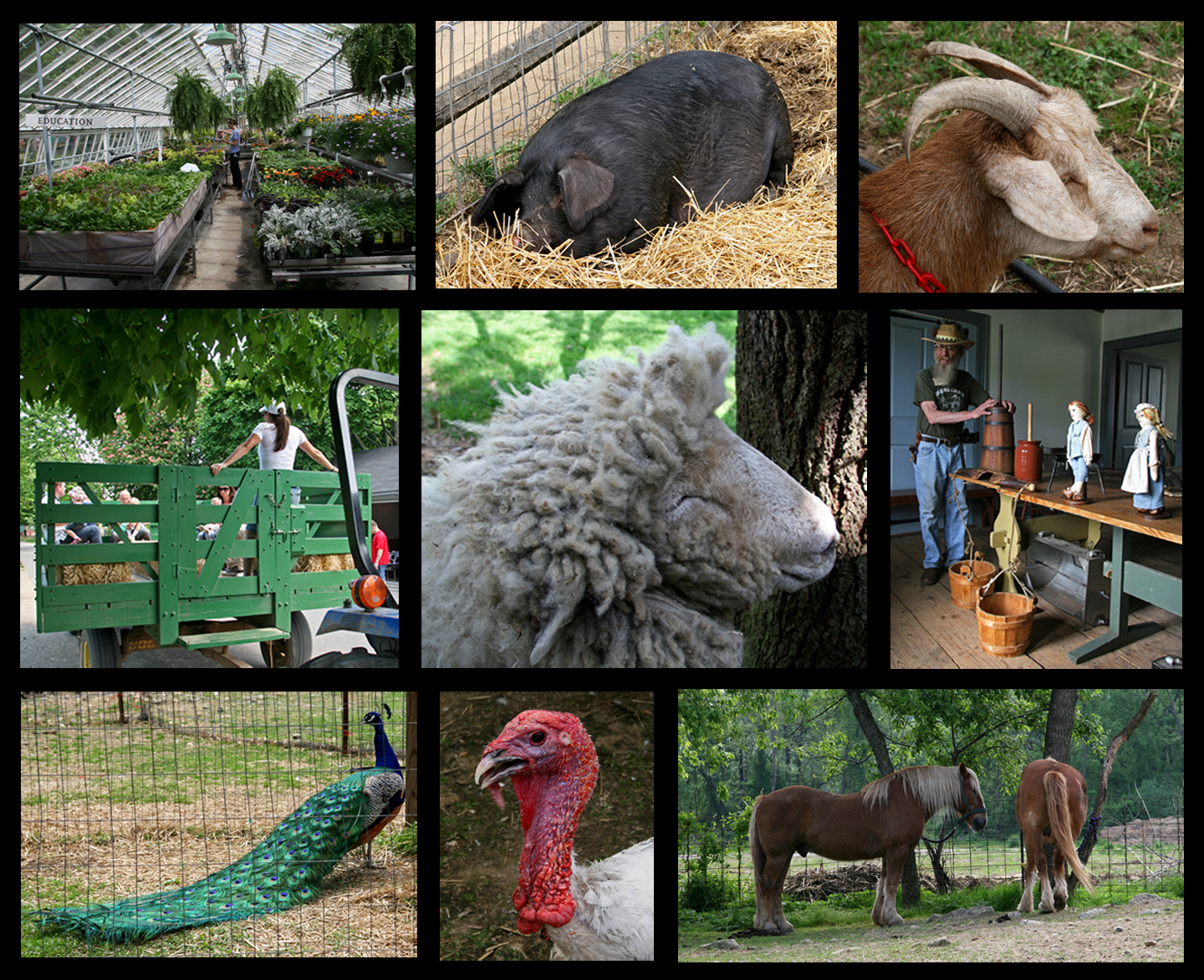
    Want to take a hayride? Mingle with sheep, goats, chickens, cows, horses, peacocks, pigs, and geese? In New York City? No, this is not a petting zoo.

    Welcome to the Queens County Farm Museum, New York City’s largest remaining tract of undisturbed farmland. A working farm dating back to 1697, it encompasses a 47-acre parcel that is the longest continuously farmed site in New York State. The site includes historic farm buildings, a greenhouse complex, livestock, farm vehicles and implements, planting fields, an orchard, and herb garden.

    We had a free tour of the Adriance Farmhouse with our guide, Mister Marty. Flemish-styled, the house dates to 1772 and is the centerpiece of the farm complex.

    And everything is free – tours, hayride, butterfly garden, and cavorting with the animals. This place came as a huge surprise. I had heard vagaries about a farm somewhere in Queens. Actually, this place is right on a major thoroughfare – 73-50 Little Neck Parkway in Floral Park. It is open 7 days a week, all year. There is admission only on days with special events. See the farm museum website here.

    I always relish the opportunity to pet sheep. I had competition with others, however – there was a group of us jockeying for position to get lost in that wool 🙂

    Posted on by Brian Dubé

  • Enchanted April


    Please click and play audio link to accompany your reading.

    I will never forget one particular scene in the film Enchanted April. Four women from England in the 1920s decide to leave the damp and rainy climate of home for a vacation on the coast of Italy, only to arrive to a rain more hellish than what they left behind.

    However, one morning, unbeknownst to them, the rain has finally stopped, and when they throw open the shuttered windows, they are just flooded with light and witness the most stunning scene of natural beauty imaginable. I recall seeing this in the theater, seated relatively close to the screen and nearly having to shield my eyes from the brilliant light after my eyes had adjusted to the dark, dreary, and rainy start of the film.

    One of the banes of New York City life is the window unit air conditioner. In a city with such an inventory of older buildings, window units are the norm, even in very large multi-story buildings. Look up when you are walking the city, and you will see an abundance of these unsightly, ungainly, and noisy metal boxes hanging from windows everywhere. Tying up windows with air conditioners is particularly egregious in the city since most of us have few windows to begin with and spend most of our time in one or two rooms.

    Also, the vast majority of windows in New York City are the standard up/down double hung style. French windows are a rarity, even in smaller historic townhouses. I am extremely fortunate in this regard. However, my windows were in extreme disrepair, and two out of three were encumbered with window unit air conditioners. Recently were my windows replaced and my window A/C units removed. I have full access to all the sashes and can open my windows completely.

    So if you want to reenact and relive that scene with me, let me throw my windows open for you today and give you a peek at a New York style Enchanted April 🙂

    For other views of the seasons outside my window, see White by Design 2, Wood, Glass, Brass, and Trees, and Signs of Summer.


  • La Vie En Rose

    Note: Please click and play audio link to accompany your reading.

    One of my fondest memories was seeing the Cherry Blossom festival in Washington, D.C. as a child. This was my first big family vacation, and to be in Washington on a perfect spring day with pink blossoms everywhere and a parade with all the stately buildings in marble as backdrop was just exquisite.

    Pink is not a color typically associated with New York City – the color pink has had a large number of associations in the course of history.  At one time, pink was considered to be a color associated with boys and blue for girls. More recently, pink has been associated with negative gender stereotypes, so a city that prides itself on being edgy, dynamic, and fast-paced is not going to embrace pink as the school color. If you had to choose a color to represent New York, black would come to mind before pink.

    But what can elevate the human spirit more than flowers and pink blossoms on a spring day? What can be a better palliative for what can at times be a hostile and caustic environment?
    Not to worry, however. New York City has pink if you want it. See my story and photos here about the Pink Ladies.
    If you want pink blossoms, you can find them here too. On April 25, 2007, I wrote about the Sakura Matsuri cherry blossom festival (May 2 & 3), a weekend celebration, and Hanami, a month celebration of the Japanese cultural tradition of enjoying each moment of the cherry blossom season (April 3- May 2). See more information here.

    Secretly, I think many New Yorkers love pink but posture to only show a passing appreciation for perhaps a blossom or flower. One solution is to deliberately wear pink in spite of any consideration that it may be too benign – in itself an act of rebellion. However you have to do it, why not, at least for now, enjoy La Vie en Rose? 🙂


  • The Total Call

    Posted on by Brian Dubé

    There are things that are iconic about certain places – the Eiffel Tower, the Great Pyramid of Giza, the Great Wall of China, the Empire State Building, the Taj Mahal, Stonehenge, the Colosseum, or the Grand Canyon. Some things which are emblematic involve natural phenomena that may require special conditions and a particularly unique vantage point. These things are often seen in photos and rarely seen in person by the visitor, like the Golden Gate Bridge and San Francisco draped in fog.

    San Francisco is notorious for its fog and its myriad of variants around the city and its neighborhoods, with one of the most unique climatic conditions in the world. Known for its microclimates and submicroclimates, temperature conditions can vary by as much as 9°F (5°C) from one block to another. One neighborhood can be sunny and warm, another foggy and cool.

    On one vacation to San Francisco many years ago, on the recommendation of a native (see Weather Means Whether), I traveled north over the Golden Gate Bridge to Marin County to hike to the summit of Mount Tamalpais, the tallest hill in the county. Marin County is known for its natural beauty, protected natural environments, and spectacular views of San Francisco and the Golden Gate Bridge.

    On this day, I was extremely fortunate and was rewarded with one of the most spectacular things I have ever seen. Fog, as thick as a blanket, completely covered everything in view except for the uppermost sections of the two towers of the bridge.

    Observing this next to me was a fellow hiker, to whom I commented about this spectacular event. He responded, in a slightly hushed voice, with slang completely unfamiliar to me, “It’s the move, man, it’s the total call.” I had never heard the words “move” or “call” used in that way, but his intonation had an air of biblical gravity, and perhaps, not unlike Genesis 1:31, assured me that it was very good. I heartily agreed.

    Fog in New York City is much less common, and we certainly do not get the spectacular conditions seen in San Francisco. Recently, however, when driving on the Belt Parkway in Brooklyn, an unusual temperature drop and high humidity gave rise to an extremely dense fog, at times almost completely obscuring the Verrazano-Narrows Bridge, in conditions somewhat the inverse of the classic Golden Gate Bridge phenomenon. On July 8, 2008, I wrote about the Verrazano using photos taken under foggy conditions, but not nearly as heavy.

    Capturing today’s photos was particularly problematic, driving alone on an expressway with only a point-and-shoot camera. But opportunity was calling, so I took this photo blind with my arm extended up through an open sun roof.

    I hope someday you get to see the Verrazano Bridge like this. And I am sure you will agree that it’s the move, man, it’s the total call 🙂

    Posted on by Brian Dubé

  • New York City’s Brand

    Posted on by Brian Dubé

    If you were in Midtown Manhattan on a spring day, it would be easy to find no signs of spring other than air temperature and changed light. But as far as birds, bees, grass, flowers, trees, and any other living testaments to nature’s seasonal exuberance, you need to look further afield from the concrete jungle that my high school guidance counselor was apparently quite familiar with (see Jungle Lovers here).

    There are parks where nature reigns – Central Park, Prospect Park, Van Cortlandt, et. al. And there are neighborhoods and streets where nature shines. But, like most other living things in New York City, certain plants (and people) do much better than others. So, in aggregate, the city has its own brand of nature, often dominated with plants that are hardy survivors, such as the London Planetree, or the Callery Pear seen in today’s photo on lower Fifth Avenue in Greenwich Village looking north to the Empire State Building.

    A city and its people define its environment. And here, even Mother Nature yields to New York City’s brand …

    Related Posts: Spring Madness, Verdant Oasis, Spring Fever, Conflicted, While It Lasts

    Posted on by Brian Dubé


  • dinamic_sidebar 4 none

©2026 New York Daily Photo Entries (RSS) and Comments (RSS)  Raindrops Theme