• Category Archives Homes and ‘Hoods
  • This Hood is a Done Deal

    I recall a conversation many years ago with an artist who lived in Brooklyn and said that she found Manhattan over gentrified and fundamentally uninteresting. I was angry, defensive, and took this as sour grapes from someone who was not fortunate enough to live in Manhattan. After all, Manhattan was a mecca for so many human endeavors and the center of the universe, was it not?

    Unlike the stereotypical Manhattan resident, I have visited Brooklyn and Queens often. And, over the course of the last six years that this website has been in existence, I have spent much more time in the outer boroughs, exploring and canvassing for subjects and potential stories. Now, in fairness, I must admit that the cultural brew in Brooklyn and Queens feels much richer than that of Manhattan, which has become more much more business and tourist oriented. If you seek an authentic New York and ethnic enclaves, the outer boroughs are where you must go. Neighborhoods such as Jackson Heights, Astoria, Richmond Hill, or Flushing in Queens and Borough Park, Sheepshead Bay, or Bay Ridge in Brooklyn have virtually no parallel in Manhattan, save Chinatown. In these neighborhoods, you will find a variety of merchants and restaurants catering to the local ethnic groups.

    Regardless, Manhattan residents are a remarkably and classically xenophobic bunch, so you know things have changed when Manhattanites start traveling to Brooklyn and Queens for cultural and recreational activities. There are plenty of good reasons: the Brooklyn Museum, the Mermaid Parade, Coney Island, Dead Horse Bay, Floyd Bennett Field, the Queens Farm, the Queens Museum, Flushing Meadows – Corona Park, and perhaps one of the biggest draws and hottest neighborhoods in the five boroughs, Williamsburg.

    You know things have really changed when, on a weekend, one Manhattanite runs across the dyed in the wool East Village icon, David Peel, in Williamsburg, Brooklyn, who both have crossed that river into another borough looking for a change of pace. Walking down Bedford Avenue, the main commercial artery of Williamsburg, I spotted David in a local pizza parlor, wearing his signature John Lennon-styled sunglasses.
    The neighborhood has gone through remarkable transformations and even has a lively street scene with street performers, unusual outside of Manhattan. David knows me from our frequent meetings in Washington Square Park as well as the stories I have done including him as a subject. I spoke to him briefly about the irony of meeting in Brooklyn. He showed little surprise at all, knowing that Williamsburg was obviously the place to be. After all, New Yorkers love the hot new place and This Hood is a Done Deal 🙂

  • Another Time

    Posted on by Brian Dubé

    Every year, I miss or almost miss my favorite street fair. It is located arguably in the most bucolic setting in Manhattan – in the West Village, occupying Commerce, Barrow, and Bedford Streets between 7th Avenue South and Hudson Street. There are hundreds of street fairs annually in New York City. However, most of these are run by corporate entities. In 2007, I wrote about these fairs:

    This is the typical NYC street fair. To the uninitiated, it looks like fun. However, after doing a few of them, they are very boring. The problem is that you see the same vendors at virtually every fair, most of them of little interest – socks, gyros, small tools, bedding, Peruvian sweaters, imported crafts, CDs, smoothies, T-shirts, etc. The residents I know mostly ignore them, perhaps getting an occasional snack. A recent research group put it perfectly: “The fairs had lost all sense of novelty, catered too heavily to out-of-town vendors and failed to showcase the work of entrepreneurs and artists based in the five boroughs…The worst part is that they are uniformly bland.”

    Nothing much has changed. I typically avoid these fairs, yearning for something of quality.

    On Saturday, May 19th, I attended the 19th Annual BBC Village Crafts Fair and the 38th “Ye Olde Village Fair” – it was just the antidote to the street fair blues.
    The fair is sponsored by the Bedford Barrow Commerce Block Association (BBC), the oldest and largest block association in Manhattan. It has over 300 members and is easily one of the most active community organizations in New York City. Their efforts include tree plantings, historic building plaques, and the Annual Hudson River Boat Ride.

    One of the keys to the quality of merchandise sold at the fair is that participants are juried, something that New York City fairs could use more of. Left unchecked, street fairs end up pandering to the lowest common denominator – fast and easy money selling schlock.

    In past years, tables were set up for dining. Wine was served – a rare and extraordinary thing in New York, particularly to manage and prevent drunken revelry ala Duval Street in Key West, Florida. There is live music, fresh lemonade, and homemade ice cream. Vendors of quality crafts line the tree-shaded streets. This year’s festival was also blessed with absolutely perfect weather. I was transported to Another Time 🙂

    Posted on by Brian Dubé

  • An Exit Marked Memory Lane

    Do you want to look like a hero and everybody wins? It’s so easy. Just take a friend or two on a trip down THEIR memory lane, touring the special places of their youth. On January 11, 2012, I went on such a trip through East New York, Brooklyn, driven by an old friend. But now, I was to be the driver and guide.

    This was my unplanned agenda for Easter Sunday (after the Easter Parade), when I accompanied a friend and her mother to Bay Ridge, Brooklyn, for Easter dinner. Before dinner, we decided to take advantage of the extraordinary weather in the mid-60s and see the places of my friend and her mother’s where they were born and had grown up.

    This type of mission is not about efficient driving, nor will it necessarily be a tour of the scenic or architectural wonders of New York City. It will be punctuated by stops that have deep meaning only for your guests being toured and for the small number of others who at one time shared the same addresses.

    I accommodated every twist and turn, circling and back tracking, zigging and zagging, providing chauffeur services – convenient for them and enjoyable for me, since I was at one time a New York City taxi cab driver. Patience is required for such a mission, since often only foggy or partial memories are available as a guide to locating addresses. There were places which were of zero difficulty to locate, such as my friend’s former grade school, P.S. 102, and the church where her parents married, Our Lady of Angels.

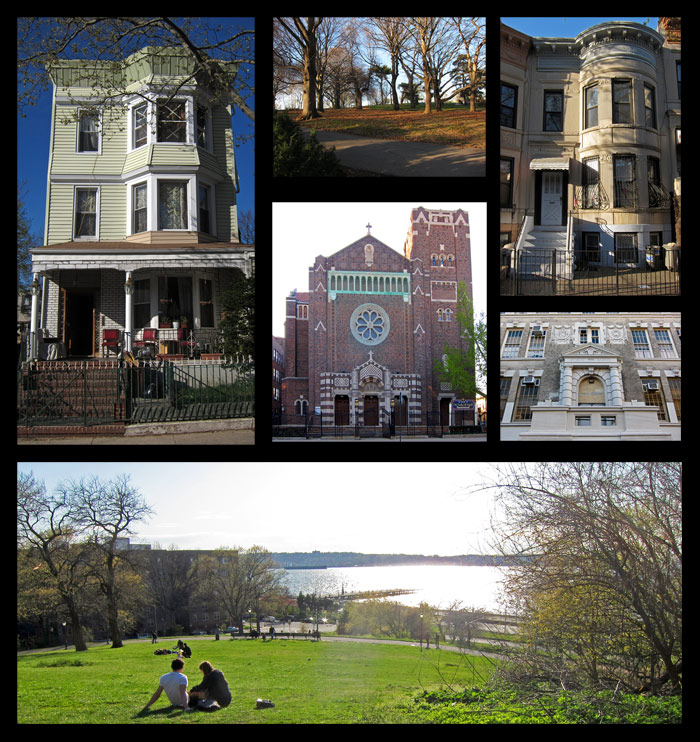
    A special treat was Owl’s Head Park, a place which I had heard about and driven by but never actually walked in. This was special for my company, too, since my friend’s mother had taken her there as young as when she was one year old, their residence only one-half block away. The waterside park affords vistas of the bay of New York, the Verrazano Bridge, Staten Island, Memorial Pier, and the skyline of Manhattan. We took in the views while basking in the warm afternoon sun setting over the bay.

    Other stops were the former homes of parents, grandparents, brothers, and sisters – this is an Italian family with deep roots in this section of Brooklyn. Some exact addresses were known. For others, we became Big Game hunters, tracking our quarry. Details of buildings were examined, proximity to other buildings and shops, all with a singular goal – to identify with absolute certainty that, yes, THAT’S the place.

    Like a modern African safari, our trip through the urban jungle was to see and shoot our game with eyes and cameras only. Once positively identified, we would sit and look as my guests would ooh, aah, and reminisce. And that is how I spent my Easter afternoon. Starting on the highways of New York City, I watched the sign posts, looking for An Exit Marked Memory Lane 🙂

    Related Post: Wherever You Go, There You Are


  • Childhood Dream


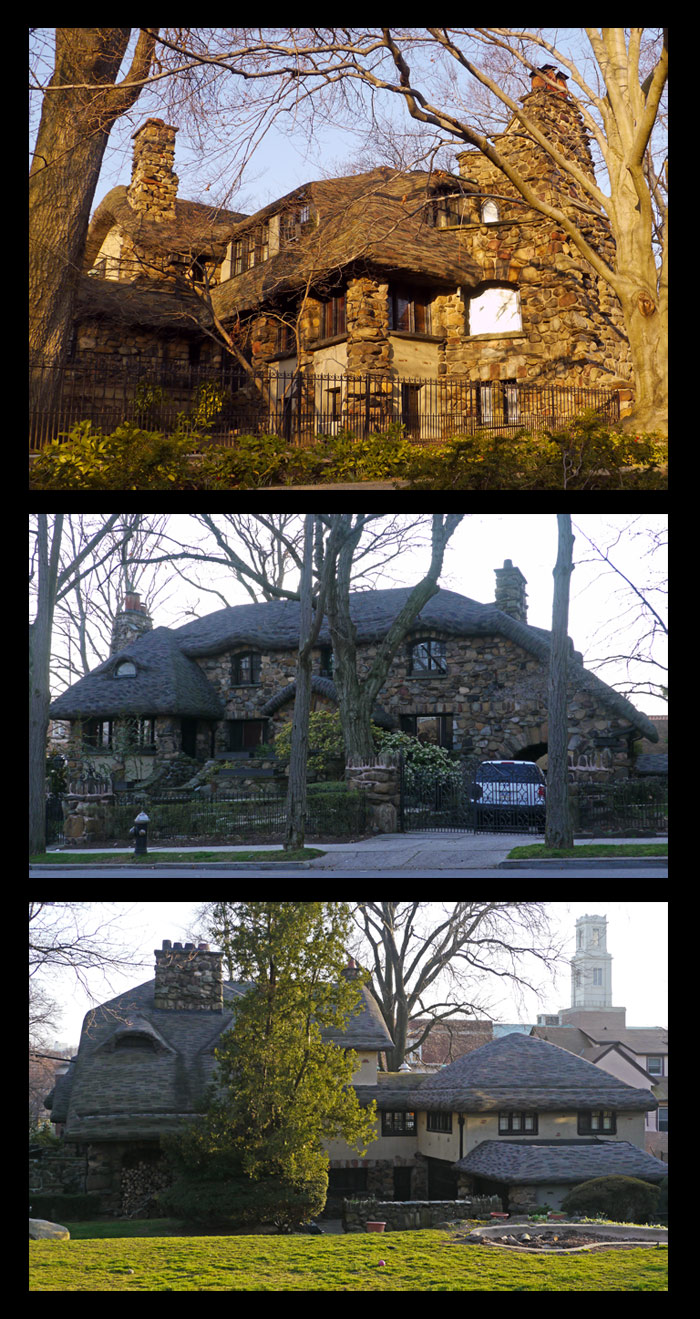
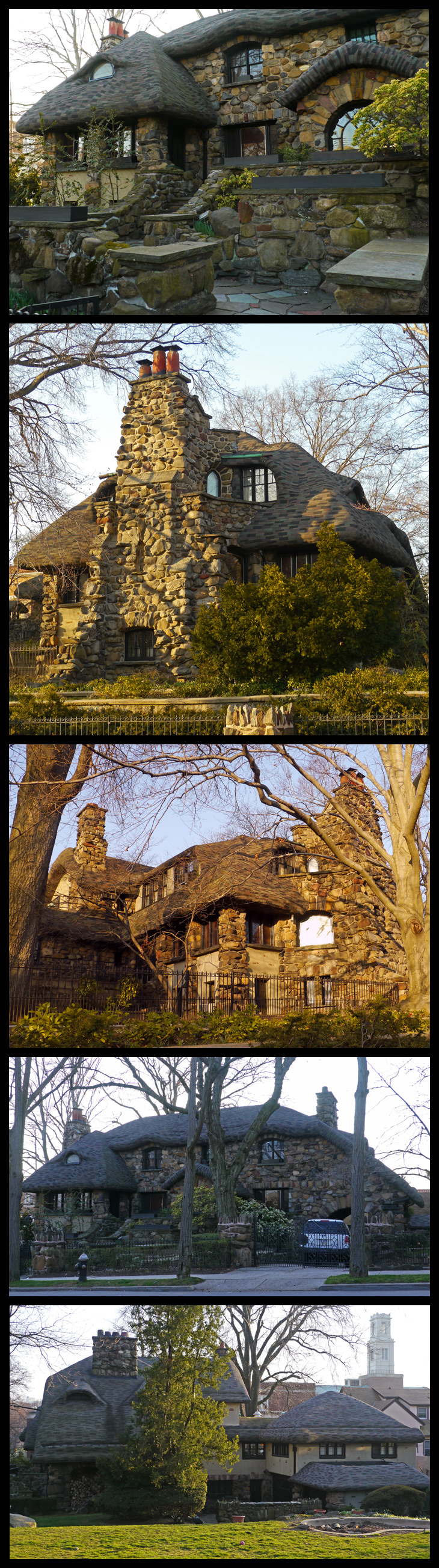
    She said she wanted to find the “mushroom house” she knew as a child, a very special place where her father often took her growing up in Bay Ridge, Brooklyn. The memories of childhood are clouded and skewed, and I doubted that we would find such a house or, if we did, how long it would take. But her instincts were good, and what I truly anticipated to be a long and likely fruitless search mission turned out to be a very quick drive, almost like she was guided by a secret hand straight to our destination.

    But nothing would prepare either of us for what we saw. As I turned up 83rd Street and pointed out a “nice” house, she cried for joy, “That’s it.” It was much larger than her memory served her, and she was elated, to say the least. The home is extraordinary and, as I surmised, no secret at all. It was designated a historic landmark by New York City’s Landmarks Preservation Commission. It is known internationally and referred to variously as the Mushroom House, the Witch’s House, the Hansel and Gretel House, and, most commonly, The Gingerbread House. The AIA Guide to New York City calls it:

    A mansion disguised as a witch’s hideaway. Black Forest Art Nouveau. Bumpety stone and pseudothatchery make this Arts and Crafts revival one of Brooklyn’s greatest fantasies.

    The mansion sports 6 bedrooms and 6 baths and is 5743 square feet and sits on 10 acres – unfathomable for New York City. It is constructed of uncut stone. The roof, with its rolled edges, is covered in special asphalt shingles the color of thatch, recalling the thatched roofs of English country manors. Inside, it exudes old world charm with beautiful woodwork, pictorials set into walls, enormous fireplaces, and decorative elements using medieval stained glass from Europe.

    The home is located at 8220 Narrows Avenue and spans between 82nd and 83rd Street. It was built between 1916-17 for Howard E. and Jesse Jones House and designed by James Sarsfield Kennedy. Howard Jones was a shipping tycoon, president of James W. Elwell & Co. and also a director and later vice president of the Maritime Association Board of New York. The house has changed hands only a few times and made big news when it was put up for sale in 2009 for $12 million dollars by the owners, Jerry and Diane Fishman, who lived there for 25 years. From the New York Post:

    But Jerry Fishman said it has held a fairy-tale-like spell over him his entire life growing up in the neighborhood, where he was born and raised. “My mother used to push me in my stroller past the house and one time I got out of the stroller and tried to get into the house,” recalled Fishman, 62.

    When he was a student at Fort Hamilton HS — across the street from the Gingerbread House — Fishman said he would sit in his English class staring out the window at the house as if in a trance. “My grades suffered,” he recalled. And on his first date with Diane, Jerry remembers driving her by the home and telling her, “One day I’m going to own that house.”

    And he did. From the Wall Street Journal:

    Mr. Fishman, who grew up two blocks away from the house in the Bay Ridge neighborhood, had his eye on the house all his life. “As the legend goes,” he says, “I knew of this house when I was six months old, and I was attracted to it like it was candy.” As he got older, his fascination with the Arts and Crafts-style house only grew. “I would walk by it, drive by it on purpose just to look at it,” he says. His first date with his future wife, Diane, included a drive past the house and a vow. “I told her, ‘I’m going to own this house,” says Mr. Fishman, now 61.

    Built around 1917 when Bay Ridge was, as the New York Post puts it, “an oceanfront getaway for the city’s rich and famous,”  the Gingerbread House has only changed hands a few times. In 1980, just after the Fishmans bought a home nearby, it came on the market. “We ran over here, and we looked at the house,” Mr. Fishman says, But he was disappointed. Two elderly women had lived in the home since the 1930s, Mr. Fishman says, and many sections of the home needed extensive work that he and his wife could not afford at that time.

    When the home came on the market again in 1985, they pounced, even entering a bidding war. The day the Fishmans closed on the house, paying under $1 million, “was the most memorable day of my life,” Mr. Fishman says. “We had the Gingerbread House.”

    The Fishmans sold the house in order to relocate near their parents in Florida. The fairy tale home that cast a spell on at least two people from childhood. For them, the chapter is finally closed – Jerry Fishman and my friend both found their Childhood Dream 🙂

    More homes: Big Secret on Little Street, Love Is All Around, Part 1, Grisly Business, Todt Hill, The Feeling Passes, Head for the Hills, All the Way…, Affront to Dignity, Manhattan Beach, Itsy Bitsy, Bloomberg, Terrapin Chelsea Art Gallery


  • A Furrowed Brow

    Posted on by Brian Dubé

    I was walking with two friends, touring them by what I felt was the most beautiful prewar building in Greenwich Village: 43 Fifth Avenue. This architectural gem is a grand and elegant 1903 Beaux-Arts building which sports a distinctive mansard roof. The property just screams PARIS. I have learned that this building is not just my little secret but also, in fact, highly coveted. There is little turnover/availability of apartments, and a number of celebrities, past and present, have called it home.

    At the time, an entire floor was available at the unfathomable price of $17 million dollars (reduced from $25 million). That’s a lot of money for an apartment. It does however, buy you 13 rooms – 5 bedrooms, 4 1/2 baths, and everything imaginable, even with a recording studio.

    On the same evening, we strolled down my favorite block in the center Village: 11th street between 5th and 6th Avenues. As my friend Bill, also a long-time Village resident, and I concurred on the number of reasons that made this block special, a For Sale sign appeared for a small, exquisite townhouse. I joked that he and I would be buying the building in partnership, splitting the floors, and that he look up the price immediately on his iPhone. A quick search of the broker’s listing returned the bad news very quickly: asking price, $14 million for the small townhouse.

    And so it goes in Manhattan. Many non-city residents, accustomed to the idea of owning a house, are unaware that this cornerstone of the American Dream – private home ownership – is essentially unattainable here except for a very few who are able to come up with 10-40 million dollars. Even in the outer boroughs, single-family homes are quickly becoming unaffordable for any except the very well heeled. With few apartments currently under one million dollars in Manhattan, these prices for entire townhouse should come as no big surprise.

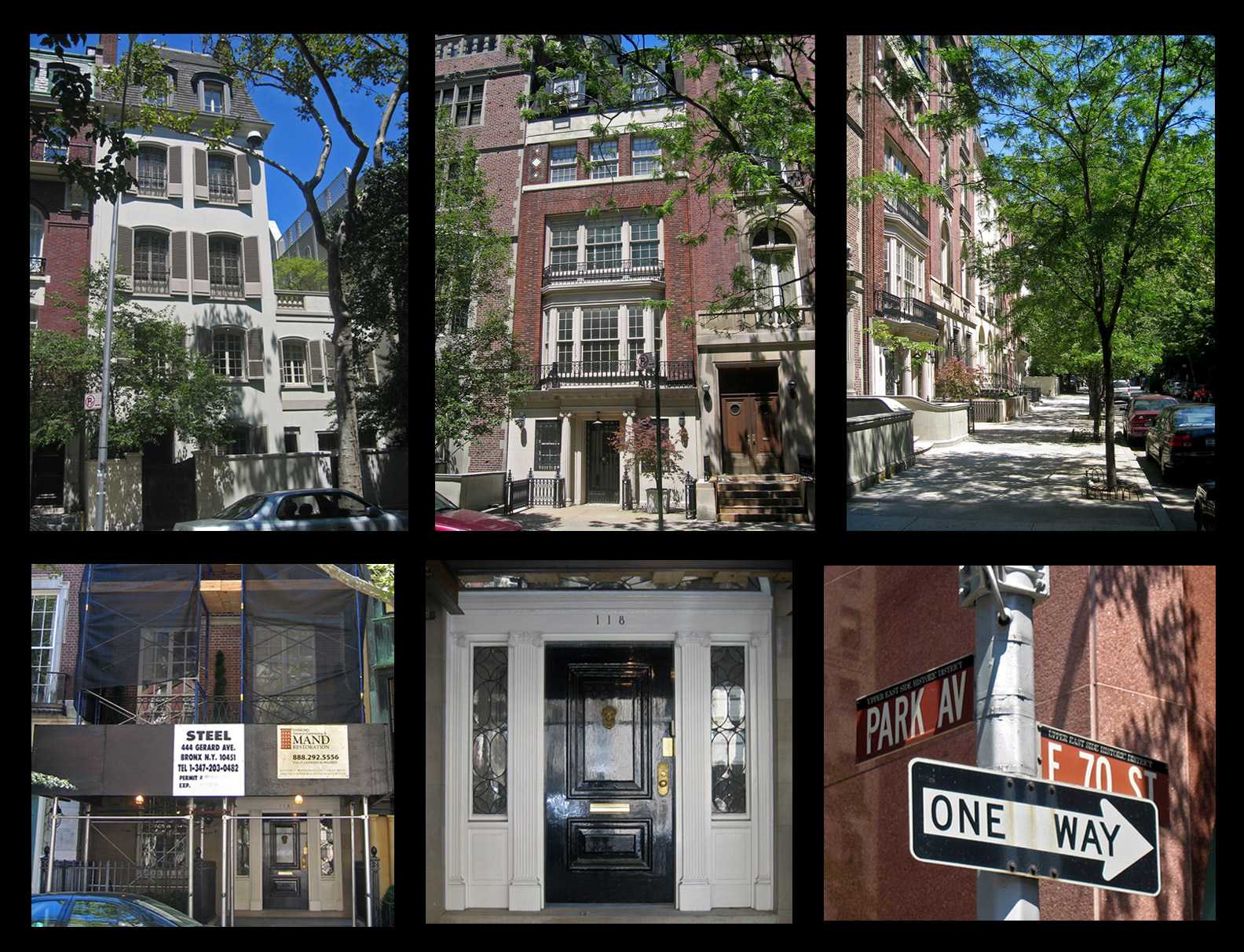
    So sales of these homes have become newsworthy events, often purchased by notables. Spending time at the Central Park boat pond years ago, I learned that Woody Allen had decided to join the ranks of home ownership, making the move from a Fifth Avenue penthouse apartment to the purchase of a property at 118 East 70th Street. From a Streetscapes article by Christopher Gray of the New York Times:

    In 1939, Fortune magazine called it “probably New York City’s most beautiful residential block,” and Paul Goldberger, in his 1979 book, “New York: The City Observed” (Random House), described it as having “a perfect balance between individuality and an overall order.”

    Regarding the property purchased by Woody Allen in 2006 for $26 million:

    The neo-Georgian house at 118 East 70th was designed by Trowbridge & Livingston in 1900, with a spectacularly wide fanlight; the rippling surface of the glass dances and glistens in the sun.

    So I toured the block in 2006 to see for myself what all the hoopla was about and why this one city block, between Park and Lexington Avenues, has been considered by some to be one of New York City’s finest. Today’s photos are from that visit. At the time, construction was under way on Woody’s house (lower left and center photos).

    I know what many of you are thinking. Manhattan is a very nice place, and 70th Street looks like a very nice block, but $26 million for a small house? Even as a long-time resident of New York City, and inured as I am to the lust for this borough and stratospheric prices, I share A Furrowed Brow 🙂

    Related Posts: Old New York (Part 1 and Part 2), The Feeling Passes, When Worlds CollideAir Rights, 121 Charles, Grove Court, The Dakota, Kerbs Boathouse

    Posted on by Brian Dubé

  • High Noon

    My tagline for this blog avoids a few very applicable cliches. It could easily read something like “New York City – a place of contrasts and juxtaposition.” True or not, it’s one of those claims that many want to make. I cannot argue that New York City leads the world in contrasts; travelers to places like Egypt speak of the extreme contrasts unknown in the United States, such as disembarking from a plane and seeing the pyramids of Giza, or camels and limos in the streets of Cairo.

    In the United States, we cannot compete with contrasts based on age. However, in New York City, there are remarkable cultural and ethnic pockets, with shops and services often juxtaposed in startling ways. Looking into my vault of photos, I found today’s images from July 2011, when I paid a visit to Woodside, Queens.

    On or near 55th Street, in two short blocks, you can have you taxes done, bookkeeping, find a notary, pray at the local Masjid Fatima mosque, or get your fresh fowl at the Bismillah Live Poultry. From their website:

    We are in business since 2002. All our poultry items are slaughtered Under Muslim rules & regulations (100% Halal). We are a proud member of Shariah Board of USA. All our chicken are naturally grown, no hormone or steroids used and they are tested by USDA.

    In this industrial warehouse district, you will also find Sapori d’Ischia, an Italian foods retailer that becomes a highly regarded restaurant at night. ABC has a rental facility there, as well as Saks Fifth Avenue.

    The live poultry business is always the biggest shocker for me to see in New York City. When I started this blog in 2006, I was particularly driven to show things of dramatically disparate natures. I had recalled passing a live poultry dealer on the Lower East Side, and one of my first postings was of a Live Poultry Market on Delancey Street, which I believe is now closed. At one time, there was even a live poultry dealer in the South Village, only blocks from my home. These things are often taken for granted at the time, and once gone, I begin to question my own memory of something so seemingly out of place in Manhattan.

    As I explored the streets of Woodside that Sunday in the hot summer sun, there was very little activity, even by locals. The streets were deserted. Some of the backroads hearkened to the Old West. At any moment, I expected tumbleweed to blow through, had there been a breeze. And maybe out of that New York-styled Wild West would be our own Wyatt Earp, just back from Masjid Fatima toting a sixshooter on one hip and live poultry from Bismillah on the other. And that’s New York City at High Noon 🙂


  • Pirate, Part 2

    (see Part 1 here)

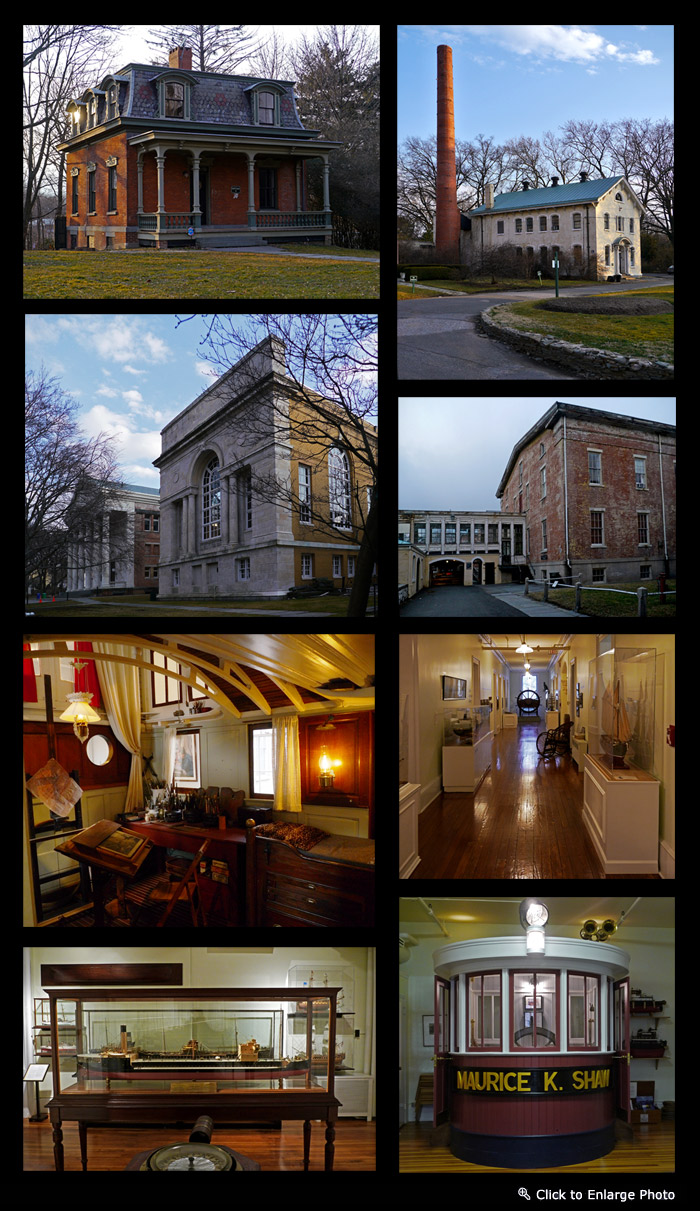
    When I arrived at the Sailors Snug Harbor, it was late afternoon. It was quiet, with no rush or crush of visitors. I was virtually alone on the 83-acre property. There was a sense of authenticity, much like Richmond Town, another historic site on Staten Island which had come as a huge surprise to me.
    There is collection of historic buildings on the site, however, time was fleeting. I made a quick tour by car, parked, and walked to the Noble Museum.

    I approached the entrance of museum, reading the posted hours. There were only fifteen minutes before closing. Ringing the bell was required for entry. An elderly gentleman appeared. Rather than admonish me for being so late or turning me away, he appeared quite easy, letting me know that I did have fifteen minutes.

    As I explored the magnificent building and pristine exhibits, he accompanied me for much of it, a private tour of sorts. There was still adequate natural light for photography, and in fact, it was close to the magic hour, the photographer’s and artist’s most desired time for imaging.

    The Noble Museum has three floors of exhibits – I flew up and down stairs, down corridors, and in and out of the various rooms. There was much more to visit, and I will go back. And if this is the lifestyle one can expect being a “privateer,” I’m going to be a Pirate 🙂

    Looking to explore Staten Island a little more? Check out That’s Giove, A Narrow Path, Quest for Pizza, Picnic Anyone?, Grisly Business, White House of Ill Repute, Veneer of Their Lives, Paint by Number, Todt Hill, Pink Flamingos, Welcoming Committee, Head for the Hills, and Secede.


  • Good That’s Olde Too

    At one time, modern high-rise buildings were marketed as “luxury.” The apartments were sterile and devoid of character, with the most boring cookie-cutter layouts imaginable. They sported only the basic modcons, nothing luxurious at all. In New York City, luxury really just meant the absence of squalor. Not roach– or rat-infested, not a tenement, not a railroad flat, not dilapidated, not in a ghetto. In short, luxury was about what a place was NOT.

    As I have written in numerous stories, in New York, like anywhere else, old or new is not necessarily better or worse. However, there are many wonderful features in old homes and apartment buildings, things now rarely seen. In New York City prewar apartments, higher ceilings, larger room sizes, and more generous floor plans all hearken back to a time when the human experience was valued above maximizing usable space. By today’s standards, the common elements of prewar construction, if seen in modern construction, are now considered to be luxury.

    Love of the old abounds here, with good reason. There are many neighborhoods where one will find a historic uniformity: row houses in Park Slope, Brooklyn Heights, Carroll Gardens, Greenwich Village, et. al. The aesthetic charm in these areas where there are blocks of antique homes is what makes the areas so well-known and highly coveted. The architectural charm and bucolic nature of the tree lined streets makes these neighborhoods some of the finest living experiences in the five boroughs.

    But new can be great too. A family member just completed a McMansion custom home. The home took 38 months to complete, and I was privy to seeing it go up step by step and in detail what went into its construction. The owner, like myself, is involved in manufacturing and was very particular about every element. The quality of construction, appliances, and materials I see in that house is unsurpassed, new or old.

    And everything WORKS. The modern heating, plumbing, and electrical systems far exceed the typically primitive systems seen in old construction. Where is the quality in age-old single pane glass windows with poor insulation and leaks? My landlord recently replaced my French windows after decades. The new windows with low-e glass, etc. are air tight and a joy compared to the old construction. I have lived with steam heat in New York City for over 40 years and can say nothing good about it other than it supplies heat.

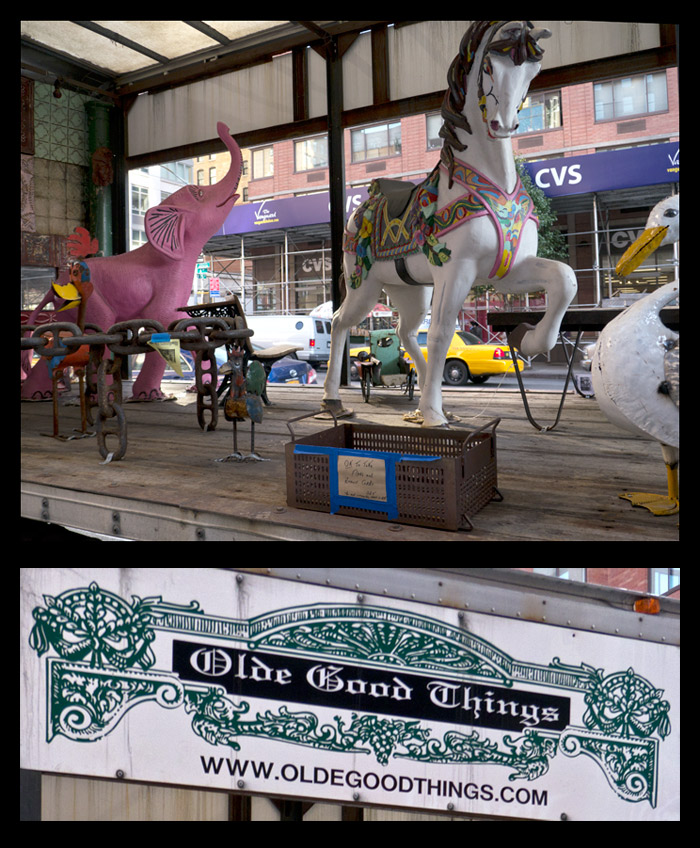
    Recently, I passed a truck on 6th Avenue with a sign: Olde Good Things. The company has a number of retail locations and a warehouse. I don’t know if the business name is an acknowledgement that there are olde bad things too.

    In homes and furnishings, there is a romance with the old. But when someone says they love old houses, old places, and old furniture, good is implied. Good is what ultimately counts, and if you’re predisposed to days gone by and lucky, you can find Good That’s Olde Too 🙂

    Related Posts: Old New York Part 2, Old New York Part 1


  • Lover’s Lane


    East New York, Brooklyn, is one of the worst neighborhoods in the five boroughs of New York City. It is unlikely that you have ever visited or will ever visit. You won’t find it in your not-for-tourists or secret New York guides. But, perhaps you are like me and don’t trust what people tell you without corroboration. This is what garnered me respect with Mark Birnbaum (see here and here), when I asked him if he would be kind enough to show me documentation for his claims.

    So when I tell you that you will not be visiting East New York, I would not be offended if you check cool guides and websites to New York City. If you locate much at all, you may find yourself looking at things like this quote from Forgotten-NY, a website which prides itself on the obscure and lesser-known:

    But there are some parts of the city where I’ve trafficked very little. For example, this was my third time ever in Brownsville and its neighbor East New York on bike or foot.

    If you peruse the AIA guide to New York City, you’re only going to find about two pages. A church is listed, as well as a number of housing projects, a hospital, a health care center, and a mental hygiene center. Other sites include East Brooklyn Industrial Park and the remnants of the elevated train.

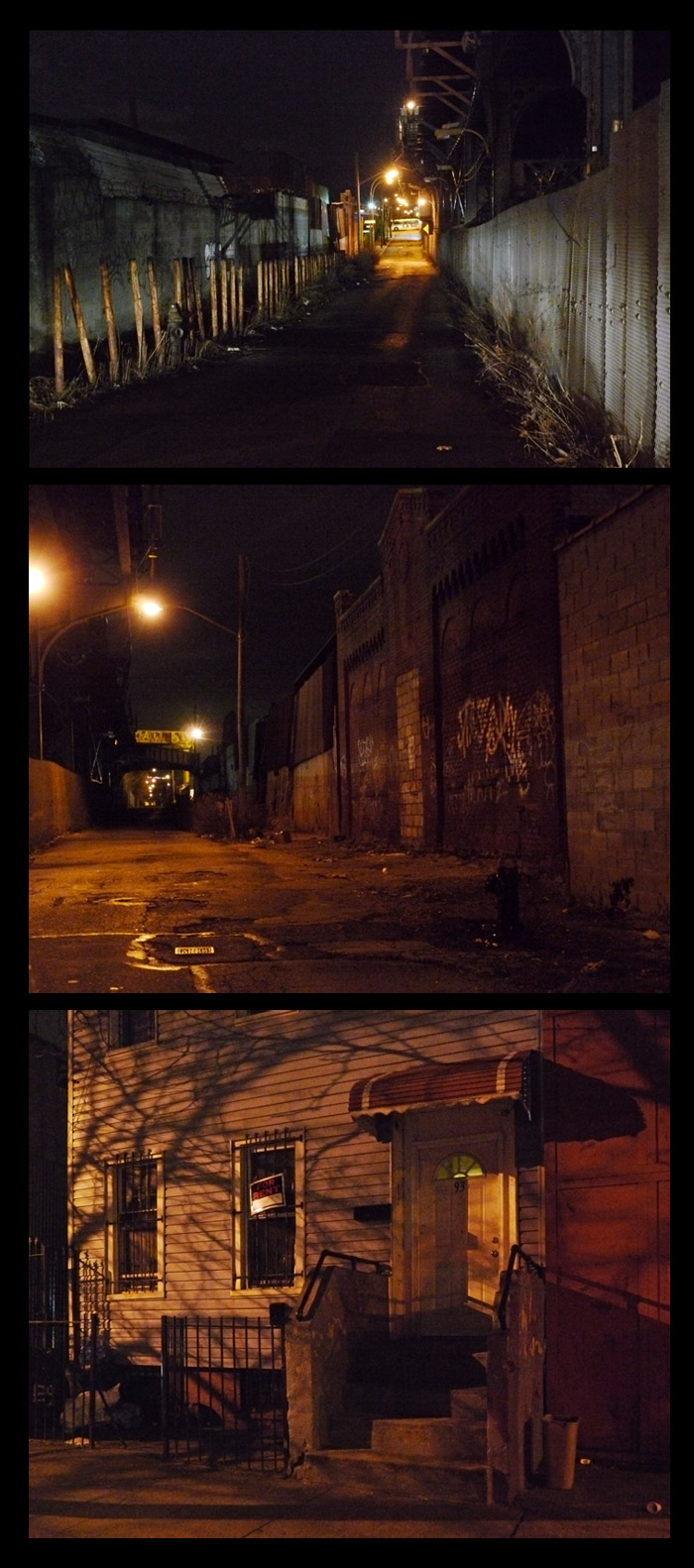
    I toured the area recently with an old friend who, unbeknownst to me, grew up in East New York. He is Jewish, and East New York was the first home of his working-class family. Click the photo for a video tour of our excursion. My friend circulated, pointing his former residences. It was a trip down memory lane.

    The wildest looking thoroughfare was Van Sinderen Avenue, which flanked the old elevated train line. My friend told me that this deserted, desolate, weed-ridden road was a lover’s lane in his youth (see top photo).

    East New York is not a great place to visit, and you probably wouldn’t want to live there. However, having grown up there, like being from the South Bronx, is about the best street cred a New Yorker or former New Yorker is going to get. And for them, there are good memories – old haunts like a weed-ridden Lover’s Lane 🙂

    Related Post: Juxtaposition

    Previous adventures with my friend Greg: None of Us Go, Signs Were All Around Us, You Always Find Something, Up in Smoke, Randazzo’s, Wild Ride, Hunt’s Point, Arthur Avenue, Greasy Spoon


  • Europe?


    I have not been to many book signings, but one which I did attend was that of Terry Miller for Greenwich Village and How it Got That Way, published in 1990. I do love the Village, but like many New Yorkers, I do find that it can, at times, be a love-hate relationship. When I met Terry for the signing, I complained to him about things I disliked about the Village. He dismissed it immediately, saying, “Where are you going to go? Europe?” He was right. I had found no urban enclave in the United States that had the ambiance and charm of the West Village in New York City.

    And so it is. For old-world charm, sophistication, artistry, and elegance, Americans often look to Europe. We style, decorate, design, distribute, manufacture, and name things, foods, and places using words and phrases that hearken back to countries such as France, Italy, Switzerland, Germany, Denmark, and Britain. The influences of Spain also permeate our culture, not just in language, food, and transplanted citizens but also in motifs and naming.
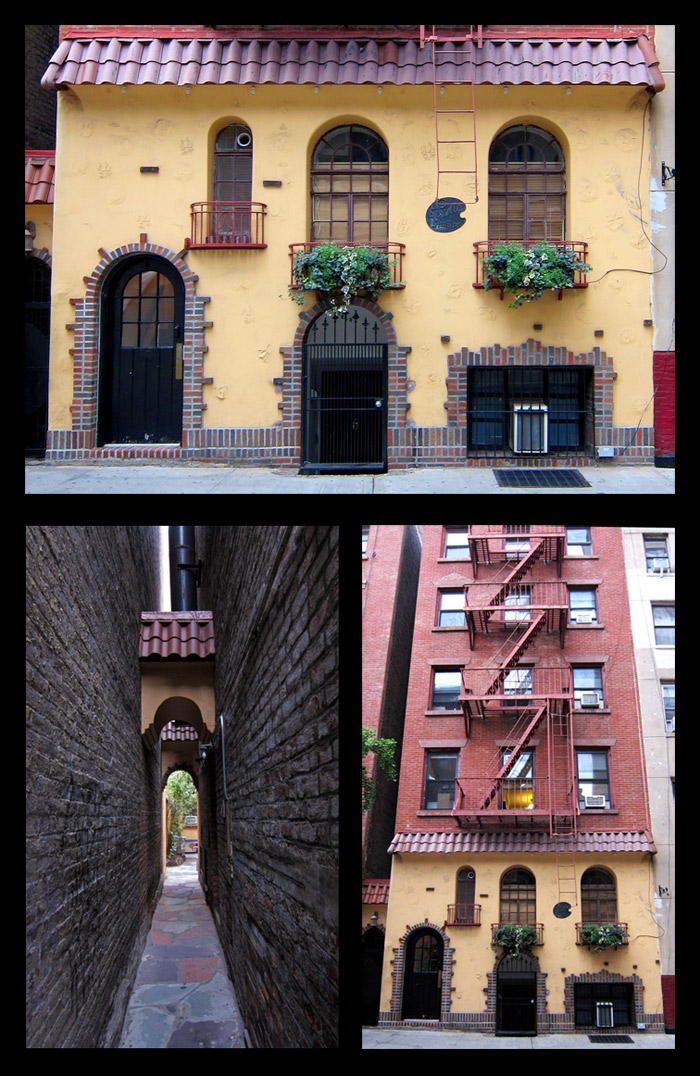
    The property at 11 Cornelia Street reflects this Spanish influence. Built in 1850, the facade was resurfaced in 1928. From Christopher Gray’s Streetscapes:

    Stoops started coming off brownstones in the 1890s, when a few adventurous souls took a sledgehammer to them and other aspects of the facades. According to “The Row House Reborn,” the architect Frederick Sterner was the first to remake an entire group of brownstones, beginning in 1908 on East 19th Street between Irving Place and Third Avenue.

    Others followed his lead, and Greenwich Village, with its emerging bohemianism and stock of older, decaying houses, became a center of reimagined quaintness, typically with pastel stucco fronts, studio-type windows and tile roofs.

    Vincent Pepe, an Italian-born real estate entrepreneur, began to be active in Greenwich Village real estate around 1900, and was soon the Village’s most enthusiastic promoter.

    Another of these lively facades went up in 1928 on an old tenement at 11 Cornelia Street. The architect, James H. Galloway, ignored the upper floors but refaced the lower section with yellow stucco and tile decoration. The stucco facade is dotted with low relief molds of galleons, Venetian gondolas, parrots and other images.

    Terry Miller was right. If you want to be immersed in the charm of the old world, look to the West Village. Otherwise, where are you going to go? Europe?

    Discover the charm of the West Village: I Doubt It, Friends Part 2, Friends Part 1, Diamonds and Rust, Zena, Conflict, Itsy Bitsy, Our Lady of Pompei, Abingdon Square, Paris in New York, 121 Charles, 17 Grove Street, Grove Court, Cherry Lane Theater, Jane Jacobs


  • Sundey

    I was a vegetarian for decades and quickly learned that for good vegetarian food, it is better to find ethnic cuisines that have large concentrations of vegetarian dishes than to eat at vegetarian or natural food restaurants. Historically, the establishments of these restaurants are driven more by what the food is NOT than by the desire to offer great cuisine. Of course, taste is a consideration, but not the primary raison d’etre.

    On the other hand, ethnic cuisine is tried and true, the result of a long history of refinement, catering to the human palate. In New York City, virtually every cuisine can be found, even exotic ones such as Burmese, Malaysian, Ethiopian, Hungarian, Vietnamese, etc. Food is one of the greatest joys in this city, and the salad bowl of ethnicities makes it one of the best places on the planet to eat, whether vegetarian or not. Areas like Jackson Heights, Queens, are veritable smorgasbords of international foods.

    Very early in my exploration of foods, I discovered, as most vegetarians have, that for tasty non-meat entrees, the best can be found in Asian, Indian, and Middle Eastern foods. So, although I am no longer a strict vegetarian, my food tastes were weaned early in life on these cuisines, which have become my favorites, particularly Indian and Middle Eastern. I am often found dining in places like First Oasis (in Bay Ridge, Brooklyn), Moustache, or the Olive Tree.

    Over time, Manhattan has become much more of a center of commerce and quite expensive with the cost of living, with a few exceptions, such as Chinatown, which preclude the ethnic neighborhoods of the past. Many cuisines have become more difficult to find, such as Greek. So for authentic ethnic cuisines, it behooves one to travel to the outer boroughs, where there are many ethnic enclaves with merchants and restaurants catering to them.

    When touring Bayside, Queens, recently, I was excited to learn about Avli, a restaurant specializing in Greek and Mediterranean foods. So my visit there necessitated a stop at 38-31 Bell Boulevard.
    I was accompanied by a strict vegetarian who was pleased with the very extensive menu with so many vegetable options – things like hummus, stuffed grape leaves, tzatziki, spinach pie, lemon potatoes, various salads, side vegetables, cheese dishes, wraps, and combination platters.

    The staff was friendly, buoyant, and helpful. It was a Sunday evening, things were good, and our waitress was Greek and appropriately named Sundey 🙂


  • Dyker Heights, 2011

    As this website has evolved, I have added more video. I have created a YouTube channel for New York Daily Photo where all the videos can be seen in one place. Looking into the future, I intend to create more videos and short documentary films of New York City.

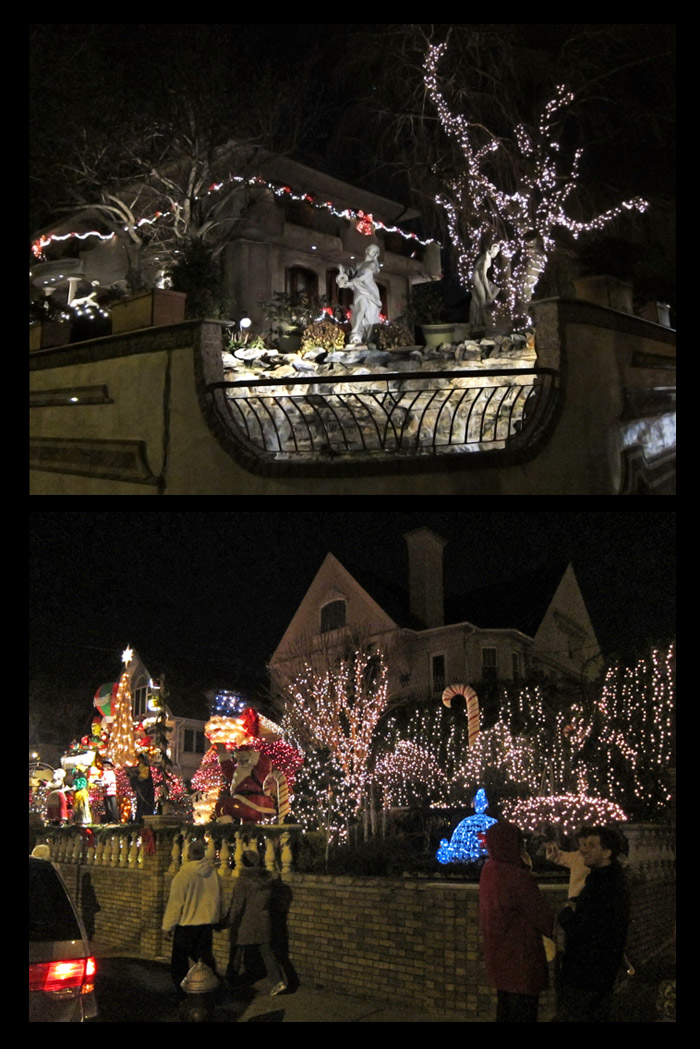
    Recently, I took another excursion to Dyker Heights, Brooklyn, with a friend. Although the displays are relatively the same from year to year, I enjoy the ritual, as I do the Christmas window displays on Fifth Avenue.
    This year, I shot and compiled a short video of my tour of 84th Street between 11th and 12th Avenues – see below. This block is literally the show stopper, with bumper-to-bumper car traffic during the holiday season. Recommended to all who have not toured the area. Enjoy Dyker Heights 2011 !

    Related Post: Simple, But Effective


  • ATM $10 Bills


    This was somewhat a replay of my experience in Harlem visiting the churches known for gospel singing. People, places, and things are not zoo specimens for the voyeur. I always feel conflicted when visiting areas where I am clearly the outsider. Worse with a camera. I am sure that even my sincerest efforts to be part of another’s world for a short time is perceived as slumming. And to some extent, it is.

    However, I was curious about Canarsie. For no reason, except that in all the years I have lived in New York City, I had never been there. I had one friend who had lived there for some time, and he painted a much less than glamorous picture. Slumming is not admirable either for the curious or photojournalist, but I went anyway to see what I could see. I thought I would combine the outing with a meal and found Armando’s Pizzeria to be highly recommended. Some said it was the best in Brooklyn.

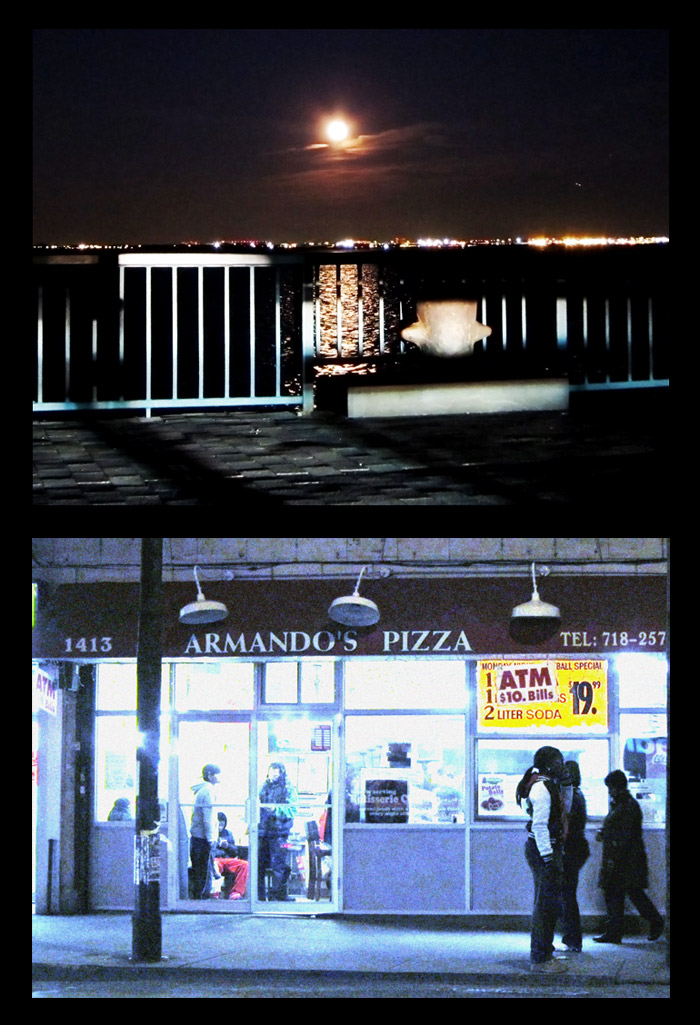
    I was chasing the sun as one does this time of year, and by the time I got to Canarsie, it was already dark. Bad for photography and bad to really get a feel for a new place. And bad neighborhoods just look worse at night. Before heading north into the center of the neighborhood, I saw a turnoff for Canarsie Pier. I was right there, so no big investment of time to explore this little waterside park. I was blessed with one of the most spectacular moons I have ever seen. So much so that I was going to call this story Moonrise Over Canarsie (see Ansel Adams Moonrise Over Hernandez). I ran out of my car. The night was frigid, and my hurried snapshot does not do the moon justice.

    From there, I headed north on one of Canarsie’s main thoroughfares, Rockaway Parkway, where Armando’s Pizza was located. Initially, the bungalows and smaller homes just spoke of a neighborhood that appeared to be modest but tidy. When I arrived to the main shopping area, the gritty reality of Canarsie made itself abundantly clear. Dollar stores and discount shops dotted the main avenue. I drove to Armando’s, at 1413 Rockaway Parkway. This was not at all how I had envisioned the place. It was essentially a slices-to-go type of operation with a few seats. I was clearly the interloper.

    In a flagging economy with 10% unemployment, visiting neighborhoods like Canarsie is not going to lift one’s spirits. Slapped over their menu specials, as if it were more important, a sign in the greasy windows said it all: ATM $10 Bills…

    Related Posts: Moonrise Over Hernandez, Dot My I, Back to Our Main Feature


  • Last Resort

    Growing up at the time and place that I did, there was not much to do as a teenager and very little that was approved by adults. No Starbucks for us. One of the few activities that was considered “good, clean fun” was bowling. Of course, to bring a girlfriend meant no privacy, which is what made it good and clean, but not much fun.

    Alternatively, a lover’s lane or parking with a girl meant having a driver’s license and vehicle, which was not a small achievement. Avoiding police interrogation was another concern in this endeavor. So it was bowling, and as often as I may have gone (I owned my own bowling shoes), bowling always felt like a LAST RESORT. I grew to hate bowling.

    But everything gets reinvented, marketed, and repackaged. Virtually nothing is uncool – the uncool becomes cool as people exhaust existing cool. Bowling became very cool in the 1980s, but it goes back much further, with various spikes in interest, even to the earliest days of New York City’s founding, when lawn bowling was done in lower Manhattan.
    From the New York City Department of Parks website:

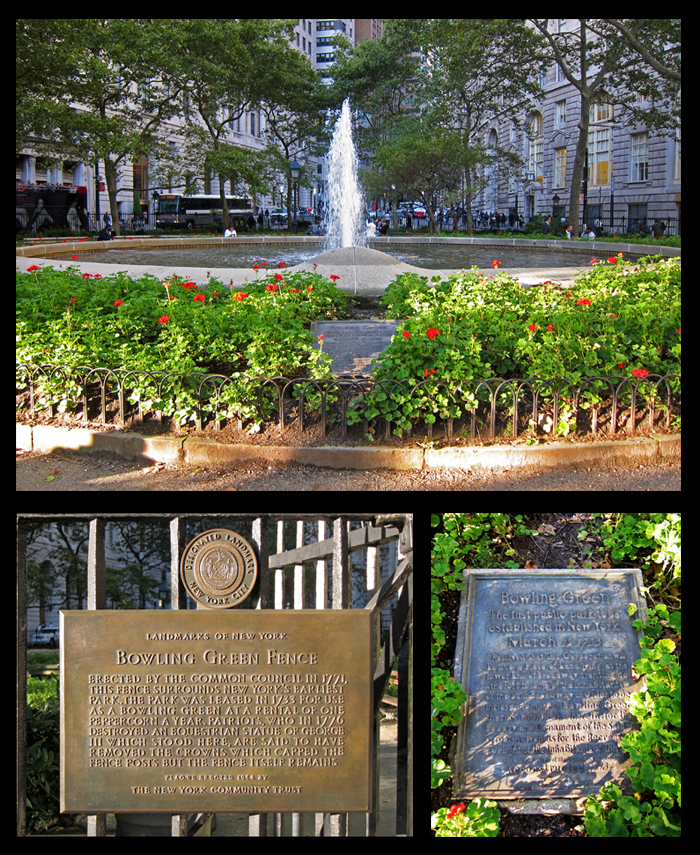
    Bowling Green is New York City’s oldest park. According to tradition, this spot served as the council ground for Native American tribes and was the site of the legendary sale of Manhattan to Peter Minuit in 1626. The Dutch called the area “the Plain” and used it for several purposes. It was the beginning of Heere Staat (High Street, now Broadway)—a trade route which extended north through Manhattan and the Bronx. It was also the site of a parade ground, meeting place, and cattle market. In 1686 the site became public property and was first designated as a park in 1733, when it was offered for rent at the cost of one peppercorn per year. Lessees John Chambers, Peter Bayard, and Peter Jay were responsible for improving the site with grass, trees, and a wood fence “for the Beauty & Ornament of the Said Street as well as for the Recreation & delight of the Inhabitants of this City.” A gilded lead statue of King George III was erected here in 1770, and the iron fence (now a New York City landmark) was installed in 1771. On July 9, 1776, after the first public reading in New York State of the Declaration of Independence, this monument was toppled by angry citizens, dragged up Broadway, sent to Connecticut, melted down, and recast as ammunition.

    By the late 18th century, Bowling Green marked the center of New York’s most fashionable residential area, surrounded by rows of Federal-style townhouses. In the first decade of the 20th century, Bowling Green was disrupted by the construction of the IRT subway. The park was rebuilt as part of citywide improvements made in preparation for visitors to the 1939 World’s Fair. Renovations to Bowling Green included removing the fountain basin, relocating the interior walkways, installing new benches, and providing new plantings.
    A 1976-77 capital renovation restored Bowling Green to its 18th-century appearance. Publisher and philanthropist George Delacorte donated the park’s central fountain.

    Since December 1989 the statue of Charging Bull (1987-89) has been on display at the north end of the park. Its sculptor, Arturo DiModica, says the three-and-a-half-ton bronze figure represents “the strength, power and hope of the American people for the future.” It has also been linked to the prosperity enjoyed by Wall Street in the past decade.

    The park and surrounding area is beautiful and certainly deserves a visit. Although located far from midtown at the southernmost tip of Manhattan, and once a place for bowling, it is far from a Last Resort 🙂

    Related Posts: Trapped in Paradise, New York Stock Exchange, Federal Hall, West Side Community Garden, Esplanade


  • Sorry About That

    On September 21, 2011, I wrote Not Under the Gowanus, about a church which had nagged me as an enigma for years. Or so I thought. Our Lady Of Czestochowa / St Casimir, located at 183 25th Street in Brooklyn, can be seen from the Gowanus Expressway.
    However, on a recent excursion through Brooklyn, I realized that a much more imposing structure closer to a highway is what I had seen so many times on this stretch of highway and that this was the image that was stored in the recesses of my mind: the Sacred Hearts of Jesus and Mary – St. Stephen Church, located at Summit Street and Hicks Street, fronting the Brooklyn-Queens Expressway before the Gowanus Expressway.

    The parish was established in 1882, the first Italian parish established in Brooklyn. I have yet to tour this church, having been “distracted” by Our Lady Of Czestochowa. Only in New York – larger than life, historic, architecturally significant. A place that, elsewhere, would be an unforgettable icon. But here, in New York City, where the extraordinary can become ordinary, I confused one beautiful church with another. Sorry about that 🙂


  • dinamic_sidebar 4 none

©2026 New York Daily Photo Entries (RSS) and Comments (RSS)  Raindrops Theme