• Category Archives Food and Restaurants
  • Not Enough Dough

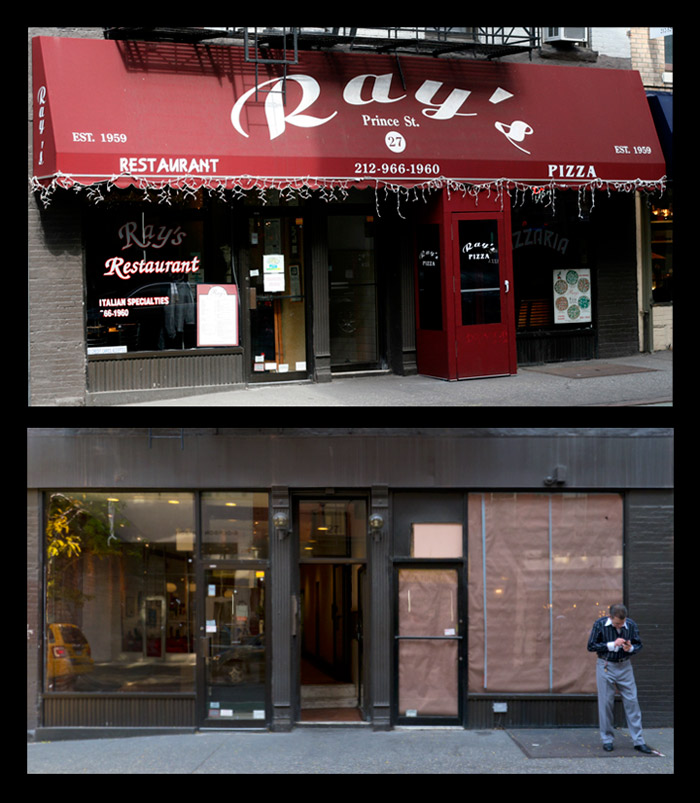
    On March 27, 2009, I wrote of the legendary original Ray’s Pizza at 27 Prince Street. Located around the corner from my office, I have frequented Ray’s for over 20 years. I loved their pizza – classic with a few gourmet touches. Yesterday, when I recommended them to a customer for lunch, one of my employees informed me that would not be possible since Ray’s had closed. When I asked to confirm that it was THE Ray’s on Prince, she said yes, that it was the Ray’s, and this was quite a big thing with plenty of local buzz.

    I jogged out to see for myself with camera in hand, and sure enough, Ray’s was not only closed, but there was absolutely no vestige whatsoever of its prior existence. Neither a smear of sauce nor a faded sign. After 52 years in business, it was another episode in New York City of the End of an Era. The closing involved a legal dispute. From the New York Times:

    The closing, long story short, follows a legal dispute among heirs with various interests in the building at 27 Prince, which includes apartments and the two sides of Ray’s: the pizzeria and an Italian restaurant, each with its separate entrance, but sharing a kitchen and the corporation name, Ray’s of Prince Street. When the Ray in Ray’s, one of the owners of the building, died in 2008, a row arose over whether the restaurant’s lease was valid and whether it should pay rent. A lawsuit was filed in 2009 and settled this year.

    I was sad to have missed their last day on Sunday and to not have met Helen Mistretta, the manager. According to the Times article, she did look for alternate space but cited extraordinary rents and cost of renovation as an impasse to moving to a new location. Instead, equipment will be sold at auction and mementos placed in storage. I will miss their pesto pizza – a rarity in town. The closing due to financial matters is a classic saga with the loss of iconic businesses that has been repeated around New York City many times. That’s how the crust crumbles, when there’s plenty of flour but not enough dough 🙂

    Photo Note: Upper photo taken March 20, 2009; lower photo taken November 8, 2011.

    Related Posts: Quest for Pizza, Best Pizza in New YorkCookies in the Afternoon, Zero Minutes, It’s the Humidity, Walk Like Di Fara, No Problema, DiFara, Roots of Pizza, Two Boots
  • La Côte Basque

    What an unsophisticated, strong-headed, argumentative, ignorant fool I was – in my 20s, a radical vegetarian, and seriously trying to make a case that carob confections were every bit as good as chocolate. I was arguing with chocaholics – what lunacy. Today, I rarely even hear much about carob, and I have not had it in eons. Far fewer are willing to compromise their taste buds, and chocolate has lost much of its evil connotation, with dark chocolate even being seen as healthy.

    My sister was a chocaholic and in the 1980s, she frequented the city with her husband. They both loved visiting here and savored the opportunity to indulge in the foods and restaurants of New York City. On one sojourn, I had booked them a room at the Plaza Hotel and made reservations for them at La Côte Basque. I had not included myself in the restaurant outing for a number of reasons, primarily because I was too cheap, particularly to pay for a vegetable dinner in one of New York City’s finest restaurants.

    However, as the hour of reckoning arrived, standing in my sister’s hotel room, the conversation turned to their persuading me to accompany them. I had no wardrobe at the time other than elements of the uniform of the 1960s, so I rejected the offer based on my inability to make the dress code. My brother-in-law, however, always traveled armed with additional clothing and was virtually the same size as I was.

    I objected first on the basis of owning no sport jacket. He had an extra. I had no dress pants. He had extra. As we went through all the necessary articles of the well dressed man, I was offered a perfectly suited piece. Finally, in frustration, I pointed out that I could not go to a French restaurant with sneakers, but alas, he had extra dress shoes also.

    OK – what about changing a reservation from two to three? And what about a vegetarian meal? A quick call to the restaurant confirmed that one could be added and that my dietary restrictions was zero issue. The French take food seriously, and restaurateurs seem themselves in business to serve the patron, not make things convenient for themselves – a common irritation among many. I was assured that my waiter would easily accommodate any dietary needs.

    And so it was that I came to have one of the finest dining experiences in my memory. As we sat down, we were immediately asked if anyone would be having the chocolate souffle for dessert. We were being asked upon our seating, since the creation of the dessert was a long process and would take the entire duration of the meal to prepare. My sister obliged, of course. I remember that the entire experience was extraordinary – being young, such fine dining in New York City was an event I would always remember, the details of which I would recount for my entire life.

    When the crusty confection arrived, it was delivered and presented by a team. One carried the dessert while another the chocolate sauce. As one waiter broke the crust and ladled the sauce onto the dessert, I recall my sister overwhelmed, just repeating “Oh my God” over and over.

    I imagine that it was likely around that time that I stopped making the argument that carob was as good as chocolate. And thank God that I had never said such a thing within earshot of a pastry chef at La Côte Basque 🙂

    *La Côte Basque was in operation for over 45 years, closing in 2004. A temple to classic French haute cuisine, the restaurant saw guests such as Jacqueline Kennedy Onassis and Frank Sinatra. The restaurant opened in the late 1950s by Henri Soulé. Chef Jean-Jacques Rachou became owner in 1979. He said he spent more than $2,200 a week on flowers and more than $3,000 on linen.

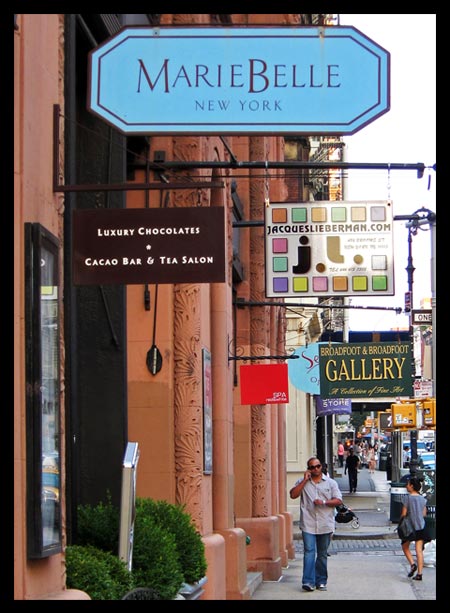
    Photo Note: This is Marie Belle at 484 Broome Street in SoHo. The shop, cacao bar, and tea salon is a shrine to all things chocolate and is a very highly regarded gem of the neighborhood. Unless you prefer carob 🙂

    Related Posts: Pure Chocolate, Sirens of Convenience, Bon Appetit, Economy Candy, Chocolate Bar, Jacques Torres


  • Quest For Pizza

    During my visit to Grimaldi’s on February 9, 2011, with friend and photographer Bill Shatto, a couple was seated next to us. I began chatting with the man. We spoke on many subjects, and when I learned that he came from Staten Island, I discussed this photoblog, my exploration of Staten Island, and the numerous places I had visited, many virtually unknown to the outsider. I mentioned the enigmatic Kirschner Mansion, and in another occurrence of Only in New York, I learned that this man was involved in real estate and had previously OWNED it. Amazing.

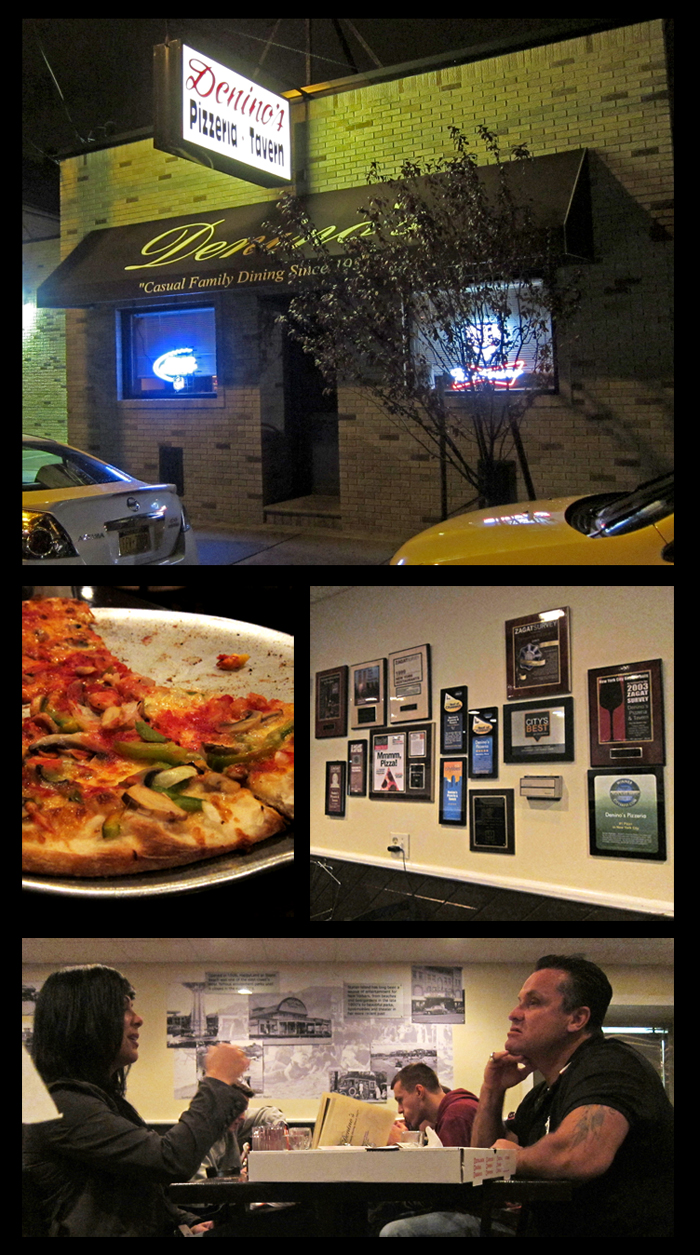
    Conversation turned to pizza, and of course anyone seated in a place like Grimaldi’s, where the privilege of eating is paid for by waiting in extraordinarily long lines, will typically have substantial experience in the Quest for Pizza. My new acquaintance informed me that in his opinion, the best pizza in New York, and in his opinion the best he had anywhere, was from Denino’s in Staten Island. If you’re looking for good pizza, one should never dismiss the opinion of a Brooklyn-born Italian, so I filed Denino in my mind for future reference.

    On Saturday, October 1, I decided to pay Denino’s a visit. Located at 524 Port Richmond, the place is a landmark, established in 1937. As would be expected, the walls were covered with articles and awards. I understand that Denino’s is typically packed on weekends, but on my visit, it was a case of walking in and seating oneself. Service was perfunctory and a bit uneven. The crowd appeared to be very local, dominated by Italian-Americans who have a large presence on Staten Island (37% of the borough claims Italian-American ancestry, the highest percentage of any county in the nation).

    The pizza arrived, and I must say, the crust is one of the finest I have ever eaten. The brick oven pie is different, but on a par with legendary New York City icons like Di Fara, Totonno’s and Grimaldi’s – the kinds of places that one patron referred to as “Cappelas di caminetto capolavoro” (chapels of fireplace masterpieces).

    Getting to their location on Staten Island is far from the other boroughs of New York City and is not accessible by subway, so for most, traveling there by bus, car, or ferry will be a deal breaker. Unless, of course, you’re a New Yorker on a Quest for Pizza 🙂

    Related Posts: Best Pizza in New York, No Folding Required


  • Nice Man on Death Row

    There are no rules. Just because an acclaimed artist is messy does not mean that messiness confers artistry or that it is a necessary condition for such. Handmade is not always better than factory-made or mass-produced. And although generally speaking, I am not a huge fan of the encroachment of national retail chains in New York City, I am not going to buy into the idea that the quality of goods in every small mom and pop shop is superior to that in the chain store.

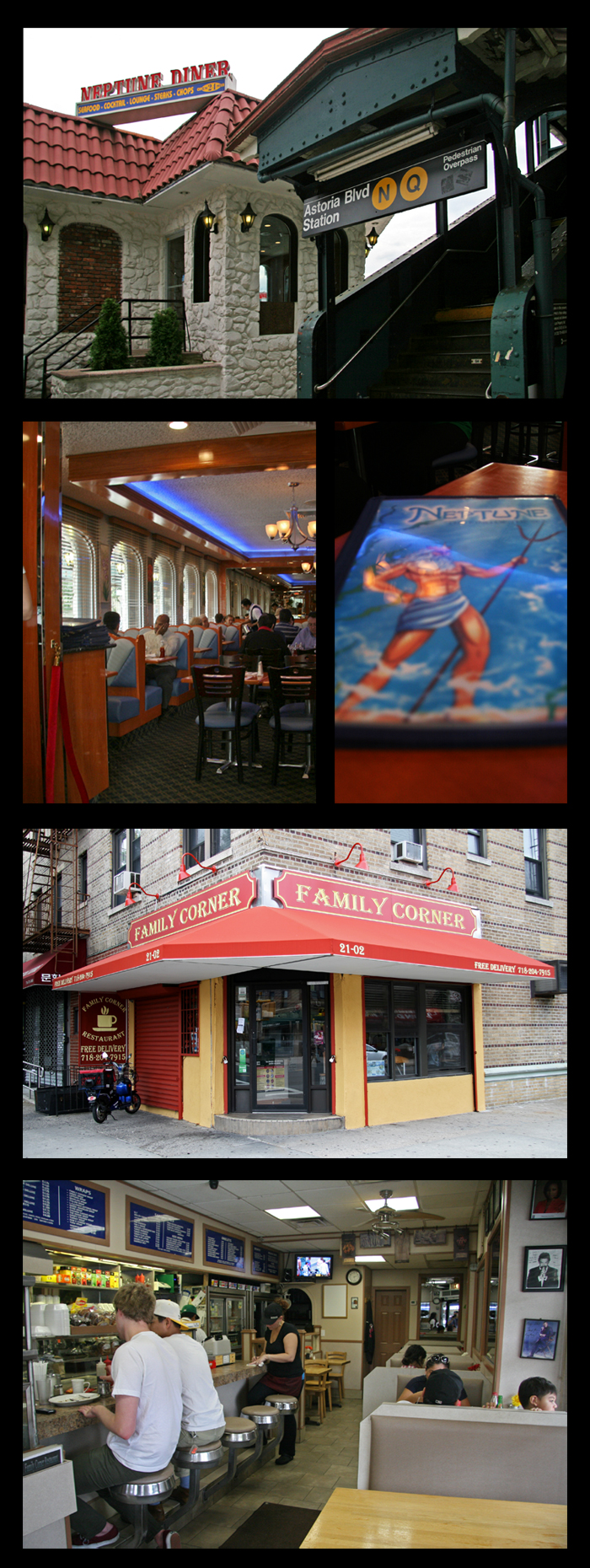
    On weekends, I often like to drive in the outer boroughs looking for stories and photos for this website. On Sunday, I was hungry and in the mood for comfort food, which I rarely eat. I thought I had learned my lesson regarding diners, but apparently, not yet. And this time, I succumbed to a new foolish quest: a search for the “best diner in New York.”

    My research indicated that the Family Corner in Astoria, Queens, was a worthy candidate for the “best diner” quest, so, I recruited a friend for this outing. We parked, and on the way, I spotted the Neptune Diner, which proclaimed “The Best Diner in New York City” according to the New York Daily News. However, I was to later learn that designation dated back to 1993. We stopped inside – the decor was quite nice for a diner. However, the rave reviews of the Family Corner nagged at me, so we pressed on.

    We had parked in a spot that was supposed to be a short couple of blocks away using the Google mapping system. Apparently, even Google is confused with the street numbering system in Queens – their mapping software put us about one mile away. It was after 2PM and I had not yet eaten, so the long walk down 31st Street seem interminable in the humidity. The Neptune Diner was starting to look better every block. Much of the walk was nondescript commercial, making the journey extremely uninteresting.

    When we arrived at 2102 31st Street, I was surprised to find the place much smaller than expected, and unfortunately, they had closed the restaurant for sit-down meals – it was now takeout only. So, another mile back down 31st Street. Neptune Diner it would be.
    The place was framed by the elevated subway and stairway to the Astoria Blvd station. A fellow patron had recommend the fish, so I ordered salmon stuffed with crabmeat. Like any diner, entrees come as meals, with sides, salads, etc. My companion had the spinach pie – we both agreed that at least one of us should have a Greek specialty.

    The food was passable and seemed worse viewed in hindsight as the day passed on. This was the 4th diner experience I have written about – Joe Jr’s, the Jackson Hole, the Empire, and now the Neptune. Someday I may finally learn that looking for a great diner is tantamount to seeking a nice man on death row 🙂

    Related Posts: Love Is All Around, Part 2, Greasy Spoon, Anthora


  • My Pleasure

    One of the driving forces in New York City is that the bar is set higher for virtually every thing imaginable: products, services, culture, architecture, etc. Cream rises to the top, and New York City is where much of the cream of society lies.

    I hate to make this read like “Why I Hate Bristol,” but Bristol, Connecticut, where I grew up, became a metaphor, for many who lived there, for all things boring, unsophisticated, and closed-minded. A place where no one would think out of the box and where a person was made to feel foolish for aspirations, dreams, or anything that would dare take you away from that place or separate you from the pack.

    I broke away and never regretted it. I do travel back there and nostalgize some, but, as I referenced from Jill Eisenstadt, the happiness I feel in those memories are likely about my youth and not the place.

    Even finding the simplest things in that town is a challenge, if not impossible. My family, certainly of no great means, never ate in restaurants there. On the rare occasions where we did have a meal out, we had to travel far and wide. Astonishing for a town of 50,000 that no good restaurants existed (or still exist) there.

    I recall many a holiday gathering where conversations would turn to how I believed that one could improve the services in Bristol in ways such as opening a cafe. Invariably my brother-in-law would always laugh and say, “Brian, we’re talking Bristol.” I was always frustrated because I felt that residents there would heartily welcome improved merchants.

    Here, with an enormous populace and tremendous competition, the volume of quality goods rises. Many compete on price alone, of course, but that is a very tough road to travel; take a trip through Chinatown and see if you want to engage in pricing wars. A better route to follow is to differentiate yourself with better quality, variety, or specialty. Places such as the Doughnut Plant, Kossar’s Bialys, Cones, Il Laboratorio Del Gelato, Van Leeuwen Artisan Ice Cream Truck, Raffetto’s, Eileen’s Cheesecake, Ceci Cela, Matt Umanov, etc. are what makes New York City unique and a joy to visit or live in.

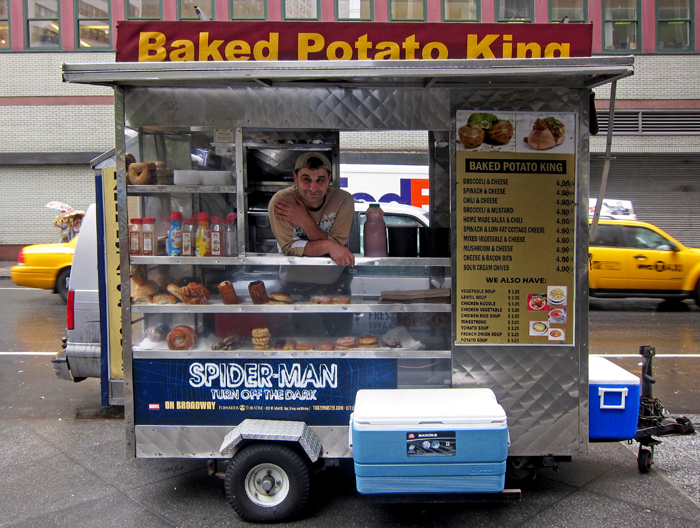
    On a recent visit to the garment district on business (see here), I ran across the Baked Potato King. Nothing could have pleased me more – I was starving and was looking for something satisfying I could get while on the run. I love baked potatoes, and what better way to get some much needed carbs for lunch?

    I chatted with vendor Vladislov Rubinov and took photos and video, for which he was very accommodating. When I thanked him, he responded with a very genuine “my pleasure.” This was so odd and surprising coming from someone in New York City, particularly a street vendor. It reminded me of the comment made by Jamie Adkins in my office. These things are to be expected in suburban or rural environments but can be rare in the city.

    I had many bags and samples to carry, and it was drizzly. Better to take the potato back to my office. I ate it quickly and went back to work. But long after the taste of the potato was gone, Vladislov’s words sting lingered. ‘Twas a bit of humanity that graced my day. It was, and is, My Pleasure 🙂


  • The Comfort Zone

    Comfort Zone: Range of minimum and maximum exposure or risk within which an entity can operate without coming under undue stress.

    For many, living in New York City would be outside their comfort zone. What many visitors or non-residents do not see, however, is that those of us who live here do not live continuously in the world of the visitor. We do not spend large blocks of time checking in and out of hotels, dealing with airport security, fighting crowds in Times Square, waiting in line for various attractions, or packing in an inordinate number of activities in one weekend. Also, consider that only 20% of residents live in Manhattan and that many neighborhoods in other boroughs have a much more relaxed atmosphere.

    Of course, all that said, life in New York City is not as comfortable as suburban or rural life can be. Even the stalwart New Yorker needs a break from time to time. To cope, we seek out and find respite in places, routines, our loved ones, and friends. If you are lucky, perhaps you have a quiet apartment in a peaceful neighborhood. In the last five years, I have shared many of the special or lesser known places that provide escape from the city’s stressors.

    For many, Sunday in New York City is a day of rest. Or, perhaps better said, a little more rest than usual. To find a comfortable spot and relax. And for comfort, nothing beats breakfast or brunch in a charming cafe in a quiet neighborhood on a tree-lined street on Sunday.
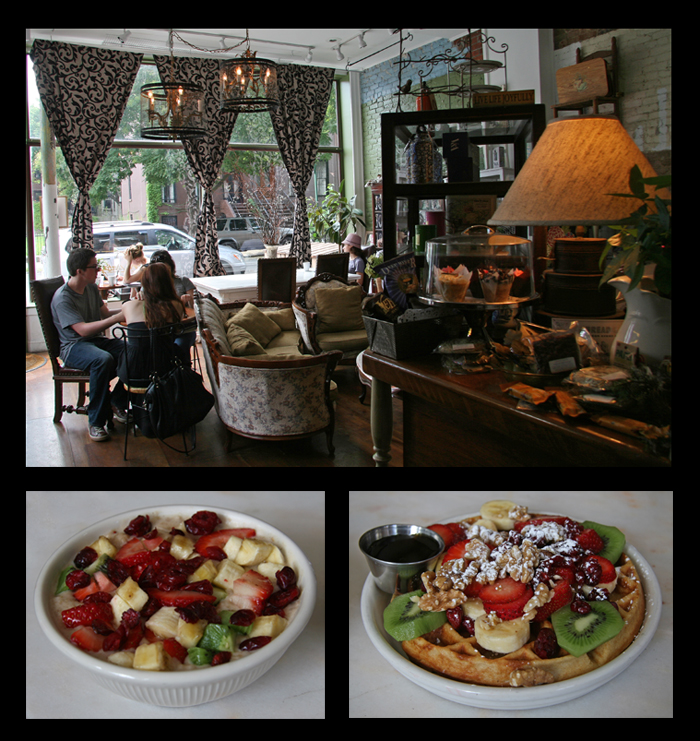
    Like the Urban Vintage Boutique and Cafe at 294 Grand Avenue in Clinton Hill, Brooklyn. Here, the ambiance is like that of a 19th-century French salon.

    Urban Vintage sports a plush interior, with comfy upholstered seating, soft lighting, dark woods, and well appointed touches throughout. The food is very good, and it would be an injustice to call it “comfort food,” as comforting as it may be. My companion who introduced me to this cafe/boutique touted the oatmeal as “the best,” and it certainly was wonderful, as were the Belgian waffles.

    Places like this are small worlds that stand apart from the hustle and bustle of New York City. When entering a place like Urban Vintage, I am reminded of the introduction to the TV series The Twilight Zone, but with a different twist:

    To go through their door is to enter another dimension. Not just a dimension of sight and sound, but a dimension of mind. A journey into a soothing land. You’ve just crossed over into The Comfort Zone.

    Related Posts: The Tide Pool, Grab a Bite to Eat, When Your Name is Mud, Fire and Ice, Worlds Unfolding, Gotta Get Out


  • Best Pizza in New York

    Posted on by Brian Dubé

    People love lists – top 10, top 100, 1001 things one must do, best this, best that, etc. – it’s a staple of life, even a bit formulaic, but, like David Letterman’s nightly Top Ten List, it’s entertaining and fun. And in a complex world with so many choices, what better way to help make decisions than to quantify, rate or make lists?

    Of course, many bristle against the idea of reducing subjective things to some objective standard, but lists are useful if for no other reason than to spark conversation and lively debate and to add fun to life’s decision making.

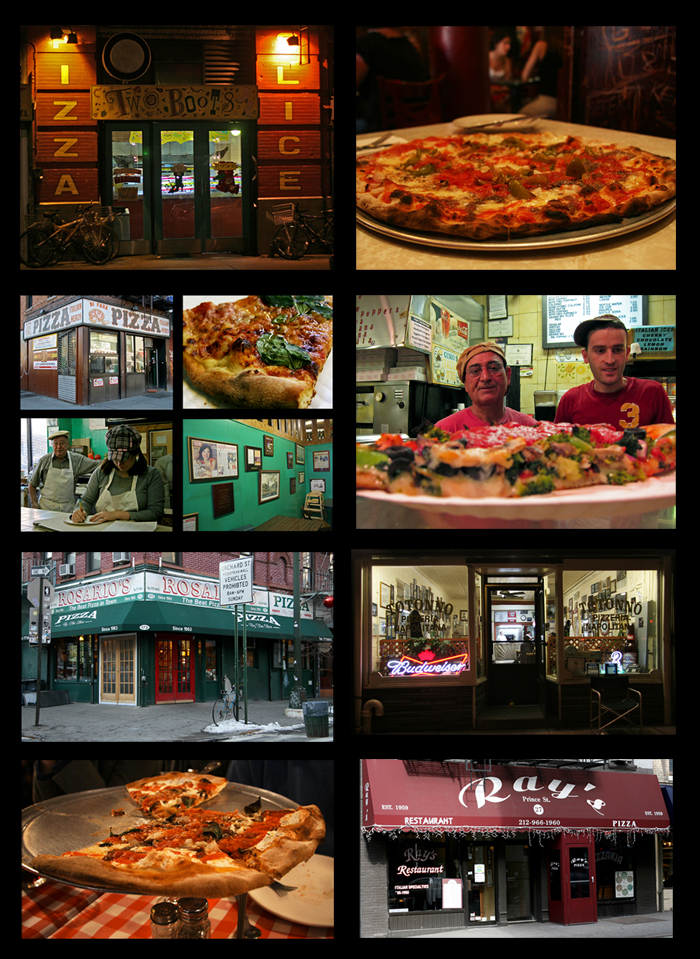
    Pizza is one of the country’s – and likewise, one of New York City’s – most enduring and popular food items. It’s a rare individual who does not like pizza, the ultimate snack or meal on the go. It’s found everywhere, so the question becomes, where do I go? I have assembled a collage of six of New York City’s top pizza parlors, along with two stories involving pizza which I have previously written about. Each photo links to the story and photos of that place. There are a number of highly acclaimed places in the city which I have yet to visit and write about. I will get there. In the interim, explore places you may not have yet visited and try some of NewYork City’s top pizzas. Enjoy 🙂

    Posted on by Brian Dubé

  • Chutzpah, Part 2

    Posted on by Brian Dubé

    (see Part 1 here)

    “In New York City, one’s net worth of social currency is based not so much on who you know, but how you can get seated in the most important restaurants.” – Myra Smolev

    In this tale of unmitigated nerve, Myra tells of how she got a table at the River Cafe for friends arriving from Milan who had heard that this was the place to eat. However, at the time, typical of popular restaurants, it was IMPOSSIBLE to get a reservation.

    But Myra, a New York City born aggressive and successful Jewish woman, succeeds with a little drama, creative thinking and classic Chutzpah 🙂

    Related Posts: Just Click Here, Myra’s Isle, Ride to Hell, Eternal Vigilance and Tenacity, Toches ahfen tish!, New Yawk Style, Shalom, Bagels

    Posted on by Brian Dubé

  • Chutzpah

    Posted on by Brian Dubé

    Part 1


    I have written before about the prominent role of Yiddish in New York City (see here). One word that well describes a character trait often needed for success here is chutzpah. Chutzpah derives from the Hebrew ?u?pâ (????????), meaning audacity – someone who has overstepped the line of acceptable behavior with no shame. In Yiddish, the word has broadened in meaning and now has a more positive connotation, i.e. a gutsy attitude which serves admirably to achieve an end. If you live here, you will hear it often.

    Leo Rosten in The Joys of Yiddish defines Chutzpah as “gall, brazen nerve, effrontery, incredible ‘guts,’ presumption plus arrogance such as no other word and no other language can do justice to.” The word has been used over 200 times in legal opinions, including a US Supreme Court case.

    Recently, at a friend’s home, Myra Smolev told a tale of chutzpah so outrageous, that I asked if she would retell it, allow me to video tape it, audio record it for podcast and post it as a story here. She agreed and on the 4th of July, at a small party at her home, Myra told her story of Chutzpah. It will be revealed tomorrow 🙂

    See Part 2 here, complete with video.

    Related Posts: Just Click Here, Myra’s Isle, Ride to Hell, Eternal Vigilance and Tenacity, Toches ahfen tish!, New Yawk Style, Shalom, Bagels

    Posted on by Brian Dubé

  • And You Can’t Make Me

    Posted on by Brian Dubé


    Imagine the heaviest Southern American drawl you can coming from a rather disheveled man with missing and broken teeth. As a business owner in New York City interviewing employees for over 40 years, I have seen a lot of things – like a woman who arrived for her job interview with an electric guitar slung around her neck. But now I was in new territory – apparently someone in government was testing my fairness in hiring practices, because this man would scare the hell out of most city folk.

    He said he was from somewhere in the deep South, I don’t recall where. But it was deep. Real deep. And unfortunately, everything I know about the South was learned through films, particularly Deliverance and In the Heat of the Night. These films will not give you a very good impression of our Southern brothers and sisters, who are in fact renowned for their kind, sweet and hospitable manner.

    However, any positive thoughts I may have had about Southerners was not going to be evoked by a scruffy man with broken and missing teeth. Nonetheless, I tried to remain fair, interviewed him and gave him a brief tour of our production area where he would be working. He appeared confident and hungry to work. He was up North for the first time in his life, seeing if he could make it here. He was staying with someone he knew in New Jersey. He seemed so terribly out of place.

    A quick tour around the shop and he asserted “I can run any machine in here. And I will do anything. I’ll clean toilet bowls with a toothbrush.” If you can imagine this being said with an extreme southern accent, then you can appreciate why I say everyone has their limits and I had reached mine.

    After discussing the candidate with an employee, I was encouraged to keep an open mind – “I don’t think you should discriminate on the basis of appearance.” I guess, but isn’t there a limit? I decided to defer to another employee, an NYU film student. She said: “I think we’re talking Deliverance.” Thank you Christine. I don’t need to be terrifying my employees, do I?

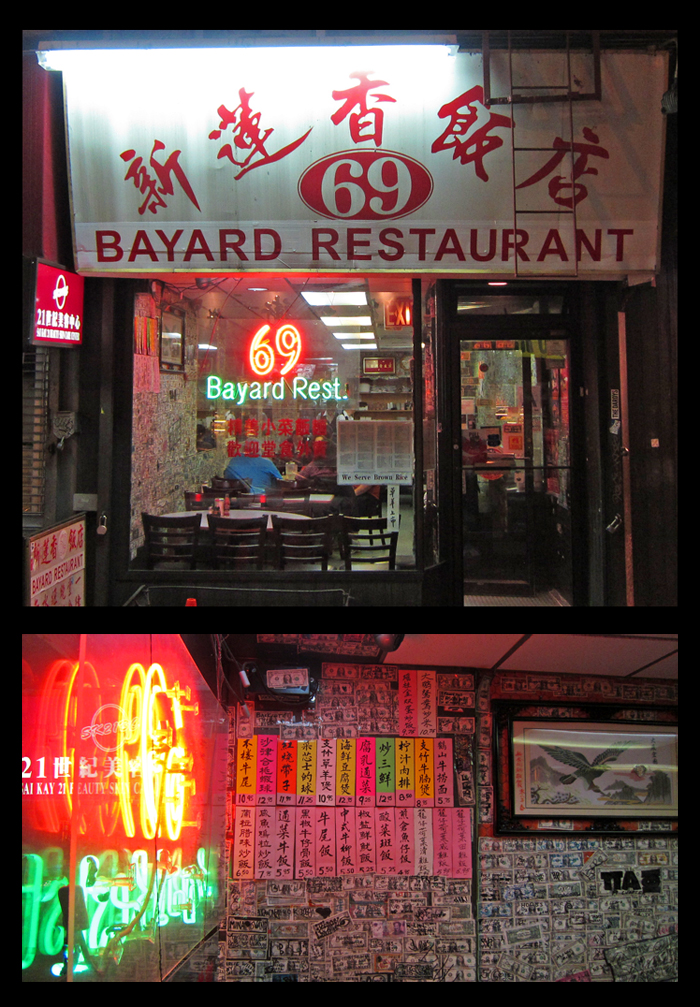
    At 69 Bayard Street in Chinatown, we have the 69 Bayard Restaurant. This establishment has been in operation for eons and is most well known for its walls which are completely covered in one dollar bills, signed by patrons. Like Wo Hop at 17 Mott Street, 69 Bayard is open 24 hours a day – one of those things so many love about New York City and hard to find elsewhere. Like Kiev or Veselka in the East Village, 69 Bayard is often frequented by late night bar (or club) goers who want to eat after bar closings (4 AM).

    As with many inexpensive New York City restaurants, 69 Bayard gets the full gamut of reviews, from the reverential, declaring it to be the best, to those who absolutely abhor the place. It certainly qualifies as an example of pick two, in this case fast and cheap (see my story here). Reading any online review site, like Yelp.com, can not only be informative, but also quite entertaining. Many of the most caustic reviews are actually quite comical and well written. I recommend reading Yelp reviews for entertainment as well as for information.

    Once as a child, while playing with matches, I recall my father telling me to put them down. I told him “no, and you can’t make me.” Of course that solitary act of defiance was short lived – I put down those matches. Since that time, I have played with matches – one of the perks of being an adult is a greater freedom to make choices. I try to chose my restaurants too.

    I recently passed by 69 Bayard. I popped in quickly to take a photo of the legendary dollar-covered walls. However, I did not eat there. I’ve eaten in my fair share of greasy, dirty looking places and one-trick is not enough to get me to pay for a pony show. Now, as an adult, I make choices. I never hired that man from the deep South and I can’t tell you what the food is like at 69 Bayard because I’m not eating there. And you can’t make me 🙂

    Related Posts: Harder to Keep Full, War Against Disservice Part 2, War Against Disservice Part 1, In Your Hand, Levis, Film and Corn, Mulberry Street, Slummin’, No MSG, Greasy Spoon, Hallmarks & Earmarks, At Arm’s Length

    Posted on by Brian Dubé

  • Harder to Keep Full

    Posted on by Brian Dubé


    In the 1980s I used to frequent the Comedy Cellar on MacDougal Street regularly, sometimes more than once a week. What drew me there was New York City comic Gilbert Gottfried. His work and style are very New York-centric. I have found that many non-New Yorkers do not really enjoy his humor.*

    One bit he did regularly in his comedy routine was about plankton. Gilbert would tell how some comedians may do a joke or two about plankton, but that he did a full routine on the subject. He then launched into a rant about how he knew that someone in the audience would say that they knew a place in Brooklyn that had good plankton. Gilbert would then point out that yes, they did have it, but it was not fresh, but frozen.

    This material is brilliant because it illustrates exactly how the true New Yorker thinks and speaks – a smug confidence and security that New York City has everything with many choices, even in areas that are extremely narrow and specialized. And we are picky. Good, special, unique places are accumulated like feathers in one’s cap. The sentiment concerning security in knowing that all is here was echoed by Woody Allen. I wrote about this on December 24, 2007 in Being There:

    It reminds me of a Woody Allen comment about why he needs to live in NYC – that there’s a restaurant in Chinatown where he can get a certain favorite dish at four o’clock in the morning. Not that he ever has or will go there at that time. It’s just knowing it’s there.

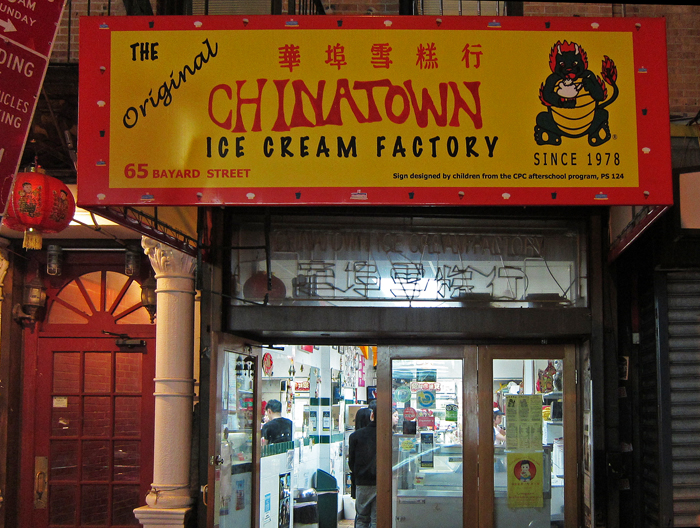
    The Original Chinatown Ice Cream Factory at 65 Bayard Street has been in business since 1978 and is run by the Reid family. Though heavily touristed, as one might expect given its Chinatown location, many still love the range of exotic range of ice cream flavors including avocado, banana, tangerine, black sesame, almond cookie, pandan, green tea, ginger, peanut butter and jelly with sorbets such as lychee, strawberry shortcake, taro, longan, zen butter and mango-papaya. There are naysayers, as always, but reviews are typically good with the feeling that everyone should visit at least once.

    As business ideas are copied, appropriated worldwide and even imported into our city, those places that are unique to New York are becoming fewer and fewer. Many a New Yorker is like a proud warrior, collecting feathers as he or she can for a cap that is becoming harder to keep full …

    *I was saddened to hear about Gilbert’s news scandal regarding jokes he has made, distributed on his Twitter feed about the Japanese tsunami. Known for his voice as the Aflac duck, Gottfried has been fired by Aflac. He has since apologized.

    Posted on by Brian Dubé

  • War Against Disservice, Part 2

    Posted on by Brian Dubé

    (see Part 1 here)

    I was discussing with a friend, Hellen, the extraordinary service I was experiencing at a local Indian restaurant I was frequenting at least once per week. The staff was now treating me like family. When the owner, Chandra, is present, I am not even given a menu – we only have a discussion. I am offered items not on the menu, free appetizers, and dessert. In short, the experience was now tantamount to eating at home.

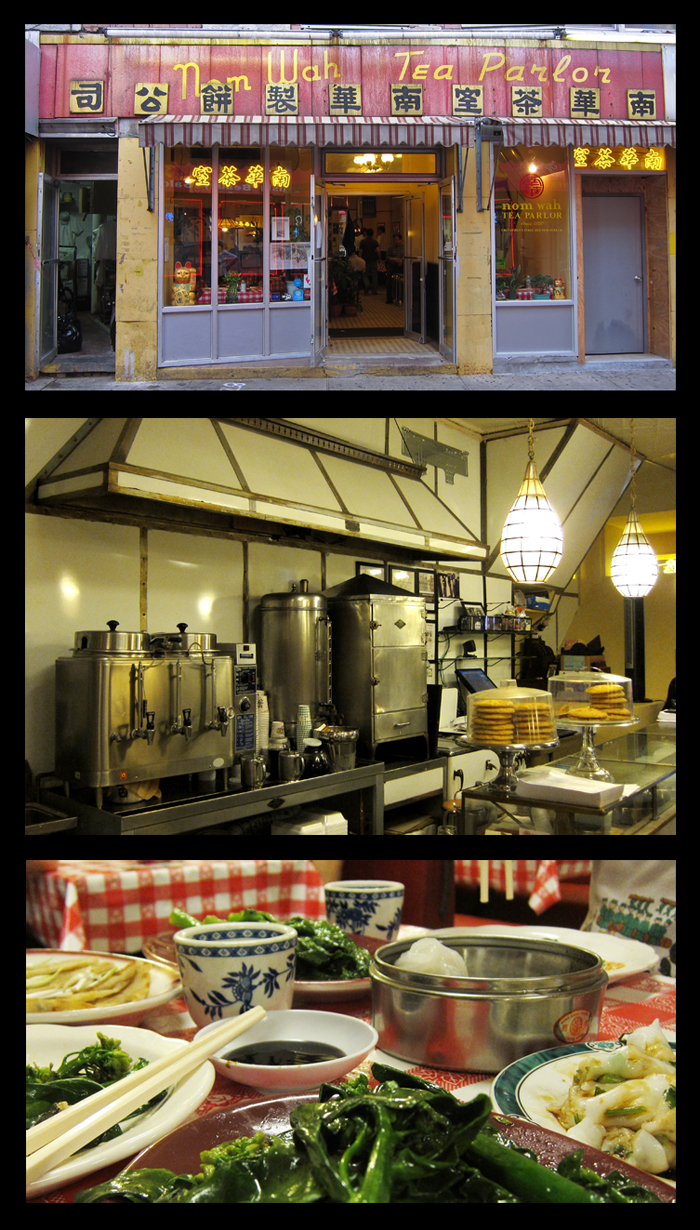
    Hellen told me of her own recent experience at Nom Wah Tea Parlor in Chinatown, where Wilson, the owner, was also personally very attentive to a customer’s needs. In Hellen’s case, she requires a gluten-free diet, a tough call in a Chinese restaurant, which, sadly for her, is her favorite cuisine. On her first visit, Wilson sat with Hellen and went over her dietary needs and food preferences. She is now a happy camper indeed, and she and her husband are regulars at Nom Wah. She was eager to share her discovery with me. Weekends are quite busy, so we chose a weeknight which gave me the opportunity to meet the owner.

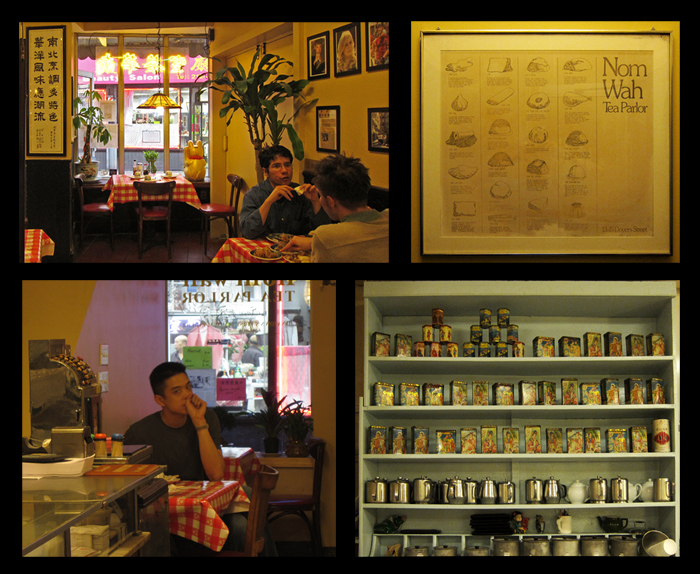
    Nom Wah’s specialty is dim sum, a Cantonese-style cuisine involving small portions of food – various types of steamed or fried buns, dumplings and rice noodle rolls, filled with a variety of ingredients, including beef, chicken, pork, prawns, and vegetables. The small portions enable diners to sample a wide variety of food items. The meals are invariably eaten family style. Traditionally, dim sum was served from steamers on trolleys, wheeled through the restaurant. Nom Wah now uses a menu and checklist system where items are checked off and submitted with one’s order. Nom Wah also offers a broader menu for those wanting dishes other than dim sum.

    Originally dim sum was meant as a snack but now has become an entire meal. It is typically served from early morning until mid afternoon and is often a weekend family outing. Nom Wah is unique in that it serves dim sum for all its operating hours. Tea is a big part of dim sum – the overall dining experience is known as yum cha. Nom Wah has an extensive tea selection as well as dessert items and their almond cookies.

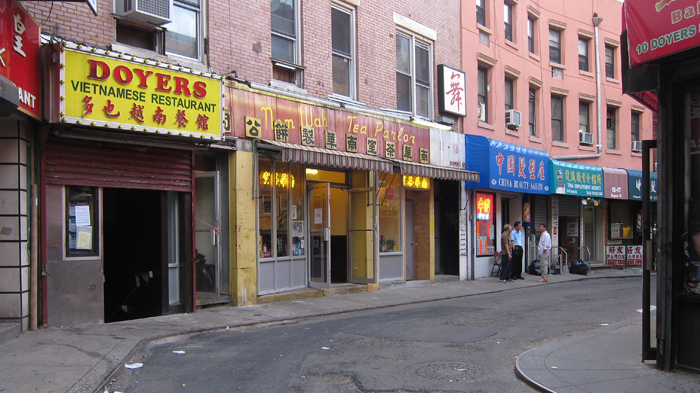
    Nom Wah Tea Parlor is a 90-year-old establishment located at 11-13 Doyers Street. Nom Wah Tea Parlor first opened at 13-15 Doyers Street back in 1920 as a bakery and a tea parlor. Wally Tang, who worked there since 1950, purchased the restaurant in 1974. Wilson Tang, his nephew, took over the business and renovated in 2010. preserving the vintage look and ambiance, keeping the fixtures and decor of the original establishment with its bright yellow walls, red and white checkered table cloths and antique tea tins. A poster by Milton Glaser hangs in the vestibule. See the Nom Wah website here.
    The exterior is a wonderful throwback with its faded red and yellow sign, awning and Chinese characters. Porcelain lucky cats wave from the behind the windows.

    Wilson, now 32, comes from a mixed background of finance and food service, working some years for Morgan Stanley and ING Direct. He also owned and operated a bakery in the Lower East Side for 5 years.

    Might Wilson be the type of person that really goes the extra mile? On Friday morning, when writing Part 1 of this story, I was curious if I could get Wilson’s take on the restaurant service experience I had in the Chelsea restaurant. I sent an email at 7:40 AM leaving my phone number – I received a reply at 7:50. He was leaving for work and on exiting the subway, a few minutes before 9 AM, Wilson called my home and discussed his take on my story. A number of additional emails were exchanged that morning. Here is his email response regarding the Chelsea incident:

    Brian,

    To answer your question, as a restaurant owner, I would never have any dispute with the customer. If there was a mistake with the food, I would always comp the item or do whatever they wanted to ensure that they are completely satisfied. In the restaurant business, it is very important to have repeat customers whose positive experience will spread with word of mouth. It’s not worth the few bucks of food cost that can turn the experience negative.

    Wilson’s policy is that of the fine dining establishment which will comp an entire entree if a mistake is made. Atypical perhaps for a lower priced eatery, but Wilson knows that there can never be too many examples of good management and that it will take many battles and warriors to win the War on Disservice 🙂

    Posted on by Brian Dubé

  • War Against Disservice, Part 1

    Sometime in the early 2000s, I experienced one of the most outrageous acts of customer disservice I have ever seen. A old friend, Jim, was visiting New York from San Francisco on business. We had been college roommates and he had lived here for a number of years. Jim loved the city and, like most, looked forward to the restaurants. My girlfriend suggested a trendy place in Chelsea, so we went.

    Jim ordered a pasta dish and was served a pasta dish with seafood. Before Jim discovered the error, the waiter had run off. Jim was an experienced world traveler, very easy and accommodating. He would eat just about anything and was not a complainer. The place was very busy and rather than send the dish back, Jim just ate it.

    When our check was delivered, Jim politely pointed out the mistake and asked for an adjustment of the bill. The waiter noted that Jim had eaten the entire meal and asked if he had liked it. Jim said yes. The waiter said that it was their policy that he had to pay for what he ate. We suggested we speak to the manager who said that if we had informed them of the mistake when being served, they would have replaced the dish and billed us the proper (lower) amount. But since Jim had eaten it, he stood by their policy and we had to pay the larger amount, a difference of about $3. I was OUTRAGED. But Jim paid and we left quietly.

    Most restaurants would have made the adjustment and even offered a free dessert or drink. Some may even have taken the entire item off the bill. Jim was more than happy to pay for what he ordered, only asking for an adjustment. For this small amount, the management would stand on “principle” and risk their reputation. It was so petty and certainly the restaurant would still make a profit on the meal. Or perhaps the issue was that we were seen as scam artists or liars?

    I have retold this story a number of times to various people and gotten a number of opinions, some defending the management. A former waitress said that a business has to guard against customer abuses, that it may get out of control. I see – so we go from the customer is always right to the customer is always suspect?

    Ask the management at B&H Photo what they think. I once returned a laptop, only to learn that laptop computers are one of the few items that are not returnable. I had, however, been told originally that it was returnable. A salesperson suggested I speak to the department manager. I was reluctant to bother asking, but decided to ask before I left.

    I found the manager, who asked for my receipt because it was encoded with the original salesman’s ID. He went off. When the manager returned, he told me that he had found the salesman and asked him what the policy was for returning laptops. The salesman told the manager that there was a 14 day return like all other products.
    Since I was misinformed, B&H was giving me full credit. He explained the reason for the policy: once used, a technician has to completely recheck a PC – software installations, hardware function, etc. The manager said that they would put the item in their used department, losing a few dollars. I felt badly, but he insisted and I was not to worry – it was their mistake.

    There are also restaurants whose owners value the customer very highly. Fortunately, not all operate like that place in Chelsea. It is in some of these establishments in New York City that a small war is being fought. In Chinatown on Doyers Street, once known as the Bloody Angle owing to gang warfare, there is a man engaging in a different kind of battle. In Part 2, you will meet him and learn how he is helping to win the war against disservice 🙂


  • Random Acts of Consideration

    A Mild-Mannered Man of Manners

    (Note: this is Part 2. For Part 1, see here.)
    We sat in the jet stream – a literal wind tunnel as cold wintry air blasted in from the curtained entry only a few feet from our table. Customers entering the restaurant would push the curtain aside, invariably leaving it open. Occasionally, a staff member, if in our neighborhood, would draw it closed, only to be opened seconds or minutes later by new arrivals.

    I had been observing this situation for quite some time and a very large number of people had entered. NO ONE, not one, had considered pulling this curtain closed. Even those who were waiting to be seated and stood for some time just inches away from us. Of course it was not the responsibility of customers to tend to the failed windscreen, so I cannot really accuse these passersby of any rudeness, only a surprising lack of consideration on the part of all who entered in not pulling the curtain back behind them. However, this is a restaurant, it was incredibly busy and chaotic, and hunger called out for those arriving, not Emily Post, Ann Landers, or Randy Cohen*.

    I passed the time with a friend, an NYU student, writing on our chalk table while she told me of her high school classmates’ use of the word Guam to describe the remote, as I told her of the term Siberia which I had seen used in a New York Magazine article to refer to poorly located restaurant tables (see Timbuktu, Guam and Siberia here). Surprisingly, she had never heard of Timbuktu used in this manner, perhaps more common at the time I grew up. Every generation has its own potpourri of slang, influenced by societal and cultural elements of the time. Words and phrases like Queen of Sheba, shindig, floozy, and skinny balink are not popular in today’s lexicon. The rise of the Internet, gaming, electronic media, and personal computers has given rise to a new world of language and idioms, both written and spoken – acronyms, initialisms, leetspeak, and others.

    A group of three entered the restaurant, where a blond haired gentlemen of the group immediately turned and closed the curtain – so quickly as to appear to be an automatic reflex action. This, I thought, is a man cut from a different cloth. An interloper. A stranger in a strange land, or at least a man with roots other than New York City. As he was heading to a table to be seated, I asked, “Are you from the Midwest?” To which he replied, “Yes I am.”
    I was elated, not so much at his considerate act, but in feeling and looking brilliant at my accurate identification of this mild-mannered man of manners. I went to his table, introduced myself, and learned that his name was Jerry. He was as unimpressed with my feat as he was with his standout behavior – perhaps not surprising from a man who was likely brought up to see this as expected behavior, not an act so unusual as to beg a story to be written.

    The evening had been tantamount to a crude, informal study on human behavior. And although the results were rather dismal for mankind as a whole, in the final act or our small drama, Jerry illuminated the darkness of the room with his Random Act of Consideration 🙂

    *Randy Cohen writes an informative and provocative column, The Ethicist, for the New York Times.


  • Timbuktu, Guam and Siberia

    If you are going to dine in New York City restaurants, it is best that you are tolerant and flexible. New York City is edgy, and, like all edges, some are sharp and others, like New York’s, are rough and uneven. Even if you pick your battles carefully, there are too many elements beyond a person’s control in a big city, buffeted about by whim, chance, and circumstance. Like the service you get in a restaurant or the location of your table.

    There are numerous metaphors for the remote. As a child growing up, the household refrain was forever Timbuktu. I did love the sound of it. It was so befitting – its very sound was exotic and remote, somewhere in darkest, mysterious Africa. It only occurred to me recently that I had no idea of where Timbuktu was or why it was such a well used metaphor for the faraway place.

    In 1988, New York Magazine ran an article entitled: Table Envy. The Best Seats in Town, Who Gets Them – And How To Avoid Siberia. Siberia – another apt metaphor for the poorly located and very undesirable. The article even contained floor plans of some of the city’s more exclusive restaurants, showing the placement of tables with a description of those deemed to be in Siberia (as opposed to the “Golden Coast.”)
    I am told by a friend, who attended Elwood/John Glenn High School on Long Island, that Guam was the universal label for all things remote and that the word was used liberally. Thus, we have a trinity of metaphors, showing a nice geographical distribution, perfect for every occasion to cover the various conditions where remoteness needs to be underlined.

    I have sat many times at the table at the top of the short staircase at the entrance to Olive Tree, a Middle Eastern restaurant on MacDougal Street in Greenwich Village. I do love the ambiance of this place, but although not remote, this table for two can at times qualify as a variant on Siberia, particularly with continuing severe drafts from the doorway in the winter. Last night’s affair was like dining in the jet stream. A woefully inadequate curtain was forever billowing, acting as a poor windscreen and was left open from each customer that had last arrived. We shall see in tomorrow’s story (see Part 2 here), however, that there can be pleasant surprises and warming trends, in Timbuktu, Guam, and even in Siberia…

    *Timbuktu is located in the West African nation of Mali, located on the Niger River at the edge of the Sahara desert. At its peak in the 16th century, Timbuktu was a thriving center of commerce and intellectual activity which drew Islamic scholars from around the world. It has been a popular metaphor for a remote or mysterious place and used this way in film, literature, and conversation for over a century.


  • dinamic_sidebar 4 none

©2026 New York Daily Photo Entries (RSS) and Comments (RSS)  Raindrops Theme