• Category Archives Homes and ‘Hoods
  • They’re All Around

    No one likes liars, but I have been assured that everyone lies a little bit some of the time. Fine. But I prefer not to do business with someone whose factory is a shrine to lies and deception. I was attempting to “keep it at home” and design and manufacture carrying bags for my product line right here in the United States. Specifically, New Jersey. The company I targeted looked very promising. Their webpage showed bags with the logos of many well-known companies. Certainly if it was good enough for the Wall Street Journal, Revlon, and Ferrari, it would be good enough for us. Or so I thought.

    Phone calls over weeks and months were always met with “the samples are going out today.” Finally, in frustration, I sewed my own samples and decided to pay a personal visit. With my prototypes and product samples in hand, I arrived at their factory. I was pleased to see a real factory. However, on entering the enormous premises, which were completely devoid of workers less one sample maker, I was a bit disheartened.

    I was eager to discuss the matter of an empty facility, but I decided to take care of the business at hand first – examine samples, discuss construction and fabric, silkscreening, etc. At one juncture, I finally decided to broach the subject of workers. The owner had already made mention of pieceworkers who came daily and took work home. Using a network of local home sewers is not a mortal sin, but he had made representations on the phone, as did their website: “Our sample makers provide the actual sample for your customer’s approval. All of this is accomplished in house as is the actual manufacturing and imprinting.

    I questioned the owner about the in-house production. Gesturing in a very large nonspecific circular hand movement in the air, he said, “They’re all around.” I looked all around the massive, empty room. It was not lunch time and it was not a holiday. Was I blind?

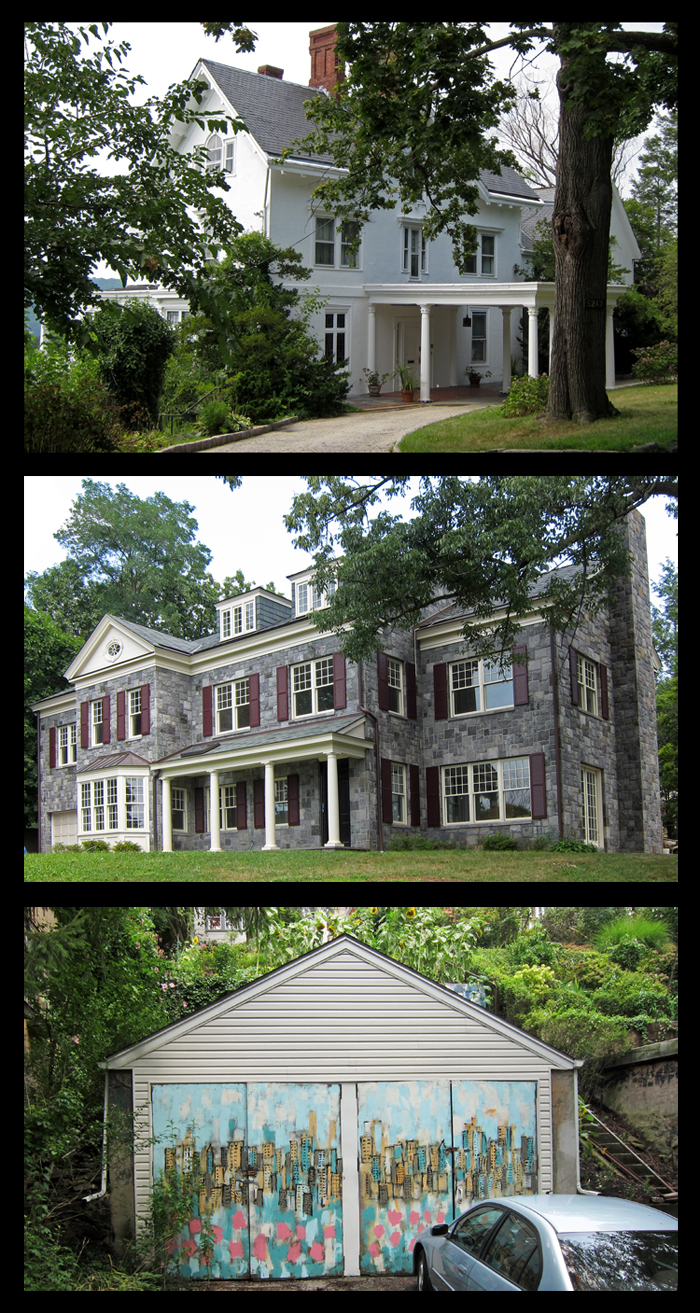
    Vagaries like this can be outright lies or can sometimes be used to deflect lack of specific knowledge. When I recently visited Riverdale and I enquired from a resident about the location of the palatial homes which I knew the area was famous for, I got another “they’re around” type of response.

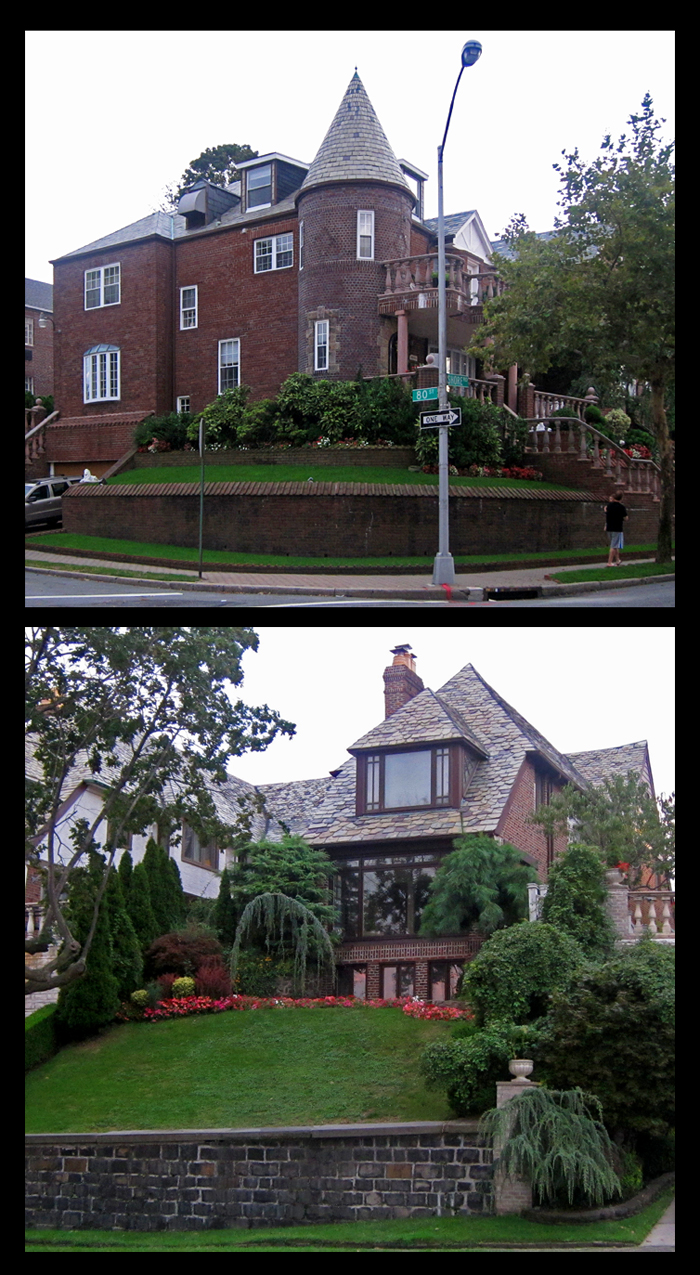
    Riverdale is an affluent residential neighborhood in the Bronx. Fueled by the rise of rail commuting, the enclave was established in the 19th century by wealthy businessman who built country estates. Although smaller homes and apartment buildings have been added, the character of a secluded enclave still largely exists. The area fronts the Hudson River, affording magnificent views. There are many things of interest for the visitor, such as Wave Hill (a combination botanical garden and outdoor art gallery), the bell tower, the great wall of Riverdale, and the historic district of Fieldston. You can read more about the neighborhood here.

    I did not prepare for this excursion to Riverdale, and I missed many of the sights. And although I did discover a few nice homes, I know that I did not dig deep enough and uncover the many historic mansions of a bygone era. But here in Riverdale, it’s not an empty promise. You just need to look a little harder because They’re All Around 🙂

    Related Posts: The Outer Limits, Big Secret on Little Street, Todt Hill, We Don’t Do Windows, Head for the Hills, Arthur Avenue
  • None of Us Go

    You can read tomes about Italy, look at photos, see videos and films, and speak to native Italians, but you will never know Italy until you finally get on that plane for the first time and go there. When you arrive, you will have that Aha! experience that I am sure you have had in other ways before – so this is Italy.

    Like an old friend not seen in decades, you will recognize many familiar things in his face, but the essence of the man himself is much more than a few big pieces. The image you have conjured prior to visiting Italy will be seriously devoid of the many, many things which will never be written of – the mundane, the inconsequential, the trivial, the ubiquitous, the details, the customary – yet these are the things which comprise the bulk of day-to-day existence.

    Someone living in New York City may be here for decades and never set foot in any of the major iconic tourist attractions or even those places reported in guides to Secret New York, Forgotten New York, Not For Tourists, etc. Because for the New Yorker, like anywhere else, the city is about the corner deli, the laundry, the nondescript row of houses in an average neighborhood. Who would want to read about or see images of such things?

    You do.

    I have featured most of the major attractions. However, I have also endeavored in these pages to bring you the side of the city not typically written about or photographed, to show the real New York. I have woven into my stories many anecdotes to make the ordinary as accessible as possible. Like many of our wonderful ethnic cuisines, I have taken the basic staples and prepared meals with spices from my personal cupboard to make them as enjoyable as possible to eat. I have written about chewing gum on the sidewalks of New York, car washes, and other very ordinary things.

    Perhaps some of my stories have come as bitter medicine that you may not want to take. But all of my efforts have been like that of the mother who only wants the best for her child. I do not only want to share my joys with you but also the slings and arrows of living in New York City.

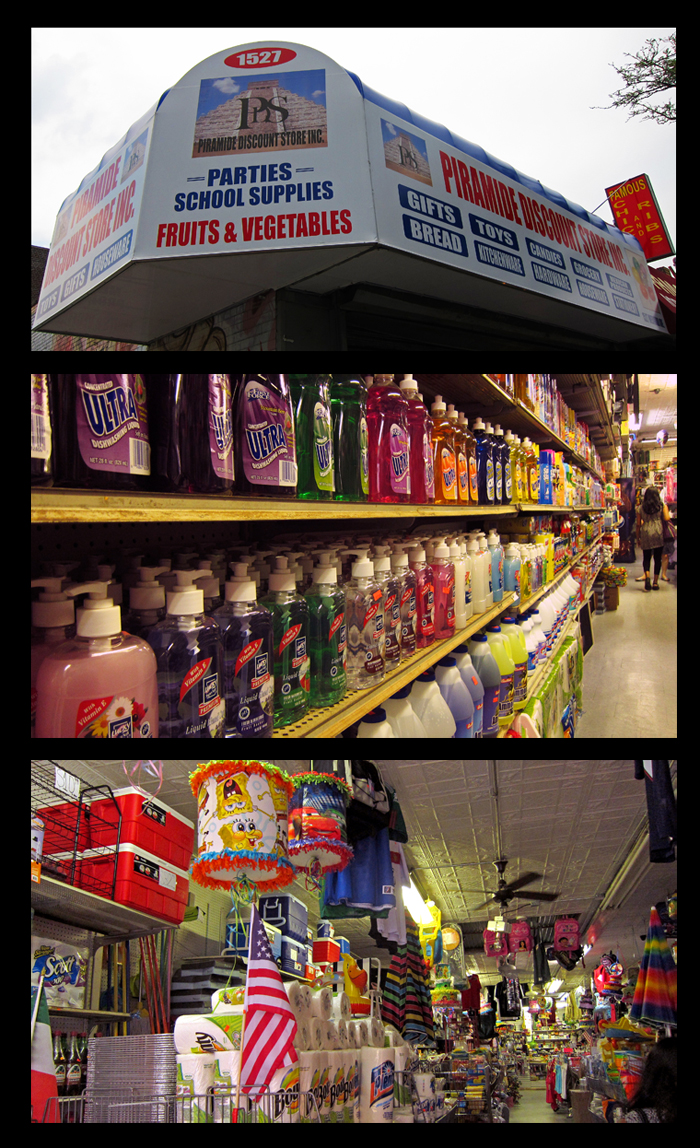
    On a recent journey to Coney Island with a few friends, we found ourselves drawn to the Piramide Discount Store on 16th and Mermaid Avenue. My friend Leslie (see White By Design), a graphic designer by trade, was all abeam with the store’s tidy and colorful displays and arrays of every imaginable item for sale. The sign outdoors proclaimed: toys, candies, grocery, bread, kitchenware, hardware, houseware, stationery and Mexican products. More succinctly put, a true general store. Not the quaint country store which has been restored and has historical and architectural significance. No, this is the real neighborhood place that everyone there knows and where everyone there goes, but none of us know and where none of us go


  • Man Peruses Queens Confuses

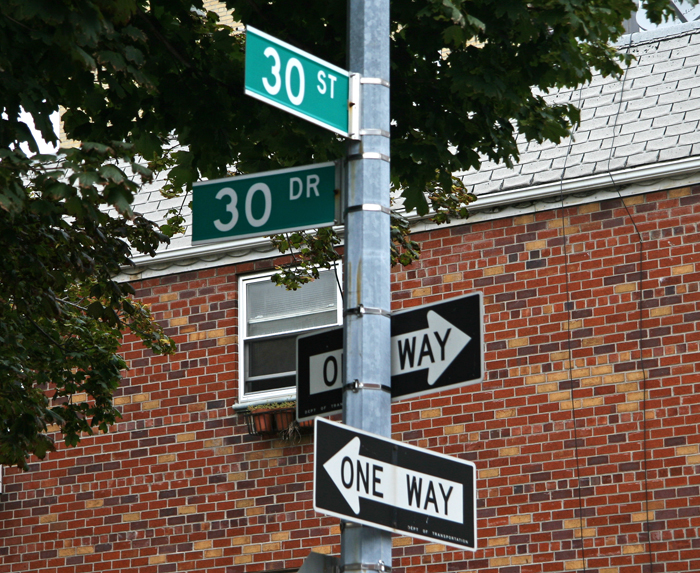
    For ease of navigation, it does behoove a large city to establish a numbered grid. However, this does come at an expense – the lack of soul or identity. It will be difficult for a numbered street to carry panache or to conjure images or historical links. (There are notable exceptions, such as Fifth Avenue.) This is why, when the street grid for Queens was developed in 1911 by Charles U. Powell, it was met with resistance, and many named streets remain, mixed in with numbered streets.

    Powell, a chief engineer in the topographical bureau, modeled the grid after Philadelphia’s. At the time, the borough was a mess – there were approximately 60 self-contained villages in Queens, many with duplicate street names. The finished product is a borough of avenues, streets, roads, drives, places, lanes, crescents, courts, and terraces. In What Numba Kissena?, I wrote about my early experience driving a taxi in Queens and being lost. The nightmare is that many have the same numbers, and there appears to be no rhyme or reason to the numbering system. So, for example, between 43rd and 45th Avenues, you will find 44th Avenue, 44th Road, and 44th Drive. In other cases, there will only be consecutive numbers, the skipping of numbers or streets stopping and resuming elsewhere.

    Avenues run east and west and streets run north and south (in Manhattan, it is the reverse). Since the numbering extends the entire borough and it is as wide as it is tall, there are over 200 avenues and streets. Hence, there are many intersections with the same number (in Manhattan there are only a handful of such intersections). So, a sign like that in today’s photo showing 30th and 30th, is not uncommon.

    The hyphenated house numbering also follows a system. The number before the hyphen indicates the nearby cross street, and the number after the hyphen is the actual house number. The houses are in numerical order, so the number also will indicate its relative position on the block. So, 30-72 30th Street would be on 30th Street between 30th and 31st Avenues, closer to 31st since 72 is the house number. Some street numbers are skipped, others stop and continue.

    Confused? Don’t worry. None of this will really help. Even residents and those working in the neighborhood get lost. From a New York Times article in 2000, “Meet Me At 60th And 60th; Many Drivers Find Streets of Queens A Confusing Maze“:

    Laura Bell, a proofreader for a Manhattan advertising agency who has lived in Long Island City, Queens, for four years, said flustered people constantly stop her to ask for directions while she is walking her dog. She said she was usually too confused herself to help them out.

    ”They usually seem like they’re at a point where they think they’re never going to get out,” she said. ”Queens is a bit of a twilight zone.”

    The article concludes with one resident’s solution:

    ”I’m shameless at this point. I just keep my window down and yell.”

    I don’t know how well GPS will perform either. A recent excursion to the Family Corner Restaurant in Queens resulted in a much longer walk than anticipated. The iPad Maps application appeared to have located the destination improperly. Even in the world of high technology, Man Peruses Queens confuses…

    Related Posts: Manhattan Address Locator, Follow the Crowd, Love Is All Around, Part 2, Small Achievements


  • Not Under the Gowanus, Part 2

    (see Part 1 here)

    I have driven the roadways around this metropolis for decades and, like anyone else who drives highways repeatedly, there are a myriad of familiar structures, most of which one has never actually visited. Over the years, a number of buildings have intrigued me, such as the enigmatic property with illuminated triangular trusses as seen from the Manhattan Bridge. This rooftop haunted me for decades until if finally occurred to me: why not get off the roadway one day, investigate and see what this landmark actually is about? You can find the mystery solved here.

    The landscape as seen from the Gowanus Expressway (see Part 1 here) is generally of little interest, much of it commercial/industrial. However, as it runs through Greenwood Heights, Brooklyn, a beautiful green trimmed church spire makes its presence known. As I go fleeting by, a recurring thought to visit someday fleets by as well. I finally decided to bring these fleeting thoughts to an end after a recent excursion to nearby Green-Wood Cemetery, when I paid the church a visit.

    Regardless of how significant a structure turns out to be, this type of exploration provides me with the necessary closure of a long-seated curiosity. As a side benefit, the experience also provides a resource which can be used when traveling with others to identify the landmark – wielding knowledge that you are not only familiar with the structure but also have visited said structure confers credibility that you know New York City. (Tip: Recount the most extraordinary details that you can remember in a nonplussed manner to be seen as a smug New Yorker. This insures that in the future, your authority will not be questioned.)

    The church in question is Our Lady Of Czestochowa / St Casimir located at 183 25th Street in Brooklyn. The property spans the width of a city block, from 25th to 24th Street. I circumnavigated the block and was impressed by the gothic structure – so distinctive, contrasting against nondescript surroundings. In a previous post, I told of how one can see the spire of Czestochowa from the automobile graveyard and that good things are often found just around the corner, but Not Under the Gowanus 🙂

    About the Church: The parish of Our Lady of Czestochowa Church was established in 1896 to serve Polish Catholics. A frame church was built on 24th Street but was destroyed by fire in 1904. On July 17 of the same year, construction began for the present church, designed in Gothic style and built with Belleville gray stone and brick. The steeple rises 175 feet, flanked by shorter towers on each corner. In 1980, the parish of St. Casimir’s was merged into Our Lady of Czestochowa.

    Related Posts: Down to the Cellular Level, Pyramid Power, Eldridge Street, Gothic Night, Little Church Around the Corner


  • Not Under the Gowanus

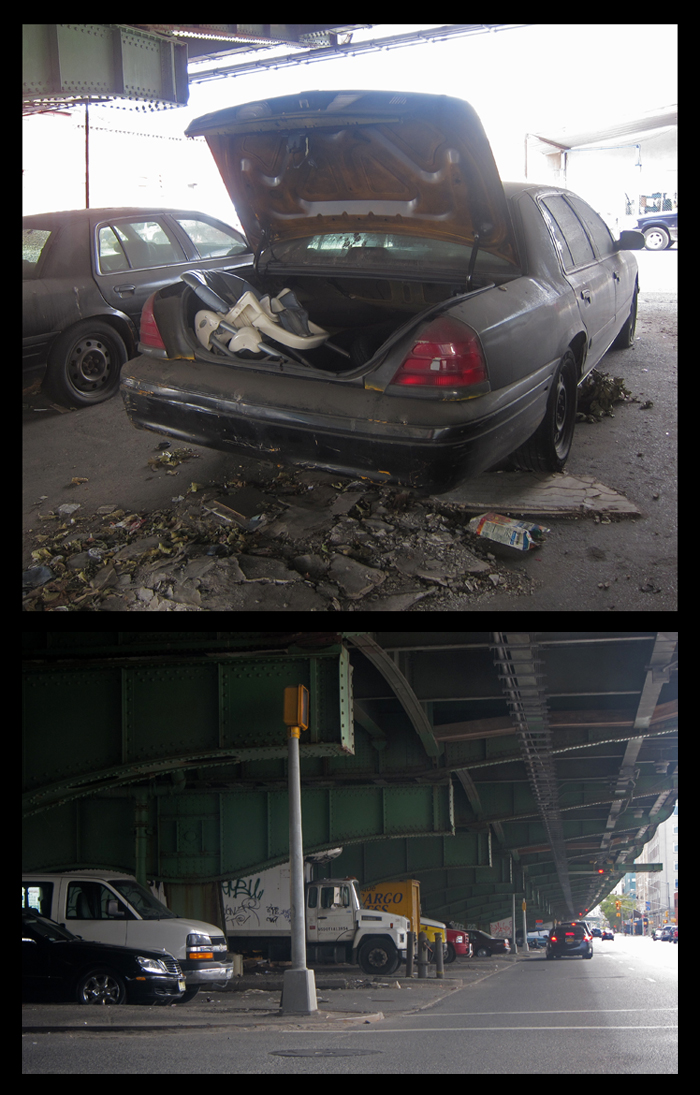
    There’s romance to the classic song Under the Boardwalk – the lyrics describe a tryst under the boardwalk in beloved Coney Island. But not every hiding place under an elevated structure is so romantic, particularly in New York City. I certainly would not want to meet anyone under the Gowanus Expressway, a highway elevated above 3rd Avenue in Brooklyn.

    The word Gowanus does not have a very nice ring to it, certainly not to a New Yorker who knows the Gowanus Expressway or the Gowanus Canal. Even the word itself seems unpleasant to me, if perhaps only by a long association. If you read the Wikipedia entry on the thoroughfare, you will not get the true picture. Take a look at the photos and see this offense to all things visual.

    For those who despise Robert Moses – and there are many – the Gowanus Expressway, built under his auspices, could easily be the poster child for the dark side of urban development. Deterioration has only added insult to injury. It does provide a much needed connection between various boroughs and through Brooklyn, but at a very hefty price, particularly aesthetic. The highway as seen from street level is hideous, blocks light, and dominates the avenue. There have been talks and plans over the years of taking the elevated structure down and replacing it with a tunnel, but, to date, nothing has been decided.

    This city really is a course in juxtaposition. The good abuts the bad, the beautiful abuts the ugly, the polished rubs against the rough. Clean meets filthy and rats run everywhere, unfettered by neighborhood or income. I should not have been so surprised to find these abandoned cars and burnt remnants under the expressway, but the whole scene was particularly shocking owing to the fact that I spent the afternoon in Greenwood Cemetery.

    Around every corner there is often a surprise, and I had just photographed a beautiful structure that has plagued me for years. It was a small surprise, and I will show you that soon (see Part 2 here). And it’s just a short trip around the corner, Not Under the Gowanus 🙂

    Related Posts: A Story About Nothing, There’s Nothing Here, Del Floria’s


  • Moonrise Over Hernandez


    It took a trip to Italy to learn that the desire for respite from city life and the countryside was not unique to our time or to New York City. Romans built villas millennia ago. These lavish homes were built by the wealthy elite and were used to escape the city and summer heat. In Florence, the Medicis built villas – country homes that served as alternate living spaces to their urban palazzo. Not so much is new under the sun, particularly in the realm of basic human desires, and I suppose it was rather foolish and ethnocentric of me as a New Yorker to expect that escape from the stresses of urban life and the desire for a more spacious country home with grounds, etc., would be limited to recent times.

    At one time, Manhattan was seen as a place to work and make money, not necessarily as a place to live. Many wealthy chose to live in the boroughs, particularly Brooklyn, seeing Manhattan as a place of business, but not necessarily the place where one would choose to live. One of those places was Bay Ridge, Brooklyn.

    At one time, Bay Ridge was just another Brooklyn neighborhood to me. I had not explored it enough to understand its identity. This is a typical problem for any outsider to a place. Cursory examination and reading will only give a surface knowledge. It will take many visits and substantial time to really understand the heart and soul of any place. Meeting residents is necessary to get a full picture.

    This process started for me with visits to First Oasis restaurant, having known the owner for 30 years, starting when his restaurant was located in Manhattan. Over the recent years, I became more acquainted with the various features of the neighborhood: its architecture, parks, vistas, ethnic enclaves, and restaurants.
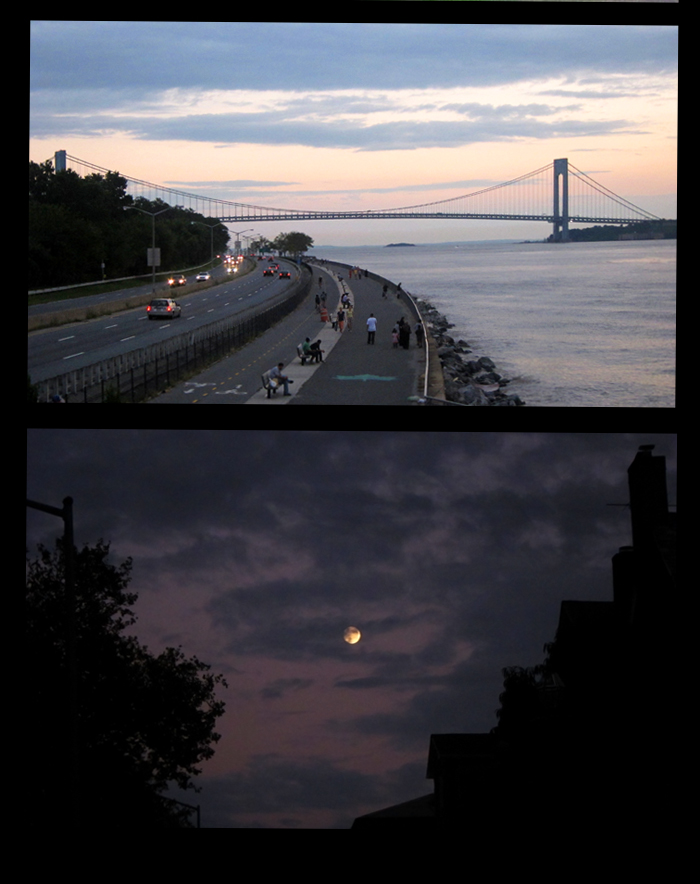
    Western Bay Ridge fronts the Narrows, the strait that separates Brooklyn from Staten Island, spanned by the Verrazano-Narrows Bridge. This is where Shore Road lies, originally fronting and following the shoreline. In the mid-1800s, the neighborhood functioned as a country resort for the wealthy who built huge mansions near the water. After 1940s, the Belt Parkway and accompanying landfill separated Shore Road from the actual shore.

    On this particular visit, I was accompanied by a friend who grew up in Bay Ridge.  She told me stories of her childhood and of her vivid memories. We strolled along Shore Road, where the photos were taken. This gave me a real human connection to the neighborhood for the first time. As we left at sunset, a moon shone brightly over one of the streets. I’m sure for her, it was no less than Moonrise Over Hernandez 🙂

    Related Posts: Fire Island, The Total Call


  • Even the Worst Is Good

    Posted on by Brian Dubé

    On Wednesday, June 28, 2008, I wrote Insult to Injury. I had found what was to me one of the worst insults in the New York City dining experience – I enumerated 7 points outlining the transgressions.

    But there is always room for improvement.

    MacDougal Street is my least favorite street in the Village. It has a distinctly touristy feel and is gritty, dirty and congested. The shops typically cater to the lowest common denominator. There are a few things worthwhile, such as the Olive Tree Cafe and Mamoun’s. But dining al fresco is an abomination and unthinkable.

    In fact, it is highly debatable that al fresco dining can actually take place on MacDougal Street. Unless you redefine al fresco to mean putting one table between the entrance to a restaurant and the exit of a comedy club in a space not even wide enough for the table alone.
    But strangely, there is a comfort in all of this. Why?

    Well, you’re in New York City, arguably one of the most dynamic places in the world. The streets are pulsing with energy and you can just feel it everywhere you go. It’s creeping from every crack and crevice. You know you are at the epicenter of the civilized world.

    There are people everywhere. Too many people. But we are gregarious, and although we bemoan the crowds, I see no mass exodus to the countryside. We want to be around people.

    A lot of food in New York is authentic ethnic cuisine, even at the lowest prices – something virtually impossible to find outside the city. We have tremendous selection.

    So many things are operating at the highest levels of sophistication in the least expected places. Hence the series of articles I have done – Abandon All Preconceived Notions Ye Who Enter Here. Where will you find homeless with degrees from Columbia University, brilliant eccentrics like Mark Birnbaum walking in 8-inch silver platform shoes (see Part 1 here), or geniuses like Paul Kachur lurking about the dive bars of the East Village? Park regular and friend David Hoffman, who looked essentially homeless; we only found near the time of his death had two PhDs in pharmacology.

    In Bristol, Connecticut, where I grew up, there are no places to eat outside at all. When I walk down MacDougal Street and think hard, I realize that here, even the worst is good…

    Posted on by Brian Dubé

  • Old New York, Part 2

    Posted on by Brian Dubé

    (see Part 1 here)
    The good news is that Greenwich Village is extraordinarily unique. The bad news is that if you want a piece of its history, good luck. The housing stock is very limited. And if you are like I am and attracted to row houses, the selection of available units is even more limited. Over the decades, I have from time to time looked at apartments to buy but rarely found anything I really liked, and if I did, the cost was extremely high.

    I am forever asked why I am a renter and have not purchased a home after living in New York for over 40 years. The market in New York City is very different from anywhere else. There are over 2 million apartments for rent in the city with 65% rent regulated in some way. These regulations provide for below market rents and are a strong disincentive to move. The longer you remain in a regulated apartment, the greater the spread between your rent and the open market non-regulated places becomes – it is not uncommon for the difference to be 100% or more.

    This anomaly in pricing just exacerbates the problem – tenants never move with a resultant lesser supply and higher prices for the free market apartments, whether rentals or purchases. If you are fortunate enough to rent an apartment in an historic building, it is unlikely you will ever find a place like it at any price, for rent or sale. In my own building, 3 out of four residents have lived in their apartments for over 30 years. Often, rentals in regulated apartments are no more than the cost of maintenance fees on a similar unit for sale. So why buy? Many analyses have been done demonstrating that in New York City, it can be more prudent to rent than to buy.

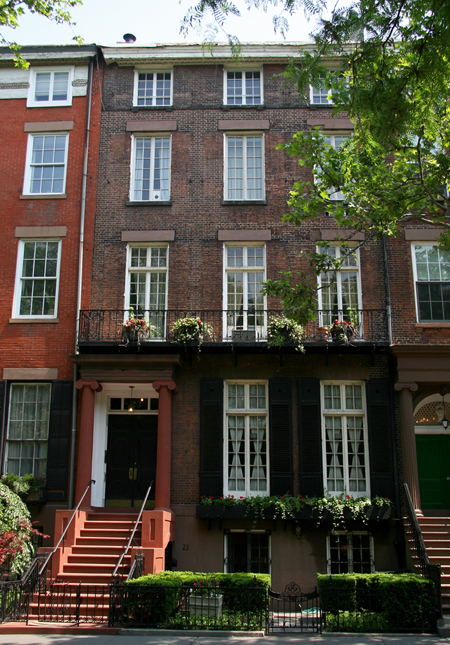
    The 1830 Greek Revival townhouse at 23 Washington Square North has not been available for sale for half a century. It can be yours, however, the asking price is $25 million dollars. The size is 8,528 square feet or a cost of $2,931 per square foot. There are only 7 apartments on 5 floors. Do the math and you will see the problem – if this building were converted to units for sale, the cost per apartment including carrying charges would be stratospheric. Many buildings like this will often sell to one individual who will convert it to a single family home.

    The rentals in this property illustrate what happens in this marketplace. A one bedroom was asking $4,775/month with the penthouse for $8,900 in 2010 and $12,500 per month in 2011. If you would like to get the flavor of what a parlor floor can look like in this type of historic building, see my photos here on the interior of number 24 next door, which one reader described as “real estate porn.”

    By day or night, looking out or peering in, the extraordinary historic charm is available in this rare window of opportunity to own a piece of old New York’s Washington Square. Spare $25 million anyone?

    Other Related Posts: The Feeling Passes, Overused and Abused, Bomb Factory, Left Bank New York

    Posted on by Brian Dubé

  • Old New York, Part 1

    Posted on by Brian Dubé


    There are things you can’t have in New York City. Many things. You can’t watch the sunrise from a mountain top, hear the wind blow through alpine forests, or see the black of night. Much of what nature giveth, New York City taketh away.

    The sound levels are very different here. I spoke to a friend recently from the suburbs who spent a night down the block – on the very same street where I live with the identical exposure. He said he could not sleep at all with the noise of constant traffic. The sounds of the city are only a familiar song to me – I sleep easily without window shades drawn and with all the city’s ambient light and noise.

    Here and there one can find tiny corners, places, culs de sac, alleys, parks, beaches, lakes, rivers – little pieces of the other world, the world outside cities. These special and often little known places in New York City provide magic carpets, that for brief moments can provide transport to a quieter, gentler city. I have shared these places with you over the years in this website.

    I do love the city – the energy, vibrancy, and stimulation are extraordinary. But the problem is that you can’t turn it off. So for those times when I need respite and do not have the opportunity or inclination to leave the city, I seek solace in those special spots that hearken to a time gone by or a world apart.

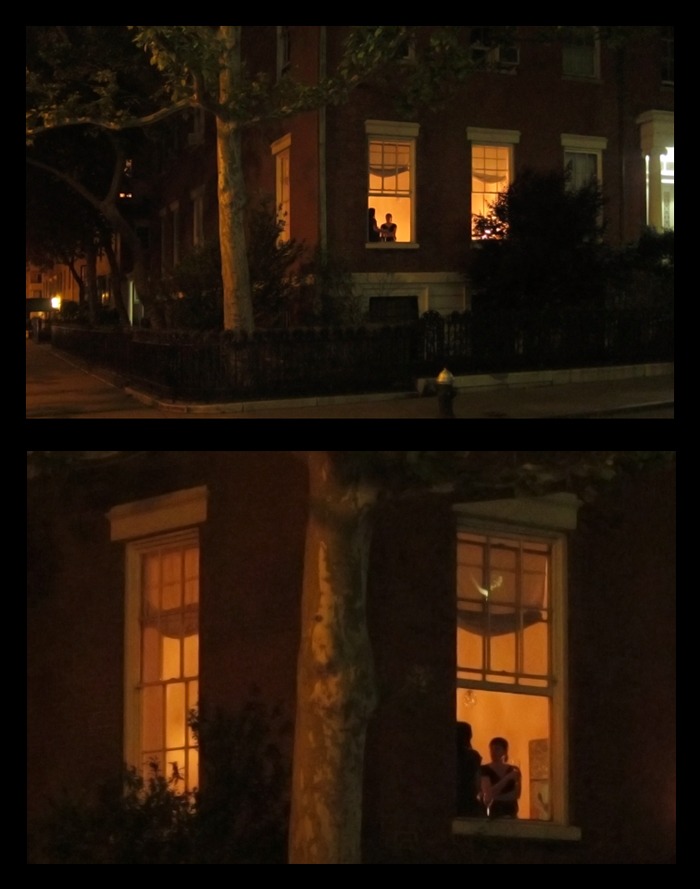
    The Greek Revival houses of Washington Square North evoke the gentility of a bygone age. Here, at the corner of Washington Square North and Fifth Avenue is a row house where I have often seen windows open, lights on and a handful of people milling about. This is the world of Henry James, 1881, setting for his novel Washington Square.

    A couple relaxes with glasses of wine, one resting on the sill, complemented by the exquisite air of warm evening, which has, after a long wet and cool spring, arrived at last. There’s a canopy of trees overhead and the yellow-orange glow of lamps. Everything is soft. Pause on this corner with me and enjoy the soul of old New York…

    Note: If you want a piece of Old New York at Washington Square, see Part 2.

    Posted on by Brian Dubé

  • The Outer Limits


    Wandering and meandering without a clear destination is a noble activity. When I am exploring in a small or local area, I do this regularly – setting out with no agenda. Traveling further, however or by vehicle, the risk of disappointment becomes an issue as well as time used.

    So I turn to maps. I do love maps and always use them wherever I travel to get a lay of the land and a sense of breadth and compass. Even in New York City where I have lived for 40 years, when traveling by car, a five borough street map is always at my side. GPS is great, however, if you want a large and detailed overview of an area, only a full size map will do the job.

    I have been amiss in exploring the Bronx and have very few stories in this website. So, it was time to look at a map and see what might have potential. I love the tips and edges, i.e. the outer limits, where often one finds exceptional features, views and unique villages. Looking at the Bronx section of my street map of New York City, my eye was drawn to a peninsula with an area marked “Silver Beach,” situated between the Throgs Neck and Bronx-Whitestone Bridges. A little reading looked like this would be just the place to satisfy my wanderlust.

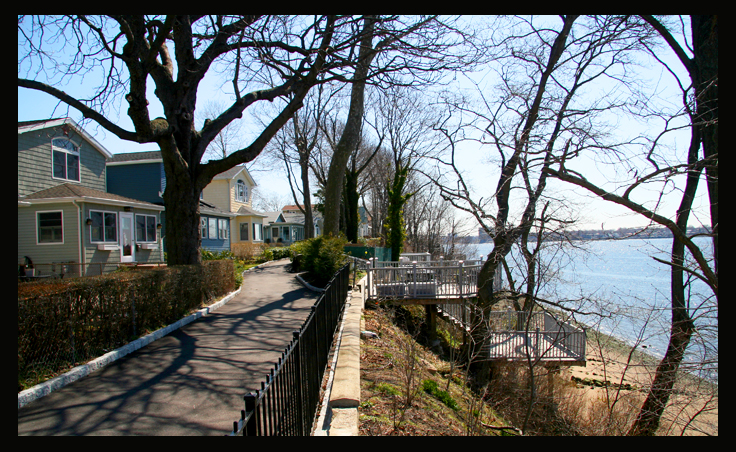
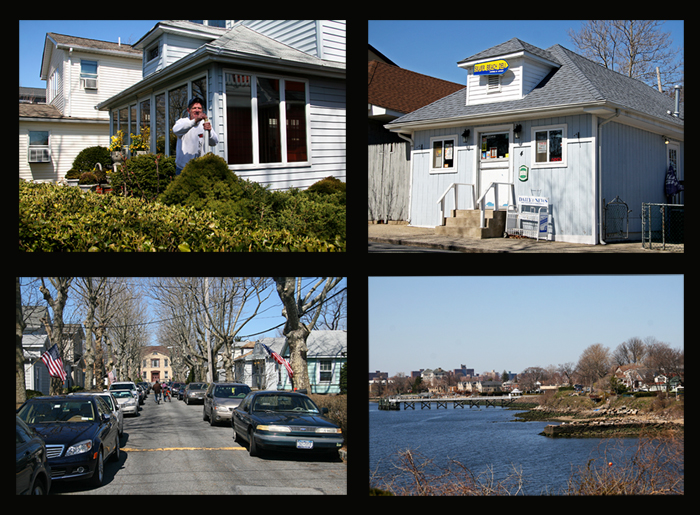
    What started out as a whimsical choice of a travel destination ended up being one of the most remarkable residential enclaves I have seen in the five boroughs. Sitting on a bluff, 50-60 feet above the river, Silver Beach Gardens is a network of small lanes and 451 homes, established as cooperatives – residents own their homes and lease the land from owners’ collective. To buy, applicants must have three letters of recommendation from current residents. In the early 1900s, the neighborhood developed from summer waterfront bungalow colonies on large estate to the neighborhood it is today. See my photo gallery here.

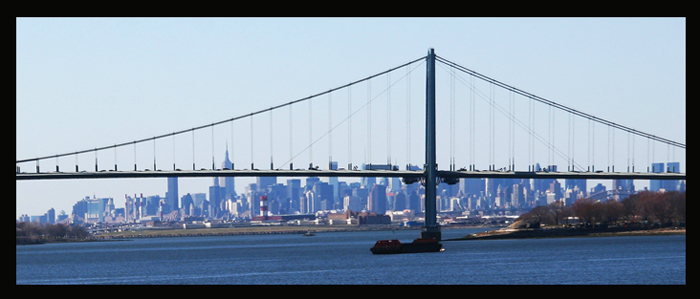
    The highlight of the day was my walk on Indian Trail, a narrow footpath flanking the edge of the bluff with beautiful vistas of the beach below, the river and the skyline of Manhattan framed by the Bronx-Whitestone Bridge. The homes had decks perched on the cliffs, with the beach is accessible by stairways.
    It was here that I met Paul and his wife, busy with springtime yard work. He was extremely friendly, having greeted me first. When I told him that I would be doing a story, he told me how the community was displeased over an article in the New York Times which reported a lawsuit based on racial discrimination in real estate sales.

    Properties for sale in Silver Beach Gardens come very infrequently and typically sell by word of mouth. A small community like this with privately owned single family homes, extremely low turnover, remotely located, little known to outsiders and with strong ethnic history will be slow to change and see the diversity found in a much larger community with rentals and large multi-unit apartment buildings. Silver Beach Gardens is predominantly Irish, German, and Italian. I was reminded of Broad Channel, another extraordinary residential enclave situated on an island in Jamaica Bay. See my story and photo gallery here.

    So, for a little change and some pleasant surprises in your exploring, pull out a map and whether city or state, look for those Outer Limits 🙂


  • A Bottle of Schweppes


    Generally speaking, finer things cost more money, with surcharges for cachet, panache, name, and convenience. Some will say that these are not premiums but rather part of what makes them finer. However, these views are often held by those who find the greatest comfort in the greatest price and believe that quality is always measured in dollars. For those that feel this way, any world-class city will be a good choice to divest of some cash. New York City comes highly recommended.

    In most of the world, outside of large cities, if you have enormous wealth, you will find it difficult to spend enormous amounts of money on ordinary goods and services. So if you would like to spend $8 for an eight ounce bottle of Schweppes Ginger Ale or five dollars for a small bag of potato chips in a hotel room where rates range from $975 to $16,000 per night, I suggest a visit to the Peninsula Hotel.
    These minibar prices seem a little high. But ultimately, this is only a New York City hotel renting rooms for the night, and there is only so much luxury that one can offer. So, in a place where everything needs to be special, perhaps everything has to be priced this way, even a bottle of Schweppes.

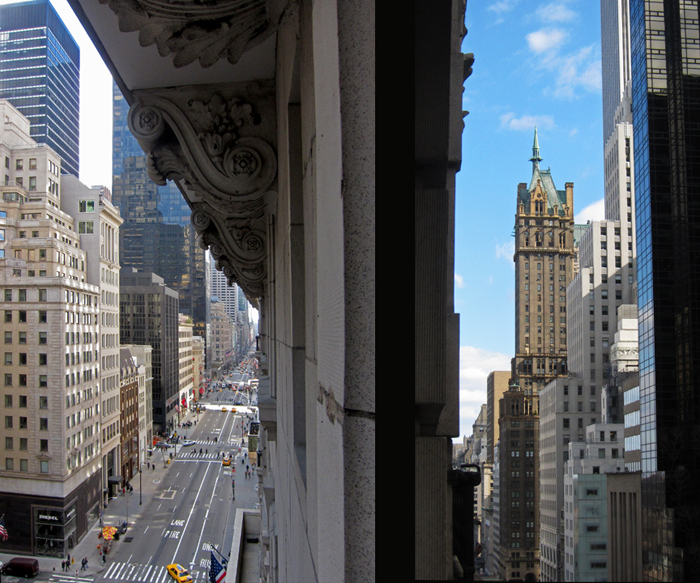
    Admitttedly, the location of the Peninsula New York at 700 Fifth Avenue at 55th Street cannot be beat. The location on Fifth Avenue, often heralded as the world’s most expensive street, is neighbor to many of the most recognized flagship stores, including Cartier, Tiffany’s, De Beers, Fendi, Armani, Prada, Saks, Bergdorf, and Abercrombie & Fitch. The Peninsula is also located near many well known attractions such as Rockefeller Center, St. Patrick’s Cathedral, Radio City Music Hall, and Central Park. The hotel has a 3-floor spa, outdoor terraces, and a glass-enclosed swimming pool.

    I was privy to see a room facing Fifth and able to free a window, open it wide, stick my head out, and get some spectacular views, up and down Fifth Avenue. As I turned back towards the elegantly appointed room, I glanced at the minibar, where on top lay an unfinished ginger ale. No matter how I tried to justify it, there’s still a thrifty New Englander inside, and it bothered me to see that bottle of Schweppes…


  • Listen to the Birds

    Posted on by Brian Dubé

    The range of housing options in New York City is truly staggering – railroad flats in tenements, prewar high rises, modern towers, single and two family houses, mini-mansions, historic 19th century brownstones.

    However, the cost of housing is so extraordinarily high that for most, neighborhood choice, housing, and lifestyle is severely compromised by financial concerns. Where as in the suburbs, most working individuals own their own home at a relatively young age, in New York City, many share apartments with roommates, even into retirement years. Others may continue to live with an ex-spouse while one or both date and cohabit with others. In the case where parents live in New York City, many live with their family through college and beyond, often until marriage. It is also common for younger people to move to neighborhoods completely alien to them, often as outsiders in ethnic enclaves such as Astoria.

    The equation is simple – housing cost is a function of distance from Manhattan, a park or other desirability, and safety/crime. When the lack of positives and a plethora of negatives conspire against a neighborhood, it then becomes a reasonably priced option. There still are some hinterlands, such as Far Rockaway, which have yet to appear in the media as the new SoHo.

    The equation, when viewed with Einsteinian relativity, still applies at all income and wealth levels. On the Upper East Side, proximity to Fifth Avenue and Central Park will determine cost. For residents in the Village, undesirable will mean too close to 14th Street or 6th Avenue. In Park Slope, Brooklyn, the formula is simple – the closer to Prospect Park, the better.

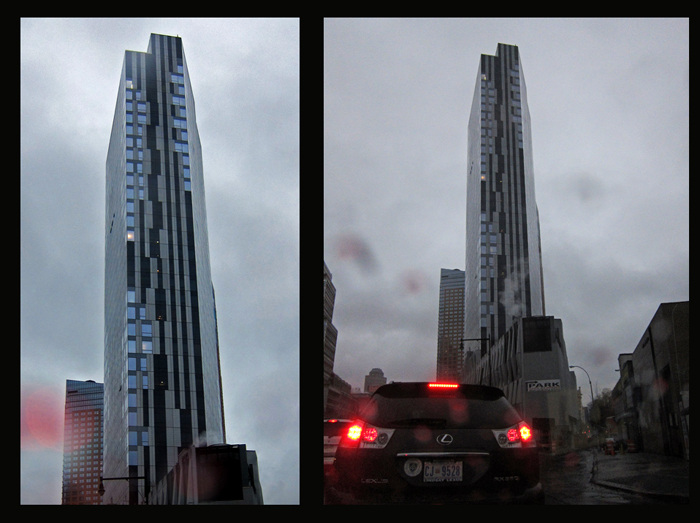
    Downtown Brooklyn along Flatbush Avenue was never considered particularly desirable, certainly not for residential use. I have been through this area thousands of times by car. Recently, I have noticed a cluster of four towers on/near Flatbush Avenue close to the Manhattan Bridge. All of these are new residential projects – Oro, Avalon Fort Greene, DKLB BKYN, and Toren (seen in today’s photo). I am not a fan of modern high rise apartment buildings, but I find this tower quite beautiful architecturally and it has attracted my attention on every passing.

    I personally live in a landmark townhouse. In spite of its tremendous charm and ambiance (which, along with below market rent, is what keeps me here), I do have to tolerate a litany of antiquated services and living conditions – poor ventilation, excessive heat, poor windows, poor heating and cooling, plumbing leaks, roof leaks, no elevator, and things that don’t work.

    Looking at the floor plans and list of amenities in a project like the Toren can make one envious. The 35 story property has an indoor heated swimming pool, a fitness center, tiered two story roof decks, a library, outdoor movie theater/screening room, on site parking, storage, elegant kitchens, large living spaces with high ceilings, curtain walls of glass, doorman, 24 hour concierge, Pilates studio room, saunas, and laundry facilities. The interiors are exquisitely appointed with high quality cabinetry, appliances, flooring etc. And of course there are extraordinary vistas of the city. The building was designed by Skidmore, Owings and Merrill LLP (SOM), the award winning, one of the world’s largest architectural firms.

    The Toren does look so beautiful, inside and out. I do love vistas. But I don’t want to look out to a bejeweled cityscape from behind a floor to ceiling glass window, in a climate controlled apartment. Spring is around the corner – soon I will want to throw open my windows, look out to green and budding flowers, and walk the tree lined crooked little streets of the West Village. And listen to the birds 🙂

    Posted on by Brian Dubé

  • Clement Clarke Moore


    Chelsea is the former home of the man who brought Christmas to America with A Visit from St. Nicholas (also known as The Night Before Christmas and ‘Twas the Night Before Christmas from the first line of the poem). This poem, first published anonymously in 1823, and now attributed to Clement Clarke Moore, is responsible for the conception of Santa Claus from the mid 1800s to today, including his physical appearance, the night of his visit, his transportation by sleigh, the number and names of his reindeer and the tradition of bringing toys to children.

    Clement Clarke Moore, a graduate and professor at Columbia College, inherited a large family owned estate which lay north of Houston Street. This area of the city was mostly undeveloped countryside at the time. Clement fought development of New York City as it moved north from lower Manhattan. The proposed street grid in the Commissioner’s Plan of 1811 would run through the Moore estate. In 1818, the city’s Common Council agreed to spare the area from Houston to 14th Street, west of Sixth Avenue. This is the reason that this neighborhood, the West Village, has such a quaint mélange of narrow streets with curves and oblique angles.
    Moore did, however, begin to develop Chelsea, dividing it into lots and selling them to prosperous New Yorkers. An apple orchard was donated to the Episcopal Diocese, now home of the General Theological Seminary, which spans an entire city block and where Moore served as the first professor of Oriental Languages.

    Regarding the name Chelsea, according to the New York Times, “It was Moore’s grandfather Thomas Clarke, a retired British naval officer, who had bought an old farm in 1750 for his retirement and named it Chelsea after the Royal Chelsea Hospital for veterans in London.”

    Chelsea is largely a residential enclave with streets lined with historic townhouses. This neighborhood was the location of my first apartment in New York City – you can see it here. The western area of Chelsea, along 10th and 11th Avenues was industrial and in the 1990s, there was a migration of galleries and art studios from SoHo to this area, where there are now several hundred galleries.

    Apart from the gallery district, Chelsea is not heavily touristed. However, there are numerous places of interest – the Chelsea Market, Chelsea Piers, the High Line Park, Hotel Chelsea, London Terrace, the Empire Diner, the IAC Building designed by Frank Gehry, the Rubin Museum of Art, the Joyce Theater, Dance Theater Workshop and the Kitchen.

    In today’s photo you can see a small group of historic buildings on Ninth Avenue. The corner property (at 183 Ninth Avenue at 21st Street) is the Royer-Wells House, the second oldest house in Chelsea. This Federal-style home was completed in 1832.

    I owe the charm of my first residence and my love of the West Village to Clement Clarke Moore 🙂


  • This Way for a Recharge ->

    To say that electrical power is the backbone of modern industrial society is really an understatement. The world as we know it would grind to a halt without it. Our dependance on electricity only grows with technology leading the way.

    As I write this, I am listening to a YouTube video with a musician playing electric guitar, delivered over the Internet on a laptop, in a room illuminated by an electric light bulb. I am charging a number of portable electrical devices over the ConEd grid. Electrical power and devices permeate our world to such an extent that it is impossible to stand outside it and assess its importance. In New York, public transportation is critical and our subways also run electrically.

    In the world of human interactions, we often speak using words such as chemistry, with electricity as the ultimate metaphor to characterize positive current between people. The electricity generated by the friction of humans rubbing together is one of the biggest lures of New York City. Without the dynamism and synergy of its people, what do we have?

    If you are seeking this type of energy, both literal and metaphorical, human and technological, perhaps no place in the United States better delivers the voltage then midtown Manhattan. This is the electrical generator that powers New York City and where most visitors first start to be properly charged.

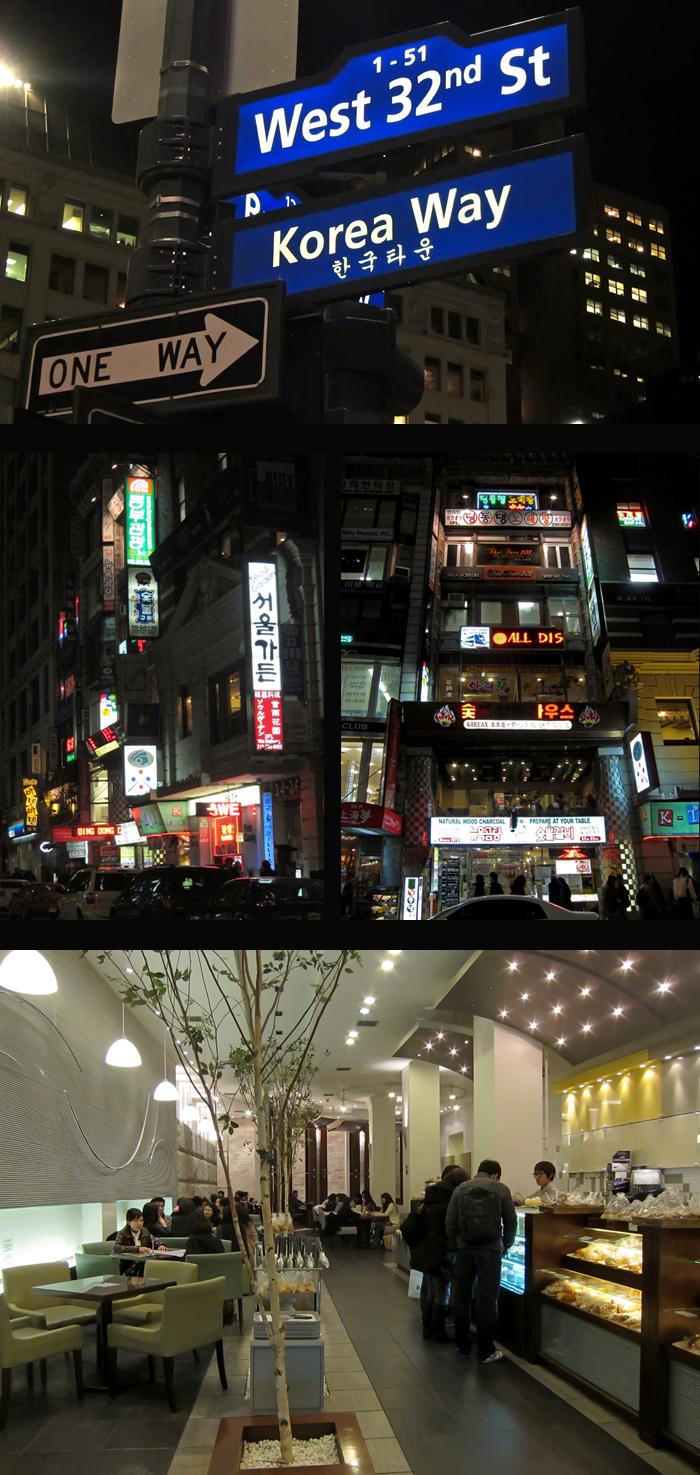
    One of most important things that electrical power has brought mankind is the ability to illuminate our world at night and make possible a 24-hour city. Koreatown is one of the best examples of this in the entire five boroughs. This neighborhood extends from 31st to 36th Streets between Fifth Avenue and Sixth Avenues with 32nd Street as its central artery. It’s a 24 hour extravaganza.
    Here you will find all things Korean – restaurants, tea shops, grocery stores, hair and nail salons, spas, karaoke clubs, internet cafes, banks, and hotels. In the late 1970s, the redevelopment of West 32nd Street was led by Korean business owners – in 1995, Broadway between West 31st and 32nd was officially named Korea Way.

    New York City is home to over 200,000 Korean-Americans – the second largest population outside Korea. Koreatown in Manhattan, is however, largely a commercial/business district with very few residents, although the residential population is growing (the largest Korean residential community is located in Flushing, Queens). K-Town, Manhattan, is attractive to the international business community and ideally suited to a growing number who want to live in Midtown. And those who just want to be energized know that it’s this way for a recharge ->


  • Not An Office


    A hamlet is a rural settlement that is considered too small to be a village. One distinction often made is that a hamlet does not have a church, whereas a village does. These details trouble me not, because I love hamlets and small villages. In England, the countryside abounds with small towns, villages, and hamlets, some so picturesque as to be incredulous. Places like Snowshill in the Cotswolds.
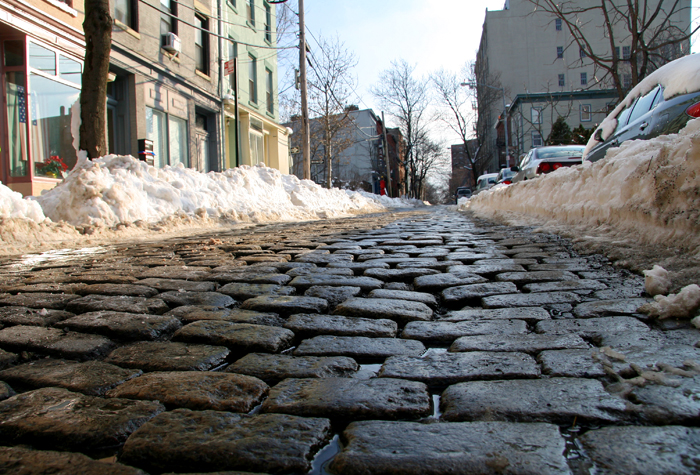
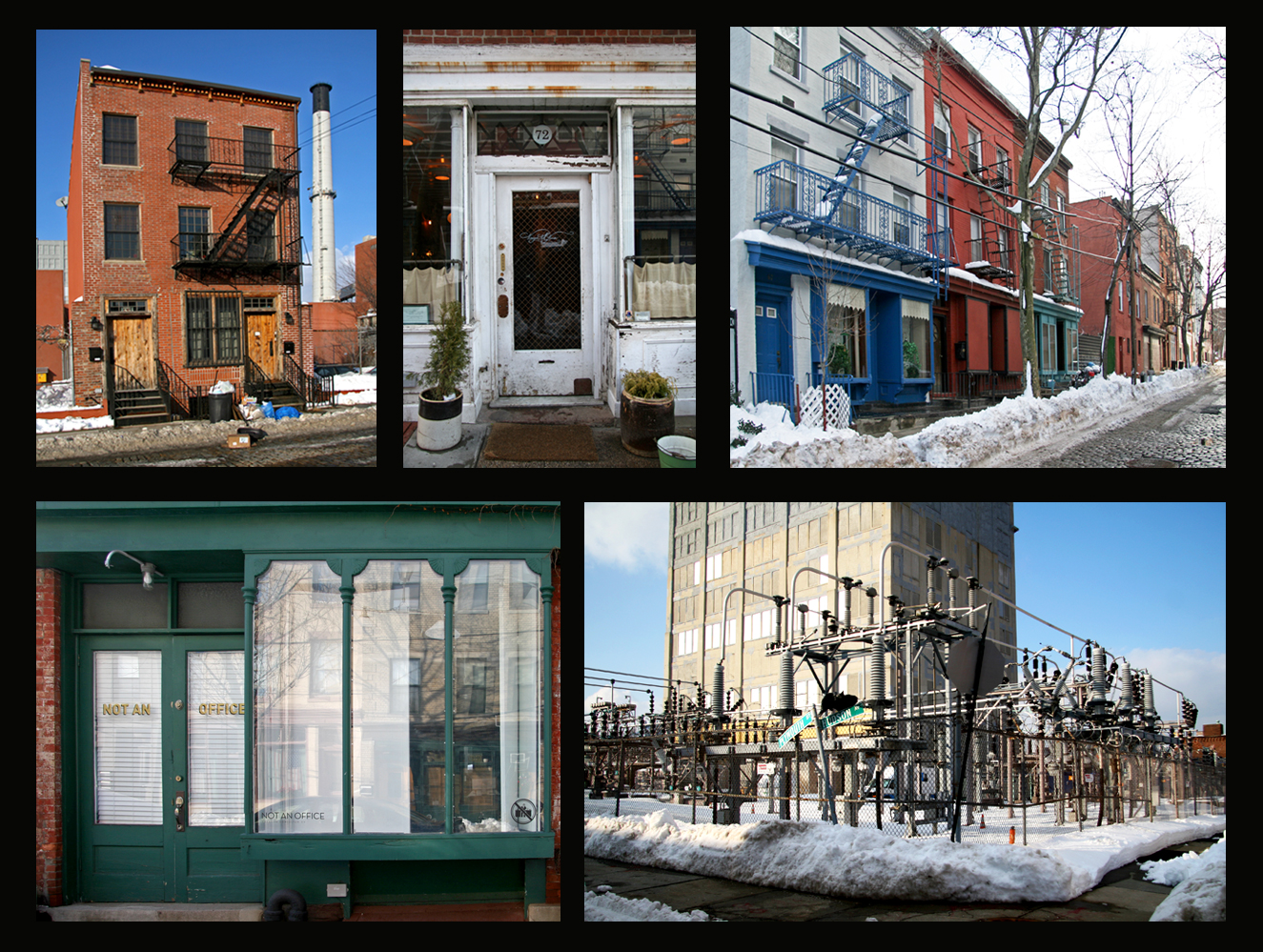
    However, I have never heard of anything in the confines of New York City referred to as a hamlet until I read an article in the New York Times about Vinegar Hill, Brooklyn. The very concept seems insane until you travel to this tiny enclave, only a few blocks in size, with cobblestone streets paved in Belgian Brick. See my full photo gallery here.

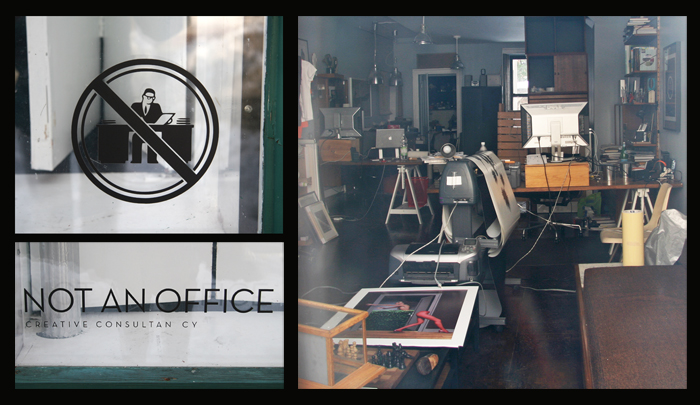
    The neighborhood is bounded by Bridge Street, the Brooklyn Navy Yard, York Street, and the river. The main thoroughfare is Hudson Avenue. There are virtually no shops, and one restaurant is open in the evening. At 54 Hudson, I ran across a business that identified itself as Not An Office. Peeking into the window, I did see evidence of a some sort of workplace.
    In spite of the snowfall, the neighborhood did exude charm, and I can easily see how some would be attracted to this place, which abuts Dumbo and the East River, only one stop from Manhattan on the F train.

    In 2010, the New York Times ran an article about Vinegar Hill called “The Little Town That Prices (Almost) Forgot.” Some readers were furious with all manner of accusations in the comments section, e.g. that the article would ruin the neighborhood and that the Times staff was out of touch with pricing.
    I think articles are more of a barometer of trends and messenger than trendsetters. Anyone investigating the area carefully will realize this place is going to appeal to very few – the serious dearth of services and high prices of real estate there will be a deal breaker for nearly all who chose to live in a city.

    Vinegar Hill feels almost like a hamlet. Almost, until you notice that the neighborhood is circumscribed by the Brooklyn Navy Yard, an huge Con Ed power generating plant, and the BQE (Brooklyn Queens Expressway). But this is New York City, and Vinegar Hill comes awfully close to a hamlet. It has no church, only one restaurant, and just when you think you have located a business, you find that it’s Not An Office 🙂


  • dinamic_sidebar 4 none

©2026 New York Daily Photo Entries (RSS) and Comments (RSS)  Raindrops Theme