• They’re All Around

    No one likes liars, but I have been assured that everyone lies a little bit some of the time. Fine. But I prefer not to do business with someone whose factory is a shrine to lies and deception. I was attempting to “keep it at home” and design and manufacture carrying bags for my product line right here in the United States. Specifically, New Jersey. The company I targeted looked very promising. Their webpage showed bags with the logos of many well-known companies. Certainly if it was good enough for the Wall Street Journal, Revlon, and Ferrari, it would be good enough for us. Or so I thought.

    Phone calls over weeks and months were always met with “the samples are going out today.” Finally, in frustration, I sewed my own samples and decided to pay a personal visit. With my prototypes and product samples in hand, I arrived at their factory. I was pleased to see a real factory. However, on entering the enormous premises, which were completely devoid of workers less one sample maker, I was a bit disheartened.

    I was eager to discuss the matter of an empty facility, but I decided to take care of the business at hand first – examine samples, discuss construction and fabric, silkscreening, etc. At one juncture, I finally decided to broach the subject of workers. The owner had already made mention of pieceworkers who came daily and took work home. Using a network of local home sewers is not a mortal sin, but he had made representations on the phone, as did their website: “Our sample makers provide the actual sample for your customer’s approval. All of this is accomplished in house as is the actual manufacturing and imprinting.

    I questioned the owner about the in-house production. Gesturing in a very large nonspecific circular hand movement in the air, he said, “They’re all around.” I looked all around the massive, empty room. It was not lunch time and it was not a holiday. Was I blind?

    Vagaries like this can be outright lies or can sometimes be used to deflect lack of specific knowledge. When I recently visited Riverdale and I enquired from a resident about the location of the palatial homes which I knew the area was famous for, I got another “they’re around” type of response.

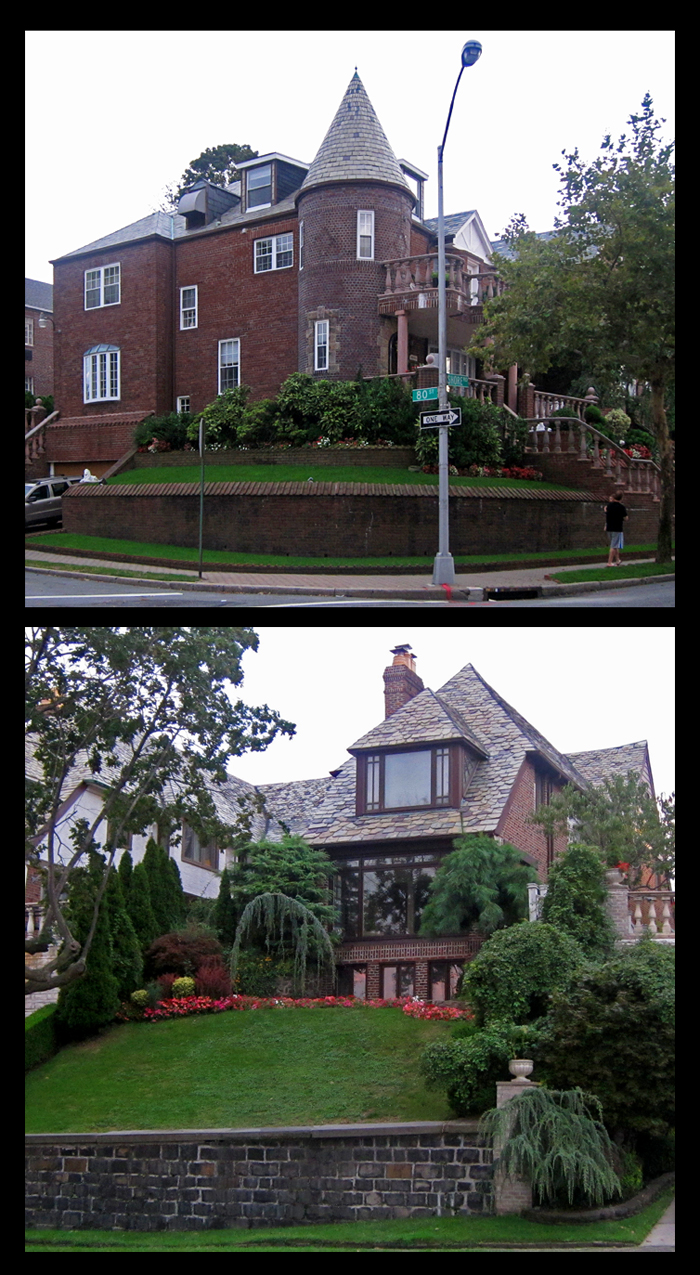
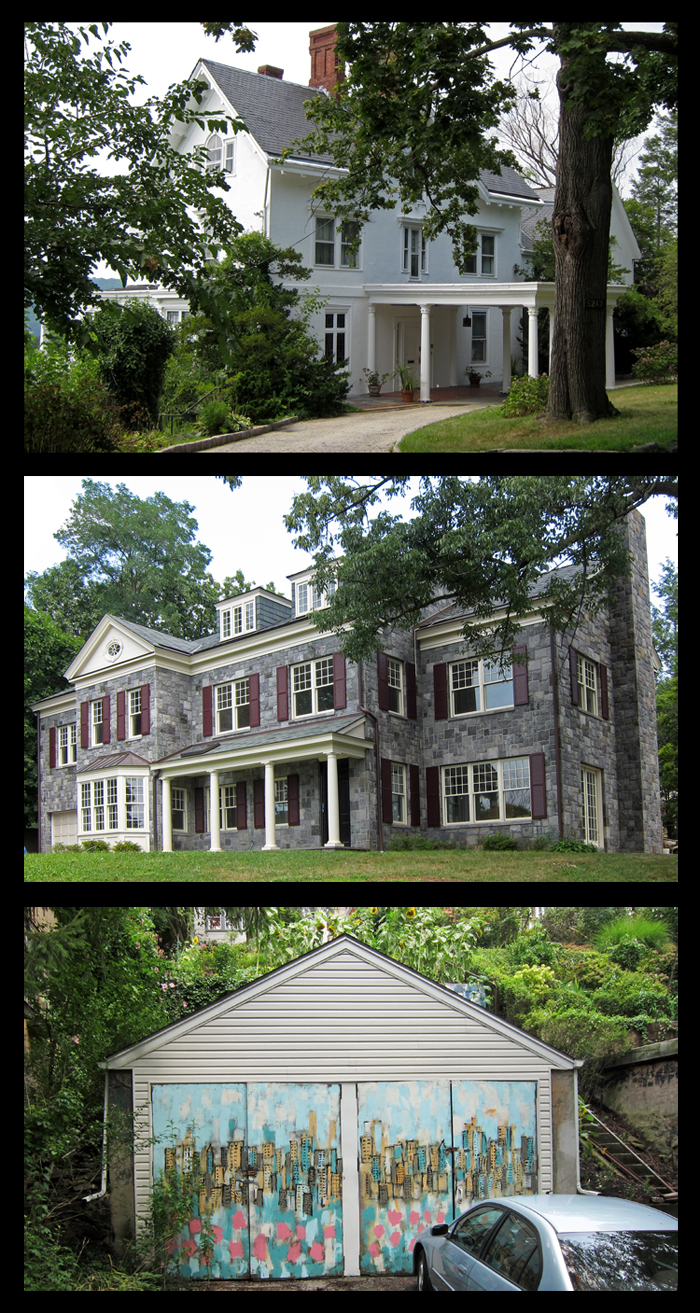
    Riverdale is an affluent residential neighborhood in the Bronx. Fueled by the rise of rail commuting, the enclave was established in the 19th century by wealthy businessman who built country estates. Although smaller homes and apartment buildings have been added, the character of a secluded enclave still largely exists. The area fronts the Hudson River, affording magnificent views. There are many things of interest for the visitor, such as Wave Hill (a combination botanical garden and outdoor art gallery), the bell tower, the great wall of Riverdale, and the historic district of Fieldston. You can read more about the neighborhood here.

    I did not prepare for this excursion to Riverdale, and I missed many of the sights. And although I did discover a few nice homes, I know that I did not dig deep enough and uncover the many historic mansions of a bygone era. But here in Riverdale, it’s not an empty promise. You just need to look a little harder because They’re All Around 🙂

    Related Posts: The Outer Limits, Big Secret on Little Street, Todt Hill, We Don’t Do Windows, Head for the Hills, Arthur Avenue
  • None of Us Go

    You can read tomes about Italy, look at photos, see videos and films, and speak to native Italians, but you will never know Italy until you finally get on that plane for the first time and go there. When you arrive, you will have that Aha! experience that I am sure you have had in other ways before – so this is Italy.

    Like an old friend not seen in decades, you will recognize many familiar things in his face, but the essence of the man himself is much more than a few big pieces. The image you have conjured prior to visiting Italy will be seriously devoid of the many, many things which will never be written of – the mundane, the inconsequential, the trivial, the ubiquitous, the details, the customary – yet these are the things which comprise the bulk of day-to-day existence.

    Someone living in New York City may be here for decades and never set foot in any of the major iconic tourist attractions or even those places reported in guides to Secret New York, Forgotten New York, Not For Tourists, etc. Because for the New Yorker, like anywhere else, the city is about the corner deli, the laundry, the nondescript row of houses in an average neighborhood. Who would want to read about or see images of such things?

    You do.

    I have featured most of the major attractions. However, I have also endeavored in these pages to bring you the side of the city not typically written about or photographed, to show the real New York. I have woven into my stories many anecdotes to make the ordinary as accessible as possible. Like many of our wonderful ethnic cuisines, I have taken the basic staples and prepared meals with spices from my personal cupboard to make them as enjoyable as possible to eat. I have written about chewing gum on the sidewalks of New York, car washes, and other very ordinary things.

    Perhaps some of my stories have come as bitter medicine that you may not want to take. But all of my efforts have been like that of the mother who only wants the best for her child. I do not only want to share my joys with you but also the slings and arrows of living in New York City.

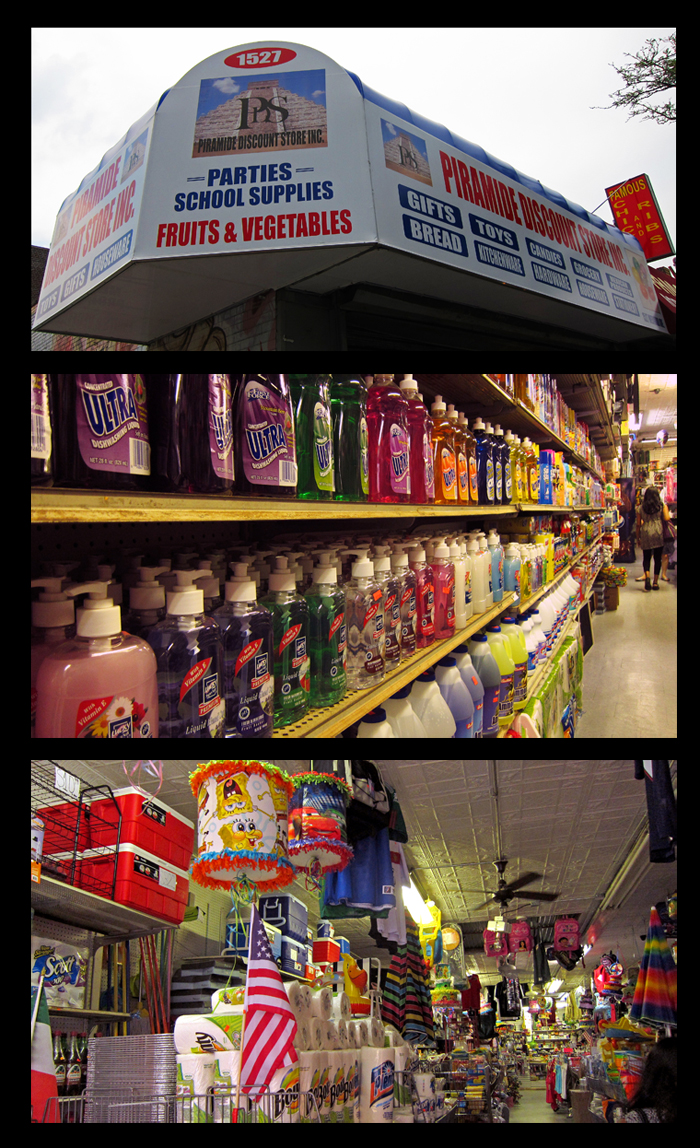
    On a recent journey to Coney Island with a few friends, we found ourselves drawn to the Piramide Discount Store on 16th and Mermaid Avenue. My friend Leslie (see White By Design), a graphic designer by trade, was all abeam with the store’s tidy and colorful displays and arrays of every imaginable item for sale. The sign outdoors proclaimed: toys, candies, grocery, bread, kitchenware, hardware, houseware, stationery and Mexican products. More succinctly put, a true general store. Not the quaint country store which has been restored and has historical and architectural significance. No, this is the real neighborhood place that everyone there knows and where everyone there goes, but none of us know and where none of us go


  • Man Peruses Queens Confuses

    For ease of navigation, it does behoove a large city to establish a numbered grid. However, this does come at an expense – the lack of soul or identity. It will be difficult for a numbered street to carry panache or to conjure images or historical links. (There are notable exceptions, such as Fifth Avenue.) This is why, when the street grid for Queens was developed in 1911 by Charles U. Powell, it was met with resistance, and many named streets remain, mixed in with numbered streets.

    Powell, a chief engineer in the topographical bureau, modeled the grid after Philadelphia’s. At the time, the borough was a mess – there were approximately 60 self-contained villages in Queens, many with duplicate street names. The finished product is a borough of avenues, streets, roads, drives, places, lanes, crescents, courts, and terraces. In What Numba Kissena?, I wrote about my early experience driving a taxi in Queens and being lost. The nightmare is that many have the same numbers, and there appears to be no rhyme or reason to the numbering system. So, for example, between 43rd and 45th Avenues, you will find 44th Avenue, 44th Road, and 44th Drive. In other cases, there will only be consecutive numbers, the skipping of numbers or streets stopping and resuming elsewhere.

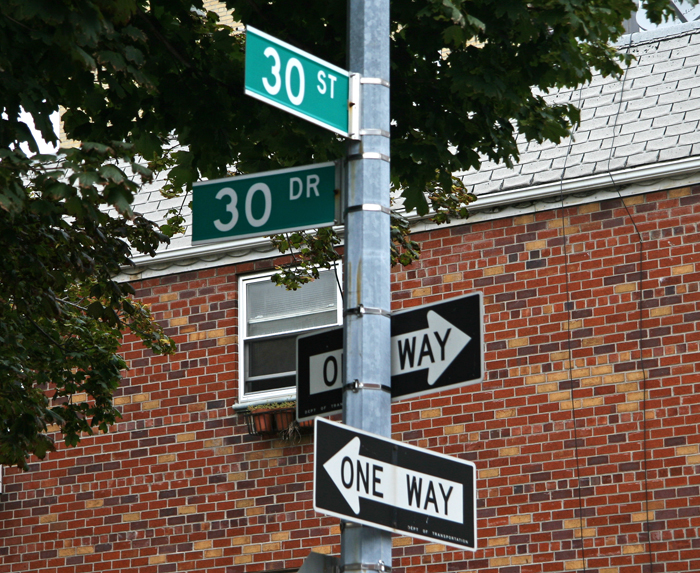
    Avenues run east and west and streets run north and south (in Manhattan, it is the reverse). Since the numbering extends the entire borough and it is as wide as it is tall, there are over 200 avenues and streets. Hence, there are many intersections with the same number (in Manhattan there are only a handful of such intersections). So, a sign like that in today’s photo showing 30th and 30th, is not uncommon.

    The hyphenated house numbering also follows a system. The number before the hyphen indicates the nearby cross street, and the number after the hyphen is the actual house number. The houses are in numerical order, so the number also will indicate its relative position on the block. So, 30-72 30th Street would be on 30th Street between 30th and 31st Avenues, closer to 31st since 72 is the house number. Some street numbers are skipped, others stop and continue.

    Confused? Don’t worry. None of this will really help. Even residents and those working in the neighborhood get lost. From a New York Times article in 2000, “Meet Me At 60th And 60th; Many Drivers Find Streets of Queens A Confusing Maze“:

    Laura Bell, a proofreader for a Manhattan advertising agency who has lived in Long Island City, Queens, for four years, said flustered people constantly stop her to ask for directions while she is walking her dog. She said she was usually too confused herself to help them out.

    ”They usually seem like they’re at a point where they think they’re never going to get out,” she said. ”Queens is a bit of a twilight zone.”

    The article concludes with one resident’s solution:

    ”I’m shameless at this point. I just keep my window down and yell.”

    I don’t know how well GPS will perform either. A recent excursion to the Family Corner Restaurant in Queens resulted in a much longer walk than anticipated. The iPad Maps application appeared to have located the destination improperly. Even in the world of high technology, Man Peruses Queens confuses…

    Related Posts: Manhattan Address Locator, Follow the Crowd, Love Is All Around, Part 2, Small Achievements


  • Anything Except First Place Is…

    I had a high school classmate that was a runner of the mile. And he won. Everything. He was a regional champion. It was rumored that his father said he would buy him a car if he broke the 4-minute mile. I often saw him running. He was always training.

    I attended virtually no sports competitions in high school, but on one occasion I stopped in briefly for a track meet. My classmate had won his event, of course, but our team’s win was in doubt. I tried to console him by telling him that it looked good for a third place in a cross-country running event and there was hope. He looked at me and said, “Anything except first place is shit.” Harsh words. The mantra of the overachiever. But I understood, because this was the attitude I encountered growing up.

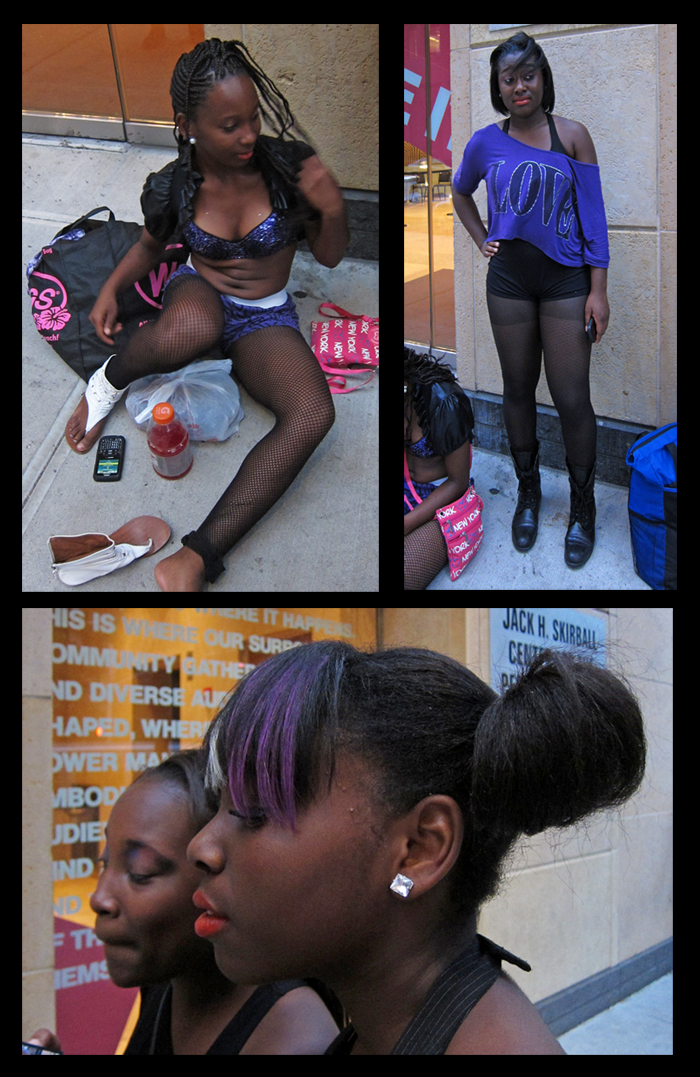
    I met the group of girls in the photo in front of the Skirball Center at New York University. They had just completed a hip hop dance competition, Blaze the Stage. They had LOST and were not pleased. They were from Florida. I asked how they got here, where they stayed, and who paid. They had flown to New York City, booked a hotel, and paid for it all themselves – not a cheap proposition for these girls.

    They were angry and told me they felt that the competition was RIGGED. I tried to get more details on the event, perhaps even to see a video of these girls and the winners to judge for myself. I was unable to find videos for 2011 or confirm the details of the dance competition, even after calling the organization.

    For many, the American dream goes something like: work hard, excel in your home town, come to New York City, audition at Radio City, be chosen to be a Rockette, and cry for joy with makeup running down your face. But there is also the classic shattered dream: work hard, excel in your home town, come to New York City, audition, not be chosen, and cry while removing your makeup alone in the dressing room or sit in the street outside the NYU Skirball Center.

    There are many coveted positions, professions, and competitions in New York City. There are many competitors, and often, only one will be chosen. Often, the level of talent can come as a shock to the newly arrived. I don’t know if these girls knew what they were up against, particularly a hip hop dance event in New York. With all due respect, I do not think that the event was rigged. Unless you mean by rigged that some win and others lose. Or, that only one wins and all the others lose.

    I’m glad my high school classmate was not around to console them. They did not need salt rubbed in their wounds by being told that anything except first place is…


    Related Posts: Have a Beautiful Day, Down to the Cellular Level, Number 1, Not So Kleine


  • In a Different Light

    Generally, the terms shallow or lack of depth are not positive. However, in the world of photography, these words take on a very different meaning.

    Technically, this site started as a photoblog with each posting featuring a photo. Ironically, I have never discussed photography per se or photographic techniques here, but the understanding of depth of field is so critical in photography that I have decided to feature it in today’s post.

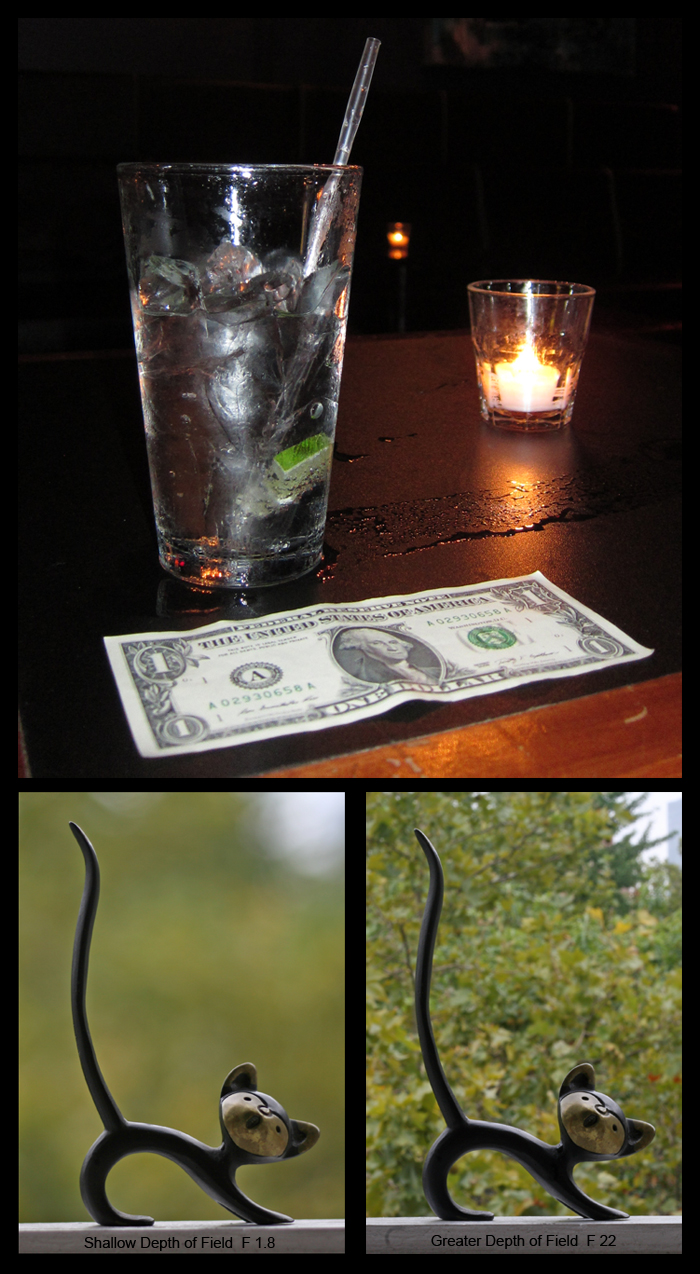
    I was in a local nightclub recently with fellow photographer Bill Shatto. The subject of depth of field came up, as it had many times before. Depth of field (DOF) is the range in distance between the nearest and farthest objects in a scene that appear acceptably sharp in an image. A shallow DOF is where the range of focus is extremely narrow – this is the technique used to create a sharp subject and blurred background. You often hear photographers using phrases such as “throwing the background out” (i.e. out of focus). The decision to use shallow DOF is quite simple – is there a subject that you want to feature/isolate, and how much do other elements of foreground or background distract or enhance the subject?

    Bill specializes in macrophotography of insects, and isolation of subject is paramount to his work (which you can see here). Even different parts of an insect may be in or out of focus. But the importance of DOF extends far beyond macrophotography.

    We revisited an old discussion of how nothing perhaps better distinguishes the photos of a master over that of the inexperienced photographer than the isolation of subject using shallow depth of field. This is true particularly in portraiture work. Also, one issue we both find particularly irritating is to examine our digital images and discover an object in a background ruining a photo by its unplanned and undesired prominence, like a pole appearing to come out from someone’s head.

    The tendency of many is either to pay no attention to depth of field or to strive for maximum sharpness throughout the scene, foreground and background. When I was younger and shot slide film with an SLR camera, I always strove for maximum sharpness over the scene. I was not aware that shallow depth of field could be desirable.

    Of course, shallow depth of field is not always desirable nor possible. In the case where the subject(s) are in the same plane or at a great distance, such as a landscape, depth of field will not be relevant or impossible to control. Also, working with a narrow range of focus requires more care – it is easy to end up with elements out of focus which you want in focus. The work of master photographer Henri Cartier-Bresson shows highly successful images both with and without a shallow depth of field.
    I hope that this short dissertation helps you see shallow and depth in a different light 🙂

    NOTE: How to achieve shallow depth of field. You will need a camera that has an aperture priority mode. With this setting, you will be able to choose aperture, or size of the lens opening. The greater the opening (smaller number) the shallower the depth of field. The smaller the opening (larger number) the broader the depth of field. Many point and shoot cameras have aperture and shutter priority modes. Cellphone cameras do not and will be near impossible to control depth of field – there are some tricks and even apps for some smartphones. Note that DOF also is a function of distance to the subject and the focal length of the lens. The basics are simple, but actually this is a deep subject.

    Photo Note: The lower photos shows the results of different apertures. In both images, the camera is focused on the metal cat. The left shows the result on my 50mm lens “wide open” at aperture F 1.8. The right shows the result at F 22.

    Related Posts: Kind Of, Drive-By Shooting, Window of Opportunity, The Lomo Look, Peter Lik, Risk Not Living, Red Green


  • Sleeping In Jeans

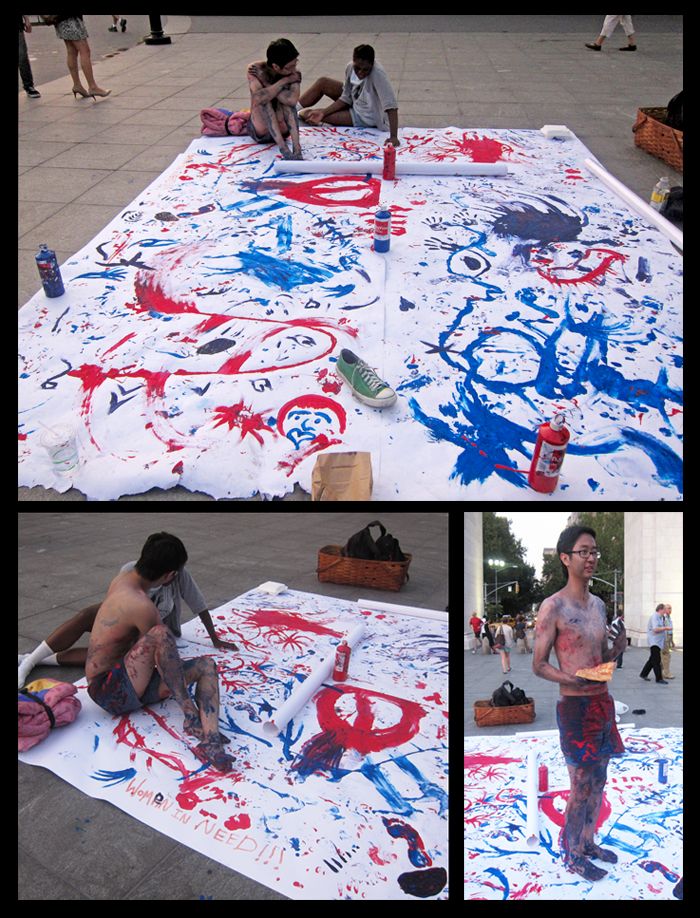
    As I observed the body painting display of Mike Lee, a group of my friends became engaged in a very spirited discussion over the validity of Mike’s homeless experiment. Mike is a senior at Dartmouth College and, as an adventure, decided to try living on the streets of New York City with no money and no shelter for 14 days, in the period between his commodities trading internship and the start of fall term. However, the self-imposed homelessness did not sit well at all with my friends, who had many issues with a boy of privilege, enrolled in an Ivy League college, asking for food and donations.

    In addition to foraging for food and sleeping in his pink sleeping bag, Mike was given challenges, reminiscent of reality TV shows. The controversy is understandable. Mike’s appearance, education, and the voluntary nature of his exile does strain credibility as to the how much of a hardship this really was. On his youtube channel, one film segment shows Mike snagging food and drinks on SoHo’s Fashion Night Out, something impossible for a truly homeless person to pull off. Another episode shows an evening with a table setup in Washington Square Park and Mike dining with a series of guests.

    But for someone of his means and background, what’s a boy to do that fancies to experience homelessness, except to try Sleeping in Jeans?

    Related Posts: Caught in the Rain, Because It’s Not, Down On His Luck, Stephanie, Aspiration, Caravan of Dreams, Homeless Art Scene


  • Manhattan Address Locator

    I’ve always had a love of numbers and have enjoyed studying the street and avenue numbering systems of New York City, specifically Manhattan. For the numerically inclined, there is no better place. Here, north of 14th Street, the borough is a numbered grid. The original design was created as the Commissioners’ Plan of 1811.

    There is a method to the madness of the street and avenue numbering. Algorithms are available and have been translated to various forms of address calculators, available in phone books, maps, tourist guides, and online. They can also be found as small, laminated wallet-sized cards – I have carried such an address locator since my early days in New York City in 1969.

    Locating avenues given the numbered cross street address is relatively simple and really requires no guide, calculator, or GPS. Fifth Avenue divides Manhattan into East and West. Cross street numbers increase moving away from Fifth, typically by 100 per block. So, for example, 325 East 57th Street will be between 2nd and 1st Avenues.

    Locating streets given avenue numbers is more involved. There is an algorithm, but it is complex, with many exceptions and special considerations for certain avenues. Here, it is better to use a chart or calculator such as the one that I have customized. Enjoy your Manhattan Address Locator 🙂

    Related Posts: I’m Throwing Them Away, Leave the Driving to UsFlailing and Hailing, Sittin’ On Top of the World, What Numba Kissena?


  • Nice Man on Death Row

    There are no rules. Just because an acclaimed artist is messy does not mean that messiness confers artistry or that it is a necessary condition for such. Handmade is not always better than factory-made or mass-produced. And although generally speaking, I am not a huge fan of the encroachment of national retail chains in New York City, I am not going to buy into the idea that the quality of goods in every small mom and pop shop is superior to that in the chain store.

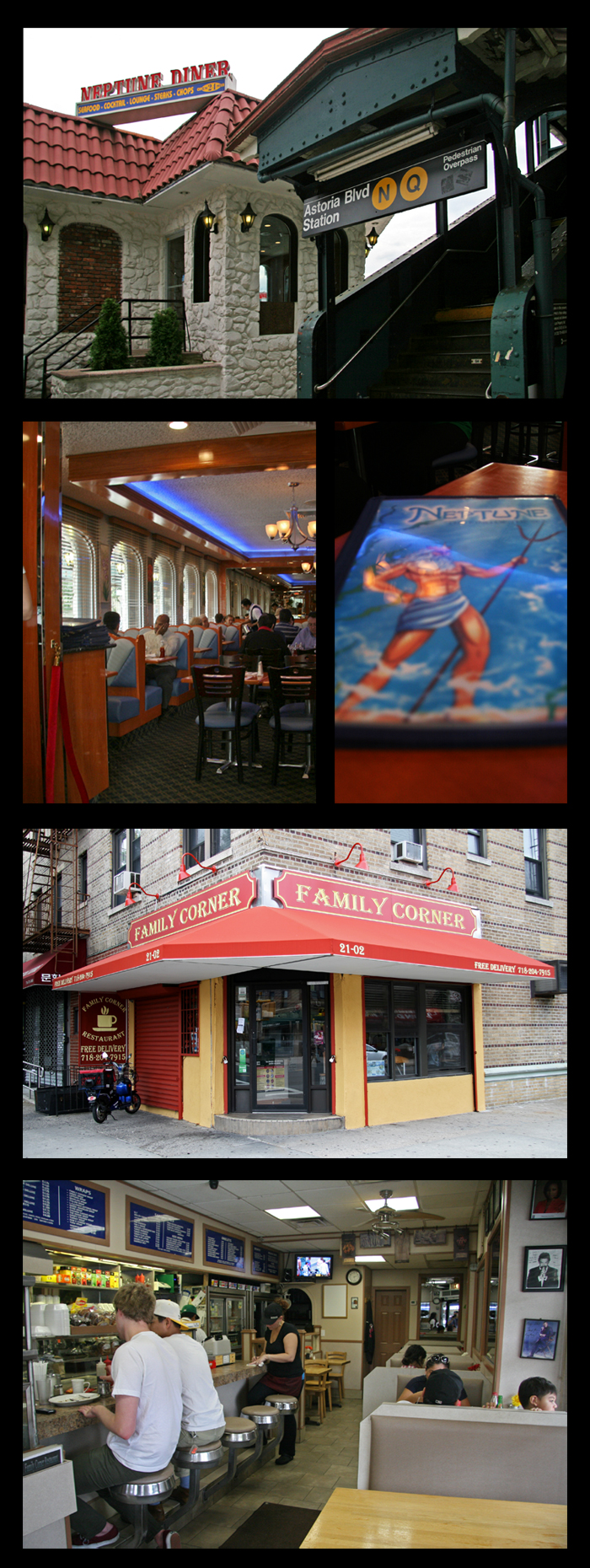
    On weekends, I often like to drive in the outer boroughs looking for stories and photos for this website. On Sunday, I was hungry and in the mood for comfort food, which I rarely eat. I thought I had learned my lesson regarding diners, but apparently, not yet. And this time, I succumbed to a new foolish quest: a search for the “best diner in New York.”

    My research indicated that the Family Corner in Astoria, Queens, was a worthy candidate for the “best diner” quest, so, I recruited a friend for this outing. We parked, and on the way, I spotted the Neptune Diner, which proclaimed “The Best Diner in New York City” according to the New York Daily News. However, I was to later learn that designation dated back to 1993. We stopped inside – the decor was quite nice for a diner. However, the rave reviews of the Family Corner nagged at me, so we pressed on.

    We had parked in a spot that was supposed to be a short couple of blocks away using the Google mapping system. Apparently, even Google is confused with the street numbering system in Queens – their mapping software put us about one mile away. It was after 2PM and I had not yet eaten, so the long walk down 31st Street seem interminable in the humidity. The Neptune Diner was starting to look better every block. Much of the walk was nondescript commercial, making the journey extremely uninteresting.

    When we arrived at 2102 31st Street, I was surprised to find the place much smaller than expected, and unfortunately, they had closed the restaurant for sit-down meals – it was now takeout only. So, another mile back down 31st Street. Neptune Diner it would be.
    The place was framed by the elevated subway and stairway to the Astoria Blvd station. A fellow patron had recommend the fish, so I ordered salmon stuffed with crabmeat. Like any diner, entrees come as meals, with sides, salads, etc. My companion had the spinach pie – we both agreed that at least one of us should have a Greek specialty.

    The food was passable and seemed worse viewed in hindsight as the day passed on. This was the 4th diner experience I have written about – Joe Jr’s, the Jackson Hole, the Empire, and now the Neptune. Someday I may finally learn that looking for a great diner is tantamount to seeking a nice man on death row 🙂

    Related Posts: Love Is All Around, Part 2, Greasy Spoon, Anthora


  • Transgendered Jesus

    I don’t relish the job of creating a name for a rock group. In the world of naming, much like the perennial complaint of women about available men, it often feels like “all the good ones are taken.” Some group names are enigmatic. Others, such as Leftöver Crack and Transgendered Jesus, give a strong impression, and seeing them in person confirms any preconceived notions that WYTIWYG – what you thought is what you get. Why do I say that?

    Meet cofounder of Transgendered Jesus, Anne Hanavan, a recovered East Village drug addict and prostitute. Hanavan hails from Buffalo, New York, and came to NYC in the 1980s to attend Fashion Institute of Technology. However, a cocaine habit was followed by heroin addiction. Her career as prostitute began at the downtown strip club, Pussycat Lounge, where she was originally employed as a bartender, then went on to dancing and turning tricks. This eventually evolved to streetwalking on East 12th St. and Allen St. for 8 years.


    Anne cleaned up her drug habits and built her life back up, worked various jobs, and later made a foray into short films, taking film classes at NYU. The films deal with themes of growing up Irish Catholic, sex work, drug addiction, and punk rock, and are often sexually explicit.

    The group name, Transgendered Jesus, is certainly provocative. In an interview in Artvoice, Anne says:

    A transgendered friend of mine had posted a crazy link on Facebook to some transgendered Jesus site, and I thought it was fantastic. It summed up everything I’m about: making your own choices, believing whatever you want to believe, and that nothing has to be black and white.

    I did peruse a few websites, and it was clarified that the concept of a transgendered Jesus is not to be associated with sexual orientation, only disposition. I came across statements such as:

    Jesus’s feminist politics worked in tandem with his transgendered disposition.

    Jesus’s Transgendered Disposition Always in Plain View!

    In flesh, Jesus was the Son of Man but, in spirit, the Daughter of Mary.

    The group’s shows have elements of performance art, reflecting Anne’s background as an artist and filmmaker. The show I saw was in Tompkins Square Park – the outdoor environment was not conducive to the full range of performance elements, including custom video projections, etc. that I understand often accompany their shows.  But the music was loud, brash, angry, and not for mainstream tastes. But neither is the image of a Transgendered Jesus 🙂

    Related Posts: WYSIWYG, False Assumptions, Piercing Al Fresco


  • The Agony and the Ecstasy

    The first in the family of the city daily photo blogs was Paris Daily Photo, created by Eric Tenin. His vision was to show a slice of daily life in Paris via photos. Inspired by the idea, a friend and I created New York Daily Photo in 2006. Since then, this site has evolved and become an altogether different entity, sharing all manner of people, places, and things through my eyes, not always necessarily to simply show a “slice of everyday life” in New York City. The postings have become much more story-driven.

    On a recent overnight trip, it occurred to me, as it often does, how preparing for a trip by car for the single traveler would be anathema and incomprehensible to anyone outside the city. So, for a basic trip that involves an overnight stay with luggage, and in the spirit of the original city daily photo blog, here is how I do it:

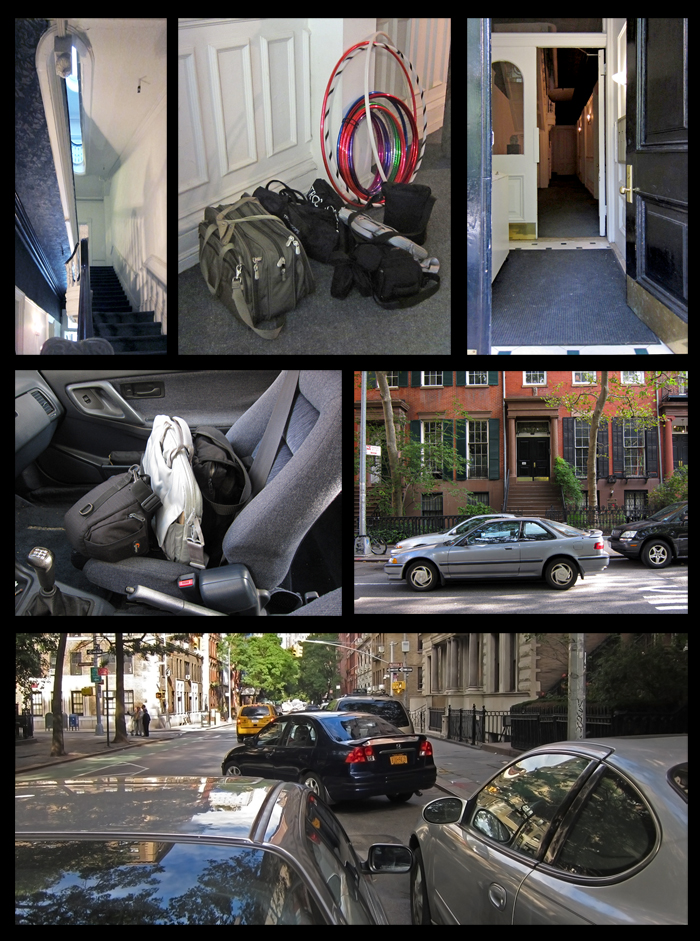
    I call ahead to the garage to get my car – they require at least one hour advance notice, so I have to plan ahead. Take all my belongings, probably two loads, to the lobby, always keeping the most valuable things with me at all times: three bags with shoulder straps containing my laptop, iPad, and cameras. I’m on the fourth floor with no elevator, so it’s up and down four flights of stairs (photo top left).

    I walk about three blocks to the garage, carrying the “valuables” with me and leaving those things which would be least missed if stolen while unattended in the lobby (photo top center).
    Even though I have called ahead, I still have to wait for my car to be delivered by the attendant. I drive to my home. Since it is near impossible most days to find a parking spot near my home, I have to double park in front of my apartment building with my hazard lights flashing (photo middle right). Now, I run in to the building with my valuables still slung around my neck. I unlock the two vestibule doors to the building and prop them open (with floor hooks) for easy in and out access (photo top right).

    I bring out my things, one load at a time, running, opening and closing and locking and unlocking my trunk on each trip, always carrying my valuables the entire time (photo middle left). I make one last trip to close both building doors. During this entire process, I always keep an eye out for the police to avoid ticketing as well as possible thieves.

    On the return of a trip, everything is reversed. Double park, unlock and prop open the vestibule doors, make trips unloading my trunk (keeping my valuables with me) leaving the less bulky and valuable luggage unattended in my building, drive to the garage, drop off the car, walk back three blocks, take the luggage up four flights, one load at a time.

    I open my apartment door and drop off everything. It feels good to be home. However, I reflect on the insane process needed to just load and unload luggage for a short trip and question why I and other New Yorkers go through all of this.

    On my last trip out of town, to add insult to injury, just after I completed my entire ritual, a car pulled out in front of me, leaving a parking spot right in front of my house (bottom photo). Yes, having a car in New York City is a privilege and a luxury. I am appreciative of that. However, it’s New York City, and most pleasures here come with a price, whether monetary or otherwise, and often cut both ways. It’s what’s behind that love/hate relationship with the city, rearing its head as the Agony and the Ecstasy 🙂

    Related Posts: Unforgiving, Ye Who Enter Here, Steaming Masses of New York, Dwanna


  • Not Under the Gowanus, Part 2

    (see Part 1 here)

    I have driven the roadways around this metropolis for decades and, like anyone else who drives highways repeatedly, there are a myriad of familiar structures, most of which one has never actually visited. Over the years, a number of buildings have intrigued me, such as the enigmatic property with illuminated triangular trusses as seen from the Manhattan Bridge. This rooftop haunted me for decades until if finally occurred to me: why not get off the roadway one day, investigate and see what this landmark actually is about? You can find the mystery solved here.

    The landscape as seen from the Gowanus Expressway (see Part 1 here) is generally of little interest, much of it commercial/industrial. However, as it runs through Greenwood Heights, Brooklyn, a beautiful green trimmed church spire makes its presence known. As I go fleeting by, a recurring thought to visit someday fleets by as well. I finally decided to bring these fleeting thoughts to an end after a recent excursion to nearby Green-Wood Cemetery, when I paid the church a visit.

    Regardless of how significant a structure turns out to be, this type of exploration provides me with the necessary closure of a long-seated curiosity. As a side benefit, the experience also provides a resource which can be used when traveling with others to identify the landmark – wielding knowledge that you are not only familiar with the structure but also have visited said structure confers credibility that you know New York City. (Tip: Recount the most extraordinary details that you can remember in a nonplussed manner to be seen as a smug New Yorker. This insures that in the future, your authority will not be questioned.)

    The church in question is Our Lady Of Czestochowa / St Casimir located at 183 25th Street in Brooklyn. The property spans the width of a city block, from 25th to 24th Street. I circumnavigated the block and was impressed by the gothic structure – so distinctive, contrasting against nondescript surroundings. In a previous post, I told of how one can see the spire of Czestochowa from the automobile graveyard and that good things are often found just around the corner, but Not Under the Gowanus 🙂

    About the Church: The parish of Our Lady of Czestochowa Church was established in 1896 to serve Polish Catholics. A frame church was built on 24th Street but was destroyed by fire in 1904. On July 17 of the same year, construction began for the present church, designed in Gothic style and built with Belleville gray stone and brick. The steeple rises 175 feet, flanked by shorter towers on each corner. In 1980, the parish of St. Casimir’s was merged into Our Lady of Czestochowa.

    Related Posts: Down to the Cellular Level, Pyramid Power, Eldridge Street, Gothic Night, Little Church Around the Corner


  • One Tree at a Time

    I have an uncle who was a Roman Catholic missionary priest. Eventually, he left the priesthood, entering academia and consulting work. On one occasion, he asked me if I was into politics and was disappointed when I told him no. He said that at that point in his life going forward, he no longer wanted to help individuals one by one, rather to help people en masse via sweeping political change. This seemed to be a noble aspiration but too disconnected to me. As a self-directed entrepreneur, I never had the stomach for long political process or decision by committee. So, be it perhaps ineffectual from a global perspective, my efforts to make a difference in the world are limited to infrequent isolated acts of charity.

    One of the perks of owning a business, particularly a manufacturing company, is the ability to bring tremendous resources to a small problem and fix it easily. I have a factory with a machine shop and a plethora of power and hand tools. Such a facility in Manhattan is now virtually nonexistent.

    Additionally, most people in New York City have a much more limited range of tools and no basement shops or garages. Hence, although some old timers may have handwork experience, most New Yorkers have little or no working knowledge of tools, in depth experience of how to repair things or any skills in electrical, plumbing, metalsmithing, or carpentry work.

    Performing easy, quick procedures such as cutting something on a table saw, drilling a hole using a drill press, or machining on a lathe are like magical blessings for most New Yorkers. I love doing these things – typically these small acts are uber-appreciated and remembered for years. My “return on investment” is so huge that it is a stretch to even see the small favors as “generous.”

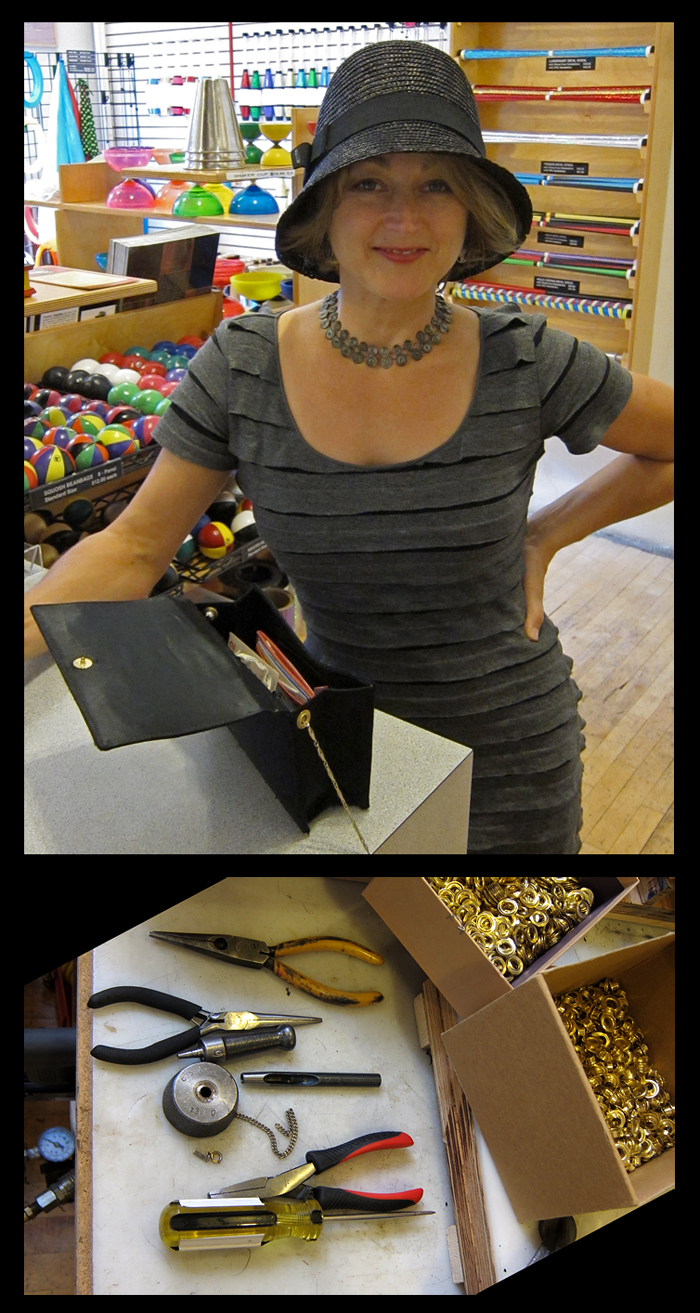
    Recently, a customer who knew we had a factory workshop asked if we could do a simple repair on a hand bag with an absurdly designed shoulder strap (unbelievably, the chain was only slipped under the flap, so the bag fell whenever opened). The solution was simple, however, one would need grommets, hole cutters, setting tools, and other hand tools to disassemble and reassemble the linked chain. The repair was made in a few minutes, and Déa Million was elated and profusely thankful. Ebullient, effusive, and perky, there was no better victim for a small charitable act. As repayment, she agreed to this story.

    This morning, I perused Déa’s website and learned many things about this woman, who is a graphic designer, originally from Minneapolis. Her interests and skills are quite eclectic – at one time, Déa worked as a project manager for computer-based training systems for a US Air Force helicopter pilot training system. As I continued to peruse her website, the story you are reading just unfolded without planning as a web of interconnected ideas, such as those on the mind-numbing documentary TV show Connections with James Burke.

    My attention turned to her interest in reforestation with the organization Community Carbon Trees Costa Rica. As I scanned that organization’s website, I saw that this was a grassroots effort, and the wheels began turning in my mind, seeing the obvious analogy between their and my approach at making a difference. An idea for the perfect story title just popped into my mind: One Tree at a Time.

    I continued to scroll the main page, and my eyes fell on the most astounding coincidence. Pseudo-science or not, if there ever was a case for Morphic Resonance, this was it. The metaphor for my way of making a difference and the story title phrase I had thought of seconds before just appeared like magic and leapt off their webpage:

    We believe that ONE by ONE, with your generous sponsorship and our commitment, together we can grow huge new expanses of forest on deforested equatorial land owned by local Costa Rican people, One Tree at a Time.

    Note to Déa: Thanks a million, Déa, for your cooperation and the opportunity to use your image. I hope you enjoy reading this remarkable tale as much as I did writing it. Thanks for letting me repair your bag 🙂

    Related Post: The Book With the Hole In It, Part 2


  • 212 and 2:12

    Many non-residents cannot fathom why New Yorkers tolerate so many extreme hardships, while life outside the city is in many ways so much easier and less expensive. I have created a category for some of my stories called Slings and Arrows, which illuminates many of these day-to-day dramas. In Dwanna, I told of how one new resident (who hailed from Tennessee) left nearly as quickly as she got here, even though she was ambitious, hard-working, and successful in finding a good job and housing. Her reason for leaving? Life was just too hard.

    But yet there are so many extraordinarily wonderful things about this city, many arguably not found anywhere else, particularly in such close proximity. It is this density of services and culture that led me to coin the phrase Sirens of Convenience to describe the city’s lure in spite of rocky shoals. So therein lies the key to understanding this whole perplexing situation:  New York City is not a place of moderation, it’s one of extremes, and for most, it’s a Love/Hate thing. When Love overrides Hate, then you’re a New Yorker. When Hate overrides Love, you don’t want to live here. Or, in the case of a long-time resident, he or she may be inclined to leave.

    Many New Yorkers who truly love the city obsess over iconic minutiae, such as having a 212 area code. This area code is one of the oldest in the United States, created in 1947. It was assigned to New York City because it could be dialed fastest with a rotary dial (at that time, 0 and 1 were not allowed as the first digit, the second digit was either 0 or 1, and the third digit could not be the same as the second digit).

    Hence, there’s a cachet to 212: it is historic, with implied roots and stability of the owner of the number, both residential or business. New phone numbers with the area code 212 are no longer available; someone interested in the area code must rely on getting a recycled number via luck or purchase such numbers through specialized websites. This prestige associated with a 212 area code was even used as a minor plot thread in a Seinfeld episode, The Maid. So, New Yorkers Love 212. As a long time resident of the city, I am pleased that my home and office numbers all have 212 area codes.

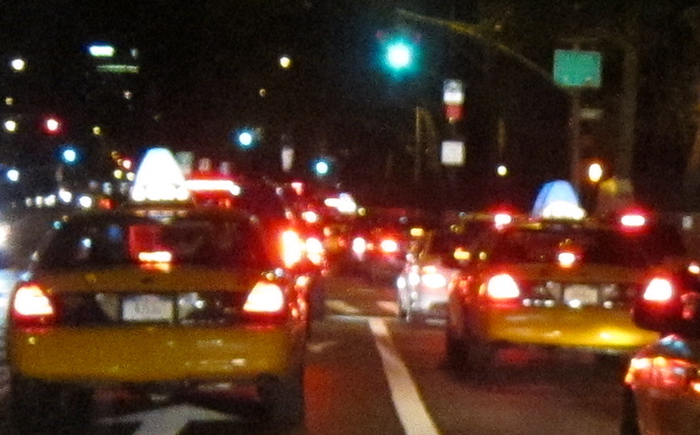
    But this weekend, I even found Love/Hate sides to 212. Saturday night, I was returning to Manhattan via the Manhattan Bridge, which courses up Chrystie Street. I was exhausted, and there was bumper-to-bumper traffic. Incredibly, it was after 2 AM, adding insult to injury. I just wanted to get home and sleep, but I was forced to slog up Chrystie and across Houston Streets behind a sea of yellow cabs and the cars of late night revelers, commuters, and what have you.
    In reviewing the photos this morning for exact time, I found in a serendipitous numerological twist that the exact time my photos were taken was 2:12 AM. I always knew the currency used to pay for New York City was a two-sided Love/Hate coin. Now, carefully examining both sides, I discovered it clearly marked: 212 and 2:12  🙂


  • Not Under the Gowanus

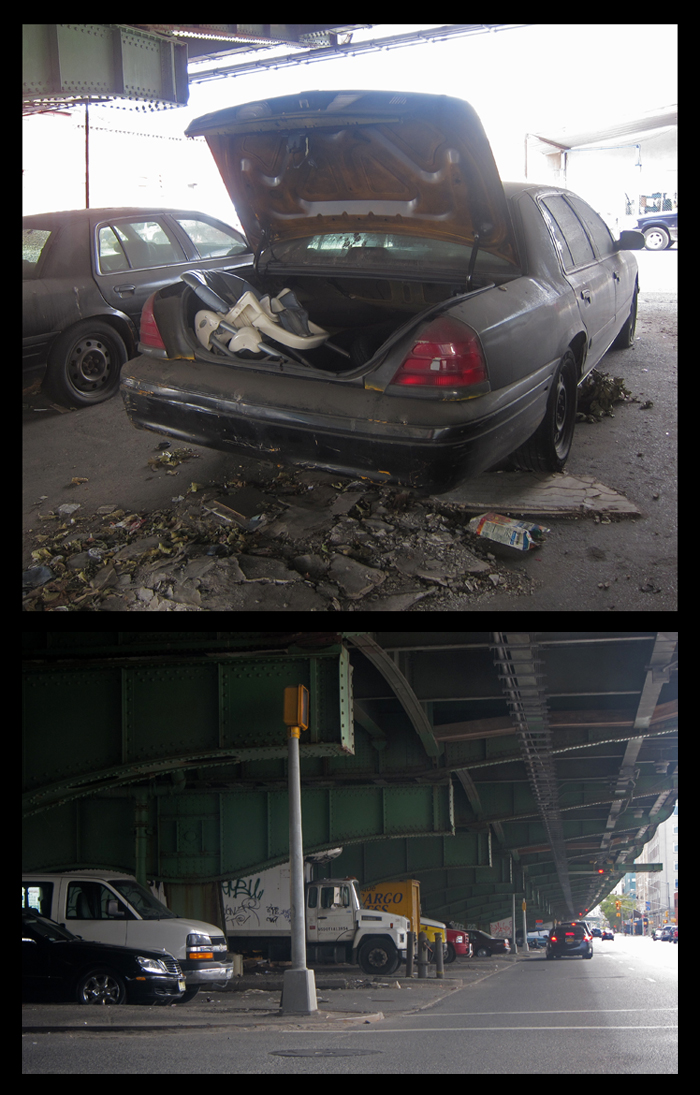
    There’s romance to the classic song Under the Boardwalk – the lyrics describe a tryst under the boardwalk in beloved Coney Island. But not every hiding place under an elevated structure is so romantic, particularly in New York City. I certainly would not want to meet anyone under the Gowanus Expressway, a highway elevated above 3rd Avenue in Brooklyn.

    The word Gowanus does not have a very nice ring to it, certainly not to a New Yorker who knows the Gowanus Expressway or the Gowanus Canal. Even the word itself seems unpleasant to me, if perhaps only by a long association. If you read the Wikipedia entry on the thoroughfare, you will not get the true picture. Take a look at the photos and see this offense to all things visual.

    For those who despise Robert Moses – and there are many – the Gowanus Expressway, built under his auspices, could easily be the poster child for the dark side of urban development. Deterioration has only added insult to injury. It does provide a much needed connection between various boroughs and through Brooklyn, but at a very hefty price, particularly aesthetic. The highway as seen from street level is hideous, blocks light, and dominates the avenue. There have been talks and plans over the years of taking the elevated structure down and replacing it with a tunnel, but, to date, nothing has been decided.

    This city really is a course in juxtaposition. The good abuts the bad, the beautiful abuts the ugly, the polished rubs against the rough. Clean meets filthy and rats run everywhere, unfettered by neighborhood or income. I should not have been so surprised to find these abandoned cars and burnt remnants under the expressway, but the whole scene was particularly shocking owing to the fact that I spent the afternoon in Greenwood Cemetery.

    Around every corner there is often a surprise, and I had just photographed a beautiful structure that has plagued me for years. It was a small surprise, and I will show you that soon (see Part 2 here). And it’s just a short trip around the corner, Not Under the Gowanus 🙂

    Related Posts: A Story About Nothing, There’s Nothing Here, Del Floria’s


  • Moonrise Over Hernandez


    It took a trip to Italy to learn that the desire for respite from city life and the countryside was not unique to our time or to New York City. Romans built villas millennia ago. These lavish homes were built by the wealthy elite and were used to escape the city and summer heat. In Florence, the Medicis built villas – country homes that served as alternate living spaces to their urban palazzo. Not so much is new under the sun, particularly in the realm of basic human desires, and I suppose it was rather foolish and ethnocentric of me as a New Yorker to expect that escape from the stresses of urban life and the desire for a more spacious country home with grounds, etc., would be limited to recent times.

    At one time, Manhattan was seen as a place to work and make money, not necessarily as a place to live. Many wealthy chose to live in the boroughs, particularly Brooklyn, seeing Manhattan as a place of business, but not necessarily the place where one would choose to live. One of those places was Bay Ridge, Brooklyn.

    At one time, Bay Ridge was just another Brooklyn neighborhood to me. I had not explored it enough to understand its identity. This is a typical problem for any outsider to a place. Cursory examination and reading will only give a surface knowledge. It will take many visits and substantial time to really understand the heart and soul of any place. Meeting residents is necessary to get a full picture.

    This process started for me with visits to First Oasis restaurant, having known the owner for 30 years, starting when his restaurant was located in Manhattan. Over the recent years, I became more acquainted with the various features of the neighborhood: its architecture, parks, vistas, ethnic enclaves, and restaurants.
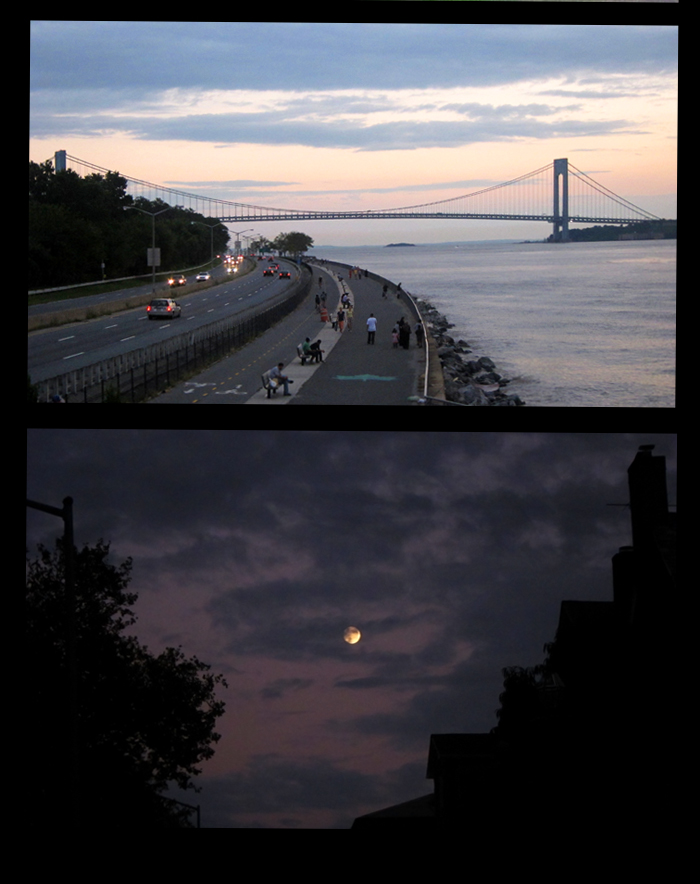
    Western Bay Ridge fronts the Narrows, the strait that separates Brooklyn from Staten Island, spanned by the Verrazano-Narrows Bridge. This is where Shore Road lies, originally fronting and following the shoreline. In the mid-1800s, the neighborhood functioned as a country resort for the wealthy who built huge mansions near the water. After 1940s, the Belt Parkway and accompanying landfill separated Shore Road from the actual shore.

    On this particular visit, I was accompanied by a friend who grew up in Bay Ridge.  She told me stories of her childhood and of her vivid memories. We strolled along Shore Road, where the photos were taken. This gave me a real human connection to the neighborhood for the first time. As we left at sunset, a moon shone brightly over one of the streets. I’m sure for her, it was no less than Moonrise Over Hernandez 🙂

    Related Posts: Fire Island, The Total Call


  • dinamic_sidebar 4 none

©2026 New York Daily Photo Entries (RSS) and Comments (RSS)  Raindrops Theme