• Category Archives Natural NYC
  • The Magic Hour

    I grew up in New England, and even for residents, fall foliage was loved by all. The beauty in sparsely populated states, such as Vermont with large stands of deciduous trees, is such that many travel to and tour the area during “leaf peeping” season. When the conditions were right, my family would sometimes take a country drive. If the leaves and light were right, we were sometimes treated to jaw-dropping scenery.

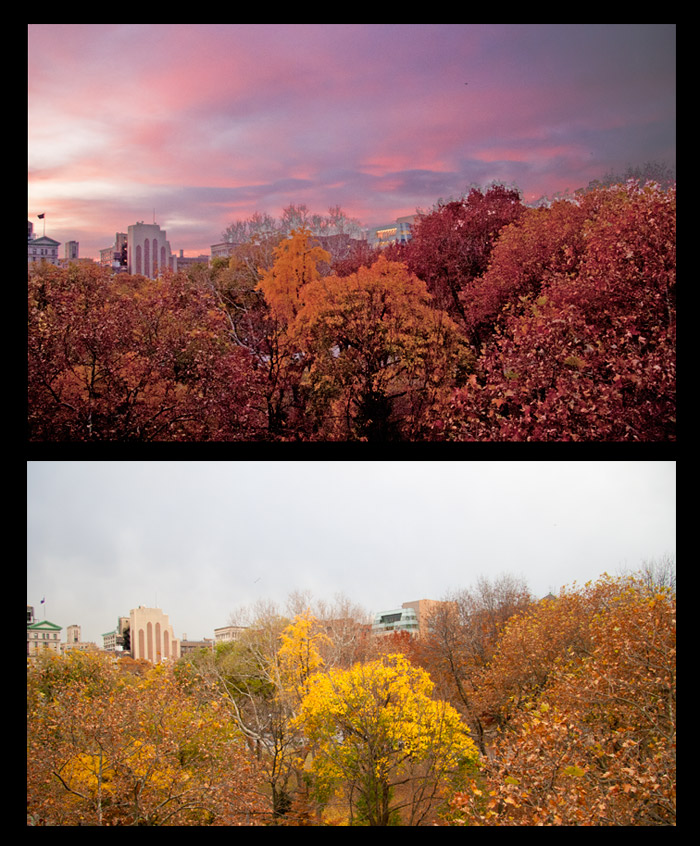
    A popular cliche amongst photographers is that “it’s all about the light.” It is overused, but it is quite true. If you are around artists or photographers enough, you may also hear the phrases “magic hour” or “golden hour” – the period before sunrise and after sunset when the light is reddish. This light during autumn can lead to exceptionally beautiful vistas.

    Prior to the inception of this website and my photographic interest here, I paid little attention to the properties of ambient light – intensity, color, and changing quality over the time of day or cloud cover.
    Many of one’s intuitions about photography are wrong. A bright, sunny day is the worst time for shooting, particularly midday. Cloudy days give much better color. And the most coveted times for most landscape photographers is during the magic hour.

    Some, like photographer Ken Rockwell, will make claims of a rather extreme nature regarding the magic hour: “Glorious light only happens for 60 seconds or less any particular day, if it happens at all. If it happens at all, it usually happens sometime in a window 15 minutes before or after sunrise or sunset.” One must, of course, allow that not every photographer wants this particular golden light for every photo.

    Capturing this morning light requires being up at a very early hour, which I typically am. Two mornings ago, I was up before dawn and witnessed the extraordinary light of the magic hour illuminating the vestiges of autumn foliage. Everything was aglow in oranges and pinks, begging for a photo. Today, two hours later in the morning, you can see the dramatic difference (lower photo).
    Many New York City residents will never see this phenomenon, particularly in the morning – they are not at the right place at the right time to happen upon a natural setting during the magic hour…

    Related Posts: In a Different Light, Wood, Glass, Brass and Trees, Light and Lights, Mother Nature, Risk Not Living, Manhattanhenge


  • A Little Complainin’

    I’ve been told that I am a complainer. Convenient, since there is no better place for a complainer than New York City. Here, complaining can be indulged in at any depth or breadth imaginable. One can cut a broad swath or can specialize. For example, a daily commuter traveling on a particularly troubled subway line could confine his or her complaints to just the interminable atrocities committed there on nearly a daily basis.

    Today I discovered an interesting blog – I Hate New York City (.com). There, I found 265 comments over 150 pages, spanning the range of love/hate sentiments of New York City. Within those comments, I found the vitriol and outrage which many have over the city. It is a virtual shrine to complaints. The range of topics was well-covered: noise, dirt, rats, smells, trash, rudeness, crowds, costs, concrete, lack of nature, dangers, crime, hot summers, oppressiveness, and pollution.

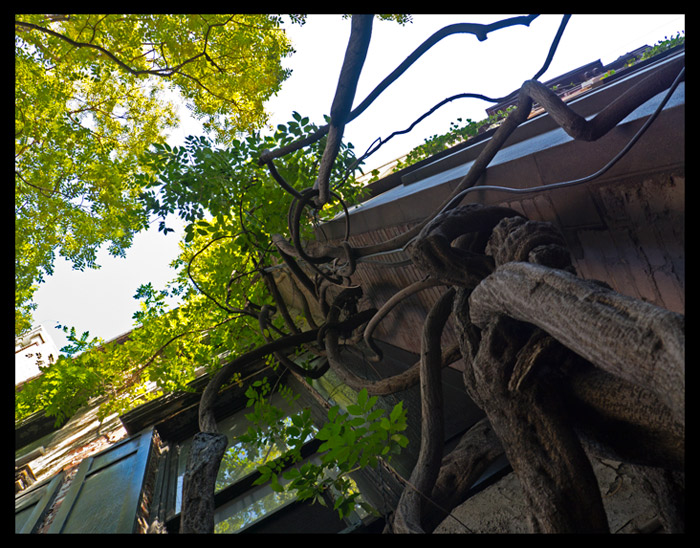
    I might add that even though many of us bemoan the lack of nature, there is still opportunity to complain about plant growth, even when considering plants generally seen as an element of old world charm, such as wisteria and ivy.

    In neighborhoods such as Greenwich Village, with a preponderance of row houses, one can find many brownstones with ivy growing up the face or rear of the buildings. Its growth is, however, quite rapid, and for those who dwell in or manage the building, it is more an irritant than a source of charm. Not only do they grow very rapidly, requiring frequent pruning, but these climbers also are destructive to the masonry where they maintain an aggressive foothold.

    In one apartment where I lived in the 1970s, my windows would slowly become obscured with ivy growing on the exterior of the building. Periodically, this required hanging out the window on a 4th floor and tearing the offending growth away. The task always felt like an annoyance which was someone else’s job, but in New York, to wait for those responsible to tend to a chore is often to wait in perpetuity. I, like many, take things into my own hands. And why not? It just gives me more to complain about – ivy or wisteria creepin’ ’round my window is just perfect for when I don’t want to leave home but still want to do a little complainin’ 🙂


  • Overblown


    My father used to find news coverage of snowfall in Connecticut to be comical. Coming from northern Maine, one of the most inhospitable winter environments imaginable, the warnings, preparations, and particularly the news coverage of snow seemed rather ridiculous in comparison.
    On Saturday at Union Square, I had an encounter with a woman of similar mind – originally from Florida, she considered the concern to be overblown.

    Admittedly, the city is a complex web of services and systems with an enormous population and businesses. For a natural disaster to occur in New York City, the financial impact as well as human suffering is tremendous. So it is prudent to prepare.

    The problem, however, with “better safe than sorry” is that the cost of preemptive measures is very high and would seem like a huge waste if a storm proves to be much less damaging than expected. The Mayor Bloomberg administration was criticized for its lack of adequate preparation for the blizzard of December 26, 2010. Deputy Mayor Stephen Goldsmith told the City Council, “We owe you and all New Yorkers for that lack of performance our administration’s apology and my personal promise not to let it happen again.”

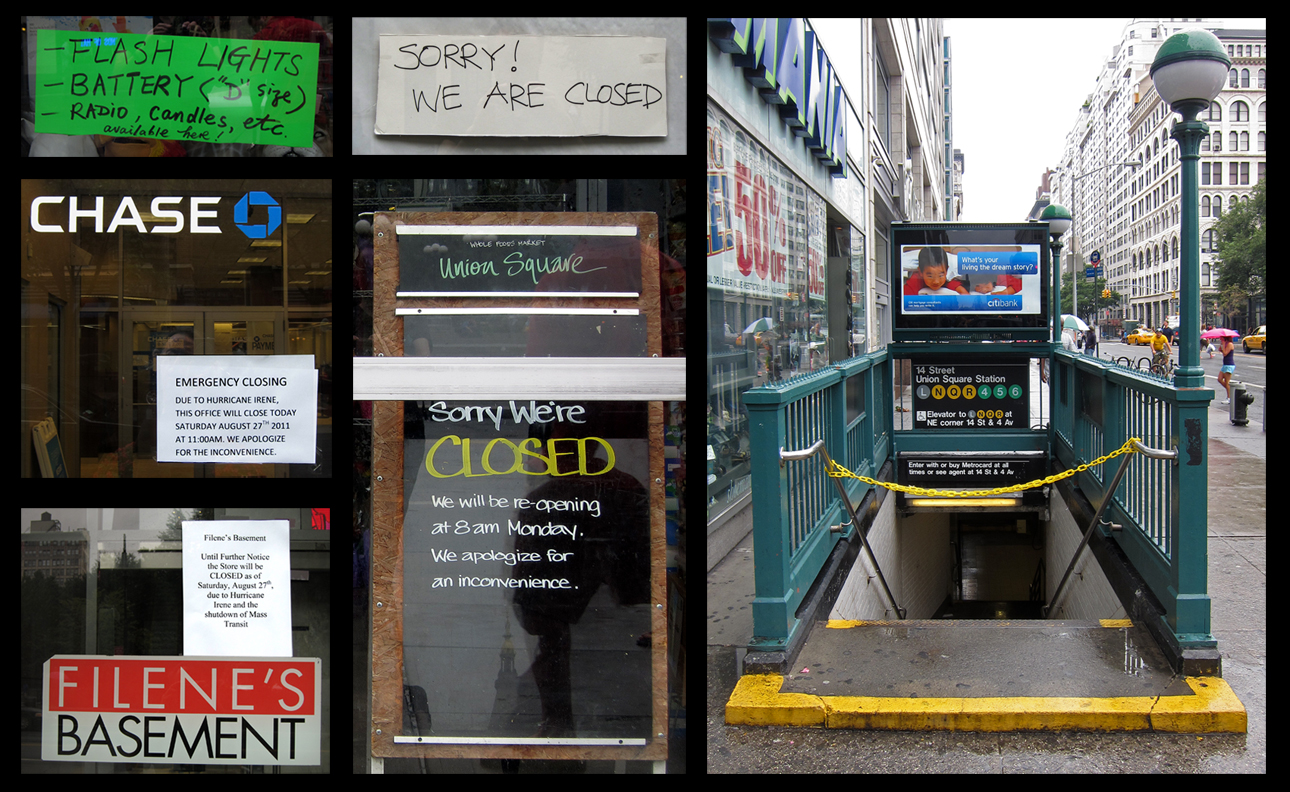
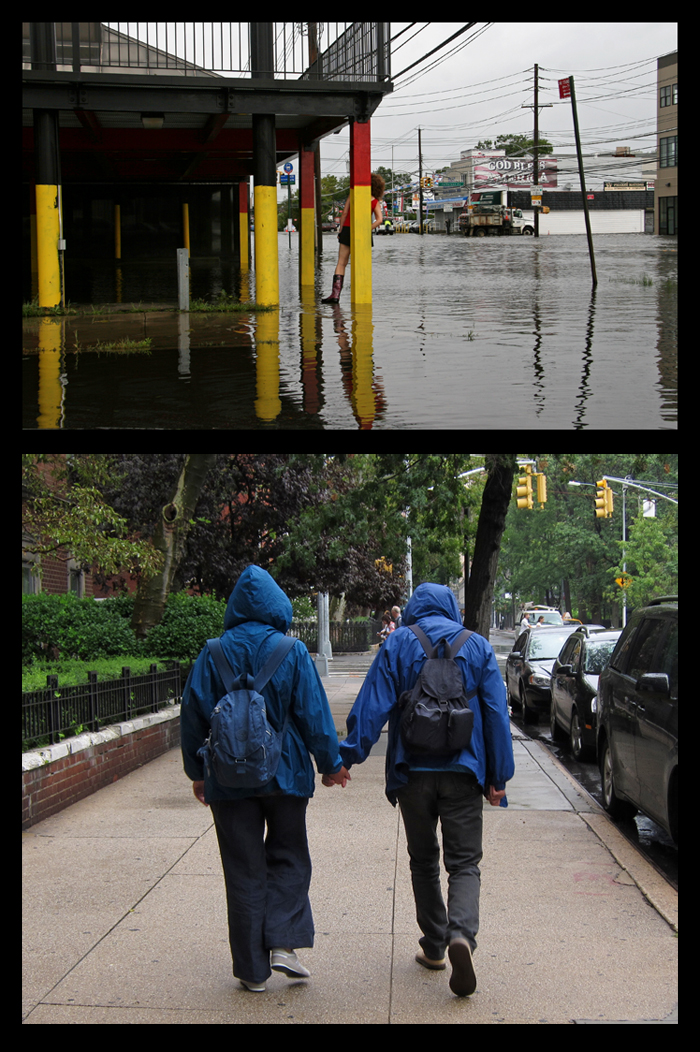
    The city came well prepared for this storm, although many felt that the level of preparation was overdone. Subways and buses were shut down. 370,000 residents were placed in mandatory evacuation zones. By Sunday, the city was the quietest that I have ever seen. With workers without public transportation, business openings were impossible.

    Not to minimize the real damage that the storm caused or the personal misfortune, but in hindsight, where vision is 20/20, Irene has blown over and looks overblown…

    Photo Notes: Top – various locations around Greenwich Village. Center – Hylan Boulevard in Staten Island. Bottom – Washington Square North.

    Related Posts: White by Design 3, We’ve Got Skiing Too, Friends Part 1 and Part 2, Brooding


  • Keep Flying

    I spent my childhood with a best friend exploring. This was our mission statement, and our summer quests knew no bounds. Only my mother’s distant call for dinner would bring our daily expeditions to an end.

    As young boys, we were never content to just observe. There was a desire to possess. We captured (and typically released) all manner of snakes, tadpoles, salamanders, frogs, wild birds, and butterflies. Butterflies are beautiful and fragile, but we did not understand the fragility. The brutish manner of young boys would seem to preclude such an understanding, only learning of such things after damage has been done.

    This is masterfully illustrated in one of the most beloved episodes of the Andy Griffith show, “Opie the Birdman” (aired in 1963). In this episode, a young boy, Opie, accidentally kills a mother bird with his slingshot and leaves her three babies orphaned. Ever the wise father, rather than punish the boy, Andy open’s Opie’s bedroom window so he will hear the chicks calling after the mother, who will never come home. Opie takes care of them until they are to be released into the wild. Without conventional punishment, Opie learns the meaning of responsibility, accountability, loss, and the consequences of one’s actions.

    The story also illustrates the fragility of life. And what is more fragile and beautiful than a butterfly with a lifespan of only a few weeks? New York City is not the place for the delicate or fragile. Such things, if they exist at all, must typically be protected and sheltered from the masses. Seeing a butterfly in a natural environment takes on a very special meaning here – it feels like nothing short of a remarkable event.

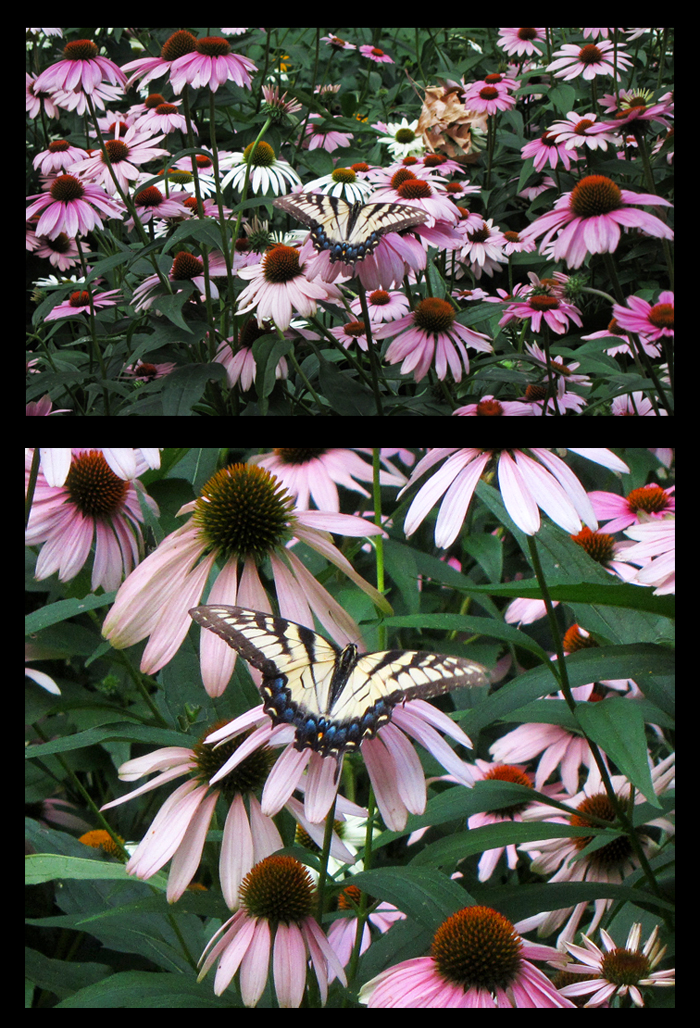
    This Tiger Swallowtail looks like it had suffered some damage. A little faded, a little bruised – reminders that we are in New York City and that to live here, you must be a survivor, get hurt and keep flying 🙂

    Related Post: Explorin’ Part 1, Horrible and Miserable


  • You Always Find Something

    Posted on by Brian Dubé

    Some years ago, I was visited by a customer who was quite complementary to the manner in which I ran my business and the quality of my products. He had vocalized this on the internet. I thanked him. It is always heartening to hear complements in a world of high expectations.

    Conversation ensued, and I was very surprised to learn that the man was a military helicopter pilot. I have no idea of what it takes to earn such a position, but I was reasonably sure that this must be a highly coveted and competitive job for the very skilled with the right stuff. This was an easy opportunity to return a complement, which I did. He did not deny my observations.

    On a subsequent visit, he returned with his girlfriend, also a military helicopter pilot. Wow. Certainly this must be a rarity for a woman in the armed forces. I was awed really and so impressed. What an unique couple.

    The man offered to tour me privately around a military installation in Brooklyn, where they were based. But I was forewarned that as a civilian, as much as he would like to, I would not be allowed to fly in a military helicopter. I understood and had expected that.

    I told a close friend who was fascinated with military technology about this encounter. I invited him to come along in the event I were to take this man up on his offer and visit the military base. He was ready to go at a moment’s notice. I pointed out to my friend however, that we would of course not be able to board or fly in a helicopter. To which he replied, with no equivocation, that it was no problem because even at a dog show, you always find something.

    This statement was so poignant – I could not agree more. It was just a restatement of something I had always said – things are not boring, people are boring. It’s what you bring to the table or experience.

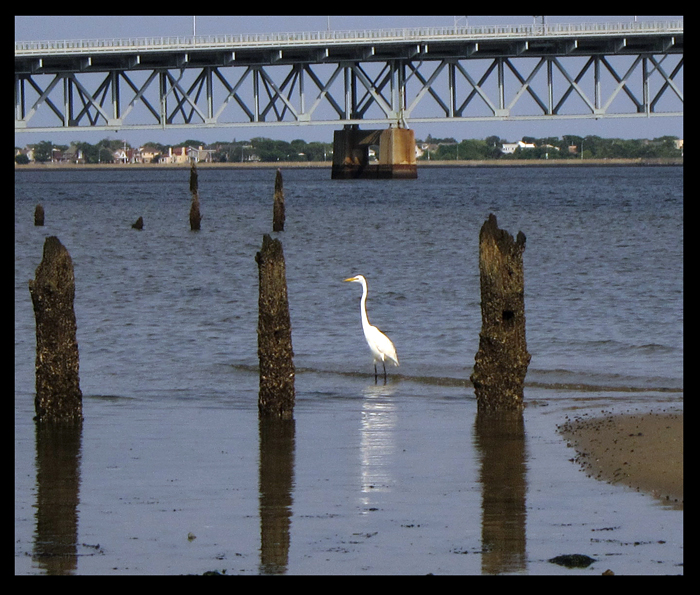
    New York City’s table is already filled with a staggering array of goods. But if you really want to mine the gold here, don’t just settle for what’s already on the table. Take an interest in the cracks and crevices. Talk to strangers, the homeless, and crusties too. Go to The Hole and Dead Horse Bay, where you may sight an egret, like that in today’s photo. Explore Far Rockaway, a place few want to visit.  If your lucky, you will meet Walid Soroor in a Jackson Heights restaurant, Mark Birnbaum strolling in his signature cadence, Ferris Butler wandering the streets a bit confused and even André, who, I am sure you will agree, is a bit OUT THERE. In the park, you may sight a Nymph. Come to these pages for ideas and inspiration.

    If you’re feeling a little bored or perhaps do not have the time to venture far afield, just look at little harder. Bring your attention to the city around you. Investigate how graffiti artists etch glass in the subway or marvel at the chewing gum on the streets. Because even at a dog show, you always find something 🙂

    Related Posts: Mark Birnbaum Pt. 1, Ferris Butler Part 1, Gaby Lampkey Part 2, Fashion Forward

    Posted on by Brian Dubé

  • The Legal Answer or the Practical Answer?

    Posted on by Brian Dubé

    I have a friend, Paul Fryd, who is an attorney in New York City and, on occasion, over the years, has provided phone advice in difficult situations. His initial mantra to any question was predictable, even irritating – because he was right and I usually did not want to hear it. When I presented the details of any problem, his first response was, “What do you want first – the legal answer or the practical answer?”

    I rarely liked the practical, sensible business answer. Like settling with someone who was clearly wrong, yet paying them anyway to expedite the matter and move on, rather than wasting more time and money in legal fees to see “justice” being served.

    Freedom and exercising it can be equally frustrating. Legally, we do have freedom of expression, but in practice, these freedoms are not always so easily exercised. There are many ways to effectively eliminate or subdue people who act and think differently in a community, including police intimidation (see Criminal Suspect here).

    The Statue of Liberty stands in Upper New York Bay as an icon to American freedom. Within the context of the United States, for many, New York City stands as a place to chase their dreams and also to exercise freedom to express themselves in any manner they choose without fear of ostracism. Here, New Yorkers are extremely tolerant, even embracing and nurturing eccentricities that elsewhere would be untenable. In the case where behaviors are even technically illegal but benign, laws are often not enforced.

    Unfortunately, money is also part of the freedom equation, and the economics of living in New York City is closing the window of opportunity for many who would like to live here and exercise various lifestyle choices unfettered. However, for those who are tenacious and adequately driven, living in New York City for the person of average means is still possible, albeit requiring some resourceful thinking and a willingness to compromise a lot.

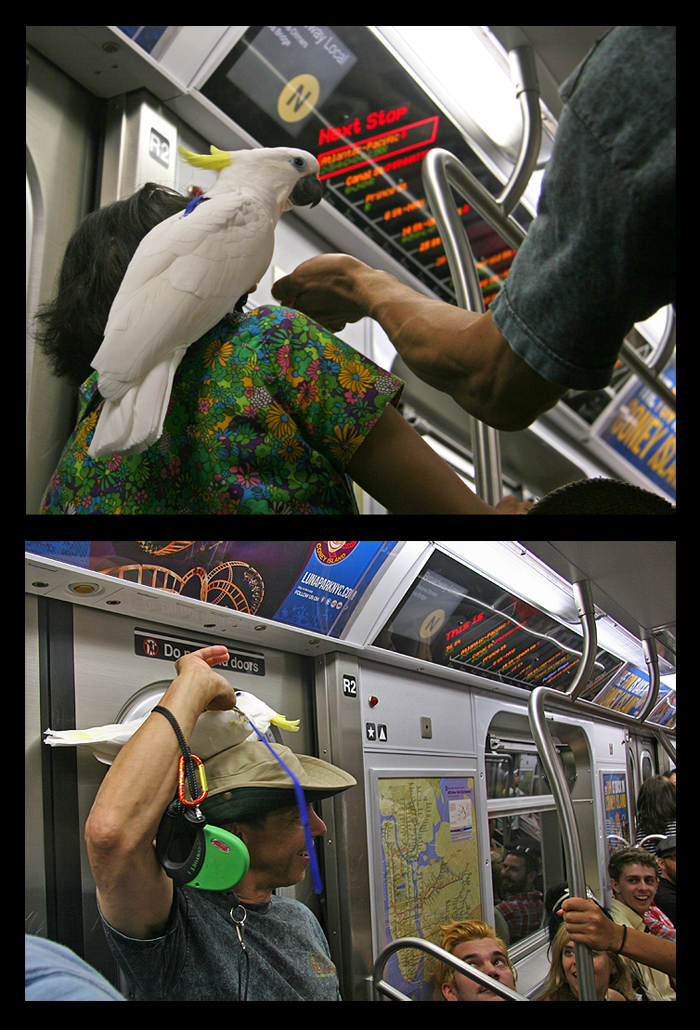
    Why be a martyr on Main Street in Anytown, USA, when in New York City, riding the N train from Coney Isand with a cockatoo will be met with either indifference, amusement or delight? I have seen a wide range of very unusual pets in public in New York City, many of them illegal to own. Can you ride the subway in New York City with a cockatoo? What do you want first – the Legal Answer or the Practical Answer? 🙂

    Other Related Posts: Extra! Extra! Read All About It“The Women”, New Yorkers Gone Wild, False Assumptions

    Posted on by Brian Dubé

  • The Tide Pool

    Posted on by Brian Dubé

    The drama and grandeur of the western United States is extraordinary. One of the great joys of the West is visiting the protected lands, especially the national parks. Names like Yosemite, Grand Canyon, Sequoia, Yellowstone, Death Valley, et. al. are known worldwide.

    There are 58 officially designated national parks in the United States and its dependent areas, however, there is only one in the northeastern United States – Acadia National Park on Mt. Desert Island in Maine. It was here that I scrambled one morning to get to a ranger program exploring the tide pool. It was the first time I had heard the word, and I loved the idea*.

    Park rangers are typically passionate and knowledgeable about the great outdoors and eager to share their love for nature’s bounty and to answer questions. I often enjoyed evening campfire programs with slide shows given at many of the national parks I visited.

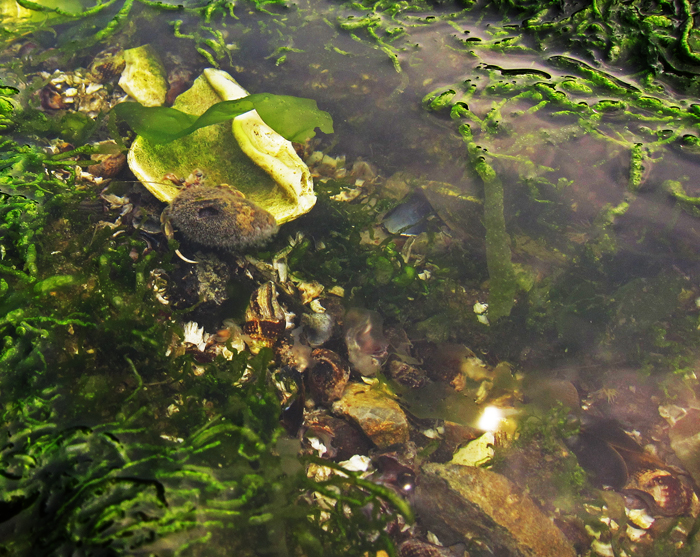
    Our park ranger that morning was readied in rubber boots, waiting for us on the rocky Maine coast, an ideal environment for trapping water living creatures in tide pools. Marine life is swept towards the shore by the incoming tide. As the tide leaves, sea creatures are trapped in pools created by rocks and other natural formations. Low tide permits an opportunity to observe these pools close up and a variety of living things not normally visible without diving or snorkeling. The ranger pulled out starfish and sea urchins and pointed out a myriad of living organisms. I never miss a chance when the opportunity presents itself to spend time at the ocean to explore a tide pool or two.

    Every day brings a tide of humanity to New York City. Many are tourists. Others come to stake out their claim for better opportunities. Some are swept here by serendipity. And every day the tide goes out here too, taking away many who have come here for any variety of reasons.

    A few are left behind in a pool of people, places and things, willing victims trapped by the lure of culture and lifestyle not found anywhere else. Whether you are a long or short term resident, visitor – real or virtual, I invite you in person or through these pages to come with me and explore The Tide Pool 🙂

    Photo note: This was taken on Jamaica Bay from the eastern shore of Floyd Bennett Field.

    Other Related Posts: Explorin’ (see here and here), Under the Sun, Umbrella and Chevy, Risk Not Living

    Posted on by Brian Dubé

  • Drooling and Slobbering

    Posted on by Brian Dubé


    Emotive forces play a large part in our lives, often trumping the “sensible.” We eat too much or the wrong foods, date the wrong people, choose careers with dim prospects, buy things we don’t need. New York City has its own brand of impractical indulgences – driving in SUVs and living with huge dogs in small apartments.

    Seeing a New Yorker with a Great Dane, Mastiff, Great Pyrenees or Irish Wolfhound is not as rare an occurrence as one might expect. New Yorkers like to think big, and dogs are no exception. However, everything about these critters is big – size, weight, smell, hair, food consumed, excretions and slobbering. Many weigh more than their owners, as I imagine is the case in today’s photo. A large dog dominates an apartment space. Many describe the experience as living with a roommate.

    In 2004, the New York Times ran a story, Rooming With the Big Dogs; 140-Pound City Pets and the People Who Love Them. Parts of the story were incredible, others bordering on the hysterical. The Times story tells of a married couple, Barry Kellman, his wife Shane, and their English mastiff, Brutus. During her pregnancy, Shane threw the dog out. Determined to keep him, Barry began boarding him. As costs mounted, he rented an apartment for Brutus at $1800 per month. From the article:

    To meet Brutus is to appreciate the challenge of living with him. He slurps water from his bowl like a horse at a trough. He urinates with considerable force and stamina. ”This goes for about 15 minutes,” said Paul D’Amato, the doorman of his building. ”He’s a tank.”

    Brutus also drools constantly: when he walks, saliva swings like a pendulum. When he shakes his head, it flies onto the walls, the front door, Mr. Kellman’s clothes (the dry cleaning bill is about $400 a month), and in places not to be believed.

    ”Every now and then you’ll see something hanging from the ceiling,” said Mr. Kellman. He once found it in his shoes. But Brutus’s charm is undeniable. His trusting eyes and massive head bring to mind E.T., the extra-terrestrial.

    When his marriage ended, Kellman moved into Brutus’s apartment. It must be a case of love and marriage, because I just could not deal with all that Drooling and Slobbering 🙂

    Related Posts: That Should Cover It, Blessing of the Animals, Water 4 Dogs, Pet Pride Parade, à la Chien, Zoomies, Robin Kovary Run for Small Dogs, Dachshund Octoberfest, Wolfdog, Dog Dating, Dog Run

    Posted on by Brian Dubé

  • This Is Not New Mexico

    Posted on by Brian Dubé

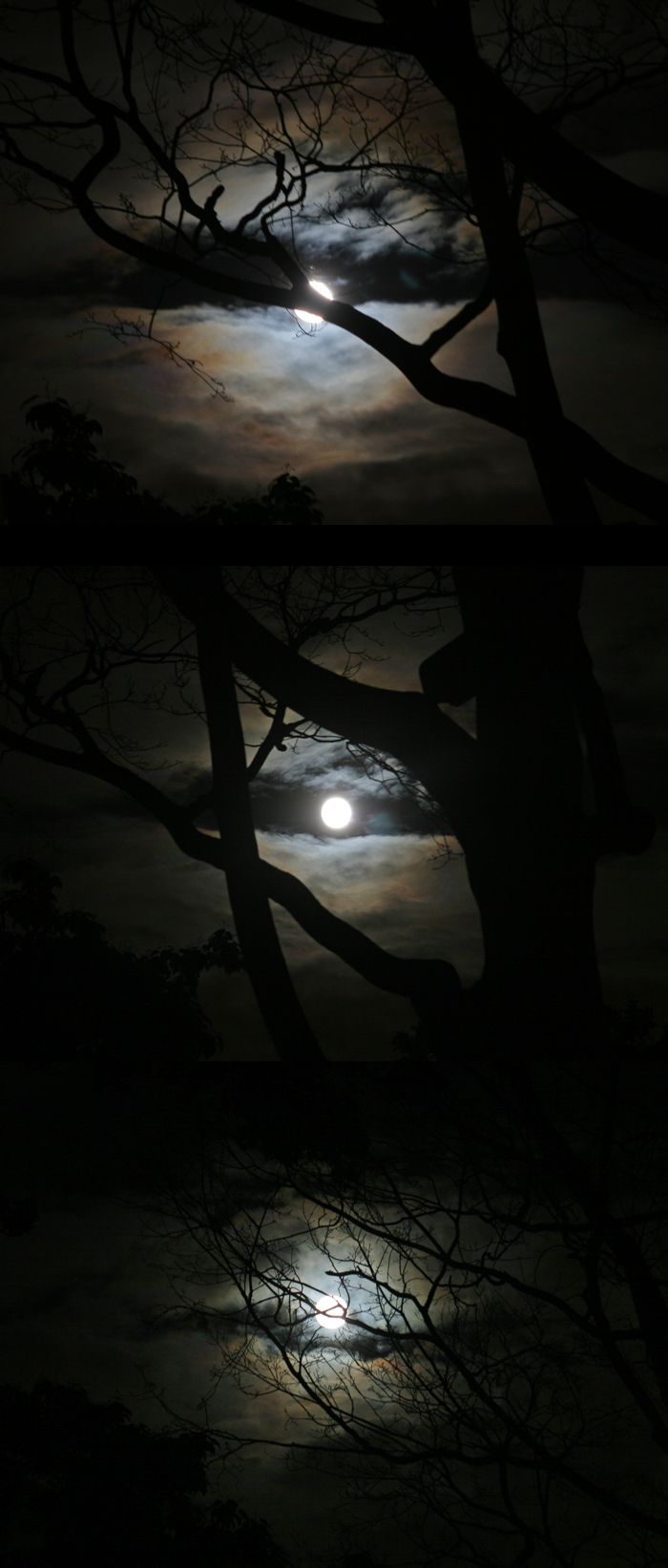
    The sun and the moon are two of the few natural constants we have in New York City and the moon is one of the very few celestial bodies we can see reliably at night – with the powerful ambient urban light, we do not often have nights where many stars and planets are visible. Such is city life.

    Today is the full moon. Last night saw some stormy weather and at the tail end, as skies began to clear, we had some spectacular conditions with fast moving billowy clouds providing a constantly changing canvas.

    At times like this it is not unusual to see amateur and professional photographers shooting away. A number of us found a choice spot in Washington Square Park where a few leafless trees provided perfect outlines to frame the moon. It’s not the Moon Over Hernandez, but hey, I’m not Ansel Adams and This is Not New Mexico 🙂

    Related Posts: Dot My I, Back to Our Main Feature, Sun, Moon and Stars, Hell’s Gate, Full Moon, Gothic Night

    Posted on by Brian Dubé

  • Close Encounter of the New York Kind

    Posted on by Brian Dubé


    New Yorkers take things seriously. The populace is large enough to support subcultures of every interest imaginable. Interests become obsessions. What better obsession than the things we have so little of – wildlife. Wildlife in a city like New York is limited and dominated by pigeons, rats, mice, squirrels and common birds. So when real wildlife of a different kind appears, it’s BIG news.

    Perhaps one of the biggest wildlife stories in recent years was the nesting of red tail hawks at 927 Fifth Avenue. The first to make home there was Pale Male in 1991. The nearby boat pond in Central Park was an ideal viewing spot and became a birder’s paradise. See my story here. The lineage continues to this day. The interest has spawned international press coverage, films, websites. To this day, 10 years later, birders are still found regularly on location with the requisite telescopes.

    On February 7, 2007, I photographed a red-tailed hawk feeding on the remnants of a pigeon on my air conditioner overlooking Washington Square Park. At this rare opportune moment, I was able to capture a photo through my window from only inches away. The photo received tremendous traffic as would be expected. See the photo and story Hawk Fest here.

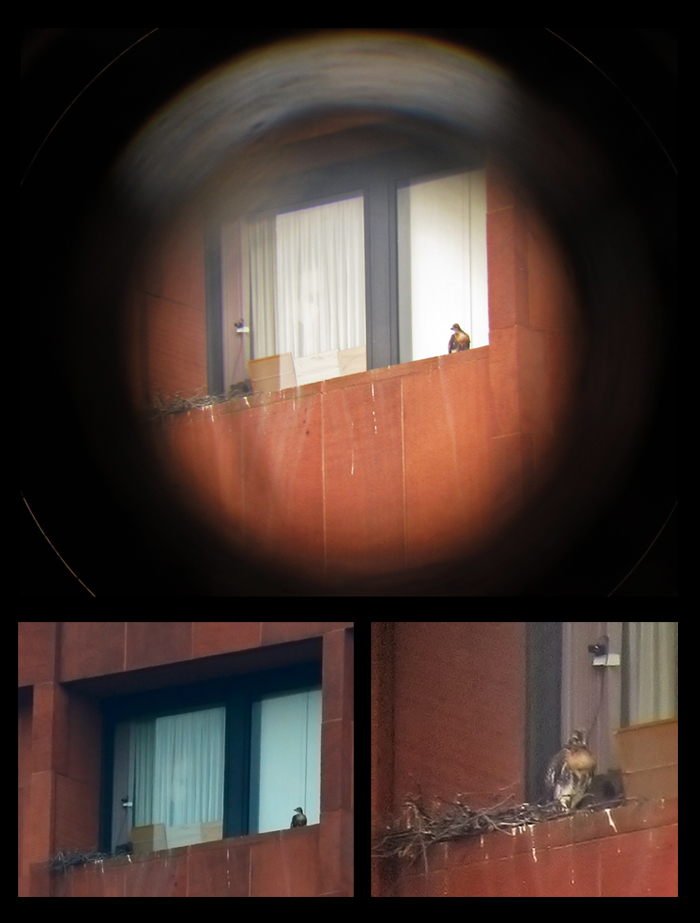
    Since that time a number of red-tailed hawks have been sighted around the park. The coup de grâce, however, was the recent nesting of a hawk on the windowsill of the Bobst Library building. The window chosen was none other than that of the president of New York University himself, John Sexton. Many speculate the roost was chosen for the same reason it is the location of the president’s office – the 12th floor perch affords sweeping views of the entire park, perfect for a bird of prey.

    The real story here however, is the nesting and mating of Violet and Bobby (violet is the official NYU color and Bobby after the Bobst library) and the birth of offspring. Yesterday, during a Be Fit NYC event, the parks department had set up a telescope for viewing of the hawks. I was able to capture a photo with a camera up against the scope.

    The New York Times set up a webcam to keep an eye on the family. The cam provides a live stream, free and 24/7. Check it out here for a Close Encounter of the New York Kind 🙂

    Related Posts: That Should Cover It, Peregrine Falcons, Light on Bobst

    Posted on by Brian Dubé

  • Serenity, Tranquility, Peace

    Posted on by Brian Dubé


    Although technically in the borough of Manhattan, I have always felt it was almost a little undeserving for any New York borough to take claim to something so special as the Cloisters – it is located at the northernmost end of the island, as far as one can get from Uptown, Midtown, Downtown or any other area of that one would typically associate with New York City. Apart from the small number of residents in Washington Heights/Inwood, this area is really a destination for New Yorkers and visitors alike.

    The Cloisters is a museum of medieval art and architecture, a branch of the Metropolitan Museum of Art. Everyone loves this extraordinary complex – it’s a close as you are going to get to genuine French architecture in the city. Germain Bazin, former director of the Musée du Louvre in Paris, described the Cloisters as “the crowning achievement of American museology.”

    The museum buildings were designed by Charles Collens and constructed from elements salvaged from five cloistered abbeys in France: Saint-Michel-de-Cuxa, Saint-Guilhem-le-Désert, Bonnefont-en-Comminges, Trie-en-Bigorre, and Froville. The sections used were disassembled brick-by-brick, shipped to New York City and reassembled between 1934 and 1938. From the Cloisters website:

    Three of the cloisters reconstructed at the branch museum feature gardens planted according to horticultural information found in medieval treatises and poetry, garden documents and herbals, and medieval works of art, such as tapestries, stained-glass windows, and column capitals. Approximately three thousand works of art from medieval Europe, dating from the ninth to the sixteenth century, are exhibited in this unique and sympathetic context.

    Located on four acres overlooking the Hudson River in northern Manhattan’s Fort Tryon Park, the Cloisters is a world apart from the glitter, glamour, hustle bustle and frenetic energy of the city. For most New Yorkers, Fort Tryon Park and the Cloisters is a country getaway, a mini vacation. Visit the Cloisters if you want a small vacation from the city and Serenity, Tranquility and Peace 🙂

    Related Posts: Down to the Cellular Level, Le Petit Chambord, Fire and Ice, Affront to Dignity, Paraiso, Steps From Paradise, Belvedere Castle, Devil’s Playground

    Posted on by Brian Dubé

  • Bamboo Big as Pipe

    Posted on by Brian Dubé


    I have had a small obsession with bamboo for decades. Like palm trees and tropical islands, they are things rarely associated with New York City, so I have had to travel and explore to feed the passion. In the 1980s, my fascination with bamboo reached its apex. I purchased a hard cover coffee table book on bamboo, helped my father fabricate bamboo fly fishing rods and sought out bamboo bonsai at the Brooklyn Botanic Gardens.

    The pièce de résistance was a trip to the island of Nevis in the West Indies, where I sought out my ultimate dream – a bamboo forest. My sister and her husband, who were traveling with me at the time, however, did not share my dream, but tolerated it, hoping that after an excursion, I may regain my sanity and normalcy. I did.

    On such a small island, networking to find services is virtually an effortless process. Shortly after arrival, I was able to find a local guide who would take me to a tropical jungle. This was easy, but the most imperative for me was whether or not we would see bamboo in its native habitat. He assured me yes, I would see “Bamboo Big as Pipe.”

    Bamboo is a remarkably versatile material and is used in furniture, flooring, molding, fencing, textiles (I have a bamboo t-shirt), paper, as a food, musical instruments, to build homes, scaffolding, even bamboo bicycles. All taking advantage of many unique properties of the wood – it is denser than oak, harder and lighter than maple. It is very attractive, distinctive and maintains well. It is stronger than wood, brick, concrete and steel and less expensive than many other woods. Unlike many trees, which can take 20-50 years to mature, bamboo takes only about five years, making it environmentally sustainable – this is the big plus from a marketing and consumer perspective. Some are calling this wonder grass the super material of the future.

    The appreciation and use of bamboo with related imagery permeates Asian cultures. This is true to a much lesser degree in the United States, however, I am not the only New Yorker to enjoy the symbolism of bamboo – scores of restaurants, spas and other shops use the word bamboo in their name.

    Recently, I found a retail store display of bamboo cutting boards. Nearby were two signs – one promoting bamboo as eco-friendly and the other, “why use bamboo?”, featured 5 bullet points: renewable resource, resists odors and bacteria, naturally beautiful finish, harder and lighter than maple, stronger than steel. At a number of home furnishing shops I am seeing more bamboo furniture.

    I am happy to finally see bamboo sprout all over the city in so many ways, helping to complete the overused but apt metaphor of New York City as the concrete jungle. No need to travel to the forests of Nevis – just look up and imagine Bamboo Big as Pipe 🙂

    Posted on by Brian Dubé

  • That Should Cover It

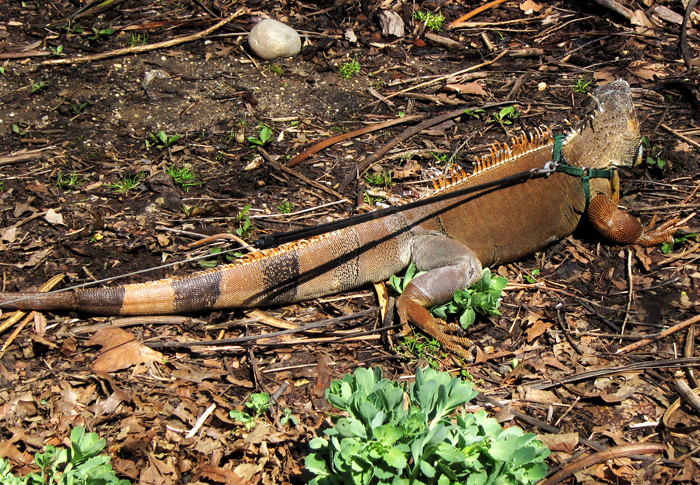
    On Sunday, April 17, two photographer friends and I were strolling in Washington Square Park where a man suddenly appeared with an enormous leashed iguana, which he proceeded to walk on the lawn. As we were taking photos, the owner became immediately hostile, demanding $3. We stopped. One of our group, however, pointed out that this was a public park and there were no restrictions regarding photography.

    This was not my first encounter with someone who displayed exotic pets in the parks of New York City. In 2006, I featured a story and photos about a man with a small trio of exotic animals that he marketed as photo ops to passersby (see Snake Charmer here). I also once witnessed a large Albino Burmese Python, slithering along in Central Park (see here).

    But I had suspicions regarding the iguana owner’s edginess – that he might have had some concern other than losing potential modeling fees for his critter. I never did investigate the laws regarding exotic pets in the city. A quick search and I learned that housing an iguana as a pet is a violation of the New York City Health Code. There is so much rumor mongering and misinformation in life, I have decided to reprint the code here in its entirety, exactly as written, directly from the New York City government website. So here, in the spirit of Everything No, is article 161.01 – Wild Animals Prohibited:

    (1) All dogs other than domesticated dogs (Canis familiaris), including, but not limited to, wolf, fox, coyote, hyena, dingo, jackal, dhole, fennec, raccoon dog, zorro, bush dog, aardwolf, cape hunting dog and any hybrid offspring of a wild dog and domesticated dog.

    (2) All cats other than domesticated cats (Felis catus), including, but not limited to, lion, tiger, leopard, ocelot, jaguar, puma, panther, mountain lion, cheetah, wild cat, cougar, bobcat, lynx, serval, caracal, jaguarundi, margay and any hybrid offspring of a wild cat and domesticated cat.

    (3) All bears, including polar, grizzly, brown and black bear.

    (4) All fur bearing mammals of the family Mustelidae, including, but not limited to, weasel, marten, mink, badger, ermine, skunk, otter, pole cat, zorille, wolverine, stoat and ferret.

    (5) All Procyonidae: All raccoon (eastern, desert, ring-tailed cat), kinkajou, cacomistle, cat-bear, panda and coatimundi.

    (6) All carnivorous mammals of the family Viverridae, including, but not limited to, civet, mongoose, genet, binturong, fossa, linsang and suricate.

    (7) All bats (Chiroptera).

    (8) All non-human primates, including, but not limited to, monkey, ape, chimpanzee, gorilla and lemur.

    (9) All squirrels (Sciuridae).

    (10) Reptiles (Reptilia). All Helodermatidae (gila monster and Mexican beaded lizard); allfront-fanged venomous snakes, even if devenomized, including, but not limited to, all Viperidae (viper, pit viper), all Elapidae (cobra, mamba, krait, coral snake), all Atractaspididae (African burrowing asp), all Hydrophiidae (sea snake), all Laticaudidae (sea krait); all venomous, mid-or rear-fanged, Duvernoy-glanded members of the family Colubridae, even if devenomized; any member, or hybrid offspring of the family Boidae, including, but not limited to, the common or green anaconda and yellow anaconda; any member of the family Pythonidae, including but not limited to the African rock python, Indian or Burmese python, Amethystine or scrub python; any member of the family Varanidae, including the white throated monitor, Bosc’s or African savannah monitor, Komodo monitor or dragon, Nile monitor, crocodile monitor, water monitor, Bornean earless monitor; any member of the family Iguanidae, including the green or common iguana; any member of the family Teiidae, including, but not limited to the golden, common, or black and white tegu; all members of the family Chelydridae, including snapping turtle and alligator snapping turtle; and all members of the order Crocodylia, including, but not limited to alligator, caiman and crocodile.

    (11) Birds and Fowl (Aves): All predatory or large birds, including, but not limited to, eagle, hawk, falcon, owl, vulture, condor, emu, rhea and ostrich; roosters, geese, ducks and turkeys prohibited or otherwise regulated pursuant to § 161.19 of this Code, the Agriculture and Markets Law or applicable federal law.

    (12) All venomous insects, including, but not limited to, bee, hornet and wasp.

    (13) Arachnida and Chilopoda: All venomous spiders, including, but not limited to, tarantula, black widow and solifugid; scorpion; all venomous arthropods including, but not limited to, centipede.

    (14) All large rodents (Rodentia), including, but not limited to, gopher, muskrat, paca, woodchuck, marmot, beaver, prairie dog, capybara, sewellel, viscacha, porcupine and hutia.

    (15) All even-toed ungulates (Artiodactyla) including, but not limited to, deer, antelope, sheep, giraffe and hippopotamus.

    (16) All odd-toed ungulates (Perissodactyla) other than domesticated horses (Equus caballus), including, but not limited to, zebra, rhinoceros and tapir.

    (17) All marsupials, including, but not limited to, Tasmanian devil, dasyure, bandicoot, kangaroo, wallaby, opossum, wombat, koala bear, cuscus, numbat and pigmy, sugar and greater glider.

    (18) Sea mammals (Cetacea, Pinnipedia and Sirenia), including, but not limited to, dolphin, whale, seal, sea lion and walrus.

    (19) All elephants (Proboscides).

    (20) All hyrax (Hydracoidea).

    (21) All pangolin (Pholidota).

    (22) All sloth and armadillo (Edentata).

    (23) Insectivorous mammals (Insectivora): All aardvark (Tubildentata), anteater, shrew, otter shrew, gymnure, desman, tenrec, mole and hedge hog.

    (24) Gliding lemur (Dermoptera).

    I think that should cover it 🙂


  • Sidewalk University


    Many years ago, a number of us were on the street in the East Village talking to a bookseller. In one of many spontaneous outdoor forums on the streets of New York, the conversation was nothing less than extraordinary. When I volunteered how impressed I was with the evening’s classroom, the bookseller showed little surprise. He pointed out that this was not just any place, it was in fact the streets of New York City, aka Sidewalk University.

    Not a substitute for the institutions of higher learning, but, for those unable to attend or perhaps as post grad work, nothing beats the streets of New York City as a place to learn. Not to suggest that every person or conversation will be one of erudition, but with some discrimination, a person can ferret out some worthy engagements.

    Saturday, my family was en route for a weekend stay in the city and was, however, delayed due to traffic. Learning of this when I was already outdoors on my way uptown to their hotel, I now had some free time – why not spend it in Union Square before jumping on the train? The farmer’s market is always a pleasurable stroll and opportunity to grab a healthy snack and/or beverage.

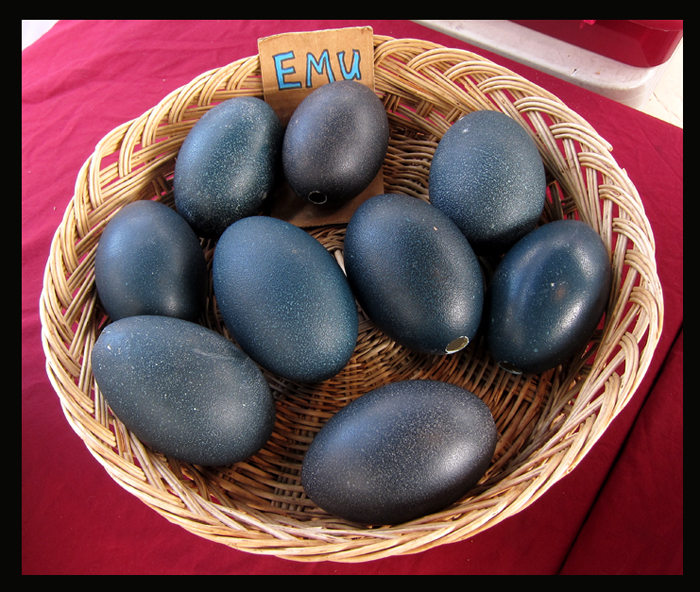
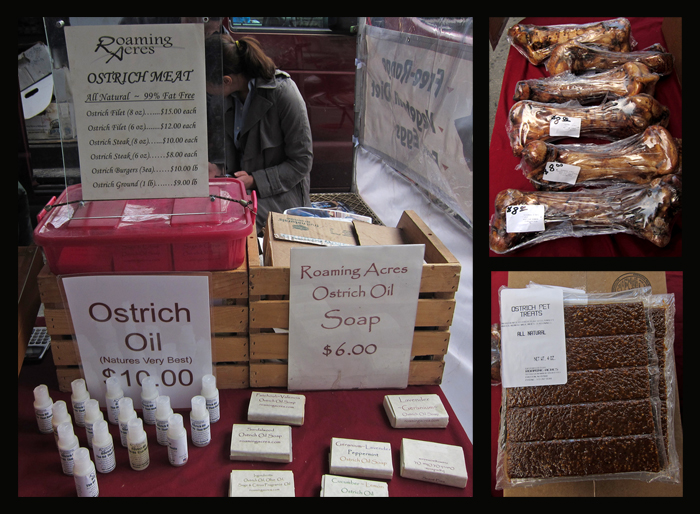
    On this excursion, I was particularly drawn to a table of enormous eggs – some filled, some empty to be used decoratively. The stand was run by Roaming Acres, an ostrich farm in Andover, New Jersey. Todd Applebaum pointed out to me that the farm made use of nearly 100% of the ostrich – its eggs, meat, bones, skin (as wallets).

    However, the eggs whose color and size drew my attention were that of the emu, an Australian relative. Todd gave me a short lesson on the emu – my appetite was so whetted that, like any good student, I followed up the lecture with reading. I learned that the emu was a remarkable bird, with some of the best design features I have seen in any animal. They can go a day or two without water, weeks without food, sprint at over 30 mph if necessary. A nail on their toes serves as a knife to kick away predators and other emus. They thermoregulate and can tolerate a wide range of temperatures. Their legs are among the strongest of any animals and can tear down wire fences. Their eyes, as would be expected, are equipped with a translucent secondary eyelid. Read more here.The eggs are highly prized – the emu only produces one every few days.

    When I asked Todd why I saw no emu meat or products, he smiled and said that you don’t kill the goose that lays the golden egg. We joked and I suggested that perhaps the emu knew its coveted status and was rather a diva. And so it was, on Saturday, March 12, 2011, that I was privileged to another tuition-free seminar on the streets at New York’s Sidewalk University 🙂


  • Urban Elephants and Hydraulic Tusks

    We have many many sounds in the city, some unique and some we share with our suburban and country brethren. For those whose apartments face the street, there is the unabated sound of street traffic, less or more depending on where one faces and the time of day. There are also birds, dogs barking, or the occasional screams and shouts of children at play. At night, there is the sound of taxis dropping off passengers – usually identifiable by the longer time between opening and closing of doors and the conversations that sometimes ensue between passengers and driver. There is the walk of the lone and confident woman with every step of her hard heels clearly audible. 

    Then there is the occasional late night revelry, screaming, or fighting of the severely inebriated. The sounds of these individuals getting into vehicles is not a pleasant prospect. The vehicle often jettisons away with squealing tires.

    In the early morning we have the trumpeting of urban Elephants, i.e. garbage trucks, and the crunching and groaning of debris caught in their hydraulic tusks.
    In the case of new, substantial snow, there are giveaway sounds – the reduced frequency of cars, the telltale echo of snow shovels, and the unmistakable grind of the snowplow against the pavement. In the event of rain, I can hear the spray of water against tires and the roadway.

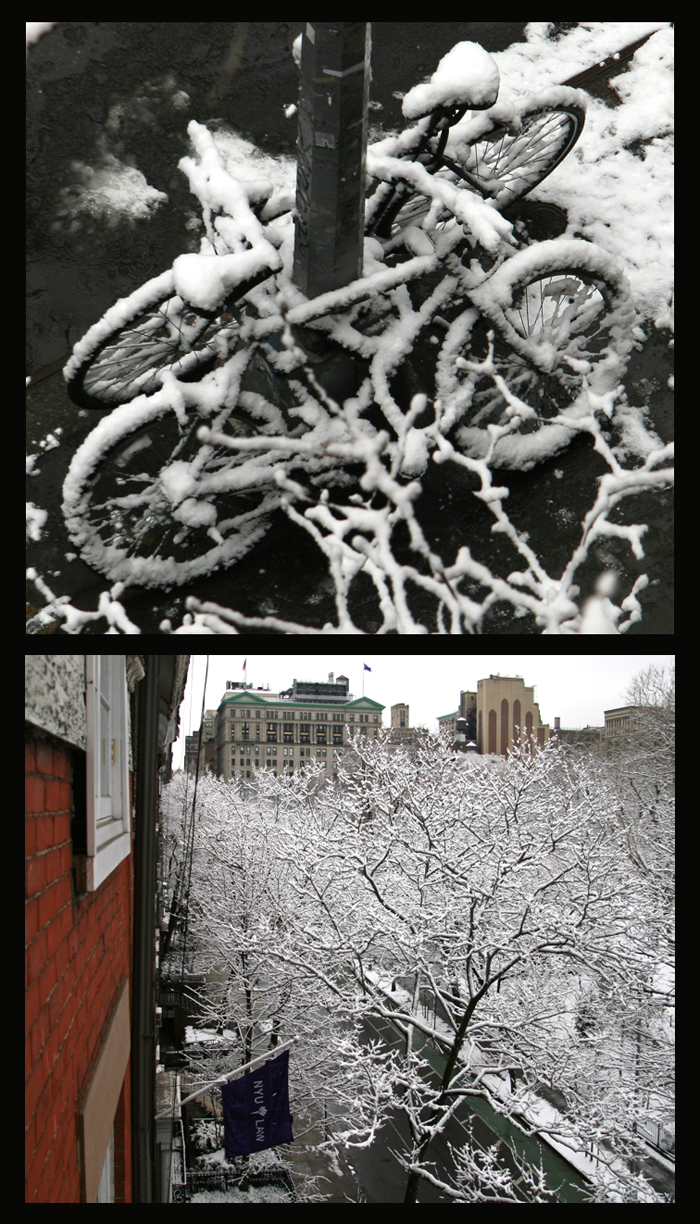
    I have windows facing a park which I have featured in the four seasons: Spring (Enchanted April), Signs of Summer, Fall (Wood, Glass, Brass and Trees), and Winter (White By Design 2). In the mornings, however, I often rise before sunrise and immediately go to my laptop, typically without even looking out the window. Instead I rely on the sounds of the city. – perhaps for any number of reasons, including a growing reliance on the Internet and also being out of tune with the outdoors and nature from living in such a high urbanized environment. This morning, I had no idea we had another in a series of snowstorms until I heard a snow shovel.

    On an Apple computer, the F4 key immediately displays the dashboard, a group of widgets which can be custom configured. I currently have mine to include the weather which displays the current conditions and the week’s weather forecast. I can see if the sun is shining without turning around.

    But not everything can be experienced through the Internet, the F4 key, or even the sounds of the city. You’ve got to look out your window if you want to see the snow, and you have to step into the streets and follow the trumpeting if you want to see Urban Elephants and their Hydraulic Tusks 🙂


  • dinamic_sidebar 4 none

©2026 New York Daily Photo Entries (RSS) and Comments (RSS)  Raindrops Theme