• Mermaid Parade 2011, Part 2

    Posted on by Brian Dubé

    (see Part 1 here)

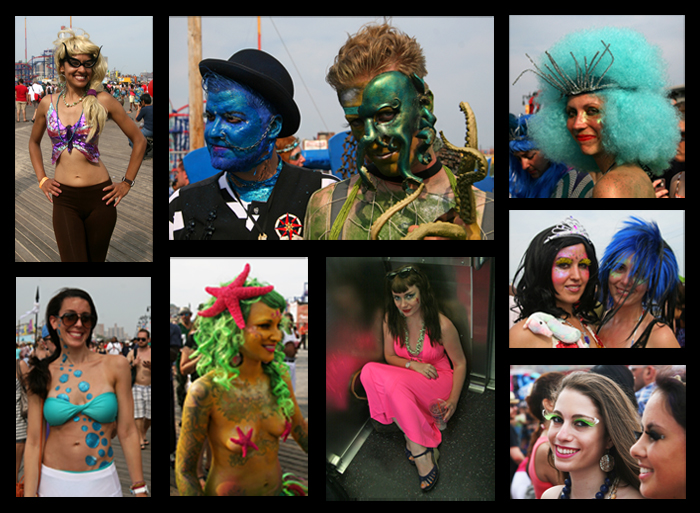
    This is Part 2 of the 2011 Mermaid Parade. See my complete gallery of photos here.

    Previous Mermaid Parade Posts: Mermaid Parade 2006 P1, Mermaid Parade 2006 P2, Mermaid Parade 2007 Part 1, Mermaid Parade 2007 Part 2, Mermaid Parade 2009, Mermaid Parade 2010

    Posted on by Brian Dubé

  • Mermaid Parade 2011, Part 1

    Posted on by Brian Dubé

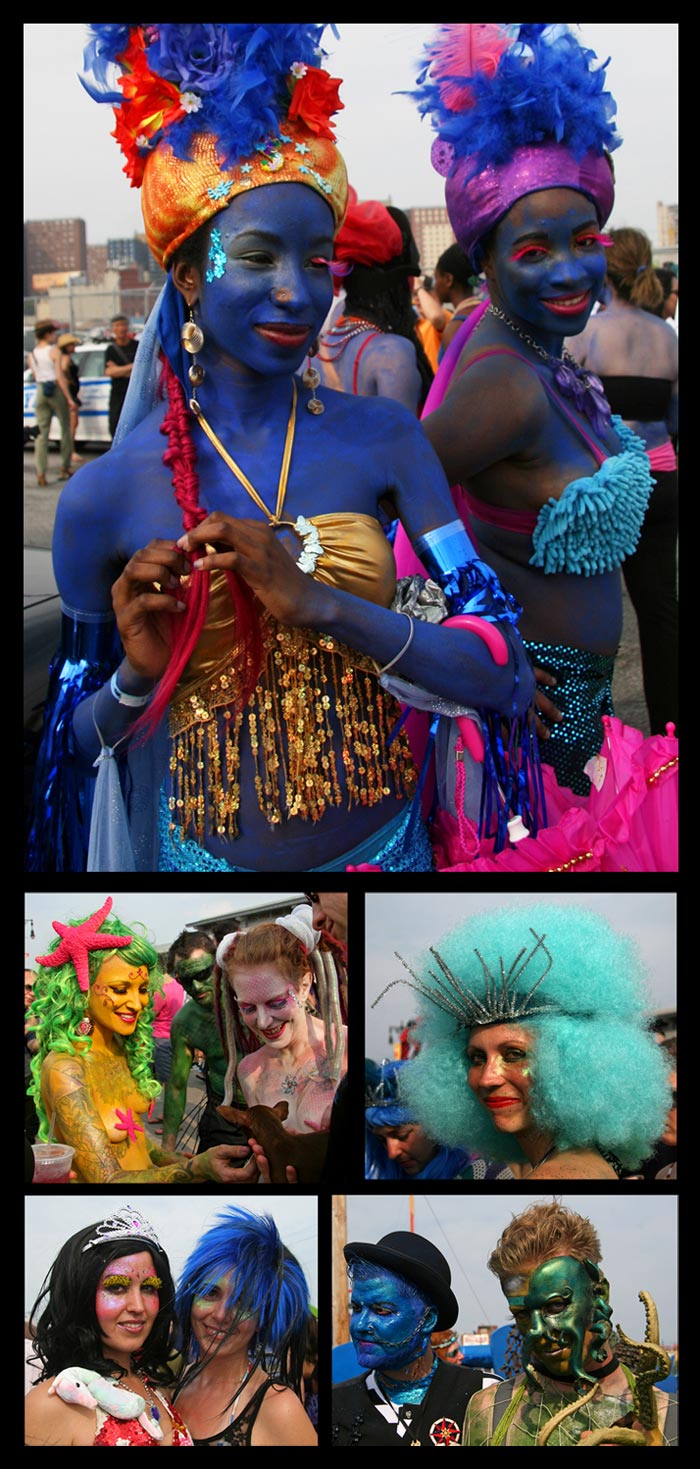
    This is the 5th year I have attended and photographed the annual Mermaid Parade on the boardwalk by the ocean at Coney Island. It is becoming larger and a little more difficult to negotiate through. This year, I spent my time at the exit area for paraders. An entire city block is closed off and with paraders milling about, it is much easier to mingle with and photograph parade participants. My favorite parade – highly recommended.

    See Part 2 here.

    Previous Mermaid Parade posts: Mermaid Parade 2006 P1, Mermaid Parade 2006 P2, Mermaid Parade 2007 Part 1, Mermaid Parade 2007 Part 2, Mermaid Parade 2009, Mermaid Parade 2010

    Posted on by Brian Dubé

  • Abandon All Preconceived Notions Ye Who Enter Here

    Posted on by Brian Dubé

    The Story of Mark Birnbaum, Part 2 (see Part 1 here)


    I know what you are asking because everyone I know has asked the same things, as I have. I have now spent a total of about six hours in conversation with Mark.

    Would you like everything you believe about people brought into question? Do you feel you are a good judge of people? If so, do not come with me into the world of Mark Birnbaum. To be with Mark Birnbaum is challenging and disturbing. To spend time with him will impose a shift in thinking. There is just no way around it.

    On my first meeting (Part 1 of this story), I tactfully asked Mark about his background. He was immediately forthcoming. The biggest surprises were his educational achievements. I asked for a follow up interview, anywhere there was a piano. He generously offered to meet in his home. I recorded our entire 3 hour conversation together and video recorded some of his piano playing.

    I met him at his home on East 48th Street Sunday afternoon at 2:30 PM. He was on time, waiting for me in the lobby of the doorman building he lives in. My first thoughts were to corroborate his claims and ask about this in as tactful a manner as possible. The New York Times had already done a story on Mark, so I asked if they had questioned his claims. He said absolutely – they had done their homework. When I suggested that I might also want to see evidence, he readily agreed. He volunteered that people can say anything and that I should ask for such things.

    He showed me his college diplomas, the purchase contract and proprietary lease for his apartment and his birth certificate showing his birth in Switzerland in 1952 (where he lived for just three years before returning with his parents home to their home in Brooklyn, New York). He allowed me to photograph any documents that I wanted to. I asked direct questions, he gave direct answers. It was refreshing.

    In 1974, Mark graduated Summa Cum Laude from Brooklyn College. He then applied and was admitted to Columbia University, where he obtained a masters degree in one year. He spent about an year and a half in Paris and on his return, he reentered Columbia, where he received his PhD in music composition in 1982. Mark also successfully made all the hurdles for admission to Juilliard, one of the most difficult schools in the world to gain entry to. However, at the time of his admission, there was only one vacancy in musical composition and he was not chosen.

    I spent much of our time together multi-tasking. As I listened closely and we conversed, I simultaneously searched for evidence of lunacy or some serious psychological disorder. I could find none. His home, which I expected to be a shrine to squalor, befitting the artist eccentric, was nothing of the sort. It was extremely tidy and minimalistic, with his Yamaha baby grand piano as centerpiece.

    Not yet knowing about his work and career as a musical performer, I was very curious about his source of income. I was surprised that he owned his own apartment. He had already told me, “I know how to play the game.” I was to learn that he had.
    Mark grew up in Brooklyn. His interest in music started at an early age with a focus on piano. He was for a time a rock and roll drummer and played in a band. His interest in musical genres spans the gamut – classical, rock, blues, jazz, country and the area of his particular interest, ragtime.

    Mark has worked successfully as a performer and teacher in his adult life. He had the typical assortment of odd jobs prior to his days as a student, when he worked as a bartender. From 1989 to 1993, he was musical host on the Joe Franklin TV show. At Manhattan’s 13th Street Theater, he had a weekly show “Hot Piano! Ragtime Blues and Jazz” – five months running. From that time, Mark has worked in music as performer and teacher. See his other credits, music, videos, and bio at his website here.

    I was rapidly losing ground on my initial assessment of this man. At times I felt my sanity was coming into question, not his. Here was a man who was cordial, brilliant, insightful, generous of spirit, gentle, open, talented, articulate and well educated. Apart from his manner of dress, he was normal by any definition. But to spend substantial time with a man dressed this way while having an extraordinary conversation was very disorienting – I was suffering from a severe case of cognitive dissonance. Mark also gone through many incarnations regarding look, as can be seen in my collage of photos from his archives. I asked if he expected that he may reinvent his dress some day, and he said most likely.

    We shared so many insights and connections, it was eerie. We had numerous instances of nearly finishing each others sentences. I also share one of Mark’s passions, that of walking the streets of New York City. It is one of the most important parts of living in this city to me. You may see Mark around town walking in his very slow, deliberate, signature cadence. Mark sees his long daily walks as “integral to his playing, teaching and composing, a tie to New York’s street vibe.” From the New York Times:

    “The street is my inspiration, and if you want to remain immersed in New York you have to walk its streets. I’m a New York street guy, and Manhattan has the best energy in the world.”
    Mr. Birnbaum said he realized the musical importance of the daily walk after meeting the immortal ivory tickler Vladimir Horowitz who told him, “Make sure you walk 40 blocks a day, because if you don’t walk, your fingers don’t run.”

    Mark told me of his influences. One of his life mentors is Bill Schimmel, whom I saw perform, met and wrote a story about (see The Redeemer here). Mark cited several other major influences – Vladimir Horowitz (whom he met) and Artur Rubenstein.

    Ah, you still have the lingering question – “Why does he dress that way?” Let Mark respond:

    Perhaps my purpose in dressing the way I do is to spread joy (cheer people
    up). When someone sees or says something negative—they are not seeing me…
    Or speaking about me. Perhaps I am a mirror or magnifying glass (like Socrates).

    I asked Mark if he was gay. He said no. I asked about his ability to find a partner, dressed as he is:

    My manner of dress is a plus in meeting a partner as far as I know.
    It is a screening process; if someone doesn’t “get it” (like it or appreciate
    it), she would not appreciate me where it counts.

    Mark goes on to say:

    This dress code is an outer manifestation of who I am: an apostle of
    freedom, Zen and Socratic/Orwellian thought).
    Dress Code helps me practice piano, listen, study Zen and the Art of War and
    is done out of self-respect. I respect others as such.

    I dress this way every day– once I am up, whether I am going out in an
    hour, later that day, or (very rarely) staying in. When I had a cold months
    ago and didn’t go out one day. I dressed the same way.
    More a uniform than a costume.

    People see what they like (about themselves) or see what they don’t. It’s less about me than them.
    Some see rock n roll: Elton John, David Bowie, Aerosmith or Kiss–the ’70’s.
    Some see religious significance, spirituality, Shamanism or royalty.

    Some think I am a pimp.
    Some don’t see at all.

    I never explain it much; it would be like explaining jazz.
    One has to experience it, be with it.
    And….People hear what they see; everyone has their own window.

    I know – you’re not quite satisfied. But then this is New York City where there are not only many wonderful and miraculous things, but there are many puzzles and enigmas too. It’s a place where we expect the unexpected. Isn’t that why you’re here?

    Thanks, Dr. Mark Birnbaum, for a look inside your window…

    Note: From a recent email conversation with Mark on June 21, 2011:

    Hi Brian.

    Fabulous article keeps getting better!
    Yes, I walk to the village and back.
    When we met on Houston St, that’s often as far south as I go.
    Bill Schimmel says hello and loves your blog,-calling it the best! (he) considers your article on me the next best thing to being in the NY Times, and that it is the best blog he has seen anywhere.
    I agree with him.

    I’ll see you soon—on one of our walks.

    View Mark’s Youtube channel, Flickr photostream, and website here.

    Other stories from Abandon All Preconceived Notions series: Gaby Lampkey (see here and here), Jenn Kabacinski (see here and here), Driss Aqil

    Other Interesting Individuals: Ferris Butler (see here and here), Professor Robert Gurland (see here and here), Susan Goren, Creative Expert Criminal Suspect, Misfits, Jim Vehap, Walid Soroor, Flamboyant, Street Revival, André (see here and here), Dave, Reverend Billy, Narcissism Gone Wild, Spike

    Posted on by Brian Dubé

  • Abandon All Preconceived Notions Ye Who Enter Here

    Posted on by Brian Dubé

    The Story of Mark Birnbaum, Part 1.   (See Part 2 here.)


    There are many outlandishly dressed characters in New York City. I find the extreme cases rather sad – to me, they appear like a cry for love and attention from a lonely person reaching out. I have seen some of these as regulars at multiple parades where their outfits are completely inappropriately themed, appearing at the Easter, Halloween and Mermaid parades, dressed in the same attire.

    Yet I have been proven wrong in my judgement more times than not, inspiring a series of stories Abandon All Preconceived Notions Ye Who Enter Here – the title being more self-talk than admonition to others.

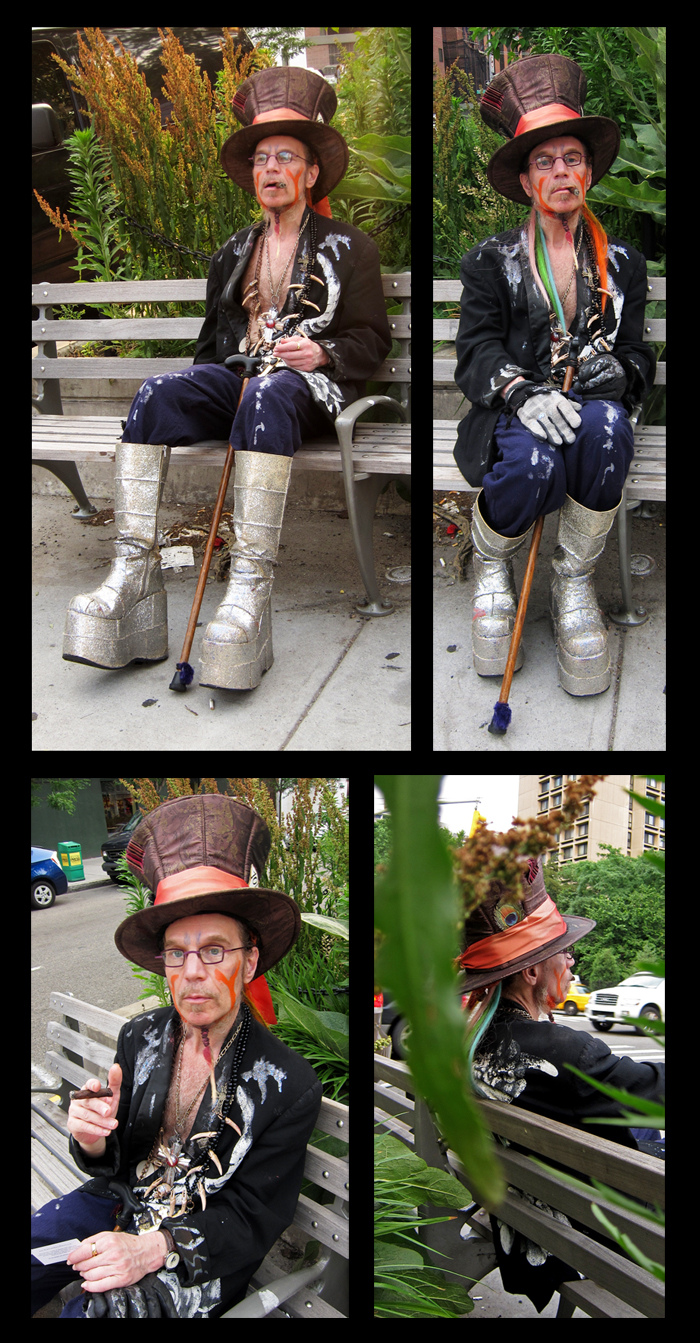
    I had caught a glimpse of the man in today’s photo just a few times, always walking with a very slow, deliberate, confident gait. I quickly characterized him as the Mad Hatter incarnate, likely a deranged, pathetic, lunatic. At one time, I had taken a photo of him leaving a park. It was blurry and unusable, but just as well, since I had no opportunity to speak to him and find out who he was. I don’t feature anonymous individuals and brand them as lunatics. Another time perhaps.

    Another time presented itself in the most remarkable circumstance. On Friday evening while strolling home from work, I crossed Houston Street, the largest crosstown street in Manhattan. It looks and functions virtually like a divided highway with a landscaped median. At the end of one median at West Broadway, a park bench has been installed in what can easily be argued as one the most visible and inauspicious places. It is unimaginable that anyone would want to sit between 6 lanes of traffic, whooshing by in two directions. I have never seen it used.

    But there he was, carefully composed sitting on a bench, a photo begging to be taken. Brightly colored hair extensions, an enormous mad hatter style hat, face paint, necklaces with skulls and bones, heavy gloves on a hot day, a sport jacket with no shirt, a knotted tuft of hair under his chin, his enormous signature silver-glittered platform boots, a cane and smoking a cigar. Calm, cool and collected.

    Approaching someone like this can be very tricky with unpredictable response. So far my experience has only been positive – I have concluded that anyone so outlandishly dressed is certainly not averse to attention and quite used to others taking photos. See the list of links below which feature profiles of some of the most interesting individuals I have encountered in my travels in New York City: Ferris Butler, Professor Robert Gurland, Gaby Lampkey, Jenn Kabacinski, Driss Aqil, Susan Goren, the Creative Expert, the Swaggertist in Blue, Hector, the Misfits, Jim Vehap, Walid Soroor, Flamboyant, Todd Bentley, André, Dave, Reverend Billy, the Dance Parade, Narcissism Gone Wild, and Spike.

    Although permission to take a photo in a public place to be used for editorial purposes is not legally necessary, I prefer to seek the consent and cooperation of subjects when they are featured in a story. So, I opted to ask permission. His response “of course” was surprising. He was extraordinarily cordial and a small mini-photoshoot ensued. He was so accommodating, I decided take a seat next to him.

    An hour and a half passed, interrupted by the myriad of passengers and pedestrians stopping to take photos. I could see that if one is interested in drawing attention, dressing like this and sitting on a bench on Houston Street will certainly achieve that. I recorded over 40 minutes of a conversation so engaging, that at its end, my companion said “we rocked.” It was a real life My Dinner With André meets Alice in Wonderland, New York City style.

    In Part 2, you will meet Mark Birnbaum. Trust me – he is not the man you think he is at all…

    Note: To those who have asked, Mark’s shoes were purchased at Trash and Vaudeville.

    Related Posts: Ferris Butler Part 1, Professor Gurland Part 1, Jenn Kabacinski Part 1, On the Road, Fashion Forward

    Posted on by Brian Dubé

  • Leave the Driving to Us

    Posted on by Brian Dubé

    There are a number of ways to approach driving a car in New York City. If you bring ideas of expediency and reliable travel times to the table, you are in for a very stressful time. Compulsive lane changing to gain small advantages, agonizing over every sanitation truck working ahead of you, screeching and lurching to maximize speed only to get to a traffic light earlier – all these things will just eat at your soul.

    There are ways, times, and routes to minimize trip time, of course. However, one must always be prepared for one or even an unending series of traffic snarls, mishaps and poor choices which you could not have foreseen. These things are not incidents, they are a way of life. For those inclined to eastern disciplines, learning to live with New York City traffic and not get ruffled is one of most difficult forms of moving meditation and ultimate exercises in letting go.

    I have owned a car for most of the 42 years I have lived in New York City, and I am not daunted by city traffic or driving. But if you value your time and your mind, the subway is the way to travel in New York City. The train traveler generally avoids the slings and arrows of outrageous traffic. There are subway delays, reroutings, dropped service, etc., but generally this will be the best way to travel the city.

    However, sometimes you just don’t feel like traveling underground, particularly on beautiful days like we have had lately, when it seems like a crime to descend to the subterranean depths. You have no car or access to one, and you do not want to break the bank taking a taxi. If you have the time, for destinations in a straight line within one borough (crosstown bus connections are free but add even more time to an already slow journey) and during daylight or evening hours, you can’t beat a bus. Here, as in auto travel, your skills in letting go will also be tested – buses deal with the same traffic issues as cars and make stops every couple blocks, making what for many will feel like an interminable journey.

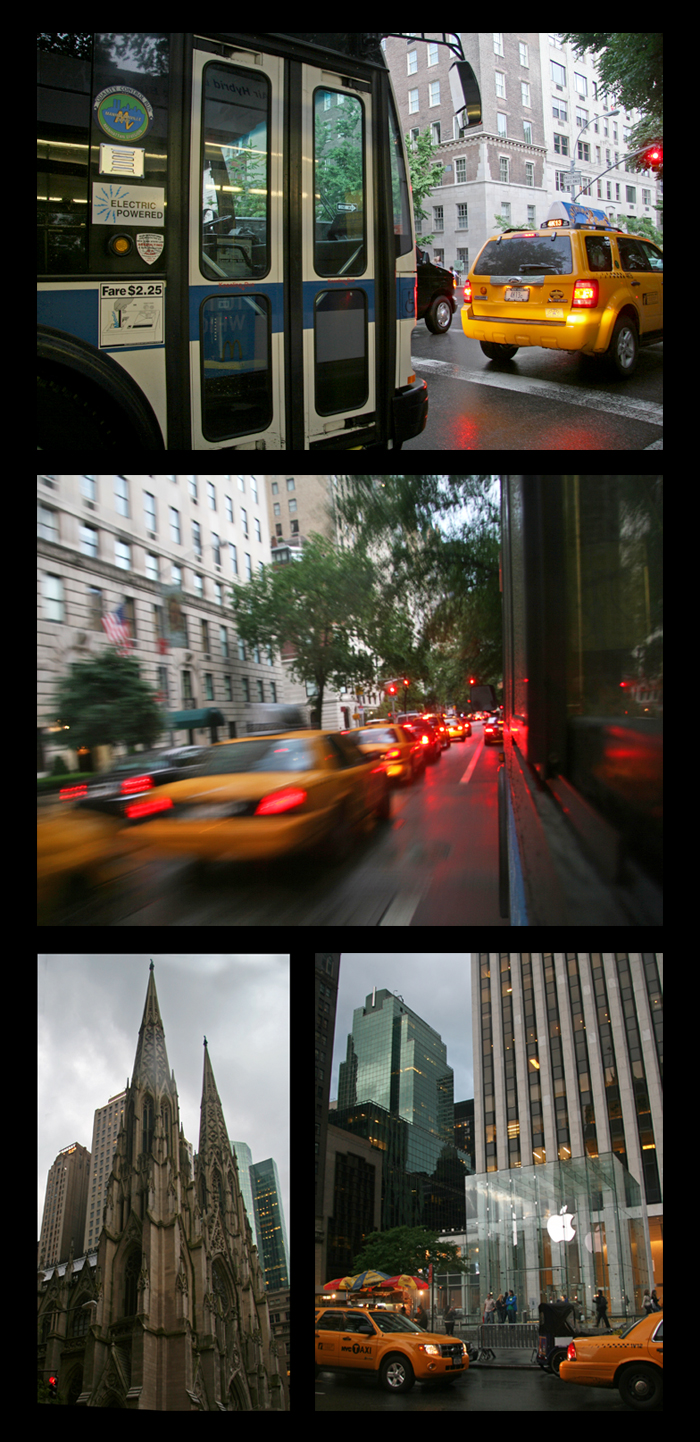
    There are many reasons people opt for buses in New York City including safety and no need to climb stairs. But my biggest plus is the tremendous sightseeing for the cost of bus fare. There is probably no better bus ride in New York City than a trip down Fifth Avenue, any time of year.

    I recently embarked at 80th Street heading downtown to the Village. North of 59th Street, on the left side, you are treated to the world of privilege with some of the world’s finest apartment buildings and museums. On the right side, Fifth Avenue flanks Central Park. At 59th Street, we have the Sherry Netherland, the Plaza Hotel, the distinctive glass cube of the Apple store and the start of an endless parade of flagship shops of some of the world’s finest retailers. At 50th Street, we have St. Patrick’s Cathedral (see here and here) and Rockefeller Center. Later, we pass the Empire State Building, Madison Square Park, the Met Life Tower, and the Flatiron and New York Life Insurance Buildings. Evening is a great time to travel as the lights begin to glimmer and glow.

    Carry the spirit of the traveler or explorer who knows there will be obstacles, hurdles and other unexpected difficulties, but has no time table or tight schedules. If we meet and I have my car, I’ll take you for a ride. Otherwise, jump on the bus and in either case, relax, let go and leave the driving to us 🙂

    Related Posts: A Bottle of Schweppes, Cello Class, Ice Skating in October, 23 Skidoo, Saks Fifth Avenue, Apple and Sherry

    Other Driving Related Posts: Nice Move, Kid, The Point of Impact, Flailing and Hailing, Sittin’ on Top of the World, What numba Kissena?

    Posted on by Brian Dubé

  • This Is Not New Mexico

    Posted on by Brian Dubé

    The sun and the moon are two of the few natural constants we have in New York City and the moon is one of the very few celestial bodies we can see reliably at night – with the powerful ambient urban light, we do not often have nights where many stars and planets are visible. Such is city life.

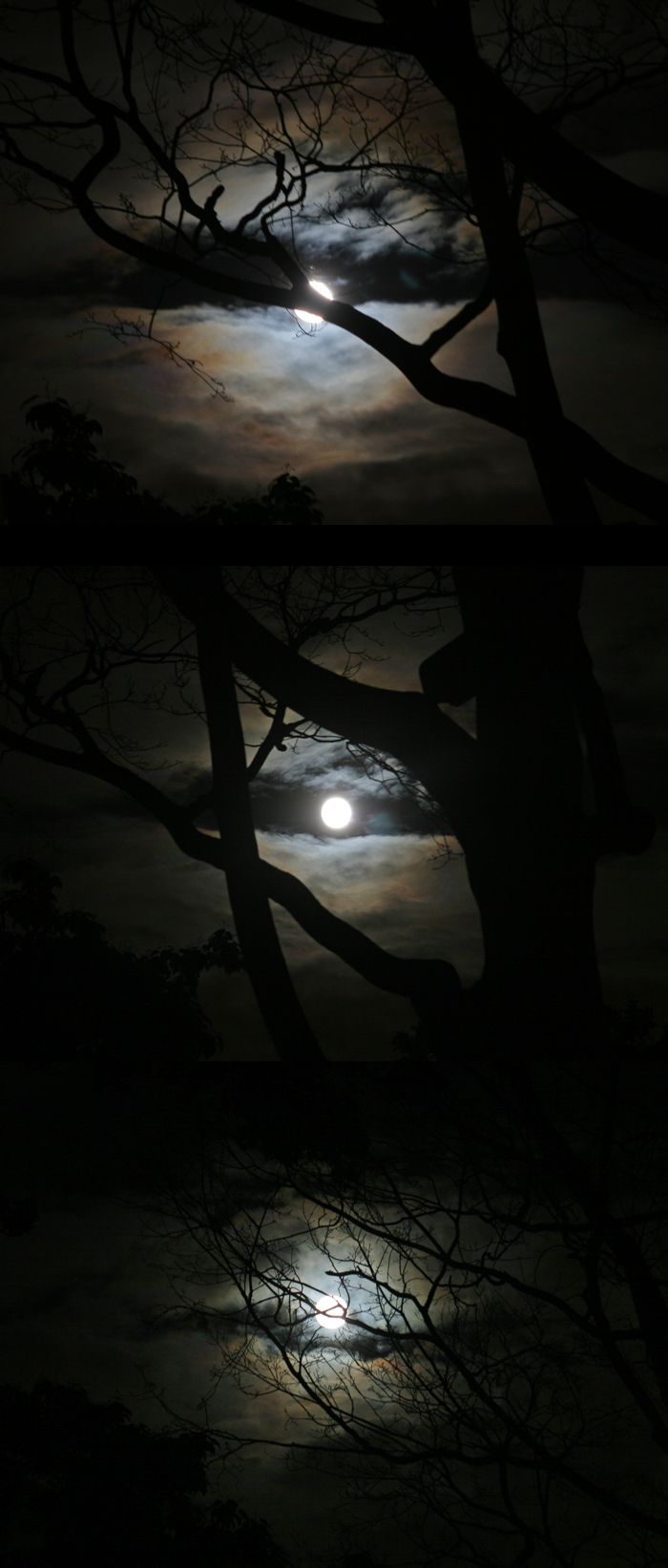
    Today is the full moon. Last night saw some stormy weather and at the tail end, as skies began to clear, we had some spectacular conditions with fast moving billowy clouds providing a constantly changing canvas.

    At times like this it is not unusual to see amateur and professional photographers shooting away. A number of us found a choice spot in Washington Square Park where a few leafless trees provided perfect outlines to frame the moon. It’s not the Moon Over Hernandez, but hey, I’m not Ansel Adams and This is Not New Mexico 🙂

    Related Posts: Dot My I, Back to Our Main Feature, Sun, Moon and Stars, Hell’s Gate, Full Moon, Gothic Night

    Posted on by Brian Dubé

  • Little Red

    Posted on by Brian Dubé

    I’m not sure what they do on the first day of first grade these days – perhaps a review of the principles of recycling and waste management or an introduction to recombinant DNA. My first day of first grade was held in a newly built school. Everything was brand spanking new, including the green chalkboard.

    Our teacher drew a large red apple, filling in the entire thing with red chalk. After successfully identifying it, she erased it. However, no matter how much writing and erasing was done, a hint of that red apple remained on the board for the entire year, much as it has remained in my mind.

    It was a much simpler time, for sure, in a much simpler place but superior to the education of my parents who were educated in a one-room school house with one grade per row. One teacher taught the eight grades simultaneously.

    Now we have pre-school as the norm and parents stressing about their children being admitted to prep schools like the Dalton School with acceptance rates of only 14%. Barely out of the womb and kid’s trajectories are being plotted for Ivy league schools.

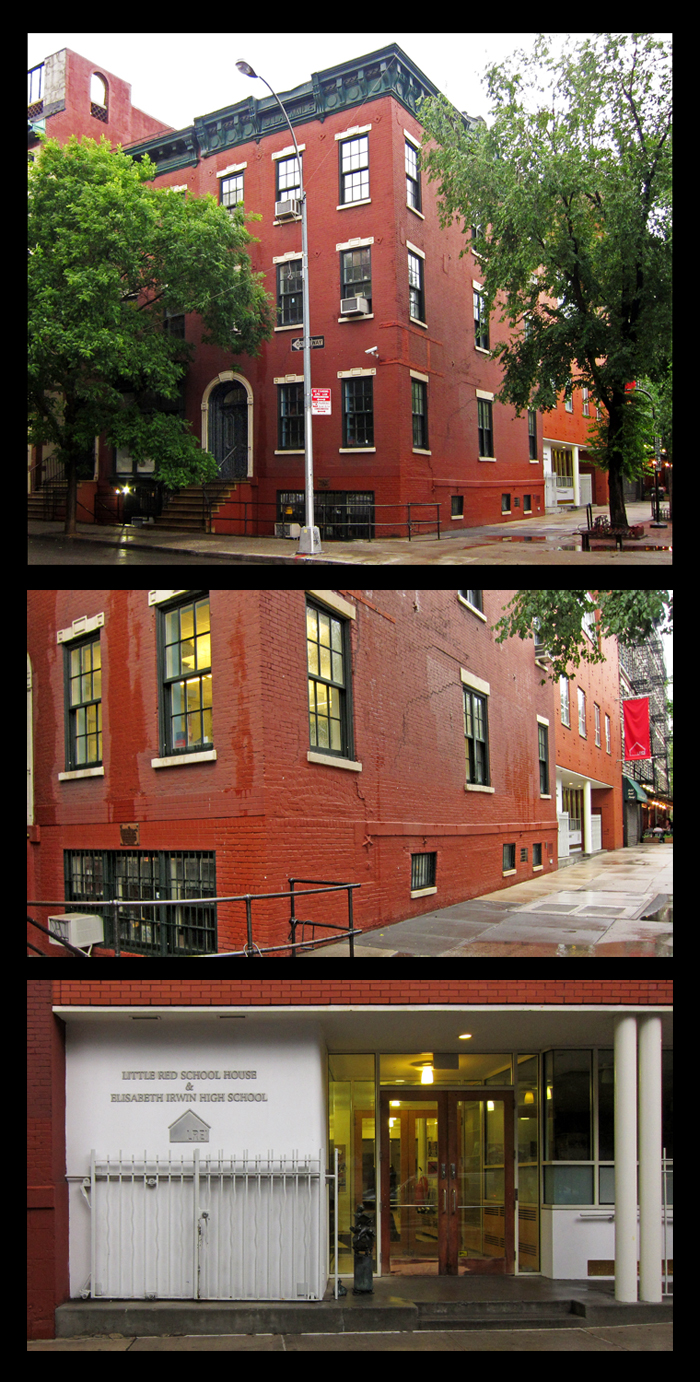
    The Little Red School House has been a fixture in the heart of Greenwich Village for near a century. It occupies two buildings at the corner of Bleecker Street and Avenue of the Americas. Like many establishments in the city, it is easily overlooked – nothing in particular screams school house and the red brick is typical of the structures around it. The Little Red School House is generally considered New York City’s first progressive school. From their website:

    In the early 1900s, Elisabeth Irwin, John Dewey and other progressive educators developed a new educational approach based on active learning instead of passive absorption of facts. “The complacent formalism of schools, its uncritical and therefore uncreative spirit, must be replaced by an honest hospitality to experimentation,” Irwin wrote.

    Elisabeth Irwin founded the Little Red School in 1921 as an alternative public elementary school. Parents and students loved the new dynamic learning community. It was an exciting place to learn, with a palpable spirit of curiosity, creativity and challenge. However, during the Depression, the Board of Education could not afford to keep the school open.

    Parents pledged their own resources, establishing Little Red School House as an independent elementary school. In 1941, the program expanded to include a high school at 40 Charlton Street. For nearly 70 years, we have been a pre-K through twelfth grade school: LREI.

    Red apples on the first day of first grade, red paint on school houses. Good things in education are looking a Little Red 🙂

    Note about red school houses: Red was used traditionally for barns and school houses because of the cost of the paint – it was made out of ingredients that were readily available: iron oxide (rust – giving it the distinctive color) along with skim milk, lime and linseed oil.

    Related Posts: Meetings With Remarkable Men Part 2, Meetings With Remarkable Men Part 1, The Little, Finger Painting, Matters of Opinion, That’s Quite a Briefcase, Who See the Red, The Scholastic Building

    Posted on by Brian Dubé

  • Close Encounter of the New York Kind

    Posted on by Brian Dubé


    New Yorkers take things seriously. The populace is large enough to support subcultures of every interest imaginable. Interests become obsessions. What better obsession than the things we have so little of – wildlife. Wildlife in a city like New York is limited and dominated by pigeons, rats, mice, squirrels and common birds. So when real wildlife of a different kind appears, it’s BIG news.

    Perhaps one of the biggest wildlife stories in recent years was the nesting of red tail hawks at 927 Fifth Avenue. The first to make home there was Pale Male in 1991. The nearby boat pond in Central Park was an ideal viewing spot and became a birder’s paradise. See my story here. The lineage continues to this day. The interest has spawned international press coverage, films, websites. To this day, 10 years later, birders are still found regularly on location with the requisite telescopes.

    On February 7, 2007, I photographed a red-tailed hawk feeding on the remnants of a pigeon on my air conditioner overlooking Washington Square Park. At this rare opportune moment, I was able to capture a photo through my window from only inches away. The photo received tremendous traffic as would be expected. See the photo and story Hawk Fest here.

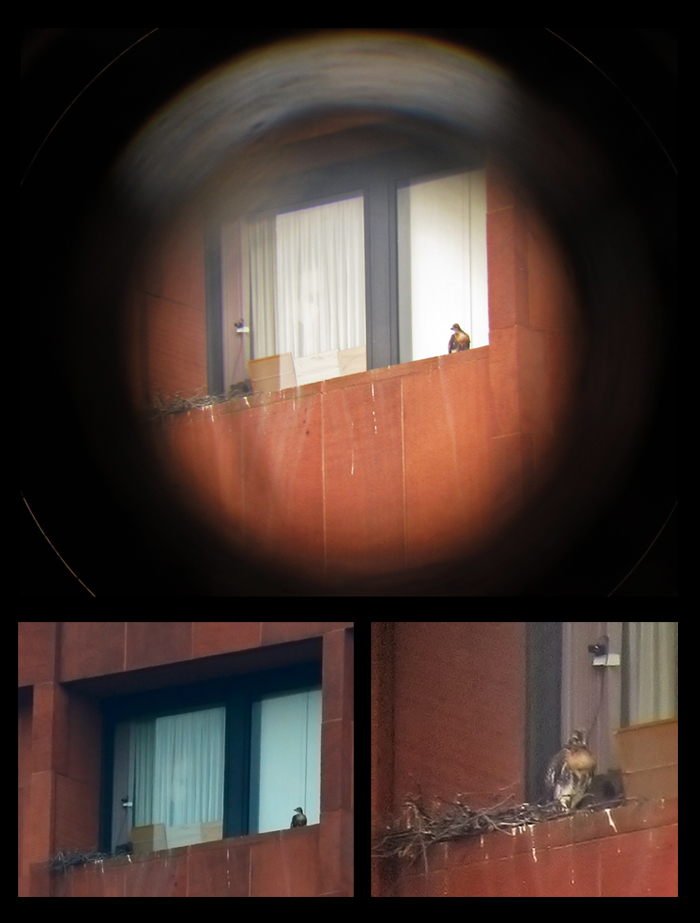
    Since that time a number of red-tailed hawks have been sighted around the park. The coup de grâce, however, was the recent nesting of a hawk on the windowsill of the Bobst Library building. The window chosen was none other than that of the president of New York University himself, John Sexton. Many speculate the roost was chosen for the same reason it is the location of the president’s office – the 12th floor perch affords sweeping views of the entire park, perfect for a bird of prey.

    The real story here however, is the nesting and mating of Violet and Bobby (violet is the official NYU color and Bobby after the Bobst library) and the birth of offspring. Yesterday, during a Be Fit NYC event, the parks department had set up a telescope for viewing of the hawks. I was able to capture a photo with a camera up against the scope.

    The New York Times set up a webcam to keep an eye on the family. The cam provides a live stream, free and 24/7. Check it out here for a Close Encounter of the New York Kind 🙂

    Related Posts: That Should Cover It, Peregrine Falcons, Light on Bobst

    Posted on by Brian Dubé

  • It Hurts Me Too

    Posted on by Brian Dubé


    Please Click and Play Audio Clip to Accompany Your Reading:

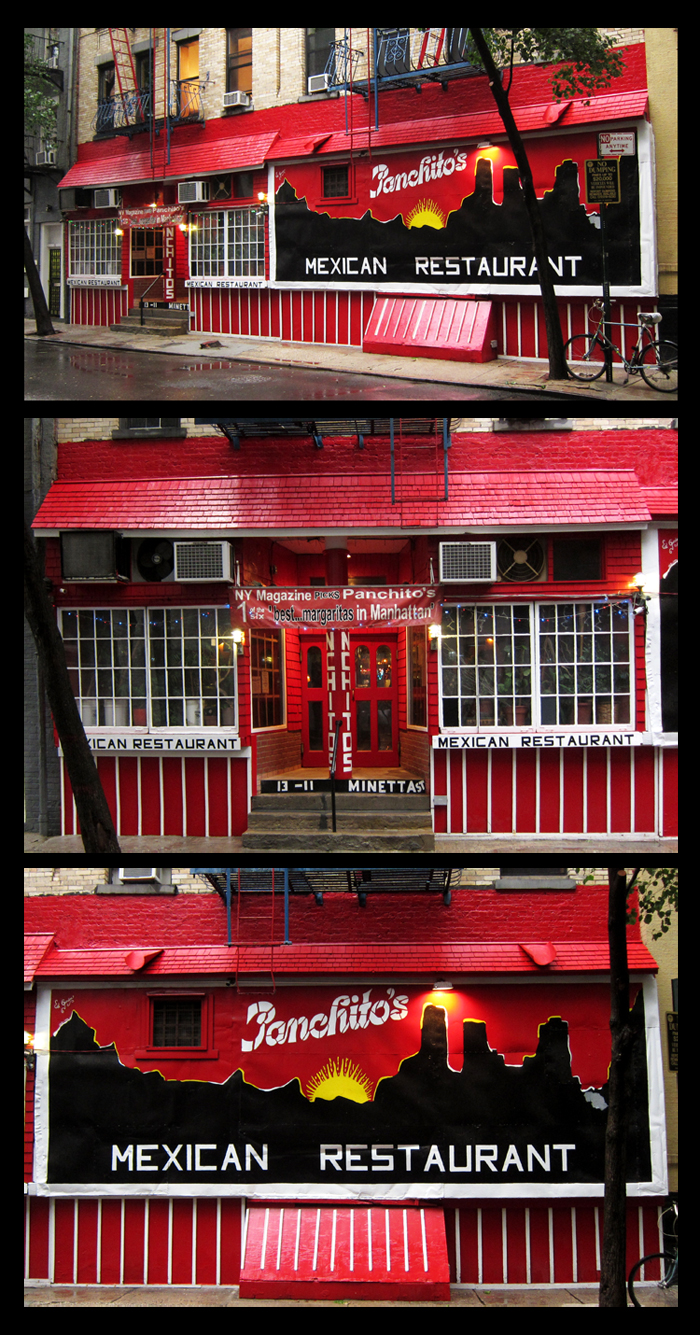
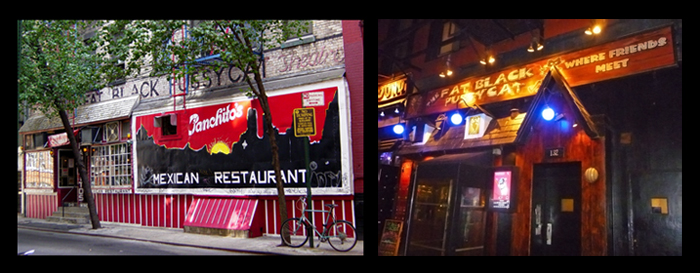
    In the off chance you have not heard, read or seen, the painting over of a sign at 11-13 Minetta Street is BIG International news. It’s a media feeding frenzy. In 1958 the Commons opened here. From the 1950s through the 1960s, it became the home of The Fat Black Pussycat Theatre, a legendary beatnik coffee bar which saw the likes of Bill Cosby, Tiny Tim, Mama Cass Elliot, Richie Havens, and Shel Silverstein. It has been said that it may have been here that Dylan wrote “Blowin’ in the Wind” in 1962 (however, everyone wants to lay claim to a Dylan connection and it appears that there is no hard evidence of such).

    In 1972 the space became Panchito’s, a Mexican restaurant with a main entrance on MacDougal Street and back entrance here at 11-13 Minetta Street. The owner of Panchito’s, Bob Englehardt, is 84 and has been a Village resident since 1951. He has owned the building since the Black Pussycat closed in 1963. Bob frequented the club and says:

    Why don’t we just take the whole world and set it in concrete? That would save everything. The Village was freedom, it wasn’t a concreted-over straitjacket.

    The Pussycat represented the worst of what the Village was. When you wanted to get drugs, get into fights and get with underage girls the Pussycat was where you went. The Village was never about rules. Making someone ask for permission before painting a building is the exact opposite of what made the Village what it was.

    I’ve lived in the village since ’51. The Fat Black Pussycat in my opinion was a cesspool. You could barely see anybody because of the smoke, and you couldn’t talk to anybody because half of the people you wanted to talk to wanted to sell you narcotics.

    Residents are fuming, tourists are raging, some are threatening to boycott Panchito’s. Others, like myself, stopped eating there 30 years ago. I understand the sentiment. The issue is how little of historic significance we have left – neighbors and visitors want to hang on to every last vestige, even though it may have been a cesspool, these are the only connections we have left.

    In a way there is irony here – a battle to regulate, preserve and protect the images of a counter-cultural generation known for rebellion. We’ve seen this kind of controversy before in New York City, when graffiti artists have defaced other artists’ work – graffiti over graffiti. Here, of course, we have business painting over another’s business. Whose business is it?

    Andrew Berman, executive director for the Greenwich Village Society for Historic Preservation (GVSHP), who called the painting of the sign “a shame” says:

    It’s a tangible link to this incredibly important era in the neighborhood’s history, when so many great musicians and poets and artists used the South Village as a springboard to transform the world. Less and less of it is left.

    The street is not part of any existing historic district, however there has been an effort to create a South Village Historic District, which would include Minetta Street. Many feel such a designation would have saved the sign. However, even if the district were protected, Elisabeth de Bourbon, a spokeswoman for the Landmarks Preservation Commission, said in regards to the recent painting over of the old sign:

    We would have approved it. We’ve never said no to an owner of a commercial establishment who’s wanted to cover advertising for a previous tenant.

    There has been a lot of romanticizing of this small, one-block street. I understand the concerns of the residents and the love of the their street, however, maintaining charm is a war here. Sandwiched between MacDougal Street and 6th Avenue, Minetta Street is often overflow for the late night drunken revelry of MacDougal Street and serves as a shortcut between the neighboring streets.

    You can read the New York Times article here and the GVSHP story here. There’s not much we can do about that sign now (although some believe it could be restored by removing the new paint job). I don’t want to make light of the situation, but it’s for times like this that the Blues are written. If you loosely reinterpret the lyrics of that Elmore James classic (the song link for this story), parts of them fit. I’m playing it a few more times. Why don’t you join me and share our pain? Because when things go wrong, It Hurts Me Too …

    Song Note: Thank you Eric Clapton for this wonderful interpretation of the Elmore James classic – It Hurts Me Too 🙂

    Related Posts: The Real Peel, Diamonds and Rust, Model for Decorum, Bohemian Flavor of the Day, Summer of Drugs, Physical Graffiti

    Posted on by Brian Dubé

  • Serenity, Tranquility, Peace

    Posted on by Brian Dubé


    Although technically in the borough of Manhattan, I have always felt it was almost a little undeserving for any New York borough to take claim to something so special as the Cloisters – it is located at the northernmost end of the island, as far as one can get from Uptown, Midtown, Downtown or any other area of that one would typically associate with New York City. Apart from the small number of residents in Washington Heights/Inwood, this area is really a destination for New Yorkers and visitors alike.

    The Cloisters is a museum of medieval art and architecture, a branch of the Metropolitan Museum of Art. Everyone loves this extraordinary complex – it’s a close as you are going to get to genuine French architecture in the city. Germain Bazin, former director of the Musée du Louvre in Paris, described the Cloisters as “the crowning achievement of American museology.”

    The museum buildings were designed by Charles Collens and constructed from elements salvaged from five cloistered abbeys in France: Saint-Michel-de-Cuxa, Saint-Guilhem-le-Désert, Bonnefont-en-Comminges, Trie-en-Bigorre, and Froville. The sections used were disassembled brick-by-brick, shipped to New York City and reassembled between 1934 and 1938. From the Cloisters website:

    Three of the cloisters reconstructed at the branch museum feature gardens planted according to horticultural information found in medieval treatises and poetry, garden documents and herbals, and medieval works of art, such as tapestries, stained-glass windows, and column capitals. Approximately three thousand works of art from medieval Europe, dating from the ninth to the sixteenth century, are exhibited in this unique and sympathetic context.

    Located on four acres overlooking the Hudson River in northern Manhattan’s Fort Tryon Park, the Cloisters is a world apart from the glitter, glamour, hustle bustle and frenetic energy of the city. For most New Yorkers, Fort Tryon Park and the Cloisters is a country getaway, a mini vacation. Visit the Cloisters if you want a small vacation from the city and Serenity, Tranquility and Peace 🙂

    Related Posts: Down to the Cellular Level, Le Petit Chambord, Fire and Ice, Affront to Dignity, Paraiso, Steps From Paradise, Belvedere Castle, Devil’s Playground

    Posted on by Brian Dubé

  • And You Can’t Make Me

    Posted on by Brian Dubé


    Imagine the heaviest Southern American drawl you can coming from a rather disheveled man with missing and broken teeth. As a business owner in New York City interviewing employees for over 40 years, I have seen a lot of things – like a woman who arrived for her job interview with an electric guitar slung around her neck. But now I was in new territory – apparently someone in government was testing my fairness in hiring practices, because this man would scare the hell out of most city folk.

    He said he was from somewhere in the deep South, I don’t recall where. But it was deep. Real deep. And unfortunately, everything I know about the South was learned through films, particularly Deliverance and In the Heat of the Night. These films will not give you a very good impression of our Southern brothers and sisters, who are in fact renowned for their kind, sweet and hospitable manner.

    However, any positive thoughts I may have had about Southerners was not going to be evoked by a scruffy man with broken and missing teeth. Nonetheless, I tried to remain fair, interviewed him and gave him a brief tour of our production area where he would be working. He appeared confident and hungry to work. He was up North for the first time in his life, seeing if he could make it here. He was staying with someone he knew in New Jersey. He seemed so terribly out of place.

    A quick tour around the shop and he asserted “I can run any machine in here. And I will do anything. I’ll clean toilet bowls with a toothbrush.” If you can imagine this being said with an extreme southern accent, then you can appreciate why I say everyone has their limits and I had reached mine.

    After discussing the candidate with an employee, I was encouraged to keep an open mind – “I don’t think you should discriminate on the basis of appearance.” I guess, but isn’t there a limit? I decided to defer to another employee, an NYU film student. She said: “I think we’re talking Deliverance.” Thank you Christine. I don’t need to be terrifying my employees, do I?

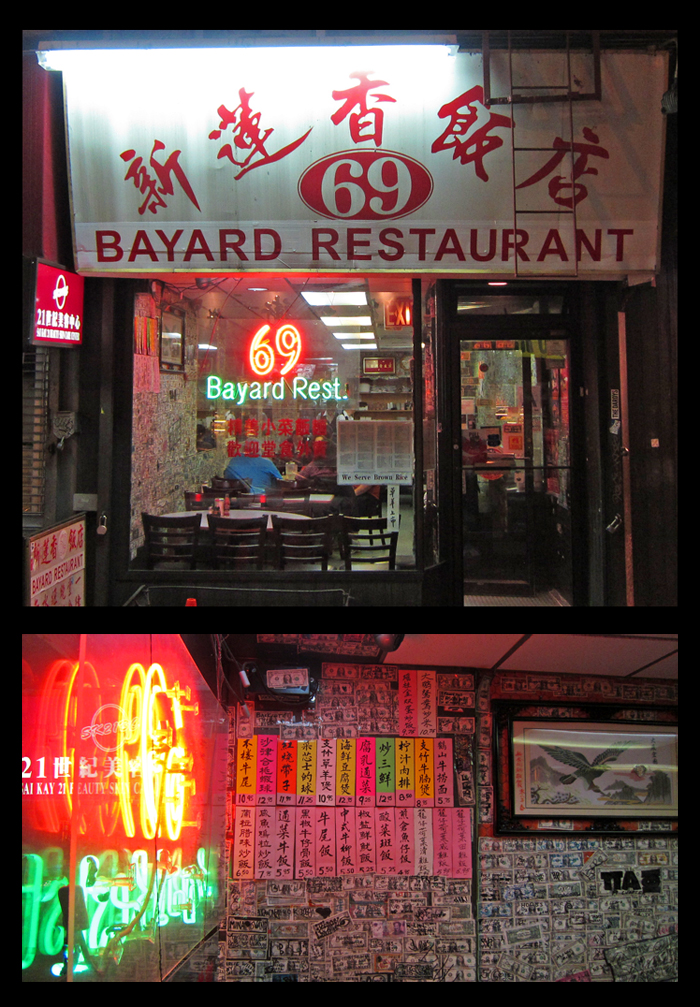
    At 69 Bayard Street in Chinatown, we have the 69 Bayard Restaurant. This establishment has been in operation for eons and is most well known for its walls which are completely covered in one dollar bills, signed by patrons. Like Wo Hop at 17 Mott Street, 69 Bayard is open 24 hours a day – one of those things so many love about New York City and hard to find elsewhere. Like Kiev or Veselka in the East Village, 69 Bayard is often frequented by late night bar (or club) goers who want to eat after bar closings (4 AM).

    As with many inexpensive New York City restaurants, 69 Bayard gets the full gamut of reviews, from the reverential, declaring it to be the best, to those who absolutely abhor the place. It certainly qualifies as an example of pick two, in this case fast and cheap (see my story here). Reading any online review site, like Yelp.com, can not only be informative, but also quite entertaining. Many of the most caustic reviews are actually quite comical and well written. I recommend reading Yelp reviews for entertainment as well as for information.

    Once as a child, while playing with matches, I recall my father telling me to put them down. I told him “no, and you can’t make me.” Of course that solitary act of defiance was short lived – I put down those matches. Since that time, I have played with matches – one of the perks of being an adult is a greater freedom to make choices. I try to chose my restaurants too.

    I recently passed by 69 Bayard. I popped in quickly to take a photo of the legendary dollar-covered walls. However, I did not eat there. I’ve eaten in my fair share of greasy, dirty looking places and one-trick is not enough to get me to pay for a pony show. Now, as an adult, I make choices. I never hired that man from the deep South and I can’t tell you what the food is like at 69 Bayard because I’m not eating there. And you can’t make me 🙂

    Related Posts: Harder to Keep Full, War Against Disservice Part 2, War Against Disservice Part 1, In Your Hand, Levis, Film and Corn, Mulberry Street, Slummin’, No MSG, Greasy Spoon, Hallmarks & Earmarks, At Arm’s Length

    Posted on by Brian Dubé

  • Grace of a Boombox God

    Posted on by Brian Dubé

    Those of us who lived in New York City in the 1970s and 80s can testify to the very serious quality of life issues – graffiti covered subways, vandalism, garbage, crime, noise, drugs. The streets were minefields of dog poop just waiting for the next victim – those unfamiliar with the terrain or seasoned New Yorkers who had a momentary lapse of attention to the sidewalks. It was a very rough time and not the promised land at all. The most common question I was asked at the time about my choice to live in New York City was “Why?”

    In hindsight, those times are examined at arms length, analyzed, discussed, debated, romanticized and even missed. A case in point is a recent book reviewed in the New York Times:

    Mr. Owerko’s interest grew into a book, “The Boombox Project: The Machines, the Music, and the Urban Underground,” published this month by Abrams Image. It features his lovingly detailed close-up photographs of vintage portable stereos, as well as commentary by Spike Lee, L L Cool J and members of the Beastie Boys and the Fugees about the role the devices played in New York’s street culture from the late 1970s to the mid-’80s.

    In shot after full-page shot, Mr. Owerko — best known for his image of the smashed World Trade Center on the cover of Time magazine on Sept. 14, 2001 — venerates an audio technology that, to eyes accustomed to the iPod’s futuristic smoothness, seems practically steampunk: hard, square-edged metal casing; wheel-size speakers protected by silvery-black grilles; lots of clunky knobs and buttons. And at the heart of every boombox is a cassette deck.

    Many who bemoan the loss of the edge, grit, authenticity, lack of over gentrification, etc., were either not there or perhaps with selective memory, forget that living in that environment was in numerous ways quite awful. Many of the pleasant memories of that era often have more to do with the youthful enthusiasm and a spirit of reckless abandon and fearless adventure of young urban cowboys than any inherent charm of the city. New York City provided its own flavor of the lawless wild west.

    One of the most annoying and dreadful elements of the late 1970s and 1980s was the boombox. This portable party machine could be cranked to deafening levels, even outdoors against the ambient din of the city. At times it felt like there was no escaping it – the ghetto blasters were everywhere to be found including spaces where one expected quiet enjoyment like parks. To make matters worse, the music played was very limited, typically disco, a genre I quickly grew to abhor, or hip hop. You would not hear anything else, certainly not classical, country, blues or classic rock. We prayed for the death of disco and these infernal machines. Our wishes were eventually granted but it was an interminable wait of a decade.

    Boomboxes were HEAVY. It was a job to carry them all day. Some required as many as 20 D-cell batteries, which, allowing for continuous play and volumes, would only last the day. The cost of these batteries became major budgetary items for those who carried their boxes daily. They were essentially the Walkmans or iPods of their day, but as a broadcast device, they could hardly be considered personal audio players.

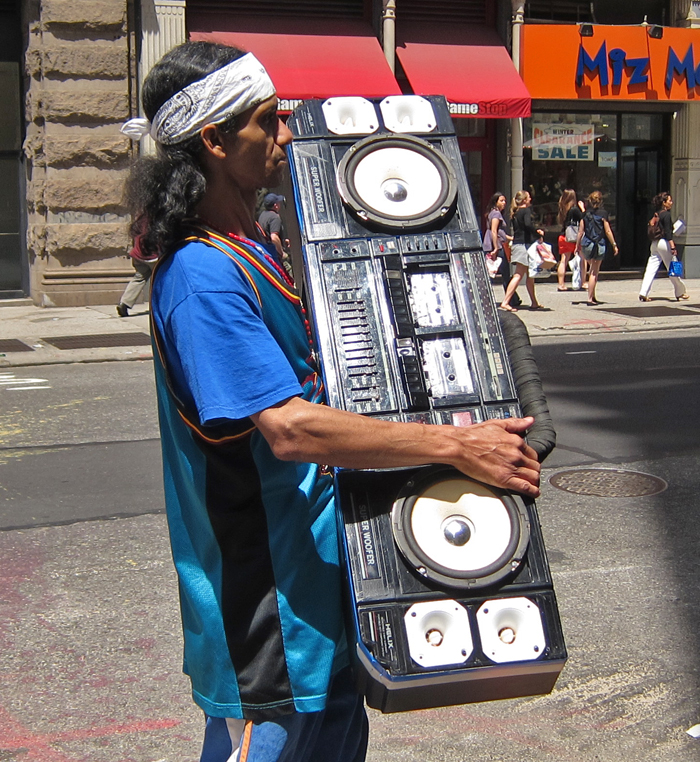
    On Monday, while walking on Broadway, I encountered what had to be the largest boombox I have ever seen. A pedestrian nearby commented to me “I feel like its the 90s again.” Perhaps he was not aware that if his only experience of boomboxes was the in the 90s, then he had not enjoyed true noise pollution.

    The owner was walking very briskly. I fumbled for my camera and ran after him, asking if he would permit a photo. With a pompous attitude and only a side glance, he made a beckoning motion with one hand, indicating I follow him as we both ran through Broadway traffic. He stopped for a second, giving me no time to compose a decent photo. I was a bit frustrated, however, I had to remind myself, that even though it was only for a brief moment, I had gotten a free trip in time and had been granted the Grace of a Boombox God 🙂

    Related Posts: Float Master, Part 2, Float Master, Part 1, Too Too New York, Deaf Jam, I’ve Got a Feeling, 5 Pointz, Columbo, Monk and CSI, Men Making Noise, New York State of Mind

    Posted on by Brian Dubé

  • Stopped In My Tracks

    Posted on by Brian Dubé


    In New York City, vagaries define the special. There is nothing more appealing than the lack of specific information or the secret. We just love “there’s this guy” or “there’s this place” with a lack of precise information as to where. Particularly in our current time, nothing is more unappealing to a New Yorker than a place that is part of a national brand or regional chain and has been marketed and branded to death.

    No one wants what everyone else has or wants to shop at places everyone knows about. This is at the heart of “being the best,” an obsession in New York City. How can something be one of New York’s best if it is part of a national franchise? Street cred for a business has to start with a minimum requirement of existing only in New York. The problem, however, is that unique places and services are fast disappearing. In the span of this website’s existence, many iconic places I have written about have gone out of business.

    I have even experienced a holding back of information, as if to be worthy of the knowledge, one must venture forth and ferret out a person or place’s whereabouts on one’s own. No pain, no gain. This holding back is often justified in that overexposure may ruin a business’s character. Although this may be true, I think the real motive stems more from selfishness – those desiring the special want if for themselves. After all, how special can it be if everyone knows about it?

    The shoe shiner is a perfect candidate for the New Yorker’s lust for “there’s this guy.” By their nature, those involved in the business are sole operators and are often transient. In New York City, one should never underestimate the potential of any activity if done by an astute, aggressive, streetwise individual that can promote him or herself. Transient does not equal unsuccessful. Don Ward is a good example (not the man in today’s photo). Located at 47th Street and 6th Avenue, Don has been shining shoes for over 20 years. He does an average of 50 customers per day at $5 per shine plus tips. This man has interesting insights*, aggressive solicitation and clever patter. He is quite the character and a bit of a celebrity, reminiscent of the Gentlemen Peeler (see my story here).

    I have never felt comfortable with shoe shining. Although it is, perhaps, no worse than someone doing your laundry, shining shoes seems so transparently servile, too close to kissing someone’s feet. Perhaps it is my French ancestry rearing its head. In an article from the New York Times in 2008, The Politics of the Shoe Shine, Roger Cohen writes:

    Broadly speaking, there are two kinds of societies: those where you can get a shoe shine and those where you can’t. France falls into the latter category. Search Paris high and low for a seat to kick back and se faire cirer les bottes: you’ll search in vain. There’s something about the idea of having someone stooped at the feet of a client applying polish to his or her boots that rubs the Gallic egalitarian spirit the wrong way. It’s just not what 1789 was about.

    In the United States, of course, it’s a different story. Unlike humor, which is in short supply, or banned, a shoe shine is freely available at U.S. airports. Walk a few Manhattan or Chicago blocks and someone will be there to make your shoes gleam. There’s something about having someone applying polish to a blithe client’s boots that comforts American notions of free enterprise, make-a-buck opportunism, and the survival of the fittest.

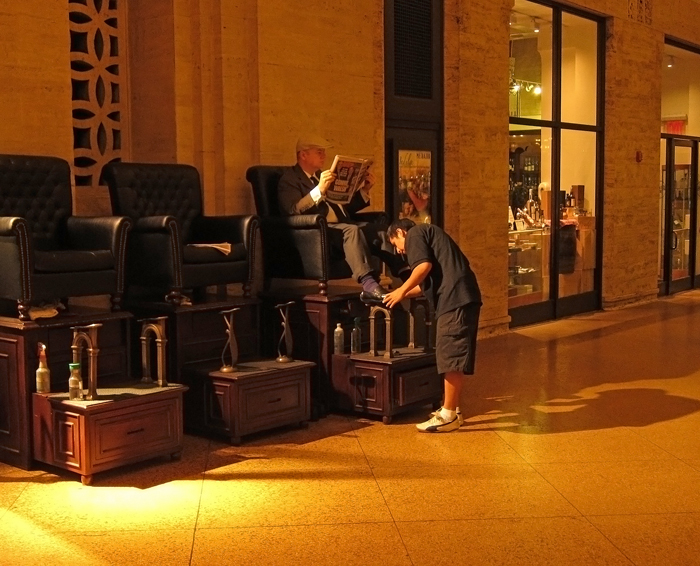
    Nonetheless, on my way to the Metro-North train on Saturday, I could not help but be stunned by what I saw entering Grand Central Terminal. It was like a still frame from an old film set in New York City. Everything was perfect – two men alone on a quiet morning, the customer reading a paper while the shiner plied his trade, both basking in the yellow-orange sunlight streaming in. The whole scene gave me chills. Like the train that awaited me on track 24, I was Stopped In My Tracks

    *From Don: “Ninety-nine percent of the time, women will look at your shoes and immediately dismiss you if they’re below standard. If you can’t keep your shoes looking decent, you can’t do anything else.” “If you can’t take care of this one small detail, I’d hate to see your living conditions.”

    Related Posts: One Size Too Small, Urban Road Warrior, Very Resilient, Entombed, Uggly or Not, Mania, Just Passing Through, Camper, Grand Central

    Posted on by Brian Dubé

  • Steaming Masses of New York

    Posted on by Brian Dubé


    I’m going to tell you a few things most New Yorkers are not going to admit to outsiders. Many of the bad things you have heard about this city are true. People move out, are happy to leave and don’t come back. I am not talking about dabblers, I am talking about tried and true, dyed in the wool, born and bred, loved it to death, New Yorkers. And many who visit here often or commute here daily, love the city and have the means to settle here do not chose to do so.

    Why am I telling you this? Because this site is not a foil – it is not a veiled marketing campaign for New York City. There’s a stoic pride in surviving here. Many New Yorkers hate the city as much as they love it – it’s a love/hate thing.

    New York is touted as one of the safest cities in the United States, on a per capita basis. This is misleading since crime rates are averaged across all boroughs and neighborhoods. In reality, many neighborhoods have very high crime rates. Many a suburb or smaller city is unlikely to see the tremendous disparity in crime rates across neighborhoods and thus averaging rates outside the big cities gives a better indication of what someone might experience than doing so in a place like New York. Also, big cities under report crime and many laws are not enforced here that would be elsewhere. Vandalism and theft is a constant.

    I personally have come back home to see Bleecker Street cordoned off because of a murder with open firing on the streets. I have witnessed someone pulling a gun out and firing it. I have been burglarized more than once. I have been held up at gunpoint. I see drug dealers daily. I witnessed a fight on Broadway in daylight between a man with a knife and one with a chain which was fortunately stopped by an attorney carrying a gun. I have had my car broken into with the entire rear window of a hatchback smashed into pieces. Meaningless anecdotal evidence? Hardly. The sarcasm and cynicism of New Yorkers, seen in comics like David Letterman or Woody Allen, are testimony to the fact that edgy is a word based on the harsh reality of the city life, not just a term used to describe style.

    Most people who have made a large personal investment coupled with self sacrifice are not eager to own up to New York City’s shortcomings, failings and problems. Because in a way, to do so is an admission that perhaps a person has made a poor decision to live here – who is courageous enough to admit that? Don’t believe the politicians who have an incentive to promote New York and are often chaperoned, escorted or chauffeured daily.

    I am also not going to bring out the cliches like New York is the greatest city in the world. Saying it does not make it so. I would not want to engage in a contest with cities like San Francisco, Paris, Venice or London. The city has become too expensive for most. Much has been over gentrified. National chains dominate retail – one has to hunt more to ferret out the special places that made New York great.

    And then there are quality of life issues, one of the biggest reason that many leave. The city is crowded, dirty and noisy. See one woman lose control in my story Mad as Hell. Natural oases have to be sought out. Although culture, restaurants and services abound, many of life’s simple chores are extraordinarily difficult – laundry, biking, transporting things too large to carry, driving, parking, grocery shopping or even having to walk up six flights of stairs several times per day to get home. Services and conditions in many of the city’s apartment buildings can be abominable – steam heat that can not be adjusted, inadequate ventilation, the roar of window air conditioners and intercoms that never work. This is not necessarily the realm of the low rent tenant – many very expensive apartments have the same poor conditions.

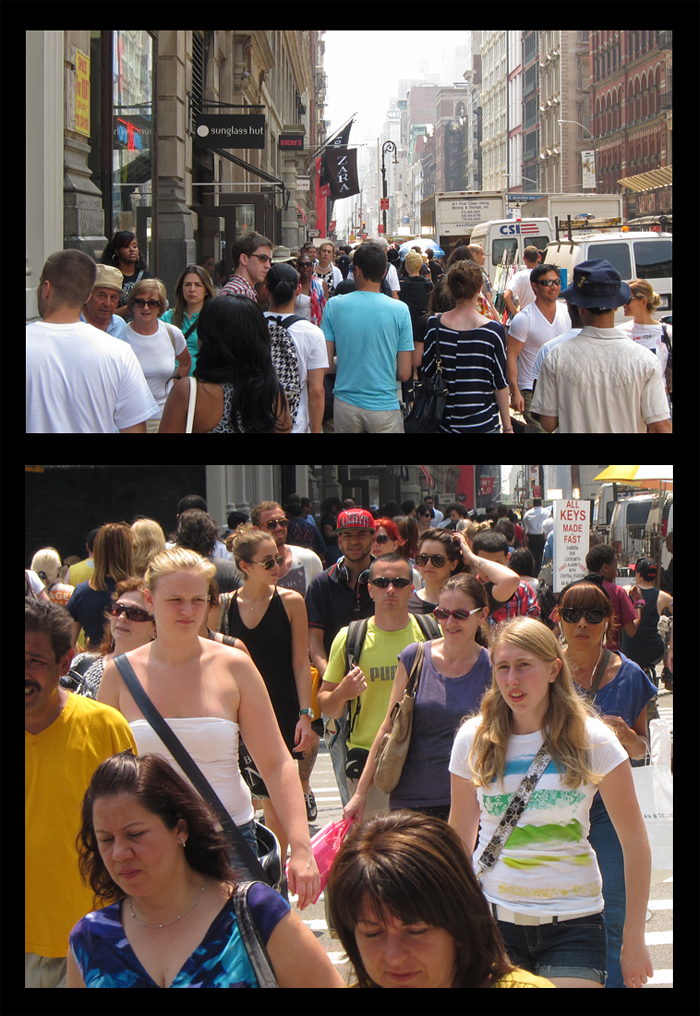
    New York is fundamentally a town where everyone has to walk to some degree. There are those who love walking and those who don’t. I have stated personally and on these pages how walking is one of the great joys of New York City, however, not in blistering heat with high humidity. Our recent heat wave is evidence of one of the grimmest times in this city. I look down Broadway and I know that many in that crowd are very uncomfortable, angry and in more ways than one, are members of the Steaming Masses of New York

    Related Posts: Hell, Mad as Hell, Mad as Hell 2, The Dark Ages, Unguent.

    Posted on by Brian Dubé

  • Just Click Here

    Posted on by Brian Dubé

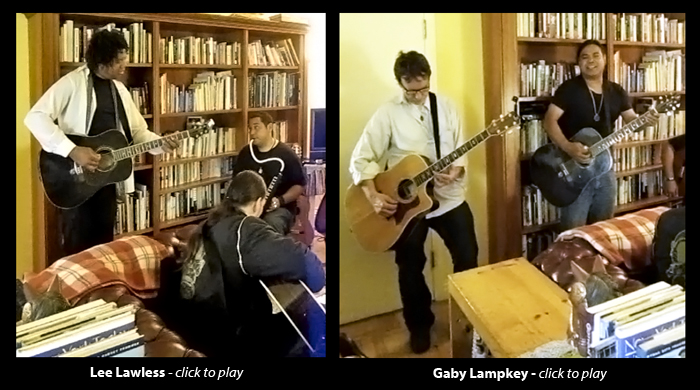
    The photos above are stills which link to videos taken at the recent party from my story, Myra’s Isle. Many terrific musicians attended – John Leonard, Ali Abidin, Sage Logan, Joe Rios, Rigel Sarjoo, Lori Behrman, Rene Logeais, Lee Lawless and Gaby Lampkey. The photo link on the left is that of the inimitable Lee Lawless playing Stormy Monday Blues. The photo link on the right is that of Gaby Lampkey playing She Talks to Angels by the Black Crowes.

    I have done two stories involving my meeting with Gaby and the incredible connection we shared, unbeknownst to both of us. See On the Road and When Brian Met Sally. I am happy to report that Gaby is no longer on the streets of NYC. Congrats to his new life.

    ‘Twas a great party with spontaneous groupings of musicians. If you want a taste of what it was like to be there, courtesy of Lee Lawless and Gaby Lampkey, just click here 🙂

    Note: I have created a YouTube channel for New York Daily Photo videos. I will add all the video clips associated with stories on this website. I also plan to add more video content to New York Daily Photo in the future. It will be Live From New York 🙂

    Related Posts: Ferris Butler Part 2, Ferris Butler Part 1, Gaby Lampkey Part 2, Curse of the Mouth Trumpet, Impossible, The Bathroom Closes in 20 Minutes, Pockets of Joy, Just Like Old Times, Dave, Smile, The Conductor, Sounds of Summer, Spinning, Park Night

    Posted on by Brian Dubé


  • dinamic_sidebar 4 none

©2026 New York Daily Photo Entries (RSS) and Comments (RSS)  Raindrops Theme