web analytics

  • Category Archives People
  • Homeowners Too

    The big city, particularly New York City, conjures up images of shysters, swindlers, scammers, and hucksters. Growing up in New England, there was a particular aversion to New York, as opposed to let’s say, the more genteel society of Boston. New York was seen as a place defined by glamour, glitz, and money – like Las Vegas, but with more style, character, and culture.

    A visit to New York City came with forewarnings from family and friends. Watch this and watch that, they said. Don’t do this and don’t go there. Be careful. In the 1970s, such admonitions were certainly prudent, however, being young and brazen, I heeded none of it, and luckily, I was never a victim of anything very serious.

    There is truth to all of this. A big city where tourism is strong means lots of naive, innocent prey and a nice thick jungle for hunters to get lost in after scalping their victims.

    Hurricane Sandy unleashed another storm in its aftermath – a flurry of flim-flam men. And a disaster of this magnitude is a big magnet for thieves – victims of the storm now had to contend with crooks not only from New York, but from out of town as well. Of course, opportunists in the wake of a disaster are nothing new. The day after 9-11, vendors were selling T-shirts in Chinatown: I Survived 9-11. Others were selling memorabilia at Ground Zero. Heinous and unconscionable. Fortunately, our mayor at the time was no-nonsense Rudy Giuliani, who decreed in seconds that such offenses would be SQUASHED immediately.

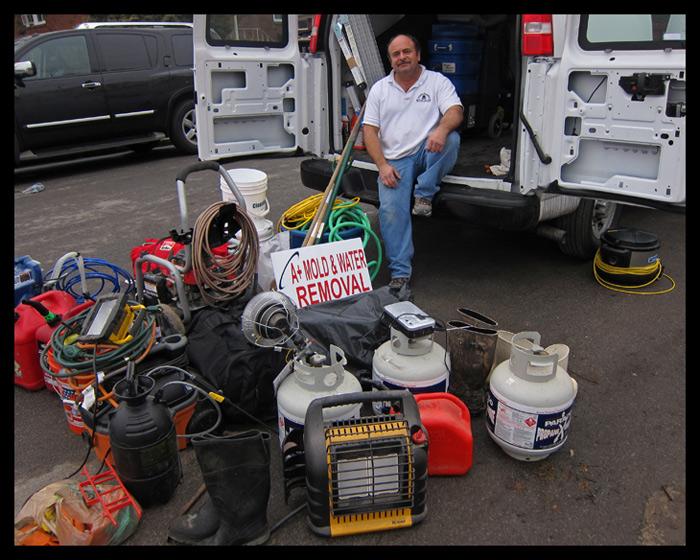
    As regular readers of this website know, I have been closely involved with cleanup and rehab of a friend’s home in Staten Island. One of the most crucial steps in the aftermath of a flooded home is mold remediation and abatement. To be done properly, this is a long and technical process, best left to professionals. The home must be dried, using commercial dryers. There are chemical treatments and HEPA vacuuming. Mold left in walls can come back with a vengance. Many homeowners hasty to rebuild after Hurricane Sandy found themselves ripping newly installed walls open, only to find mold which required proper cleanup and additional construction.

    But where to find someone reputable and honest in the sea of offerings in Sandy’s aftermath? I spoke to numerous established local businesses specializing in mold remediation. I also turned to Craigslist, where we found our final choice. In retrospect, Craigslist was perhaps not the wisest source for such a serious project, however, good fortune was with us, and we found one of the most thorough and scrupulous individuals I have ever worked with – Art Hull.

    Art, like many who worked for victims of the storm, was from out of town – in this case, Ohio. Art was extremely knowledgeable and technical – more so than the many other local contractors we interviewed. He had previously worked in the Biotech industry in California and was well versed in mold and microbes. But what set him apart from the typical New Yorker was his level of service and honesty. He always went the extra mile and then some. He and his assistant spent over 3 weeks in a small home, never rushing the process or a procedure. Phone calls, of which there were many, were typically 30 minutes long, with every detail thoroughly gone over. He gave many extras – checking the roof, checking the attic, replacing the subfloor, checking this and checking that, often traveling and shopping for things needed that were not part of our contractual agreement. To this day, I still call Art in Ohio for advice on various aspects of the home rehab project.

    All told, it was clear from the start that Art was not a native New Yorker. He started the job with a small deposit, willing to wait for an insurance settlement – in our case, he was only paid 4 months after his work was completed. Sadly, many of his other clients became greedy after insurance settlements and have contested his charges for work completed as per contract. Poor Art, now back in Ohio, has had to resort to expensive NYC legal counsel and is still attempting to collect his fees for many large jobs completed some time ago. I was very disappointed to find that the spirit of the swindler was alive and well, not just on the streets of the city, but like Sandy’s sewage, had permeated the walls of Homeowners Too :(


  • Dick and Ferris

    Are you ever bored? I can guarantee that a night out with Dick and Ferris in New York City would never be boring. Unfortunately, I can not arrange it, but I can give you a taste.

    I was an NYU student, and I, along with classmates, was becoming acquainted with the city with a friend, Dick, as a guide. He was a native New Yorker and an interloper at NYU – 25 years old and not a student. To us, he was much wiser and older. He had been a child actor. He knew everything about the world, or at least the world that was New York City. And to us, at 19 years old and a recent transplant, what other world was there? He showed us everything, particularly the underbelly of the city. His word was gospel.

    Dick was wild, untamed, and a chain smoker. He was excessive. Like Thoreau, he wanted to live life to the fullest, suck the marrow out of it, and drive it into a corner. An outing with Dick was akin to one with Hunter S. Thompson.
    Ferris Butler, on the other hand, was a bit askew. He was a friend of Dick’s, also an outsider and NYC native. He was decidedly a character, one that anyone who met him would not forget. Together, Dick and Ferris were a formidable pair.
    Dick drove a taxi, which he saw fit to use for his own personal joy rides. However, his indulgence posed a problem – how do you party all night and also clock enough money to bring the taxi back to your employer with an acceptable amount of revenue?

    One night, circa 1971, a number of us were in Dick’s cab, including Ferris. It was nearly 4AM, and the taxi was due back at the garage shortly. It was a very desperate situation. Dick had done no business at all and needed to bring the taxi back with at least $40 in fares to avoid being fired. He had the only solution – he would speed through the city streets as fast as possible with the meter running, clock $40, and pay out of pocket. However, as typical, he had no money. Ferris was the only rider with any money – he did not want to pay, but Dick extorted the money from him.

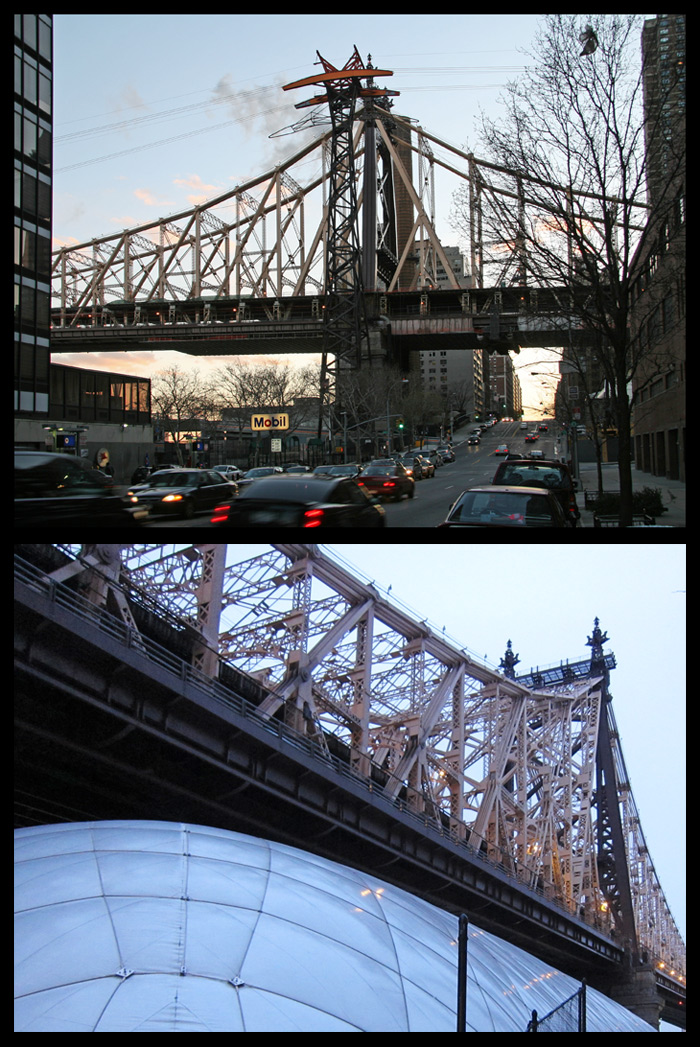
    The ride felt like the car chase scene in the French Connection. The only thing I remember clearly was one leg of the journey where Dick turned onto the 59th Street Bridge outer lane. It was hair-raising as we careened across the bridge with Ferris in the front passenger seat screaming and begging for Dick to slow down, but to no avail. Time was really money now. We achieved our mission – by 4AM, the meter had been run up to $40 and all was well. A memorable night. This was to be one of many adventures in New York City with Dick and Ferris :)

    Note: Watch my video as I drive the same outer roadway of the 59th Street Bridge that I did that night.


  • Do the Right Thing 2

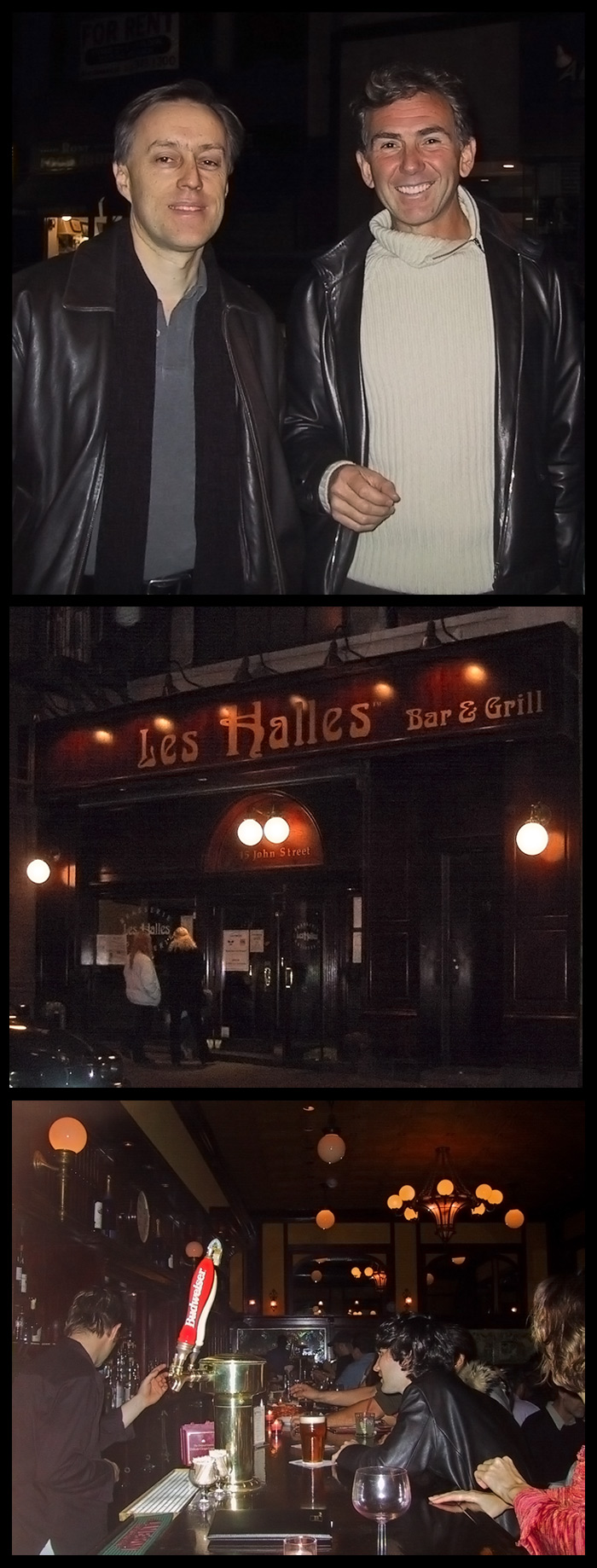
    It was more than one year after 9/11, and restaurants downtown were doing promotions to win patrons back into downtown Manhattan and invigorate commerce in the area. My girlfriend at the time was passionate about food and followed the New York City restaurant buzz. And so on November 8, 2002, we visited Les Halles Bar and Grill on John Street for a dinner deal that was too good to be true. We were accompanied by my friend Leslie, a regular reader and subject of this website.

    There was a lot of buzz about Les Halles, owing to its dynamic duo – celebrity chef Anthony Bourdain and proprietor Philippe Lajaunie. The pair was appearing regularly on the Food Network’s TV show, A Cook’s Tour, featuring Bourdain’s worldwide culinary romps with sidekick Lajaunie. So, in addition to what we hoped would be fine food at a discount, perhaps if we were lucky, we’d have had an opportunity to meet Bourdain and/or Lajaunie.
    When we arrived, it was mayhem. The maitre d’ was swamped, and the whole scene was out of control. I wanted to leave, however, my friend Leslie pulled me aside and suggested that since my girlfriend had been so excited about this outing that I tolerate the situation and not rain on her parade. I saw her reasoning and committed to stay the course.

    As we waited outside on the street, I reflected on my travels to France. I so loved my visits there and the numerous dining experiences I had. This was a world apart from that and a huge disappointment. The situation perplexed me. Did Lajaunie, a Frenchman, need business this badly to turn the whole experience into a circus? Frustrated and irate, I turned to my girlfriend and Leslie and said that this experience at Les Halles went against everything the French stood for.
    A man at a light post nearby overheard me and approached us. As he neared, I recognized him as none other than the owner, Philppe Lajaunie himself. I was quite nervous. Unknowingly, I had insulted an internationally known restaurateur and TV celebrity. Best I had shut my mouth, but now I had made my bed and it was time to lie in it.
    I was sure Philippe would challenge my comment, and I wondered what he was planning to say in response to my comment that his restaurant went against everything the French stood for. He introduced himself and said that he had overheard me. Shockingly, he said, “I couldn’t agree with you more.” He gave me his business card. We chatted about France. He welcomed a photo. Wow. Instead of public humiliation, I was coming up smelling of roses.

    He was not pleased with the chaos and crowd either. Regretful and apologetic, he offered us compensatory drinks. He escorted us to the bar and ordered for us from the bartender. He saw to it that we got a table in a timely manner and visited us during the course of our dinner. I was impressed with Philippe’s candidness and lack of defensiveness. It was another case of restaurant management’s Do the Right Thing :)

    Related Posts: Random Acts of Consideration, War Against Disservice, War Against Disservice Part 2


  • I’ll Take Care of You

    Have you been in a restaurant where any special request, no matter how small, is met with hesitation or a negative? And where it is particularly irritating because you know that your request can be easily met? Don’t you already have plenty to do and worry about? When you are a customer of a service establishment, shouldn’t they shoulder the burden, troubles, and responsibilities? Why should you feel uneasy or worried that your needs and requests will go unmet and worse, that you may have to help solve the problem that you are paying them for? In short, why should you be doing their job?
    Early Saturday morning, I lay awake in bed and reflected on the unpleasant chore of going to have my car inspected. In New York City, something as simple as inspecting your automobile can be very troublesome. Often an appointment in advance is necessary, there are long waiting periods, or a service station is out of inspection stickers. Many times I have spent hours trying to get my car inspected, only to return home defeated, having to try again another day.
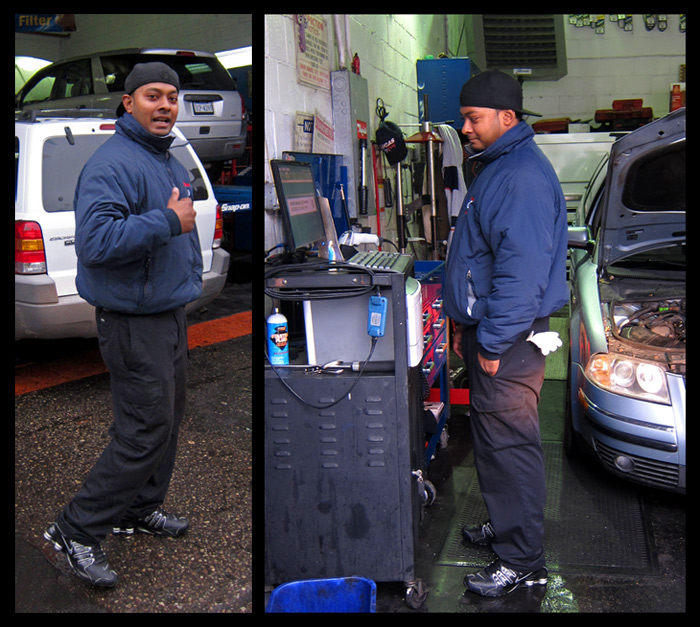
    I called Salerno Service Station and asked for Ryan, the general manager – a man who had forever changed my attitude towards the auto repair business and led me to write an extensive two-part story – Jacked. It was Ryan who had answered the phone. I asked if they could do an auto inspection that morning. He said, Don’t worry. Just come in. I’ll take care of you. That is when it hit me hard. He had given me the key to ultimate customer service when he said I’ll take care of you. It was the reason why Salerno had hundreds of five star reviews online.

    HE HAD SHIFTED THE RESPONSIBILITY FROM ME TO THEM. All of the responsibility. Completely. 100%.

    That was the key, because in that way and only that way can a customer fully relax while the service provider does their job. Even with good customer service, there is often a nagging worry that something may go wrong. In auto repair, so many things can and do go wrong – a bigger problem will be discovered, a part will be unavailable, there will be no time today for the repair, the cost will be too great, you will be cheated or lied to, you will be sold something you do not need, etc. But with great customer service, at a place like Salerno Service Station,  you will be insulated from any hassles servicing your car because they are taking care of you. You can relax. Like my first visit when I was told by Ryan to go have a nice breakfast at the Willburg Cafe while he took care of my muffler job.
    It is like the days of old, when people spoke of being in the doctor’s care. There was great comfort in those words because it meant that someone competent was going to take care of you. People love to be taken care of. This complete taking over of responsibility from the customer or patient is characteristic of the Italian culture and their approach to service. Now I saw how it was at the core of the No Problema attitude that I wrote about.

    Over many decades of owning a car in the city, I have grown to despise the auto inspection ordeal. However, now, for the first time in my life, in the hands of Ryan and the Avallone family, Mario and Salvatore, I actually looked forward to this year’s inspection. In a harsh environment like New York City where comforts have to be actively sought out, there are no sweeter words than I’ll Take Care of You :)


  • Pass In The Night

    In the 1960s, I worked one summer at North and Judd Manufacturing, one of the oldest companies in Connecticut. Begun in 1812 with the manufacture of wire hooks, eyes, and other small metal items, North & Judd added the manufacture of saddlery hardware in the 1830’s and grew into a company that produced over 40,000 items.
    The history is interesting, but working there was not. As an entry level employee, I was given the least desirable work, tapping thousands of the identical part every day, working for minimum wage. It was grueling and a good look into the engine of the industrial world and the toil and sweat that keeps it oiled and running.

    North and Judd and places like it across the land are shrines to the unsung soldier, the worker performing the thankless task. But it was also there, amidst the grit and grime of one of America’s oldest factories, that I found extraordinary people. Unlike Professor Robert Gurland, however, the glimmer of these individuals does not shine far, and only a handful of those around them will ever know of their extraordinary character or talents. And, of course, any close friend or associate who may champion their talents will be dismissed as merely patronizing.

    I met a woman in that factory who had manufactured the same part for over 30 years. I think of her from time to time when performing repetitive tasks. Some cynics may write her off as nothing but a drone, someone akin to a robot. I, however, prefer to celebrate such an individual. Certainly, working 30 years at one job demonstrates something, if nothing more than extraordinary tenacity. Our setup man in that factory was also extraordinary, tending to the needs of dozens of pieceworkers, troubleshooting setups, and machinery, always resourceful and under extreme time pressure. I have long desired to travel cross country on a sabbatical, ferreting out such people and gathering stories for a book, Ordinary Lives of Extraordinary People.

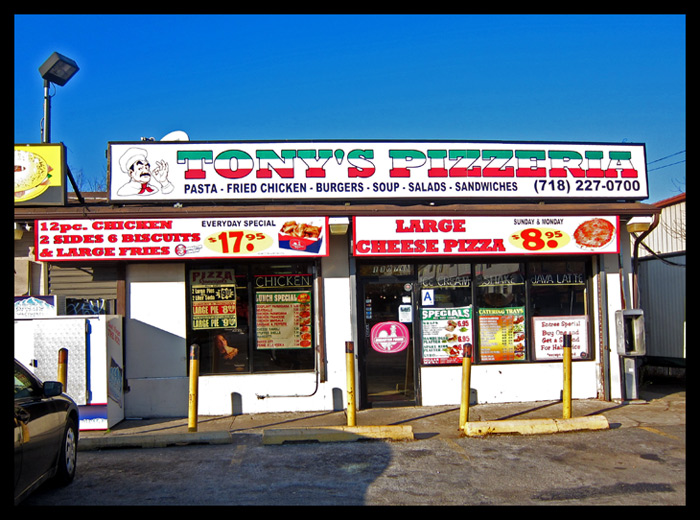
    Recently, I was traveling in the hinterlands of Staten Island. It was mid-afternoon and hunger had come upon me. It was too early for dinner, but I needed something. I had no interest in doing online research, so I chose a place at whim, Tony’s Pizzeria on Arthur Kill Road. The place looked rather unappealing, but I entered nonetheless, expecting a New York-style dirty and rundown interior behind its garish exterior.
    It was immaculate.
    I was immediately greeted by the counter person, who seemed genuinely concerned about my every need. Much like my experience with the Italians in the South of France, where everything was No Problema, here, too, no request presented any problem but, to the contrary, was heartily embraced. When I later asked for a cup of ice, he responded, “of course.” My dining companion concurred that this individual was the most attentive and accommodating wait person we had ever encountered. I got neither his name nor a photo.
    It is unlikely that I will be there again and equally unlikely that you will visit Tony’s Pizzeria yourself. He will, like so many extraordinary individuals, go largely unnoticed, and our chance encounter will be little more than Two Ships That Pass In The Night :)


  • All Things Feral

    I recall a conversation with my sister about children and a viewpoint expressed by Polly Platt in French or Foe. In this book, various aspects of French culture are laid out by the author, an American living in France married to a Frenchman. According to Platt, the French, who believe that they brought the world civilization, see the importance of discipline in child rearing as well, with children viewed as “little savages” who must be civilized in order to enter society. Children are expected at a very young age to behave like adults, even, for example, sitting well behaved throughout an entire meal in a restaurant.

    I summarized for my sister the discipline imposed on children by the French and their expectations. My sister concluded that this type of child rearing was cruel. Strict discipline of children is certainly a contentious subject, however, with what I have seen in the subways of New York City which at times can appear to be like Lord of the Flies with children and teens acting out and even cursing their parents in public, perhaps a bit of French thinking might serve us well in the taming of children.
    The conversation with my sister regarding wild children was appropriate coming from a French perspective – not only is my family of French ancestry, but also, perhaps the most well-known case of feral children is that of Victor, the Wild Boy of Aveyron. The story is the basis for Truffaut’s film L’Enfant Sauvage.

    In 1797, a boy was first discovered and captured by hunters near Saint-Sernin, France. He was taken in and studied by a young medical student, Jean Marc Gaspard Itard, who named him Victor. At the time of Victor’s capture, he was estimated to be about 12 years old and was naked, filthy, had numerous scars on his body, and was wild, unsocialized, and unable to speak other than guttural sounds and squeals. It was speculated that he been raised by animals and was a true “feral child.” Although there were many hypotheses regarding his origin, nothing was ever substantiated, including any rearing by wild animals. His interests were very basic, and he was highly attuned to activities, sounds etc. During his time with Itard, he wore no clothing, eliminated by squatting on the ground, and would neither use utensils to eat nor sit on a chair. Little progress was made with his socialization, and Victor died in Paris in 1828. You can read more here.

    I have always been fascinated with stories of feral children, and on a raw, cold, bleak November day nearly a decade ago, I got as close as I ever have at meeting someone who certainly appeared untamed. I was passing through Washington Square Park, which was deserted, excepting one lone musician who was sitting on a concrete bench playing guitar, seemingly oblivious to the cold. I recognized him, having seen him previously a handful of times playing in the park, often with a wild, disheveled appearance. He was playing blues with occasional use of a slide, which I love. His raw, edgy style and interpretations of blues classics were very engaging – I listened to a few songs standing in the cold and left a dollar in his open guitar case. When I asked his name and he said Feral, I confirmed the spelling, lest he had thought that I had asked about his disposition or temperament.

    Years passed and I had not seen him since that period. Recently, at the Folk Festival, I scanned the program and was excited to see Feral Foster listed as the closing act. He played and sang an original composition, The Whole Wide World. I really liked it and after his set, introduced myself. He gave me one of his CDs, all original songs, i.e. no covers – a difficult road to travel for any musician, but a necessary path for anyone looking to make their mark. I saw him a few days later at The Gaslight, a club on MacDougal Street in the Village. His music still has a rawness and his playing style and persona has an idiosyncratic and untamed look and feel, befitting a man named Feral. Whether it is a film like L’Enfant Sauvage, the rearing of children in France, or my meeting of Matt Foster, from early on, there has been a thread in my life of All Things Feral :)

    Photo Note: Top photo courtesy of Bill Shatto.


  • This Hood is a Done Deal

    I recall a conversation many years ago with an artist who lived in Brooklyn and said that she found Manhattan over gentrified and fundamentally uninteresting. I was angry, defensive, and took this as sour grapes from someone who was not fortunate enough to live in Manhattan. After all, Manhattan was a mecca for so many human endeavors and the center of the universe, was it not?

    Unlike the stereotypical Manhattan resident, I have visited Brooklyn in Queens often. And, over the course of the last six years that this website has been in existence, I have spent much more time in the outer boroughs, exploring and canvassing for subjects and potential stories. Now, in fairness, I must admit that the cultural brew in Brooklyn and Queens feels much richer than that of Manhattan, which has become more much more business and tourist oriented. If you seek an authentic New York and ethnic enclaves, the outer boroughs are where you must go. Neighborhoods such as Jackson Heights, Astoria, Richmond Hill, or Flushing in Queens and Borough Park, Sheepshead Bay, or Bay Ridge in Brooklyn have virtually no parallel in Manhattan, save Chinatown. In these neighborhoods, you will find a variety of merchants and restaurants catering to the local ethnic groups.

    Regardless, Manhattan residents are a remarkably and classically xenophobic bunch, so you know things have changed when Manhattanites start traveling to Brooklyn for cultural and recreational activities. There are plenty of good reasons: the Brooklyn Museum, the Mermaid Parade, Coney Island, Dead Horse Bay, Floyd Bennett Field, the Queens Farm, the Queens Museum, Flushing Meadows – Corona Park, and perhaps one of the biggest draws and hottest neighborhoods in the five boroughs, Williamsburg.

    You know things have really changed when, on a weekend, one Manhattanite runs across the dyed in the wool East Village icon, David Peel, in Williamsburg, Brooklyn, who both have crossed that river into another borough looking for a change of pace. Walking down Bedford Avenue, the main commercial artery of Williamsburg, I spotted David in a local pizza parlor, wearing his signature John Lennon-styled sunglasses.
    The neighborhood has gone through remarkable transformations and even has a lively street scene with street performers, unusual outside of Manhattan. David knows me from our frequent meetings in Washington Square Park as well as the stories I have done including him as a subject. I spoke to him briefly about the irony of meeting in Brooklyn. He showed little surprise at all, knowing that Williamsburg was obviously the place to be. After all, New Yorkers love the hot new place and This Hood is a Done Deal :)


  • A Special Serendipitous Meeting

    In the Wake of Hurricane Sandy


    Many of us who live in lower Manhattan and lost power during Hurricane Sandy, found ourselves leaving our neighborhoods and heading uptown, where there was power. Many stores and restaurants were open, and in some locations, it was business as usual – one would barely notice evidence of a major power blackout. Many photos were taken and articles written about this bizarre bifurcation in Manhattan – in parts of the Village, one needed a flashlight to walk, yet midtown was all aglow and abuzz.

    Two days after the hurricane, while on a journey midtown to a pharmacy, I spotted none other than Hovey Burgess.* He too found the blackout conditions quite depressing and was wandering in a world of light to pass time and brighten his day.
    Hovey is one of my very earliest customers, going back to the very inception of my business in 1975. He often came to my home (where I ran my business for the first 6 years) with his wife Judy to pick up juggling equipment. Hovey is one of the greatest supporters of his fellow artists and suppliers I have ever met. When I have called him over the years to tell him of some new prop or publication as a point of information, I would often find him at the shop immediately to peruse and purchase. Money was never a consideration – purchasing new juggling-related equipment or books, or attending juggling- or circus-related shows of merit, was always his number one priority. He is well known to often attend numerous performances of the same show. He is the quintessential patron of the arts and, if possible, he is someone that, ideally, you want to have interested in what you do. He was one of my earliest customers and advisors. I owe him a great deal.
    And so, that is why it was no ordinary occurrence -  it was a Special Serendipitous Meeting :)

    *Note about Hovey: For those who do not know him, Hovey is a circus aficionado, performer, juggler, and educator. For over 30 years, Hovey has taught circus arts at NYU’s Tisch School of the Arts. He is the author of the book Circus Techniques. Hovey has a B.A. in Theatre Arts from Pasadena Playhouse College of Theatre Arts.

    His skills and work includes clowning, juggling, equilibristic and trapeze work with Circo Dell’Arte, Clyde Beatty-Cole Brothers Circus, Electric Circus, Patterson Brothers Circus, and Toledo Zoo Wild Animal Show. He is a former President of the International Jugglers Association.

    He taught at American Conservatory Theatre, Juilliard, National Theatre School of Canada, Ringling Brothers and Barnum and Bailey Clown College, and Sarah Lawrence College. He was circus choreographer for Robert Altman’s Popeye (Paramount). Hovey is currently a member of Circus Flora, based in St. Louis. In 1999, he was inducted into the People’s Hall of Fame, which honors living cultural treasures and is housed at the Museum of the City of New York.

    More on Hurricane Sandy: Yesterday’s Muddy Pants, Seeing Scenes Rarely Seen


  • Look How Tall He Is

    Mike McGuigan and the Bond Street Theatre Coalition

    I have a nephew who is quite tall. As he was growing up and it was clear that he was going to be very tall, it became the popular subject on my visits home. My mother could not refrain from pointing out how big and tall her grandson was, just beaming with pride, repeating ad nauseum things such as look how tall he is, or he is going to be really big, or he is bigger than his father already, etc. I also grew up in an era where I had to hear about men who were tall, dark, and handsome, like movie star icons or my father. However, being of average height, I did not grow up with any major psychological damage, only occasional lingering curiosity as to the nature of an alternate life had I been very tall.

    Apparently, there is merit to all this madness about height. I just finished reading “6 reasons why tall people are better than you,” which includes the facts that tall people earn more money, are considered more attractive, are better athletes, are leaders, and that women prefer tall men. According to a study by the National Bureau of Economic Research, both men and women who are above average height — 5 ft. 10 in. for males, 5 ft. 4 in. for females — report higher levels of happiness than smaller people.
    And, of course, the most often cited benefits for taller men is that women choose them because they are seen as more powerful and can better protect them and their children from other males. One study has shown men hit hardest when striking downwards and that the blows of a taller man are more powerful than those of a short man. Scientists have found that our prehistoric ancestors punched hardest when they stood on two legs – it is thought that fighting was the driving force behind the evolution of upright walking and that males would be better at beating and killing each other when competing for females. If taller is better, then perhaps it would explain one of the appeals of stilt walking.

    Recently, while sitting with friends in Washington Square Park, a group of stilt walkers appeared unexpectedly. Not the most common of sights, even in New York City. I scurried over to one of the group that I recognized from afar – Michael McGuigan, the managing director of the Bond Street Theatre Coalition. The other members of the group were interns. I asked if he would come say hello to my group of comrades. He happily obliged, as is his nature. Not a surprise for a man who, along with his wife Joanna Sherman, have spent a lifetime in programs of a philanthropic nature. Read more about them and their organization here. I made the introductions and we all chatted briefly, looking up at the very tall man. As Michael rejoined his group, I went with them, capturing a few photos along with a short video you can see below.

    It occurred to me today as I wrote this, that perhaps I should have become a stilt walker and put to rest for good any concerns about being tall enough or missing any possible commensurate benefits. What better place to aspire to great heights than New York City, where everything and everyone towers above and looms large?
    And my nephew, no longer king of the hill, would have to learn to play second fiddle. I would enter the ranks of the high and mighty, laugh at the world below like Mike McGuigan, and begin to hear something new wherever I roamed – Look How Tall He Is :)

    Want to learn more about what I do for a living? Check out Just Like ThemShop ClassSmile By FireNot Of ThemPlease Rub Off On Me, Just Like Steve MillsOn the RoadSupercute!Viktoria’s SecretSignatureSpinning, and Juggle This, as well as my websites for my juggling equipment and hoops.


  • Babies, Flowers and Kittens

    I have endeavored to write intelligent, provocative, entertaining stories and take photos that illuminate life in New York City. I spend mornings slaving over my text and working in Photoshop tweaking images. My stories get decent readership and, here and there, occasionally cited. Some of my photos have been featured online or in print. A few have been purchased. At one level, the appreciation from readers is rewarding and fulfilling. However, the website has certainly not “gone viral,” and often, I am disappointed that more readers do not find it and share my enthusiasms.
    But one particular day, I needed to vent my frustration regarding a website I had learned of. I turned to my graphic artist, who had been supportive of New York Daily Photo from its inception, helping with graphics and giving me suggestions to attract more readers.

    The website was called Cute Overload. Before even visiting it, merely based on its name, I sensed that it was a clever idea and likely would be a roaring success. And it has been, now sporting 1.6 million visitors per month. And the content is provided by others. Images of cute things – puppies, kittens, children – dominate the site, and readers by the millions apparently have an insatiable appetite for such things and just cannot get enough of it.

    I discussed my discovery with my graphic artist and that no matter the quality of my site, there was no way I would attract even a fraction of the visitors that a site like Cute Overload would. And she summarized my dilemma well. Apart from sex, she said, people loved to see three things – babies, flowers, and kittens. The triumvirate of ultimate human appeal became a private joke around our office. She was right, of course. The masses want the benign, the adorable, the cuddly. They want the untainted, the innocent. And what is more innocent or untainted than babies, flowers or kittens?

    A somewhat lesser benefactor of one of the trinity is Alan Neil Moriarity, a street performer whom I met at night on 6th Avenue in the Village. Neil is very approachable and chatty. I spoke to him for quite some time and recorded some of our conversation and his playing. See the video below.

    Neil has numerous young cats which travel with him. One or two of the pride make home on his head and shoulders while he plays harmonica and chats passersby. In all honestly, those that stop appear to be more interested in fawning over his cats than listening to music.

    Having had numerous cats, I complemented Neil. Cats are not typically enamored to accompany an owner outdoors, much less sit on one’s head without trying to jump off and hide in the shadows. But these cats seemed extraordinarily attached to him, unusually calm, comfortable, and content. Neil says they really like to listen to him play music by the Doors. He told me that his cats have been life savers for him. I suggested that he needed more exposure and that in the future he might want to take his act to Washington Square Park, rather than work late night in dreary weather on a commercial strip. He seemed receptive to the idea. Perhaps he will find greater success if he works in at a better time and place, where he will learn the power and allure of Babies, Flowers and Kittens :)

    More cats: The Engine Room (Part 1 and Part 2), That Last Ball, Urban Mitts, Kitty

    More cuteness: Just Like Them, Buy Magnesium, Supercute!, The Last Taboo, Bubbles, Heart Warming


  • White By Design 5

    White On The Road
    Why so many stories about white, you may ask. Well, apart from any historical, symbolic, or spectral aspects of the white, choosing this color for articles of clothing or anything subjected to the elements, particularly in New York City, makes a big statement. Here are some snippets from my previous White By Design stories:

    There are many things to love about the color WHITE. For some, use of the color in their homes and wardrobe borders obsession, like that of the good friend of mine whom I wrote about in White By Design.
    In New York City, choosing white takes on a spirit of defiance. Analogous to She’s Too Tough To Care, wearing white is like saying I don’t care that white makes no sense in New York City. We have rats, graffiti, pollution, dirt, and grime, but I will wear white anyway.
    Wearing white also sends a message that a person is willing and able to go the extra mile in maintaining such a color choice in the city.

    Used badly, white can be a horrific choice – everything is mercilessly revealed with white. It is also deliberately and conspicuously impractical, making a statement about luxury and the ability and willingness for maintenance. The decision to use white in an unforgiving city like New York makes a particularly strong statement.

    Yes, go the extra mile. And what extra mile is longer than that of a homeless person who chooses white for her wardrobe? The woman in today’s photo, who is a recent habitué of Washington Square Park, is garbed day and night in a wardrobe entirely in white – pants, socks, sandals, shirt, jacket, gloves, ski hat, and the final piece de resistance that drew my eye to her originally – white rimmed glasses. I have seen her rummaging through her travel suitcase for her hat or gloves. The contents? Articles of clothing which are 100% white and, like what she wears, all appears to be scrupulously clean.

    I did speak to her one evening, but approached her cautiously. As a friend pointed out – look at her body language. Conversation was a bit awkward. She was quite reticent and very guarded, understandable for someone living on the streets of New York City. I discussed my blog and my previous series of stories, White By Design. I showed her a number of photos on my iPad. Seeing hard evidence that I genuinely had an interest in those who love white, she let her guard down a bit. She told me that she has been in NYC only about a week, living in the park. She has been an itinerant traveler, but I got no details as to where she was from, where she had traveled, or when and where she would be going next.

    I complemented her on choosing white and the willingness to do the work it must involve to maintain her wardrobe so meticulously. She did not elaborate on her choice of color but responded that she does like cleanliness and does her laundry about every three days. And that’s the drill for someone who not only embraces the spirit of White By Design, but also keeps things White On the Road :)

    More on white: White by Design 4, Off-White by Design, The Perfect Gift, White by Design 3, White by Desire, White by Design 2


  • Nice Snowing You

    I was once visiting a friend in Boulder, Colorado. Her friends all seemed to be gainfully employed in various types of new age or non-specific occupations. One man seemed to be particularly evasive. When I asked exactly what he DID, he said: Oh, you know, a little bit of this, a little bit of that. No, I don’t know. I have worked many odd jobs when younger, but they had titles or descriptions. If you live on the streets of New York City, not with a home in Boulder, a little bit of this and a little bit of that is likely an apt description for a life of foraging, scrounging, and other methods of acquiring food, money, and things.

    I have met many such individuals in the city, and Hans Honschar may be one of them. The details of Hans’ life are few and sketchy as is his source of income. He told me that he was born in Halifax, Nova Scotia, and grew up in Tampa, Florida. He states his occupation as poet and artist. I sent a biographical questionnaire to the two email addresses he provided some time ago. I received no response. An Internet search returns primarily mug shot photos and arrest documents from minor infractions committed in Florida. Not uncommon for someone who lives by his wits.

    Hans is a man of many pithy remarks, quips, and quotations. These can be seen in his chalk work on the streets and in the parks of New York City. His chalk is surprisingly durable, particularly given the heavy load of pedestrians in the city. He told me that one of his secrets was to wet the chalk, which gives his work much more longevity.

    I asked about his motivation for his work. He said that he did it to inspire, put a little color on the ground in a gray city, and to edify and enliven people. Hans appears to be a member in good standing of New York City’s Sidewalk University – both as student and faculty.

    We chatted for some time, and I recorded some of the conversation on video. I love what Hans told me he had said when he left Canada in 2003, because it reminded me of what that acquaintance in Colorado had essentially said to me – Nice Snowing You :)


  • Humanity Comes in Small Bites

    New York City is much loved by many. However, it is no paradise, and the slings and arrows can easily outweigh the pleasures. I cannot speak to the experience of living full-time anywhere else, but this is no heaven and unless a masochist, the resident is best to lower their expectations for bliss and look for Pockets of Joy and Small Gestures, not Eden. Random acts of kindness will stand out and become noteworthy events, set against acts of rudeness. Here, acts of humanity come in small bites, not large meals.

    Yesterday was Labor Day and for many New Yorkers, the last hurrah of the summer season. The desire to get away is great, and much of the city is peculiarly quiet. For those who have not made the mass exodus, it is an opportune time to indulge in the luxury of leisure with a minimum of neurotic energy. I opted for a day with no agenda, perhaps atypical of the city denizen who seems eternally driven to some purposeful activity.

    So it was, that I found myself exploring the city by car with my girlfriend, much as I did as a child with family on the classic Sunday afternoon drive. Our ride took us to the Upper East Side, originally with a mind to visit Central Park. The threat of rain, however, became a deterrent to any out of car strolling, so we agreed that we would spend the afternoon exclusively riding around. I zigzagged the cross streets of the neighborhood, primarily those blocks between 5th and Madison Avenues, often referred to in real estate parlance as the “park blocks,” owing to their abutting Central Park. It is here, along with 5th Avenue itself, that one will find some of the world’s finest residential buildings. I particularly love the limestone mansions and the gracious elegant pre-war apartment buildings. Here, peering into the occasional window, one will often find beautiful cinched drapes as window treatment, not the more common unadorned window or vinyl roller shades.

    I dream of the luxury behind those windows – tall ceilings, plaster moldings, ornamental crown moldings, foyers and spacious rooms lit by chandeliers. Architectural details and roomy comfort define these places, and to have the privilege of living in such a home is to enjoy being in what feels like a refuge from the city and a veritable fortress from its ills. Although the stereotypical snooty resident of the Upper East Side would indicate that this neighborhood is likely not my style, I remain fascinated and desirous of a place that is quiet and free of so much of the tacky, touristy shops and crowds that one must tolerate in the Village, where I have lived for over 4 decades.

    As we drove, my girlfriend, who herself prefers a diet of small bites and snacks over large meals, expressed her desire for a pretzel. The classic New York City street pretzel is to be found in carts everywhere, and as we turned the corner at 86th Street and 5th Avenue, my girlfriend pointed out a cart boldly advertising $1.50 pretzels. I left her in my vehicle in front of a fire hydrant – this is legal for standing in New York City and typically the only free spots available in most areas of the city.

    As I approached the food cart, there was a small altercation. Apparently a member of a group of individuals was bargaining the vendor from $1.50 to $1 for a bottle of spring water, claiming they had only the single dollar between all of them. The vendor acquiesced. I empathized with him and I told him that it seemed to be an impossibility that an entire group of well-dressed people would not have an additional 50 cents between them. We both agreed that is was just a typical negotiating ploy. The vendor, however, told me that business was painfully slow and that he took what he could get. I purchased a pretzel and immediately noticed how warm and soft it felt – unusually fresh for a street pretzel these days. My girlfriend confirmed, and went further to say that it was perhaps one of the best pretzels she had ever had. I concurred.

    As I drove away, I reflected on the entire experience – Mohammed’s generosity and kind manner in spite of the rude and aggressive disposition of his previous customers. Although not a momentous event, it seemed worthy of a story. I circled the block, parked again, and I approached the vendor, who I learned was Mohammed Hussien Abdelmohsen and hailed from Egypt. I took a photo, gave him my card, and informed him I would be doing a story. I told him that in the course of the time to circle the block, the story title had already made itself very quickly obvious because here, in New York City, whether it be acts of kindness or well-made pretzels, Humanity Comes in Small Bites :)


  • My Religion is Kindness

    Have you ever repeated a word or phrase until it loses meaning? I imagine you have and, perhaps like most, discovered this as a child, marveling, sharing, and testing the phenomenon with your peers. It’s been studied and is called semantic satiation. Today, for me, I am experiencing this with the word kindness.

    I had been in Phurpa Lama’s shop a number of times before and on my last visit, agreed with the owner to return to do a story with photos and a short video interview. Last night, I walked to the shop with camera in tow. As I arrived and examined his window display, I noticed a sign for the first time which said, “My Religion is Kindness.” I was sunk. I became fixated on the word kindness, which began running through my head as I entered the shop, spoke with Phurpa, videotaped him, walked home, contemplated this story, and drifted off to sleep, recalling Jamie Adkins’s use of the phrase Kind Words

    This morning, kindness was still on my mind. The power of words reminded me of a television segment I saw with John Lennon and Yoko Ono, calling someone at random on the phone to tell them “I love you” and encouraging the listener to do the same, eventually creating a chain of love. This, they averred, would spread love and peace throughout the world. Perhaps a bit of youthful naiveté, particularly if one allows for how much callers may indulge John and Yoko, as opposed to you or I.

    Phurpa Lama’s aspirations are much less ambitious, or at least not fueled by celebrity. I learned that Phurpa was born in the small village of Ganggyul in the Hyolmo region of Nepal. At age 7, he became a Buddhist monk. It is as a monk that he emigrated to the United States and New York City. He now owns the small shop Padma Tibetan Handicrafts at 234 Thompson Street in the Village for the last two years.

    To enter the shop is to feel an extraordinary wave of peacefulness and calm in the eye of the storm called New York City. He told that many visitors to his shop also spoke of the incredible soothing ambiance. The merchandise is a riot of color – beautiful fabrics, jewelry, and other Himalayan artifacts. I was fascinated by the brass singing bowls, something I am compelled to listen to on each visit. These bowls are hand hammered bronze. They are played by rubbing a wood mallet around the rim of the bowl to produce a continuous ‘singing.’ The unique sound, accompanied by harmonic overtones and vibrations, is remarkable to experience first hand. Phurpa is always happy to demonstrate. He told me that the singing can be used as a meditation, a practice he does daily with the frequent lulls in business in his small shop.

    Phurpa is is occasionally assisted by his wife, Pema Yeba, who I have yet to meet. Her presence there is now more infrequent, owing to her care for their newborn child. Phurpa works 7 days, 11AM to 11PM.
    Our conversation turned to kindness and its value in a world of hostility, anger, and conflict. He affirmed the importance in his life of the words I had seen in the window, made famous by the 14th Dalai Lama, Tenzin Gyatso: My Religion is Kindness


  • Just Another Loud Mouth

    Click to listen to the loudmouth:

    I have discussed from time to time with a close friend a personal irritation of mine, and that is the sense of false importance that many individuals have. In reality, in the grand scheme of things, how much does any one person really matter? Of course, to loved ones and family, we are very important. But, to hear or overhear some, a conversation could lead one to believe that the universe hinges on their being. There are many manifestations of such, like the character whom a friend and I painfully witnessed in my story Poor Winnie (see Part 1 here and Part 2 here).

    There is perhaps no better example of such a person than the LOUD MOUTH or BIG MOUTH, in a restaurant, not far from your ear, where you are a captive audience member, forced to listen to their diatribes, rants, and assertions, which could lead one to conclude that they are genius in many areas of life, much like the self-proclaimed Creative Expert. There is no doubt that you are listening to such an individual – the word “I” dominates their sentences, and additionally, a particular emphasis is typically added to the personal pronoun. Pepper the conversation with a loud, distinctive, very confident, self-congratulatory laugh and now you have a someone with a big stick, much like a judge’s gavel, that will command attention, regardless of any conversation you may be having.

    And what better place than New York City, where the sense of self-importance and community pride can rise to uncanny heights, to breed such individuals?  The classic arrogant New Yorkers, who, even though they may not have achieved any particularly noteworthy life achievements, can have tremendous attitude, as if their very existence as a native confers superiority over all those who were not fortunate enough to have been born in New York City.

    Such was the case recently, sitting in Olive Tree Cafe in the Village, where a number of us were painstakingly exposed to a woman who was about as bad as it gets. She had neither a sense of propriety nor appropriate voice volume, oblivious to her surroundings as her booming voice and irritating caustic laugh rose above the din, so distracting that it became difficult to do anything but listen. The content of the conversation was not particularly important. It was “I” think this and “I” feel that. And no one really cared, because it was Just Another Loud Mouth :(


  • dinamic_sidebar 4 none

©2013 New York Daily Photo Entries (RSS) and Comments (RSS)  Raindrops Theme