• Crazy Kid

    I was persuaded, by my readings in my youth when a vegetarian, that goat’s milk was far superior to cow’s milk. That it was more digestible and better utilized by the human body. That its mineral composition was more compatible with human needs. And goats were certainly cuter than cows, so in a short time, I became fixated on all things goat. I sought out every variant of goat’s milk products. Perhaps the pinnacle of goat dairy products is French goat cheese, which I love to this day. This was quite apropos, being of French ancestry, and a friend had said that she envisioned me in retirement in France, raising goats and making cheese. The proposition did sound rather idyllic.

    But alas, I was to learn that our hooved friends, although cute and often characterized in charming ways such as “crazy,” were not as innocent and benign as I had imagined. I once expressed my fondness for goats to an old college roommate and lifelong friend who had relocated to San Francisco. He was a nature lover – hiking, fishing, camping, canoeing, etc. – and much more savvy as to the real nature of barnyard animals. He had friends who had goats, and he suggested that I might want to reassess any dreams of goat ownership. Goats, he said, were VERY troublesome creatures to keep. They are intelligent, resourceful, and difficult to confine. They are quite destructive – there are many online video where goats can be seen standing on hind legs, stripping trees of leaves. If left unchecked, goats will strip trees of bark too, killing them.

    Nonetheless, I still have a fondness for our feisty, four-legged friends, and perhaps even believing that in some ways, I am little bit goat-like myself. I always take the opportunity to pet goats when possible and seek them out in farms and zoos. So, recently, while traveling through the hinterlands of Staten Island, at 2355 Arthur Kill Road, I was very excited to see Crazy Goat Feeds. I was to learn, however, that the business is not a mecca for goat feeds, although it is a feed store. From Staten Island Live:

    Over the last six years, an old volunteer firehouse in Rossville has become a magnet for Staten Island’s animal lovers. Crazy Goat Feeds – which looks as wild from the outside as its name would imply – is the borough’s lone remaining feed store and a one-stop-shop for local pet owners. With tin ceilings and wooden floors the building maintains its antiquated charm, but inside the gutted garage and upstairs loft, every amenity for four-legged friends is on display.

    “We’ve got a little bit of everything here,” said owner Debbie Accurso, who took over the former CG Feeds in 1995 when it was based in Charleston. “But we really focus on organic and holistic foods for pets. It’s not the type of stuff that you see in the supermarket.”

    Patronization from organizations like the Staten Island Zoo and the NYPD mounted police unit has allowed Crazy Goat Feeds – which was renamed by Ms. Accurso’s young nieces – to maintain a unique inventory that covers dogs, cats, rabbits, birds, fish and even horses.


    The business arrangement with the Zoo is a long standing one. It’s been in place for years and carried over after the purchase of the shop from former owner Clark Gabel, who founded it in the 1960s. The horse-riding police have been a recent addition to the customer list.

    I was a bit disappointed that Crazy Goat Feeds was not really a business built around goats, because deep down inside me, there’s a Crazy Kid 🙂

  • Homeowners Too

    The big city, particularly New York City, conjures up images of shysters, swindlers, scammers, and hucksters. Growing up in New England, there was a particular aversion to New York, as opposed to let’s say, the more genteel society of Boston. New York was seen as a place defined by glamour, glitz, and money – like Las Vegas, but with more style, character, and culture.

    A visit to New York City came with forewarnings from family and friends. Watch this and watch that, they said. Don’t do this and don’t go there. Be careful. In the 1970s, such admonitions were certainly prudent, however, being young and brazen, I heeded none of it, and luckily, I was never a victim of anything very serious.

    There is truth to all of this. A big city where tourism is strong means lots of naive, innocent prey and a nice thick jungle for hunters to get lost in after scalping their victims.

    Hurricane Sandy unleashed another storm in its aftermath – a flurry of flim-flam men. And a disaster of this magnitude is a big magnet for thieves – victims of the storm now had to contend with crooks not only from New York, but from out of town as well. Of course, opportunists in the wake of a disaster are nothing new. The day after 9-11, vendors were selling T-shirts in Chinatown: I Survived 9-11. Others were selling memorabilia at Ground Zero. Heinous and unconscionable. Fortunately, our mayor at the time was no-nonsense Rudy Giuliani, who decreed in seconds that such offenses would be SQUASHED immediately.

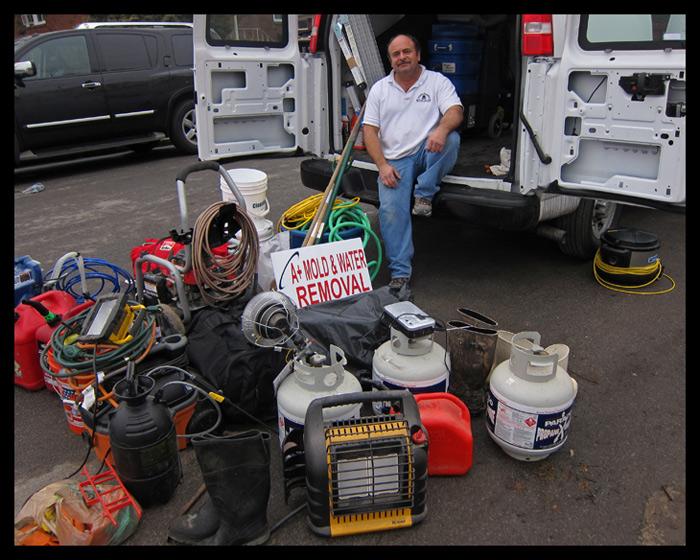
    As regular readers of this website know, I have been closely involved with cleanup and rehab of a friend’s home in Staten Island. One of the most crucial steps in the aftermath of a flooded home is mold remediation and abatement. To be done properly, this is a long and technical process, best left to professionals. The home must be dried, using commercial dryers. There are chemical treatments and HEPA vacuuming. Mold left in walls can come back with a vengance. Many homeowners hasty to rebuild after Hurricane Sandy found themselves ripping newly installed walls open, only to find mold which required proper cleanup and additional construction.

    But where to find someone reputable and honest in the sea of offerings in Sandy’s aftermath? I spoke to numerous established local businesses specializing in mold remediation. I also turned to Craigslist, where we found our final choice. In retrospect, Craigslist was perhaps not the wisest source for such a serious project, however, good fortune was with us, and we found one of the most thorough and scrupulous individuals I have ever worked with – Art Hull.

    Art, like many who worked for victims of the storm, was from out of town – in this case, Ohio. Art was extremely knowledgeable and technical – more so than the many other local contractors we interviewed. He had previously worked in the Biotech industry in California and was well versed in mold and microbes. But what set him apart from the typical New Yorker was his level of service and honesty. He always went the extra mile and then some. He and his assistant spent over 3 weeks in a small home, never rushing the process or a procedure. Phone calls, of which there were many, were typically 30 minutes long, with every detail thoroughly gone over. He gave many extras – checking the roof, checking the attic, replacing the subfloor, checking this and checking that, often traveling and shopping for things needed that were not part of our contractual agreement. To this day, I still call Art in Ohio for advice on various aspects of the home rehab project.

    All told, it was clear from the start that Art was not a native New Yorker. He started the job with a small deposit, willing to wait for an insurance settlement – in our case, he was only paid 4 months after his work was completed. Sadly, many of his other clients became greedy after insurance settlements and have contested his charges for work completed as per contract. Poor Art, now back in Ohio, has had to resort to expensive NYC legal counsel and is still attempting to collect his fees for many large jobs completed some time ago. I was very disappointed to find that the spirit of the swindler was alive and well, not just on the streets of the city, but like Sandy’s sewage, had permeated the walls of Homeowners Too 🙁


  • Little Venice

    I just finished watching an episode of Barging Through France in the Ardeche, one of the wildest and most untouched regions of France. Here, villages with thatched roofs can still be found in a land that time forgot.
    The program was reminiscent of a series I watched in the 1990s about barging through Europe. Each episode offered a dreamy, kaleidoscopic view of the remote reaches of Europe via its canals. The host and crew traveled by barge and lived in its quarters throughout the journey, making stops wherever and whenever whim and fancy inclined them to do so.
    The imagery and music all conspired to give a romantic view of the idyllic countryside and small villages of Europe. Inspired, I did take one barge cruise through Paris and the outskirts. It was not an exploration of remote hinterlands, but, nonetheless, it was a barge, a canal, and Paris. I was accompanied that morning with a group of school children singing songs in French.
    In the United States, however, canal typically connotes an image of a waterway and utility. In New York City, the word canal is synonymous with pollution. Perhaps the best example is the Gowanus Canal, once known as Lavender Lake for its technicolor surface. I had been through the area a few times (see here), but recently, I decided to explore the neighborhood of Gowanus, Brooklyn, more thoroughly. I did like the very low rise feel of  the area, although the architecture left much to be desired, reminiscent of the South Bronx.

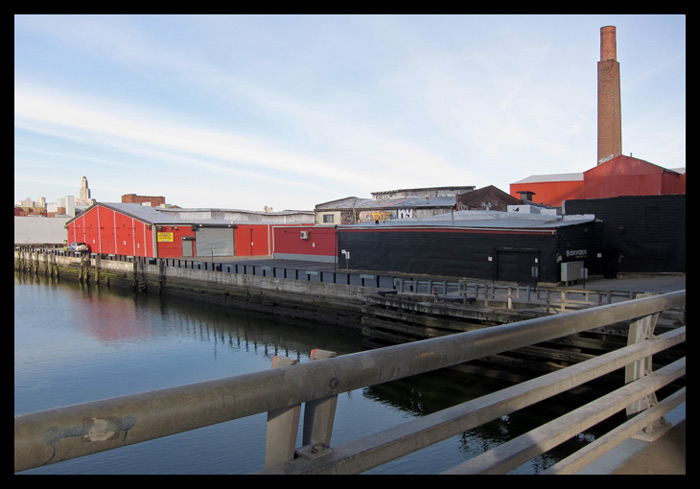
    As I crossed the bridge, I recognized the industrial building complex that housed the space that sponsored a fire performance I attended. For that evening, in a bizarre and unusual transformation, the metal working facility became the Gowanus Ballroom.

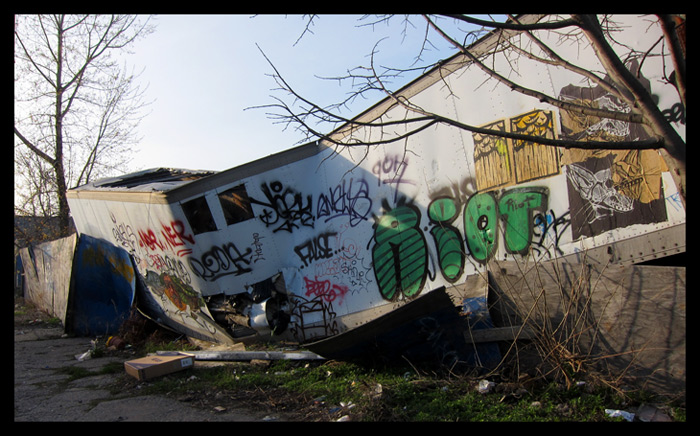
    As I approached the end of the short block, I was welcomed by a wrecked tractor trailer, folded in half and now being used as a canvas for graffiti.

    At the very end of street was an upright rowboat. A banner proclaimed:

    Welcome to the Gowanus Canal

    Brooklyn’s Coolest Superfund Site.

    It was not immediately obvious that the entire area was a boat launch for the Gowanus. However, a poster mounted inside the boat, Canoeing & Superfund Tourism Map, indicated that, indeed, the Gowanus was a Superfund cleanup site (designated by the U.S. Environmental Protection Agency) and this was the 2nd Street Canoe Dock. The map brimmed with enthusiasm and outlined 18 sites for the canoeist to explore.
    Looming in the distance across the canal was an enigmatic deserted building. Later, after my visit, I learned that this was the infamous “Bat Cave”, a story in itself.

    While exploring 4th Street, I passed a tiny, charming one-story house, perhaps a lone candidate in all Gowanus that could be called adorable.

    A woman was in front, tending to various chores. I assumed she was the owner and asked. She affirmed. I complemented her on her cute, tidy dwelling and asked, “Is this area considered Gowanus?” “Yes” she said. I offered what I had heard for some time in the media: “This area has been referred to as the future Venice of New York.” She laughed and said, “They have been saying that for a long time.” I agreed and canvassed the area one last time, wondering if and when Gowanus and its canal would live up to its promise as Little Venice

    Related: No Pane at All, Europe?, Not Under the Gowanus, Part 1


  • No Pane at All

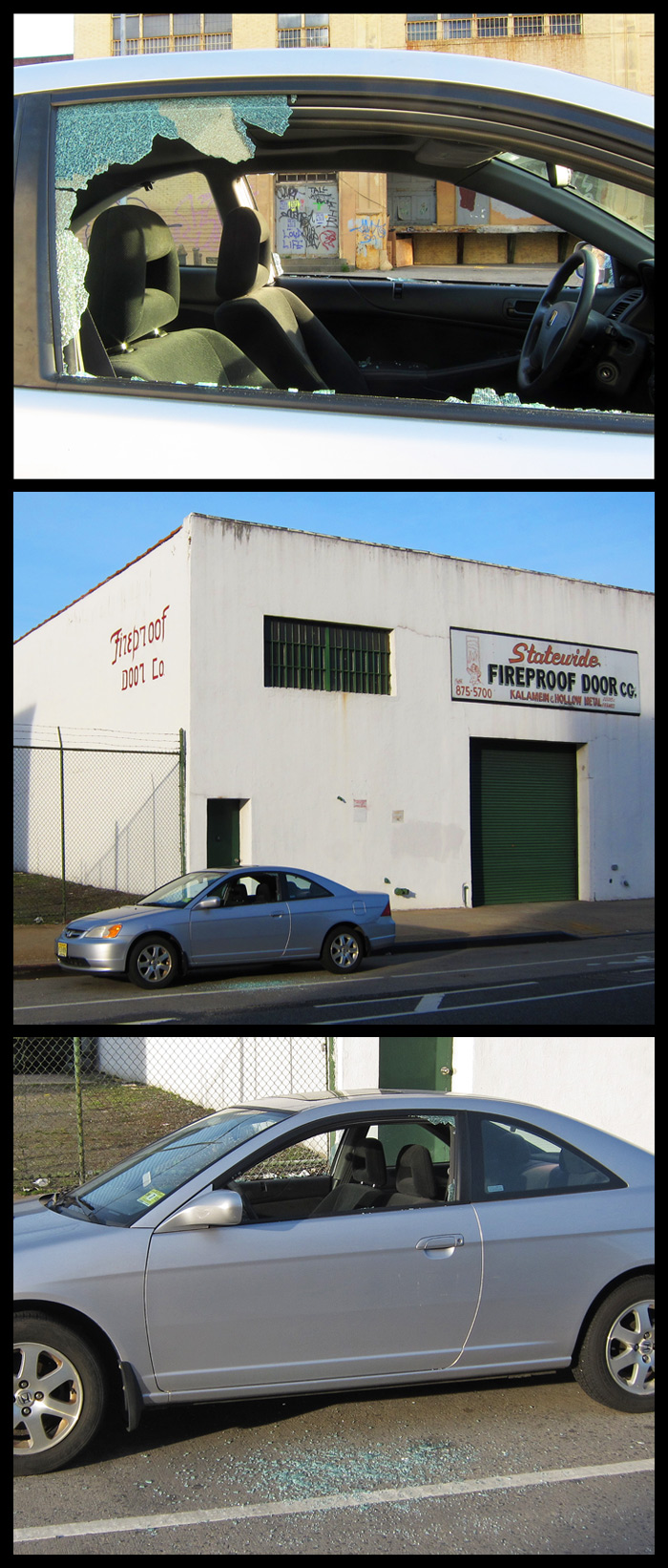
    On July 29, 2009, I wrote Urban Coral Atoll about auto break-ins on the streets of New York City, with the telltale signs of shards of glass on the street. Yesterday, however, while exploring Gowanus, Brooklyn, I spotted a break-in where detective work was unnecessary. The car itself was still parked at the scene of the crime. Not one but TWO windows were completely smashed in broad daylight on a beautiful, sunny spring day.
    The auto was parked in front of Statewide Fireproof Door at 131 3rd Street – a moderately busy through street, even on a Sunday. The license plates were from New Jersey. The out-of-towners had yet to return and find themselves a nice cleaning job along with a breezy ride home and a repair job. And to learn the hard way, as every New Yorker knows, that to a thief, performing a Glass Act is No Pane at All 🙂


  • Only One Stop from Manhattan

    Perusing my archives, I came across this series of images, unused for this website. All were taken in DUMBO in 2006, the inaugural year for New York Daily Photo. The photo series illustrates the dramatic scenery in this Brooklyn neighborhood and what draws people there. The Brooklyn and Manhattan Bridges, East River and Manhattan vistas, a rocky beach, superb post-industrial architecture, and cobbled streets, all packaged in a sequestered corner of New York City, yet so conveniently located by public transportation. With so many pluses, it’s so easy to sell. You can hear the broker’s pitch now, flaunting his trump card – and it’s only One Stop from Manhattan


  • Island Nation

    Posted on by Brian Dubé

    Recently, while in Queens, I took a quick spin around Roosevelt Island. It had been years since my last visit, and the lure of an island is irresistible to me. Most of the city’s other smaller islands are inaccessible to the public. Roosevelt Island is located in the East River under the 59th Street (Queensboro) Bridge. However, the island is not accessible from the bridge directly. From Manhattan, the island can be accessed by the Roosevelt Island Tramway or, since 1989, the F train subway. Getting there by motor vehicle will necessitate a trip to Queens and then the short lift bridge, Roosevelt Island Bridge, which connects Astoria, Queens, to the island.

    Traffic is permitted on the island, however, auto traffic was not part of the island’s planning, and a number of the island’s primary sights, such as the lighthouse and the smallpox hospital, are accessible only by foot, bicycle, or public bus. The big draw here for the visitor are the spectacular vistas from around the island – Manhattan, the river, bridges, the tram, Big Allis, Queens, U Thant Island. On the island, there is the historic Blackwell House (1796), the Octagon (once the main entrance to the New York City Lunatic Asylum), the Blackwell Island Lighthouse, the Chapel of the Good Shepard, and the amazing, enigmatic ruins of the Smallpox Hospital.

    I always loved islands. At one time, I dreamed of visiting the South Pacific, perhaps living on a remote, idyllic tropical isle like Fatu Hiva. But New York City is the archipelago I have chosen, a world unto itself and virtually an Island Nation 🙂

    Related: Manhattan Island

    Posted on by Brian Dubé

  • Fudge Time

    Posted on by Brian Dubé

    It was some years ago when an employee came into my office with very bad news. Our shop vac appeared seriously damaged and was no longer working. When I asked about the nature of the damage, I was told that there appeared to be a problem with the wire connection near the plug. This was laughable, and I responded that I would just pick up a new plug for a couple dollars and rewire it. To which my employee was so impressed, he commented, “Wow, I have to see that.” I asked where he had grown up – the suburbs of Miami. I joked how he was a sad man, that he would be stupefied with such a simple repair. He watched, fascinated, as I replaced the plug in just a few minutes’ time.

    The whole affair was indicative of how many Americans are estranged from even the most basic repairs. With such a strong emphasis on white-collar work and getting a college education (both laudable goals) and such a lack of dignity for blue-collar work, fewer and fewer people use their hands. My high school was very well equipped in the industrial arts, but, being tracked for college, I never set foot in the school’s tech wing. A disappointment to me now – I would have enjoyed a few classes in machining.

    The situation in New York City is much worse. Without space for storage of tools and workspace to use them, most urbanites have limited ability to do their own repairs. Most handiwork in apartment buildings is done by superintendents who wear many hats and do repairs in a variety of trades, none of which they are qualified to do. Most of the work ranges from mediocre to horrific. This is sad to me for so many reasons. There is a real shortage of labor doing quality work and great difficulty in finding someone to do small jobs. On the flip side, there are pluses to the do-it-yourself approach – a cost savings and satisfaction of working with your own hands.

    At one time, I ran into a number of fudge shops in shopping malls that made fudge on the premises. The process of pouring, cooling, cutting, and serving was such a big attraction to shoppers that the shops turned the making into theater. Just before pouring, employees would run through the mall ringing a bell and announcing, “Fudge time!” Shoppers would run and flock, much like sheep, to witness the remarkable event – someone pouring hot fudge into a tray. They remained entranced, as if witnessing the height of artisanship.

    Certainly there is value in seeing quality demonstrations of skilled craft, and there seems to be no dearth of fascination with the watching of things made. However, the audiences are often undiscriminating, watching virtually anything, regardless of how unskilled or inane. People will stand fixated as if watching the miraculous.

    On the streets of New York City, you will from time to time find individuals spray painting works using objects as stencils and tools. I have waited some years to photograph one for this website. On Easter Sunday, returning from the parade, I had the good fortune to run across the spray paint artist in today’s photo. He was surrounded by a flock of tourists, admiring his command of schlock art. Watching, I could almost hear a bell and the cry of “Fudge Time” 🙂

    Posted on by Brian Dubé

  • Easter Parade 2013

    Posted on by Brian Dubé

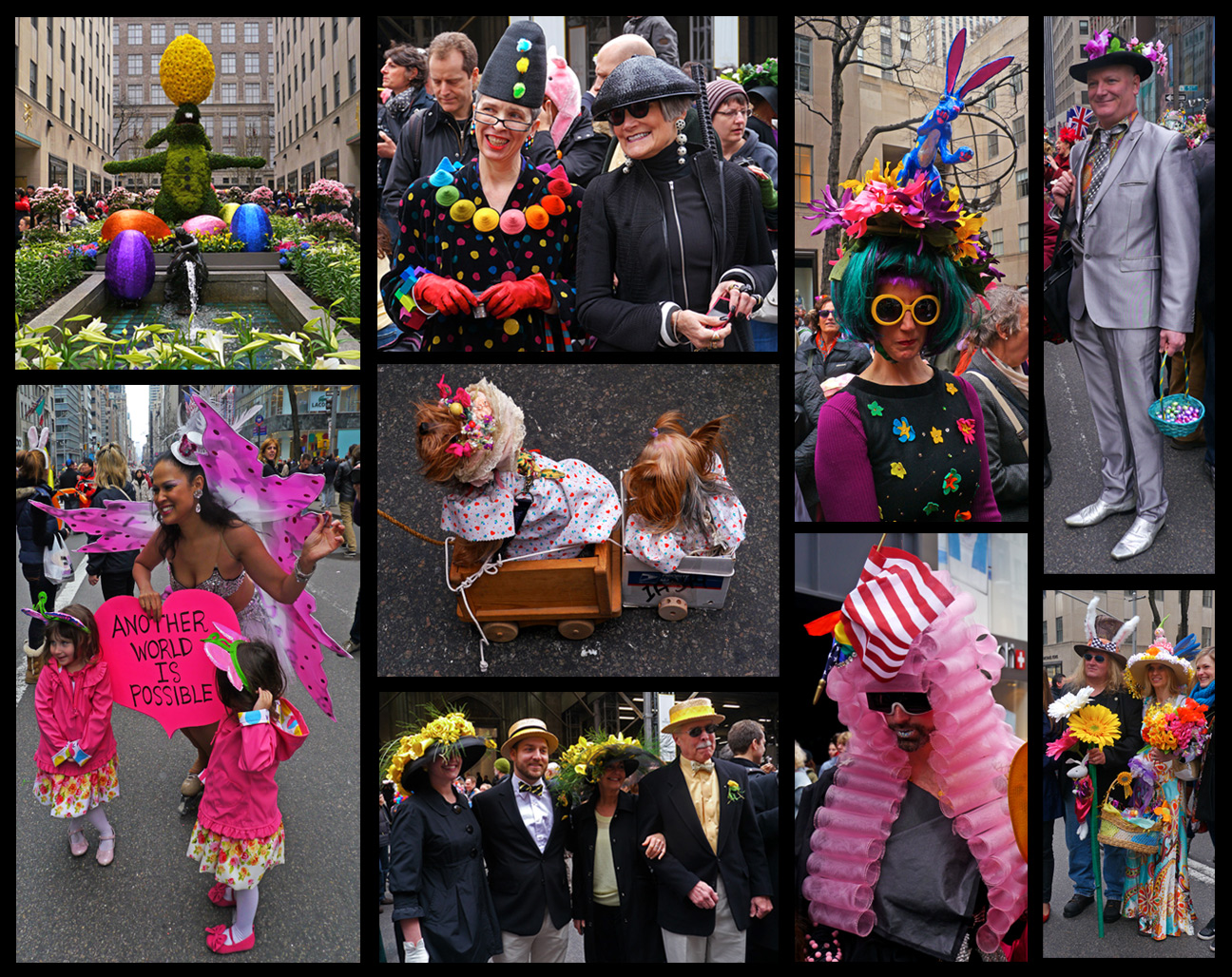
    See my complete photo gallery here for the 2013 annual Easter Parade.

    See my other Easter stories and photo galleries:

    Easter Parade 2006
    Easter Parade 2007
    Easter Parade 2008
    Easter Parade 2009
    Easter Parade 2012

    Posted on by Brian Dubé

  • Dick and Ferris

    Are you ever bored? I can guarantee that a night out with Dick and Ferris in New York City would never be boring. Unfortunately, I can not arrange it, but I can give you a taste.

    I was an NYU student, and I, along with classmates, was becoming acquainted with the city with a friend, Dick, as a guide. He was a native New Yorker and an interloper at NYU – 25 years old and not a student. To us, he was much wiser and older. He had been a child actor. He knew everything about the world, or at least the world that was New York City. And to us, at 19 years old and a recent transplant, what other world was there? He showed us everything, particularly the underbelly of the city. His word was gospel.

    Dick was wild, untamed, and a chain smoker. He was excessive. Like Thoreau, he wanted to live life to the fullest, suck the marrow out of it, and drive it into a corner. An outing with Dick was akin to one with Hunter S. Thompson.
    Ferris Butler, on the other hand, was a bit askew. He was a friend of Dick’s, also an outsider and NYC native. He was decidedly a character, one that anyone who met him would not forget. Together, Dick and Ferris were a formidable pair.
    Dick drove a taxi, which he saw fit to use for his own personal joy rides. However, his indulgence posed a problem – how do you party all night and also clock enough money to bring the taxi back to your employer with an acceptable amount of revenue?

    One night, circa 1971, a number of us were in Dick’s cab, including Ferris. It was nearly 4AM, and the taxi was due back at the garage shortly. It was a very desperate situation. Dick had done no business at all and needed to bring the taxi back with at least $40 in fares to avoid being fired. He had the only solution – he would speed through the city streets as fast as possible with the meter running, clock $40, and pay out of pocket. However, as typical, he had no money. Ferris was the only rider with any money – he did not want to pay, but Dick extorted the money from him.

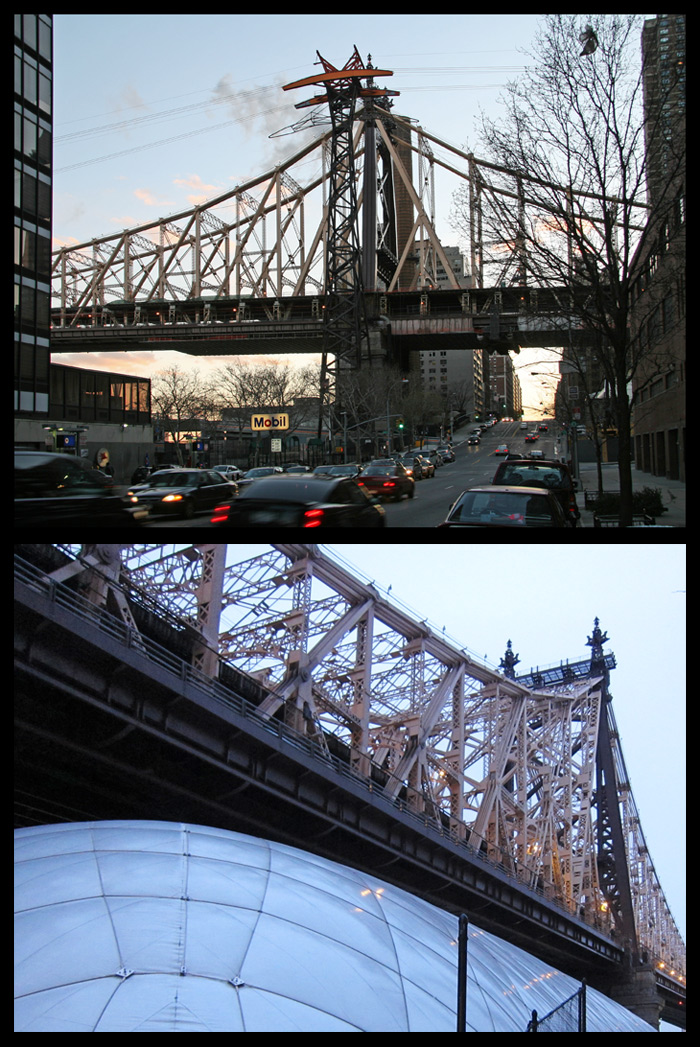
    The ride felt like the car chase scene in the French Connection. The only thing I remember clearly was one leg of the journey where Dick turned onto the 59th Street Bridge outer lane. It was hair-raising as we careened across the bridge with Ferris in the front passenger seat screaming and begging for Dick to slow down, but to no avail. Time was really money now. We achieved our mission – by 4AM, the meter had been run up to $40 and all was well. A memorable night. This was to be one of many adventures in New York City with Dick and Ferris 🙂

    Note: Watch my video as I drive the same outer roadway of the 59th Street Bridge that I did that night.


  • Mashed Yeast

    You want some sprouts, man? It was the 1970s in Washington Square Park, and a friend, rather than trade in drugs, was offering free raw alfalfa sprouts from a clear plastic bag. Sprouts were huge in New York City, as was raw foodism and other innumerable variants on extreme dietary regimes.

    Natural foods or vegetarianism had not yet gone mainstream. Even in New York, there were no Trader Joe’s, Whole Foods, or Jamba Juice, or anything like them. It was infinitely better than the burbs, however, one still had to search to find those few establishments catering to vegetarians – places like the Cauldron or Angelica Kitchen.

    The problem with vegetarian or natural foods restaurants, historically and even to this day, is that the cuisine is guided primarily by what is NOT, rather than a celebration of flavor. Of course all restaurants strive to make things tasty, however, whereas in French cooking, regardless of any health consideration, if it tastes good it’s going IN, in the natural foods or vegetarian community, if it is tastes great but is verboten dietarily, it’s staying OUT. And then there are things eaten irrespective of taste because of their purported health benefits, like brewer’s yeast. At the time, the phrase health foods was used more than the currently prevalent natural foods. The prevailing thinking at the time is best illustrated by an experience I had:

    I used to frequent a health food store on 8th Street in Greenwich Village. I knew the owner, Gene, well and found myself many days visiting the shop, lingering and socializing. One day, I pointed out a health bar to Gene that was particularly dreadful – it was made with raw grains and had a distinctive taste of raw dough and was bitter. Having never tried that particular bar, the owner grabbed one, tore the wrapper open and took one bite. He immediately spit it onto the floor and through out the rest. He agreed it was disgusting and inedible. I asked if these actually sold. He said yes, quite well. More importantly, I asked if any were ever purchased more than once by the same customer. He said yes. Incredulous, I asked why. He answered because they thought it was healthy.

    Although certainly today’s natural foods strive for a much higher standard, nonetheless the industry is still largely guided by restriction. It is this that leads someone like Anthony Bourdain to make his notoriously caustic remark about vegetarians.

    All this said, I was a vegetarian for decades and still am health conscious in my eating habits. Recently, I decided to revisit and introduce to my girlfriend the legendary Angelica Kitchen, a place I had not been to in 30 years. I had no idea what to expect – my memory of the place was old-school grubby decor and strict dietary guidelines.

    I was surprised walking in that it was now quite upscale in decor. The place was packed with a cue for a table. Certainly things had changed, and already I had a story idea and title – Vegetarianism Grows Up. I was very optimistic and full expected that Angelica’s would be added to the “list” and would be part of my regular restaurant rotation. I remembered their famed “Dragon Bowl” and ordered that, along with soup and their bread and miso-tahini spread. My girlfriend ordered a dinner salad.

    The food arrived. As we ate, things became progressively more and more disappointing. The bread brought back memories – it was the same, leaden and tiresome even with the miso-tahini spread. The soup was extremely bland. My girlfriend’s salad entree was appetizer-size and plain. Cold drinks were described as chilled – ice is taboo and not available. Nonetheless, most online reviews for Angelica Kitchen are excellent.

    There is a great scene in the film Annie Hall with Woody Allen that echoes my sentiments and ties my life experience in health foods together nicely. In the film, Woody visits Annie in LA. They meet in a health food restaurant. Looking at the menu, Woody orders a cliched meal: I’m gonna have the alfalfa sprouts and a plate of the Mashed Yeast. 🙂

    Related Posts: Whole Earth Bakery, Vegan Chic


  • Self-Service, Part 2

    Does It Have to Be Pirelli?  (see Part 1 here)

    It was 1984 and my first trip to Europe. I arrived in Frankfurt, Germany. I was examining everything carefully, to see if in fact the attention to detail, precision, and quality was in keeping with the country’s mythic standards. It appeared to be. The airport was slick as could be and my eye was drawn to the flooring – a studded rubber material. I had seen its application in small areas in New York City, like elevator floors, but never such a large area as an entire airport. The reason was simple – this was Pirelli rubber tile, and it was rather expensive at the time to cover such a large area. But this was Germany, where the standard for manufacture was very high and, often, cost was not the dominant factor in choosing materials or methods – quality was. I subsequently learned that Pirelli tile had a tremendous reputation for durability. It was guaranteed for 10 years, even in high-traffic applications. Now, I really wanted to use it somehow, but where?

    In 1991, I moved my business to its current location in SoHo. Here, I wanted to create a badly needed showroom, which I did not have at my previous older location. I wanted the quality of materials going into the showroom to reflect the quality of our product line. I hired my best friend, a cabinetmaker, to do all the woodwork. We used baltic birch plywood for cabinetry. I insisted on solid brass screws to assemble – softer and more prone to stripping, my friend relented, seeing that I was steadfast in my obsession.

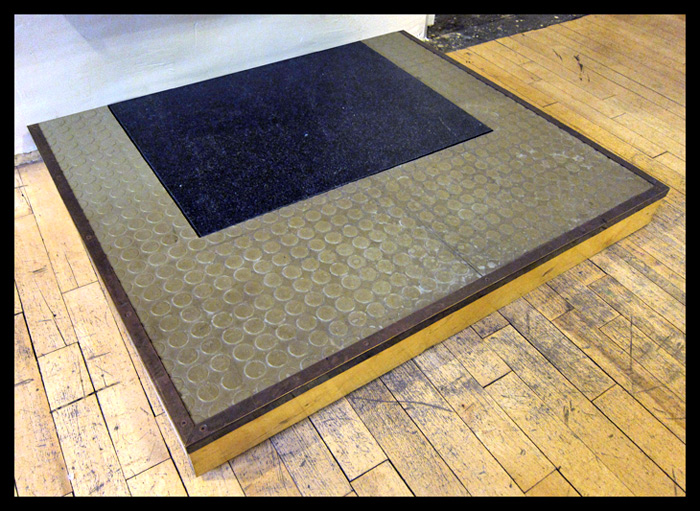
    I needed an area for ball bouncing. The bouncing of balls is a subset of the juggling world, and to test balls properly, a hard, even surface is needed. A wood floor does not typically have the uniformity or mass for best performance – stone does. So, my carpenter and I decided to design a station specifically for bouncing of silicone rubber balls. I researched for weeks, even calling graveyards in New England, to get an affordable price for a small slab of solid granite 4 inches thick. I also needed a good surface on the wood platform for standing. At last, I had an excuse to use Pirelli tile – it seemed perfect.

    Procuring a small number of these tiles, however, was not easy. Vendors in the city were selling by the box, and I only needed a handful of loose tiles. I found a dealer who said that he could provide such, however, once there, it was clear that I was going to be persuaded to buy tiles the salesman wanted to sell, not the Pirelli I had traveled to buy. It became the classic scene of self-service I had seen so many times, common in the world of sales with upselliing, cross-selling, and bait-and-switch.

    I was, however, a bit older and wiser since my Juki ordeal, and I was prepared with the proper response to the question I knew was coming. The salesman, frustrated that he did not have the selection of tiles I wanted, asked, “Does it have to be Pirelli?” To which I answered smugly, “No. It does not have to be Pirelli. But that’s what I want.” It was an effective silencing of a New York City salesman. I purchased a small number of gray tiles.

    My carpenter and I completed the ball bouncing platform, trimming the edges with solid brass rails. My carpenter, knowing me quite well, indulged my every whim, no matter how “unnecessary.” He knew better now that I should never be questioned why I needed baltic birch or brass screws. I was paying him, and it was his job to service the customer. When I had returned to the showroom and told him the ordeal it had been to get the particular tiles I wanted, he knew not to ask, Does It Have to be Pirelli? 🙂

    Related Posts: Do the Right Thing 2, Do the Right Thing, War Against Disservice, Released from Captivity


  • Self-Service, Part 1

    Does It Have to be a Juki?

    You know the scene, I am sure. You are in a store and can’t find something. You look for a salesperson. Finally, you find a GROUP of sales people, deeply engaged in conversation. Perhaps one of them even sees you and that you clearly need help. Apparently, however, their conversation is more important than helping you.

    It’s a form of customer service perhaps better called SELF SERVICE, but not the type of self-service that many of us like, where money can be saved and the check out process expedited. This type of self-service is self-serving.
    This type of self-service plays out in many ways, but the underlying operative is always the same – placing the needs of the business or salesperson ahead of the customer. Selling you what they have, even if it is something you don’t want or need. Upselling.

    In New York City, purchasing goods from suppliers to the trade often has its own flavor – one that I hate the taste of. It’s quite simple and goes something like this:
    You enter a business establishment knowing exactly what you want. It may be goods you have purchased for years. However, asking for what you want is followed by a question, something like – what are you making? This may seem extra helpful, trying to understand your needs, etc. But it’s not. Their question is really code for: How can I sell this person something I have rather than what they want. Infuriating if you know what you need. If you persist and are singular in your demand, a vendor will often resort to the more direct: Does it have to be ______ ?

    In the 1980s, I was shopping for a commercial sewing machine. Every sewing factory I had been in was filled with Juki sewing machines – the industrial workhorse of the garment industry. Everyone I spoke to said that the Juki was the machine to get. So, I went to the sewing machine district – two city blocks in Manhattan (25th and 26th Street between 6th and 7th avenues) known for its innumerable dealers of industrial sewing machine dealers, parts suppliers, and service establishments. I recall an exchange with one dealer who apparently was frustrated with my insistence on Juki, which he either did not have or perhaps he did have but had something else he chose to unload on me. I should have seen his response coming when I asked for a Juki: “Does it have to be a Juki?” he said in a thick New York accent.
    Had I been more experienced, wiser, and BLUNT, I would have told him, “No. It does not HAVE to be a Juki. But that is what I want. I’m the customer. Are you here to serve me or yourself?” I did remain steadfast and found a Juki. I never used it much and sold it some years later.

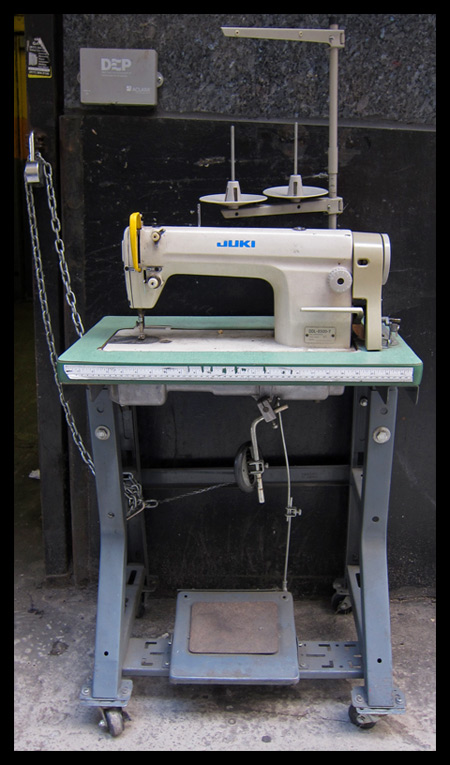
    Recently, while purchasing goods on 39th Street in the Garment District, I spotted the machine in today’s photo. So perfect, a Juki sitting alone on the street beckoning me. “Come on,” it was saying. “Take a photo. You already have the story.” Yes, I had no choice. Because there was a second part to the story too, one that does not end with Does it Have to Be a Juki? 🙂

    Related Posts: Do the Right Thing 2, Do the Right Thing, War Against Disservice


  • Do the Right Thing 2

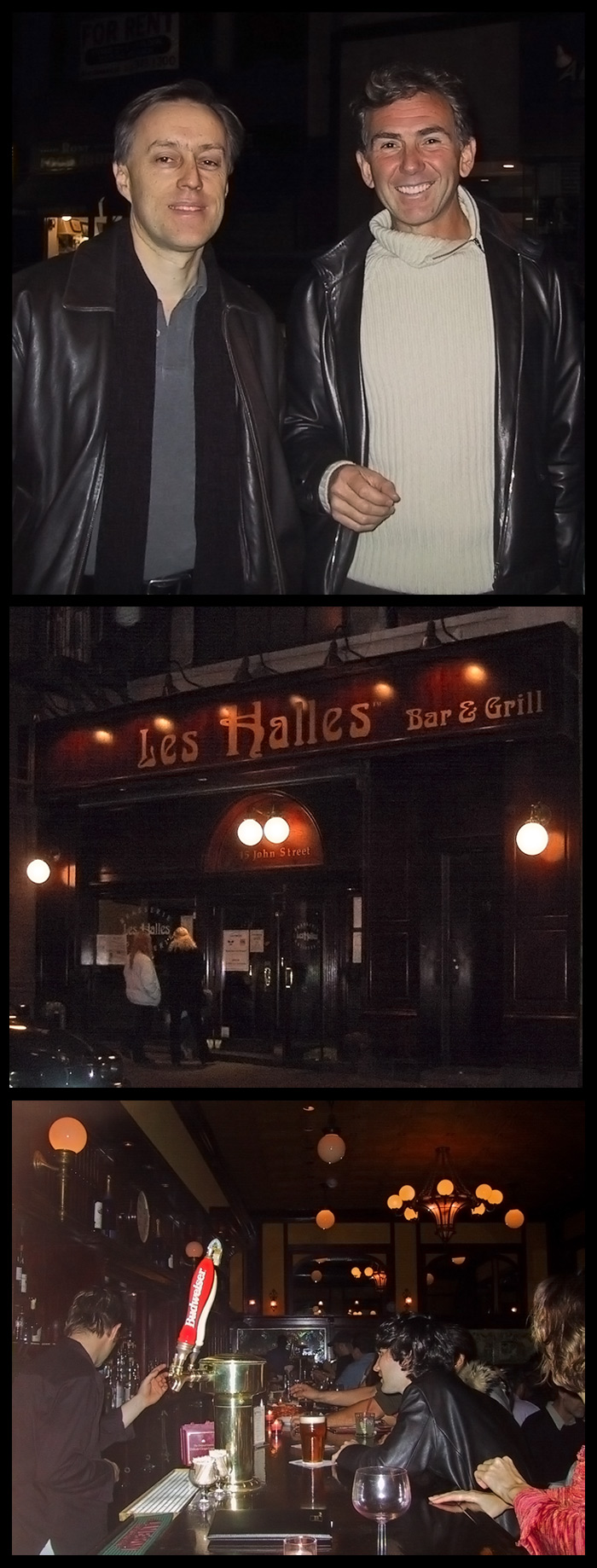
    It was more than one year after 9/11, and restaurants downtown were doing promotions to win patrons back into downtown Manhattan and invigorate commerce in the area. My girlfriend at the time was passionate about food and followed the New York City restaurant buzz. And so on November 8, 2002, we visited Les Halles Bar and Grill on John Street for a dinner deal that was too good to be true. We were accompanied by my friend Leslie, a regular reader and subject of this website.

    There was a lot of buzz about Les Halles, owing to its dynamic duo – celebrity chef Anthony Bourdain and proprietor Philippe Lajaunie. The pair was appearing regularly on the Food Network’s TV show, A Cook’s Tour, featuring Bourdain’s worldwide culinary romps with sidekick Lajaunie. So, in addition to what we hoped would be fine food at a discount, perhaps if we were lucky, we’d have had an opportunity to meet Bourdain and/or Lajaunie.
    When we arrived, it was mayhem. The maitre d’ was swamped, and the whole scene was out of control. I wanted to leave, however, my friend Leslie pulled me aside and suggested that since my girlfriend had been so excited about this outing that I tolerate the situation and not rain on her parade. I saw her reasoning and committed to stay the course.

    As we waited outside on the street, I reflected on my travels to France. I so loved my visits there and the numerous dining experiences I had. This was a world apart from that and a huge disappointment. The situation perplexed me. Did Lajaunie, a Frenchman, need business this badly to turn the whole experience into a circus? Frustrated and irate, I turned to my girlfriend and Leslie and said that this experience at Les Halles went against everything the French stood for.
    A man at a light post nearby overheard me and approached us. As he neared, I recognized him as none other than the owner, Philppe Lajaunie himself. I was quite nervous. Unknowingly, I had insulted an internationally known restaurateur and TV celebrity. Best I had shut my mouth, but now I had made my bed and it was time to lie in it.
    I was sure Philippe would challenge my comment, and I wondered what he was planning to say in response to my comment that his restaurant went against everything the French stood for. He introduced himself and said that he had overheard me. Shockingly, he said, “I couldn’t agree with you more.” He gave me his business card. We chatted about France. He welcomed a photo. Wow. Instead of public humiliation, I was coming up smelling of roses.

    He was not pleased with the chaos and crowd either. Regretful and apologetic, he offered us compensatory drinks. He escorted us to the bar and ordered for us from the bartender. He saw to it that we got a table in a timely manner and visited us during the course of our dinner. I was impressed with Philippe’s candidness and lack of defensiveness. It was another case of restaurant management’s Do the Right Thing 🙂

    Related Posts: Random Acts of Consideration, War Against Disservice, War Against Disservice Part 2


  • North Brother Island

    Posted on by Brian Dubé

    I had made a rare surprise visit to my parents’ home in CT. However, the surprise was on me when I arrived to find that they were not home. I waited foolishly in their driveway wondering what I might do until they returned. It occurred to me that my surprise visit would be even more surprising if they found me in their home, which they believed to be locked and secured. It would also be the perfect opportunity to test and demonstrate the knowledge I had acquired from Lockpicking Made Easy by Eddie the Wire. I, like many curious boys, had been fascinated by locks and lock picking since childhood, but only as an adult was I able to really study them.

    I recalled that my father never locked his garage and there, I was able to find a few materials and tools and fabricate a crude lock pick. My first efforts at lock picking were a success, and soon, voila – I was inside my home. My family arrived soon after and applauded my cleverness.
    The book on lock picking was published by Loompanics Press, who specialized in “unusual and controversial” books. The subjects ranged from the underground economy, self-defense, revenge, guns, weapons, guerrilla warfare, terrorism, tax avoidance, privacy, fake ID, murder, death, torture, anarchism, survival, how to make drugs, counterfeiting money, and more.
    The Loompanics catalog ran hundreds of pages with hundreds of books. I once showed it to a friend who was an attorney. A quick perusal and he was aghast. He turned to me and said, are these books even legal?
    Good question, I replied, you’re the attorney. Many titles certainly skirted the law, claiming to be for information only with caveats galore that they be not used for breaking the law. Yeah, right.
    There were also more benign titles, such as How to Start Your Own Country and one of my favorites, Uninhabited Ocean Islands, with an exhaustive list of small uninhabited islands around the world, ripe for the taking. My dream was to have my own private tropical island and set up my own paradise. My near obsession with islands knew no bounds. I subscribed to Islands magazine. I cataloged the islands of the South Pacific. I read Fatu Hiva. I traveled the West Indies. Ironically, I settled on one of the most inhabited and least remote islands in the world – Manhattan. Nonetheless, it is an island and does feel like a world unto itself.

    But my fascination with islands remains, and recently, I purchased The Other Islands of New York City to see what secrets I might find. I have already featured the small outcropping in the East River, U Thant Island, here on September 15, 2010. But my investigation has led me to the discovery of much bigger and more mysterious islands in the waters of New York City. North Brother Island was now in my crosshairs, and on September 22, 2012, I studied maps for the best vantage points, climbed into my car with cameras in tow, and went on an excursion hoping to see and learn more about North Brother Island.
    The best spot was Barretto Point Park in the Bronx. It was here that I spotted the Floating Pool Lady. There it lay, in the East River near Riker’s Island and Hell Gate, wild and uninhabited. Abandoned for 50 years, the island is an explorer’s dream. However, the island is now a bird sanctuary, currently abandoned and generally off-limits to the public. The most disappointing news was that, undaunted, other urban explorers have managed to visit. A number of websites, including Gothamist, have run photo essays.

    North Brother Island has one of the richest and most fascinating histories in New York City. The island was uninhabited until 1885, when Riverside Hospital moved there from Blackwell’s Island and was used to quarantine patients with typhus, TB, cholera, yellow fever, leprosy, smallpox, polio, venereal diseases, and heroin addiction. Its most famous resident was Typhoid Mary, who spent 30 years confined there. North Brother Island was also the site of New York City’s greatest loss of life prior to 9/11. In 1905, over one thousand people died when the General Slocum steamship went ablaze near the island. After World War II, the island housed war veterans who were students at local colleges, along with their families. The island has been abandoned since the 1960s.

    I have learned most recently that it is possible to visit the island with special permission from the Parks Department and not during heron season – March to October. A private boat needs to be chartered, and there is no dock. A friend who is well connected to city officials said he could easily arrange such a thing for me. However, after multiple inquiries, I have heard nothing.  I hope one day to finally set foot on North Brother Island

    Posted on by Brian Dubé

  • Dogs

    Posted on by Brian Dubé

    Estimates of the number of dogs in New York City ranges from 500,000 to 1.5 million, depending on who is doing the counting. Not matter how you count them, that’s a lot of dogs, and for many in the city, particularly single households, dogs become more than companions – they are roommates and central to the lives of their owners. As with so many things here, the city imposes many many hardships on dog owners. Finding dog runs for socializing. Lugging dog food home. Keeping dogs on a leash. Daily walks for bathroom functions are necessary, not optional.

    One of the most difficult situations for the dog owner is going away without one’s pet. In the suburbs or country, a neighbor can often be easily recruited for looking after one’s dog or a short-term adoption. In the city, however, this is an unlikely scenario unless one is willing to pay for the service. Space is tight – the few backyards that exist are not used for keeping dogs.
    Doggy day care does exist – I once investigated this with a friend with dogs in the city. We visited a few personally, read online reviews, etc. Unfortunately, the owner found them to be depressing, and in the end, she never found one to her liking. Not surprising that many dog owners will never find any day care center adequately attentive and loving to their animals. Anyone going into this business has quite a wall to climb to gain approval of the dog owner. Some owners do have positive experiences with day care, with their dogs loving the social atmosphere of the many dogs at a facility.

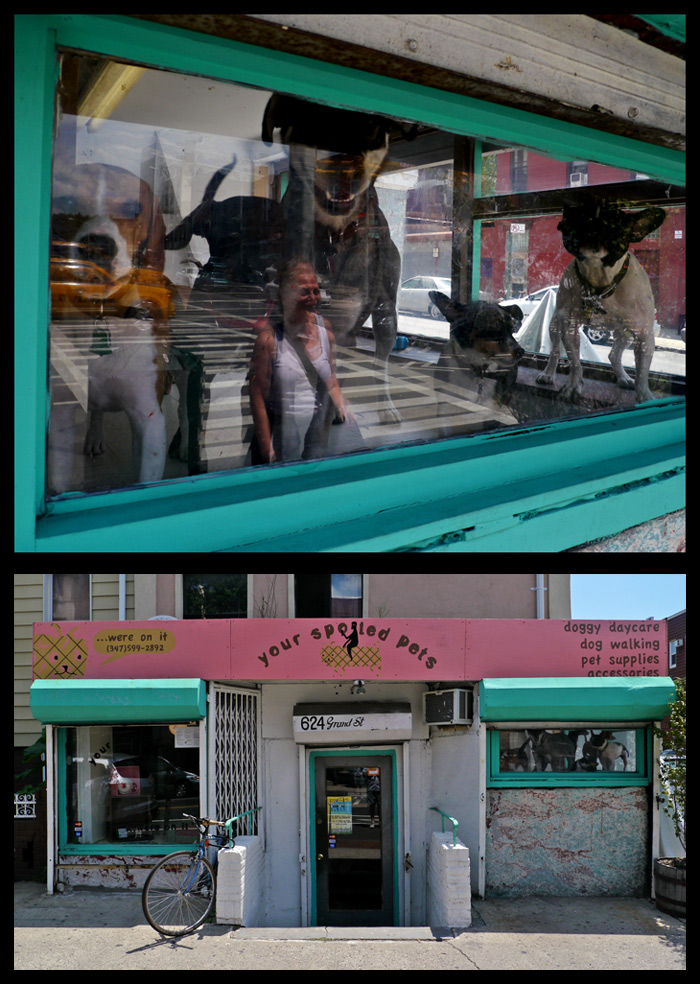
    Recently, while visiting the Willburg Cafe in Williamsburg, Brooklyn, I spotted Your Spoiled Pets directly across Grand Street. I have no direct experience with this place, nor do I know anyone who has. However, online reviews are extraordinarily and uniformly high. The proverbial doggies in the window were quite exuberant, as dogs naturally are.

    There are many sayings that express the sentiment that dog lovers have and perhaps no better one (or some paraphrasing or variant) than that attributed to Charles De Gaulle: The better I get to know men, the more I find myself loving dogs 🙂

    More dogs: Drooling and Slobbering, Water 4 Dogs, White by Desire, a la Chien, Dachshund Octoberfest, Wolfdog, Dog Dating

    Posted on by Brian Dubé


  • dinamic_sidebar 4 none

©2026 New York Daily Photo Entries (RSS) and Comments (RSS)  Raindrops Theme