• Category Archives NYC’s History
  • Milk Carton Child

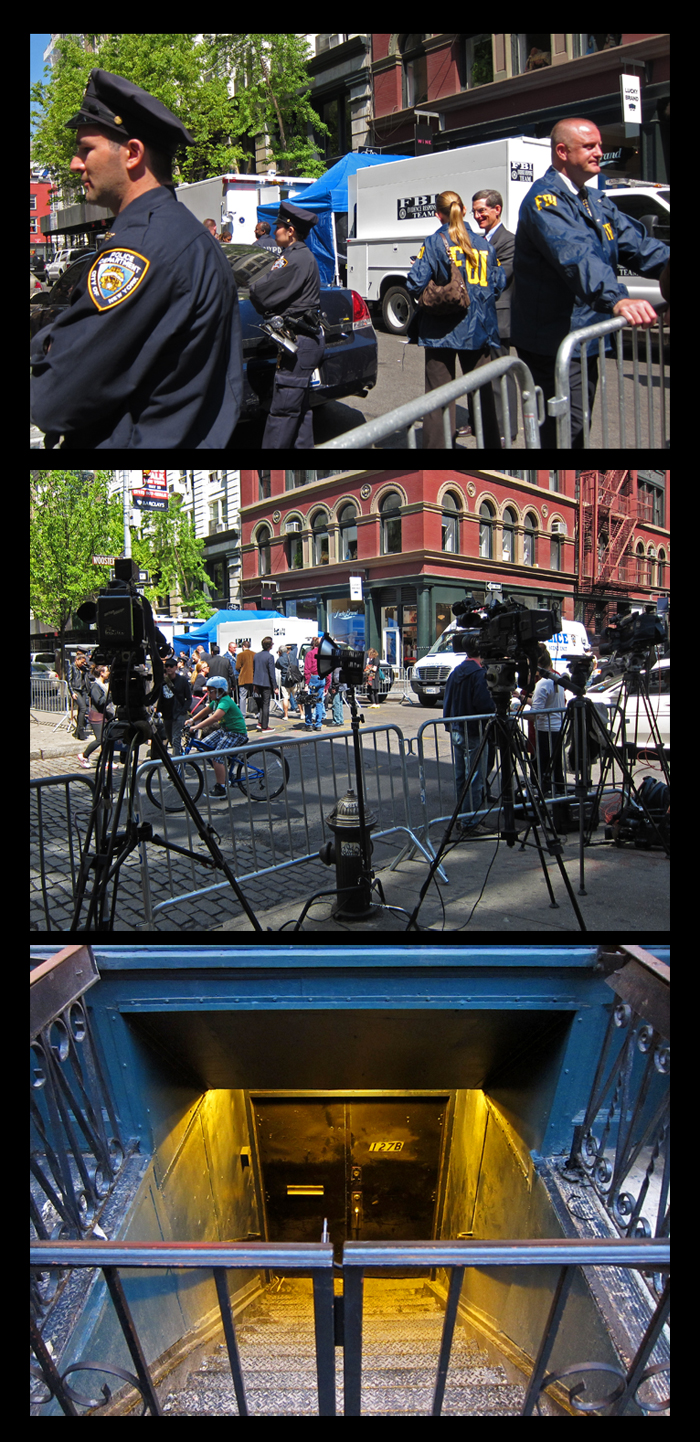
    My daily trip from my home to work takes me through SoHo, where my business is located. The morning is generally a relatively quiet time in this upscale neighborhood, so I was caught by surprise on Thursday, April 19, as I approached the corner of Wooster and Prince and witnessed the largest media presence I have ever seen in the area. Every local and national network was settled in with antenna-equipped vans. In addition to police, there were numerous FBI agents brandishing jackets, making the gravity of the situation abundantly clear.

    Asking a photographer on the scene what this hubbub was all about, I was informed that the search for Etan Patz had been renewed in the basement of 127B Prince Street in SoHo, a short distance from the apartment where the Patz family lived and still lives today.

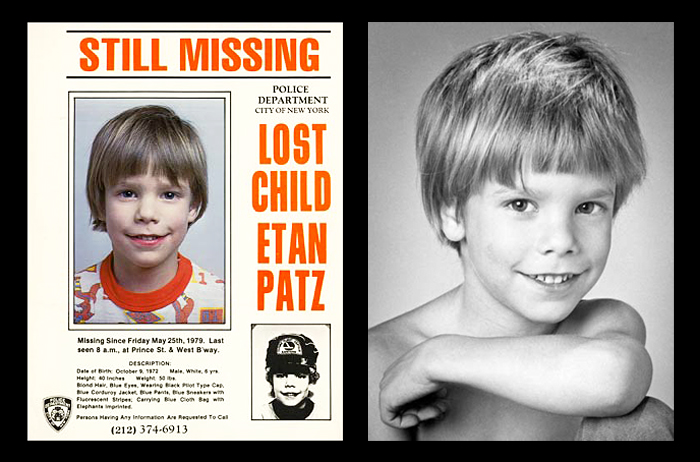
    The case of Etan Patz is not only heart wrenching for the family but also has been a huge story both locally and nationally, the most well-known case of a missing child in the history of New York City, perhaps the entire country. The case gained additional notoriety as the first time a missing child’s photo was printed on a milk carton. The day of Etan’s disappearance, May 25, was designated National Missing Children’s Day by President Ronald Reagan in 1983.

    On May 25, 1979, Etan Patz, who was 6 years old at the time, left his home on Prince Street in SoHo to catch a school bus two blocks away. His parents, Stan and Julie Patz, had given him permission to make the walk alone for the first time. Unfortunately, they never saw him again. The basement area being searched at 127B Prince Street had been used as a workshop by a carpenter, Othniel Miller. Etan and other boys had frequented the shop at the time of Etan’s disappearance. Etan was declared legally dead in 2001. The case was reopened in 2010 by the New York District Attorney’s office.

    Jose Ramos was the prime suspect in Etan’s disappearance. A convicted child molester, Ramos is still serving time in prison (scheduled release date November 2012). A friend of Etan’s babysitter, Ramos admitted to being with Patz the day of the disappearance but denied abducting or killing him. However, in 2004, the family won a civil suit against Ramos, yet he still remains unprosecuted for the crime.

    I lived in New York City at the time of Etan’s disappearance and recall the flyers posted everywhere, asking for his whereabouts. The family as well as the public was hoping for closure in this case. The original search was extensive, employing nearly 100 police officers. Nothing was found then. There was hope that new technologies in forensics would perhaps find traces that would be identifiable. However, the recent search has found nothing as well. A mystery unsolved, and for those of us who remember that time in 1979, Etan Patz will forever be the Milk Carton Child


  • They

    As I stood one morning in front of Vesuvio’s, which had closed for business, a woman approached me and was horrified. She expressed extreme dismay that such a legendary, iconic merchant would go out of business in New York City. How could such a thing happen? Why would anyone let it happen? Something must be done. They are pushing all the small businesses out.

    The concept of They has become a private joke between a friend and myself. Unlike Chuckles, They are a much more insidious threat. Their tentacles extend far and wide. They are responsible for all the economic problems, as well as many other ills in New York City and in the country at large.

    But one of the specialties where They are most often spoken of is in regards to the closing of small businesses. It is here, where the closings sometimes appear to be inexplicable, that their demise is attributed to the hand of a ubiquitous mysterious group called They.

    They, in this case, are the landlords, who we know gather and conspire late at night to selectively close legendary businesses and replace them with chain stores. They do this not just for monetary gain, but apparently to also deliberately ruin the character of New York City. To sanitize, homogenize, and make it nondifferentiable from the suburbs, turning our avenues and streets into strip malls.
    Of course, the reality is that displacement is a function of market forces. Landlords capitalize on improved conditions and raise rents. Most landlords would prefer to retain tenants – there is less loss of income during vacancy and no concessions typically given to new tenants. But, in rapidly gentrifying areas, few small merchants are able to afford extraordinary increases. They vacate to newer businesses, often national giants, who can pay these rents.

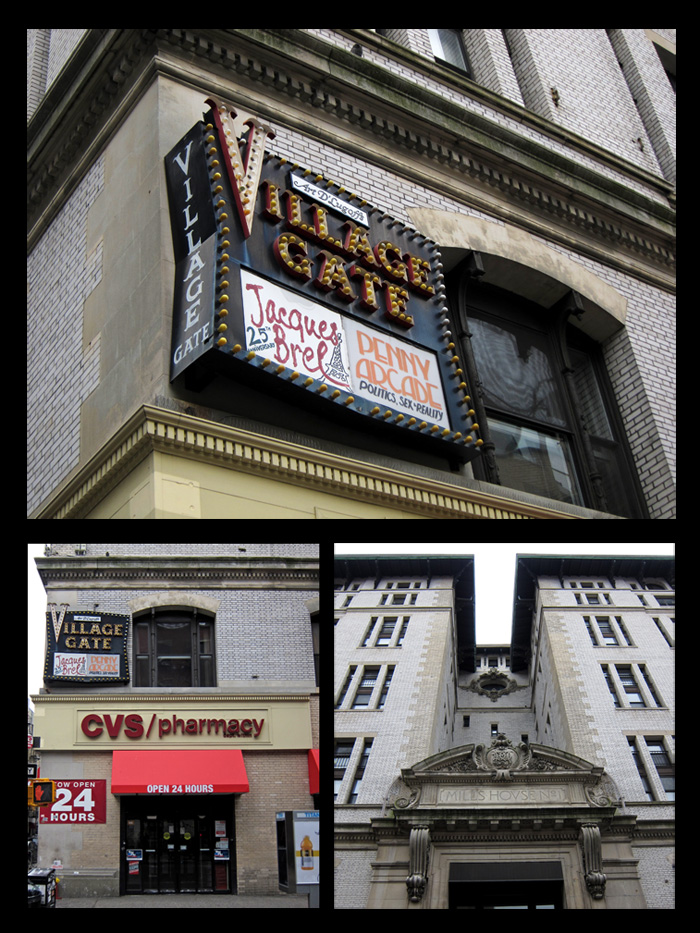
    They were at it again when the Village Gate, a Greenwich Village Landmark, closed in 1995. To add insult to injury and inflict the greatest humiliation, the space was taken over by a CVS Pharmacy. (Actually, most of the long-time NYC residents I know prefer CVS over Duane Reade.) On September 22, 2007, I wrote Izzy and Art, about my meeting with two legendary forces in the New York City music scene.

    Art D’Lugoff opened the Village Gate in 1958 at 158 Bleecker Street, where it occupied the ground floor and basement. The club was housed in the large 1896 Chicago School structure by architect Ernest Flagg, a flophouse for transient men, known at the time as Mills House No. 1. 1500 rooms overlooked either the street or two interior grassed courtyards. In time, the courts were skylighted and paved. The property became a seedy hotel, the Greenwich. In 1976, the building was converted to condominium apartments with balconies, the Atrium.

    Throughout its 38 years, the Village Gate featured such musicians as John Coltrane, Coleman Hawkins, Billie Holiday, Duke Ellington, Dizzy Gillespie, Thelonious Monk, Sonny Rollins, Tito Puente, Wynton Marsalis, Nina Simone, Herbie Mann, and Aretha Franklin, who made her first New York appearance there.  The club hosted a benefit concert for Timothy Leary in May 1970 which featured performances from such counterculture luminaries as Jimi Hendrix, Jim Morrison, Noel Redding, Johnny Winter, and Allen Ginsberg.

    The venue was also host to a variety of shows over its lifespan. Jacques Brel is Alive and Well and Living in Paris debuted at the Village Gate in 1968. From 1971 to 1973, a musical comedy revue called National Lampoon’s Lemmings worked there, and in 1974, “Let My People Come” opened at the Village Gate Theater. From 1988 to 1991, the improvisational comedy troupe Noo Yawk Tawk performed at the upstairs theater.

    Today, the Village Gate sign still remains, the only remnant that They left…

    Related Posts: Not Enough Dough, It Hurts Me Too, Color of Money, Gorillas and Cookies, Jeopardy


  • Pirate, Part 2

    (see Part 1 here)

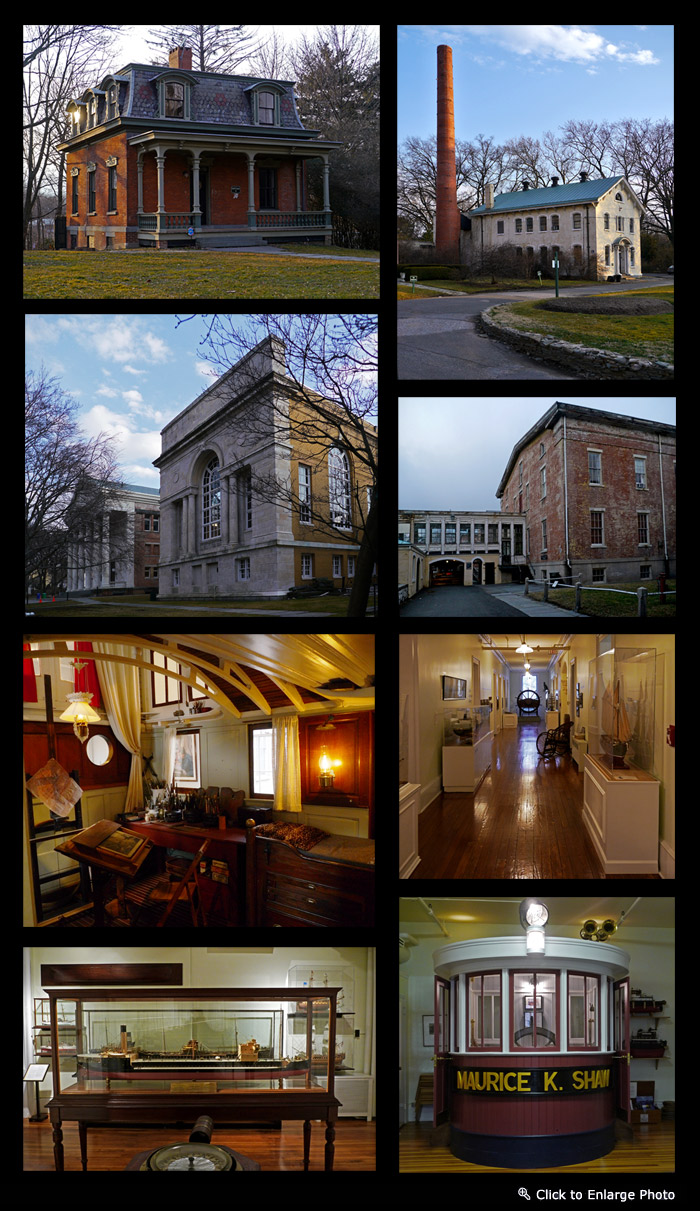
    When I arrived at the Sailors Snug Harbor, it was late afternoon. It was quiet, with no rush or crush of visitors. I was virtually alone on the 83-acre property. There was a sense of authenticity, much like Richmond Town, another historic site on Staten Island which had come as a huge surprise to me.
    There is collection of historic buildings on the site, however, time was fleeting. I made a quick tour by car, parked, and walked to the Noble Museum.

    I approached the entrance of museum, reading the posted hours. There were only fifteen minutes before closing. Ringing the bell was required for entry. An elderly gentleman appeared. Rather than admonish me for being so late or turning me away, he appeared quite easy, letting me know that I did have fifteen minutes.

    As I explored the magnificent building and pristine exhibits, he accompanied me for much of it, a private tour of sorts. There was still adequate natural light for photography, and in fact, it was close to the magic hour, the photographer’s and artist’s most desired time for imaging.

    The Noble Museum has three floors of exhibits – I flew up and down stairs, down corridors, and in and out of the various rooms. There was much more to visit, and I will go back. And if this is the lifestyle one can expect being a “privateer,” I’m going to be a Pirate 🙂

    Looking to explore Staten Island a little more? Check out That’s Giove, A Narrow Path, Quest for Pizza, Picnic Anyone?, Grisly Business, White House of Ill Repute, Veneer of Their Lives, Paint by Number, Todt Hill, Pink Flamingos, Welcoming Committee, Head for the Hills, and Secede.


  • Pirate, Part 1

    This is a city of islands, shoreline, beaches, bays, canals, piers, cruise ships, ocean freight, ferries, tugboats, boardwalks, sailboats, and even jet skis and kayaking. It is not Venice, but water defines and constrains its borders, and the congestion encountered when leaving or entering a borough will make this abundantly clear.

    In Manhattan Island, I wrote:

    It is important to note and easy to forget that, first and foremost, Manhattan is an island, and that its role as a harbor is what led it to become the great city that it is. By the early 1800s, after construction of the Erie Canal, NYC was an international port and the greatest shipping center between Europe and America. Unlike cities like San Francisco or Portland, Maine where the maritime presence is very strong, one could easily go weeks, months or longer in NYC and never see or sense the water.

    New York City is also decidedly NOT New Jersey, a constant in the collective mind of city inhabitants. It’s the place that New Yorkers love to hate but which flanks the West Side of Manhattan, Staten Island, and parts of Brooklyn – from those areas, vistas are nearby communities in New Jersey.

    Recently, while in Staten Island, I decided to make a pilgrimage to Sailors Snug Harbor, a very well known historical site that I was familiar with since my first days in New York City but which I had not yet visited.

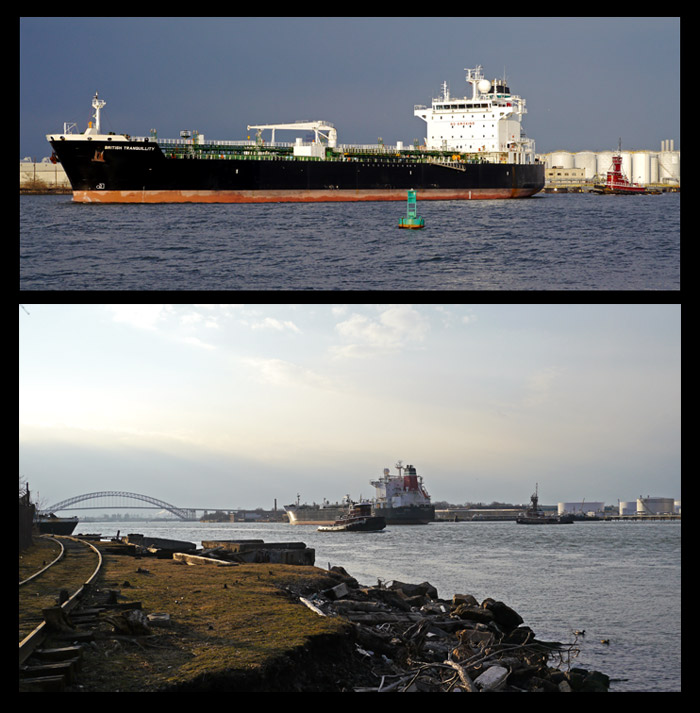
    As I worked my way towards the north shore of Staten Island on Richmond Terrace, an opportunity afforded itself for a spectacular view of the waterway between Staten Island and Bayonne, New Jersey. For many, this would neither be a scenic photo opportunity nor a waterway to admire, however, perhaps owing to a lifetime traveling the New York City and New Jersey environs, I do sometimes find that industrial vistas can be dramatic or surreal. The SCALE of structures is often mammoth and the objects themselves foreign.

    A man sat alone at the end of railroad tracks, admiring the vistas and shipping activity. Not knowing whether he was a vagabond, I struck up a conversation. He identified Bayonne for me and the Bayonne Bridge. The seascape was dominated by container ships, tugboats, and petroleum storage facilities.

    Knowing that I would be writing a story, when I asked about his background, he told me that he was a pirate. Hoping this would spice up the story some. I learned that he was a Staten Island native, quite knowledgeable of the area and history of Sailors Snug Harbor, my destination only a short distance away. He informed me that the riches of the Snug Harbor estate was built on piracy. In fact, he was correct.

    Thomas Randall had been a privateer — a legalized pirate of sorts. Thomas was an 18th-century Scottish sea captain and world trader who commandeered any French merchant vessel he could defeat. His son, Robert Richard Randall, became the institution’s founder and bequeathed his 20-acre farm in Greenwich Village to set up a home for “aged, decrepit, and worn-out sailors.” There were twists and turns in the history of Sailors’ Snug Harbor and their parcels of real estate, which we will visit in Part 2. Makes you want to be a pirate…


  • Broadway is Broadway

    I often take calls in the course of business from non-residents of the city, who, unfamiliar with the details of Manhattan, question me about my Broadway address. Is it THE Broadway? they ask. Yes, I reply, it is THE Broadway. However, Broadway, which spans the entire length of Manhattan, varies considerably depending on where you are. At one time, not long ago, Broadway in SoHo was only a quiet commercial/industrial thoroughfare. But it has changed.

    When I say change, I mean radical change. Change that almost defies imagination. Change so substantial that I question my own memory. I wrote of this in Cast Iron Stomach and Six Geese a-Laying. When I first moved to New York City in 1969, SoHo was not even an acronym yet. It was strictly an industrial district, essentially an industrial slum, a neighborhood I only passed through, perhaps on the way to Chinatown or Canal Street. At one time in the 20th century, the area was known as Hell’s Hundred Acres for the frequent fires that arose in the loft warehouses.

    More recently, even after gentrification, alleys such as Crosby Street remained undesirable, yet pushed to ferret out every remaining square inch of what remained, Crosby Street became every bit as desirable as the rest of SoHo. There are no bargains left, or undiscovered backwaters in Lower Manhattan.

    In Bleecker Tower, I wrote:

    The area was dominated by industrial businesses – leather distributors like Marap Leather who occupied an entire building at 678 Broadway or Commercial Plastics at 630 Broadway. In 1980, Unique Clothing Warehouse opened at 718 Broadway at Waverly Place (president Richard Wolland closed it and filed bankruptcy in 1991 with over $2 million in debt), beginning a wave of transition. In 1983, Tower Records opened at 4th Street and Broadway (recently closed). A few months later, the elegant Blue Willow restaurant opened at 644 Broadway in the building shown in the photo.

    There were early pioneers in SoHo, both individuals and businesses – places like the Park Place Gallery. Alison Knowles had rented space as far back as the late 1950s on Broadway north of Canal Street. From Illegal Living: 80 Wooster and the Evolution of SoHo:

    Illegal Living is the story of the building at 80 Wooster Street in New York and the people who lived and worked there. The first of 16 artists coops started by George Maciunas, founder of the Fluxus art movement, Fluxhouse Coop II spurred the development of SoHo and the spread of worldwide loft conversions. … The artists of SoHo, while focused on their art, also built community, participating in the creation of a new form of residential development. The building was a magnet for the avant-garde who were drawn to Jonas Mekas Cinematheque, a ground-floor space that hosted happenings, film screenings, dance and theater performances, concerts, and art shows. Hundreds of artists including Trisha Brown, Richard Foreman, Allen Ginsberg, Philip Glass, John Lennon, Hermann Nitsch, Yoko Ono, Nam June Paik, and Andy Warhol showed their work in and around the building.

    There were a handful of well-known early retailers, such as Dean and DeLuca. One of the earliest that I personally recall visiting was Broadway Panhandler at 520 Broadway, eventually to move due to soaring rents. Little did I know I would come to occupy the 3rd floor of that very same building in 1990, where my business remains to this day.
    When I moved into the building, it was occupied entirely by sweat shops manufacturing clothing. I was the first “upscale” tenant. The landlord was very favorable towards me, seeing it as the first step in a new type of tenancy. Today, the building is occupied by media companies and businesses such as Built NY, Inc., a design firm that manufactures a neoprene bag and case line. The company holds over 180 patents, and its products are sold worldwide.

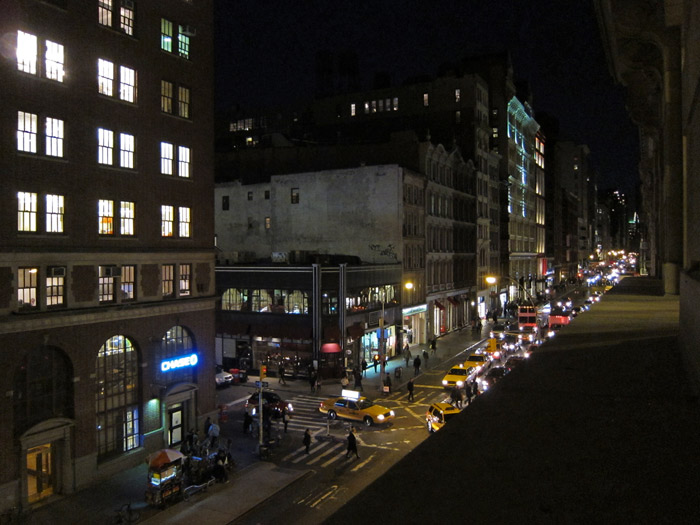
    In its industrial days, SoHo was deserted at night – a ghost town. There were no retailers – manufacturers and commercial/industrial suppliers occupied even the ground floors which today command a huge premium and would make such use unthinkable. Now, the area is saturated with retailers, both of the common garden variety such as the Gap and also very high-profile merchants, including names such as Louis Vuitton, Bloomingdale’s, Prada, Coach, Apple, and Topshop. Foot traffic is outrageous on a day-to-day basis. Typically the sidewalks are so crowded that I resort to walking in the street, even then to be frustrated by people, vehicles, food carts, and other obstacles. Once, in complete frustration, I took to walking in the center lane against traffic, which I wrote about in Dead Man Walking.

    Today’s photos are taken from my office window looking up Broadway in the evening. In the past, lights on Broadway meant the theater district and Times Square. Now, we have lights here in SoHo too. It seems that everywhere you go, Broadway is Broadway…


  • No Cannibals

    In 1989, Daniel Rakowitz shocked New York City when he murdered and chopped up his ex-girlfriend Monika Beerle, made a soup out of her body, and served it to the homeless in Tompkins Square Park. Rakowitz, the “Butcher of Tompkins Square,” was found not guilty by reason of insanity and moved to a state hospital for the criminally insane.

    It is hard for anyone to imagine, even to those of us who lived in New York City, that not so long ago in the 1970s, the East Village was one of the most frightening areas to live in or visit. Extraordinary, because it was just a stroll away from the center Village and some of the most desirable and expensive real estate in New York City.

    Even through the 1980s, when much of the city had improved considerably, Tompkins Square Park remained a high-crime area, had encampments of homeless people, and was still a center for illegal drug dealing and heroin use. Rents were extraordinarily low – many drug addicts were able to afford apartments there, with lifestyles funded by selling drugs or through burglary and muggings. Virtually everyone I know who lived in the East Village in the 1970s was robbed or assaulted. It was truly a lawless land. Even to walk to St. Marks place at night could be worrisome. Alphabet City was no man’s land. Things escalated, and on August 6–August 7, 1988, the Tompkins Square Park Riot occurred. Since 2004, the annual Police Riot Concert commemorates this event.

    Last week was the first time in my entire life that I walked through Tompkins Square Park at night, something that four decades ago would have been unthinkable to me. In the 2000s, a woman friend I knew regularly attended bars and clubs in Alphabet City. She trekked the area at extremely late hours. I was astonished that a single woman would venture out alone there; when I questioned her, she could not understand my concern that she did such a thing routinely.

    However, even in 2011, Tompkins still has an edge. I find the nondescript, high fences to be very disturbing visually, a reminder that this place’s character is far from the parks of Paris, where a fence a few inches high with a small sign to stay off the grass is adequate to keep trespassers off. Here, even after renovation, I find the atmosphere much like that of a well-manicured prison yard with a feeling that restraint is necessary, lest there be an outbreak or an invasion of some kind. No doubt that many of these impressions are now largely a product of my mind from witnessing decades of decay, horror, and crime there.

    So, on a recent chilly Saturday night, I walked through Tompkins Square Park from one end to another. It was only 8PM, but already the park was deserted with only a few stragglers here and there. The atmosphere was spooky and eerie to me. I was quite uneasy in that small jungle at night, but at least I saw no cannibals.

    Related Posts: Transgendered Jesus, Mike Fontana, Irony Candy, Fluff, Leftover Crack, Bohemian Flavor of the Day, Piercing al Fresco, Gem Spa


  • Green-Wood


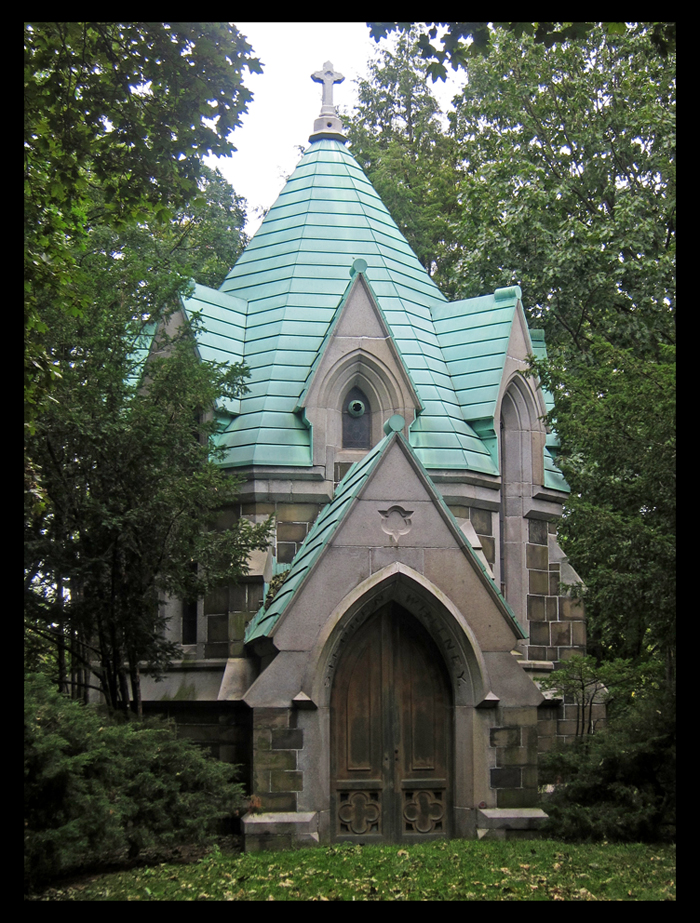
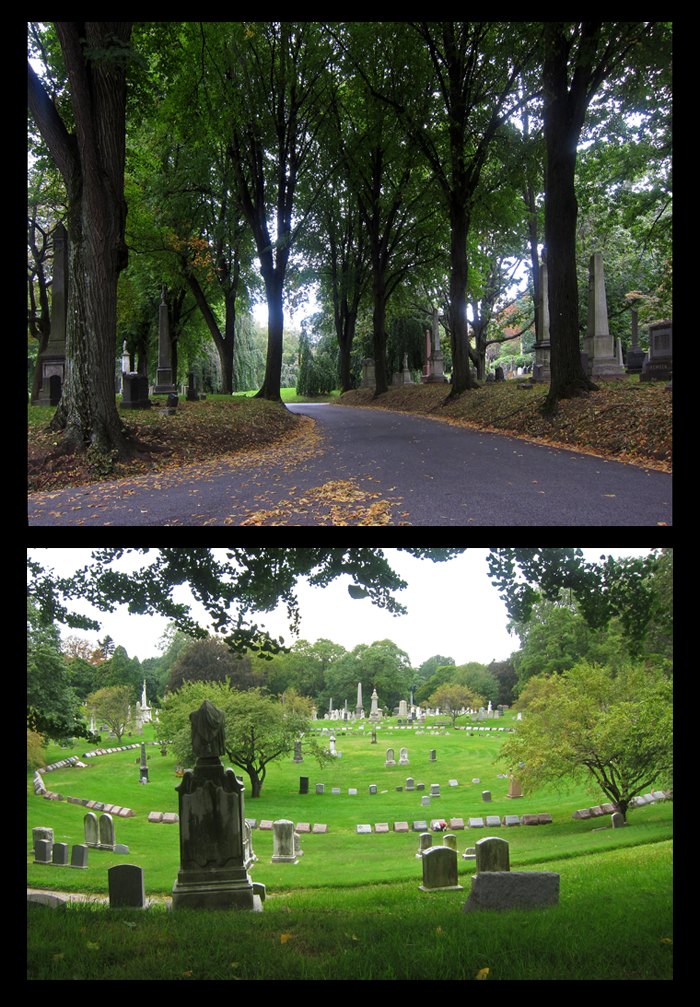
    When you have mausoleums the size of trophy homes, you know you are not in an average cemetery. This National Historic Landmark is enormous – 600,000 graves spread out over 478 acres. It is the final resting place of many of New York City’s illuminati: Leonard Bernstein, Boss Tweed, Charles Ebbets, Jean-Michel Basquiat, Louis Comfort Tiffany, Horace Greeley, et. al.

    Here in New York City, you will have to work to find places not inundated with people. Yet on my recent visit to Green-Wood cemetery, I traversed the place without encountering one other vehicle, only encountering one couple exploring on foot. See my photo gallery of images here.

    The place is extraordinary, and is a must see. Paul Goldberger of The New York Times wrote that it was said to be “the ambition of the New Yorker to live upon the Fifth Avenue, to take his airings in the Park, and to sleep with his fathers in Green-Wood.” I suggest perusing the official Green-Wood site for everything about the place – visiting, location, tours, events, maps, history, burial search, and famous residents. For a restful, beautiful, contemplative experience, visit Green-Wood…

    Related Posts: Veneer of their Lives, Cold Stone, Hidden Cemetery


  • Fatu Hiva

    I have always had a fascination with and love of islands. At one time, I pursued that interest much more actively. My fascination was fulfilled with many trips to the West Indies, Fire Island, Martha’s Vineyard, Nantucket, and Monhegan Island (Maine), as well as with readings on islands around the world.

    My favorite armchair travel book is Fatu Hiva. The author, Thor Heyerdahl, was a Norwegian adventurer and ethnographer. In Fatu Hiva, Heyerdahl chronicles his hunt for paradise in the Marquesa Islands in the South Pacific. With his wife Liv in 1937, they embarked on one of the earliest back-to-nature experiments. However, tropical diseases and difficulties with natives led to a short stay of only one and a half years and an embittered view of the entire effort.

    Now, my island intrigue and explorations are closer to home: Manhattan and the many relatively unknown small islands in the waters surrounding New York City. On September 15, 2010, I wrote of U Thant Island, a small outcropping in the East River.

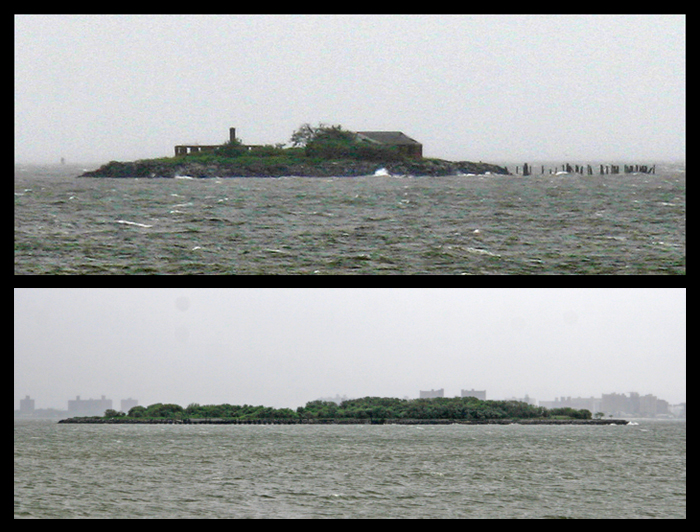
    Recently, on an excursion to Ocean Breeze Fishing Pier on South Beach in Staten Island, I spotted two islands which were unfamiliar to me. Two local fishermen told me they were Hoffman and Swinburne Islands. The names were not familiar to me either, so they were ripe fodder for photos and investigation.

    In the early 1800s, Staten Island had been the dumping ground for people with deadly contagious diseases – cholera, yellow fever, typhus, and smallpox. The New York Quarantine Hospital, built in 1801, was burned to the ground in 1858 by angry mobs. Two islands were constructed in the Orchard Shoals of New York Harbor. The man-made islands, Hoffman and Swinburne, were used as quarantines until 1929.

    At the start of World War II, the United States government used both islands for various military purposes – the Quonset huts built during this period still stand on Swinburne Island. Various proposals have been made over the years for use of the exiled islands. The islands are currently managed by the National Park Service as part of the Staten Island Unit of the Gateway National Recreation Area. Both islands are still off-limits to the general public to protect the islands’ avian habitat. Perhaps they would be a nice place to settle for awhile.

    Although they are not idyllic or tropical, as Heyerdahl learned quite painfully, paradise is where your heart is, not in Fatu Hiva 🙂

    Related Posts: Secede, Manhattan Island, ReWarded, City Island, Ellis Island, Governor’s Island, The Shore, Statue of Liberty


  • Little Red

    Posted on by Brian Dubé

    I’m not sure what they do on the first day of first grade these days – perhaps a review of the principles of recycling and waste management or an introduction to recombinant DNA. My first day of first grade was held in a newly built school. Everything was brand spanking new, including the green chalkboard.

    Our teacher drew a large red apple, filling in the entire thing with red chalk. After successfully identifying it, she erased it. However, no matter how much writing and erasing was done, a hint of that red apple remained on the board for the entire year, much as it has remained in my mind.

    It was a much simpler time, for sure, in a much simpler place but superior to the education of my parents who were educated in a one-room school house with one grade per row. One teacher taught the eight grades simultaneously.

    Now we have pre-school as the norm and parents stressing about their children being admitted to prep schools like the Dalton School with acceptance rates of only 14%. Barely out of the womb and kid’s trajectories are being plotted for Ivy league schools.

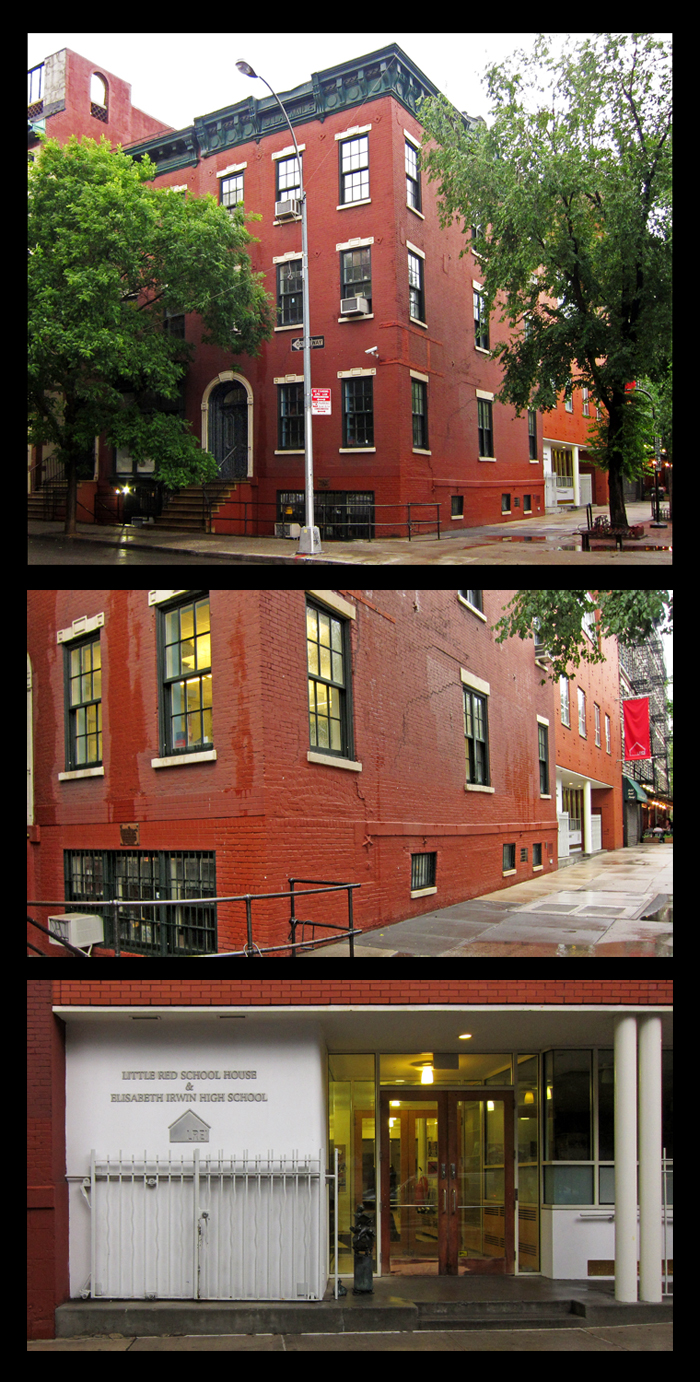
    The Little Red School House has been a fixture in the heart of Greenwich Village for near a century. It occupies two buildings at the corner of Bleecker Street and Avenue of the Americas. Like many establishments in the city, it is easily overlooked – nothing in particular screams school house and the red brick is typical of the structures around it. The Little Red School House is generally considered New York City’s first progressive school. From their website:

    In the early 1900s, Elisabeth Irwin, John Dewey and other progressive educators developed a new educational approach based on active learning instead of passive absorption of facts. “The complacent formalism of schools, its uncritical and therefore uncreative spirit, must be replaced by an honest hospitality to experimentation,” Irwin wrote.

    Elisabeth Irwin founded the Little Red School in 1921 as an alternative public elementary school. Parents and students loved the new dynamic learning community. It was an exciting place to learn, with a palpable spirit of curiosity, creativity and challenge. However, during the Depression, the Board of Education could not afford to keep the school open.

    Parents pledged their own resources, establishing Little Red School House as an independent elementary school. In 1941, the program expanded to include a high school at 40 Charlton Street. For nearly 70 years, we have been a pre-K through twelfth grade school: LREI.

    Red apples on the first day of first grade, red paint on school houses. Good things in education are looking a Little Red 🙂

    Note about red school houses: Red was used traditionally for barns and school houses because of the cost of the paint – it was made out of ingredients that were readily available: iron oxide (rust – giving it the distinctive color) along with skim milk, lime and linseed oil.

    Related Posts: Meetings With Remarkable Men Part 2, Meetings With Remarkable Men Part 1, The Little, Finger Painting, Matters of Opinion, That’s Quite a Briefcase, Who See the Red, The Scholastic Building

    Posted on by Brian Dubé

  • It Hurts Me Too

    Posted on by Brian Dubé


    Please Click and Play Audio Clip to Accompany Your Reading:

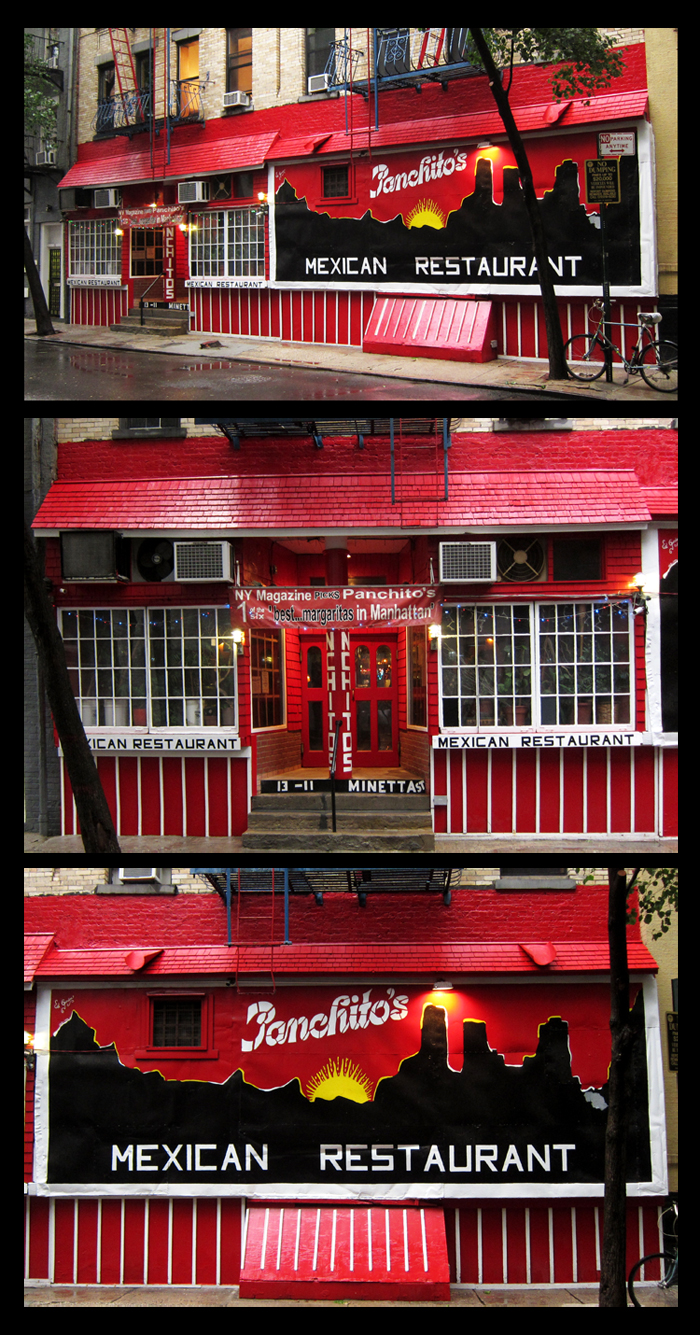
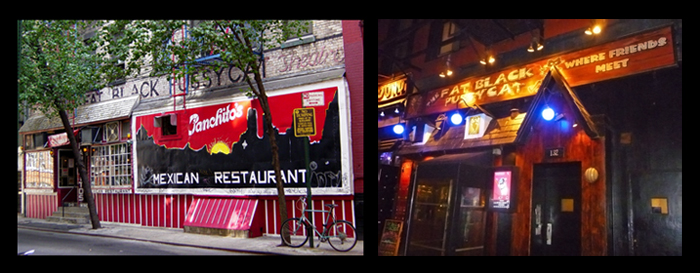
    In the off chance you have not heard, read or seen, the painting over of a sign at 11-13 Minetta Street is BIG International news. It’s a media feeding frenzy. In 1958 the Commons opened here. From the 1950s through the 1960s, it became the home of The Fat Black Pussycat Theatre, a legendary beatnik coffee bar which saw the likes of Bill Cosby, Tiny Tim, Mama Cass Elliot, Richie Havens, and Shel Silverstein. It has been said that it may have been here that Dylan wrote “Blowin’ in the Wind” in 1962 (however, everyone wants to lay claim to a Dylan connection and it appears that there is no hard evidence of such).

    In 1972 the space became Panchito’s, a Mexican restaurant with a main entrance on MacDougal Street and back entrance here at 11-13 Minetta Street. The owner of Panchito’s, Bob Englehardt, is 84 and has been a Village resident since 1951. He has owned the building since the Black Pussycat closed in 1963. Bob frequented the club and says:

    Why don’t we just take the whole world and set it in concrete? That would save everything. The Village was freedom, it wasn’t a concreted-over straitjacket.

    The Pussycat represented the worst of what the Village was. When you wanted to get drugs, get into fights and get with underage girls the Pussycat was where you went. The Village was never about rules. Making someone ask for permission before painting a building is the exact opposite of what made the Village what it was.

    I’ve lived in the village since ’51. The Fat Black Pussycat in my opinion was a cesspool. You could barely see anybody because of the smoke, and you couldn’t talk to anybody because half of the people you wanted to talk to wanted to sell you narcotics.

    Residents are fuming, tourists are raging, some are threatening to boycott Panchito’s. Others, like myself, stopped eating there 30 years ago. I understand the sentiment. The issue is how little of historic significance we have left – neighbors and visitors want to hang on to every last vestige, even though it may have been a cesspool, these are the only connections we have left.

    In a way there is irony here – a battle to regulate, preserve and protect the images of a counter-cultural generation known for rebellion. We’ve seen this kind of controversy before in New York City, when graffiti artists have defaced other artists’ work – graffiti over graffiti. Here, of course, we have business painting over another’s business. Whose business is it?

    Andrew Berman, executive director for the Greenwich Village Society for Historic Preservation (GVSHP), who called the painting of the sign “a shame” says:

    It’s a tangible link to this incredibly important era in the neighborhood’s history, when so many great musicians and poets and artists used the South Village as a springboard to transform the world. Less and less of it is left.

    The street is not part of any existing historic district, however there has been an effort to create a South Village Historic District, which would include Minetta Street. Many feel such a designation would have saved the sign. However, even if the district were protected, Elisabeth de Bourbon, a spokeswoman for the Landmarks Preservation Commission, said in regards to the recent painting over of the old sign:

    We would have approved it. We’ve never said no to an owner of a commercial establishment who’s wanted to cover advertising for a previous tenant.

    There has been a lot of romanticizing of this small, one-block street. I understand the concerns of the residents and the love of the their street, however, maintaining charm is a war here. Sandwiched between MacDougal Street and 6th Avenue, Minetta Street is often overflow for the late night drunken revelry of MacDougal Street and serves as a shortcut between the neighboring streets.

    You can read the New York Times article here and the GVSHP story here. There’s not much we can do about that sign now (although some believe it could be restored by removing the new paint job). I don’t want to make light of the situation, but it’s for times like this that the Blues are written. If you loosely reinterpret the lyrics of that Elmore James classic (the song link for this story), parts of them fit. I’m playing it a few more times. Why don’t you join me and share our pain? Because when things go wrong, It Hurts Me Too …

    Song Note: Thank you Eric Clapton for this wonderful interpretation of the Elmore James classic – It Hurts Me Too 🙂

    Related Posts: The Real Peel, Diamonds and Rust, Model for Decorum, Bohemian Flavor of the Day, Summer of Drugs, Physical Graffiti

    Posted on by Brian Dubé

  • Grace of a Boombox God

    Posted on by Brian Dubé

    Those of us who lived in New York City in the 1970s and 80s can testify to the very serious quality of life issues – graffiti covered subways, vandalism, garbage, crime, noise, drugs. The streets were minefields of dog poop just waiting for the next victim – those unfamiliar with the terrain or seasoned New Yorkers who had a momentary lapse of attention to the sidewalks. It was a very rough time and not the promised land at all. The most common question I was asked at the time about my choice to live in New York City was “Why?”

    In hindsight, those times are examined at arms length, analyzed, discussed, debated, romanticized and even missed. A case in point is a recent book reviewed in the New York Times:

    Mr. Owerko’s interest grew into a book, “The Boombox Project: The Machines, the Music, and the Urban Underground,” published this month by Abrams Image. It features his lovingly detailed close-up photographs of vintage portable stereos, as well as commentary by Spike Lee, L L Cool J and members of the Beastie Boys and the Fugees about the role the devices played in New York’s street culture from the late 1970s to the mid-’80s.

    In shot after full-page shot, Mr. Owerko — best known for his image of the smashed World Trade Center on the cover of Time magazine on Sept. 14, 2001 — venerates an audio technology that, to eyes accustomed to the iPod’s futuristic smoothness, seems practically steampunk: hard, square-edged metal casing; wheel-size speakers protected by silvery-black grilles; lots of clunky knobs and buttons. And at the heart of every boombox is a cassette deck.

    Many who bemoan the loss of the edge, grit, authenticity, lack of over gentrification, etc., were either not there or perhaps with selective memory, forget that living in that environment was in numerous ways quite awful. Many of the pleasant memories of that era often have more to do with the youthful enthusiasm and a spirit of reckless abandon and fearless adventure of young urban cowboys than any inherent charm of the city. New York City provided its own flavor of the lawless wild west.

    One of the most annoying and dreadful elements of the late 1970s and 1980s was the boombox. This portable party machine could be cranked to deafening levels, even outdoors against the ambient din of the city. At times it felt like there was no escaping it – the ghetto blasters were everywhere to be found including spaces where one expected quiet enjoyment like parks. To make matters worse, the music played was very limited, typically disco, a genre I quickly grew to abhor, or hip hop. You would not hear anything else, certainly not classical, country, blues or classic rock. We prayed for the death of disco and these infernal machines. Our wishes were eventually granted but it was an interminable wait of a decade.

    Boomboxes were HEAVY. It was a job to carry them all day. Some required as many as 20 D-cell batteries, which, allowing for continuous play and volumes, would only last the day. The cost of these batteries became major budgetary items for those who carried their boxes daily. They were essentially the Walkmans or iPods of their day, but as a broadcast device, they could hardly be considered personal audio players.

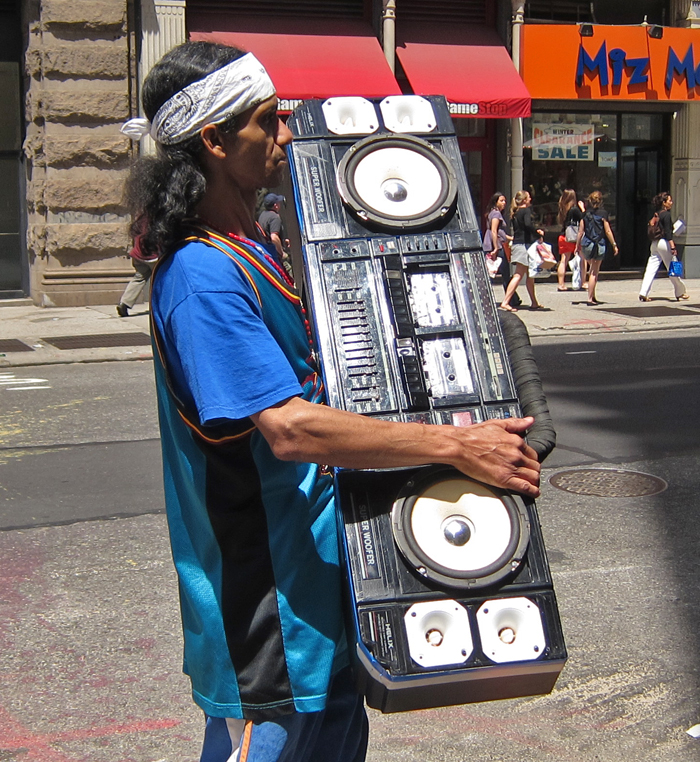
    On Monday, while walking on Broadway, I encountered what had to be the largest boombox I have ever seen. A pedestrian nearby commented to me “I feel like its the 90s again.” Perhaps he was not aware that if his only experience of boomboxes was the in the 90s, then he had not enjoyed true noise pollution.

    The owner was walking very briskly. I fumbled for my camera and ran after him, asking if he would permit a photo. With a pompous attitude and only a side glance, he made a beckoning motion with one hand, indicating I follow him as we both ran through Broadway traffic. He stopped for a second, giving me no time to compose a decent photo. I was a bit frustrated, however, I had to remind myself, that even though it was only for a brief moment, I had gotten a free trip in time and had been granted the Grace of a Boombox God 🙂

    Related Posts: Float Master, Part 2, Float Master, Part 1, Too Too New York, Deaf Jam, I’ve Got a Feeling, 5 Pointz, Columbo, Monk and CSI, Men Making Noise, New York State of Mind

    Posted on by Brian Dubé

  • Triangle Shirtwaist Factory Fire

    March 25, 2011 was the 100th anniversary date of the Triangle Shirtwaist Factory fire, the deadliest industrial disaster in the history of New York City (and fourth largest in the United States.) There were 146 deaths. The immigrant garment workers died as a result of being trapped in the fire or by jumping to their deaths.

    The Triangle Shirtwaist Factory occupied the 8th, 9th and 10th floors of the 10-story Asch Building at 23-29 Washington Place, now known as the Brown Building, owned by New York University and used for their biology and chemistry departments (upper left photo). The building is designated as both a New York City landmark and a National Historic Landmark.

    The factory employed approximately 500 workers, primarily women, in the manufacture of shirtwaists*. The workweek was 6 days, nine hours on weekdays and 7 hours on Saturday. At 4:40 Pm on Saturday March 25, 1911, a fired started in a scrap bin on the 8th floor. A bookkeeper contacted the 10th Floor where the owners, Max Blanck and Isaac Harris were located. The worker who received the call on the 10th Floor never hung up the phone, preventing anyone from alerting the 9th Floor where 250 workers were present. The spread of fire was rapid – within 30 minutes, fire had swept through the floor and only a small number were able to escape via elevator. It is believed that exit doors were locked. Some burned while others jumped to their death while onlookers watched helpless below. Firetrucks had appeared on the scene in minutes, but ladders were only able to reach the 6th Floor.

    The company owners, who had manage to survive by fleeing to the roof of the building were indicted on charges of manslaughter. They were acquitted but later lost a civil suit in 1913 with the plaintiffs winning $75 per deceased victim.

    This landmark industrial disaster led to changes in national laws, particularly regarding improved factory safety standards and working conditions. There are many more details and stories regarding the fire, the victims, families, labor laws and immigration from that time period. See a New York Times article here with links to many other articles on the Triangle Shirtwaist Factory fire…

    *From the New York Times:

    Triangle was one of the nation’s largest makers of high-collar blouses that were part of the shirtwaist style, a sensible fusion of tailored shirt and skirt. Designed for utility, the style was embraced at the turn of the century by legions of young women who preferred its hiked hemline and unfettered curves to the confining, street-sweeping dresses that had hobbled their mothers and aunts.


  • Fort Schuyler


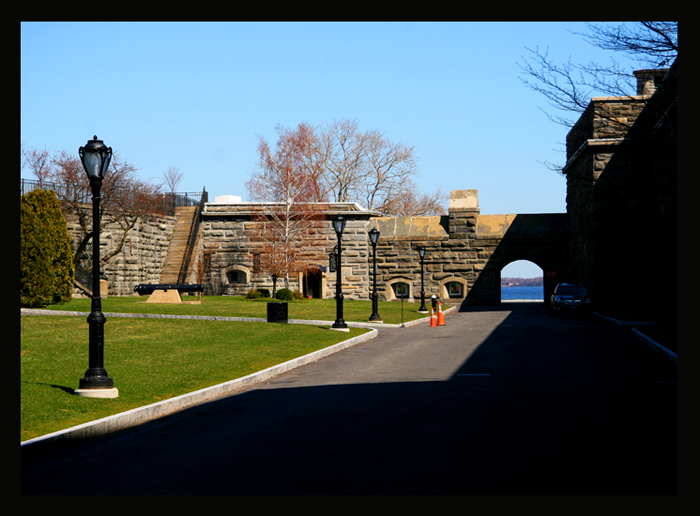
    There are not a lot of forts in New York City, and you certainly do not expect to run across a huge one, unbeknownst to yourself. It is unlikely you will ever run into this one by accident – Fort Schuyler and the Maritime College are not on the way to anywhere – they are destinations, located at the very tip of the Throgs Neck peninsula in the Bronx. On my recent excursion to the area, my intention was to explore Silver Beach. It is here by accident, that I discovered Fort Schuyler and the State University of New York Maritime College, founded in 1874 and the first of its kind in the United States.

    I met a couple of cadets, and like all the military men I have encountered, they were very approachable. They answered a number of my questions regarding the Maritime College and explained the reason for small sailboats – there was a regatta under way, with the boaters undaunted by the cold weather. They also informed me that the entire area was open to visitors with the entrance way nearby.

    I was surprised at how free and easy I was able to tour the area with no restriction and virtually no other visitors. Post-9/11, virtually everything in New York City has an added layer of security, including some of the most innocuous office buildings requiring photo ID. Places like the lobby of the Woolworth Building, one of my favorite spots to take visitors, is, sadly, completely off limits unless you have specific business in the building. As far as Fort Schuyler, however, I suppose a man in a small automobile armed only with cameras, poses little threat to a massive fort with military presence.

    The location of the fort and college is at the very tip of the peninsula, where Long Island Sound meets the East River, affording sweeping vistas including Long Island, the Bronx, Queens and a panorama of the Manhattan skyline (essentially the same as that of Silver Beach). The Throgs Neck Bridge is ever present, juxtaposed against nearly every structure as can be seen in many of my photos of the excursion – see the full gallery here.
    Fort Schuyler was one of many forts built along the east coast of the United States after the War of 1812, when it became apparent that the U.S. coast was poorly defended against foreign invasion. The French Style fortification was dedicated in 1875. The site also has a maritime museum, open to the public. Read more here.

    Everything was pristine and immaculate – the grounds, buildings, roadways and artifacts. It was quite chilly, but this is the best of weather conditions for seeing New York City outdoors – crisp air, clear blue skies and greater visibility. Although the warmer months are preferable for walking and touring, the heat of summer also usually means hazy skies with poor visibility and, if you are taking photographs, poorer results. If you’re looking for something truly off the beaten path, try the Throgs Neck peninsula with Silver Beach and Fort Schuyler 🙂


  • Clement Clarke Moore


    Chelsea is the former home of the man who brought Christmas to America with A Visit from St. Nicholas (also known as The Night Before Christmas and ‘Twas the Night Before Christmas from the first line of the poem). This poem, first published anonymously in 1823, and now attributed to Clement Clarke Moore, is responsible for the conception of Santa Claus from the mid 1800s to today, including his physical appearance, the night of his visit, his transportation by sleigh, the number and names of his reindeer and the tradition of bringing toys to children.

    Clement Clarke Moore, a graduate and professor at Columbia College, inherited a large family owned estate which lay north of Houston Street. This area of the city was mostly undeveloped countryside at the time. Clement fought development of New York City as it moved north from lower Manhattan. The proposed street grid in the Commissioner’s Plan of 1811 would run through the Moore estate. In 1818, the city’s Common Council agreed to spare the area from Houston to 14th Street, west of Sixth Avenue. This is the reason that this neighborhood, the West Village, has such a quaint mélange of narrow streets with curves and oblique angles.
    Moore did, however, begin to develop Chelsea, dividing it into lots and selling them to prosperous New Yorkers. An apple orchard was donated to the Episcopal Diocese, now home of the General Theological Seminary, which spans an entire city block and where Moore served as the first professor of Oriental Languages.

    Regarding the name Chelsea, according to the New York Times, “It was Moore’s grandfather Thomas Clarke, a retired British naval officer, who had bought an old farm in 1750 for his retirement and named it Chelsea after the Royal Chelsea Hospital for veterans in London.”

    Chelsea is largely a residential enclave with streets lined with historic townhouses. This neighborhood was the location of my first apartment in New York City – you can see it here. The western area of Chelsea, along 10th and 11th Avenues was industrial and in the 1990s, there was a migration of galleries and art studios from SoHo to this area, where there are now several hundred galleries.

    Apart from the gallery district, Chelsea is not heavily touristed. However, there are numerous places of interest – the Chelsea Market, Chelsea Piers, the High Line Park, Hotel Chelsea, London Terrace, the Empire Diner, the IAC Building designed by Frank Gehry, the Rubin Museum of Art, the Joyce Theater, Dance Theater Workshop and the Kitchen.

    In today’s photo you can see a small group of historic buildings on Ninth Avenue. The corner property (at 183 Ninth Avenue at 21st Street) is the Royer-Wells House, the second oldest house in Chelsea. This Federal-style home was completed in 1832.

    I owe the charm of my first residence and my love of the West Village to Clement Clarke Moore 🙂


  • Gotta Shoot Village Cigars

    There are many iconic photographic images of New York City. Typically I leave them alone – iconic for me translates as it’s already been done and done well, you probably won’t do it better or in a more interesting way. So, rather than look like a wannabe or copycat, I look elsewhere.

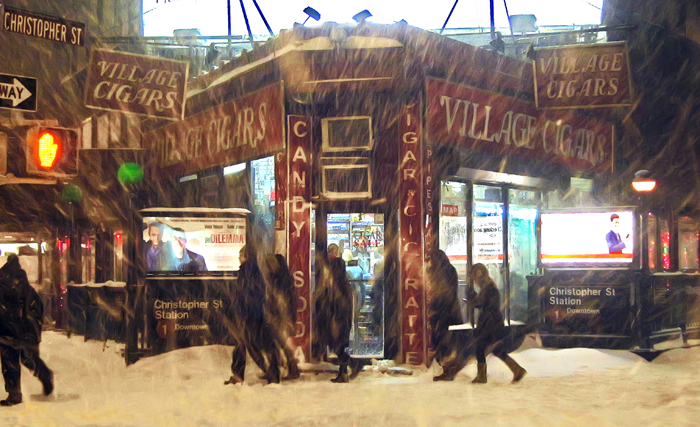
    However, there are many, many subjects in this city that, given the right time and conditions, will lure anyone with a camera. Photos like that of Village Cigars in a snowstorm by Igor Maloratsky. A mysterious Hess Family triangular mosaic is set in the sidewalk in front of Village Cigars (see my story and photo here).

    Village Cigars, at 110 7th Avenue South at the corner of Christopher Street, occupies a unique, tiny, one-story triangular building. This neighborhood landmark has been located there since 1922. It has been seen in film, and there have been numerous images taken over the course of its history, in a variety of seasons, available in both color and black and white, as stock photos for advertising, art prints, greeting cards, and photos sold on the streets to tourists.

    Try as one might to exorcise those legendary photos from ones mind, similar conditions often acts as a trigger. Caught in a snowstorm while walking down Christopher Street with a camera in hand? Gotta shoot Village Cigars 🙂


  • dinamic_sidebar 4 none

©2026 New York Daily Photo Entries (RSS) and Comments (RSS)  Raindrops Theme